Wender·Vista
Cooley Peninsula
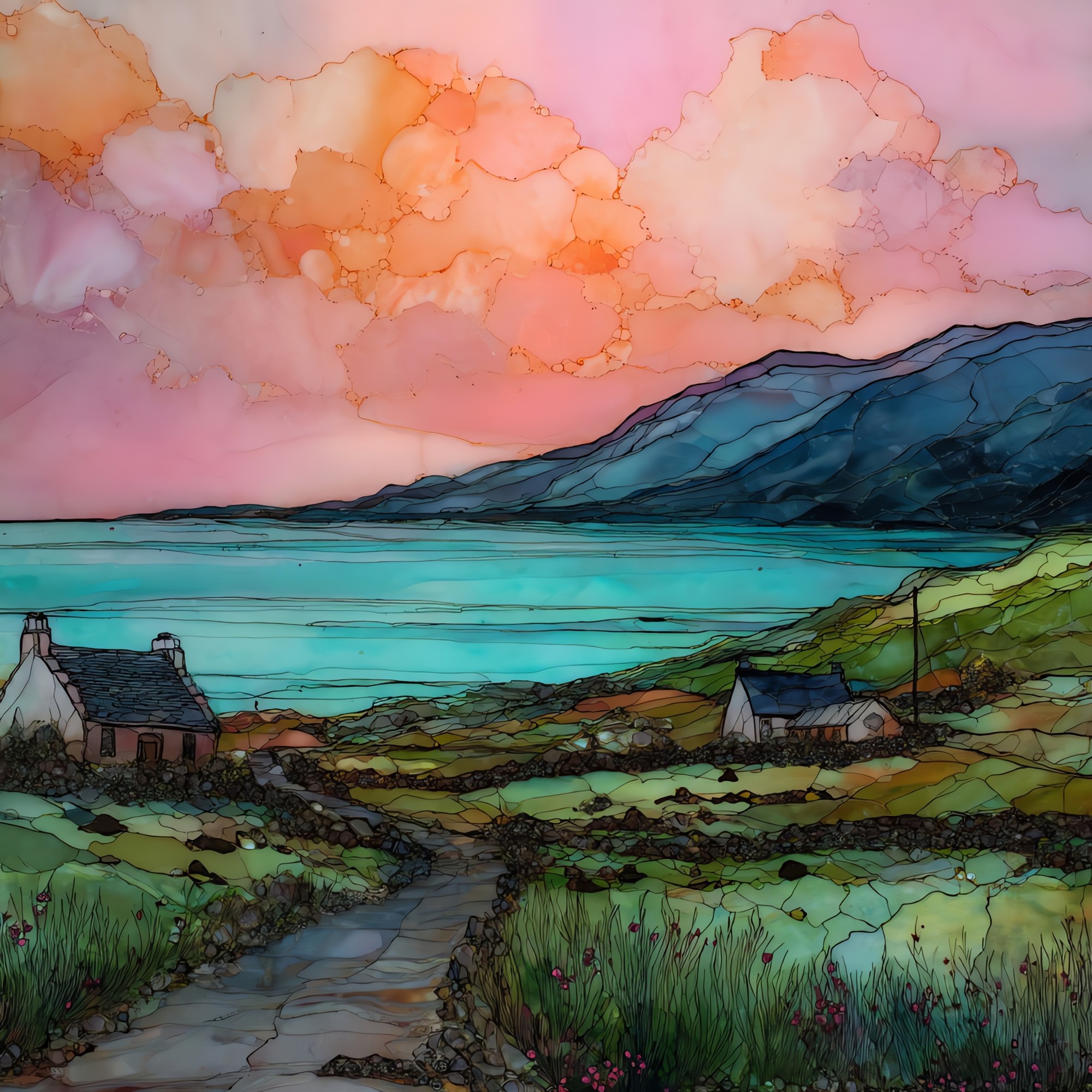
shown on ceramic, 12-inch tileIreland
between the Mournes and Dundalk Bay

Cooley Peninsula

— a country older than the border.

Where it lives

Not only on a wall.

A small tile on the nightstand catching the morning. A larger one above the fire. Yours, wherever you spend the slow hours.
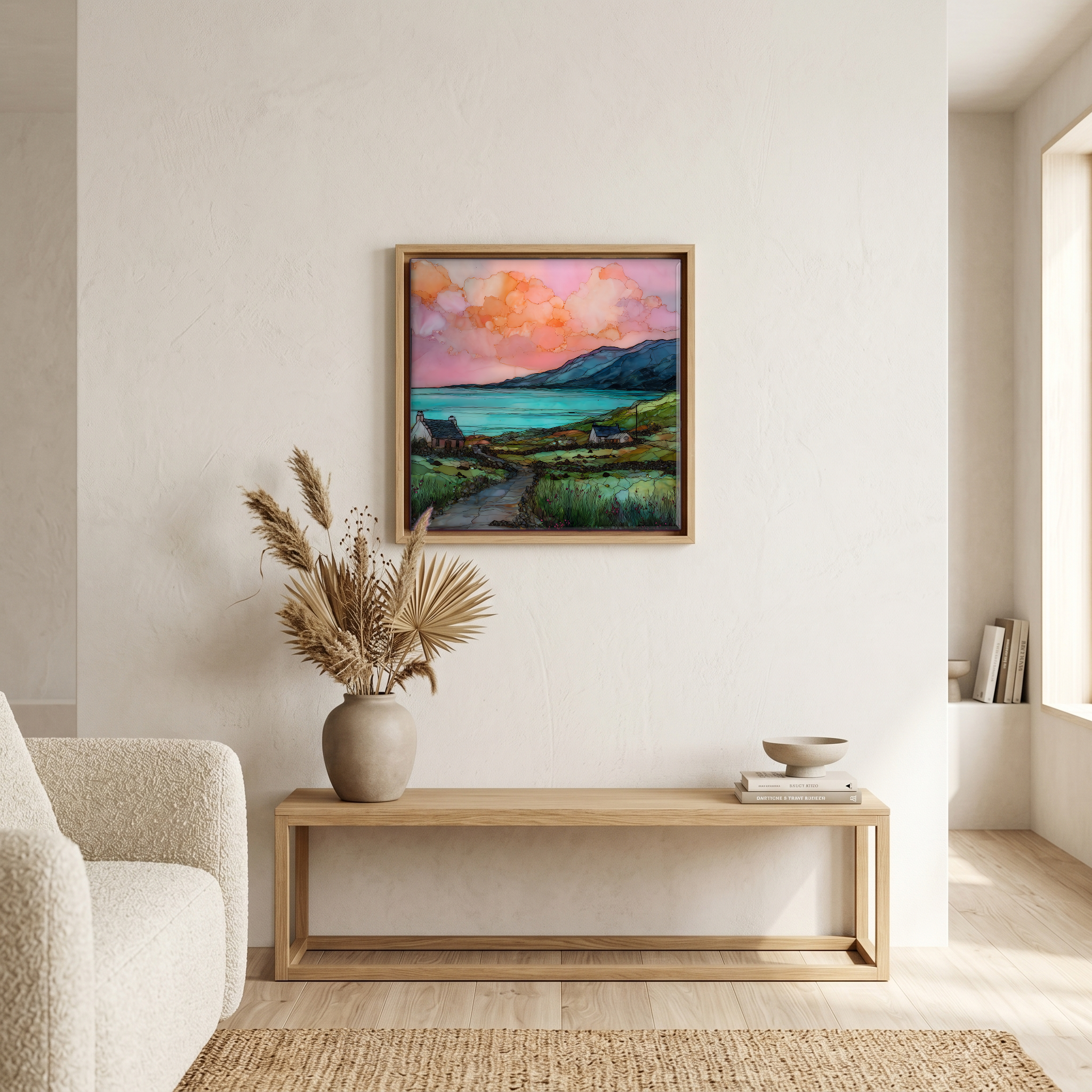
Above the bench, in a warm oak surround.
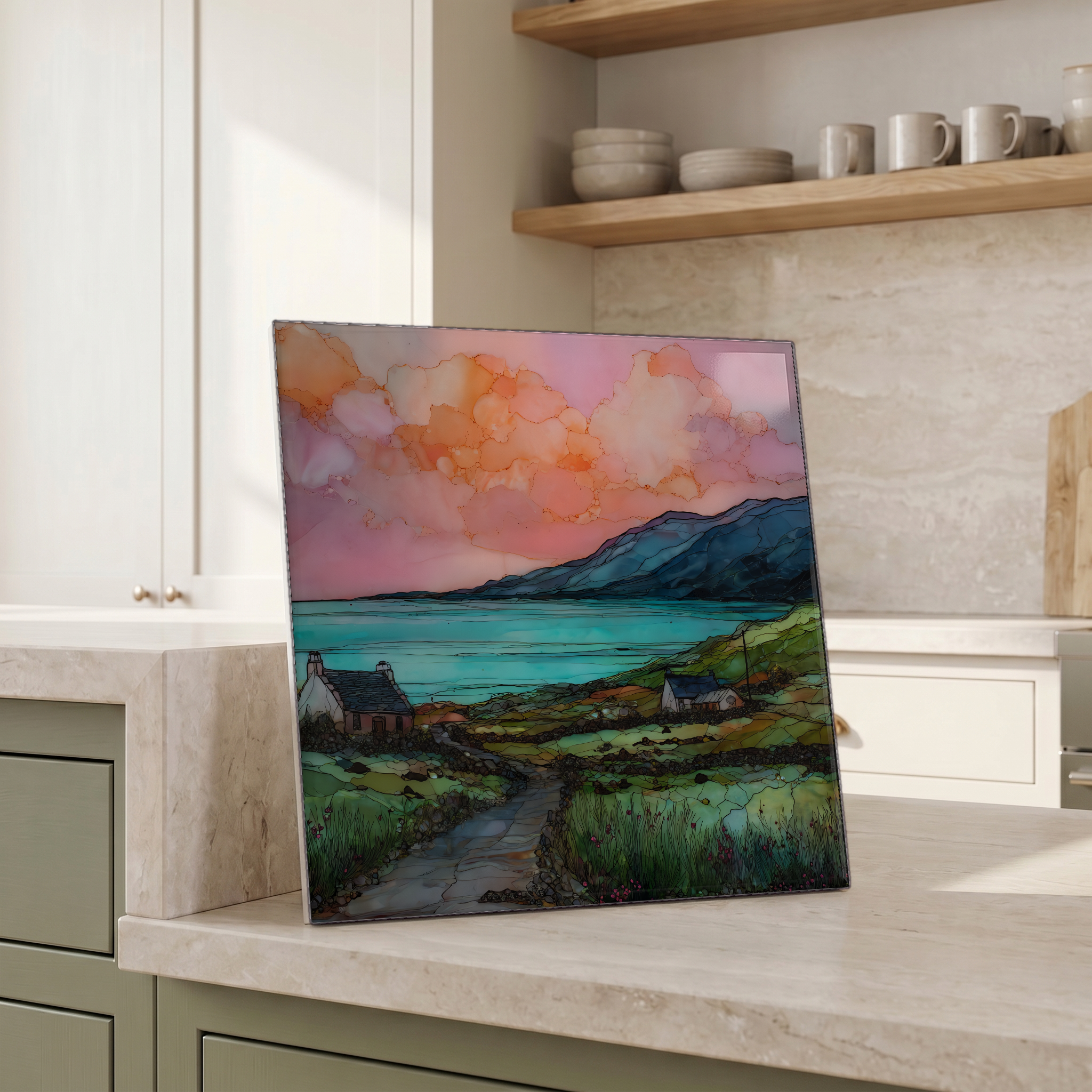
Beside the kettle, propped on the counter.
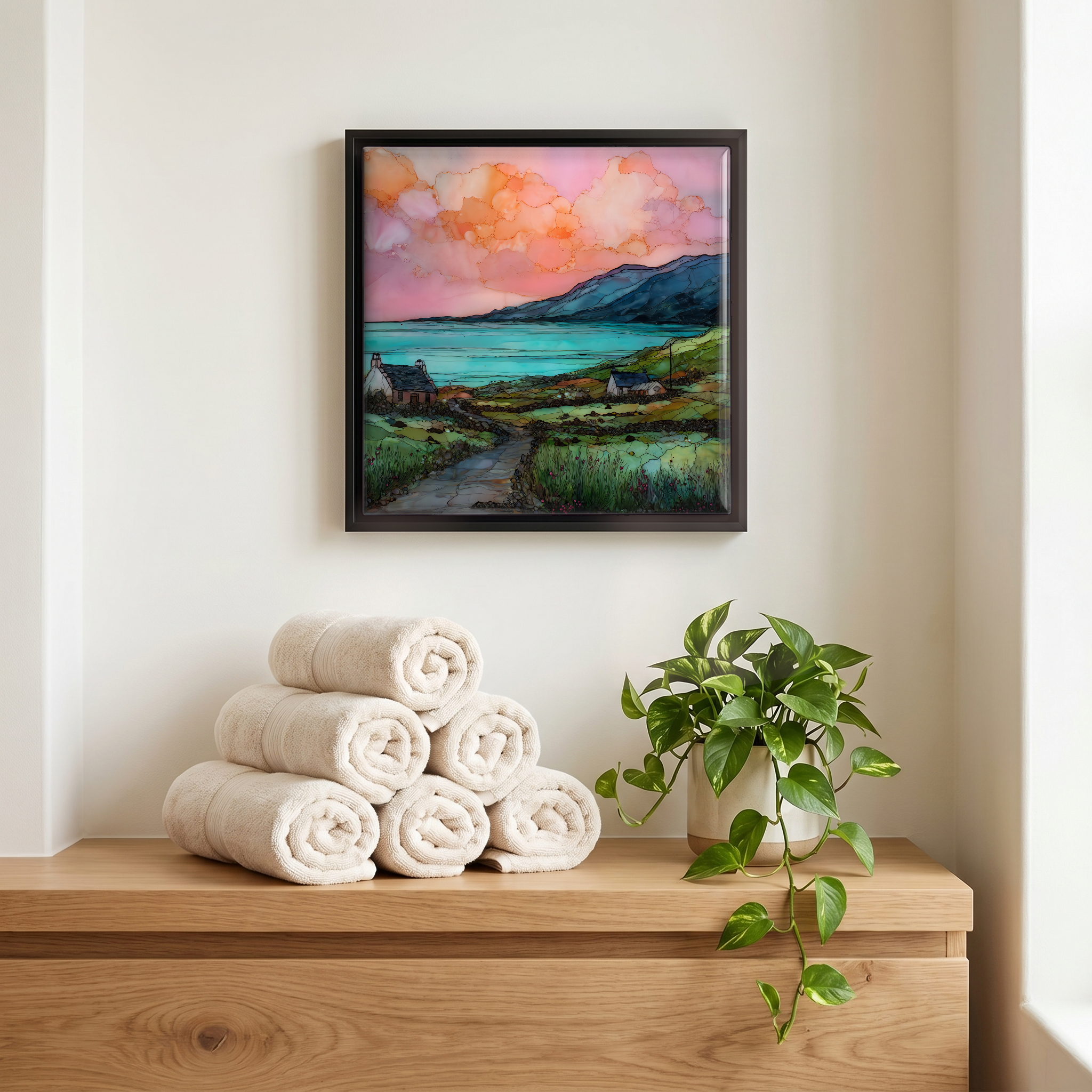
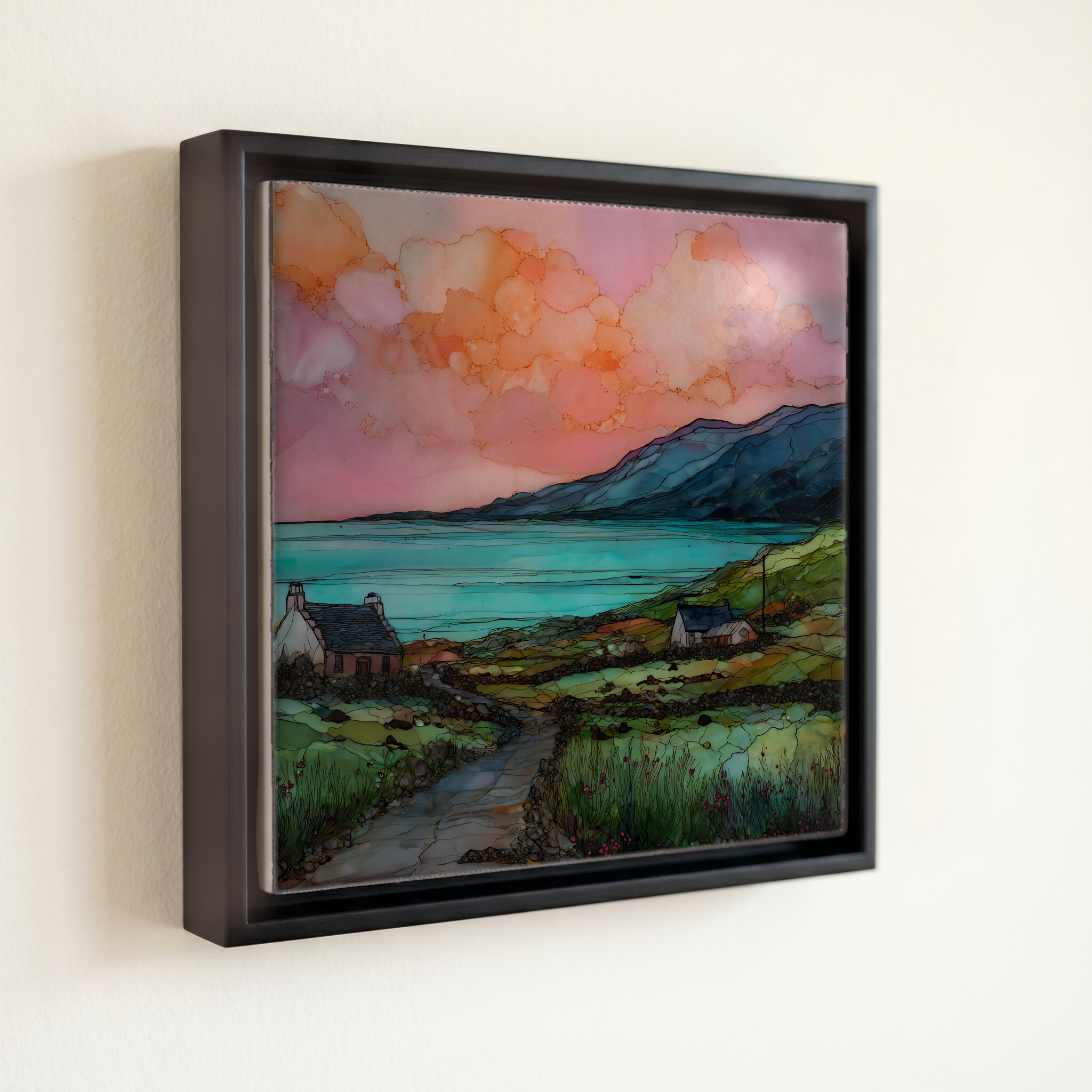
Above the linens, in a slim black surround.
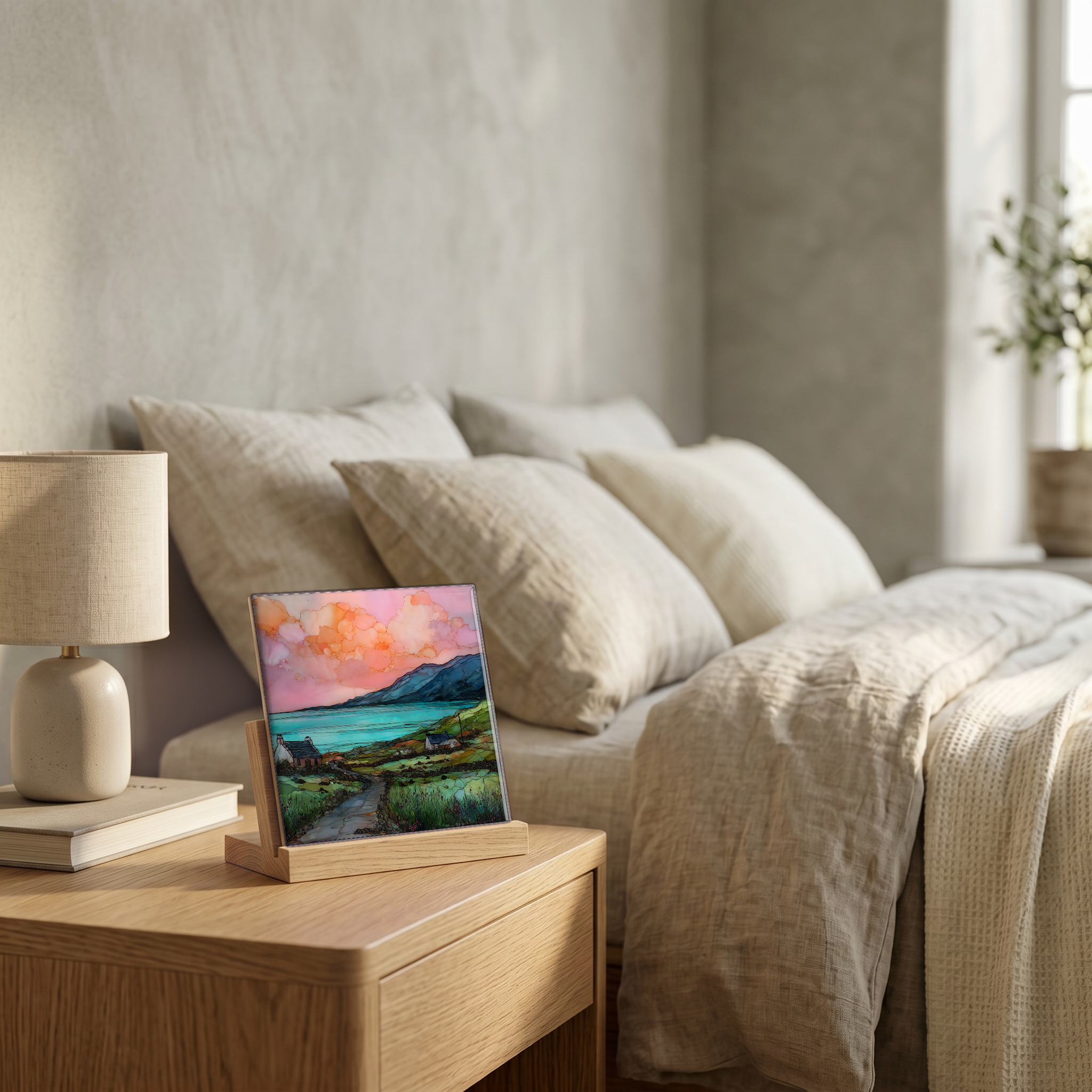
On the nightstand, on a light oak stand.
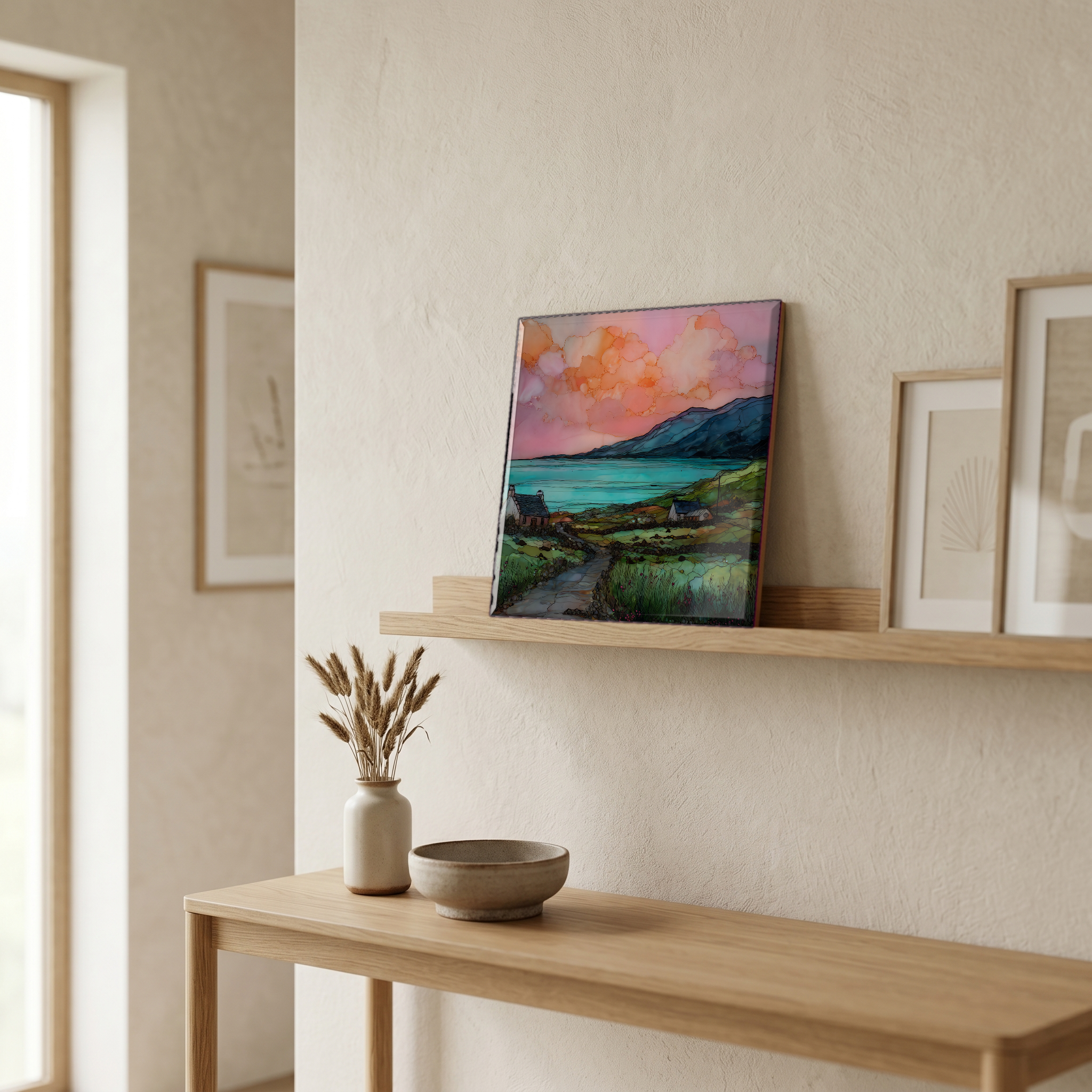
On a picture ledge, where the light comes in.
a note from the studio

A small peninsula on the east coast, with Carlingford Lough on one side and Dundalk Bay on the other, the Mourne Mountains rising across the water in another country. The Cooley Mountains run down the middle. The Brown Bull of Cooley was stolen from here in the oldest epic in the Irish language. Carlingford village is medieval: King John's Castle on the rock above the harbour, narrow lanes, oyster boats coming in on the tide. Walkers come for the Táin Way. Most stay a single afternoon and feel they have understated their visit.
from the studio
shown in a slim black floating frame · 6 × 6 in
— bring it home

Cooley Peninsula, on ceramic.

Each tile is finished by hand in our Knoxville studio. Artwork is slowly infused into the ceramic surface under high heat and pressure, and rests beneath a thin glossy finish. The colour lives in the surface, not on top of it.

What kind of piece?
One tile — square or rectangle.
How big?
the popular one — counter, shelf, nightstand
6 × 6 in · 15 cm · 1.6 lb
Surface finish
A clear glossy finish — the artwork reads as if under resin. Ideal for show-pieces and framed wall art.
How it sits
A hidden cleat — sits ¼″ proud of the wall.
$58
Hand-finished and shipped from our studio at the foot of the Smokies. On your wall in about ten days.
size
6 × 6 in
15 cm
weighs
1.6 lb
solid in the hand
surface
ceramic, hand-finished
art rests beneath a thin glossy finish
from
Knoxville, TN
our family studio, at the foot of the Smokies
— start a Coaster Set

Pick any four 4-inch tiles — National Parks you've been to, a Smokies set, the four seasons of one place. $ for a set of , cork-backed, ready to live on the table.
comes gift-ready
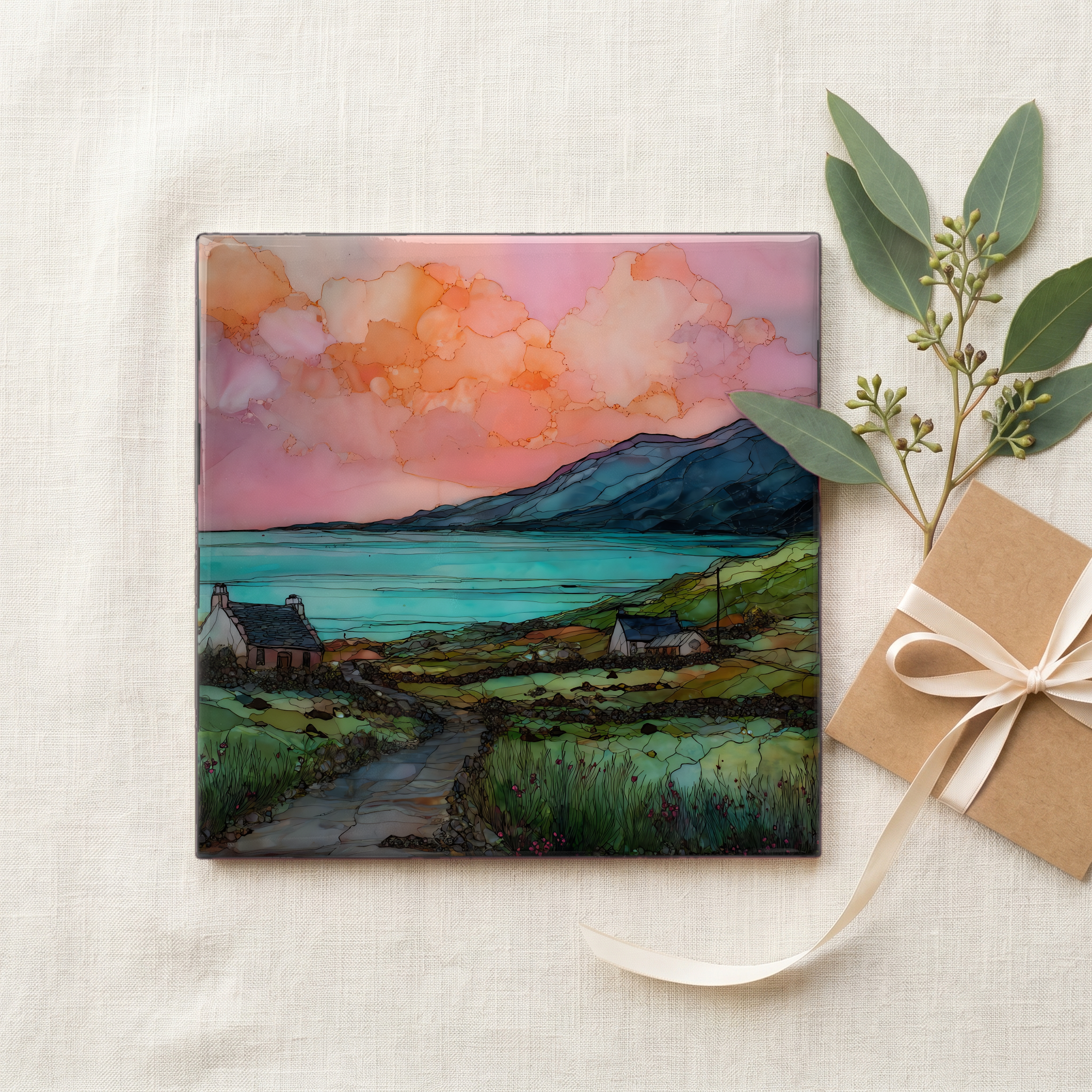
comes gift-ready

Each tile ships in a kraft box, tied with cream ribbon, with a handwritten note from the studio if you'd like to add one.
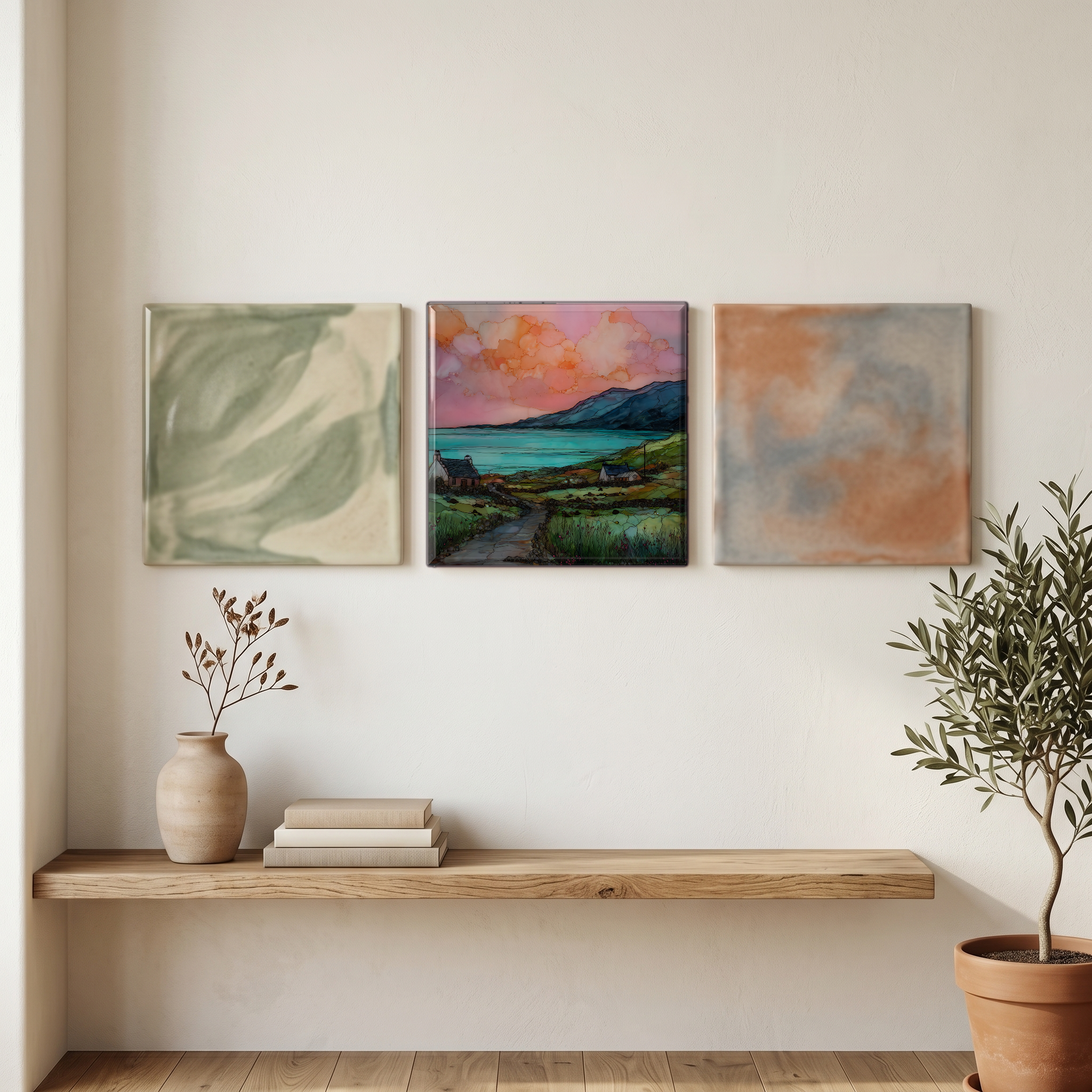
or build a grouping
or build a grouping

Three or five different vistas, hung together — a chapter of places you've been, or want to go.

about Cooley Peninsula

The place, in three passes.

A little of what's known, in case you fall down the rabbit hole — or want to go see it yourself.
the place

The Cooley Peninsula juts east from County Louth on Ireland's northeast coast, framed by Carlingford Lough to the north and Dundalk Bay to the south. The peninsula is roughly 24 km long and rises sharply at its spine; Slieve Foye reaches 589 m at its summit, the highest point in the Cooley Mountains. Across the lough lie the Mourne Mountains of Northern Ireland. The medieval village of Carlingford anchors the northern shore; Greenore guards the eastern tip. The whole peninsula is part of the historical province of Ulster in early Irish geography, despite its modern administrative home in Leinster's County Louth.

the stone

King John's Castle stands on a rock above Carlingford harbour, built in the late twelfth or early thirteenth century to guard the entrance to the lough. The castle takes its name from a visit by King John of England in 1210. Inside the village, the Tholsel, once a medieval town gate, and the Mint, a fifteenth-century tower house, survive in the original street plan. The peninsula is also the setting of the Táin Bó Cúailnge, the Cattle Raid of Cooley, in which Queen Medb of Connacht invades Ulster to steal the Donn Cuailnge, the Brown Bull, from a chieftain named Dáire mac Fiachna. The young hero Cú Chulainn defends the ford alone.

the water

Carlingford Lough is a glacial inlet carved during the last ice age. It opens between the Cooley Mountains on the southern shore and the Mourne Mountains on the northern, where Slieve Donard rises to 850 m. The lough has been known for its oysters since at least the medieval period, and both native and Pacific varieties are still farmed along the south shore. The water also forms an international boundary, with the Republic of Ireland to the south and Northern Ireland to the north. A small ferry crosses between Greenore and Greencastle in County Down, a fifteen-minute passage with mountains on both sides.

where
Ireland · County Louth, Ireland
position
54.0500° N · 6.2000° W
the neighborhood

What's nearby.

A handful of named places within an hour's walk or short drive. Some we've already painted; some we will.
2 km N
Carlingford
medieval village
3 km N
Slieve Foye
mountain summit
8 km E
Greenore
port village
6 km N
Omeath
lough-shore village
18 km SW
Dundalk
county town
6 km N
Mourne Mountains
mountain range across the lough
N
Cooley Peninsula
Carlingford
Slieve Foye
Greenore
Omeath
Dundalk
Mourne Mountains
common questions

What people ask.

A few questions we get about Cooley Peninsula — and about bringing the piece home.
about the place

The Cooley Peninsula sits on the northeast coast of Ireland, in County Louth. It is bounded by Carlingford Lough to the north, Dundalk Bay to the south, and the Irish Sea to the east. Across the lough are the Mourne Mountains of Northern Ireland.

The peninsula is the setting of the Táin Bó Cúailnge, the Cattle Raid of Cooley, Ireland's oldest surviving epic. It is also known for the medieval village of Carlingford, the Cooley Mountains rising to 589 m at Slieve Foye, and the oysters of Carlingford Lough.

Carlingford lies about 75 km north of Dublin and 25 km north of Dundalk on the R173. The M1 motorway brings traffic from Dublin to Dundalk in around an hour. Dublin Airport is the nearest international airport, roughly a ninety-minute drive south.

Slieve Foye, at 589 m, is the highest summit on the peninsula and the highest in the Cooley Mountains. The Táin Way, a waymarked walking route of around 40 km, runs along the spine of the range and circles back to Carlingford.

Carlingford is in the Republic of Ireland, in County Louth. The international border with Northern Ireland runs down the middle of Carlingford Lough. Warrenpoint and Greencastle, on the northern shore, sit in County Down.

May through September offers the warmest weather and the longest daylight for walking the Táin Way and the lough shore. The autumn light through October is also strong. Winter walks are possible but the ridges are often in cloud and the days short.

The Táin Bó Cúailnge, the Cattle Raid of Cooley, is the central epic of the Ulster Cycle of Irish mythology. Queen Medb of Connacht invades Ulster to steal the Donn Cuailnge, the Brown Bull of Cooley, from the chieftain Dáire mac Fiachna. The young hero Cú Chulainn defends the ford.

about the piece in your home

It has been a meaningful gift for our customers with ties to the northeast of Ireland. Cooley is the country of the Táin and of medieval Carlingford, and it carries the look of the lough and the Mournes in a single tile. A Small or Medium with a handwritten note from the studio fits a hallway shelf; the Keepsake travels in a coat pocket.

The palette of Mourne blue, lough silver, and the iron of the mountain sits well in Coastal-modern, Irish-vernacular, and Jewel-tone Maximalist rooms. It also reads quietly against limewashed walls and dark oak in older Irish and British homes. The strongest pairings we see are with one strong saturated colour already in the room.

Coastal-modern and Mountain-modern have both moved toward muted blues, slate greys, and earth tones in recent seasons, and toward pieces that read as paintings rather than prints. The Cooley palette of water, stone, and low fog sits comfortably inside both categories without belonging only to one.

Above a standard sofa or a wide console, the single Large 24-inch tile holds the wall on its own. A four-tile Mural carries a longer wall in a great room. A nine-tile Mural is the right scale for a stairway wall or a double-height entry that wants the whole horizon of the peninsula.

Yes, in the Dura Satin or Matte finish. Both are scratch-resistant and tolerate the steam and splashes of a bathroom or a kitchen splashback. The Glossy finish is meant for framed wall use in a dry room.

A soft microfibre cloth with warm water is enough for everyday dust and fingerprints. For a kitchen or bathroom install, a mild non-abrasive cleaner is fine. Avoid bleach, ammonia, and abrasive pads, which can dull the surface finish over time.

Yes. Every WenderVista piece is made in-house by Reid Wender at the studio in Knoxville, Tennessee. We do not license or resell other artists' work. The Cooley Peninsula tile exists only here, and each one is hand-finished before it leaves us.

if this one stayed with you

A few you might also love.

Hand-picked by the eye that found Sorapis. Same air, same kind of quiet.