Wender·Vista
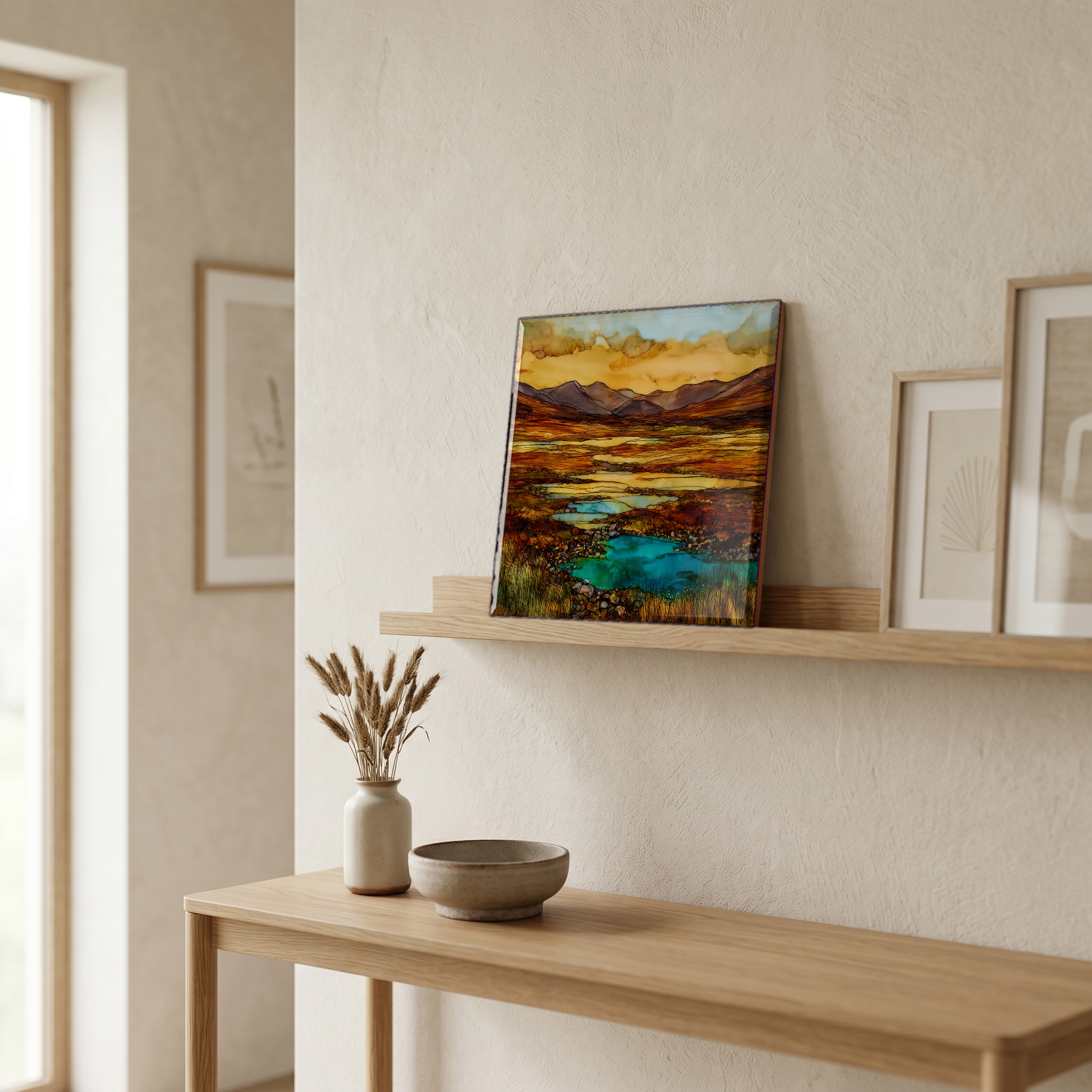
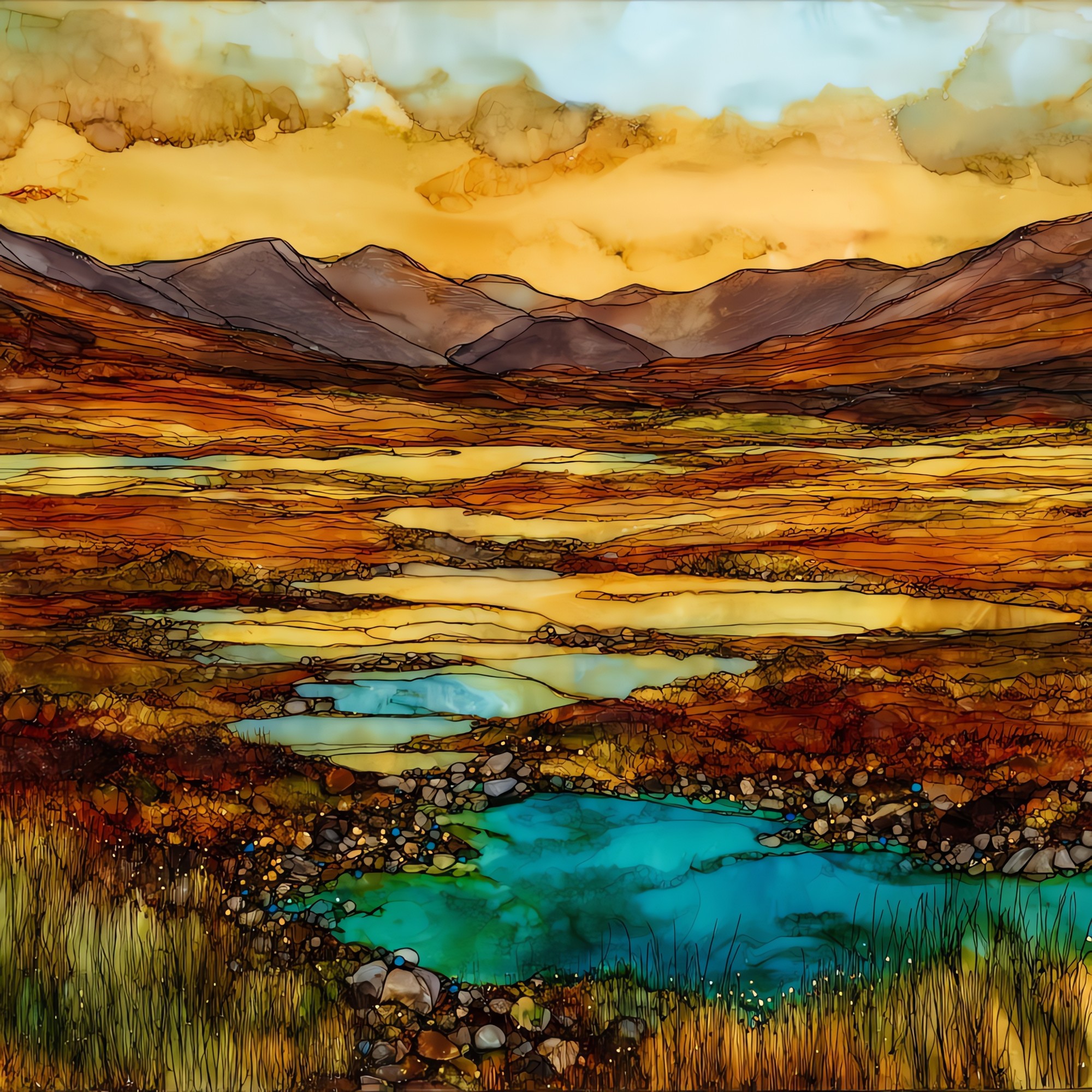
Connemara Bog
shown on ceramic, 12-inch tileIreland
west of Galway, on the Atlantic edge

Connemara Bog

— the brown and silver country, just after rain.

Where it lives

Not only on a wall.

A small tile on the nightstand catching the morning. A larger one above the fire. Yours, wherever you spend the slow hours.
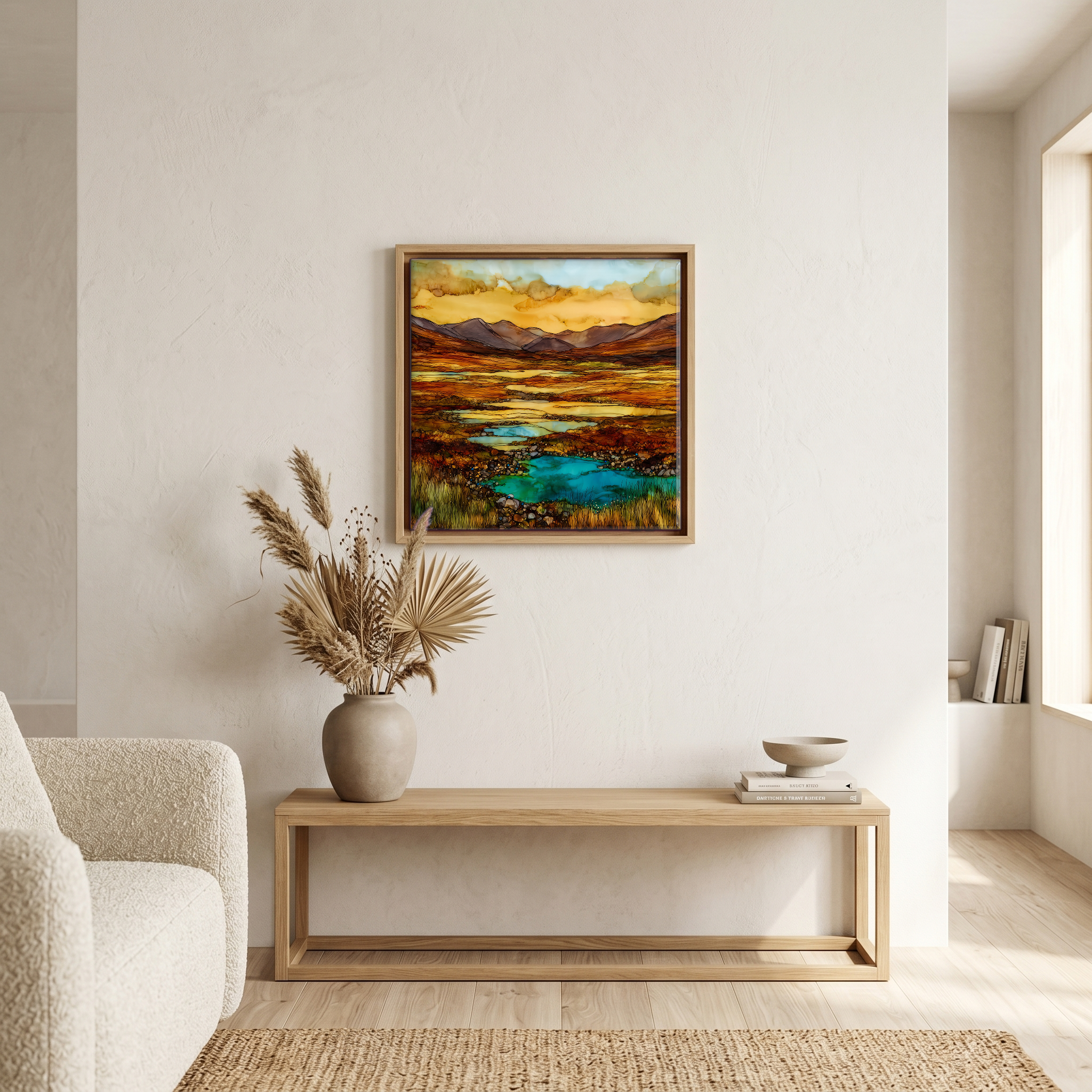
Above the bench, in a warm oak surround.
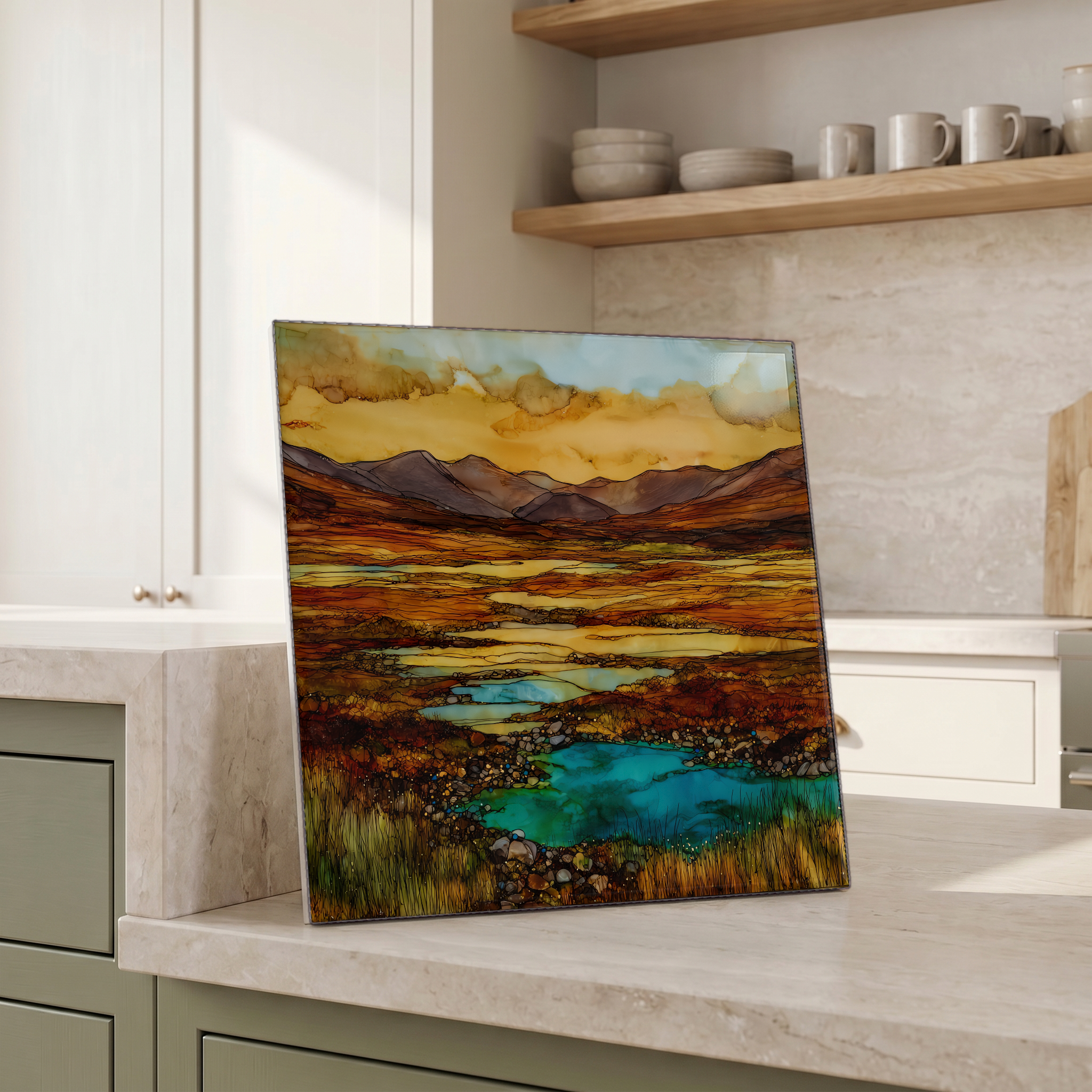
Beside the kettle, propped on the counter.
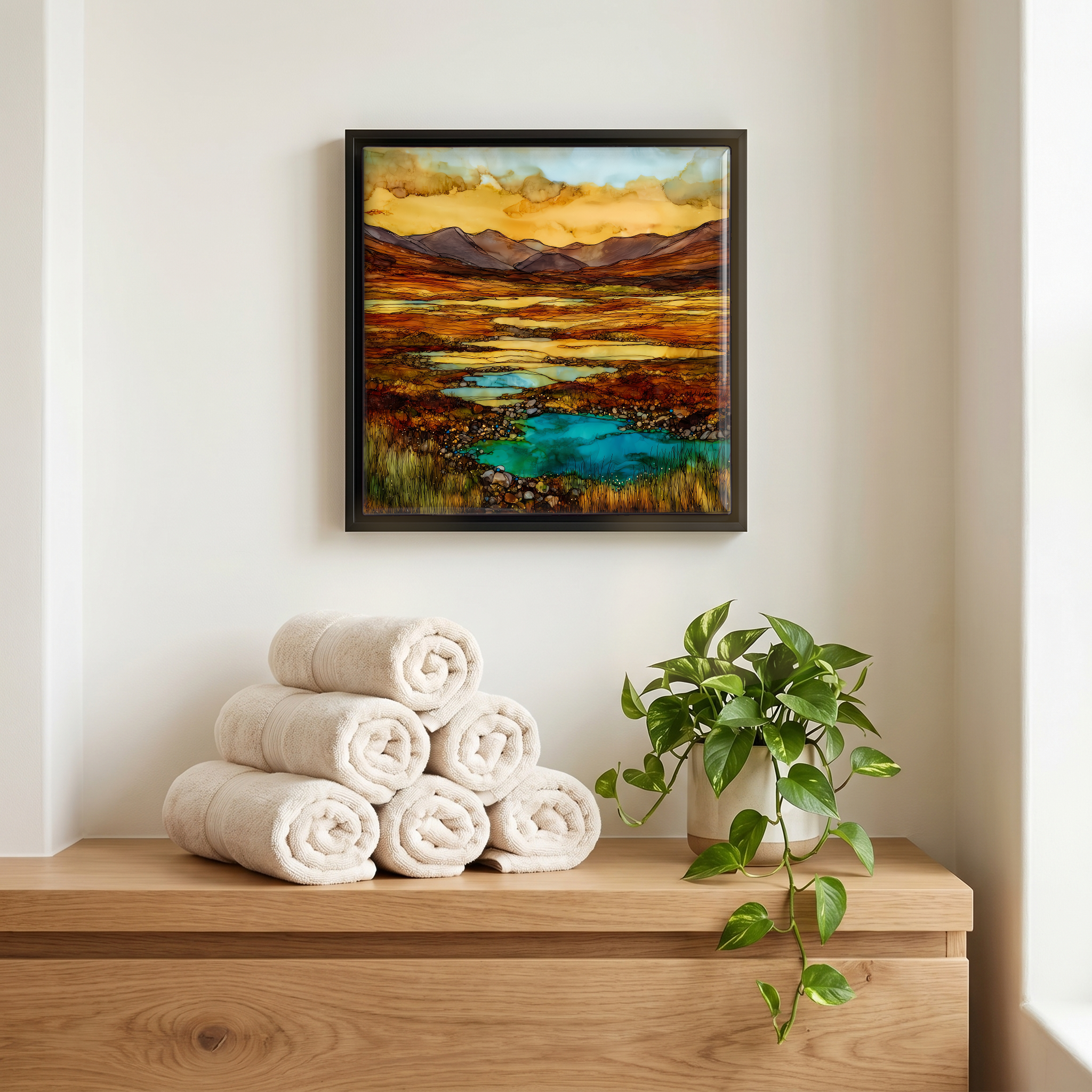
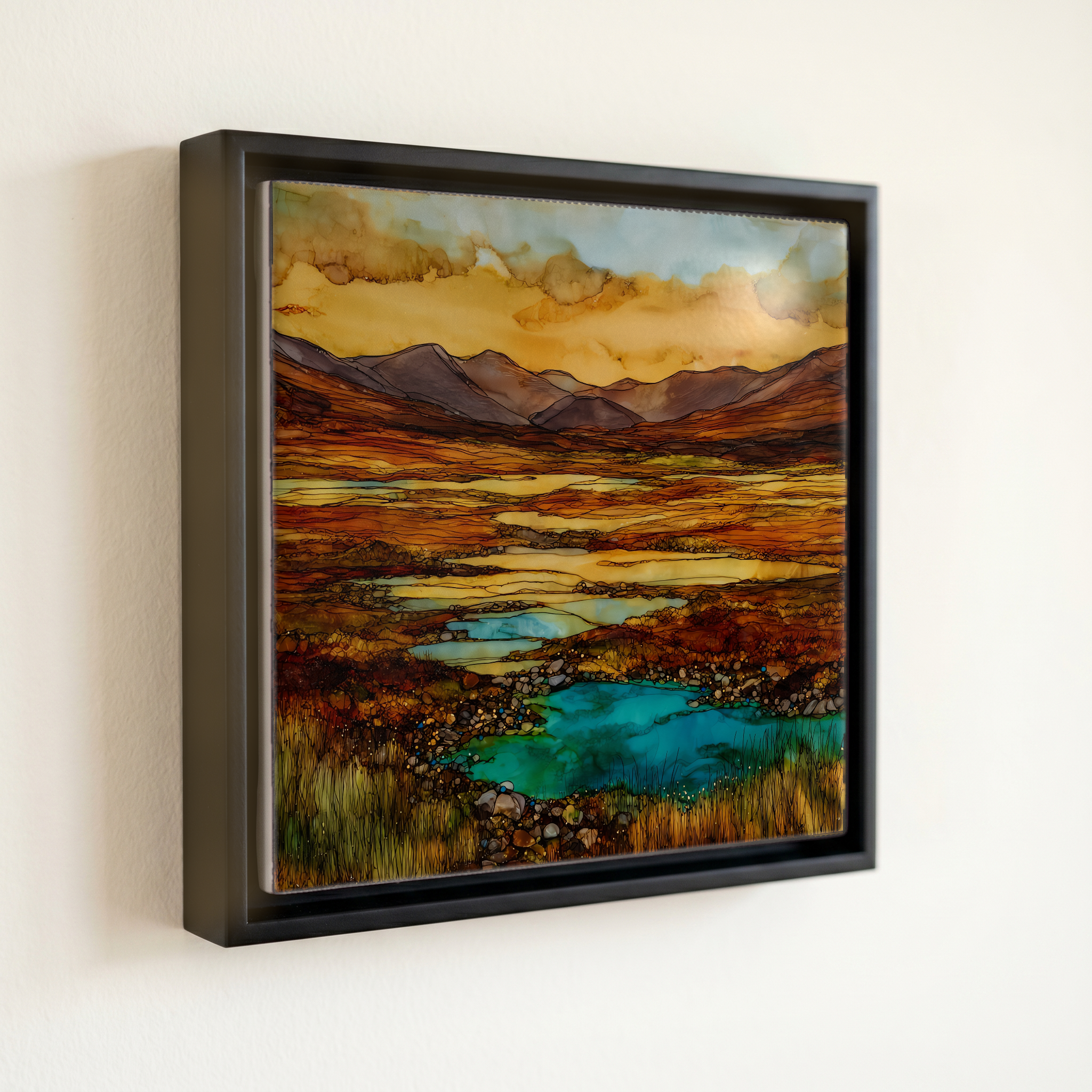
Above the linens, in a slim black surround.
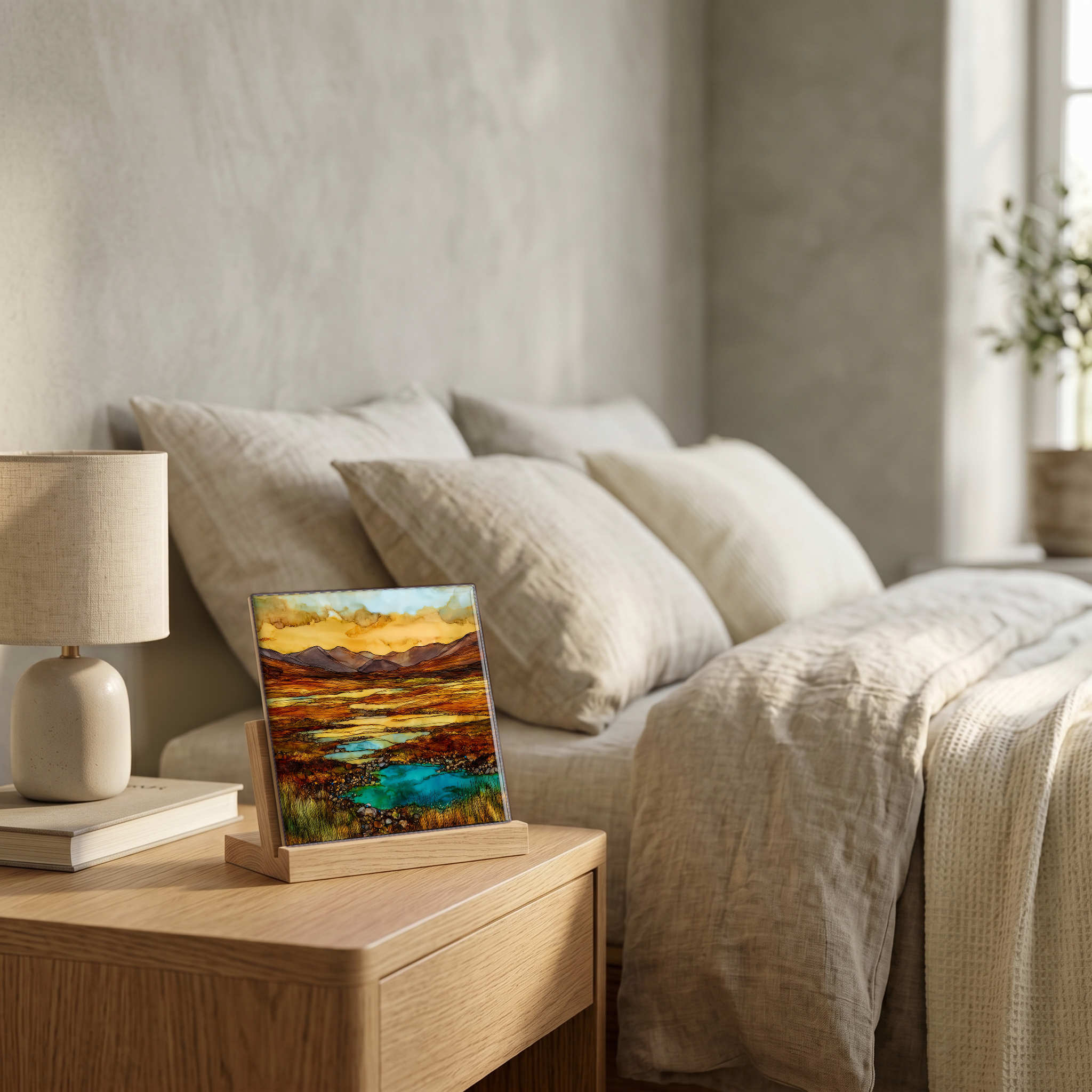
On the nightstand, on a light oak stand.
On a picture ledge, where the light comes in.
a note from the studio

Atlantic blanket bog rolls out west of Galway city, ringed by the Twelve Bens and broken by the bays of Roundstone and Killary. The land is the colour of strong tea and old silver: sphagnum moss, heather, bog cotton, dark pools that hold the sky. Roads narrow and turn. In June the cottongrass goes white in patches the size of a small field. Sheep walk where the turf has been cut. The wind off the Atlantic is constant enough that the trees, where they exist, lean inland. There are stretches where nothing moves but the light.
from the studio
shown in a slim black floating frame · 6 × 6 in
— bring it home

Connemara Bog, on ceramic.

Each tile is finished by hand in our Knoxville studio. Artwork is slowly infused into the ceramic surface under high heat and pressure, and rests beneath a thin glossy finish. The colour lives in the surface, not on top of it.

What kind of piece?
One tile — square or rectangle.
How big?
the popular one — counter, shelf, nightstand
6 × 6 in · 15 cm · 1.6 lb
Surface finish
A clear glossy finish — the artwork reads as if under resin. Ideal for show-pieces and framed wall art.
How it sits
A hidden cleat — sits ¼″ proud of the wall.
$58
Hand-finished and shipped from our studio at the foot of the Smokies. On your wall in about ten days.
size
6 × 6 in
15 cm
weighs
1.6 lb
solid in the hand
surface
ceramic, hand-finished
art rests beneath a thin glossy finish
from
Knoxville, TN
our family studio, at the foot of the Smokies
— start a Coaster Set

Pick any four 4-inch tiles — National Parks you've been to, a Smokies set, the four seasons of one place. $ for a set of , cork-backed, ready to live on the table.
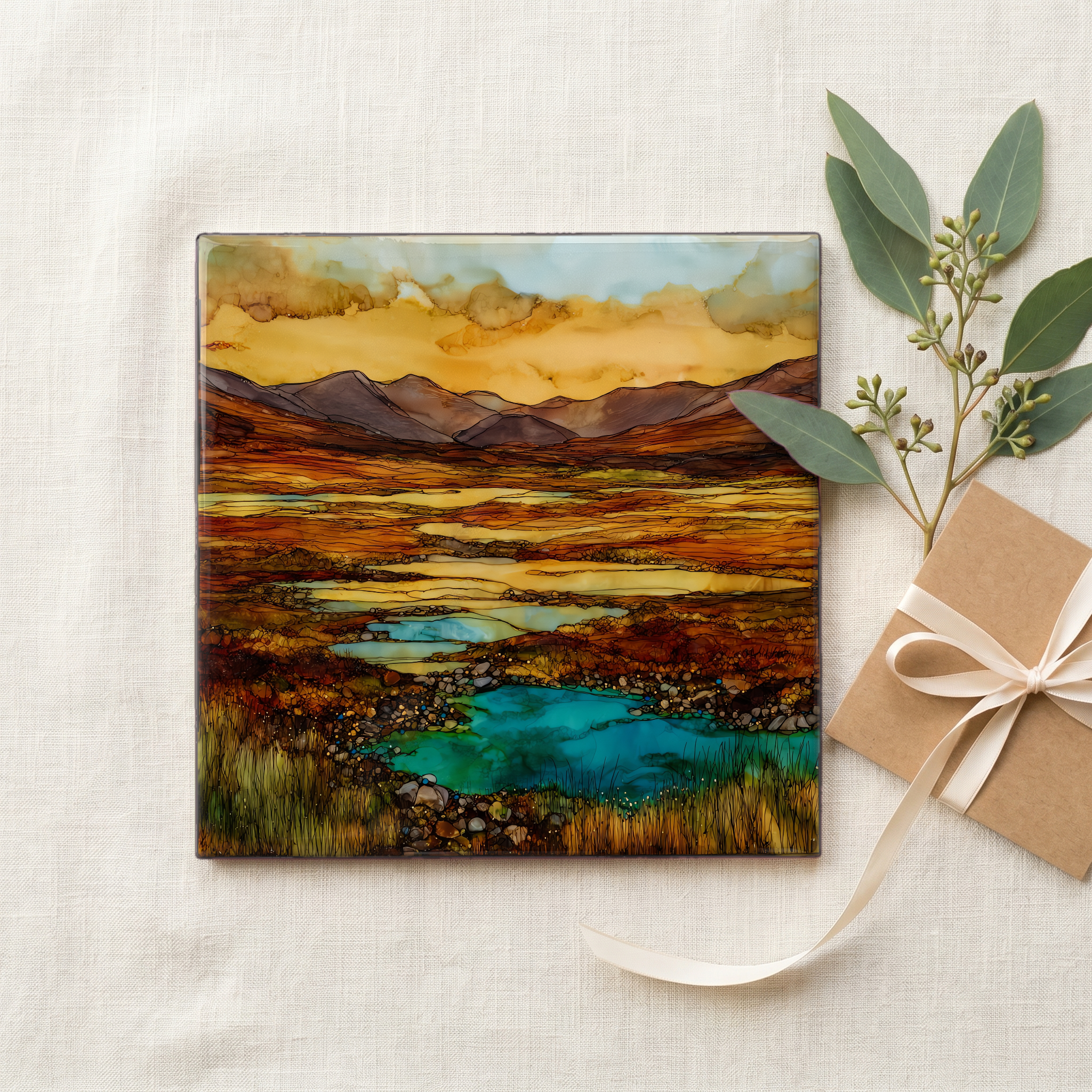
comes gift-ready
comes gift-ready

Each tile ships in a kraft box, tied with cream ribbon, with a handwritten note from the studio if you'd like to add one.
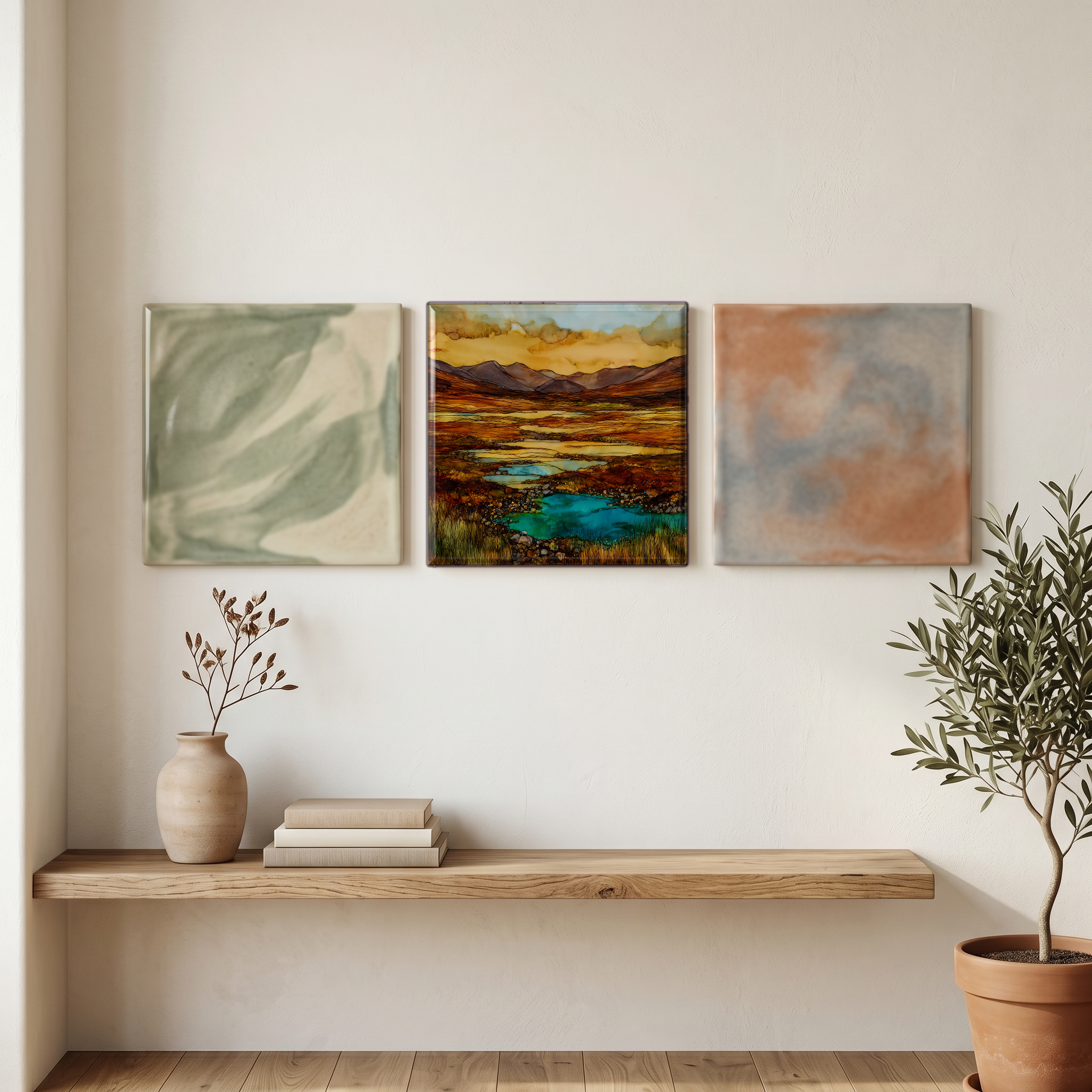
or build a grouping
or build a grouping

Three or five different vistas, hung together — a chapter of places you've been, or want to go.

about Connemara Bog

The place, in three passes.

A little of what's known, in case you fall down the rabbit hole — or want to go see it yourself.
the place

Connemara occupies the western half of County Galway, in the Connacht province of Ireland, bounded by Killary Harbour to the north and Galway Bay to the south. The Twelve Bens (Na Beanna Beola), twelve quartzite peaks rising to 729 metres at Benbaun, stand at its centre, and Atlantic blanket bog covers most of the lower ground between them. Connemara National Park, established in 1980, protects about 2,957 hectares of bog, heath, woodland, and mountain near Letterfrack. The N59 is the spine road. The region falls inside the Gaeltacht, the Irish-speaking area, and Irish remains a daily language in towns like Carna and Carraroe.

the water

Atlantic blanket bog formed across Connemara over the last 4,000 years as cool, wet conditions allowed sphagnum moss to outpace decomposition. The region receives roughly 1,400 to 2,000 mm of rainfall a year, more than enough to keep the ground saturated and the peat building. The peat in the upper layer is about 90 percent water by weight. Roundstone Bog, designated a Natural Heritage Area, is one of the most intact tracts of lowland blanket bog in western Europe. The dark pools across the surface are bog hollows, and the fibrous brown layers beneath, when cut and dried, were the fuel that heated houses across the region for centuries.

the season

The bog reads differently each month. In late May and June, common cottongrass (Eriophorum angustifolium) sends up the white seed heads that turn whole stretches of ground pale. From August into early September, ling heather (Calluna vulgaris) flowers across the high ground and the bog goes purple in patches large enough to read from a satellite. Autumn brings rust to the molinia grasses and russets to the bracken on the lower slopes. The dark months belong to the wind and the rain, when the surface holds open water and the peat absorbs whatever the Atlantic delivers. Carnivorous sundew (Drosera rotundifolia) and butterwort (Pinguicula vulgaris) catch insects on the wettest ground.

— informed by Wikipedia — Connemara
where
Ireland · Connemara, County Galway
within
Connemara National Park
the neighborhood

What's nearby.

A handful of named places within an hour's walk or short drive. Some we've already painted; some we will.
5 km N
Twelve Bens
quartzite mountain range
15 km N
Kylemore Abbey
Benedictine abbey
25 km N
Killary Harbour
fjord
20 km S
Roundstone
harbour village
15 km W
Clifden
market town
18 km W
Sky Road
coastal drive
N
Connemara Bog
Twelve Bens
Kylemore Abbey
Killary Harbour
Roundstone
Clifden
Sky Road
common questions

What people ask.

A few questions we get about Connemara Bog — and about bringing the piece home.
about the place

Connemara is the western region of County Galway, in the Connacht province of Ireland. It runs from Killary Harbour on the north to Galway Bay on the south, with the Twelve Bens at its centre and the Atlantic along its western edge.

Connemara holds one of the largest tracts of intact Atlantic blanket bog in western Europe. The combination of high rainfall, low temperatures, and acidic underlying granite has kept sphagnum moss alive and accumulating for about four thousand years, building peat across most of the lower ground.

Blanket bog forms where rainfall exceeds evaporation by enough to keep the soil saturated. In Connemara, the Atlantic delivers roughly 1,400 to 2,000 mm of rain a year. Sphagnum moss grows faster than it decomposes in those conditions, and the dead layers compress over centuries into peat.

Common cottongrass (Eriophorum angustifolium) sends up its white seed heads in late May and June. From a distance the bog can look as if patches of it are snow-covered. By mid-July the heads dry and the colour shifts back to brown and ochre.

Connemara National Park was established in 1980 and covers about 2,957 hectares near Letterfrack. It protects bog, heath, woodland, and mountain terrain, including parts of the Twelve Bens range. The Diamond Hill loop is the most-walked trail and rises to 442 metres.

The Gaeltacht is the set of regions in Ireland where Irish (Gaeilge) remains a daily community language. Western Connemara, including Carna, Carraroe, and Cill Chiaráin, is among the strongest Gaeltacht districts. Place names on bog and townland are still given in Irish first.

Open blanket bog is dangerous to cross without local knowledge. The surface looks solid and is often not. The recommended way to see Connemara bog up close is on marked trails inside Connemara National Park or on boardwalks at managed sites, where access is controlled and the ground is reinforced.

about the piece in your home

It has been a meaningful gift for customers with ties to western Ireland. The Connemara bog is one of the most recognisable Irish landscapes for anyone with family from Galway, Mayo, or the Aran Islands. A Small or Medium with a handwritten note from the studio carries well.

The palette runs through tannin browns, peat blacks, silver-grey water, and the occasional purple of heather. The tile sits well in Irish-cottage interiors, Mountain-modern rooms with leather and wool, and Earthy Maximalist spaces with botanical prints. It softens a room that has too much white.

Biophilic design asks for natural materials, landscape imagery, and a palette pulled from a real place. A Connemara bog tile carries all three and sits well next to linen, oak, and unfired clay. It works in a room where the goal is calm rather than contrast.

Above a sofa, a single Large reads from across the room, and a 4-tile Mural carries a long wall. Above a narrow console, a Medium sits in proportion. For an entry wall that needs a single statement piece, a 9-tile Mural becomes the focal point.

Yes. For showers, backsplashes, and bathroom walls, order it in the Dura Satin or Matte finish. Both are scratch-resistant, hold up to steam and water, and clean easily. The Glossy finish is reserved for framed pieces displayed away from direct splash zones.

A soft microfibre cloth and warm water is enough for routine cleaning, and the same applies once a tile is installed. Avoid abrasive pads, scouring powders, and acidic bathroom cleaners, which can dull the surface finish over time. The colour itself lives in the ceramic surface.

Yes. Every WenderVista tile is original art from a single studio in Knoxville, Tennessee, curated by Reid Wender. The work is not licensed from other artists and is not stock imagery. Each piece is hand-finished before it ships.

if this one stayed with you

A few you might also love.

Hand-picked by the eye that found Sorapis. Same air, same kind of quiet.