Wender·Vista
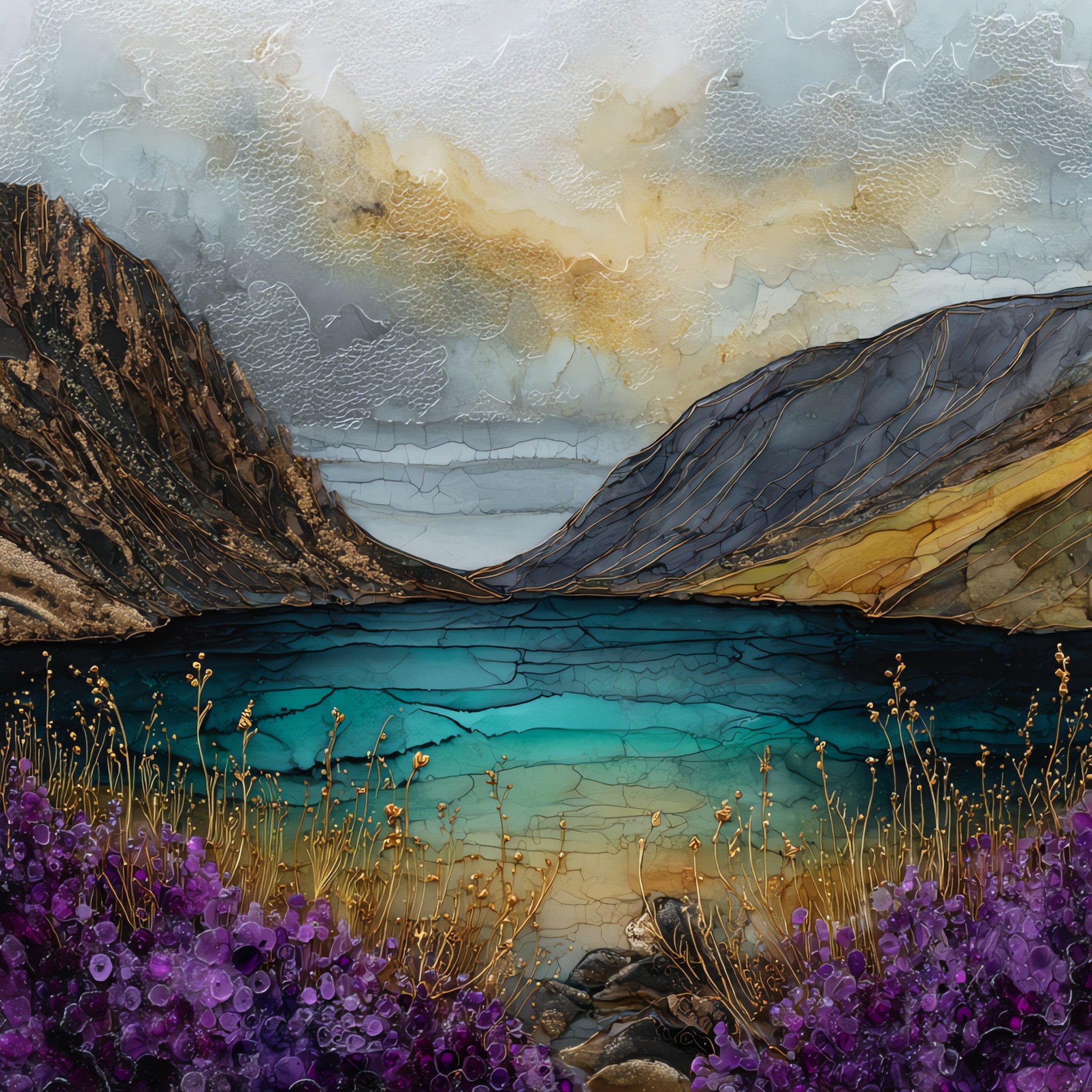
Comeragh Mountains
shown on ceramic, 12-inch tileIreland
in the south-east of Ireland, between Dungarvan and Clonmel

Comeragh Mountains

— the dark water at the foot of the wall.

Where it lives

Not only on a wall.

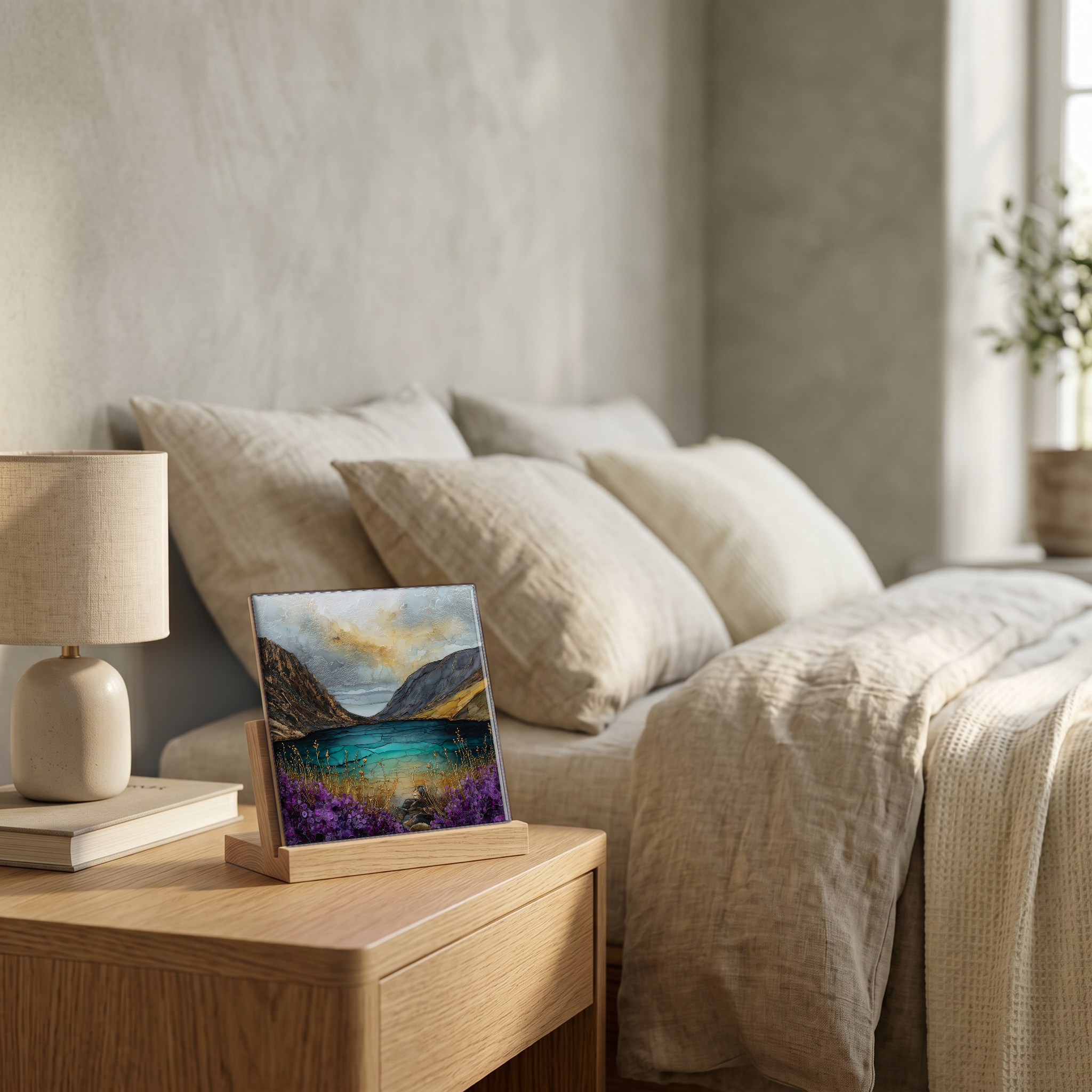
A small tile on the nightstand catching the morning. A larger one above the fire. Yours, wherever you spend the slow hours.
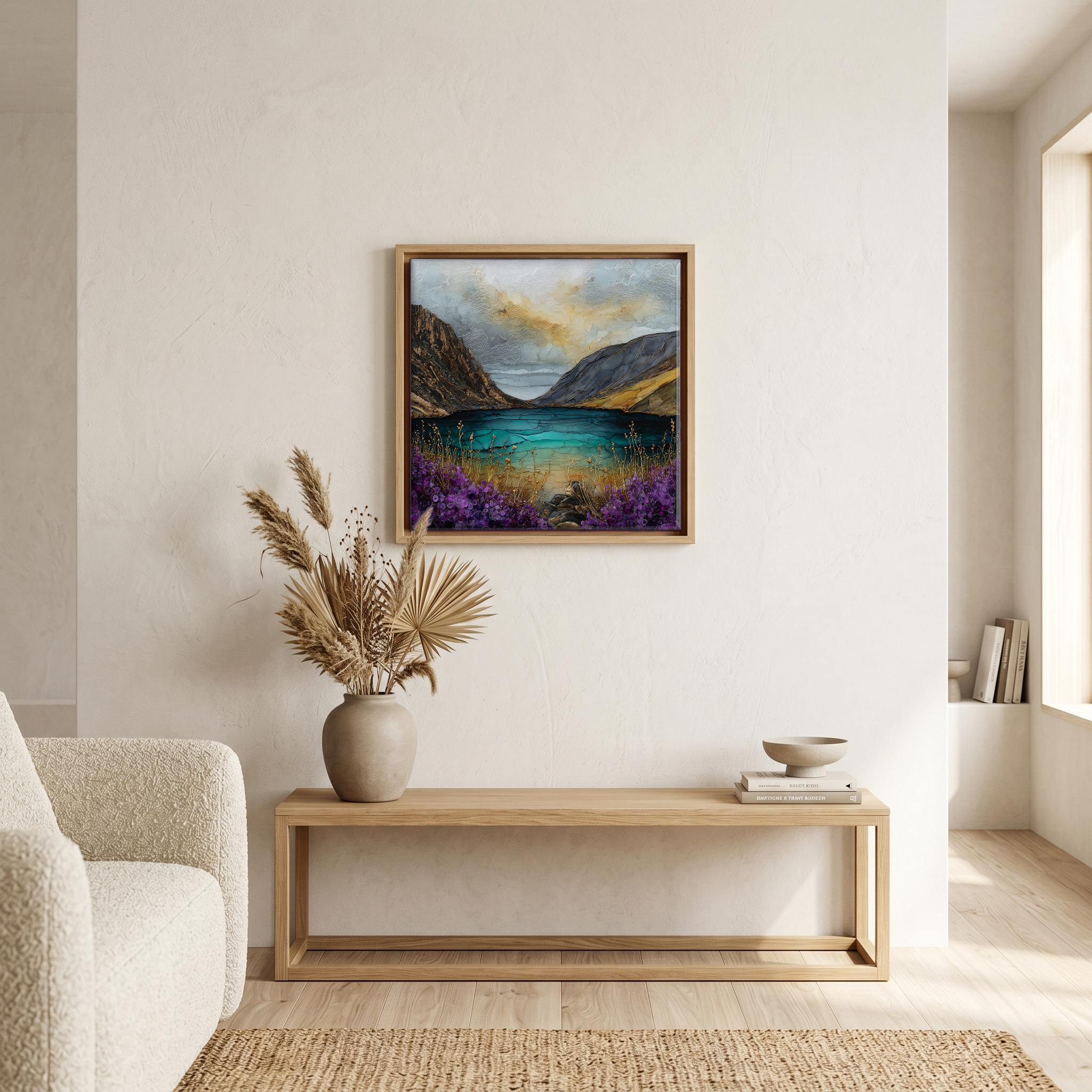
Above the bench, in a warm oak surround.
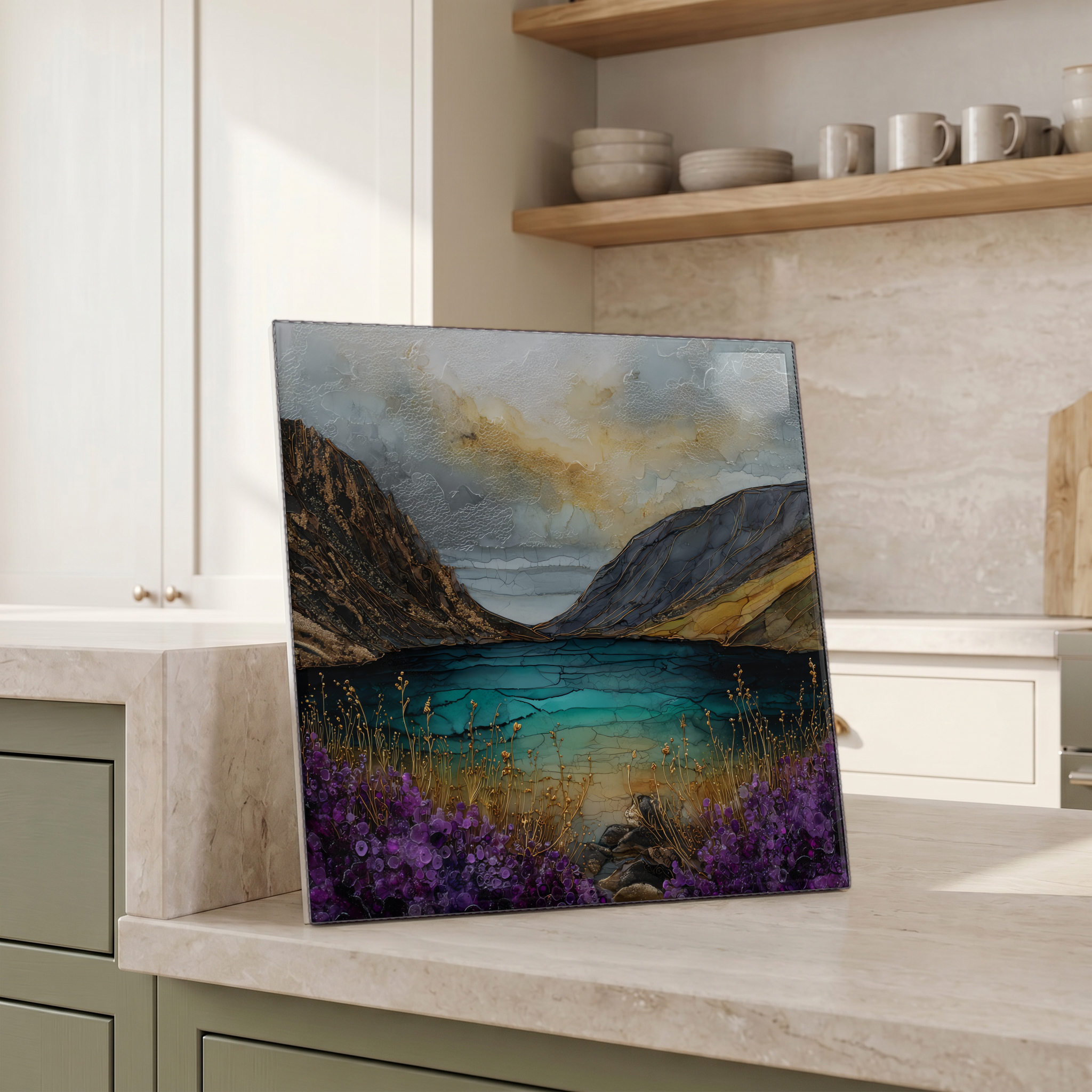
Beside the kettle, propped on the counter.
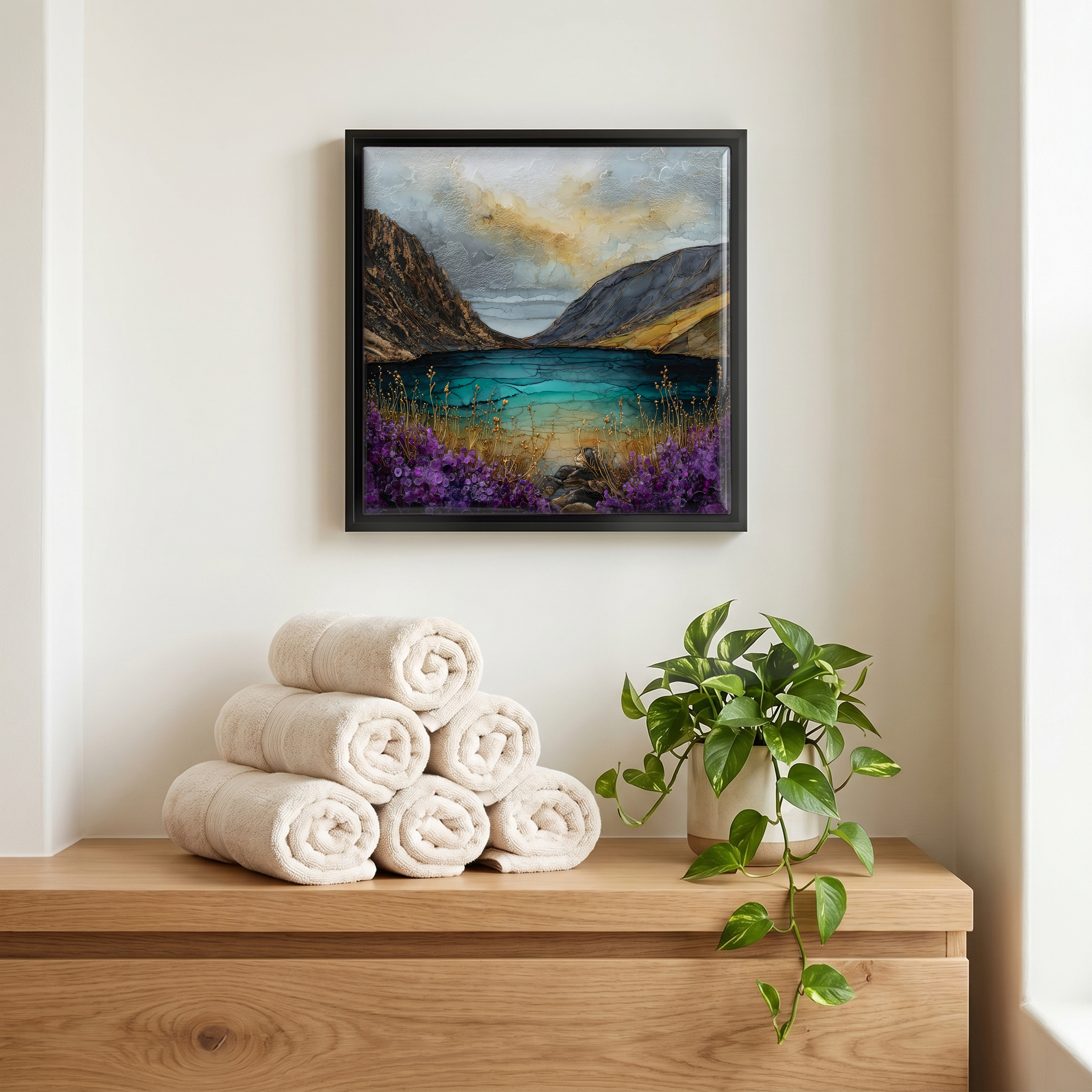
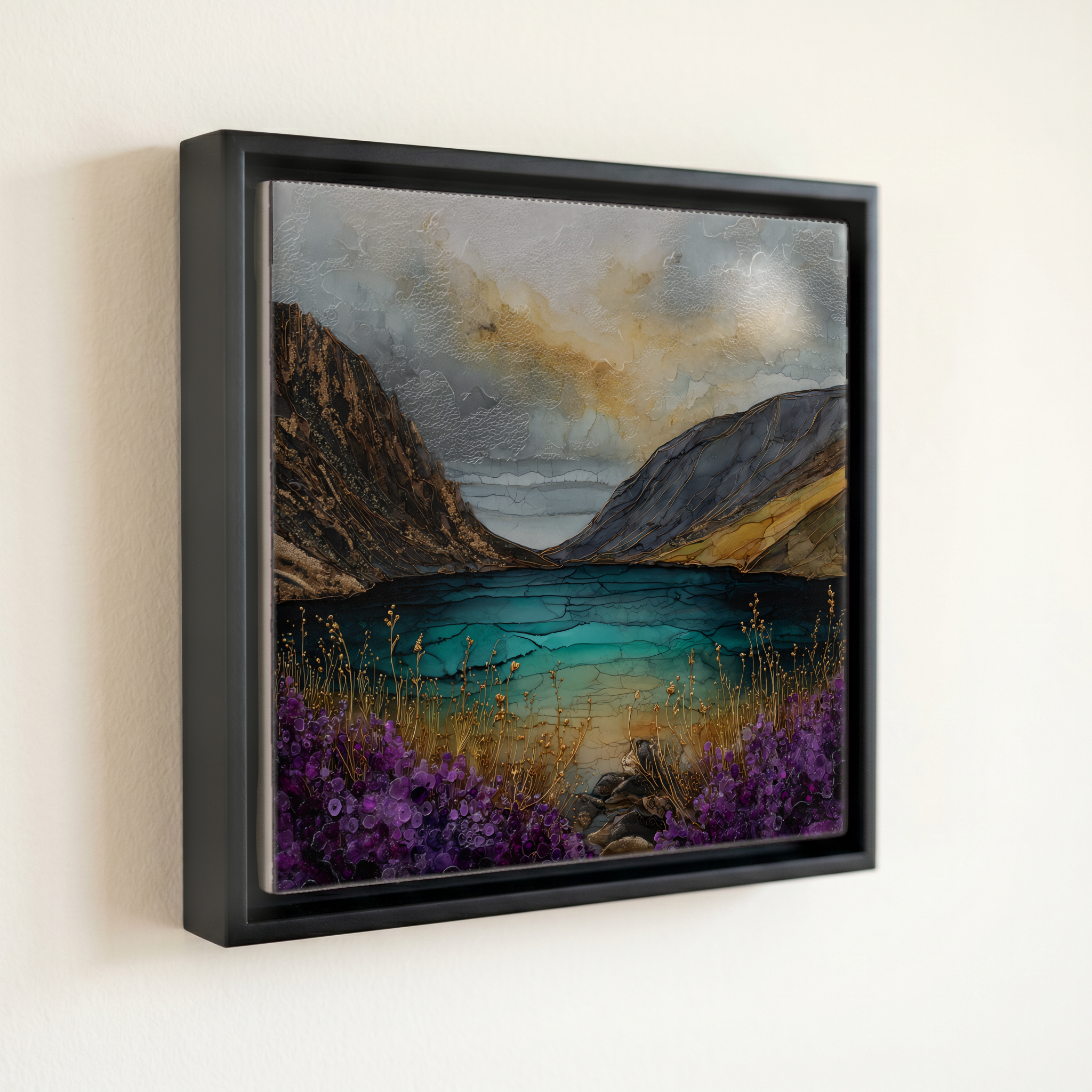
Above the linens, in a slim black surround.
On the nightstand, on a light oak stand.
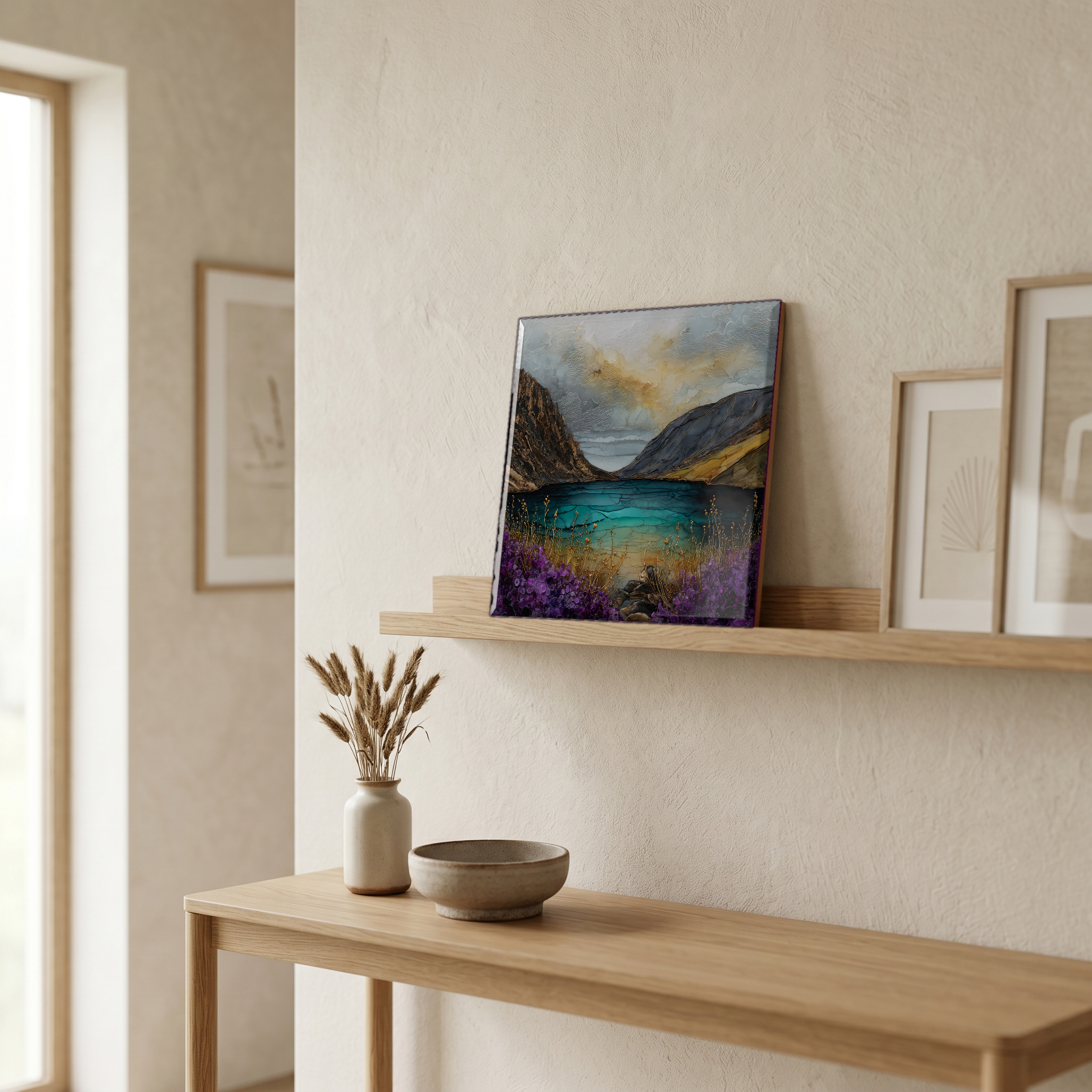
On a picture ledge, where the light comes in.
a note from the studio

Old Red Sandstone shoulders rising from south-east Ireland, ringed by corrie lakes the glaciers left behind. Coumshingaun is the one people come for: a near-circular lake under a horseshoe wall of cliff almost 1,200 feet high, often described as one of the finest examples of a corrie in Europe. Mahon Falls drops off the western shoulder in a single thread of white. The light here is Atlantic light, washed and changeable, and the lakes hold the cloud the same way they hold the sky.
from the studio
shown in a slim black floating frame · 6 × 6 in
— bring it home

Comeragh Mountains, on ceramic.

Each tile is finished by hand in our Knoxville studio. Artwork is slowly infused into the ceramic surface under high heat and pressure, and rests beneath a thin glossy finish. The colour lives in the surface, not on top of it.

What kind of piece?
One tile — square or rectangle.
How big?
the popular one — counter, shelf, nightstand
6 × 6 in · 15 cm · 1.6 lb
Surface finish
A clear glossy finish — the artwork reads as if under resin. Ideal for show-pieces and framed wall art.
How it sits
A hidden cleat — sits ¼″ proud of the wall.
$58
Hand-finished and shipped from our studio at the foot of the Smokies. On your wall in about ten days.
size
6 × 6 in
15 cm
weighs
1.6 lb
solid in the hand
surface
ceramic, hand-finished
art rests beneath a thin glossy finish
from
Knoxville, TN
our family studio, at the foot of the Smokies
— start a Coaster Set

Pick any four 4-inch tiles — National Parks you've been to, a Smokies set, the four seasons of one place. $ for a set of , cork-backed, ready to live on the table.
comes gift-ready
comes gift-ready

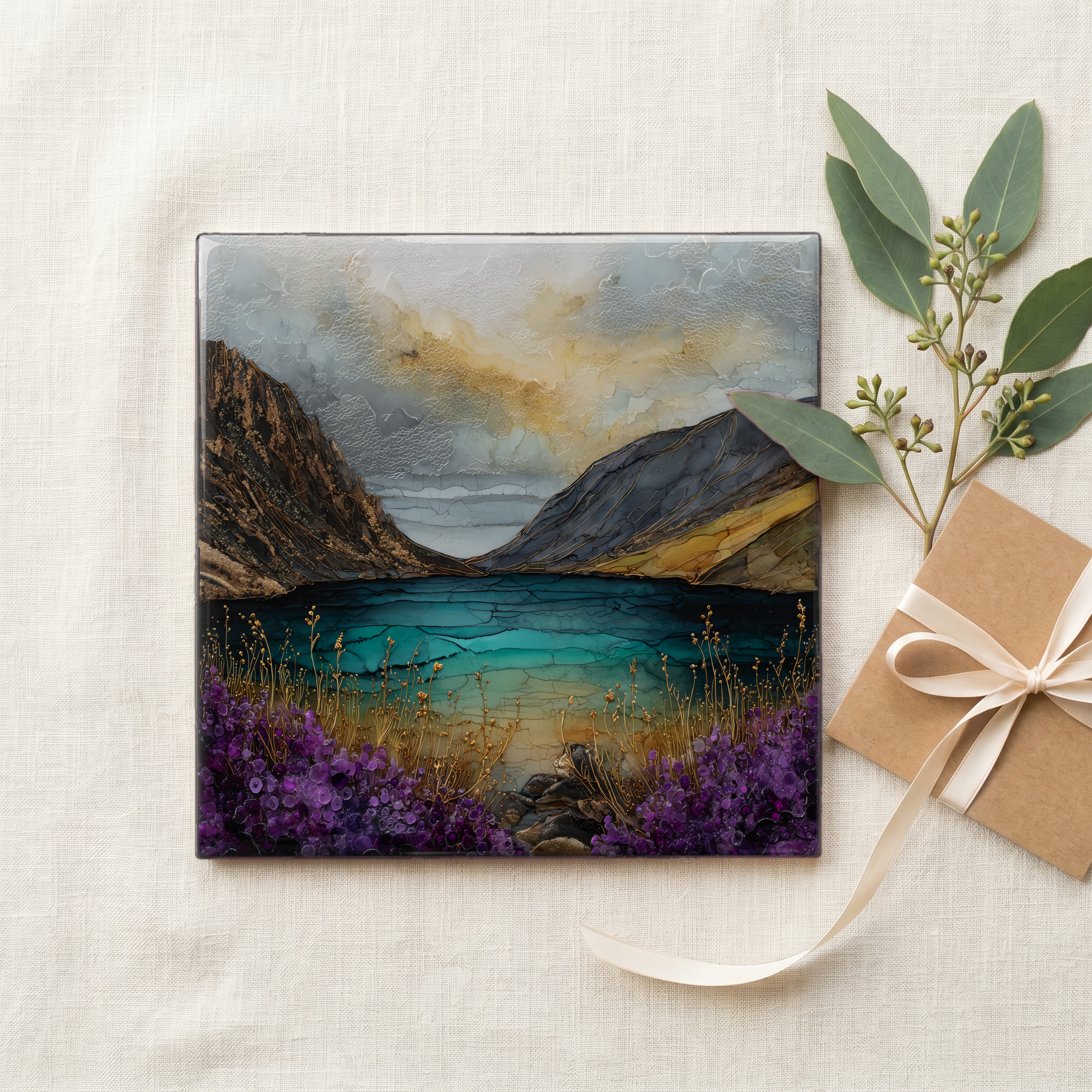
Each tile ships in a kraft box, tied with cream ribbon, with a handwritten note from the studio if you'd like to add one.
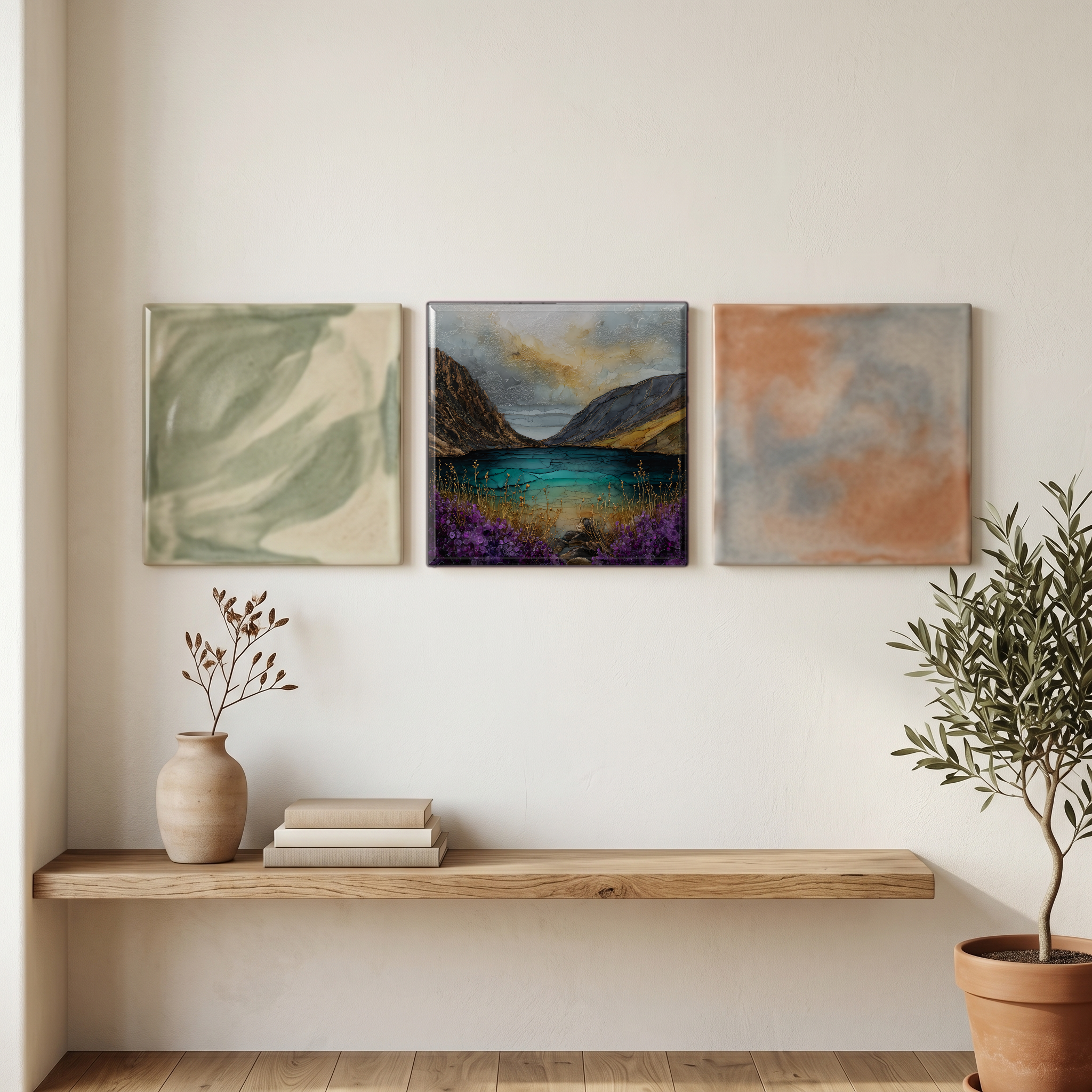
or build a grouping
or build a grouping

Three or five different vistas, hung together — a chapter of places you've been, or want to go.

about Comeragh Mountains

The place, in three passes.

A little of what's known, in case you fall down the rabbit hole — or want to go see it yourself.
the place

The Comeragh Mountains rise in County Waterford in the south-east of Ireland, between the towns of Dungarvan, Clonmel and Carrick-on-Suir. The range stretches roughly 20 kilometres north to south and reaches its summit at Fauscoum, 792 metres (2,598 feet) above the sea. Its closest neighbours are the Monavullagh Mountains to the south and the Knockmealdowns to the west, forming a continuous belt of Old Red Sandstone country across central Munster. Access is usually from the R676 along the western edge or the R675 along the coast, with walking trailheads near Mahon Falls and Coumshingaun. The range lies about 200 kilometres south-west of Dublin and a half-hour drive inland from Dungarvan Bay.

the stone

The Comeraghs are built of Old Red Sandstone, a Devonian-age rock laid down roughly 400 million years ago when this part of Ireland sat in a warm continental basin. The same formation runs through the neighbouring Knockmealdown Mountains and gives the Comeraghs their reddish-brown weathering colour, especially visible on the cliffs above Coumshingaun. The shapes that define the range, though, are younger: corrie bowls, hanging valleys and U-shaped notches cut into the sandstone during the last glaciation, which ended about 11,700 years ago. The horseshoe wall above Coumshingaun rises some 365 metres (about 1,200 feet) from the lake surface and is widely treated as a textbook cirque in Irish geography teaching.

the visit

Two walks define a visit to the Comeraghs. Mahon Falls, an 80-metre cascade on the western flank, is reached by a short marked path from the car park off the R676 above Kilmacthomas; the round trip from car park to the base of the falls takes about an hour. The Coumshingaun loop is more demanding: a circular hike of roughly 7.5 kilometres up onto the rim of the cirque and back, with steep drops and exposed sections that should not be attempted in low cloud or strong wind. Both trailheads sit within a 25-minute drive of Dungarvan, the nearest town with hotels, restaurants and a tourist office. There are no entry fees; the mountains are open country.

where
Ireland · County Waterford, Munster
elevation
792 m · 2,598 ft
position
52.2300° N · 7.5500° W
the neighborhood

What's nearby.

A handful of named places within an hour's walk or short drive. Some we've already painted; some we will.
5 km W
Mahon Falls
waterfall
4 km E
Coumshingaun Lough
corrie lake
3 km W
Crotty's Lake
corrie lake
6 km N
Nire Valley
glaciated valley
15 km S
Dungarvan
harbour town
20 km N
Clonmel
Suir Valley town
22 km NE
Carrick-on-Suir
river town
N
Comeragh Mountains
Mahon Falls
Coumshingaun Lough
Crotty's Lake
Nire Valley
Dungarvan
Clonmel
Carrick-on-Suir
common questions

What people ask.

A few questions we get about Comeragh Mountains — and about bringing the piece home.
about the place

The Comeraghs are in County Waterford, in the south-east of Ireland. They lie between Dungarvan on the coast and Clonmel in the Suir Valley, about 200 kilometres south-west of Dublin. The R676 road skirts the western edge of the range.

The highest summit is Fauscoum at 792 metres (2,598 feet). It sits at the centre of the range, above the head of the Nire Valley. Several other tops in the Comeraghs rise above 700 metres, including Coumfea and Knockaunapeebra.

Coumshingaun is a glacial corrie lake on the eastern side of the Comeraghs, set beneath a horseshoe wall of cliffs that rises about 365 metres (1,200 feet) from the water. It is regarded as one of the finest examples of a cirque in Europe and is widely used in Irish geography teaching.

The range is built of Old Red Sandstone, a Devonian-age sedimentary rock about 400 million years old. The same formation underlies the neighbouring Knockmealdown Mountains. The reddish-brown weathering colour is most visible on the cliff faces around Coumshingaun and along Mahon Falls.

Mahon Falls drops about 80 metres down the western flank of the Comeraghs in a single stepped cascade. The waterfall is fed by the Mahon River and is reached by a short marked path from a car park on the R676 above the village of Kilmacthomas.

Late spring through early autumn carries the longest daylight and the most settled weather, with the slopes at their greenest in May and June. The corrie lakes are at their darkest and most reflective on still mornings. Winter walks are possible but the exposed cliff sections demand experience and a clear sky.

They are not. The Comeraghs are open mountain country managed by Coillte and private landowners, with no entry fee and no central visitor centre. The nearest national parks are Killarney to the south-west and the Wicklow Mountains to the north-east; the Comeraghs themselves draw far fewer walkers than either.

about the piece in your home

It has been a meaningful gift for many of our customers with roots in Waterford, Clonmel and the Suir Valley. The Comeraghs are the mountain backdrop people from that part of Ireland grew up under, and the corrie lakes are a regional point of pride. A Coaster or Small with a handwritten note from the studio carries well.

The piece sits well in three rooms: rustic Irish-modern interiors with oak and linen, mountain-modern rooms with darker palettes and warm metals, and any space already leaning into deep blues and slate-greys. The stained-glass and alcohol-ink colour treatment picks up the dark water of the corrie lakes and the weather-washed sandstone above.

The piece reads naturally in biophilic rooms and in the coastal-modern direction now common in Irish, UK and Pacific Northwest interiors. The deep blues and slate-greys complement plant-heavy rooms and natural-fibre rugs. For a quieter wall, the Medium glossy works; for a statement, the Large or a 4-tile Mural.

Above a standard three-seat sofa, a single Large makes a strong anchor at eye level. Above a wider sofa or a sectional, a 4-tile Mural carries the wall and lets the ridge stretch out. A 9-tile Mural is the right scale for a stairwell or a large open wall in a tall room.

Yes. For a bathroom wall, a shower surround, or a kitchen backsplash, choose the Dura Satin finish or the Matte finish. The colour is slowly infused into the ceramic surface under high heat and pressure, so it does not lift or fade under steam. The Glossy finish belongs in dry rooms.

A soft microfibre cloth and warm water for everyday dust and fingerprints. For a kitchen backsplash, a non-abrasive household cleaner is fine; avoid scouring pads and bleach-based products. The thin finish stays clear with the same care that keeps any tile surface looking new.

Yes. Every WenderVista piece is curated and finished by Wender Studios in Knoxville, Tennessee, in our distinctive stained-glass and alcohol-ink visual language. The work is not licensed from a third party and is not sold elsewhere. Each tile is hand-finished in the studio.

if this one stayed with you

A few you might also love.

Hand-picked by the eye that found Sorapis. Same air, same kind of quiet.