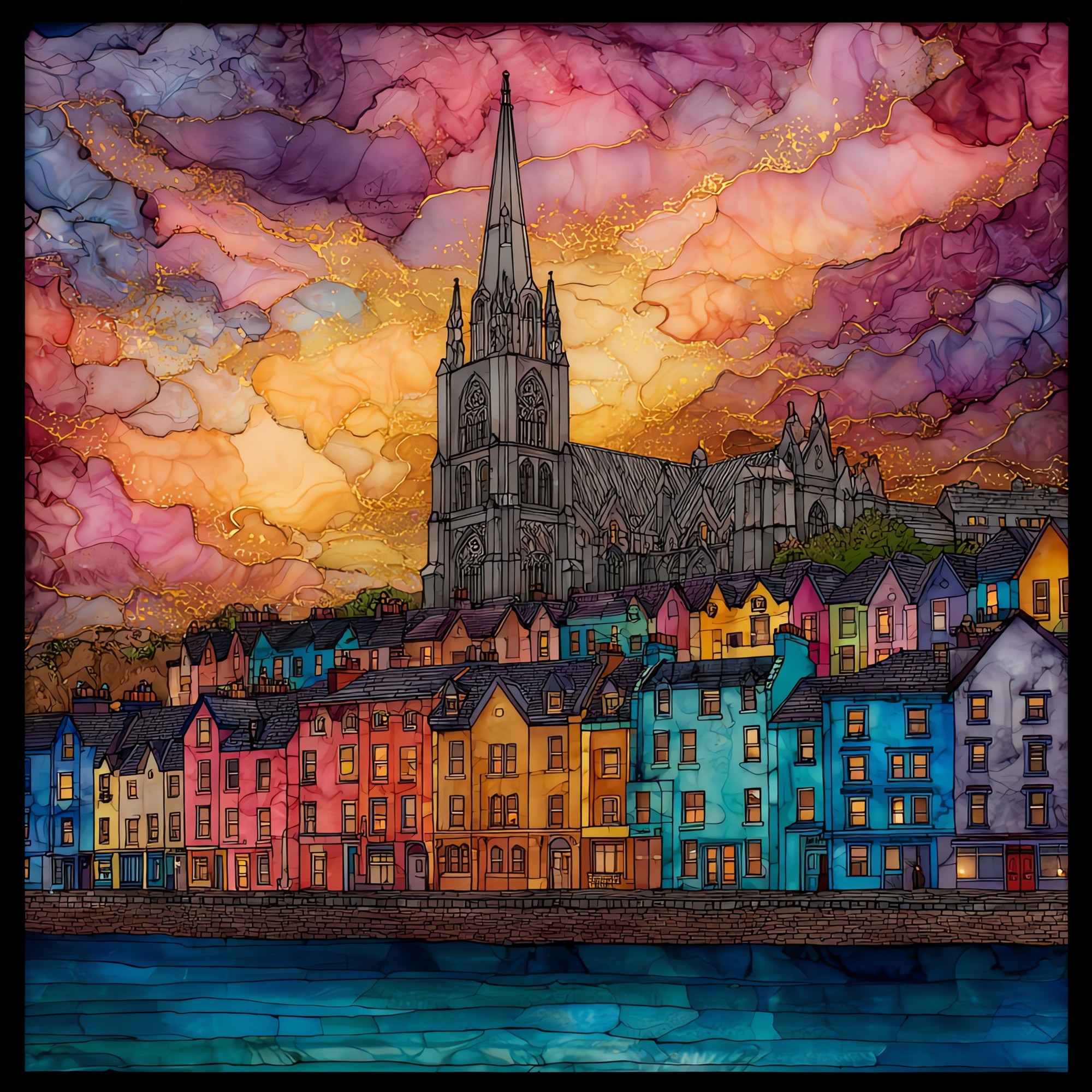
Cobh
— — the last Irish light, before the open sea.
Not only on a wall.
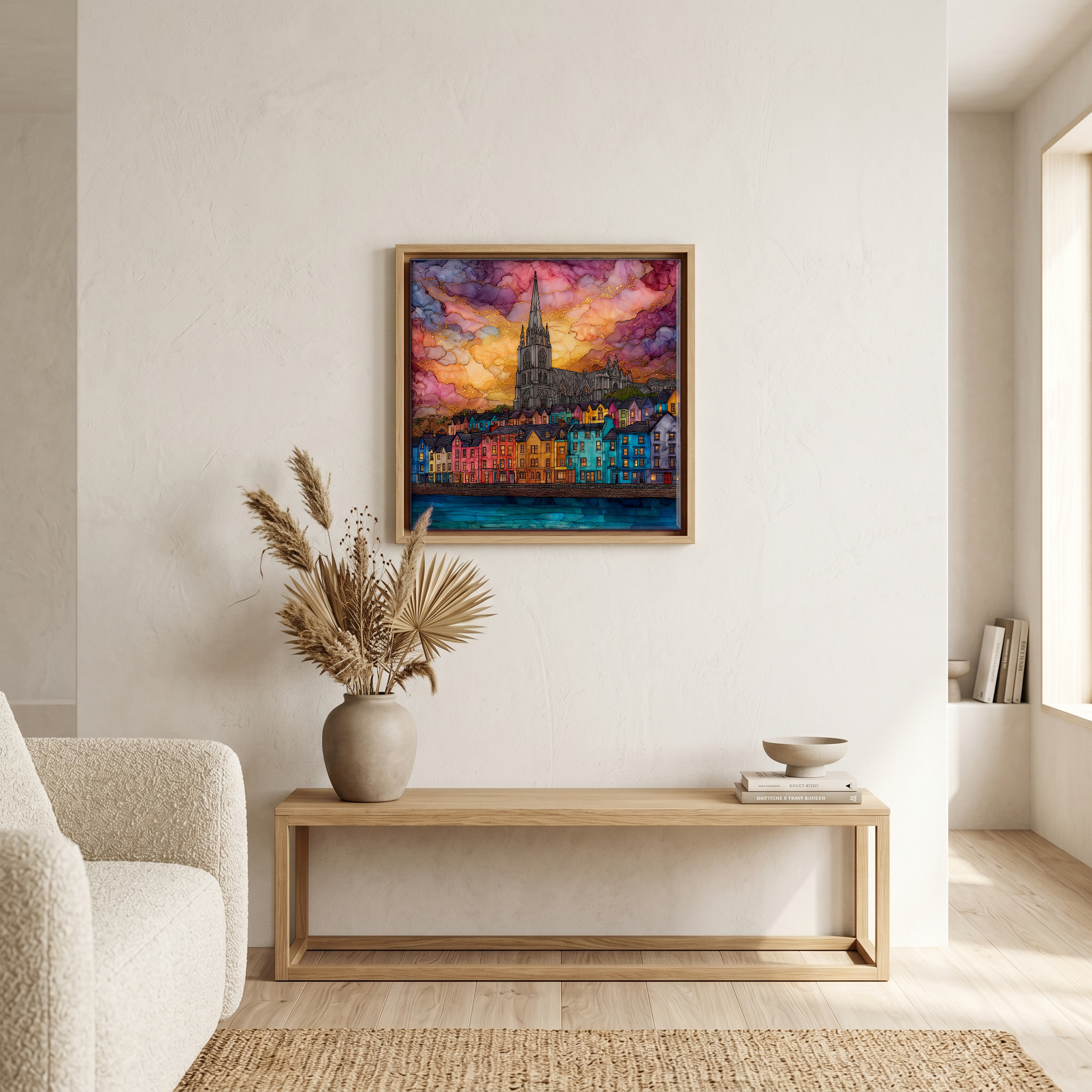
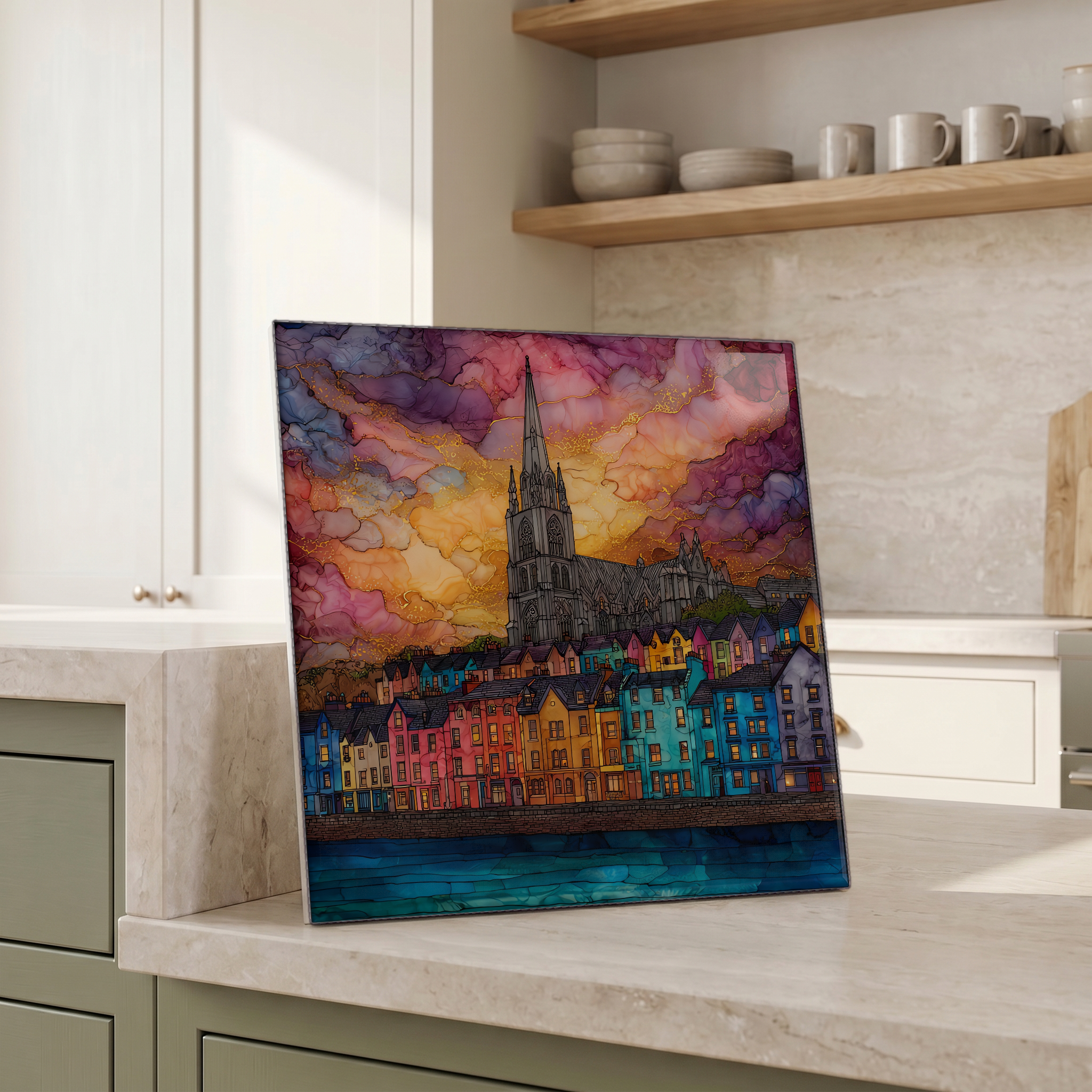
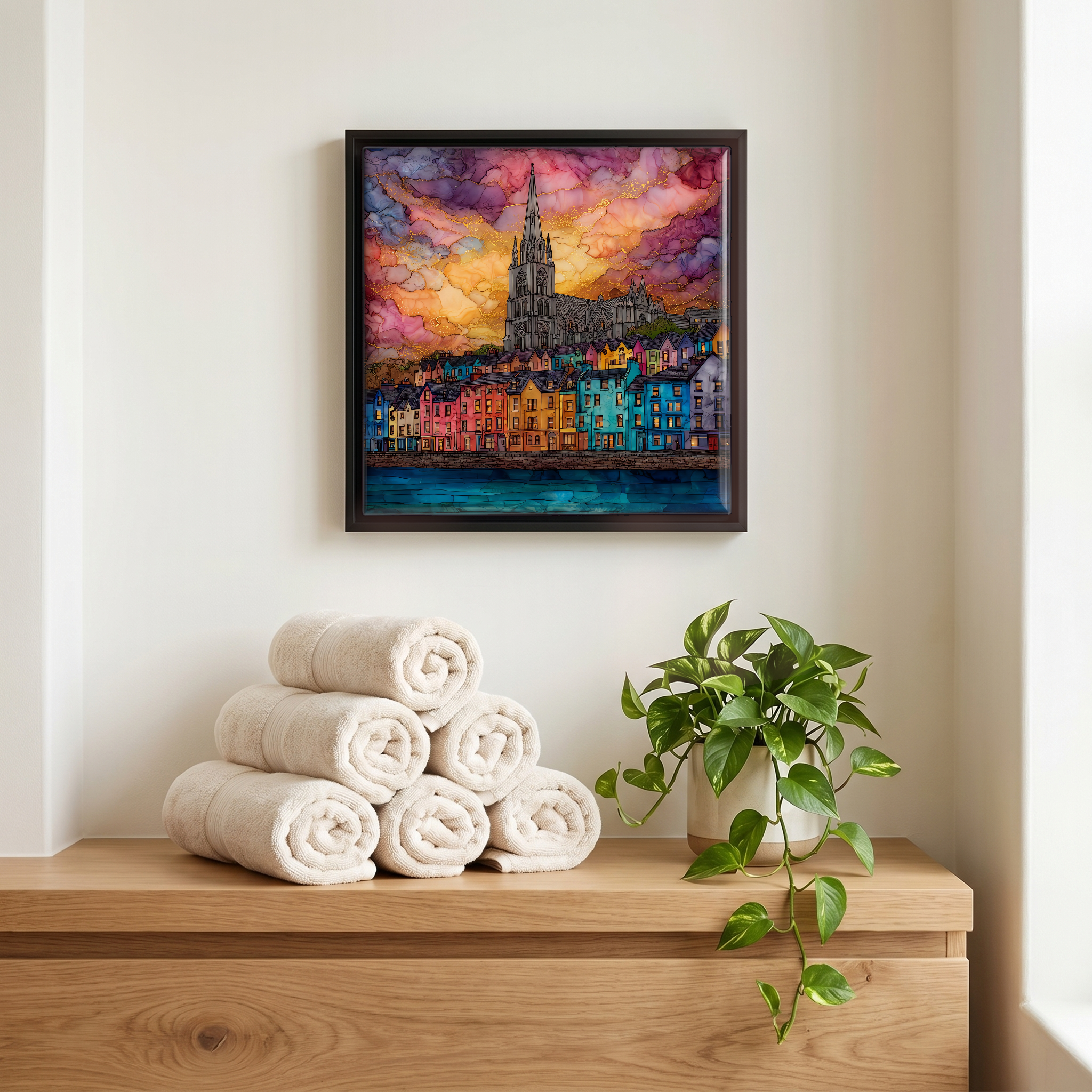
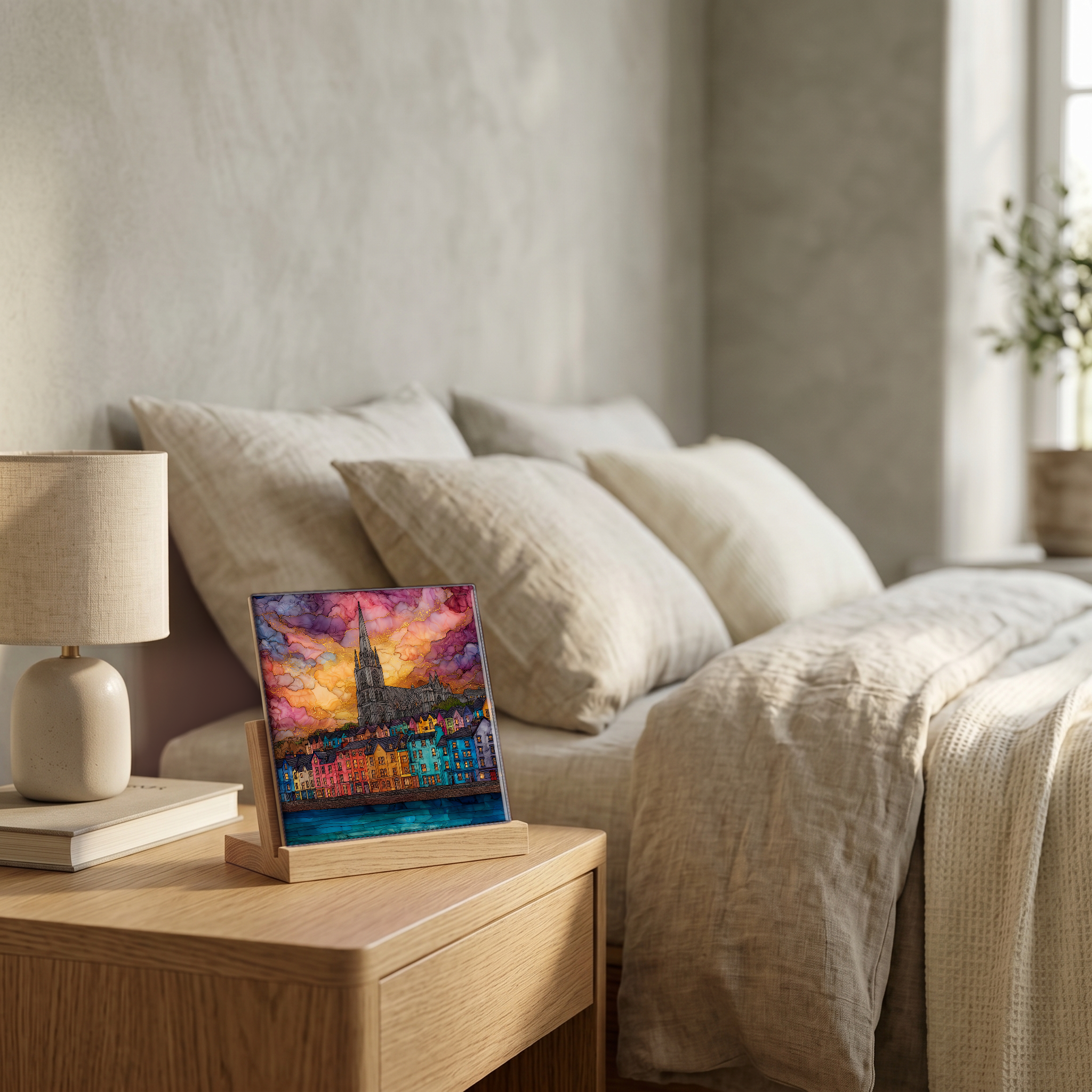
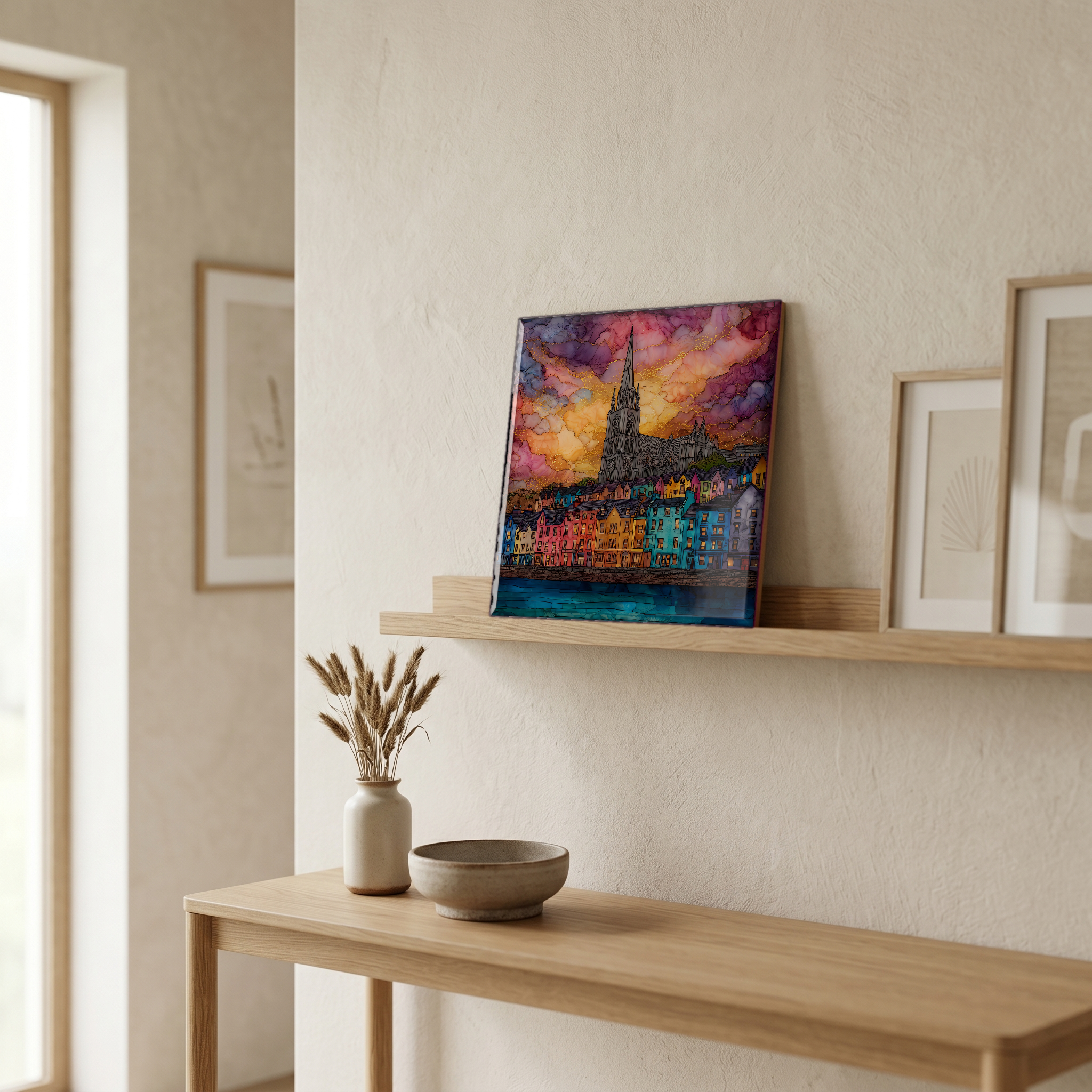
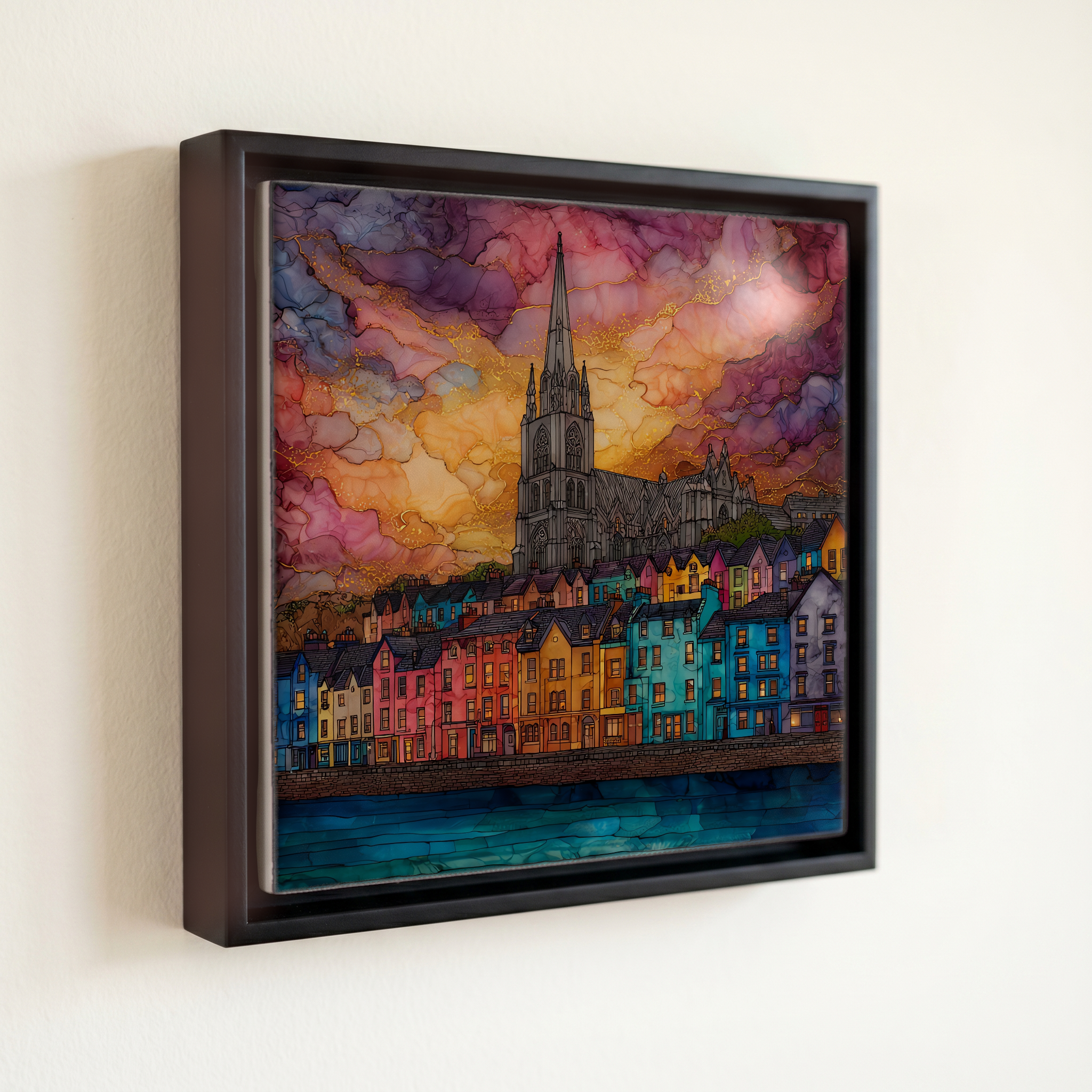
“Cobh sits on Great Island in Cork Harbour, pastel houses stacked up the hill below a cathedral that runs the sky. For two and a half million people leaving Ireland between the famine and the postwar years, Cobh was the last thing they saw of the country. The RMS Titanic stopped here on the 11th of April, 1912, took on 123 passengers, and left. Three years later, when the Lusitania was hit, the survivors and the recovered dead came back into this harbour. The town carries all of that without making a museum of itself. The bells from the cathedral carry over the water. The boats still come in.
Cobh, on ceramic.
Each tile is finished by hand in our Knoxville studio. Artwork is slowly infused into the ceramic surface under high heat and pressure, and rests beneath a thin glossy finish. The colour lives in the surface, not on top of it.
Pick any four 4-inch tiles — National Parks you've been to, a Smokies set, the four seasons of one place. $ for a set of , cork-backed, ready to live on the table.
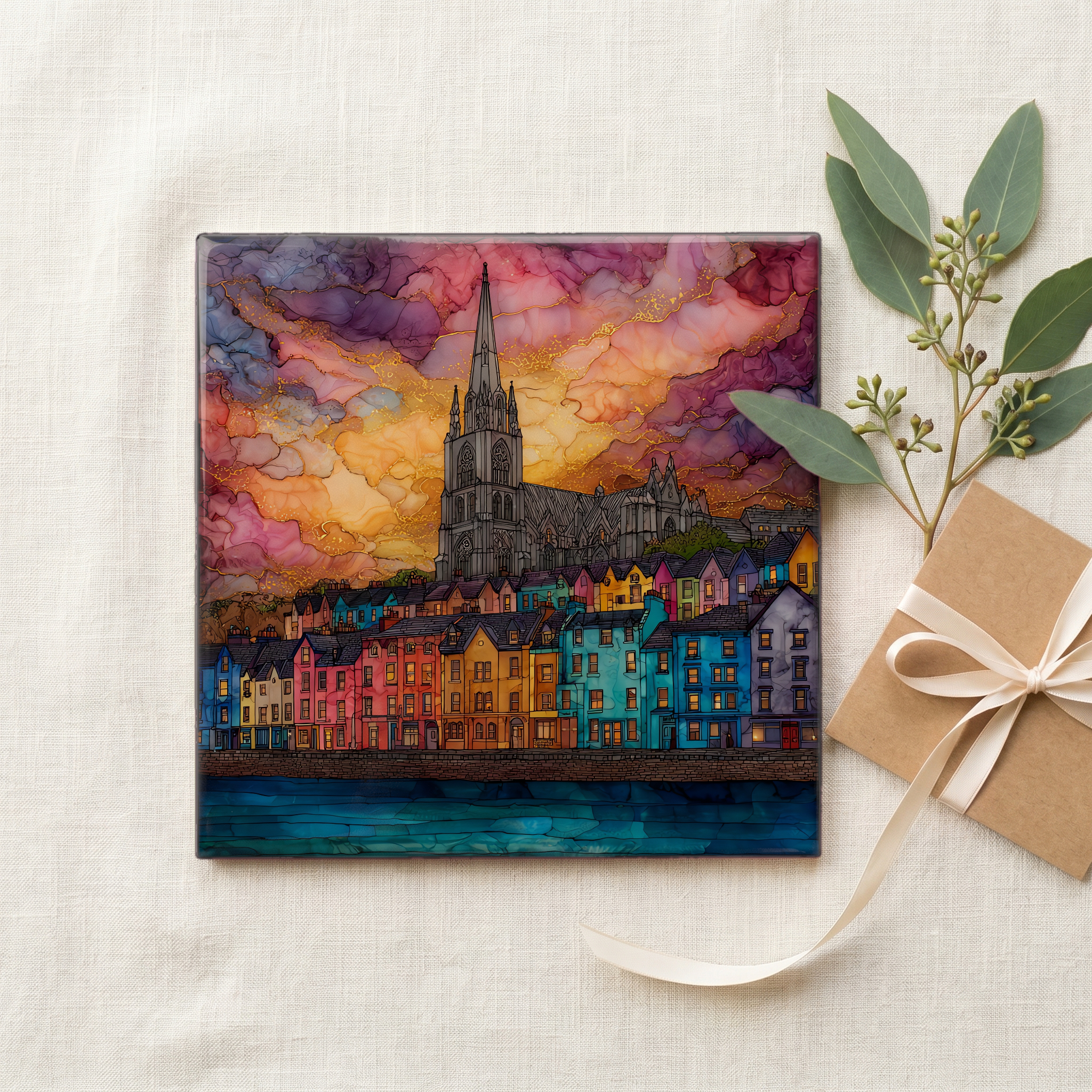
Each tile ships in a kraft box, tied with cream ribbon, with a handwritten note from the studio if you'd like to add one.
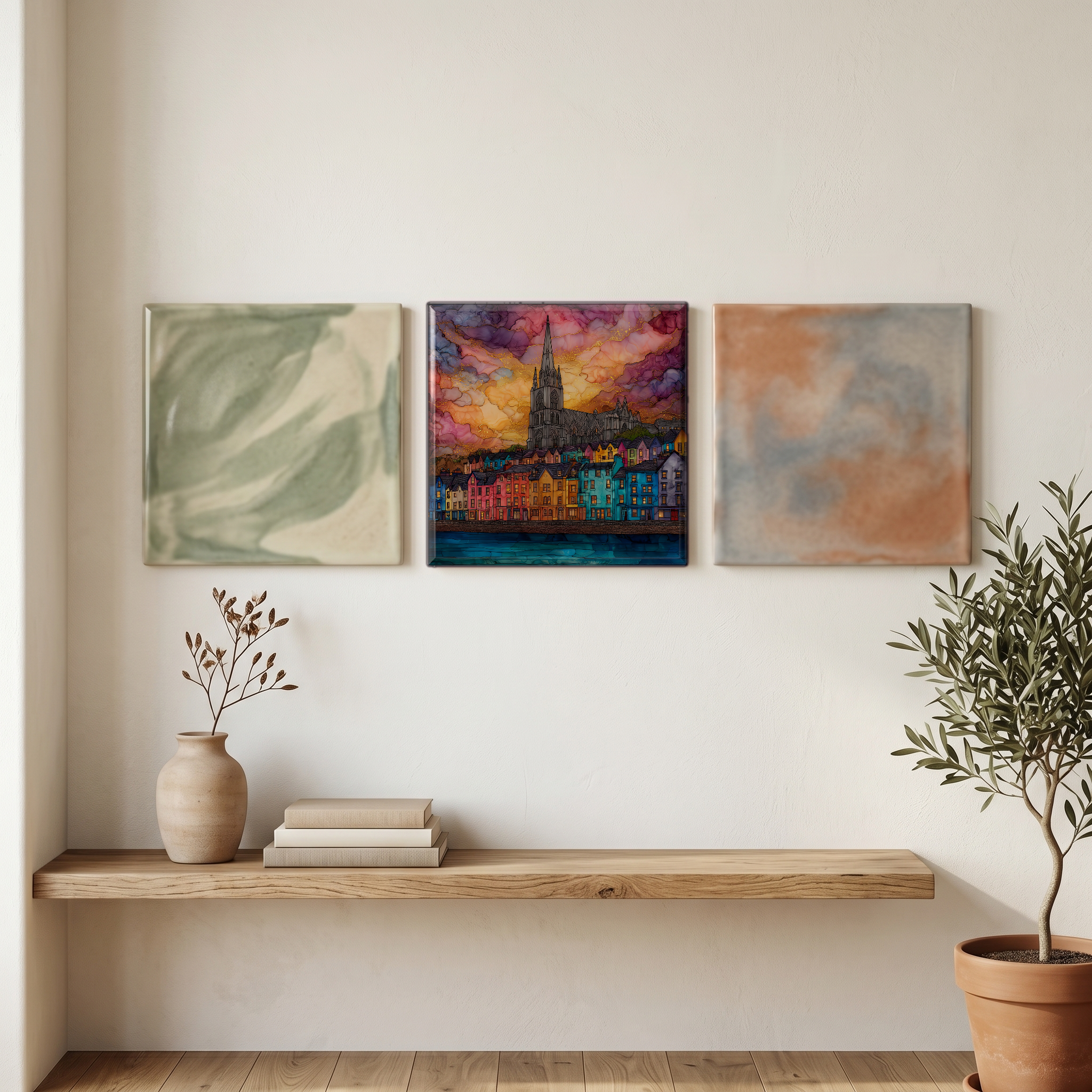
Three or five different vistas, hung together — a chapter of places you've been, or want to go.
The place, in three passes.
Cobh is a seaport town on Great Island, in the inner reaches of Cork Harbour on the south coast of Ireland, about 24 km southeast of Cork city. The town faces the harbour from a south-sloping hill, streets terracing down to the waterfront in rows of pastel Victorian houses. Cobh sat under the name *Queenstown* from 1849 to 1920, after Queen Victoria's visit to the harbour, and reverted to the Irish *Cobh* (pronounced *cove*) with the new Free State. Great Island is reached from the mainland via the Belvelly Bridge. Population is around 12,800. The town is the administrative seat of nothing in particular; its identity is the harbour itself ([Wikipedia](https://en.wikipedia.org/wiki/Cobh)).
The skyline of Cobh is held by St Colman's Cathedral, a neo-Gothic limestone building seated above the waterfront on the highest ground in town. Designed by Edward Welby Pugin and George Ashlin from 1867, it took fifty years to complete and was consecrated in 1919. The spire reaches 91 metres above its foundation, the tallest church spire in Ireland. The carillon in the bell tower carries 49 bells, the largest in Ireland and one of the largest in Europe; the bells were cast by John Taylor & Co of Loughborough and first rang in 1916. The cathedral was paid for in large part by subscription from Cork emigrants in America and Australia, many of whom never came home ([Wikipedia](https://en.wikipedia.org/wiki/St_Colman%27s_Cathedral,_Cobh)).
Cork Harbour is one of the largest natural harbours in the world by area, claimed by some sources as second only to Sydney. The deepwater channel made Cobh the last port of call for transatlantic liners running between Liverpool, Southampton and New York. The RMS Titanic anchored two miles off Roche's Point on the 11th of April, 1912, took on 123 passengers from the Queenstown tenders, and sailed for New York. The RMS Lusitania, torpedoed off the Old Head of Kinsale in May 1915, lost 1,198 of her 1,962 souls; the survivors and the recovered dead were brought in here. Between 1848 and 1950, an estimated 2.5 million Irish emigrants left from this quay ([Wikipedia](https://en.wikipedia.org/wiki/Cobh)).