Wender·Vista
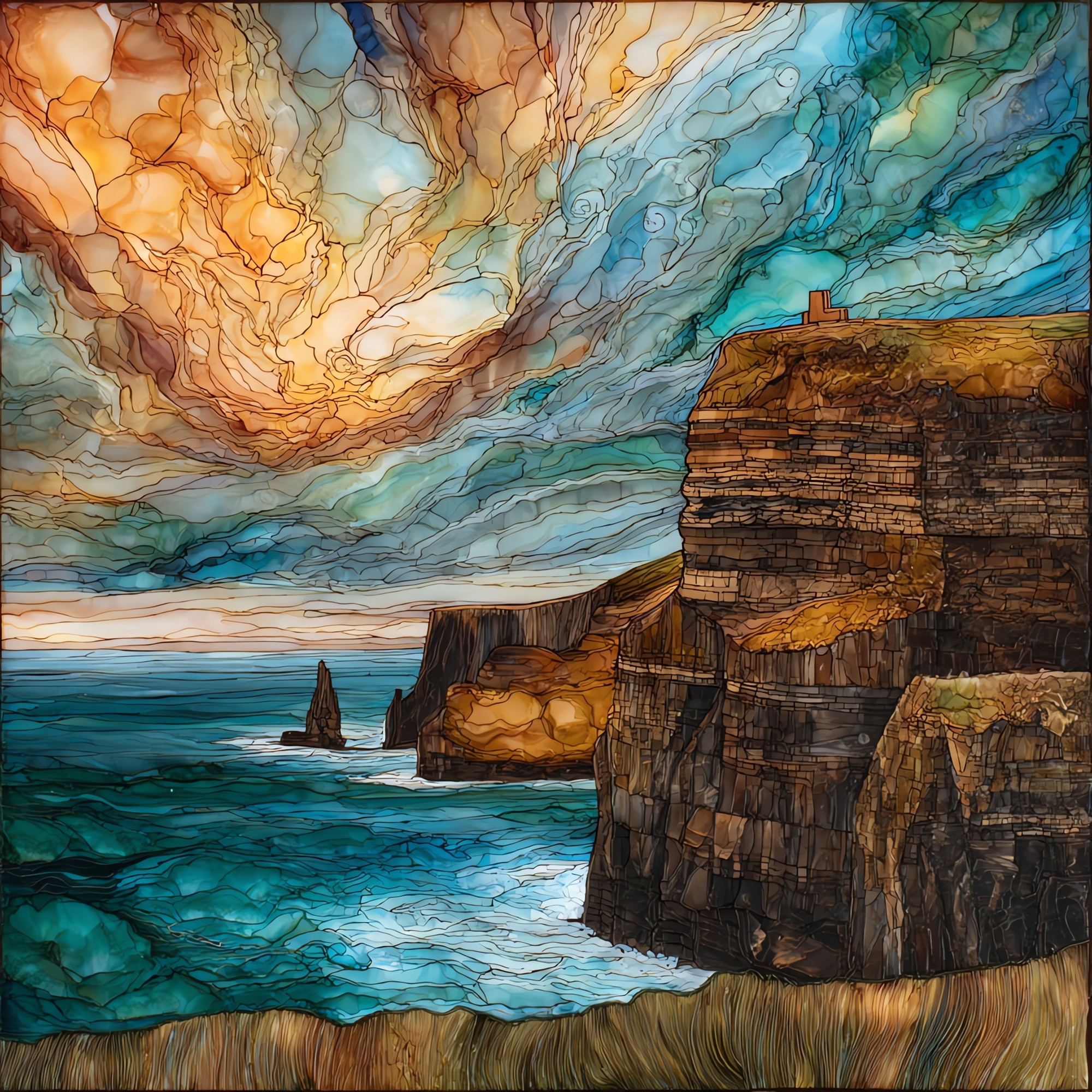
Cliffs of Moher
shown on ceramic, 12-inch tileIreland
on the Atlantic coast of County Clare

Cliffs of Moher

— a wall the Atlantic keeps editing.

Where it lives

Not only on a wall.

A small tile on the nightstand catching the morning. A larger one above the fire. Yours, wherever you spend the slow hours.
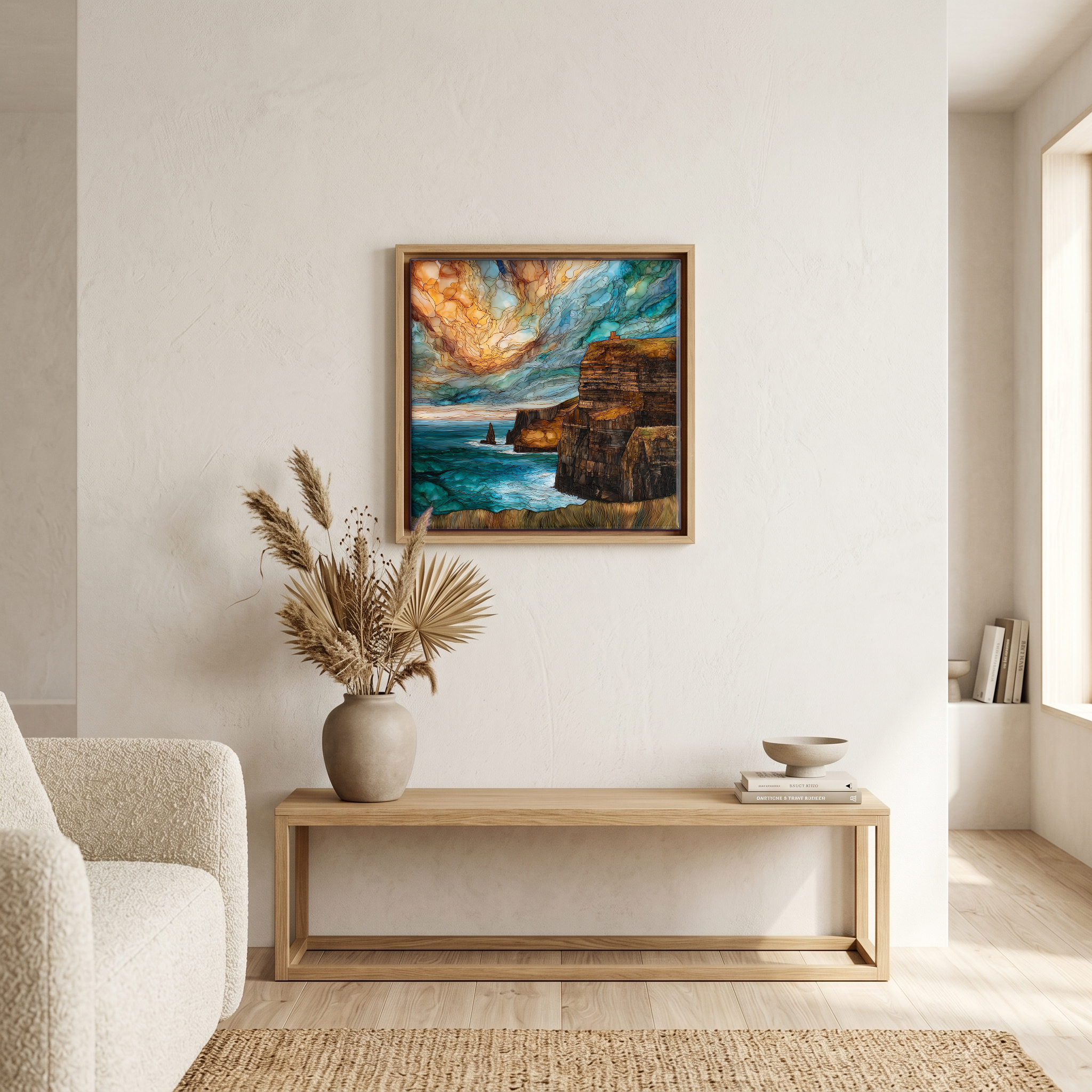
Above the bench, in a warm oak surround.
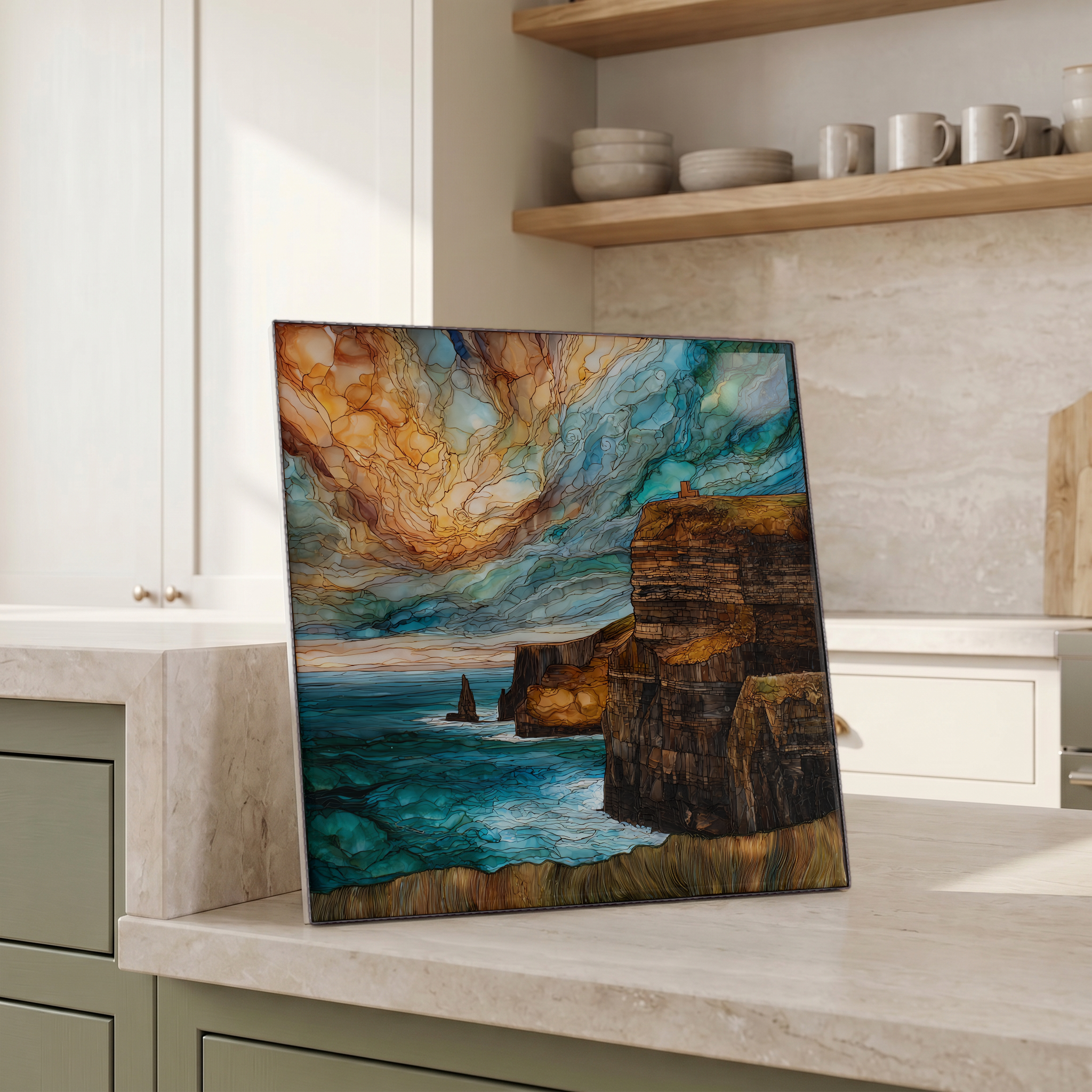
Beside the kettle, propped on the counter.
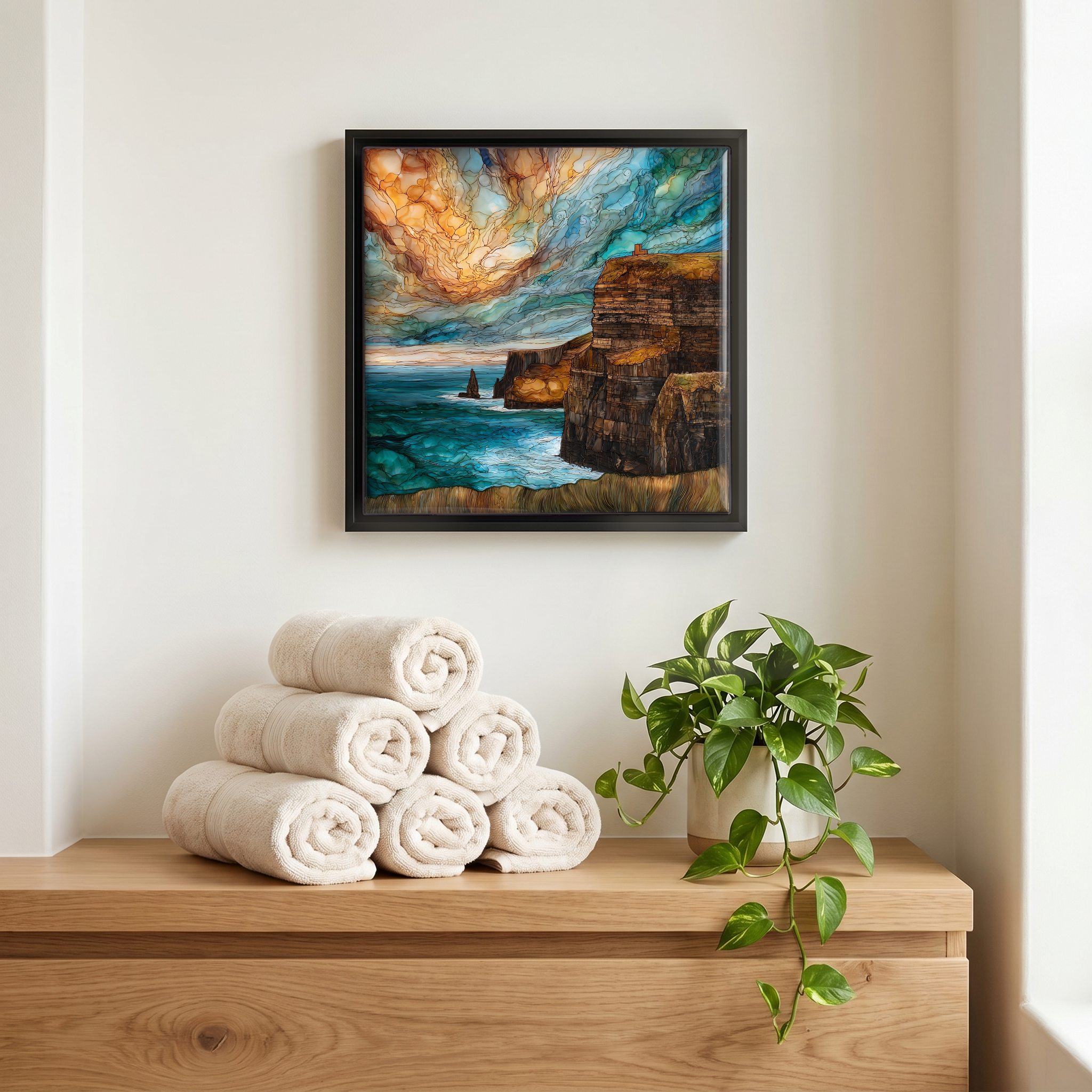
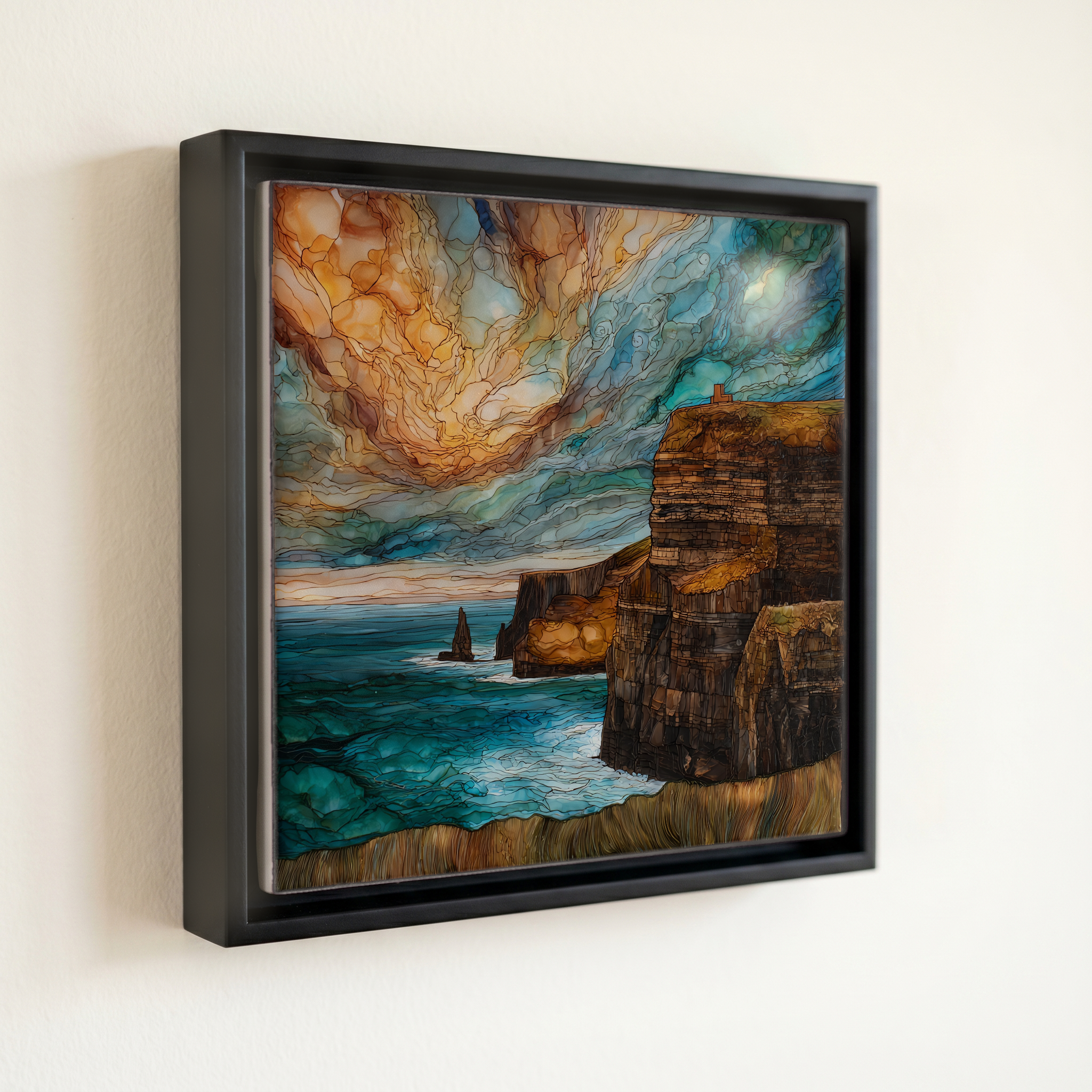
Above the linens, in a slim black surround.
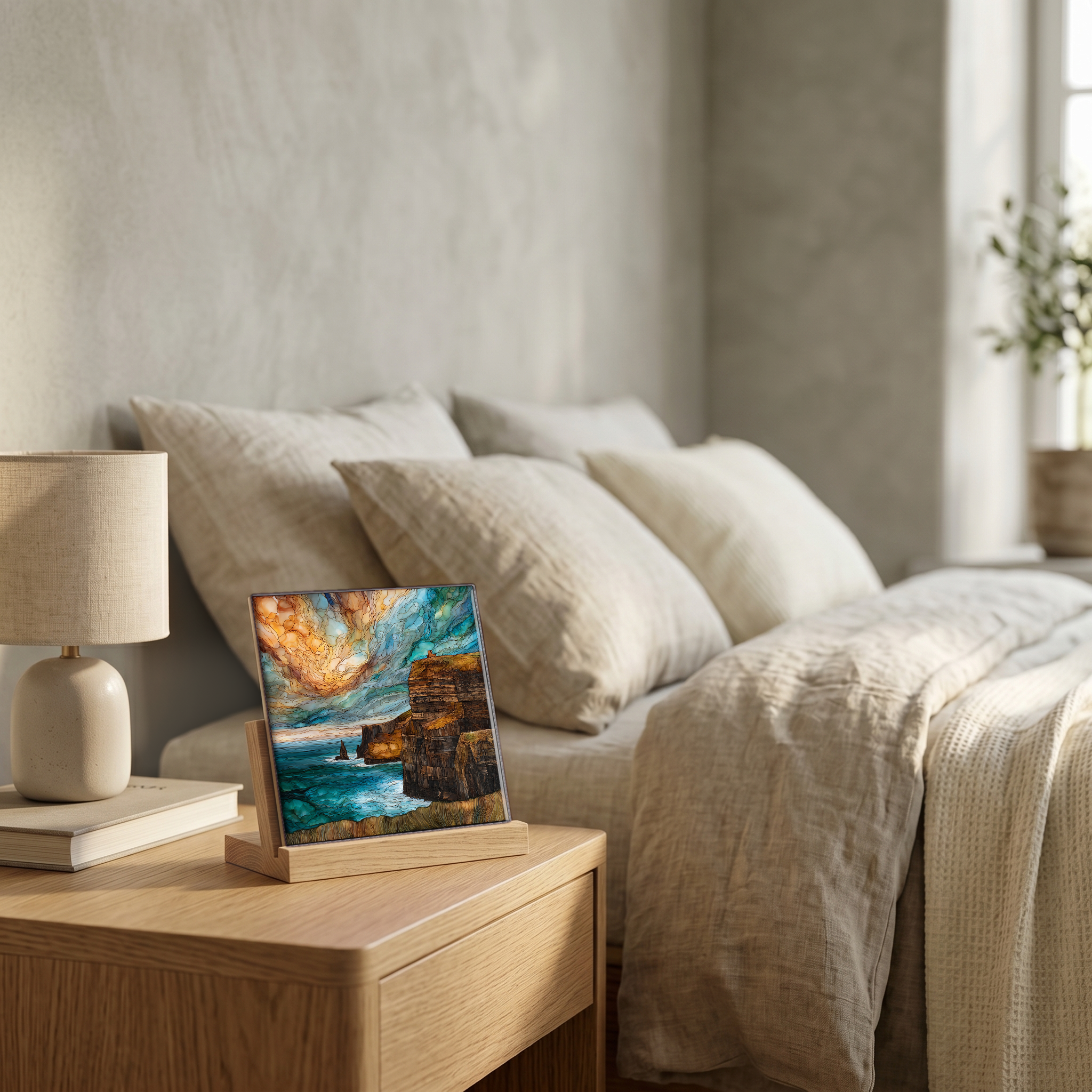
On the nightstand, on a light oak stand.
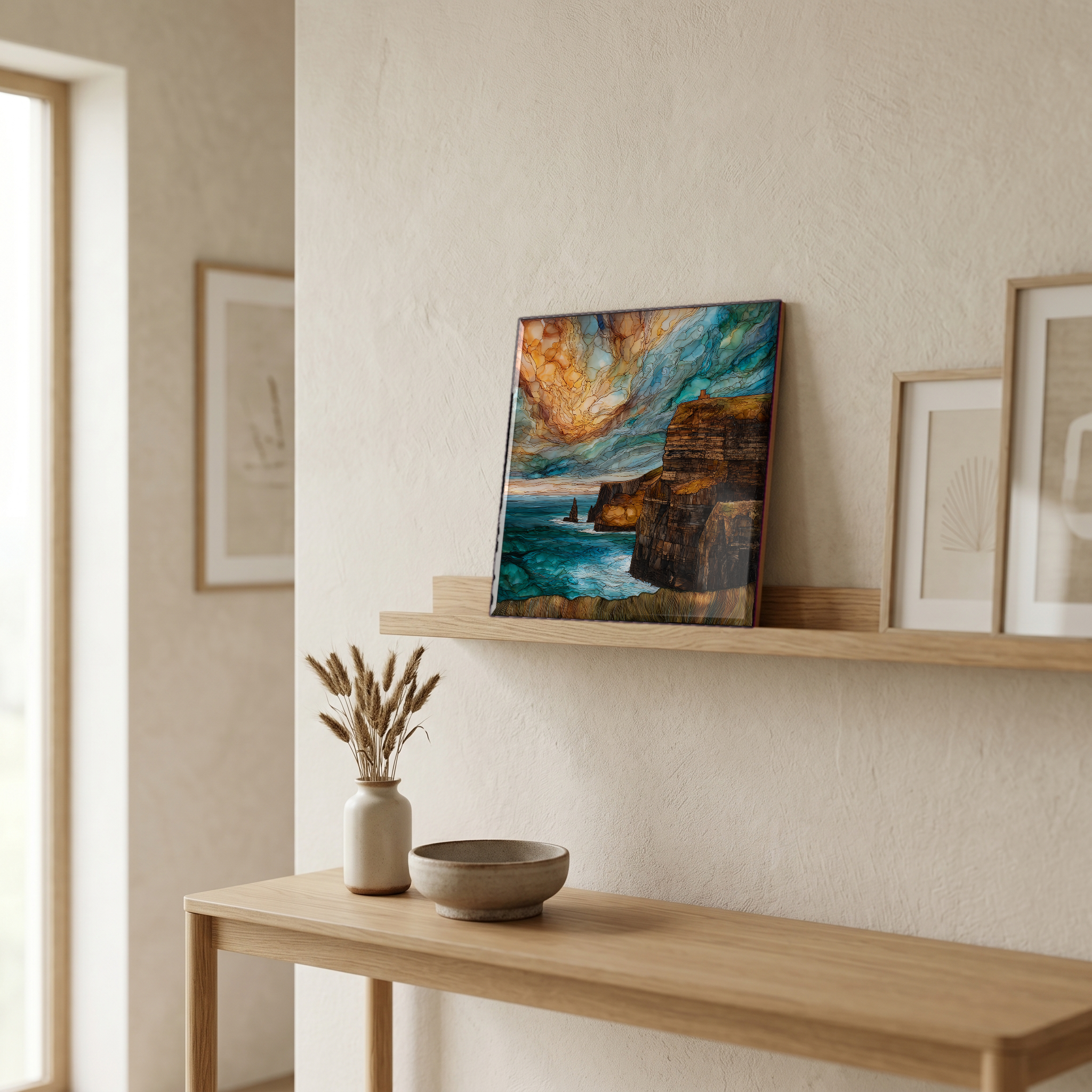
On a picture ledge, where the light comes in.
a note from the studio

The west coast of County Clare, where the land breaks off into the Atlantic. About fourteen kilometres of cliff between Hag's Head and the headland north of Doolin: shale and sandstone laid down 320 million years ago, lifted and exposed to weather that never quite finishes the job. O'Brien's Tower has stood at the high point since 1835. The light changes by the half hour. Puffins return to the headland every spring and lift back out to sea by August. From the path, on a clear afternoon, the swell reads up from the base, two hundred metres below.
from the studio
shown in a slim black floating frame · 6 × 6 in
— bring it home

Cliffs of Moher, on ceramic.

Each tile is finished by hand in our Knoxville studio. Artwork is slowly infused into the ceramic surface under high heat and pressure, and rests beneath a thin glossy finish. The colour lives in the surface, not on top of it.

What kind of piece?
One tile — square or rectangle.
How big?
the popular one — counter, shelf, nightstand
6 × 6 in · 15 cm · 1.6 lb
Surface finish
A clear glossy finish — the artwork reads as if under resin. Ideal for show-pieces and framed wall art.
How it sits
A hidden cleat — sits ¼″ proud of the wall.
$58
Hand-finished and shipped from our studio at the foot of the Smokies. On your wall in about ten days.
size
6 × 6 in
15 cm
weighs
1.6 lb
solid in the hand
surface
ceramic, hand-finished
art rests beneath a thin glossy finish
from
Knoxville, TN
our family studio, at the foot of the Smokies
— start a Coaster Set

Pick any four 4-inch tiles — National Parks you've been to, a Smokies set, the four seasons of one place. $ for a set of , cork-backed, ready to live on the table.
comes gift-ready
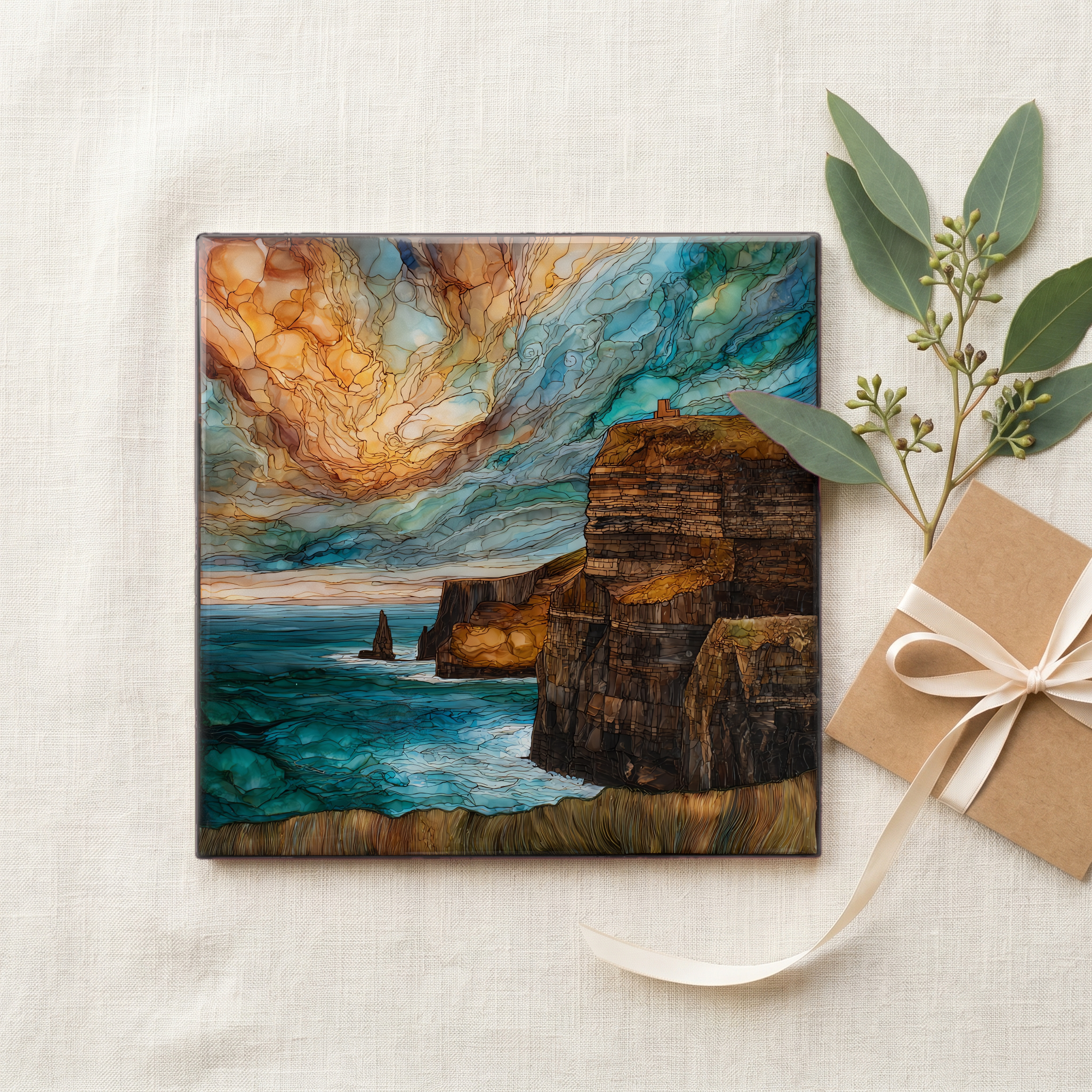
comes gift-ready

Each tile ships in a kraft box, tied with cream ribbon, with a handwritten note from the studio if you'd like to add one.
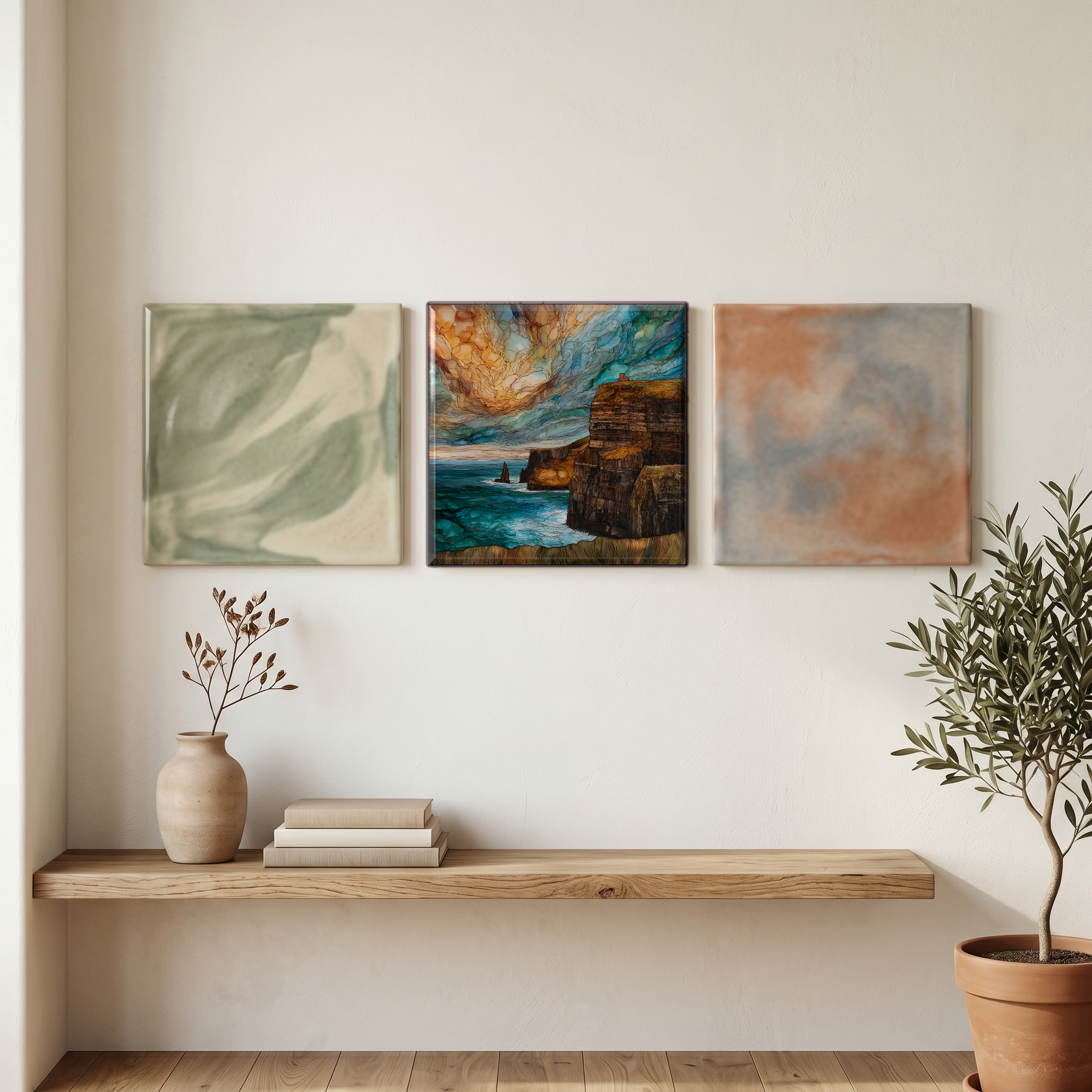
or build a grouping
or build a grouping

Three or five different vistas, hung together — a chapter of places you've been, or want to go.

about Cliffs of Moher

The place, in three passes.

A little of what's known, in case you fall down the rabbit hole — or want to go see it yourself.
the place

The Cliffs of Moher run roughly 14 kilometres along the western edge of County Clare, between Hag's Head to the south and the headland above Doolin to the north. The rock is mostly Namurian-age shale, siltstone, and sandstone, laid down in a river-delta system more than 300 million years ago [Burren and Cliffs of Moher UNESCO Global Geopark]. The high point, at a headland called Knockardakin just north of O'Brien's Tower, reaches about 214 metres above the Atlantic. The visitor centre at the midpoint opened in 2007 [Cliffs of Moher Experience]. From there, a coastal walk runs north toward Doolin and south toward Liscannor, all the way to Hag's Head.

the stone

The cliff face exposes a vertical reading of the late Carboniferous: layered shale, siltstone, and sandstone deposited in a vast river delta about 320 million years ago, when this part of what is now Ireland sat near the equator. The Burren and Cliffs of Moher UNESCO Global Geopark documents the sequence in detail. Branaunmore, the sea stack standing in the water just below O'Brien's Tower, is a leftover of the same beds, separated from the cliff by Atlantic erosion working at the weaker shale interlayers. The rock continues to retreat. Sections of the cliff path are reset and re-fenced every few years as the edge moves inland.

the season

The clearest weather usually comes May through September, though weather off the Atlantic can turn any afternoon. Atlantic puffins return to the headland in late March or early April to nest in burrows along the grassy cliff tops and on the small islet just offshore; most are back at sea by early August. Razorbills, guillemots, fulmars, and kittiwakes share the ledges through the same window. The longest light comes in June, when sunset over the Atlantic falls near 10 p.m. Ireland time. Winter visits are open but unpredictable: high winds close sections of the cliff walk every year.

where
Ireland · County Clare, Munster
within
Burren and Cliffs of Moher UNESCO Global Geopark
elevation
214 m · 702 ft
position
52.9715° N · 9.4309° W
the neighborhood

What's nearby.

A handful of named places within an hour's walk or short drive. Some we've already painted; some we will.
7 km N
Doolin
village
5 km S
Hag's Head
headland
6 km SE
Liscannor
village
10 km SE
Lahinch
coastal town
8 km NE
Doonagore Castle
tower house
12 km NE
The Burren
karst landscape
18 km W
Aran Islands
island group
N
Cliffs of Moher
Doolin
Hag's Head
Liscannor
Lahinch
Doonagore Castle
The Burren
Aran Islands
common questions

What people ask.

A few questions we get about Cliffs of Moher — and about bringing the piece home.
about the place

On the Atlantic coast of County Clare, in the west of Ireland. The cliffs run between Hag's Head south of Liscannor and the headland above Doolin, with the visitor centre roughly midway. The nearest towns for an overnight stay are Doolin or Lahinch.

The highest point is about 214 metres, at a headland called Knockardakin just north of O'Brien's Tower. Most of the rest of the cliff line runs lower, in the 120 to 200 metre range. O'Brien's Tower itself sits near the upper end of the cliffs.

About 14 kilometres of continuous Atlantic-facing cliff, running from Hag's Head in the south to the headland above Doolin in the north. A signed cliff walk follows the edge for most of that length, with the visitor centre and O'Brien's Tower roughly at the midpoint.

A round stone observation tower at the high point of the cliffs, built in 1835 by Cornelius O'Brien, a local landlord and MP for County Clare. It was designed as a viewing platform for visitors, and it still serves that purpose, with a paid climb to the roof.

Atlantic puffins return to nest along the grassy cliff tops and on the small offshore islet from late March or early April, and most have left for the open ocean by early August. Razorbills, guillemots, fulmars, and kittiwakes share the same window.

The cliffs expose layers of shale, siltstone, and sandstone laid down in a large river delta about 320 million years ago, in the late Carboniferous. Later tectonic uplift raised the rock above sea level, and the Atlantic has been cutting back the edge ever since.

There is a charge that covers parking, the visitor centre, and access to the cliff edge area near O'Brien's Tower. The longer cliff walk between Doolin and Hag's Head along the public coastal path is free, with no formal admission point.

about the piece in your home

It has been a meaningful gift for many customers with Irish ties, especially those with connections to Clare or the west coast. The cliffs are one of the most recognised places on the island. A Small or Medium with a handwritten note from the studio reads well as a remembrance piece.

The Voynich treatment leans cool and atmospheric, with deep Atlantic greens and stormy greys. It sits well in Coastal-modern rooms, in Irish or Scottish countryside interiors, and in Jewel-tone Maximalist palettes that already use slate, moss, and oxidised brass. It contrasts cleanly against off-white plaster or warm oak.

It fits the current move toward atmospheric Coastal-modern: less beach-sand palette, more weather-and-stone. The piece carries cool greens and slate without flattening into a generic seascape. It also lands inside the broader Jewel-tone Maximalist trend for rooms built around saturated, weathered colour.

Above a standard sofa or long console, a single Large reads cleanly. For a stronger anchor, a 4-tile Mural fills the wall and gives the cliff line room to run. Above a smaller console or a fireplace mantel, a Medium is closer in scale.

Yes. Choose the Dura Satin finish for a soft sheen that resists scratches and steam, or the Matte finish for the same durability with no sheen at all. Both hold up to bathrooms, kitchens, backsplashes, and shower surrounds. The Glossy finish is meant for framed wall display.

A soft microfibre cloth and clean water are all the tile needs. The colour is slowly infused into the ceramic surface under high heat and pressure and lives beneath a thin protective finish, so it does not lift with normal wiping. Avoid abrasive pads and strong solvents.

Yes. Wender Studios is a single family studio in Knoxville, Tennessee. Every WenderVista piece is a Reid Wender original, hand-finished in-house. The work is not licensed from a stock library, and the same image will not appear on a competing brand's tile.

if this one stayed with you

A few you might also love.

Hand-picked by the eye that found Sorapis. Same air, same kind of quiet.