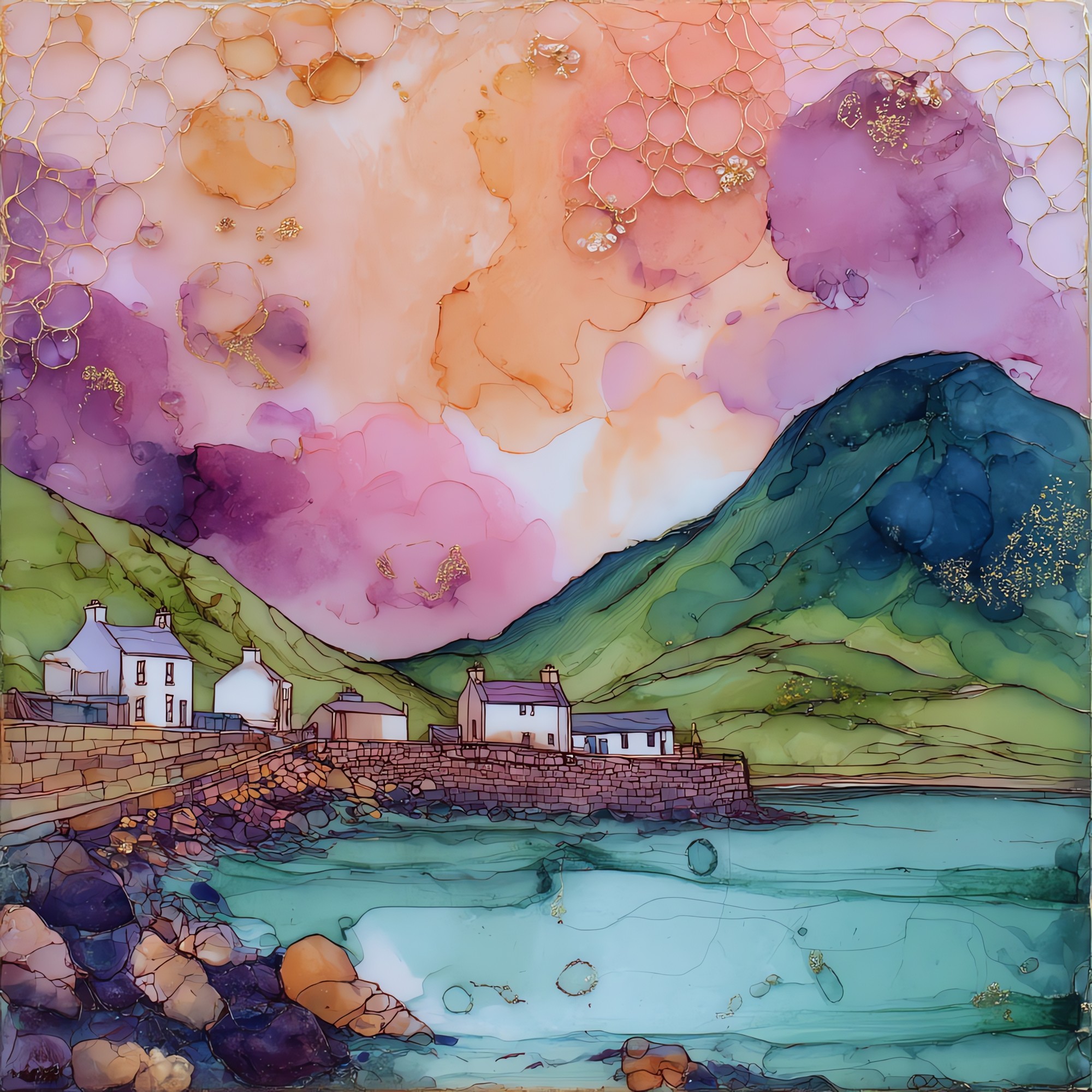
Clare Island
— a mountain that falls straight into the sea.
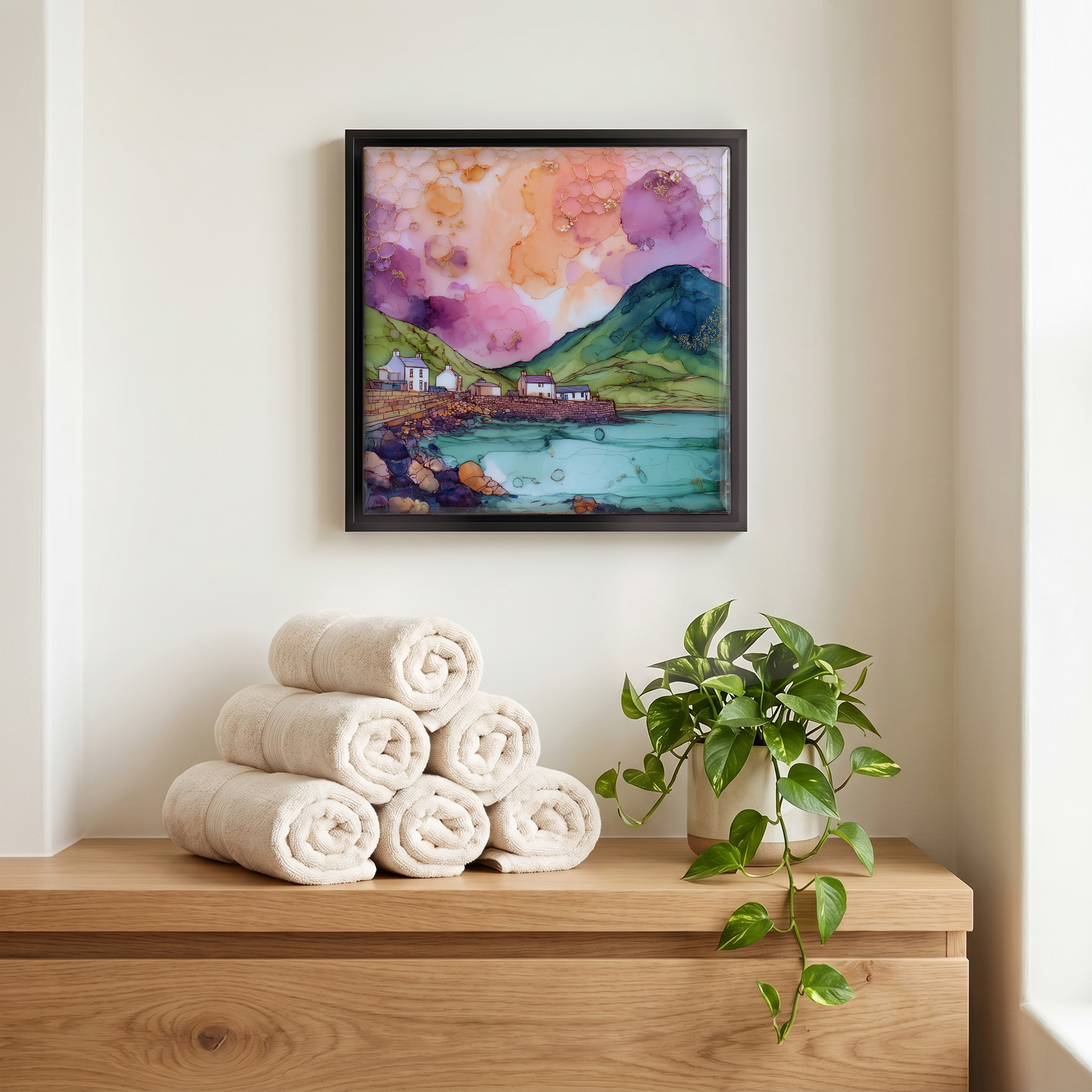
Not only on a wall.
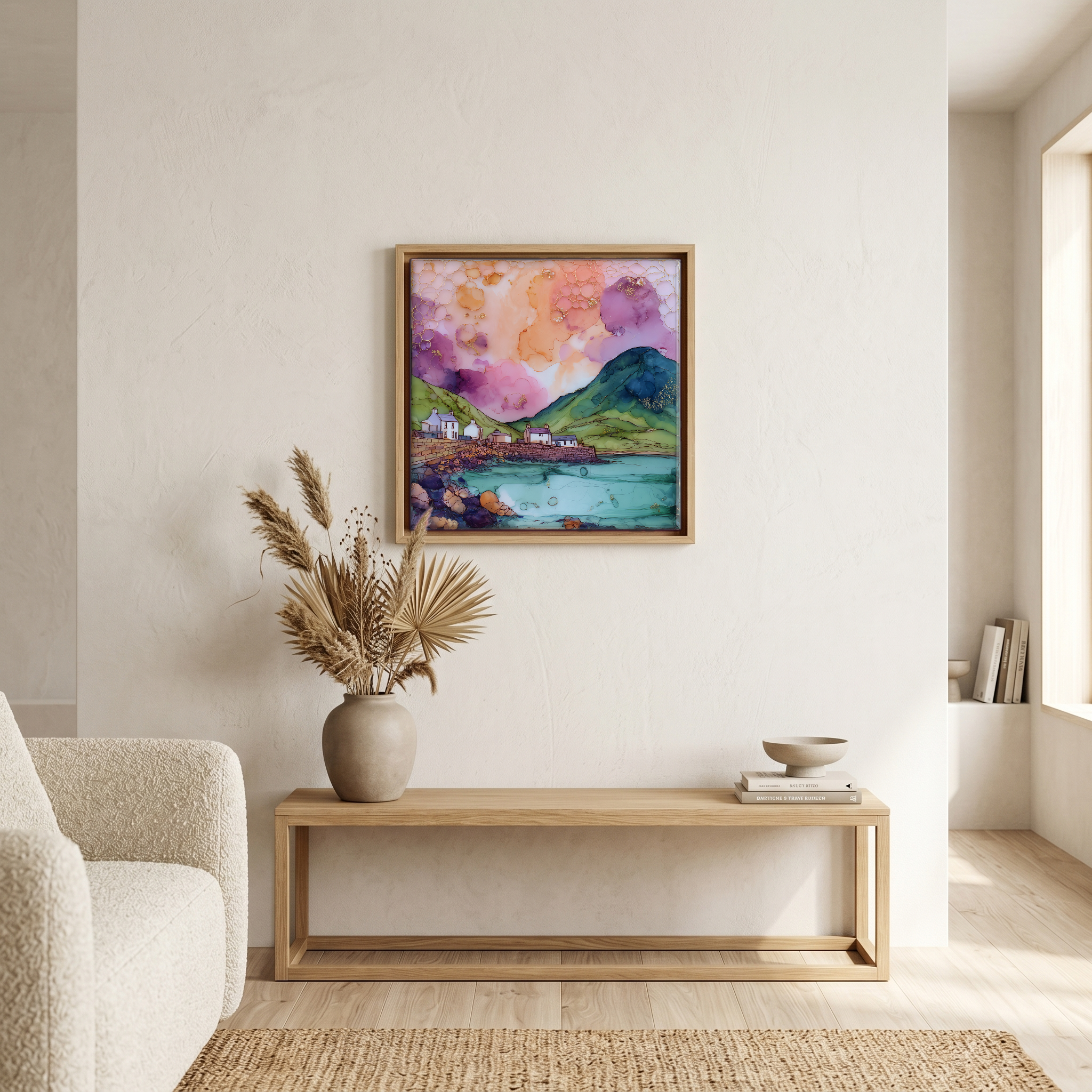
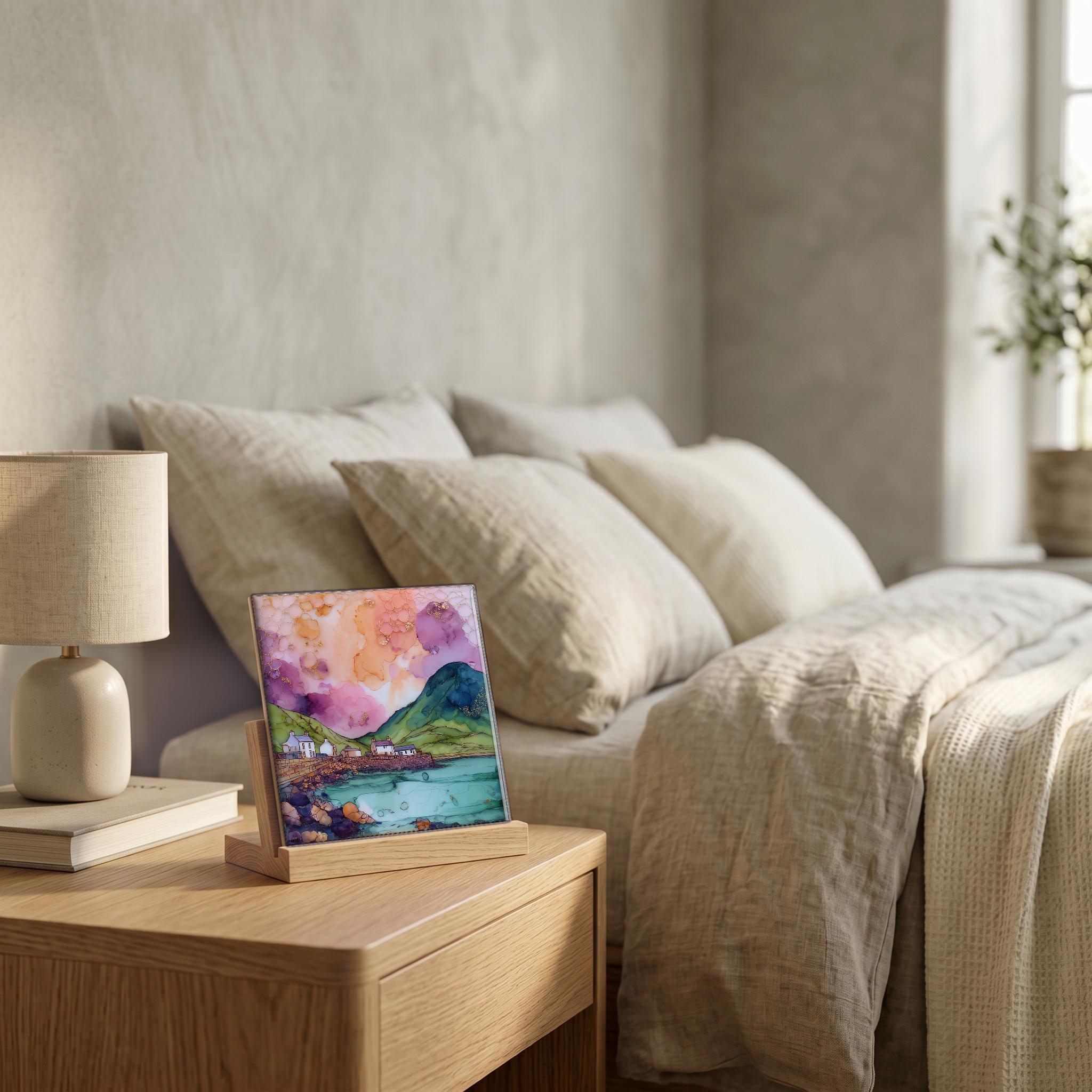
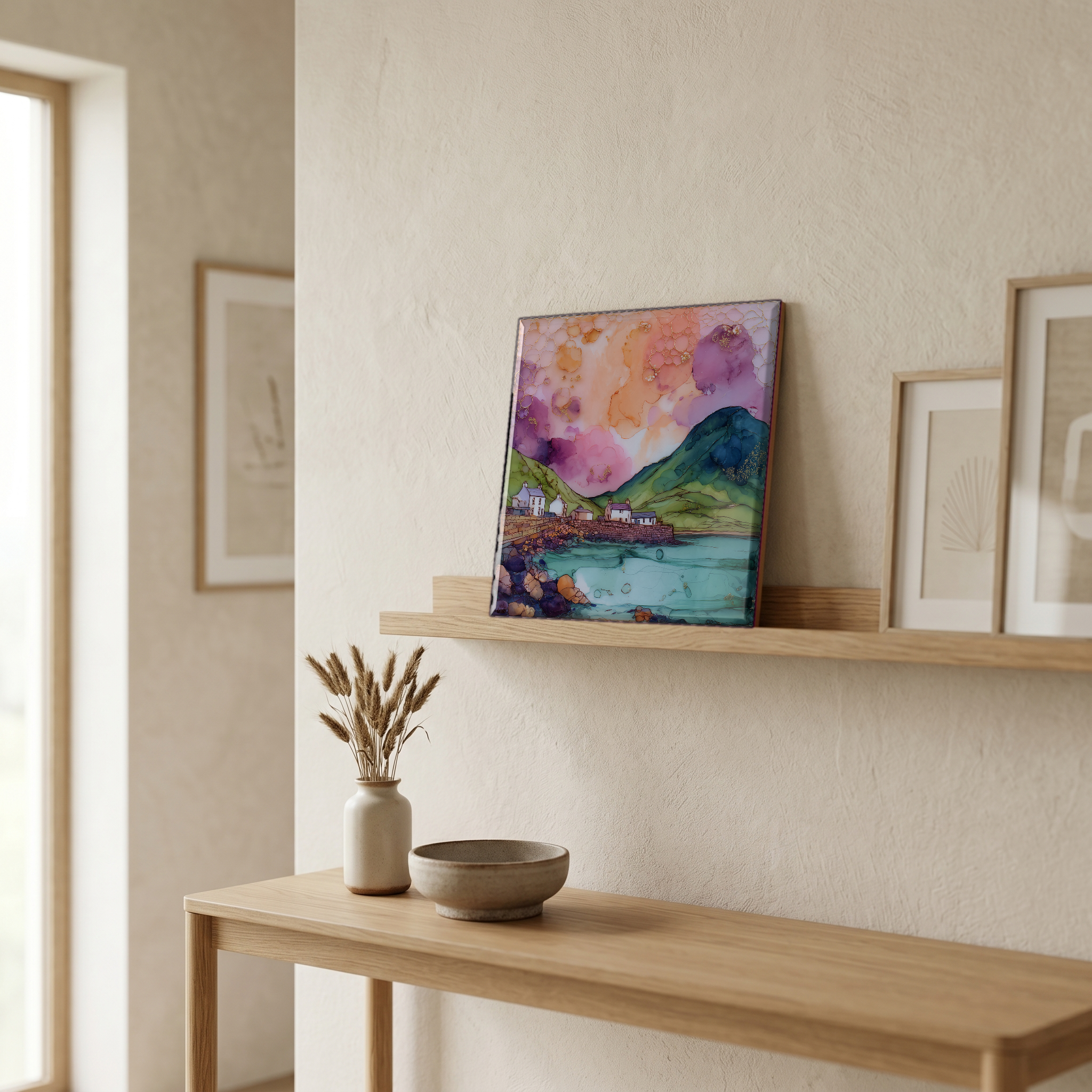
“The island that sits at the mouth of Clew Bay, on the long western edge of Ireland. Eight kilometres of green and a single mountain. Knockmore drops the back half of itself into the Atlantic in a wall of cliffs. Grace O'Malley kept her boats here in the sixteenth century, when she controlled this whole stretch of coast. The ferry from Roonagh is fifteen minutes; the island stays the length of time it always has. People come for the cliffs and the medieval abbey paintings and the small light at the harbour, and they stay an extra day because the weather decided.
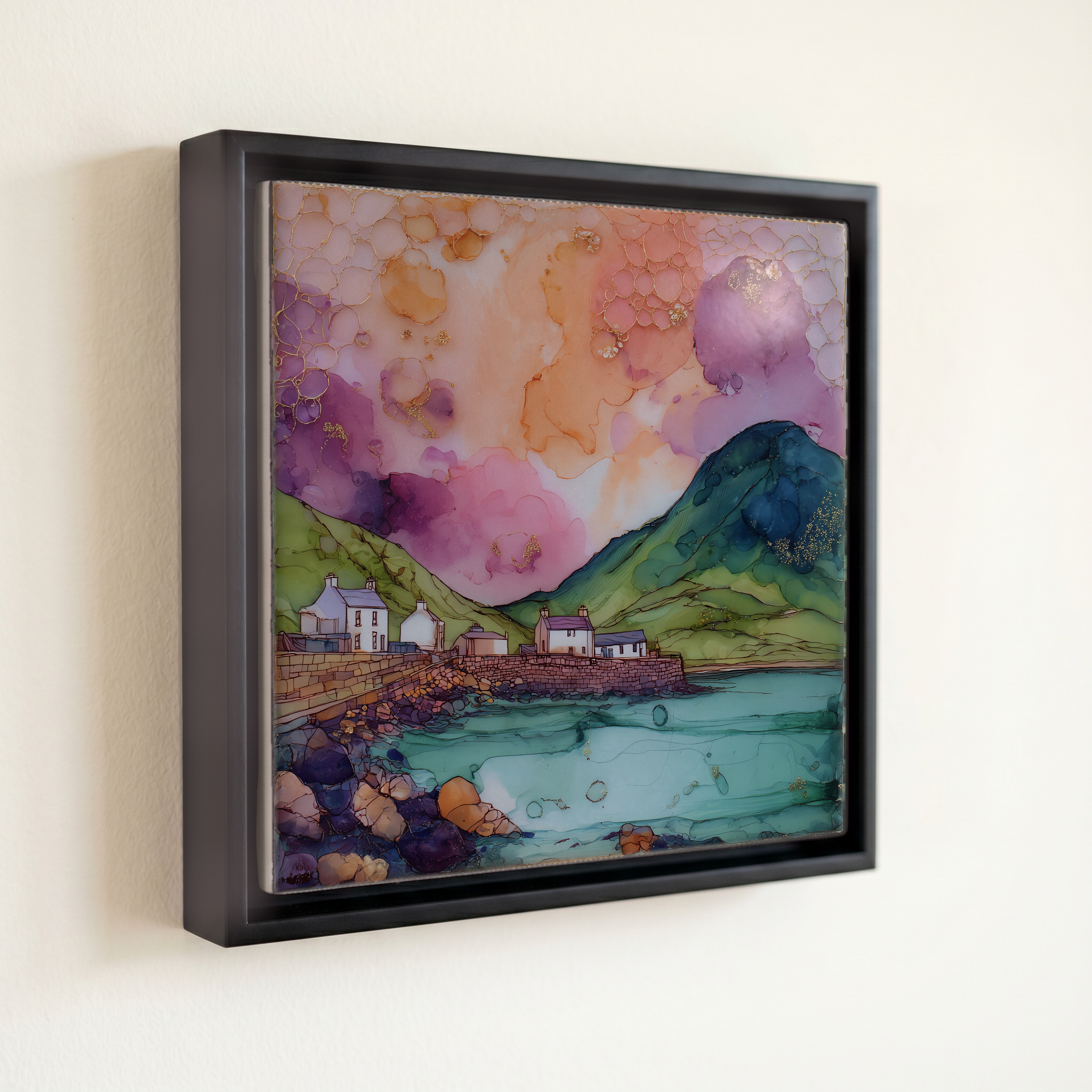
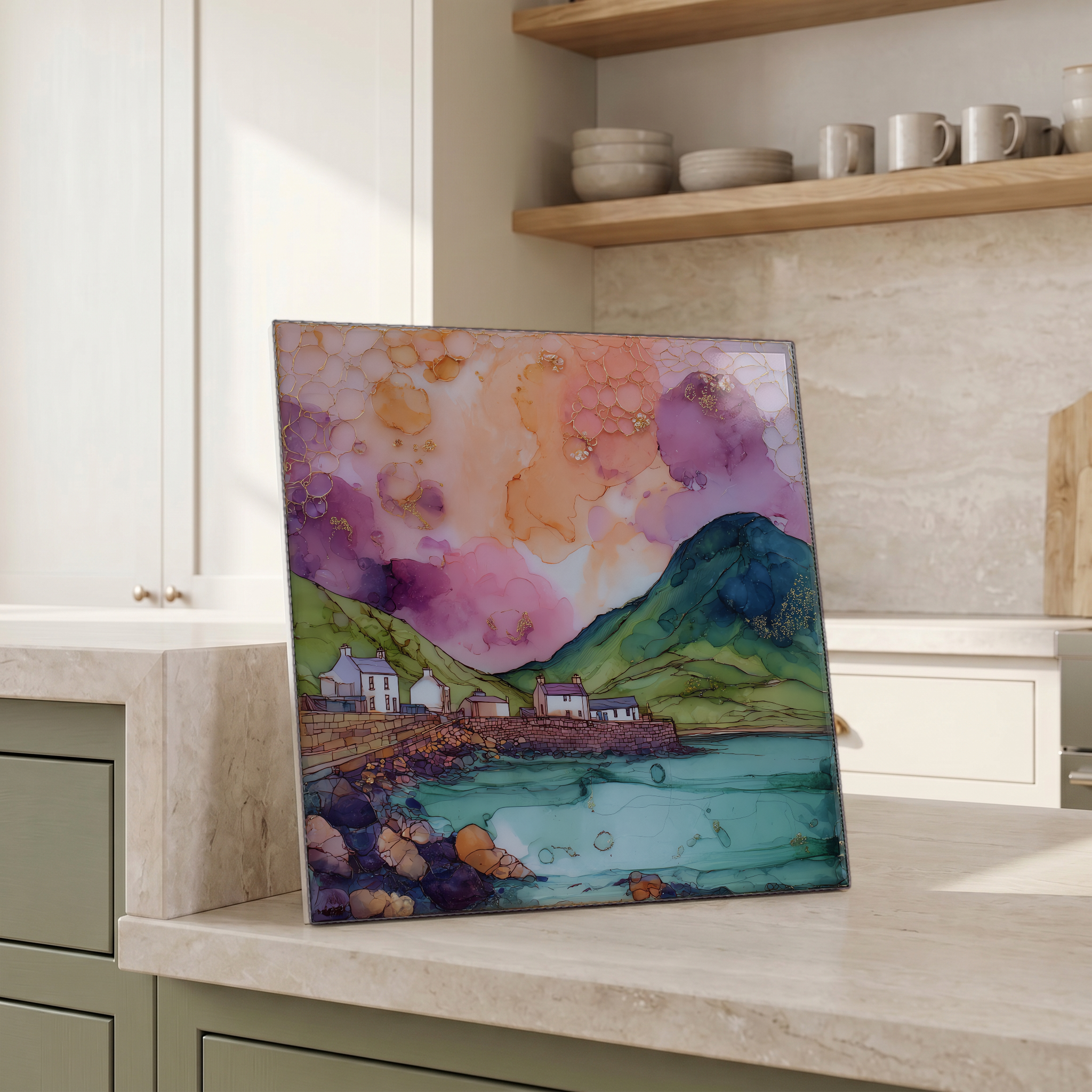
Clare Island, on ceramic.
Each tile is finished by hand in our Knoxville studio. Artwork is slowly infused into the ceramic surface under high heat and pressure, and rests beneath a thin glossy finish. The colour lives in the surface, not on top of it.
Pick any four 4-inch tiles — National Parks you've been to, a Smokies set, the four seasons of one place. $ for a set of , cork-backed, ready to live on the table.
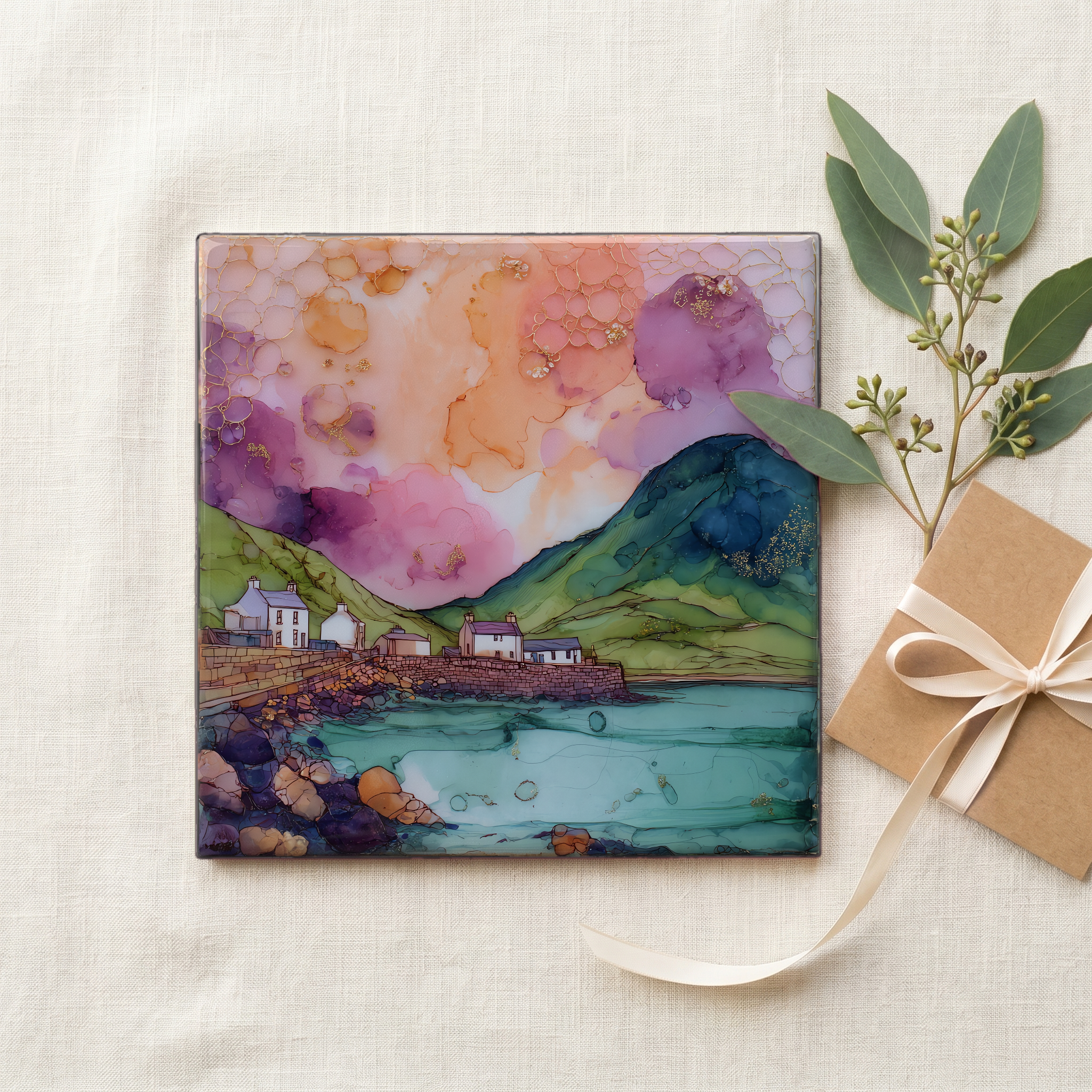
Each tile ships in a kraft box, tied with cream ribbon, with a handwritten note from the studio if you'd like to add one.
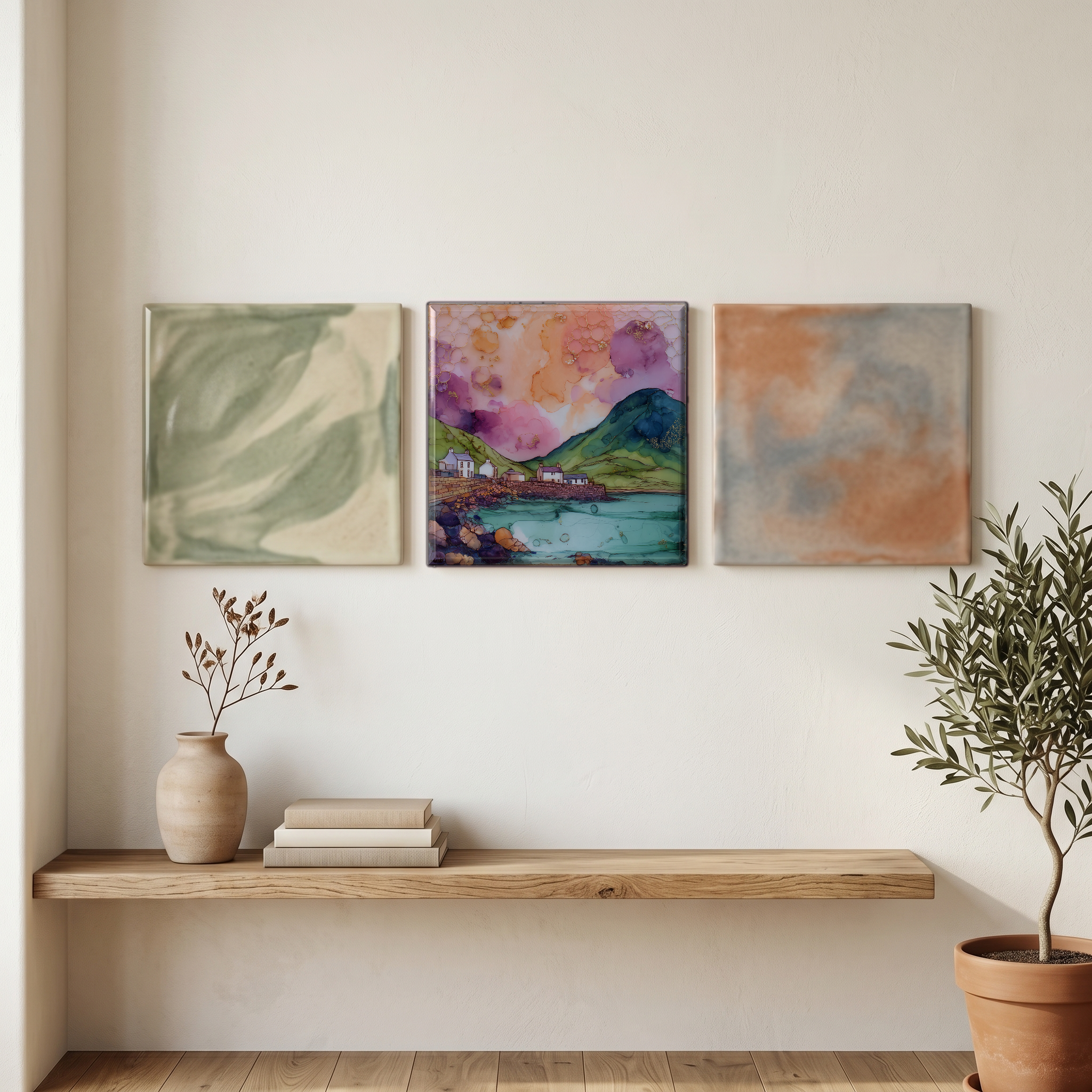
Three or five different vistas, hung together — a chapter of places you've been, or want to go.
The place, in three passes.
Clare Island is the largest island in Clew Bay, lying off the coast of County Mayo on the west of Ireland. It runs roughly eight kilometres east to west, with a recorded population of around 160 permanent residents. The interior rises to Knockmore at 462 metres, whose back face drops directly into the Atlantic in one of the longest stretches of sea cliffs in Ireland. The crossing from Roonagh Pier near Louisburgh runs about fifteen minutes by ferry, weather permitting. The harbour sits on the eastern side, sheltered from the prevailing Atlantic wind.
The island's stone is its memory. At Clare Island Abbey, a small thirteenth-century Cistercian foundation in the south of the island, the chancel ceiling carries painted scenes of hunters, harpers, stags, and dragons that are among the only surviving medieval church paintings of their kind in Ireland. Grace O'Malley, the sixteenth-century lord of these waters, kept a tower house at the harbour and is traditionally said to be buried at the abbey. On the northern headland, Clare Island Lighthouse first lit in 1806 and stood watch until 1965; it now keeps a quieter life as a small guesthouse above the cliffs.
Clare Island is reached by passenger and car ferry from Roonagh Pier, about eight kilometres west of Louisburgh in County Mayo. Operators run frequent sailings from late spring through autumn, with reduced winter schedules tied to weather. The crossing takes around fifteen minutes. On the island, a single road loops the eastern half; the western half, including Knockmore's cliffs and the upland bogs, is walked. The climb to Knockmore is the standard day-hike, with views to Achill Island and Inishturk on a clear afternoon. The harbour has a few small shops, a guesthouse or two, and the bar at the old O'Malley tower.