Wender·Vista
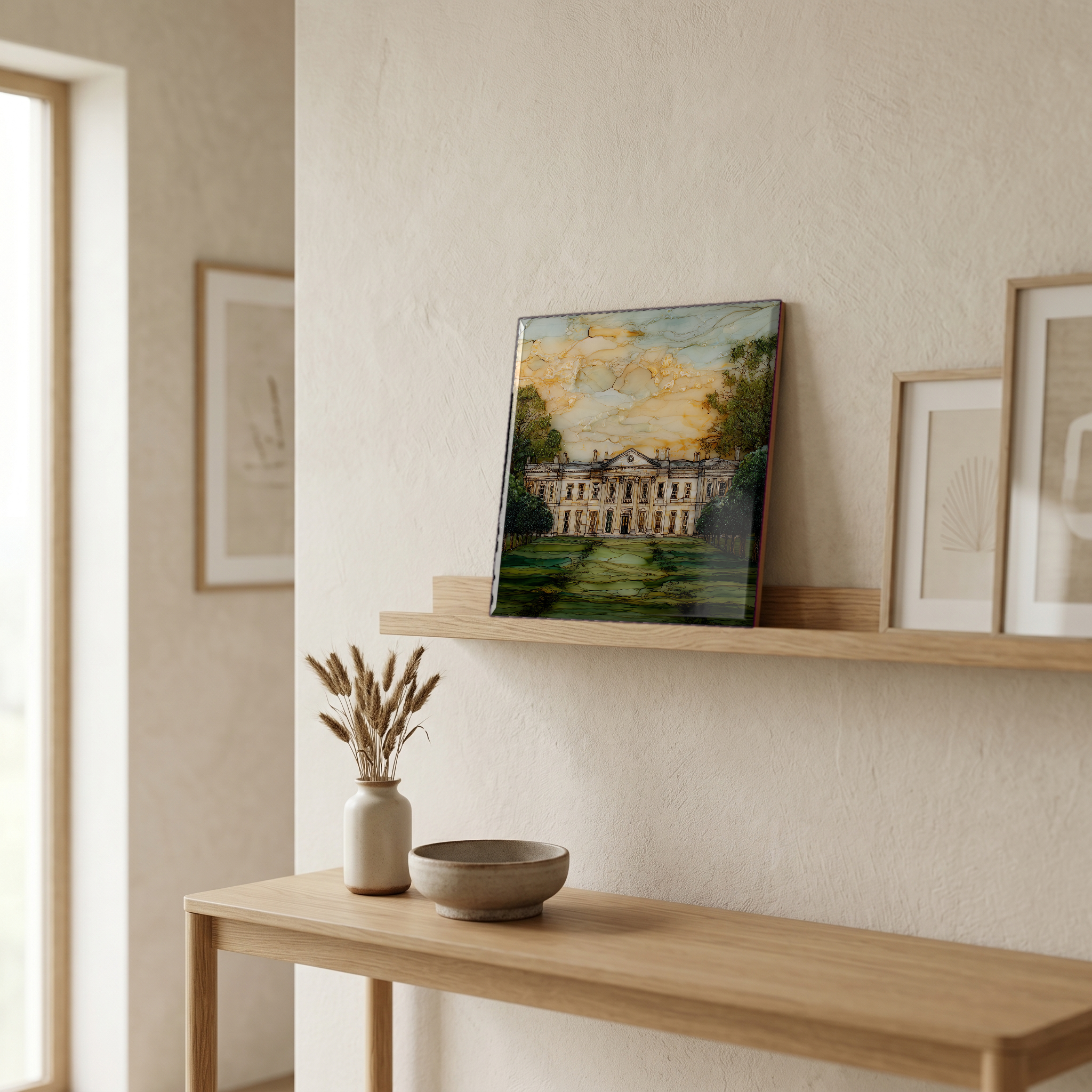
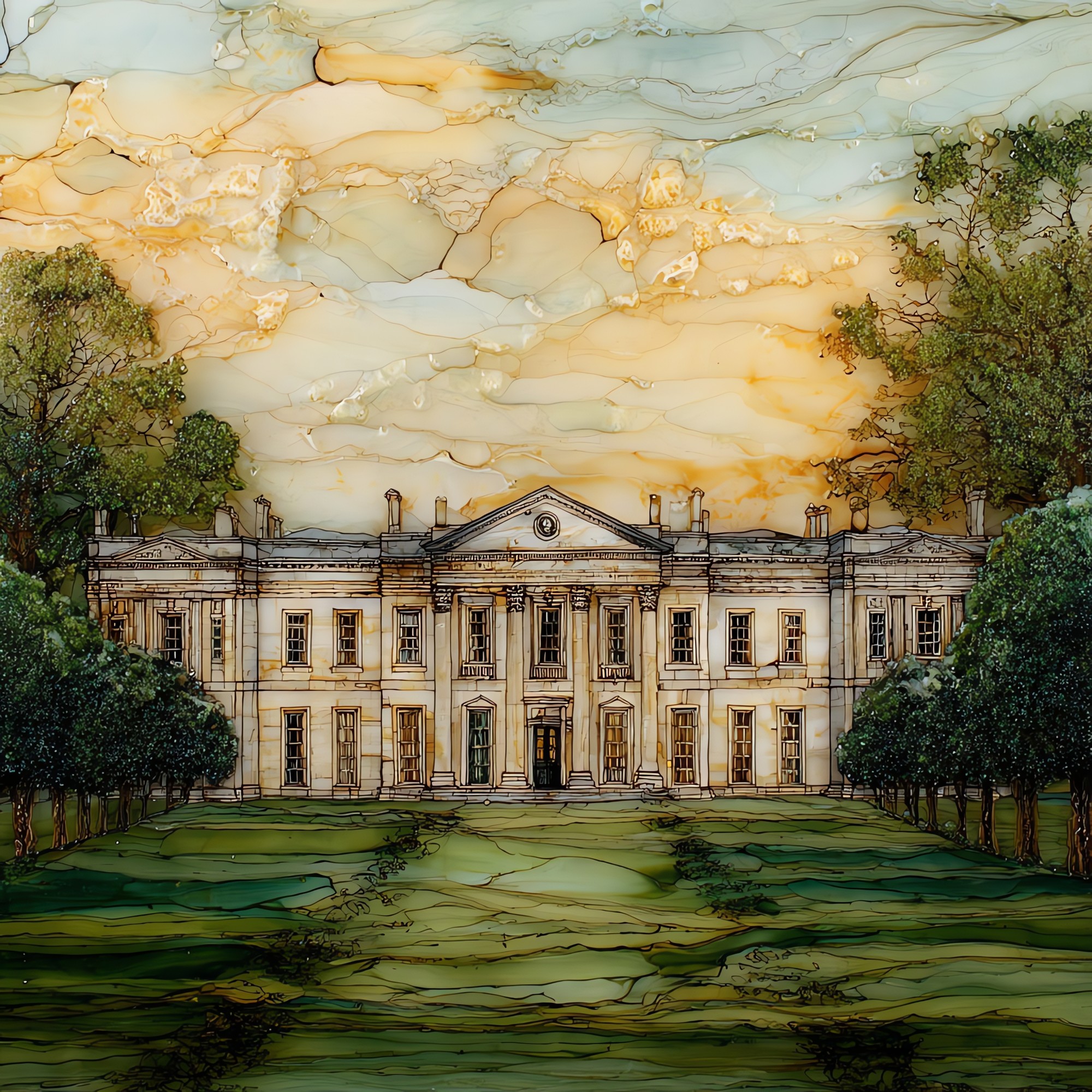
Castletown House
shown on ceramic, 12-inch tileIreland
west of Dublin, on the Liffey

Castletown House

a Palladian face above the river.

Where it lives

Not only on a wall.

A small tile on the nightstand catching the morning. A larger one above the fire. Yours, wherever you spend the slow hours.
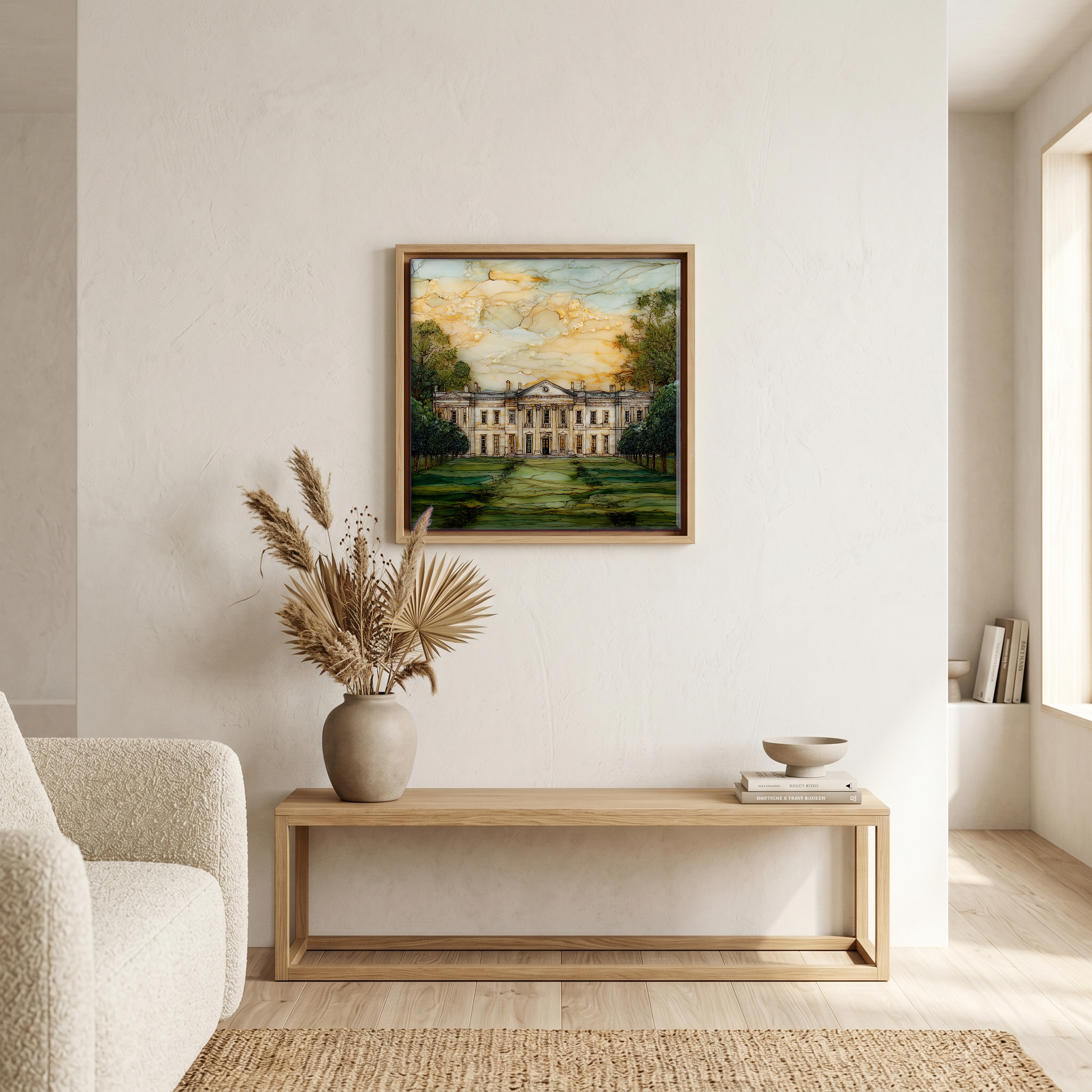
Above the bench, in a warm oak surround.
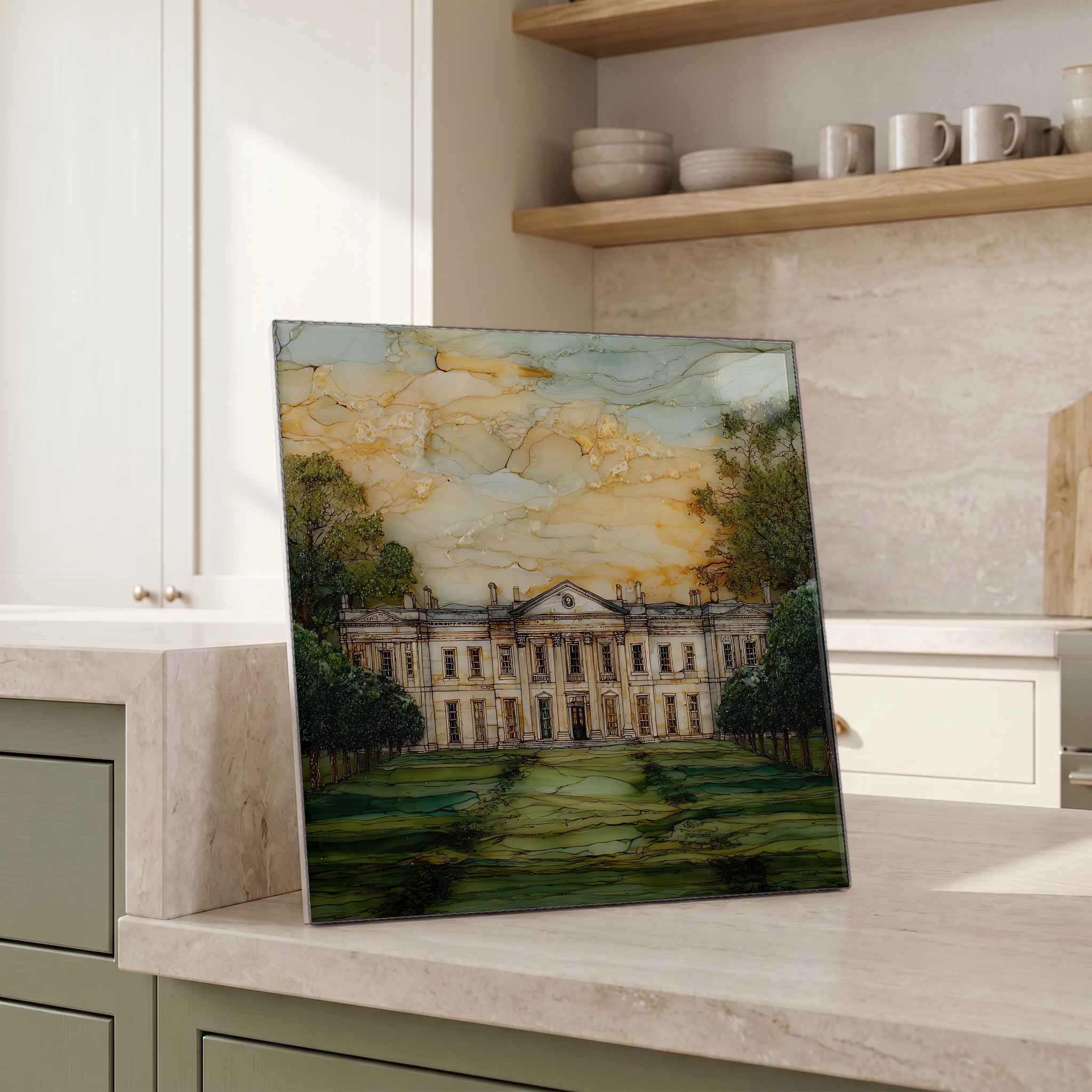
Beside the kettle, propped on the counter.
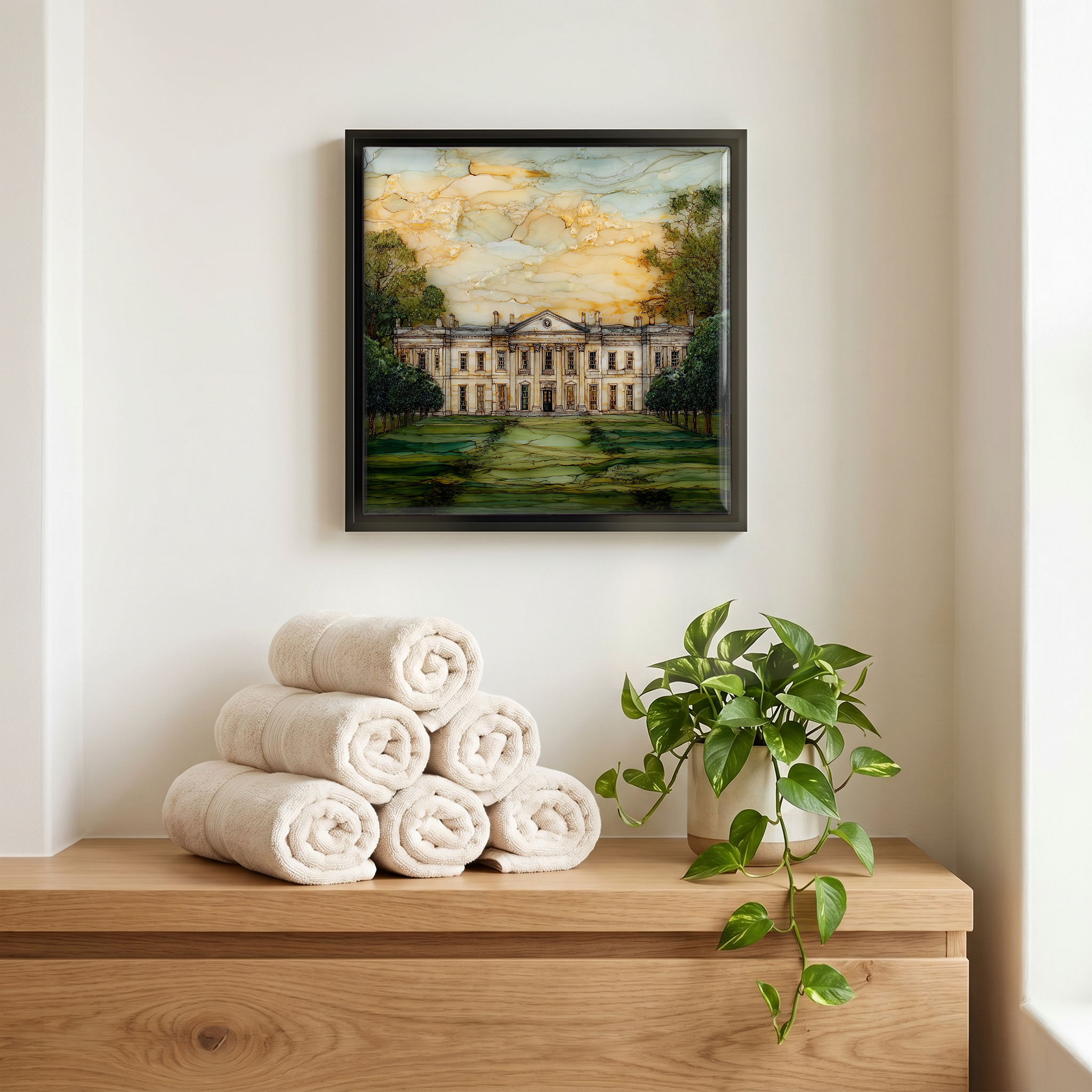
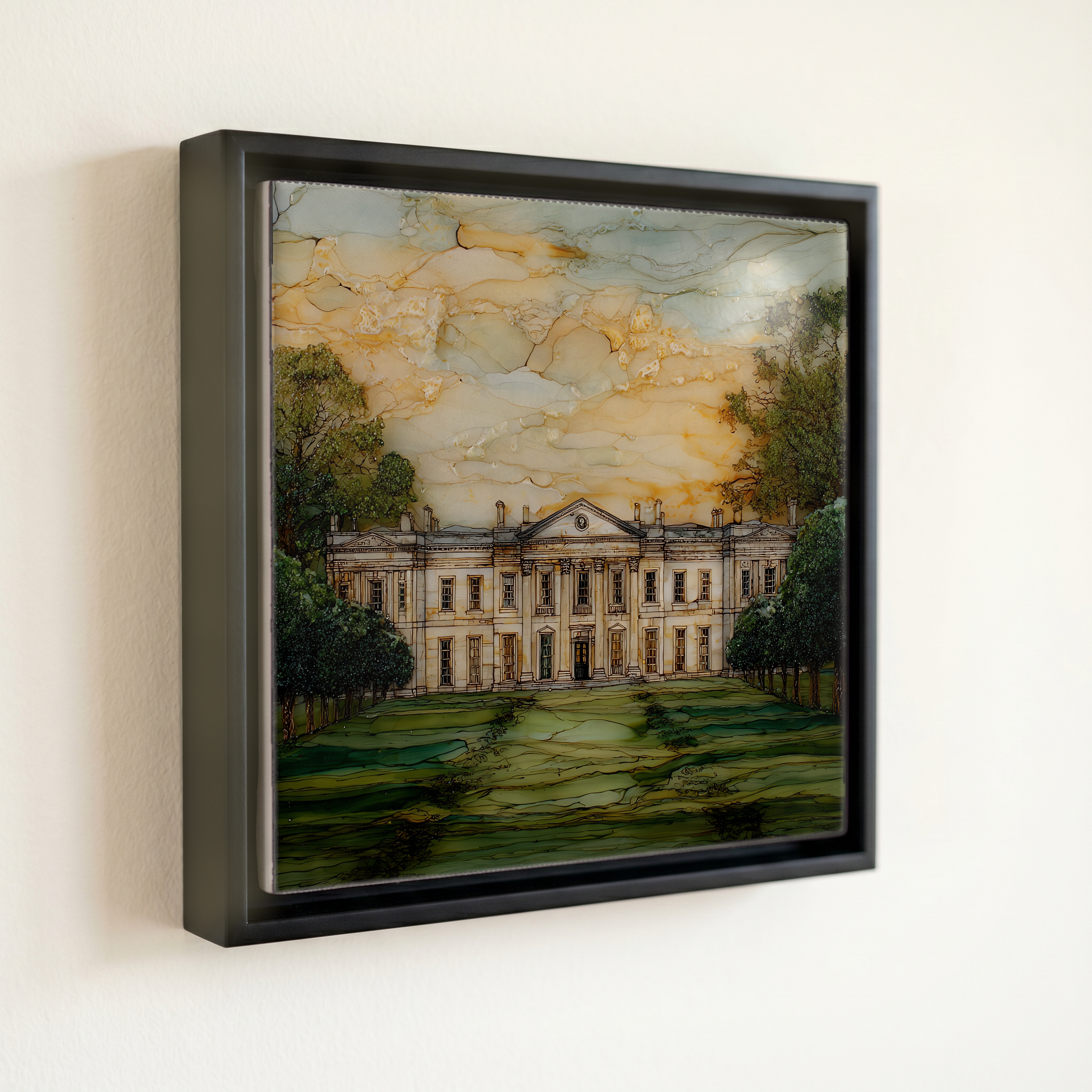
Above the linens, in a slim black surround.
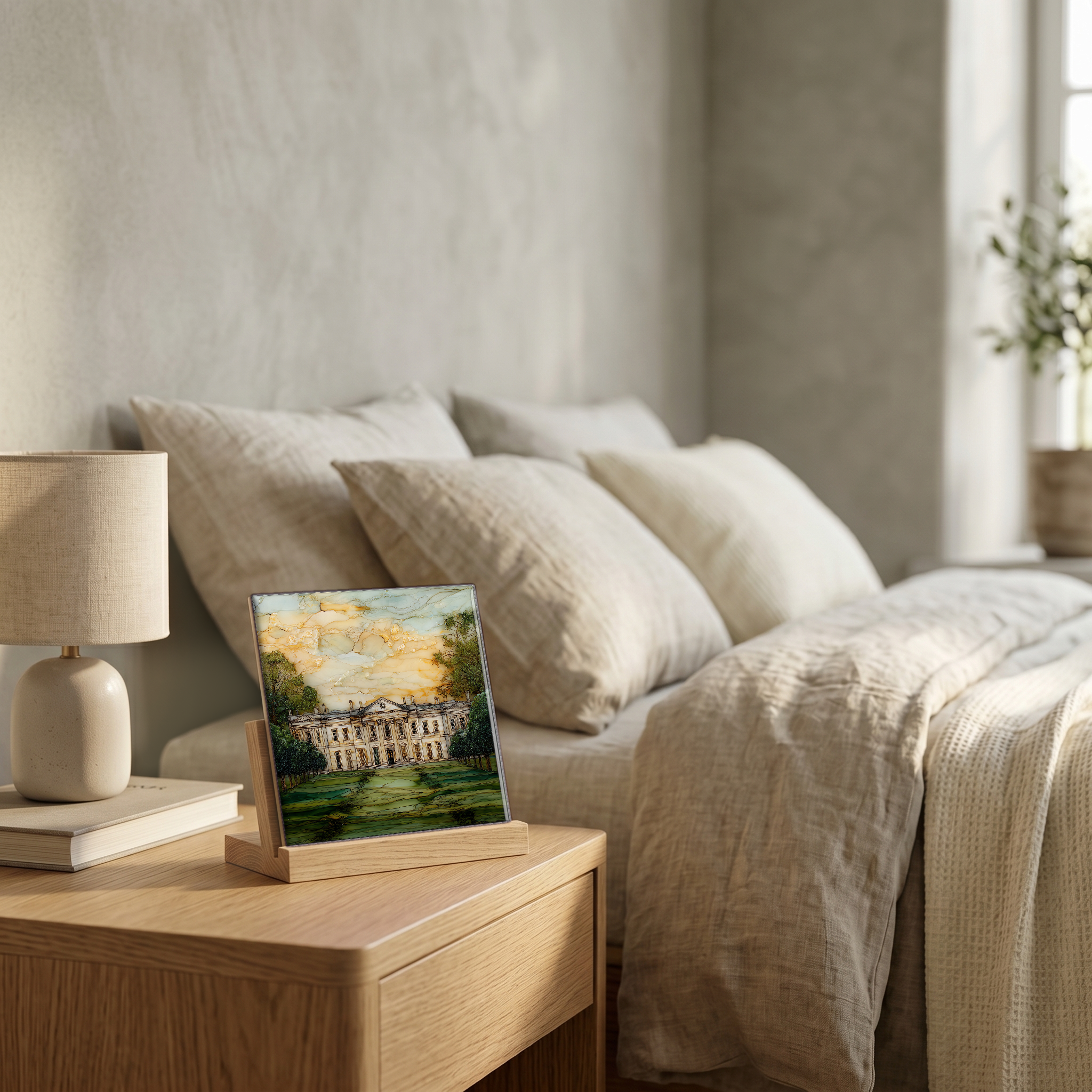
On the nightstand, on a light oak stand.
On a picture ledge, where the light comes in.
a note from the studio

The largest Palladian country house in Ireland, set on the north bank of the Liffey at Celbridge, about an hour by road west of Dublin. It was built in the 1720s for William Conolly, Speaker of the Irish House of Commons and, by contemporary report, the wealthiest commoner in the country. The Florentine architect Alessandro Galilei drew the front; Sir Edward Lovett Pearce, who later designed the Irish Parliament building, finished the work. The avenue from the gates runs straight for the better part of a mile before the house resolves out of it. The proportions hold the way they were drawn.
from the studio
shown in a slim black floating frame · 6 × 6 in
— bring it home

Castletown House, on ceramic.

Each tile is finished by hand in our Knoxville studio. Artwork is slowly infused into the ceramic surface under high heat and pressure, and rests beneath a thin glossy finish. The colour lives in the surface, not on top of it.

What kind of piece?
One tile — square or rectangle.
How big?
the popular one — counter, shelf, nightstand
6 × 6 in · 15 cm · 1.6 lb
Surface finish
A clear glossy finish — the artwork reads as if under resin. Ideal for show-pieces and framed wall art.
How it sits
A hidden cleat — sits ¼″ proud of the wall.
$58
Hand-finished and shipped from our studio at the foot of the Smokies. On your wall in about ten days.
size
6 × 6 in
15 cm
weighs
1.6 lb
solid in the hand
surface
ceramic, hand-finished
art rests beneath a thin glossy finish
from
Knoxville, TN
our family studio, at the foot of the Smokies
— start a Coaster Set

Pick any four 4-inch tiles — National Parks you've been to, a Smokies set, the four seasons of one place. $ for a set of , cork-backed, ready to live on the table.
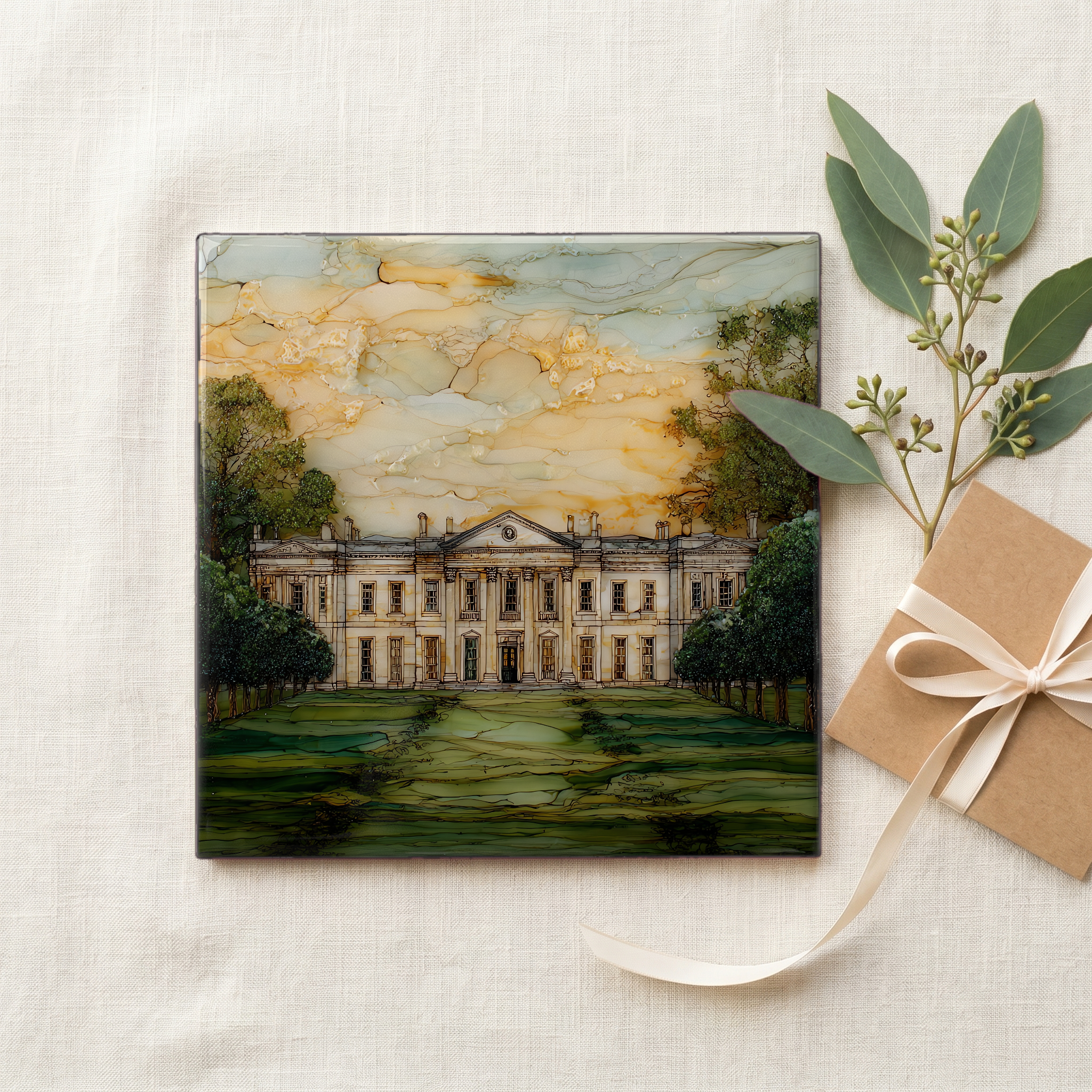
comes gift-ready
comes gift-ready

Each tile ships in a kraft box, tied with cream ribbon, with a handwritten note from the studio if you'd like to add one.
or build a grouping
or build a grouping

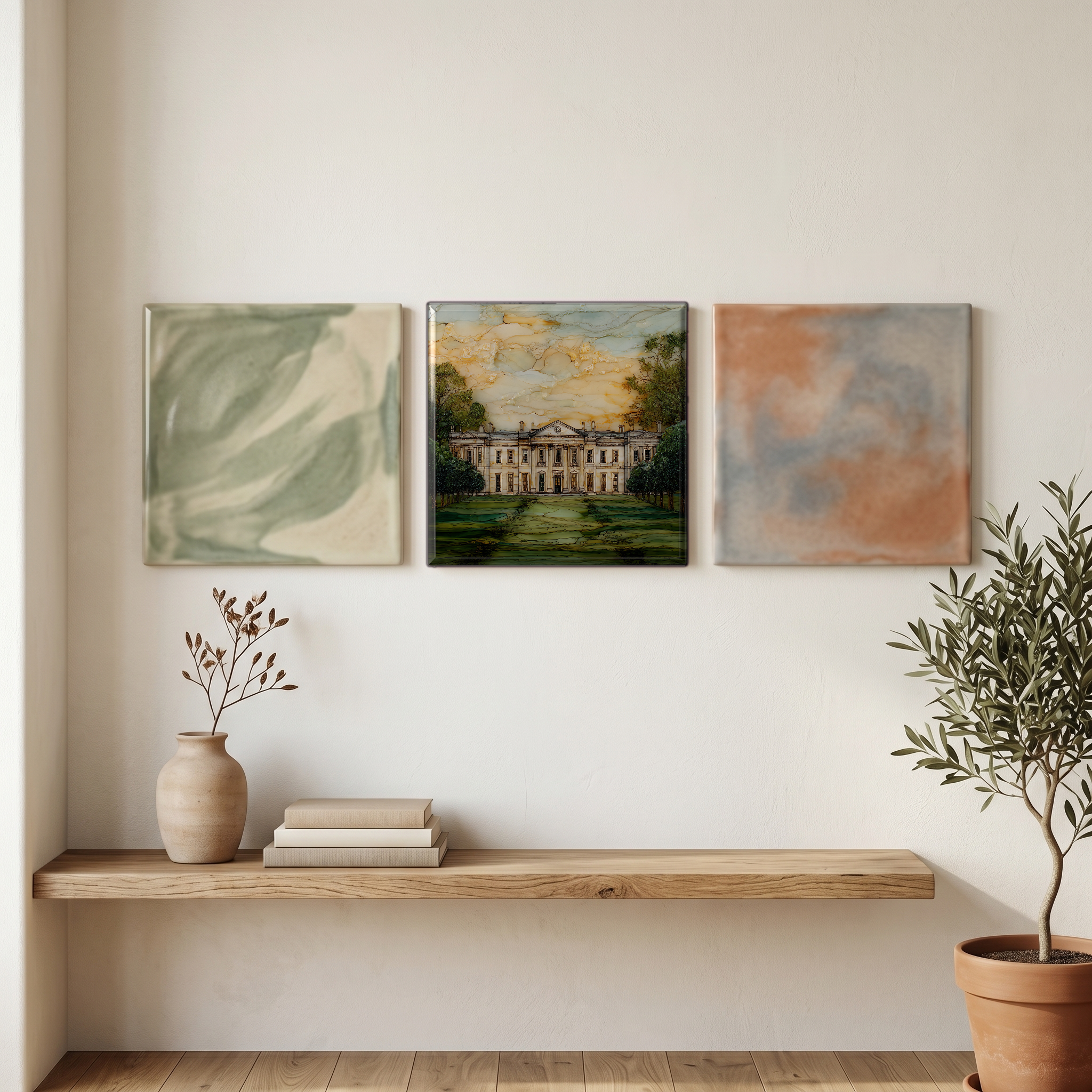
Three or five different vistas, hung together — a chapter of places you've been, or want to go.

about Castletown House

The place, in three passes.

A little of what's known, in case you fall down the rabbit hole — or want to go see it yourself.
the place

Castletown House sits on the north bank of the River Liffey at Celbridge, in County Kildare, about 22 kilometres west of Dublin [Wikipedia]. The house was built between 1722 and 1729 for William Conolly, who served as Speaker of the Irish House of Commons and was, by contemporary report, the wealthiest commoner in Ireland [Heritage Ireland]. The demesne runs along the river toward Leixlip, with paths through open parkland and two eighteenth-century follies, the Conolly Folly and the Wonderful Barn, within walking distance of the house. The property left the Conolly family in the twentieth century, was rescued by the Hon. Desmond Guinness, founder of the Irish Georgian Society, in 1967, and is managed today by the Office of Public Works.

— informed by Wikipedia, Heritage Ireland
the stone

The earliest and largest Palladian country house in Ireland [Wikipedia]. The Florentine architect Alessandro Galilei drew the centre block in 1722, applying Andrea Palladio's classical proportions to an Irish commission. Sir Edward Lovett Pearce, who later designed the Parliament House on College Green in Dublin, completed the work from 1724 and added the curved colonnades and the flanking pavilions. The principal rooms run along the south front; the Long Gallery on the first floor stretches about 24 metres and was decorated in the Pompeian manner in the 1770s under the direction of Lady Louisa Conolly. Pale limestone faces the thirteen-bay front, and the symmetrical composition holds without ornament.

— informed by Wikipedia
the visit

The Office of Public Works opens the principal rooms by guided tour from approximately mid-March through October [OPW]. The parkland is open daily at no charge, with the main gate at Celbridge and a second entrance on the Leixlip road. Two eighteenth-century follies stand within the demesne. The Conolly Folly, a 42-metre obelisk built on a series of arches, was commissioned in 1740 by Katherine Conolly, widow of William, as a famine-relief work for the local poor. The Wonderful Barn, a spiralling conical granary completed in 1743 on the eastern edge of the estate, sits about three kilometres east of the house.

— informed by OPW
where
Ireland · Celbridge, County Kildare
position
53.3494° N · 6.5381° W
the neighborhood

What's nearby.

A handful of named places within an hour's walk or short drive. Some we've already painted; some we will.
1 km SE
Celbridge
village
0.2 km S
River Liffey
river
2 km N
Conolly Folly
obelisk folly
3 km E
Wonderful Barn
spiralling granary
8 km NW
Maynooth
university town
N
Castletown House
Celbridge
River Liffey
Conolly Folly
Wonderful Barn
Maynooth
common questions

What people ask.

A few questions we get about Castletown House — and about bringing the piece home.
about the place

Castletown House sits on the north bank of the River Liffey at Celbridge, in County Kildare, about 22 kilometres west of Dublin. The estate is managed today by Ireland's Office of Public Works, with the parkland open to the public free of charge.

Construction began in 1722 for William Conolly, Speaker of the Irish House of Commons, and the central block was complete by 1729. The curved colonnades and the flanking pavilions were added during the 1720s and 1730s. It is the earliest Palladian country house in Ireland.

The Florentine architect Alessandro Galilei drew the centre block in 1722, applying Andrea Palladio's classical proportions. Sir Edward Lovett Pearce, who later designed the Irish Parliament building on College Green in Dublin, completed the house from 1724 and added the curved colonnades.

Palladian. Castletown is the earliest and largest Palladian country house in Ireland, with a symmetrical thirteen-bay limestone front and curved colonnades linking the central block to two flanking pavilions. The composition follows Andrea Palladio's sixteenth-century Venetian villas.

A 42-metre obelisk on a series of arches, standing north of the main house. It was commissioned in 1740 by Katherine Conolly, widow of William Conolly, as a famine-relief work for the local poor. The folly is reached by a short walk through the demesne.

The parkland is open daily, free of charge. The principal rooms of the house are open by guided tour from approximately mid-March through October, run by the Office of Public Works. Check the official Castletown website for current opening hours and tour times.

No one. The property left the Conolly family in the twentieth century and was rescued by the Hon. Desmond Guinness, founder of the Irish Georgian Society, in 1967. It later passed into the care of the State and is now run by the Office of Public Works as a public heritage site.

about the piece in your home

This carries well as a gift for someone with roots in Kildare or a love of Ireland's eighteenth-century country houses. Castletown stands at the head of that tradition and is the first Palladian house in Ireland. A Keepsake or Small with a handwritten note from the studio sits naturally on a desk or hallway shelf.

The pale limestone front, set against the alcohol-ink palette of the artwork, reads well in Georgian and Heritage Modern interiors, in Grand Millennial rooms layered with deep greens and oxblood, and in Modern Classical settings where the architectural line carries the wall. The colour palette runs warm cream, slate, and evening blue.

Yes. Architectural portraiture is having a sustained moment in Heritage Revival and Grand Millennial rooms, with Palladian and Georgian subjects appearing on walls in studies, stairwells, and dining rooms. Castletown's symmetrical front gives a long wall a quiet centre.

A single Large reads at the right scale above a console table. Above a sofa, a four-tile Mural fills the wall without crowding the architecture. For a stairwell or a long dining-room wall, a nine-tile Mural carries the avenue and the full thirteen-bay front in one composition.

Yes. For a powder room, a kitchen splashback, or a shower wall, order the Dura Satin or Matte finish rather than Glossy. The colour is slowly infused into the ceramic surface under high heat and pressure and lives beneath a thin protective layer, so steam and splashing do not affect it.

A soft microfibre cloth and warm water. No abrasive pads, no powdered cleansers, no ammonia. The surface is sealed beneath a thin protective layer and tolerates ordinary kitchen and bathroom contact; a Coaster Set lives the same way under a hot mug.

Yes. Every WenderVista piece is created in our Knoxville studio and is original to Wender Studios. The artwork is not licensed, not stock, and not made for any other shop. Reid Wender, the curator, chooses what enters the atlas of places.

if this one stayed with you

A few you might also love.

Hand-picked by the eye that found Sorapis. Same air, same kind of quiet.