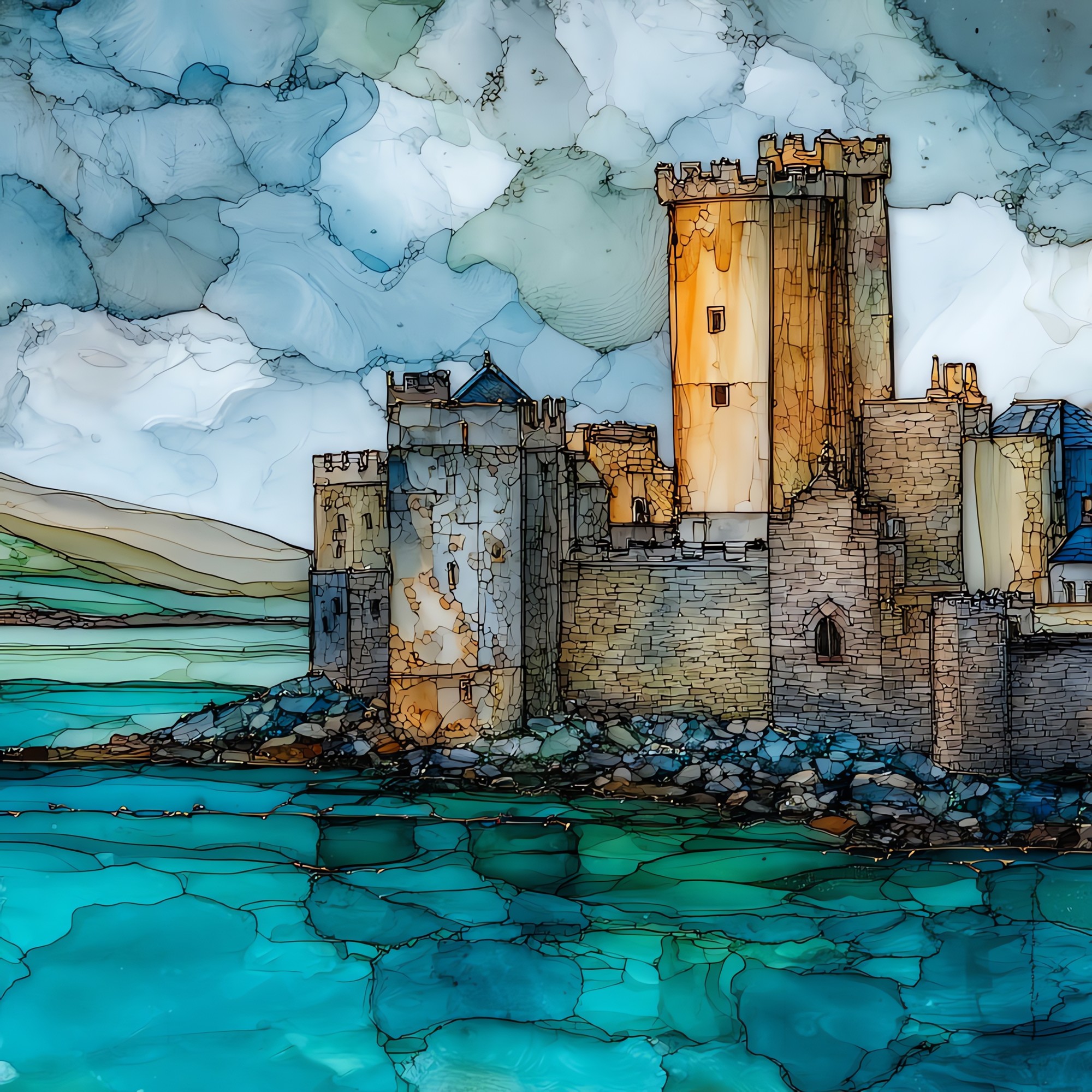
Carrickfergus Castle
— — the hour the lough goes flat and the stone goes warm.
Not only on a wall.
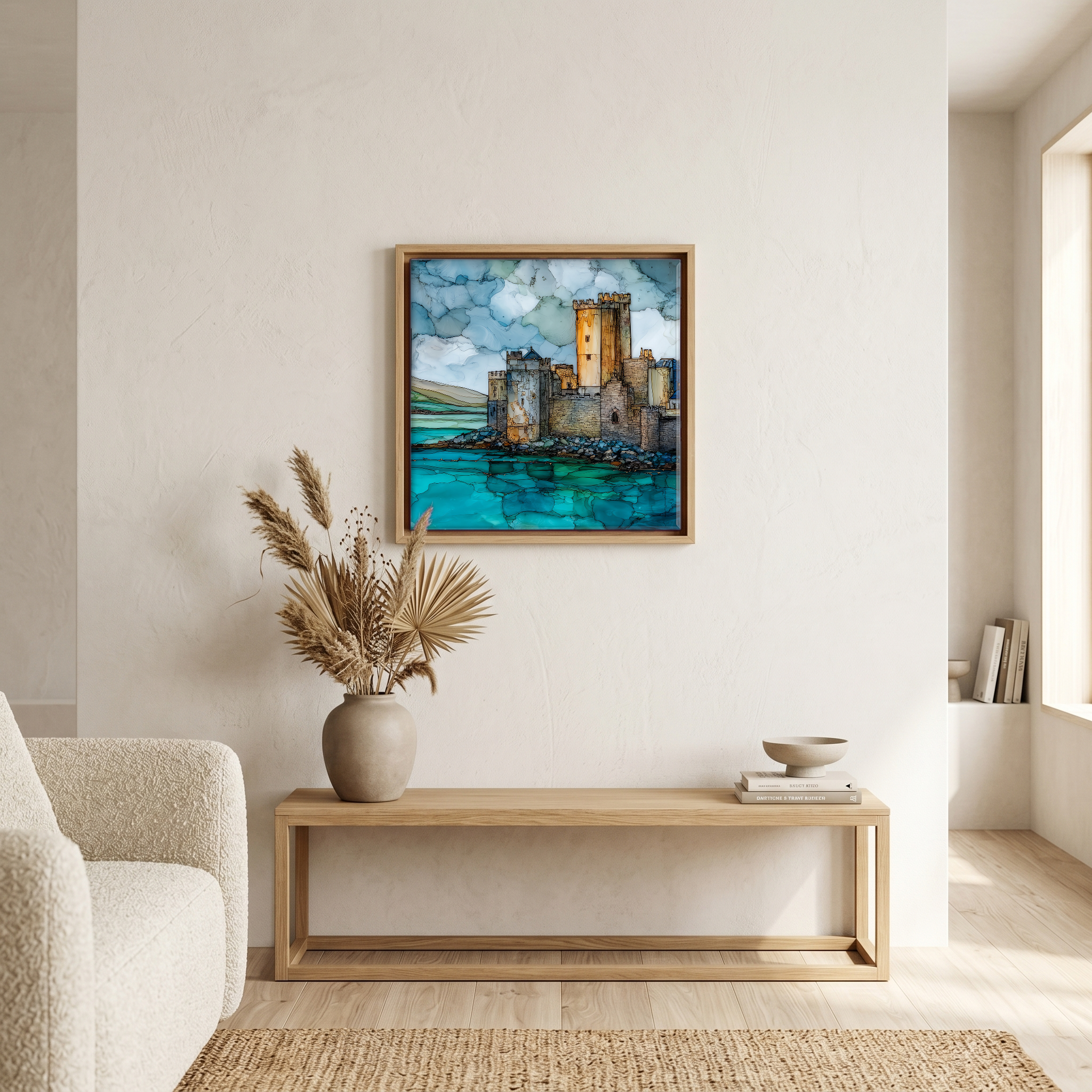
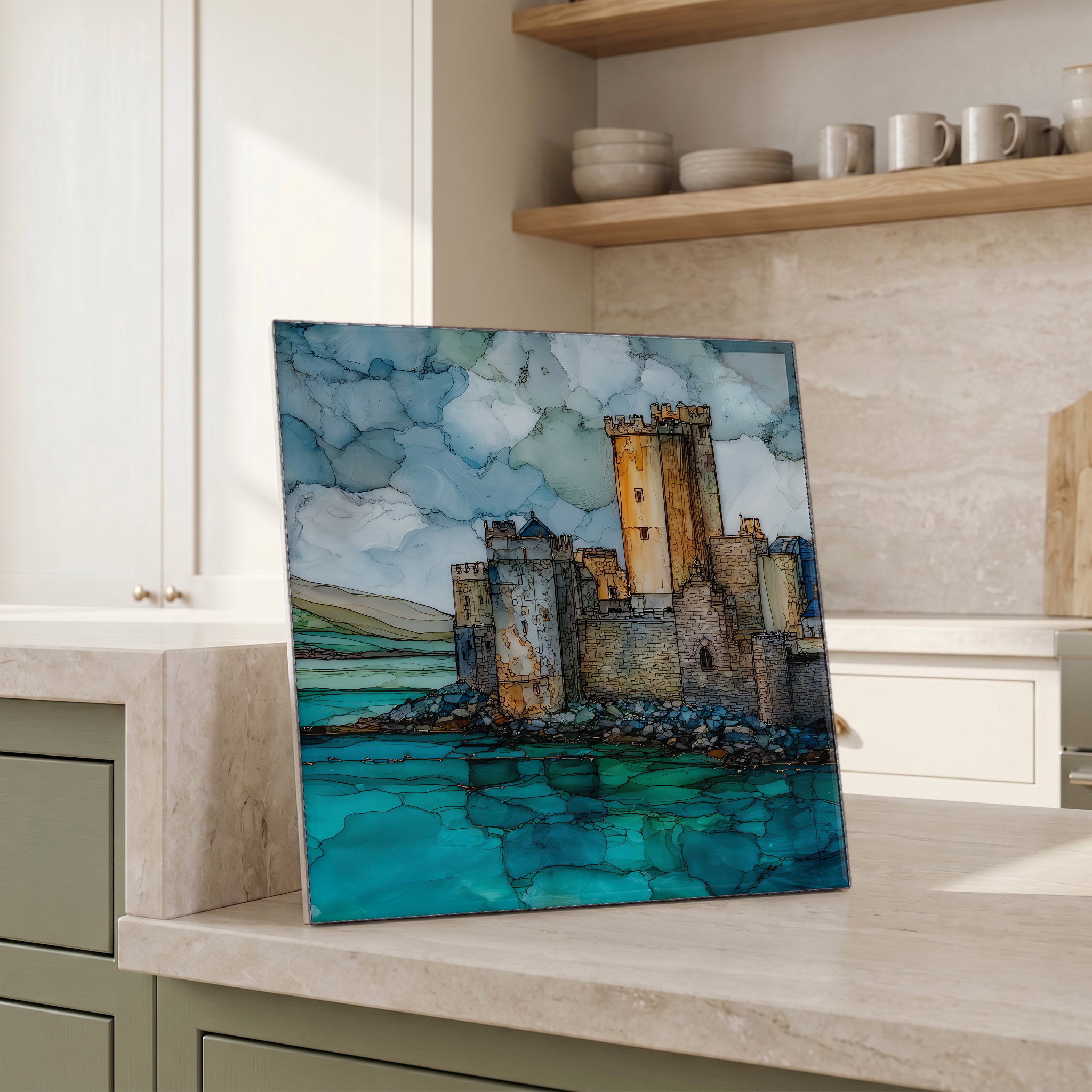
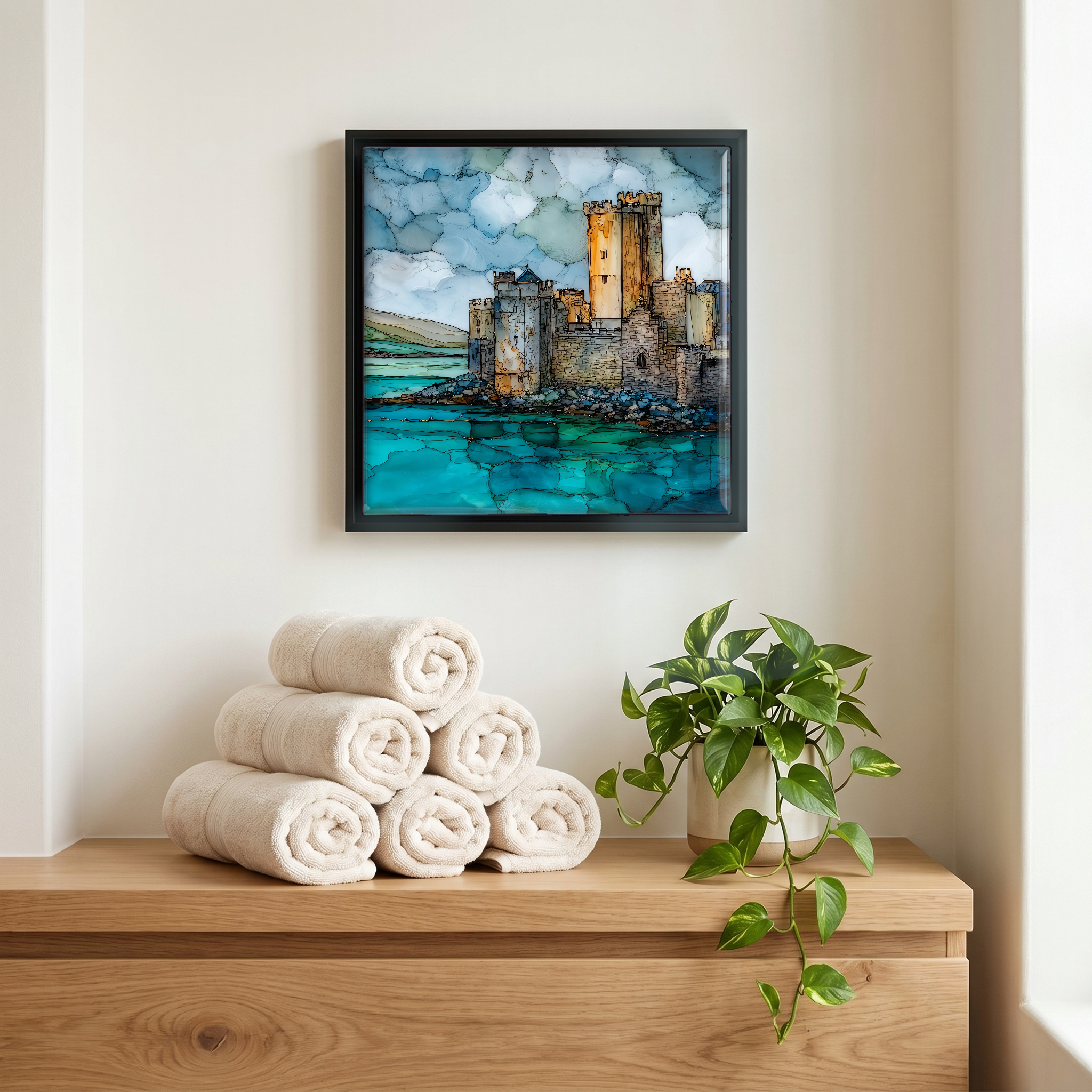
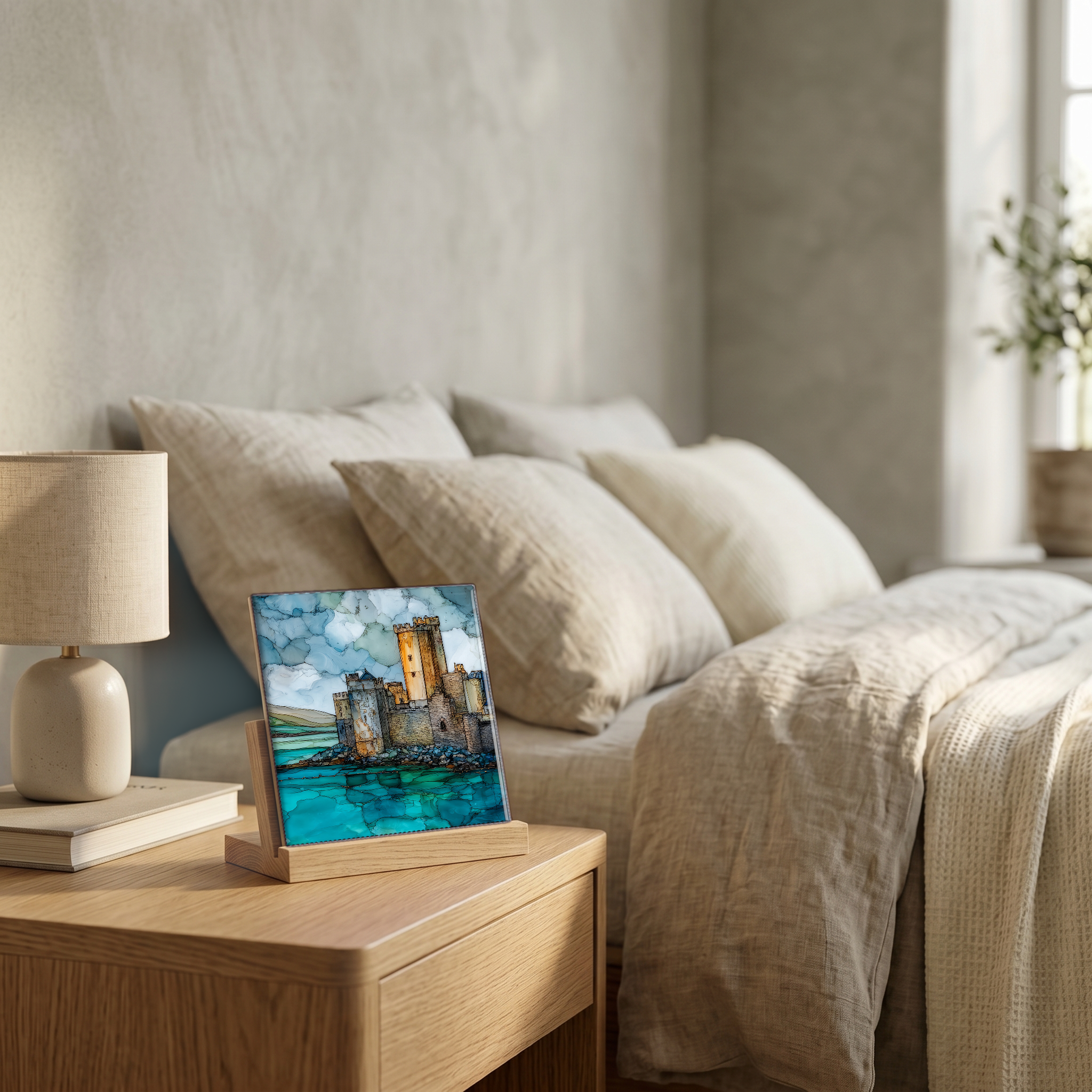
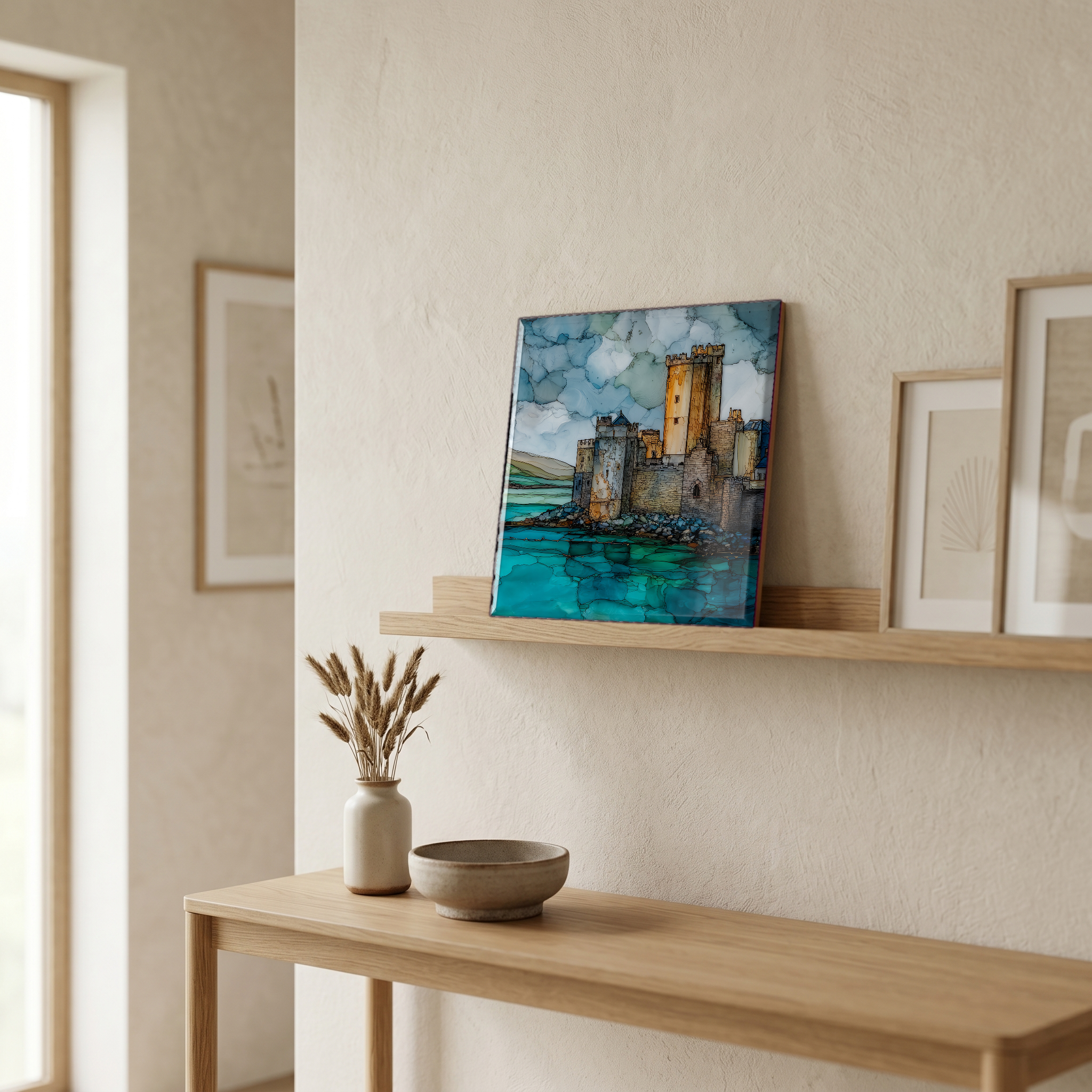
“Eight centuries on a rocky promontory at the northern edge of Belfast Lough. John de Courcy laid the first stones in 1177, and what he built is still the shape of the place: the keep, the curtain wall, the inner ward. The town of Carrickfergus grew up around it. Travellers driving up the coast from Belfast see the keep before they see anything else, the way you'd see a mountain. People sit on the seafront on summer evenings and let the wind off the lough do what it does.
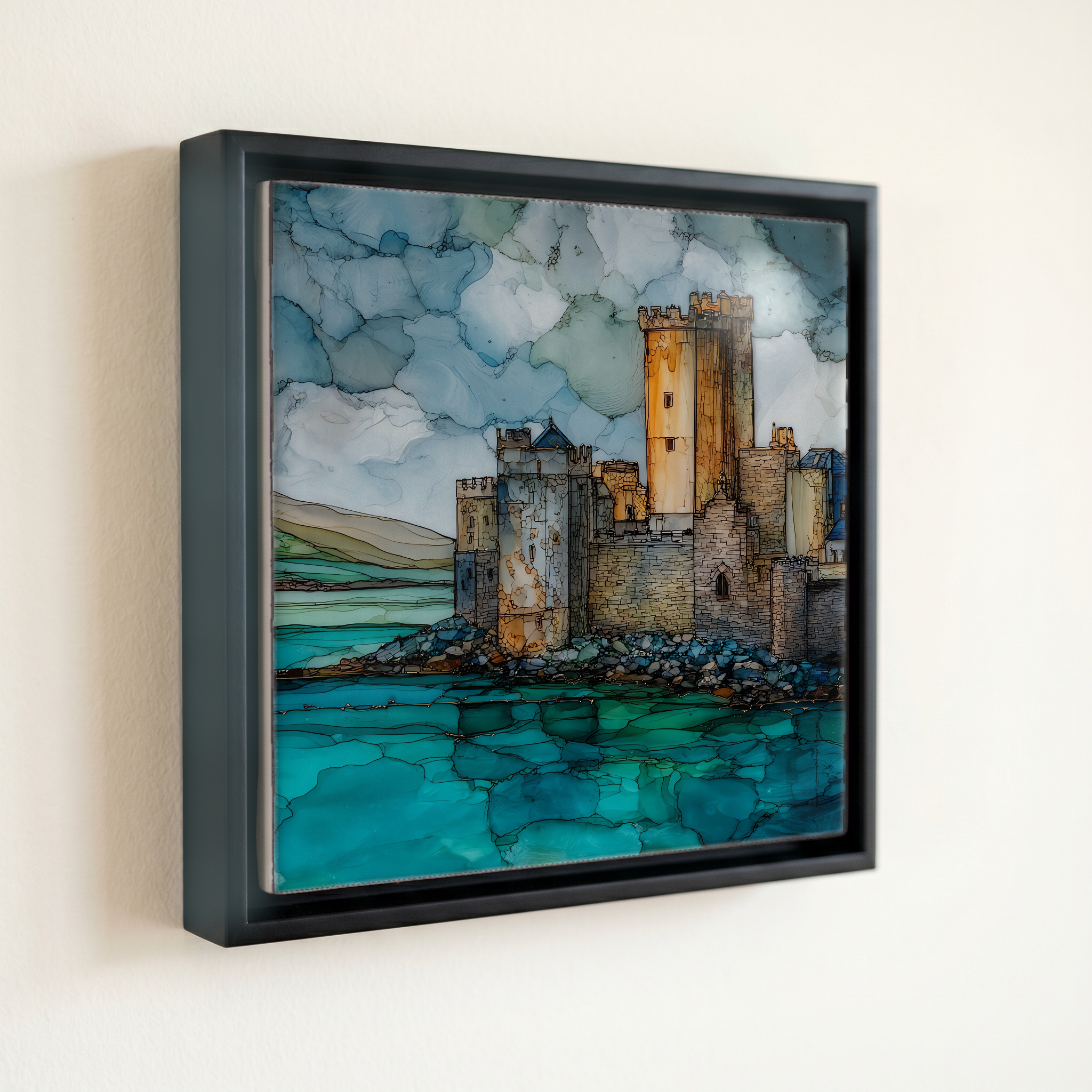
Carrickfergus Castle, on ceramic.
Each tile is finished by hand in our Knoxville studio. Artwork is slowly infused into the ceramic surface under high heat and pressure, and rests beneath a thin glossy finish. The colour lives in the surface, not on top of it.
Pick any four 4-inch tiles — National Parks you've been to, a Smokies set, the four seasons of one place. $ for a set of , cork-backed, ready to live on the table.
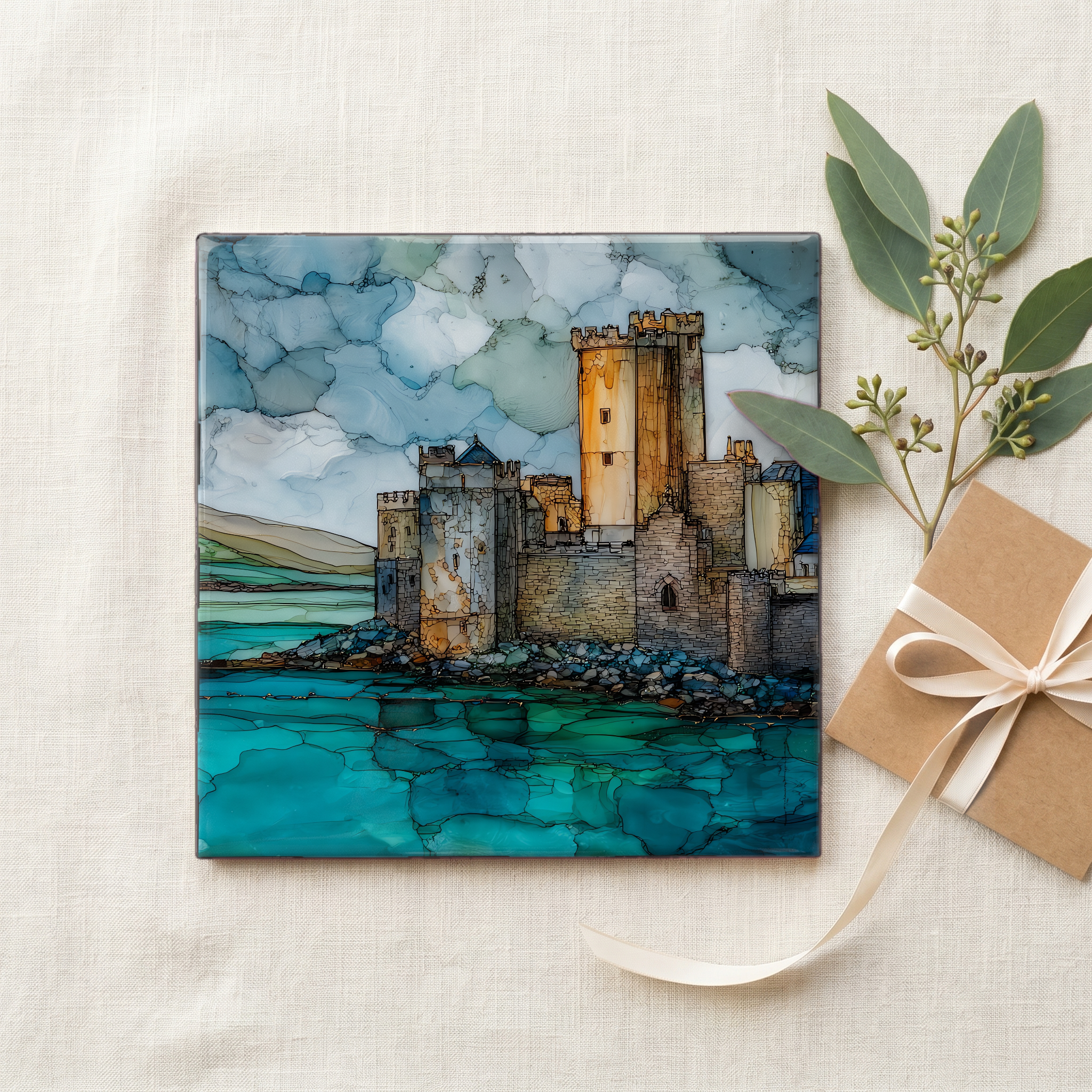
Each tile ships in a kraft box, tied with cream ribbon, with a handwritten note from the studio if you'd like to add one.
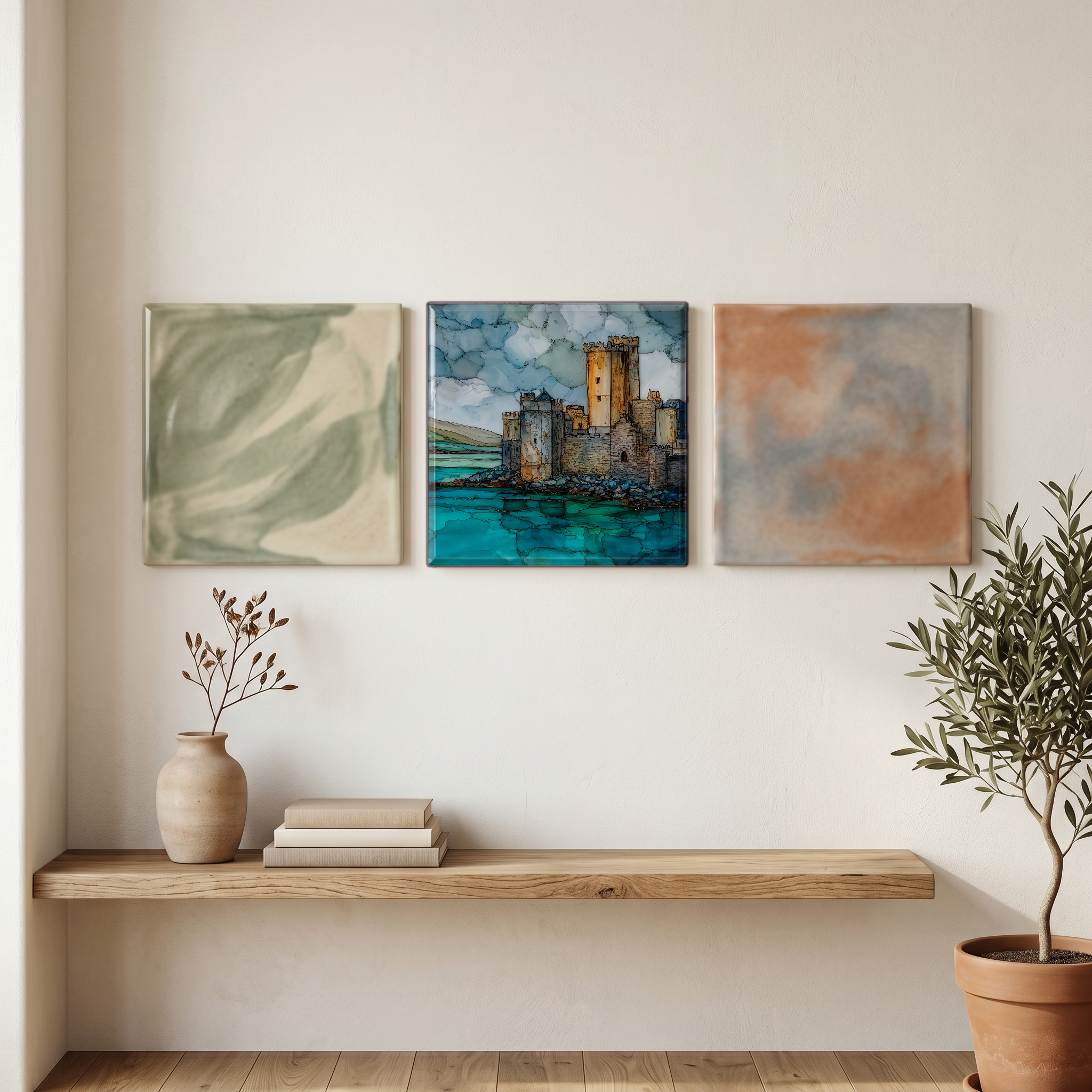
Three or five different vistas, hung together — a chapter of places you've been, or want to go.
The place, in three passes.
Carrickfergus Castle stands on a basalt outcrop on the northern shore of Belfast Lough, about 18 km northeast of Belfast in County Antrim, Northern Ireland. Construction began in 1177 under the Anglo-Norman knight John de Courcy, who used the rock as a natural defence on three sides, with the lough opening to the sea on the fourth. The early stronghold was a single inner ward and a keep; later phases added the middle and outer wards through the early thirteenth century. The castle anchors the town of Carrickfergus, the principal medieval town of east Ulster, and remains in the care of the Historic Environment Division of the Department for Communities.
The keep is the oldest standing building, rising about 27 metres over five storeys, built of locally-quarried basalt and sandstone with walls thick enough to have carried their own weight without buttressing for over eight hundred years. John de Courcy's original work was square and compact; the wider curtain walls and the gate towers were added after 1210, when King John of England captured the castle and invested in its expansion. The fabric carries the marks of every century since: arrow-loops widened into gun-ports in the sixteenth century, brick gun emplacements added in the late eighteenth century for the cannons that still sit on the seaward ramparts.
The castle is open through the year under the Historic Environment Division of the Department for Communities, with reduced winter hours and a modest admission fee. Visitors enter through the outer gatehouse, cross both the middle and inner wards, and climb the five-storey keep to the parapet, where the view runs the length of Belfast Lough from Bangor on the south shore back to the Belfast docks. Carrickfergus has its own rail halt on the Belfast-Larne line, a short walk from the gate, and trains run direct from Belfast city centre. Summer brings medieval reenactments and the Lughnasa fair; winter brings empty halls and the sound of the wind moving through the gun-ports.