Wender·Vista
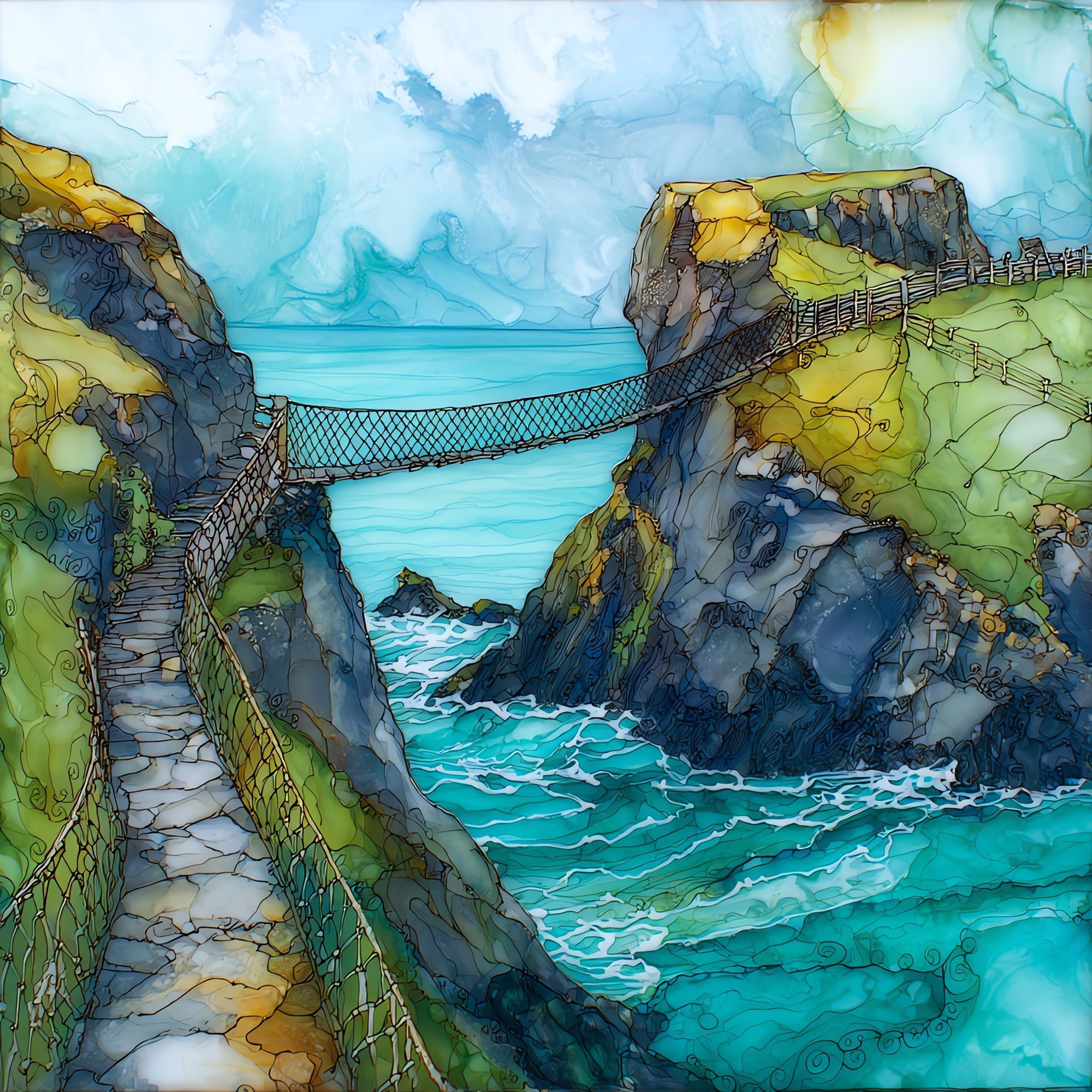
Carrick-a-Rede
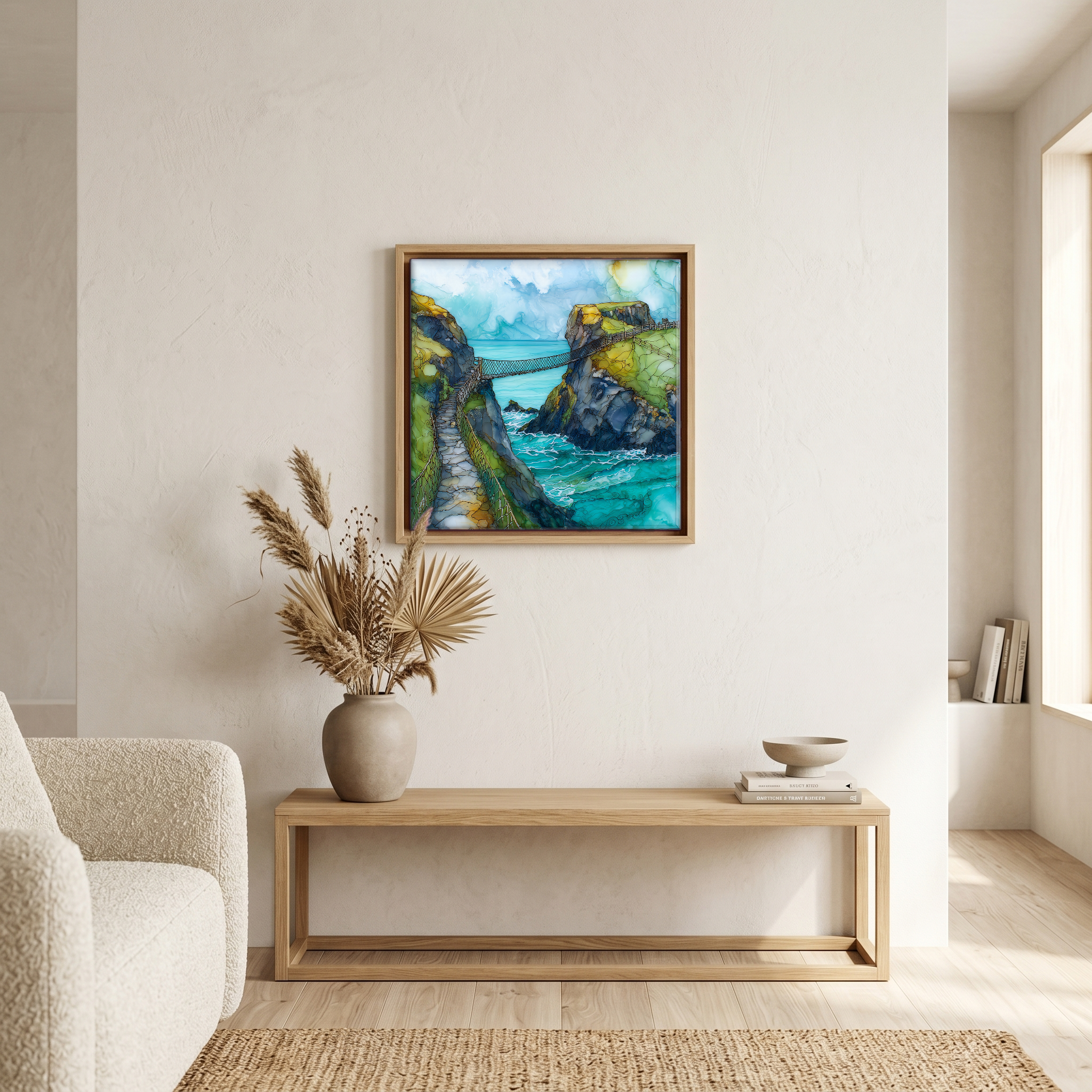
shown on ceramic, 12-inch tileIreland
on the Causeway Coast of County Antrim

Carrick-a-Rede

— a rope above the chasm, above the sea.

Where it lives

Not only on a wall.

A small tile on the nightstand catching the morning. A larger one above the fire. Yours, wherever you spend the slow hours.
Above the bench, in a warm oak surround.
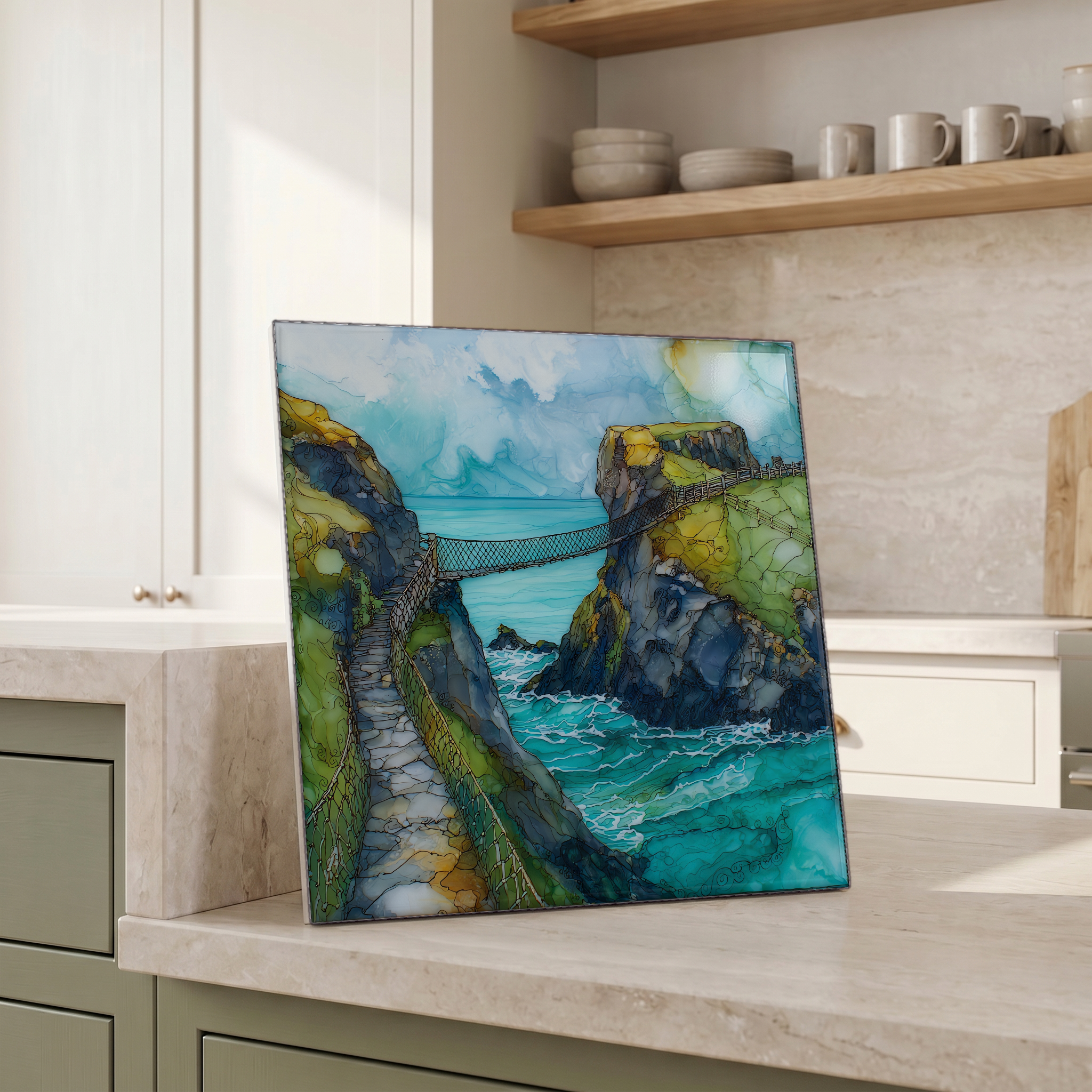
Beside the kettle, propped on the counter.
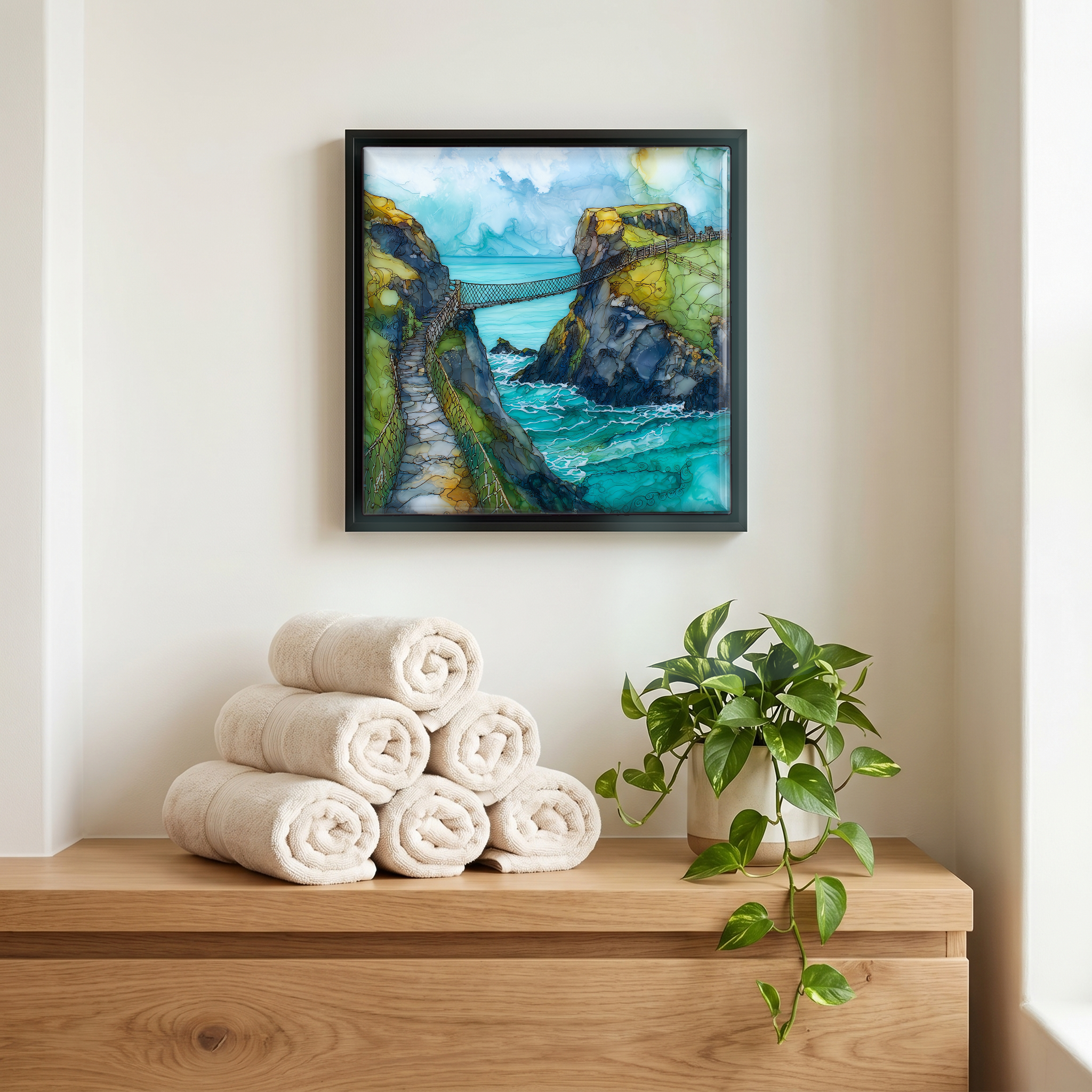
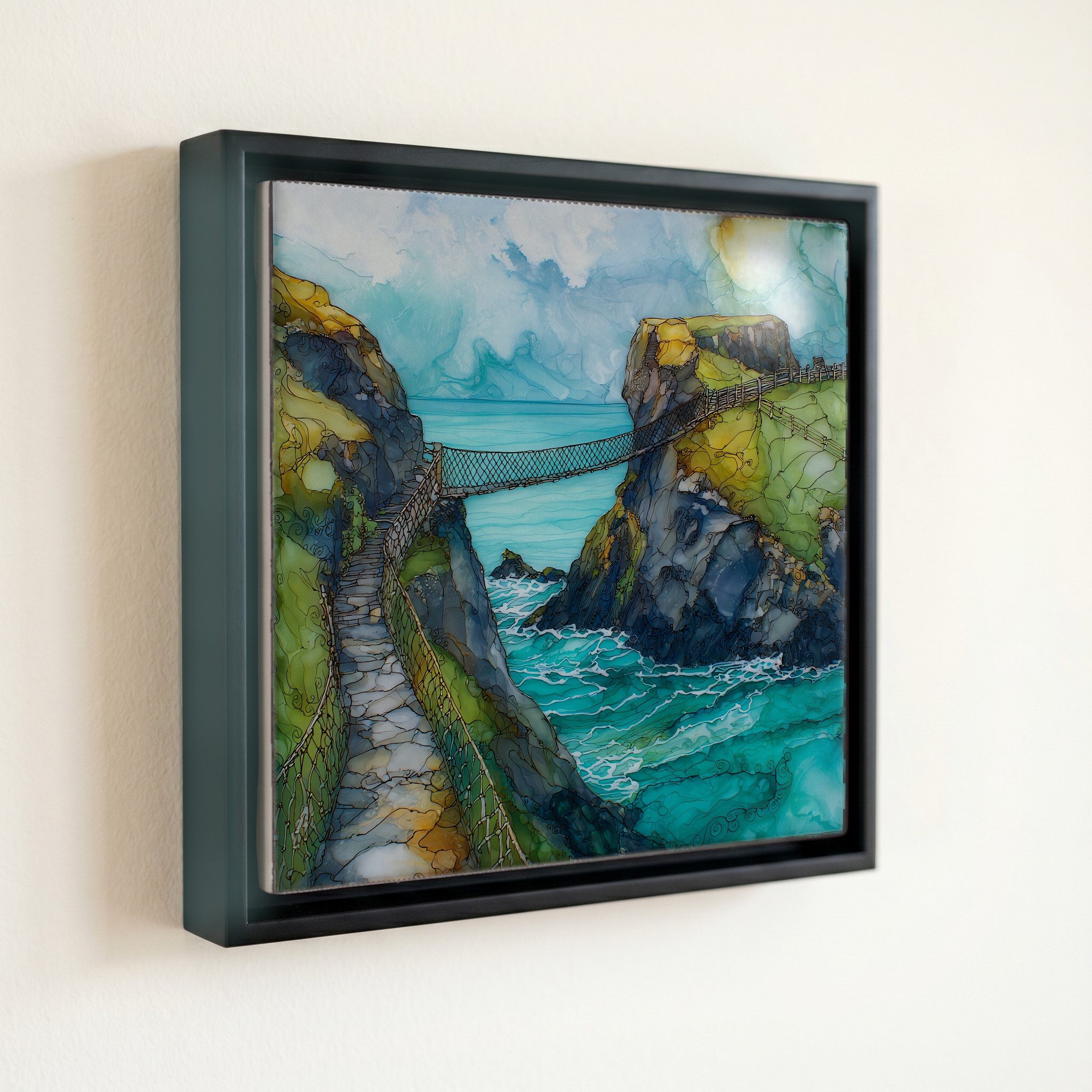
Above the linens, in a slim black surround.
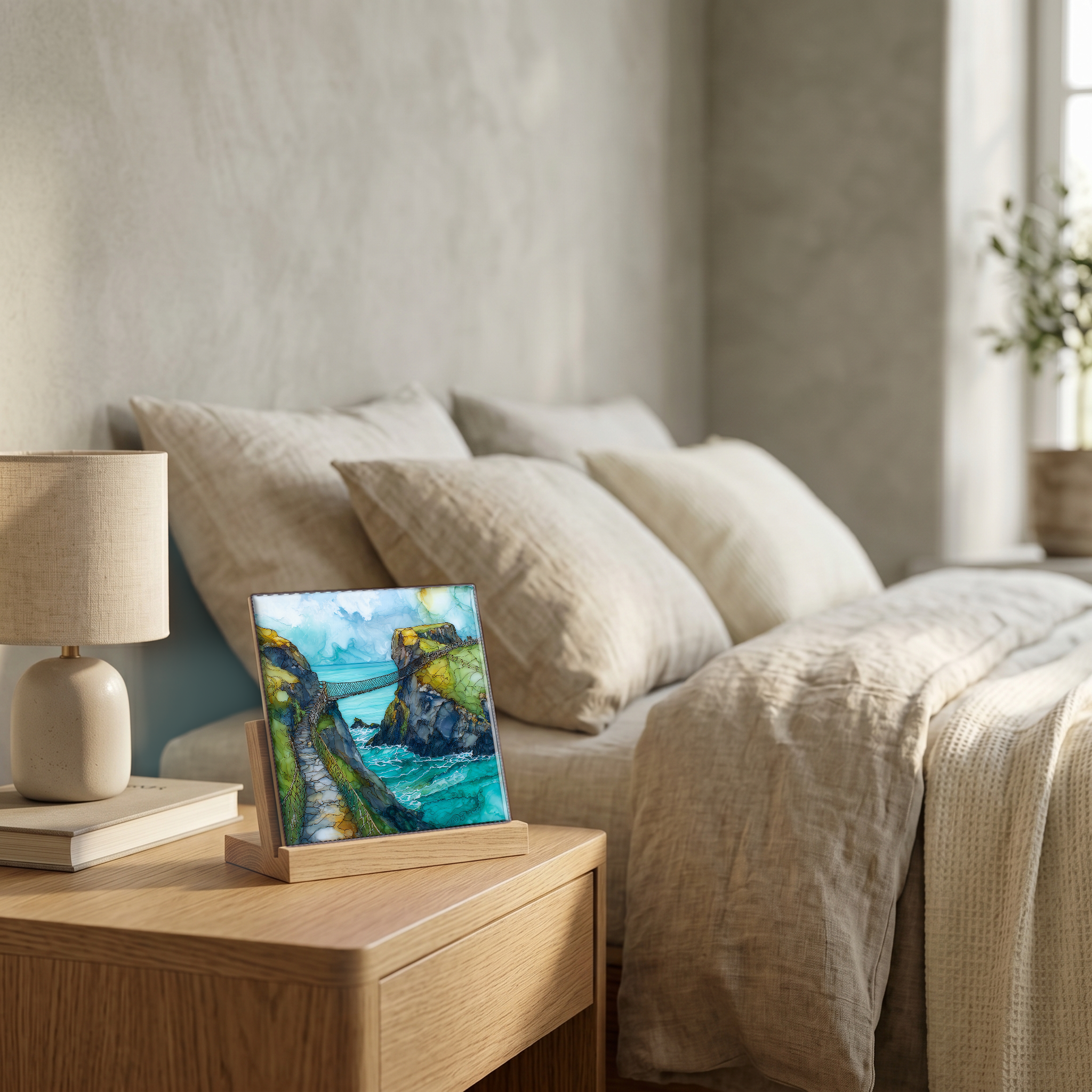
On the nightstand, on a light oak stand.
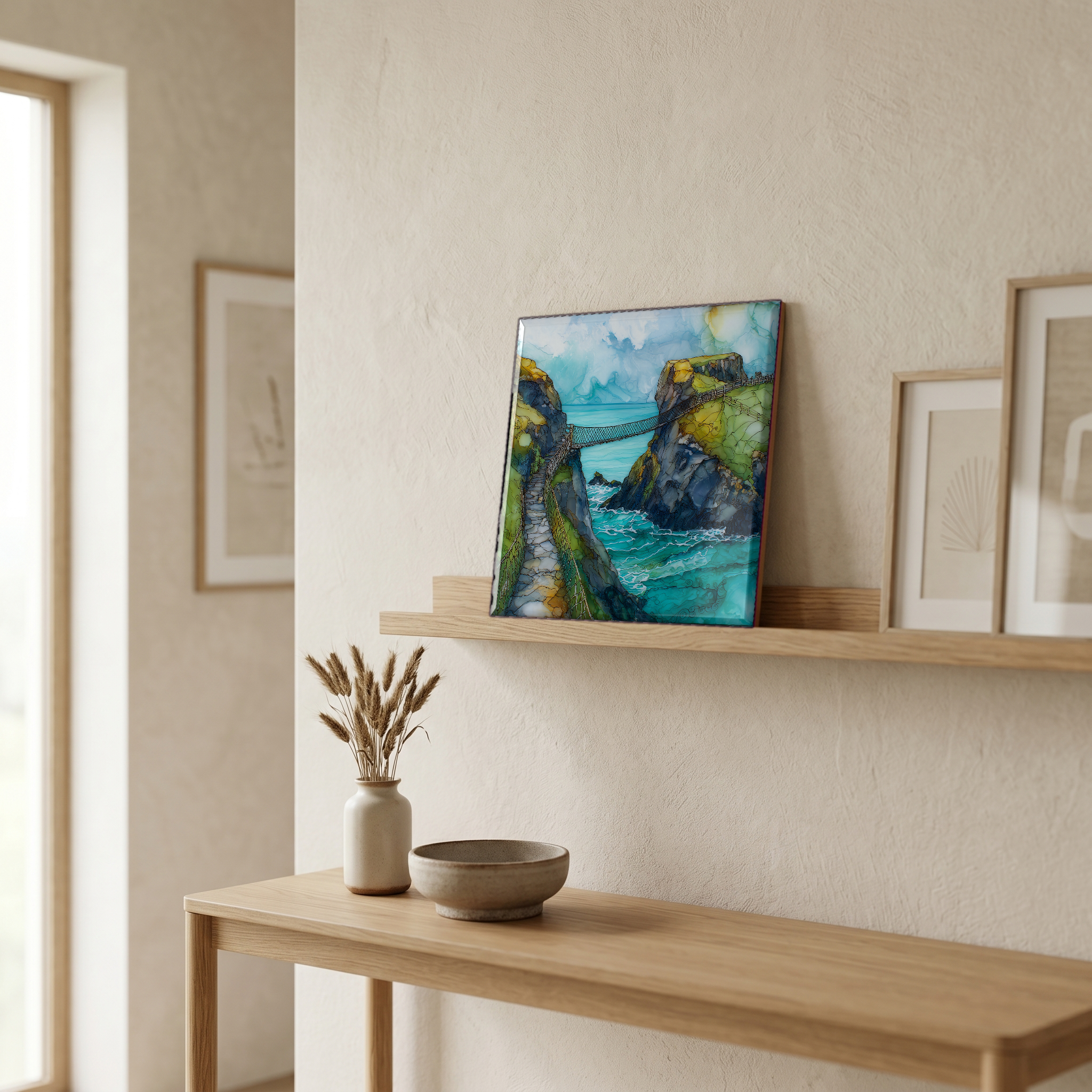
On a picture ledge, where the light comes in.
a note from the studio

A small volcanic island just off the cliffs of north Antrim, reached by a rope bridge slung twenty metres across and thirty above the sea. Salmon fishermen first strung a rope here in 1755; the fish ran this gap between the headlands, and the men needed a way out to the island to set their nets. The salmon are gone now, since the early 2000s. The bridge is still here. The National Trust runs it on timed entry; the wind closes it some days. On a still afternoon the sea is loud below.
from the studio
shown in a slim black floating frame · 6 × 6 in
— bring it home

Carrick-a-Rede, on ceramic.

Each tile is finished by hand in our Knoxville studio. Artwork is slowly infused into the ceramic surface under high heat and pressure, and rests beneath a thin glossy finish. The colour lives in the surface, not on top of it.

What kind of piece?
One tile — square or rectangle.
How big?
the popular one — counter, shelf, nightstand
6 × 6 in · 15 cm · 1.6 lb
Surface finish
A clear glossy finish — the artwork reads as if under resin. Ideal for show-pieces and framed wall art.
How it sits
A hidden cleat — sits ¼″ proud of the wall.
$58
Hand-finished and shipped from our studio at the foot of the Smokies. On your wall in about ten days.
size
6 × 6 in
15 cm
weighs
1.6 lb
solid in the hand
surface
ceramic, hand-finished
art rests beneath a thin glossy finish
from
Knoxville, TN
our family studio, at the foot of the Smokies
— start a Coaster Set

Pick any four 4-inch tiles — National Parks you've been to, a Smokies set, the four seasons of one place. $ for a set of , cork-backed, ready to live on the table.
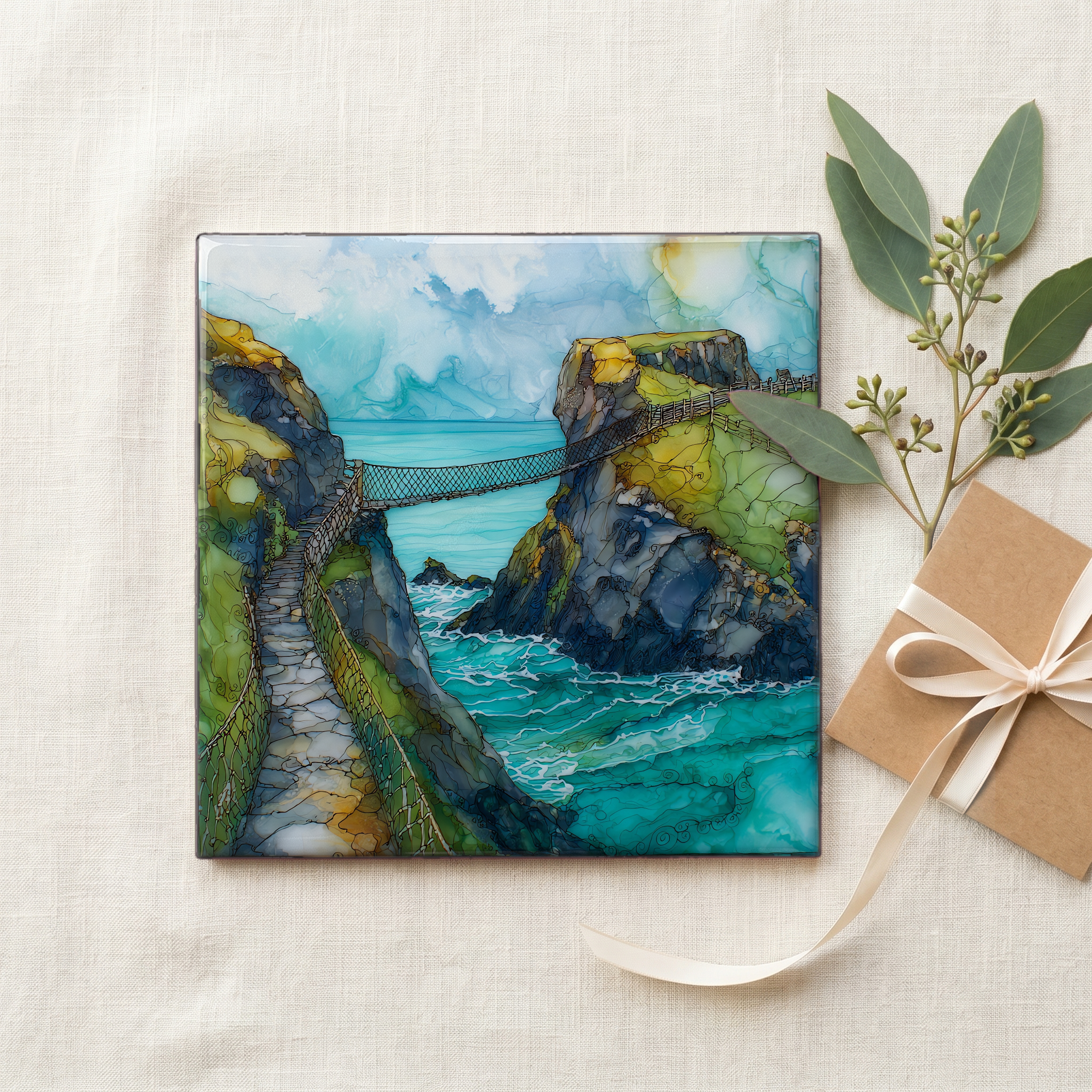
comes gift-ready
comes gift-ready

Each tile ships in a kraft box, tied with cream ribbon, with a handwritten note from the studio if you'd like to add one.
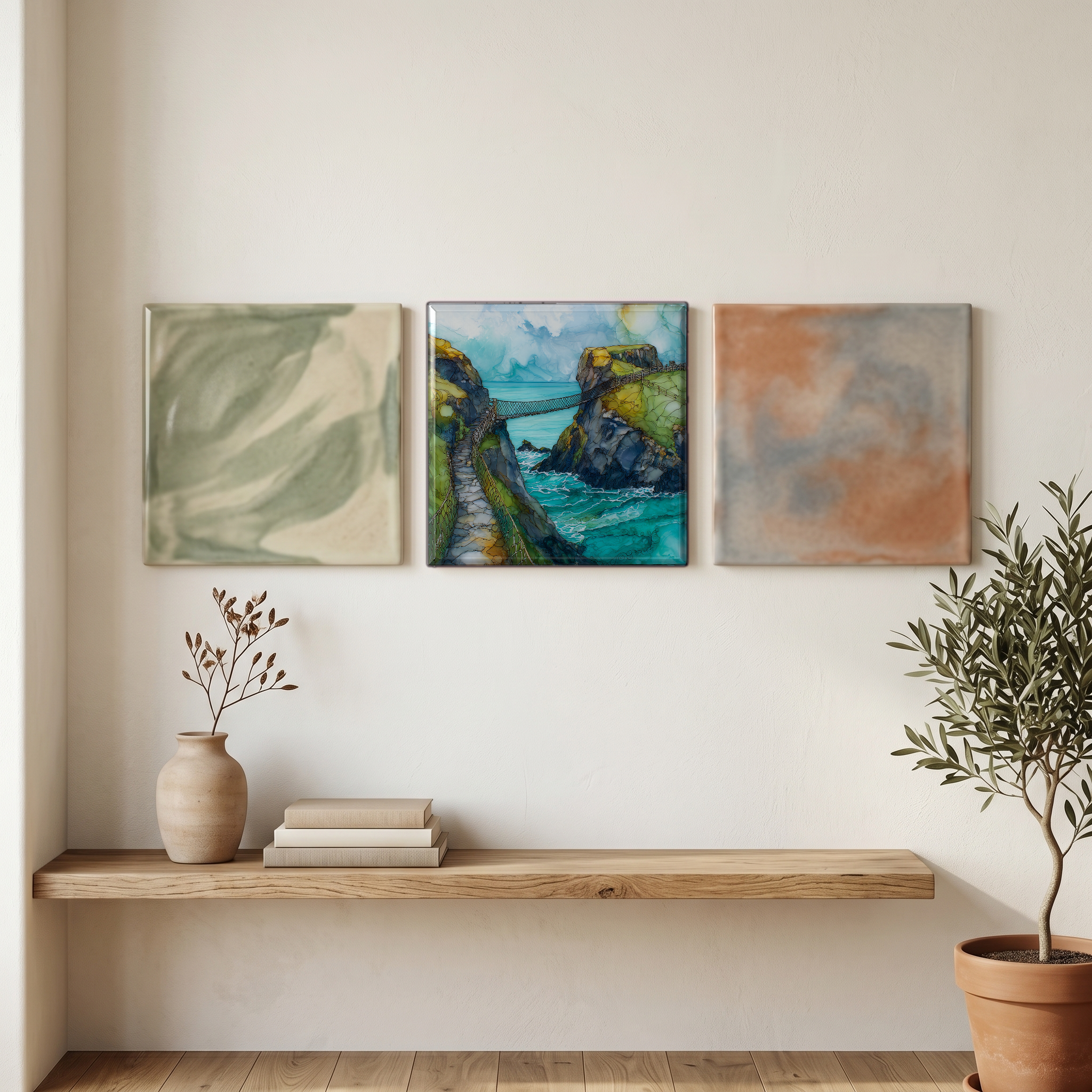
or build a grouping
or build a grouping

Three or five different vistas, hung together — a chapter of places you've been, or want to go.

about Carrick-a-Rede

The place, in three passes.

A little of what's known, in case you fall down the rabbit hole — or want to go see it yourself.
the place

Carrick-a-Rede is the site of a rope bridge that connects a small volcanic island, Carrickarede, to the cliffs of the north coast of County Antrim, Northern Ireland. The chasm between them runs roughly twenty metres wide and about thirty metres deep. Fishermen first strung a rope across the gap in 1755; the current bridge was installed in 2008. The site sits within the Causeway Coast Area of Outstanding Natural Beauty, about thirteen kilometres east of the Giant's Causeway and just east of Ballintoy Harbour. It is owned and managed by the National Trust. A walking path of roughly one kilometre runs along the clifftop from the visitor car park out to the bridge head.

the stone

The little island of Carrickarede is a volcanic plug, the eroded remains of a vent active around sixty million years ago, during the Paleogene period that gave the Antrim coast its basalt cliffs and the hexagonal columns of the Giant's Causeway down the road. The same igneous activity built the Antrim Plateau and Fair Head, and underlies the cliffs as far west as the Inishowen peninsula. The cliffs on either side of the chasm at Carrick-a-Rede are columnar basalt and dolerite; the bridge crosses the gap where weaker rock has eroded out faster than the harder volcanic material on either side. The chasm is the geology of the place written in section.

the visit

The site is operated by the National Trust and entry is timed; tickets are booked in advance through the Trust's online system, and the bridge is closed in high winds and severe weather. The walk from the car park out to the bridge runs roughly one kilometre each way along clifftop paths, and the crossing itself permits eight people on the bridge at a time. The bridge is open most of the year, weather permitting; July and August are the busiest months. Sturdy footwear is advised, and the cliff edges are unfenced in places. The Trust reports around half a million visitors a year at the site.

where
Ireland · County Antrim, Northern Ireland
within
Causeway Coast Area of Outstanding Natural Beauty
position
55.2386° N · 6.3349° W
the neighborhood

What's nearby.

A handful of named places within an hour's walk or short drive. Some we've already painted; some we will.
2 km W
Ballintoy Harbour
fishing harbour
3 km E
Kinbane Castle
ruined castle
8 km W
Dunseverick Castle
ruined castle
8 km E
Ballycastle
harbour town
10 km NE
Rathlin Island
island
13 km W
Giant's Causeway
basalt promontory
N
Carrick-a-Rede
Ballintoy Harbour
Kinbane Castle
Dunseverick Castle
Ballycastle
Rathlin Island
Giant's Causeway
common questions

What people ask.

A few questions we get about Carrick-a-Rede — and about bringing the piece home.
about the place

Carrick-a-Rede is on the north coast of County Antrim, Northern Ireland, about thirteen kilometres east of the Giant's Causeway and a short distance east of Ballintoy Harbour. The site sits within the Causeway Coast Area of Outstanding Natural Beauty and is owned by the National Trust.

The bridge spans roughly twenty metres across the chasm between the mainland and the small volcanic island of Carrickarede, suspended about thirty metres above the sea. Up to eight people are permitted on the bridge at a time, and crossings are one-way at busy periods.

Salmon fishermen first strung a rope across the chasm in 1755 to reach the island and set their nets in the gap, which sat on the migration route of Atlantic salmon returning to the Bann and other local rivers. The fishery closed in the early 2000s as stocks collapsed.

The site is owned and managed by the National Trust, which operates the rope bridge, the visitor facilities, and the cliffside walking path. Visits are by timed ticket booked in advance through the Trust's website, and the bridge is closed in high winds or severe weather.

Yes. Carrickarede is a volcanic plug, the eroded remains of a vent active during the Paleogene period roughly sixty million years ago. The same igneous activity formed the basalt columns of the nearby Giant's Causeway and much of the Antrim Plateau down the coast.

The bridge is open most of the year during daylight hours, with timed entry slots that vary by season. It closes in high winds and severe weather. The National Trust confirms operating hours and any closures on its website on the day of the visit.

The site lies off the B15 between Ballintoy and Ballycastle on the Causeway Coastal Route. The walk from the car park out to the bridge runs about one kilometre each way along the clifftop. The nearest town is Ballycastle, around eight kilometres east.

about the piece in your home

It has carried well as a gift for many of our customers with roots on the Antrim coast or with memories of the Causeway Coastal Route. The piece reads as Carrick-a-Rede to anyone who knows the place: the chasm, the rope, the headlands. A Small with a handwritten note from the studio fits a hallway shelf.

The cool greys, slate blues, and ocean greens of the cliffs and sea sit well in Coastal-modern, Irish-vernacular, and Mountain-modern interiors. The high-contrast linework of the chasm reads cleanly against limewashed walls or natural oak, and the piece anchors a room with one deep saturated colour already in play.

Coastal-modern remains one of the strongest interior categories in shelter magazines, especially the cooler Atlantic edge of it rather than the warmer Mediterranean. The Causeway palette of cool blues, basalt black, and grass green has moved through high-end homeware for several seasons and shows no signs of cooling.

Above a standard sofa or a wide console the single Large holds the wall on its own. A four-tile Mural sits in proportion above a longer sofa or a primary wall in a great room. A nine-tile Mural is the right scale for a stairway wall or a double-height entry.

Yes, in the Dura Satin or Matte finish. Both are scratch-resistant and tolerate the steam and splashes of a bathroom or a kitchen splashback. The Glossy finish is intended for framed wall use in a dry room and reads brighter under direct light.

A soft microfibre cloth with warm water is enough for everyday dust and fingerprints. For a kitchen or bathroom install, a mild non-abrasive cleaner is fine. Avoid bleach, ammonia, and abrasive pads; the colour lives in the surface and the finish does not need sealing.

Yes. Every WenderVista piece is made in-house by Reid Wender, the curator, at the studio in Knoxville, Tennessee. We do not license or resell other artists' work. Each tile is hand-finished before it leaves us.

if this one stayed with you

A few you might also love.

Hand-picked by the eye that found Sorapis. Same air, same kind of quiet.