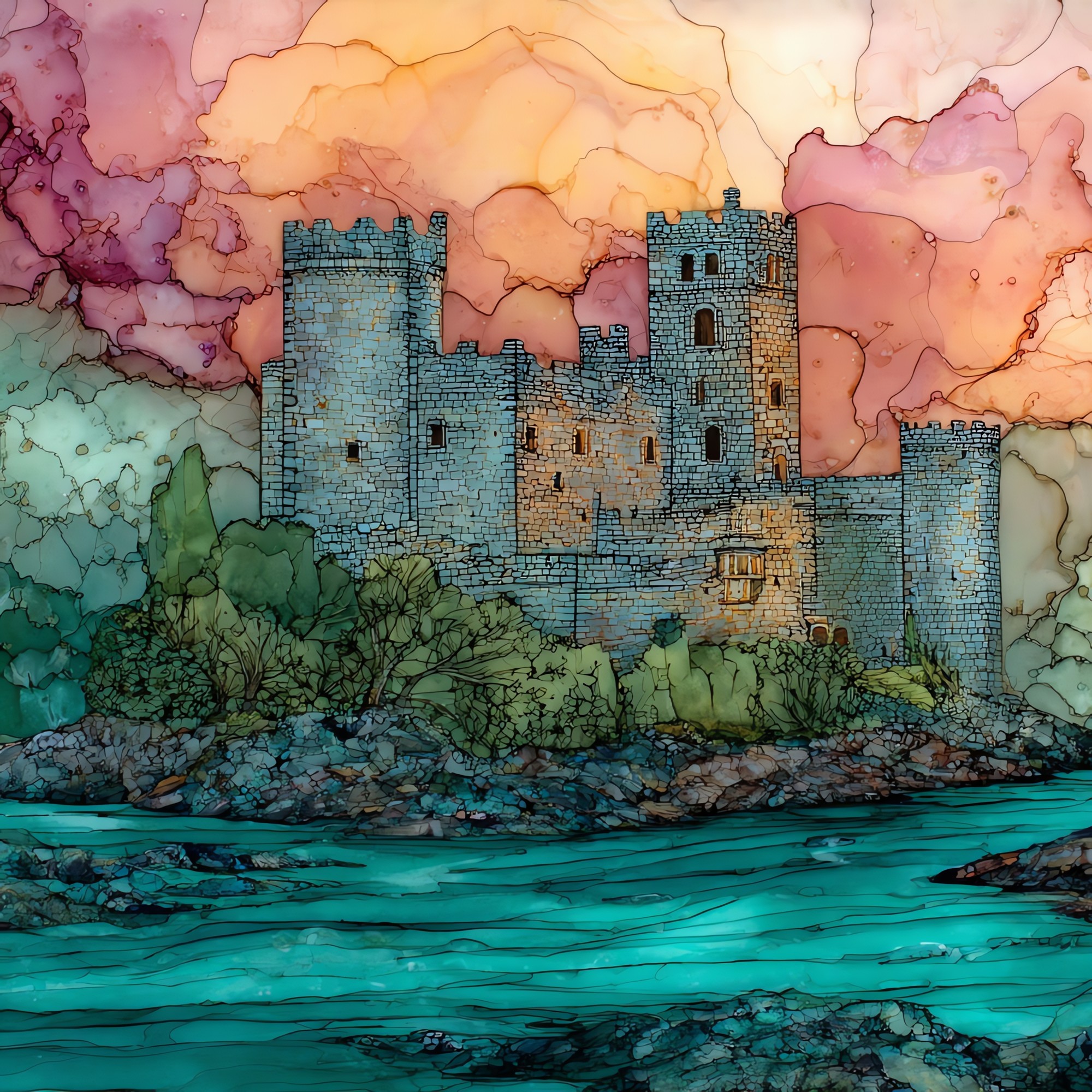
Cahir Castle
— — the grey the river keeps polishing.
Not only on a wall.
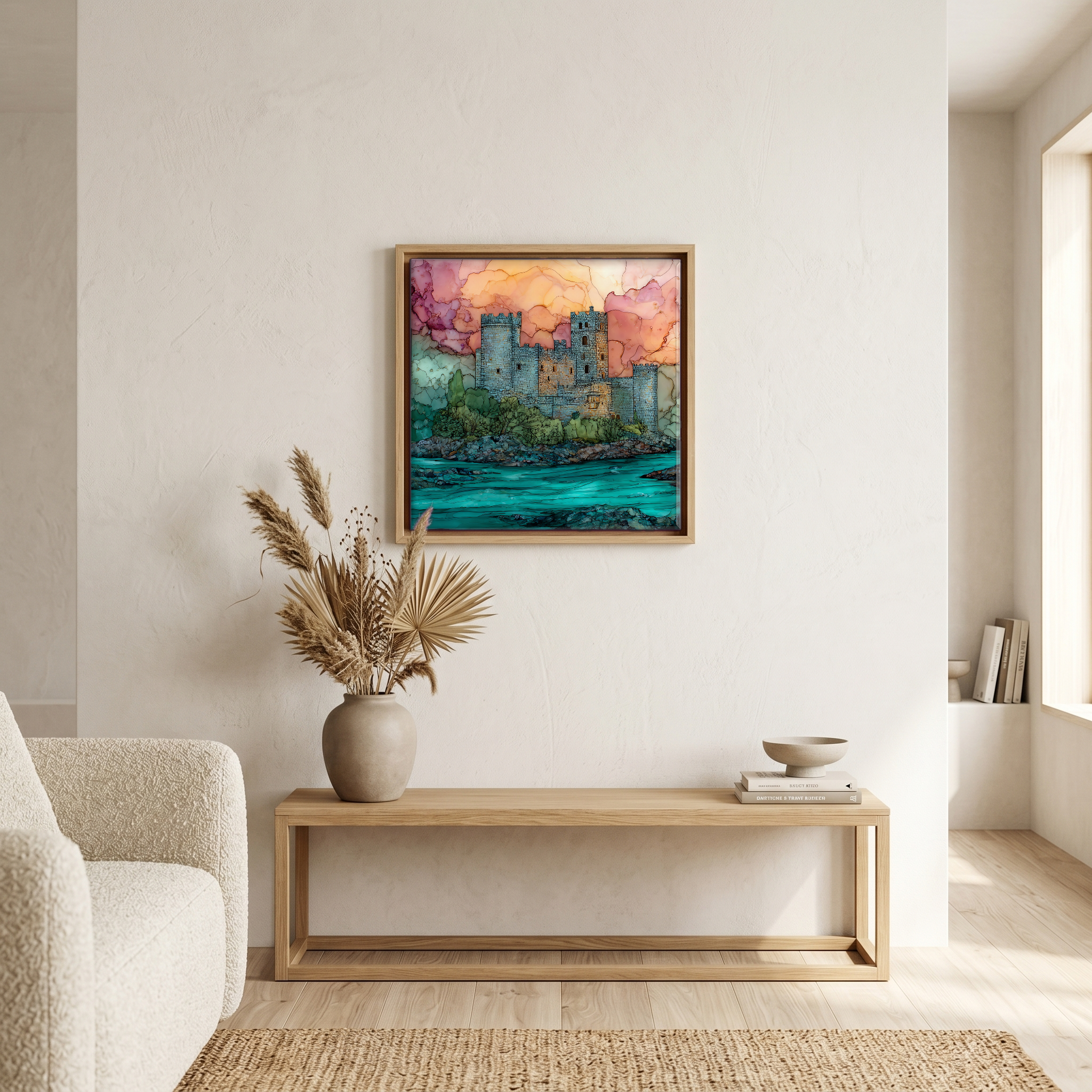
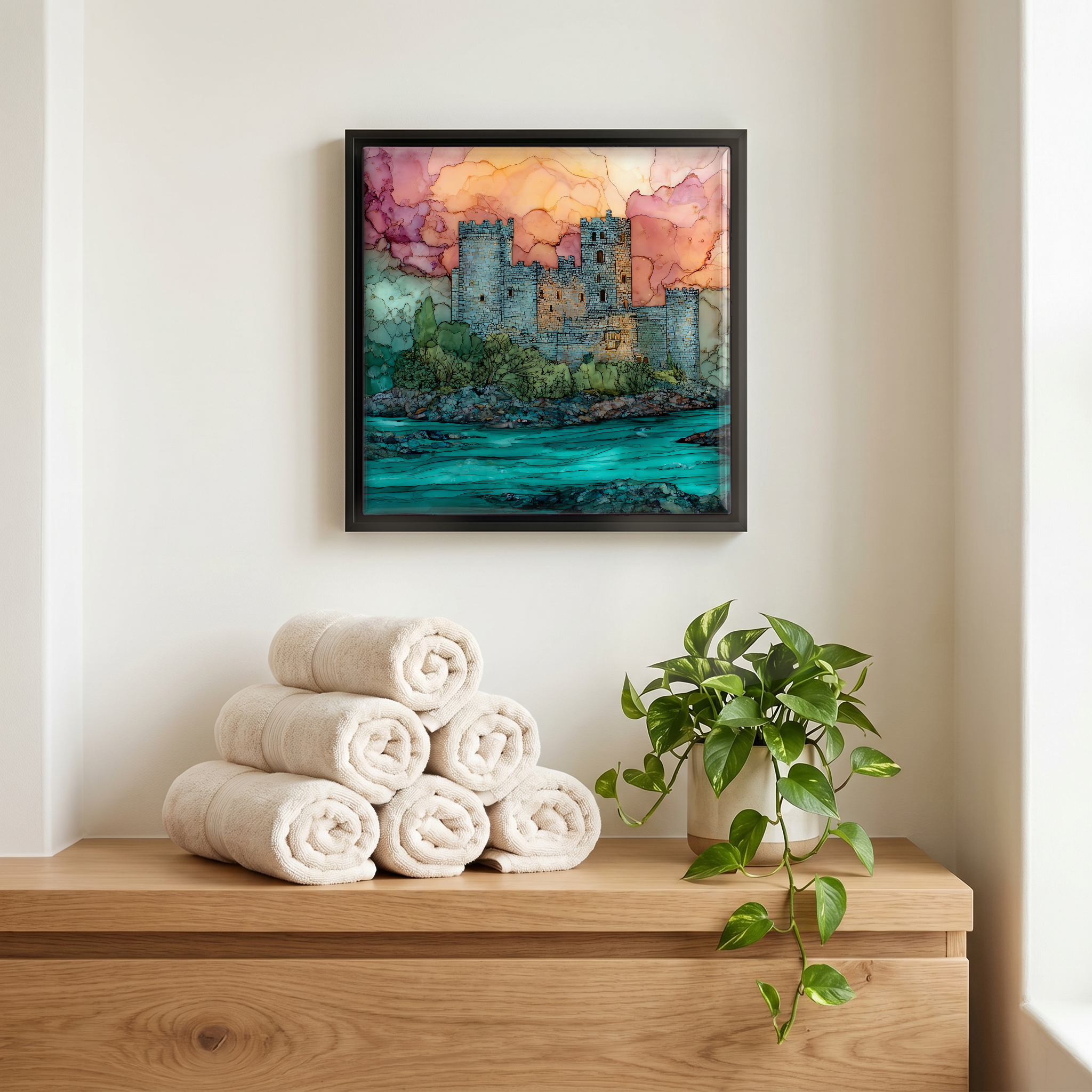
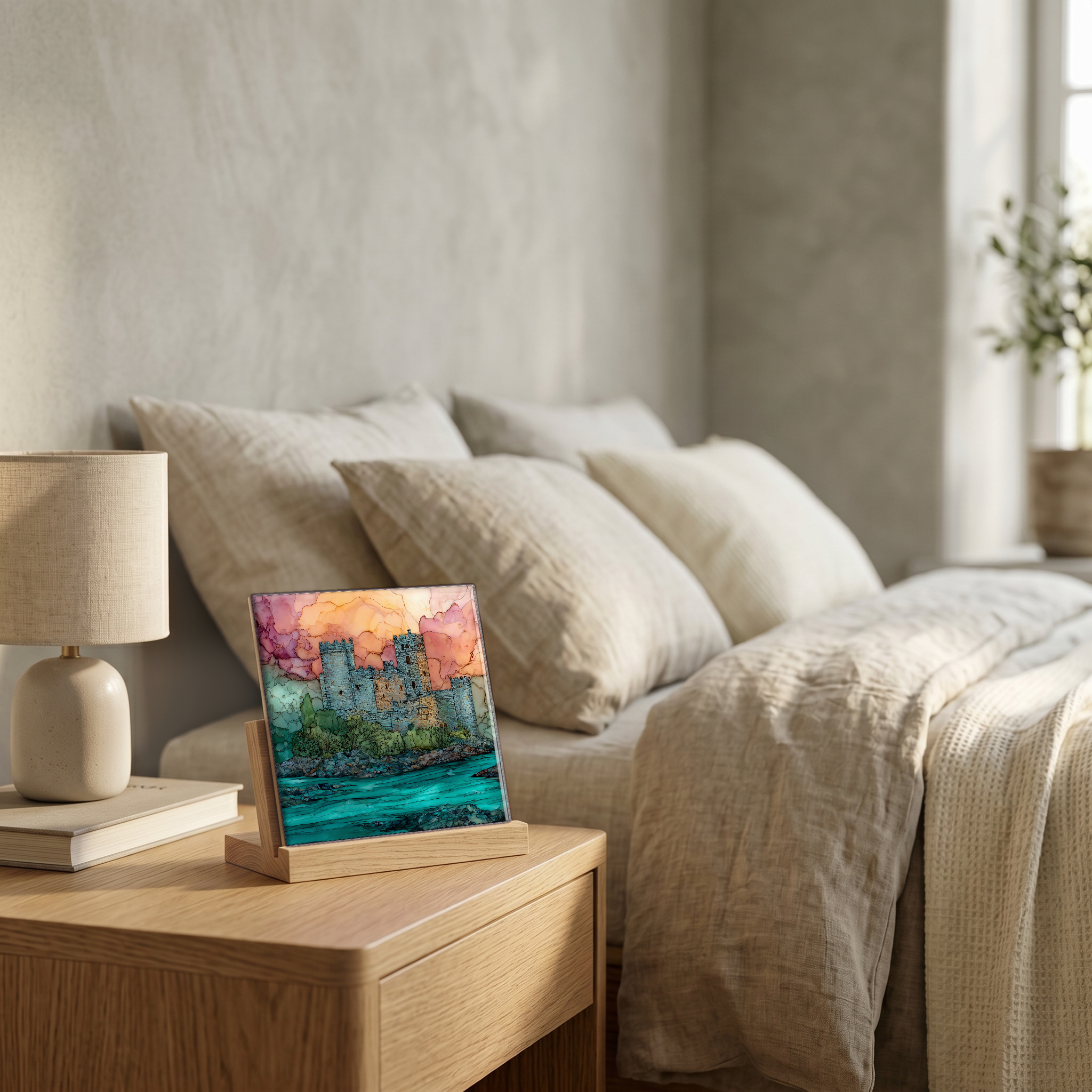
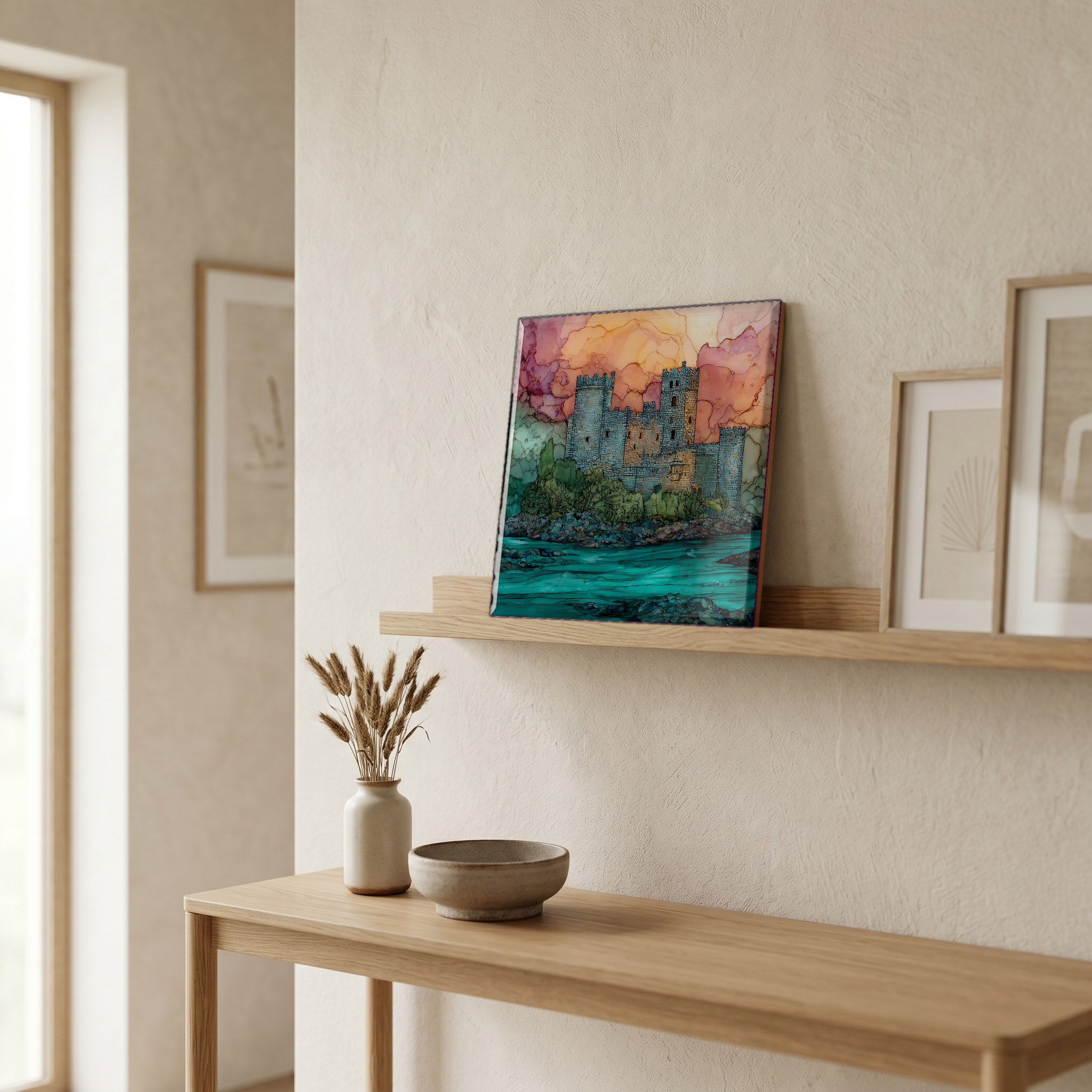
“A grey limestone keep on a rocky island in the River Suir, in the middle of Cahir town. The Butlers added to it for nearly six hundred years: outer ward, inner ward, great hall, a portcullis that still drops in its track. Stanley Kubrick filmed Barry Lyndon here in 1975. John Boorman filmed Excalibur on the same walls six years later. The Office of Public Works keeps the gate open most of the year. The river does the rest.
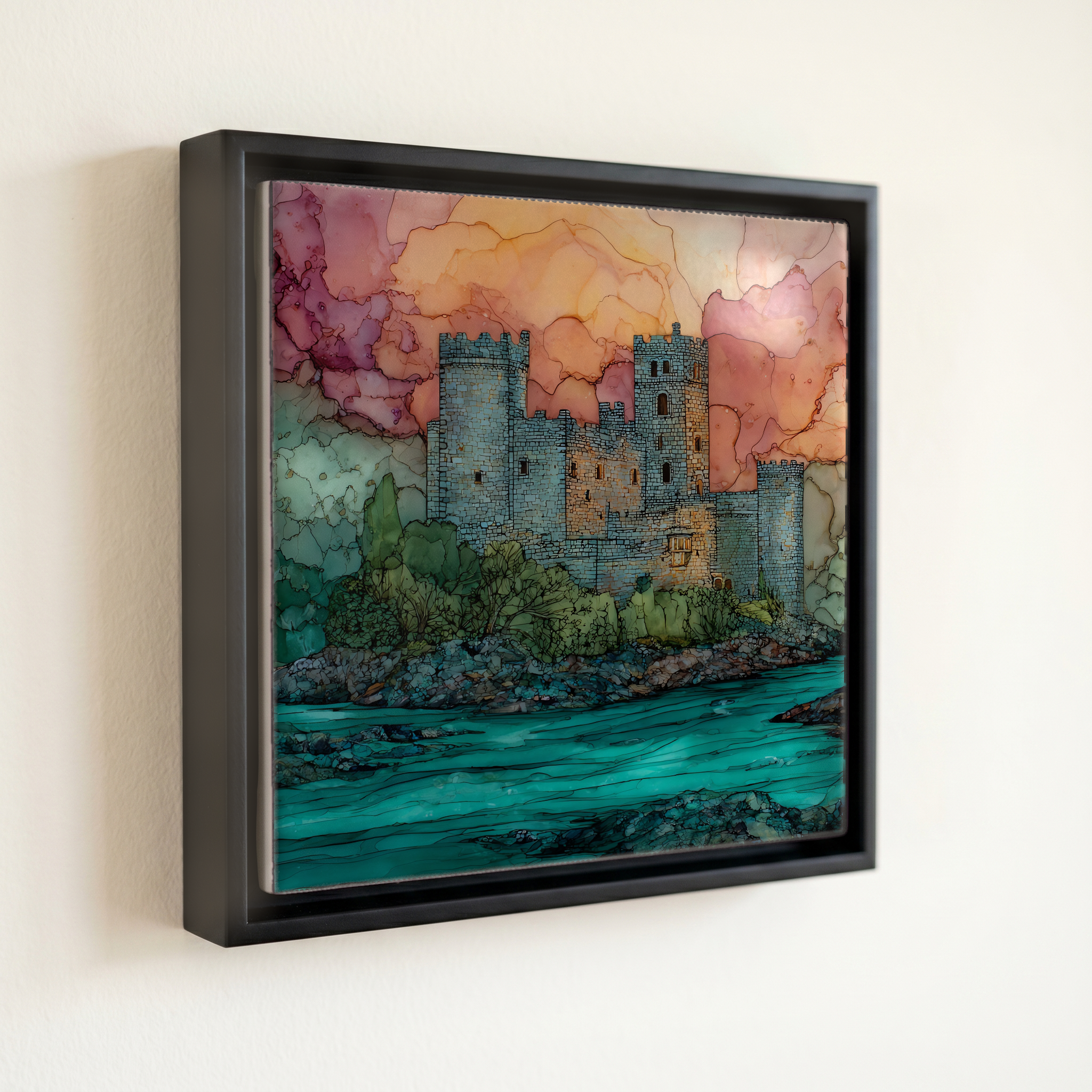
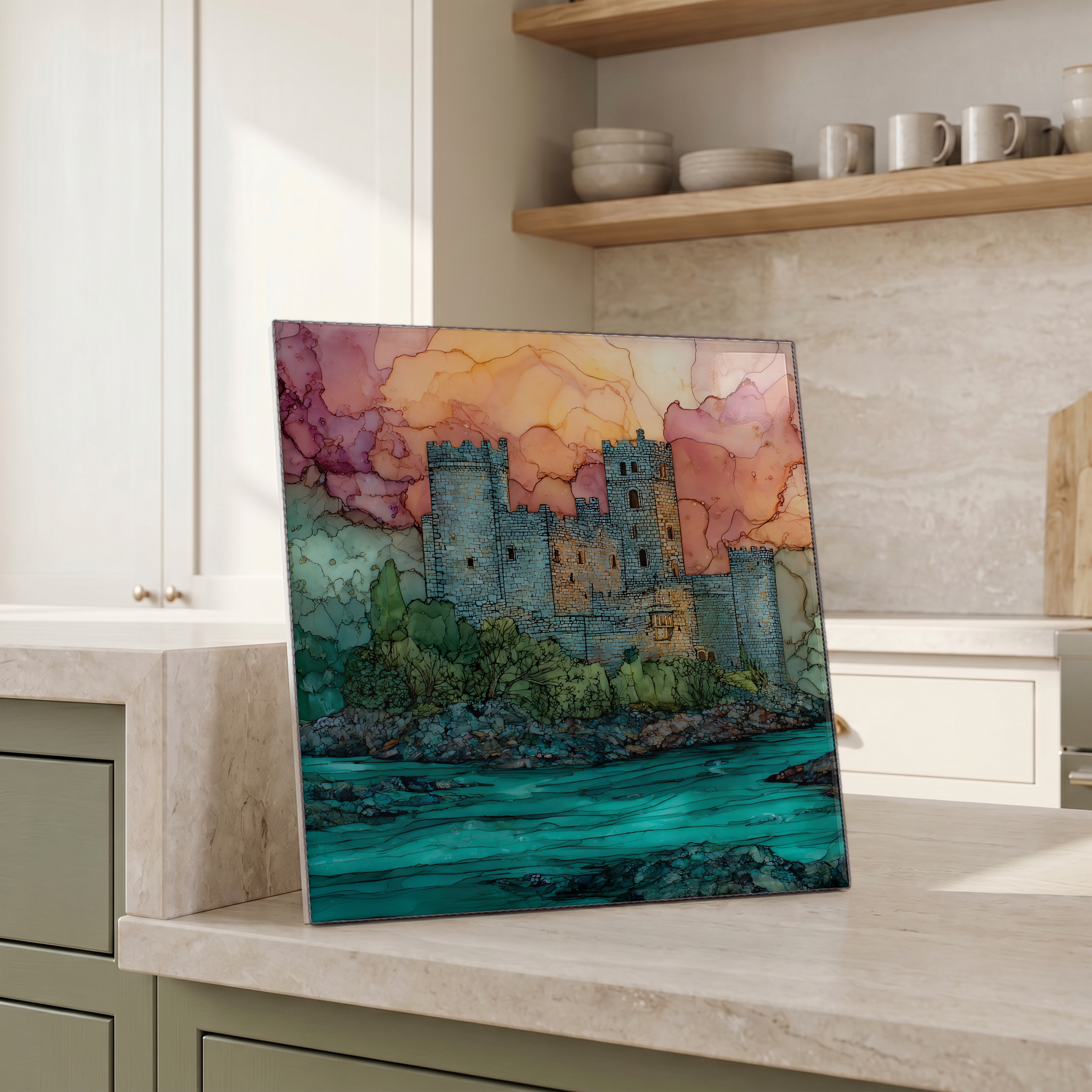
Cahir Castle, on ceramic.
Each tile is finished by hand in our Knoxville studio. Artwork is slowly infused into the ceramic surface under high heat and pressure, and rests beneath a thin glossy finish. The colour lives in the surface, not on top of it.
Pick any four 4-inch tiles — National Parks you've been to, a Smokies set, the four seasons of one place. $ for a set of , cork-backed, ready to live on the table.
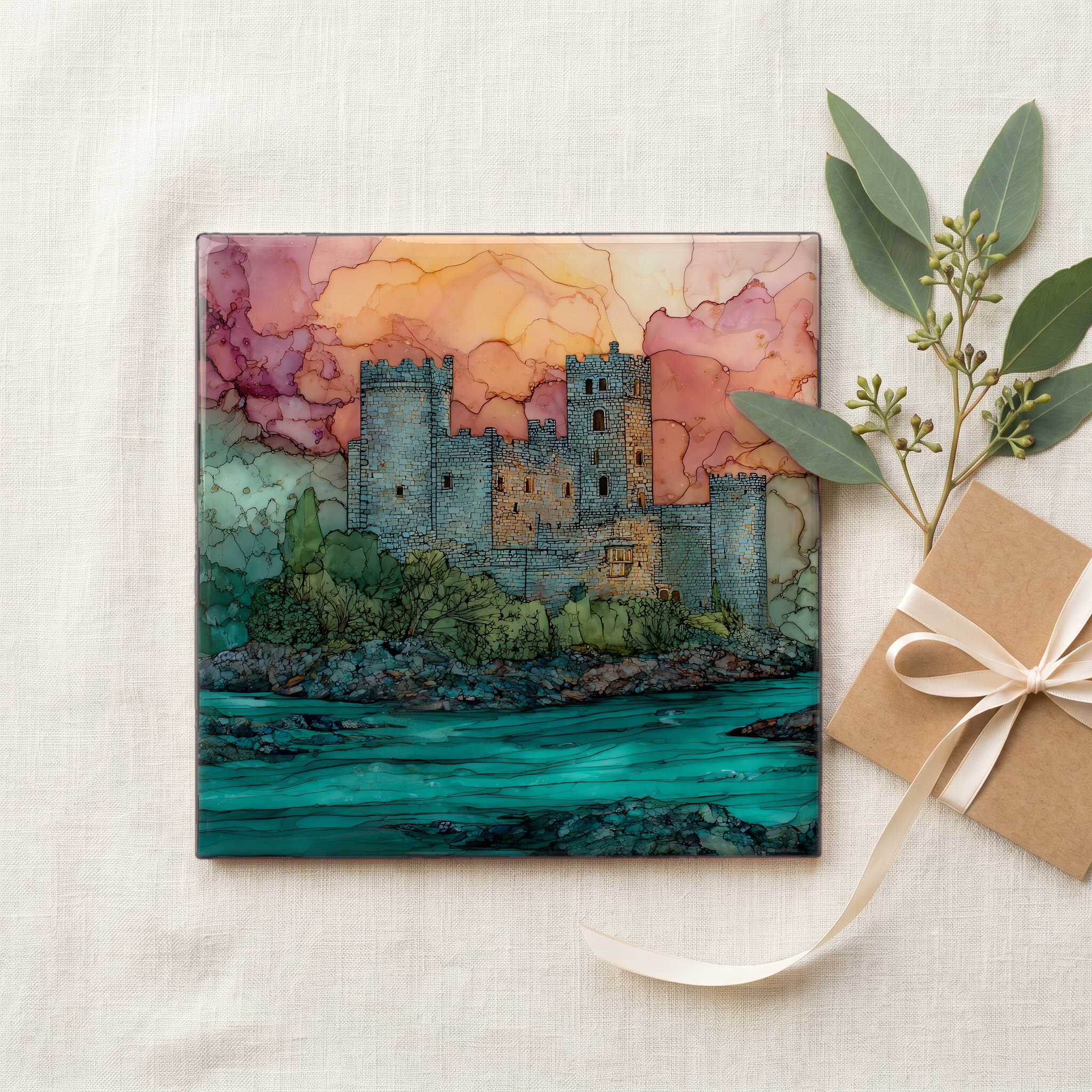
Each tile ships in a kraft box, tied with cream ribbon, with a handwritten note from the studio if you'd like to add one.
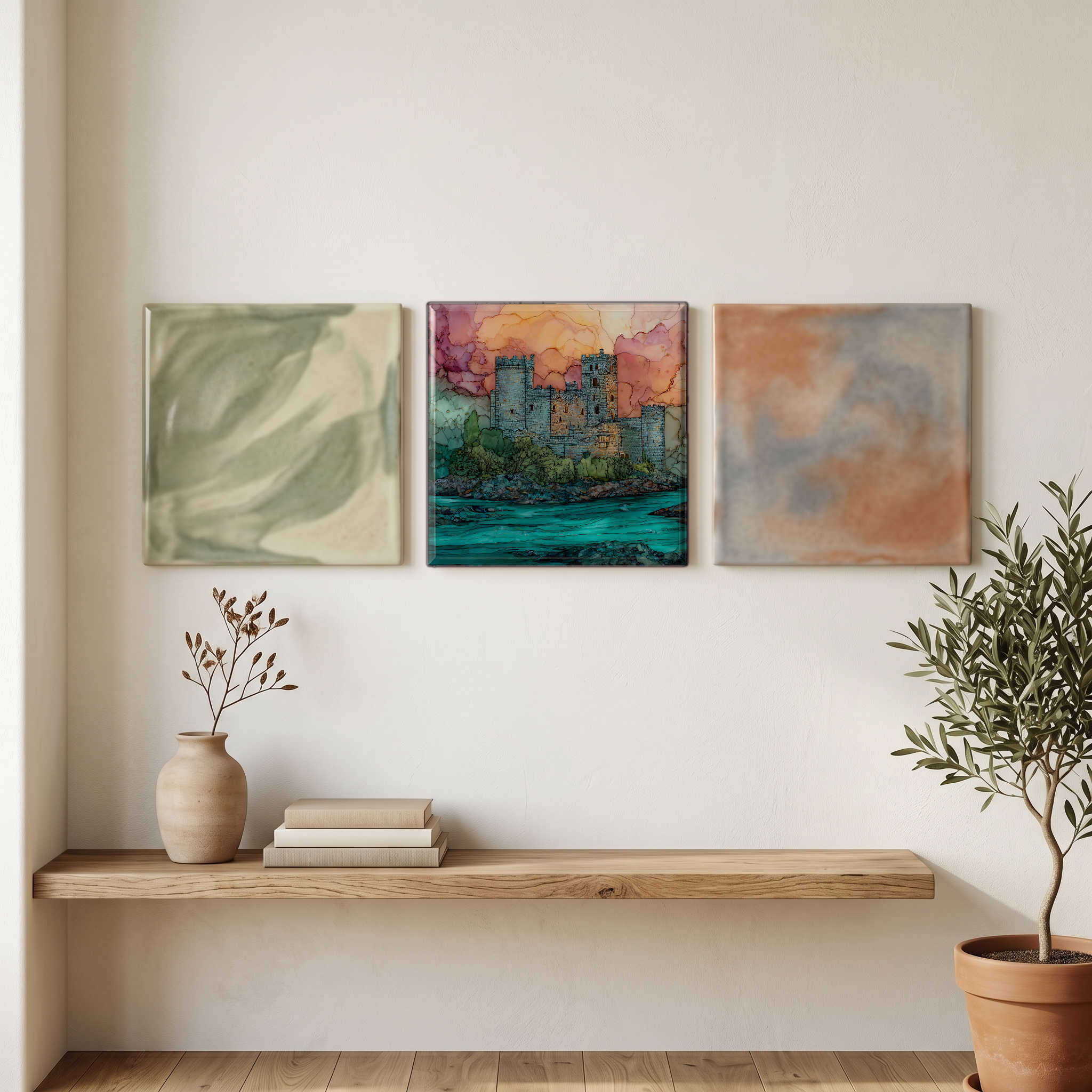
Three or five different vistas, hung together — a chapter of places you've been, or want to go.
The place, in three passes.
Cahir Castle stands on a rocky outcrop in the River Suir at the centre of Cahir, a market town in south County Tipperary. The first stone fortification was raised on the island by Conor O'Brien, Prince of Thomond, around 1142. In 1375 Edward III granted the lordship of Cahir to James Butler, the newly created Baron of Cahir, and the Butler family held and rebuilt the castle across the next five and a half centuries. It is among the largest and most intact Irish castles, with three wards, a working portcullis, a keep, and curtain walls drawn straight from the limestone bedrock it sits on. The Office of Public Works has managed the site since the Butlers transferred it to the Irish state in 1961.
The castle is built almost entirely of locally-quarried limestone, the same grey stone that lines the bed of the Suir beneath it. Three concentric wards step inward from the river: an outer barbican, a middle ward, and an inner ward dominated by a large keep raised by the Butlers in the late fifteenth century. The portcullis at the inner gate is one of the only working examples surviving in Ireland and still hangs in its original gatehouse. Outer curtain walls reach a thickness of roughly four metres at the base. The Earl of Essex took the castle after a three-day siege in 1599, and it surrendered to Oliver Cromwell's army in 1650 once artillery was brought up against the walls.
The castle is open daily through most of the year under the Office of Public Works as a National Monument. Standard hours run roughly from 9:30 to 17:30, with extended hours June through August and shorter access in winter; last admission is usually 45 minutes before closing. Self-guided routes cover the wards, the keep, the great hall, and the dungeon, and guided tours run on the hour in summer. A short riverside walk along the Suir connects the castle to the Swiss Cottage, an 1810 cottage orné designed by the London architect John Nash for Richard Butler, the first Earl of Glengall. The inner ward also served as a filming location for Barry Lyndon in 1975 and Excalibur in 1981.