Wender·Vista
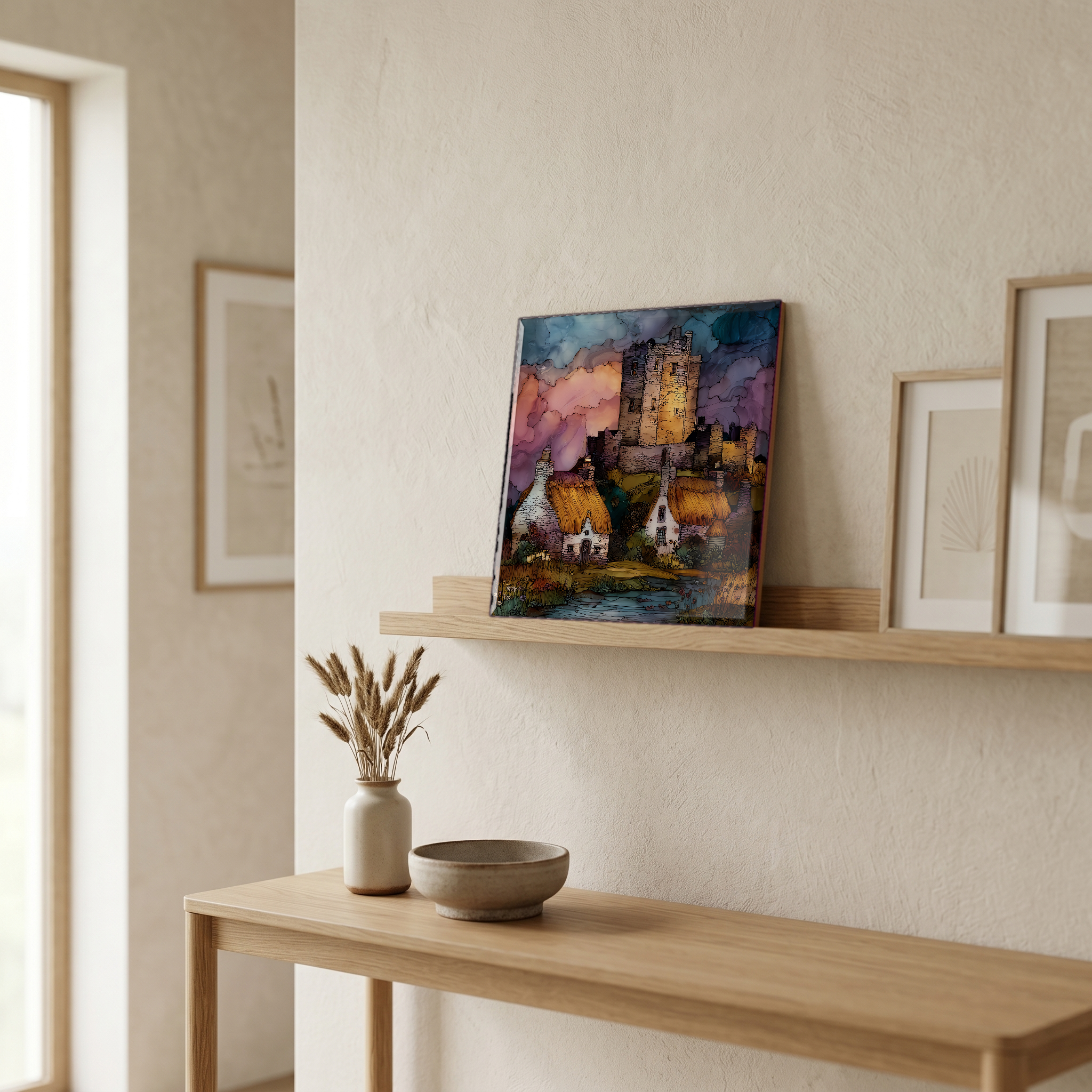
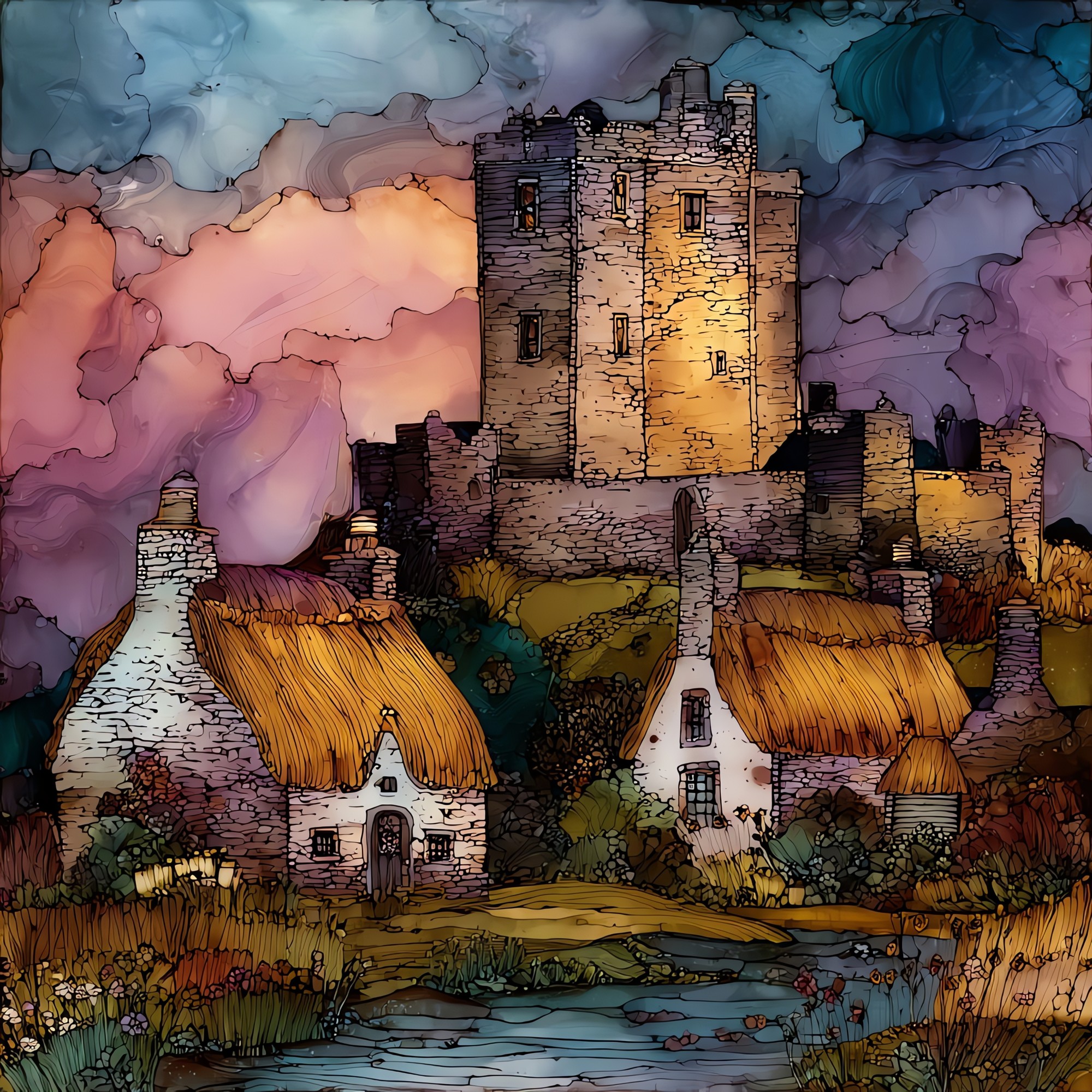
Bunratty Castle
shown on ceramic, 12-inch tileIreland
by the Shannon Estuary, west of Limerick

Bunratty Castle

— a tower that learned to wait.

Where it lives

Not only on a wall.

A small tile on the nightstand catching the morning. A larger one above the fire. Yours, wherever you spend the slow hours.
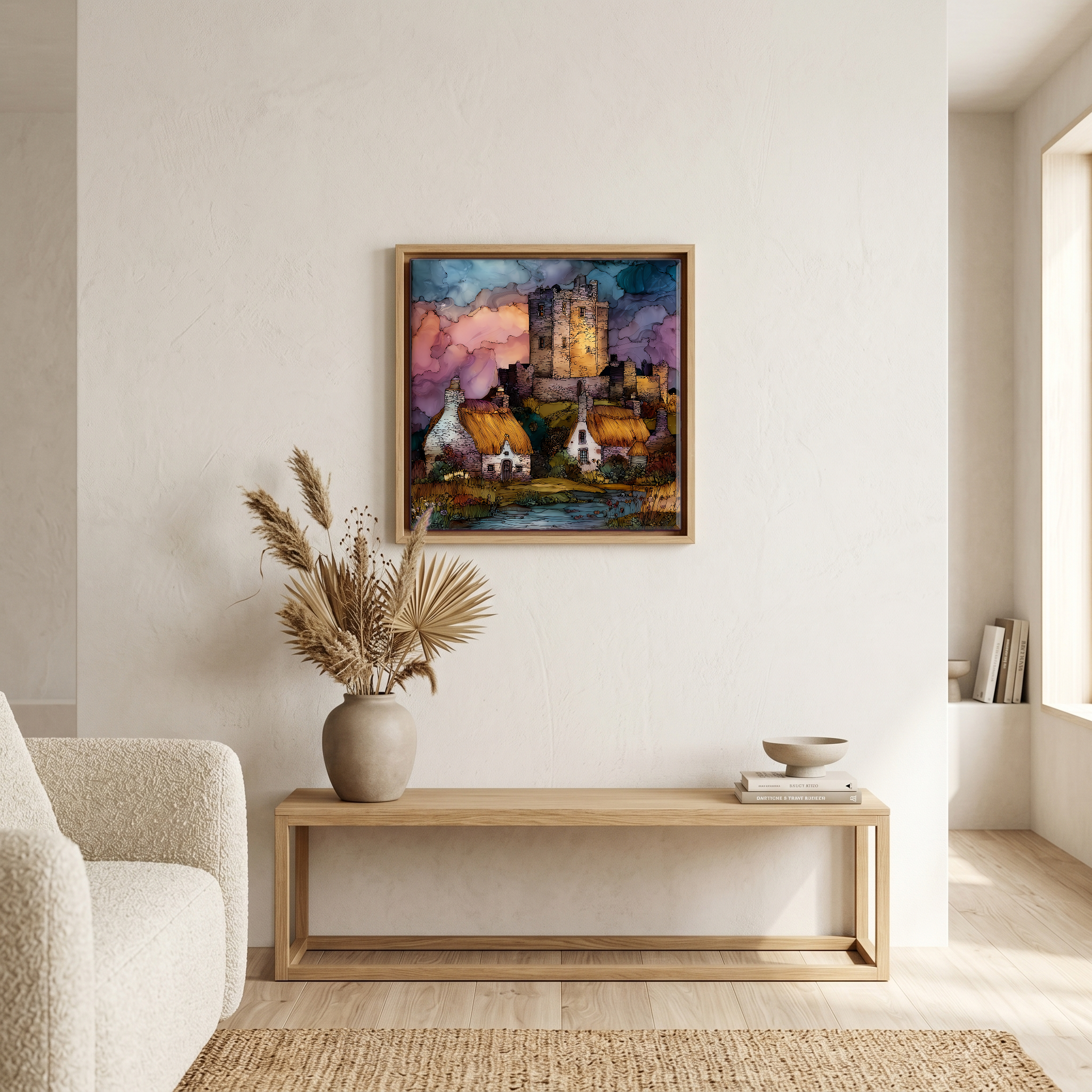
Above the bench, in a warm oak surround.
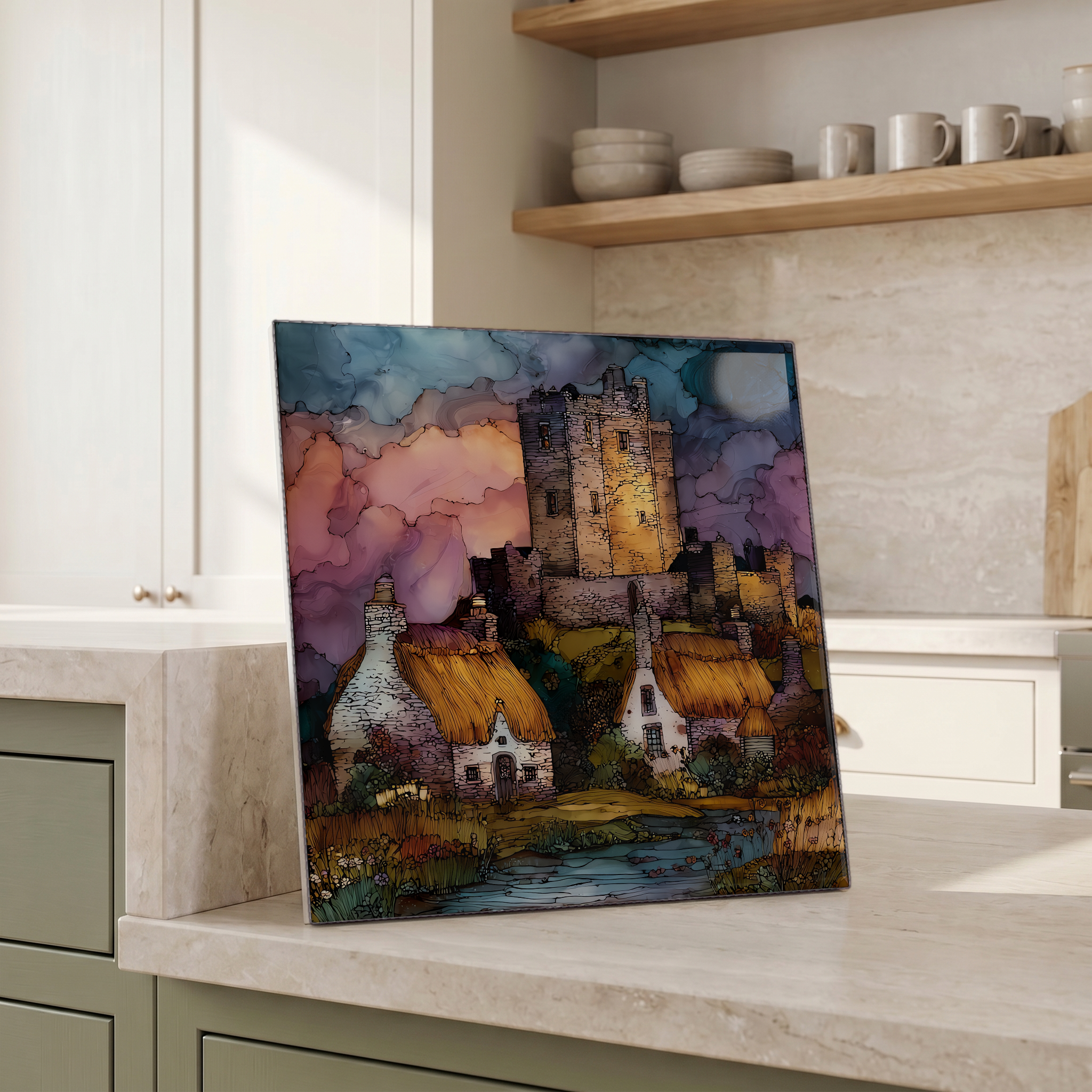
Beside the kettle, propped on the counter.
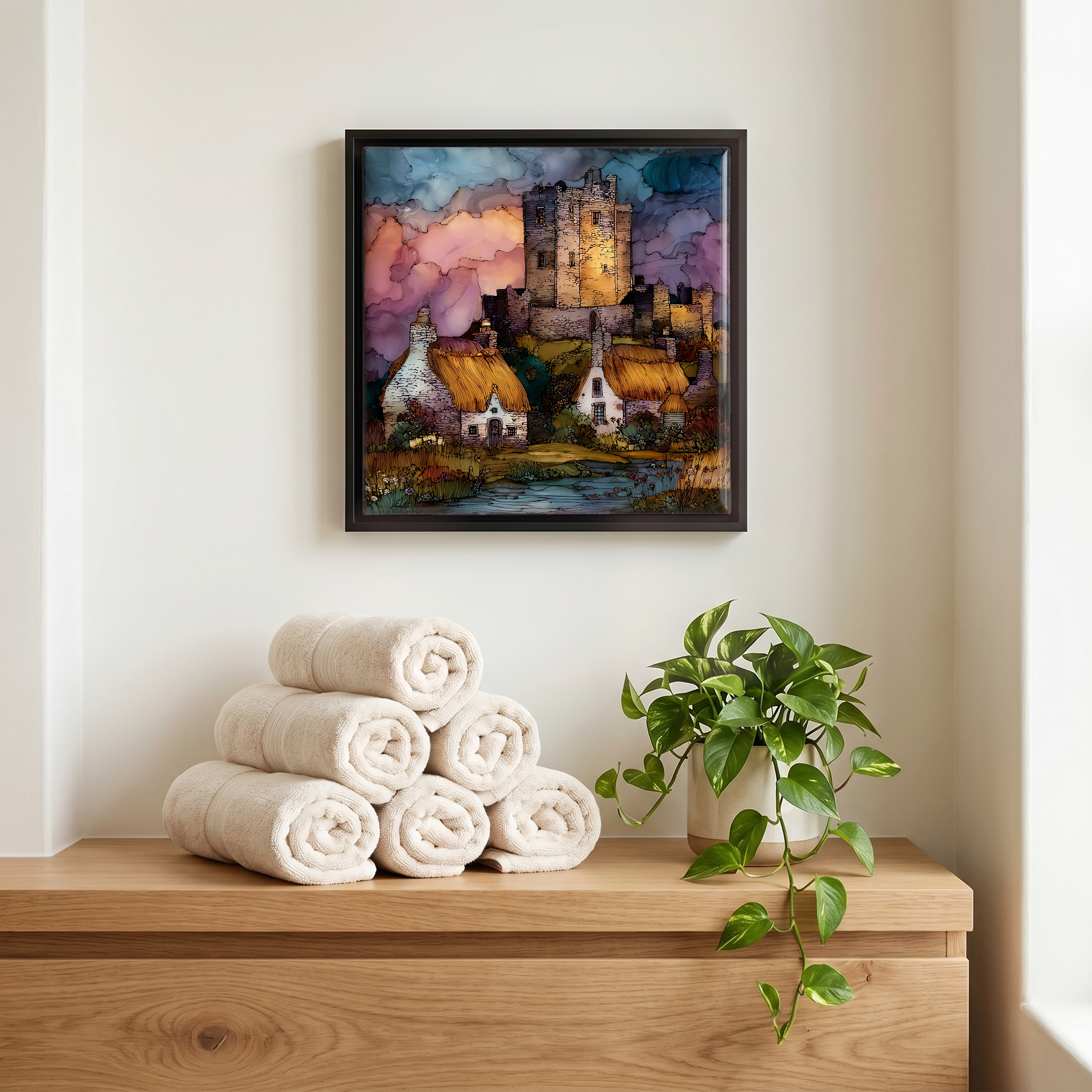
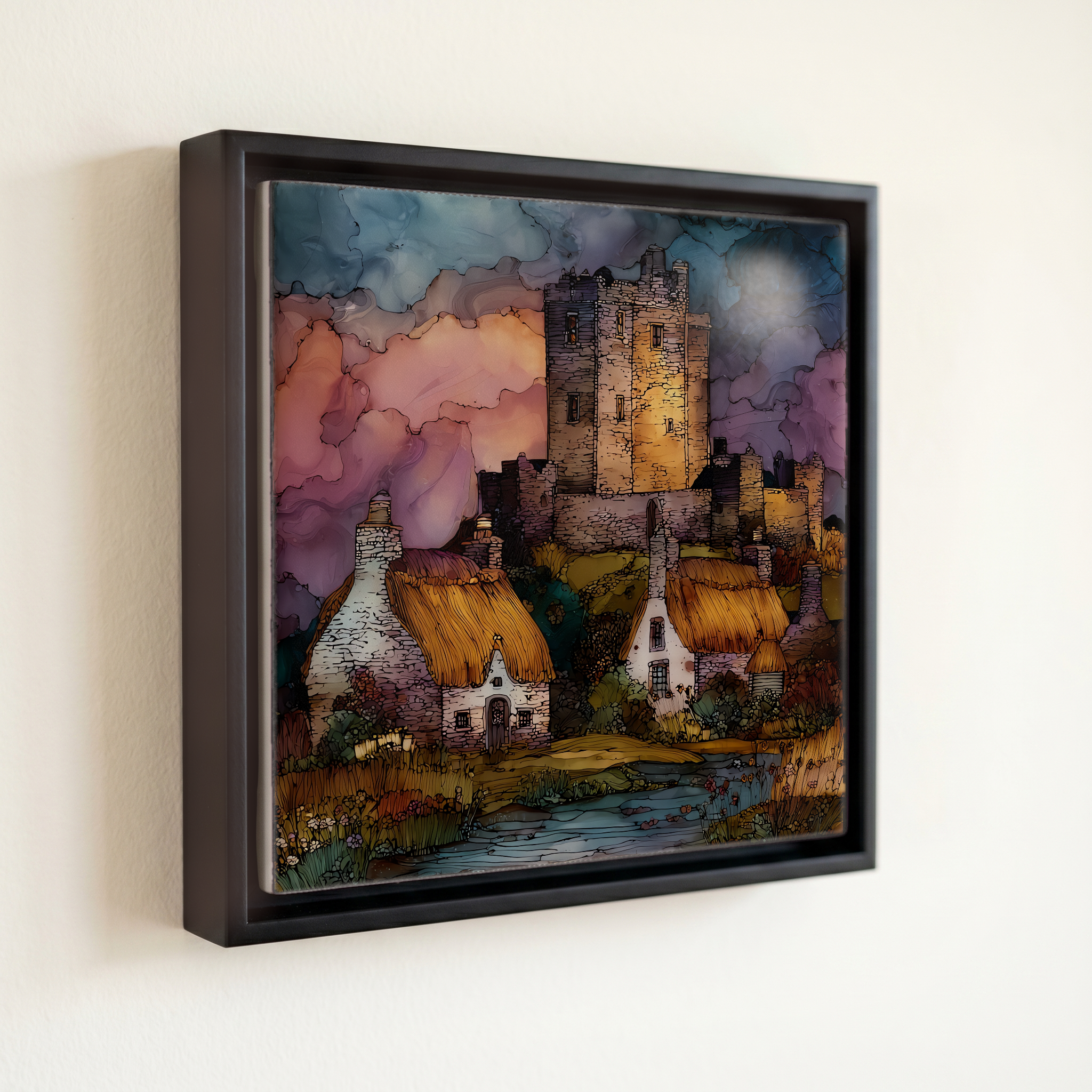
Above the linens, in a slim black surround.
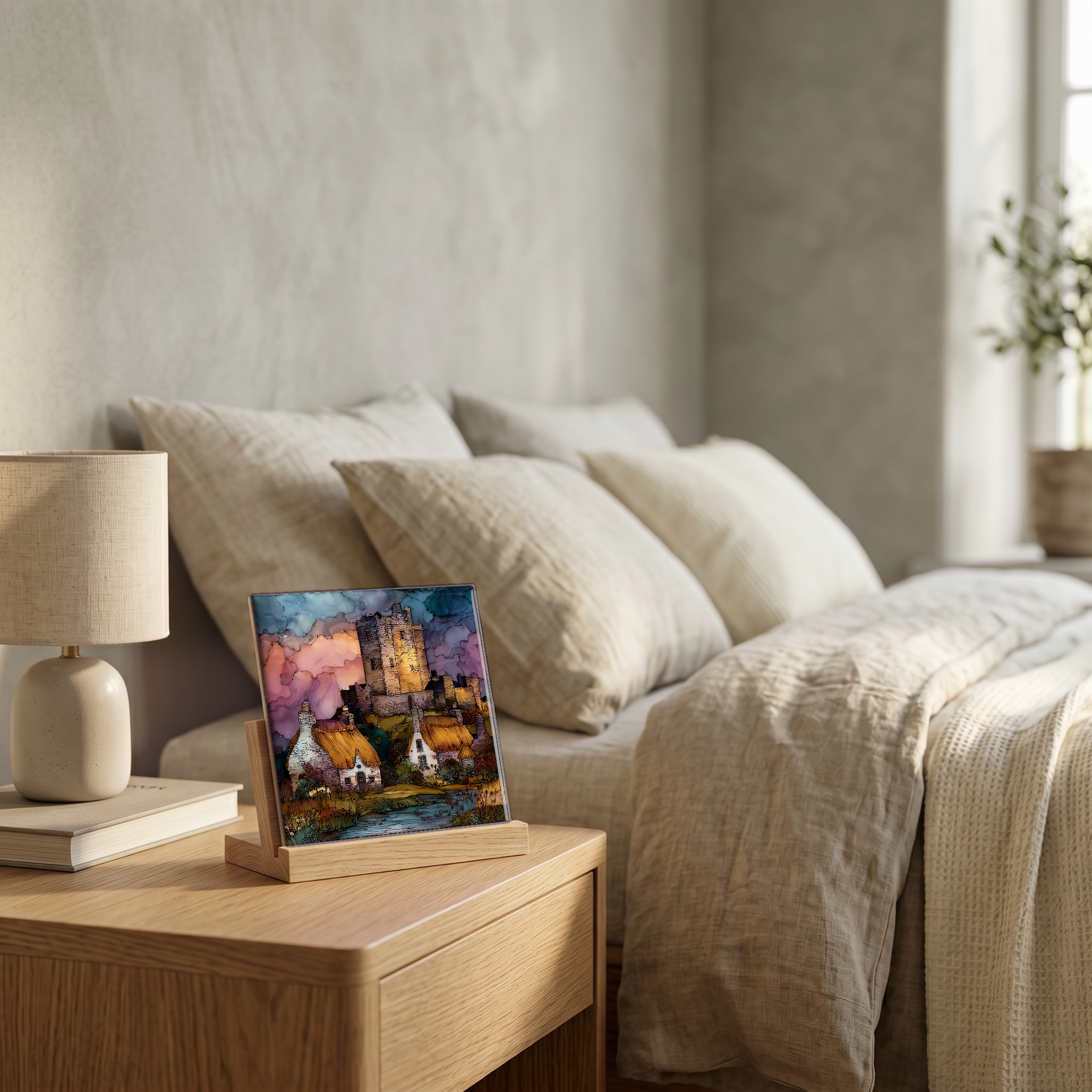
On the nightstand, on a light oak stand.
On a picture ledge, where the light comes in.
a note from the studio

A tower house on the River Ratty, eight miles west of Limerick. The fourth castle to stand on this riverbank. The first three burned or were pulled down between the 1250s and the 1350s. This one was built around 1425 by the MacNamaras, kept by the O'Briens, then left empty for the better part of three centuries. Lord Gort bought it in 1954 and put a roof back on it. By 1960 the public could walk in. The walls are thick enough that summer takes its time getting inside.
from the studio
shown in a slim black floating frame · 6 × 6 in
— bring it home

Bunratty Castle, on ceramic.

Each tile is finished by hand in our Knoxville studio. Artwork is slowly infused into the ceramic surface under high heat and pressure, and rests beneath a thin glossy finish. The colour lives in the surface, not on top of it.

What kind of piece?
One tile — square or rectangle.
How big?
the popular one — counter, shelf, nightstand
6 × 6 in · 15 cm · 1.6 lb
Surface finish
A clear glossy finish — the artwork reads as if under resin. Ideal for show-pieces and framed wall art.
How it sits
A hidden cleat — sits ¼″ proud of the wall.
$58
Hand-finished and shipped from our studio at the foot of the Smokies. On your wall in about ten days.
size
6 × 6 in
15 cm
weighs
1.6 lb
solid in the hand
surface
ceramic, hand-finished
art rests beneath a thin glossy finish
from
Knoxville, TN
our family studio, at the foot of the Smokies
— start a Coaster Set

Pick any four 4-inch tiles — National Parks you've been to, a Smokies set, the four seasons of one place. $ for a set of , cork-backed, ready to live on the table.
comes gift-ready
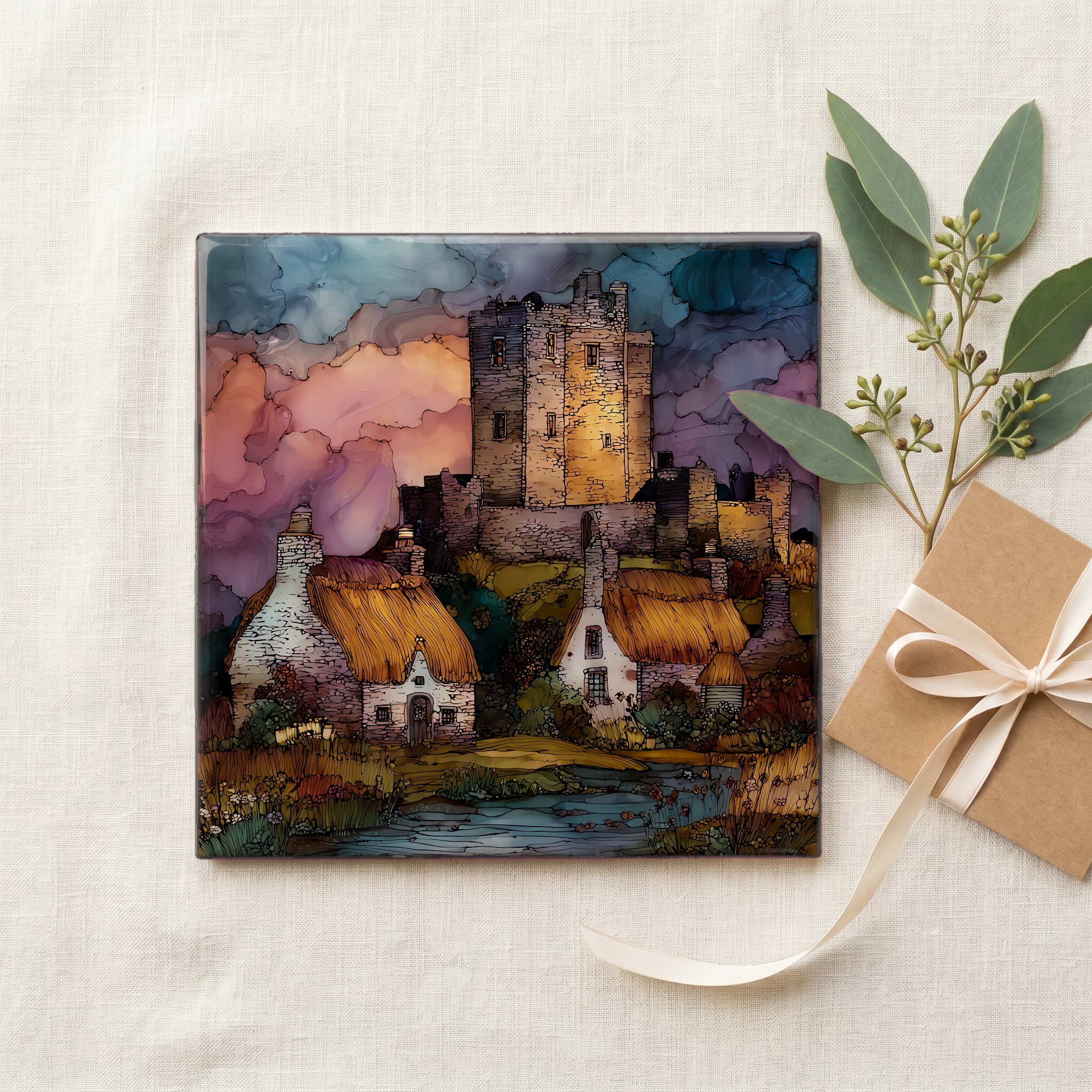
comes gift-ready

Each tile ships in a kraft box, tied with cream ribbon, with a handwritten note from the studio if you'd like to add one.
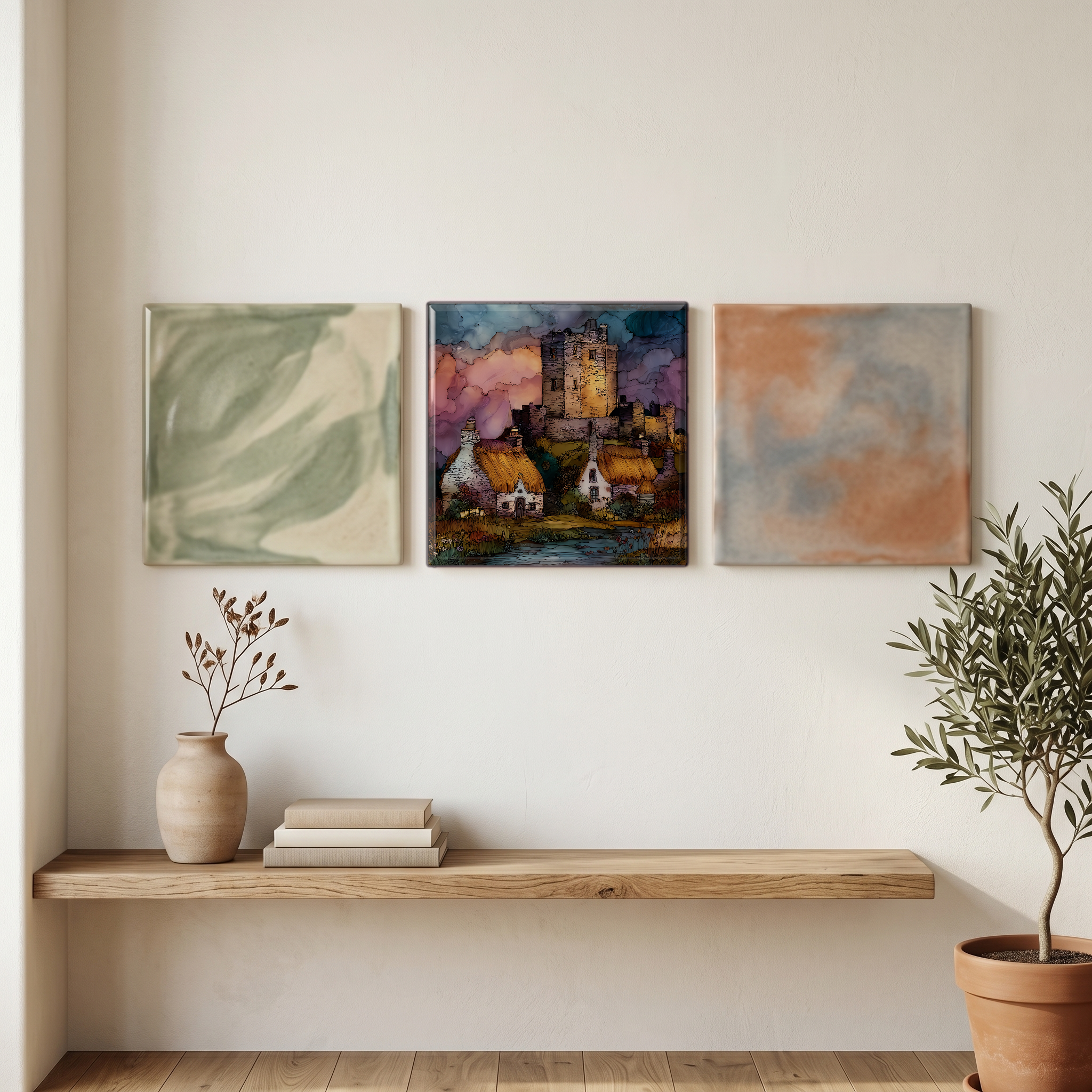
or build a grouping
or build a grouping

Three or five different vistas, hung together — a chapter of places you've been, or want to go.

about Bunratty Castle

The place, in three passes.

A little of what's known, in case you fall down the rabbit hole — or want to go see it yourself.
the place

Bunratty Castle stands on the south bank of the small River Ratty in County Clare, eight miles west of Limerick on the main road to Ennis. The site sits at the upper edge of the Shannon Estuary tidewater, on what was once a low island in the river. Four successive castles have been built here. The earliest, a wooden ringwork raised around 1250 by Robert de Muscegros, was followed by a stone structure in 1277, a third castle that fell to Irish forces in 1353, and the present tower house, built around 1425 by Sioda MacNamara. Shannon Airport sits roughly seven kilometres to the west.

the stone

The present castle is a tower house, the dominant secular form in late-medieval Ireland. It is a tall stone keep designed as much for residence as for defence. Four storeys of locally quarried limestone rise to a parapet walk, with twin pairs of square corner towers joined by tall pointed arches at the top. Walls run about three metres thick at the base. Restoration began in 1954 when Viscount Gort purchased the ruin and worked with the medievalist John Hunt to return the rooms to their fifteenth-century plan. The Lord Gort collection of medieval furniture, wall hangings, and stained glass, much of it gathered across Europe, was installed during the same six-year restoration.

— informed by Wikipedia, Shannon Heritage
the visit

The castle and the surrounding Folk Park are operated by Shannon Heritage and open daily except Christmas Day. The combined ticket covers both. The Folk Park, laid out across twenty-six acres beside the castle, reconstructs a nineteenth-century Irish village with thatched cottages moved from across Munster, a working post office, and a small farm. The medieval banquets in the Great Hall are a separate ticket and have run since 1963, with two sittings most evenings in the main season. Bunratty sits about ten minutes by road from Shannon Airport, which has made it one of the most-visited castles in the west of Ireland.

where
Ireland · Bunratty, County Clare
position
52.6956° N · 8.8114° W
the neighborhood

What's nearby.

A handful of named places within an hour's walk or short drive. Some we've already painted; some we will.
13 km E
King John's Castle
Norman castle
13 km N
Knappogue Castle
tower house
13 km N
Quin Abbey
Franciscan friary
6 km E
Cratloe Woods
oak forest
16 km NW
Ennis Friary
medieval friary
N
Bunratty Castle
King John's Castle
Knappogue Castle
Quin Abbey
Cratloe Woods
Ennis Friary
common questions

What people ask.

A few questions we get about Bunratty Castle — and about bringing the piece home.
about the place

Bunratty Castle stands in Bunratty village, County Clare, on the south bank of the small River Ratty where it meets the Shannon Estuary. It is about eight miles west of Limerick city and roughly ten minutes by road from Shannon Airport.

The present tower house was built around 1425 by Sioda MacNamara. It is the fourth castle to stand on the site. The first three, built between 1250 and 1353, were destroyed by fire or by raiding forces.

Viscount Gort bought the ruined castle in 1954 and led a six-year restoration with the medievalist John Hunt. The castle reopened to the public in 1960. His collection of medieval furniture still fills the rooms.

The Bunratty medieval banquets are a four-course dinner served by costumed staff in the castle's Great Hall, with harp and fiddle, mead on the table, and a short program of period music. The banquets have run since 1963, with two sittings most evenings in season.

Bunratty Folk Park is a twenty-six-acre living-history village laid out next to the castle. It gathers thatched farmhouses, a fisherman's cottage, a post office, a small school, and a working farm, many of the buildings moved stone by stone from sites across Munster.

No. Bunratty sits in a small village by the same name, on the main road between Limerick and Ennis. The village is more or less a single street with the castle on one side, Durty Nelly's pub on the other, and farmland behind.

Yes. Visitors can climb the spiral staircases of the south-west tower up through the Great Hall to the parapet walk, with a view out over the Shannon Estuary, the Folk Park, and the village. The stairs are narrow and steep.

about the piece in your home

It has carried well for buyers of ours with family in Clare, Limerick, and the wider mid-west of Ireland. Bunratty is the castle the Shannon arrivals see first, and the one most West-of-Ireland families have been through at least once. A Coaster or Small with a handwritten note from the studio travels easily.

The deep stone-greys and the saturated greens and ambers of the Bunratty piece work with Mountain-modern, Old-world, and Jewel-tone Maximalist rooms. It also lands well in a study or library with a dark wood desk and a single warm lamp.

Yes. The current shift toward Old-world, Heritage, and Quiet-Luxury rooms, with patinaed metals, stone textures, and hand-bound books, sits very close to what the Bunratty stained-glass painting carries. A single Medium over a writing desk reads as deliberate without crowding the wall.

A single Large is the standard call above a sofa or long console. For a wider wall or a stairwell, a four-tile Mural extends the painting across two-by-two tiles; a nine-tile Mural fills a full feature wall.

Yes, in the Dura Satin or Matte finish. Both are scratch-resistant and made for vertical installation on a backsplash, in a shower surround, or behind a vanity. The Glossy finish is for show-pieces and framed wall art, not wet rooms.

A soft microfibre cloth with water is enough for most cleaning. For grease or a stuck mark, a drop of mild dish soap on the cloth is fine. Skip abrasive pads and scouring powder; the colour lives in the surface, not on top of it.

Yes. Every WenderVista painting is made by Reid Wender, the studio's curator and eye, in his stained-glass / alcohol-ink / oil visual language. The painting is then slowly infused into the ceramic surface under high heat and pressure, beneath a thin glossy or satin finish.

if this one stayed with you

A few you might also love.

Hand-picked by the eye that found Sorapis. Same air, same kind of quiet.