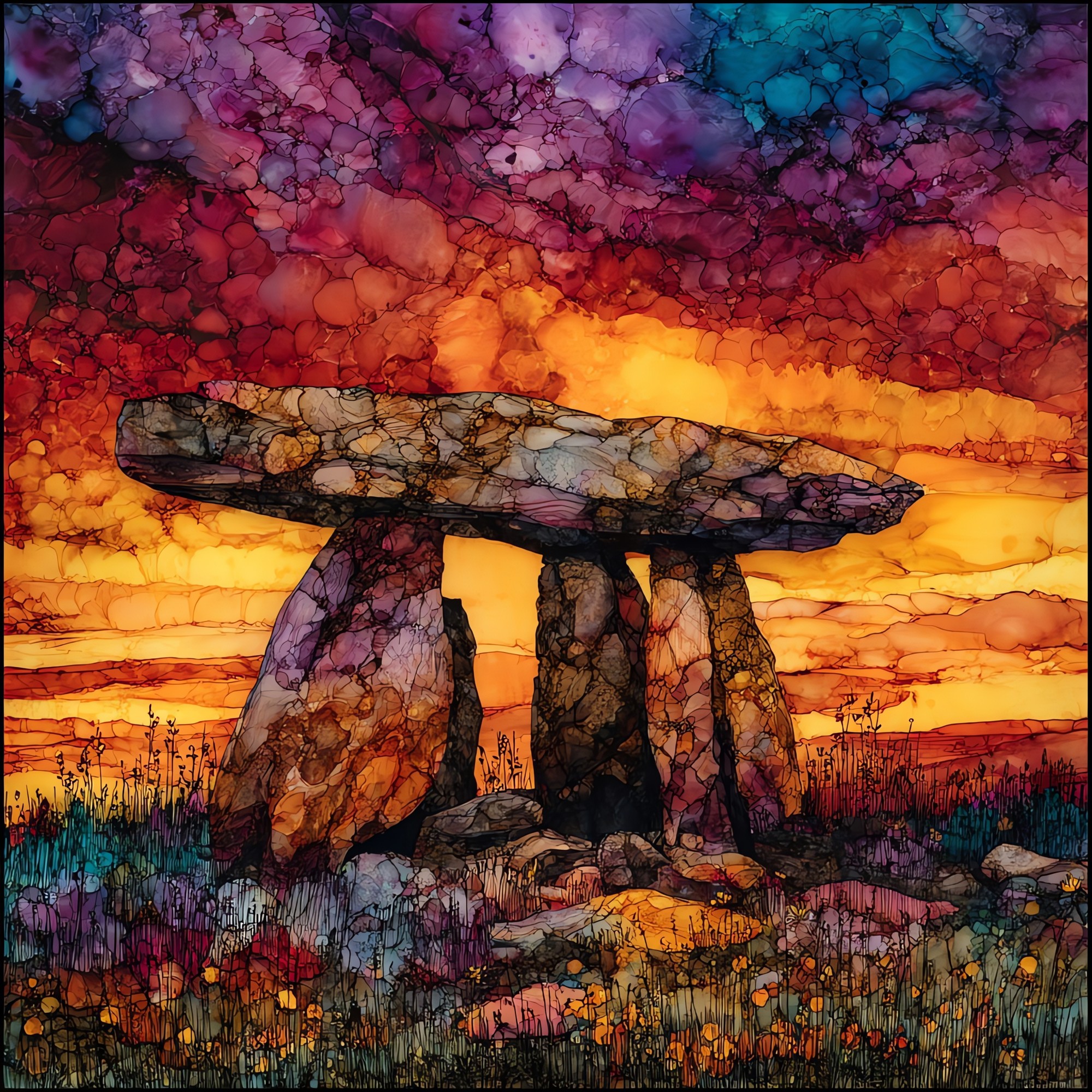
Brownshill Dolmen
— set down once, and never lifted.
Not only on a wall.
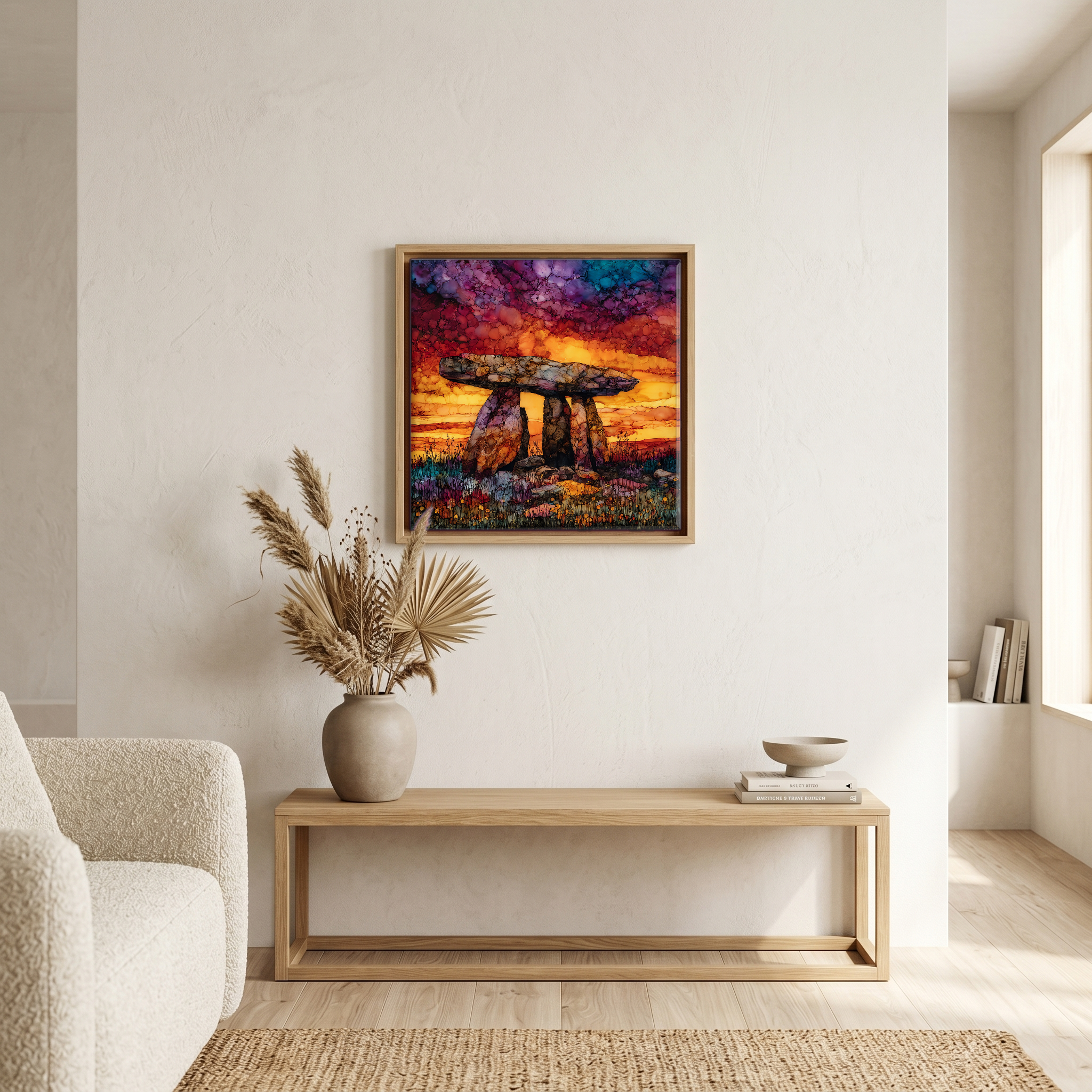
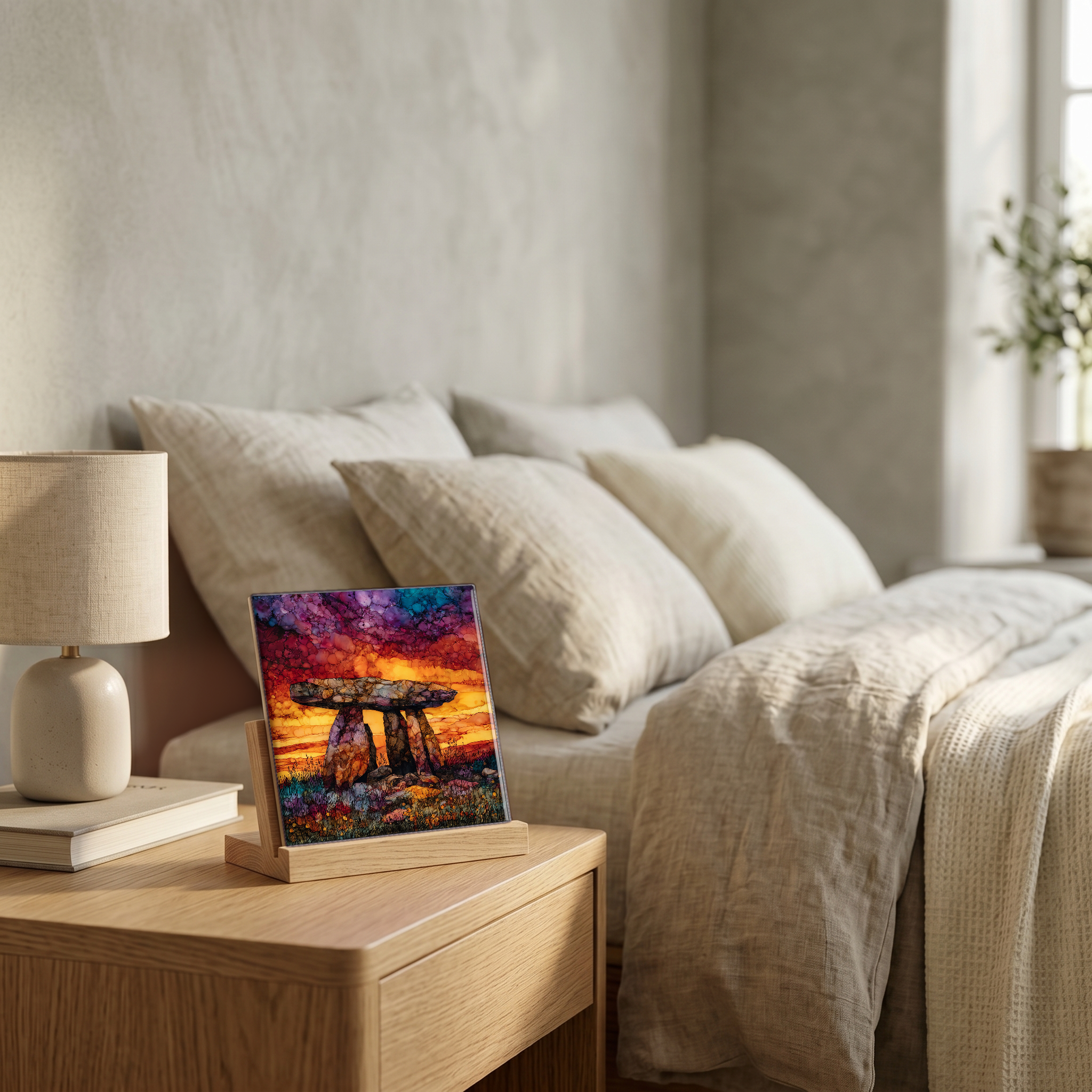
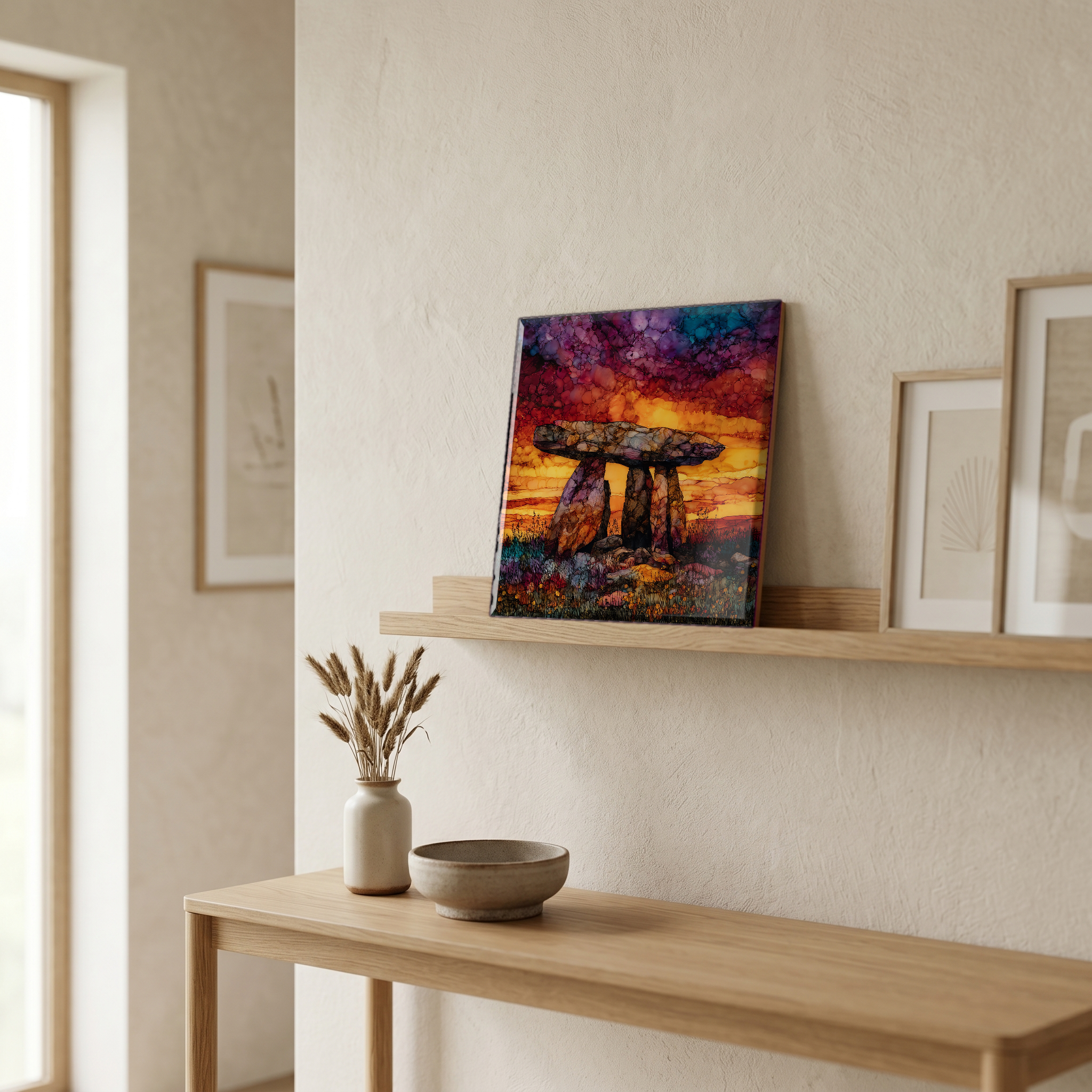
“A short walk off the R726, three kilometres east of Carlow town. The capstone is granite, estimated at around 100 tonnes, and by most accounts the heaviest in Europe. It rests on three uprights, tilted as if set down in a hurry around six thousand years ago, and never lifted since. The field around it is flat, mostly given over to grazing. People arrive in twos and threes, walk the path, stand under the weight for a while, and turn back. Nobody says much.
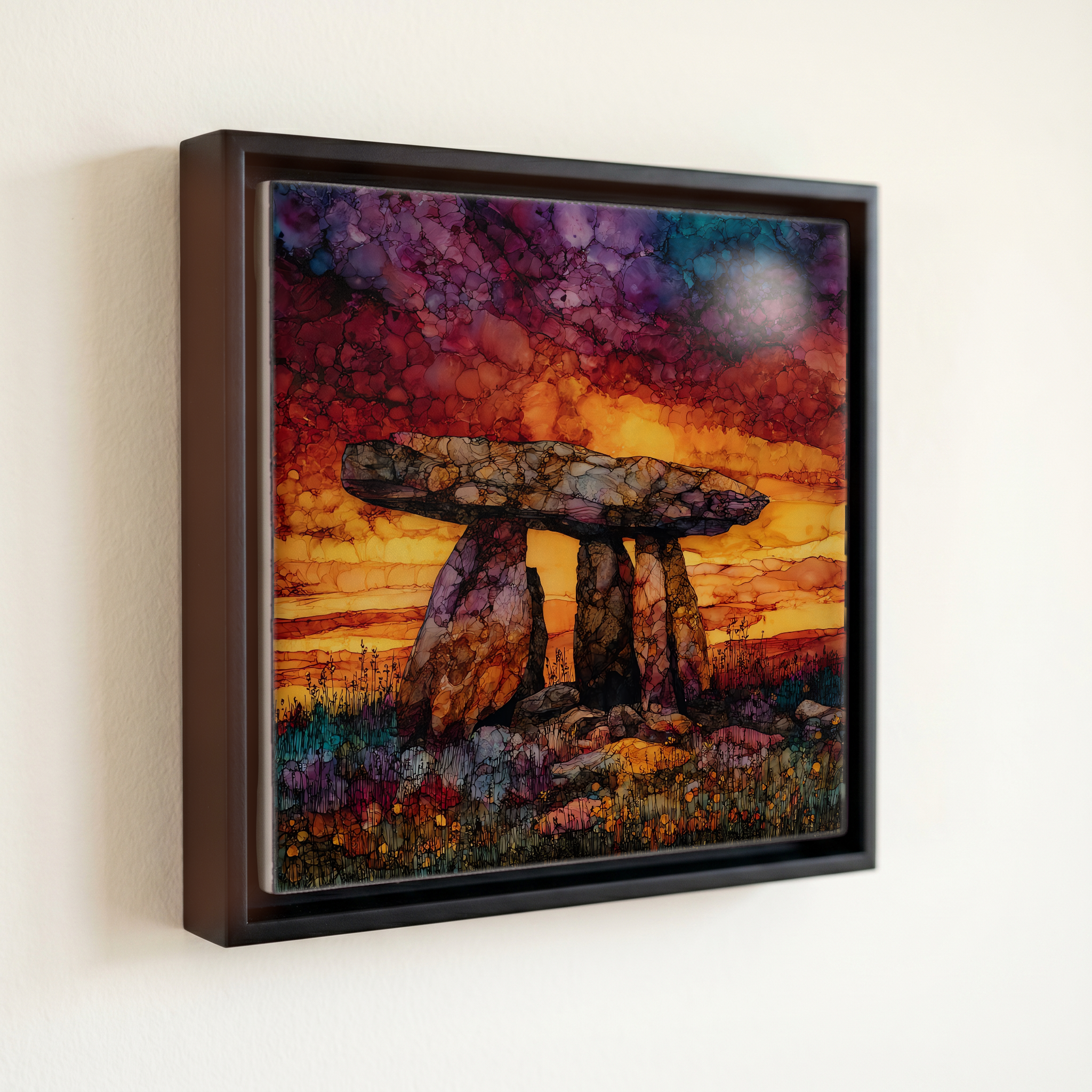
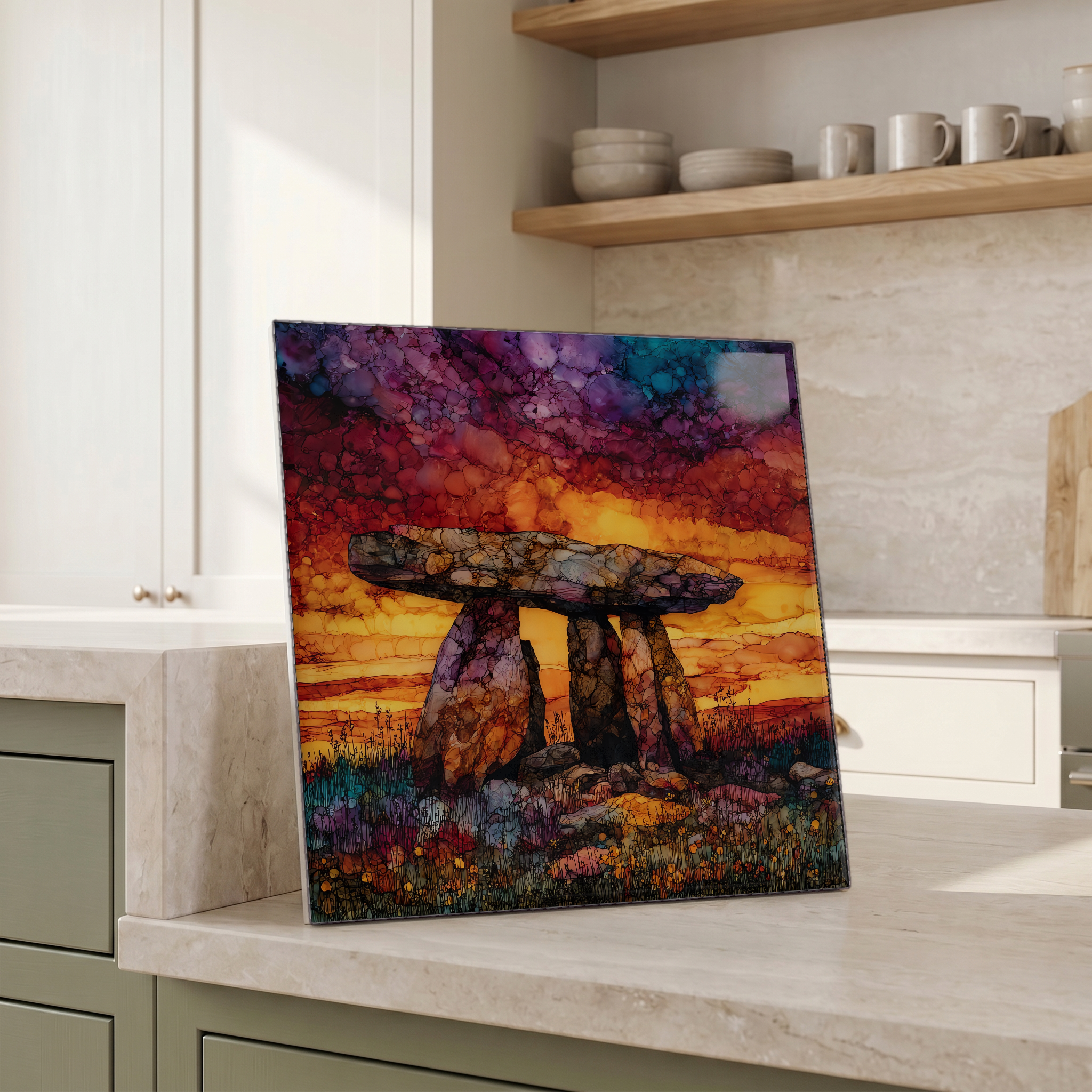
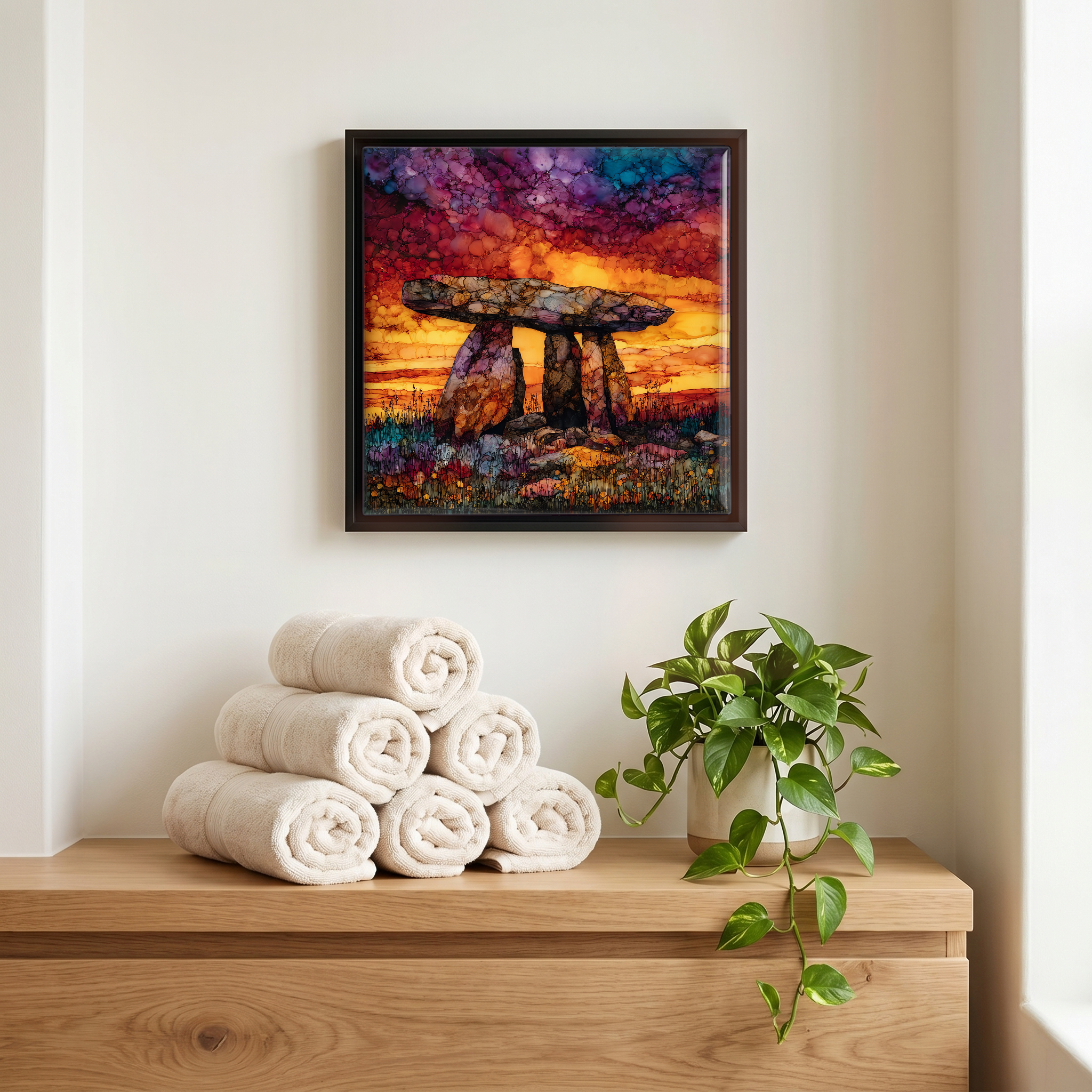
Brownshill Dolmen, on ceramic.
Each tile is finished by hand in our Knoxville studio. Artwork is slowly infused into the ceramic surface under high heat and pressure, and rests beneath a thin glossy finish. The colour lives in the surface, not on top of it.
Pick any four 4-inch tiles — National Parks you've been to, a Smokies set, the four seasons of one place. $ for a set of , cork-backed, ready to live on the table.
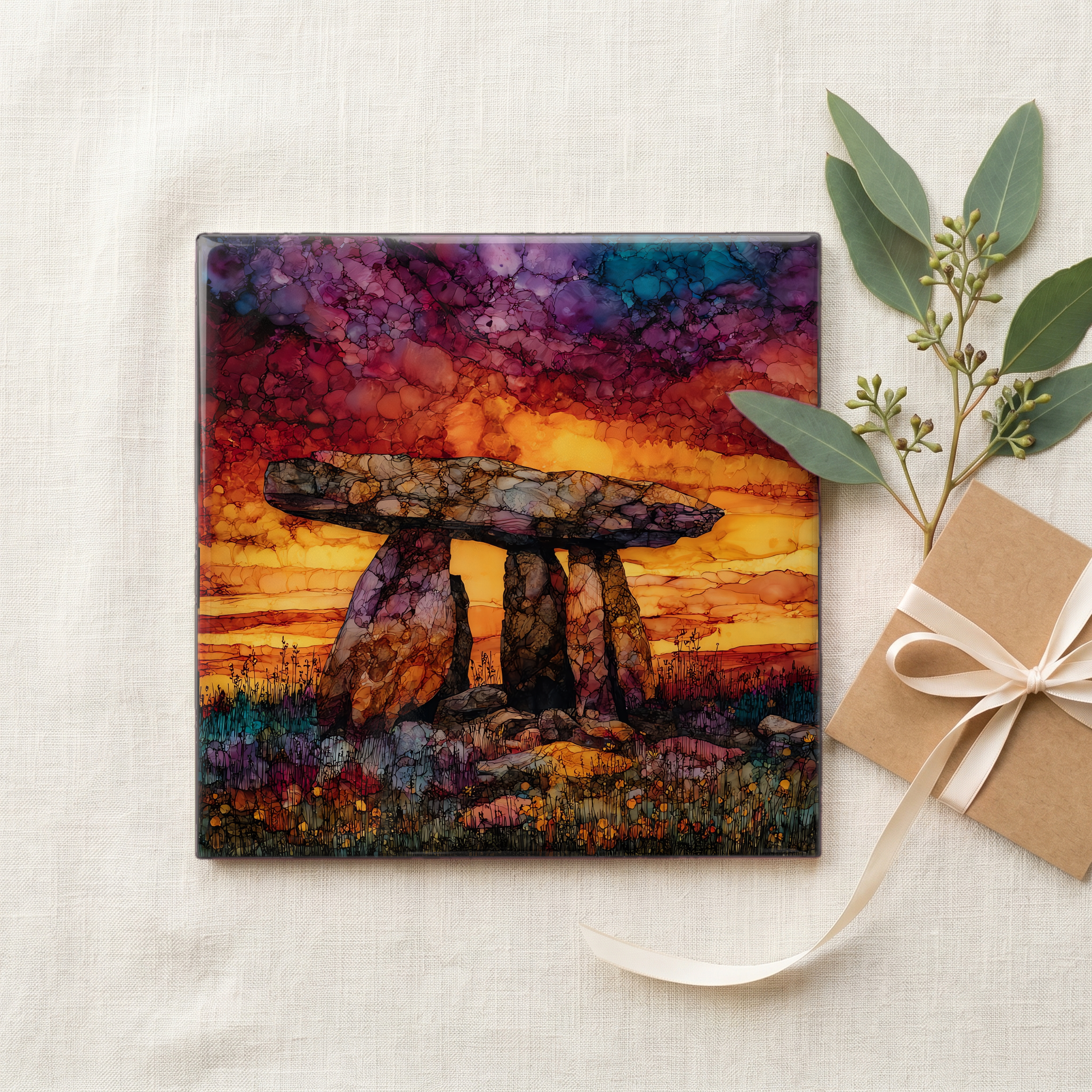
Each tile ships in a kraft box, tied with cream ribbon, with a handwritten note from the studio if you'd like to add one.
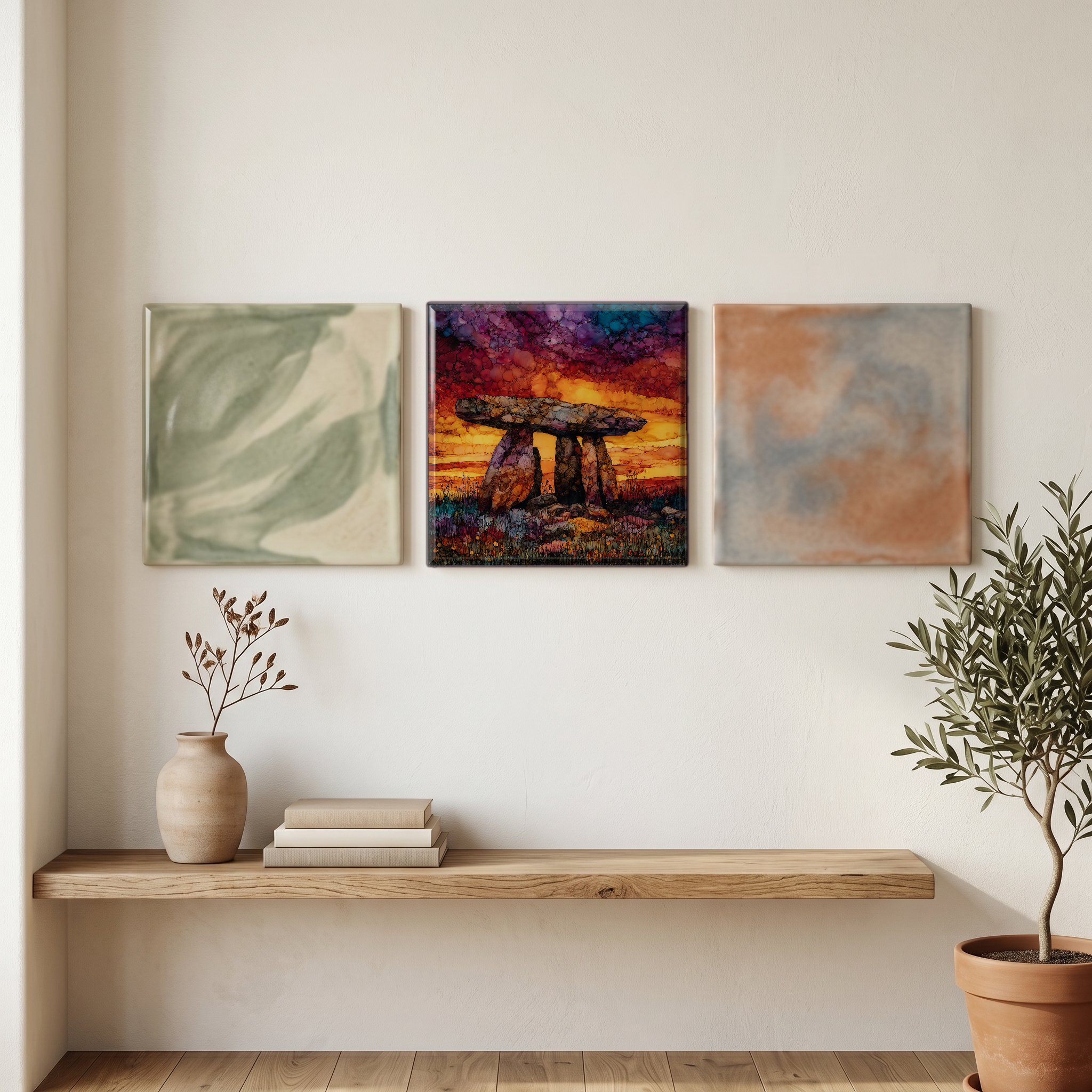
Three or five different vistas, hung together — a chapter of places you've been, or want to go.
The place, in three passes.
Brownshill Dolmen stands on flat farmland about three kilometres east of Carlow town, in County Carlow, southeast Ireland. The site is a portal tomb built during the Irish Neolithic, dated by most authorities to around 4000 BCE. Access is on foot from a small car park on the R726, the Carlow-to-Hacketstown road, by a short signed path that runs along the edge of a working field. The monument is in the care of the Office of Public Works as a National Monument of Ireland. The townland is Kernanstown; the older name for the dolmen, still used by some local references, is Kernanstown Cromlech.
The capstone is granite, estimated at around 100 tonnes, and is widely cited as the heaviest dolmen capstone in Europe. It rests on three smaller uprights: two portal stones at the front and a low door-stone behind them, with the back edge of the capstone resting on the ground. This produces the structure's characteristic forward tilt. The granite is local to the region, which is one reason archaeologists believe the stone was levered into position rather than dragged any great distance. The capstone measures roughly six metres at its widest point and is the defining feature of the monument, dwarfing the three small uprights that hold it.
Brownshill Dolmen is open access and free of charge year-round. The car park sits on the R726, the Hacketstown road, and a graded path of roughly 250 metres leads from there to the monument across the edge of a working field. There is no visitor centre, no ticket, no staffed gate; the site is managed remotely by the Office of Public Works. The path can be muddy after rain, and the field is occasionally grazed by cattle. The dolmen itself sits inside a small fenced enclosure that can be entered freely. Most people give it about twenty minutes.