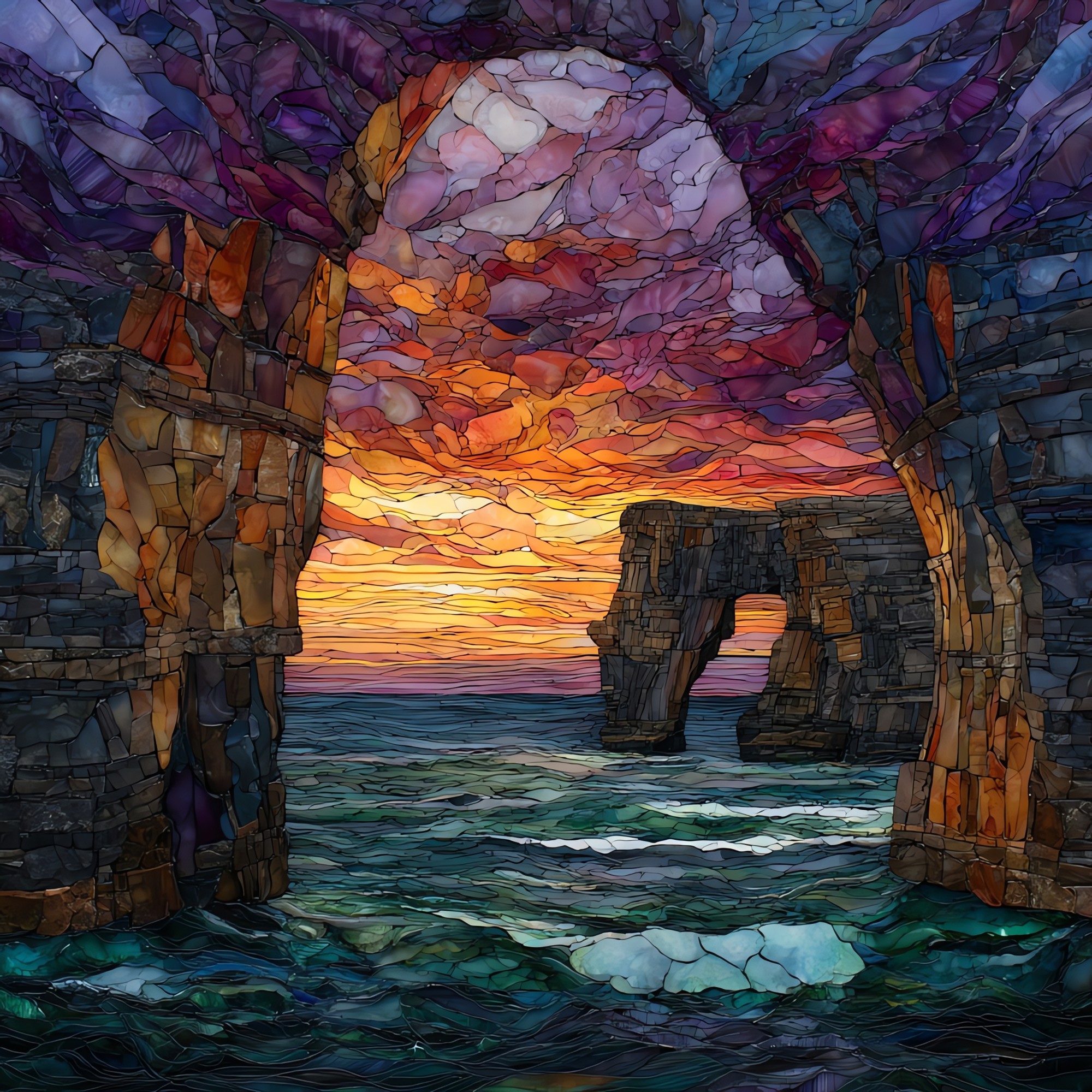
Bridges of Ross
— — the arch the sea hasn't taken yet.
Not only on a wall.
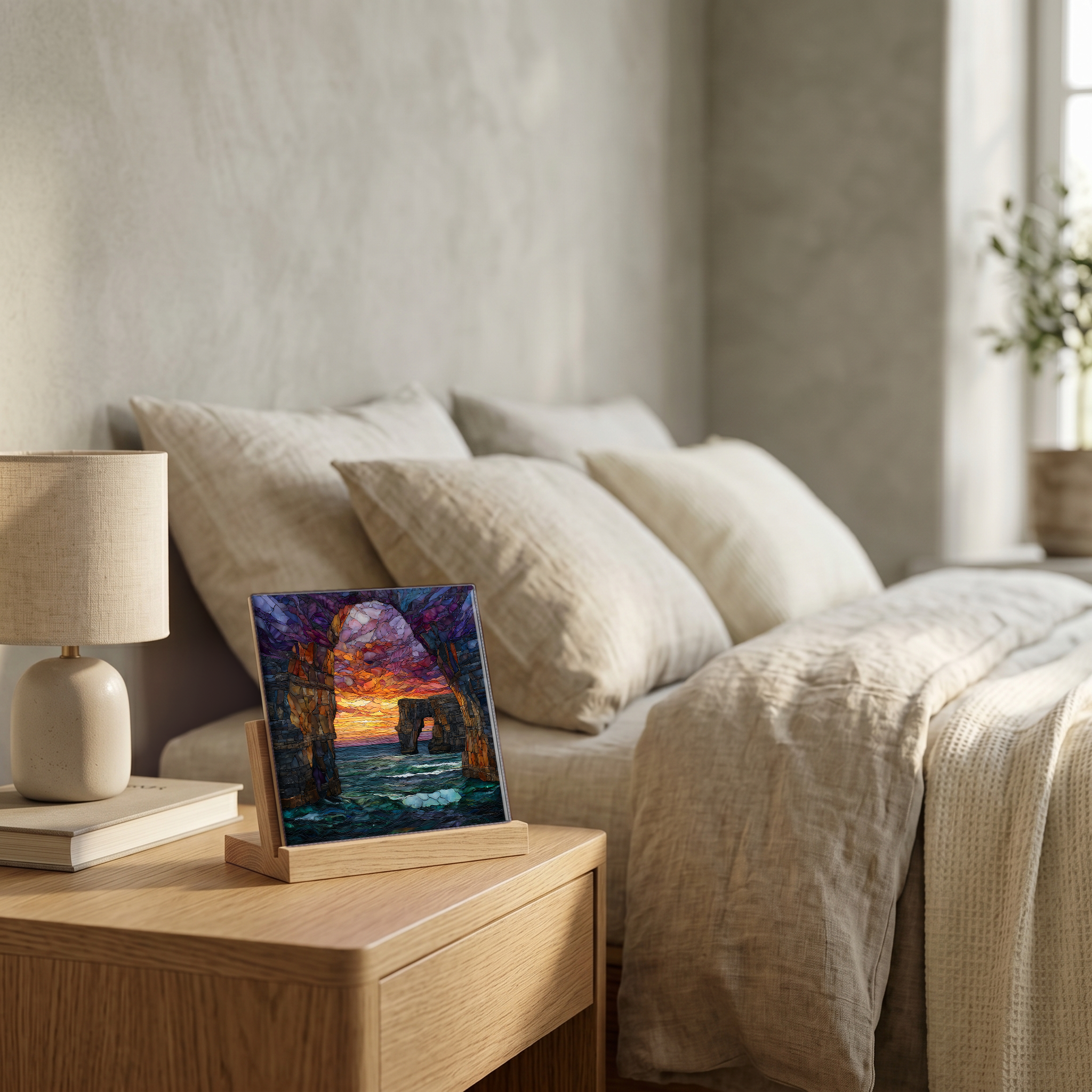
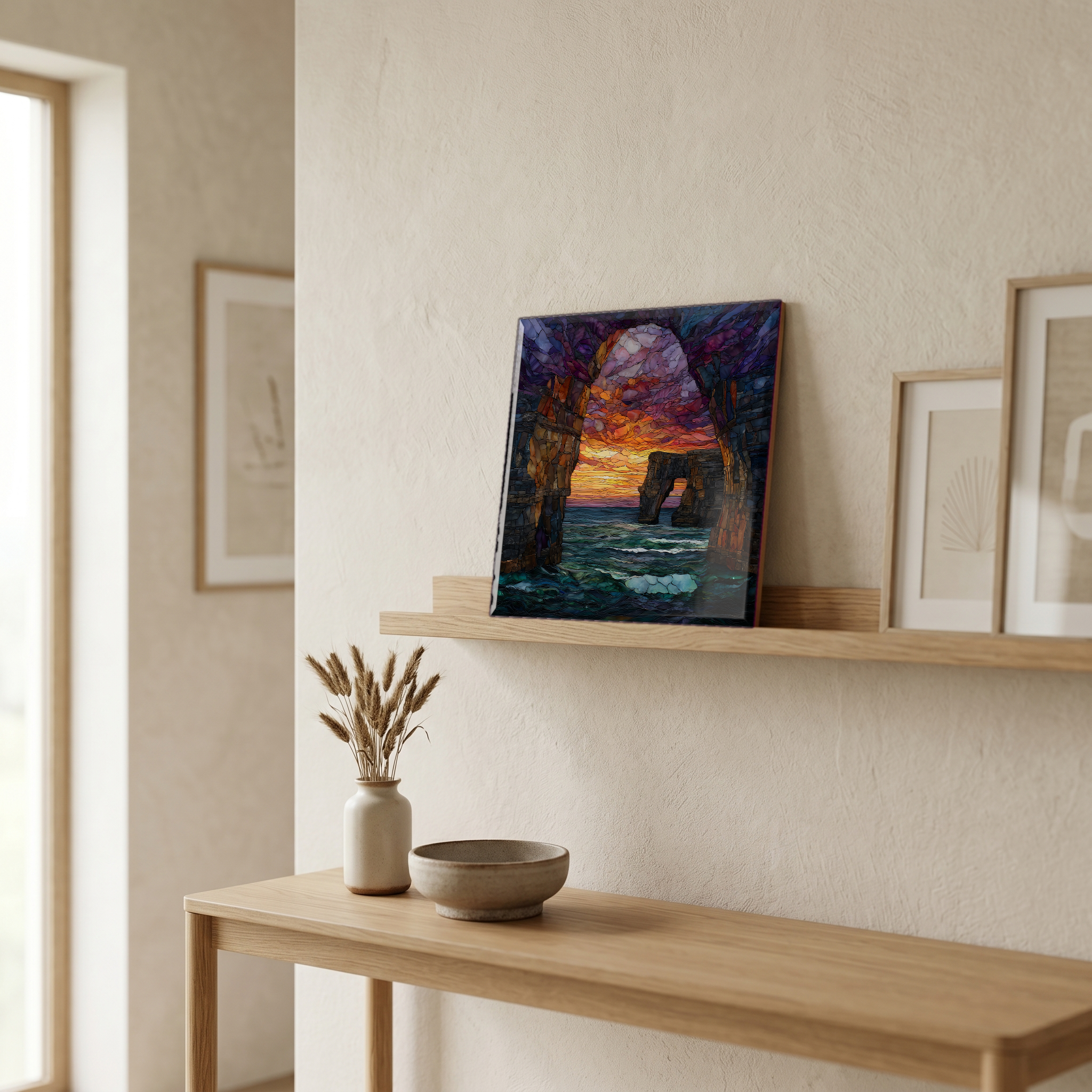
“The last of three arches on a low cliff at the end of County Clare. The other two fell into the sea within living memory. What remains is a single doorway of sandstone laid down 320 million years ago, when this rock was the floor of a tropical sea near the equator. Birders come here in autumn after a hard northwesterly, and watch shearwaters and skuas thread the wind south. Most days no one is here at all.
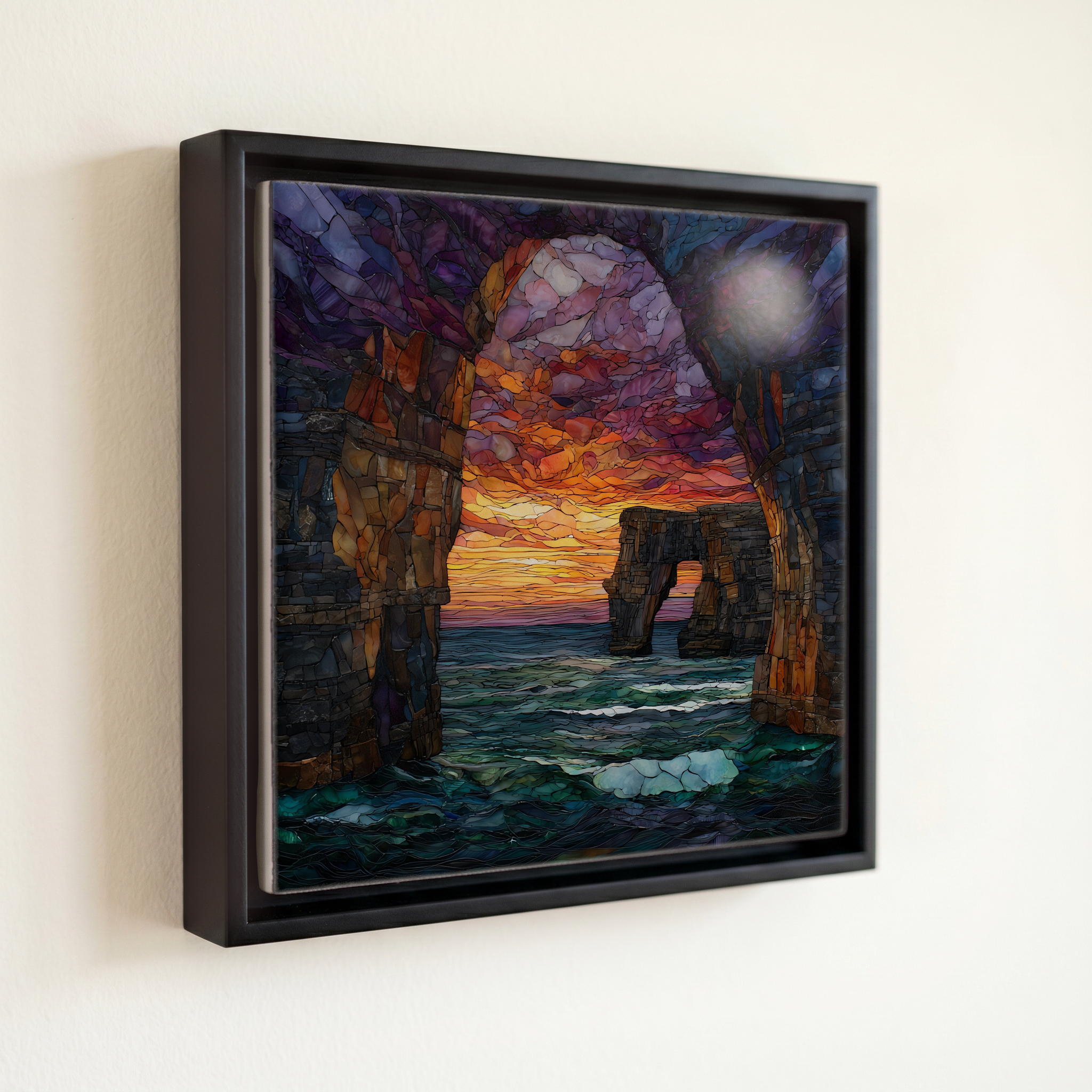
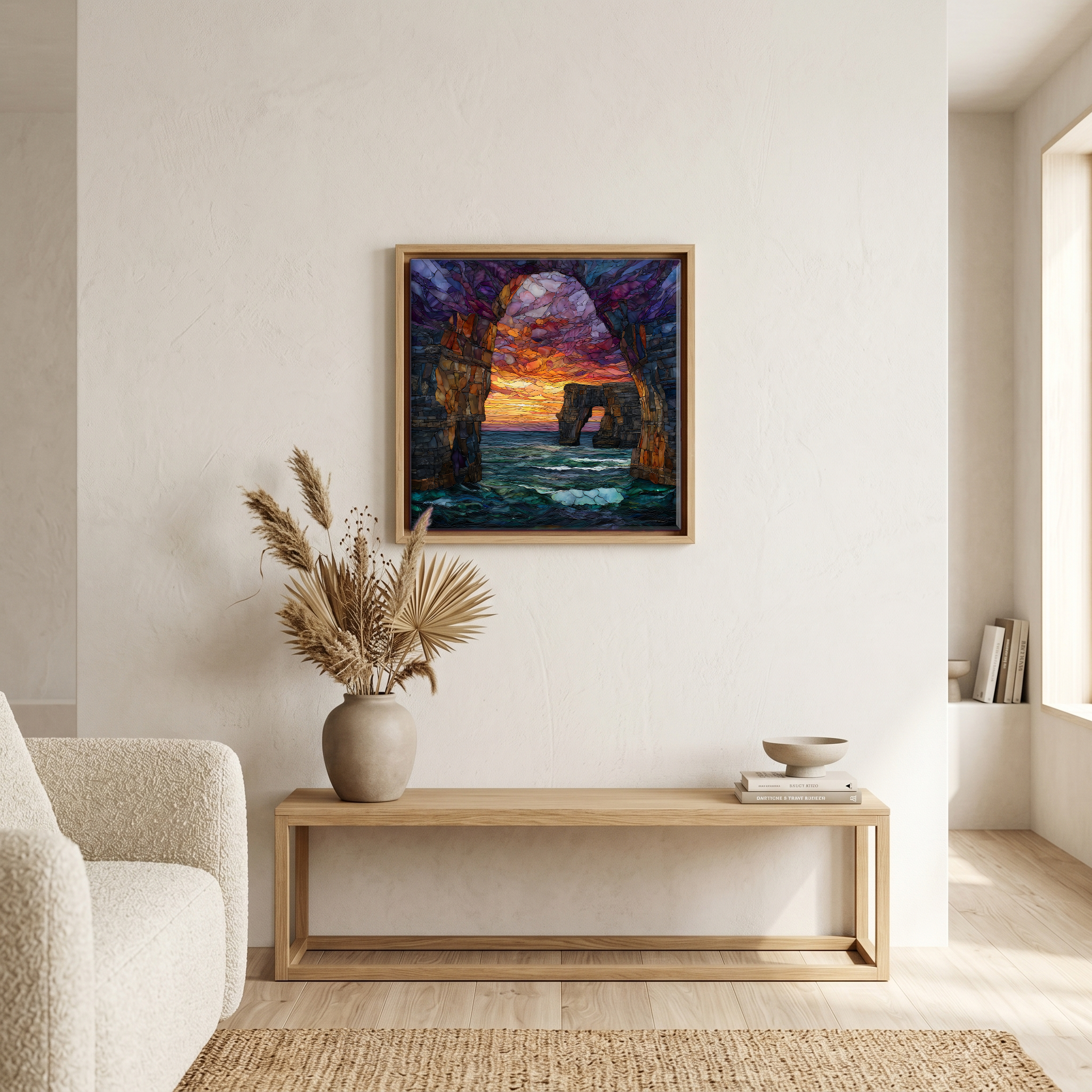
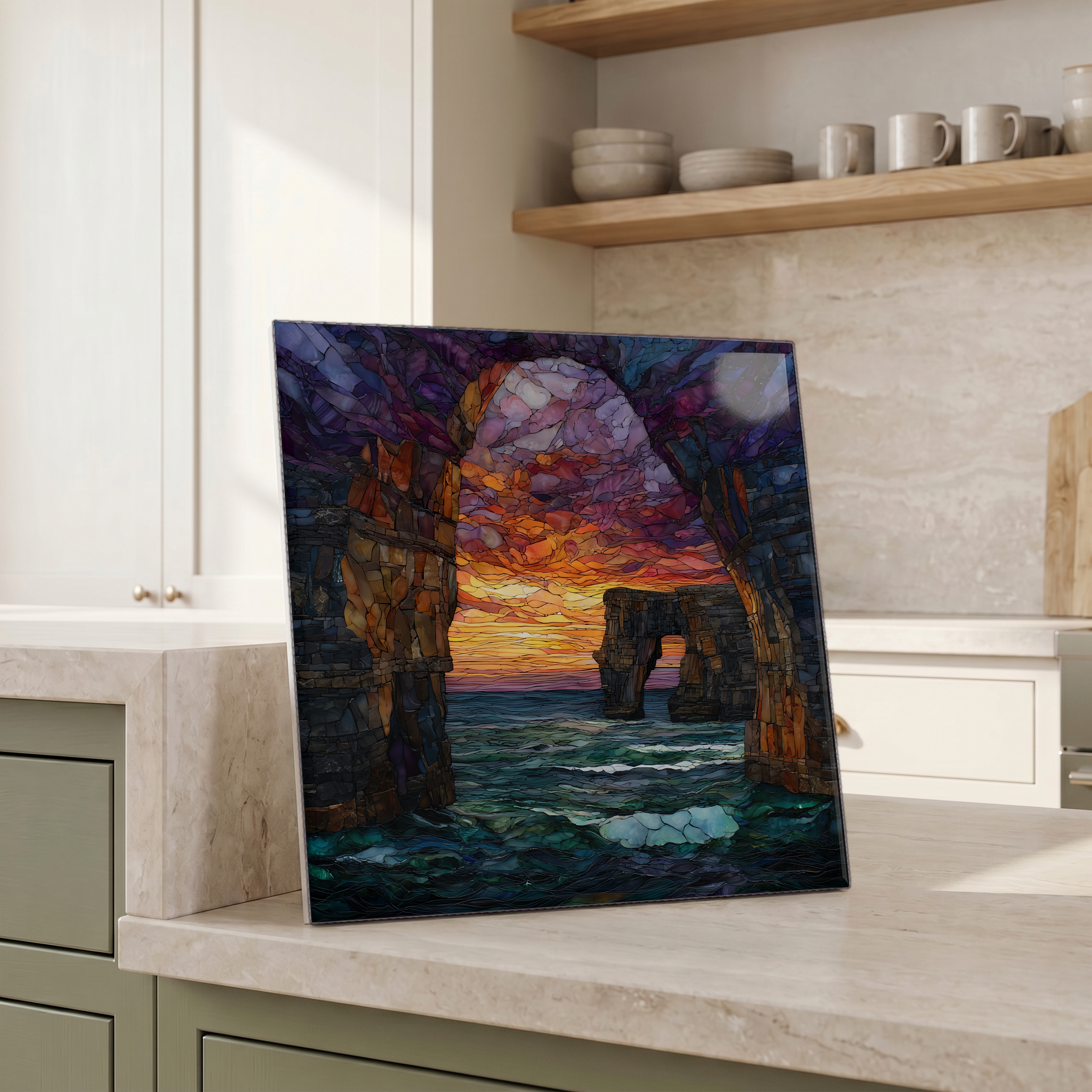
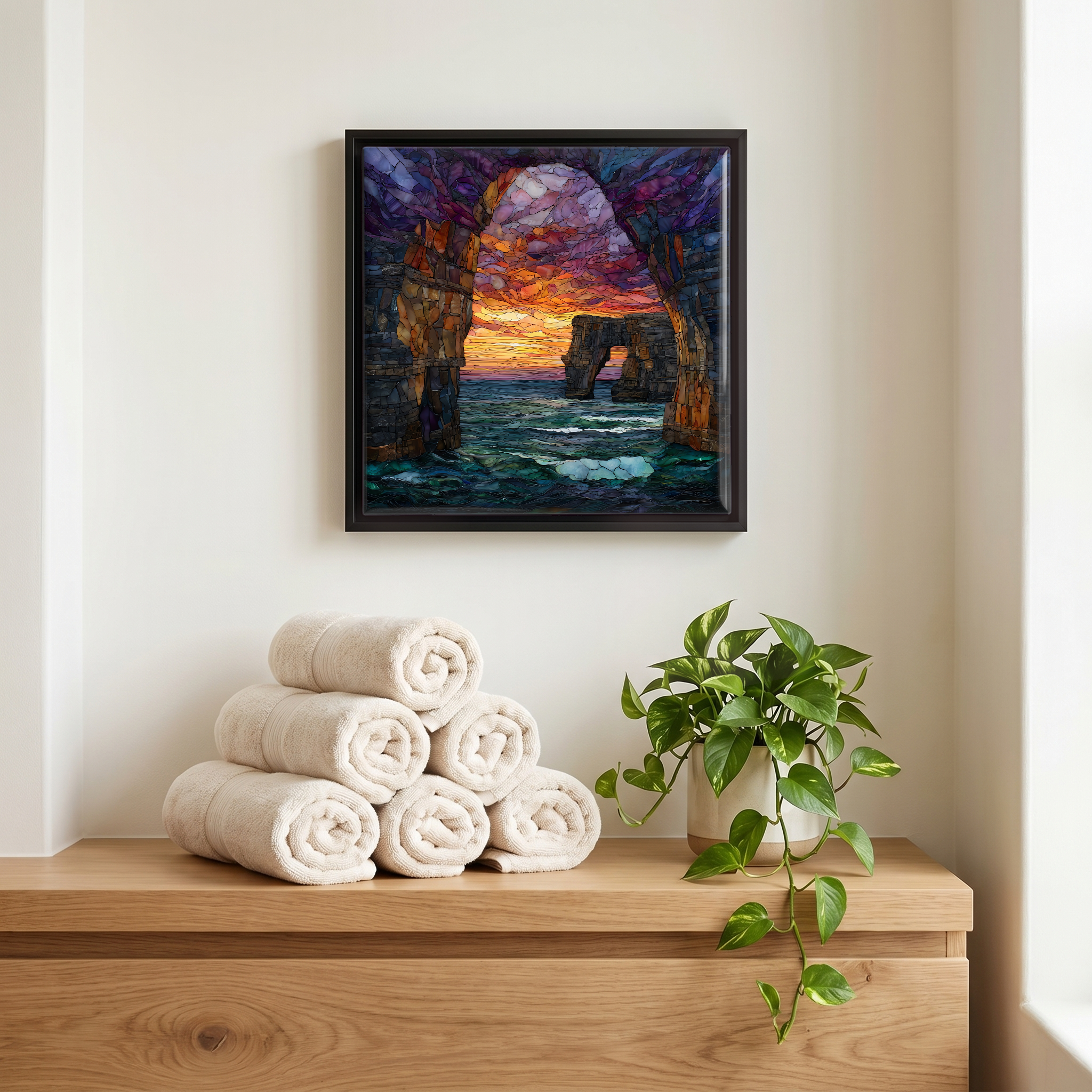
Bridges of Ross, on ceramic.
Each tile is finished by hand in our Knoxville studio. Artwork is slowly infused into the ceramic surface under high heat and pressure, and rests beneath a thin glossy finish. The colour lives in the surface, not on top of it.
Pick any four 4-inch tiles — National Parks you've been to, a Smokies set, the four seasons of one place. $ for a set of , cork-backed, ready to live on the table.
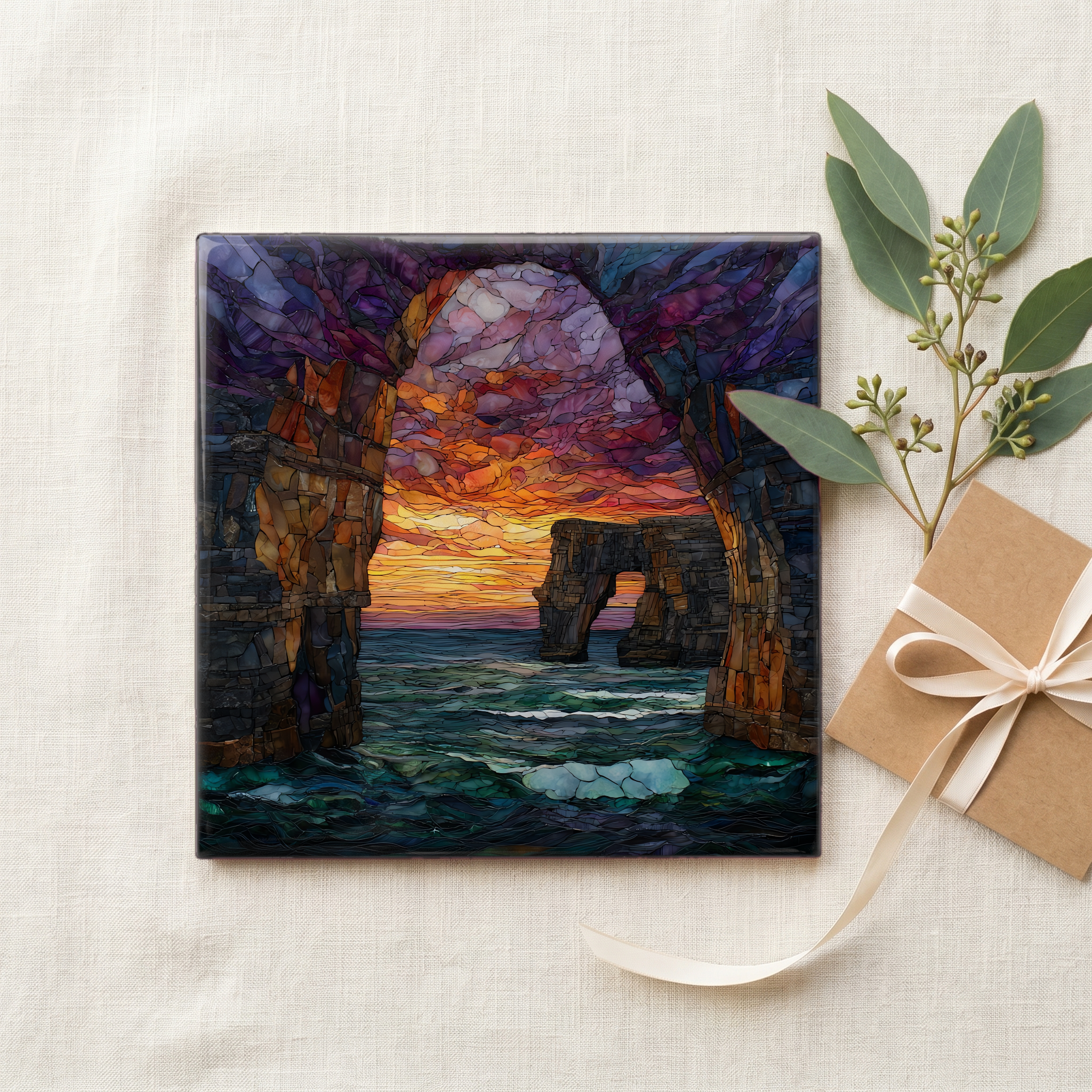
Each tile ships in a kraft box, tied with cream ribbon, with a handwritten note from the studio if you'd like to add one.
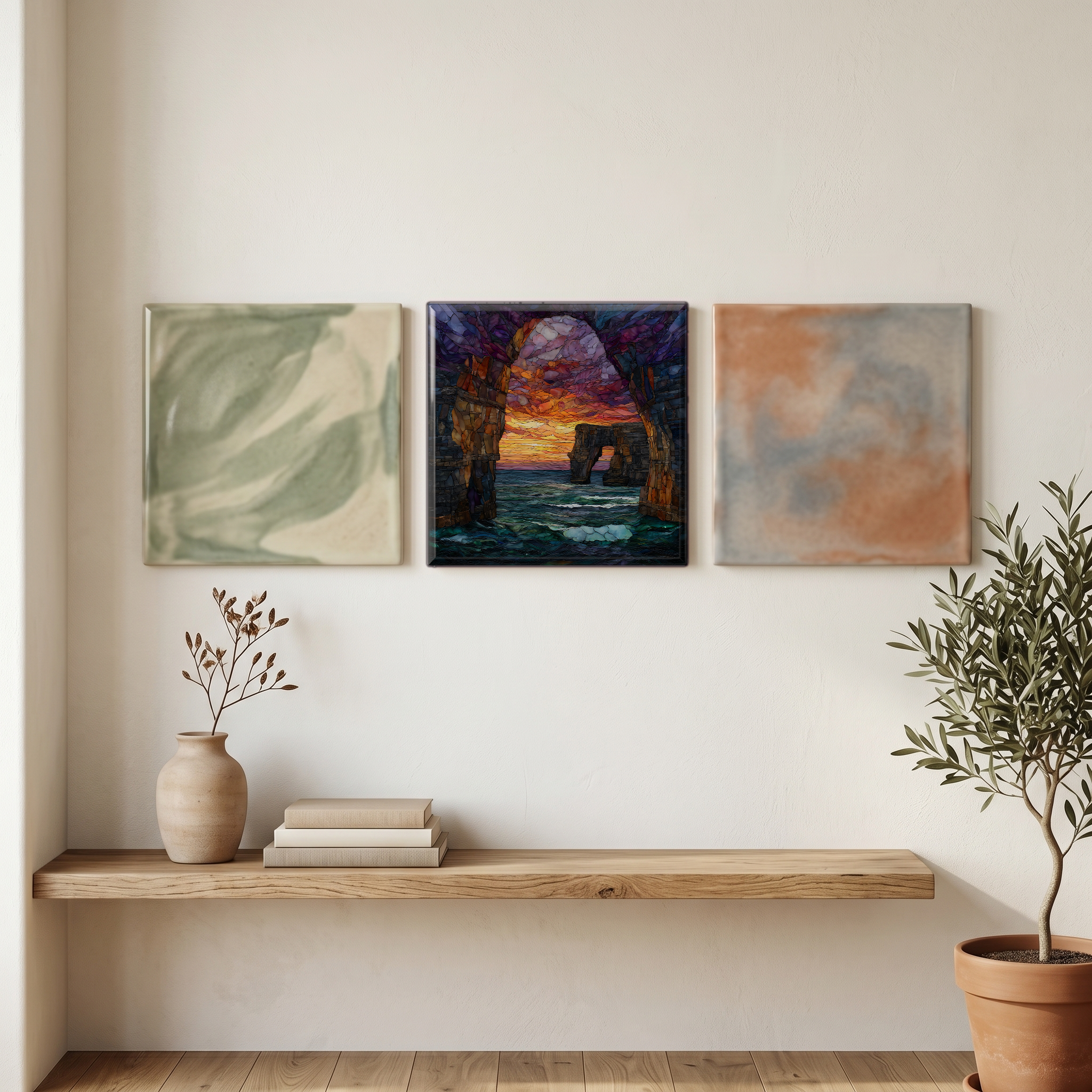
Three or five different vistas, hung together — a chapter of places you've been, or want to go.
The place, in three passes.
The Bridges of Ross sit at Ross Point on the Loop Head Peninsula, the long sandstone finger that closes the mouth of the Shannon Estuary on the south coast of County Clare. The trailhead is a small car park about 8 kilometres west of the village of Carrigaholt and a short drive from the village of Kilbaha, with a marked path to the cliff edge that takes ten minutes on foot. The peninsula is a designated discovery point on Ireland's Wild Atlantic Way, the 2,500-kilometre signed coastal route that runs from Donegal in the north to Cork in the south.
The cliffs at Ross belong to the Ross Sandstone Formation, a body of rock laid down in the Namurian stage of the Upper Carboniferous about 320 million years ago, when this corner of present-day Ireland sat near the equator and lay under a deep sea fed by a great river delta. Geologists treat the formation as a textbook example of a turbidite sequence: the layered record of underwater avalanches sliding off a continental slope and settling in beds of sand and shale. Later tectonic movement tilted and folded the beds; the Atlantic has been cutting at them since. Three arches stood here within the last century. Two have already fallen.
Late summer and autumn are the watching season. From late July into November, the headland is one of the most respected seabird-passage sites in Europe, with regular sightings of Manx, Cory's, Sooty, and Balearic shearwaters and all four northern skuas: Great, Arctic, Pomarine, and Long-tailed. Storm petrels, including the elusive Wilson's, work the same wind from mid-July to October; Leach's petrels arrive in larger numbers from late September. The best mornings follow a hard northwesterly gale, especially when the storm centre sits between Scotland and Iceland and the wind funnels birds onto the Clare coast. The Loop Head Bird Observatory, founded in 1987, keeps the standing count.