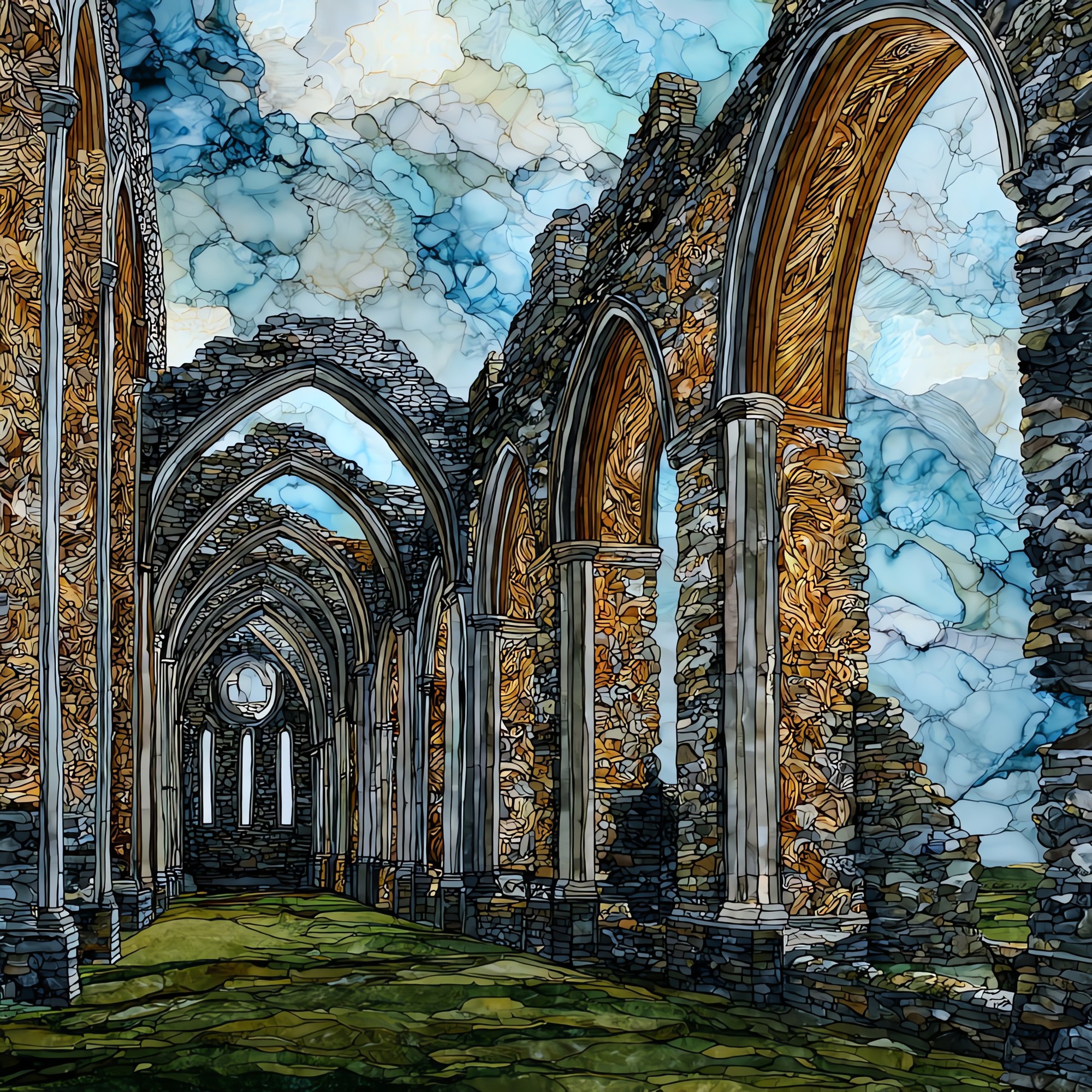
Boyle Abbey
— — what the light kept after the roof was gone.
Not only on a wall.
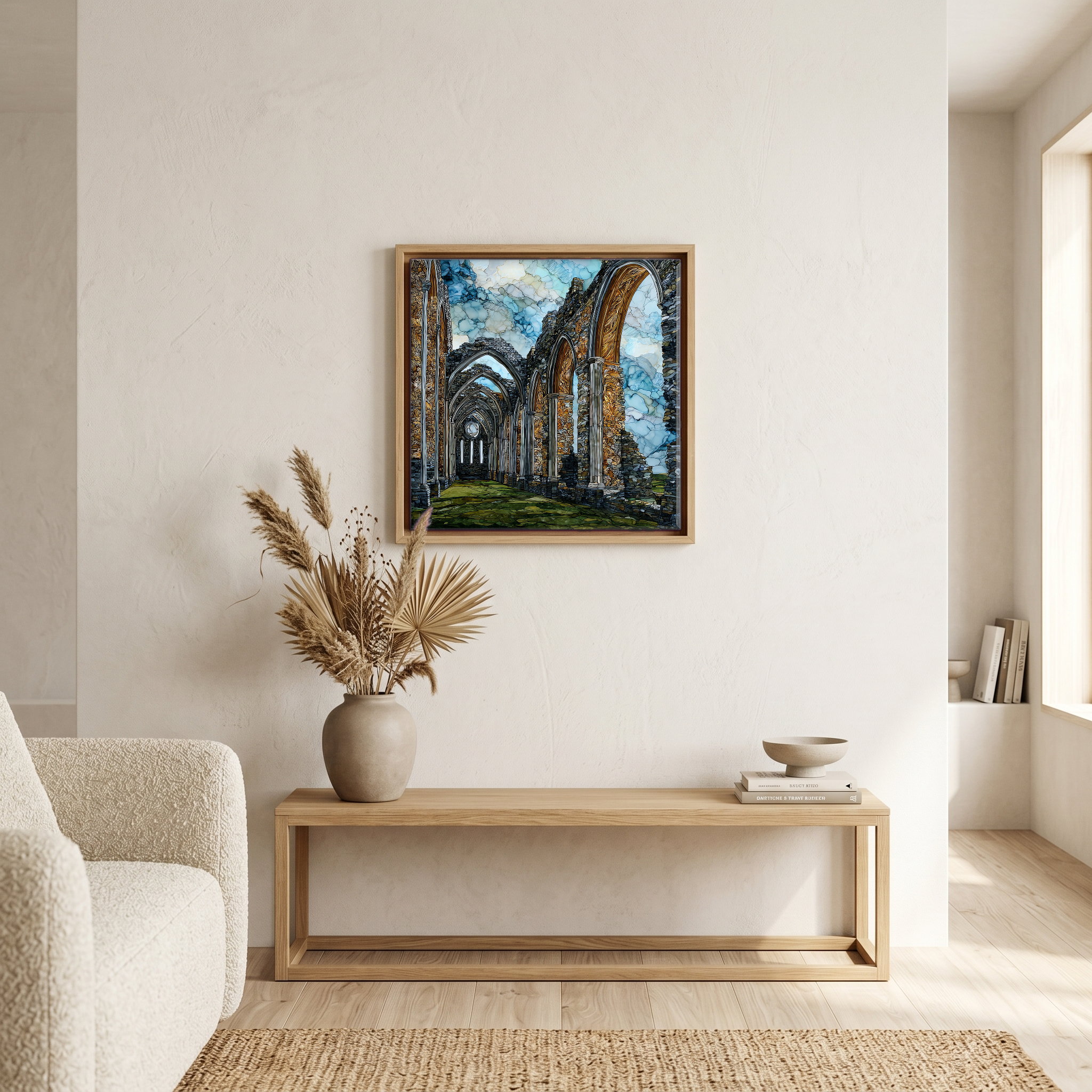
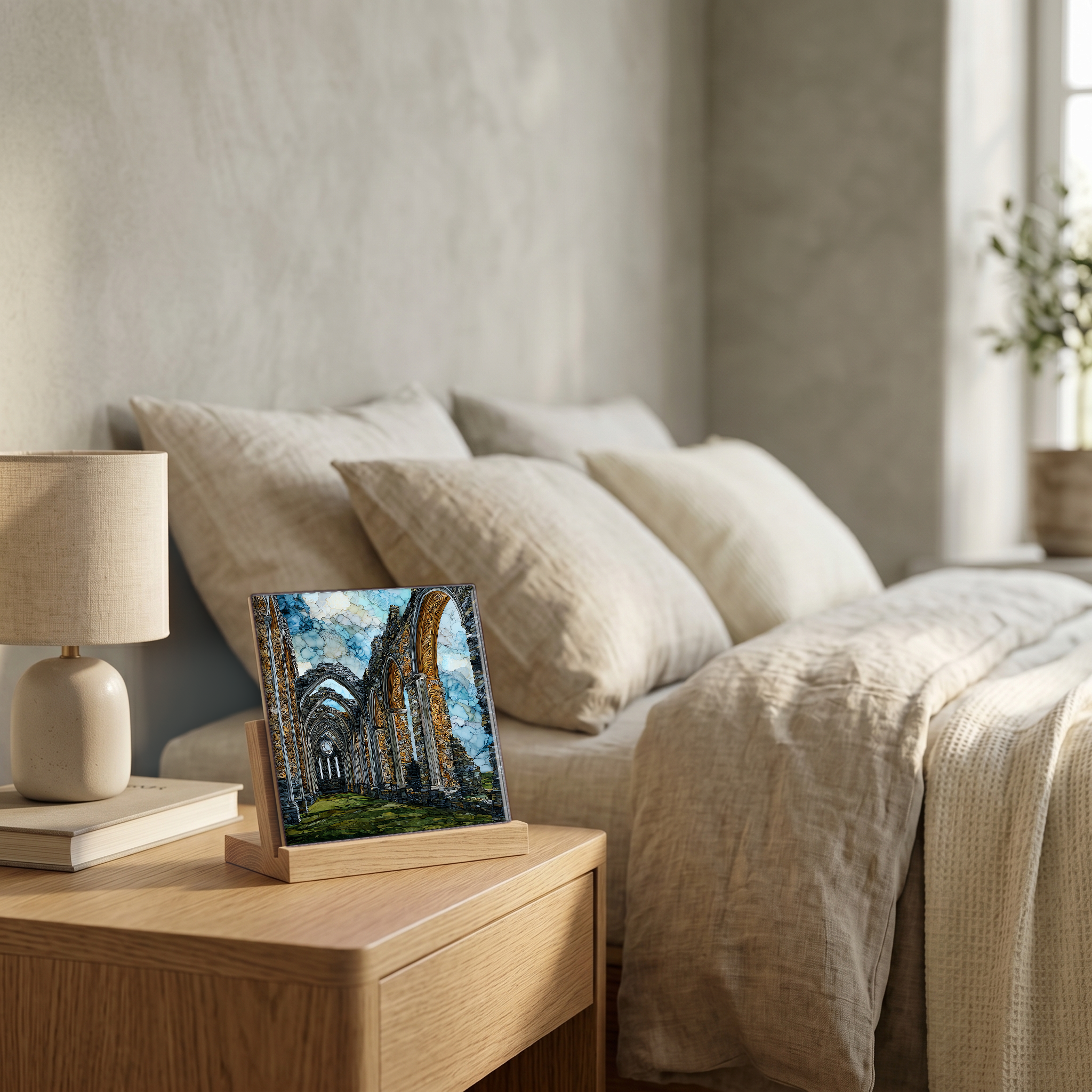
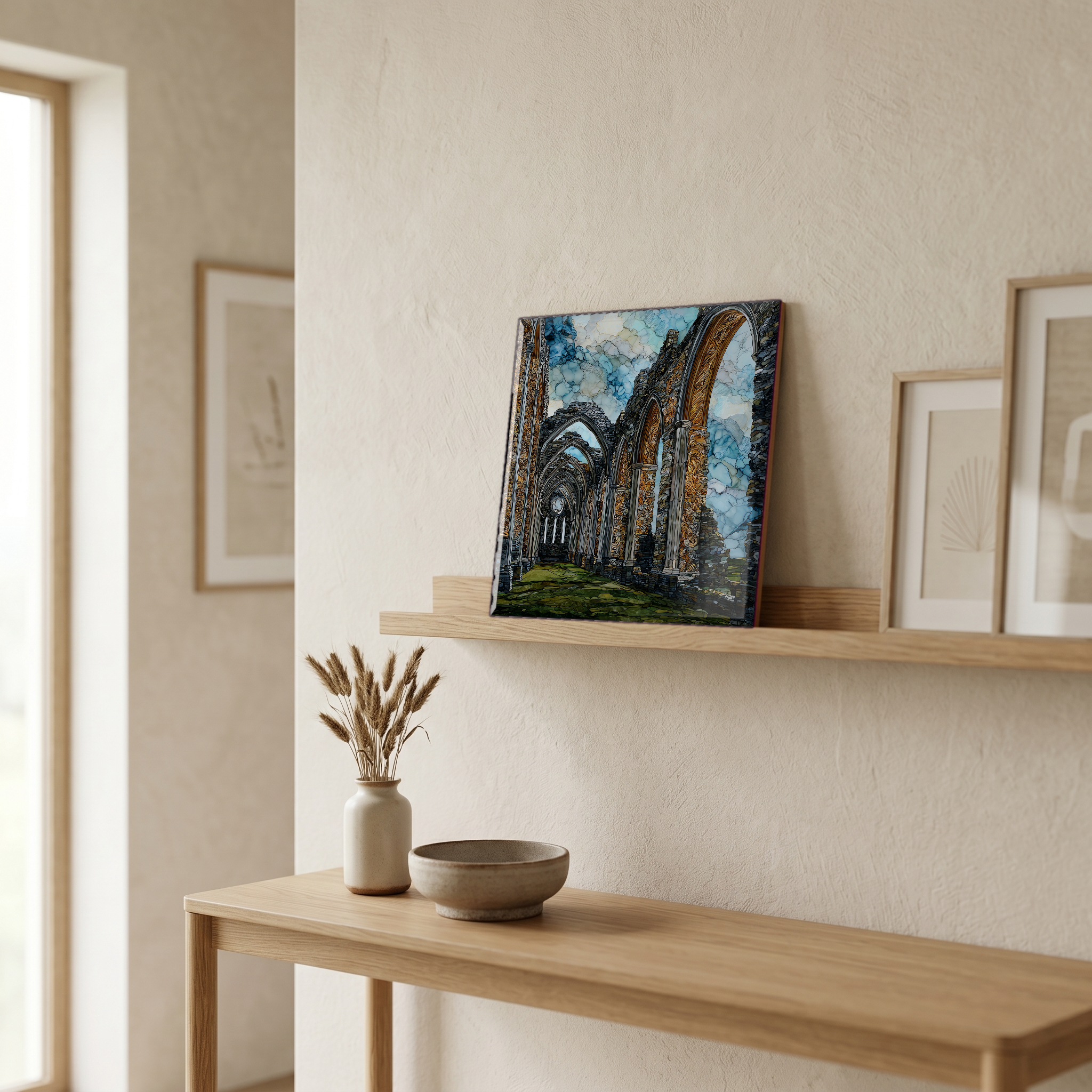
“A Cistercian house on the river that runs out of Lough Key. Founded in 1161, consecrated in 1218. The build took so long that the nave's arches start round and end pointed, the Romanesque slowly turning Gothic the further west you stand. The roof has been gone since the Elizabethans built a barracks into the walls in 1592. What stays is the long line of arcades, the cockerel carved at the top of one capital, and the river still running past.
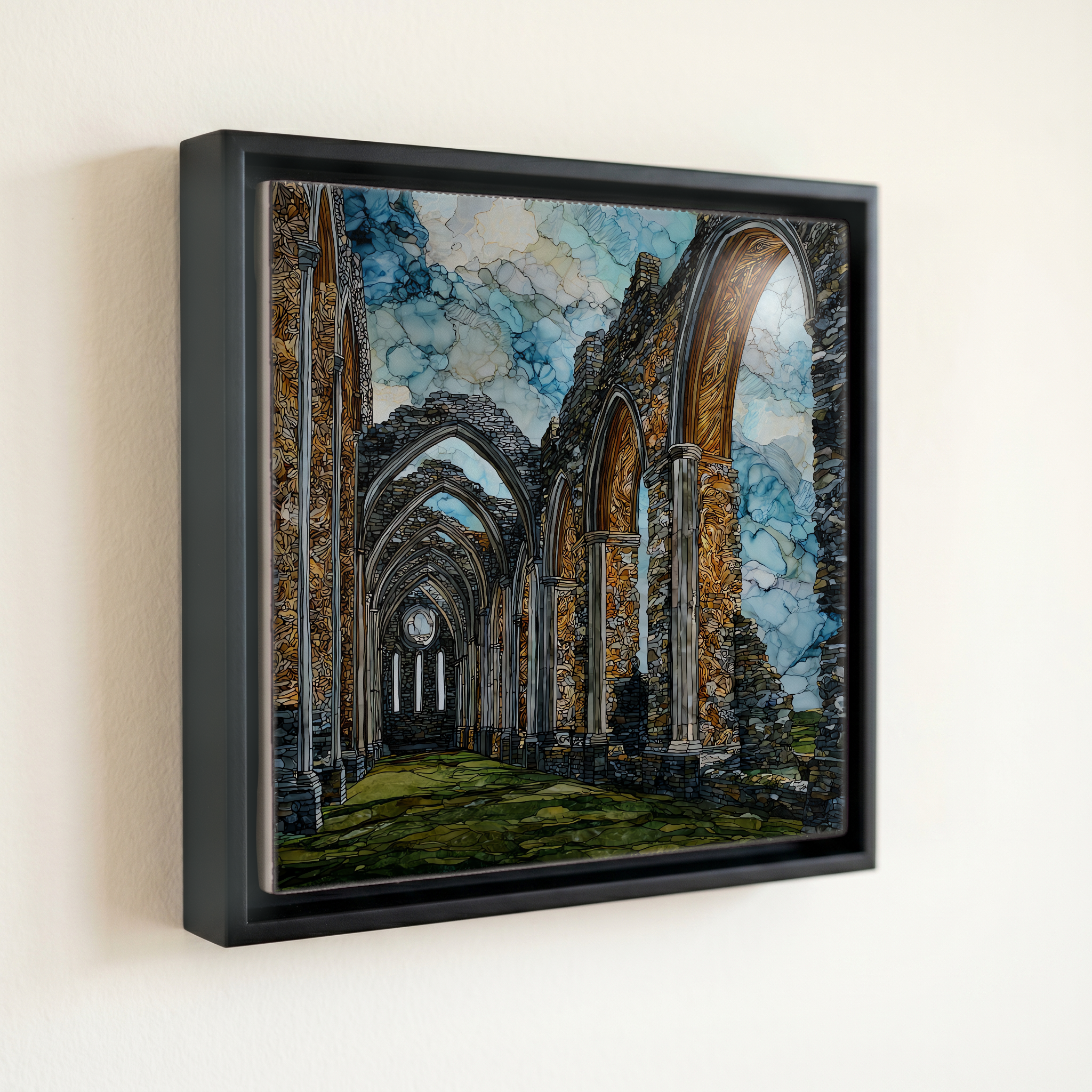
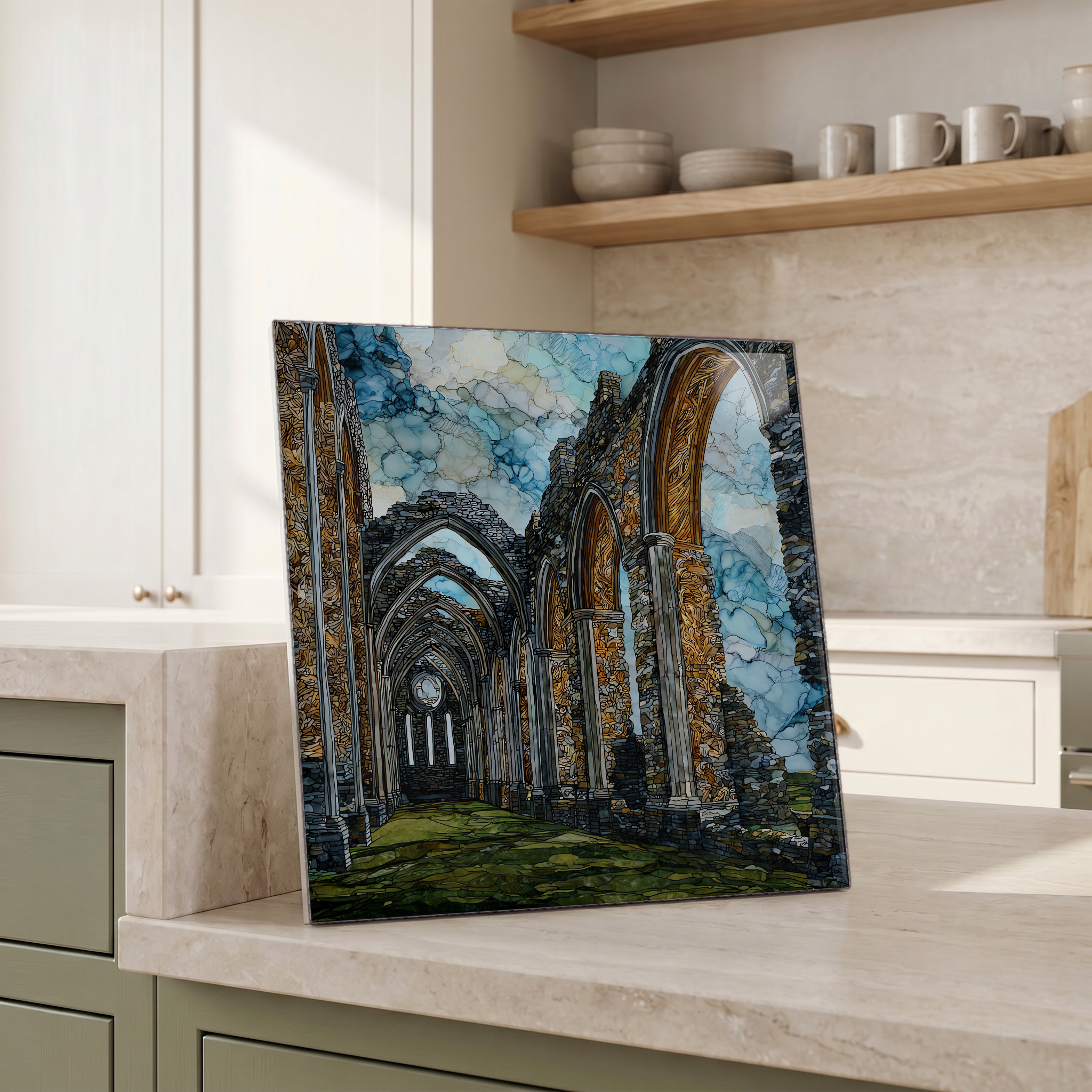
Boyle Abbey, on ceramic.
Each tile is finished by hand in our Knoxville studio. Artwork is slowly infused into the ceramic surface under high heat and pressure, and rests beneath a thin glossy finish. The colour lives in the surface, not on top of it.
Pick any four 4-inch tiles — National Parks you've been to, a Smokies set, the four seasons of one place. $ for a set of , cork-backed, ready to live on the table.
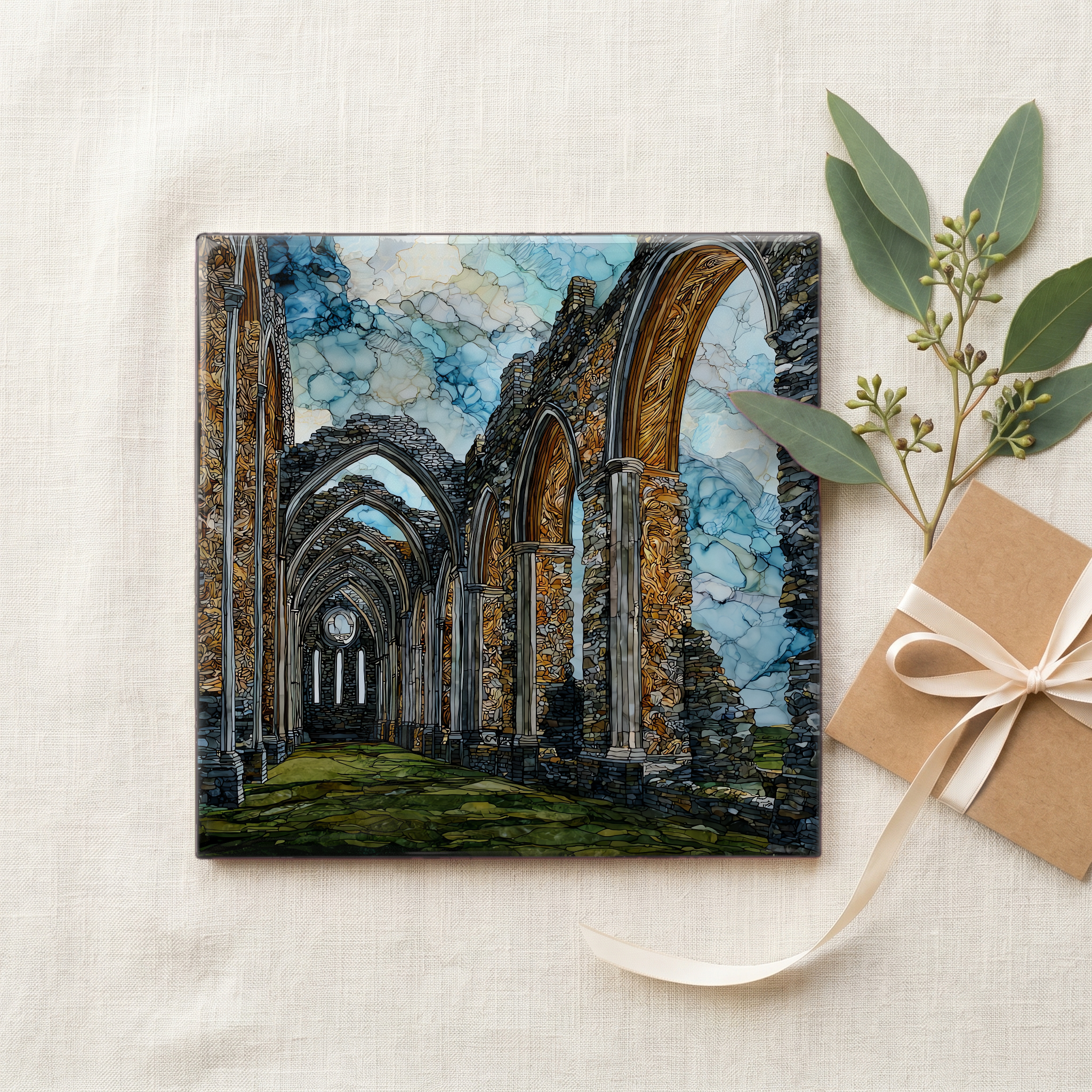
Each tile ships in a kraft box, tied with cream ribbon, with a handwritten note from the studio if you'd like to add one.
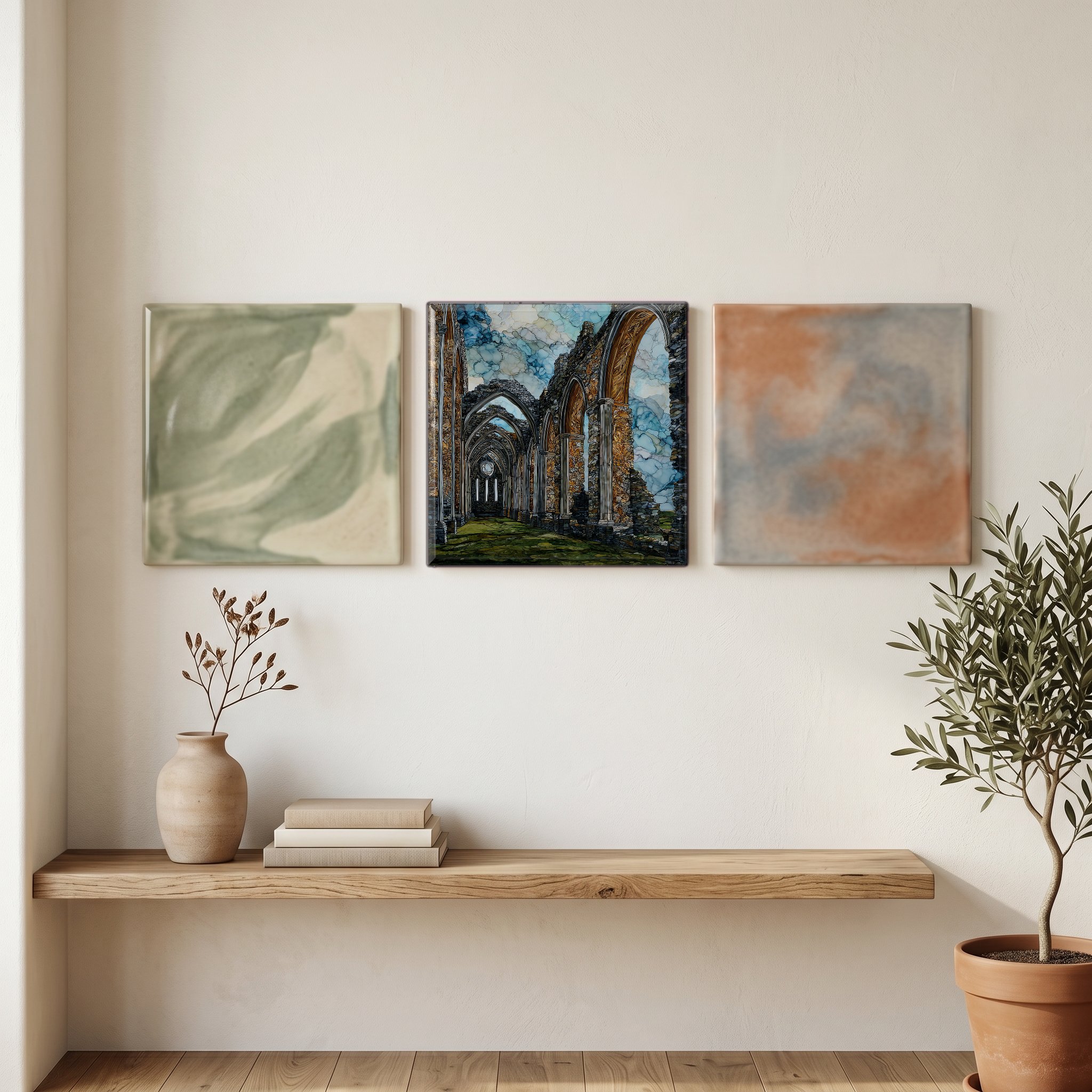
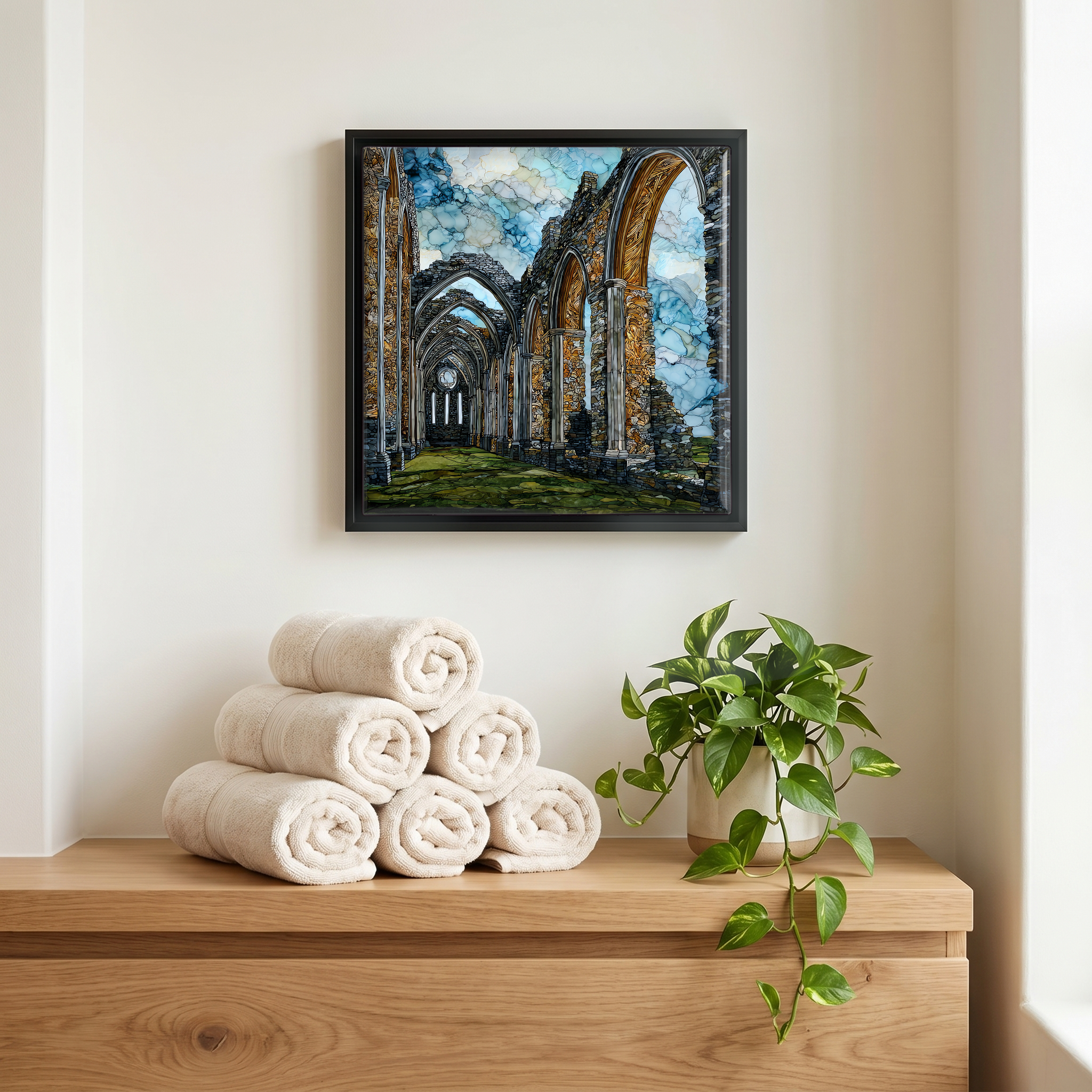
Three or five different vistas, hung together — a chapter of places you've been, or want to go.
The place, in three passes.
Boyle Abbey stands in the town of Boyle, in north County Roscommon, where the River Boyle runs out of Lough Key on its way to the Shannon. The site is about 175 kilometres northwest of Dublin, off the N4. The abbey was founded in 1161 by Cistercian monks sent from Mellifont, Ireland's first Cistercian house, established in 1142 in County Louth. The patrons were the Mac Diarmada family, kings of Moylurg. Construction continued for nearly sixty years; the church was consecrated in 1218. The Curlew Mountains rise to the north and Lough Key Forest Park lies a few kilometres east. The site is in the care of the Office of Public Works.
The abbey's nave is the architectural record of its own construction. Built across the second half of the twelfth century and the first decades of the thirteenth, the arcades on one side carry the rounded Romanesque arches the masons knew when they started, and the arcades opposite carry the pointed Gothic arches the masons had learned by the time they finished. A square tower was added above the crossing in the thirteenth century. The carved capitals along the nave include human heads, foliage, and one famous cockerel. The detail work shows Burgundian influence carried through Mellifont, with stronger echoes of the West of England in the later carving.
The site is open from mid-March to mid-September. In 2026 the window runs 13 March to 16 September, daily from 10:00 to 18:00, with last admission at 17:15. Admission is €5 for an adult and €13 for a family. A restored sixteenth-century gatehouse holds the interpretive exhibit; the cloister was largely destroyed during the long use of the abbey as a military barracks from 1592 onward, but the nave, transepts, and chancel still stand. Parking is on site. The address is Boyle, County Roscommon, F52 XE16, off the N4 between Dublin and Sligo.