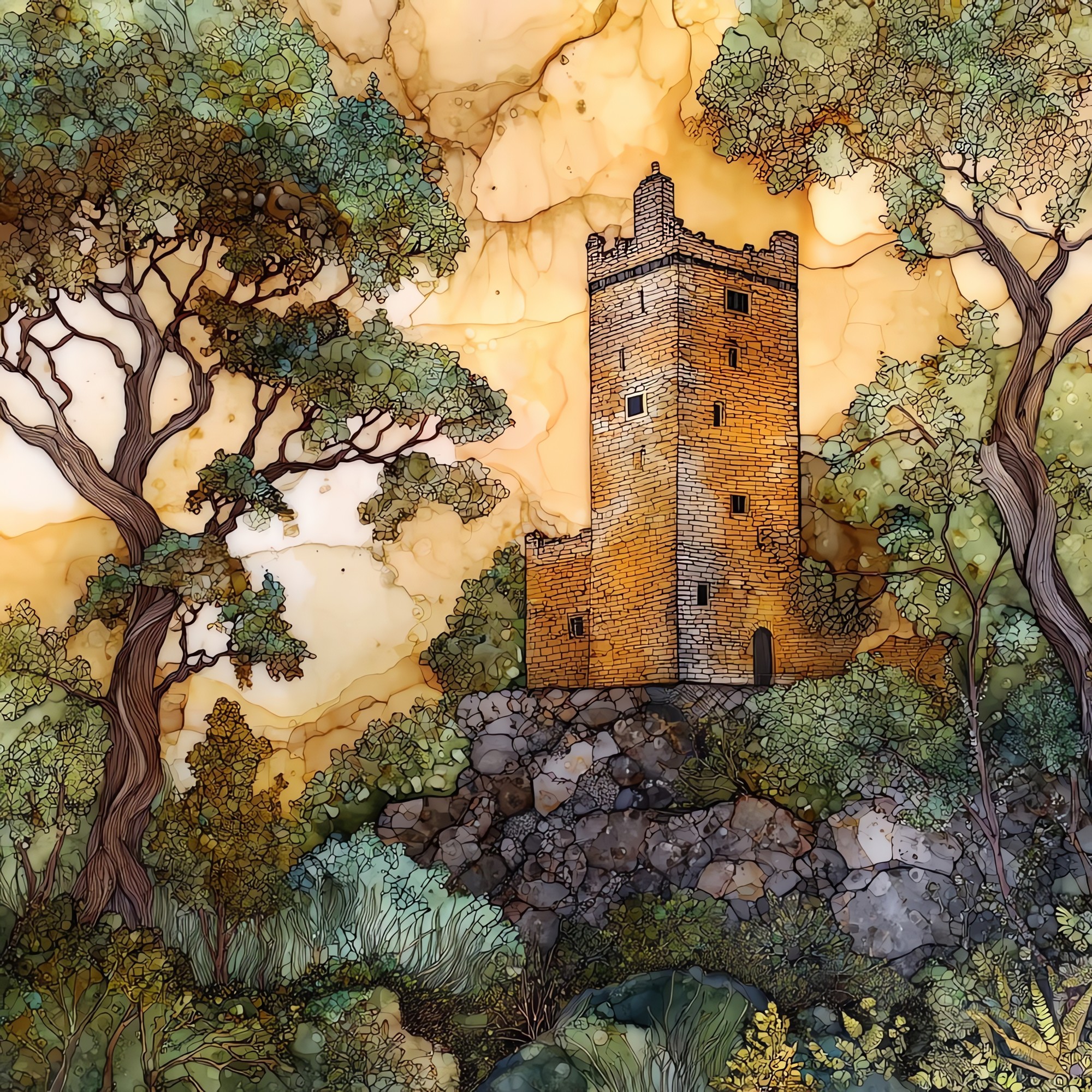
Blarney Castle
— the green that grew into the wall.
Not only on a wall.
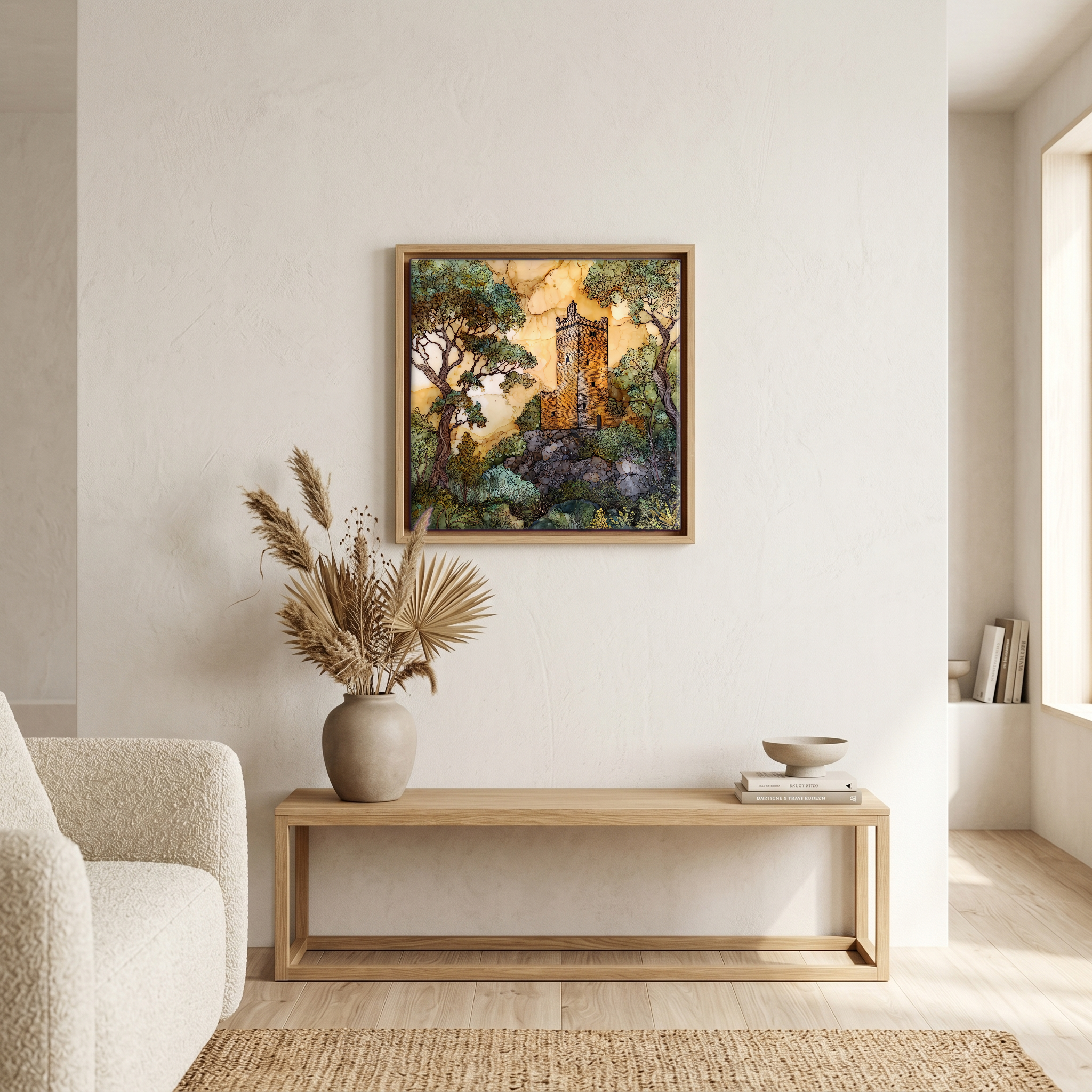
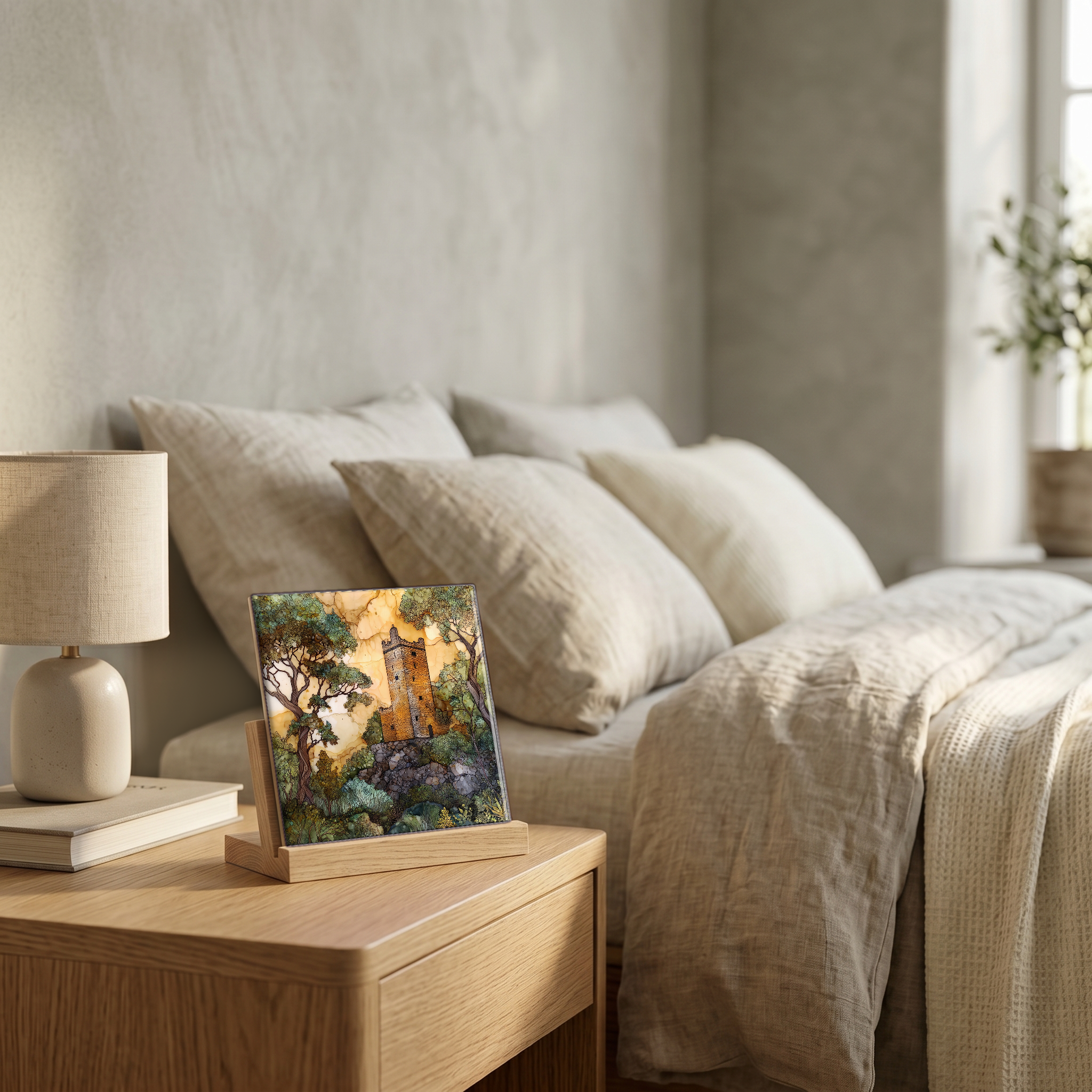
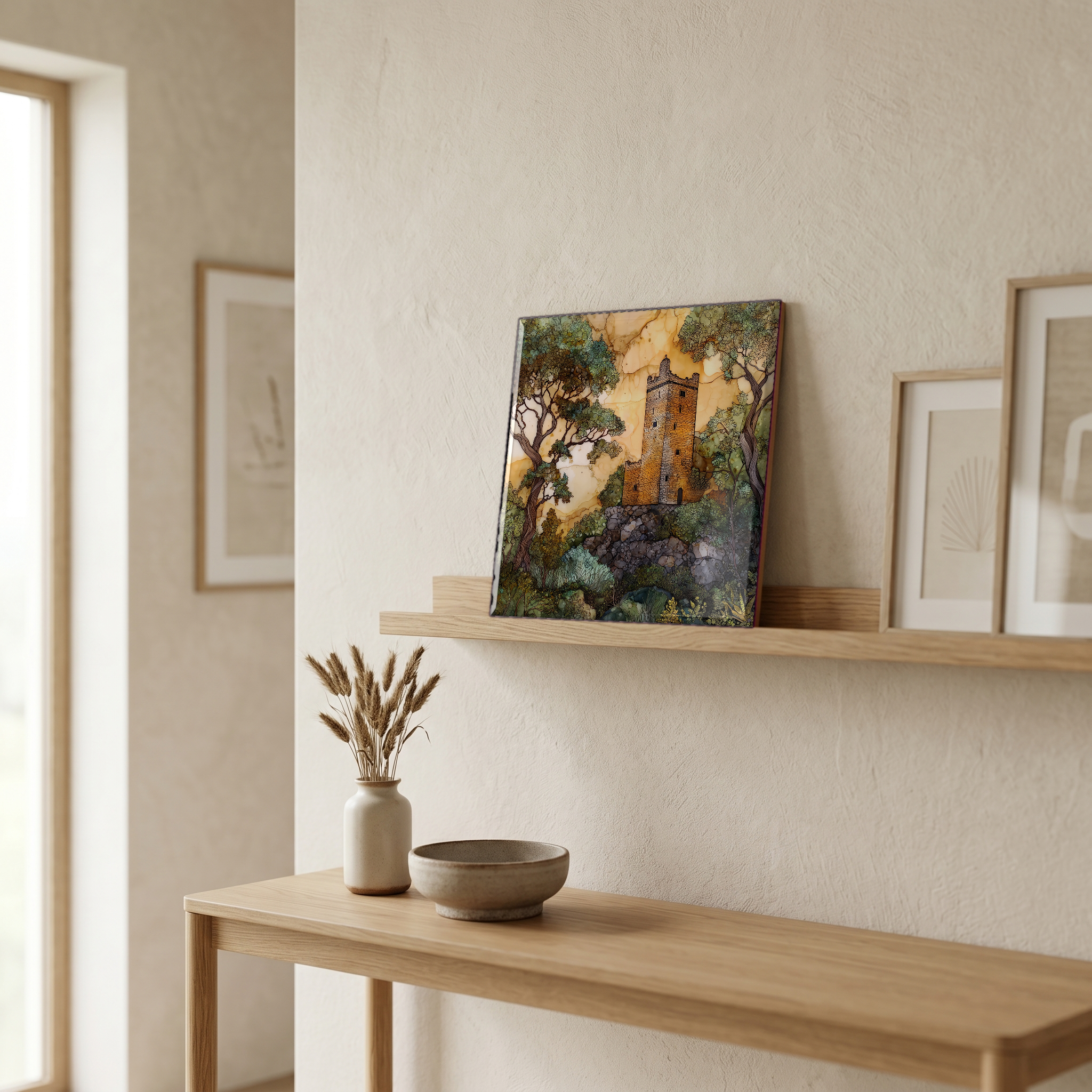
“A square keep above the river Martin, west of Cork. The third castle on this ground; the first was earth-and-timber, the second stone, both long gone. The keep that stands now is from 1446. Near the top, a block of limestone set into the battlements, the stone people travel to kiss. The queue for it has its quiet hour; the gardens have theirs.
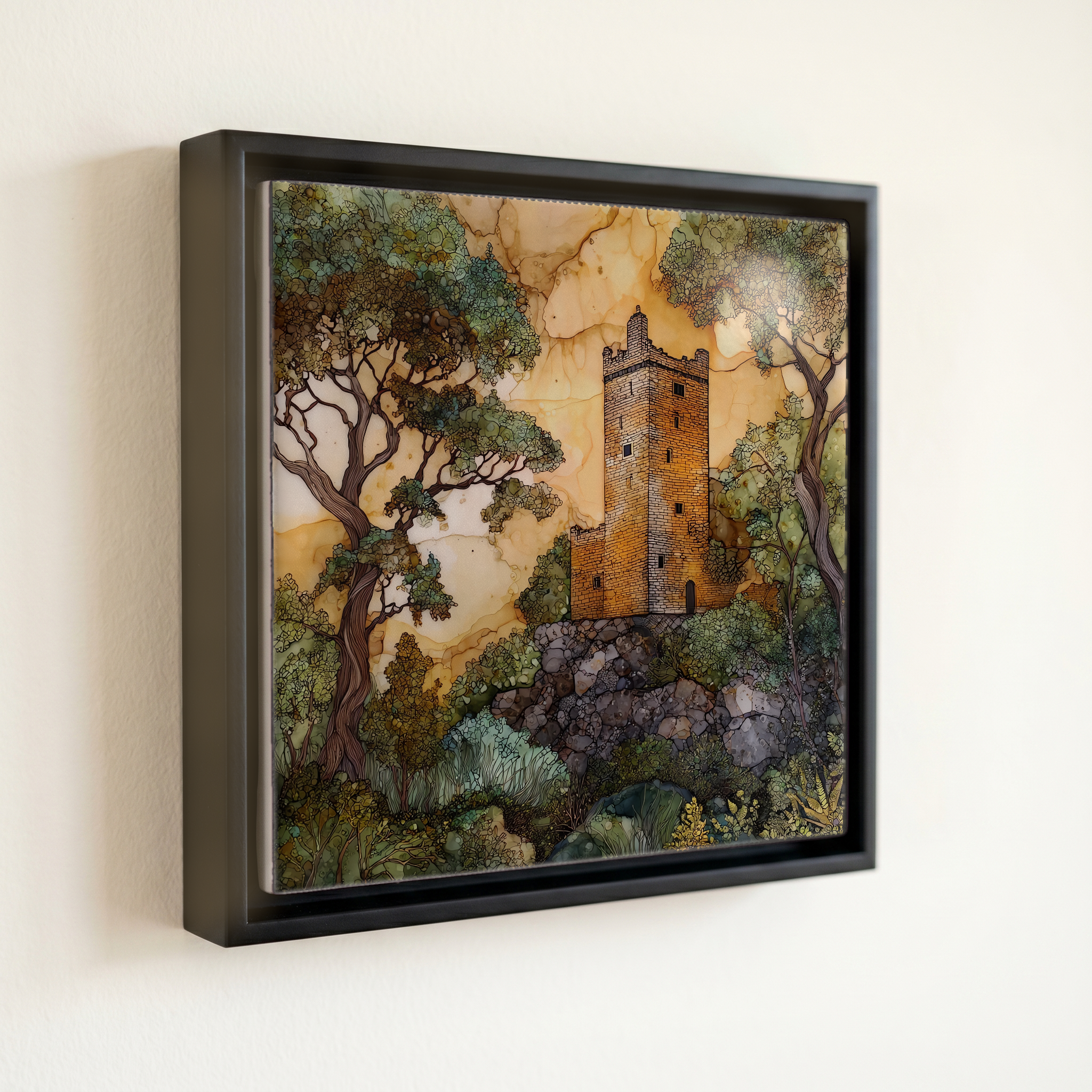
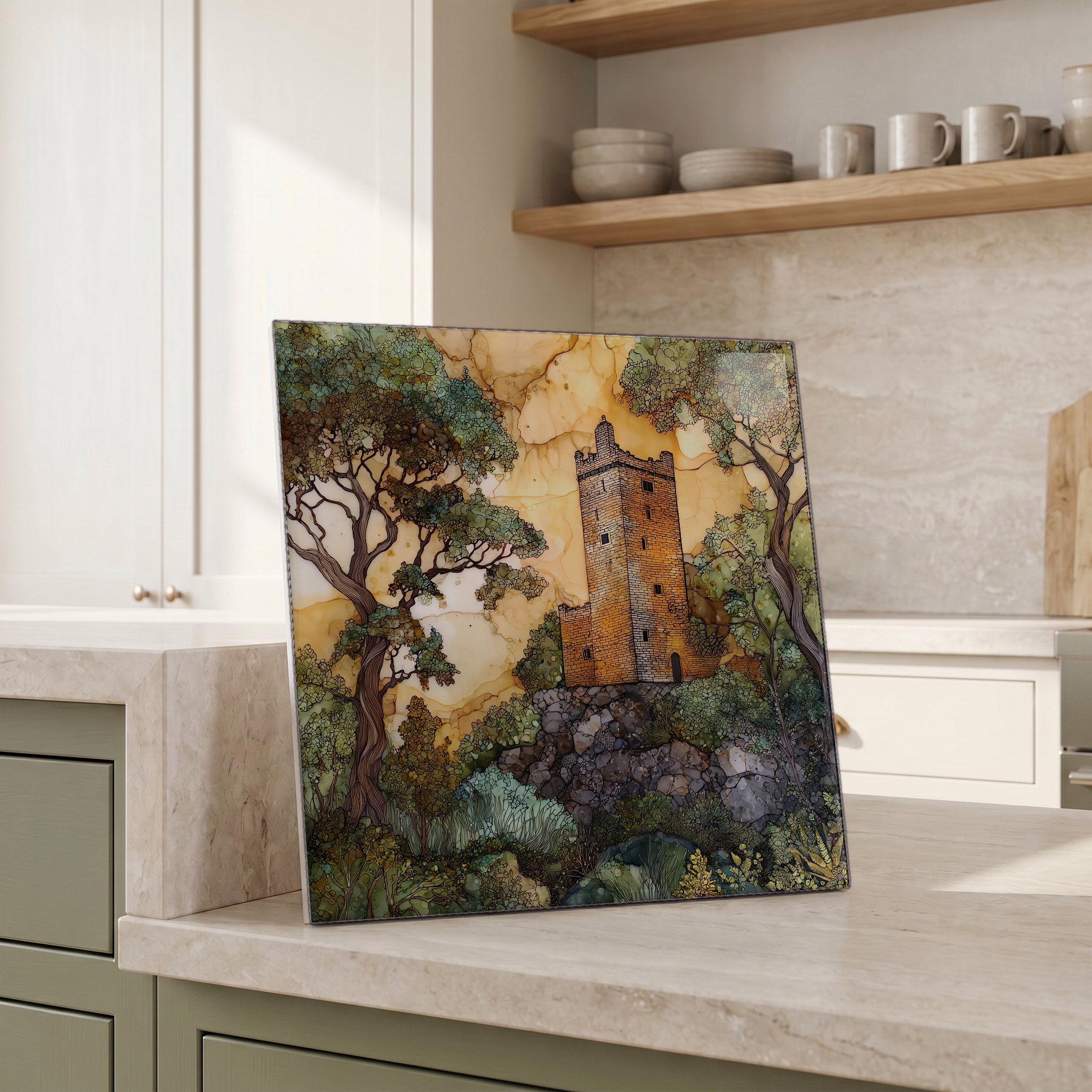
Blarney Castle, on ceramic.
Each tile is finished by hand in our Knoxville studio. Artwork is slowly infused into the ceramic surface under high heat and pressure, and rests beneath a thin glossy finish. The colour lives in the surface, not on top of it.
Pick any four 4-inch tiles — National Parks you've been to, a Smokies set, the four seasons of one place. $ for a set of , cork-backed, ready to live on the table.
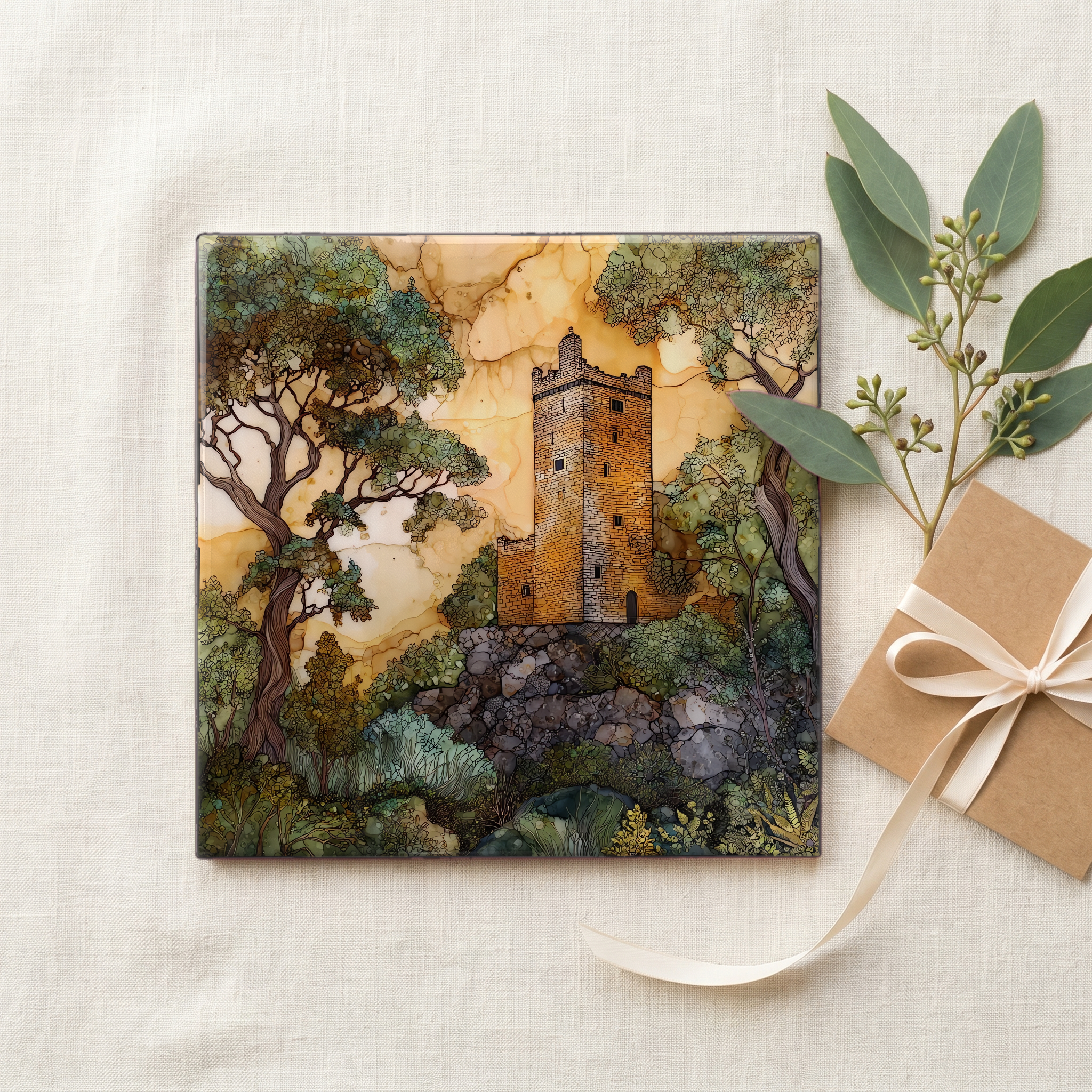
Each tile ships in a kraft box, tied with cream ribbon, with a handwritten note from the studio if you'd like to add one.
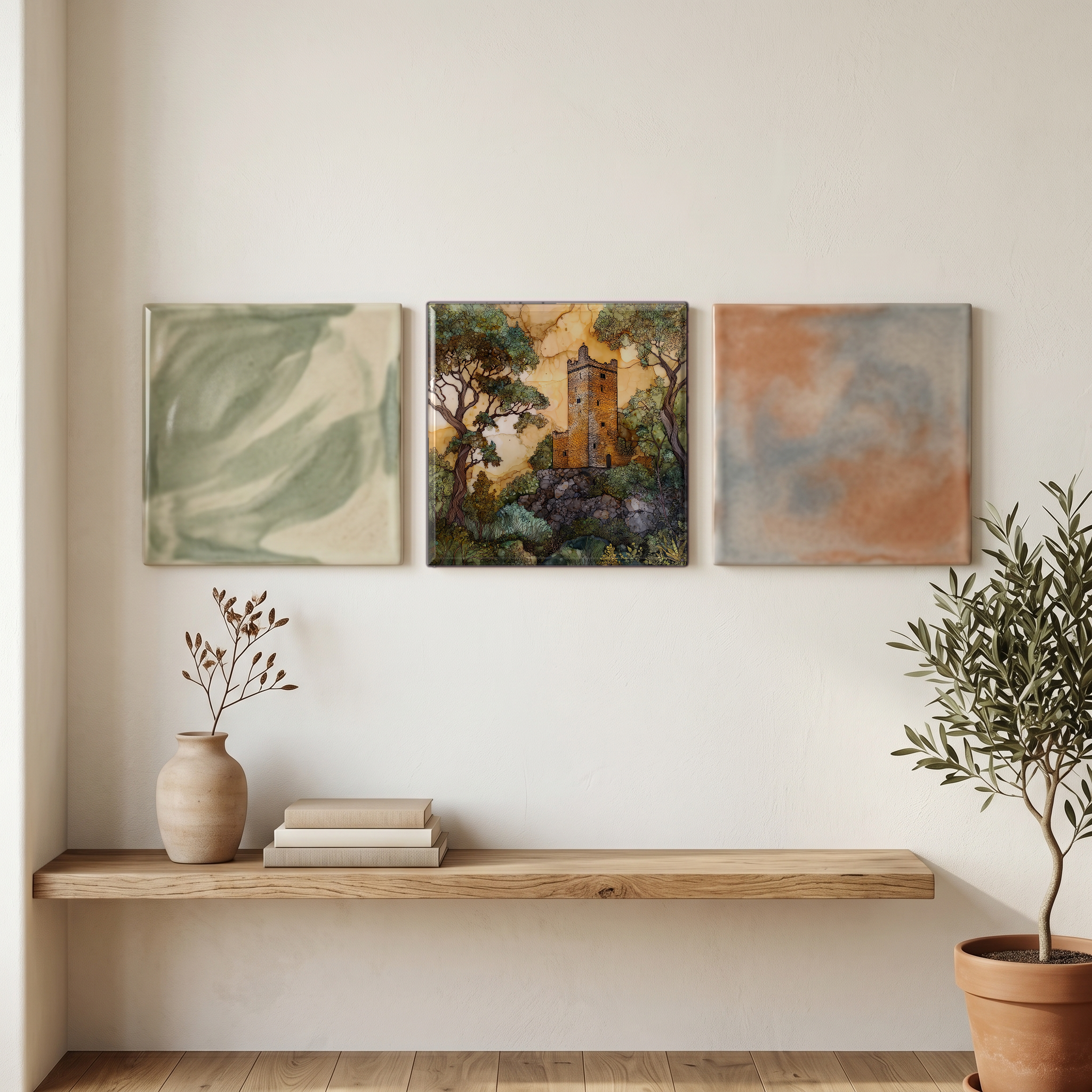
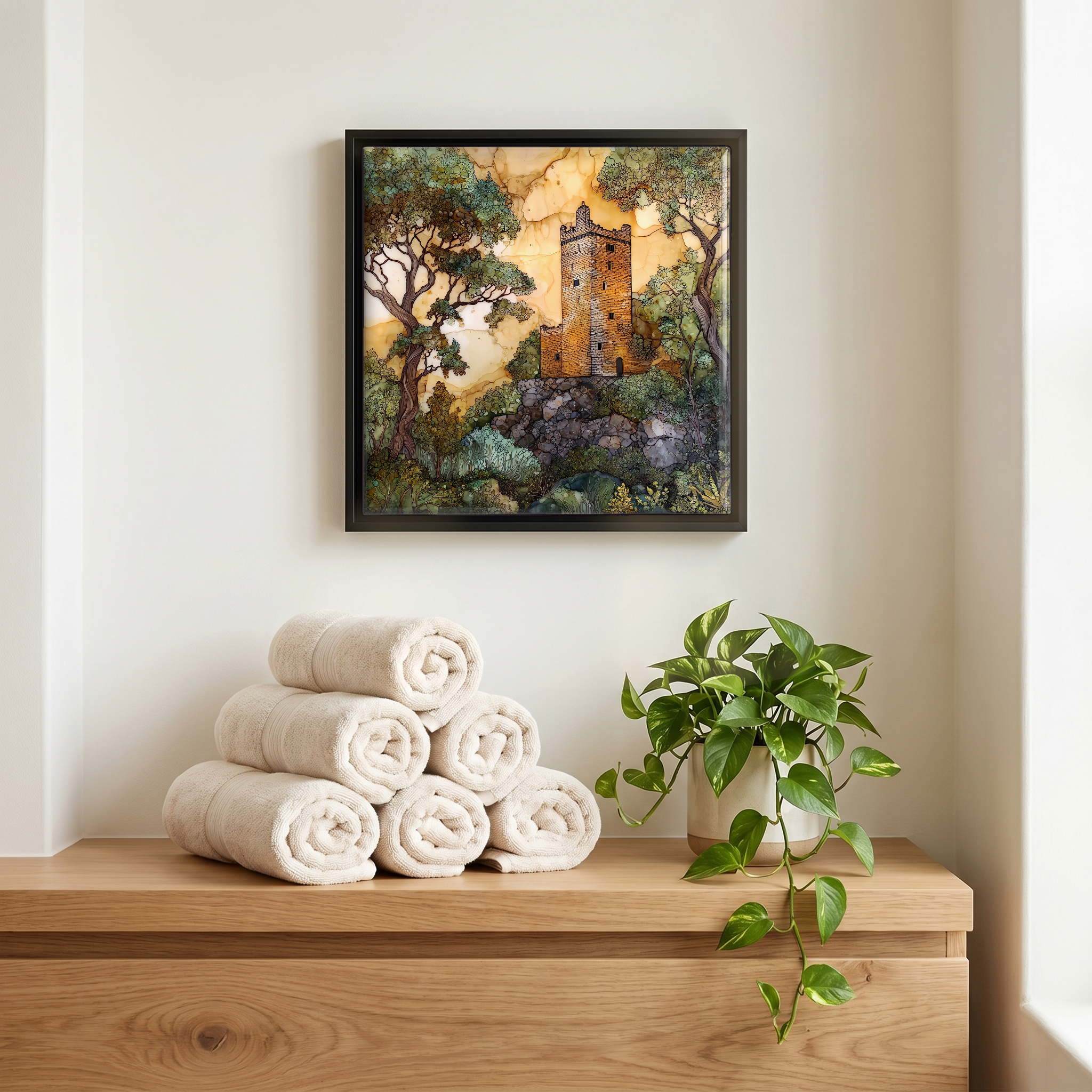
Three or five different vistas, hung together — a chapter of places you've been, or want to go.
The place, in three passes.
Blarney Castle stands five miles northwest of Cork city, on the river Martin in County Cork, on the south coast of Ireland. The keep that survives today was built in 1446 by Cormac Laidir MacCarthy, Lord of Muskerry. It is the third castle to stand on this ground, after a wooden tower from around 1200 and a stone fortification from around 1210. The keep rises about 24 metres, with the battlements at the top reached by a winding stair of more than a hundred steps. The Colthurst family has owned the castle and demesne since 1846, and still maintains the gardens. The grounds include the Rock Close, an old garden of yew and limestone with druidic associations; the Poison Garden; an arboretum; and a stretch of riverbank below the cliff.
The stone set into the battlements is a block of Carboniferous limestone, the same stratum as much of the bedrock under County Cork. Its origins are disputed: one tradition holds it is half of the Stone of Scone, given to Cormac MacCarthy by Robert the Bruce in 1314 after the Battle of Bannockburn; another that it was a coronation stone of older Irish kings. Visitors lean backwards over the parapet, held at the waist by an attendant, to kiss the underside of the stone. The act is said to confer the gift of eloquence, the blarney the castle gives its name to. The keep itself is built of the same grey limestone, cut from quarries nearby.
The castle and grounds are open daily through the year, with longer hours from June through August and shorter hours in winter. Admission covers the keep, the Rock Close, the Poison Garden, the wider gardens, and the adjoining Blarney House, built in 1874, when it is open. The kiss itself happens at the top of the keep, on the parapet walk, where an attendant holds the visitor at the waist while they lean back over the drop. The queue is steady through midsummer; the first hour after opening and the last hour before close are the quietest. The village of Blarney sits a short walk from the gate, with the woollen mills and the green at its centre.