Wender·Vista
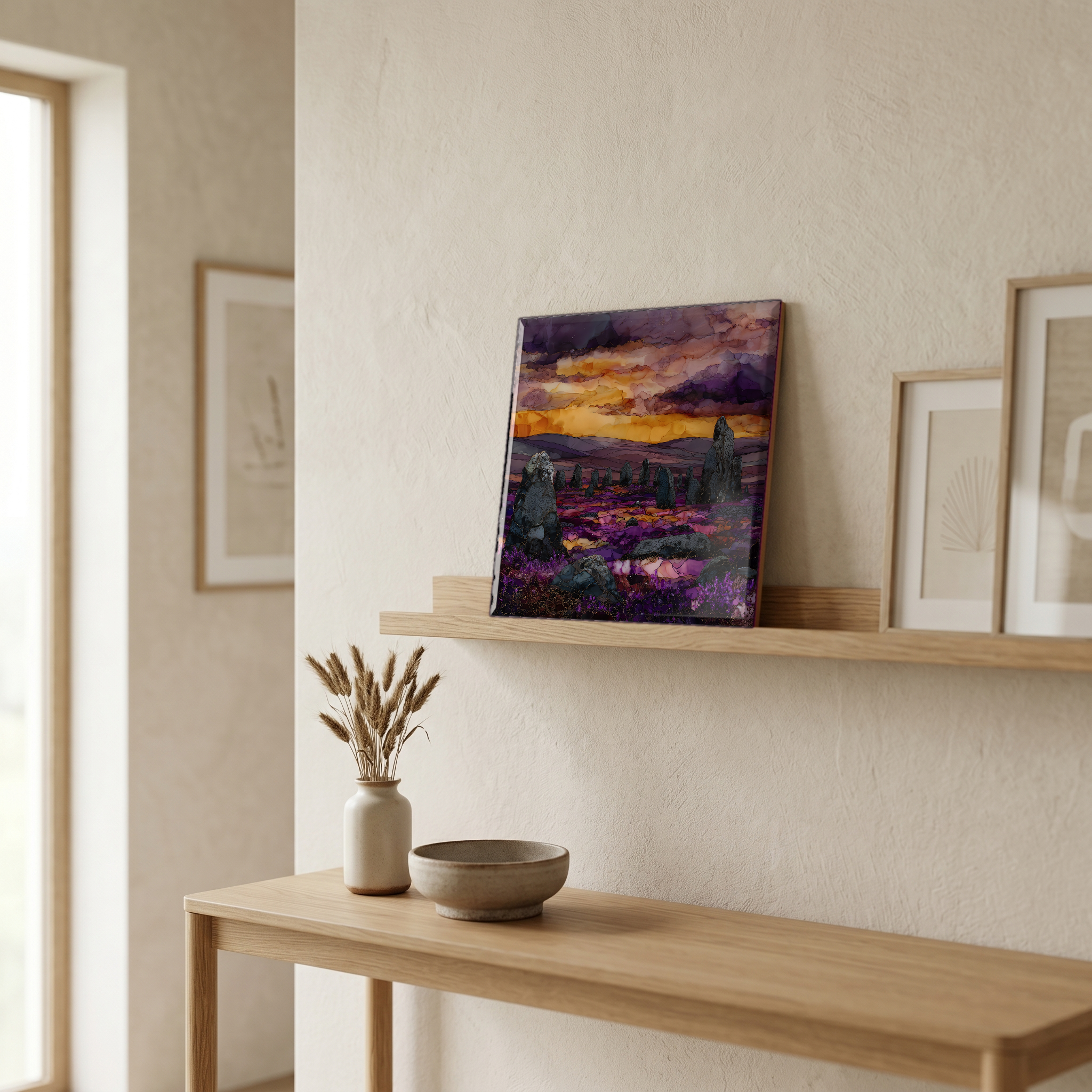
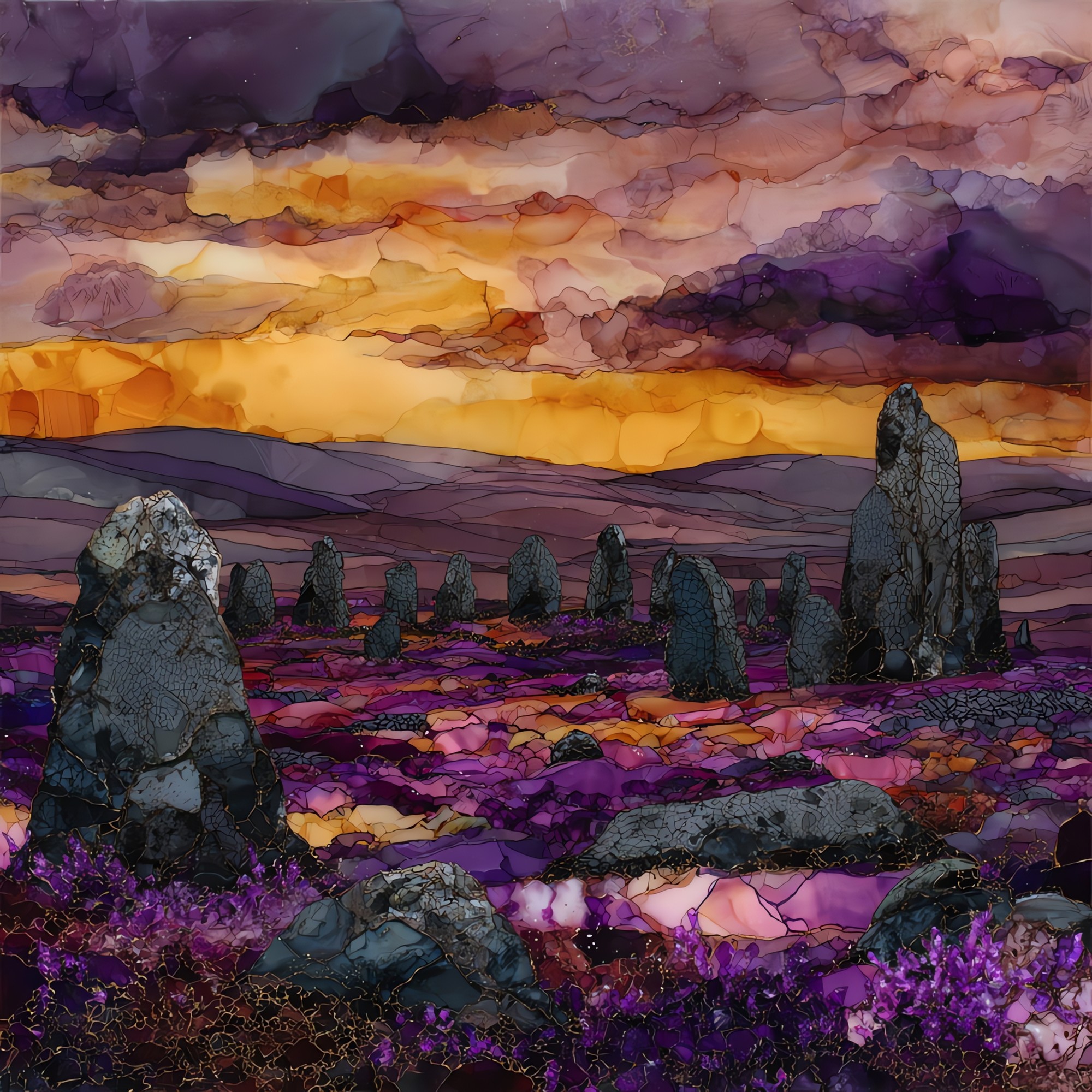
Beaghmore Stone Circles
shown on ceramic, 12-inch tileIreland
in the foothills of the Sperrin Mountains, County Tyrone

Beaghmore Stone Circles

— what the peat had been keeping.

Where it lives

Not only on a wall.

A small tile on the nightstand catching the morning. A larger one above the fire. Yours, wherever you spend the slow hours.
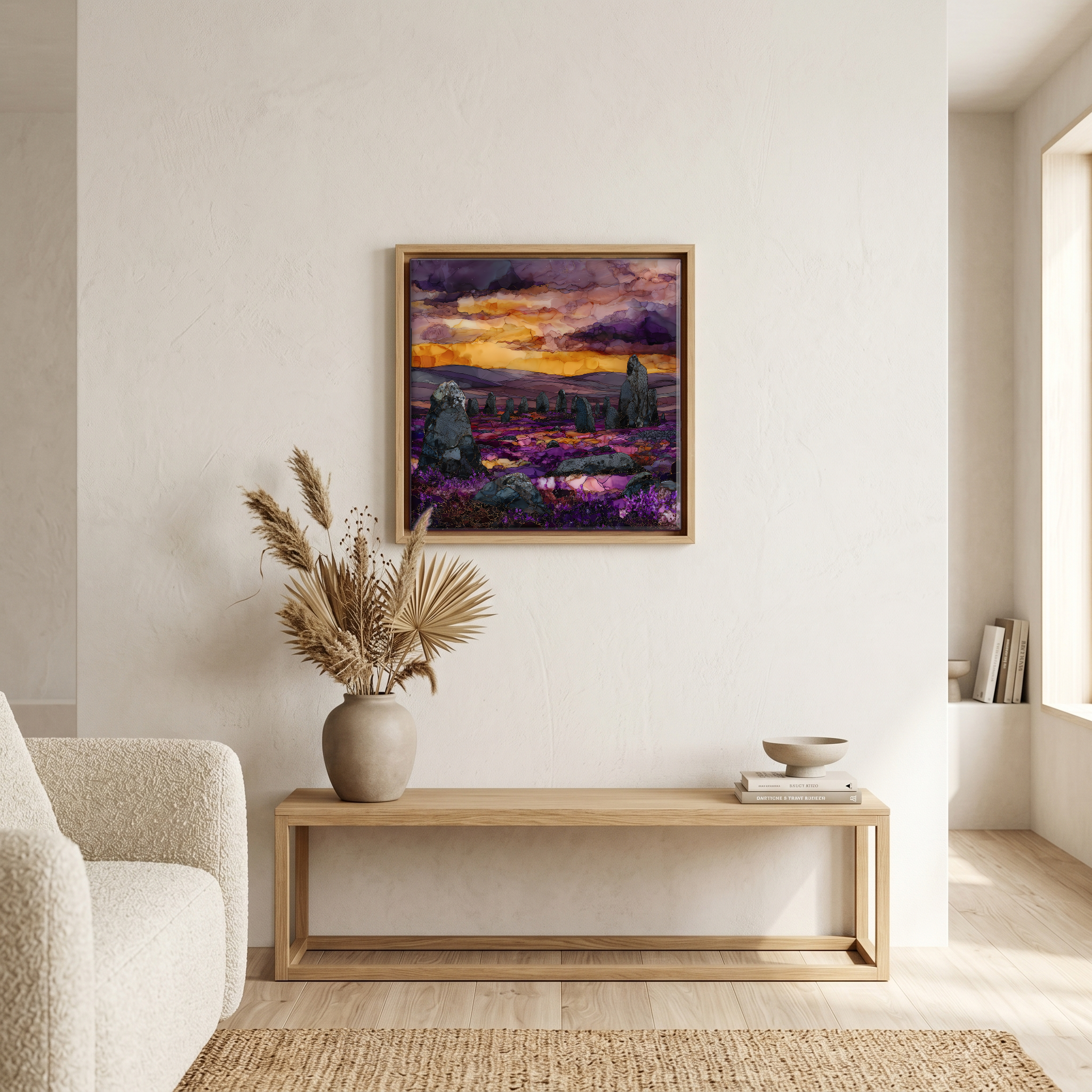
Above the bench, in a warm oak surround.
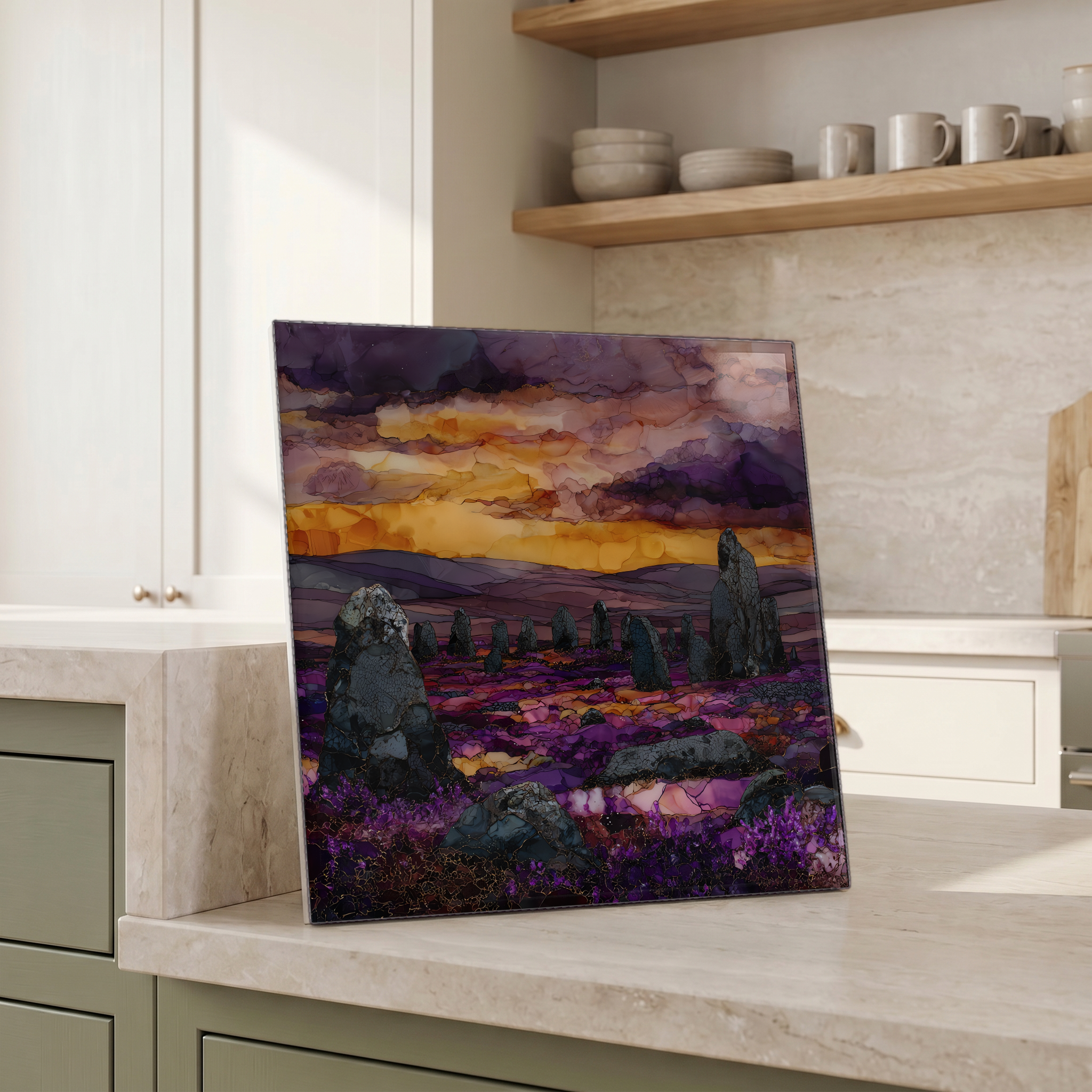
Beside the kettle, propped on the counter.
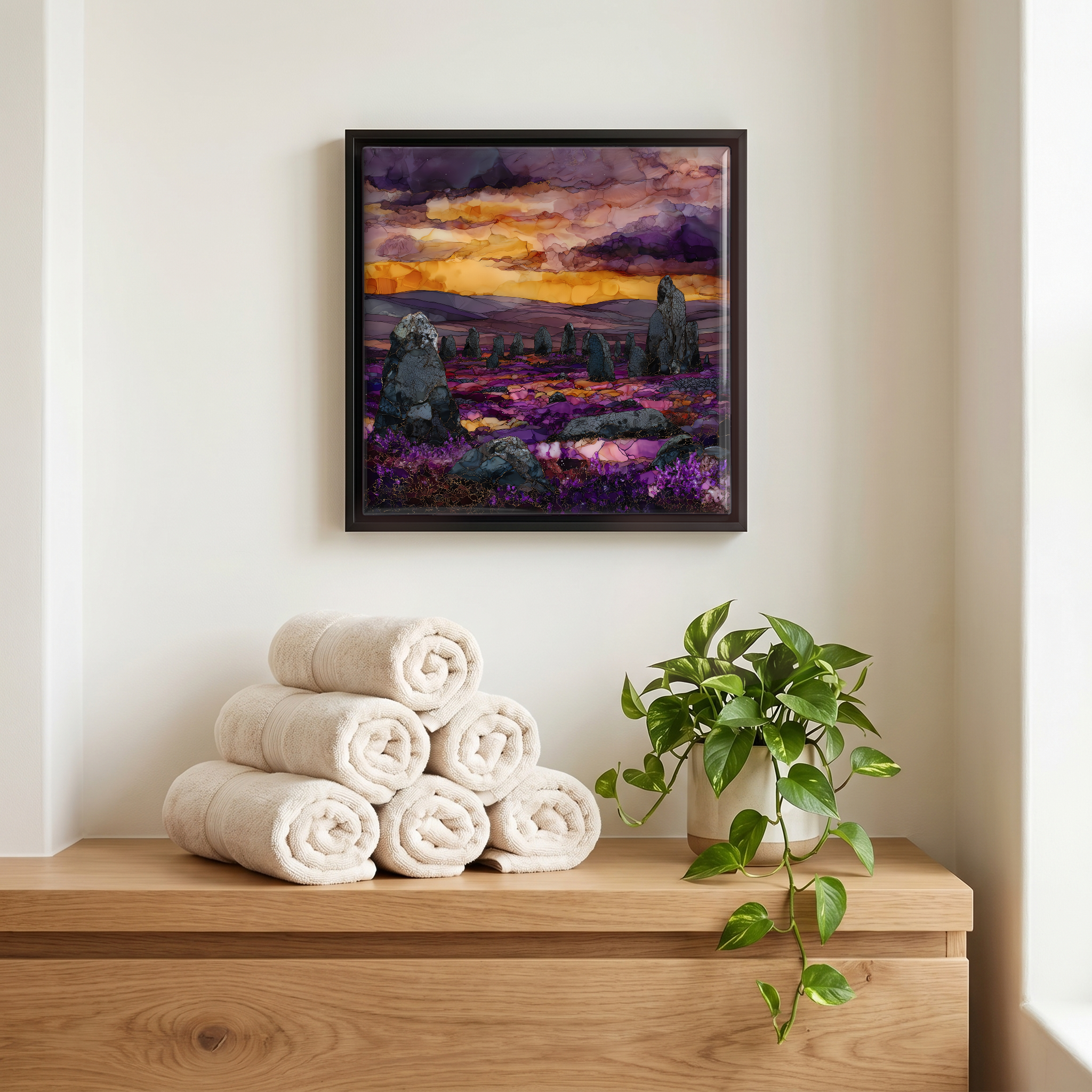
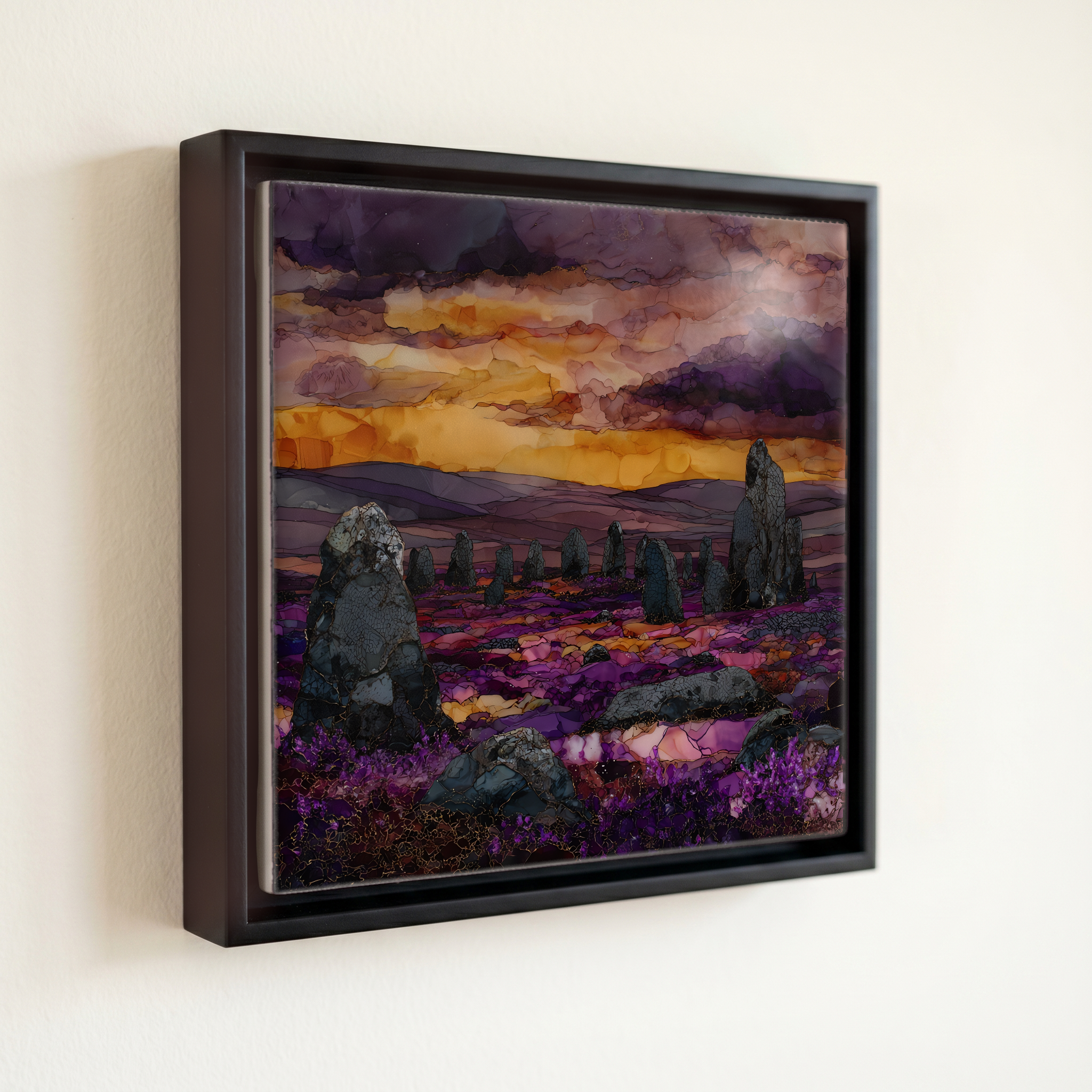
Above the linens, in a slim black surround.
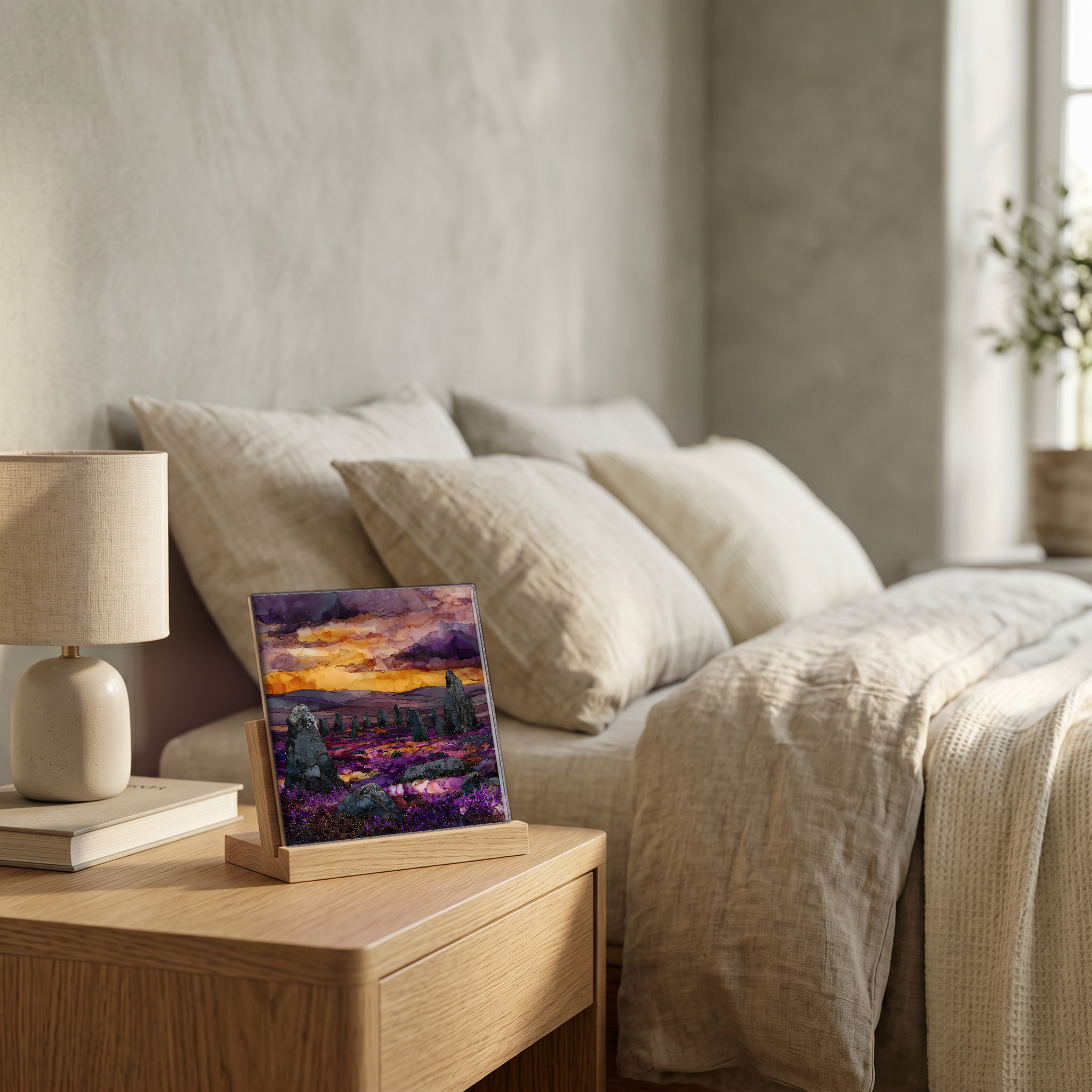
On the nightstand, on a light oak stand.
On a picture ledge, where the light comes in.
a note from the studio

Seven low stone circles in the foothills of the Sperrin Mountains, ringed by ten alignments and a dozen cairns, on open moor northwest of Cookstown. The bog covered them slowly over the long centuries; peat cutters found the first stones in 1945 and the rest came back over the decade that followed. Most reach no higher than a knee. One circle holds more than 800 small stones inside it; locals call them the Dragon's Teeth. People who walk up there say there is very little to hear beyond wind and sheep.
from the studio
shown in a slim black floating frame · 6 × 6 in
— bring it home

Beaghmore Stone Circles, on ceramic.

Each tile is finished by hand in our Knoxville studio. Artwork is slowly infused into the ceramic surface under high heat and pressure, and rests beneath a thin glossy finish. The colour lives in the surface, not on top of it.

What kind of piece?
One tile — square or rectangle.
How big?
the popular one — counter, shelf, nightstand
6 × 6 in · 15 cm · 1.6 lb
Surface finish
A clear glossy finish — the artwork reads as if under resin. Ideal for show-pieces and framed wall art.
How it sits
A hidden cleat — sits ¼″ proud of the wall.
$58
Hand-finished and shipped from our studio at the foot of the Smokies. On your wall in about ten days.
size
6 × 6 in
15 cm
weighs
1.6 lb
solid in the hand
surface
ceramic, hand-finished
art rests beneath a thin glossy finish
from
Knoxville, TN
our family studio, at the foot of the Smokies
— start a Coaster Set

Pick any four 4-inch tiles — National Parks you've been to, a Smokies set, the four seasons of one place. $ for a set of , cork-backed, ready to live on the table.
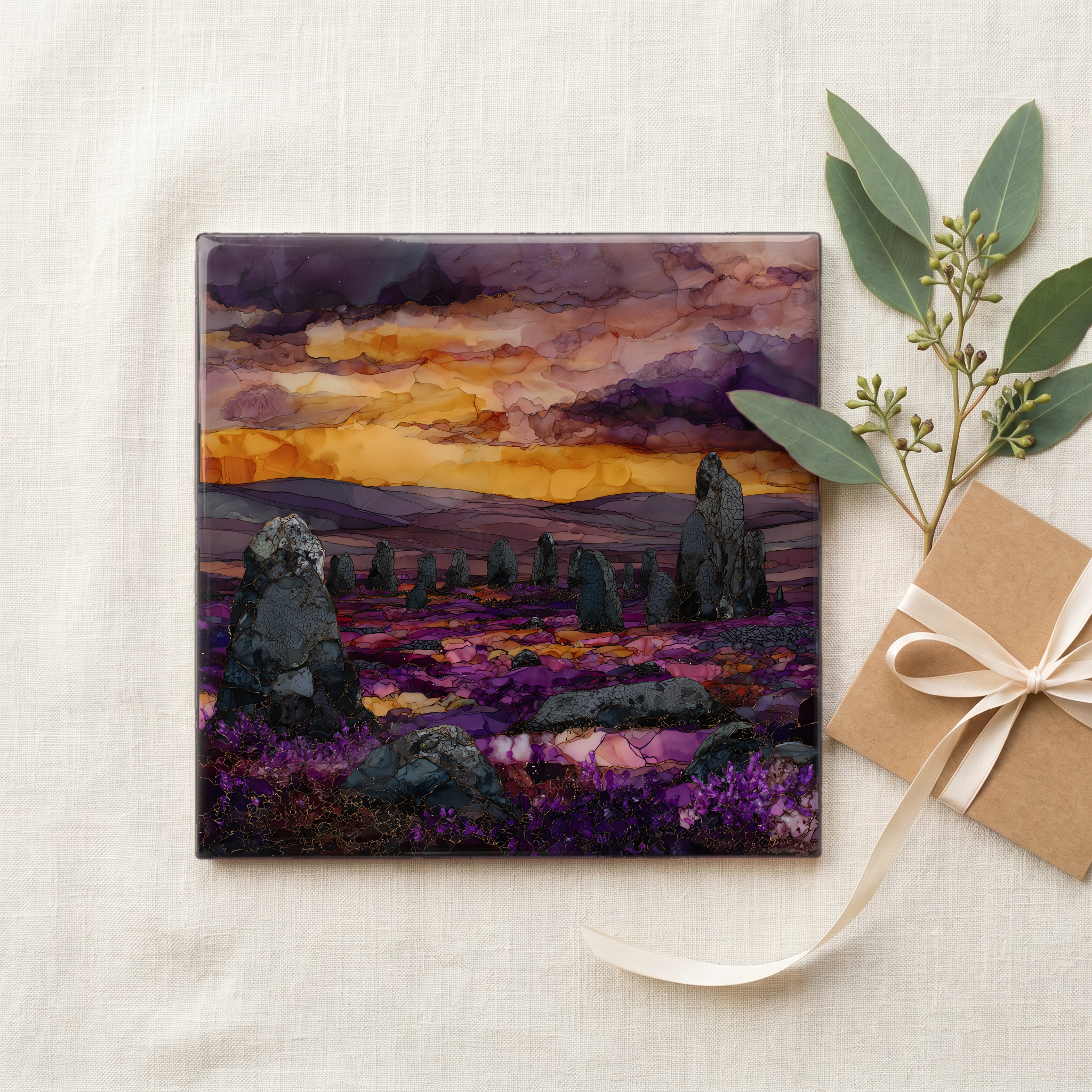
comes gift-ready
comes gift-ready

Each tile ships in a kraft box, tied with cream ribbon, with a handwritten note from the studio if you'd like to add one.
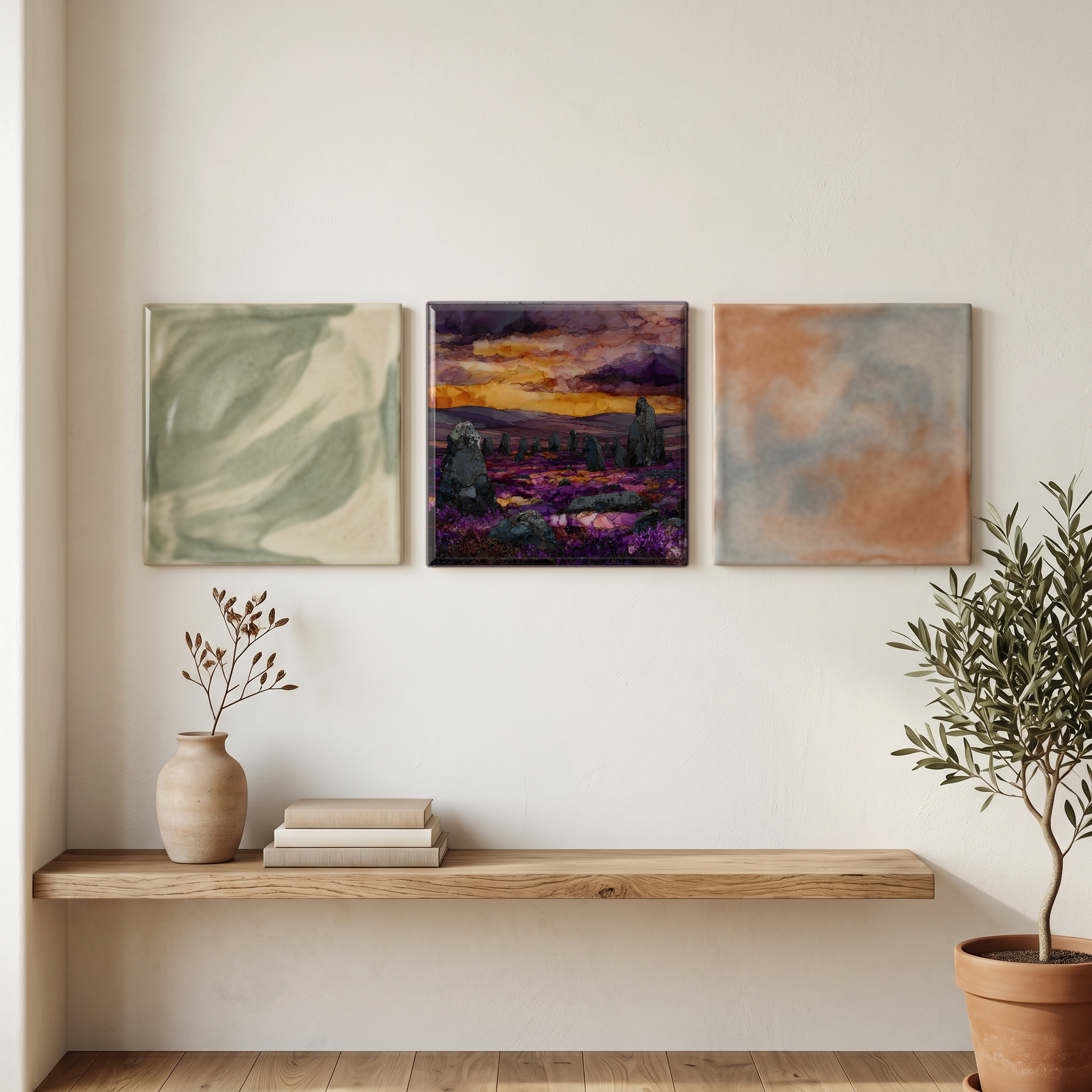
or build a grouping
or build a grouping

Three or five different vistas, hung together — a chapter of places you've been, or want to go.

about Beaghmore Stone Circles

The place, in three passes.

A little of what's known, in case you fall down the rabbit hole — or want to go see it yourself.
the place

Beaghmore lies in the foothills of the Sperrin Mountains in County Tyrone, Northern Ireland, around 14 kilometres northwest of Cookstown and roughly 230 metres above sea level. The site is a complex of seven low stone circles, ten stone alignments, and twelve cairns spread across open blanket bog. It is in the care of the Department for Communities Historic Environment Division and sits within the Sperrins Area of Outstanding Natural Beauty. Access is free, by a small layby on the Dunnamore road; the path from the parking area runs flat across the moor for a few hundred metres to the first ring. The site is unstaffed; a single interpretive board carries the only signage on the bog.

the stone

The stones at Beaghmore are local dolerite and sandstone, mostly under a metre tall: knee-high or thigh-high, much smaller than the standing stones at Castlerigg or Avebury. The complex was built in phases between roughly 2000 BCE and 1200 BCE, on a land surface that was open and farmed before the climate cooled and the blanket bog began to spread. Six of the circles stand paired; the seventh stands alone and is filled with more than 800 small upright stones, which locals call the Dragon's Teeth. Several of the stone rows run roughly northeast, toward the midsummer sunrise on the Sperrin skyline, a setting first surveyed in the late 1940s by the archaeologist Oliver Davies of Queen's University Belfast.

the silence

There is little built infrastructure within several miles of the site: no village immediately around it, no cafe at the gate, no railway nearby. The nearest small towns are Cookstown to the southeast and Omagh to the west, both about a half-hour drive by single-carriageway roads. Walkers on the moor mainly hear wind across the bog, the occasional cry of curlew or skylark, and sheep on the surrounding hill grazing. The neighbouring Davagh Forest was designated an International Dark Sky Park in 2020 by DarkSky International, and the OM Dark Sky Observatory there is about three kilometres from the circles, which says something about how unlit this stretch of the Sperrins still is at night.

where
Northern Ireland · County Tyrone, Northern Ireland
within
Sperrins Area of Outstanding Natural Beauty
elevation
230 m · 755 ft
position
54.7060° N · 6.9390° W
the neighborhood

What's nearby.

A handful of named places within an hour's walk or short drive. Some we've already painted; some we will.
3 km NW
Davagh Forest
forest park
3 km NW
OM Dark Sky Observatory
observatory
5 km N
Sperrin Mountains
mountain range
10 km SE
Lough Fea
lake
14 km SE
Cookstown
market town
15 km SE
Wellbrook Beetling Mill
National Trust mill
N
Beaghmore Stone Circles
Davagh Forest
OM Dark Sky Observatory
Sperrin Mountains
Lough Fea
Cookstown
Wellbrook Beetling Mill
common questions

What people ask.

A few questions we get about Beaghmore Stone Circles — and about bringing the piece home.
about the place

Beaghmore is in County Tyrone, Northern Ireland, in the foothills of the Sperrin Mountains, about 14 kilometres northwest of Cookstown. The site sits on open blanket bog within the Sperrins Area of Outstanding Natural Beauty, reached by a layby off the Dunnamore road.

The Beaghmore complex was built in phases between roughly 2000 BCE and 1200 BCE, in the late Neolithic and Early to Middle Bronze Age. The land was open and farmed when the stones went up; the surrounding blanket peat spread over the site later, after the climate cooled.

There are seven stone circles, ten stone alignments, and twelve cairns at Beaghmore. Six of the circles stand paired; the seventh stands alone and is filled with more than 800 small upright stones, locally known as the Dragon's Teeth.

The first stones were uncovered in 1945 by peat cutters working the bog. Oliver Davies of Queen's University Belfast led excavations from 1945 into the late 1940s, and further work was carried out in the 1960s by A. M. ApSimon as more of the complex emerged.

Several of the stone rows at Beaghmore run roughly northeast, toward the midsummer sunrise on the Sperrin skyline. Other alignments appear to track lunar standstills. The site is generally read as a Bronze Age ritual landscape rather than a single observatory.

Yes. Beaghmore is a state-care monument under the Department for Communities Historic Environment Division and is open to the public free of charge at all times, with a small free car park at the gate. The site is unstaffed and there is no visitor centre on the bog.

Cookstown is the closest town, about 14 kilometres to the southeast. Omagh lies about 25 kilometres to the west. Both are connected to Beaghmore by single-carriageway roads through the Sperrin foothills; the last few miles to the site are minor country roads.

about the piece in your home

It often lands well for people with County Tyrone roots, anyone in the archaeology or heritage trades, and friends who walk the Ulster Way. A Coaster Set or a Small with a handwritten studio note carries the place quietly; a Medium reads from across a room.

The palette runs to peat-brown, lichen-green, slate, and soft amber against deep cobalt panes, which pairs cleanly with Irish vernacular, Studio Craft, and modern rustic interiors. It also holds its own in a darker, jewel-tone room where the cobalt stained-glass passages can carry weight.

Yes. The blanket-bog palette and prehistoric subject sit comfortably inside the wider biophilic and heritage-modern movements, both of which lean on natural materials, deep-time references, and low-key earth tones. The piece reads as anchored rather than ornamental.

Above a standard sofa, a Large reads well as a single tile; for a longer wall, a 4-tile or 9-tile Mural carries the composition with more weight. Above a console table, a Medium framed in oak is usually the right scale.

Yes. For bathrooms, kitchens, splashbacks, or shower surrounds, ask for the Dura Satin or Matte finish; both are scratch-resistant and stand up to steam and daily wipe-downs. The Glossy finish is meant for framed wall art and dry rooms.

A soft microfibre cloth and clean water. No abrasive sponges, no bleach, no kitchen sprays. The colour is slowly infused into the ceramic surface under high heat and pressure and lives beneath a thin glossy finish, so it does not lift with normal cleaning.

Yes. The Beaghmore piece is original to Wender Studios, made in our Knoxville studio by Reid Wender. We do not license images from any third party, and the same piece is not sold under any other name. Each tile is hand-finished in-house before it ships.

if this one stayed with you

A few you might also love.

Hand-picked by the eye that found Sorapis. Same air, same kind of quiet.