Wender·Vista
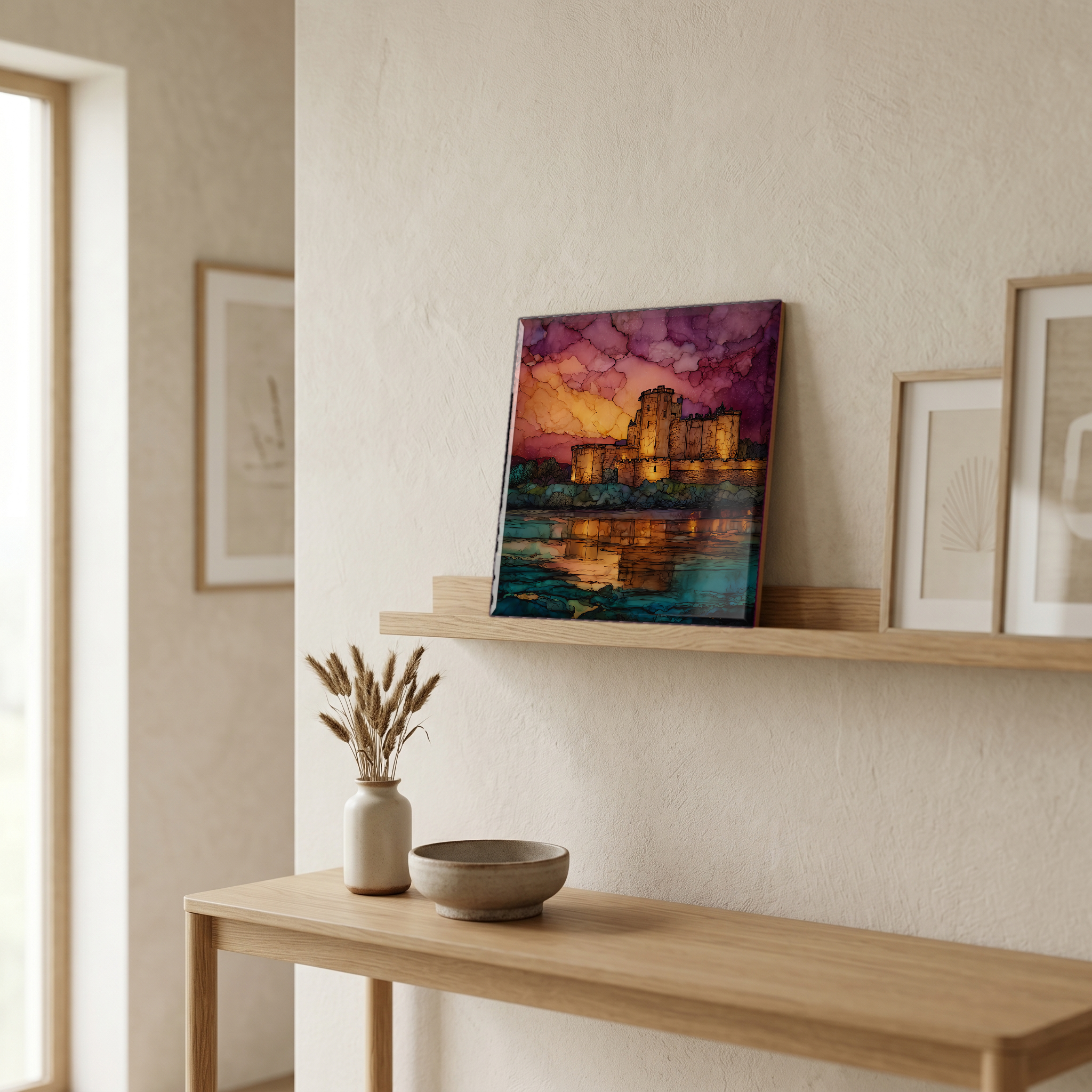
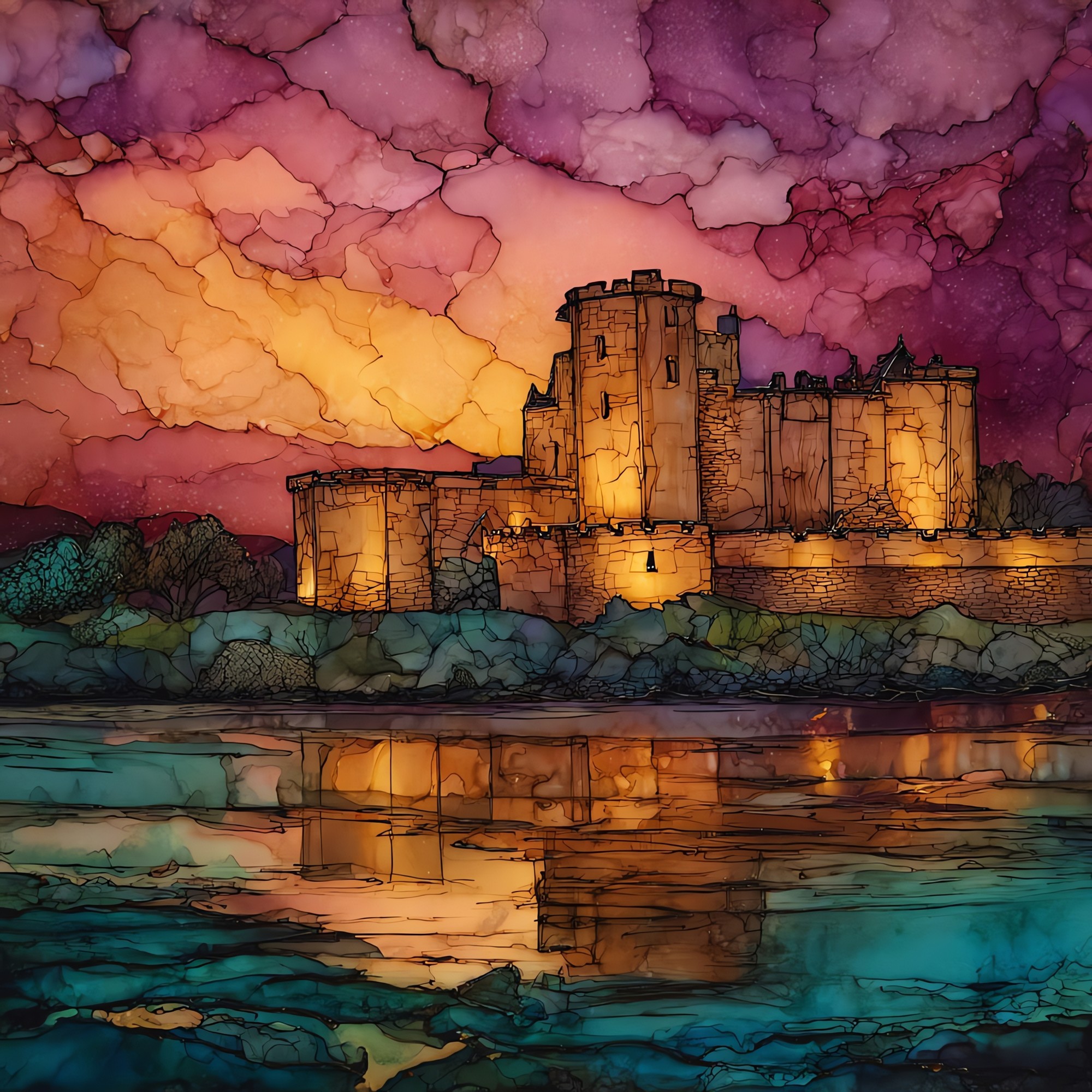
Athlone Castle
shown on ceramic, 12-inch tileIreland
on the Shannon, in the middle of Ireland

Athlone Castle

a keep at the country's quiet centre.

Where it lives

Not only on a wall.

A small tile on the nightstand catching the morning. A larger one above the fire. Yours, wherever you spend the slow hours.
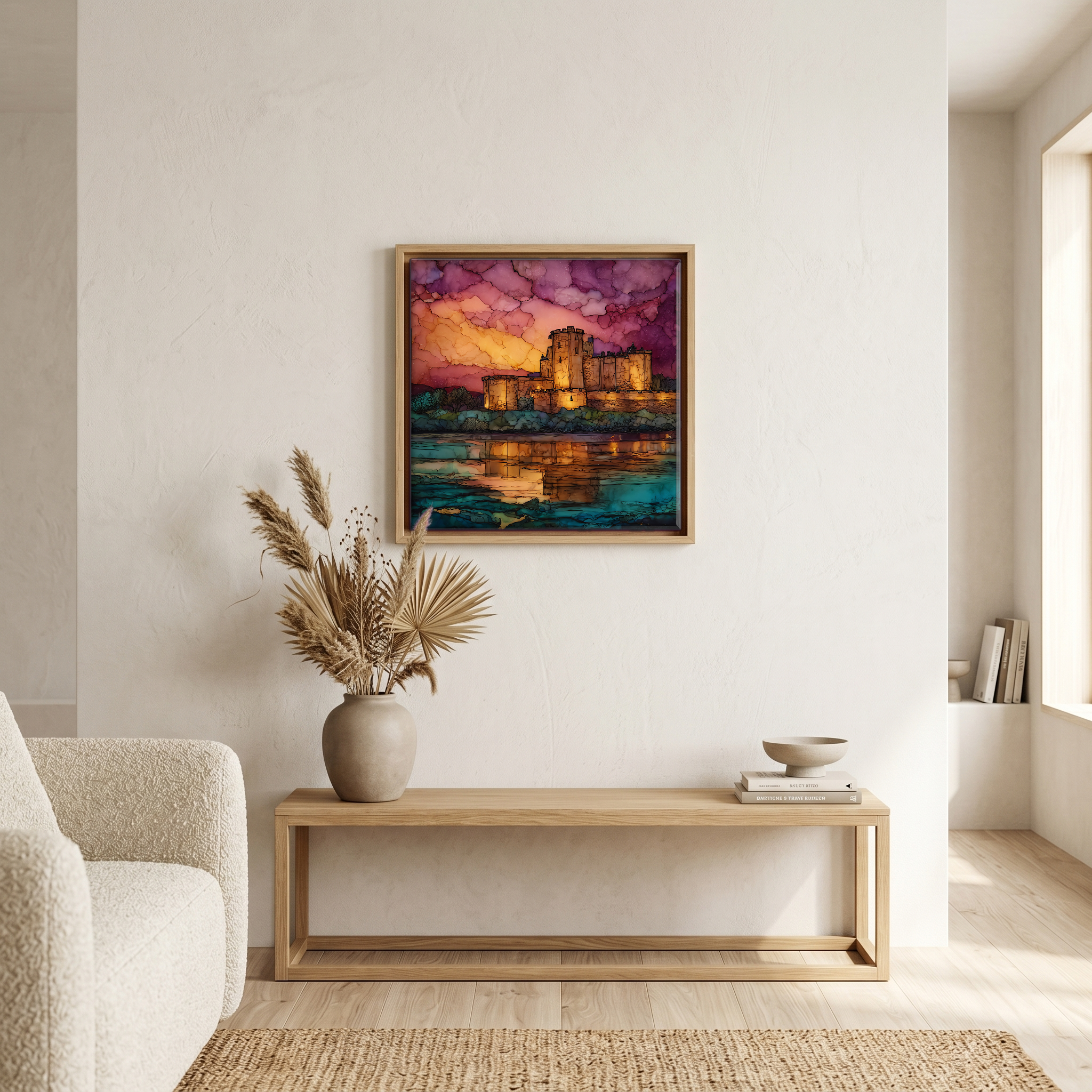
Above the bench, in a warm oak surround.
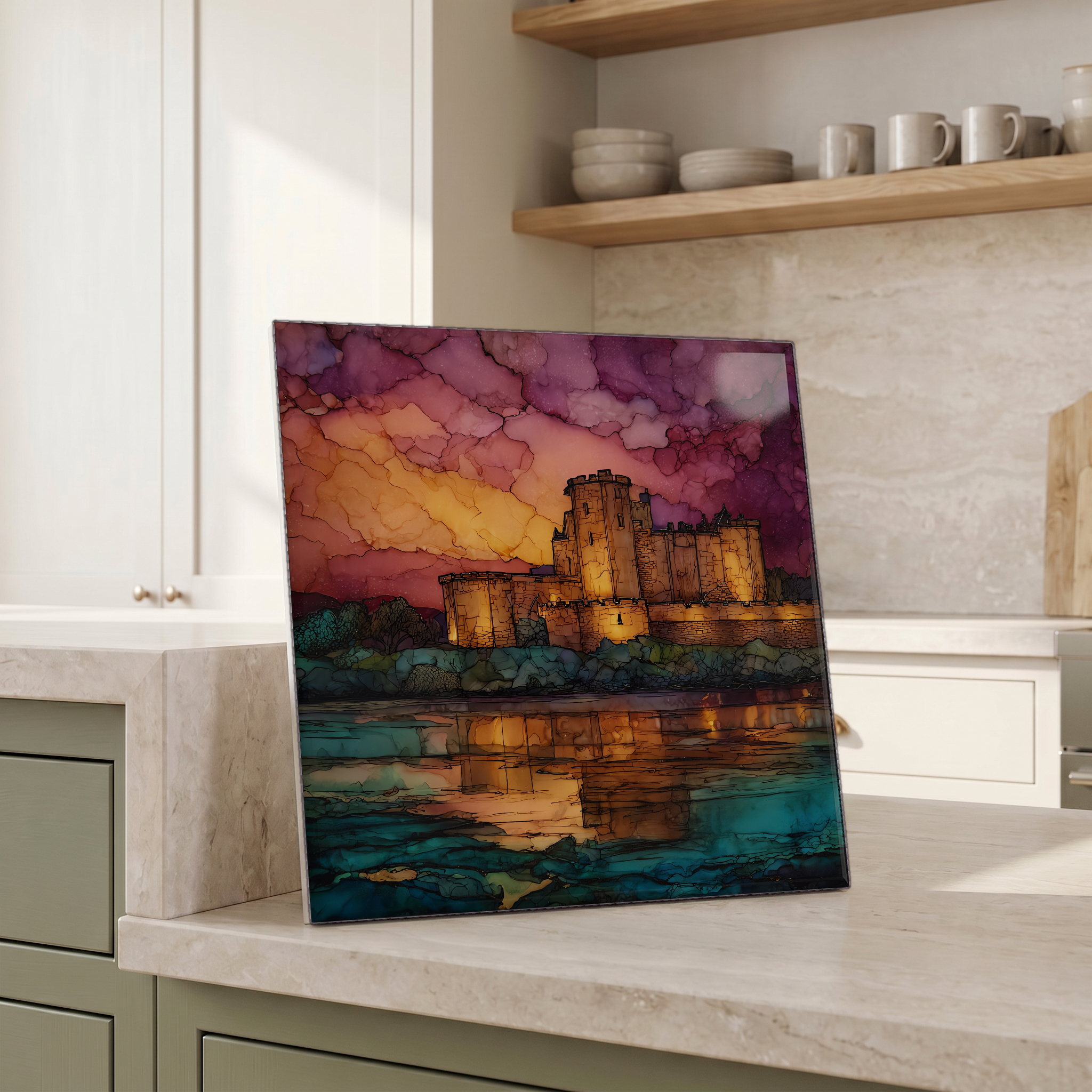
Beside the kettle, propped on the counter.
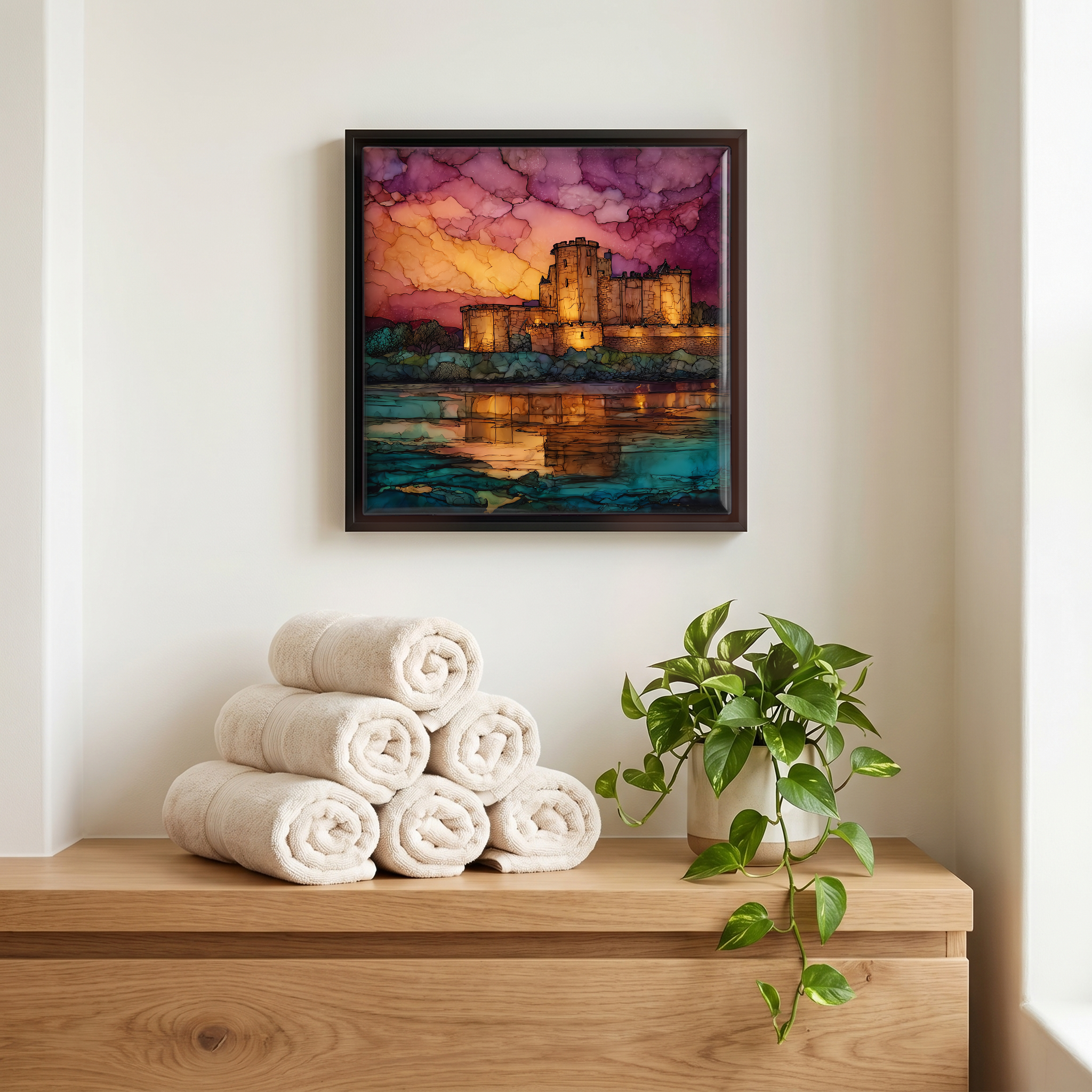
Above the linens, in a slim black surround.
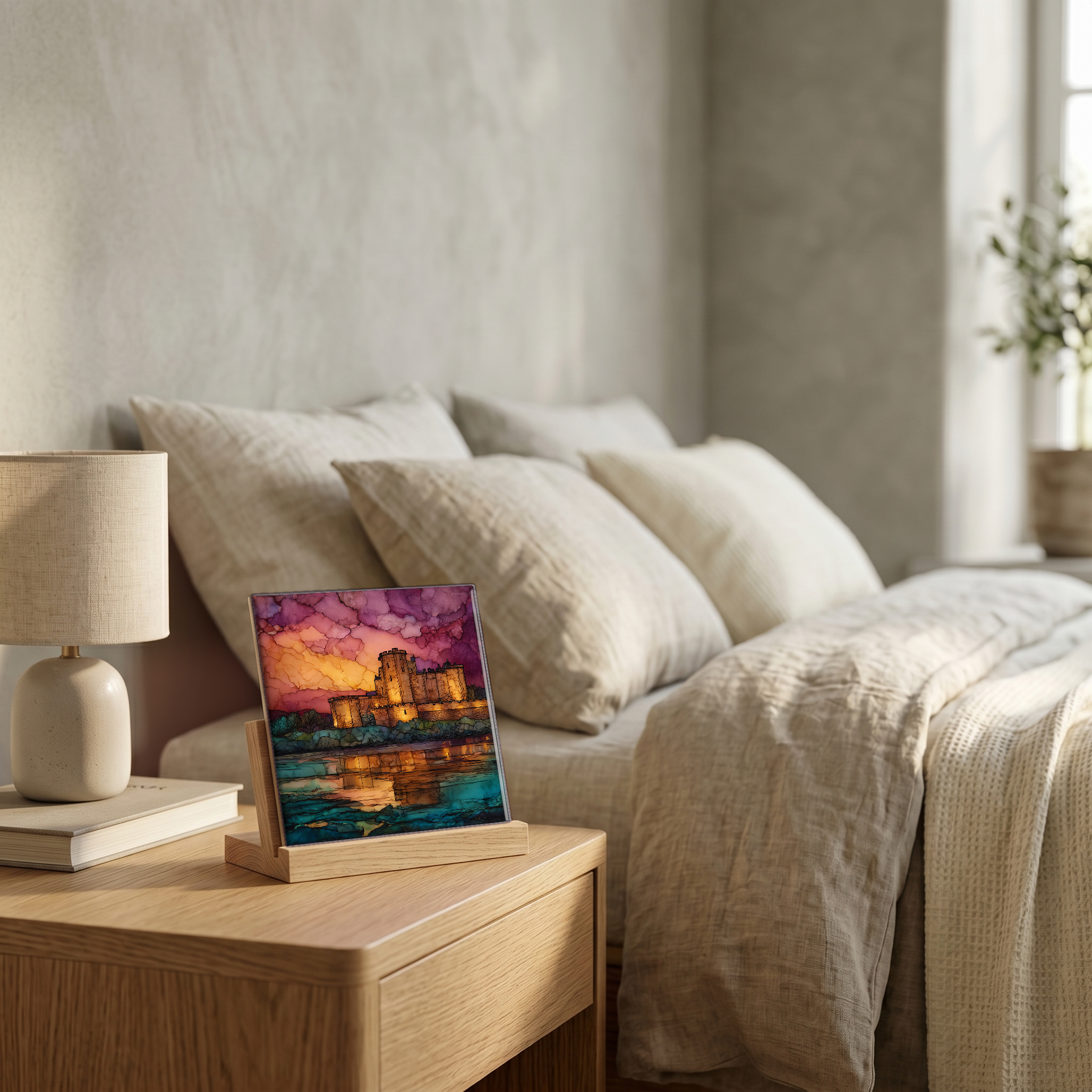
On the nightstand, on a light oak stand.
On a picture ledge, where the light comes in.
a note from the studio

A Norman keep on the western bank of the Shannon, holding the ford that gave the town its name. The polygonal tower at its centre has been standing since the early 1200s. In 1691, the Williamite army threw twelve thousand cannonballs at it in ten days, and most of the keep stood through it. Athlone sits at the middle of the country, where Leinster crosses into Connacht, and the river slows enough to read the sky. The castle now keeps the river the way the river once kept the castle.
from the studio
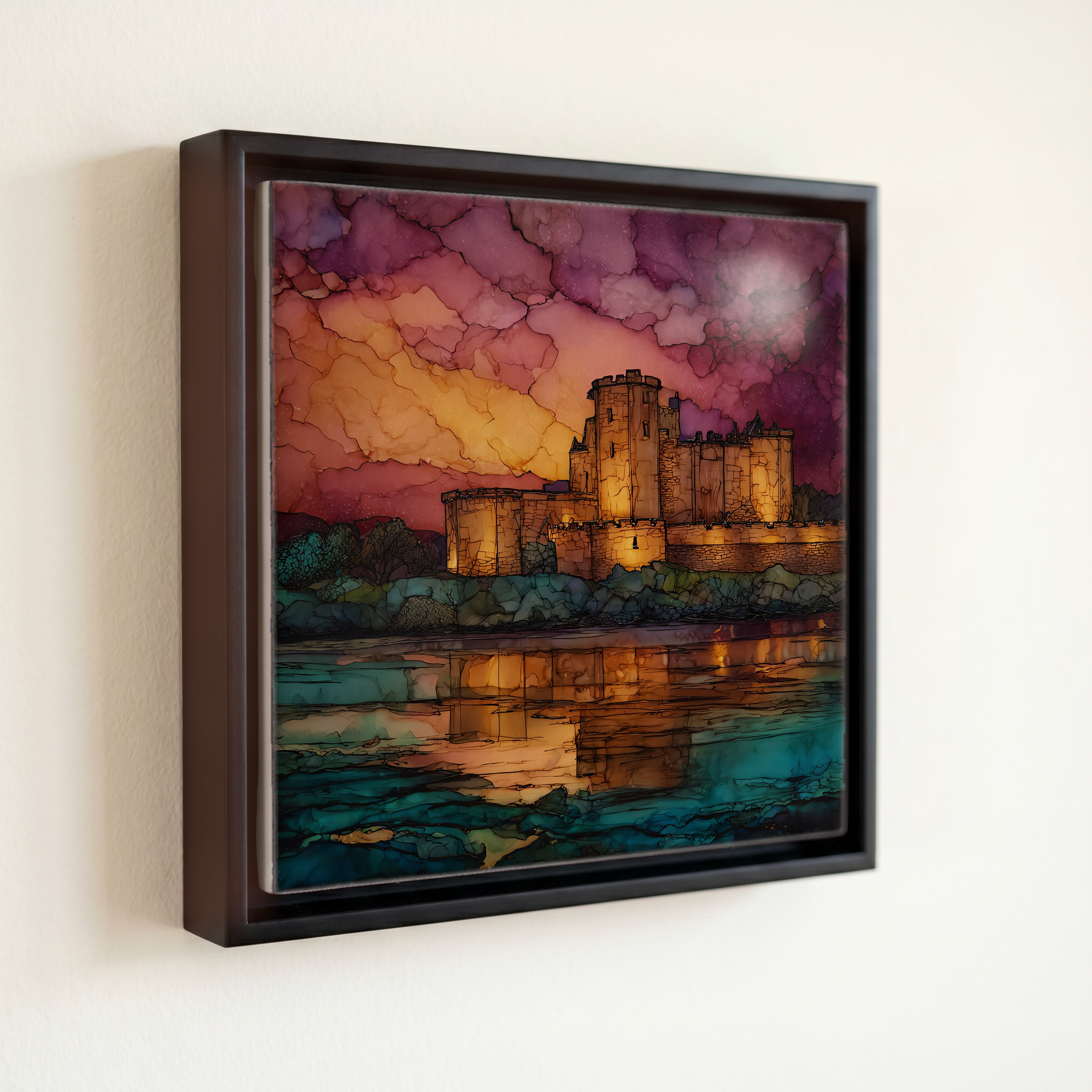
shown in a slim black floating frame · 6 × 6 in
— bring it home

Athlone Castle, on ceramic.

Each tile is finished by hand in our Knoxville studio. Artwork is slowly infused into the ceramic surface under high heat and pressure, and rests beneath a thin glossy finish. The colour lives in the surface, not on top of it.

What kind of piece?
One tile — square or rectangle.
How big?
the popular one — counter, shelf, nightstand
6 × 6 in · 15 cm · 1.6 lb
Surface finish
A clear glossy finish — the artwork reads as if under resin. Ideal for show-pieces and framed wall art.
How it sits
A hidden cleat — sits ¼″ proud of the wall.
$58
Hand-finished and shipped from our studio at the foot of the Smokies. On your wall in about ten days.
size
6 × 6 in
15 cm
weighs
1.6 lb
solid in the hand
surface
ceramic, hand-finished
art rests beneath a thin glossy finish
from
Knoxville, TN
our family studio, at the foot of the Smokies
— start a Coaster Set

Pick any four 4-inch tiles — National Parks you've been to, a Smokies set, the four seasons of one place. $ for a set of , cork-backed, ready to live on the table.
comes gift-ready
comes gift-ready

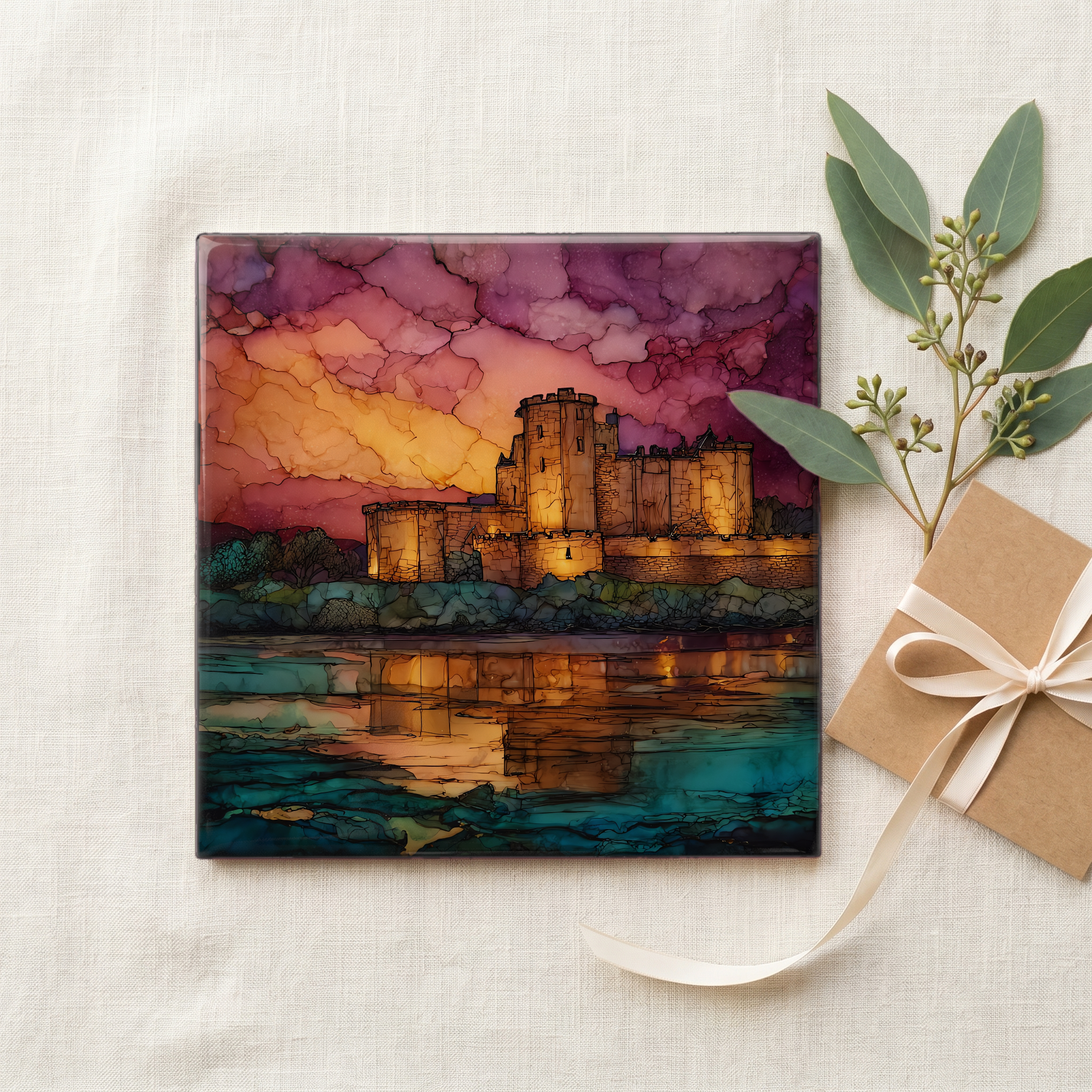
Each tile ships in a kraft box, tied with cream ribbon, with a handwritten note from the studio if you'd like to add one.
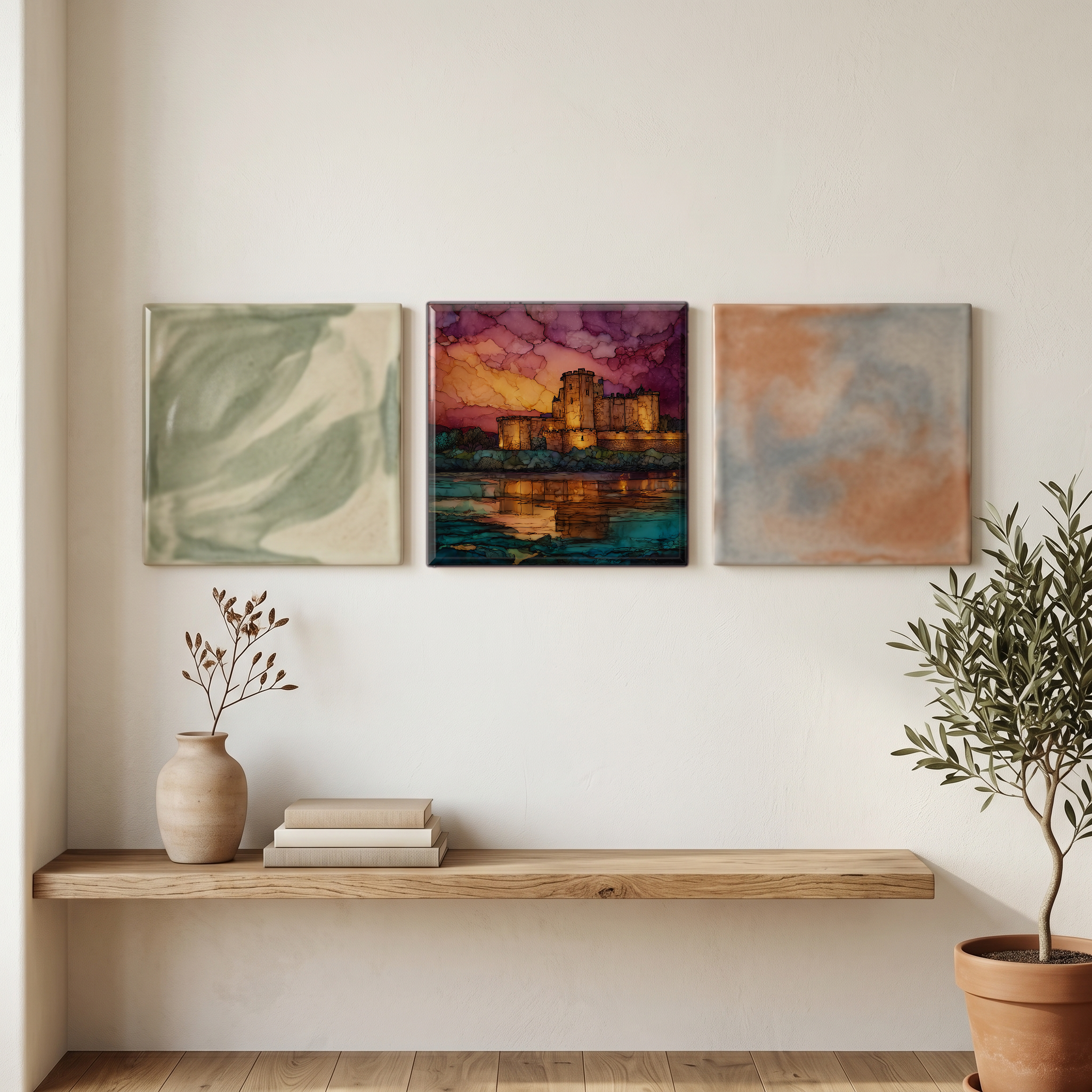
or build a grouping
or build a grouping

Three or five different vistas, hung together — a chapter of places you've been, or want to go.

about Athlone Castle

The place, in three passes.

A little of what's known, in case you fall down the rabbit hole — or want to go see it yourself.
the place

Athlone Castle stands on the western bank of the River Shannon at the principal ford between Leinster and Connacht, in the Irish midlands roughly halfway between Dublin and Galway. The town that grew around the crossing takes its name from that ford, the Irish Áth Luain, Luan's Ford. The castle as it stands today was begun in 1210 for King John of England, replacing an earlier Norman timber fort built in 1199 [Heritage Ireland]. Athlone is widely regarded as lying at or near the geographic centre of Ireland, with various calculations placing the exact midpoint within a few kilometres of the town [Wikipedia]. The castle remains the dominant structure on the river.

— informed by Heritage Ireland, Wikipedia
the stone

The keep at the centre of Athlone Castle is a polygonal donjon of cut limestone, built in the early thirteenth century and one of the earliest of its kind in Ireland [Wikipedia]. The curtain wall and the round corner towers were added and reinforced over the following four hundred years as the castle changed hands between Anglo-Norman lords, Gaelic chiefs, and the English crown. In June 1691, during the Williamite War, the army of Godert de Ginkell fired roughly twelve thousand cannonballs and six hundred bombs at the town and castle in ten days [Siege of Athlone, Wikipedia]. Most of the keep stood through it. The walls visible today still bear the repair.

the visit

Athlone Castle is run today as a visitor centre by the Office of Public Works with Athlone Municipal District, reopened in 2012 after a multi-million-euro conservation programme [Heritage Ireland]. Eight interactive exhibition spaces inside the keep cover the Siege of Athlone, the Battle of Aughrim, the River Shannon, and the tenor John McCormack, who was born in the town in 1884 [Athlone Castle Visitor Centre]. The castle is open through most of the year, typically from 10 am to 5 pm with seasonal variation, and adult admission is around €10. The town's riverside walks pass directly below the curtain wall.

where
Ireland · Athlone, County Westmeath
position
53.4232° N · 7.9415° W
the neighborhood

What's nearby.

A handful of named places within an hour's walk or short drive. Some we've already painted; some we will.
0.1 km S
Sean's Bar
historic pub
5 km N
Lough Ree
lake
20 km S
Clonmacnoise
early monastic site
28 km E
Hill of Uisneach
mythological assembly site
N
Athlone Castle
Sean's Bar
Lough Ree
Clonmacnoise
Hill of Uisneach
common questions

What people ask.

A few questions we get about Athlone Castle — and about bringing the piece home.
about the place

Athlone Castle stands on the western bank of the River Shannon in the town of Athlone, in the Irish midlands, roughly halfway between Dublin and Galway. It guards the principal ford crossing between the provinces of Leinster and Connacht.

The current stone castle was begun in 1210 for King John of England, replacing a Norman timber fort built in 1199. Earlier still, a fortification on the same crossing is recorded from around 1129 under the Connacht king Turlough O'Conor.

The central keep is an early thirteenth-century polygonal donjon built of cut limestone, one of the earliest of its type in Ireland. Its multi-sided shape made it harder to undermine and gave defenders a wider angle of fire across the river crossing.

In June 1691, during the Williamite War, the army of Godert de Ginkell besieged the town and castle for ten days, firing roughly twelve thousand cannonballs and six hundred bombs. The Jacobite garrison eventually withdrew across the Shannon and Athlone fell.

Athlone sits near the geographic midpoint of the island, where the historic provinces of Leinster and Connacht meet at the Shannon. Several calculated centre-points of Ireland lie within a few kilometres of the town.

The castle is open most of the year as the Athlone Castle Visitor Centre, run by the Office of Public Works with Athlone Municipal District. It reopened in 2012 after a multi-million-euro conservation programme and houses eight interactive exhibitions inside the keep.

The early monastic site of Clonmacnoise lies about twenty kilometres south along the Shannon, and Lough Ree opens directly north of the town. Sean's Bar, recognised by Guinness World Records as the oldest pub in Ireland, sits next to the castle wall.

about the piece in your home

This carries well as a gift for someone with roots in Athlone, Westmeath, or Roscommon. The castle and the Shannon ford are part of the town's identity and central to the family stories of the Irish midlands. A Small or Medium with a handwritten note from the studio sits naturally on a desk or hallway shelf.

The stained-glass treatment of grey stone against river light reads well in Cottage-Irish interiors, Castle Modern rooms built on slate, oak, and wool, and Jewel-tone Maximalist spaces where deep stained glass already lives. The greys, slates, and river-blues anchor a wall without competing with what is already there.

Both Castlecore and Heritage Modern lean on weathered stone, deep colour, and a sense of long time. This tile reads in both directions: the polygonal keep gives the Castlecore line, while the alcohol-ink surface gives the Heritage Modern interiors their colour pop.

A single Large tile sits well above a console or a reading chair. Above a full sofa, a four-tile Mural reads cleanly, and a nine-tile Mural carries a long sectional wall. The Triptych also works above a bed where the wall is wider than tall.

Yes. For wet locations, choose the Dura Satin or Matte finish rather than Glossy. The colour is slowly infused into the ceramic surface under high heat and pressure and lives beneath a thin protective layer, so steam and splashing do not affect the surface.

A soft microfibre cloth and water. No abrasives, no ammonia cleaners, no powdered scrub. The surface is sealed beneath a thin protective layer and will not stain from normal kitchen or bathroom contact, and a Coaster Set lives the same way under a hot mug.

Yes. Every WenderVista piece is created in our Knoxville studio and is original to Wender Studios. The artwork is not licensed, not stock, and not made for any other shop. Reid Wender, the curator, chooses what enters the atlas of places.

if this one stayed with you

A few you might also love.

Hand-picked by the eye that found Sorapis. Same air, same kind of quiet.