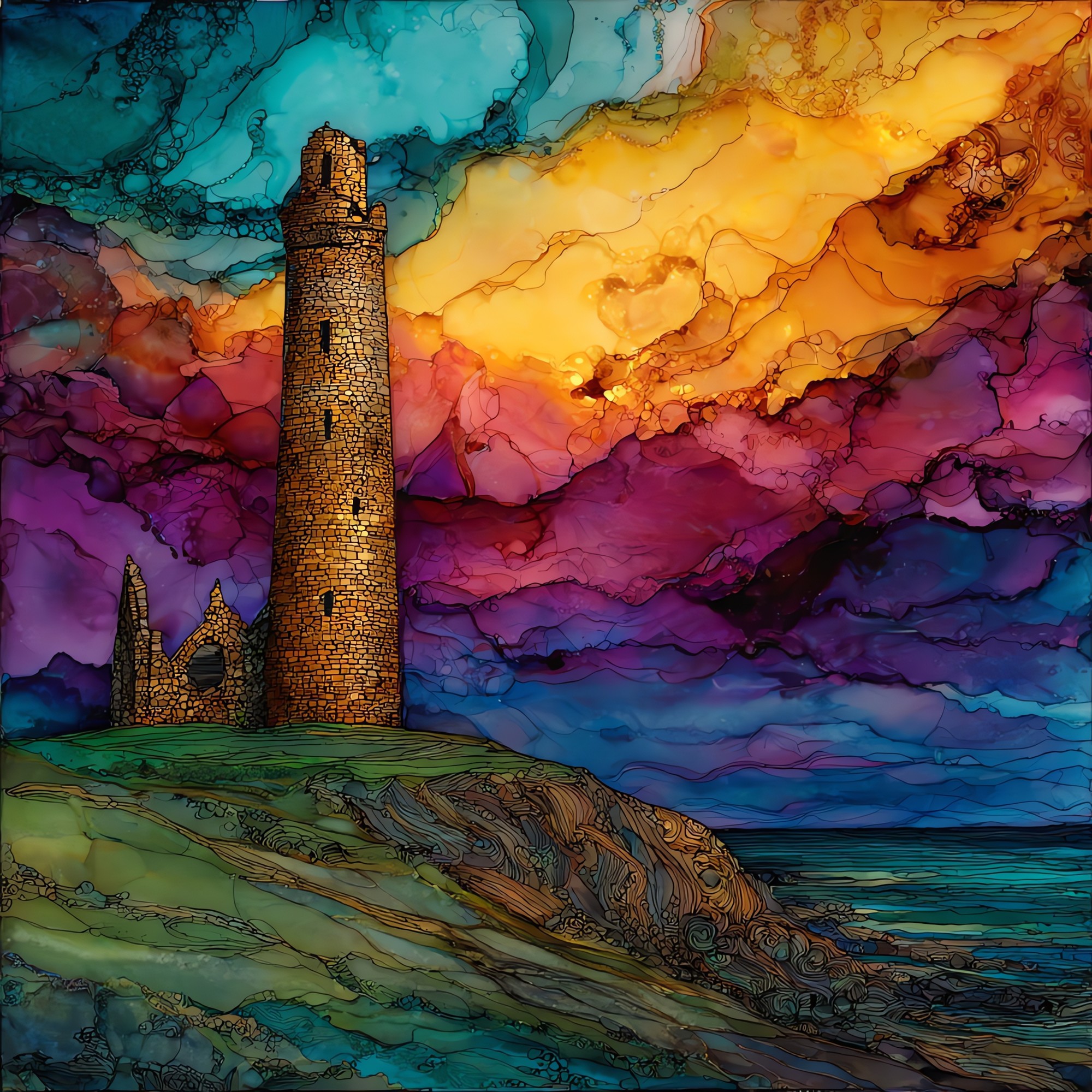
Ardmore Round Tower
— the long quiet after the bells stopped.
Not only on a wall.
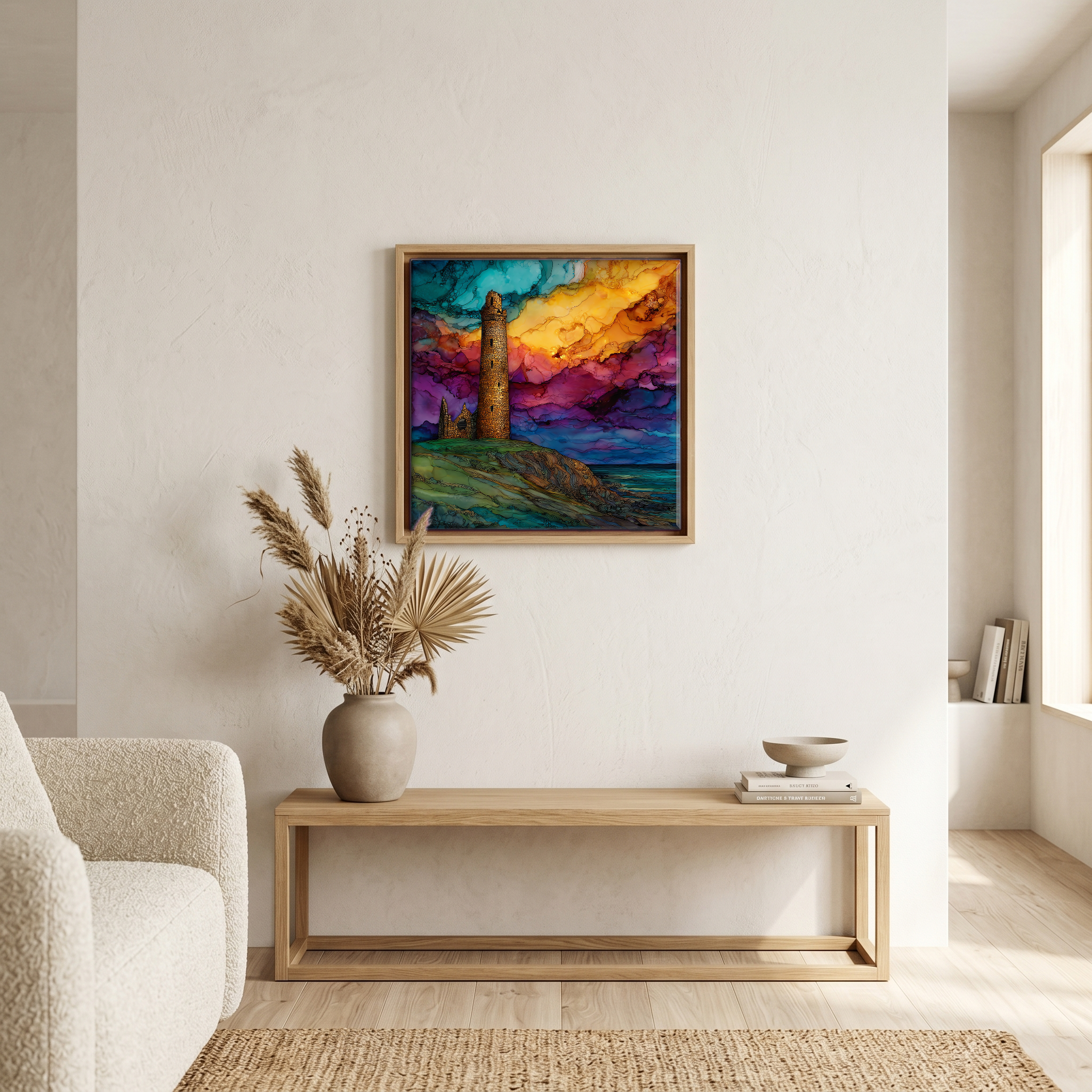
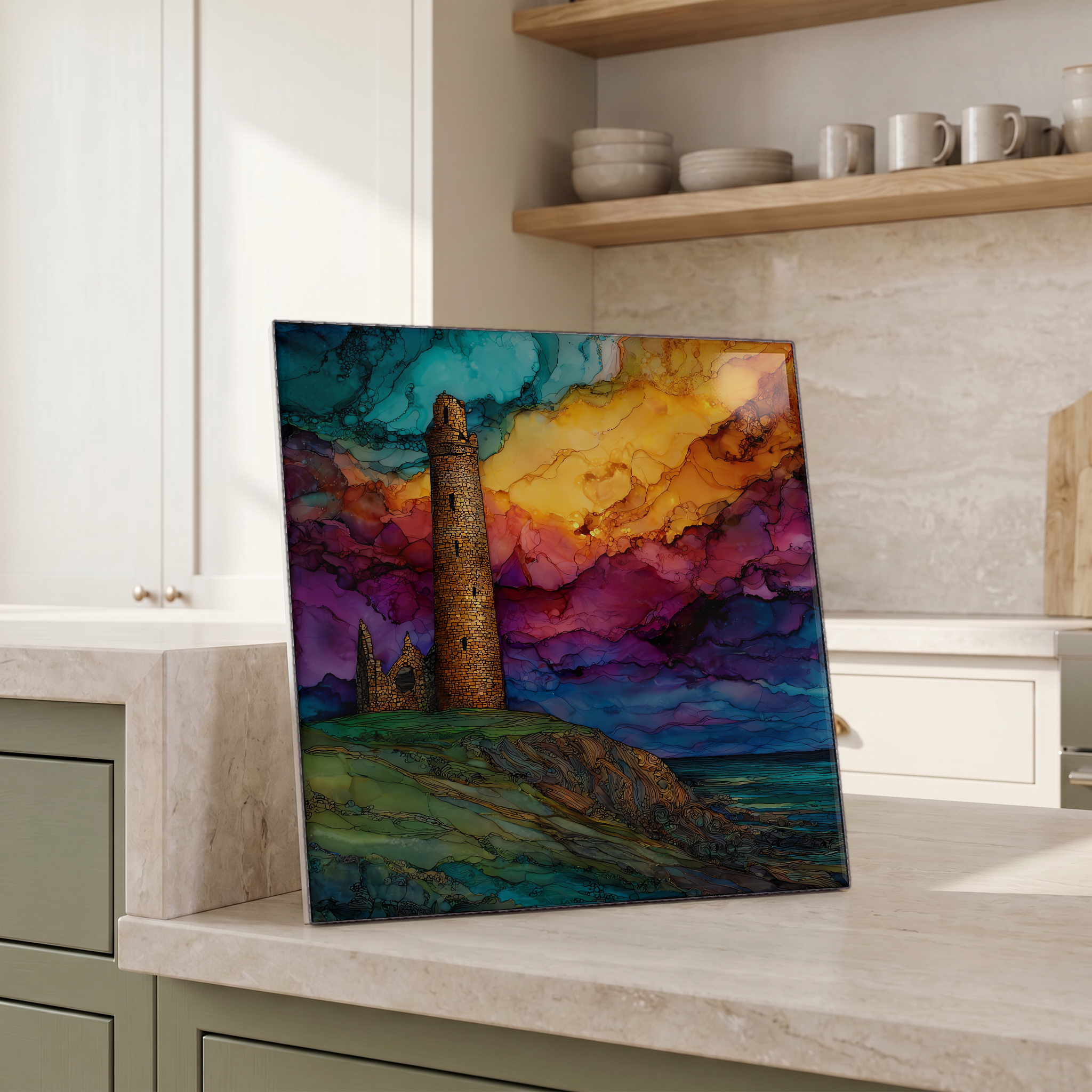
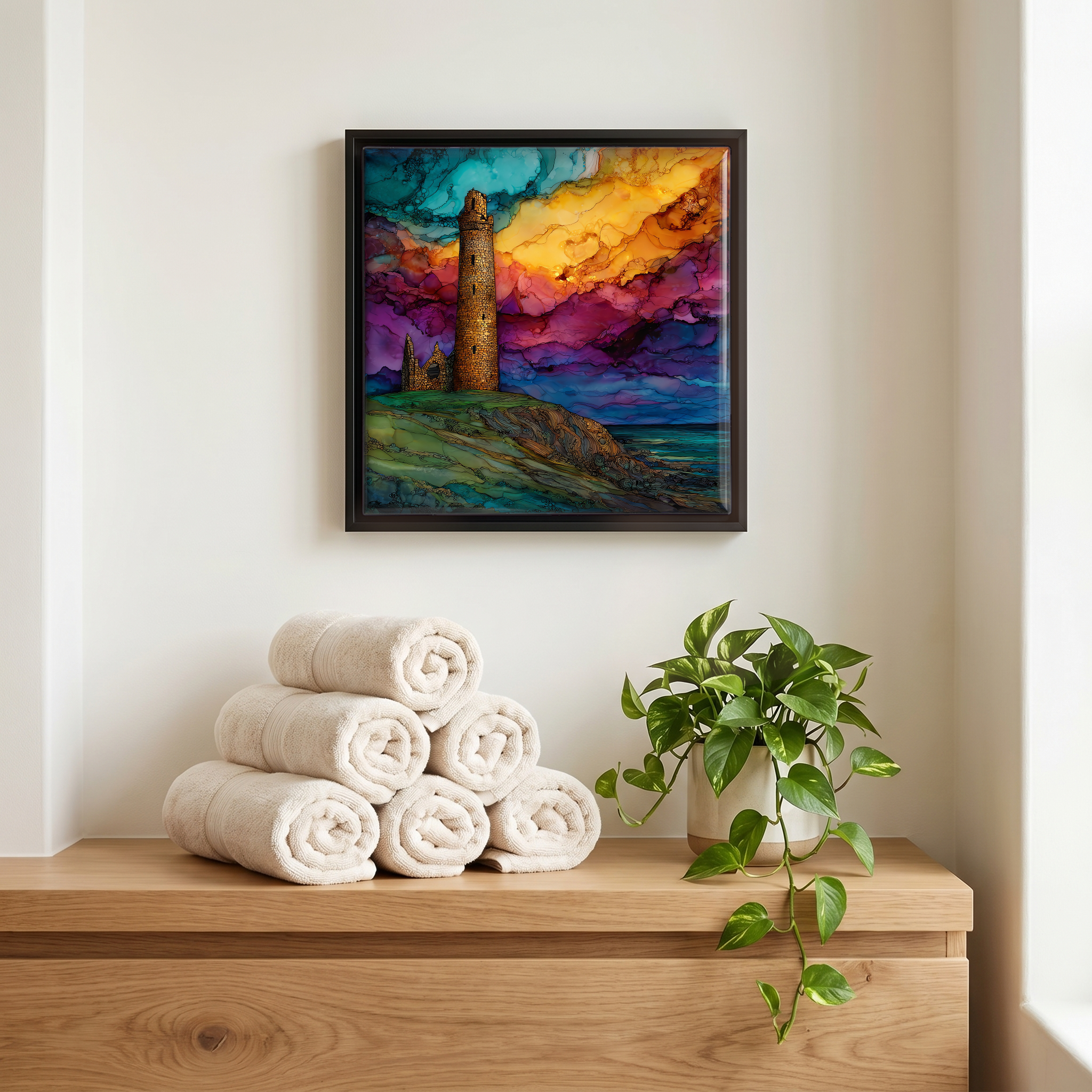

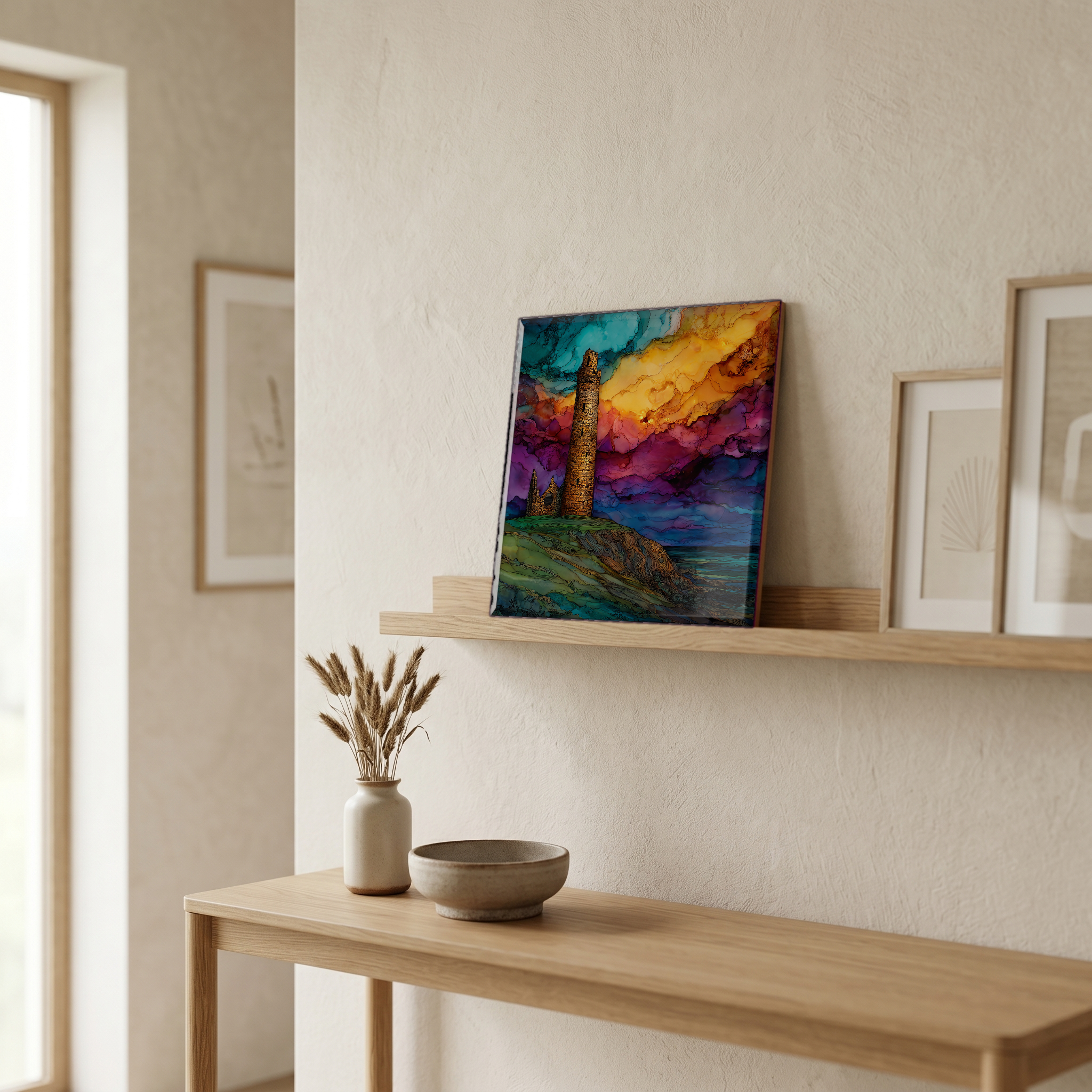
“The tower has stood since the twelfth century on a headland above the village. One of the last round towers built in Ireland. By then the form was already old, already passing, but the masons who built this one knew what they were doing. Thirty metres of stone tapered to a point, the entrance door set four and a half metres above the ground so raiders couldn't reach it. The monks kept their books and their bells here. The Atlantic weather has worked at it for eight hundred years and the silhouette is still the silhouette.
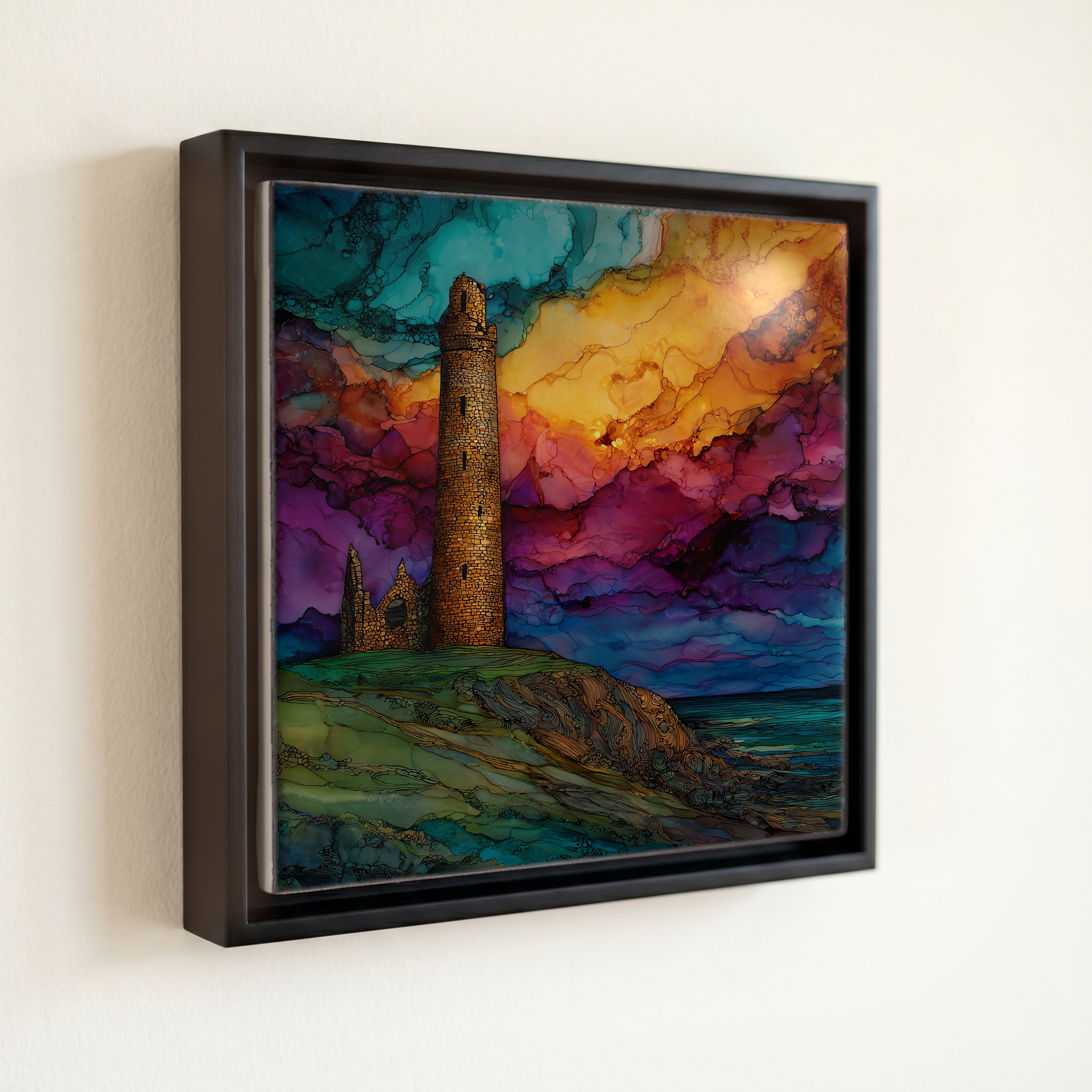
Ardmore Round Tower, on ceramic.
Each tile is finished by hand in our Knoxville studio. Artwork is slowly infused into the ceramic surface under high heat and pressure, and rests beneath a thin glossy finish. The colour lives in the surface, not on top of it.
Pick any four 4-inch tiles — National Parks you've been to, a Smokies set, the four seasons of one place. $ for a set of , cork-backed, ready to live on the table.
Each tile ships in a kraft box, tied with cream ribbon, with a handwritten note from the studio if you'd like to add one.

Three or five different vistas, hung together — a chapter of places you've been, or want to go.
The place, in three passes.
Ardmore sits on the south coast of Ireland in County Waterford, about 15 kilometres east of Youghal and 65 kilometres west of Waterford city. The round tower stands on the headland just south of the village, on what tradition holds is the oldest Christian site in Ireland. Saint Declan founded a monastery here in the early fifth century, before Patrick is said to have arrived. The site overlooks Ardmore Bay and the Celtic Sea. The Cliff Walk loops past the tower, the ruined cathedral, and Saint Declan's oratory before returning along the coast. The monastic complex is maintained as an unguided site by Heritage Ireland.
The tower rises about thirty metres on four floors, its conical cap intact and its silhouette tapered by three external string-courses that step inward as the wall climbs. Twelfth-century work, which makes it one of the last round towers built in Ireland. The form was already going out of fashion when Ardmore's masons committed to it. The entrance is set roughly four and a half metres above the ground, reached only by ladder, a defence against the Viking raids that had haunted the Irish coast for centuries. A few paces away, the ruined Cathedral of Saint Declan carries Romanesque arcading on its west gable with scenes of Adam and Eve, the Judgement of Solomon, and the Adoration of the Magi.
The monastic site sits on the headland south of the village and is open to the public as an unguided Heritage Ireland location, with no admission fee and no ticket office. The Ardmore Cliff Walk, a roughly four-kilometre loop along the coast, passes the tower, the cathedral ruin, Saint Declan's oratory, and a small holy well attributed to the saint before returning down to the strand. Most visitors reach the site on foot from the village in under fifteen minutes; the tower itself is closed and cannot be climbed. Saint Declan's Pattern Day, the annual local pilgrimage, falls around 24 July and still draws Waterford people back to the headland.