Wender·Vista
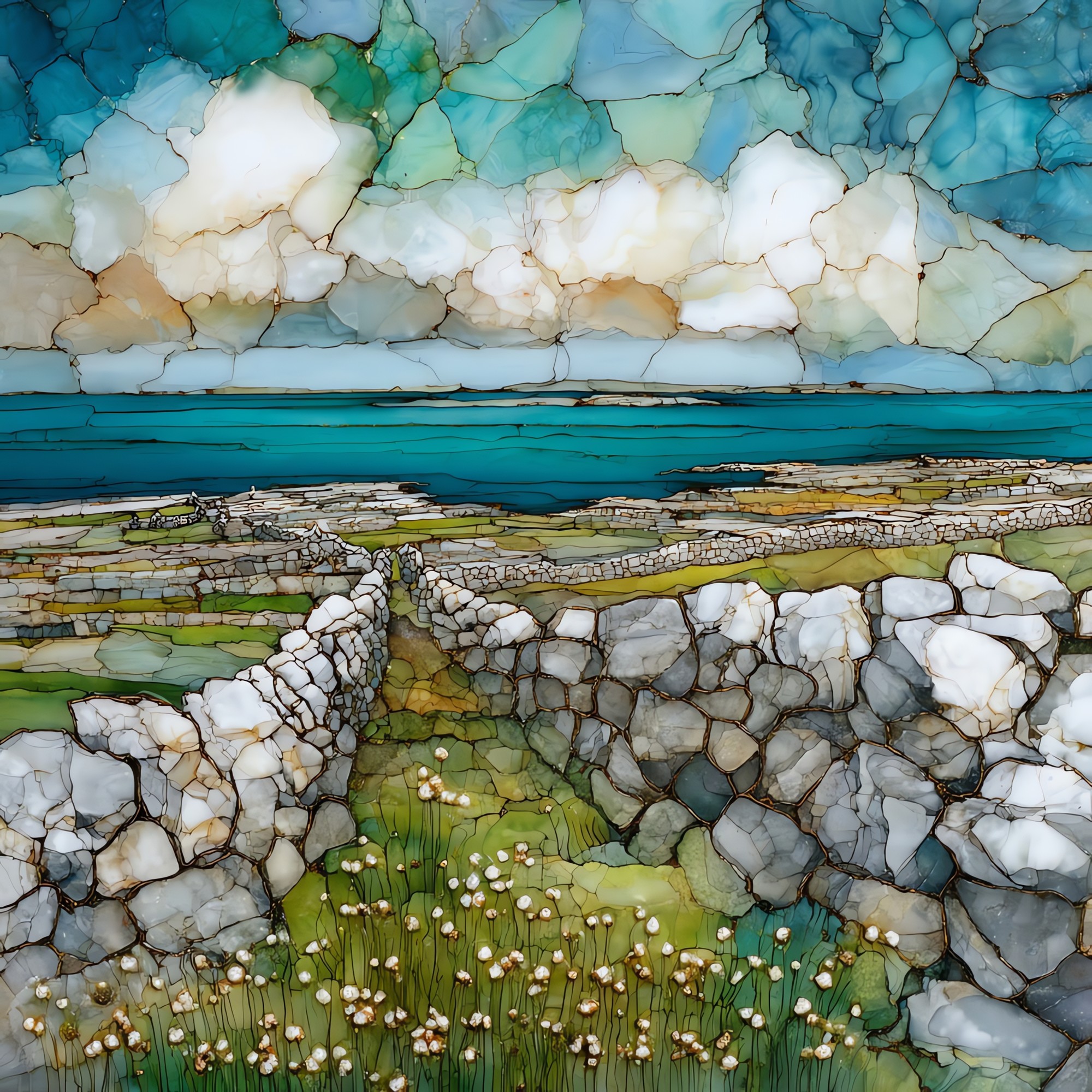
Aran Islands
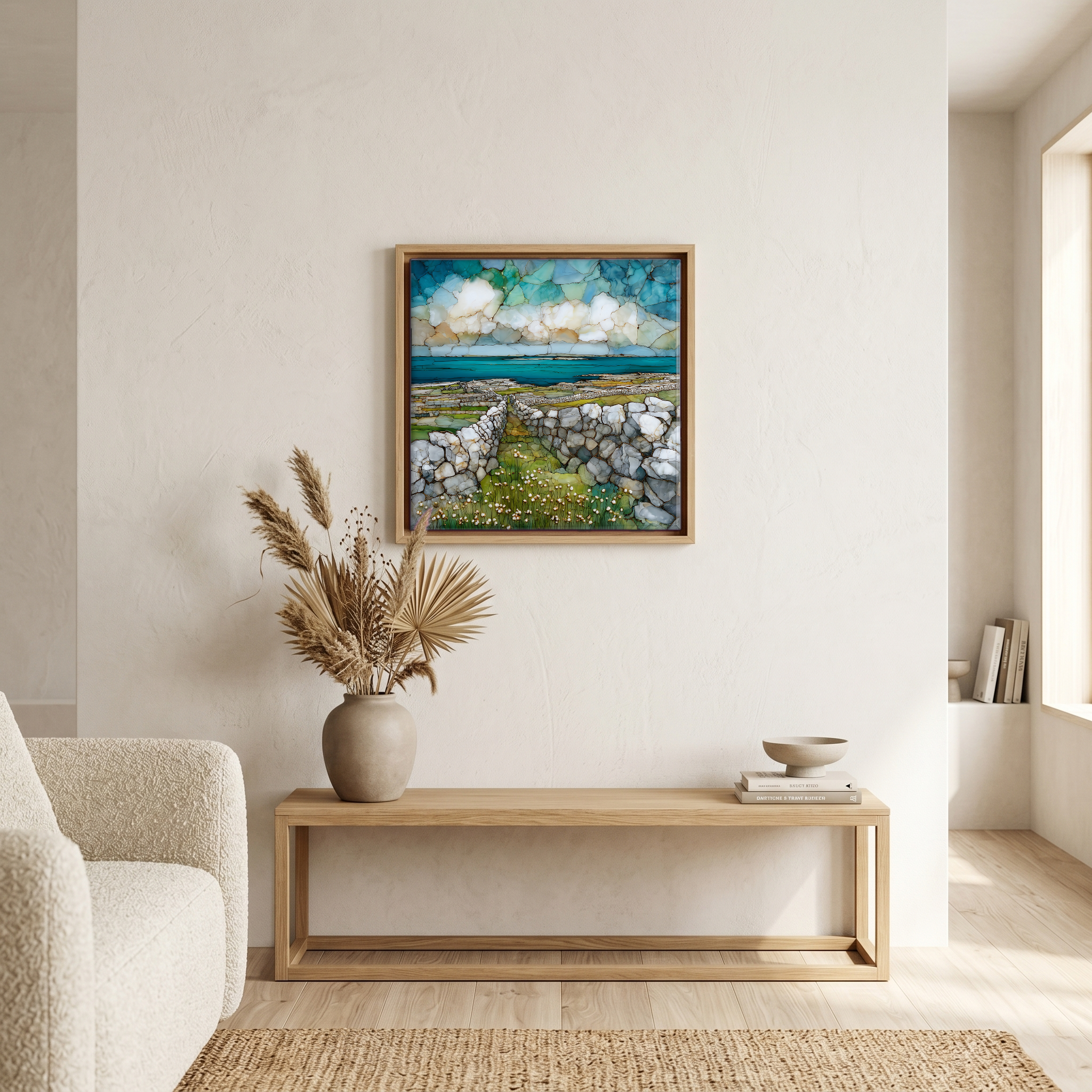
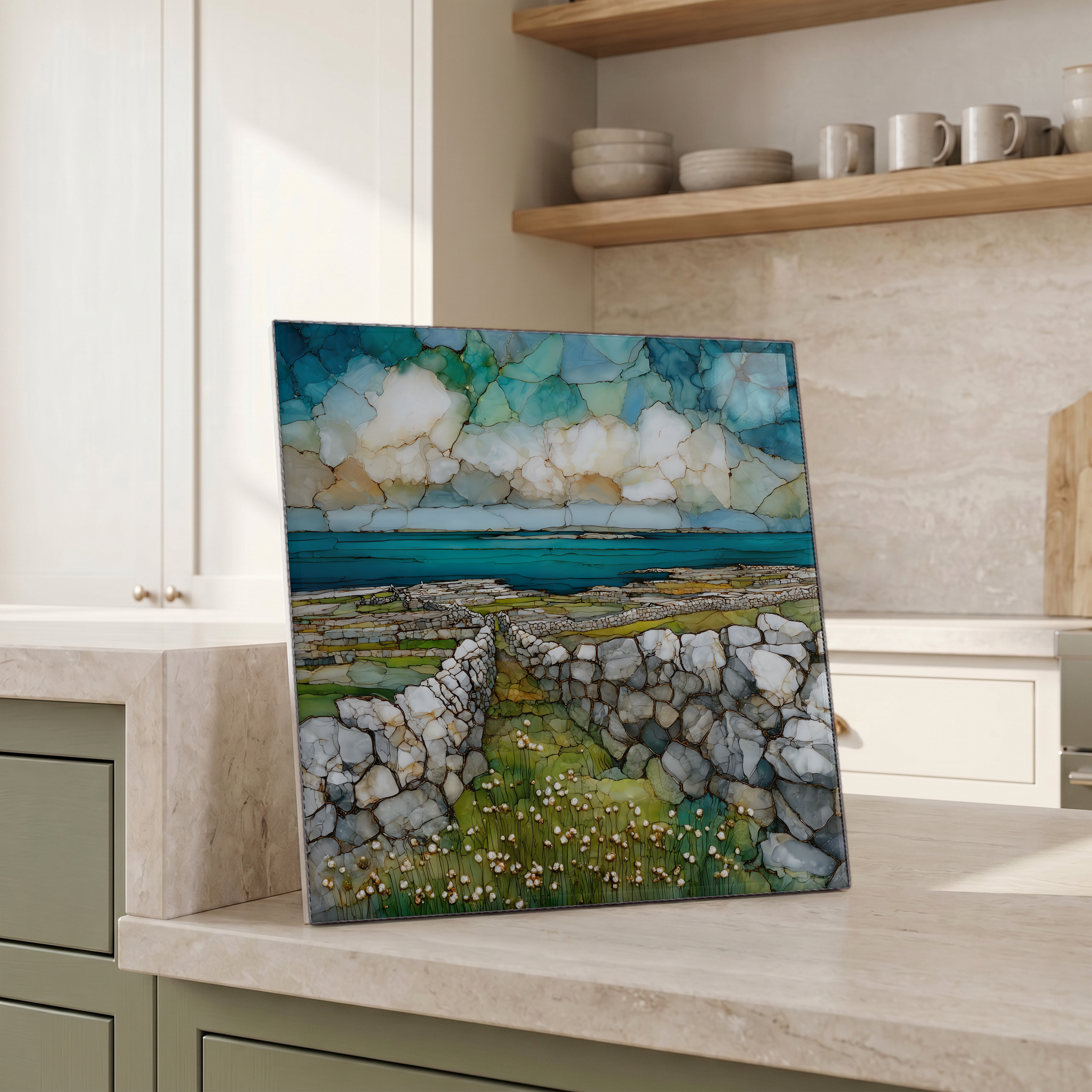
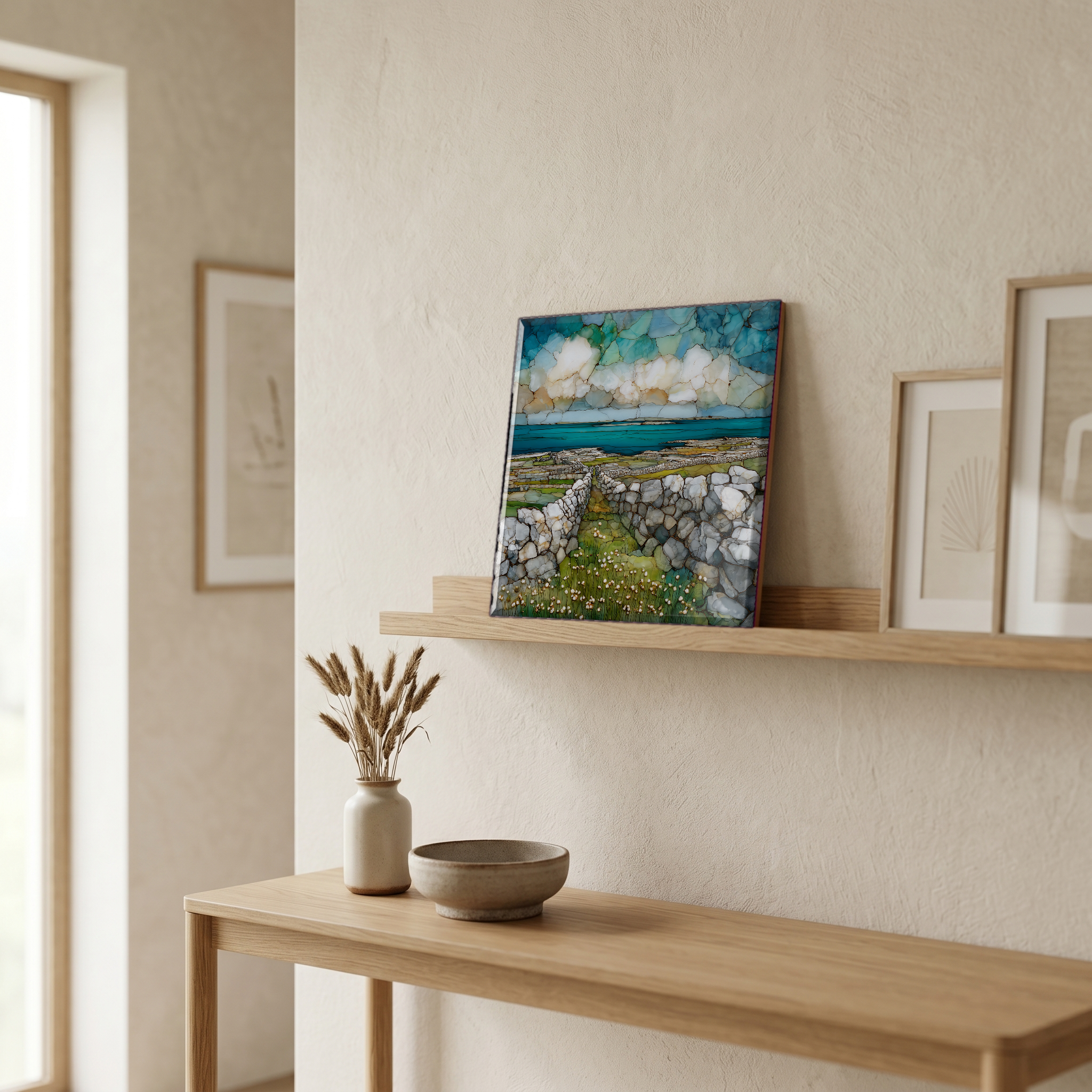
shown on ceramic, 12-inch tileIreland
in Galway Bay, off Ireland's west coast

Aran Islands

— stone walls all the way to the edge.

Where it lives

Not only on a wall.

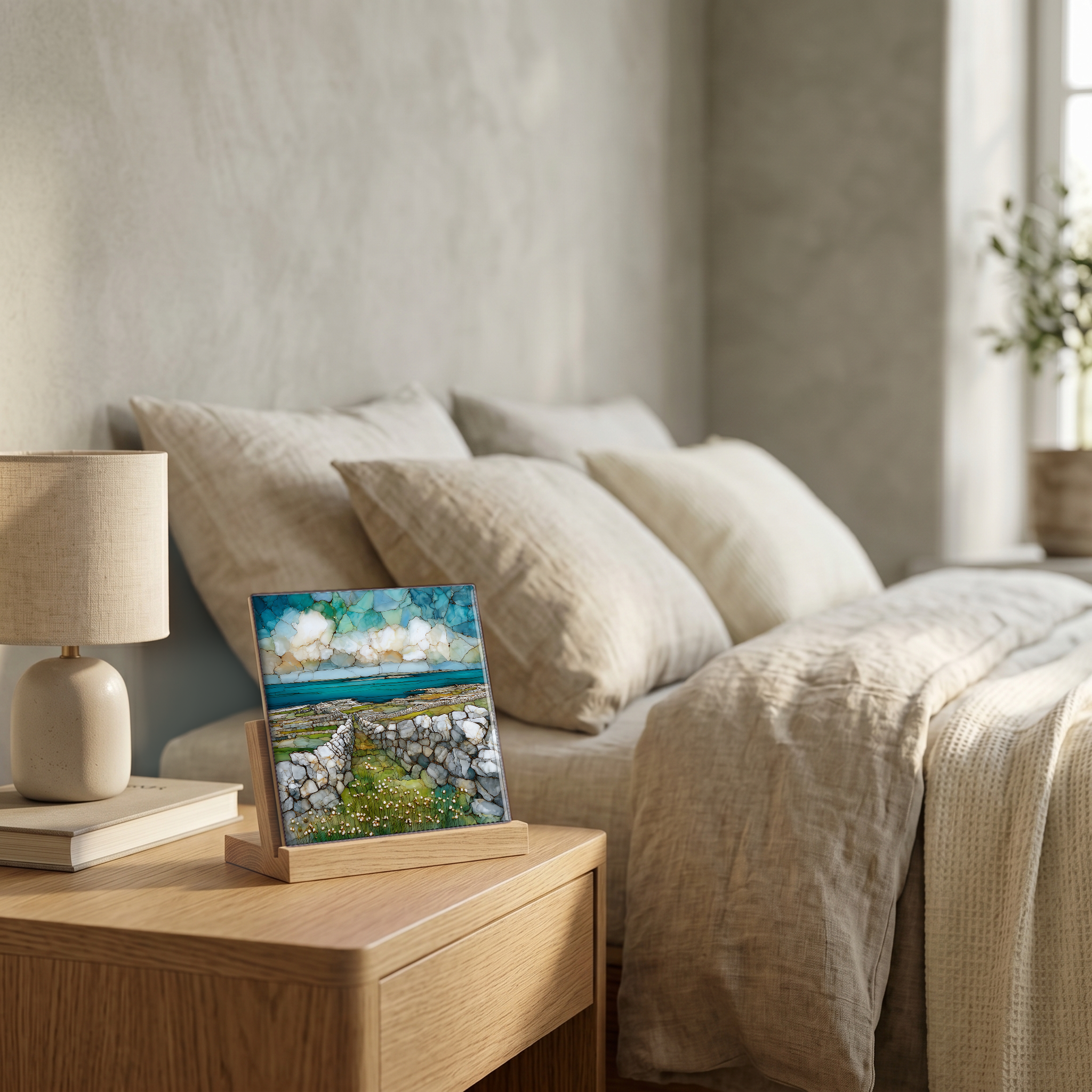
A small tile on the nightstand catching the morning. A larger one above the fire. Yours, wherever you spend the slow hours.
Above the bench, in a warm oak surround.
Beside the kettle, propped on the counter.
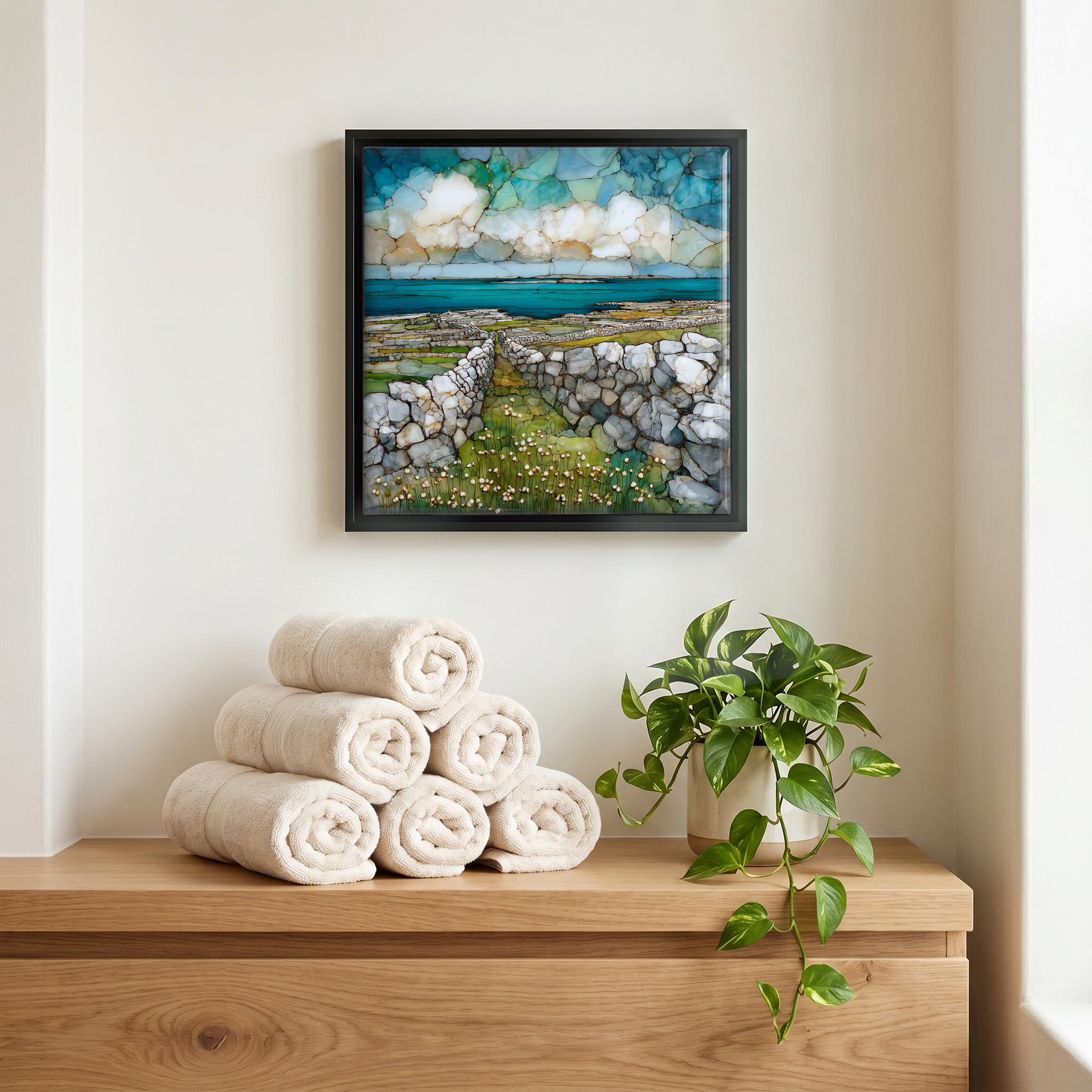
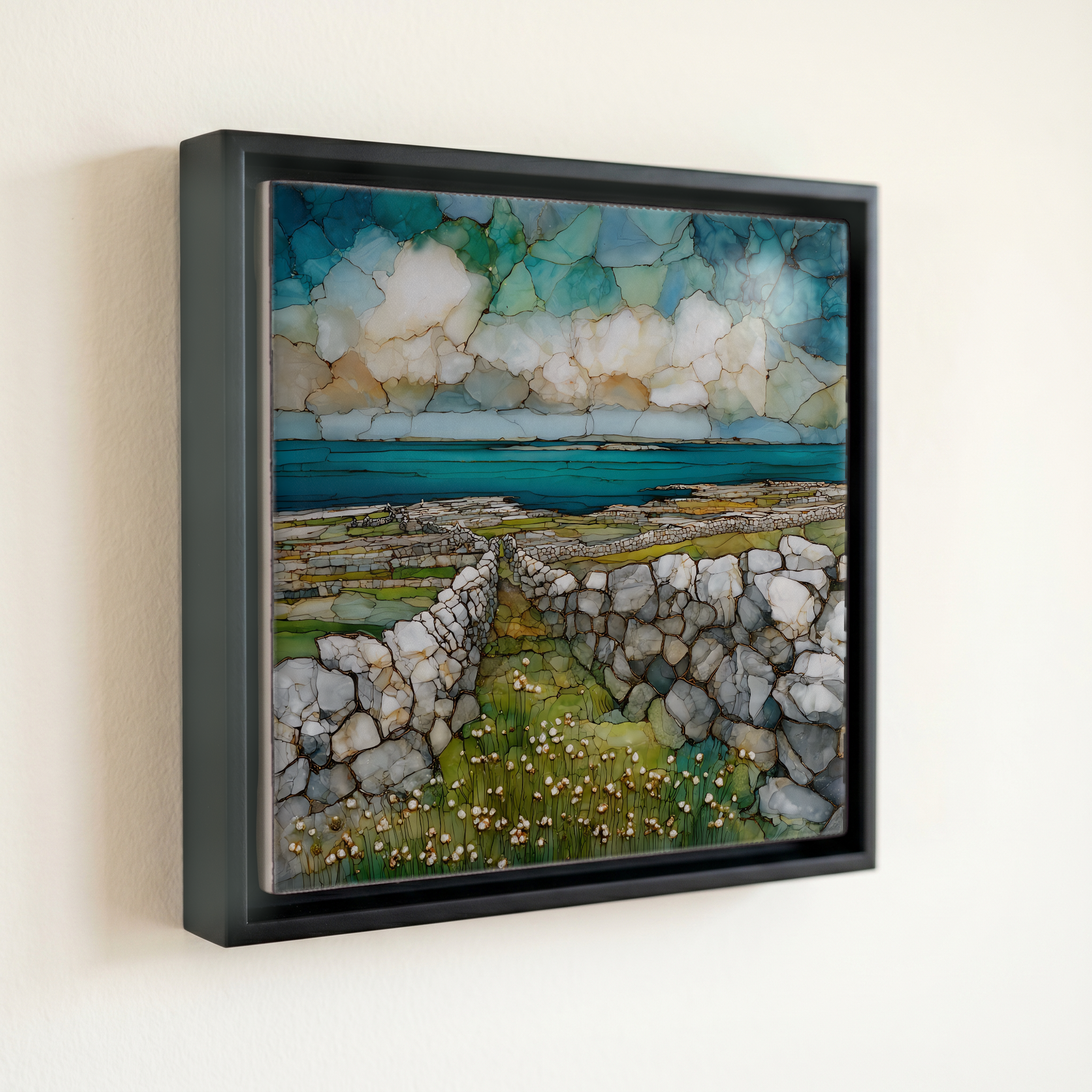
Above the linens, in a slim black surround.
On the nightstand, on a light oak stand.
On a picture ledge, where the light comes in.
a note from the studio

Three limestone islands at the mouth of Galway Bay, the last land between Connemara and the open Atlantic. The biggest, Inis Mór, is laced with dry stone walls so old and so many that nobody has finished counting them. Somewhere over a thousand miles of them, on an island twelve miles long. Dún Aonghasa sits at the far cliff, prehistoric stone holding its line above a hundred metres of Atlantic. Irish is still the daily language. The ferry from Rossaveal takes forty minutes and feels longer.
from the studio
shown in a slim black floating frame · 6 × 6 in
— bring it home

Aran Islands, on ceramic.

Each tile is finished by hand in our Knoxville studio. Artwork is slowly infused into the ceramic surface under high heat and pressure, and rests beneath a thin glossy finish. The colour lives in the surface, not on top of it.

What kind of piece?
One tile — square or rectangle.
How big?
the popular one — counter, shelf, nightstand
6 × 6 in · 15 cm · 1.6 lb
Surface finish
A clear glossy finish — the artwork reads as if under resin. Ideal for show-pieces and framed wall art.
How it sits
A hidden cleat — sits ¼″ proud of the wall.
$58
Hand-finished and shipped from our studio at the foot of the Smokies. On your wall in about ten days.
size
6 × 6 in
15 cm
weighs
1.6 lb
solid in the hand
surface
ceramic, hand-finished
art rests beneath a thin glossy finish
from
Knoxville, TN
our family studio, at the foot of the Smokies
— start a Coaster Set

Pick any four 4-inch tiles — National Parks you've been to, a Smokies set, the four seasons of one place. $ for a set of , cork-backed, ready to live on the table.
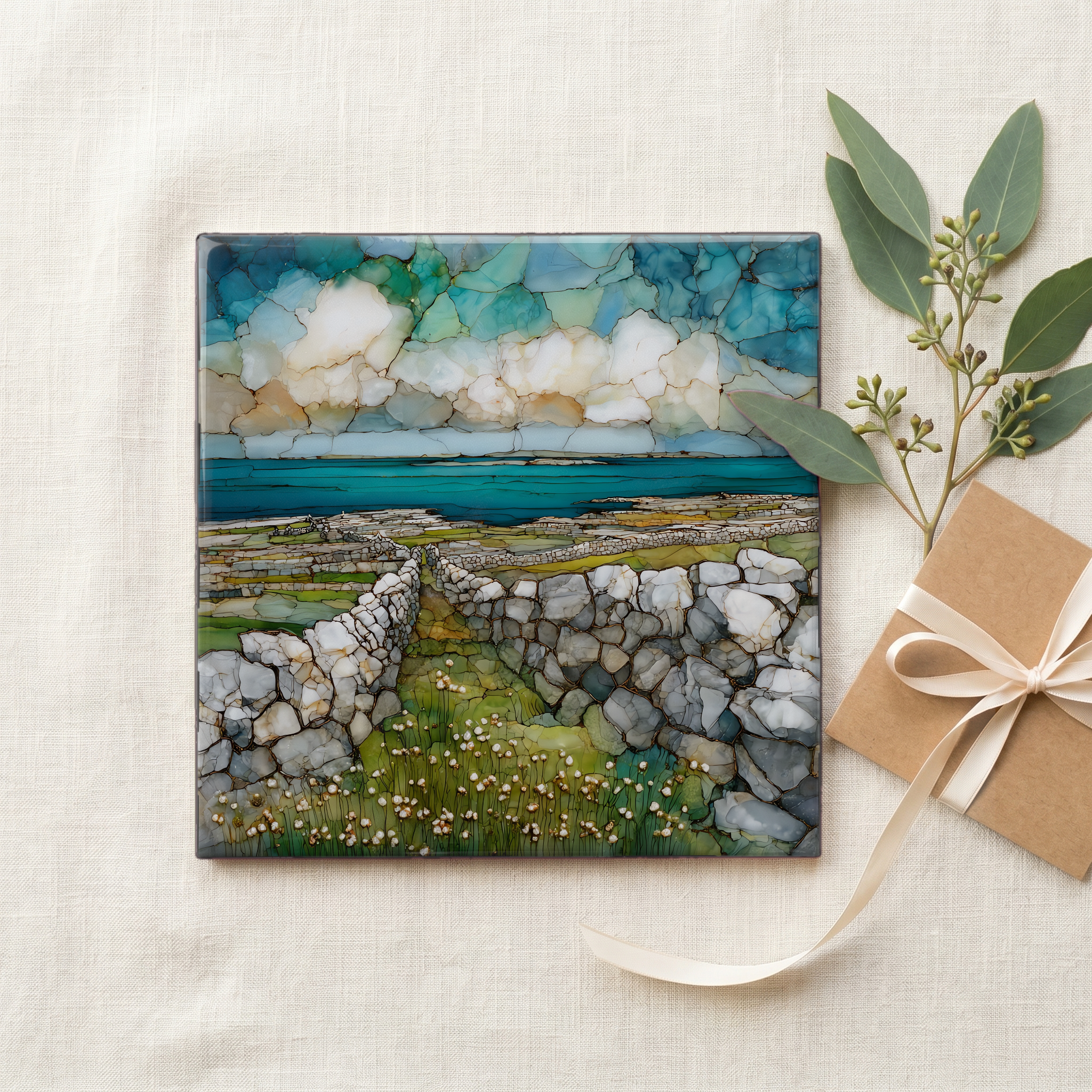
comes gift-ready
comes gift-ready

Each tile ships in a kraft box, tied with cream ribbon, with a handwritten note from the studio if you'd like to add one.
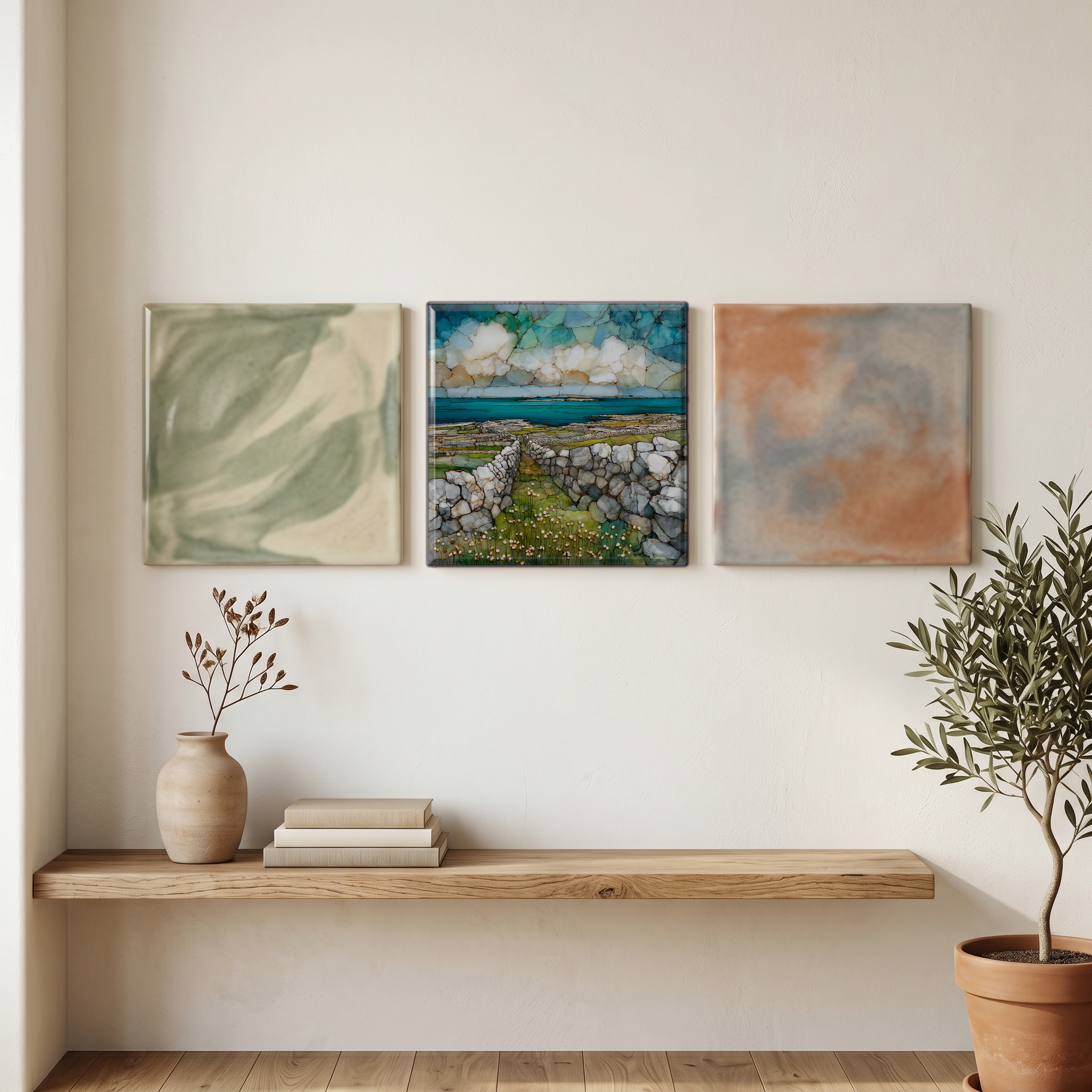
or build a grouping
or build a grouping

Three or five different vistas, hung together — a chapter of places you've been, or want to go.

about Aran Islands

The place, in three passes.

A little of what's known, in case you fall down the rabbit hole — or want to go see it yourself.
the place

The Aran Islands are three islands at the mouth of Galway Bay, off Ireland's west coast: Inis Mór, Inis Meáin, and Inis Oírr (the big, middle, and east islands in Irish). Administratively they belong to County Galway, but geologically they are an extension of the Burren in County Clare, the same Carboniferous limestone surfacing across the bay. Inis Mór, the largest, is about twelve kilometres long and roughly three wide; the smaller two are a few kilometres across. Total population is around twelve hundred. Ferries run year-round from Rossaveal in Connemara and from Doolin in County Clare; Aer Arann Islands flies from Inverin in eight minutes.

the stone

The islands are limestone all the way down. Carboniferous limestone pavement, the same as the Burren on the mainland, scoured flat by the last ice and weathered into a grid of clints and grikes. The visible expression is the field-wall system: more than a thousand miles of dry stone walls across the three islands, dividing them into thousands of small plots so old that nobody knows when the work began. The walls are built without mortar in a deliberately open weave that lets the Atlantic wind pass through rather than push them down. The same stone, dressed and stacked taller, makes Dún Aonghasa, the cliff-edge fort with construction phases dated from the Late Bronze Age.

the visit

Getting there means a boat. Aran Island Ferries sails year-round from Rossaveal in Connemara, roughly forty minutes to Inis Mór, with reduced winter schedules; a separate operator sails from Doolin in County Clare in summer. Aer Arann Islands flies the same crossing from Inverin in about eight minutes in small twin-engine aircraft, weather permitting. On the islands themselves, the way to move is by bicycle, by foot, or by minibus tour. Inis Mór has a small village at Cill Rónáin where the ferry lands, with cafés, a co-op grocery, and a Heritage Centre. Most of the inhabitants speak Irish as their first language; the islands are an officially recognised Gaeltacht.

where
Ireland · County Galway, Ireland
position
53.1200° N · 9.7200° W
the neighborhood

What's nearby.

A handful of named places within an hour's walk or short drive. Some we've already painted; some we will.
9 km W
Dún Aonghasa
prehistoric stone fort
5 km E
Inis Meáin
sister island
10 km E
Inis Oírr
sister island
12 km SE
Cliffs of Moher
sea cliffs
15 km E
The Burren
limestone karst landscape
14 km E
Doolin
mainland village
N
Aran Islands
Dún Aonghasa
Inis Meáin
Inis Oírr
Cliffs of Moher
The Burren
Doolin
common questions

What people ask.

A few questions we get about Aran Islands — and about bringing the piece home.
about the place

The Aran Islands sit at the mouth of Galway Bay, off the west coast of Ireland. Three limestone islands called Inis Mór, Inis Meáin, and Inis Oírr (big, middle, and east). Administratively they belong to County Galway, though geologically they are part of the Burren in County Clare.

By ferry from Rossaveal in Connemara (about forty minutes to Inis Mór) year-round, or from Doolin in County Clare in summer. Aer Arann Islands flies from Inverin in roughly eight minutes, weather permitting, in small twin-engine aircraft.

Dún Aonghasa is a prehistoric stone fort on the western cliff of Inis Mór, with construction phases dated from the Late Bronze Age. Its semicircular walls drop straight into the Atlantic from a hundred-metre cliff. It is one of the most important prehistoric monuments in Ireland.

Yes. The three islands are an officially recognised Gaeltacht, meaning Irish is the daily community language. Most residents speak Irish as their first language, with English alongside. Place names on the islands are written in Irish first, English second.

May through September is the practical window: longest daylight, mildest weather, and full ferry and flight schedules. Winter crossings still run but are weather-dependent. The islands are mild year-round but exposed; expect Atlantic wind and changeable rain in any season.

The walls divide the islands into small fields cleared of limestone rubble, the only way to make soil arable on bare karst. They are built without mortar in an open weave that lets Atlantic wind pass through. Estimates put the total across the three islands at over a thousand miles.

Around twelve hundred people live on the three islands combined. Inis Mór, the largest, holds the majority; Inis Meáin and Inis Oírr each have a few hundred. The population has stabilised in recent decades after a long period of decline.

about the piece in your home

It has been a meaningful gift for many of our customers whose families came from the west of Ireland. The Arans hold a particular weight in the Irish-American story; many emigrants left from Galway. A Small or Coaster Set with a handwritten note from the studio carries well.

The piece sits well in Coastal-modern, Heritage-romantic, and quiet Maximalist rooms. The greys and Atlantic blues read cool; the alcohol-ink saturation gives the surface a stained-glass weight that holds against textured walls — limewashed plaster, raw linen, weathered oak.

Yes. The current coastal-modern moment leans away from sun-bleached driftwood and toward the colder, more atmospheric North Atlantic: Hebridean greys, Irish blues, weathered stone. A Medium or Large reads as the focal piece; a Small or Coaster works as a quieter accent.

A single Large is the standard above a console or in a stairwell; above a sofa, a 4-tile Mural or 9-tile Mural carries the wall. The Mural arrangements ship as the full set with mounting guidance for the grout gap between tiles.

Yes, in the Dura Satin or Matte finish. The colour is slowly infused into the ceramic surface under high heat and pressure, so steam, splash, and daily wear do not affect it. The Glossy finish is reserved for framed wall pieces in dry rooms.

A soft microfibre cloth with water is enough for any finish. For Dura Satin and Matte installations in kitchens or bathrooms, a mild pH-neutral cleaner is safe. Avoid abrasive pads and bleach-based products; they are not needed and will dull the surface over time.

Yes. Every piece is curated by Reid Wender in the studio in Knoxville, Tennessee. The Aran Islands tile is part of the WenderVista line, our atlas of places. No licensing, no third-party imagery; the work is hand-finished in-house.

if this one stayed with you

A few you might also love.

Hand-picked by the eye that found Sorapis. Same air, same kind of quiet.