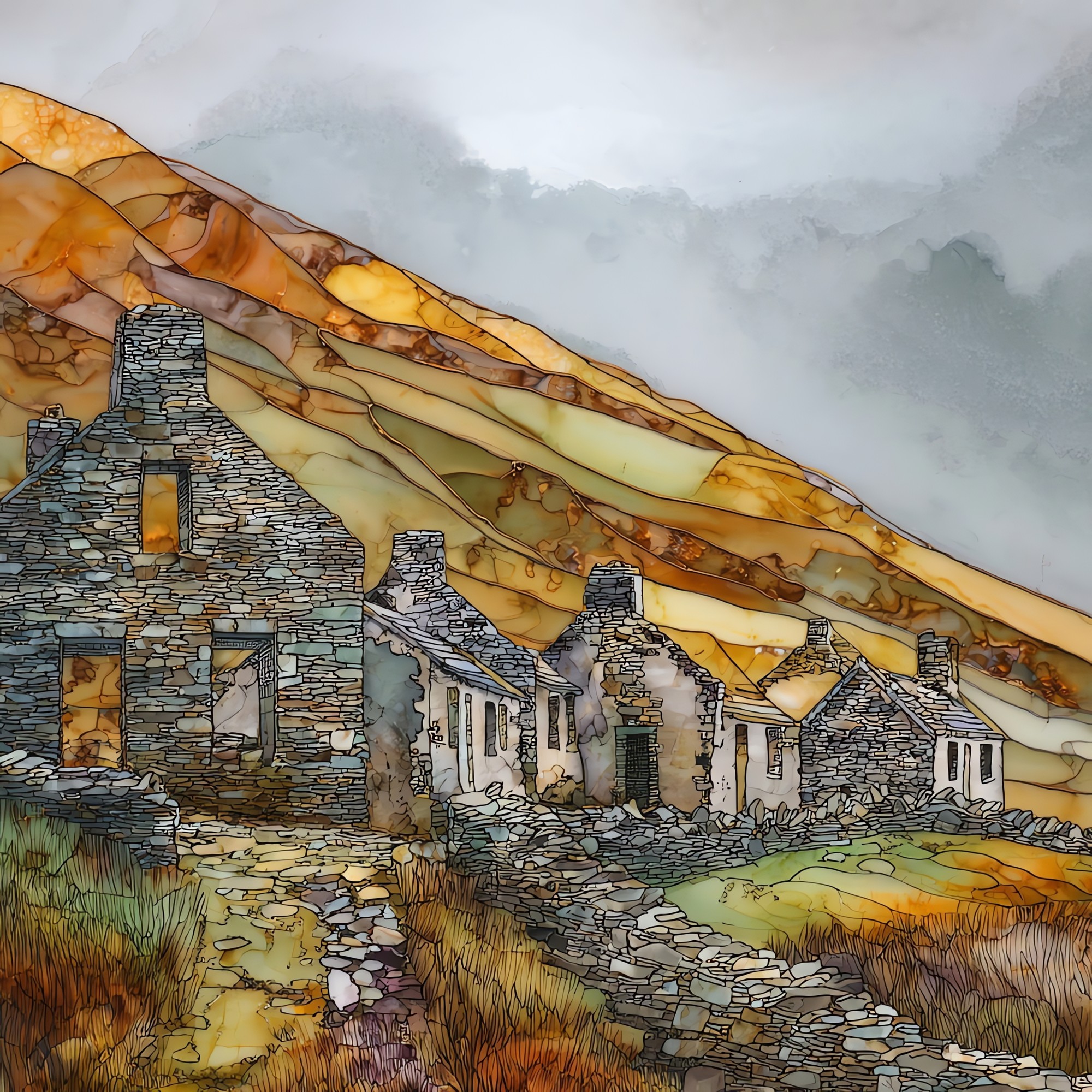
Achill Island
— — green that runs all the way to the sea.
Not only on a wall.
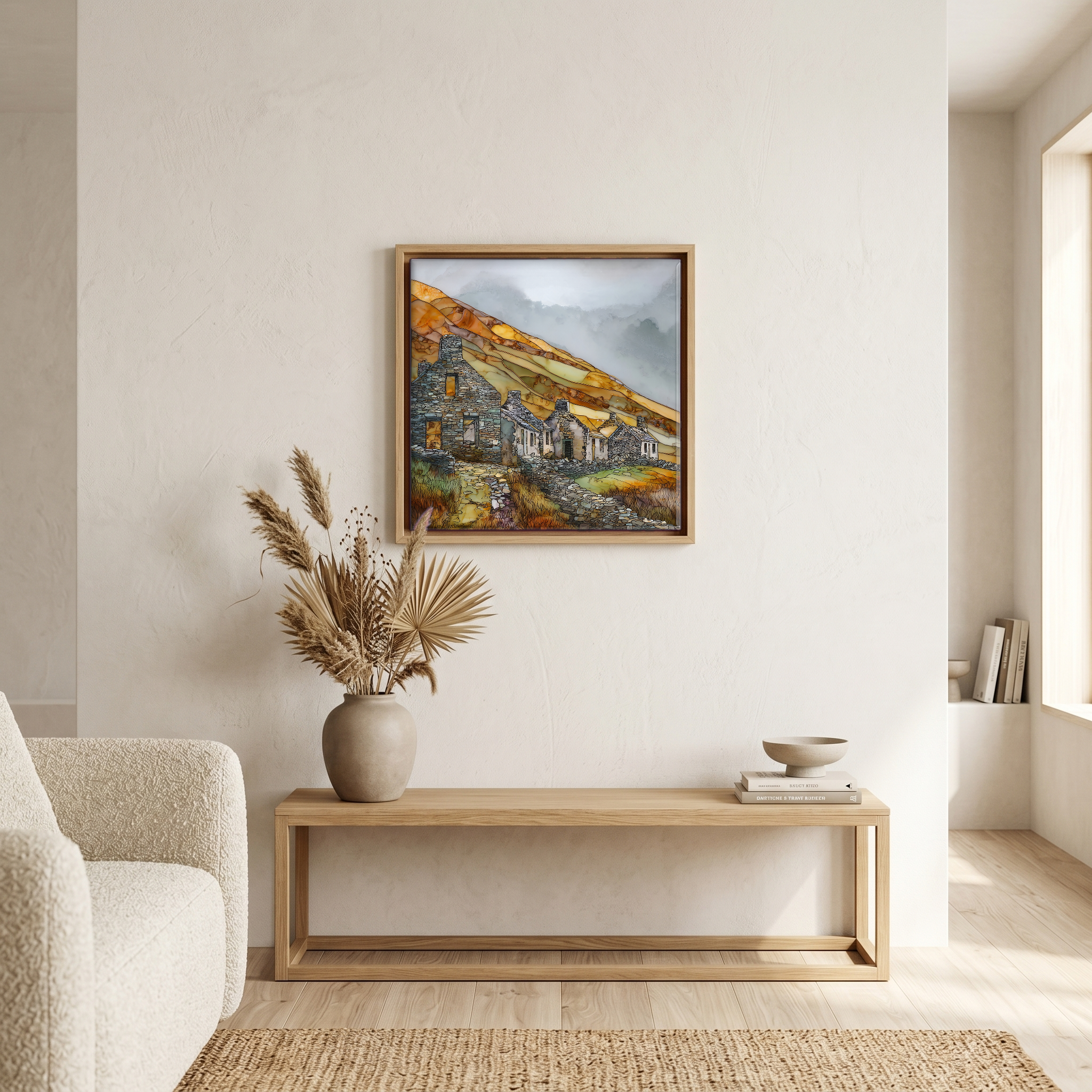
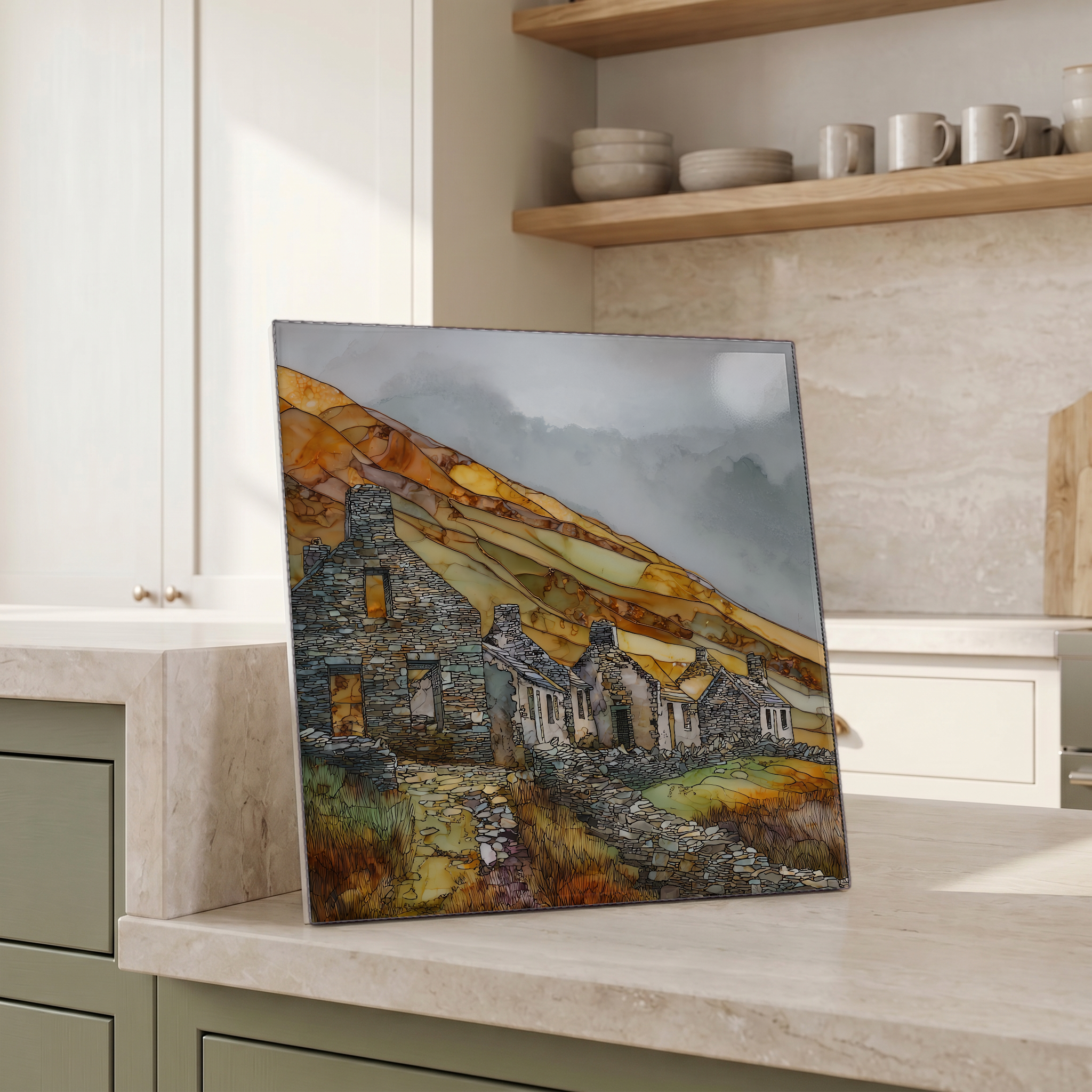
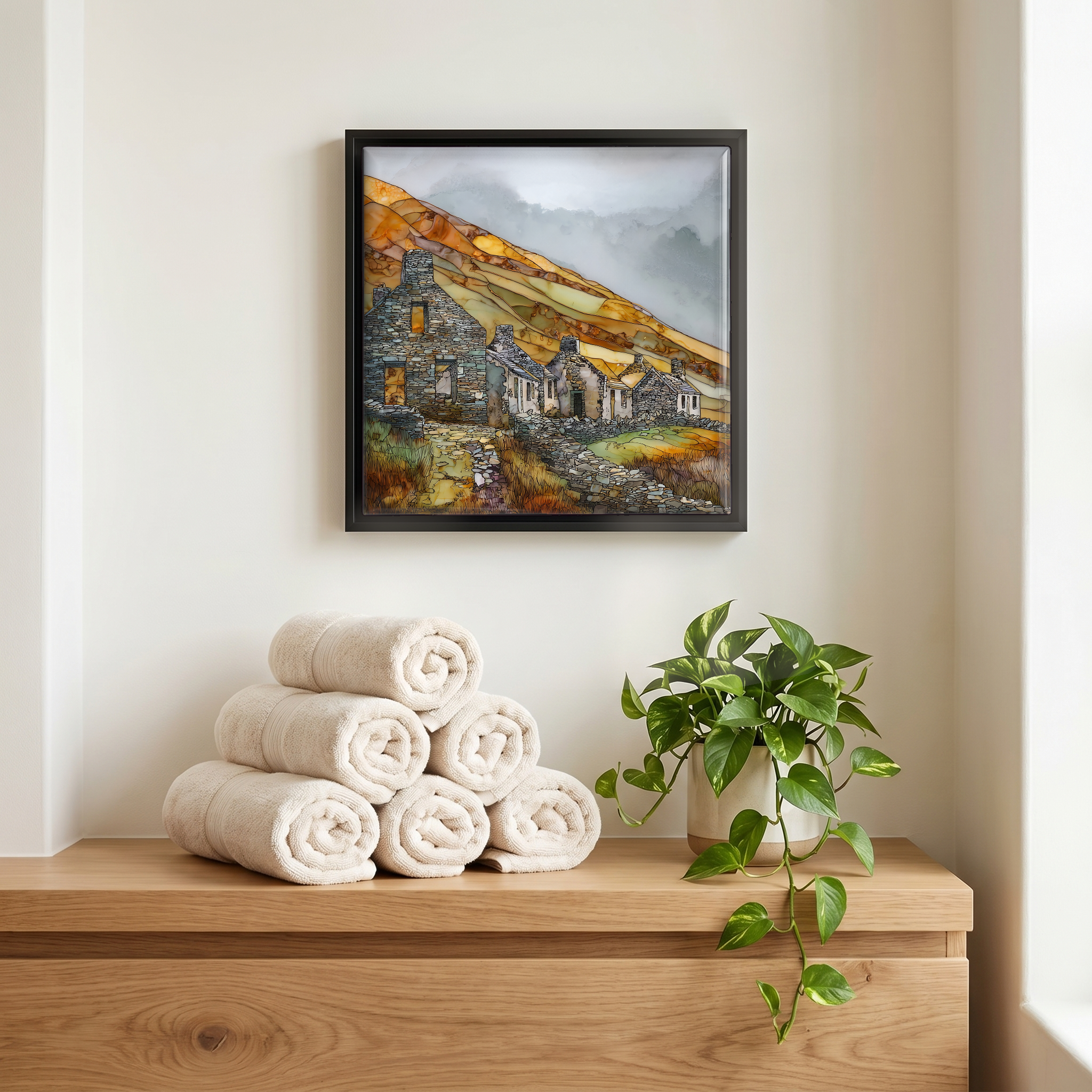
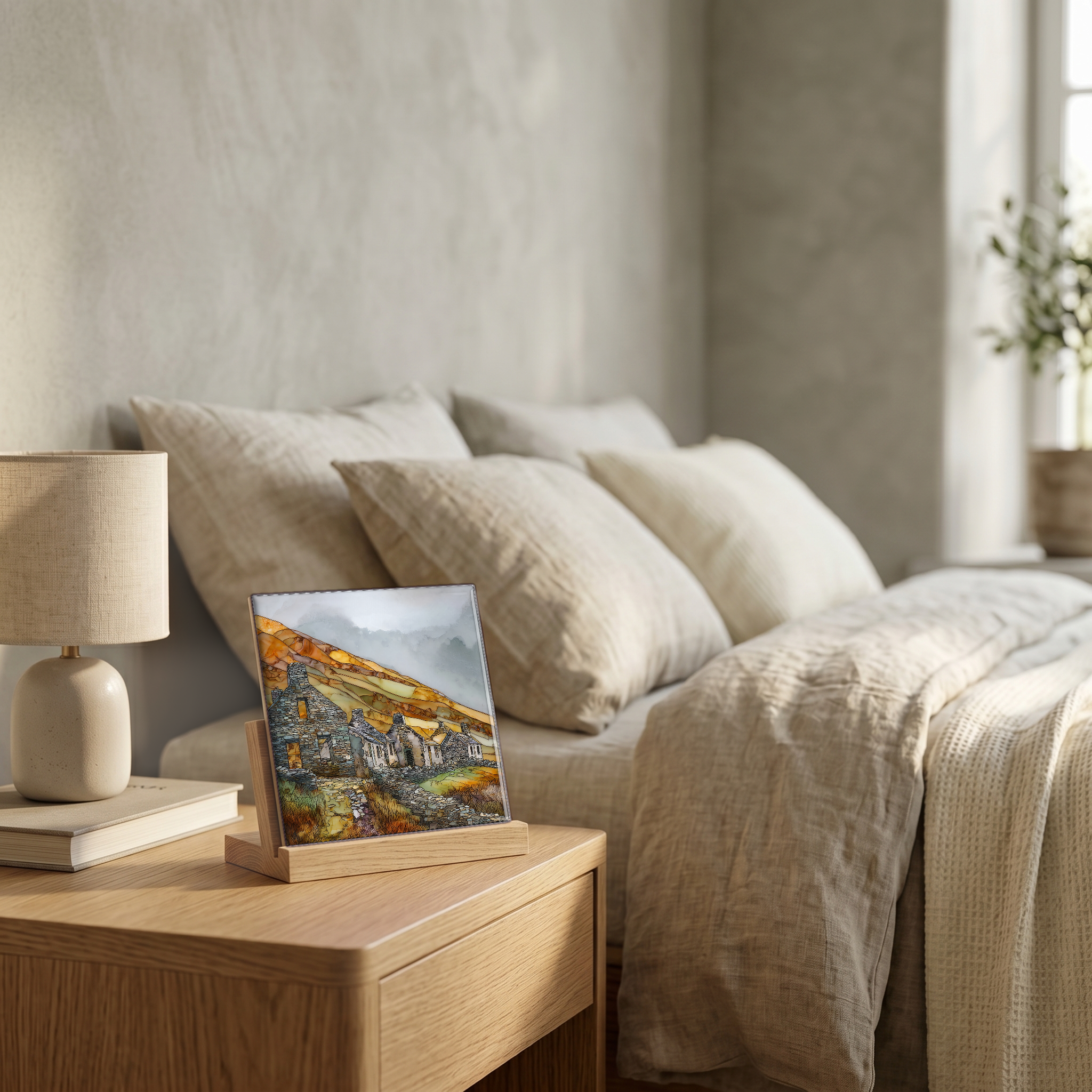
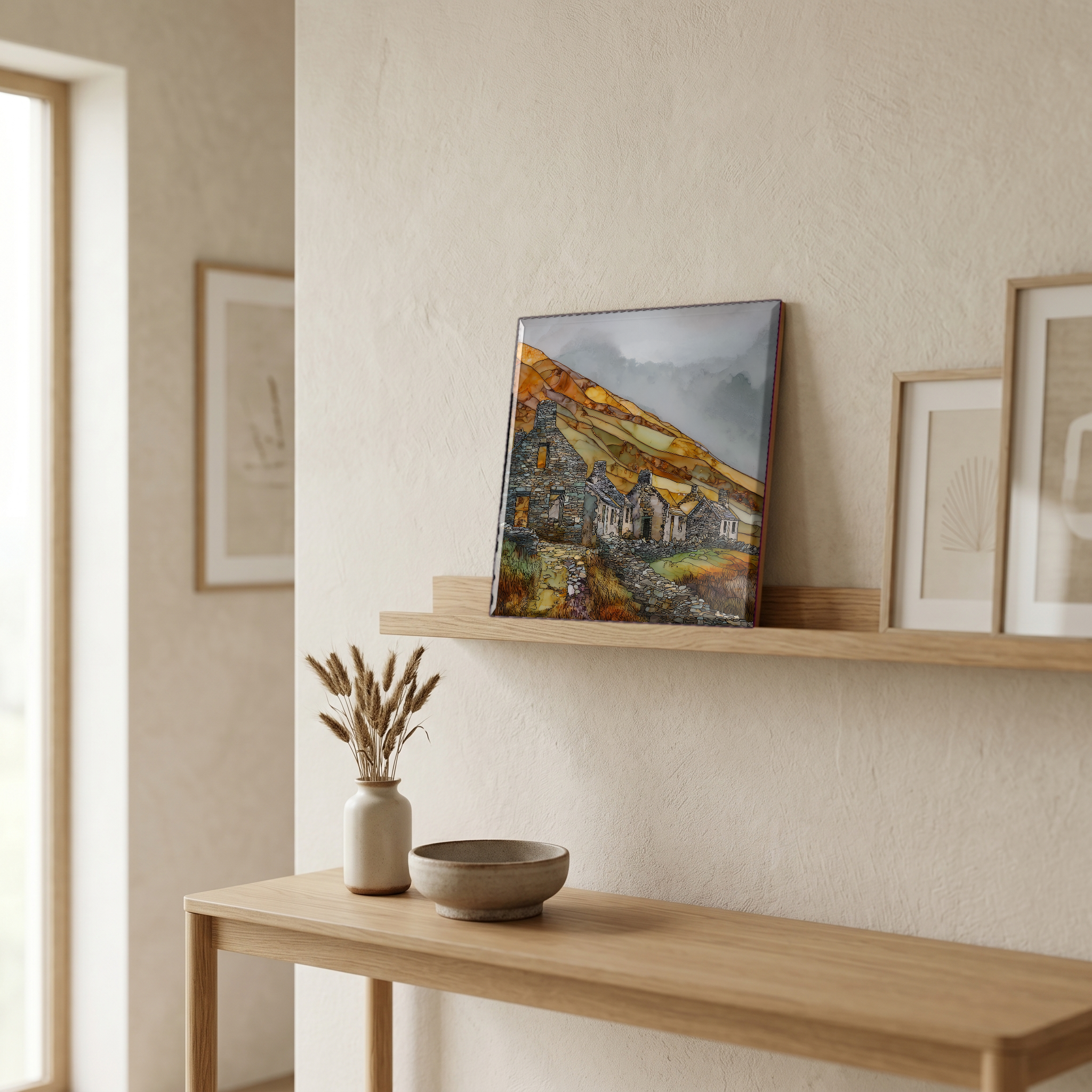
“The island at the western edge of County Mayo, joined to the mainland by a short road bridge at Achill Sound. The Atlantic Drive curls below Minaun cliffs. To the west, the road climbs over the spine to Keem, a horseshoe strand at the foot of green slopes that fall a long way down to it. Sheep all the way to the cliff edge. Basking sharks in summer if the water is clear. At the foot of Slievemore, the deserted village stands where families used to move their cattle each summer, before they left it for good.
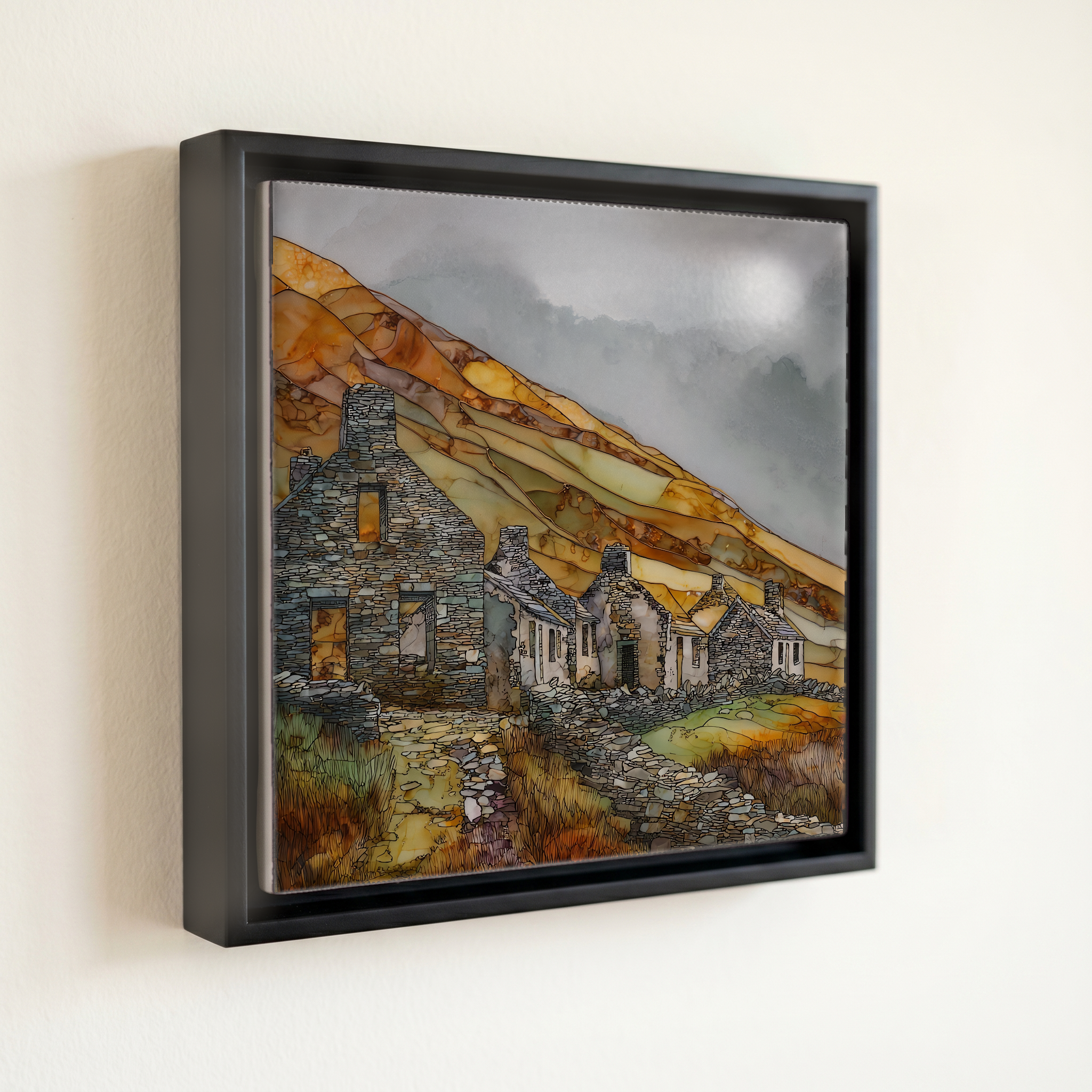
Achill Island, on ceramic.
Each tile is finished by hand in our Knoxville studio. Artwork is slowly infused into the ceramic surface under high heat and pressure, and rests beneath a thin glossy finish. The colour lives in the surface, not on top of it.
Pick any four 4-inch tiles — National Parks you've been to, a Smokies set, the four seasons of one place. $ for a set of , cork-backed, ready to live on the table.
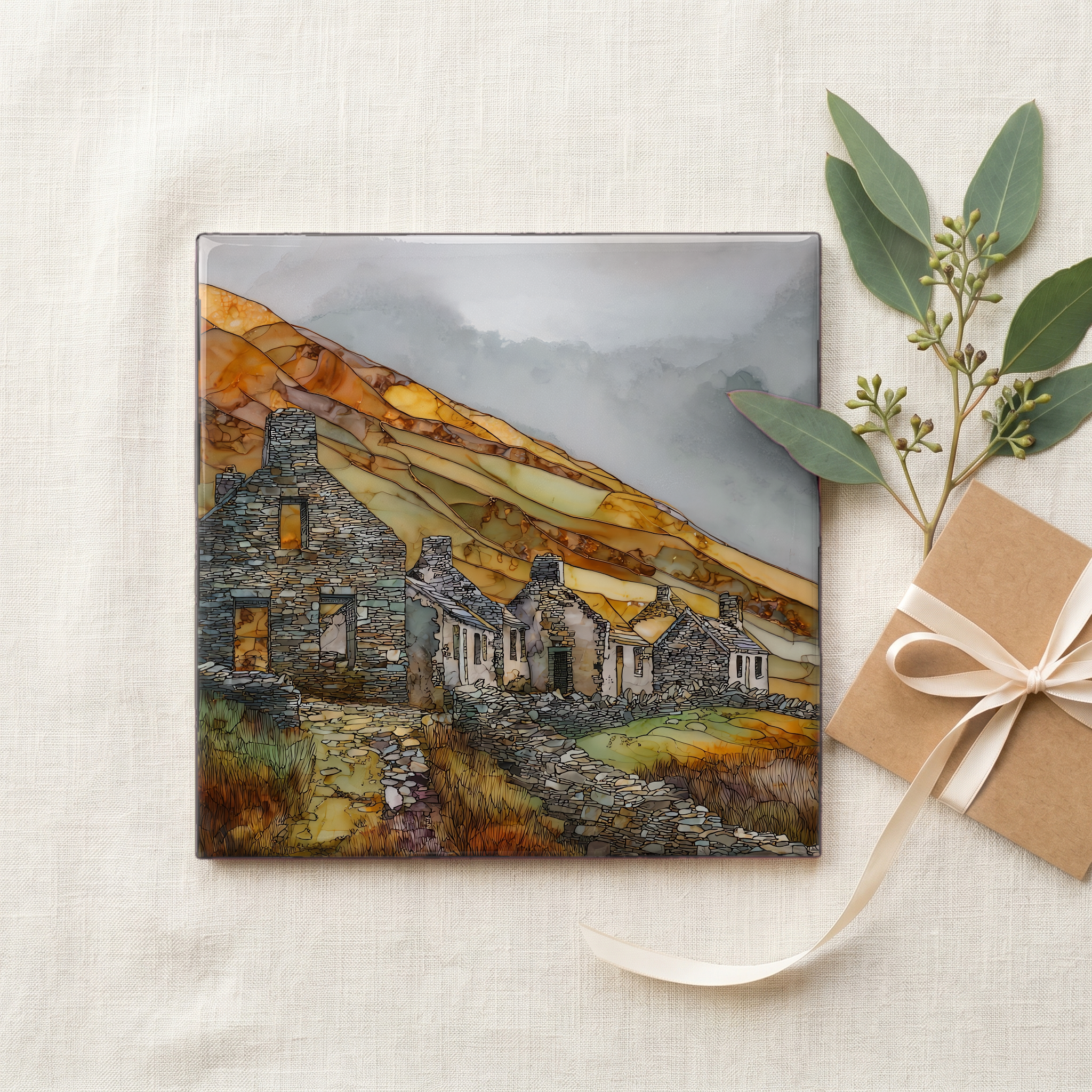
Each tile ships in a kraft box, tied with cream ribbon, with a handwritten note from the studio if you'd like to add one.
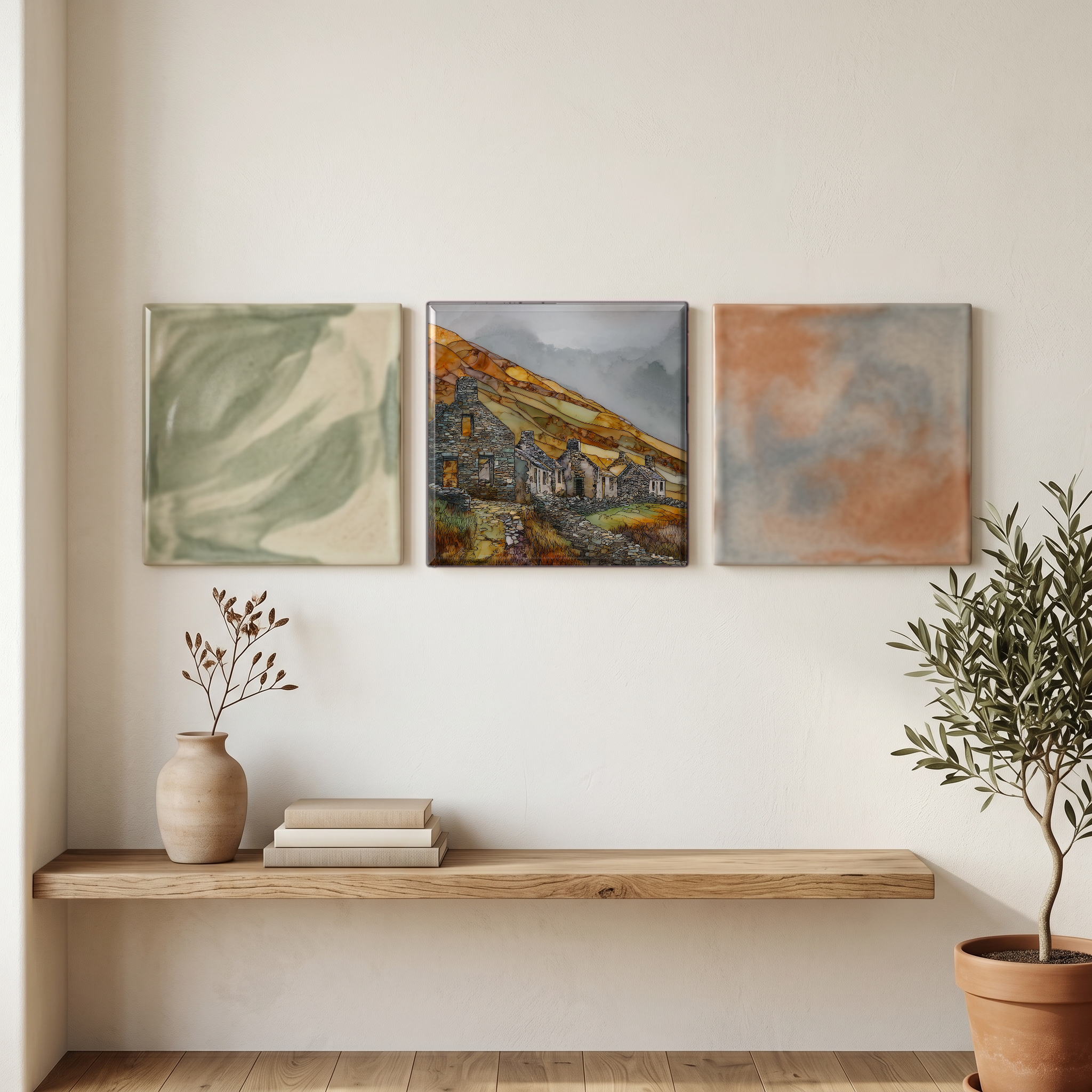
Three or five different vistas, hung together — a chapter of places you've been, or want to go.
The place, in three passes.
Achill Island lies off the west coast of County Mayo, the largest island within Ireland's territorial waters at about 148 square kilometres. A road bridge at Achill Sound has connected it to the mainland since 1887; the current span dates to 2008. The island sits on the Wild Atlantic Way driving route between Mulranny and the Erris peninsula. Croaghaun, on the western headland, drops 688 metres straight into the Atlantic, among the highest sea cliffs in Europe. The villages of Keel, Dooagh, Dugort, and Achill Sound hold most of the resident population of around 2,500.
The Atlantic at Achill is unusually clear in summer because the island sits in deep, cold water with little river silt entering the bay. Keem Strand, at the western end of the road, holds a Blue Flag and a horseshoe of green slopes that fall to it from the cliffs above. Basking sharks pass through between May and July, the second-largest fish in the ocean. Achill once ran a fishery for them out of Purteen Harbour, killing around 12,000 between 1947 and 1975. The fishery is long closed. The sharks return on their own time.
At the foot of Slievemore stands the largest deserted village in Ireland, about eighty stone cottages laid out along a long contour line. The settlement was used as a booley village, a summer pasture for cattle, by families from Dooagh and Pollagh through the nineteenth century and into the early twentieth. By the mid-twentieth century the booleying had ended. The ruins are unmarked and open. The walls run east-west for almost a mile, the doorways still standing where they were.