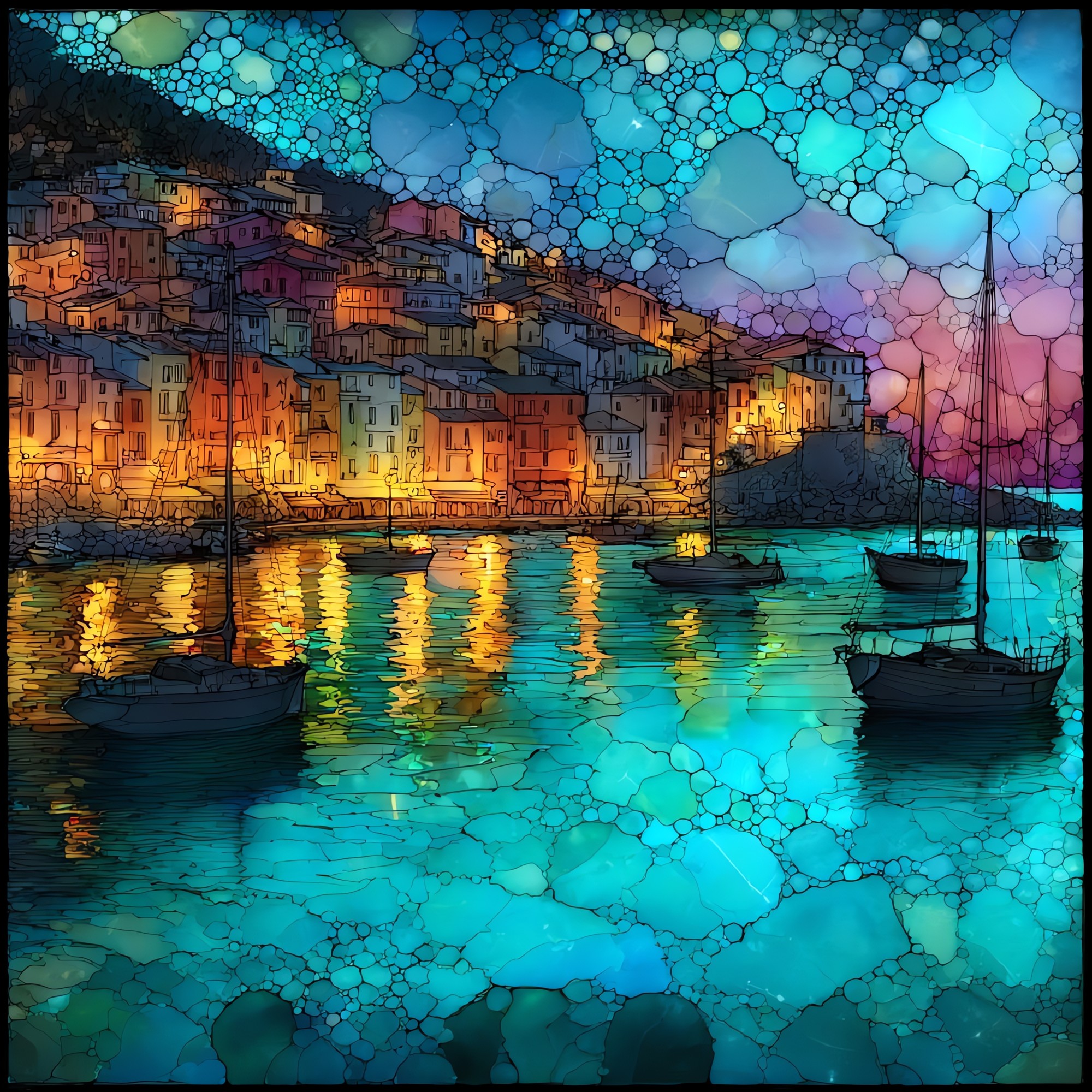
Villefranche-sur-Mer Harbour
— the deepwater blue the village climbs above.
Not only on a wall.
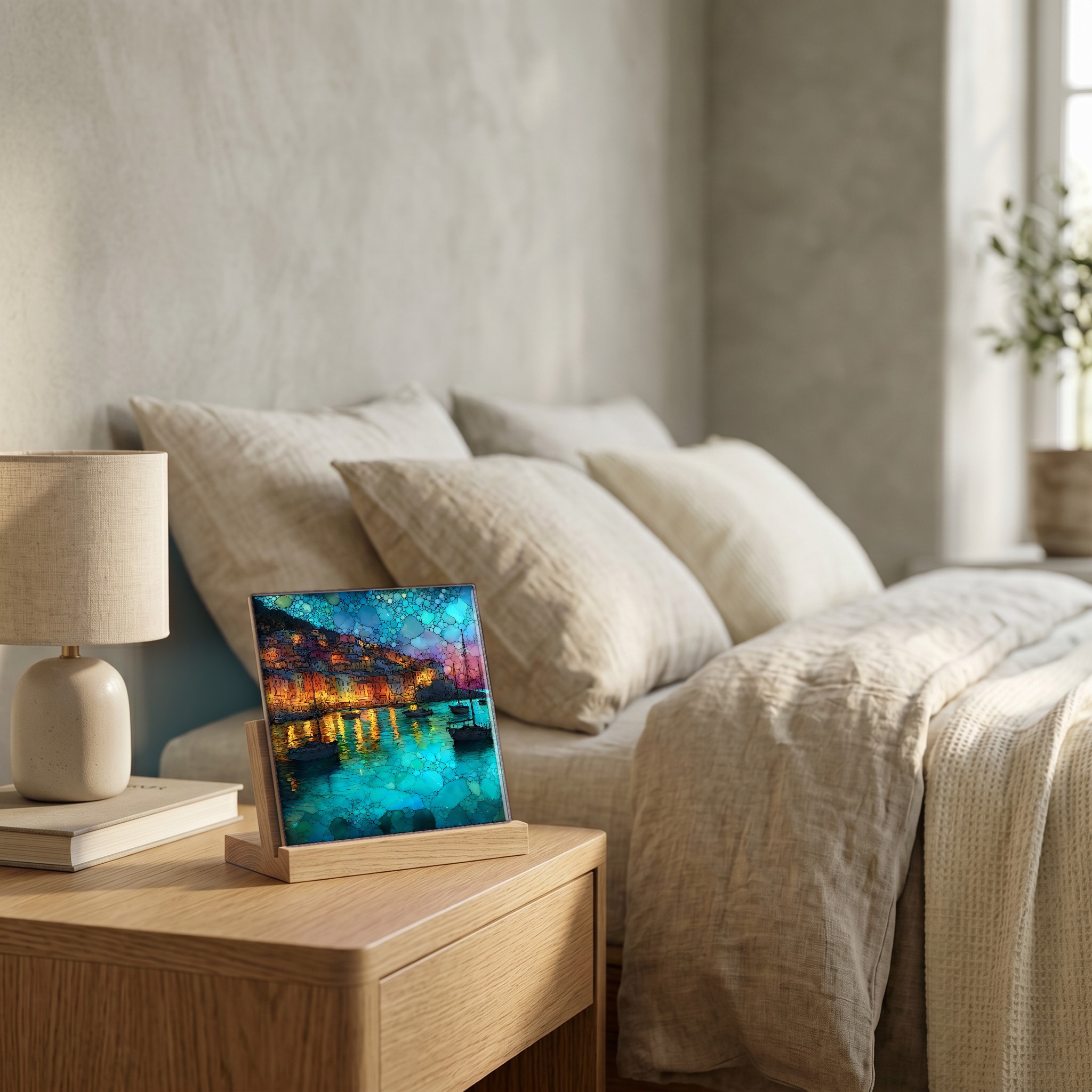
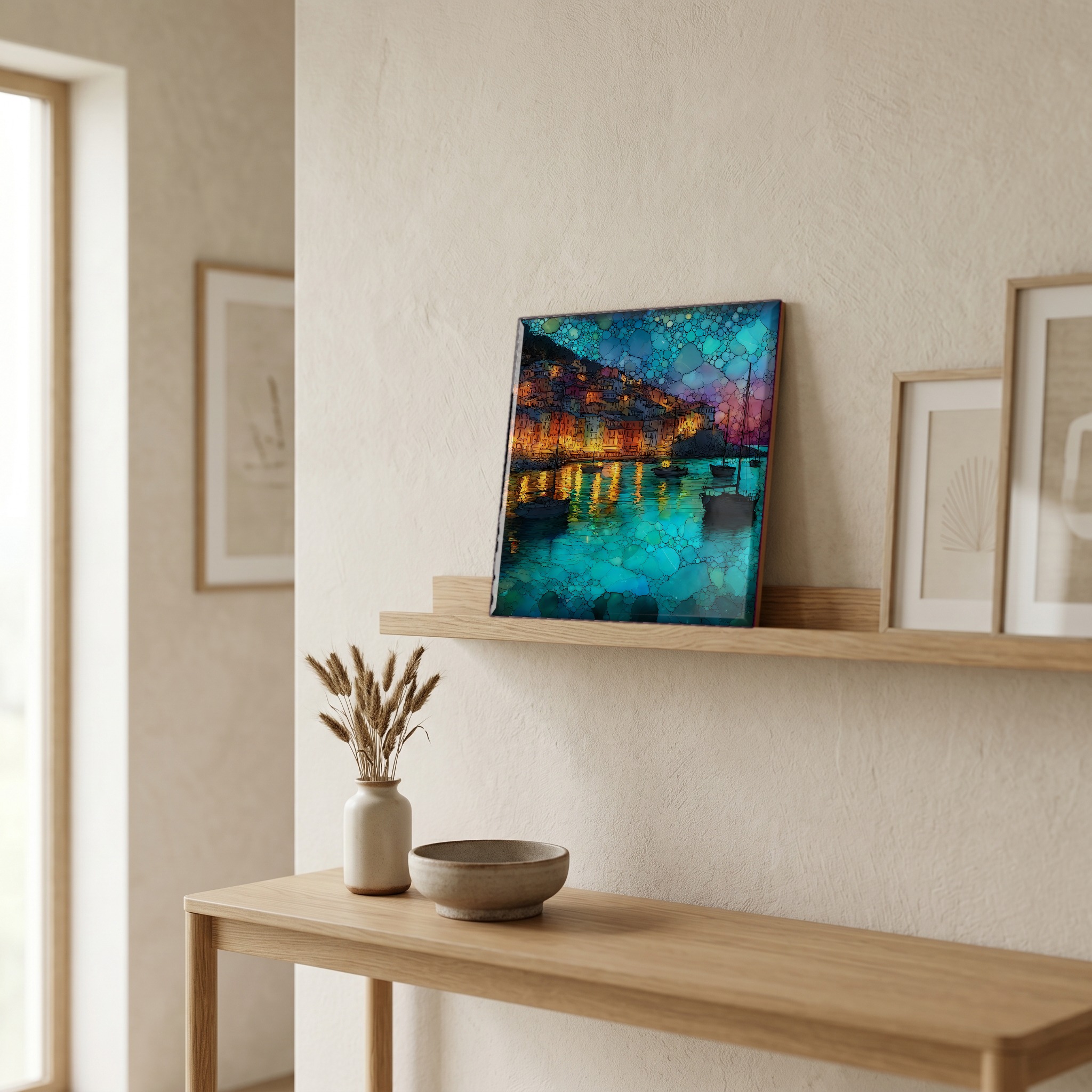
“Pastel houses tumble down a slope on the Côte d'Azur to one of the deepest natural harbours in the Mediterranean. The Rade de Villefranche is deep enough that cruise liners anchor inside without touching bottom, only a few hundred metres from the quay. A small chapel sits at the water's edge, redrawn by Jean Cocteau in 1957 with fishermen and angels in single black lines. The local train from Nice arrives at the harbour itself, six minutes out. Late afternoon is when the bay turns the colour the painters came for.
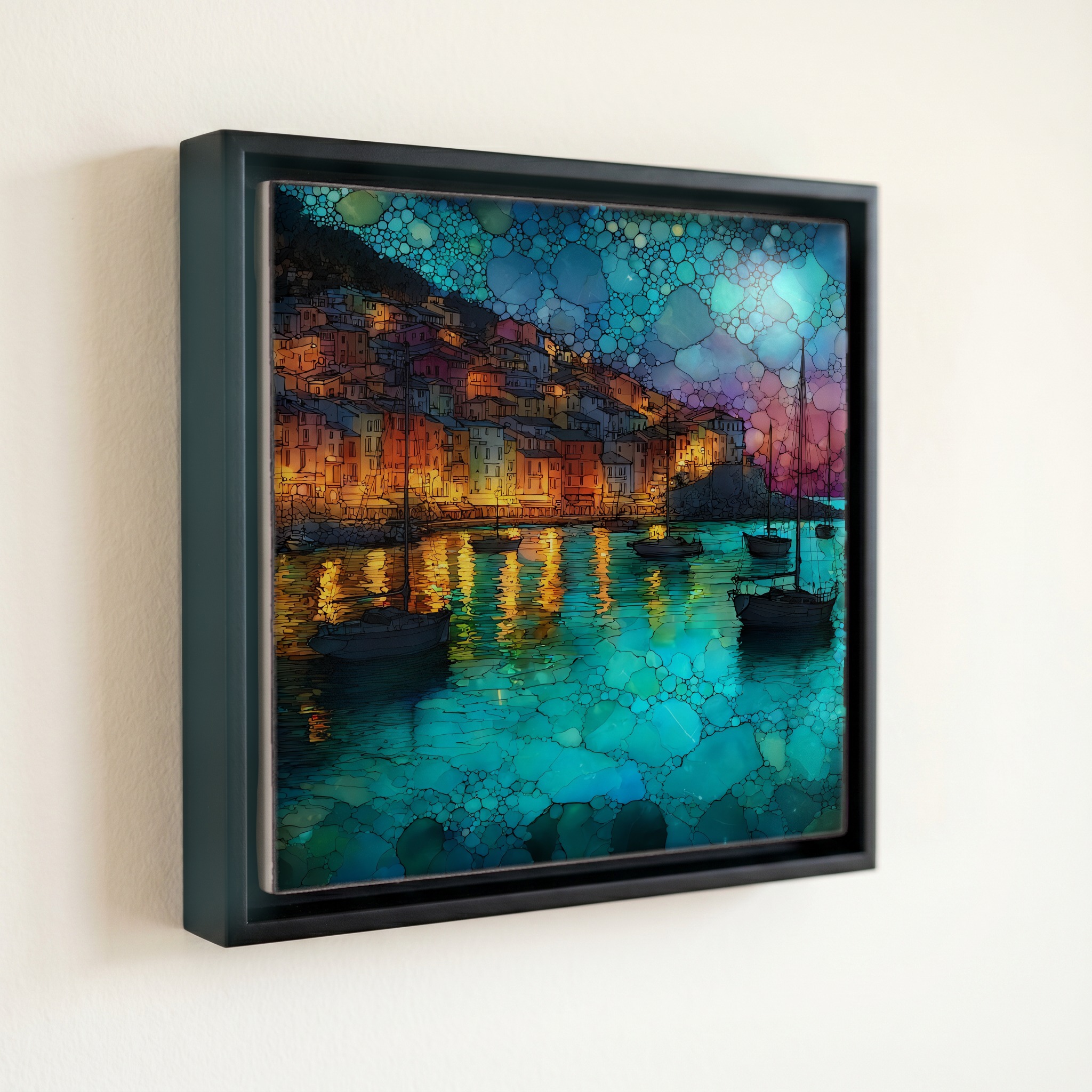
Villefranche-sur-Mer Harbour, on ceramic.
Each tile is finished by hand in our Knoxville studio. Artwork is slowly infused into the ceramic surface under high heat and pressure, and rests beneath a thin glossy finish. The colour lives in the surface, not on top of it.
Pick any four 4-inch tiles — National Parks you've been to, a Smokies set, the four seasons of one place. $ for a set of , cork-backed, ready to live on the table.
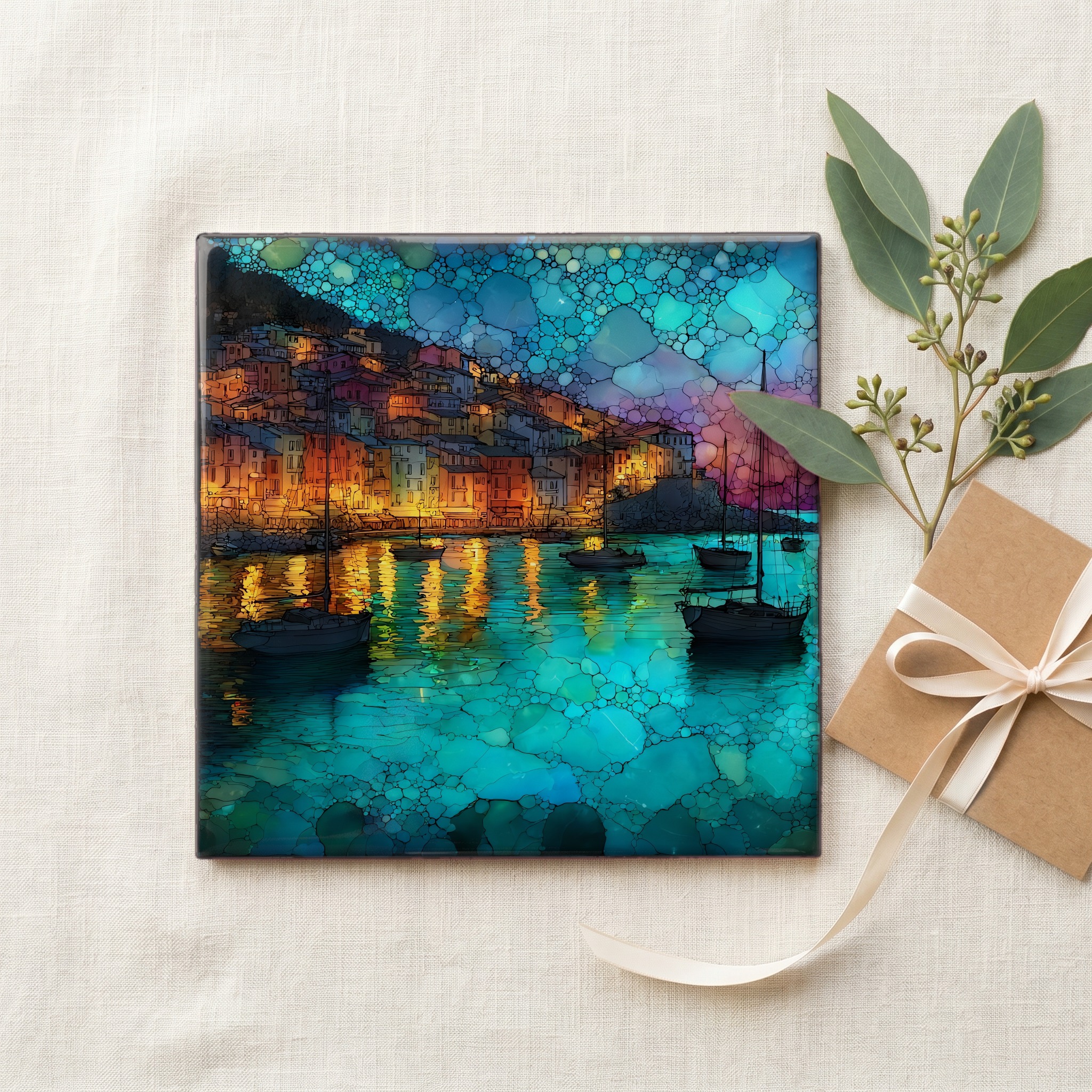
Each tile ships in a kraft box, tied with cream ribbon, with a handwritten note from the studio if you'd like to add one.
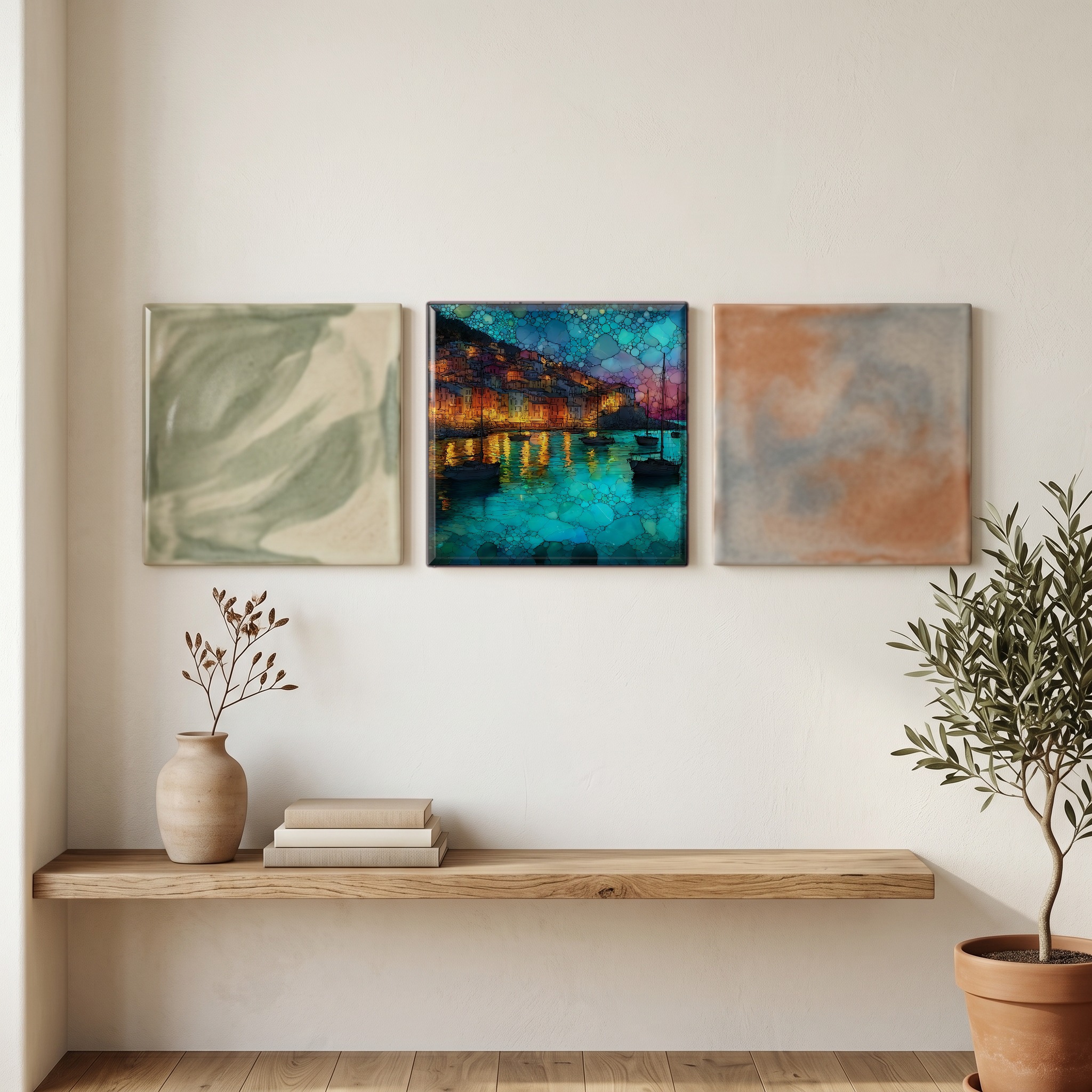
Three or five different vistas, hung together — a chapter of places you've been, or want to go.
The place, in three passes.
Villefranche-sur-Mer sits on the Côte d'Azur between Nice and Cap Ferrat, about six kilometres east of Nice and twenty-three west of Monaco. The town was founded in 1295 by Charles II of Anjou, Count of Provence, as a 'free port' (ville franche) to give shelter and trade to ships running the coast between Genoa and Marseille. It belongs to the Alpes-Maritimes department in the Provence-Alpes-Côte d'Azur region. The local train from Nice-Ville reaches the station built directly on the harbour in about six minutes. The town has a population of around 5,000.
The Rade de Villefranche is one of the deepest natural harbours on the Mediterranean, reaching depths near 95 metres only a few hundred metres from shore. The bay's amphitheatre shape and steep underwater drop-off made it a strategic anchorage from Roman times onward; from 1948 to 1966 it served as a home port of the United States Sixth Fleet. The water reads as deep cobalt because there is no shallow shelf and no sediment plume to soften the colour. Cruise ships still anchor inside the bay without touching bottom.
The Citadelle Saint-Elme rises on the western arm of the harbour, built between 1554 and 1557 by Duke Emmanuel-Philibert of Savoy to defend the port against Ottoman and Barbary raids. Above the quays, the old town climbs the slope in ochre and rose-pink houses, threaded by stairways and one of Europe's oldest covered streets: the 13th-century Rue Obscure, dug under the houses as a sheltered defensive passage. On the water at the quay, the Chapelle Saint-Pierre, a 14th-century fishermen's chapel, was redecorated in 1957 by Jean Cocteau, who covered the interior in spare black-line drawings of saints, fishermen, and the women of Villefranche.