Wender·Vista
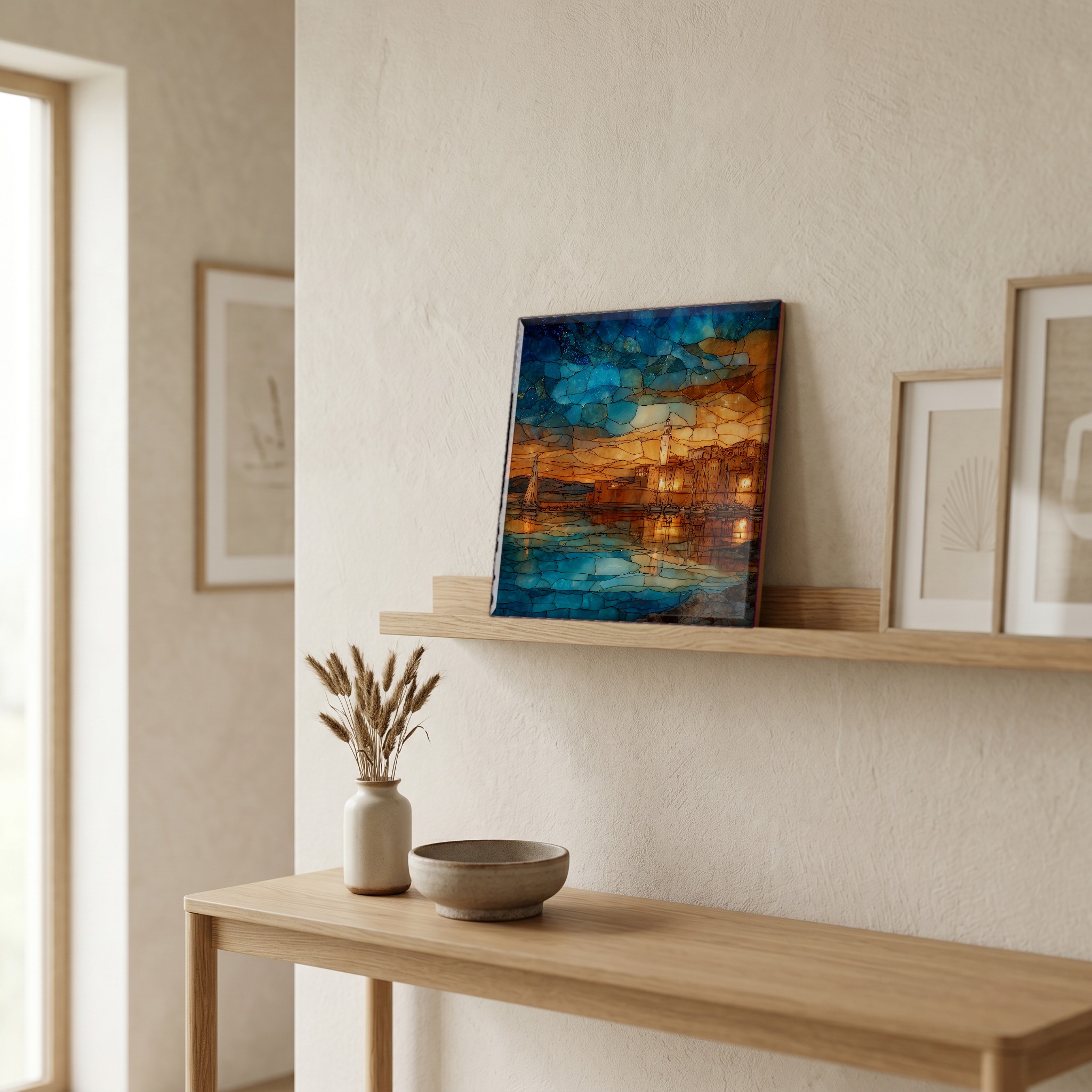
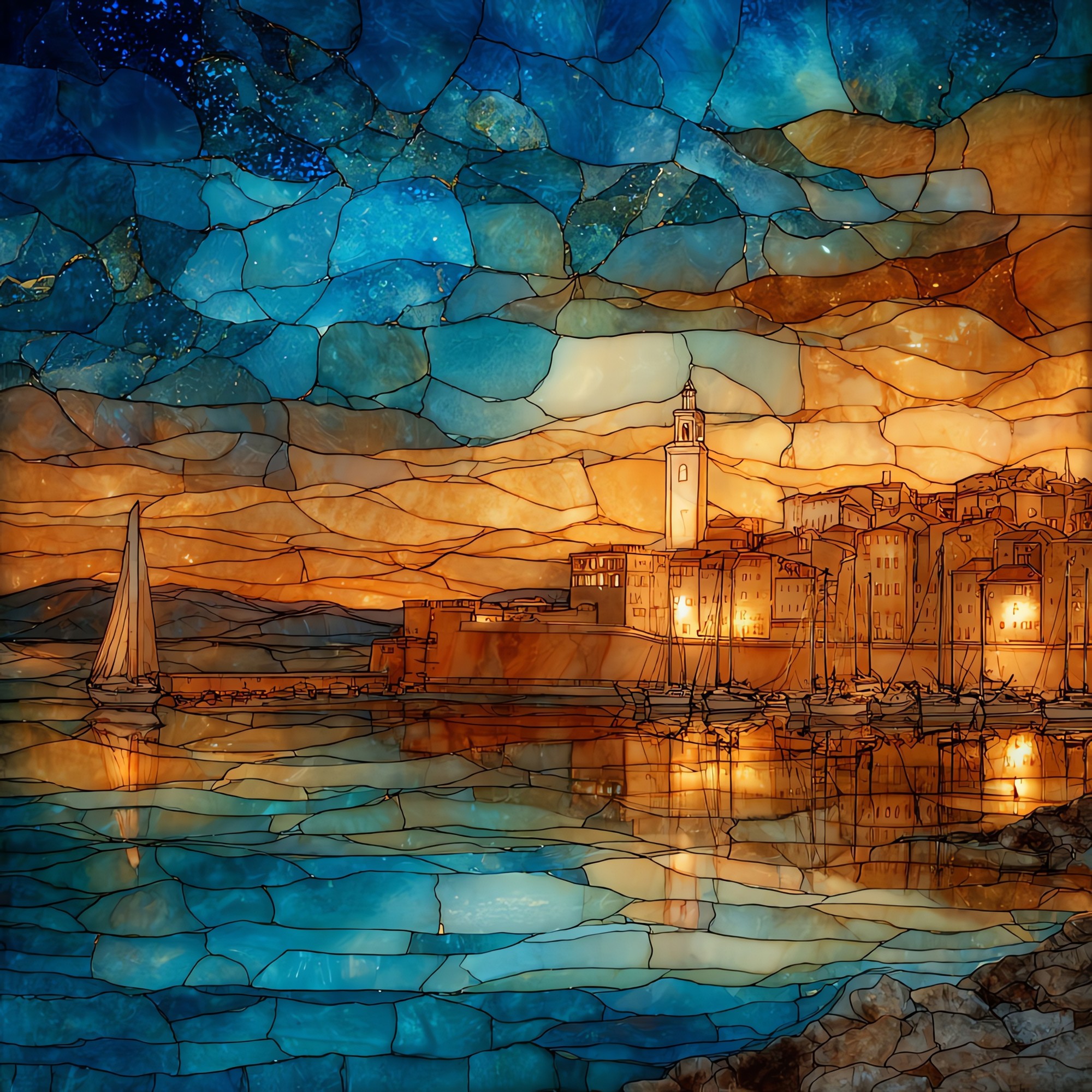
Vieux-Port of Marseille
shown on ceramic, 12-inch tileFrance
where Marseille meets the Mediterranean

Vieux-Port of Marseille

the harbour the city was built around.

Where it lives

Not only on a wall.

A small tile on the nightstand catching the morning. A larger one above the fire. Yours, wherever you spend the slow hours.
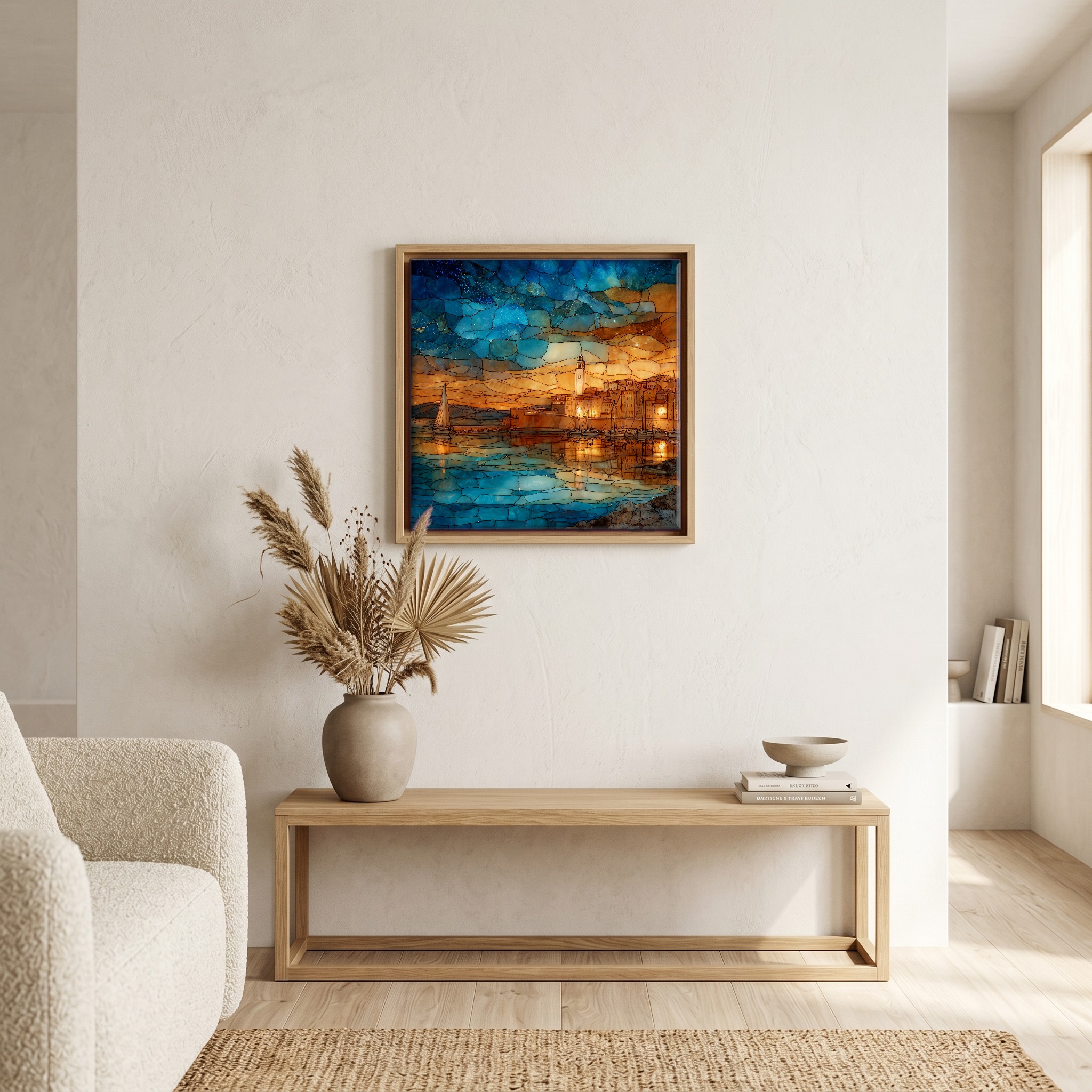
Above the bench, in a warm oak surround.
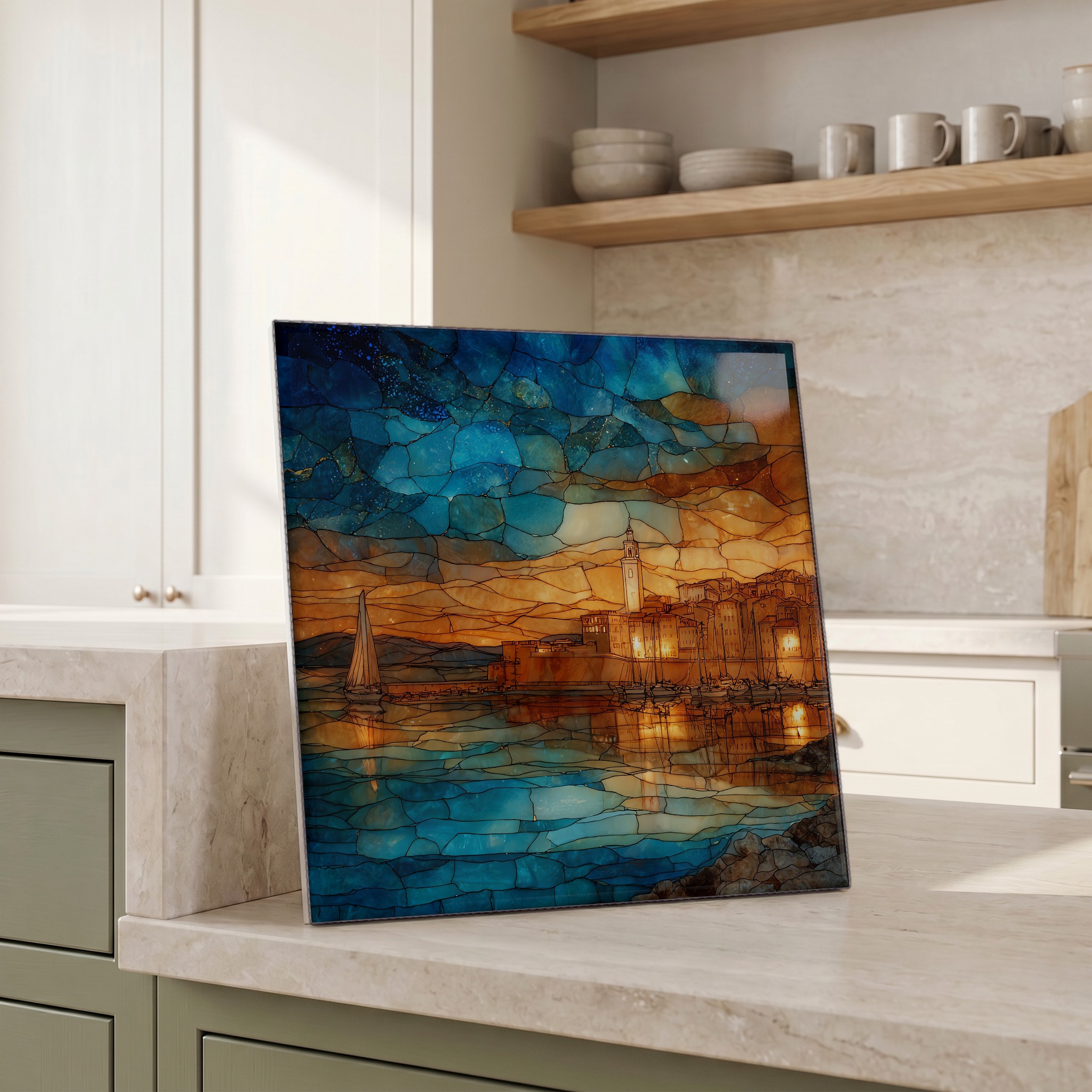
Beside the kettle, propped on the counter.
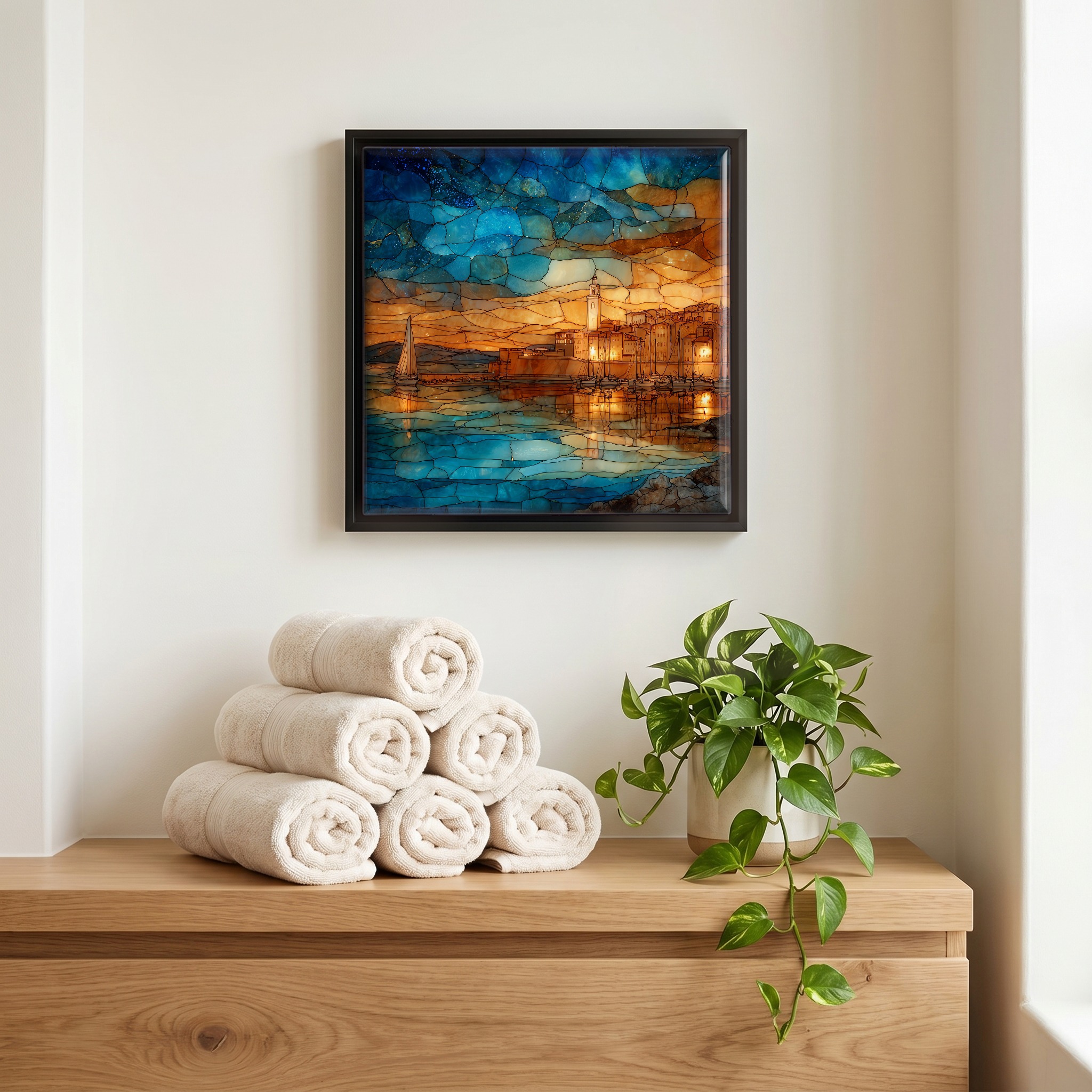
Above the linens, in a slim black surround.
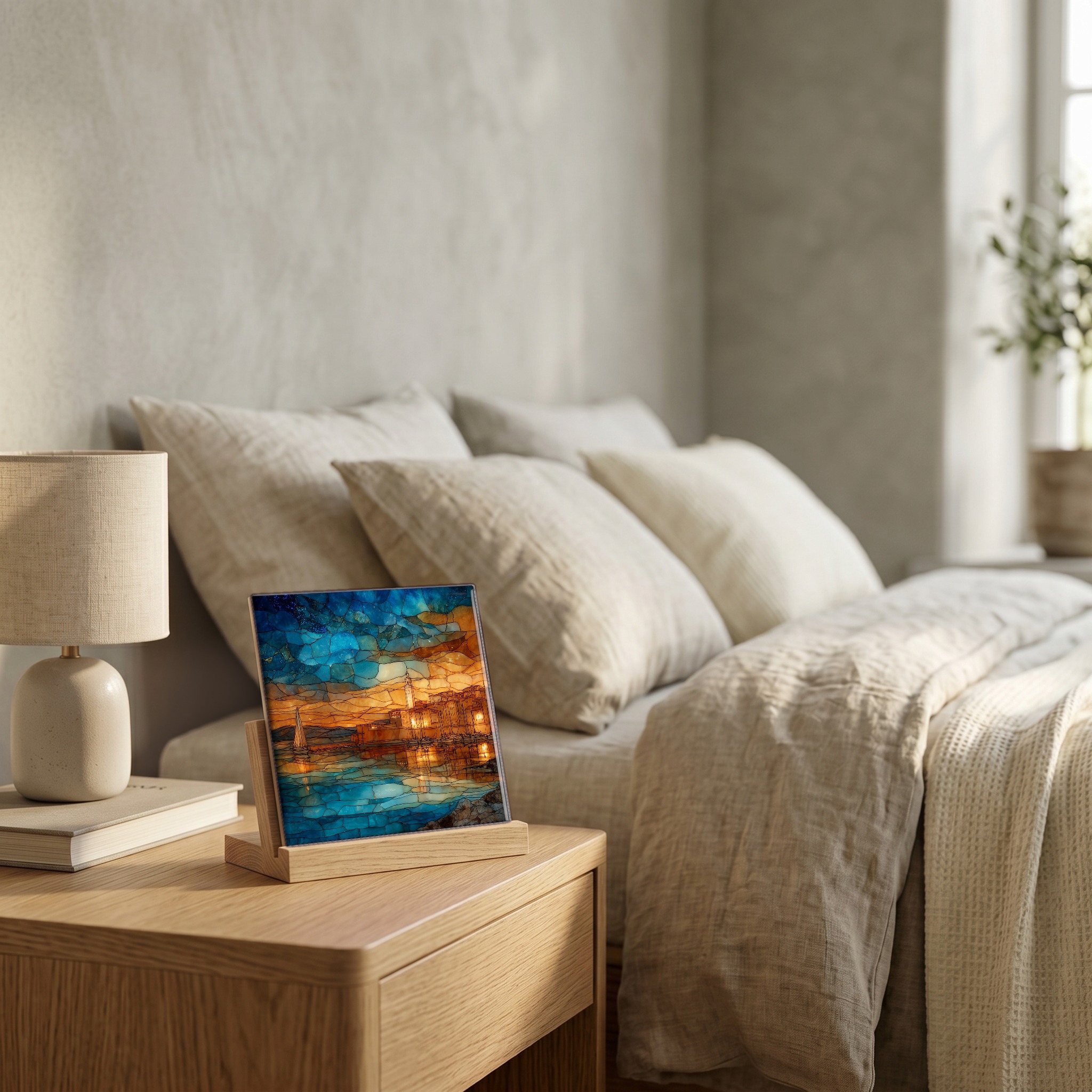
On the nightstand, on a light oak stand.
On a picture ledge, where the light comes in.
a note from the studio

The original harbour of Marseille: the rectangle of water the Greeks from Phocaea sailed into around 600 BCE and called Lacydon. The city was built around it. Today it is a marina with a daily fish market on the Quai des Belges, ferries to the Frioul islands and the Château d'If, and Notre-Dame de la Garde watching from the hill above. Norman Foster's polished steel canopy went up on the north quay in 2013, a mirror that throws the harbour back at itself. When the mistral comes through, the rigging sings.
from the studio
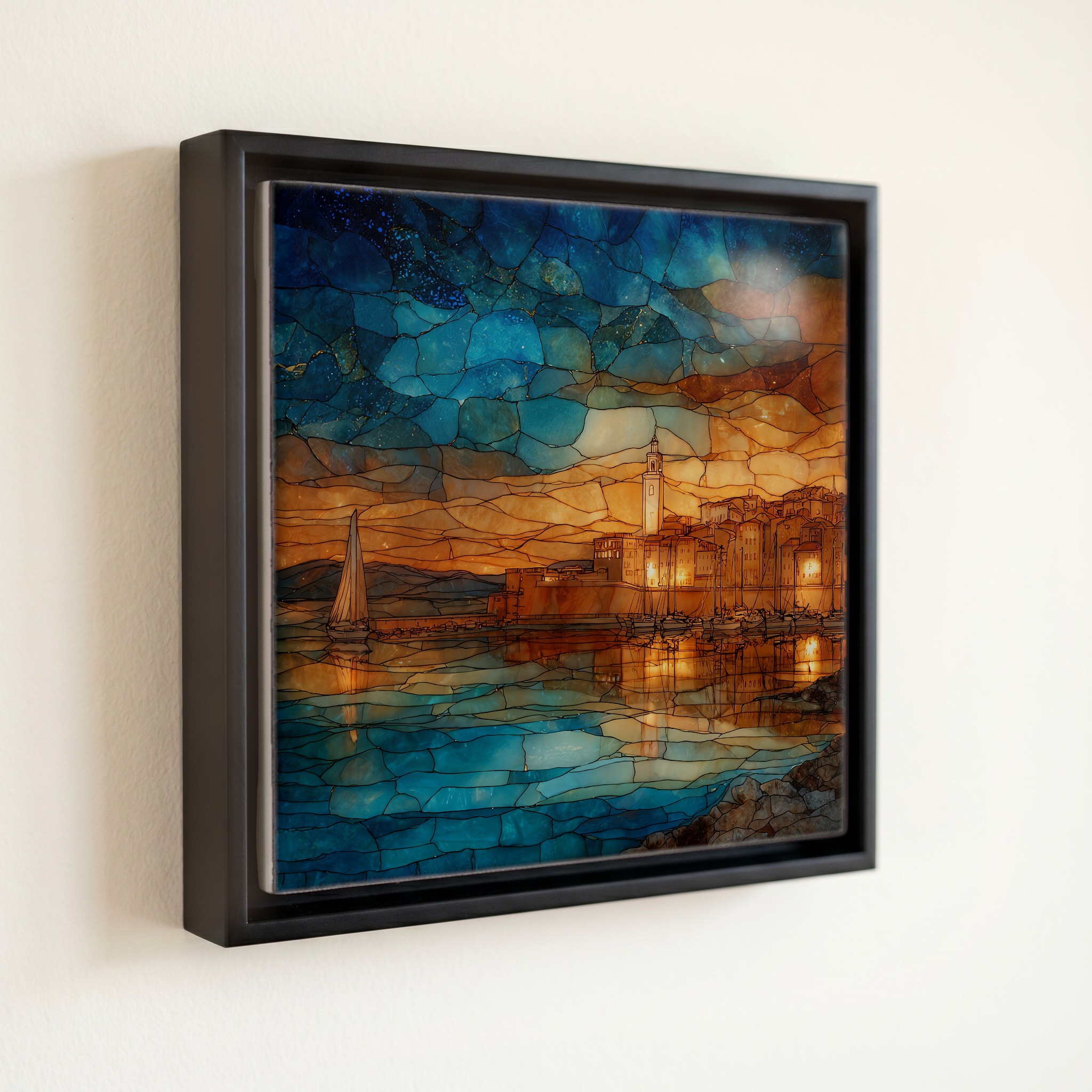
shown in a slim black floating frame · 6 × 6 in
— bring it home

Vieux-Port of Marseille, on ceramic.

Each tile is finished by hand in our Knoxville studio. Artwork is slowly infused into the ceramic surface under high heat and pressure, and rests beneath a thin glossy finish. The colour lives in the surface, not on top of it.

What kind of piece?
One tile — square or rectangle.
How big?
the popular one — counter, shelf, nightstand
6 × 6 in · 15 cm · 1.6 lb
Surface finish
A clear glossy finish — the artwork reads as if under resin. Ideal for show-pieces and framed wall art.
How it sits
A hidden cleat — sits ¼″ proud of the wall.
$58
Hand-finished and shipped from our studio at the foot of the Smokies. On your wall in about ten days.
size
6 × 6 in
15 cm
weighs
1.6 lb
solid in the hand
surface
ceramic, hand-finished
art rests beneath a thin glossy finish
from
Knoxville, TN
our family studio, at the foot of the Smokies
— start a Coaster Set

Pick any four 4-inch tiles — National Parks you've been to, a Smokies set, the four seasons of one place. $ for a set of , cork-backed, ready to live on the table.
comes gift-ready
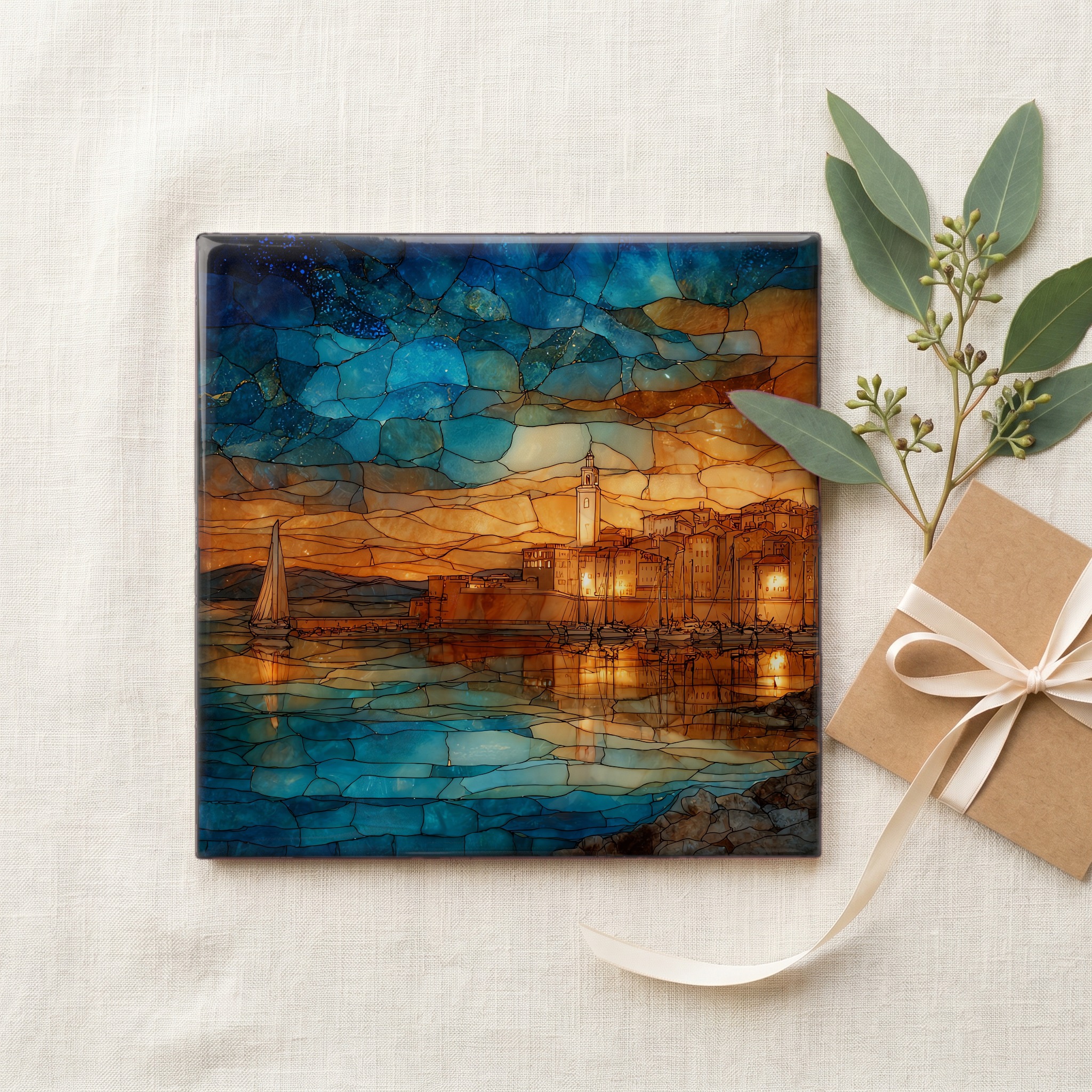
comes gift-ready

Each tile ships in a kraft box, tied with cream ribbon, with a handwritten note from the studio if you'd like to add one.
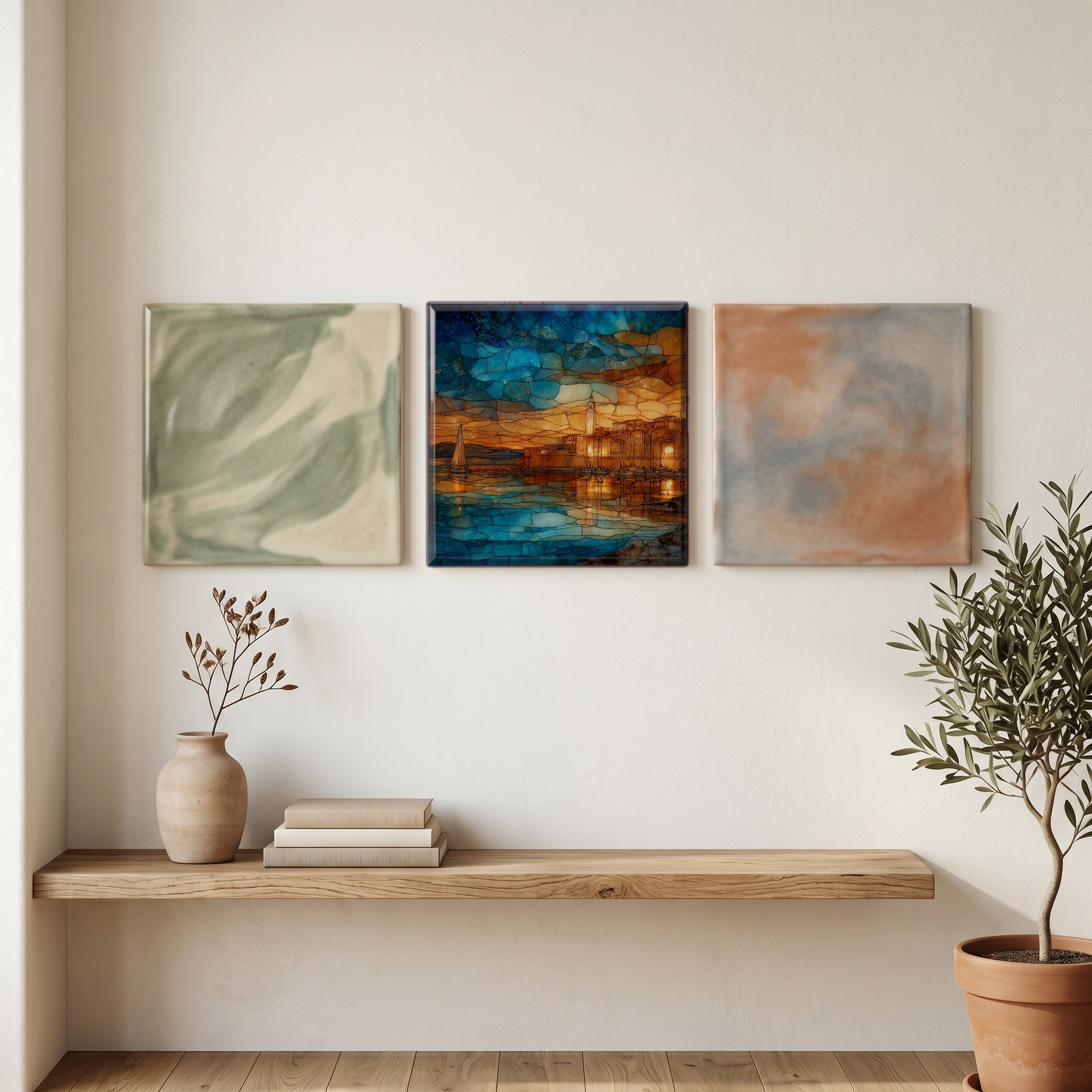
or build a grouping
or build a grouping

Three or five different vistas, hung together — a chapter of places you've been, or want to go.

about Vieux-Port of Marseille

The place, in three passes.

A little of what's known, in case you fall down the rabbit hole — or want to go see it yourself.
the place

The Vieux-Port is the natural inlet at the southwestern edge of Marseille, on the Mediterranean coast of France's Bouches-du-Rhône department in the Provence-Alpes-Côte d'Azur region. The harbour runs roughly 1,000 metres east to west and opens to the sea between two stone forts: Fort Saint-Nicolas to the south and Fort Saint-Jean to the north. The city of Marseille, France's second-largest after Paris, grew out from the eastern end of this rectangle of water. The Canebière, the central avenue of the city, begins where the quays meet. The basilica of Notre-Dame de la Garde sits on a 154-metre limestone hill above the south side, visible from every corner of the port.

— informed by Wikipedia, Marseille Tourisme
the stone

Two forts have guarded the entrance to the Vieux-Port since the seventeenth century. Fort Saint-Jean on the north shore incorporates a medieval commandery of the Knights Hospitaller and the Romanesque chapel of Saint-Jean. Fort Saint-Nicolas, opposite, was raised by Louis XIV in 1660 to discipline a city that had defied him. In 2013, when Marseille was European Capital of Culture, Rudy Ricciotti's MuCEM (the Museum of European and Mediterranean Civilisations) opened alongside Fort Saint-Jean, joined to it by a slim footbridge across the harbour mouth. The same year Norman Foster installed L'Ombrière on the Quai de la Fraternité: a polished stainless-steel canopy, 46 metres long and 22 metres deep, supported on eight slender columns, that reflects the harbour and the crowd beneath it.

the visit

The fish market on the Quai des Belges runs every morning, the catch sold straight off the boats: a tradition the city traces back to its Greek founding around 600 BCE. Ferries leave the south quay for the Frioul archipelago and for the island fortress of Château d'If, made famous by Alexandre Dumas in The Count of Monte Cristo. The Petit Train and the harbour cruise boats use the same quays. The Vieux-Port metro station opens onto the Quai des Belges, and most visitors arrive on foot down the Canebière. The port itself is permanently open and free to walk; the surrounding quays carry restaurant terraces serving bouillabaisse, the Marseillais fish stew that has its own protected charter signed by city restaurateurs in 1980.

— informed by Marseille Tourisme, Wikipedia
where
France · Marseille, Bouches-du-Rhône
elevation
0 m · 0 ft
position
43.2951° N · 5.3666° E
the neighborhood

What's nearby.

A handful of named places within an hour's walk or short drive. Some we've already painted; some we will.
1 km S
Notre-Dame de la Garde
basilica
1 km N
MuCEM
Mediterranean museum
3 km W
Château d'If
island fortress
4 km W
Îles du Frioul
archipelago
1 km N
Cathédrale La Major
cathedral
14 km S
Calanque de Sormiou
limestone inlet
N
Vieux-Port of Marseille
Notre-Dame de la Garde
MuCEM
Château d'If
Îles du Frioul
Cathédrale La Major
Calanque de Sormiou
common questions

What people ask.

A few questions we get about Vieux-Port of Marseille — and about bringing the piece home.
about the place

The Vieux-Port is the historic harbour at the centre of Marseille, on the Mediterranean coast of southern France in the Bouches-du-Rhône department. It opens west to the sea and is bordered by the Quai du Port to the north, the Quai de Rive Neuve to the south, and the Quai des Belges to the east.

The harbour has been in use since around 600 BCE, when Greek sailors from Phocaea founded a colony called Massalia at this inlet, which they named Lacydon. The Vieux-Port is one of the oldest continuously used harbours in Europe.

The Vieux-Port could not handle the steamships of the nineteenth century, so a larger commercial port was built at La Joliette starting in 1844. Today the Vieux-Port serves mainly pleasure boats and small fishing craft, while cargo and cruise traffic uses the modern docks north of the city.

The mirror canopy is L'Ombrière, installed by the British architect Norman Foster in 2013 on the Quai de la Fraternité. It is a polished stainless-steel sheet 46 metres long and 22 metres deep, carried on eight slender columns, that reflects the harbour and the crowd beneath it.

Fort Saint-Jean stands on the north side of the harbour mouth, incorporating a medieval commandery of the Knights Hospitaller and a Romanesque chapel. Fort Saint-Nicolas faces it on the south side and was raised by Louis XIV in 1660. Fort Saint-Jean is now joined to the MuCEM museum by a footbridge.

Yes. The basilica sits 154 metres above the city on La Garde hill, about 1.5 km south of the harbour. From the Vieux-Port it is roughly a thirty-minute walk uphill, or a short ride on bus line 60 or the seasonal Petit Train that leaves from the Quai des Belges. Entry is free.

Bouillabaisse is the traditional Marseillais fish stew, originally a fishermen's meal made from the unsold catch at the end of the day on the Vieux-Port. A 1980 charter signed by eleven Marseille restaurateurs sets out the species and method required for an authentic bouillabaisse marseillaise.

about the piece in your home

It has been a meaningful gift for our customers from Provence and the wider Mediterranean. The Vieux-Port is the harbour Marseille was built around, and locals know it by every quay and every ferry whistle. A Small or Medium with a handwritten note from the studio carries well to a transplanted Marseillais.

The piece sits well in Mediterranean-modern, Coastal-modern, and warm Minimalist rooms. The deep harbour blue grounds a neutral wall; the ochre quay buildings and the masts give the artwork enough warmth to anchor a Provençal palette or contrast a cool white interior.

Yes. Marseille and the Provençal coast have anchored the Mediterranean-modern category for several seasons: warm whites, sea blues, weathered terracotta, olive wood, bleached linen. The Vieux-Port painting reads as both architecture and water, which gives it more presence on the wall than a pure landscape.

For a standard three-seat sofa, the single Large reads as a focal point; the 4-tile Mural fills the wall above with room to breathe; the 9-tile Mural commits the wall entirely. Above a console, a single Large or a horizontal Triptych carries the proportion.

Yes. Order the Dura Satin or Matte finish for any humid or splash-prone wall. The colour is slowly infused into the ceramic surface under high heat and pressure, and the surface is scratch-resistant. The Glossy finish is reserved for framed wall pieces in dry rooms.

A soft microfibre cloth and plain water. No abrasive sponges, no harsh chemicals; the surface is durable but the finish reads best wiped, not scrubbed. For framed pieces, a dry microfibre is enough between deeper cleanings.

Yes. Every WenderVista piece is original work by Reid Wender, the curator and eye of the studio. We do not license imagery and we do not reproduce other artists' paintings. The atlas is ours, hand-finished in Knoxville, Tennessee.

if this one stayed with you

A few you might also love.

Hand-picked by the eye that found Sorapis. Same air, same kind of quiet.