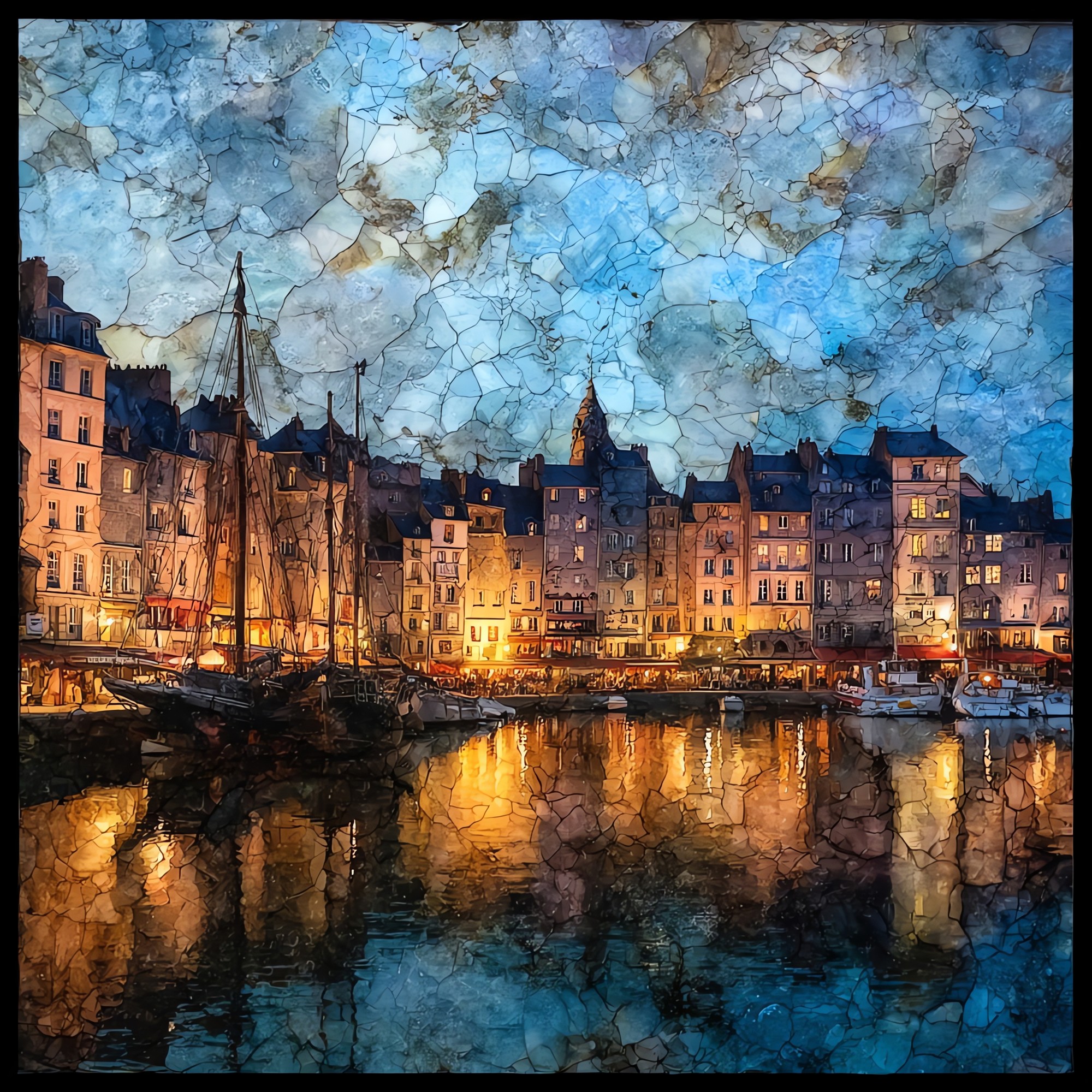
Vieux Bassin of Honfleur
— — houses that lean toward their own reflection.
Not only on a wall.
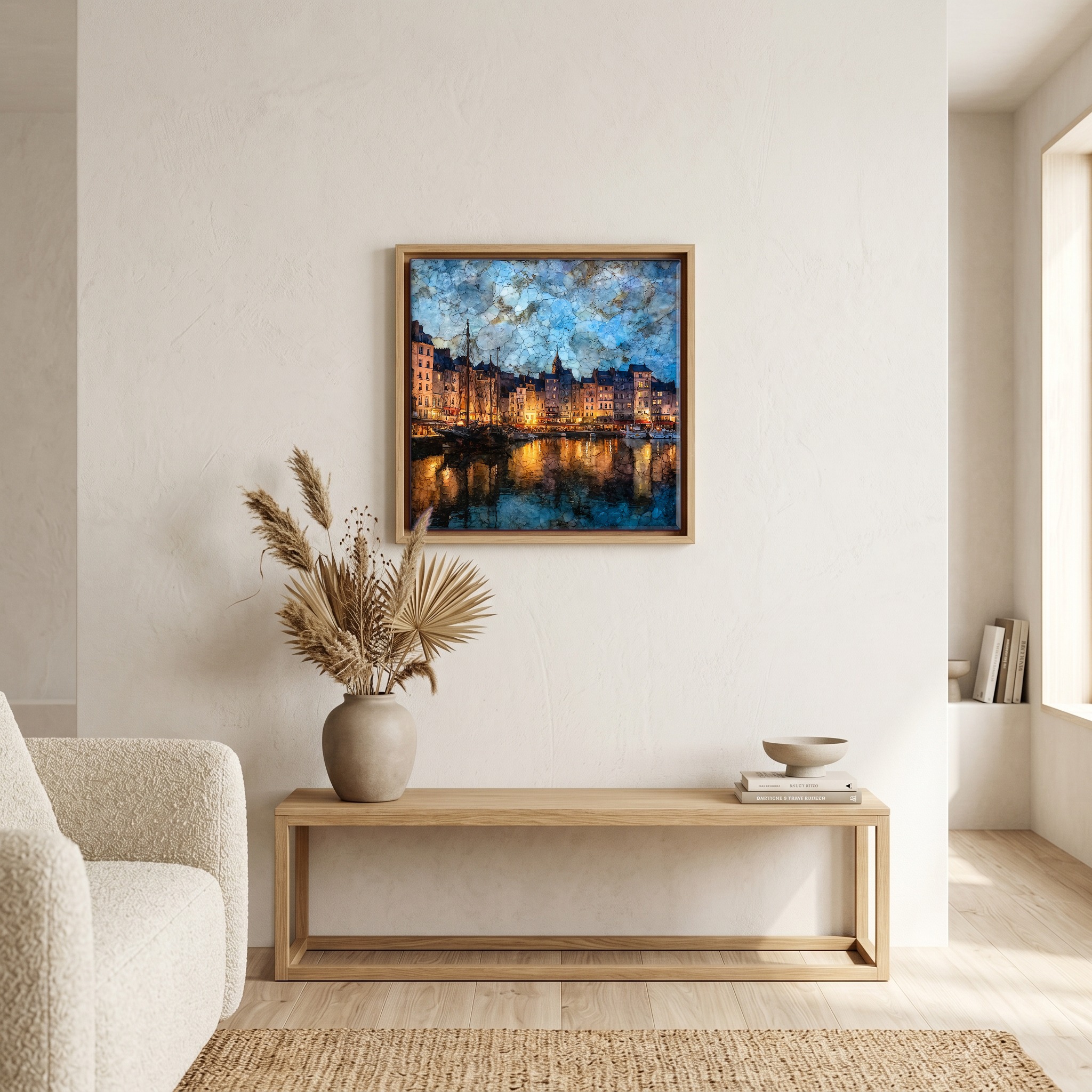
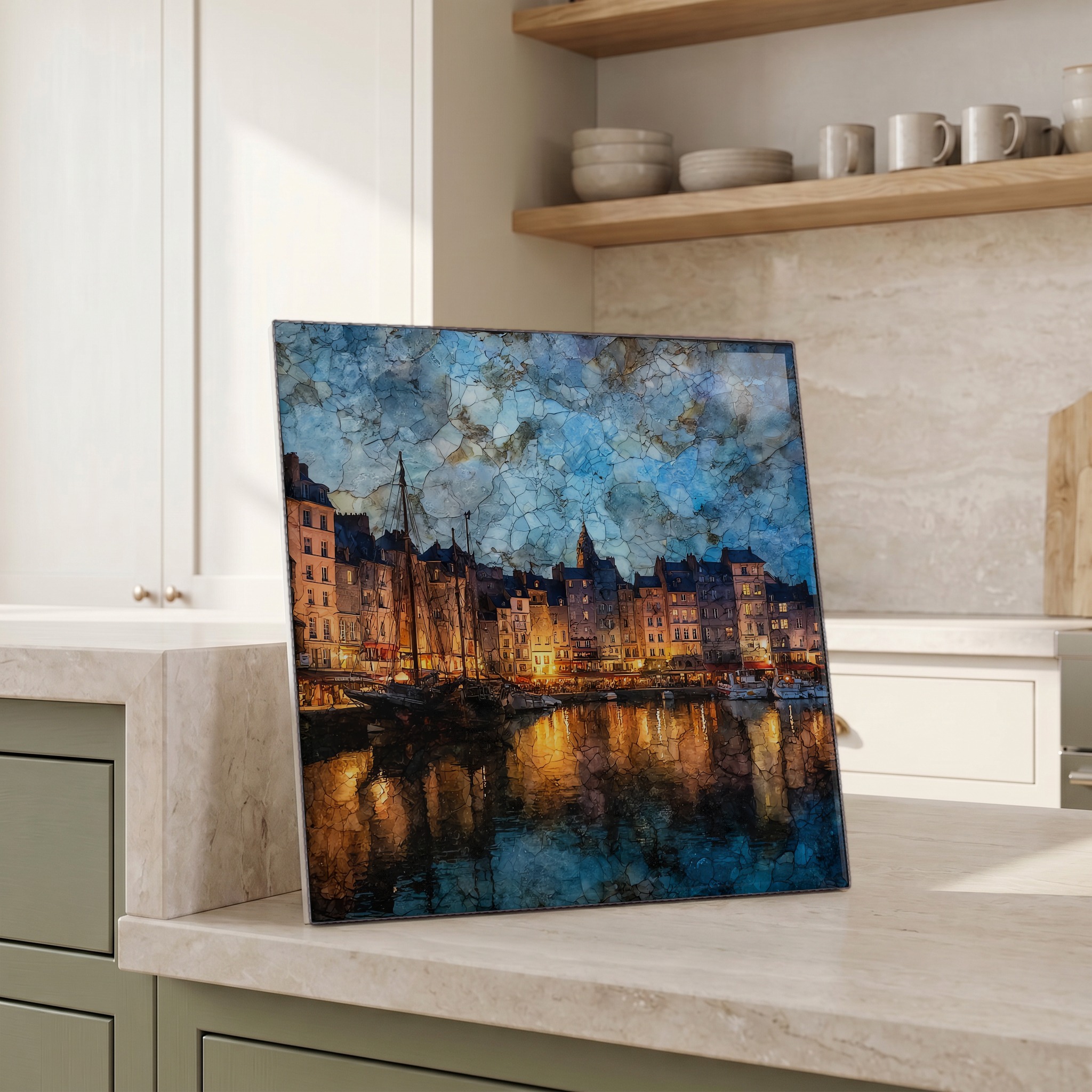
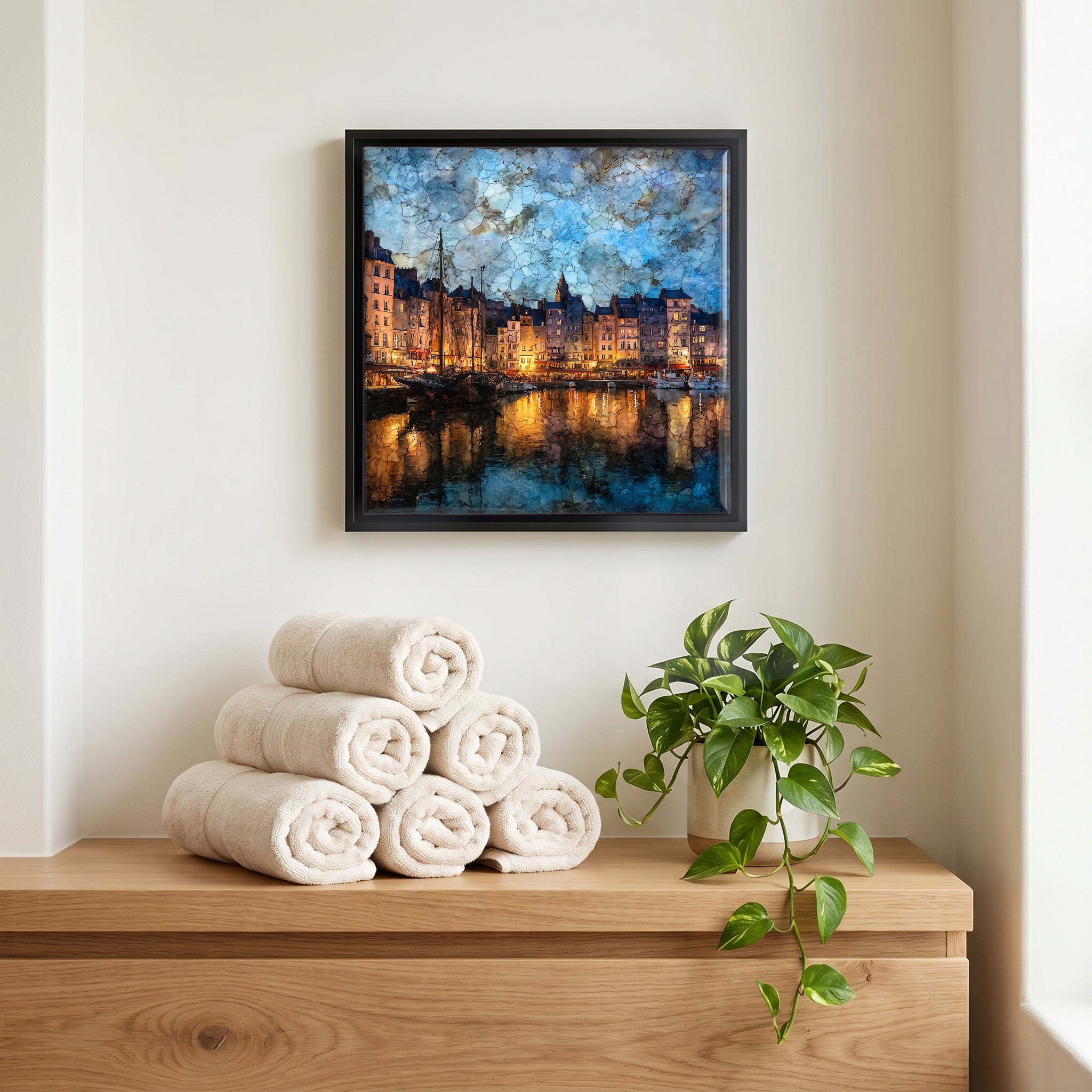

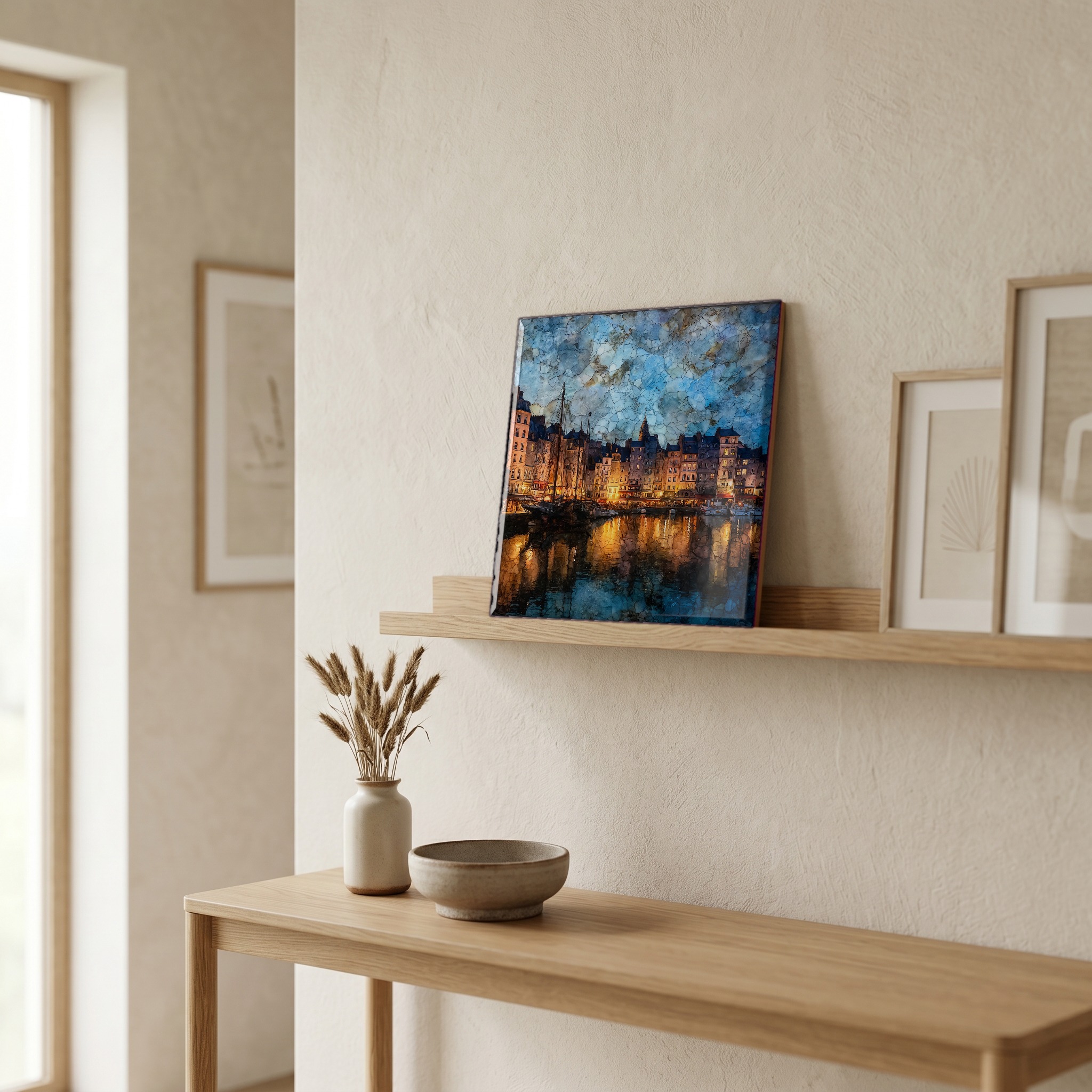
“The old harbour at Honfleur, at the mouth of the Seine. The slate-fronted houses on the Quai Sainte-Catherine lean six and seven stories above the water, their facades doubled in the basin below. The view drew Boudin, then Monet, then Jongkind, all of them trying to catch the same wet northern light. The basin was carved out in 1681 by order of Colbert, when Louis XIV needed a deep-water port on this coast. The fishing boats still tie up bow-in along the quay. The restaurants put tables out as soon as the sun finds the wall.
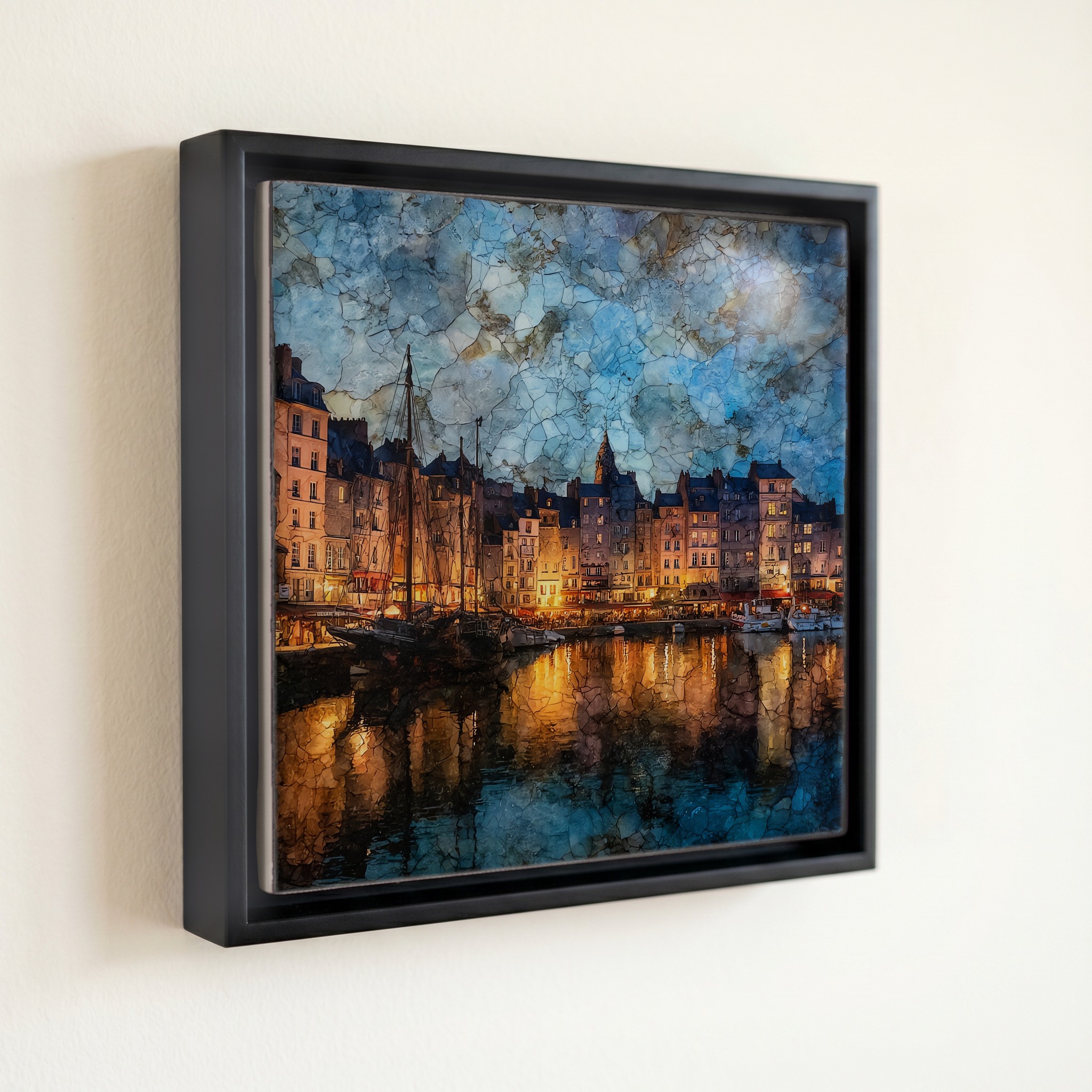
Vieux Bassin of Honfleur, on ceramic.
Each tile is finished by hand in our Knoxville studio. Artwork is slowly infused into the ceramic surface under high heat and pressure, and rests beneath a thin glossy finish. The colour lives in the surface, not on top of it.
Pick any four 4-inch tiles — National Parks you've been to, a Smokies set, the four seasons of one place. $ for a set of , cork-backed, ready to live on the table.
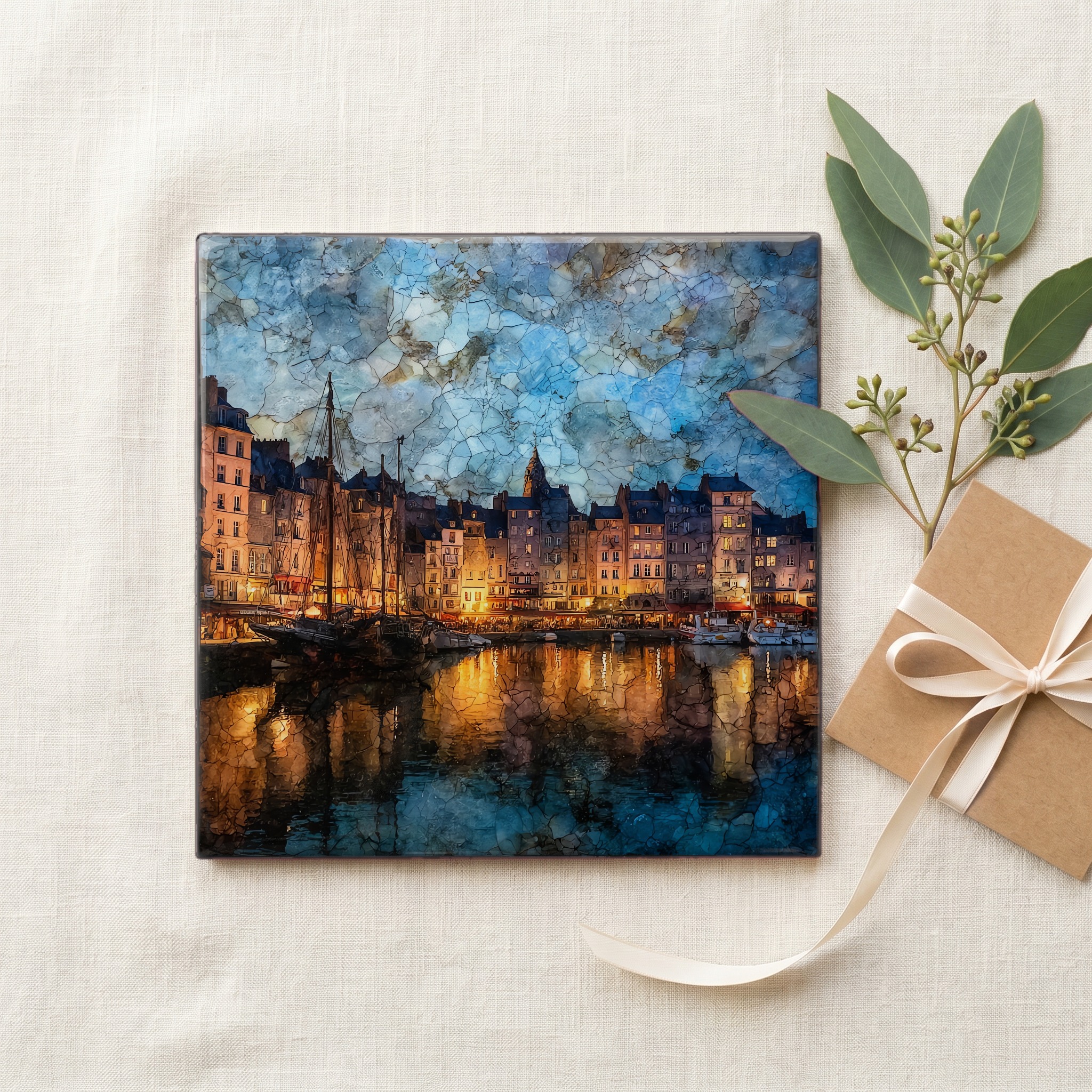
Each tile ships in a kraft box, tied with cream ribbon, with a handwritten note from the studio if you'd like to add one.
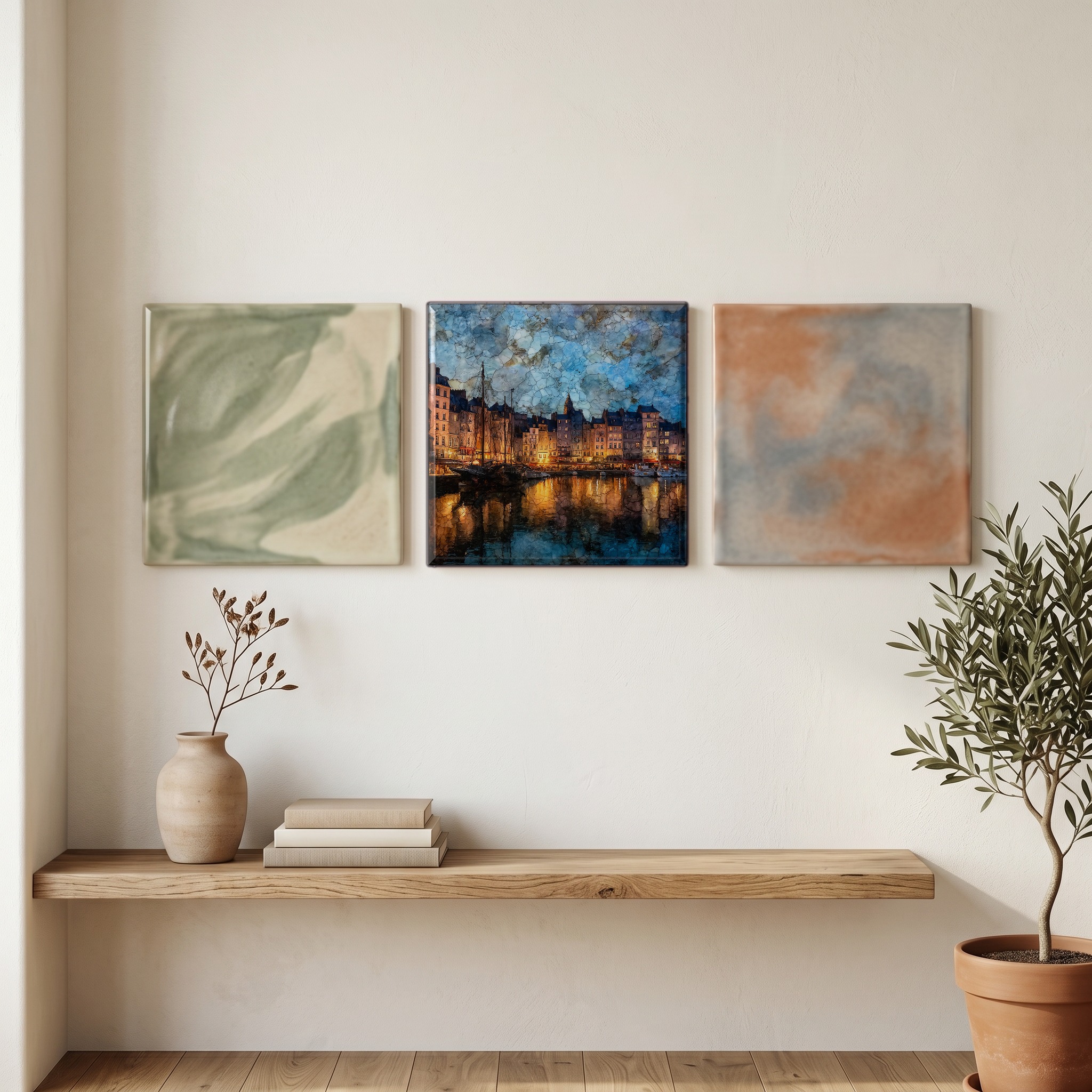
Three or five different vistas, hung together — a chapter of places you've been, or want to go.
The place, in three passes.
Honfleur is a small commune in the Calvados department of Normandy, on the south bank of the Seine estuary, directly across from Le Havre. The Vieux Bassin sits in the old town, a roughly rectangular tidal basin enclosed by stone quays. The basin as it stands today was begun in 1681 under the orders of Jean-Baptiste Colbert, Louis XIV's minister of finance, who wanted a working naval port at the mouth of the Seine. The town's medieval ramparts were dismantled in 1684 by orders of the military engineer Vauban; the Lieutenance, the former governor's house that still guards the basin's mouth, is one of the few pieces of the old fortifications left standing. The town's population today is around 7,500.
Honfleur's light is the reason it became a destination for painters from the 1820s onward. Eugène Boudin, born here in 1824, made the river-mouth sky and its rapid weather the subject of nearly his whole career. Charles Baudelaire singled Boudin out in his 1859 Salon review for what he called the painter's grasp of cloud and atmosphere. Boudin drew Claude Monet to Honfleur in the summer of 1864, where Monet painted at the Ferme Saint-Siméon above the town with Johan Jongkind and Frédéric Bazille. The grouping is now credited as one of the seeds of Impressionism. The Musée Eugène Boudin on the rue de l'Homme-de-Bois holds the largest public collection of Boudin's work and gives rooms to Monet, Jongkind, and Dufy.
The Vieux Bassin is a tidal basin, separated from the Seine estuary by a lock and the Pont de la Lieutenance, the small swing-bridge that opens for the fishing fleet on a tidal schedule. The harbour entrance is anchored on its eastern side by the Lieutenance, the former governor's lodge that survives from the town's old fortifications. The Seine flows past on its way to the English Channel; the tide range on this coast can exceed seven metres, which is why every quay along the Vieux Bassin has deep stone steps cut into it. Fishing boats moor bow-in along the Quai Sainte-Catherine and the Quai Saint-Étienne; a small pleasure-boat fleet uses the lock to come and go.