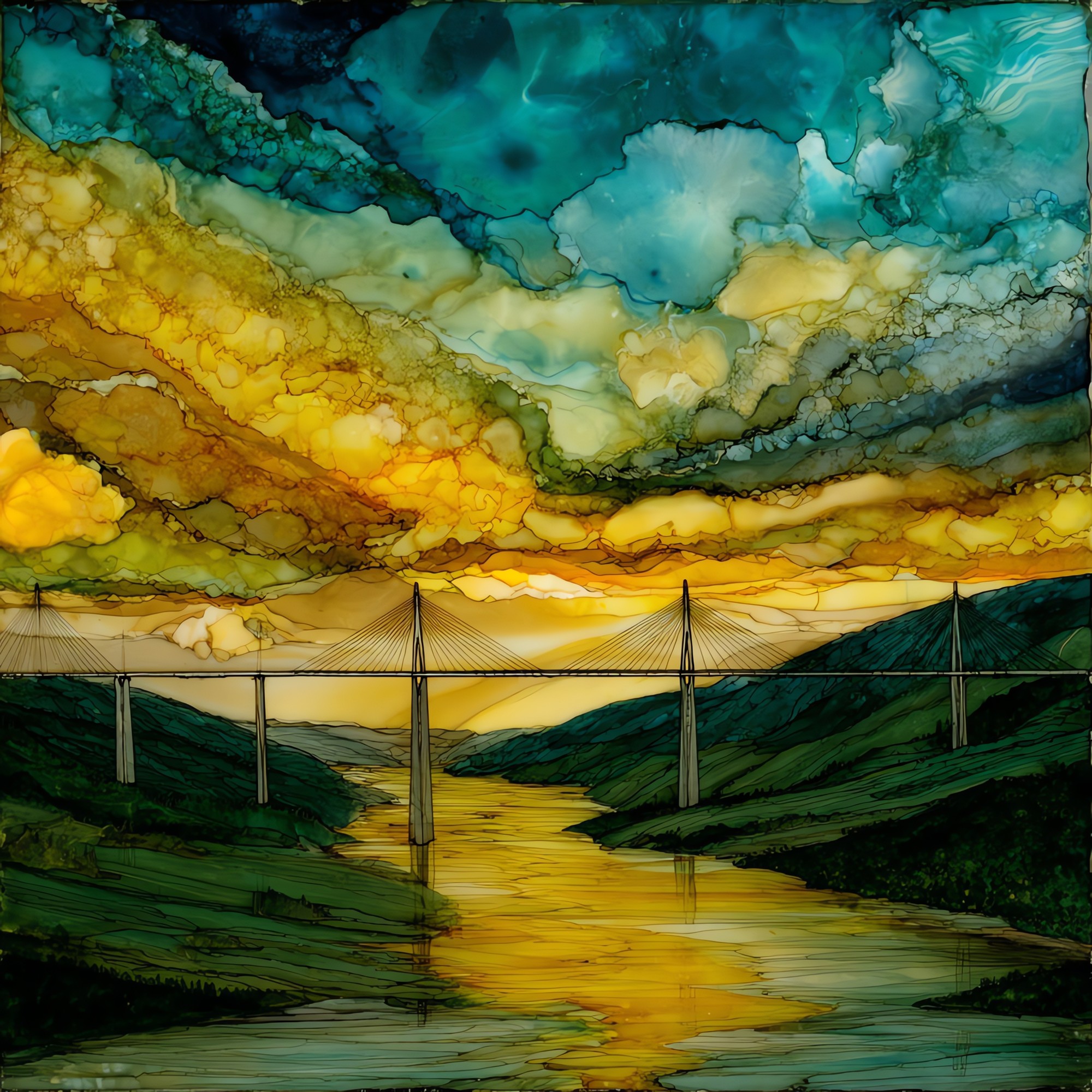
Viaduc de Millau
— — the morning the road floated.
Not only on a wall.

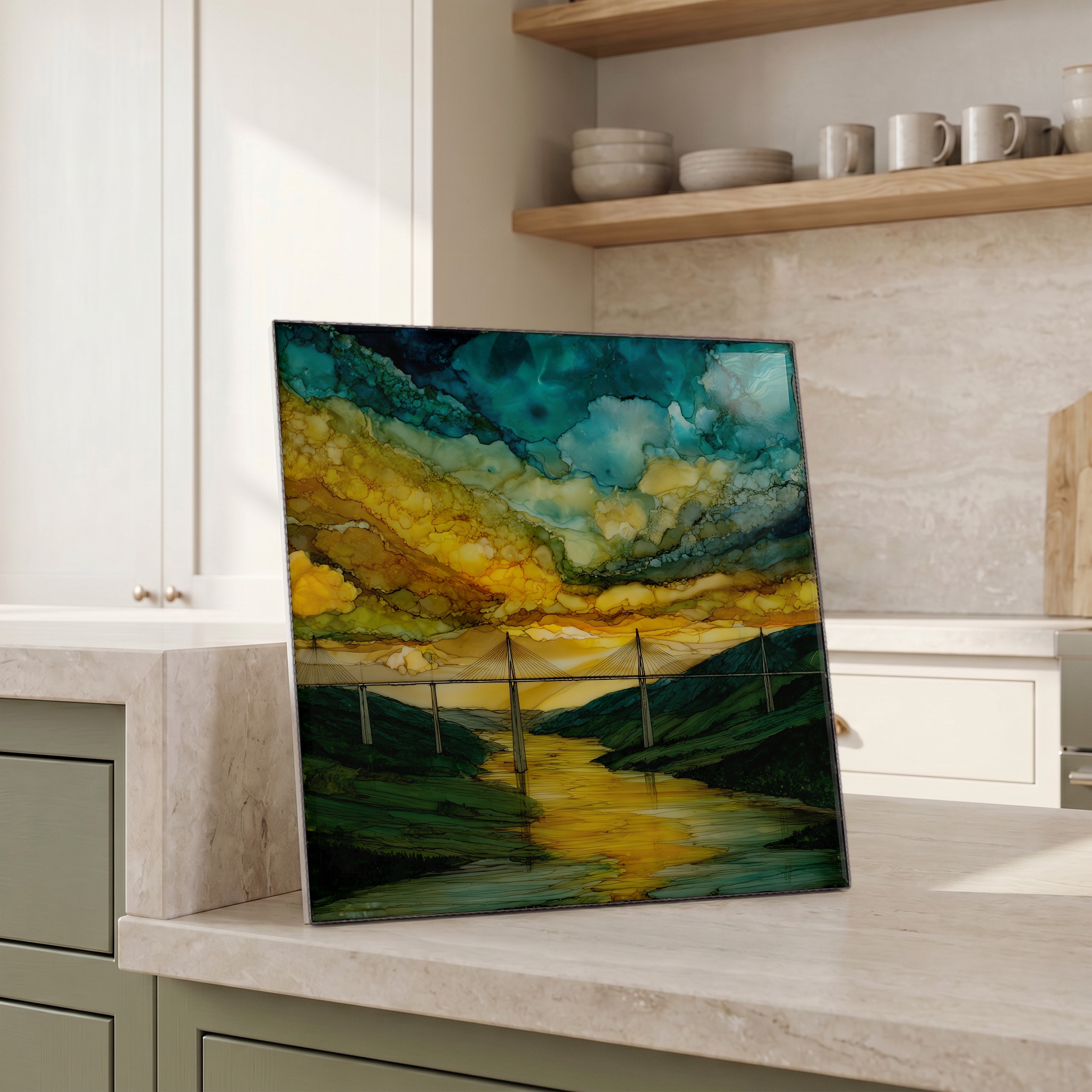


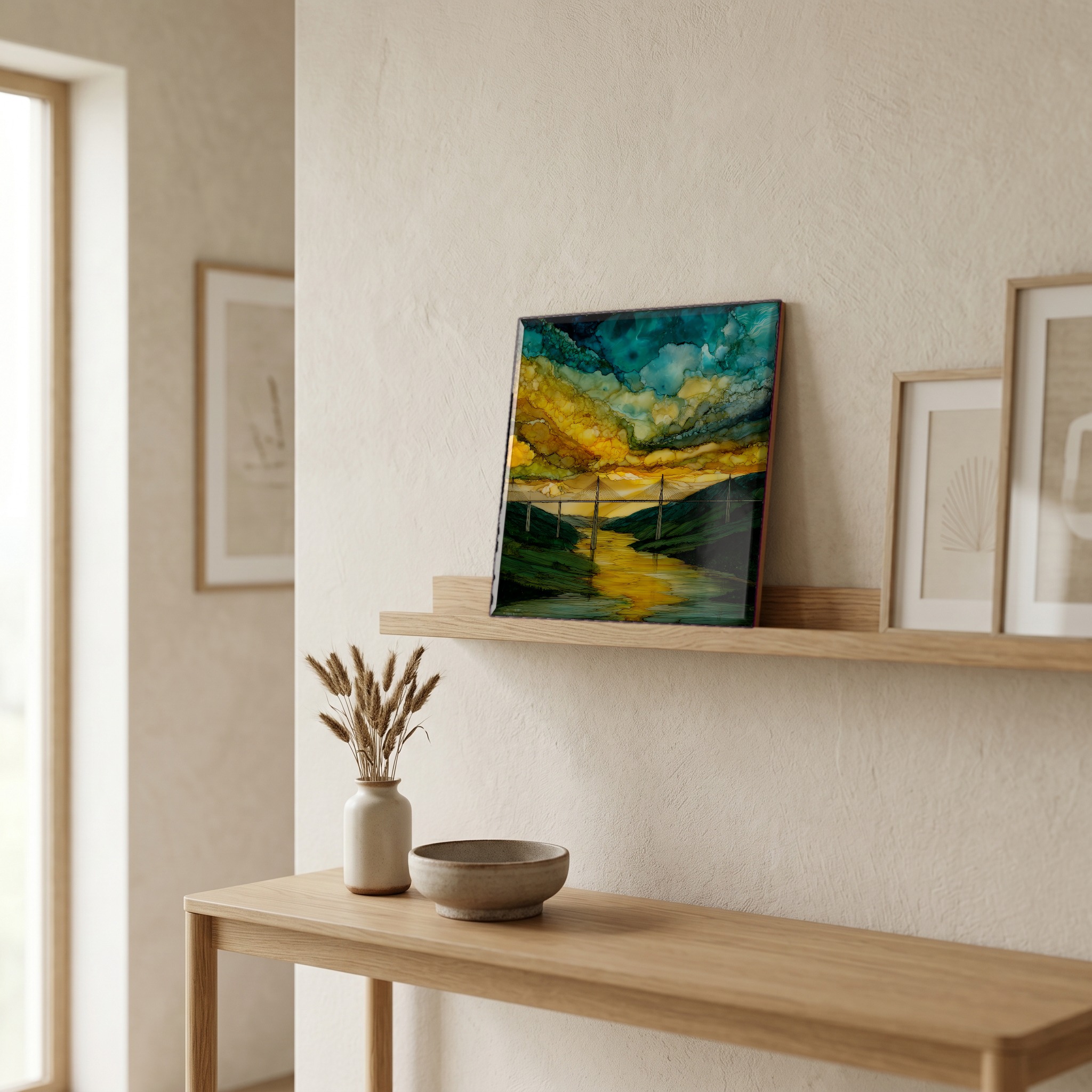
“A cable-stayed bridge across the Tarn valley in southern France, opened in December 2004. Norman Foster's drawing, Michel Virlogeux's engineering. Seven white piers, the tallest reaching 343 metres at the mast tip, taller than the Eiffel Tower. The road it carries is the A75 from Clermont-Ferrand toward the Mediterranean. On certain mornings fog settles into the Tarn and the bridge stands above it, the way mountains do.
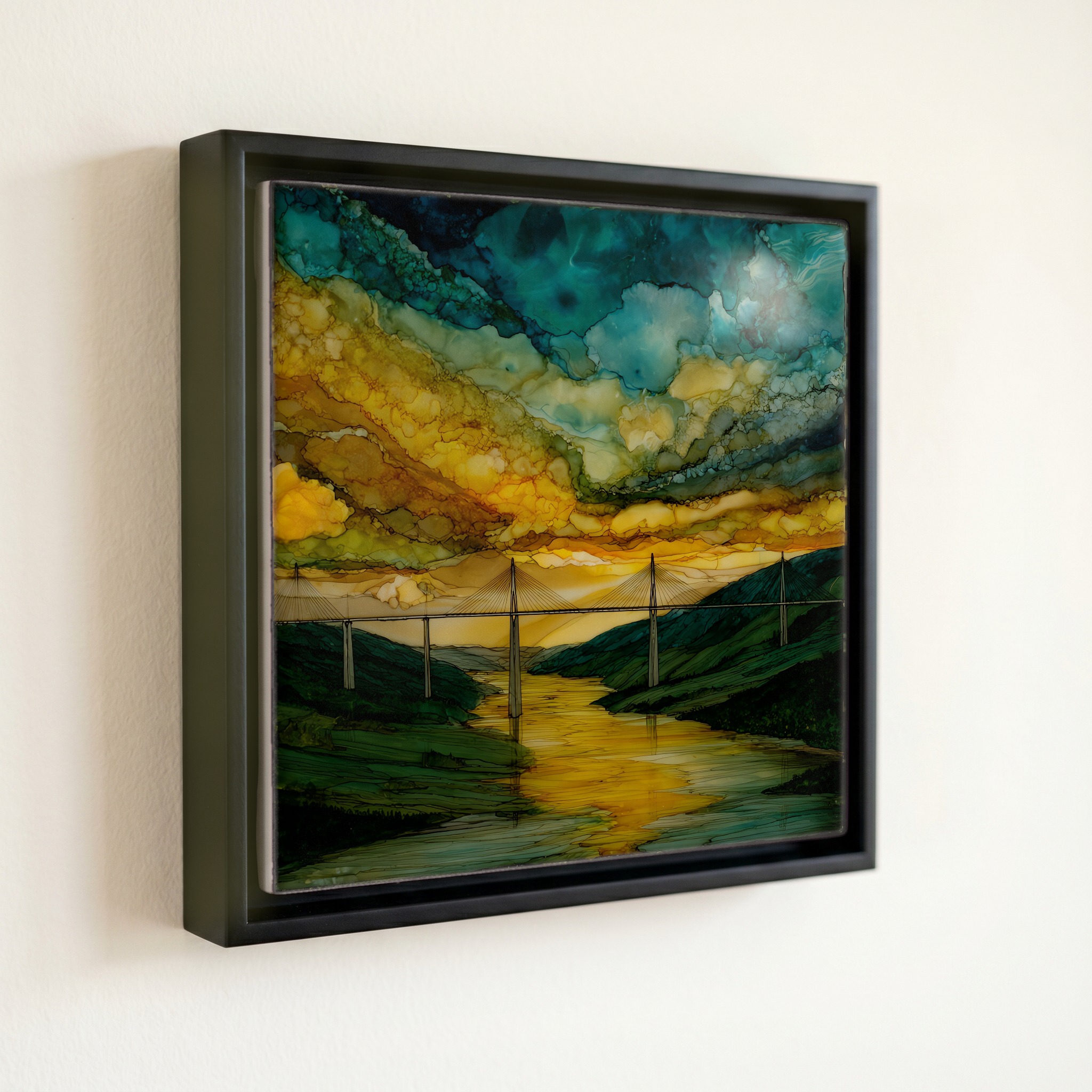
Viaduc de Millau, on ceramic.
Each tile is finished by hand in our Knoxville studio. Artwork is slowly infused into the ceramic surface under high heat and pressure, and rests beneath a thin glossy finish. The colour lives in the surface, not on top of it.
Pick any four 4-inch tiles — National Parks you've been to, a Smokies set, the four seasons of one place. $ for a set of , cork-backed, ready to live on the table.

Each tile ships in a kraft box, tied with cream ribbon, with a handwritten note from the studio if you'd like to add one.

Three or five different vistas, hung together — a chapter of places you've been, or want to go.
The place, in three passes.
The Viaduc de Millau crosses the valley of the Tarn River in the Aveyron department of Occitanie, in southern France, about 100 kilometres north of Montpellier. The road it carries is the A75 autoroute, the inland route from Clermont-Ferrand to Béziers and the Mediterranean coast. Before the viaduct opened in December 2004, southbound traffic dropped off the limestone plateau into the town of Millau in the valley below, where the descent and the climb back out could add hours to the summer drive to the coast. The bridge replaced that bottleneck and lifts the autoroute clean over the valley, bypassing Millau itself, a market town known historically for its glove-making and its leather trade.
The bridge is the work of the French structural engineer Michel Virlogeux and the British architect Norman Foster of Foster + Partners, built by the construction group Eiffage between October 2001 and December 2004. It is a cable-stayed deck 2,460 metres long, carried on seven concrete piers and seven white steel masts. The tallest pier rises 245 metres from the valley floor to the deck, and the mast above it adds another 87 metres, giving a total structural height of 343 metres at the mast tip, taller than the Eiffel Tower. By that measure the Viaduc de Millau remains the tallest bridge in the world. The piers were poured in place using climbing formwork; the steel deck was assembled at the two ends and pushed out across the valley on hydraulic launchers.
The Tarn valley narrows and deepens at Millau, and morning fog frequently settles into it while the limestone plateaux on either side stay clear. The viaduct's deck sits about 270 metres above the river, high enough that on those mornings the road runs in open light while the valley below disappears under cloud. Drivers describe it as crossing a long white floor, with the Causse du Larzac on the far side standing dry and pale. The inversion is most common in autumn, when cold nights pool into the valley and the plateau warms first. From the Aire du Viaduc rest area on the southern approach, the bridge is often photographed with the masts above the fog and the piers vanishing into it.