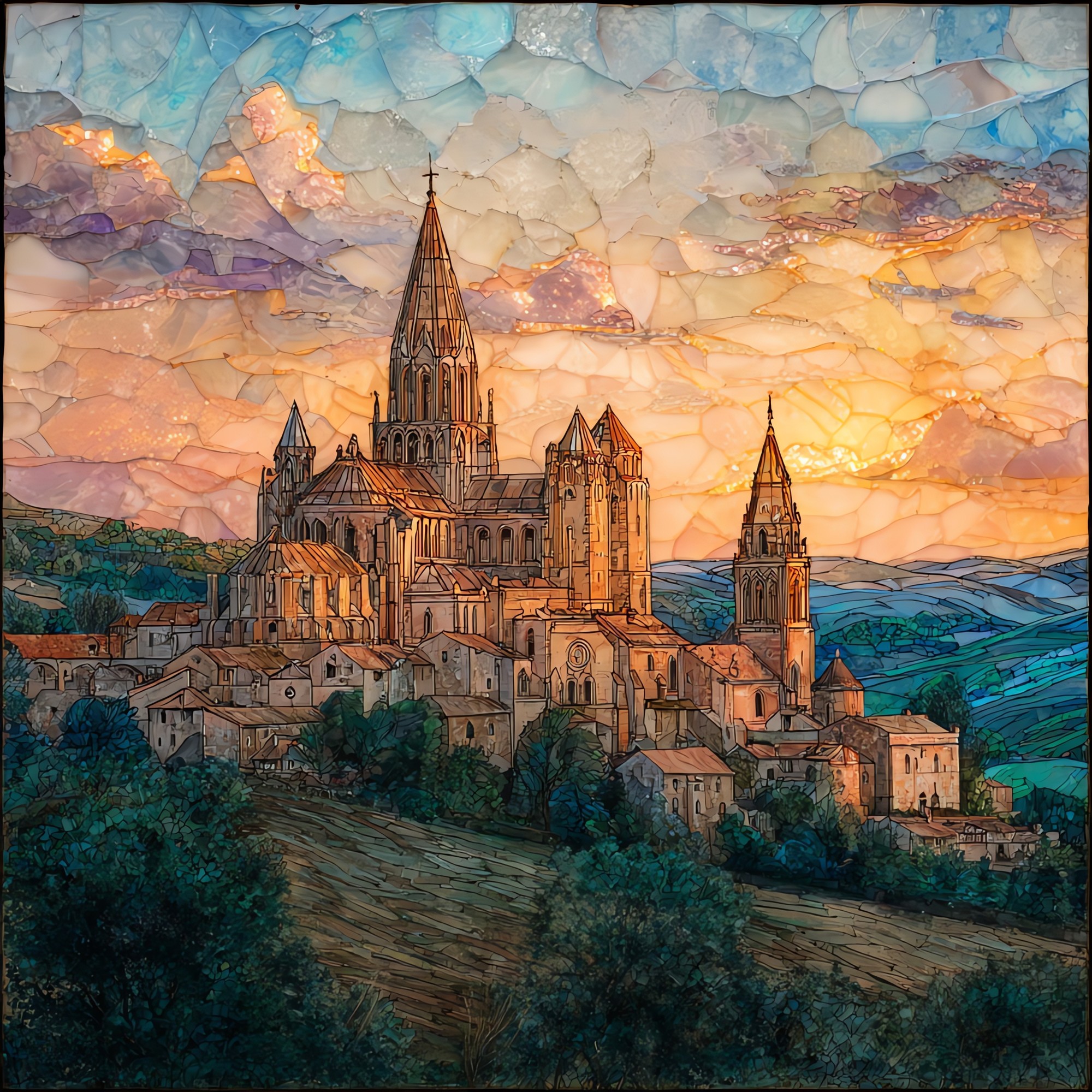
Vezelay Basilica
— the room the noon light walks in June.
Not only on a wall.
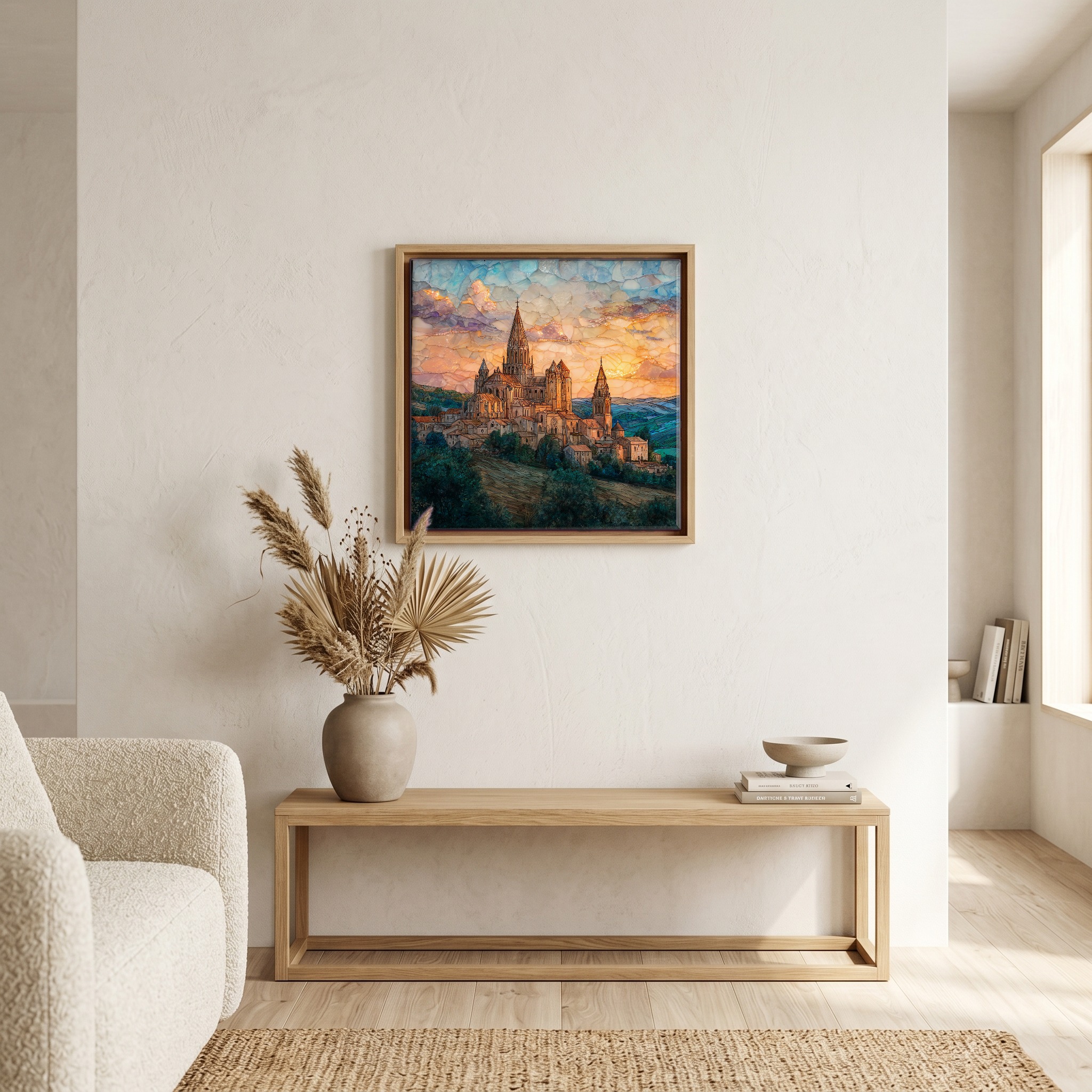
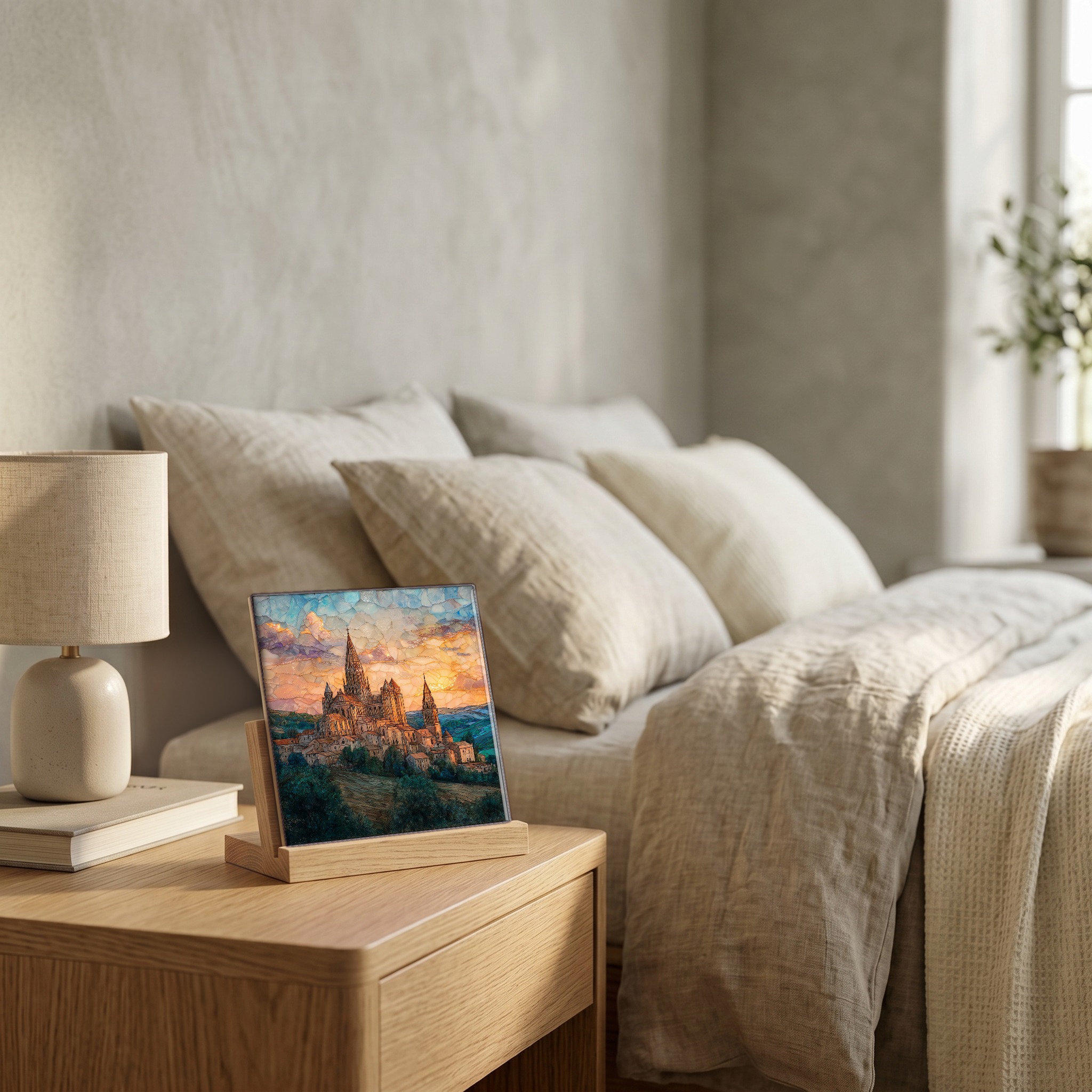
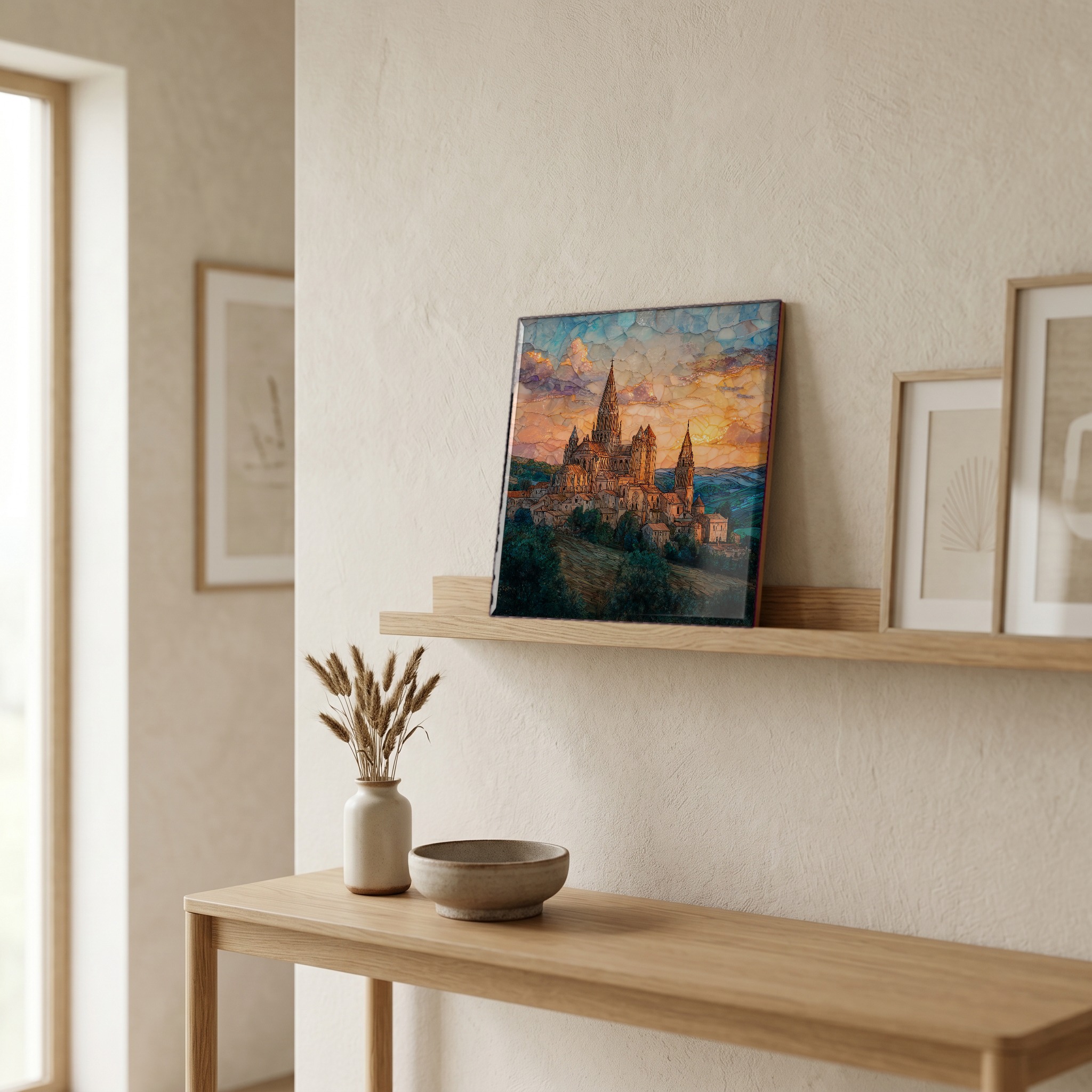
“The basilica sits on a long ridge above the village of Vézelay, a hill that drew pilgrims for weeks of walking through Burgundy. Inside, the nave is one of the great Romanesque rooms in Europe. At noon on the summer solstice, sunlight falls through the upper windows in a straight line of pools down the centre aisle, a geometry the twelfth-century masons knew how to set. The tympanum over the inner door, Christ sending out the apostles, has been studied for nearly nine hundred years. People still arrive on foot, with shells on their packs.
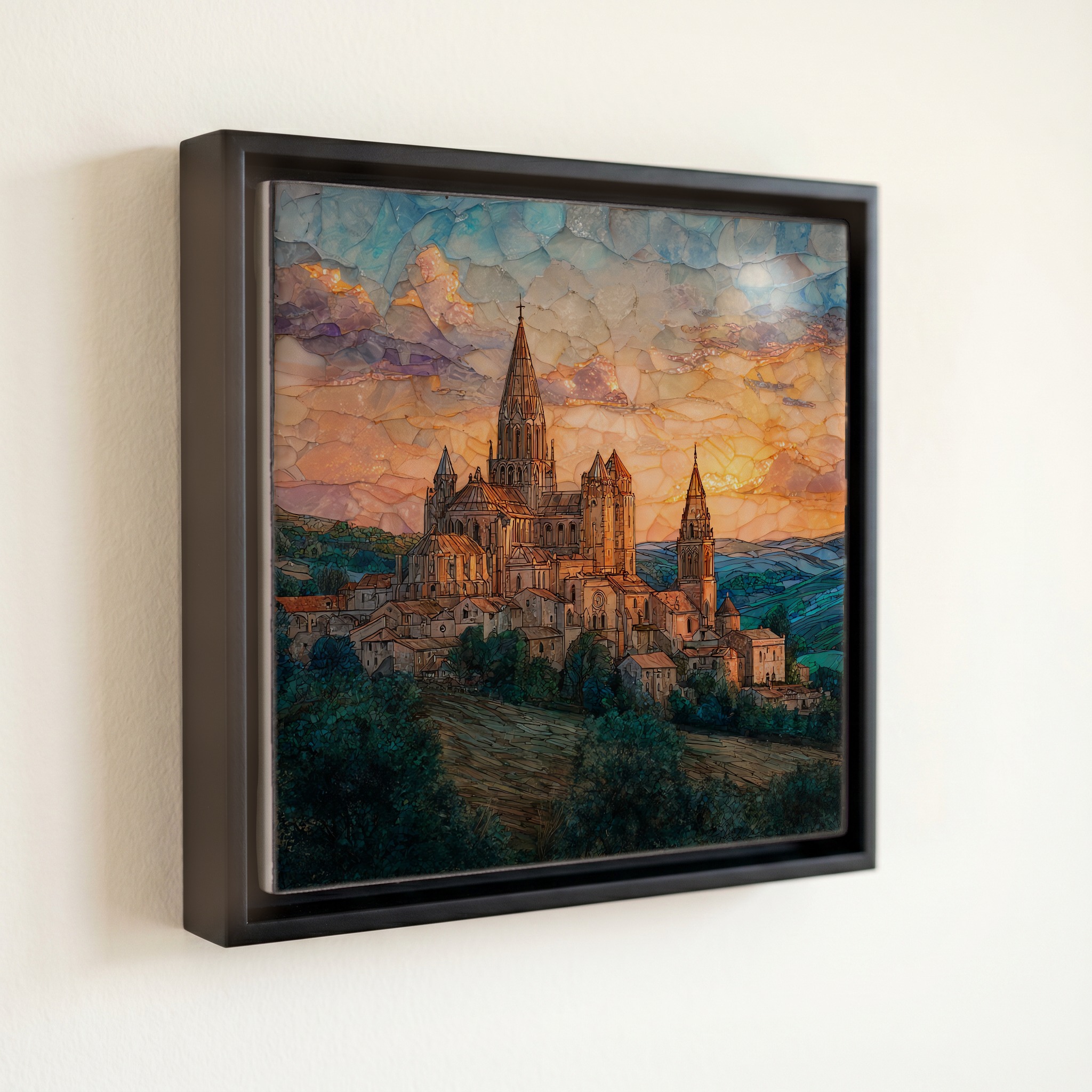
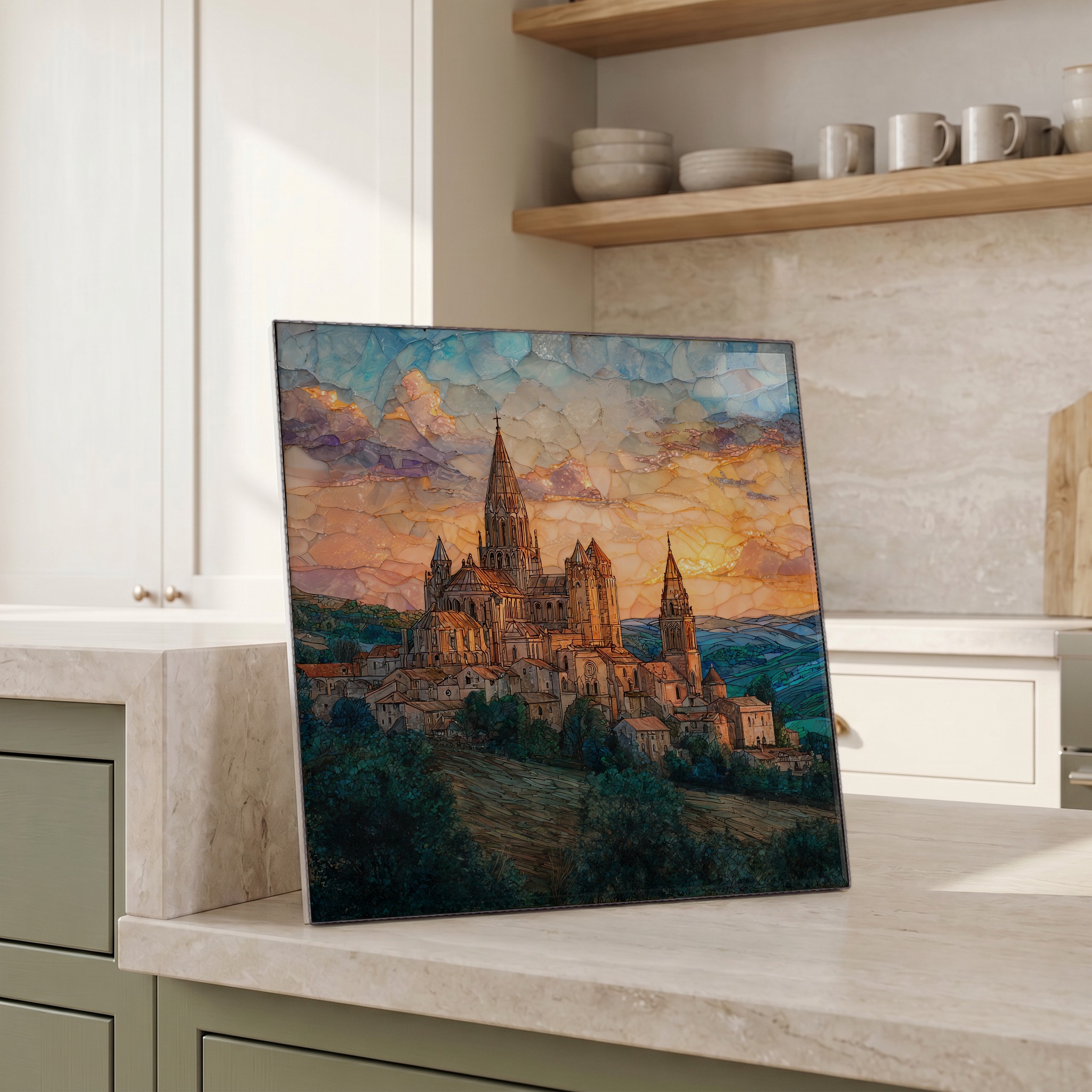
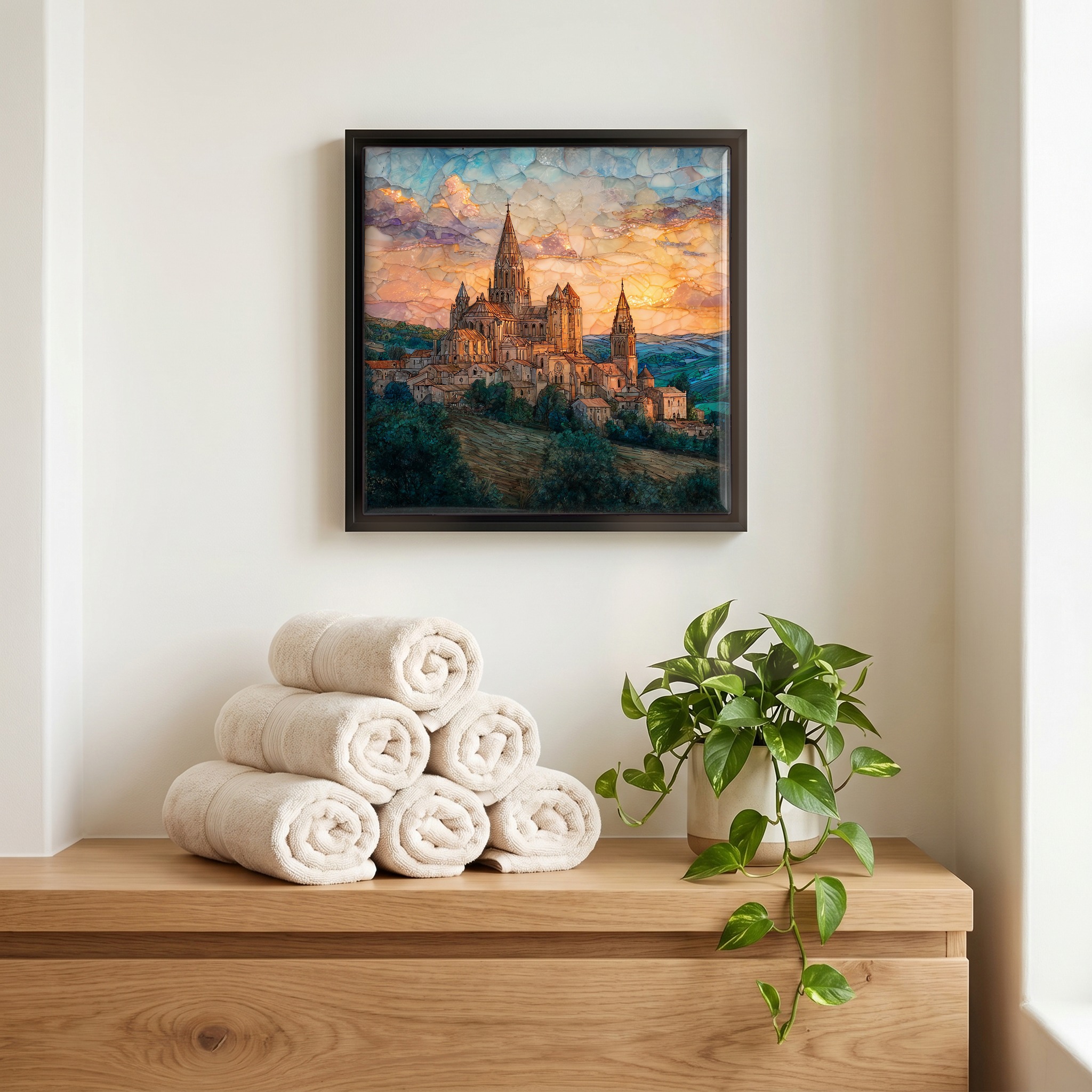
Vezelay Basilica, on ceramic.
Each tile is finished by hand in our Knoxville studio. Artwork is slowly infused into the ceramic surface under high heat and pressure, and rests beneath a thin glossy finish. The colour lives in the surface, not on top of it.
Pick any four 4-inch tiles — National Parks you've been to, a Smokies set, the four seasons of one place. $ for a set of , cork-backed, ready to live on the table.
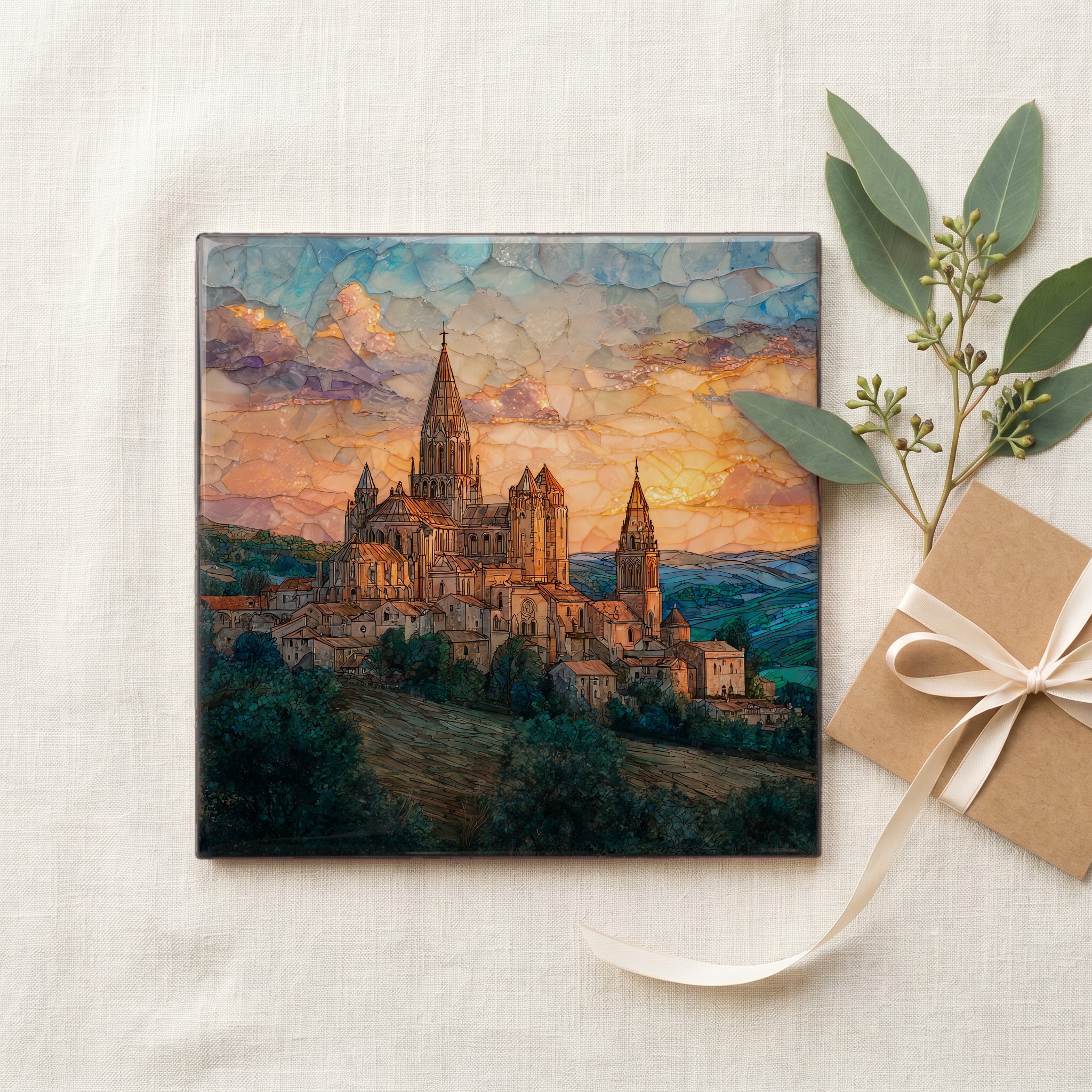
Each tile ships in a kraft box, tied with cream ribbon, with a handwritten note from the studio if you'd like to add one.
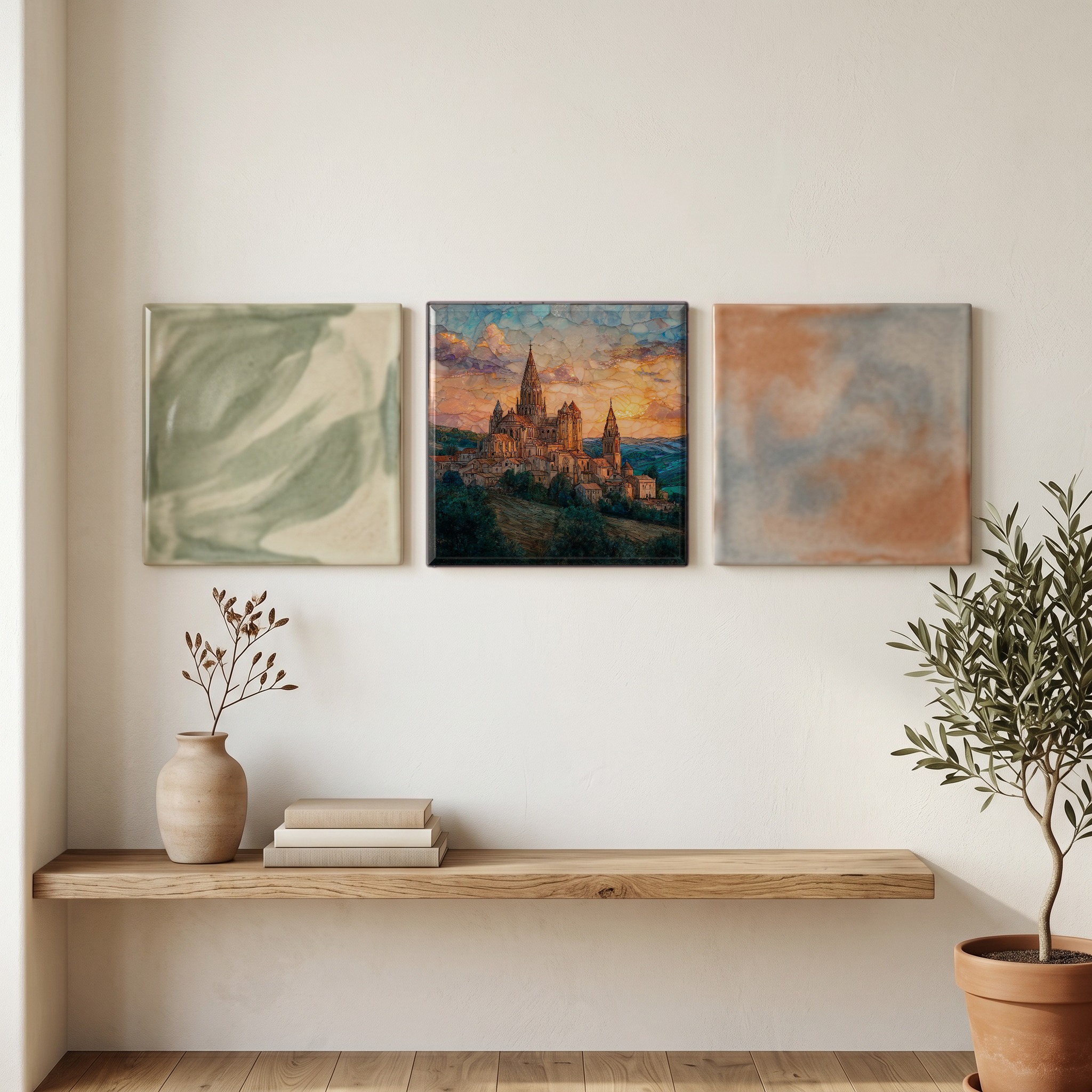
Three or five different vistas, hung together — a chapter of places you've been, or want to go.
The place, in three passes.
The basilica sits on the long hill of Vézelay, in the Yonne department of northern Burgundy. The village counts about four hundred inhabitants. The hill rises to roughly 302 metres above the Cure valley, in a landscape of vineyards and pastures southwest of Auxerre. The basilica was founded as a Benedictine abbey in the ninth century and became a starting point for one of the four medieval pilgrimage routes from France to Santiago de Compostela. UNESCO listed the basilica and the hill of Vézelay as a World Heritage Site in 1979. Eugène Viollet-le-Duc led the major restoration in the 1840s, after centuries of fire, religious wars, and revolutionary damage.
The Romanesque nave is about sixty-two metres long, built between roughly 1120 and 1140 in pale local limestone, with banded arches of alternating light and dark stones above each bay. The tympanum over the inner doorway carves Christ sending out the apostles to the corners of the known world. The carvings have been studied since the twelfth century as among the finest of French Romanesque sculpture, alongside those of Autun and Moissac. Saint Bernard of Clairvaux preached the Second Crusade from this hill in 1146, calling the faithful out from the church itself. Much of what visitors see today was carefully recovered under Viollet-le-Duc's 1840s campaign.
Around the summer solstice, at midday, sunlight passes through the high south-facing windows of the nave and falls as a line of luminous pools along the central axis of the floor. The geometry was set by the twelfth-century masons, who built the nave on an east-west axis aligned to the longest day. The effect lasts a few minutes around noon on dates close to 21 June, and draws a small crowd each year. The same builders worked in pale limestone that takes the morning and evening light differently from the heavier stones of Burgundian abbeys at Cluny and Tournus. The hill itself catches first light from the east across the Morvan.