Wender·Vista
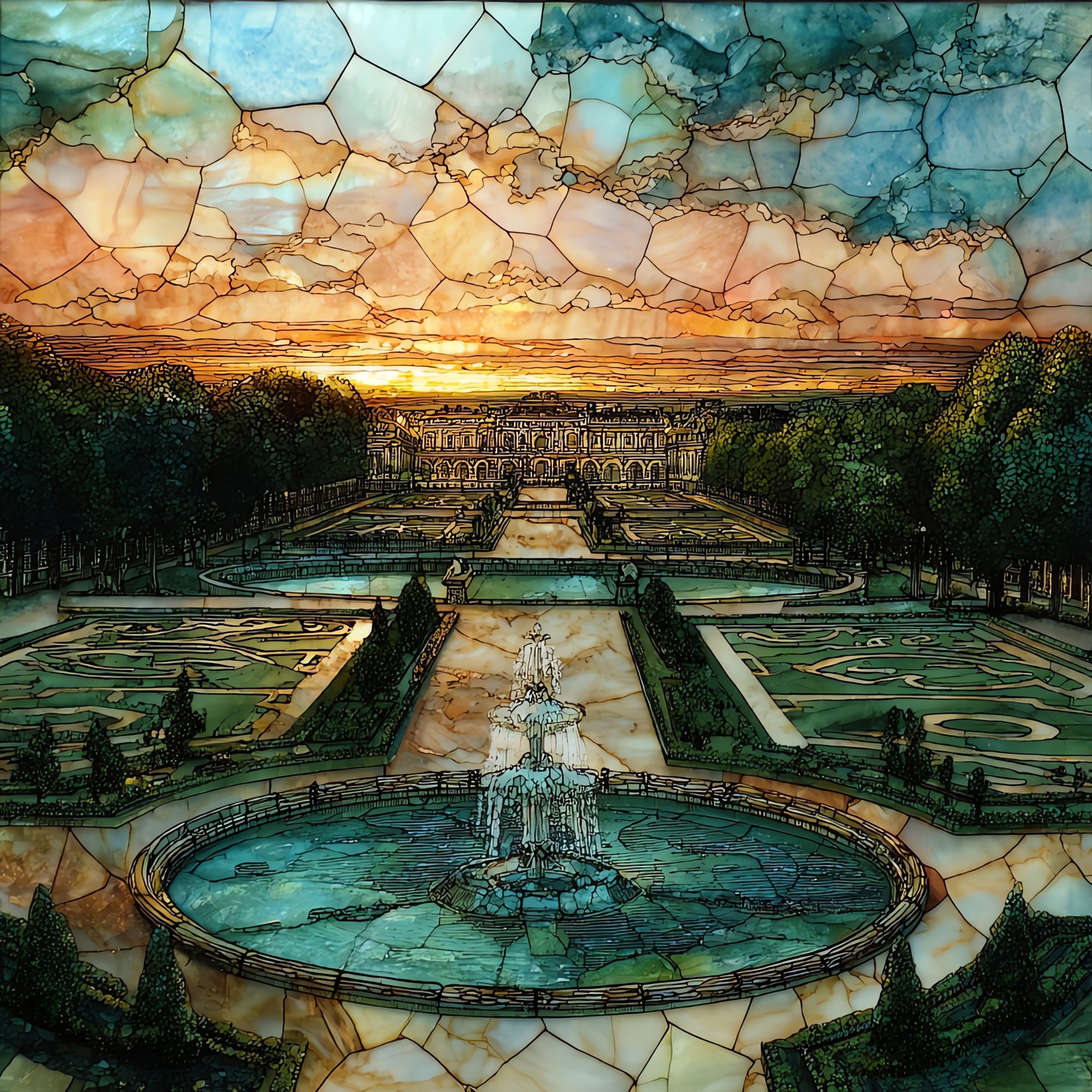
Versailles Parterre
shown on ceramic, 12-inch tileFrance
behind the palace, twenty kilometres west of Paris

Versailles Parterre

— the king's geometry, in boxwood and water.

Where it lives

Not only on a wall.

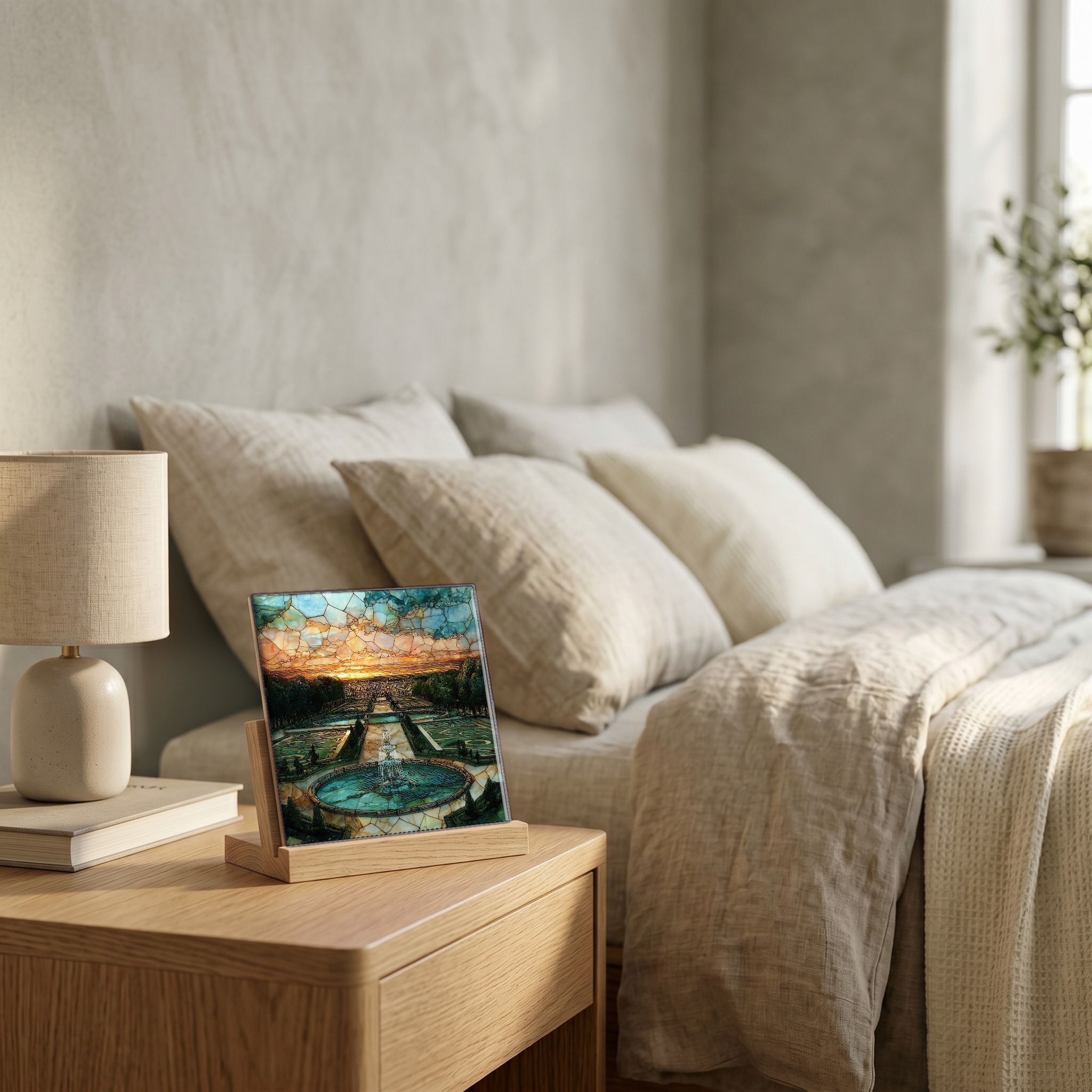
A small tile on the nightstand catching the morning. A larger one above the fire. Yours, wherever you spend the slow hours.
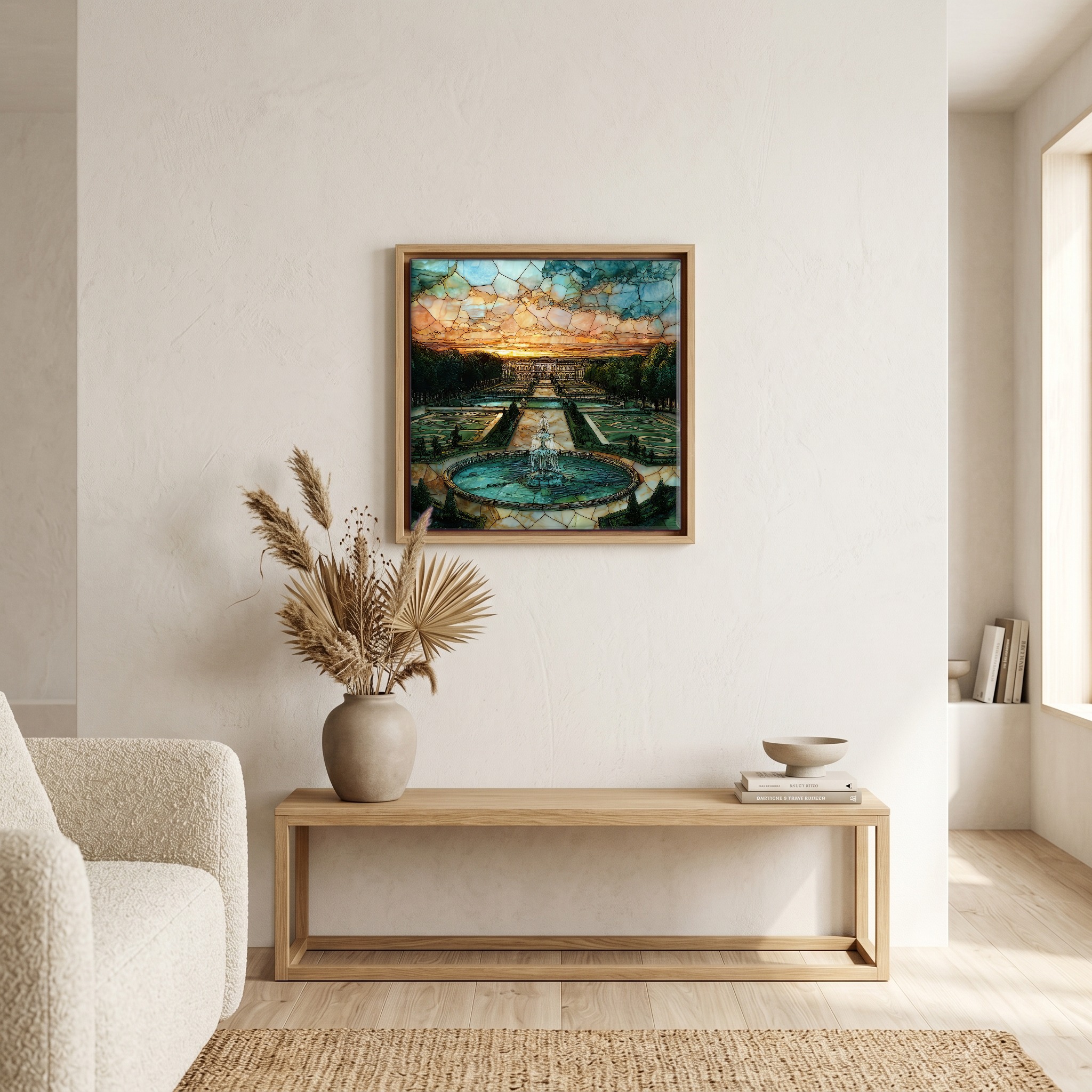
Above the bench, in a warm oak surround.
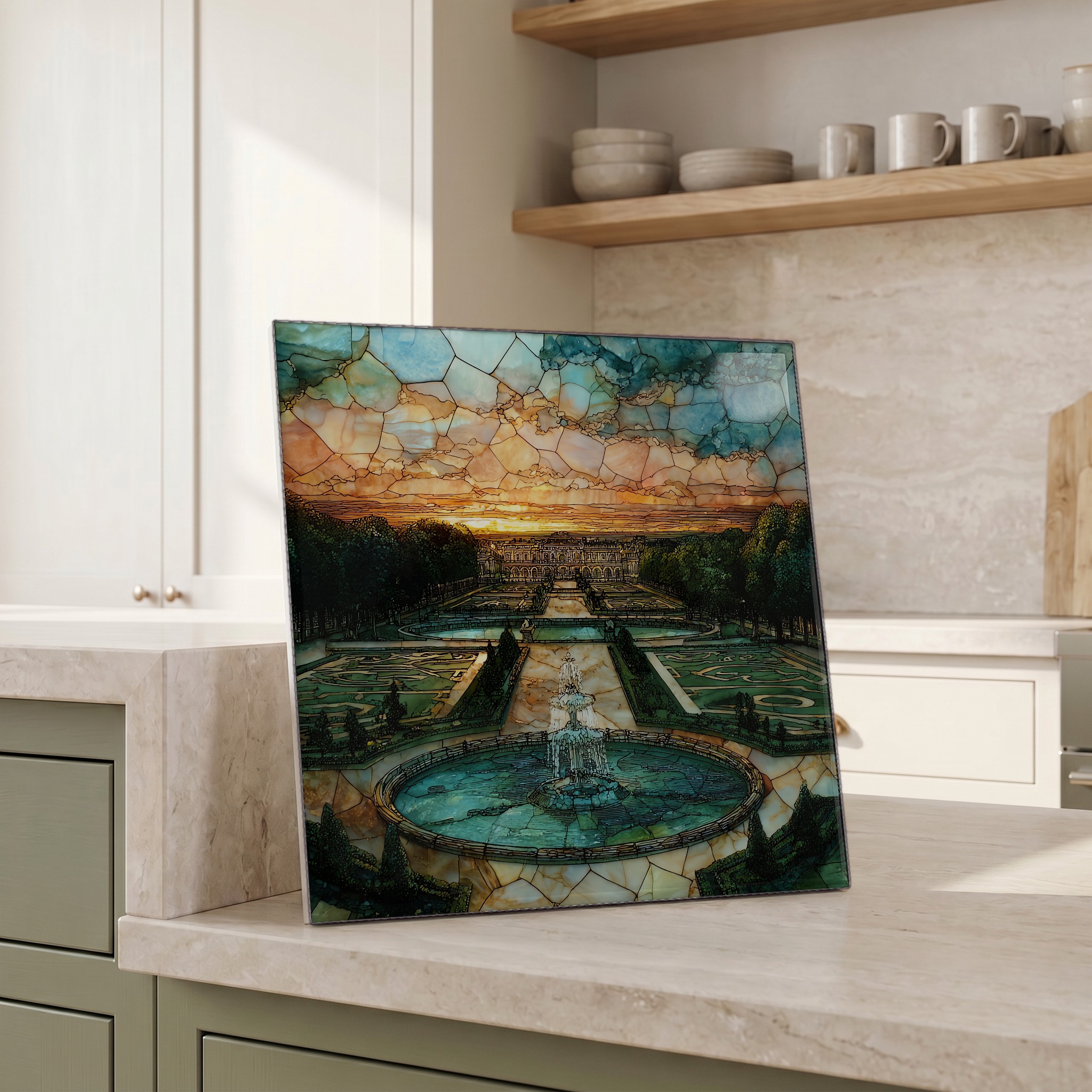
Beside the kettle, propped on the counter.
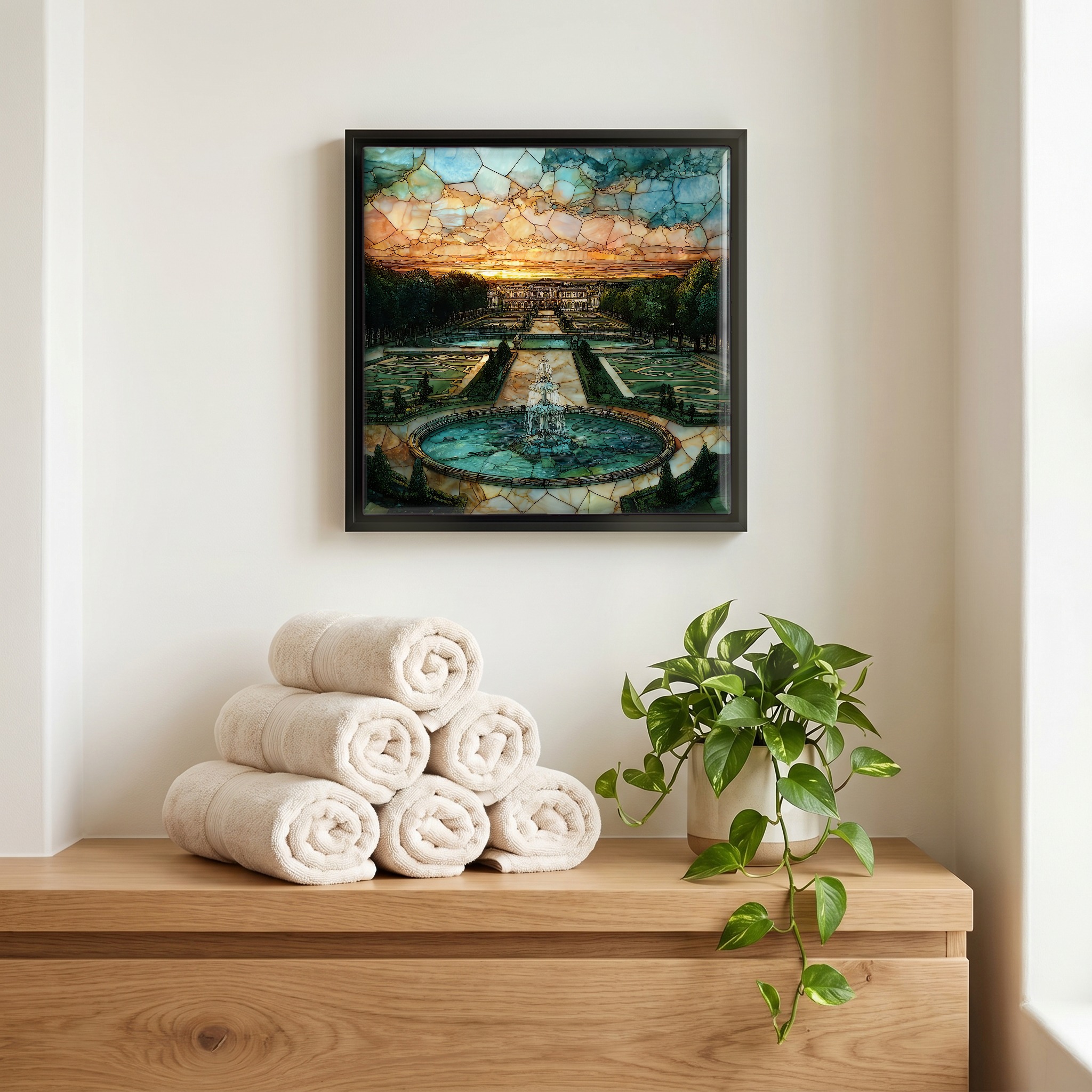
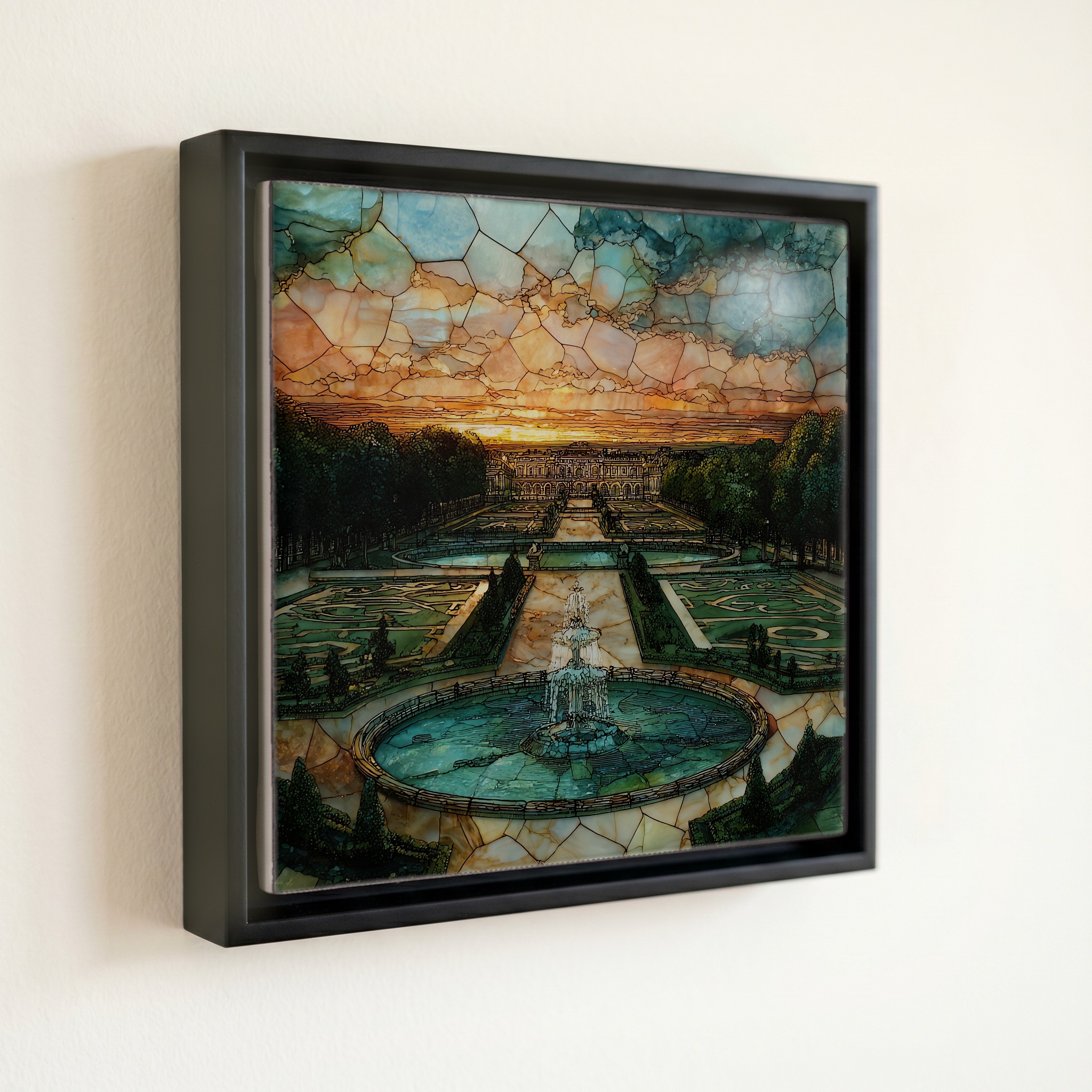
Above the linens, in a slim black surround.
On the nightstand, on a light oak stand.
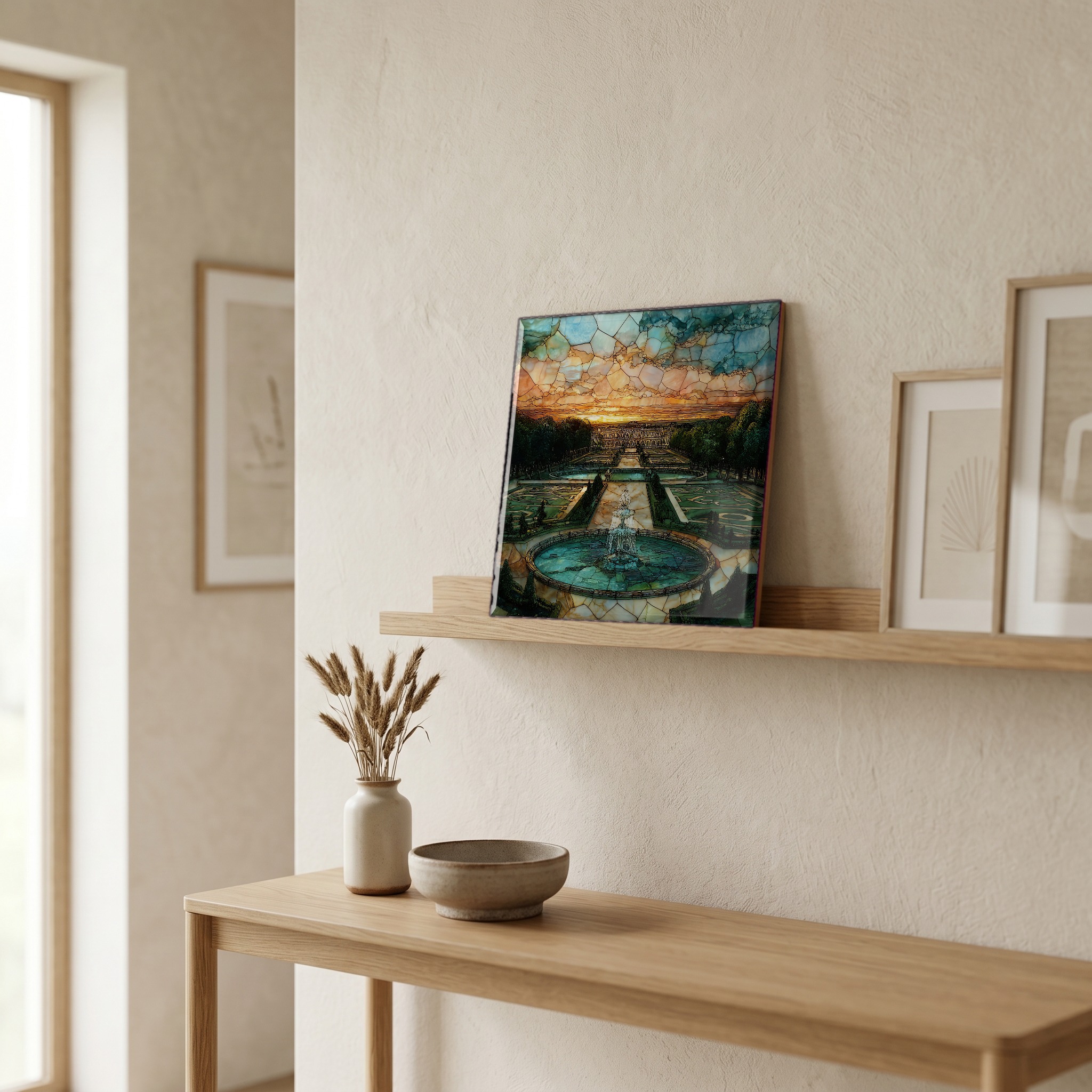
On a picture ledge, where the light comes in.
a note from the studio

The parterres of Versailles. Geometry cut into the field west of the palace; boxwood pressed into embroidery patterns the eye reads as fabric. Two long mirror pools hold the sky on the upper terrace, edged by bronze rivers cast by the Keller brothers. Below them, the Latona basin steps down toward the canal in a line André Le Nôtre held to for forty years. The crushed gravel between the hedges turns the colour of pale flour in summer light. On the days the fountains run, the water joins the geometry. The rest of the year it is a quiet shape above the canal, with Paris somewhere beyond it.
from the studio
shown in a slim black floating frame · 6 × 6 in
— bring it home

Versailles Parterre, on ceramic.

Each tile is finished by hand in our Knoxville studio. Artwork is slowly infused into the ceramic surface under high heat and pressure, and rests beneath a thin glossy finish. The colour lives in the surface, not on top of it.

What kind of piece?
One tile — square or rectangle.
How big?
the popular one — counter, shelf, nightstand
6 × 6 in · 15 cm · 1.6 lb
Surface finish
A clear glossy finish — the artwork reads as if under resin. Ideal for show-pieces and framed wall art.
How it sits
A hidden cleat — sits ¼″ proud of the wall.
$58
Hand-finished and shipped from our studio at the foot of the Smokies. On your wall in about ten days.
size
6 × 6 in
15 cm
weighs
1.6 lb
solid in the hand
surface
ceramic, hand-finished
art rests beneath a thin glossy finish
from
Knoxville, TN
our family studio, at the foot of the Smokies
— start a Coaster Set

Pick any four 4-inch tiles — National Parks you've been to, a Smokies set, the four seasons of one place. $ for a set of , cork-backed, ready to live on the table.
comes gift-ready
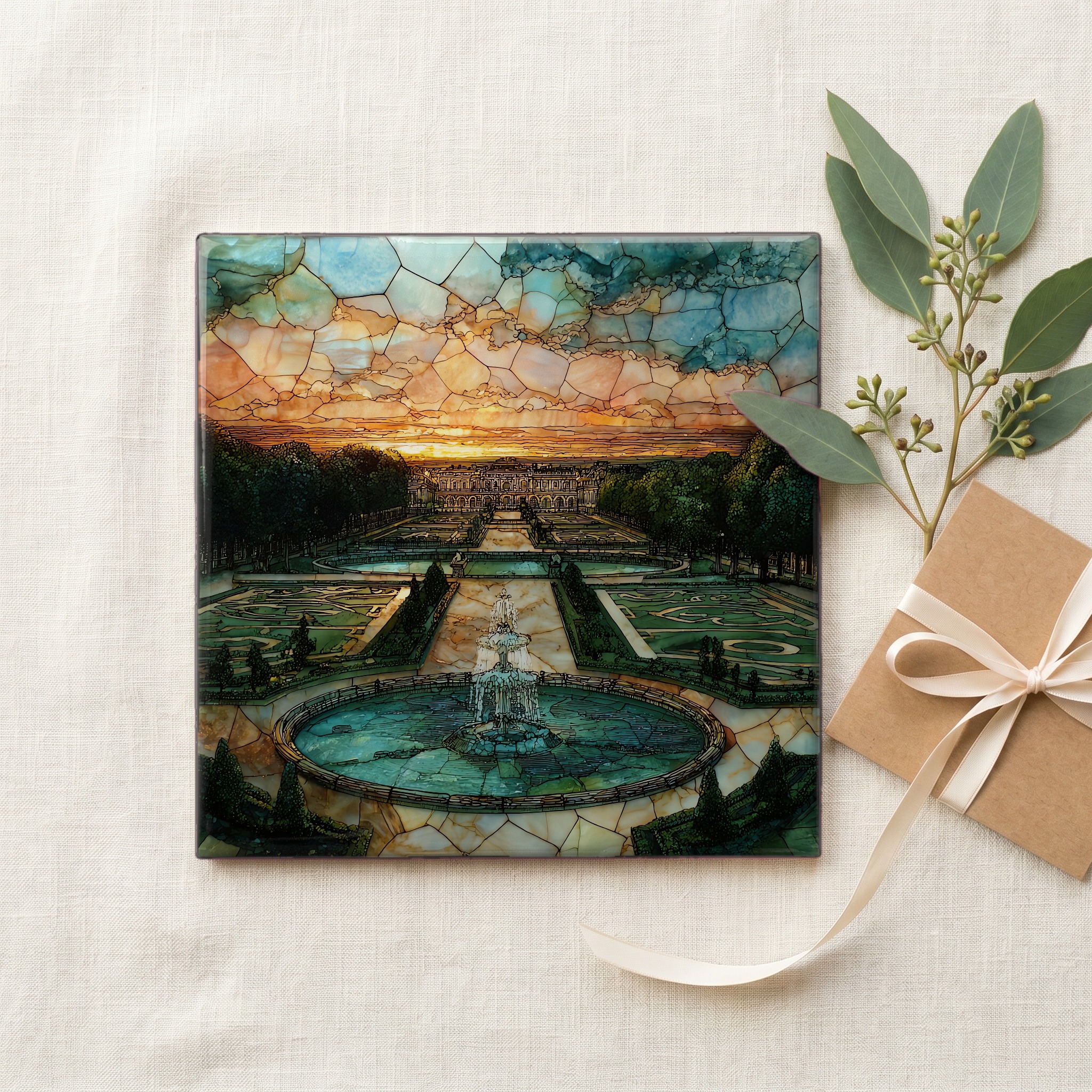
comes gift-ready

Each tile ships in a kraft box, tied with cream ribbon, with a handwritten note from the studio if you'd like to add one.
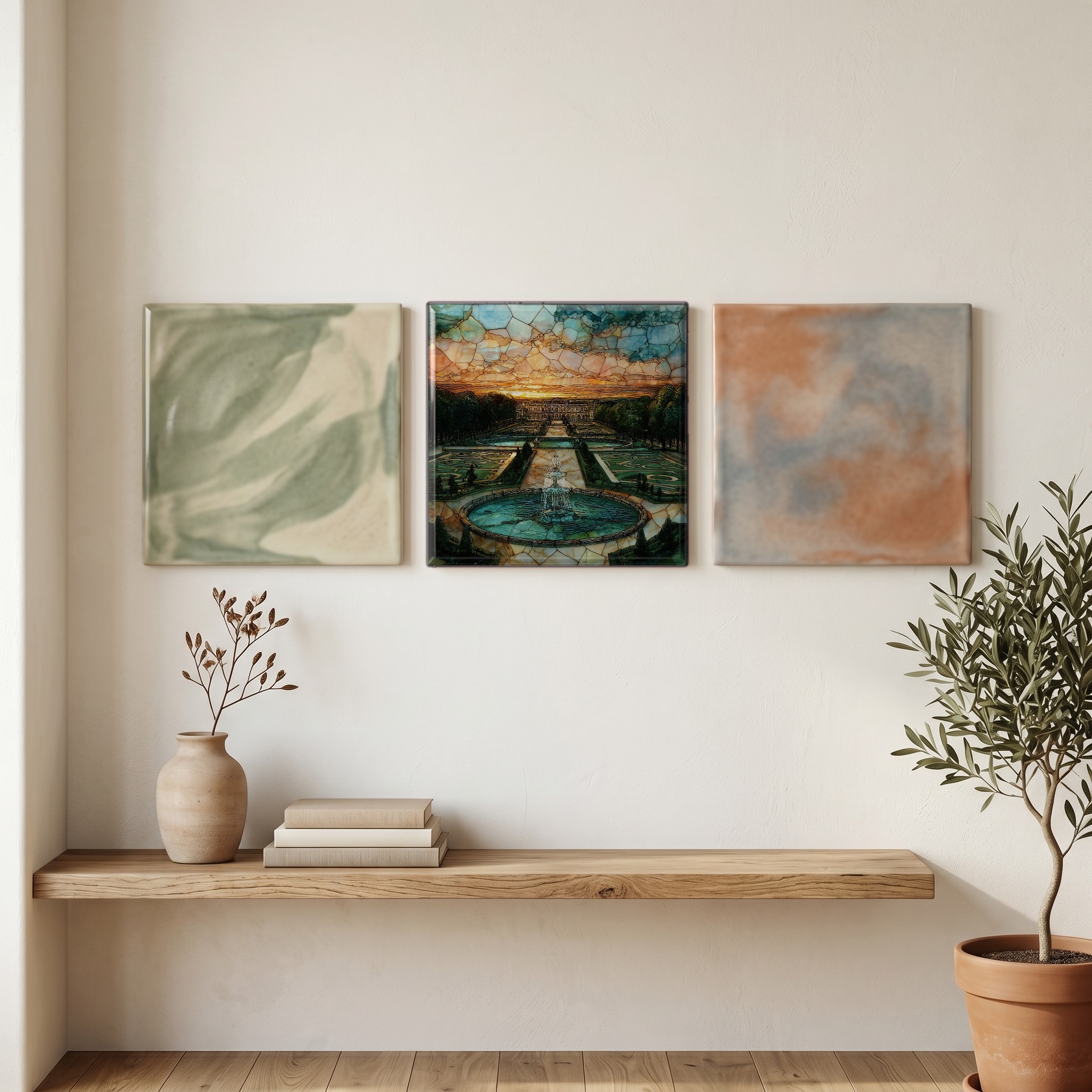
or build a grouping
or build a grouping

Three or five different vistas, hung together — a chapter of places you've been, or want to go.

about Versailles Parterre

The place, in three passes.

A little of what's known, in case you fall down the rabbit hole — or want to go see it yourself.
the place

The Parterre d'Eau and the surrounding formal gardens sit on the terrace immediately west of the Château de Versailles, in the commune of Versailles, about 20 kilometres southwest of Paris. The grounds were laid out by André Le Nôtre for Louis XIV beginning in 1661; Le Nôtre continued working on them until his death in 1700. The whole estate spans roughly 800 hectares, of which the formal parterres are the central organising idiom: geometry cut into the field along the east-west axis the king had set for himself. The Palace and Park of Versailles were inscribed on the UNESCO World Heritage List in 1979. The gardens lie in Yvelines, Île-de-France.

the water

The Parterre d'Eau is the pair of large rectangular pools laid into the upper terrace directly behind the Hall of Mirrors, completed in their present form in the mid-1680s to designs by Jules Hardouin-Mansart and Charles Le Brun. The pools are ringed by bronze figures cast by the brothers Jean-Balthazar and Jean-Jacques Keller, eight of which personify the rivers of France: the Seine, the Marne, the Loire, the Loiret, the Saône, the Rhône, the Garonne, and the Dordogne. Below them, the Latona Fountain steps down toward the Grand Canal, its marble group by Gaspard and Balthazar Marsy from 1668 to 1670, restored between 2012 and 2015. On Grandes Eaux days, the geometry the eye reads in stillness becomes geometry the ear reads in falling water.

the visit

The gardens are open daily, with longer hours from April through October and reduced hours in winter; the schedule shifts year to year and is posted on the Château's official site. Admission to the gardens is free except on Grandes Eaux Musicales and Jardins Musicaux days, when an entry fee applies. The Grandes Eaux Musicales run on Saturdays and Sundays from late March to late October, with additional Tuesday performances in summer; on these days the fountains are switched on for choreographed sequences set to Baroque music piped through the bosquets. The Palace itself requires a separate timed ticket. The nearest station is Versailles Château Rive Gauche, terminus of the RER C line from central Paris, a forty-minute ride.

where
France · Versailles, Yvelines
position
48.8049° N · 2.1200° E
the neighborhood

What's nearby.

A handful of named places within an hour's walk or short drive. Some we've already painted; some we will.
2 km NW
Grand Trianon
pink-marble pavilion
2 km NW
Petit Trianon
neoclassical château
2 km NW
Hameau de la Reine
Marie-Antoinette's hamlet
1 km W
Bassin d'Apollon
fountain on the central axis
1 km E
Gilded Gate of the Palace of Versailles
main palace gate
N
Versailles Parterre
Grand Trianon
Petit Trianon
Hameau de la Reine
Bassin d'Apollon
Gilded Gate of the Palace of Versailles
common questions

What people ask.

A few questions we get about Versailles Parterre — and about bringing the piece home.
about the place

André Le Nôtre laid out the formal gardens for Louis XIV beginning in 1661 and continued working on the grounds until his death in 1700. He collaborated closely with the architect Louis Le Vau, the painter Charles Le Brun, and later Jules Hardouin-Mansart.

A parterre de broderie is a flat ornamental garden in which low clipped boxwood is laid into embroidery-like patterns and the empty spaces are filled with coloured sand, brick dust, or crushed slate. The form was perfected in seventeenth-century France and became the signature idiom of André Le Nôtre.

The Parterre d'Eau is the pair of large rectangular reflecting pools on the upper terrace directly behind the central block of the Château, between the western façade and the Latona Parterre. It sits on the main east-west axis of Le Nôtre's plan.

They are bronze allegorical figures cast by the brothers Jean-Balthazar and Jean-Jacques Keller in the 1680s. Eight of them personify the rivers of France: the Seine and the Marne, the Loire and the Loiret, the Saône and the Rhône, and the Garonne and the Dordogne.

The fountains run during the Grandes Eaux Musicales, held Saturdays and Sundays from late March to late October, with additional Tuesday shows in summer. On other days the basins hold still water. Entry to the gardens is free except on fountain-show days.

The RER C line runs directly from central Paris to Versailles Château Rive Gauche, a forty-minute ride. From there the Palace and the gardens are a ten-minute walk through the town. SNCF trains from Gare Saint-Lazare and Gare Montparnasse also serve Versailles.

The Palace and Park of Versailles were inscribed on the UNESCO World Heritage List in 1979, citing the architecture and the formal landscape together as an integrated statement of seventeenth-century France. The inscription covers the Palace, the Trianons, and the gardens.

about the piece in your home

It has been a meaningful gift for our customers with ties to the region. The Versailles parterre is the most recognisable French formal garden in the world, and an outline of its geometry reads instantly to anyone who has spent time around Paris. The Small or Medium suits a desk or hallway.

The clipped-geometry composition and the cool green-and-bronze palette suit French-traditional, Parisian-modern, and grand-millennial interiors. It also reads well against pale neutral walls in a Modern-Classical room, where the bronze accents pick up natural wood and brass details.

Parisian-modern interiors lean on classical references treated lightly. A ceramic tile of the parterre delivers the reference without period furniture, which is why it works above a console or in a powder room without dating the rest of the space.

Above a standard sofa, a single Large reads from across the room; a 4-tile Mural carries a longer sofa wall, and a 9-tile Mural becomes the room. Above a 48 to 60 inch console, a single Medium or two Smalls hung as a pair tend to balance the surface.

Yes. The Dura Satin and Matte finishes are scratch-resistant and built for splash zones: backsplashes, shower walls, powder-room walls. The Glossy finish stays in dry rooms and is the right choice for framed wall pieces behind glass.

A soft microfibre cloth and clean water. Nothing abrasive, no solvents. The colour is slowly infused into the ceramic surface under high heat and pressure and rests beneath a thin protective finish, so daily wiping does not lift it.

Yes. Every WenderVista piece is painted in the studio's own visual language and finished in-house in Knoxville, Tennessee. We do not license third-party art and we do not resell other studios' work.

if this one stayed with you

A few you might also love.

Hand-picked by the eye that found Sorapis. Same air, same kind of quiet.