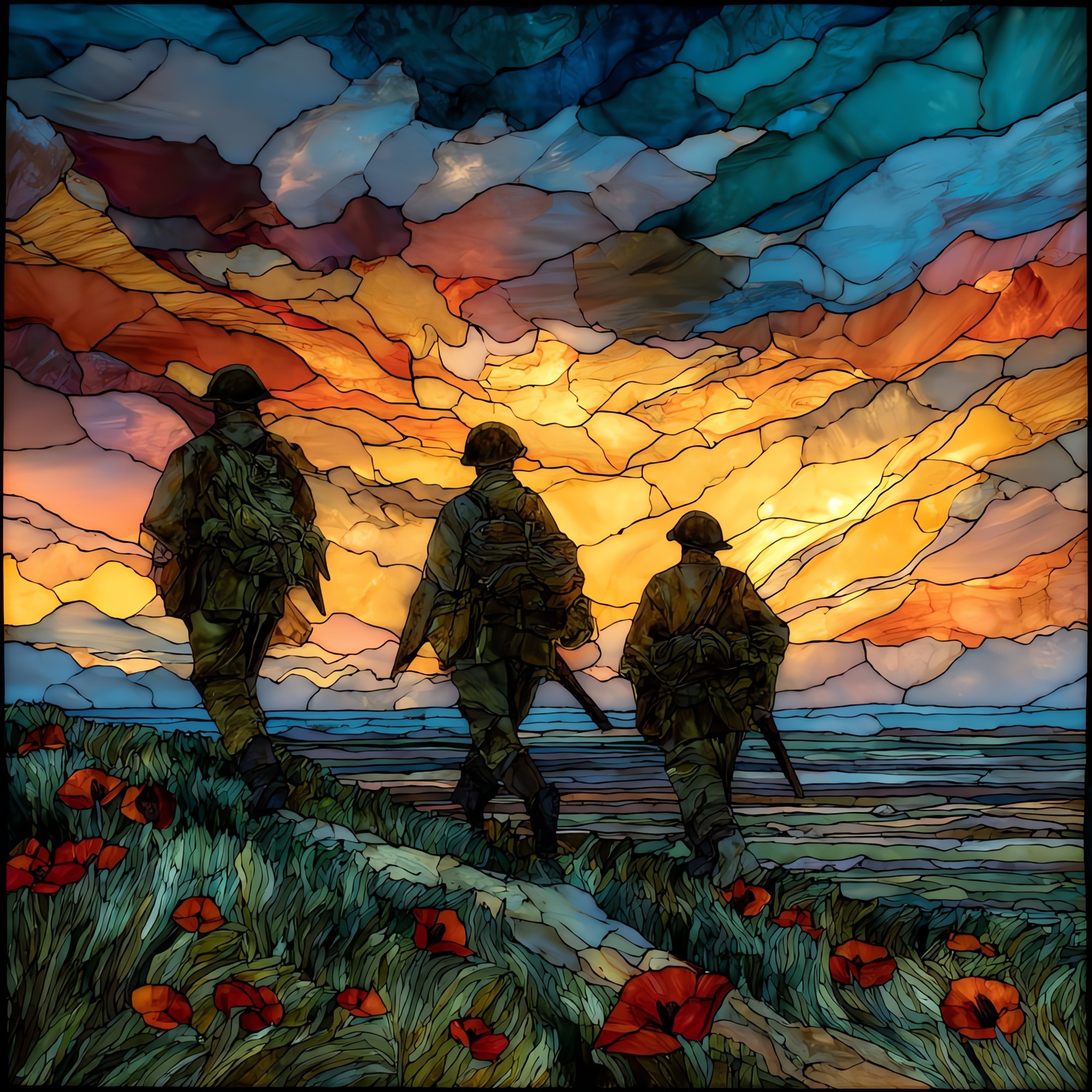
Utah Beach
— a quiet shore that still holds its morning.
Not only on a wall.

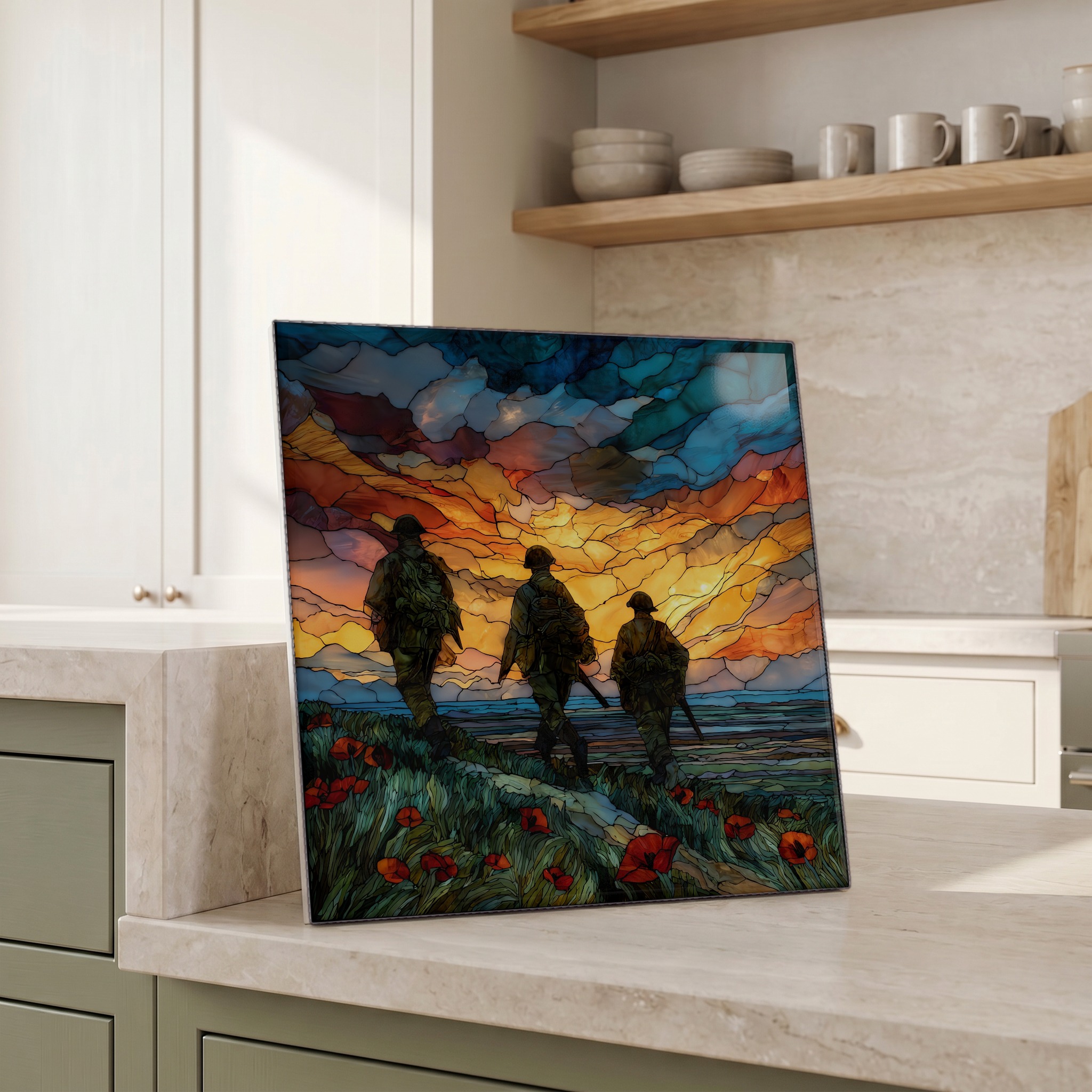


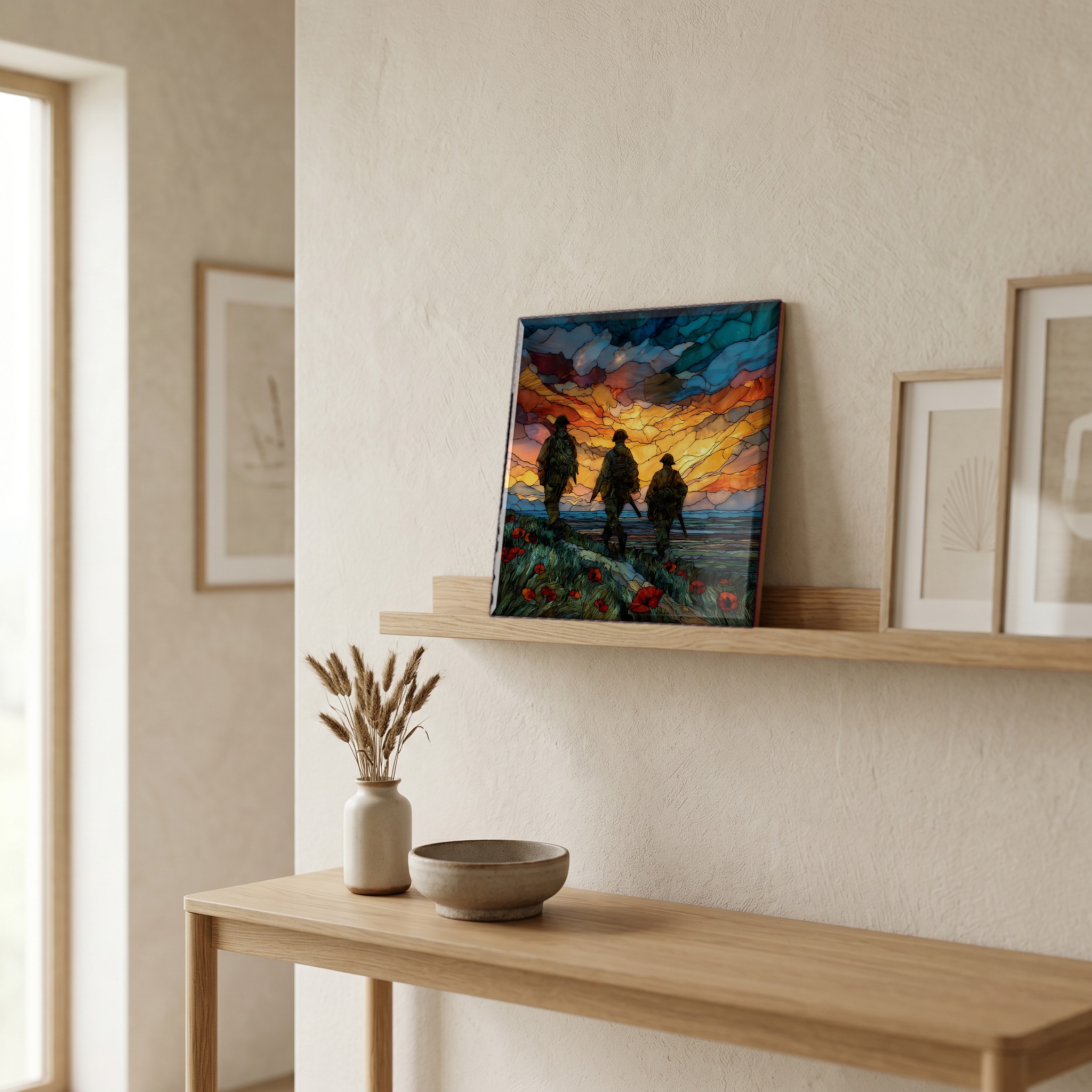
“A long, low stretch of dunes on the eastern coast of the Cotentin Peninsula, the westernmost of the five Normandy landing beaches. The American 4th Infantry Division came ashore here on the morning of June 6, 1944. The currents pushed the first wave a mile south of the intended sector, which turned out to be the luckier ground. Today the sand is quiet. A small museum sits at La Madeleine, looking out at the same water. The wind comes off the Channel and the dunes hold what they hold.
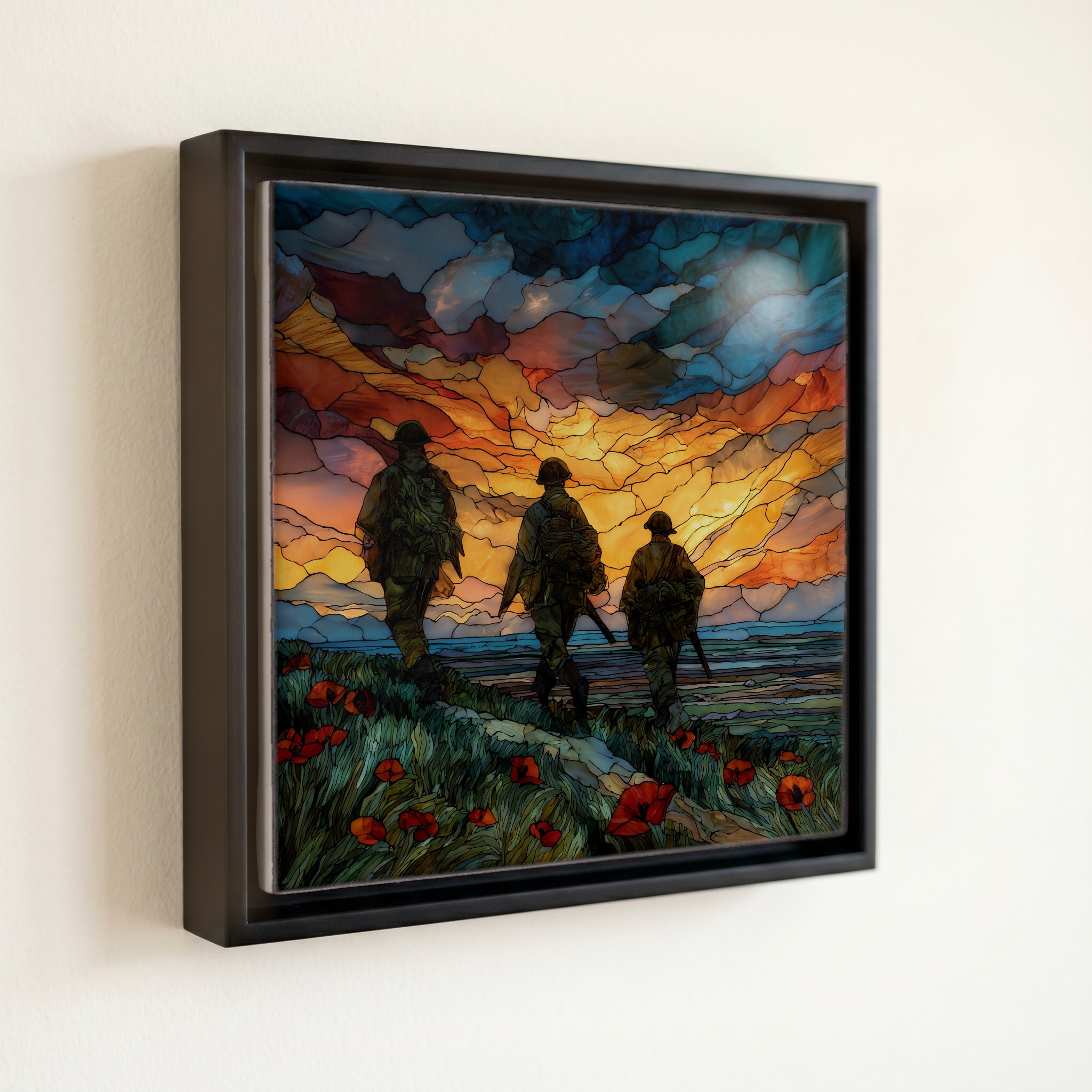
Utah Beach, on ceramic.
Each tile is finished by hand in our Knoxville studio. Artwork is slowly infused into the ceramic surface under high heat and pressure, and rests beneath a thin glossy finish. The colour lives in the surface, not on top of it.
Pick any four 4-inch tiles — National Parks you've been to, a Smokies set, the four seasons of one place. $ for a set of , cork-backed, ready to live on the table.
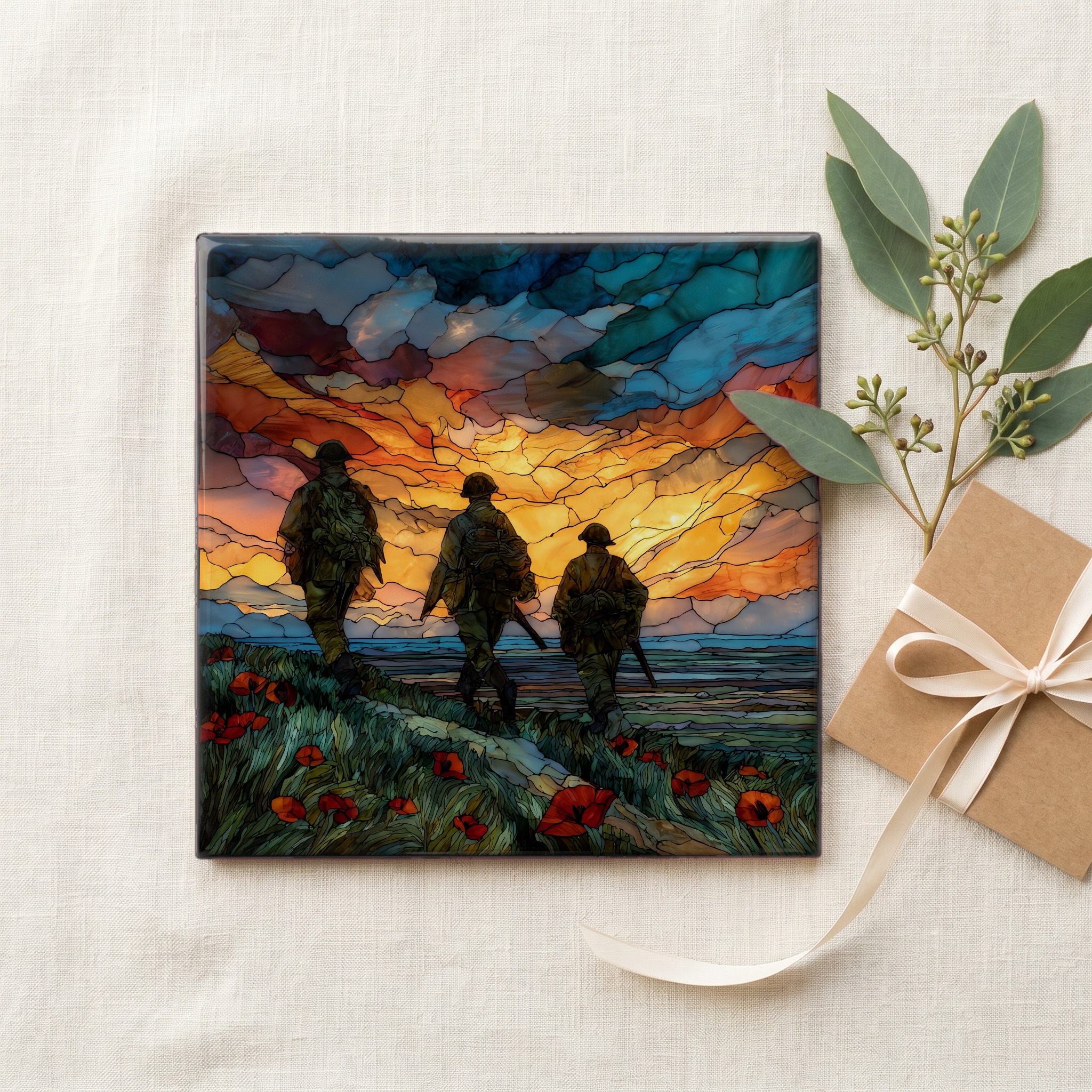
Each tile ships in a kraft box, tied with cream ribbon, with a handwritten note from the studio if you'd like to add one.

Three or five different vistas, hung together — a chapter of places you've been, or want to go.
The place, in three passes.
Utah Beach occupies a low stretch of sand and dune on the eastern coast of the Cotentin Peninsula, in the Manche department of Normandy. The landing sector was about three miles wide, running north to south and facing the Bay of the Seine, with the principal assault zone centred on the hamlet of La Madeleine in the commune of Sainte-Marie-du-Mont. To the north lie the Saint-Marcouf islets; to the south, the Vire estuary. The land behind the dunes is flat marshland drained by a series of small rivers, which the German defenders had partially flooded in 1944 to slow any inland advance from the coast.
On the morning of June 6, 1944, the American 4th Infantry Division came ashore at Utah Beach as the westernmost component of Operation Overlord. Strong currents pushed the lead landing craft about a mile south of the intended sector, on to a less heavily defended stretch of beach. Brigadier General Theodore Roosevelt Jr., who at fifty-six was the only general to land with the first wave, ordered the landing continued from the new position. By the end of the day around 23,000 troops were ashore at a cost of roughly two hundred killed, the lightest casualties of any of the five Allied landing beaches. Each year on June 6, commemorations are held at the beach and at the Musée du Débarquement.
The Musée du Débarquement Utah Beach sits at La Madeleine, on the dune line where the first wave landed, in a building that incorporates one of the original German blockhouses. The museum opened in 1962 and was substantially expanded in 2011 to house a restored Martin B-26 Marauder. The beach itself is open to the public at any time of year. The nearest train station is at Carentan, about ten kilometres to the south, and the town of Sainte-Mère-Église, made famous by the paratrooper drop on the same night, lies a short drive inland.