Wender·Vista
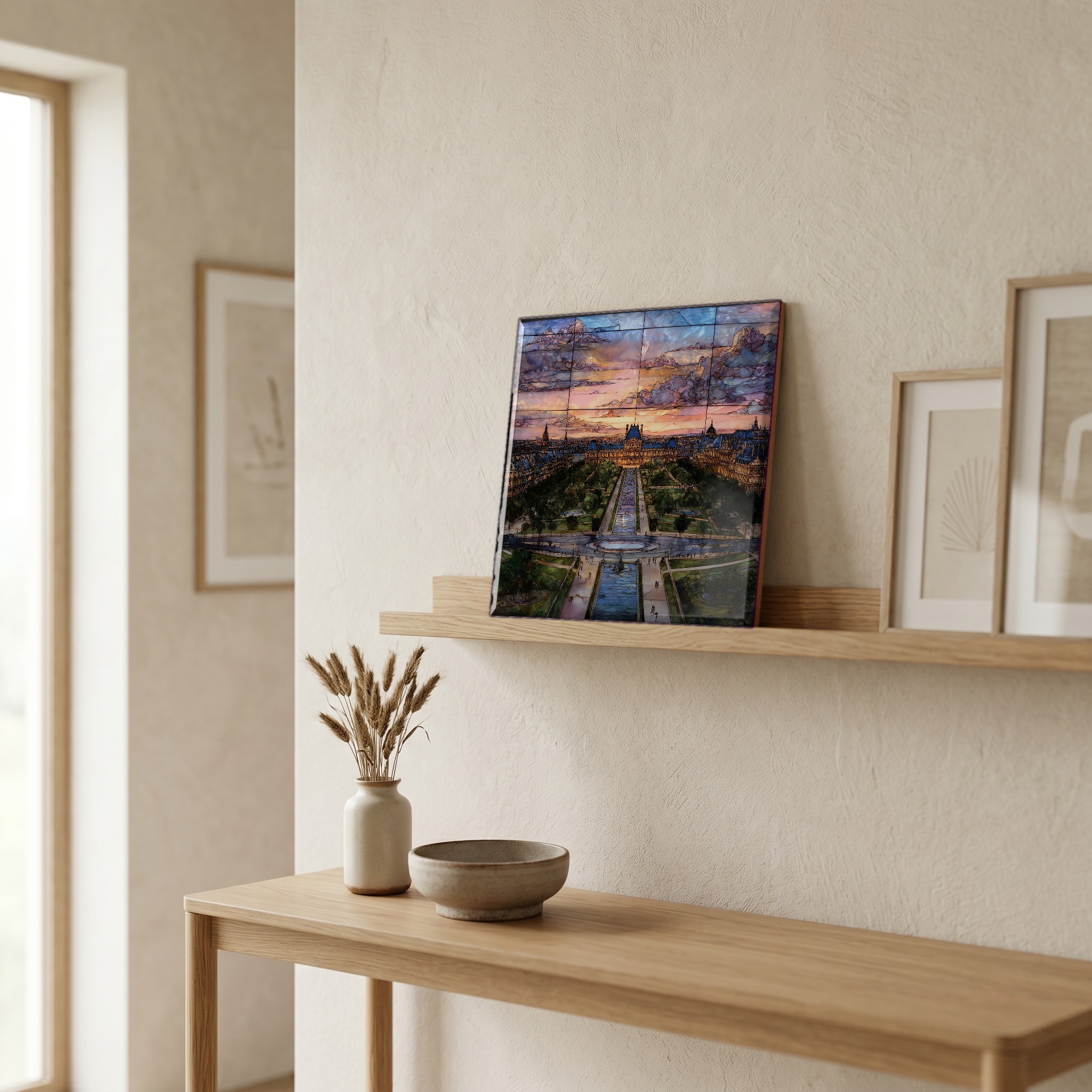
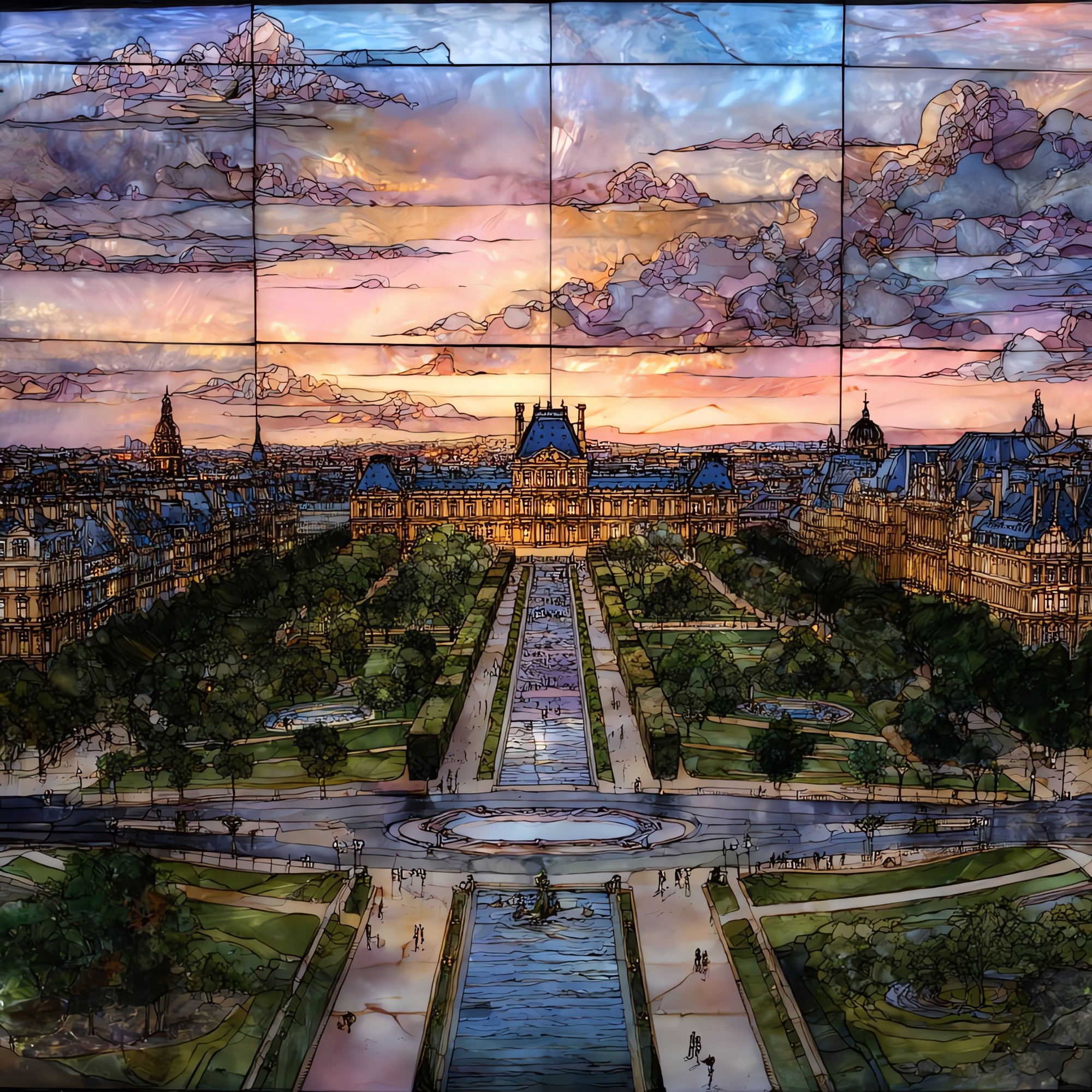
Jardin des Tuileries
shown on ceramic, 12-inch tileFrance
between the Louvre and the Place de la Concorde

Jardin des Tuileries

the long view, kept since Le Nôtre.

Where it lives

Not only on a wall.

A small tile on the nightstand catching the morning. A larger one above the fire. Yours, wherever you spend the slow hours.
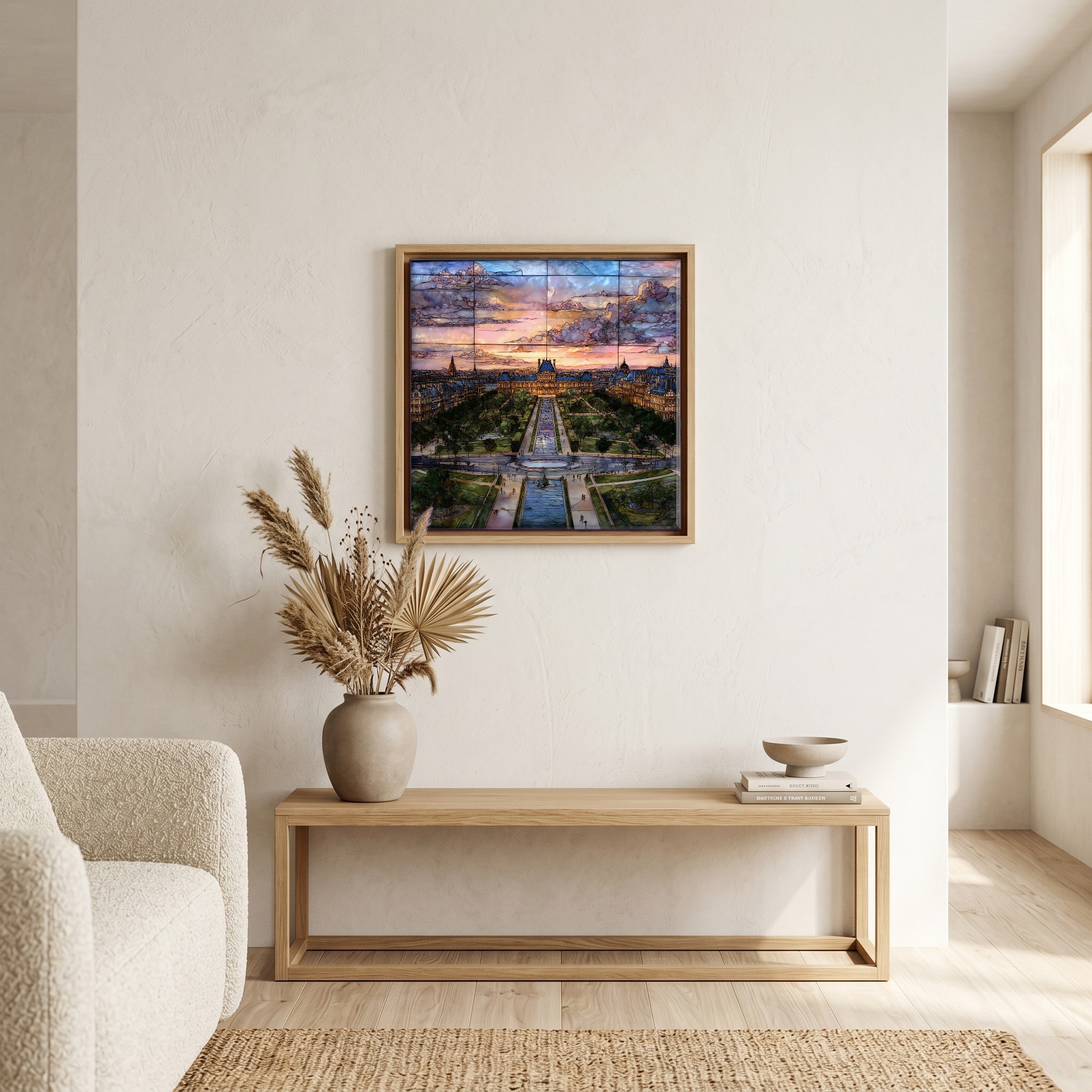
Above the bench, in a warm oak surround.
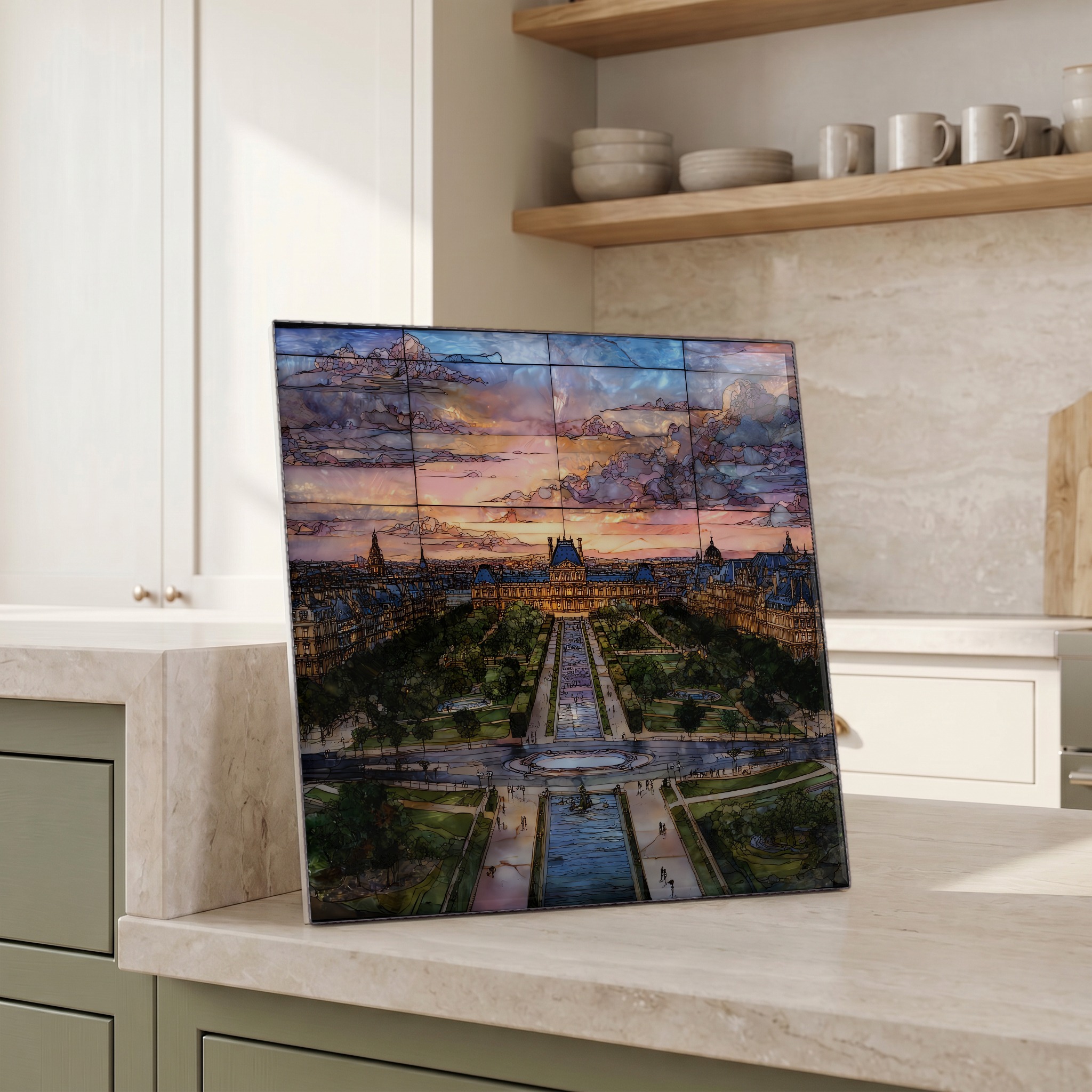
Beside the kettle, propped on the counter.
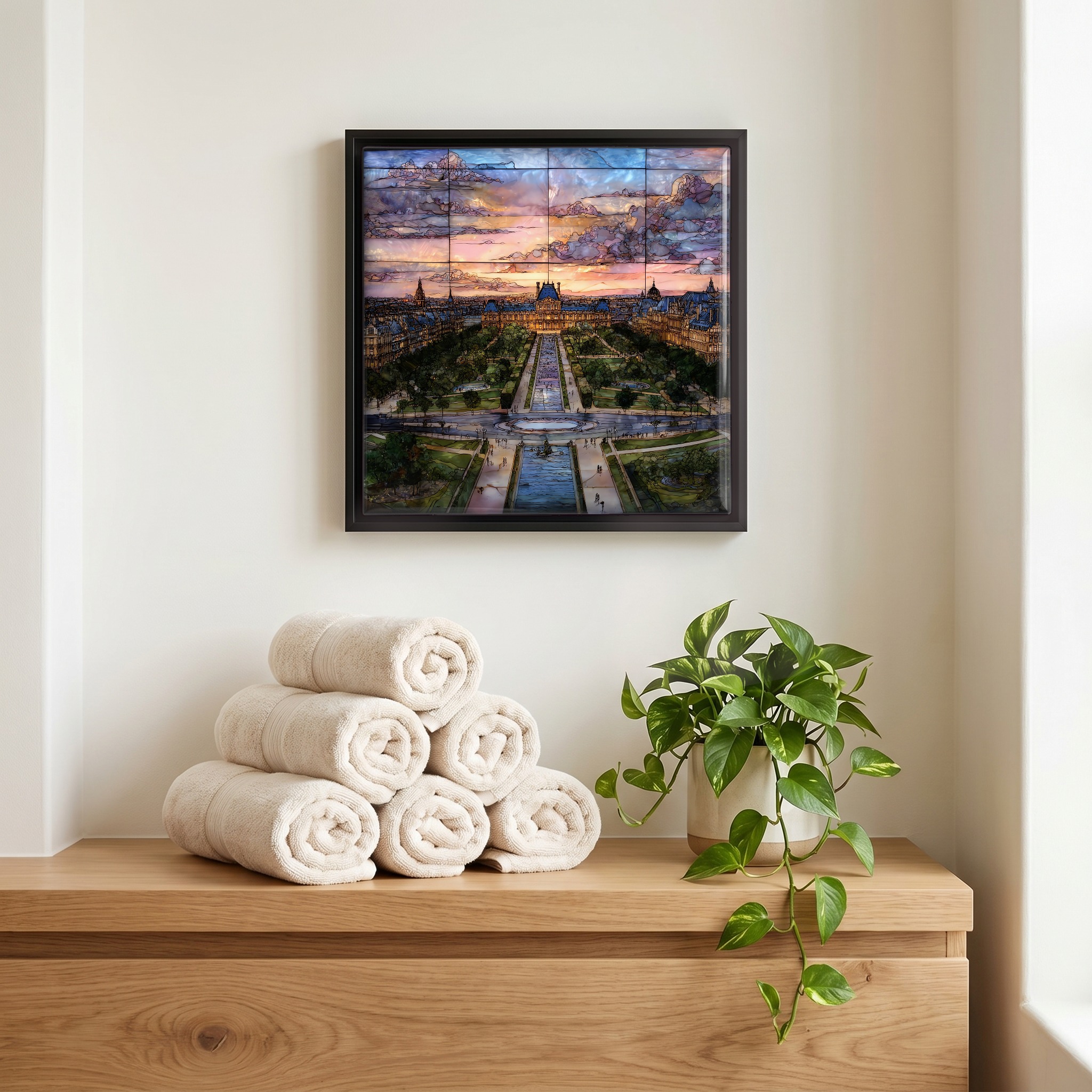
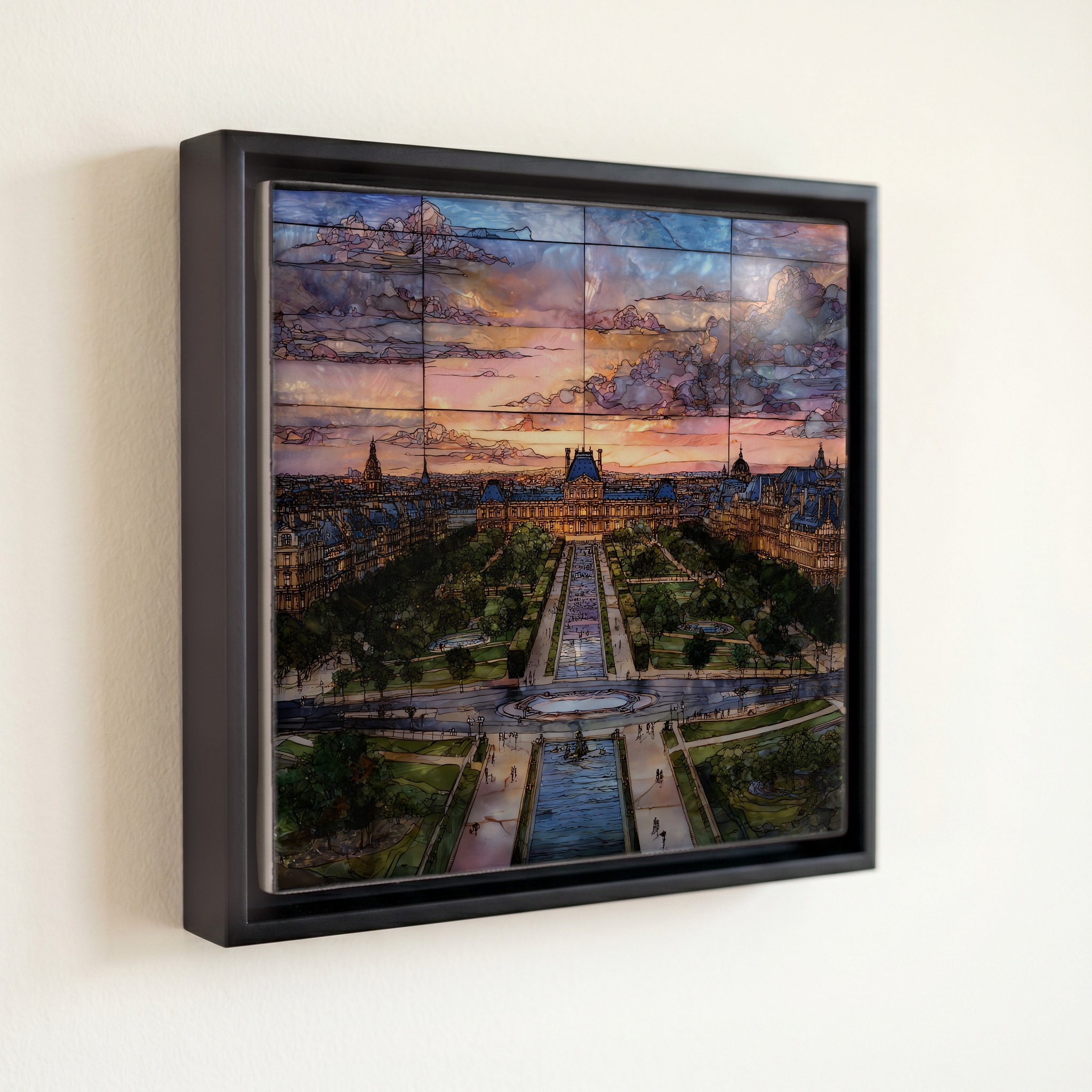
Above the linens, in a slim black surround.
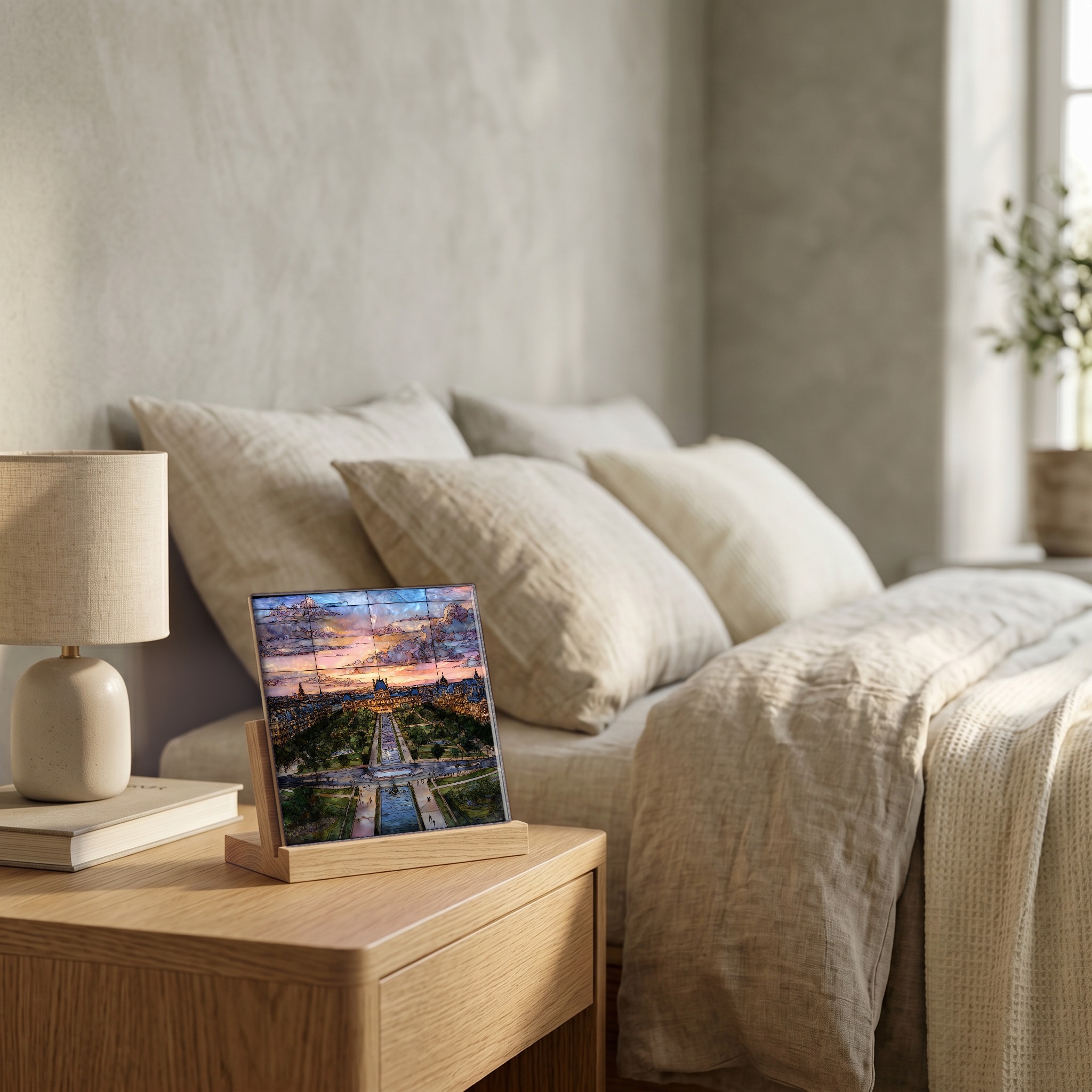
On the nightstand, on a light oak stand.
On a picture ledge, where the light comes in.
a note from the studio

A formal garden between the Louvre and the Place de la Concorde. Catherine de' Medici laid it out in 1564, on the site of old clay pits that once supplied tiles for the city's roofs and gave the garden its name. André Le Nôtre redrew it a century later into the long straight axis that still runs west through the city. The chestnut allées meet at two stone basins. People drag the green metal chairs to whatever spot suits, sit with a coffee or a book, watch children push toy boats. Free, open most days, walkable from the Louvre in five minutes.
from the studio
shown in a slim black floating frame · 6 × 6 in
— bring it home

Jardin des Tuileries, on ceramic.

Each tile is finished by hand in our Knoxville studio. Artwork is slowly infused into the ceramic surface under high heat and pressure, and rests beneath a thin glossy finish. The colour lives in the surface, not on top of it.

What kind of piece?
One tile — square or rectangle.
How big?
the popular one — counter, shelf, nightstand
6 × 6 in · 15 cm · 1.6 lb
Surface finish
A clear glossy finish — the artwork reads as if under resin. Ideal for show-pieces and framed wall art.
How it sits
A hidden cleat — sits ¼″ proud of the wall.
$58
Hand-finished and shipped from our studio at the foot of the Smokies. On your wall in about ten days.
size
6 × 6 in
15 cm
weighs
1.6 lb
solid in the hand
surface
ceramic, hand-finished
art rests beneath a thin glossy finish
from
Knoxville, TN
our family studio, at the foot of the Smokies
— start a Coaster Set

Pick any four 4-inch tiles — National Parks you've been to, a Smokies set, the four seasons of one place. $ for a set of , cork-backed, ready to live on the table.
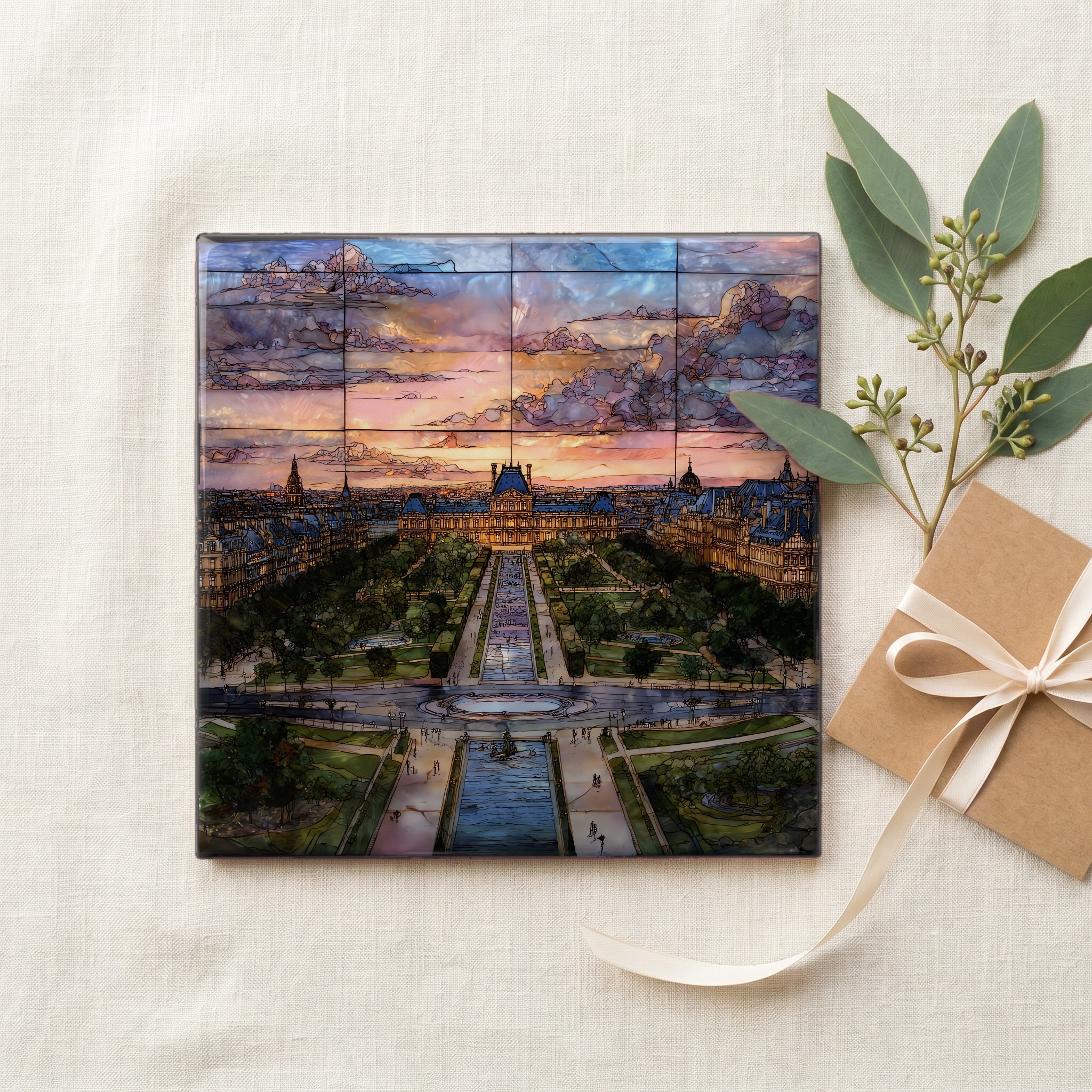
comes gift-ready
comes gift-ready

Each tile ships in a kraft box, tied with cream ribbon, with a handwritten note from the studio if you'd like to add one.
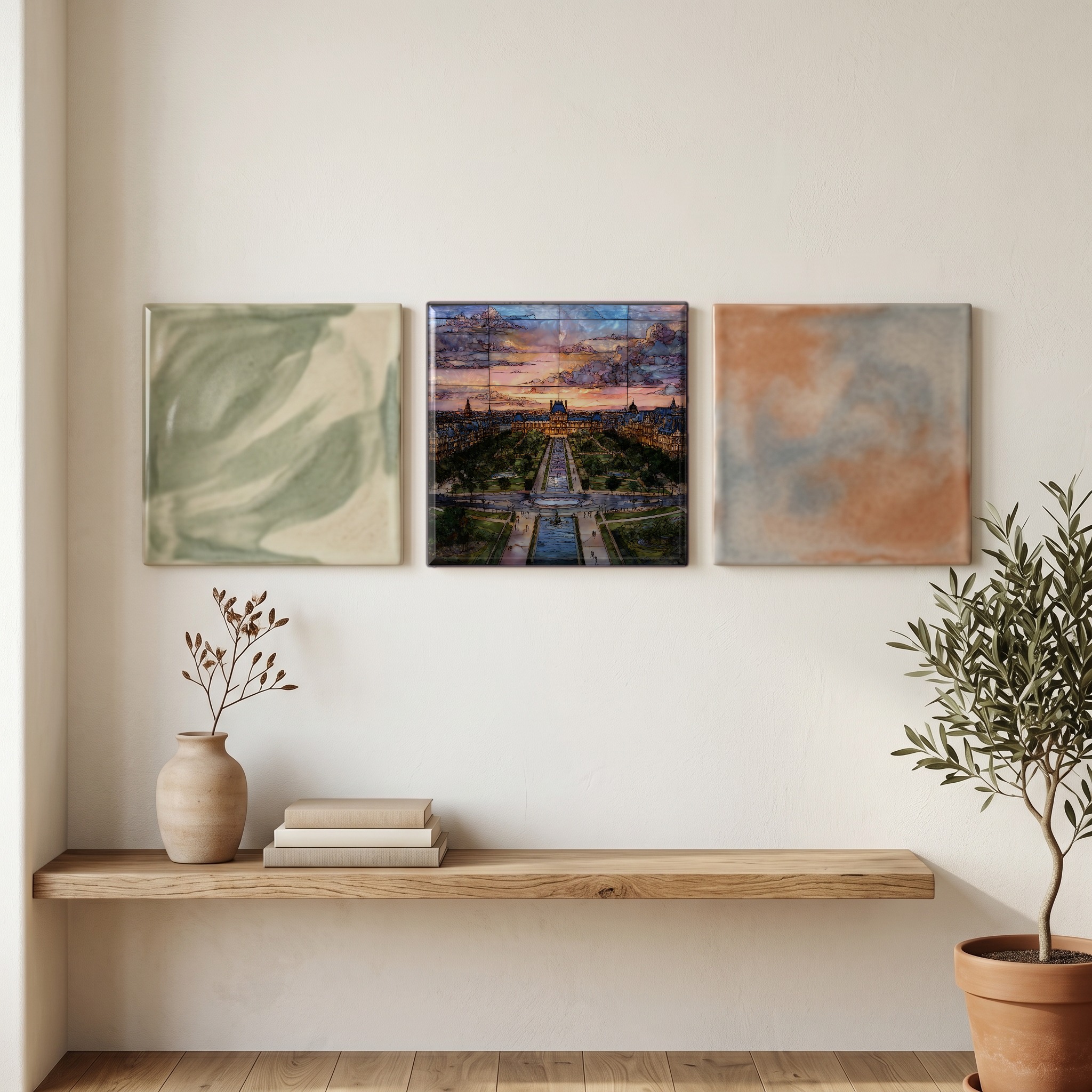
or build a grouping
or build a grouping

Three or five different vistas, hung together — a chapter of places you've been, or want to go.

about Jardin des Tuileries

The place, in three passes.

A little of what's known, in case you fall down the rabbit hole — or want to go see it yourself.
the place

The Tuileries occupies about 22.4 hectares between the Louvre and the Place de la Concorde, in the 1st arrondissement of Paris. Catherine de' Medici commissioned it in 1564 alongside the Tuileries Palace, on the site of old roof-tile workshops along the right bank of the Seine. A century later André Le Nôtre redrew it in the formal jardin à la française style he had perfected at Vaux-le-Vicomte and Versailles, opening the long west-east axis that still runs from the Louvre through the Champs-Élysées to La Défense. The palace burned in 1871 during the Commune, and the garden has been public ground since 1667. UNESCO inscribed the broader Banks of the Seine as a World Heritage site in 1991.

— informed by Wikipedia, UNESCO
the stone

Two stone basins anchor the formal design. The larger Grand Bassin lies near the western end, the smaller Bassin Rond at the Louvre side, each ringed by wrought-iron Fermob chairs that visitors drag where they like. The garden's sculpture program is one of the most important outside a museum: eighteen bronzes by Aristide Maillol were placed along the Carrousel section in 1964, from a gift by his model Dina Vierny. The garden also holds work by Auguste Rodin, Henry Moore, Alberto Giacometti, Jean Dubuffet, and Germaine Richier. Two pavilions sit on the western edge above the Place de la Concorde: the Musée de l'Orangerie, which houses Monet's Water Lilies in two oval rooms, and the Galerie nationale du Jeu de Paume, now a photography museum.

the visit

Entry to the garden is free and open daily, with seasonal hours roughly from 7am to 7:30pm in winter and from 7am to 11pm in summer. There is no security queue and no ticket. The Musée de l'Orangerie at the western corner, with Monet's Water Lilies in two purpose-built oval rooms, requires a separate ticket; the Galerie nationale du Jeu de Paume across the path does too. Each summer from late June through August the Fête des Tuileries occupies the Carrousel end with a traditional funfair, a Ferris wheel above the chestnuts. From the eastern gate it is about five minutes to the Louvre Pyramid; from the western end, the Place de la Concorde, the Champs-Élysées, and the obelisk sit in one straight line.

— informed by Wikipedia
where
France · Paris, Île-de-France
position
48.8635° N · 2.3275° E
the neighborhood

What's nearby.

A handful of named places within an hour's walk or short drive. Some we've already painted; some we will.
0.3 km E
Louvre Museum
art museum
0.3 km W
Place de la Concorde
monumental square
0.8 km S
Musée d'Orsay
art museum
0.5 km N
Place Vendôme
historic square
0.5 km NE
Palais Royal
former royal palace
0.7 km W
Champs-Élysées
grand avenue
N
Jardin des Tuileries
Louvre Museum
Place de la Concorde
Musée d'Orsay
Place Vendôme
Palais Royal
Champs-Élysées
common questions

What people ask.

A few questions we get about Jardin des Tuileries — and about bringing the piece home.
about the place

The garden was first laid out for Catherine de' Medici in 1564 alongside the Tuileries Palace. A century later, in 1664, André Le Nôtre redesigned it in the formal jardin à la française style and gave it the long west-east axis that defines the garden today and continues through Paris to La Défense.

The name comes from the tile workshops, or tuileries, that occupied the riverbank ground before Catherine de' Medici's palace was built. The site sat just outside the medieval city wall and supplied clay for Paris roof tiles. The word stayed after the workshops were cleared away.

The garden opened to the public in 1667, three years after Le Nôtre redesigned it, on the recommendation of the writer Charles Perrault. That made it one of the earliest royal gardens in Europe to be opened to ordinary citizens. The Tuileries Palace it served was destroyed by fire in 1871 during the Paris Commune.

The garden holds eighteen bronzes by Aristide Maillol, placed in 1964 after a gift from his model Dina Vierny, along with works by Auguste Rodin, Henry Moore, Alberto Giacometti, Jean Dubuffet, and Germaine Richier. The Carrousel section near the Louvre concentrates much of the modern sculpture.

Two museums sit on the western edge above the Place de la Concorde. The Musée de l'Orangerie houses Monet's Water Lilies in two purpose-built oval rooms. The Galerie nationale du Jeu de Paume, in the matching pavilion across the central path, shows photography and lens-based work.

Early morning, when the gravel has just been raked and the basins are still. The summer Fête des Tuileries, a traditional funfair held in the Carrousel section from late June through August, is the busiest stretch. Autumn light along the chestnut allées is the quiet recommendation.

Yes. The garden is free and open daily, with seasonal hours roughly from 7am to 7:30pm in winter and from 7am to 11pm in summer. There is no ticket or security queue. The Orangerie and the Jeu de Paume museums on the grounds each require a separate paid ticket.

about the piece in your home

It travels well to Paris-people. The Tuileries is the garden Parisians keep crossing through on the way to work, on Sundays with children, on the long walk home. A Coaster or a Small with a handwritten note from the studio carries that walk. For someone whose Paris is the museums, the Medium hangs alongside.

The colour palette runs to deep blues, ochres, and slate greys, with stained-glass jewel lines through the chestnut allées and the basins. It works in classic French Apartment, Old World European, and Quiet Maximalist rooms. It also reads cleanly in a Modern Traditional space with warm wood and brass.

European-classic interiors have leaned into Paris detail in recent seasons. A piece anchored on a place like the Tuileries lands inside that direction without being a poster. The Medium and Large work above a console or a tufted sofa, and the Triptych carries a longer wall.

Above a standard sofa, a single Large or a 4-tile Mural carries the wall. Above a console, the Medium reads well, and a 9-tile Mural makes a strong statement in a stairwell or entry. In a hallway, three Smalls in a Triptych give a slow read.

Yes, with the Dura Satin or Matte finish, which is scratch-resistant and built for moisture. The colour is slowly infused into the ceramic surface under high heat and pressure, so it lives in the surface, not on top of it. Both finishes work in a kitchen splash zone or a shower wall.

A microfibre cloth with water is enough. For stuck residue, a drop of dish soap on a damp cloth, then dry. Avoid abrasives and harsh chemicals. The colour lives in the surface, not on top of it, so normal household wear does not affect it.

Yes. Every piece in the WenderVista atlas is curated and finalised by Reid Wender, hand-finished in the Knoxville studio. No licensing, no third-party imagery, no off-the-shelf prints. The Tuileries piece was made for this catalog.

if this one stayed with you

A few you might also love.

Hand-picked by the eye that found Sorapis. Same air, same kind of quiet.