Wender·Vista
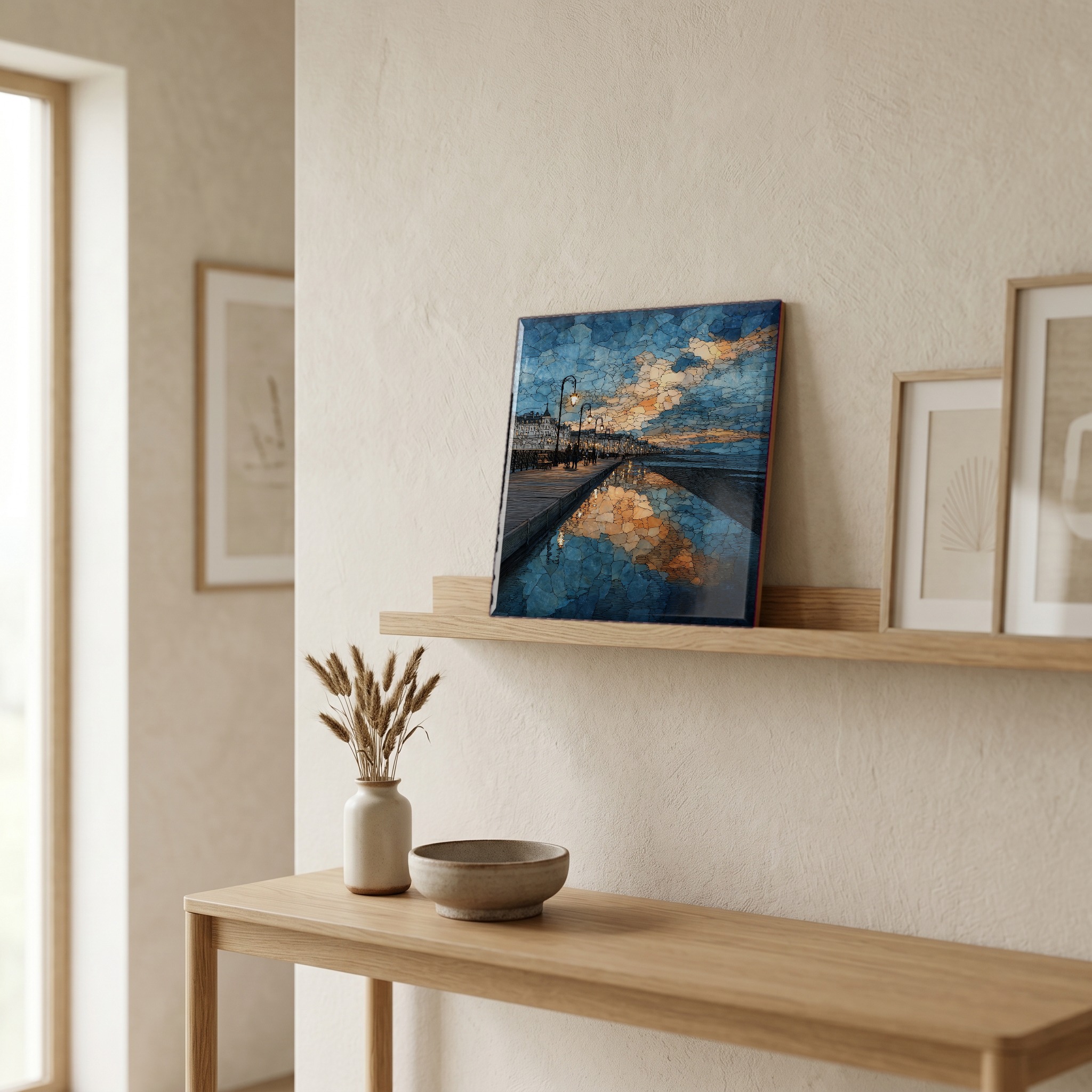
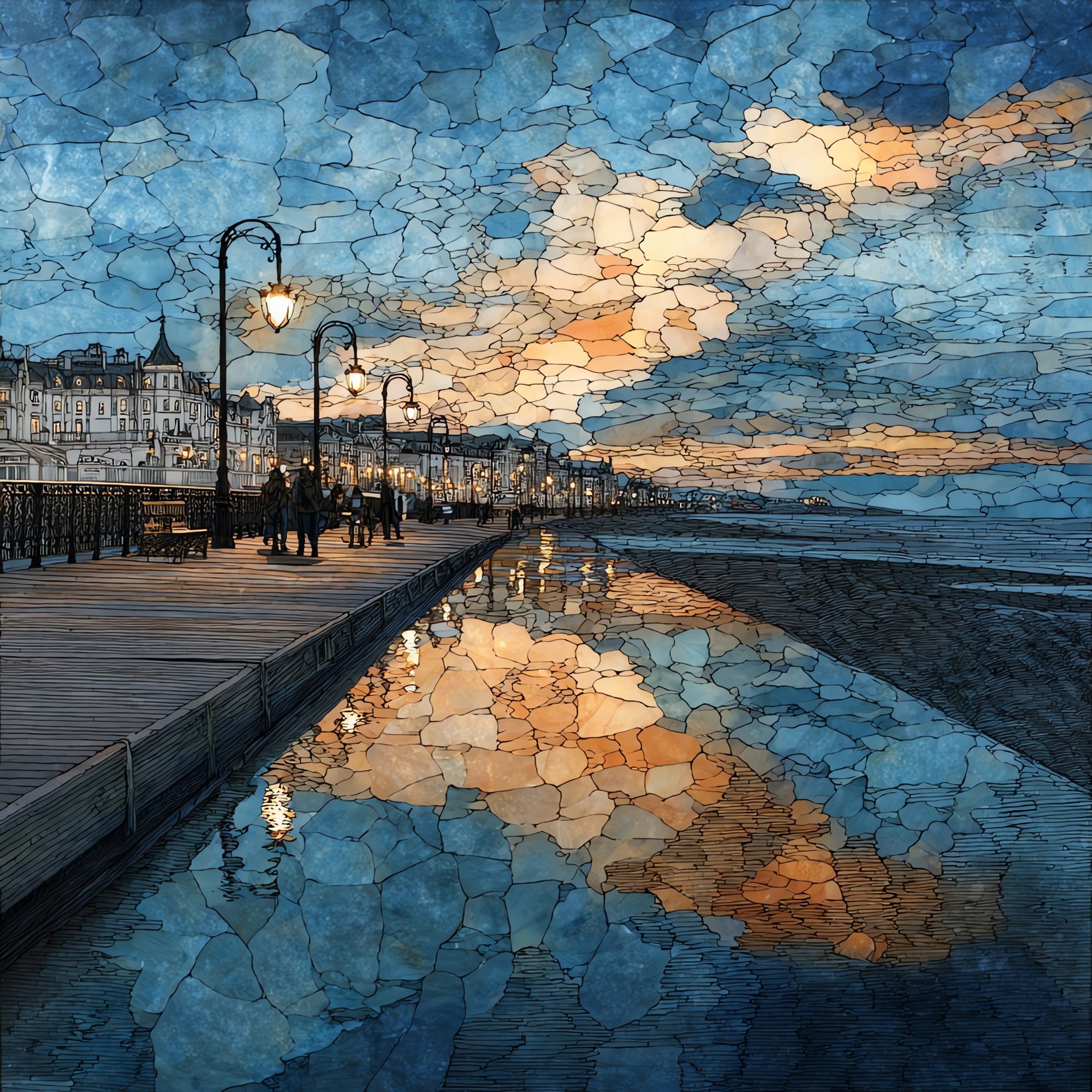
Trouville-sur-Mer Boardwalk
shown on ceramic, 12-inch tileFrance
on the Normandy coast, across the river from Deauville

Trouville-sur-Mer Boardwalk

the light Boudin chased.

Where it lives

Not only on a wall.

A small tile on the nightstand catching the morning. A larger one above the fire. Yours, wherever you spend the slow hours.
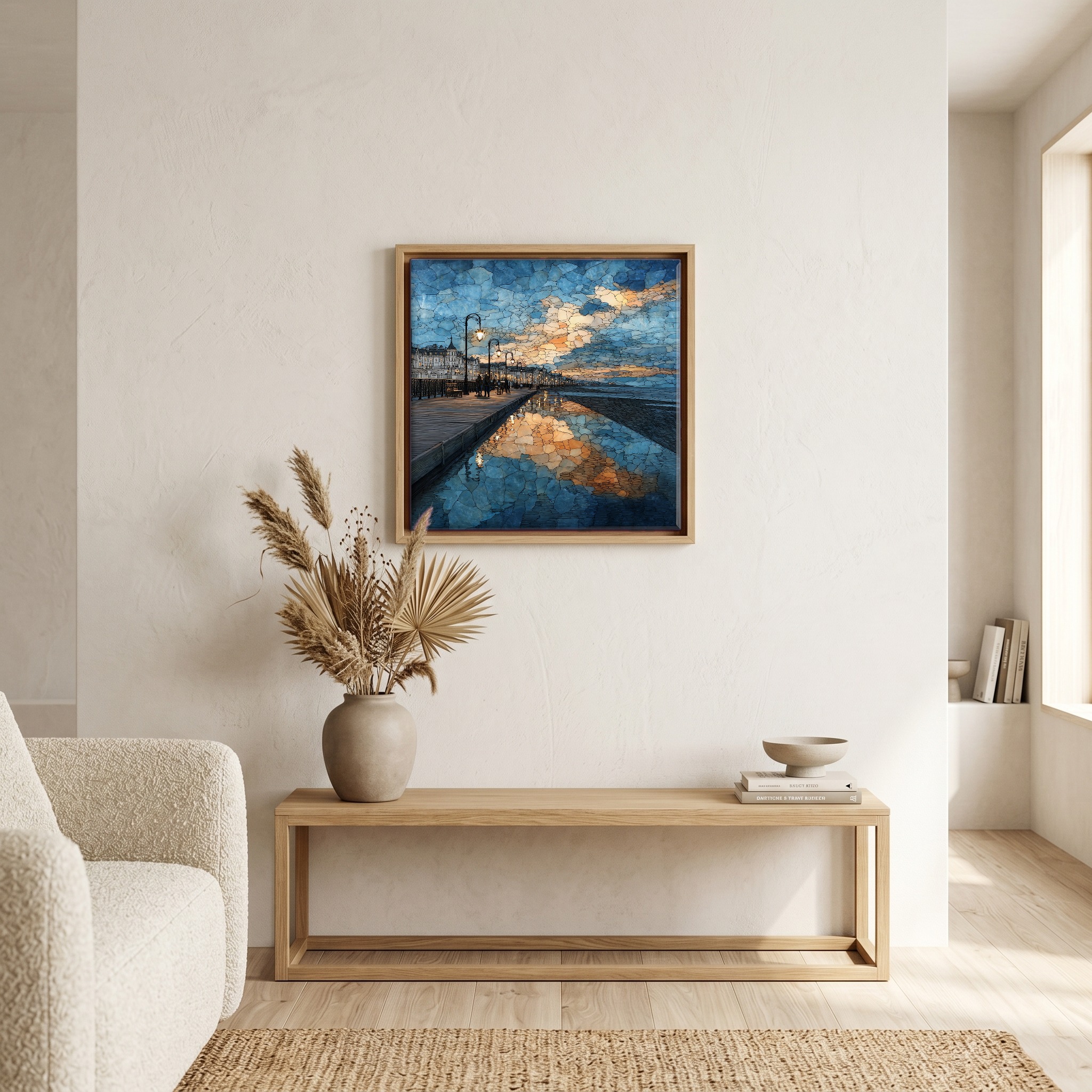
Above the bench, in a warm oak surround.
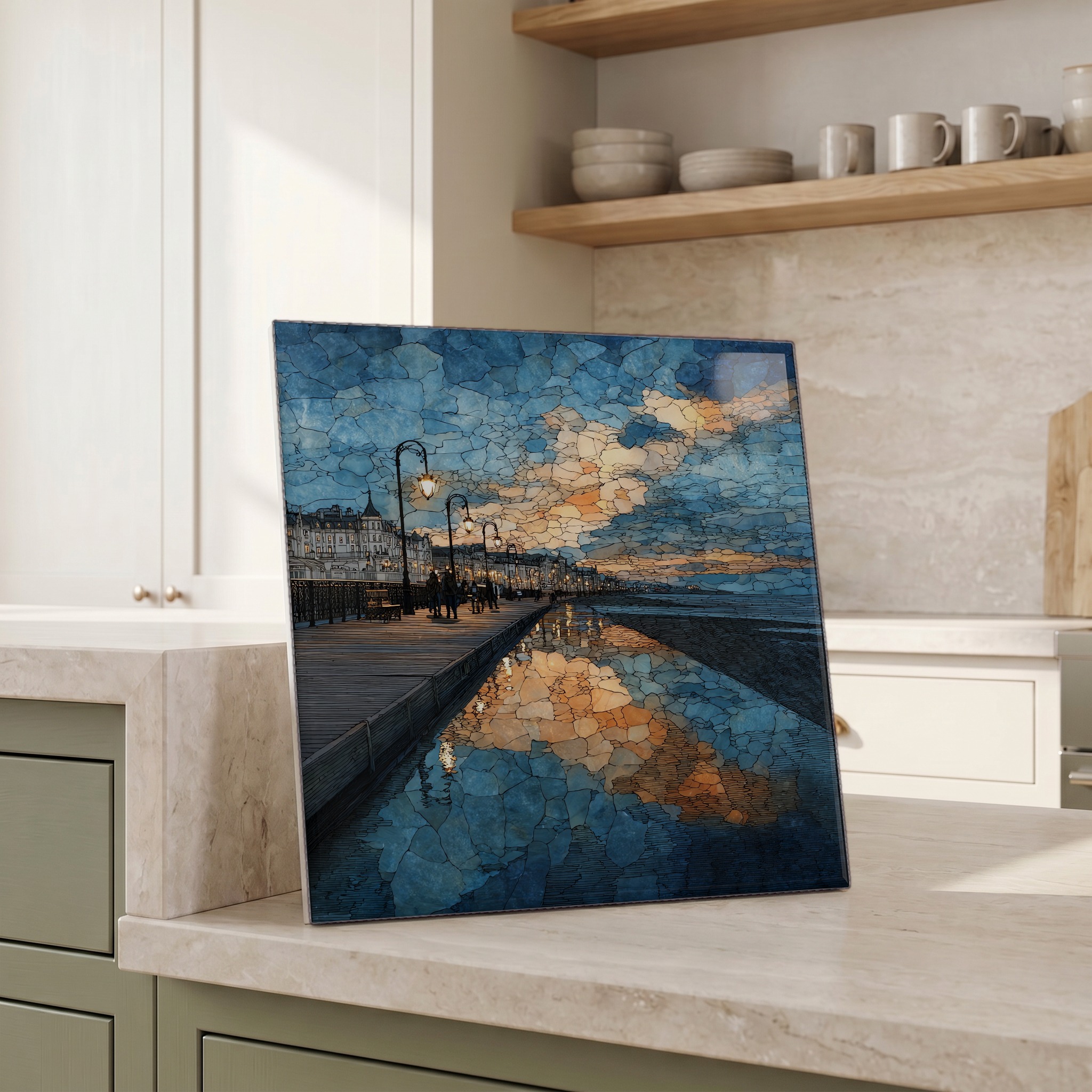
Beside the kettle, propped on the counter.
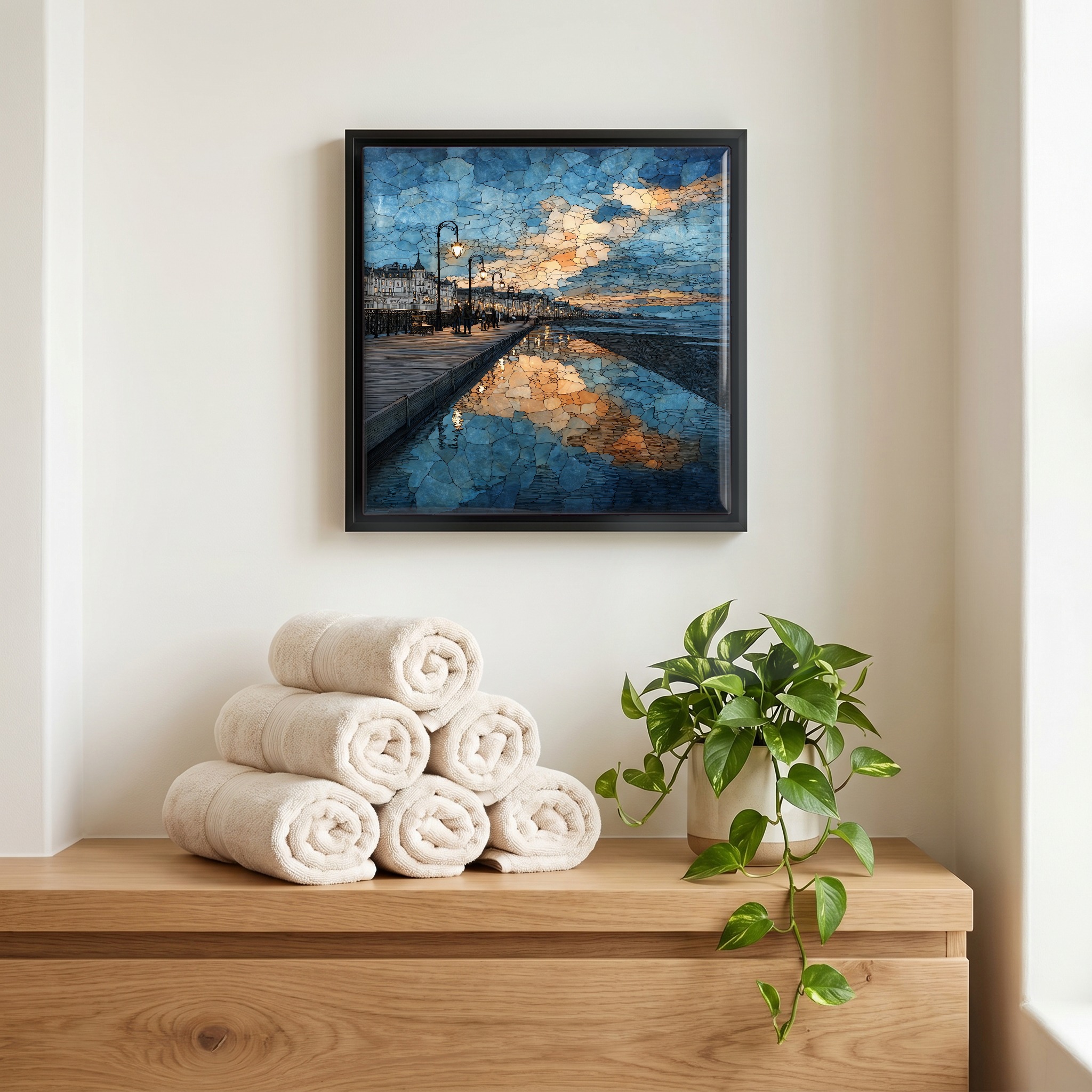
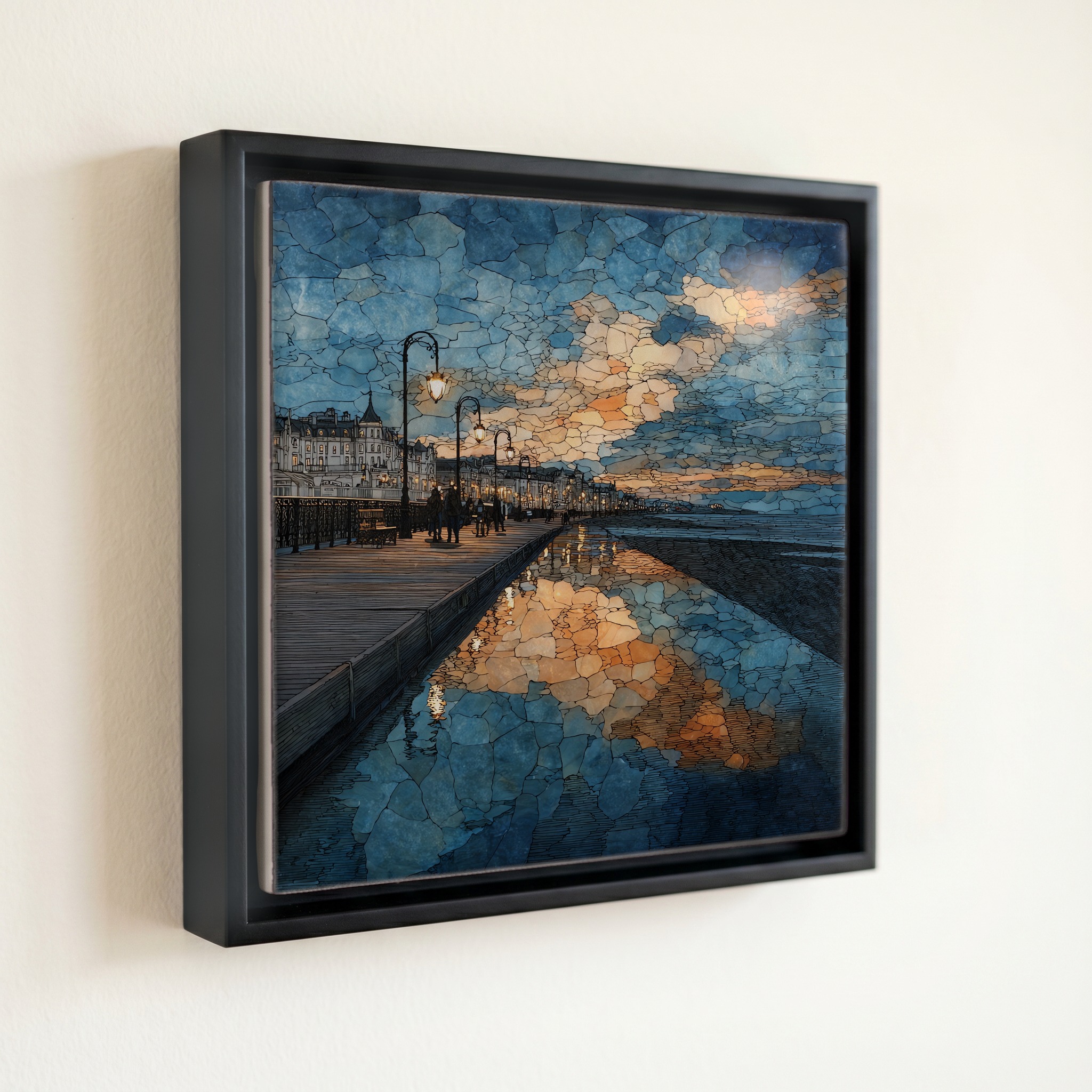
Above the linens, in a slim black surround.
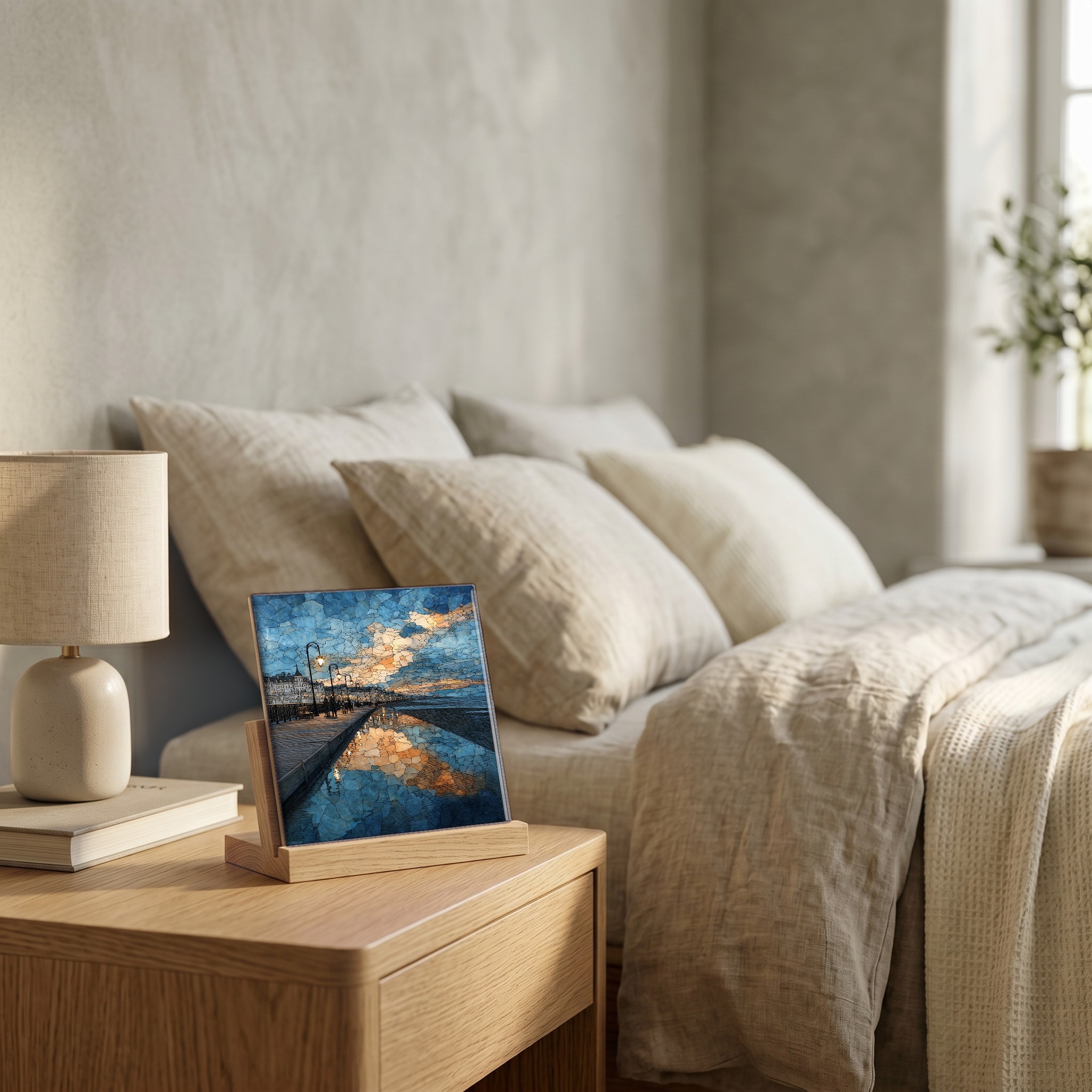
On the nightstand, on a light oak stand.
On a picture ledge, where the light comes in.
a note from the studio

A long wooden walk along the Channel coast, across the river from Deauville. The first boardwalk in Normandy when it opened in 1867. The 925-metre line of planks drew the Belle Époque crowds out for the air. Boudin painted these sands again and again, then taught Monet to paint outside, in the wind. The light is still the light he was after: soft, salt-thinned, often grey-pink before the rain. The casino is still there. The fishing boats still come in. It is a slow walk, hands in pockets.
from the studio
shown in a slim black floating frame · 6 × 6 in
— bring it home

Trouville-sur-Mer Boardwalk, on ceramic.

Each tile is finished by hand in our Knoxville studio. Artwork is slowly infused into the ceramic surface under high heat and pressure, and rests beneath a thin glossy finish. The colour lives in the surface, not on top of it.

What kind of piece?
One tile — square or rectangle.
How big?
the popular one — counter, shelf, nightstand
6 × 6 in · 15 cm · 1.6 lb
Surface finish
A clear glossy finish — the artwork reads as if under resin. Ideal for show-pieces and framed wall art.
How it sits
A hidden cleat — sits ¼″ proud of the wall.
$58
Hand-finished and shipped from our studio at the foot of the Smokies. On your wall in about ten days.
size
6 × 6 in
15 cm
weighs
1.6 lb
solid in the hand
surface
ceramic, hand-finished
art rests beneath a thin glossy finish
from
Knoxville, TN
our family studio, at the foot of the Smokies
— start a Coaster Set

Pick any four 4-inch tiles — National Parks you've been to, a Smokies set, the four seasons of one place. $ for a set of , cork-backed, ready to live on the table.
comes gift-ready
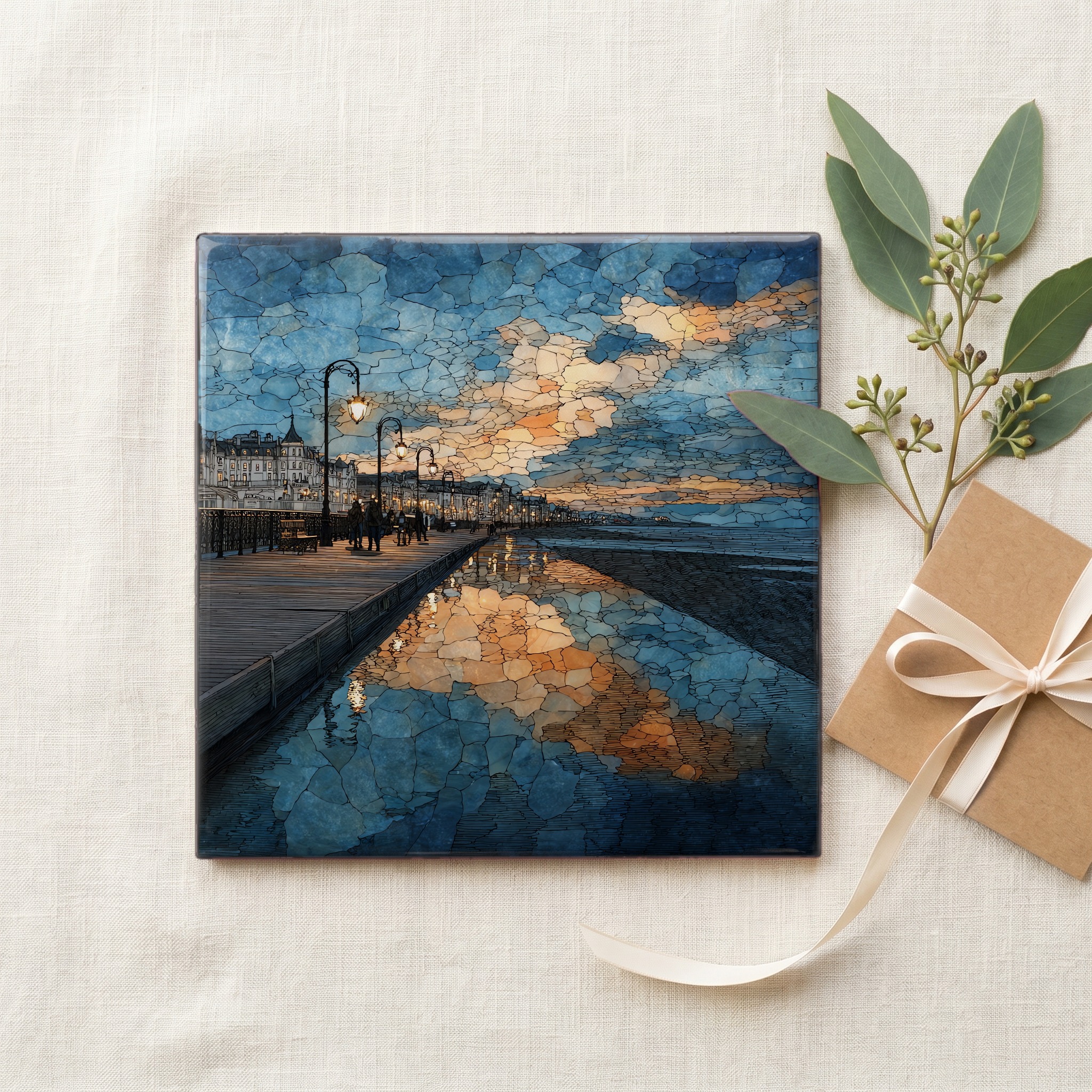
comes gift-ready

Each tile ships in a kraft box, tied with cream ribbon, with a handwritten note from the studio if you'd like to add one.
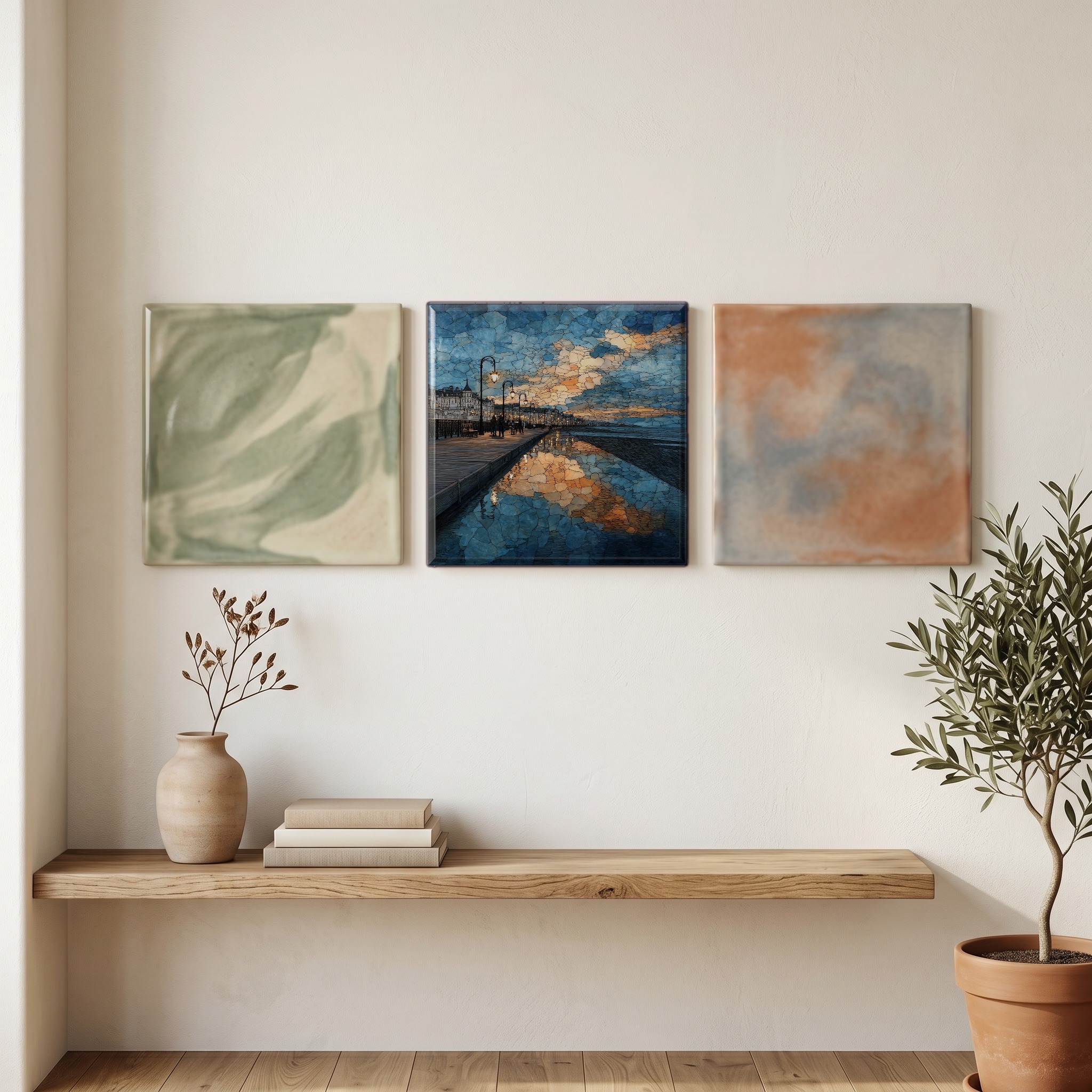
or build a grouping
or build a grouping

Three or five different vistas, hung together — a chapter of places you've been, or want to go.

about Trouville-sur-Mer Boardwalk

The place, in three passes.

A little of what's known, in case you fall down the rabbit hole — or want to go see it yourself.
the place

Trouville-sur-Mer sits on the Côte Fleurie, the Normandy seaside in Calvados department, about two hours northwest of Paris on the English Channel. The town shares the mouth of the Touques river with Deauville, its more famous neighbour, and is reached by direct train from Paris Saint-Lazare to the joint Trouville-Deauville station. Trouville was a working fishing port long before it became a resort, and the harbour still lands fish every morning. The wooden boardwalk, the Promenade des Planches, runs 925 metres along the beach and opened in 1867, the first of its kind on the Normandy coast. Population sits around 4,600, with the town swelling several times over each August.

the light

The light off the Channel at Trouville is the light that taught the Impressionists. Eugène Boudin, born up the coast at Honfleur in 1824, summered at Trouville and made the beach his subject. Of the eleven paintings he showed at the Paris Salon between 1864 and 1869, nine were of this stretch of sand. In 1858 he met a young Claude Monet in Le Havre and pressed on him the importance of painting outdoors, with the wind in the canvas. Monet honeymooned at Trouville in 1870 with his wife Camille and their son Jean, working beside Boudin on the beach. Renoir and Dufy followed. The colour the canvases came back with is the colour the boardwalk still gives, soft and salt-flattened, just before grey.

the visit

The boardwalk runs the length of the beach from the Casino Barrière at the southern end to the Roches Noires headland at the north, and the surface is real timber, replaced in panels as it wears. The bathing huts still stripe the sand in summer. Five minutes south, the bridge over the Touques crosses into Deauville; a small foot-passenger ferry runs the same crossing when the tide is in. The Musée Villa Montebello, the town museum, holds works by Boudin and period photographs of the resort years. Direct trains from Paris Saint-Lazare take just over two hours. High season is May through September; out of season the boardwalk belongs to dog-walkers, fishermen, and the wind, and that is when the light goes back to being Boudin's.

where
France · Calvados, Normandy
elevation
5 m · 16 ft
position
49.3680° N · 0.0830° E
the neighborhood

What's nearby.

A handful of named places within an hour's walk or short drive. Some we've already painted; some we will.
1 km S
Deauville
seaside resort
15 km NE
Honfleur
harbour town
7 km W
Villers-sur-Mer
coastal village
20 km W
Cabourg
Belle Époque resort
N
Trouville-sur-Mer Boardwalk
Deauville
Honfleur
Villers-sur-Mer
Cabourg
common questions

What people ask.

A few questions we get about Trouville-sur-Mer Boardwalk — and about bringing the piece home.
about the place

Trouville-sur-Mer sits on the Normandy coast in the Calvados department of northwestern France, on the English Channel about two hours northwest of Paris by train. The town shares the mouth of the Touques river with Deauville, its better-known neighbour across the water.

The Promenade des Planches opened in 1867 and was the first wooden boardwalk on the Normandy coast. It runs 925 metres along the beach from the Casino Barrière toward the Roches Noires headland and is still surfaced in real timber, replaced in panels as it wears.

Eugène Boudin painted Trouville obsessively. Nine of the eleven paintings he submitted to the Paris Salon between 1864 and 1869 showed the town's beach. Claude Monet honeymooned here with Camille in 1870 and worked beside Boudin. Renoir, Dufy, and Caillebotte followed in later decades.

Boudin, born up the coast at Honfleur in 1824, taught a young Monet that painting needed to happen outdoors, with weather in the canvas. The wide Channel light at Trouville (soft, often overcast, salt-thinned) gave the Impressionists what their studio teachers in Paris could not.

May through September is high season, with warm weather and the bathing huts striped along the sand. September often gives the best light. October to April is quieter, with cold wind off the Channel and the boardwalk belonging to dog-walkers and fishermen.

Trouville is the older, working town. Its fishing harbour still operates, the architecture is mostly nineteenth-century, and the feel is more local. Deauville, across the Touques, was built later as a planned resort with the racetrack, the polo grounds, and the American Film Festival.

Direct trains from Paris Saint-Lazare reach the joint Trouville-Deauville station in just over two hours. The station sits a five-minute walk from the boardwalk. By car the route is the A13 motorway, two and a quarter hours in light traffic.

about the piece in your home

It carries well for someone whose family is from the Normandy coast or who painted there in school. Trouville is the seat of the Impressionist beach pictures; a Small or Medium with a handwritten note from the studio reads as a piece of a real place, not a souvenir.

The piece reads well with coastal-modern interiors, Belle Époque-leaning rooms, and dark academia studies. The palette holds soft sea-greys, washed greens, and the muted pink-grey Boudin chased. It does not fight a room with strong colour and sits well above neutral wainscoting or against a deep navy wall.

Coastal-modern has shifted away from the Hamptons blue-and-white toward European seaside palettes (slate, oyster, washed terracotta, faded pier-wood). Trouville fits this turn. It reads as a quieter, more historical alternative to the Cape Cod and Nantucket pieces saturating the category.

Above a three-seat sofa, the single Large works on its own, centred about ten inches above the back. Over a longer console or bed, the four-tile Mural sits better in the proportion. For a wide gallery wall over a king-sized bed or a stairwell landing, the nine-tile Mural is the right scale.

Yes, in the Dura Satin or Matte finish. Both are scratch-resistant and unbothered by steam and splash. The Glossy finish is meant for framed wall art and dry rooms. For a kitchen backsplash or a shower wall, ask the studio for the Dura Satin spec sheet.

Microfibre cloth and water. The colour is slowly infused into the ceramic surface under high heat and pressure and lives in the surface, not on it, so there is nothing to scratch off. Skip abrasive scrubbers and ammonia-based sprays.

Yes. Every WenderVista piece is composed and hand-finished in our studio in Knoxville, Tennessee. No licensing, no stock. Reid Wender curates the atlas and chooses every place that enters it. The Trouville boardwalk piece exists nowhere else.

if this one stayed with you

A few you might also love.

Hand-picked by the eye that found Sorapis. Same air, same kind of quiet.