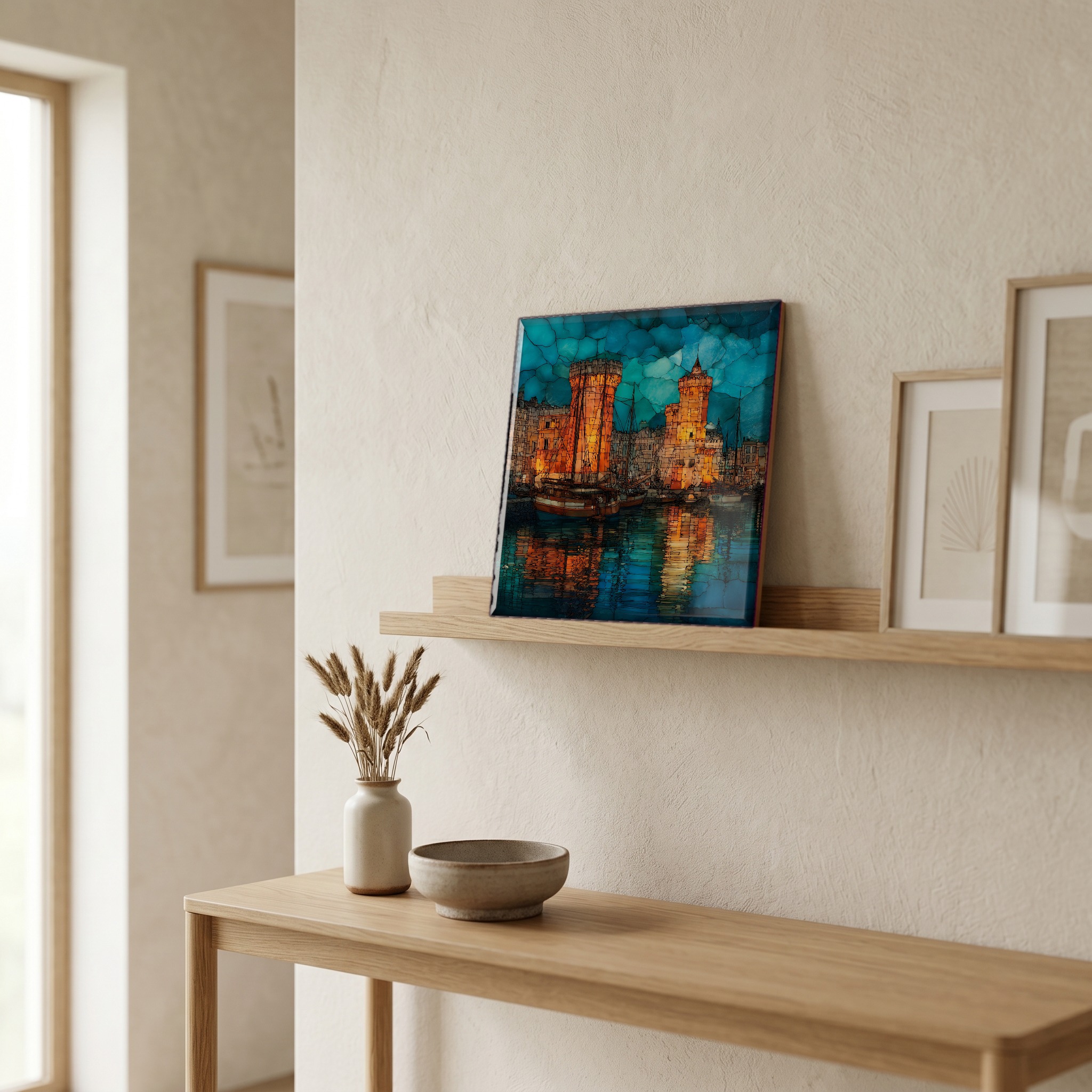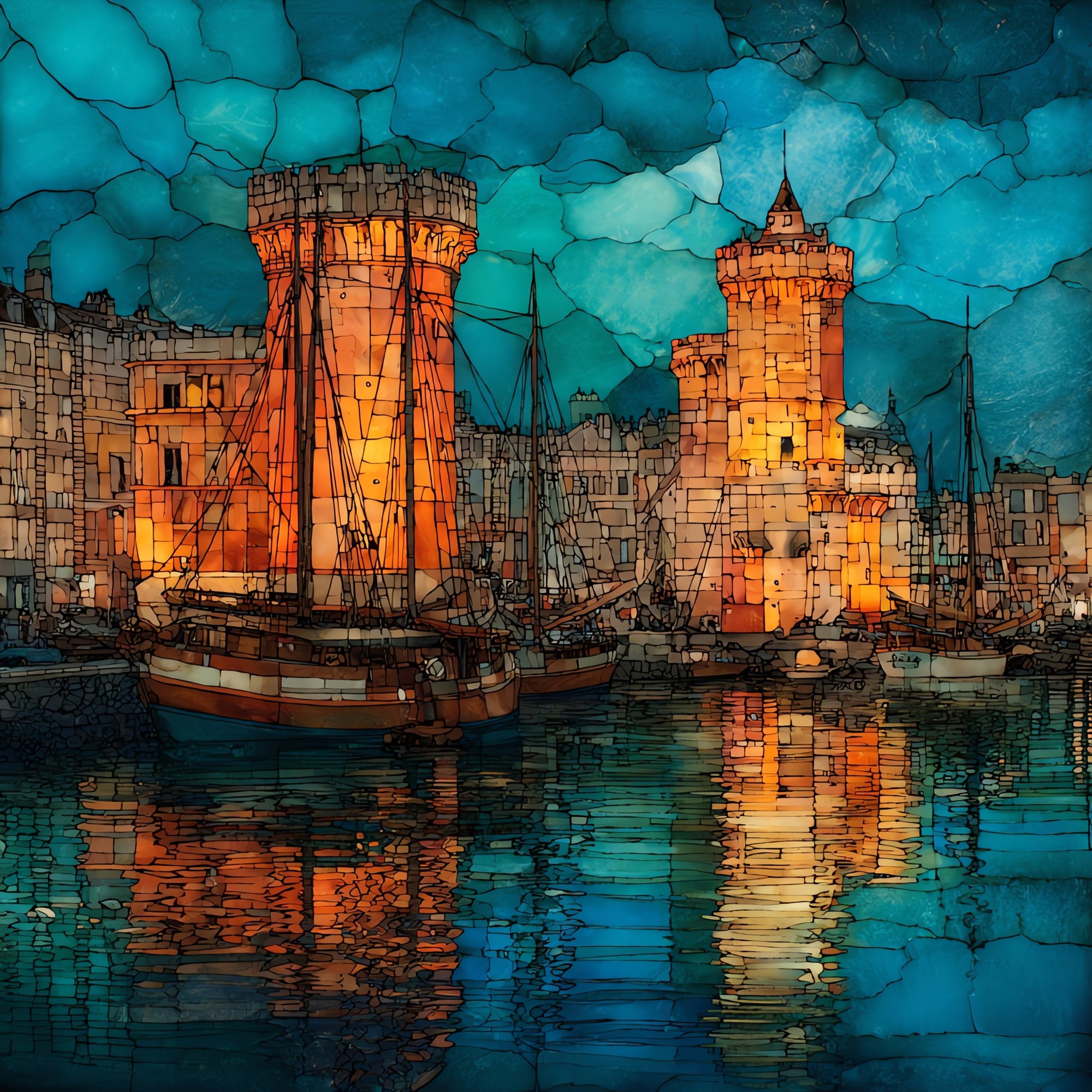
Wender·Vista
Tour Saint-Nicolas
shown on ceramic, 12-inch tileFrance
at the entrance to La Rochelle's old harbour, on the Atlantic coast of France

Tour Saint-Nicolas

— stone that leaned, and held the harbour.

Where it lives

Not only on a wall.

A small tile on the nightstand catching the morning. A larger one above the fire. Yours, wherever you spend the slow hours.
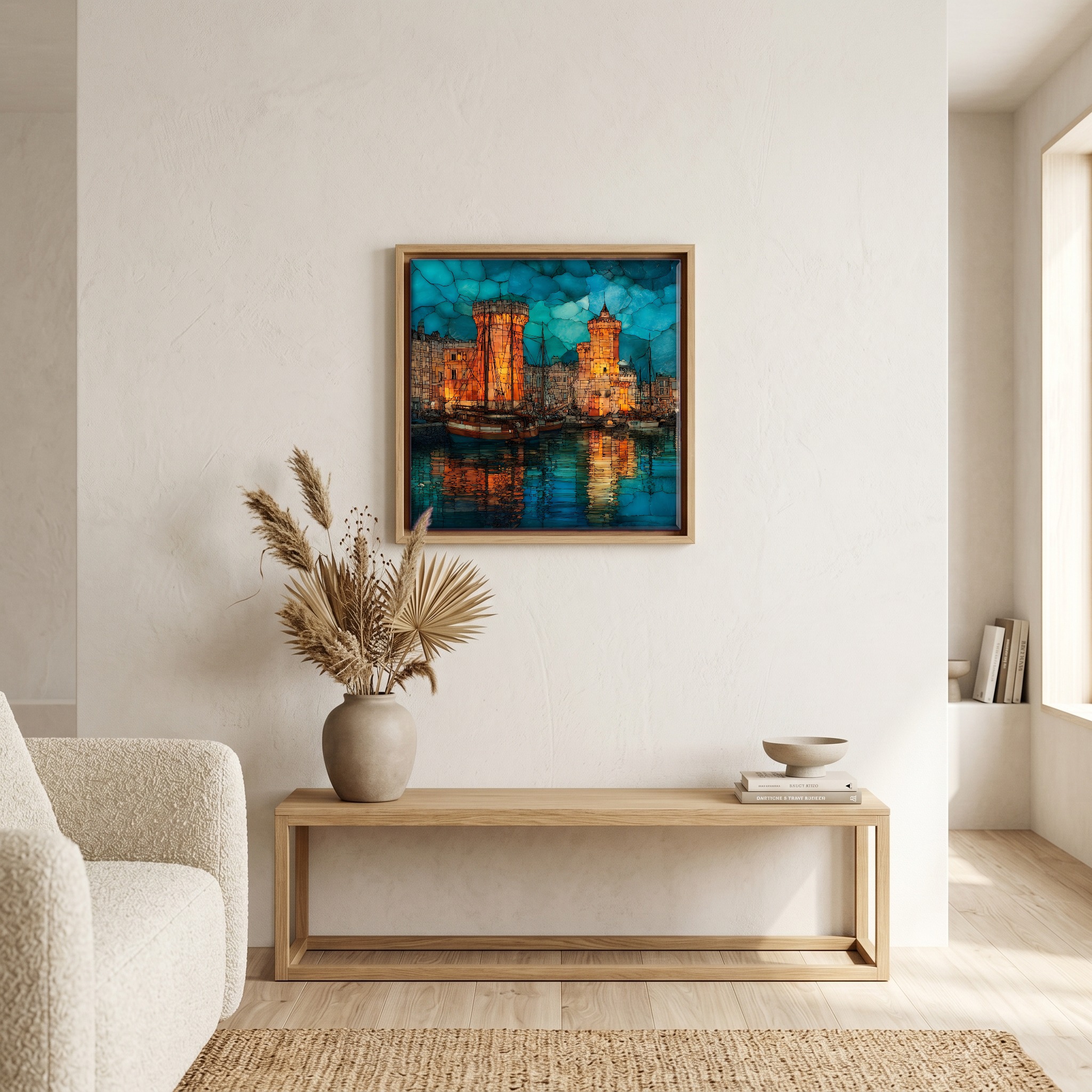
Above the bench, in a warm oak surround.
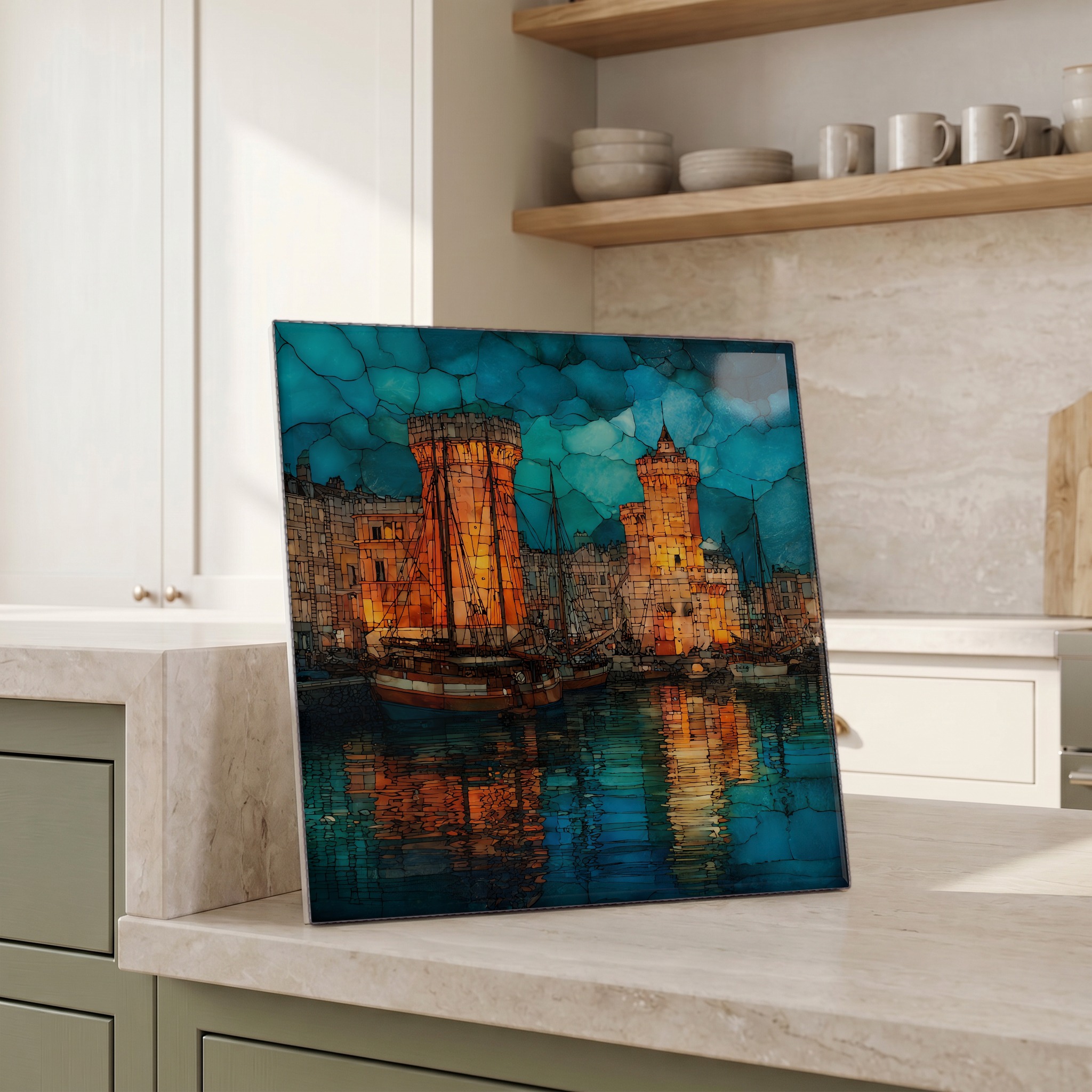
Beside the kettle, propped on the counter.
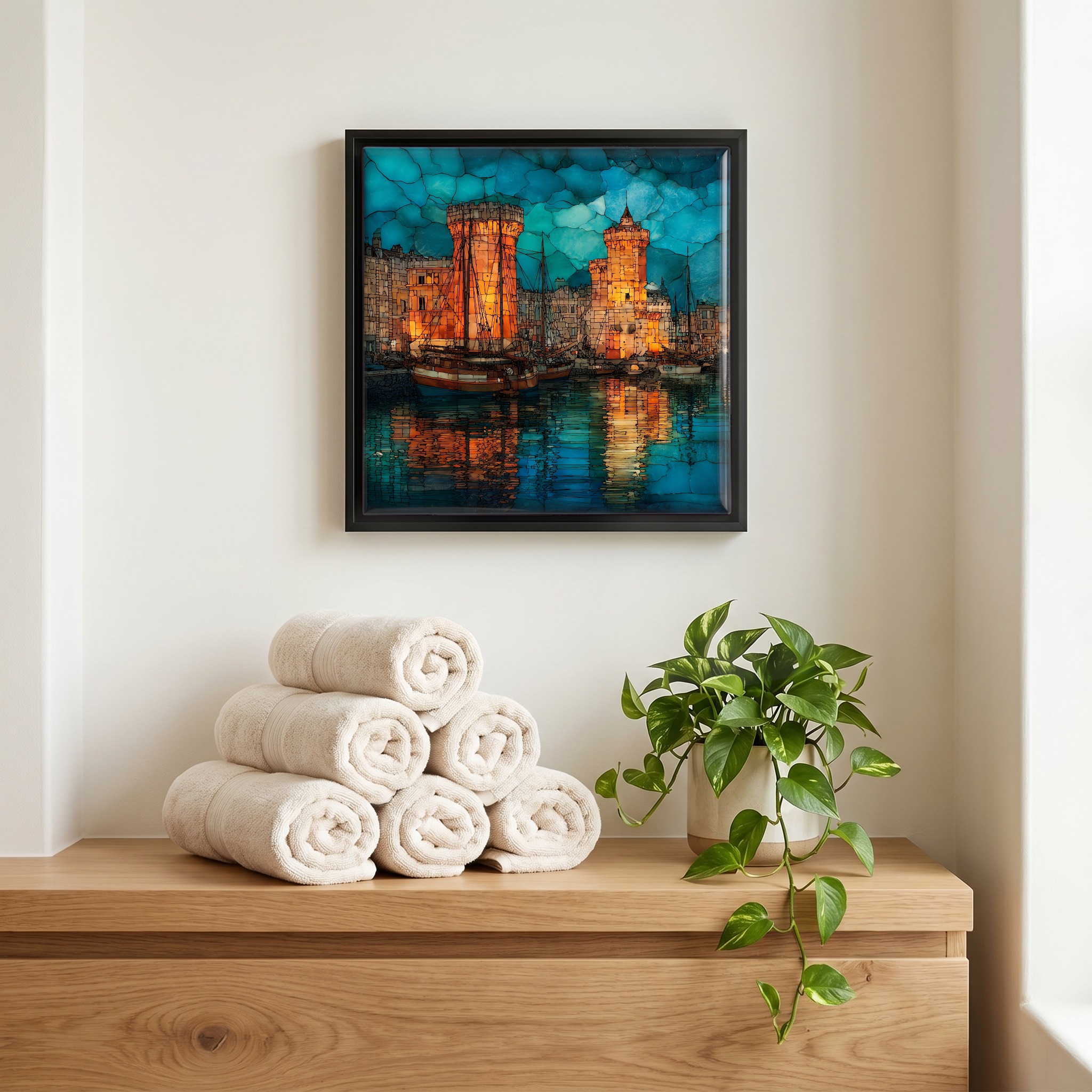
Above the linens, in a slim black surround.
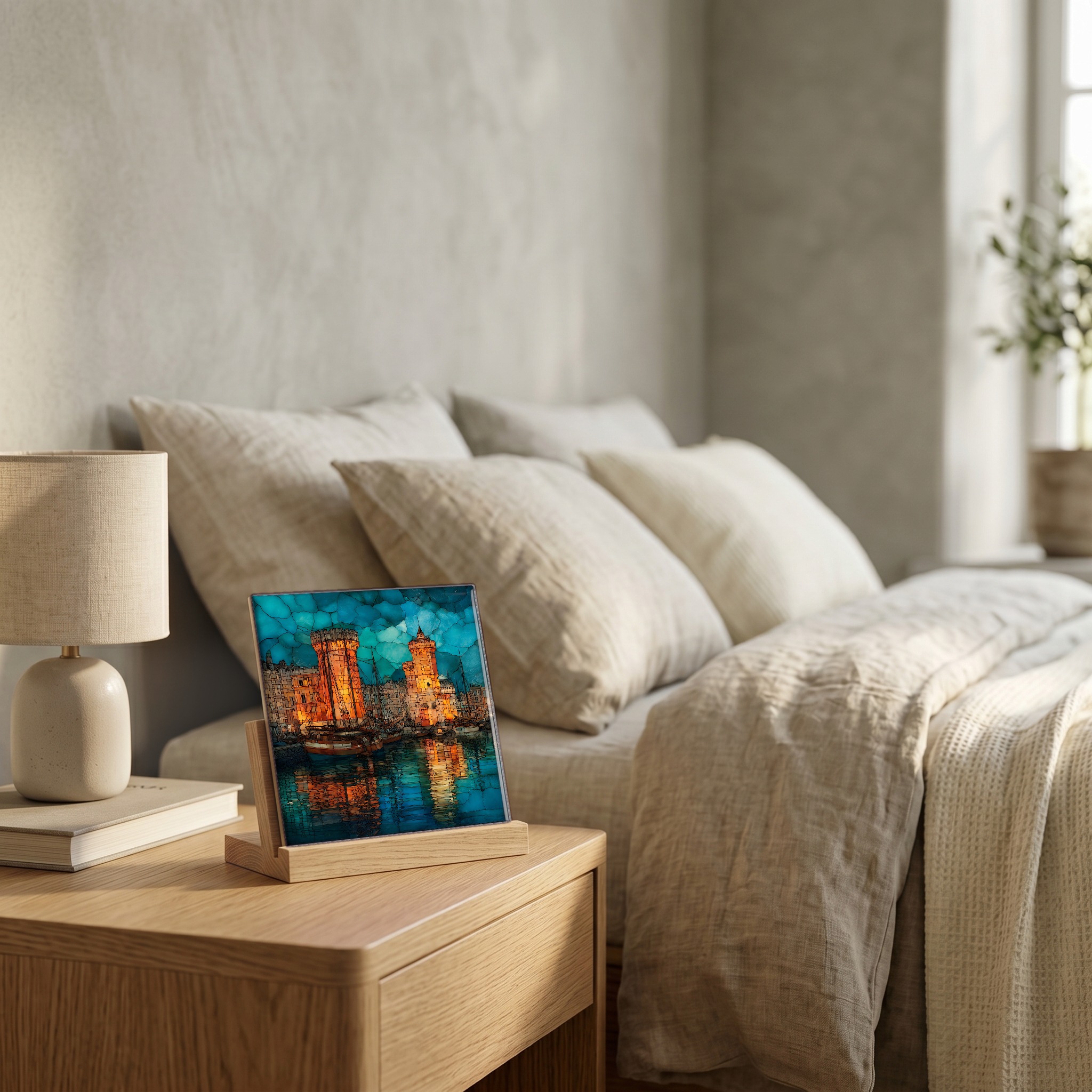
On the nightstand, on a light oak stand.
On a picture ledge, where the light comes in.
a note from the studio

The keep on the south side of the entrance to La Rochelle's old harbour. Built on oak piles driven into Atlantic mud in the 14th century, the tower sank as it rose, leaning northeast, finding plumb again above the second floor. For three hundred years a chain ran from its base across the water to the Tour de la Chaîne, closing the port at night. The chain is gone. The lean is not. Stone the colour of old butter, six centuries of light moving across it, the salt wind doing what salt wind does.
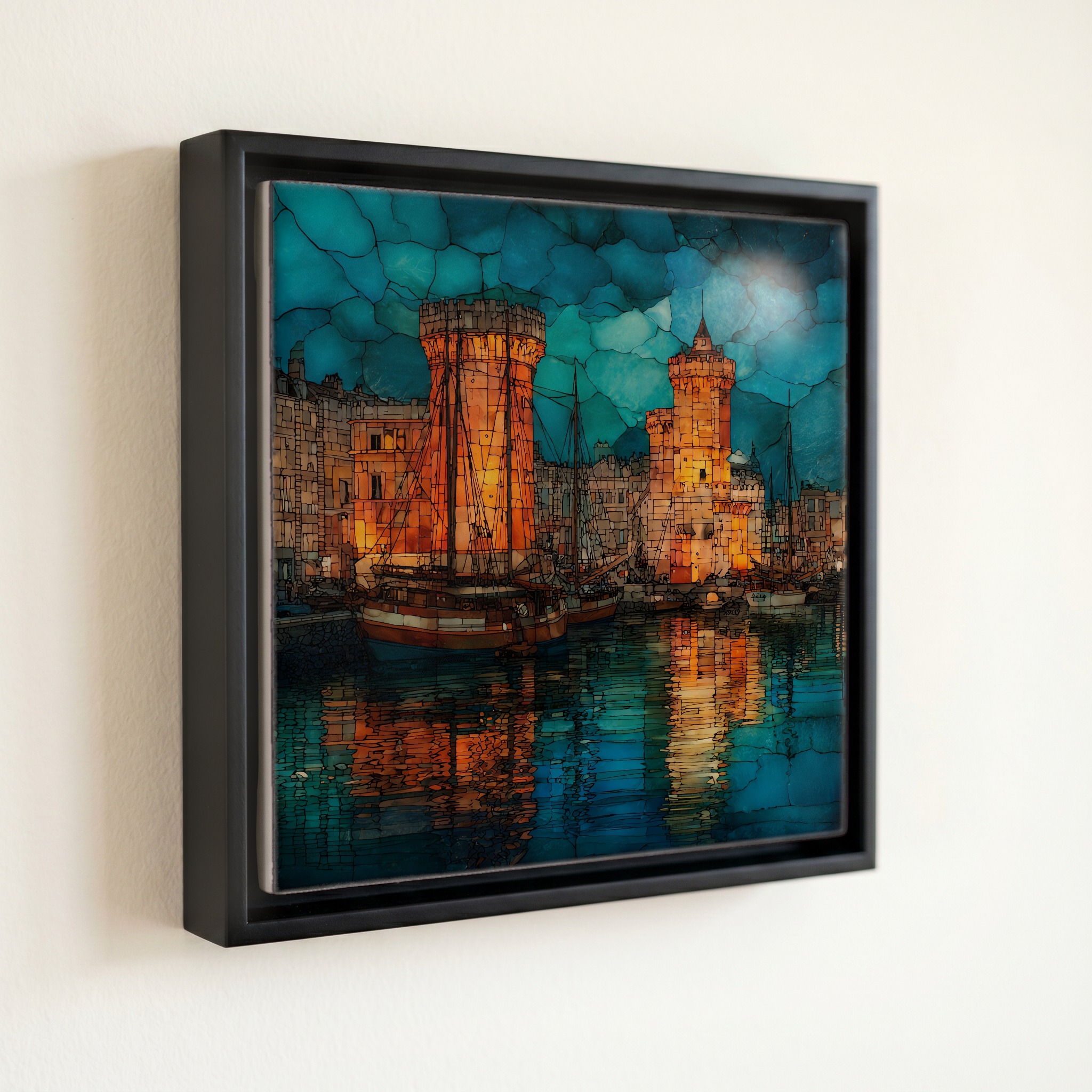
from the studio
shown in a slim black floating frame · 6 × 6 in
— bring it home

Tour Saint-Nicolas, on ceramic.

Each tile is finished by hand in our Knoxville studio. Artwork is slowly infused into the ceramic surface under high heat and pressure, and rests beneath a thin glossy finish. The colour lives in the surface, not on top of it.

What kind of piece?
One tile — square or rectangle.
How big?
the popular one — counter, shelf, nightstand
6 × 6 in · 15 cm · 1.6 lb
Surface finish
A clear glossy finish — the artwork reads as if under resin. Ideal for show-pieces and framed wall art.
How it sits
A hidden cleat — sits ¼″ proud of the wall.
$58
Hand-finished and shipped from our studio at the foot of the Smokies. On your wall in about ten days.
size
6 × 6 in
15 cm
weighs
1.6 lb
solid in the hand
surface
ceramic, hand-finished
art rests beneath a thin glossy finish
from
Knoxville, TN
our family studio, at the foot of the Smokies
— start a Coaster Set

Pick any four 4-inch tiles — National Parks you've been to, a Smokies set, the four seasons of one place. $ for a set of , cork-backed, ready to live on the table.
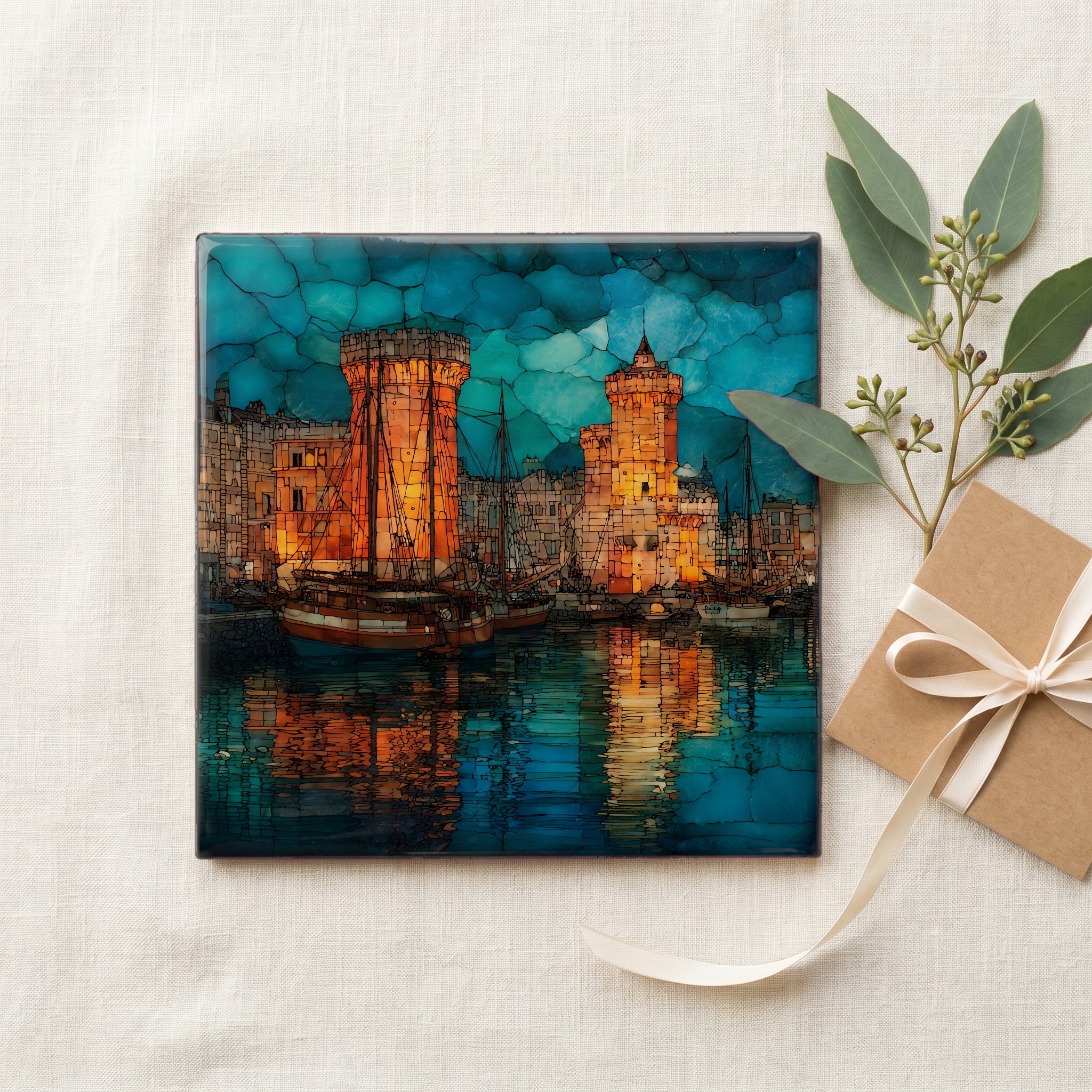
comes gift-ready
comes gift-ready

Each tile ships in a kraft box, tied with cream ribbon, with a handwritten note from the studio if you'd like to add one.
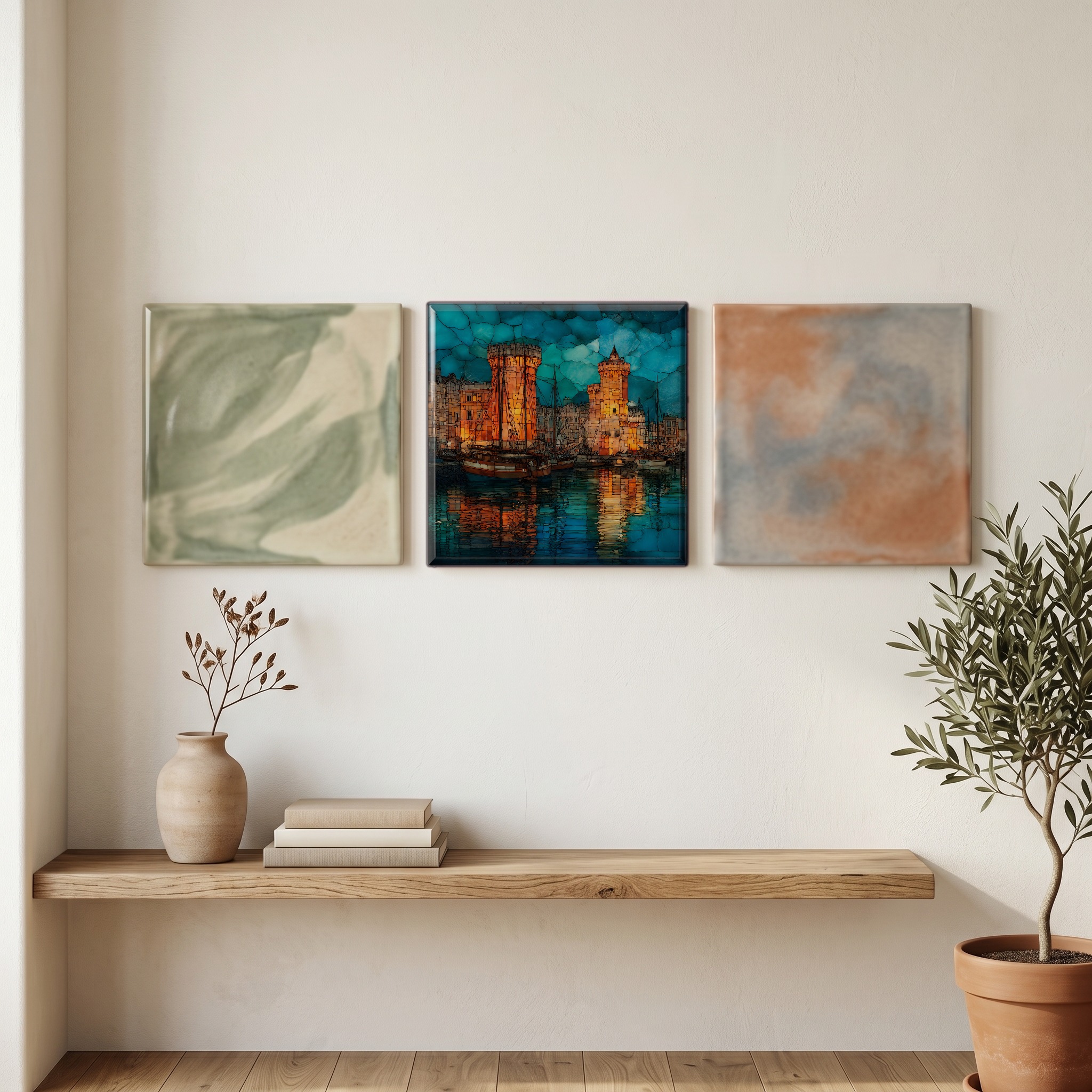
or build a grouping
or build a grouping

Three or five different vistas, hung together — a chapter of places you've been, or want to go.

about Tour Saint-Nicolas

The place, in three passes.

A little of what's known, in case you fall down the rabbit hole — or want to go see it yourself.
the place

Tour Saint-Nicolas stands at the seaward entrance of the Vieux-Port of La Rochelle, the historic Atlantic harbour on France's central west coast, in the Charente-Maritime department of the Nouvelle-Aquitaine region. The keep rises 42 metres across five levels and is one of three surviving medieval towers, with the Tour de la Chaîne directly across the channel and the Tour de la Lanterne a short walk west along the seafront rampart. Construction began around 1340 and was complete by 1376. La Rochelle sits roughly 470 km southwest of Paris and 175 km north of Bordeaux; the TGV serves the city's central station, a fifteen-minute walk from the tower. The site is owned by the French state and managed by the Centre des Monuments Nationaux.

the stone

The Tour Saint-Nicolas is a circular keep with a spur and corner turrets, set on long oak piles driven into the soft harbour mud and braced with stones. As the masonry rose the foundations gave on one side and the lower stories tilted northeast; the masons widened the base, added a buttress, then corrected the build so the tower carries on plumb above the second floor. Locally it has earned the nickname la tour de Pise française. The interior is a labyrinth of corridors and staircases threaded through the thickness of the walls, serving four floors of vaulted and timbered rooms: a Gothic chapel, bedrooms with fireplaces and latrines, a captain's reception room. It was a fortress and a household in one. Listed a monument historique in 1879, the keep was restored between 1884 and 1904.

the water

For three hundred years the tower's strategic value lay in what stretched from its base: a heavy iron chain operated by a winch, drawn across the harbour mouth to the Tour de la Chaîne and back, closing the Vieux-Port at night and during siege. The windlass that raised the chain was mounted inside the keep; sections of the original chain were dredged from the harbour bottom in the 19th century and kept at the foot of the tower. La Rochelle was a Huguenot stronghold during the Wars of Religion, and after Louis XIV revoked the Edict of Nantes in 1685, the Tour Saint-Nicolas was used to hold Protestant prisoners. A century later, Vendeans were imprisoned here during the Revolutionary Wars of 1793–95.

where
France · La Rochelle, Charente-Maritime
position
46.1558° N · 1.1569° W
the neighborhood

What's nearby.

A handful of named places within an hour's walk or short drive. Some we've already painted; some we will.
0.1 km NW
Tour de la Chaîne
medieval tower
0.4 km W
Tour de la Lanterne
medieval tower
0.1 km N
Vieux-Port de La Rochelle
old harbour
0.5 km S
Aquarium de La Rochelle
public aquarium
0.5 km NE
Cathédrale Saint-Louis de La Rochelle
cathedral
0.4 km NE
Hôtel de Ville de La Rochelle
Renaissance town hall
12 km W
Île de Ré
Atlantic island
N
Tour Saint-Nicolas
Tour de la Chaîne
Tour de la Lanterne
Vieux-Port de La Rochelle
Aquarium de La Rochelle
Cathédrale Saint-Louis de La Rochelle
Hôtel de Ville de La Rochelle
Île de Ré
common questions

What people ask.

A few questions we get about Tour Saint-Nicolas — and about bringing the piece home.
about the place

At the seaward entrance of the Vieux-Port, La Rochelle's medieval harbour on the Atlantic coast of France, in the Charente-Maritime department of the Nouvelle-Aquitaine region. It stands directly across the channel from the Tour de la Chaîne.

Construction began around 1340 and was complete by 1376. The masons built on long oak piles sunk into the harbour mud, which is why the lower stories settled and leaned to the northeast as the building rose.

The oak piles supporting its foundations sank into the soft harbour ground as the masonry rose. Builders widened the base, added foundations and a buttress, then corrected the masonry above the second floor so the upper levels carry on plumb. The nickname is la tour de Pise française.

An iron chain operated by a winch ran from the Tour Saint-Nicolas across the harbour mouth to the Tour de la Chaîne, sealing the Vieux-Port at night and during siege. Sections of the original chain were recovered from the harbour bottom in the 19th century and kept at the foot of the tower.

Yes. After Louis XIV revoked the Edict of Nantes in 1685, the keep held Protestant prisoners. During the Revolutionary Wars of 1793–95, Vendeans were imprisoned there. The tower was classified a monument historique in 1879 and restored between 1884 and 1904.

The tower is part of the Towers of La Rochelle site, managed by the Centre des Monuments Nationaux. It stands 42 metres tall across five levels with about 150 steps, including intertwined staircases threaded through the walls. Check the official monuments-nationaux.fr site for current opening status.

It is one of three surviving medieval harbour towers. The Tour de la Chaîne sits directly across the channel; the Tour de la Lanterne is a short walk west along the rampart. Together they form the seaward defence of the old port.

about the piece in your home

It carries well for family who grew up in La Rochelle, summered on the Île de Ré, or studied at the maritime academy. The keep is the city's most recognisable silhouette. A Coaster or a Small with a handwritten note from the studio travels well in a card-sized box.

The stained-glass blues and the warm-stone palette fit Coastal-modern interiors, Old-World European rooms with antique wood, and Jewel-tone Maximalist spaces that take a single piece as an anchor. The tile holds the eye on a limewashed or pale plaster wall.

Yes. Old-World European has been a steady current in interior design for several seasons, and pieces grounded in a named historic site read as more considered than generic European motifs. The tile carries the texture of a real medieval keep rather than decorative pastiche.

Above a standard three-seat sofa or a long console, the Large reads strong on its own. For a more architectural feel, a four-tile Mural fills the wall above a sofa, and a nine-tile Mural takes a wider great-room wall without crowding the room.

Yes. For wet zones, backsplashes, or shower walls, ask for the Dura Satin or Matte finish; both are scratch-resistant and hold their colour in steam and direct splash. The Glossy finish is for dry-wall display, framed or unframed.

A soft microfibre cloth and clean water. The colour is slowly infused into the ceramic surface under high heat and pressure and rests beneath a thin glossy finish, so it will not lift with normal cleaning. Avoid abrasive pads and citrus-based solvents.

Yes. Every WenderVista piece is curated by Reid Wender and hand-finished in a single studio in Knoxville, Tennessee. We do not license the artwork to other brands, and the Tour Saint-Nicolas painting was made for the WenderVista atlas, not adapted from stock.

if this one stayed with you

A few you might also love.

Hand-picked by the eye that found Sorapis. Same air, same kind of quiet.