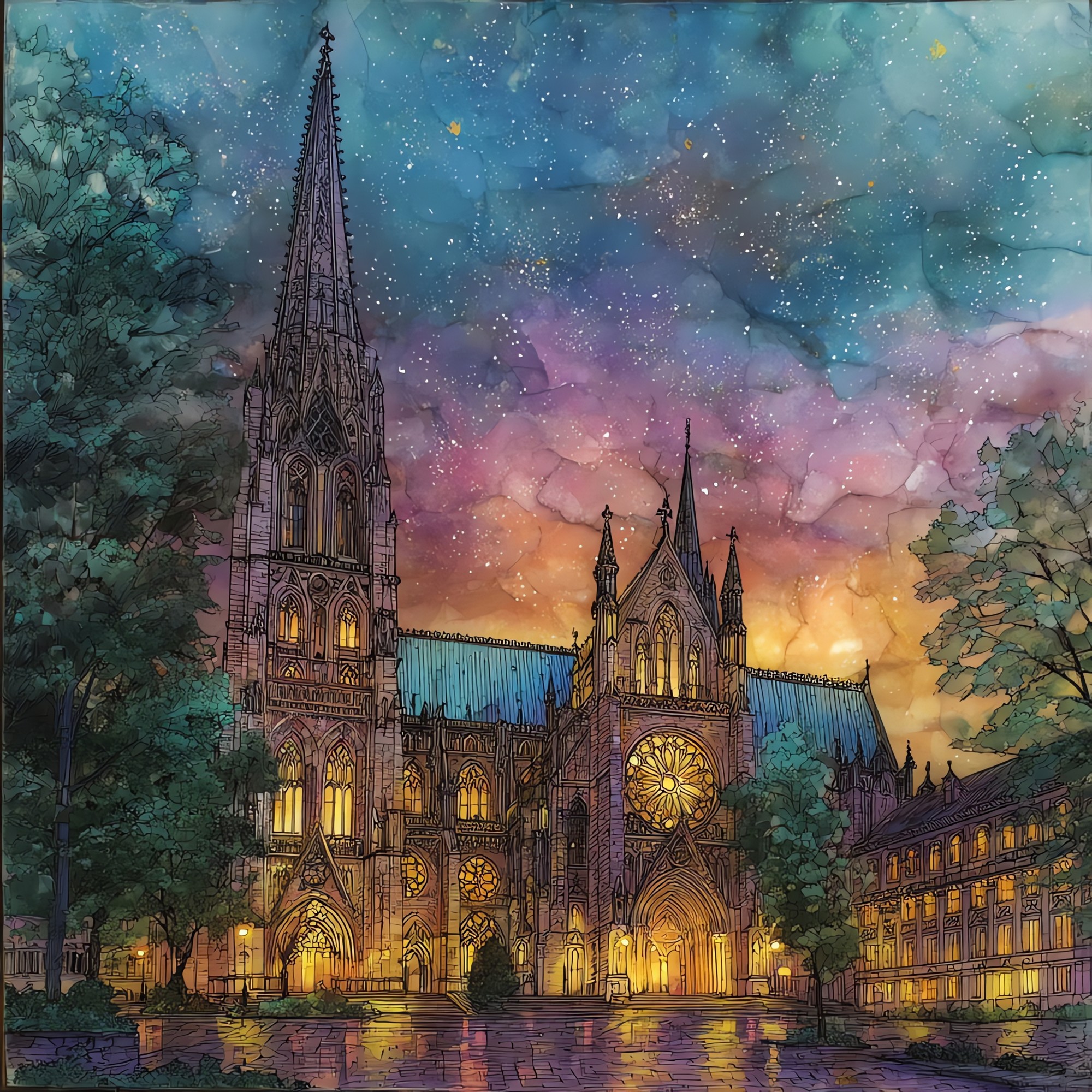
Strasbourg Cathedral Notre-Dame
— the pink stone keeps after the sun is down.
Not only on a wall.
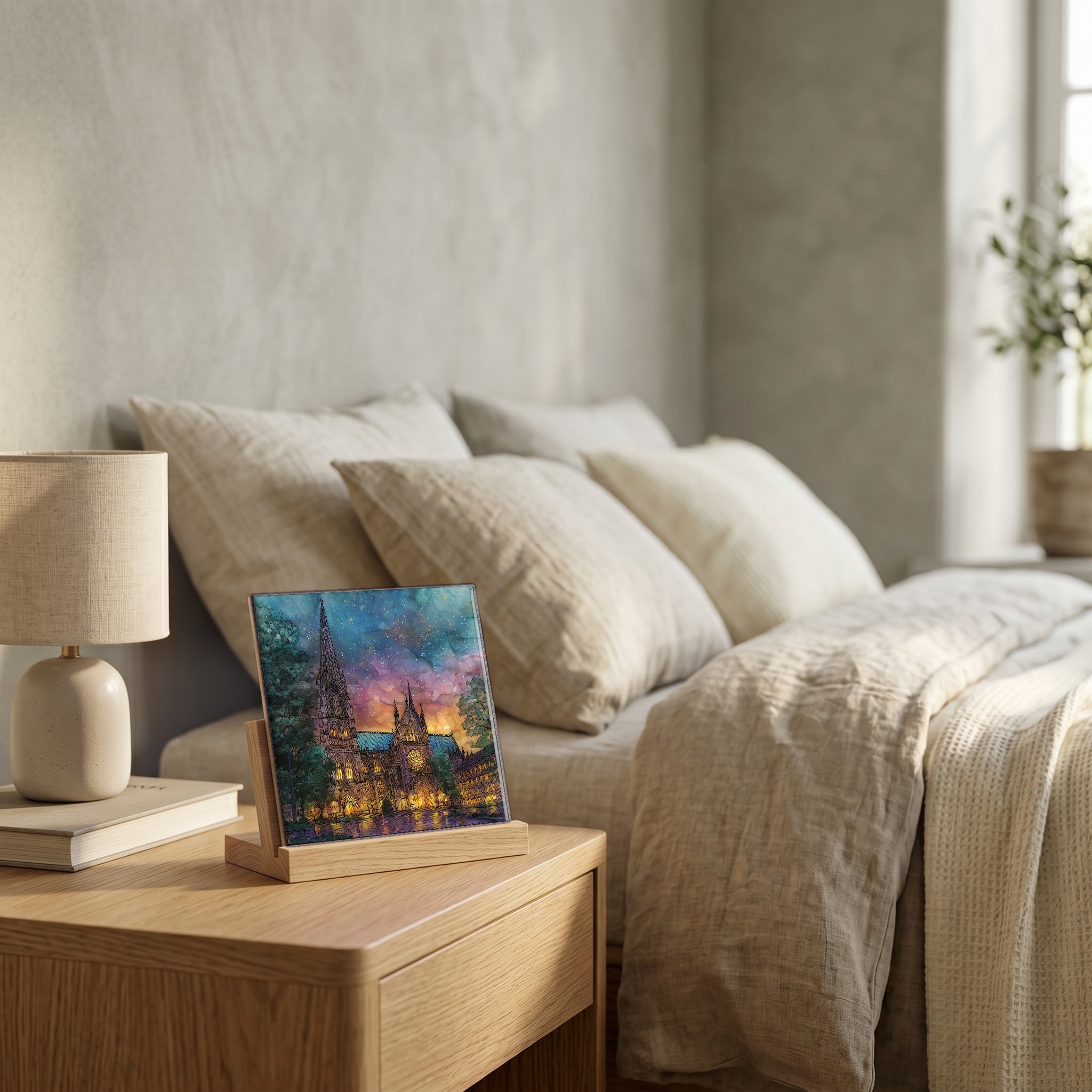
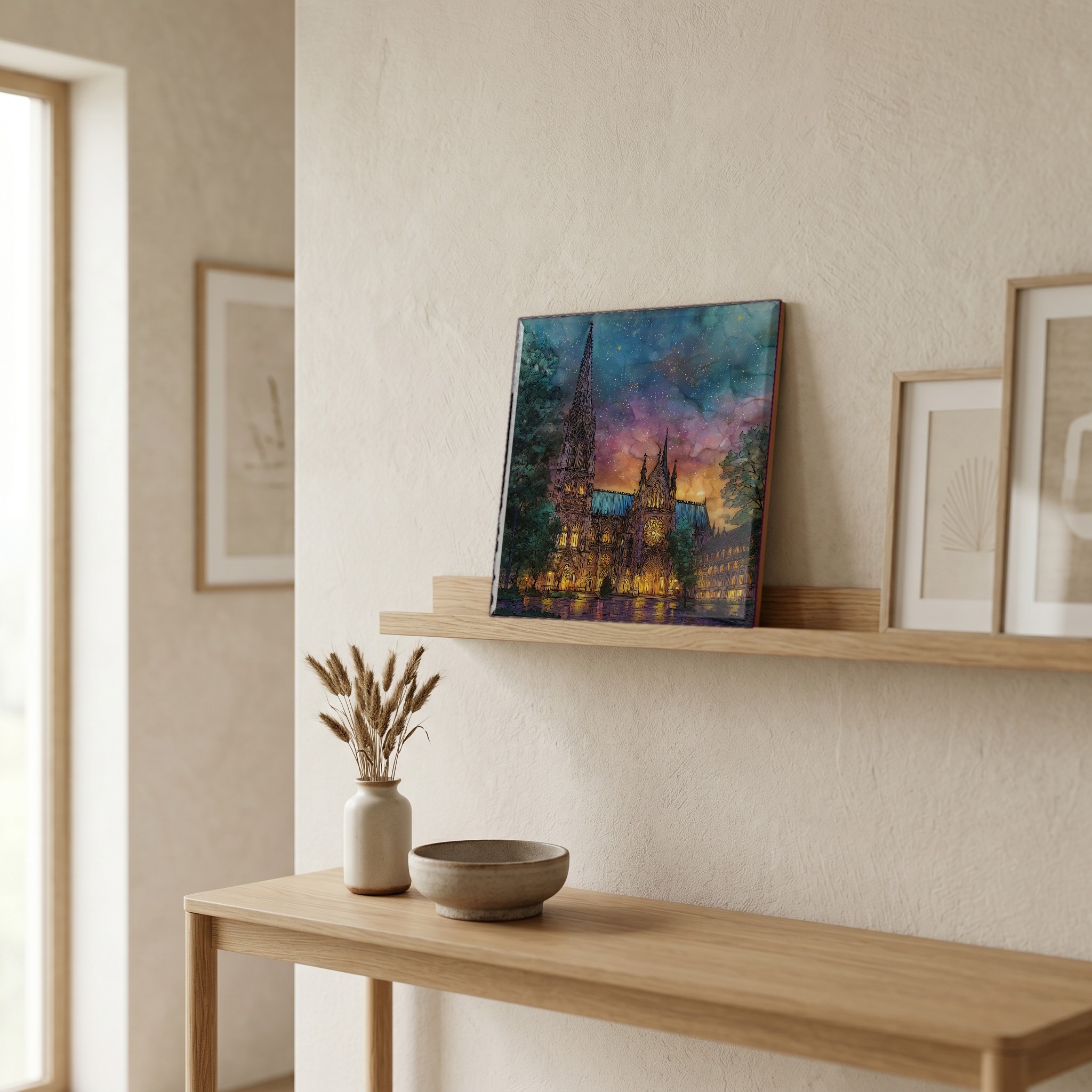
“Pink Vosges sandstone, quarried from the hills west of the city, gives Strasbourg's cathedral its colour: rose at noon, near-red as the day fades. The west façade carries a great wheel of stained glass above three carved portals, and a single spire rises 142 metres above the old city. Its twin was never built, and the asymmetry has had nine centuries to settle in. Inside, an astronomical clock runs its procession of figures at 12:30 each day. The cathedral has stood over the old city for almost a thousand years.
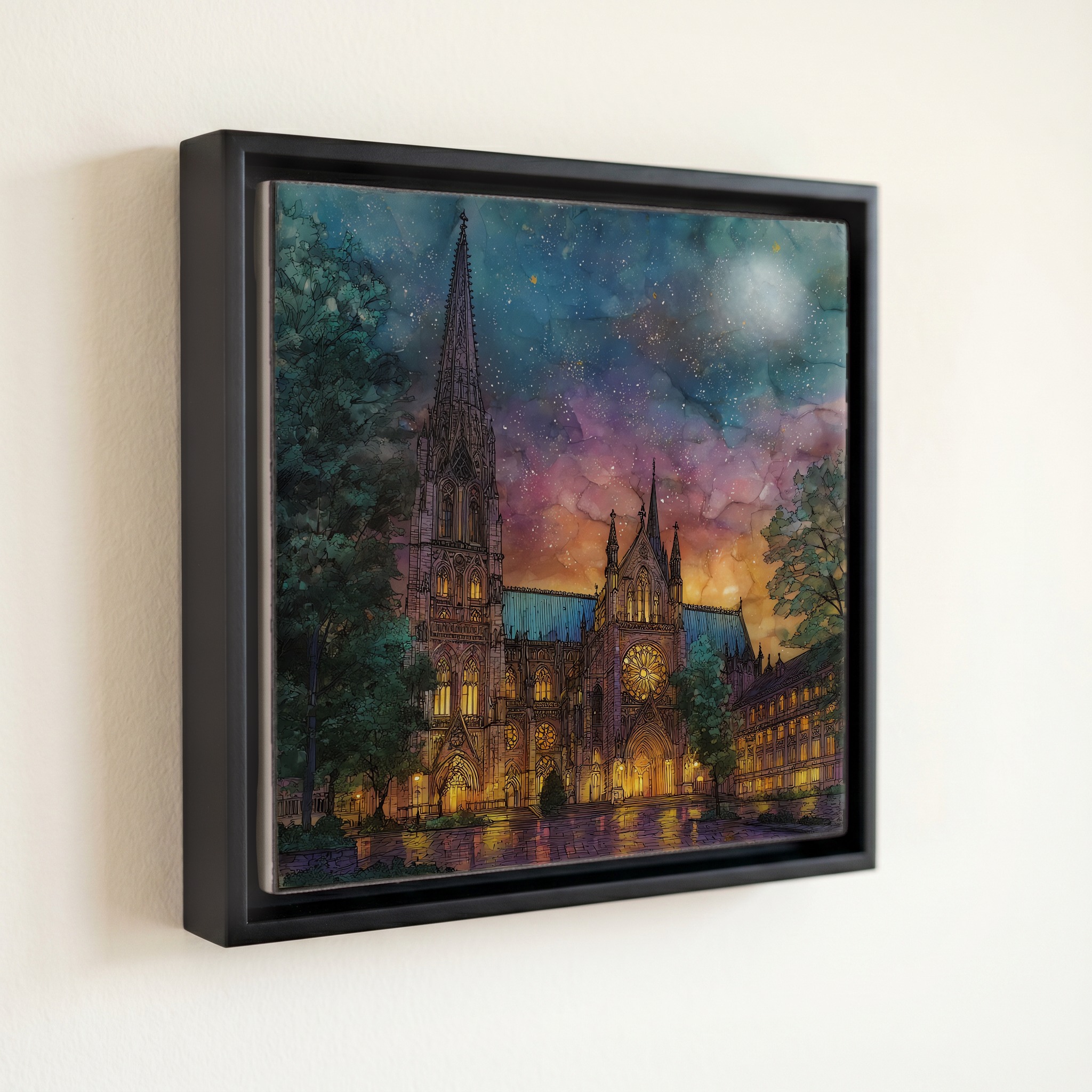
Strasbourg Cathedral Notre-Dame, on ceramic.
Each tile is finished by hand in our Knoxville studio. Artwork is slowly infused into the ceramic surface under high heat and pressure, and rests beneath a thin glossy finish. The colour lives in the surface, not on top of it.
Pick any four 4-inch tiles — National Parks you've been to, a Smokies set, the four seasons of one place. $ for a set of , cork-backed, ready to live on the table.
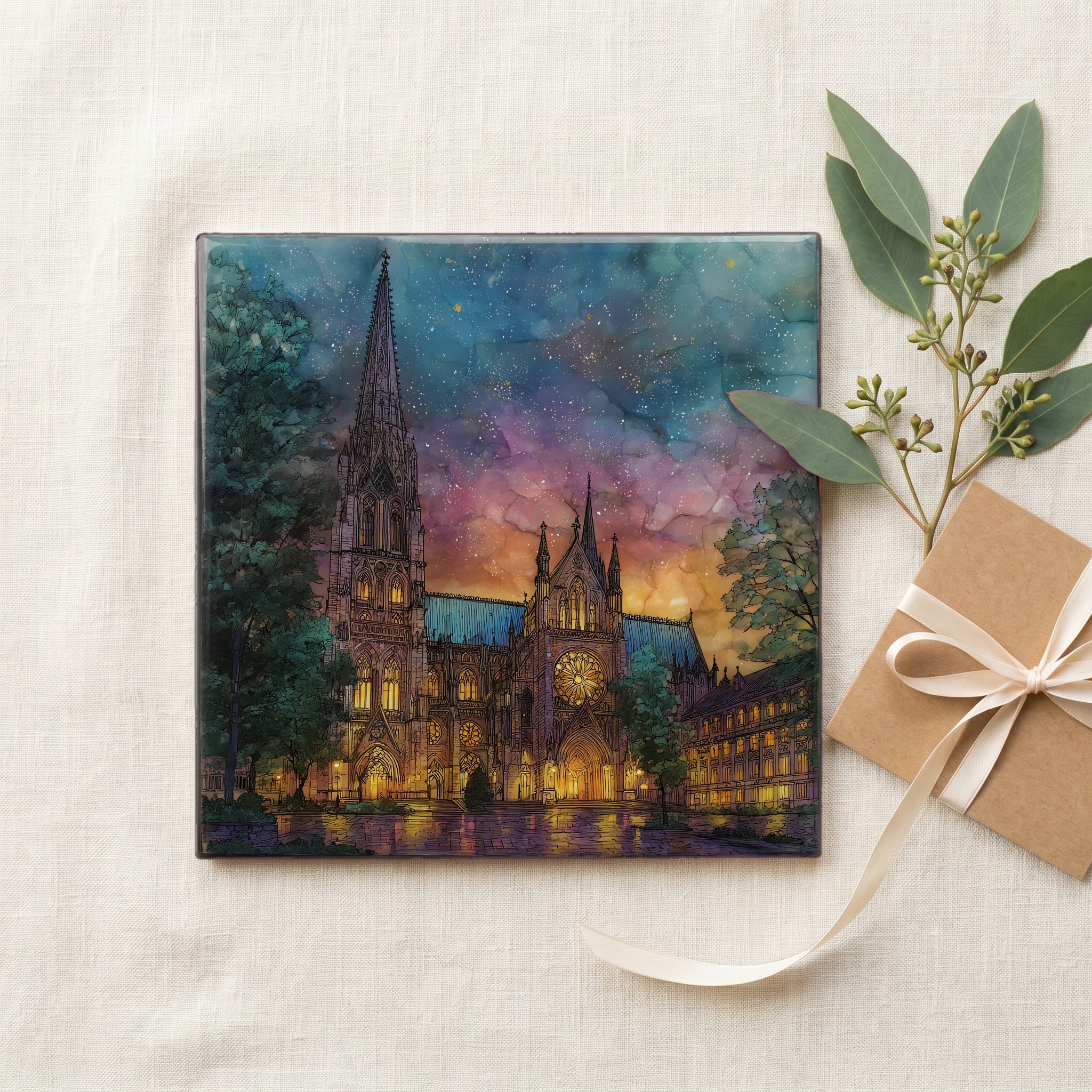
Each tile ships in a kraft box, tied with cream ribbon, with a handwritten note from the studio if you'd like to add one.
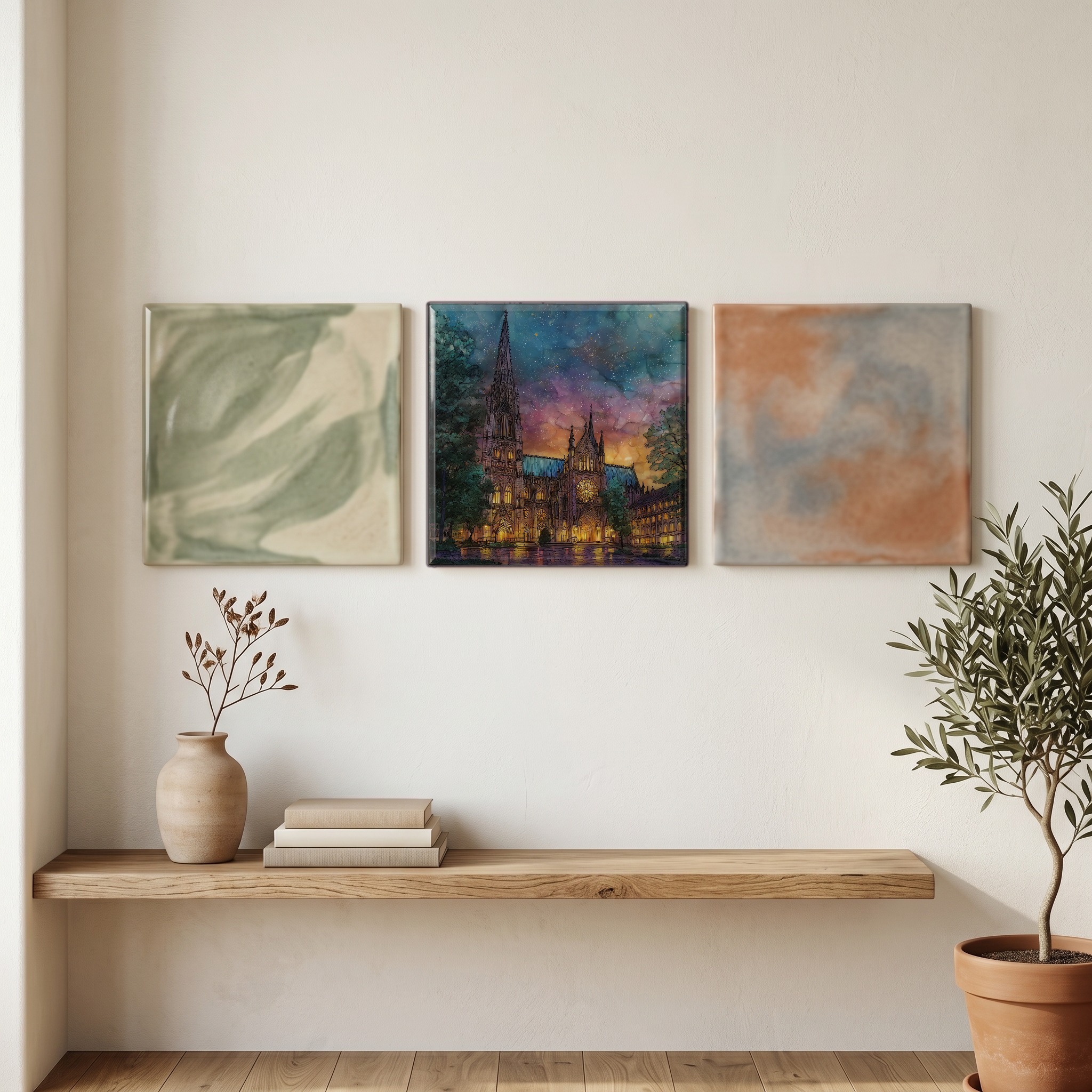
Three or five different vistas, hung together — a chapter of places you've been, or want to go.
The place, in three passes.
The cathedral stands on the Grande Île, the island formed by the river Ill in old Strasbourg, in the Alsace region of north-eastern France. The Grande Île was inscribed by UNESCO in 1988, and the listing was extended in 2017 to include the adjoining Neustadt quarter built under German administration in the late nineteenth century. Construction on the present Gothic structure began in 1190 over the foundations of an earlier Ottonian church, and the great west façade and single north spire reached their full height in 1439. From 1647 until 1874 it was the tallest building in the world. The west door faces Place de la Cathédrale, six minutes' walk from the main railway station.
The cathedral's colour comes from grès des Vosges, a pink-red sandstone quarried from the Vosges mountains that rise to the west of the Rhine plain. The stone reads rose in flat light and a deep oxblood at sunset, and the change is one of the things that makes the building photograph differently every hour. The single north spire, completed by master mason Johannes Hültz of Cologne in 1439, rises 142 metres and was built entirely in this same sandstone. The material is comparatively soft, and the cathedral has been in some form of restoration almost continuously since the nineteenth century; ongoing work is managed by the Fondation de l'Œuvre Notre-Dame, an institution that has run the building's stonework since 1224.
The nave is open daily with a brief midday closure, and admission is free. The astronomical clock, rebuilt to its present mechanism by Jean-Baptiste Schwilgué in 1842, runs its full procession of figures at 12:30 each afternoon; tickets for that fifteen-minute window are sold separately at the south transept. The spire platform sits 66 metres above the square and is reached by a climb of 332 steps inside the north tower. From the platform the view runs east across the Rhine to the dark line of the Black Forest in Baden-Württemberg, and west across the plain to the Vosges. Hours shift on feast days and during Mass; the official cathedral site posts the current schedule.