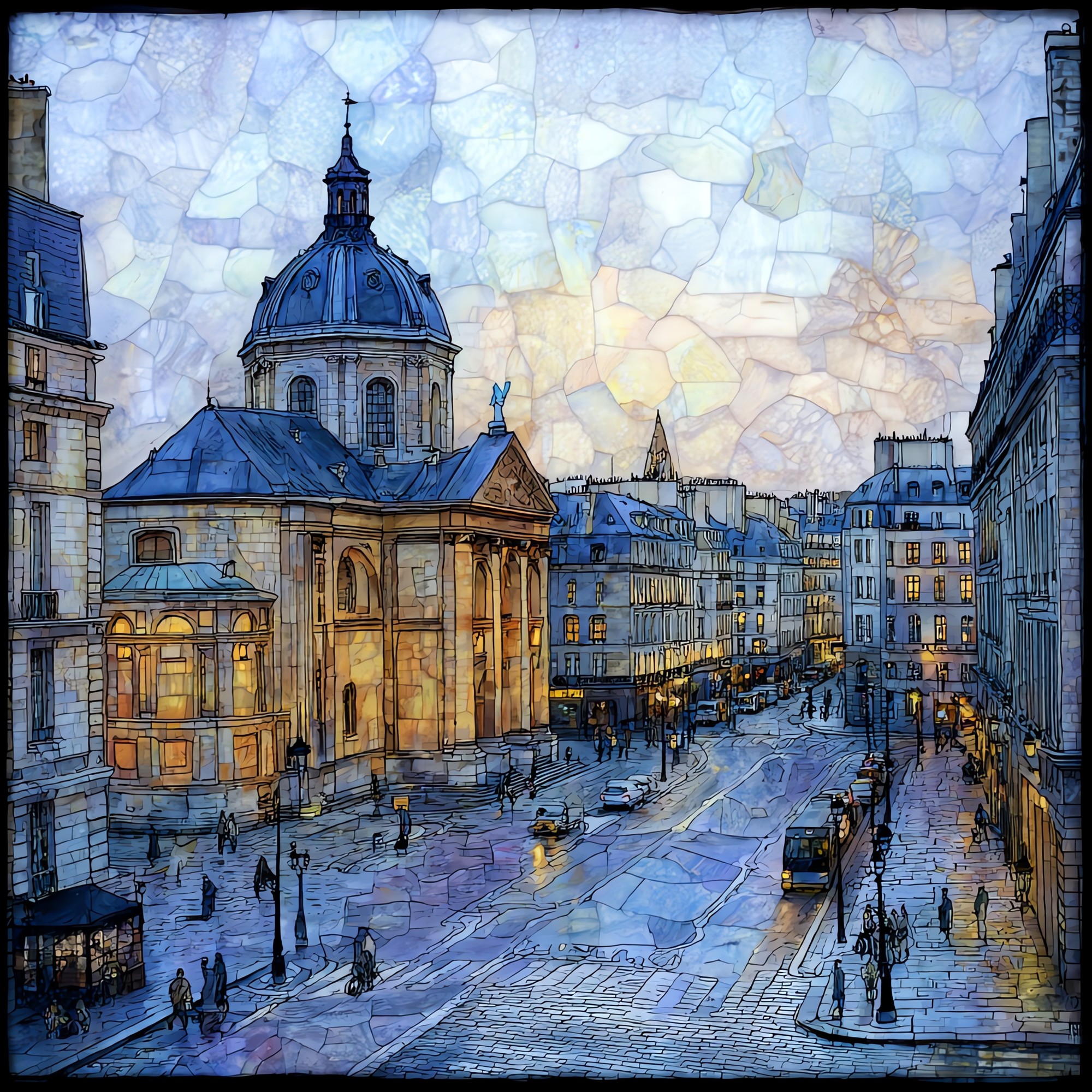
Sorbonne Square
— — the small square the Sorbonne keeps for itself.
Not only on a wall.
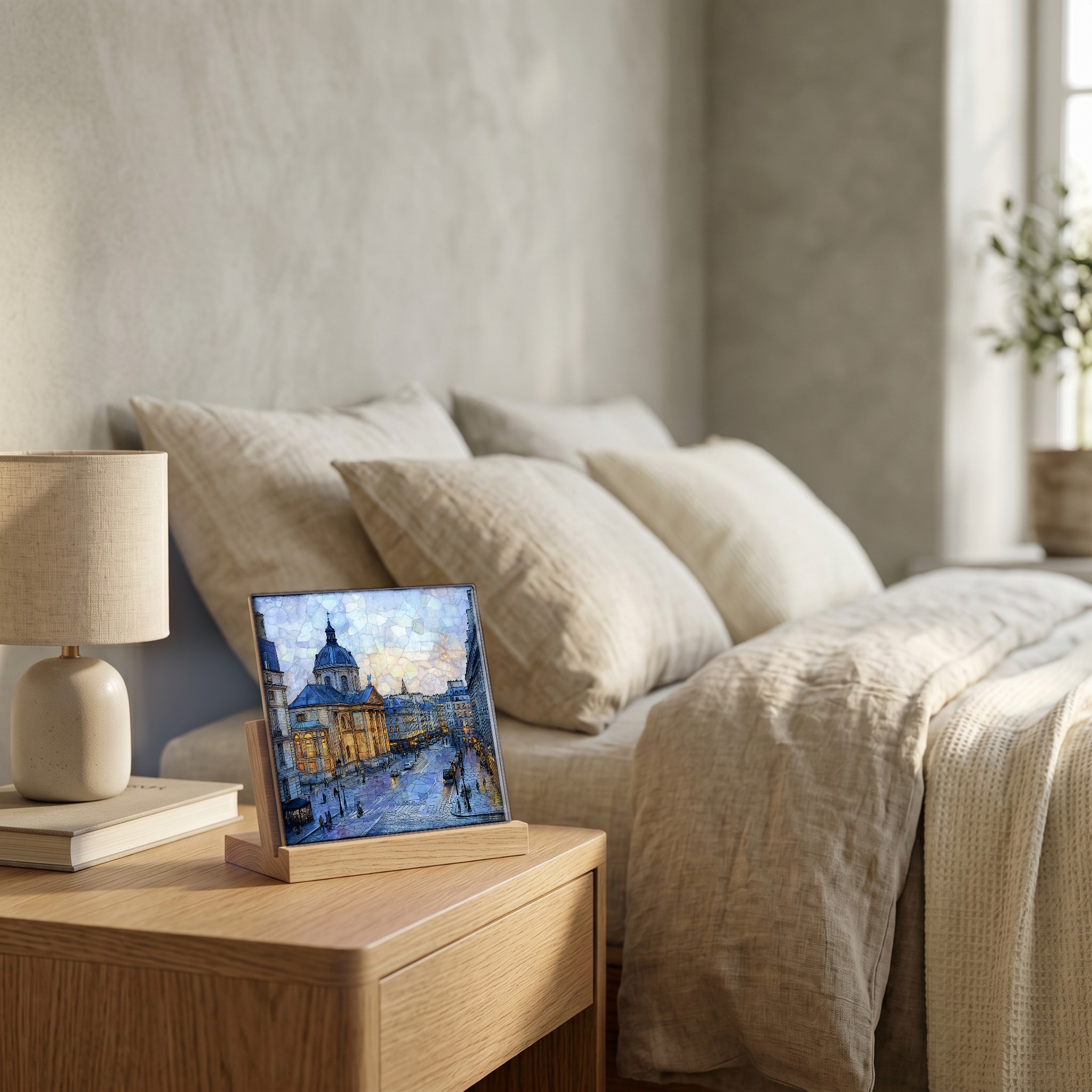
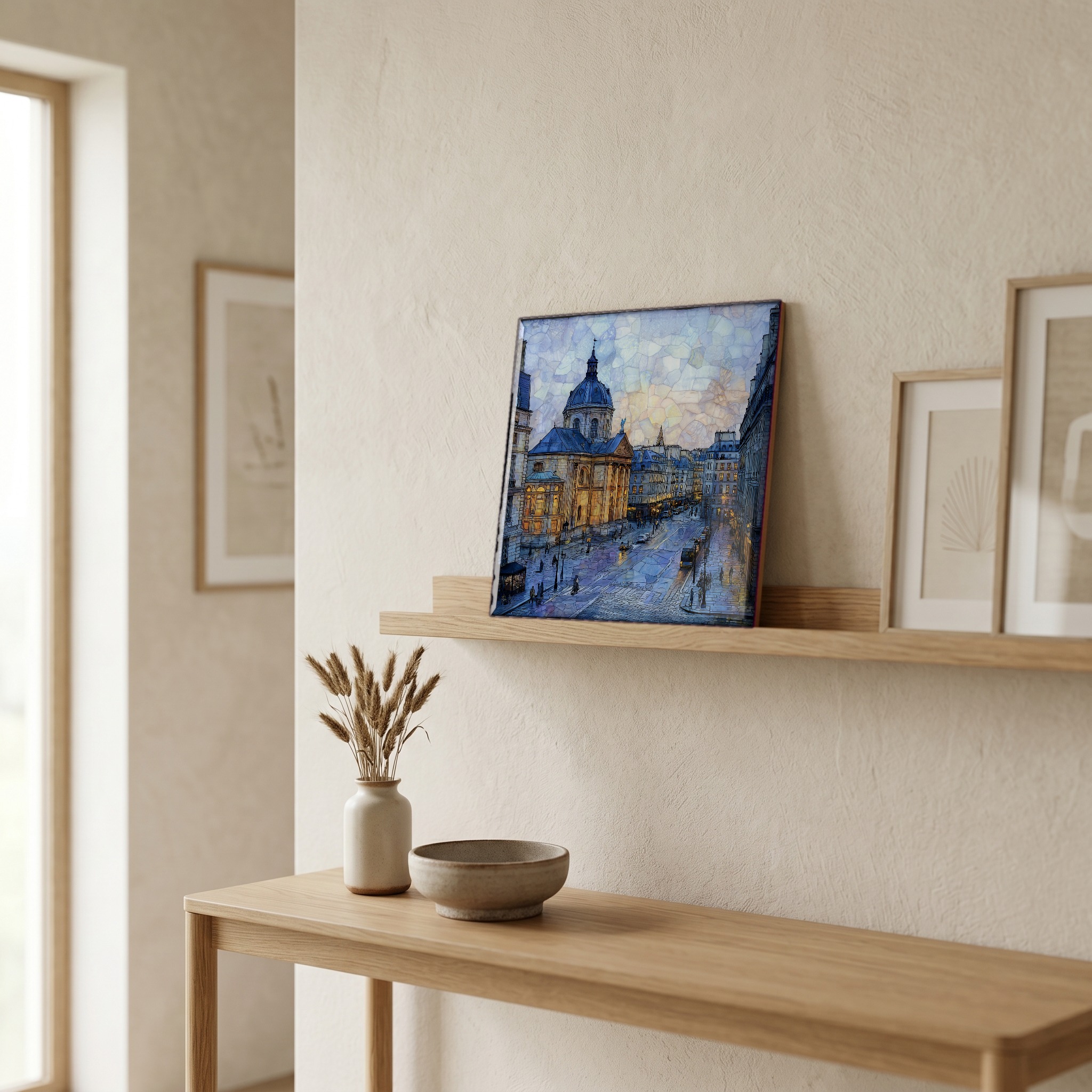
“The small square that opens in front of the Sorbonne, two minutes off the Boulevard Saint-Michel. The Chapelle Sainte-Ursule rises from the far end, the facade Cardinal Richelieu commissioned in 1635 when he rebuilt the college. Plane trees over the centre. A fountain in the middle of the cafés. Students stop here between lectures, tourists stop here without quite knowing why. Of all the squares in the fifth arrondissement, this is the one that still reads as a square: small, leafy, slightly older than the rest of Paris around it.
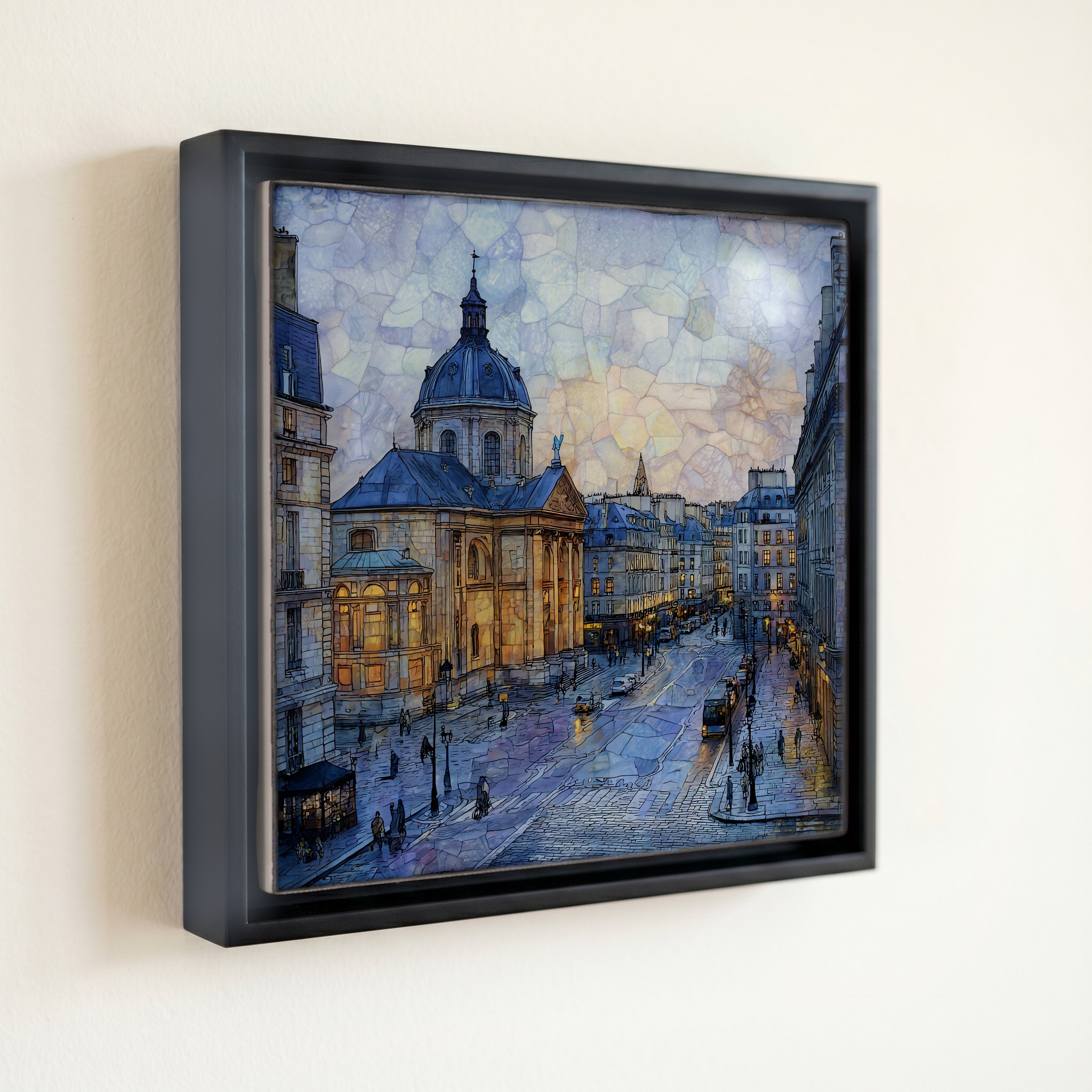
Sorbonne Square, on ceramic.
Each tile is finished by hand in our Knoxville studio. Artwork is slowly infused into the ceramic surface under high heat and pressure, and rests beneath a thin glossy finish. The colour lives in the surface, not on top of it.
Pick any four 4-inch tiles — National Parks you've been to, a Smokies set, the four seasons of one place. $ for a set of , cork-backed, ready to live on the table.
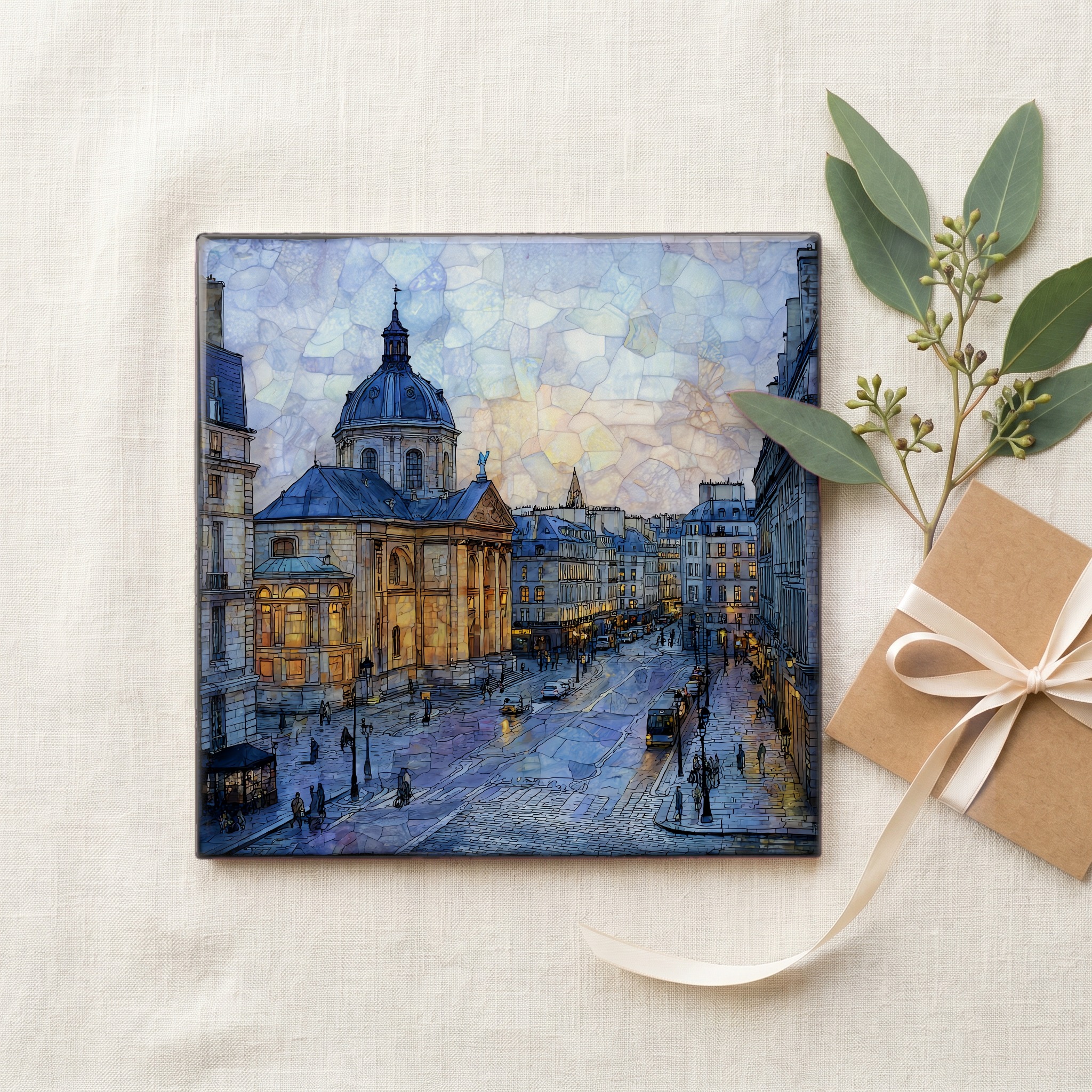
Each tile ships in a kraft box, tied with cream ribbon, with a handwritten note from the studio if you'd like to add one.
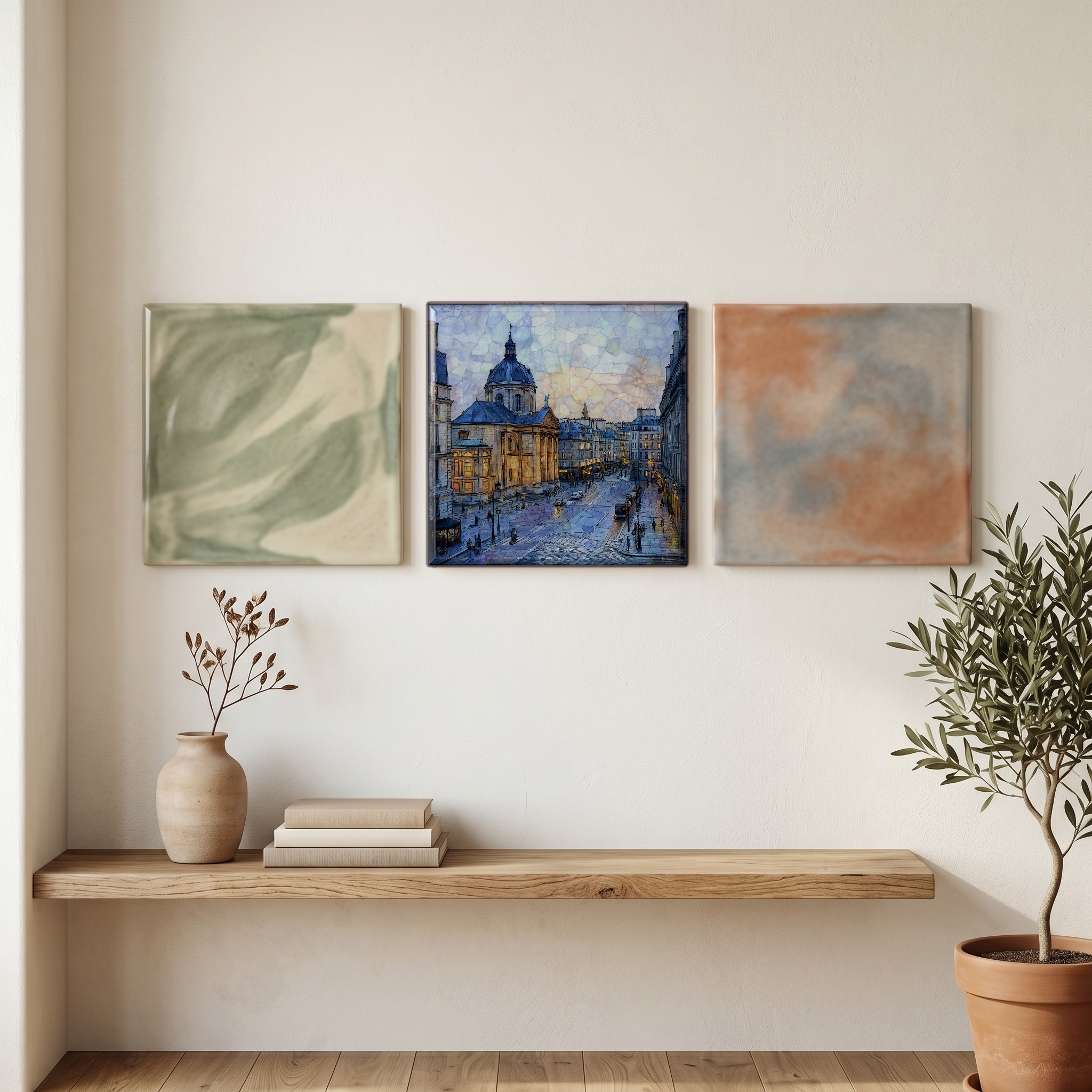
Three or five different vistas, hung together — a chapter of places you've been, or want to go.
The place, in three passes.
Place de la Sorbonne sits in the 5th arrondissement of Paris, the Latin Quarter, opening off the Boulevard Saint-Michel a short walk south of the Seine. The square frames the Chapelle Sainte-Ursule de la Sorbonne, built between 1635 and 1642 to designs by Jacques Lemercier and paid for by Cardinal Richelieu, whose tomb lies inside. The Sorbonne itself was founded in 1257 by the theologian Robert de Sorbon as a college of the medieval University of Paris, and its name still covers a constellation of Paris universities that descend from it. The closest Métro stops are Cluny–La Sorbonne on Line 10 and Saint-Michel on Line 4.
The far end of the square is the facade of the Chapelle Sainte-Ursule, one of the earliest works of French Baroque architecture in Paris. Jacques Lemercier, who also drew the Palais-Cardinal that later became the Palais-Royal, gave Richelieu a domed church with a classical two-storey front in the Roman manner. Construction began in 1635 and the dome was completed in 1642. The chapel is no longer in religious use and opens only for occasional exhibitions, but the facade is visible from the square at all hours. Richelieu's marble tomb, sculpted by François Girardon and installed in 1694, lies inside. Sorbonne University manages the building today.
Place de la Sorbonne is a public square, free and open at all hours. The Chapelle de la Sorbonne behind the facade is closed to the general public for most of the year and admits visitors only during occasional cultural events, including the European Heritage Days each September. The cafés around the square, among them the Café de la Sorbonne and L'Écritoire, serve from morning through evening and overflow onto terraces under the plane trees in the warmer months. The neighbourhood is dense with adjacent draws: the Panthéon four hundred metres up the rue Soufflot, the Musée de Cluny across the Boulevard Saint-Michel, and the Jardin du Luxembourg a short walk west.