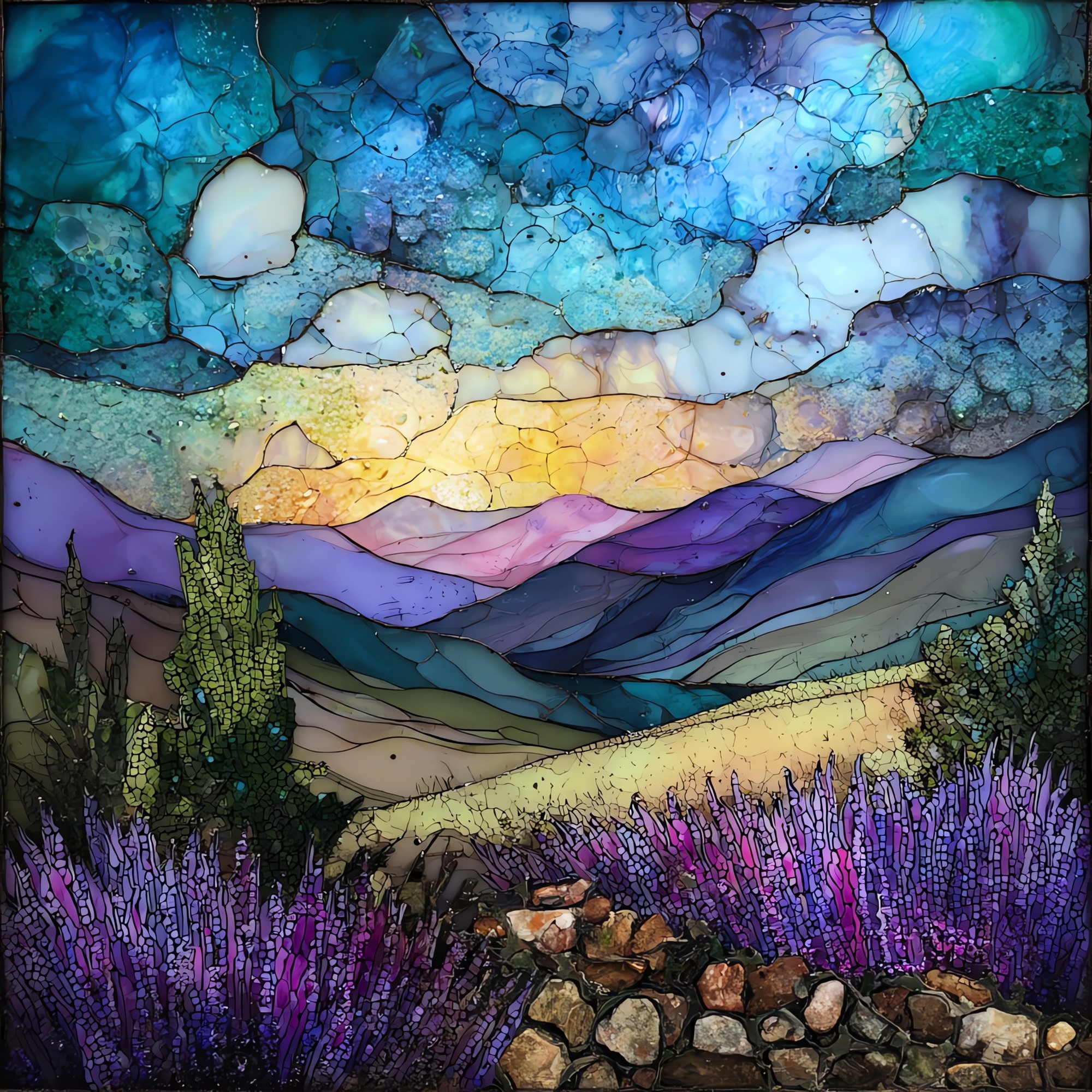
Sault Lavender Plateau
— — purple, all the way to the mountain.
Not only on a wall.
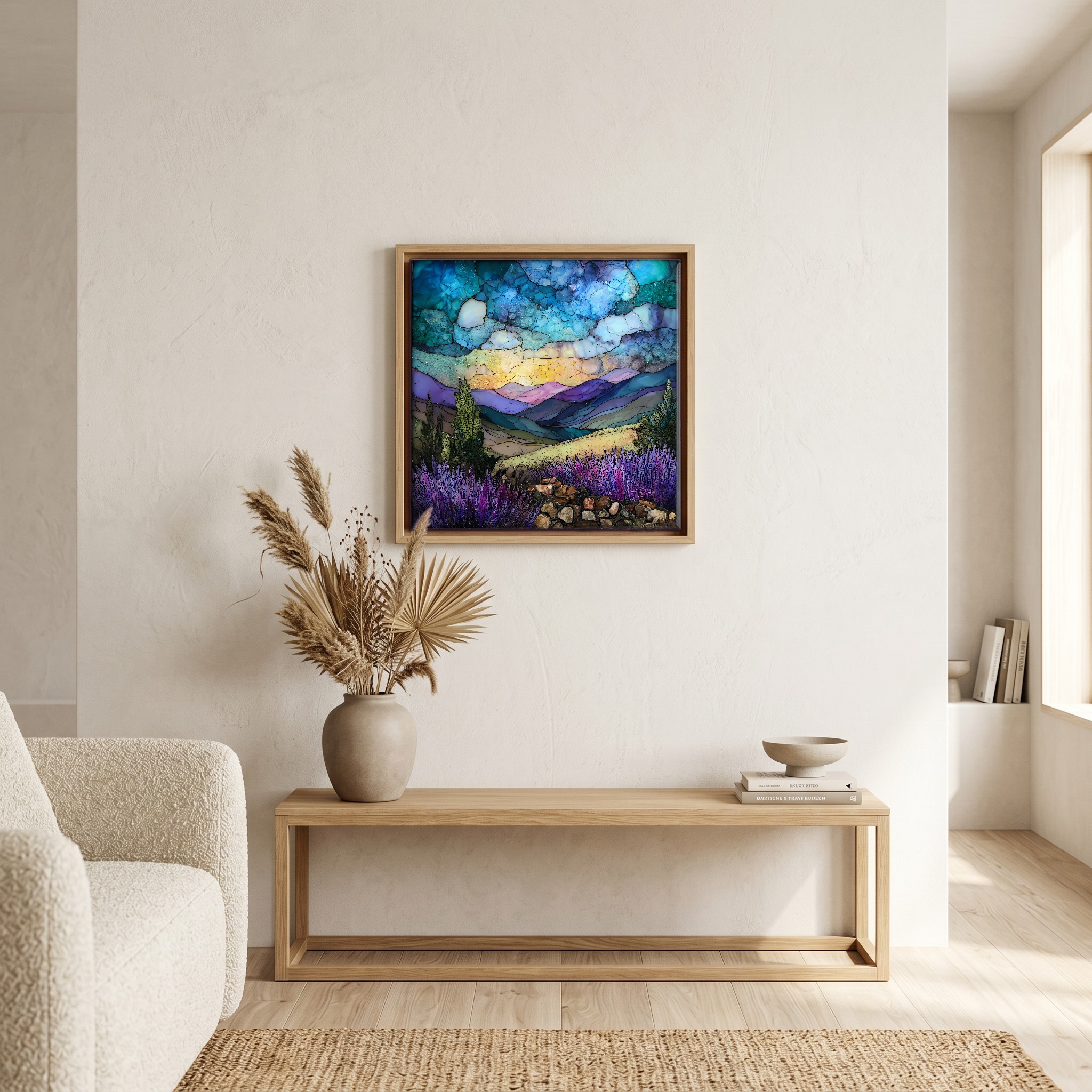
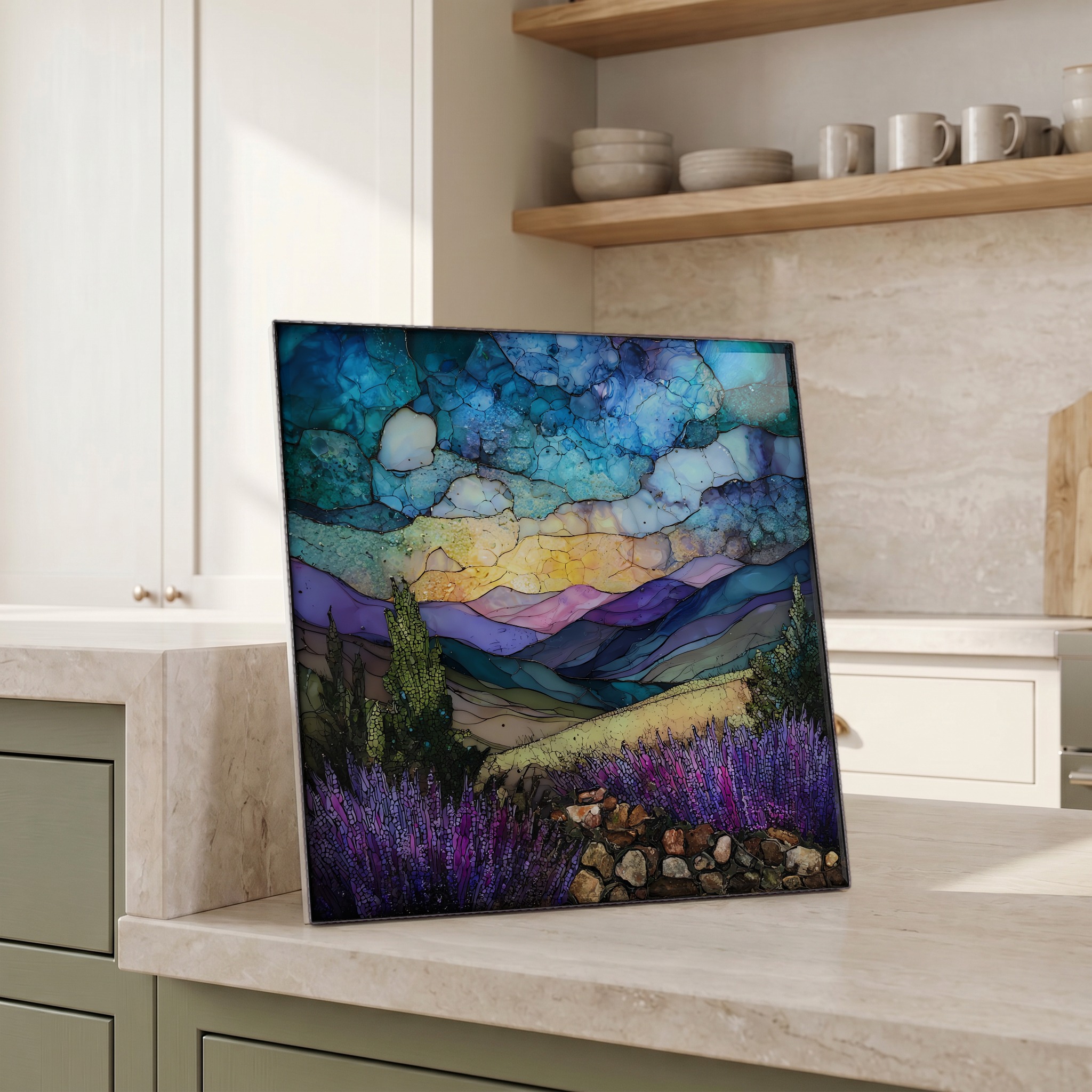
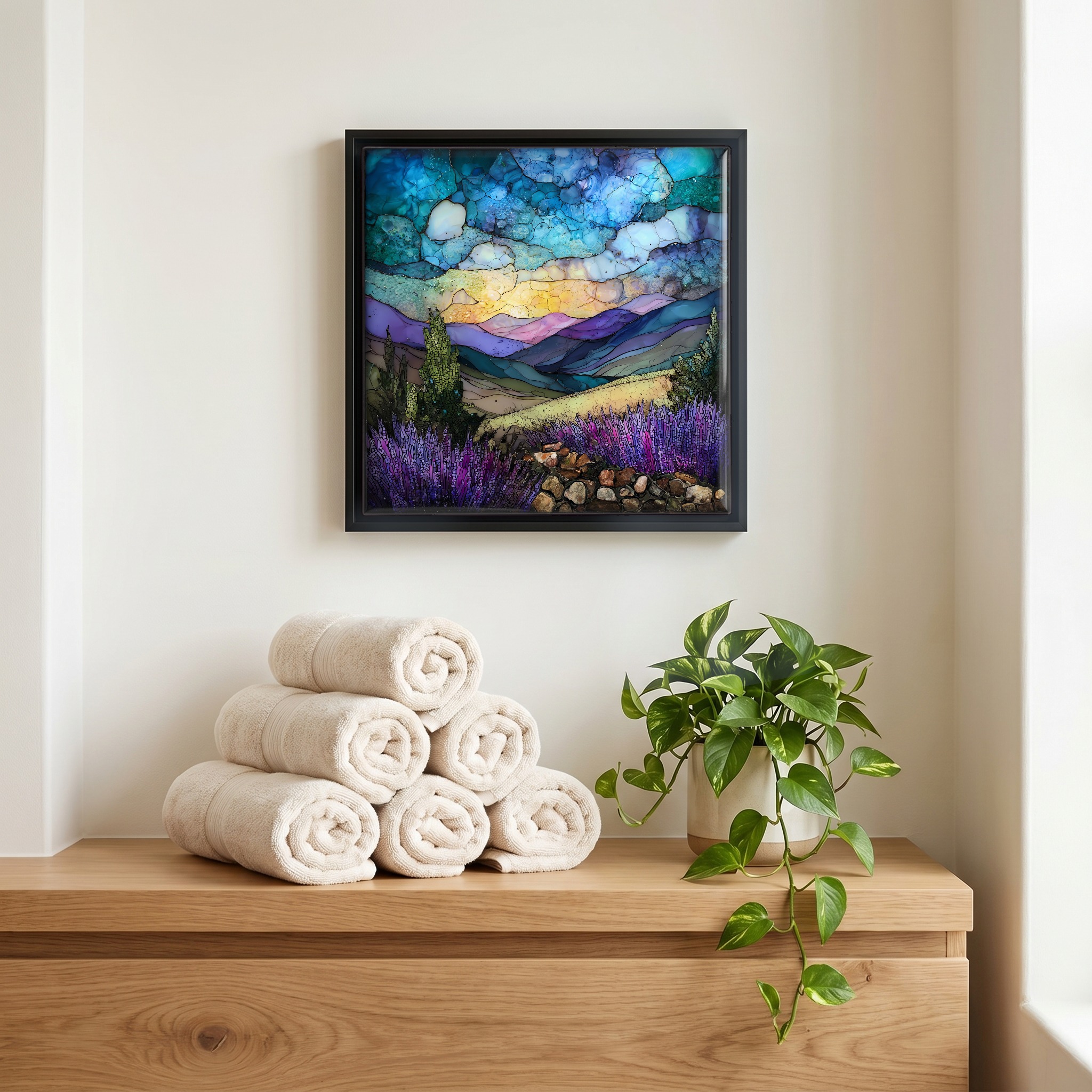
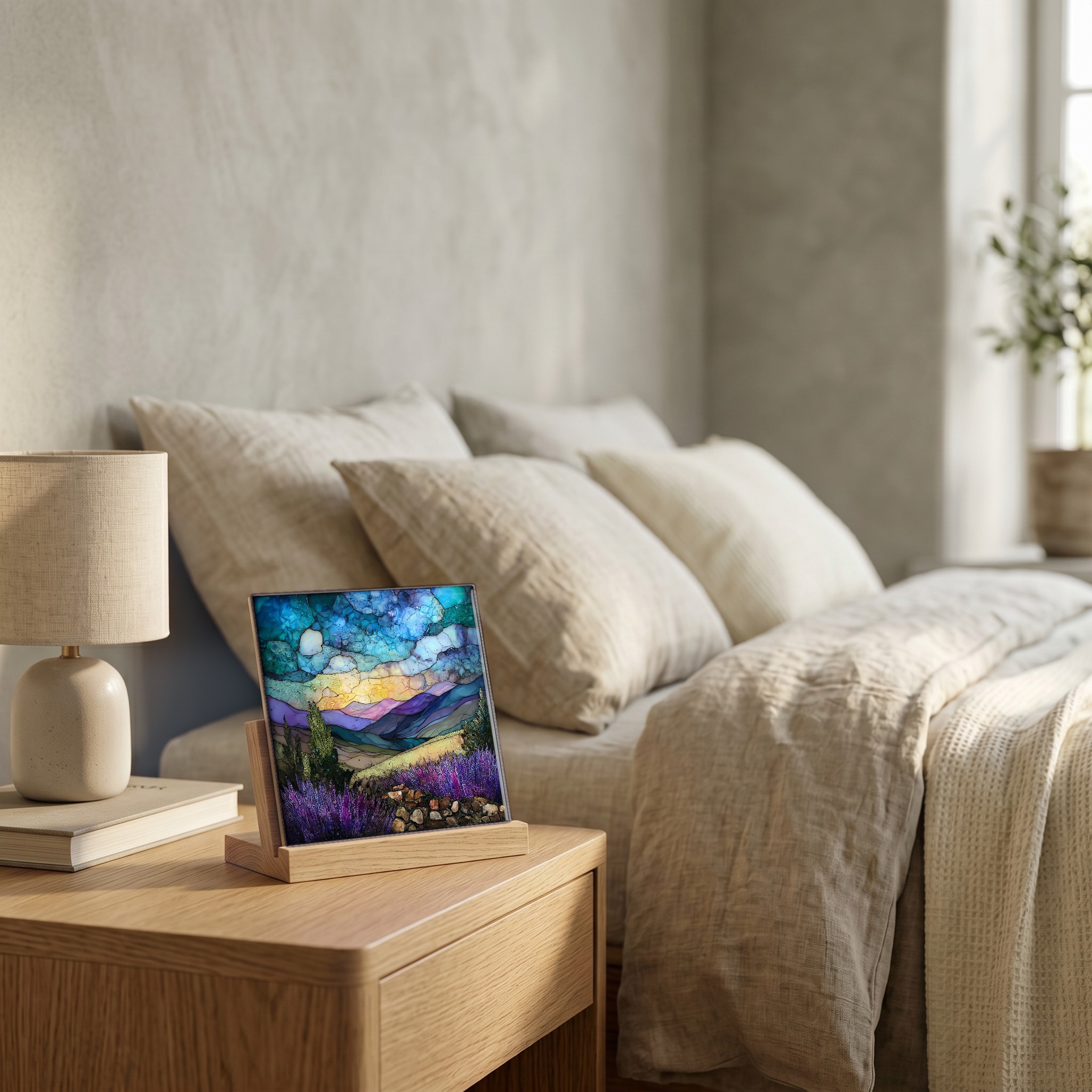
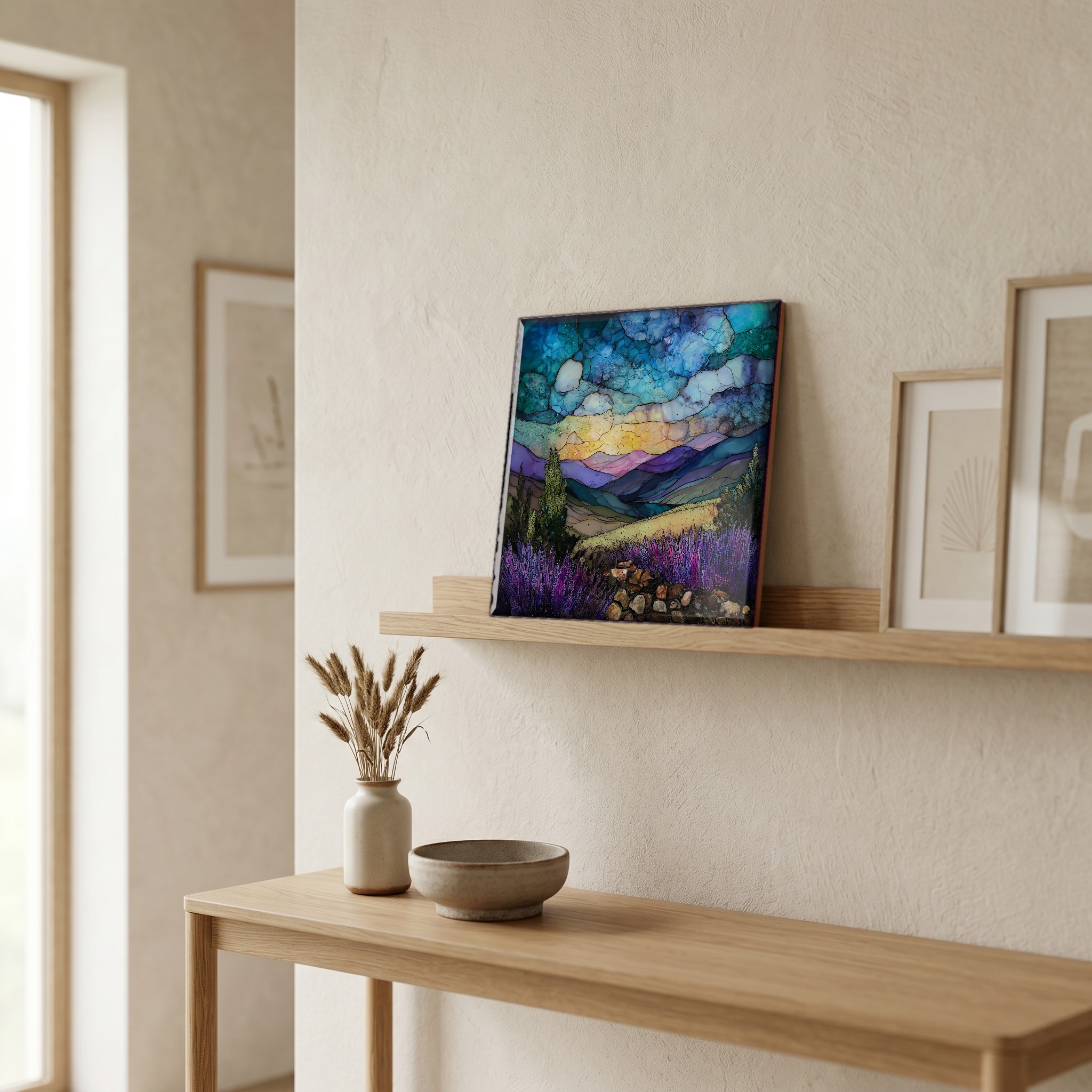
“The high plateau between Mont Ventoux and the Albion ridge holds one of the few places in Provence where fine lavender, the wild kind, still grows from seed. The plateau sits near 800 metres, cool enough that the bloom comes late and stays late, into the August festival on the fifteenth. The colour painted into the tile is the colour the field reaches in the last week of July, after weeks of heat have pulled the dye up out of every stem. Down the dirt tracks between rows, the air does something no greenhouse can copy. A sound under the surface, the bees working all of it at once.
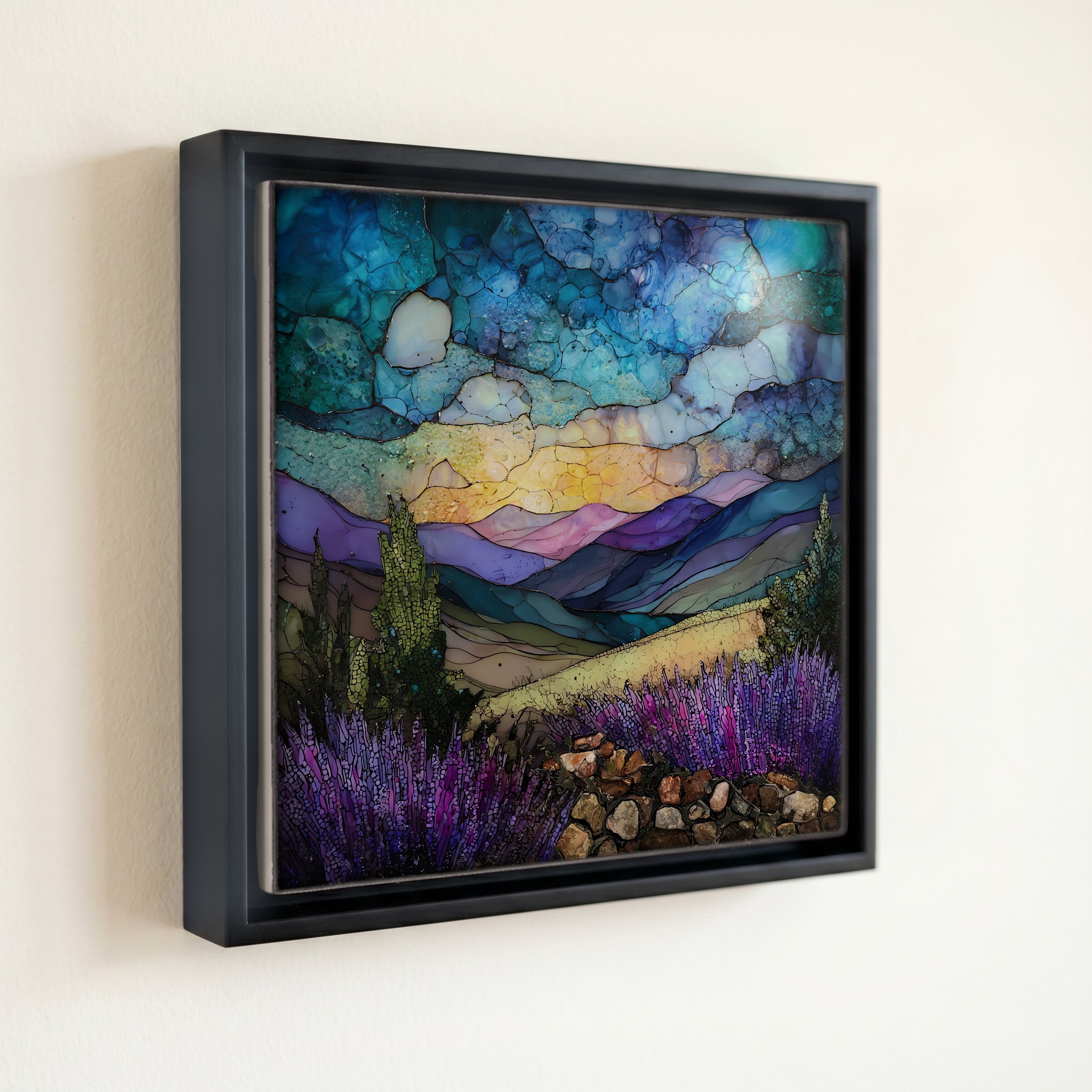
Sault Lavender Plateau, on ceramic.
Each tile is finished by hand in our Knoxville studio. Artwork is slowly infused into the ceramic surface under high heat and pressure, and rests beneath a thin glossy finish. The colour lives in the surface, not on top of it.
Pick any four 4-inch tiles — National Parks you've been to, a Smokies set, the four seasons of one place. $ for a set of , cork-backed, ready to live on the table.
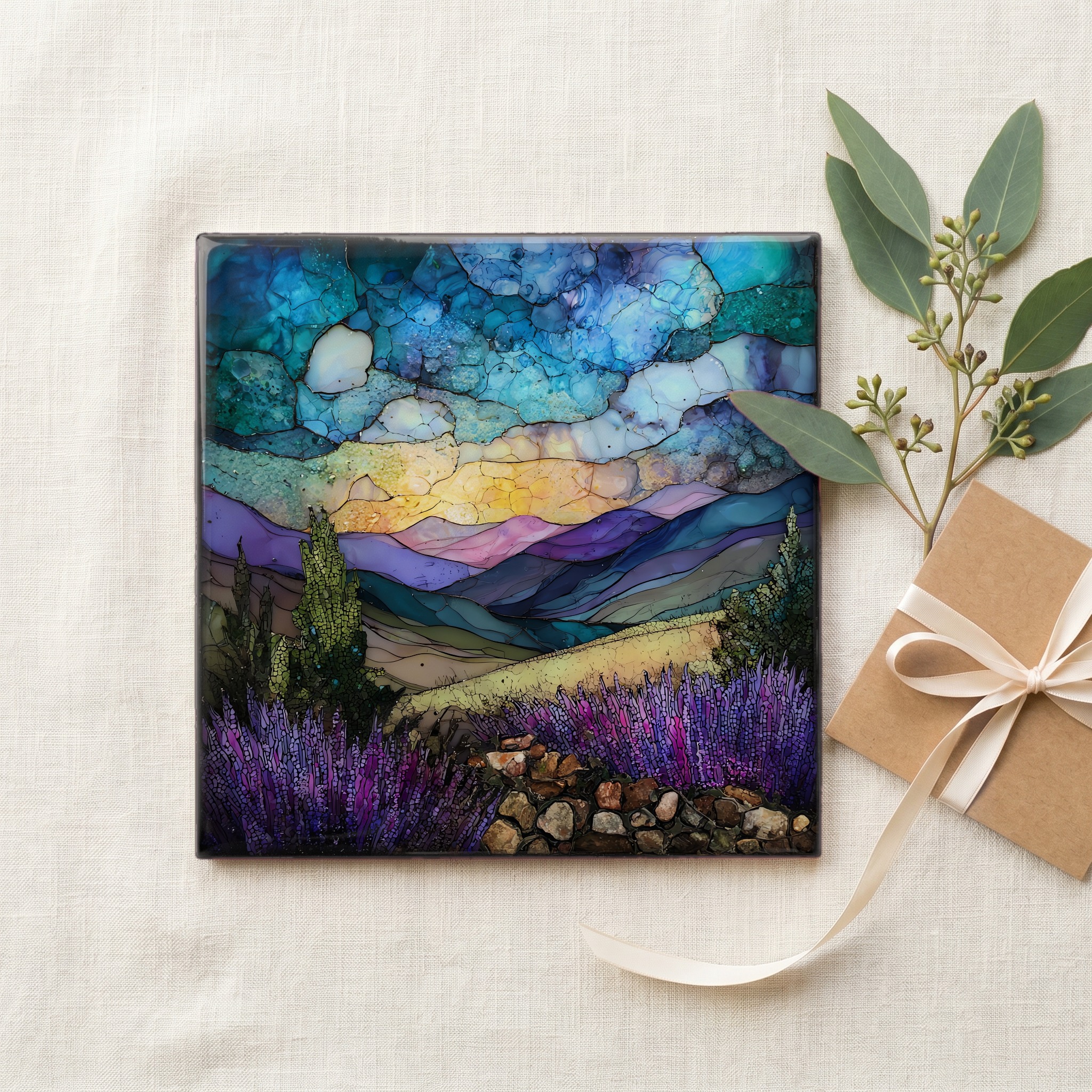
Each tile ships in a kraft box, tied with cream ribbon, with a handwritten note from the studio if you'd like to add one.
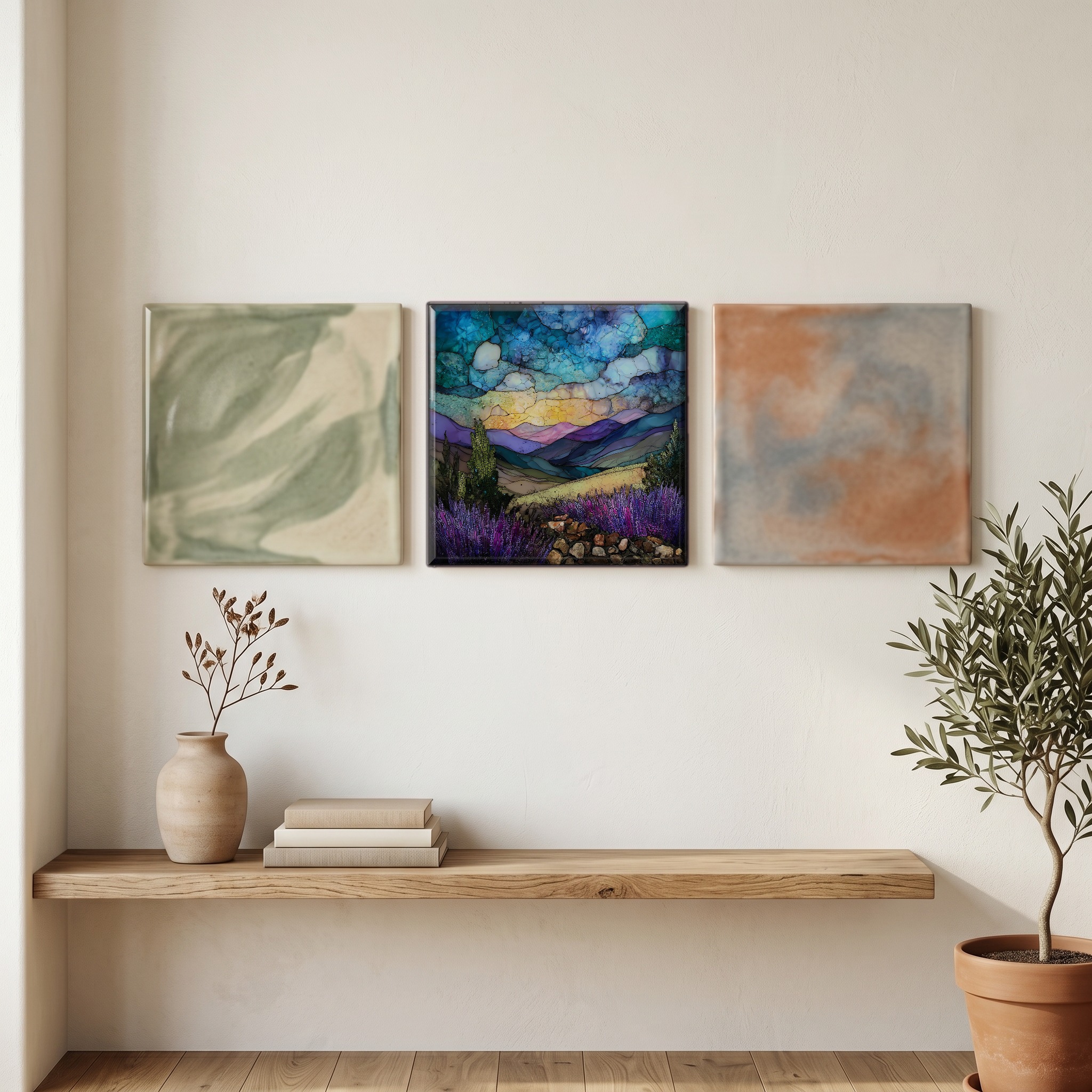
Three or five different vistas, hung together — a chapter of places you've been, or want to go.
The place, in three passes.
Sault is a commune in the Vaucluse department of Provence-Alpes-Côte d'Azur, perched on a limestone shelf at 776 metres above sea level, on the eastern flank of Mont Ventoux. The plateau itself rises between 650 and 1,400 metres, bounded west by the 1,912-metre summit of Mont Ventoux and east by the Plateau d'Albion. The Sault Plateau is the highest and coolest of the three Provençal lavender lands, set apart from Valensole and the Luberon by altitude alone. The area lies within the Mont-Ventoux Regional Natural Park and is reached by the D942 winding up out of Carpentras, about forty kilometres east of the Rhône Valley.
The lavender on the Sault Plateau is fine lavender (Lavandula angustifolia, also called lavande fine or true lavender), the wild variety that still grows from seed at altitude. The bloom opens in early July and holds through to mid-August, two to four weeks later than the lavandin hybrids that colour the Valensole Plateau in late June. Thirteen of the nineteen distilleries producing the Appellation d'Origine Protégée Huile Essentielle de Lavande de Haute-Provence are on the plateau, accounting for more than ninety-five percent of certified volumes in 2021. The harvest waits until after the August festival; locals do not cut early, by long tradition. The last week of July is the peak window for the colour the tile carries.
Sault holds its Fête de la Lavande on the fifteenth of August each year, a single afternoon when the working calendar of the plateau opens to outsiders. A grand Provençal parade moves through the village in the morning, with folk groups in traditional dress, drummers, and wagons stacked with fresh-cut sprigs. The open fields above the village run demonstrations of the old hand-harvest method against the new mechanical cutters. The festival is also the only mid-August date in Provence where the fields are still in bloom; growers in the Pays de Sault hold the harvest until the fifteenth has passed, by long tradition. Entry to the parade is free.