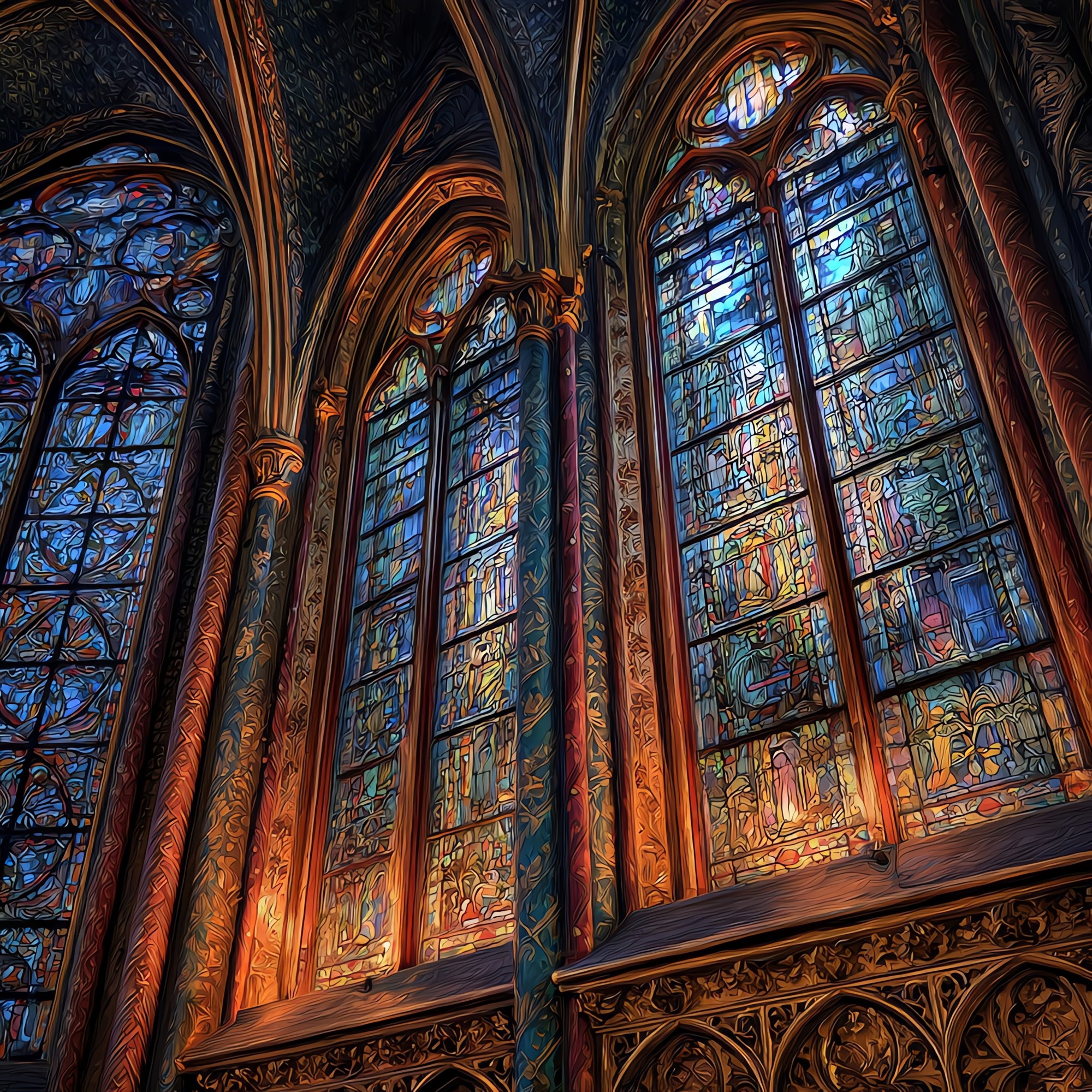
Sainte-Chapelle Upper Chapel
— the room where the walls become light.
Not only on a wall.
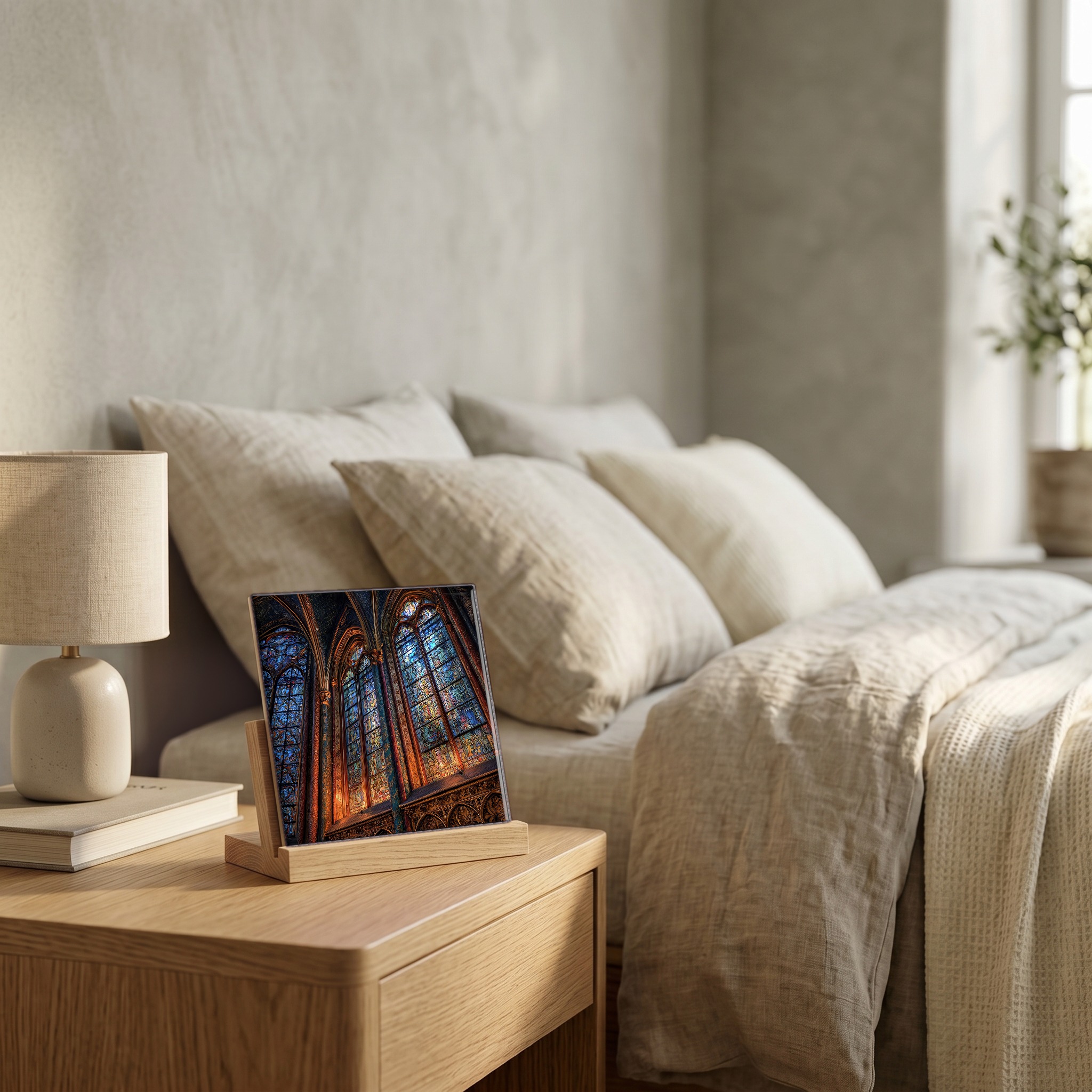
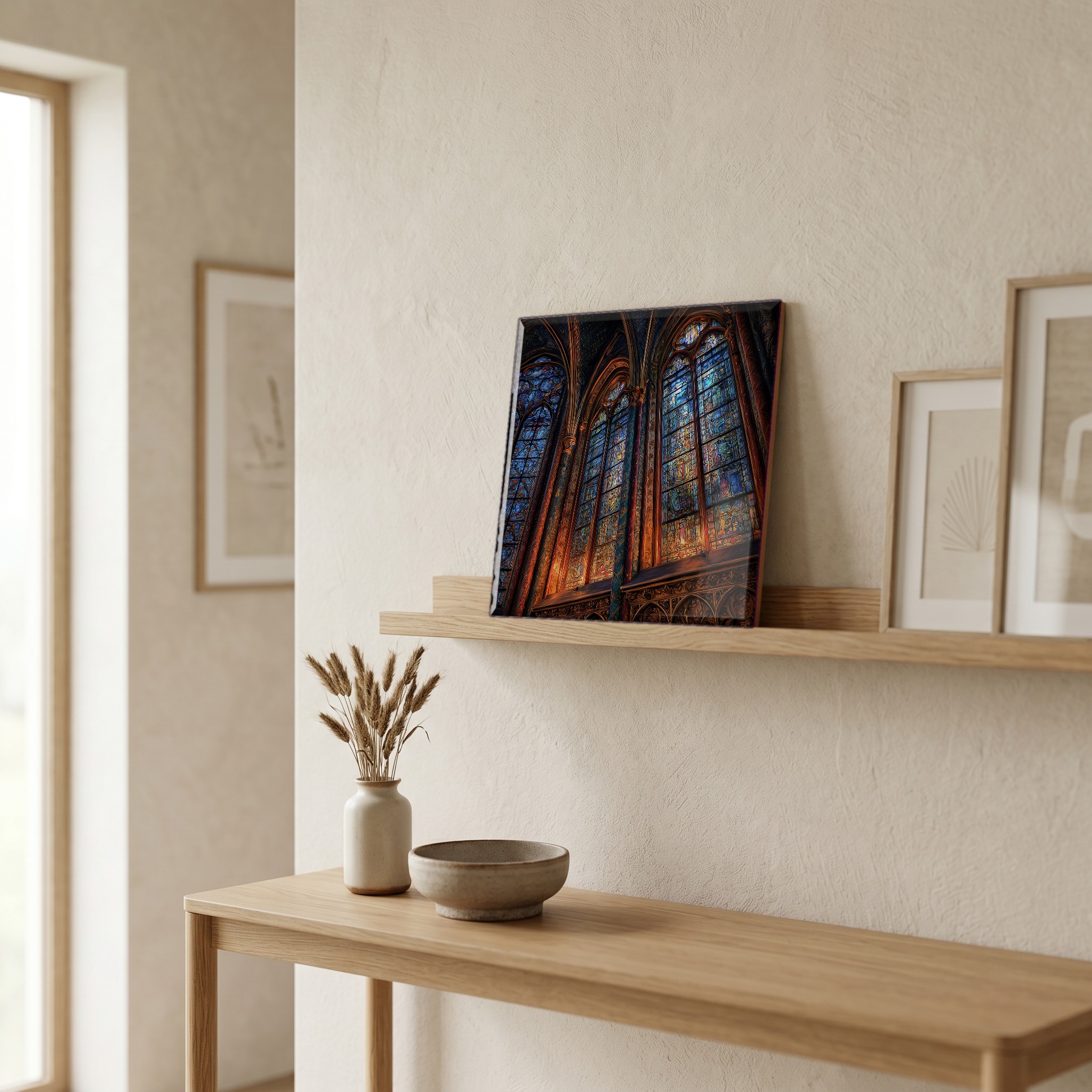
“The Upper Chapel of Sainte-Chapelle sits on the island in the Seine that holds Notre-Dame, a few hundred yards downstream. Louis IX built it in the 1240s to house the Crown of Thorns. The relic was the point; the architecture was the case it sat in. Fifteen windows climb to fifteen metres; together they carry more than a thousand scenes from the Old and New Testaments. Visitors look up and stop talking. The light moves through the day; the windows answer.
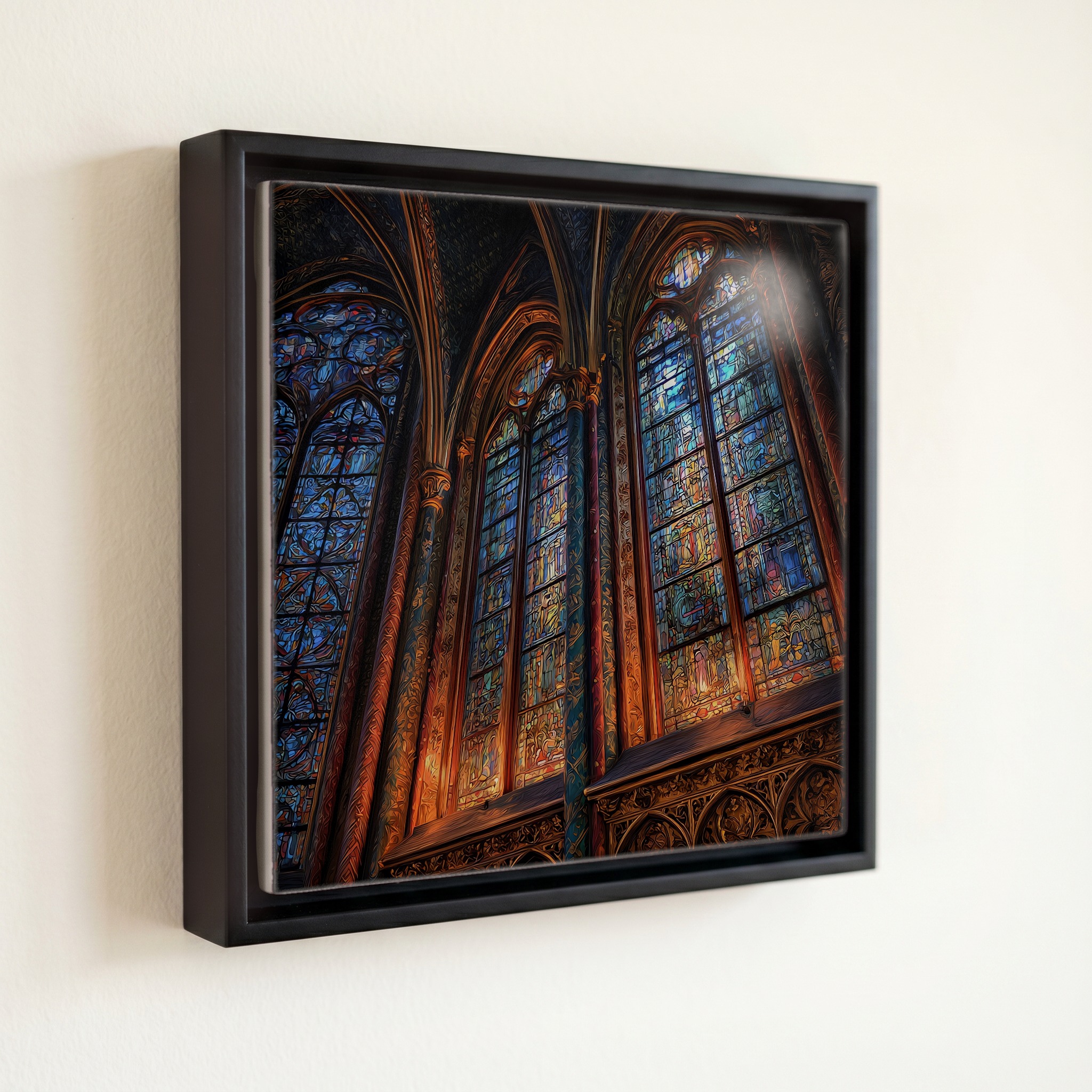
Sainte-Chapelle Upper Chapel, on ceramic.
Each tile is finished by hand in our Knoxville studio. Artwork is slowly infused into the ceramic surface under high heat and pressure, and rests beneath a thin glossy finish. The colour lives in the surface, not on top of it.
Pick any four 4-inch tiles — National Parks you've been to, a Smokies set, the four seasons of one place. $ for a set of , cork-backed, ready to live on the table.
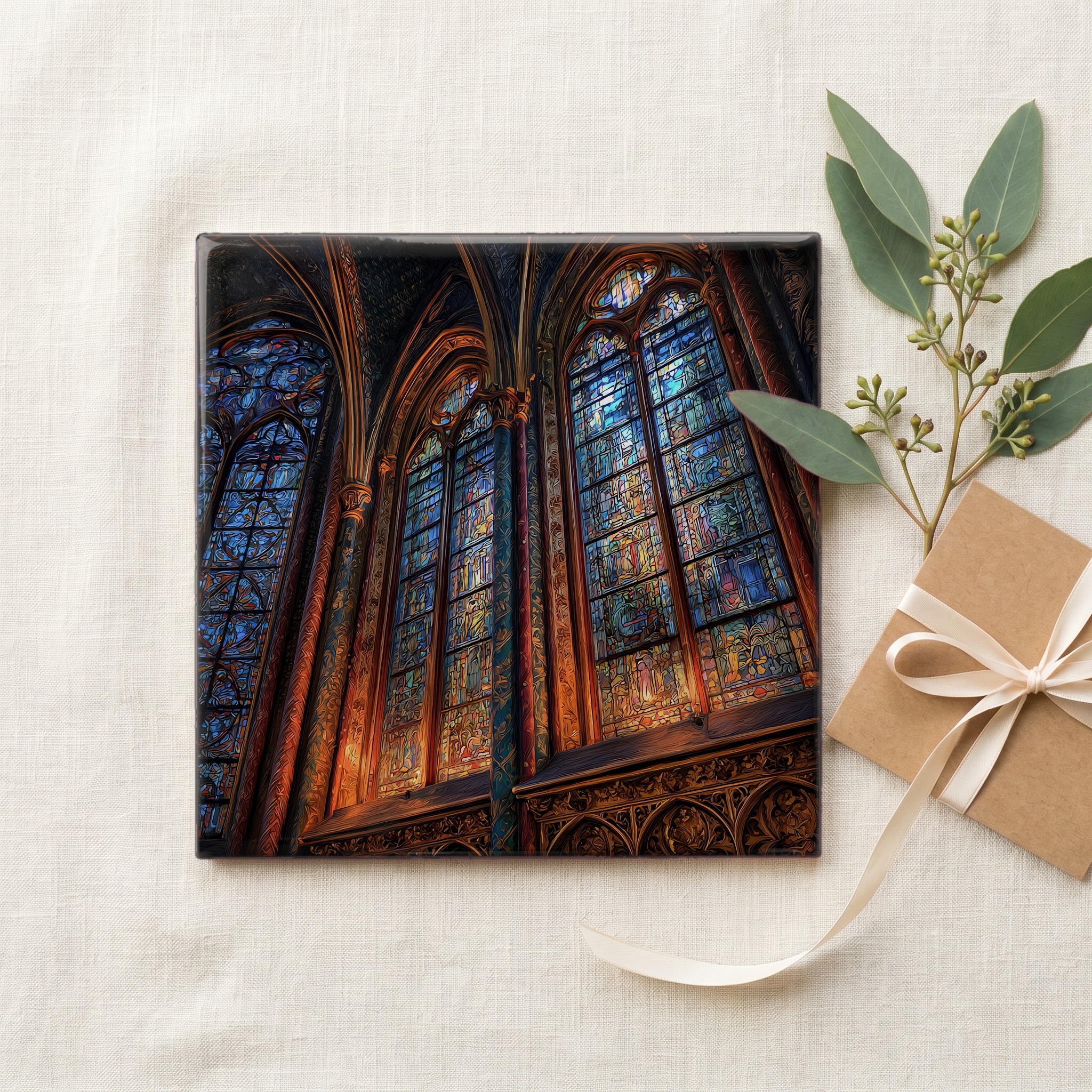
Each tile ships in a kraft box, tied with cream ribbon, with a handwritten note from the studio if you'd like to add one.
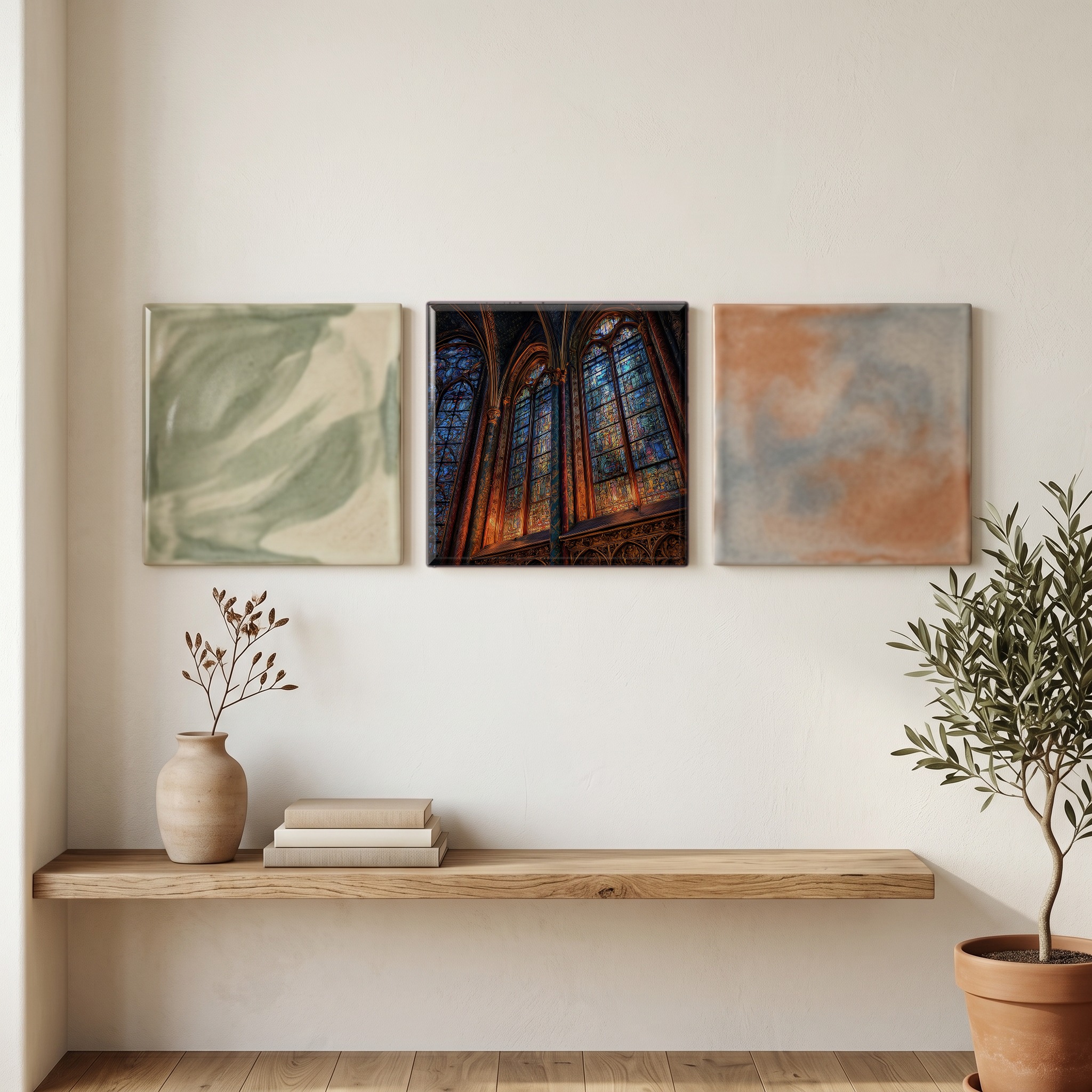
Three or five different vistas, hung together — a chapter of places you've been, or want to go.
The place, in three passes.
Sainte-Chapelle stands inside the medieval Palais de la Cité on the Île de la Cité, the larger of the two islands in the Seine at the centre of Paris, in the 1st arrondissement. King Louis IX of France ordered its construction in 1238 to house the Crown of Thorns and other Passion relics he had purchased from the Latin Emperor of Constantinople, Baldwin II. The building was consecrated on 26 April 1248. The Upper Chapel, reached today by a tight spiral stair from the Lower Chapel, was originally a private royal chapel connected directly to the king's apartments. The relics were transferred to Notre-Dame in 1804.
The Upper Chapel is wrapped in fifteen stained-glass windows that rise about fifteen metres from the gallery floor to the springing of the vault. Together they hold around 1,113 narrative scenes drawn from the Old and New Testaments, following the biblical chronology from Genesis through the Apocalypse. Roughly two-thirds of the glass is original to the thirteenth century; the rest is careful nineteenth-century restoration overseen by Félix Duban, Jean-Baptiste-Antoine Lassus, and later Eugène Viollet-le-Duc. The Flamboyant rose window at the west end was added under Charles VIII in 1485. On a clear afternoon the room reads less like a chapel and more like a lantern.
Sainte-Chapelle sits inside the working Palais de Justice complex at 8 Boulevard du Palais; entry passes through the same airport-style security that screens the courts. The chapel is open most days of the year; the Centre des monuments nationaux manages it, and timed-entry tickets are strongly recommended in summer. Most visitors spend 30 to 45 minutes inside. Light hits the south windows brightest in late morning and crosses to the north by mid-afternoon, so visitors choosing a single hour often pick between roughly 11 a.m. and 3 p.m. The combined ticket with the Conciergerie next door covers both monuments.