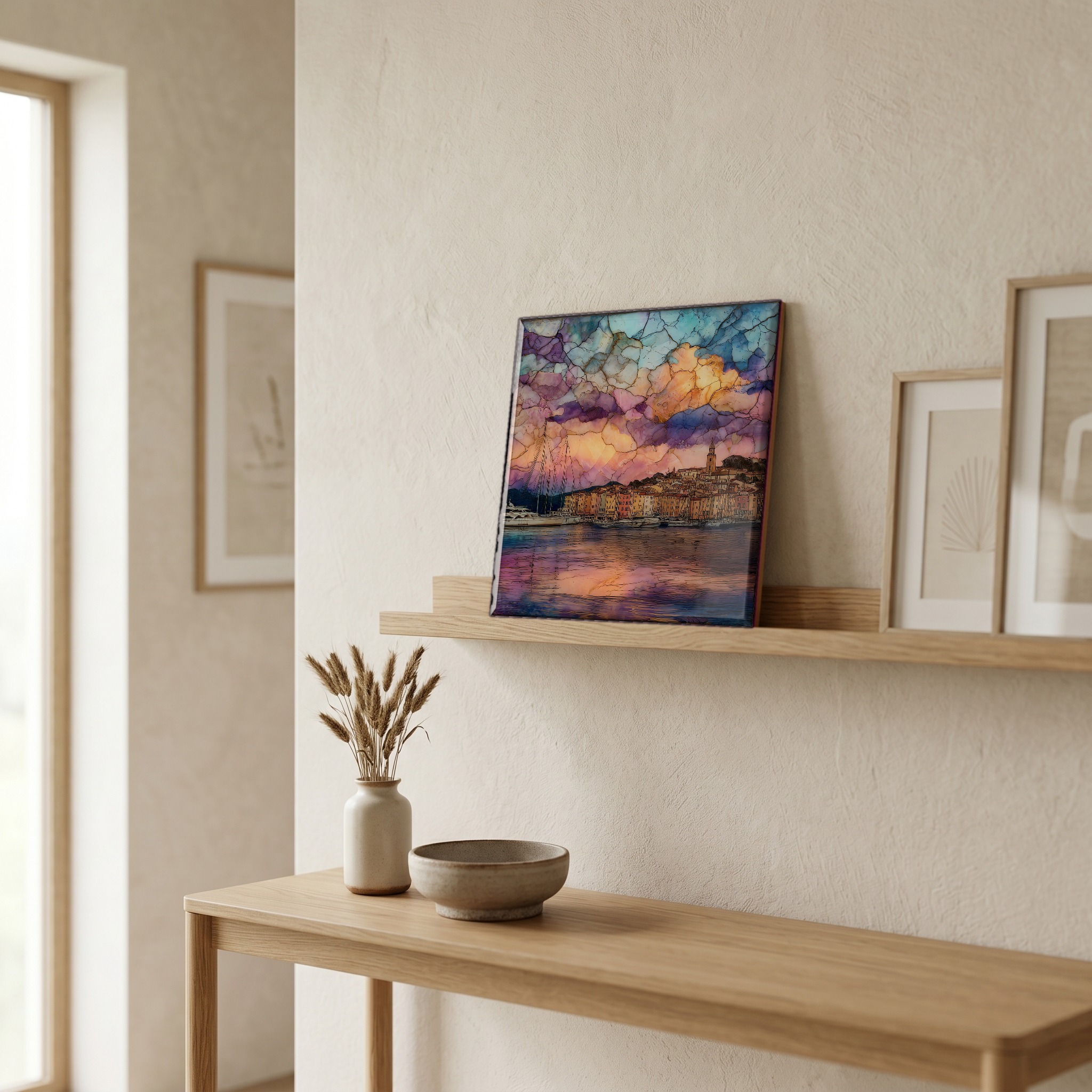
Wender·Vista
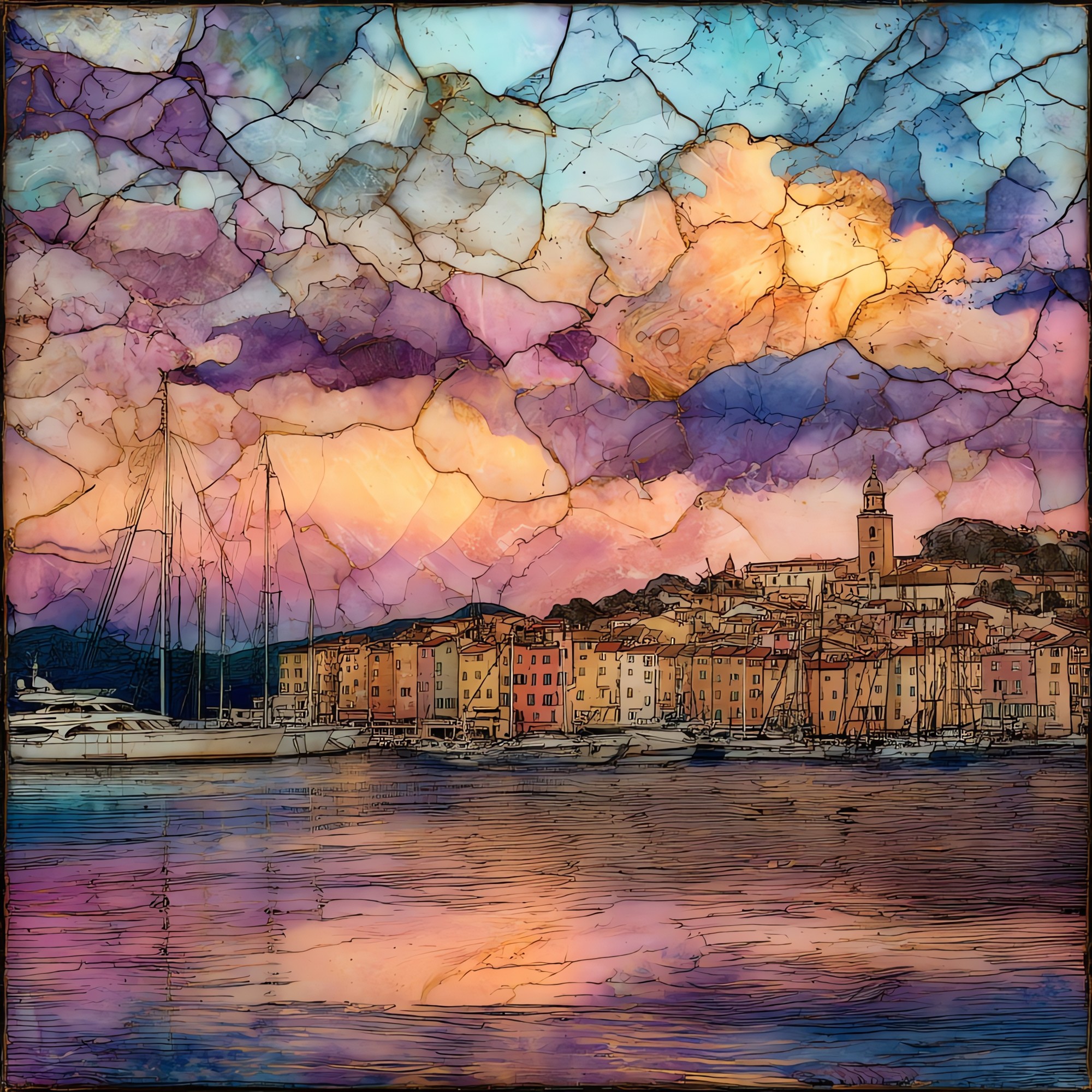
Saint-Tropez Harbour
shown on ceramic, 12-inch tileFrance
on the Côte d'Azur, between Marseille and Cannes

Saint-Tropez Harbour

the light that pulled the painters south.

Where it lives

Not only on a wall.

A small tile on the nightstand catching the morning. A larger one above the fire. Yours, wherever you spend the slow hours.
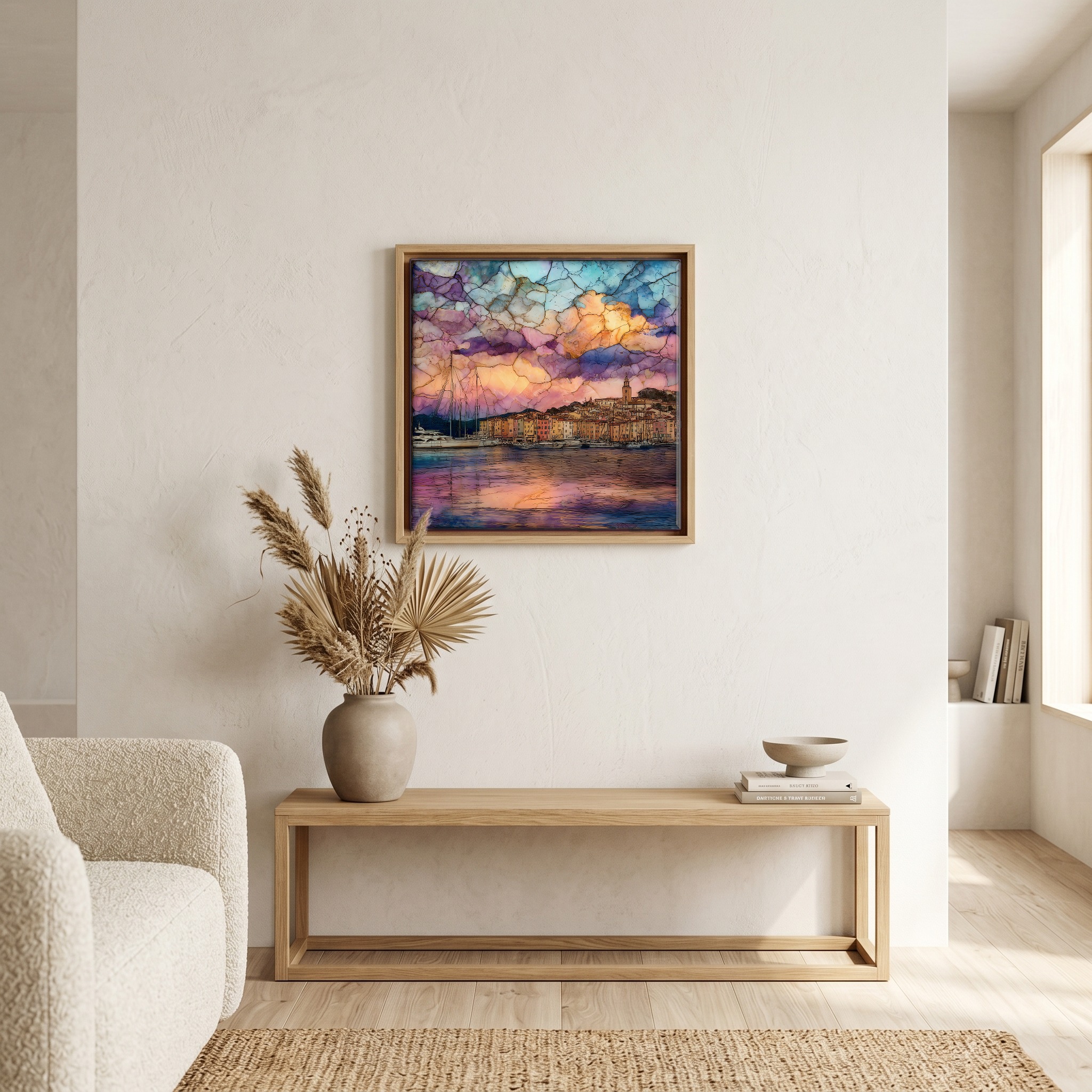
Above the bench, in a warm oak surround.
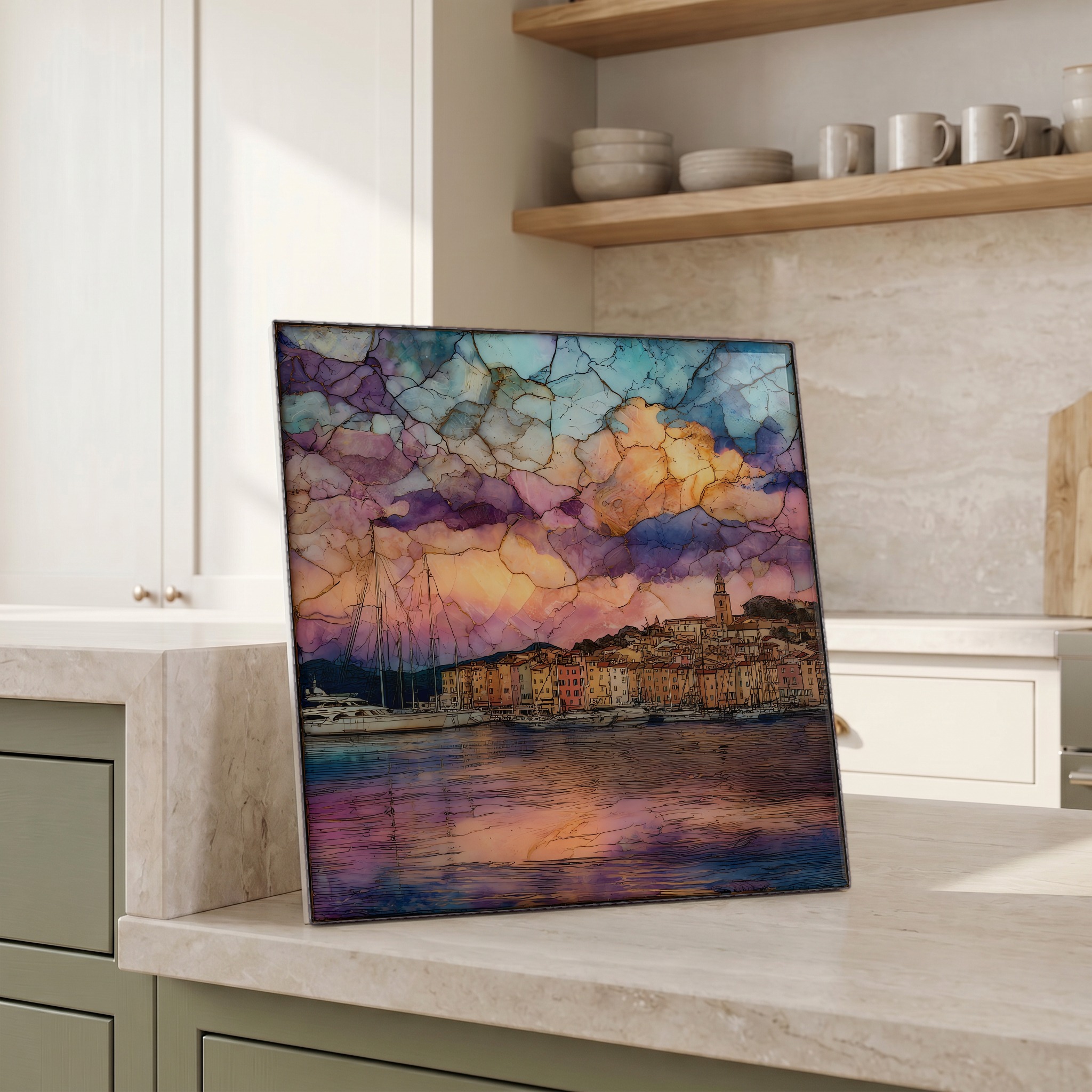
Beside the kettle, propped on the counter.
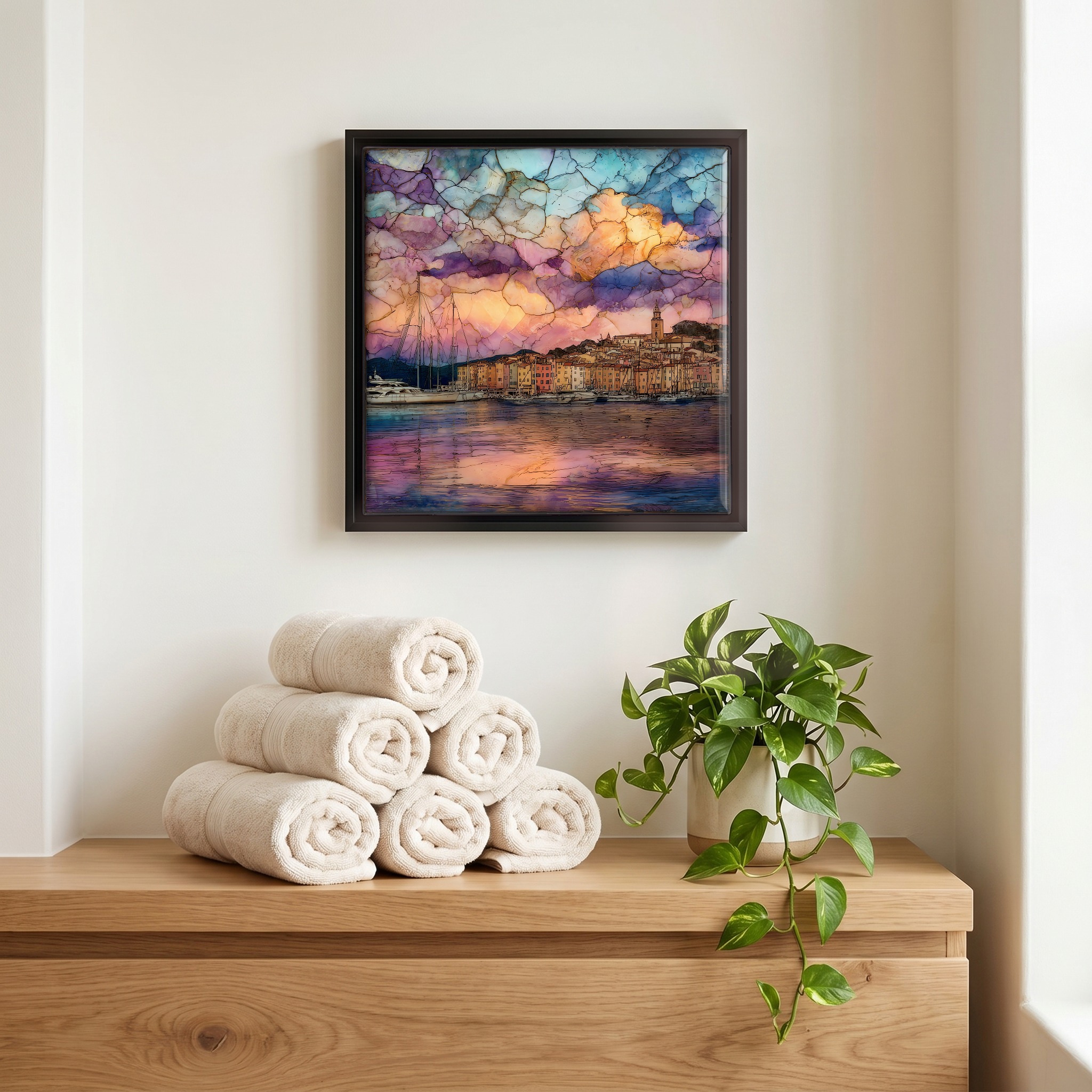
Above the linens, in a slim black surround.
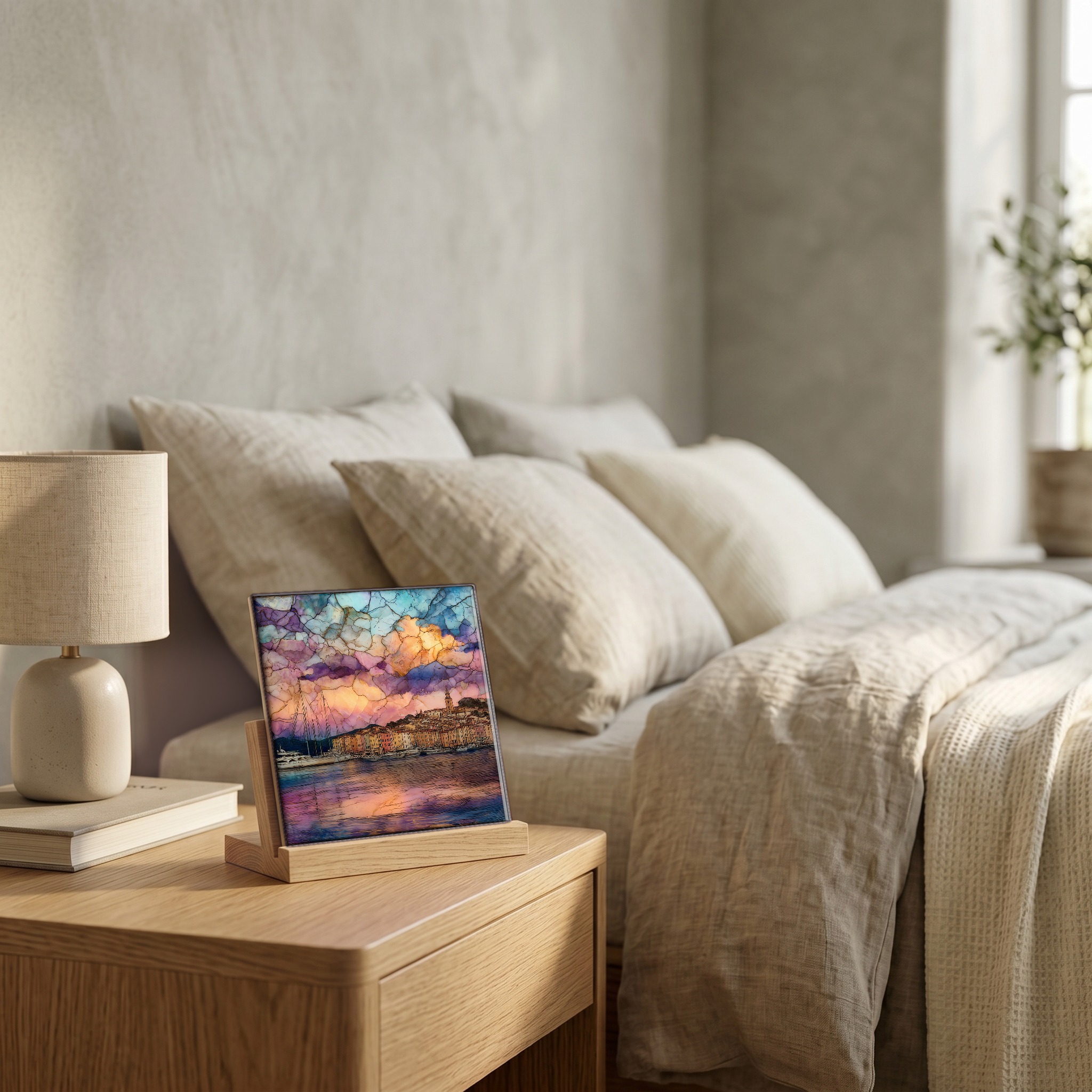
On the nightstand, on a light oak stand.
On a picture ledge, where the light comes in.
a note from the studio

A row of pastel houses along the Quai Jean-Jaurès, ochre and pink and the soft yellow Provence keeps for late afternoons. The harbour was a small fishing port until Paul Signac sailed in one summer in 1892 and stayed; Matisse and Bonnard followed for the light. Now the boats are mostly white and very large. The light is the same.
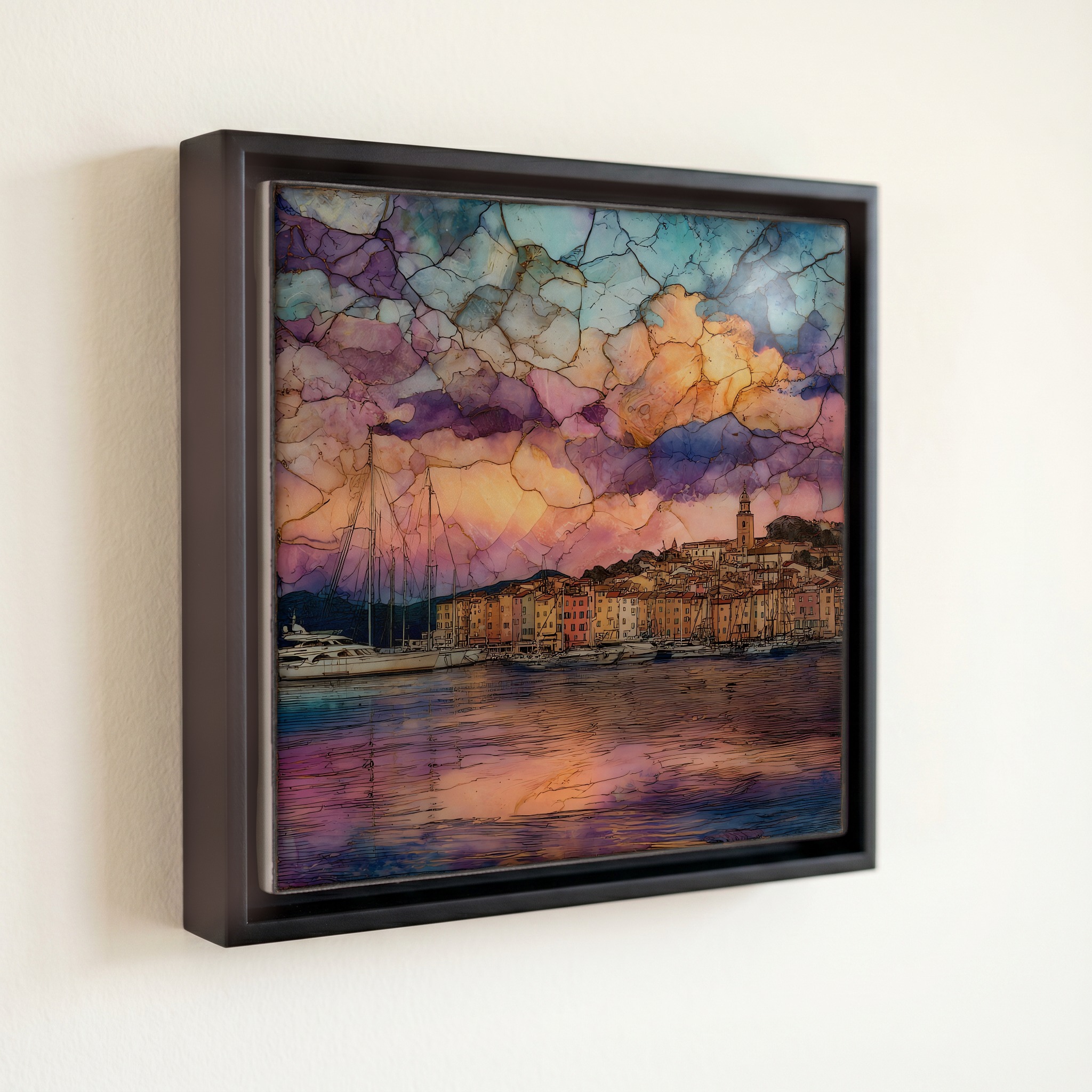
from the studio
shown in a slim black floating frame · 6 × 6 in
— bring it home

Saint-Tropez Harbour, on ceramic.

Each tile is finished by hand in our Knoxville studio. Artwork is slowly infused into the ceramic surface under high heat and pressure, and rests beneath a thin glossy finish. The colour lives in the surface, not on top of it.

What kind of piece?
One tile — square or rectangle.
How big?
the popular one — counter, shelf, nightstand
6 × 6 in · 15 cm · 1.6 lb
Surface finish
A clear glossy finish — the artwork reads as if under resin. Ideal for show-pieces and framed wall art.
How it sits
A hidden cleat — sits ¼″ proud of the wall.
$58
Hand-finished and shipped from our studio at the foot of the Smokies. On your wall in about ten days.
size
6 × 6 in
15 cm
weighs
1.6 lb
solid in the hand
surface
ceramic, hand-finished
art rests beneath a thin glossy finish
from
Knoxville, TN
our family studio, at the foot of the Smokies
— start a Coaster Set

Pick any four 4-inch tiles — National Parks you've been to, a Smokies set, the four seasons of one place. $ for a set of , cork-backed, ready to live on the table.
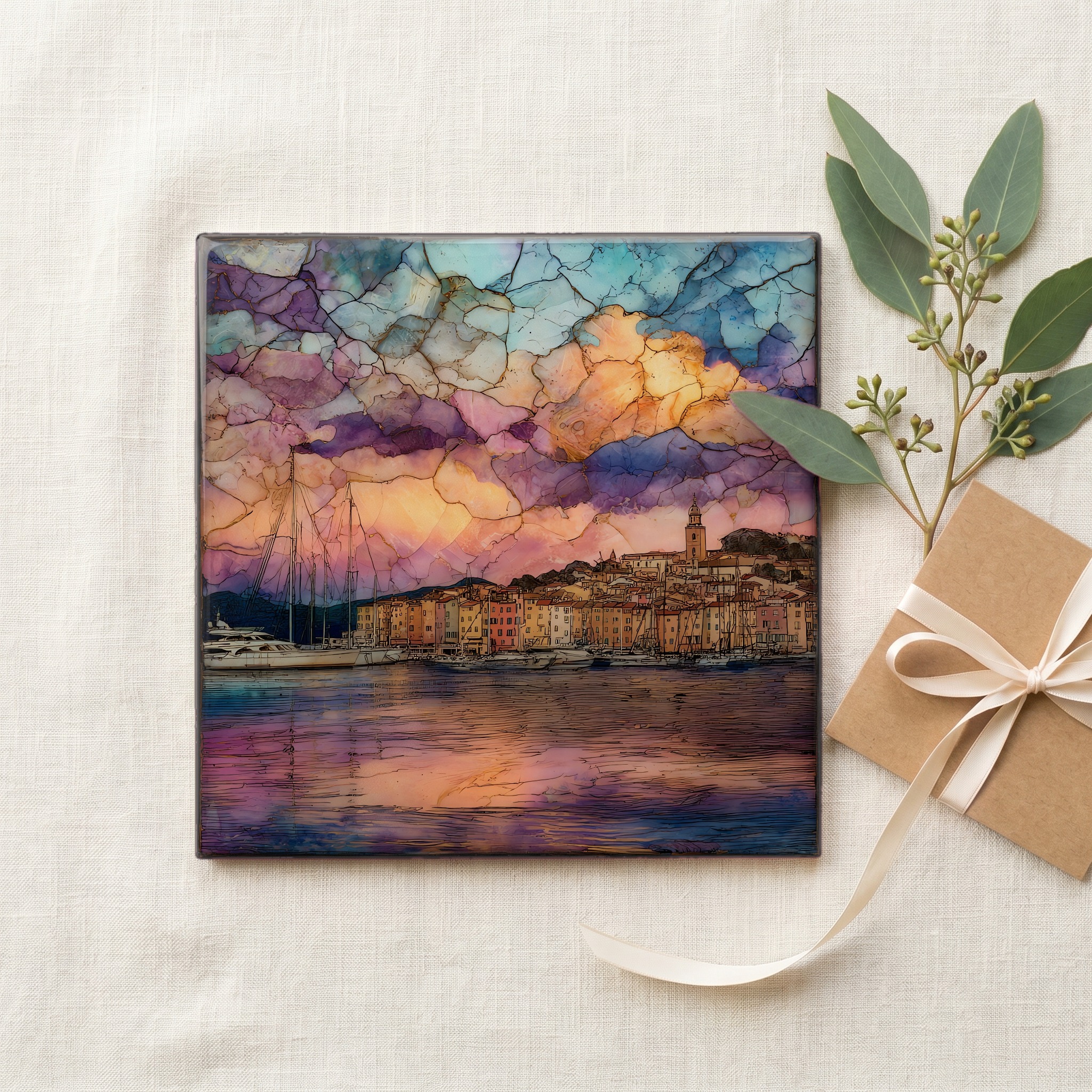
comes gift-ready
comes gift-ready

Each tile ships in a kraft box, tied with cream ribbon, with a handwritten note from the studio if you'd like to add one.
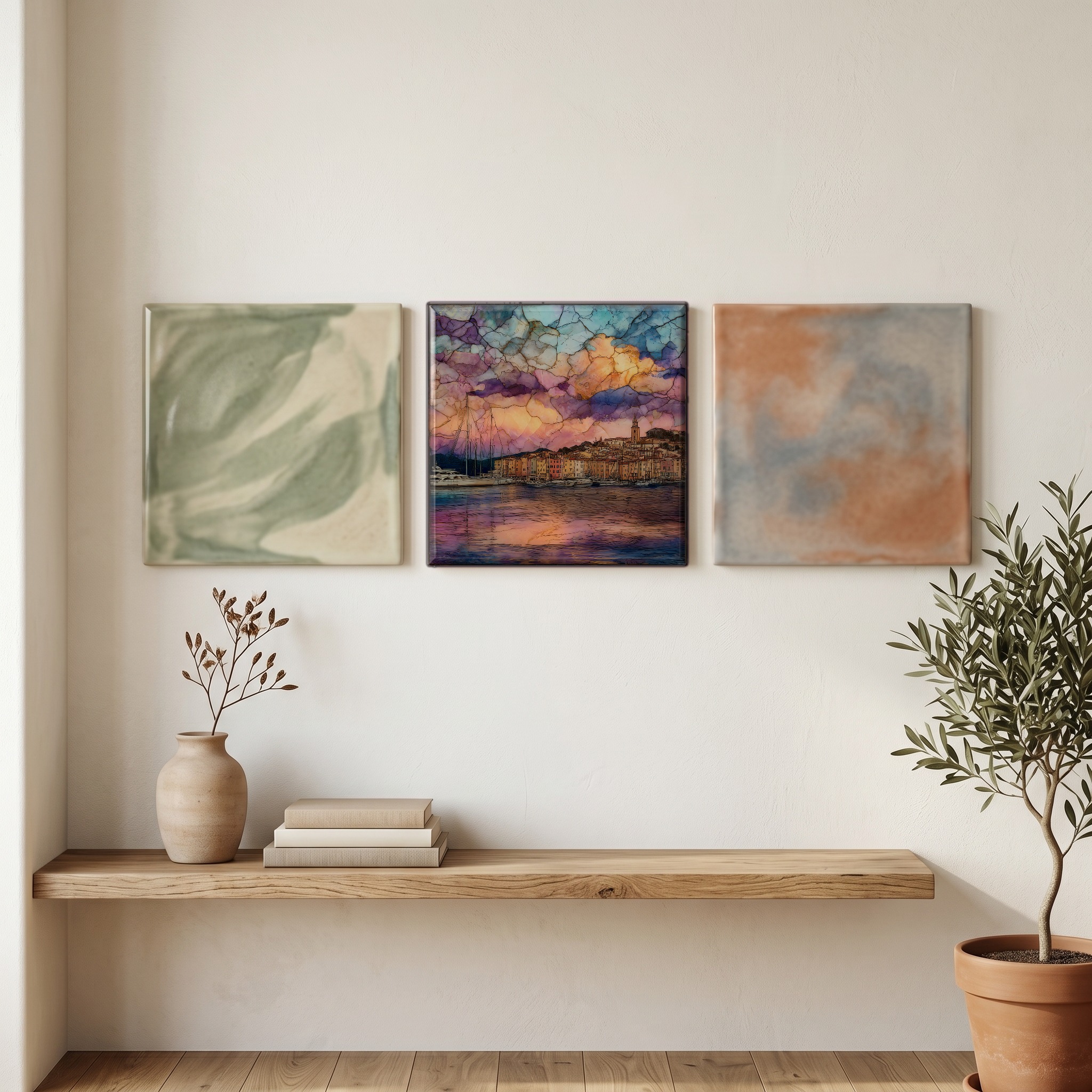
or build a grouping
or build a grouping

Three or five different vistas, hung together — a chapter of places you've been, or want to go.

about Saint-Tropez Harbour

The place, in three passes.

A little of what's known, in case you fall down the rabbit hole — or want to go see it yourself.
the place

Saint-Tropez sits on the Côte d'Azur, on a small peninsula on the southern coast of the Var department in Provence-Alpes-Côte d'Azur. The harbour, the Vieux Port, opens north onto the Gulf of Saint-Tropez, looking across to the village of Sainte-Maxime and toward the Massif des Maures behind it. The town is about 100 kilometres east of Marseille and 60 kilometres west of Cannes; the closest airport is Toulon-Hyères, about an hour by road. Saint-Tropez takes its name from Saint Torpes of Pisa, a Roman martyr whose body, by tradition, washed ashore here in the first century. The permanent population is roughly 4,000 and swells in summer.

the light

Paul Signac sailed into Saint-Tropez in 1892 on his cutter Olympia and stayed; the light was unlike anything on the Channel coast he had been painting. Within a decade he had brought Henri Matisse, Pierre Bonnard, Albert Marquet, Maurice de Vlaminck, and André Derain south to paint the same harbour and the same hills. The collected work now hangs in the Musée de l'Annonciade, a former 16th-century chapel a hundred metres from the Quai Jean-Jaurès, holding one of the finest small collections of Pointillist and Fauvist painting in France. The light the painters came for has not moved.

the visit

The harbour is open and free to walk at any hour. The Vieux Port is busiest from mid-June through August, when the megayachts berth four-deep along the Quai Jean-Jaurès and the morning market spills off the Place aux Herbes. The shoulder months (May, early June, late September) are quieter and the light is at its best. The Citadelle de Saint-Tropez, the 17th-century hilltop fort, opens daily and gives the cleanest view of the harbour from above. Les Voiles de Saint-Tropez, the late-September regatta of classic and modern sailing yachts, is the one week the harbour belongs to sailors again.

where
France · Saint-Tropez, Var
position
43.2728° N · 6.6394° E
the neighborhood

What's nearby.

A handful of named places within an hour's walk or short drive. Some we've already painted; some we will.
0.1 km W
Musée de l'Annonciade
art museum
0.5 km SE
Citadelle de Saint-Tropez
hilltop fort
0.3 km S
Place des Lices
village square and market
5 km SE
Plage de Pampelonne
beach
10 km S
Ramatuelle
hilltop village
14 km N
Sainte-Maxime
town across the gulf
N
Saint-Tropez Harbour
Musée de l'Annonciade
Citadelle de Saint-Tropez
Place des Lices
Plage de Pampelonne
Ramatuelle
Sainte-Maxime
common questions

What people ask.

A few questions we get about Saint-Tropez Harbour — and about bringing the piece home.
about the place

The harbour, known locally as the Vieux Port, is in the town of Saint-Tropez on France's Côte d'Azur, about 100 kilometres east of Marseille and 60 kilometres west of Cannes. It opens north onto the Gulf of Saint-Tropez, with the village of Sainte-Maxime visible across the water.

Two waves of arrivals. Paul Signac sailed in in 1892 and brought Matisse, Bonnard, and the Fauvists south for the light. Sixty years later, Brigitte Bardot and Roger Vadim filmed And God Created Woman here in 1956, and the village became the place it is today.

The ochre, pink, and pale-yellow façades along the Quai Jean-Jaurès draw on the traditional palette of the Provençal coast, made with iron-oxide pigments from inland Provence. The earth tones hold up against the strong Mediterranean light better than white, and they read as a single composition from across the water.

Les Voiles de Saint-Tropez is a late-September regatta of classic and modern sailing yachts held in the Vieux Port each year. For one week the megayachts make room and the harbour fills with wooden hulls and gaff rigs. It is the one event that returns the port to the working sailors who built it.

May, early June, and late September. The light is at its best, the harbour is open, and the worst of the summer crowd has either not arrived or has gone home. July and August are vivid and very busy.

The Musée de l'Annonciade is a small museum a hundred metres from the harbour, in a former 16th-century chapel, holding paintings by Signac, Matisse, Bonnard, Vlaminck, Derain, and the other artists who came to Saint-Tropez between 1892 and 1914. It holds one of the finest small collections of Pointillist and Fauvist work in France.

about the piece in your home

It has been a meaningful gift for many of our customers with ties to the Riviera. The pastel houses along the Quai Jean-Jaurès are familiar from a hundred paintings and a thousand summers on the coast. A Medium with a handwritten note from the studio carries well; a Coaster Set works at the table.

The artwork's pinks, ochres, and Mediterranean blues sit comfortably in Coastal-modern, French-country, and Mediterranean-modern rooms. The palette also holds against a warm-neutral wall in limewash, lime plaster, or a soft white, without competing with it. It does not need a bright room to read well.

The current coastal-modern direction has moved off the cool blue-white palette and toward warmer Riviera tones: terracotta, ochre, faded coral. A Saint-Tropez harbour scene sits at the centre of that shift. The artwork reads as art, not as theme decor, which is the line the trend is asking for.

Above a standard three-seater sofa, a single Large or a four-tile Mural both sit well; the Mural reads as more of a statement. Above a console or a narrow entry table, a single Medium is usually the right scale. For a long wall above a sectional, a nine-tile Mural.

Yes. We offer two finishes for wet or splash-prone rooms: Dura Satin, which has a soft sheen and resists scratches, and Matte, which has no sheen. Both are sealed against moisture. The Glossy finish is for show-pieces and framed wall art.

A soft microfibre cloth and clean water is enough for normal dust and fingerprints. For a stubborn mark, a drop of dish soap in warm water on the cloth, then a clean cloth to dry. Avoid abrasive pads and bleach-based cleaners.

Yes. Every WenderVista piece is original to our studio in Knoxville. We do not license artwork from third parties, and we do not sell the same composition through other catalogues. Each tile is hand-finished in-house before it ships.

if this one stayed with you

A few you might also love.

Hand-picked by the eye that found Sorapis. Same air, same kind of quiet.