Wender·Vista
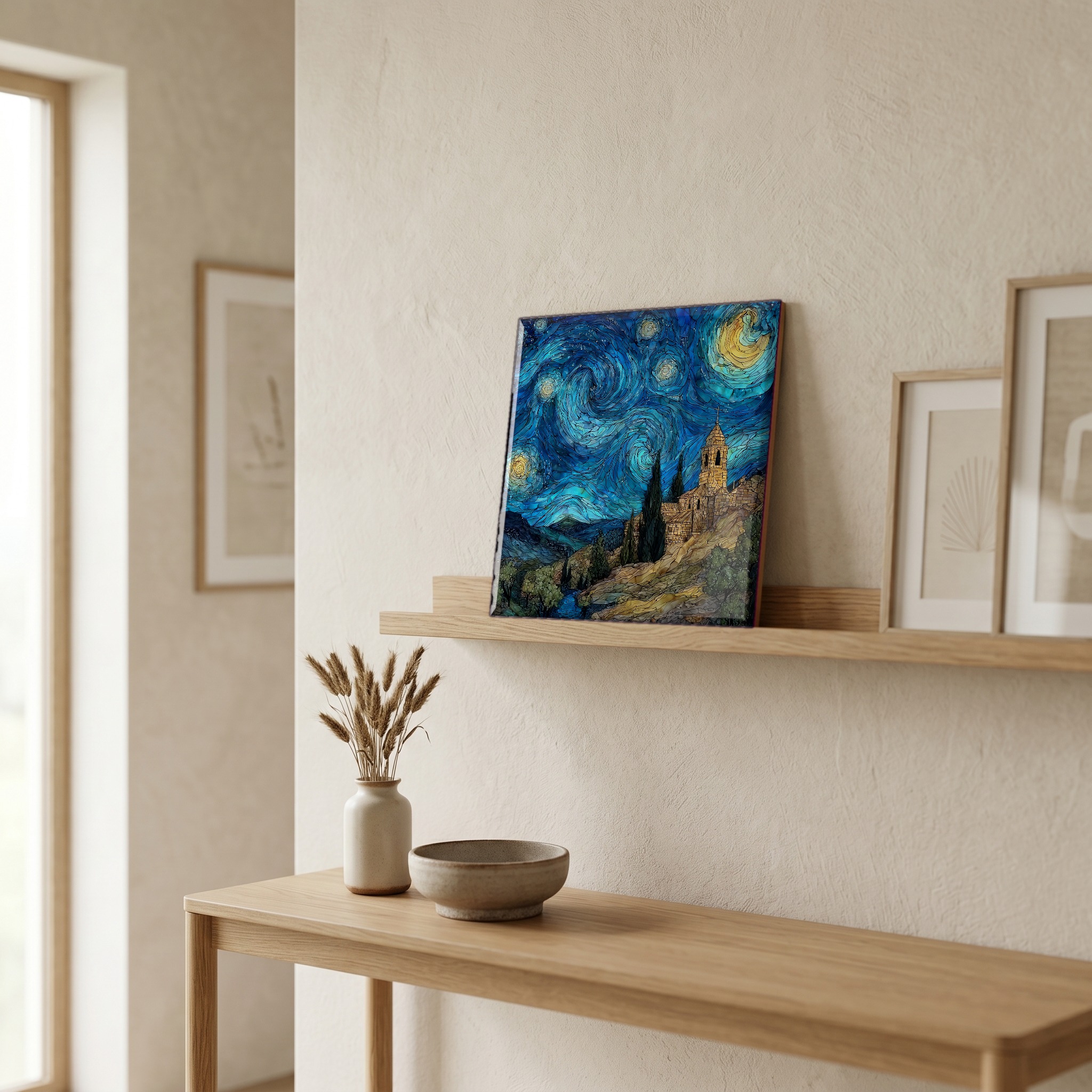
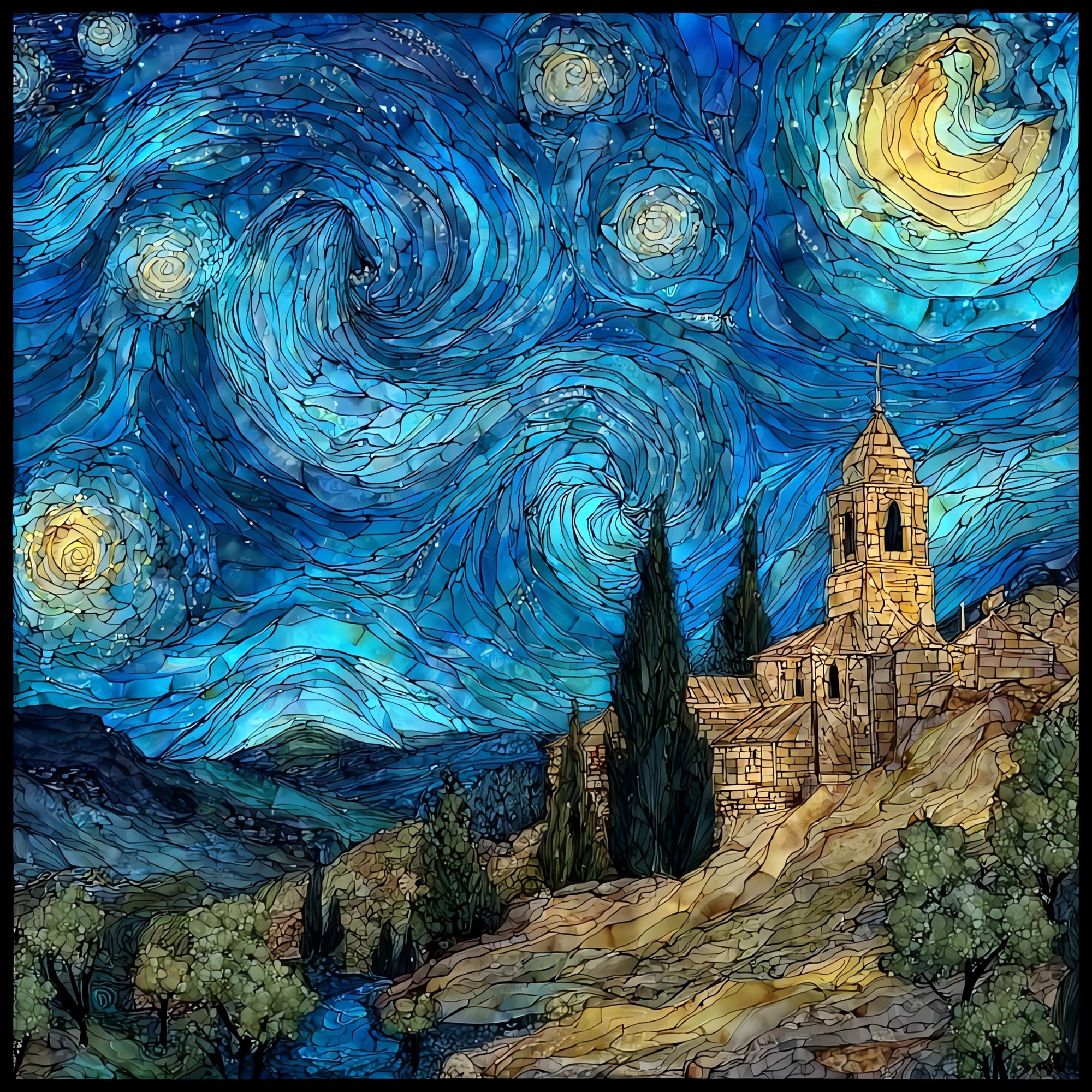
Saint-Remy-de-Provence
shown on ceramic, 12-inch tileFrance
in the Alpilles, south of Avignon

Saint-Remy-de-Provence

the wheat field beneath van Gogh's window.

Where it lives

Not only on a wall.

A small tile on the nightstand catching the morning. A larger one above the fire. Yours, wherever you spend the slow hours.
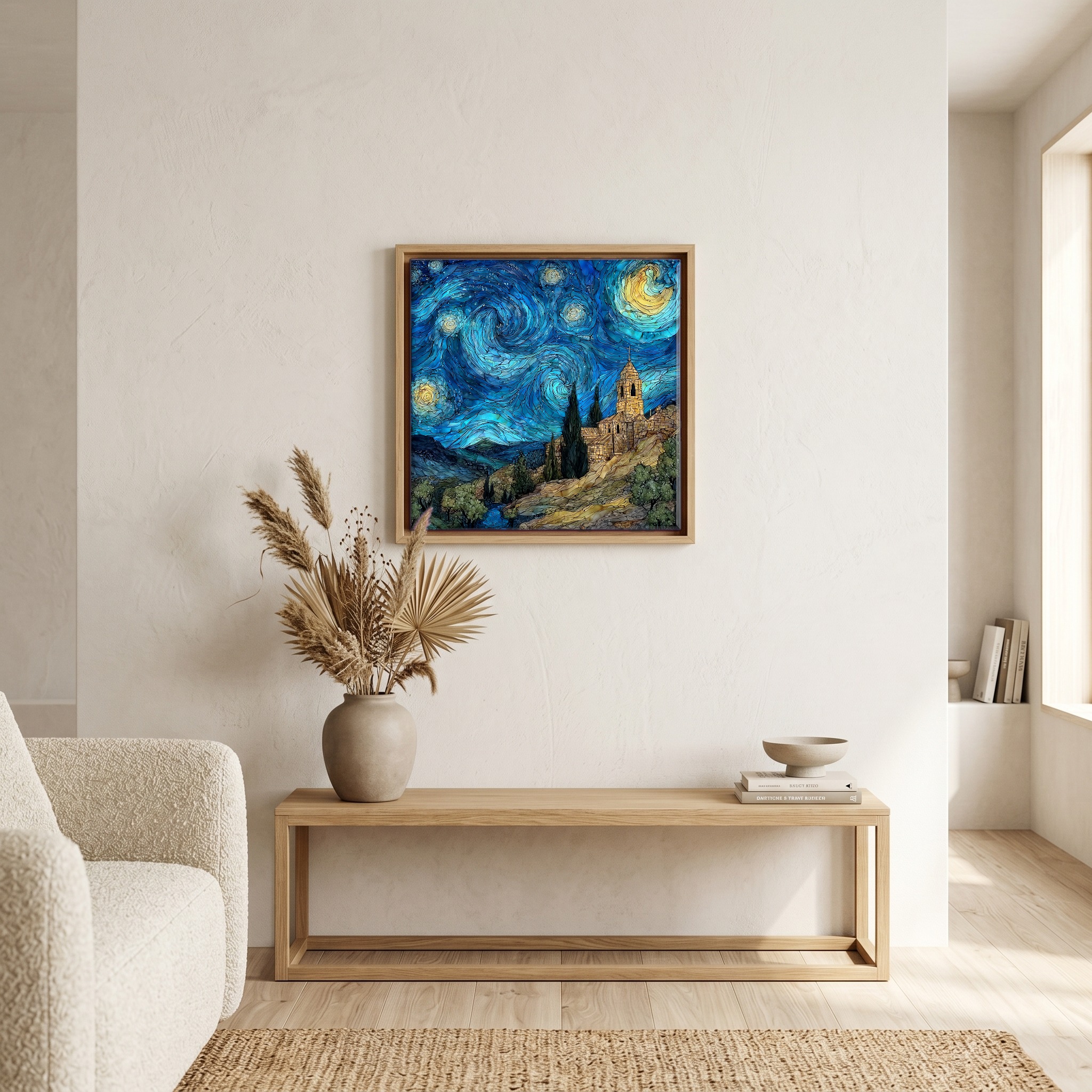
Above the bench, in a warm oak surround.
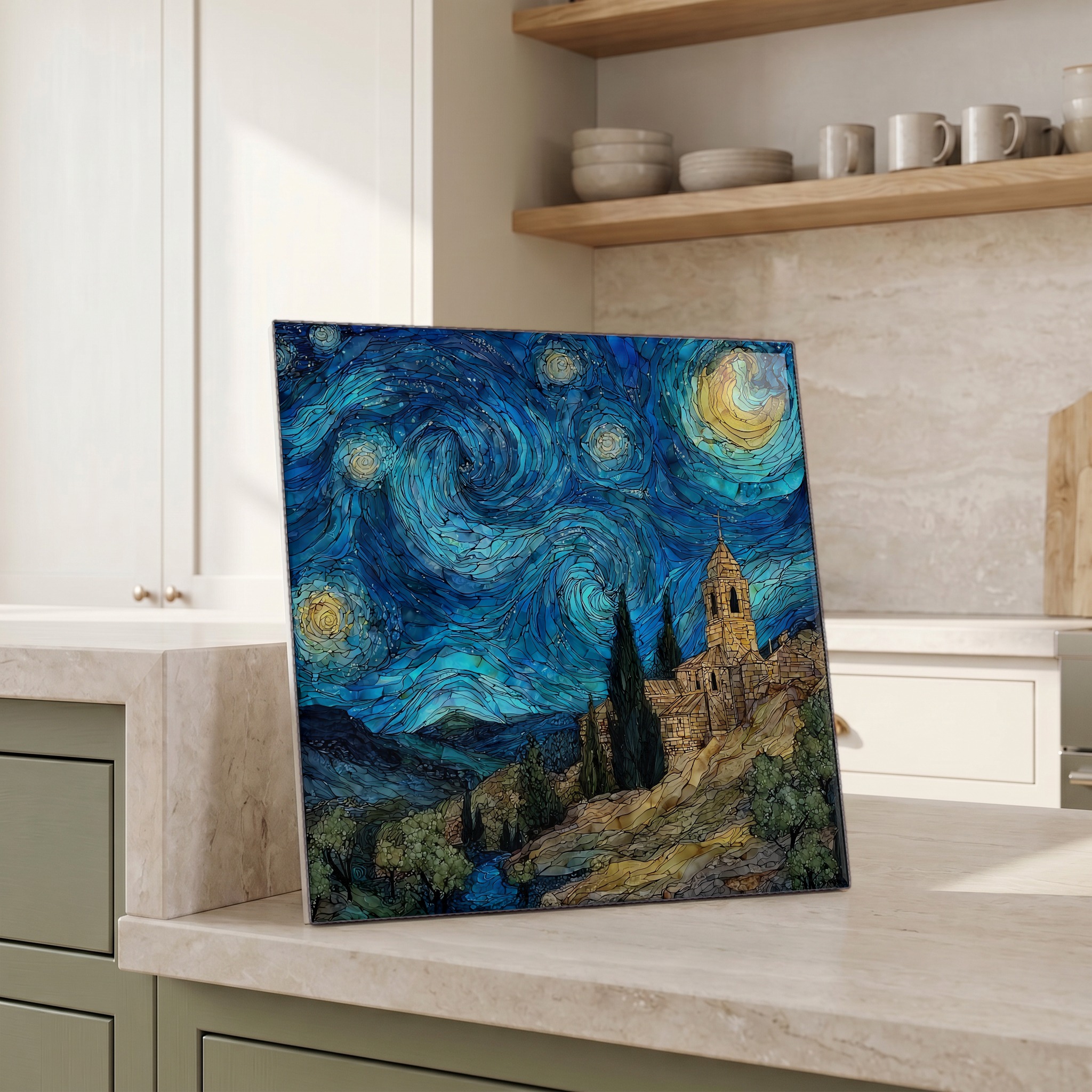
Beside the kettle, propped on the counter.
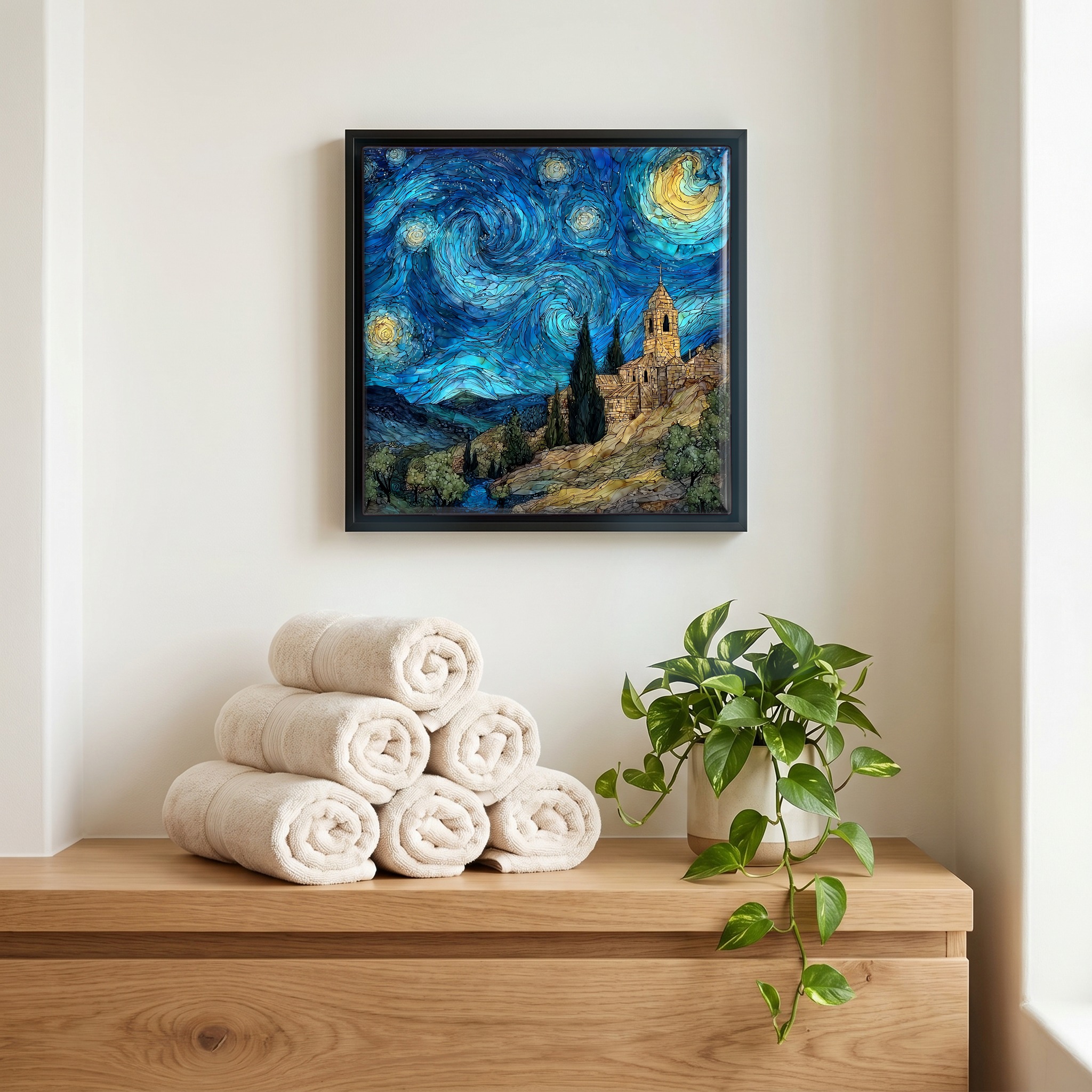
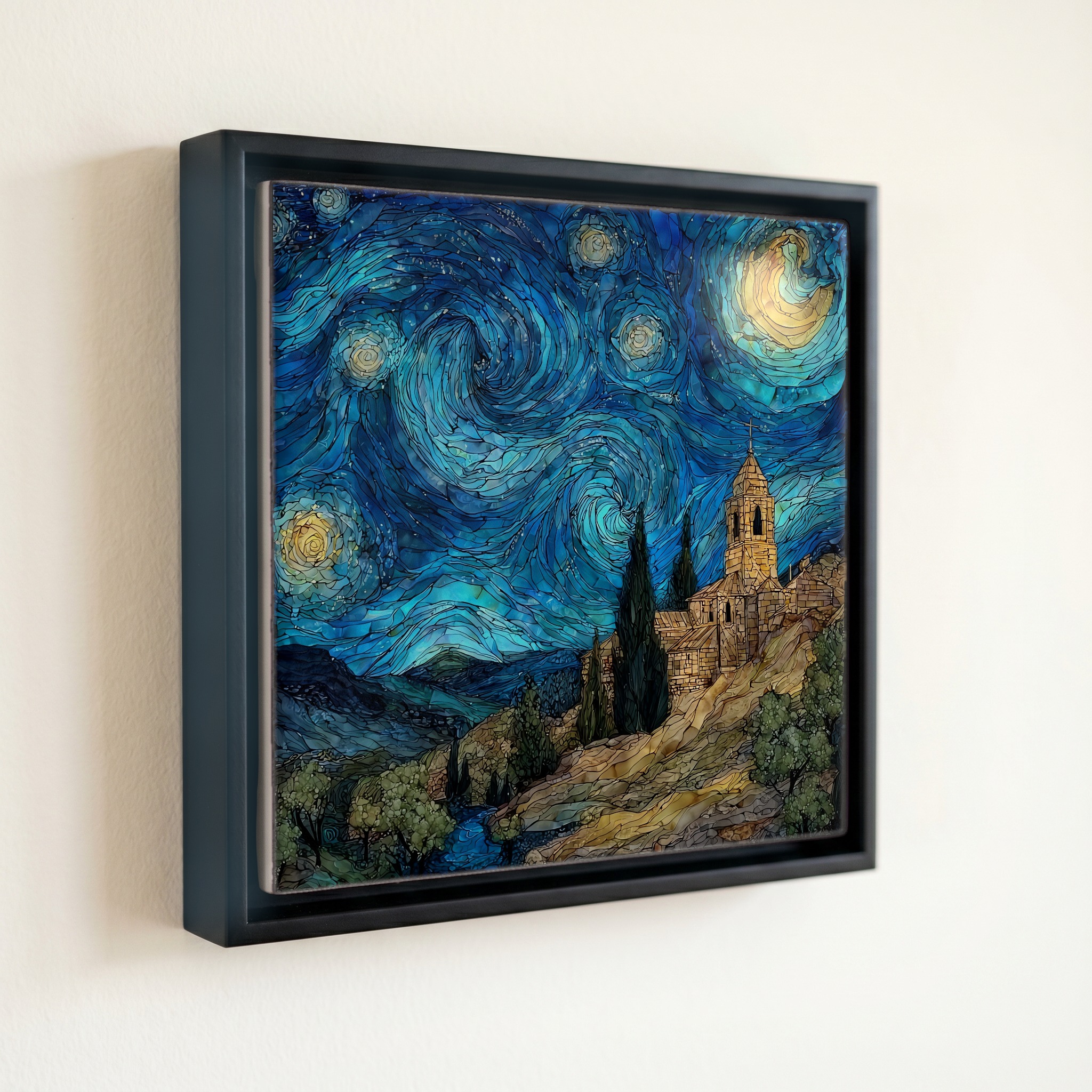
Above the linens, in a slim black surround.
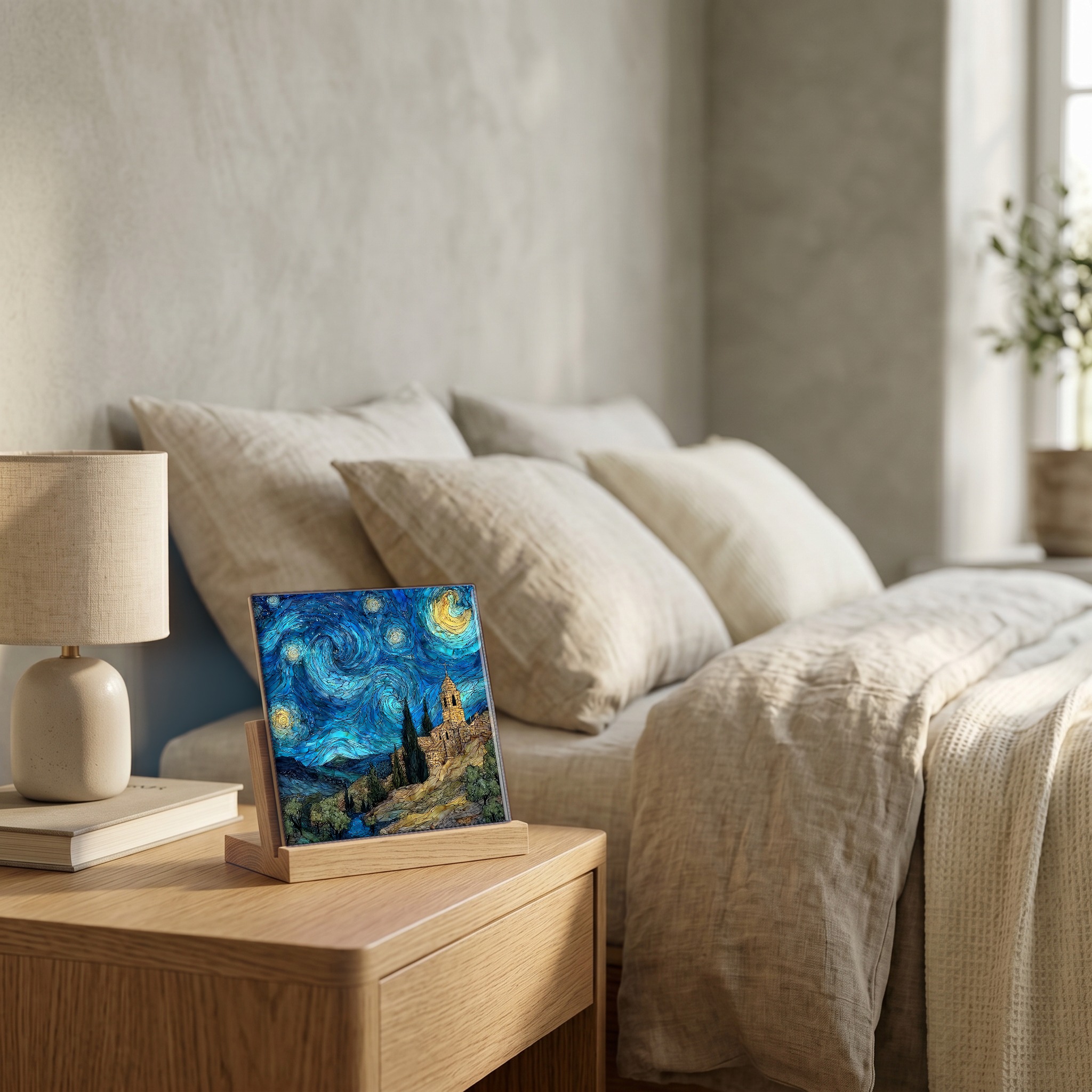
On the nightstand, on a light oak stand.
On a picture ledge, where the light comes in.
a note from the studio

A small town in the Alpilles, surrounded by olive groves, almond orchards, and Roman stones. Van Gogh spent a year here at Saint-Paul-de-Mausole, the former monastery on the southern edge of town, and painted the wheat field from his bedroom window. The cypress trees still move the way he painted them. On Wednesdays the market fills the plane-tree squares; the rest of the week the streets stay quiet enough to hear the cicadas. South of town the Roman quarter at Glanum has been quietly weathering for two thousand years.
from the studio
shown in a slim black floating frame · 6 × 6 in
— bring it home

Saint-Remy-de-Provence, on ceramic.

Each tile is finished by hand in our Knoxville studio. Artwork is slowly infused into the ceramic surface under high heat and pressure, and rests beneath a thin glossy finish. The colour lives in the surface, not on top of it.

What kind of piece?
One tile — square or rectangle.
How big?
the popular one — counter, shelf, nightstand
6 × 6 in · 15 cm · 1.6 lb
Surface finish
A clear glossy finish — the artwork reads as if under resin. Ideal for show-pieces and framed wall art.
How it sits
A hidden cleat — sits ¼″ proud of the wall.
$58
Hand-finished and shipped from our studio at the foot of the Smokies. On your wall in about ten days.
size
6 × 6 in
15 cm
weighs
1.6 lb
solid in the hand
surface
ceramic, hand-finished
art rests beneath a thin glossy finish
from
Knoxville, TN
our family studio, at the foot of the Smokies
— start a Coaster Set

Pick any four 4-inch tiles — National Parks you've been to, a Smokies set, the four seasons of one place. $ for a set of , cork-backed, ready to live on the table.
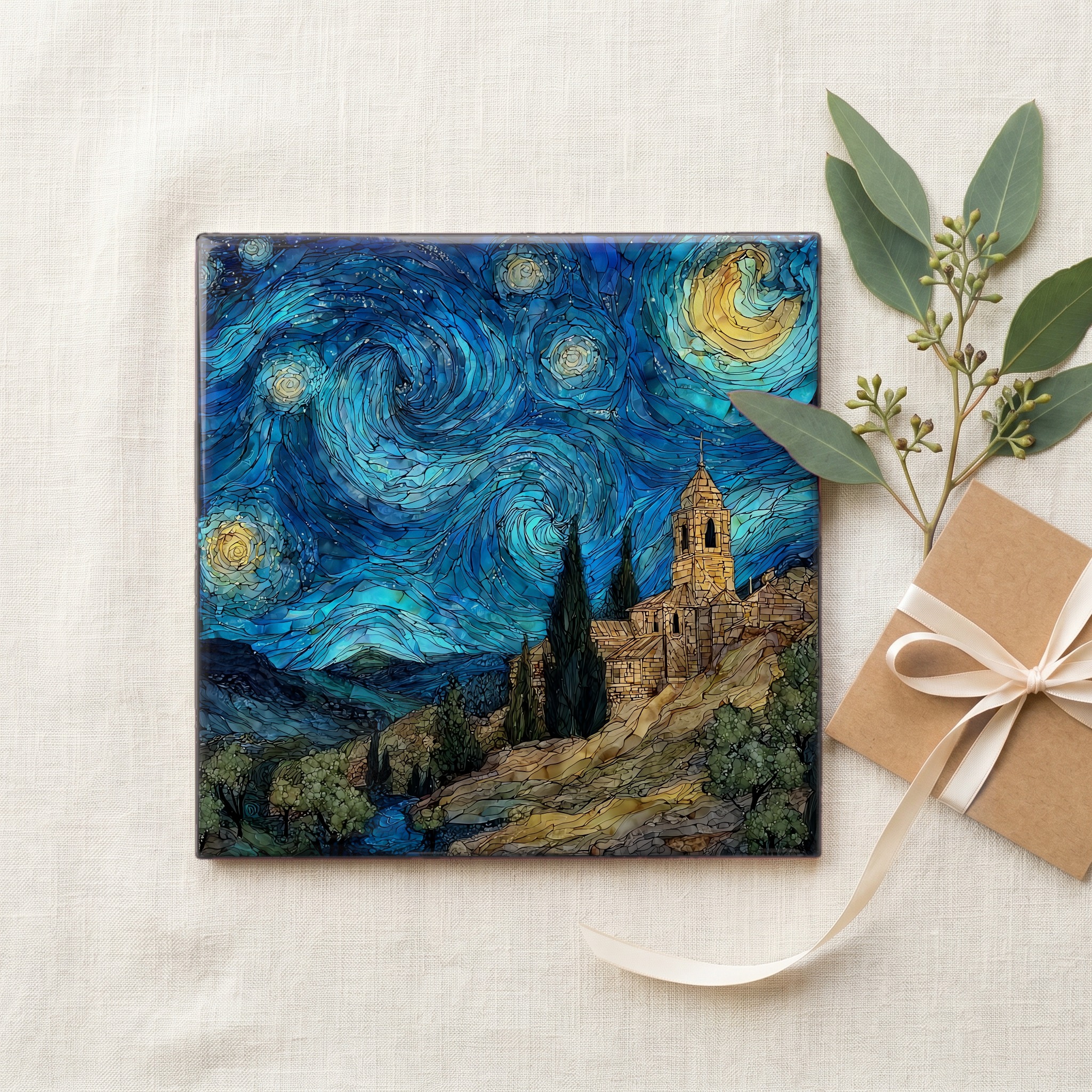
comes gift-ready
comes gift-ready

Each tile ships in a kraft box, tied with cream ribbon, with a handwritten note from the studio if you'd like to add one.
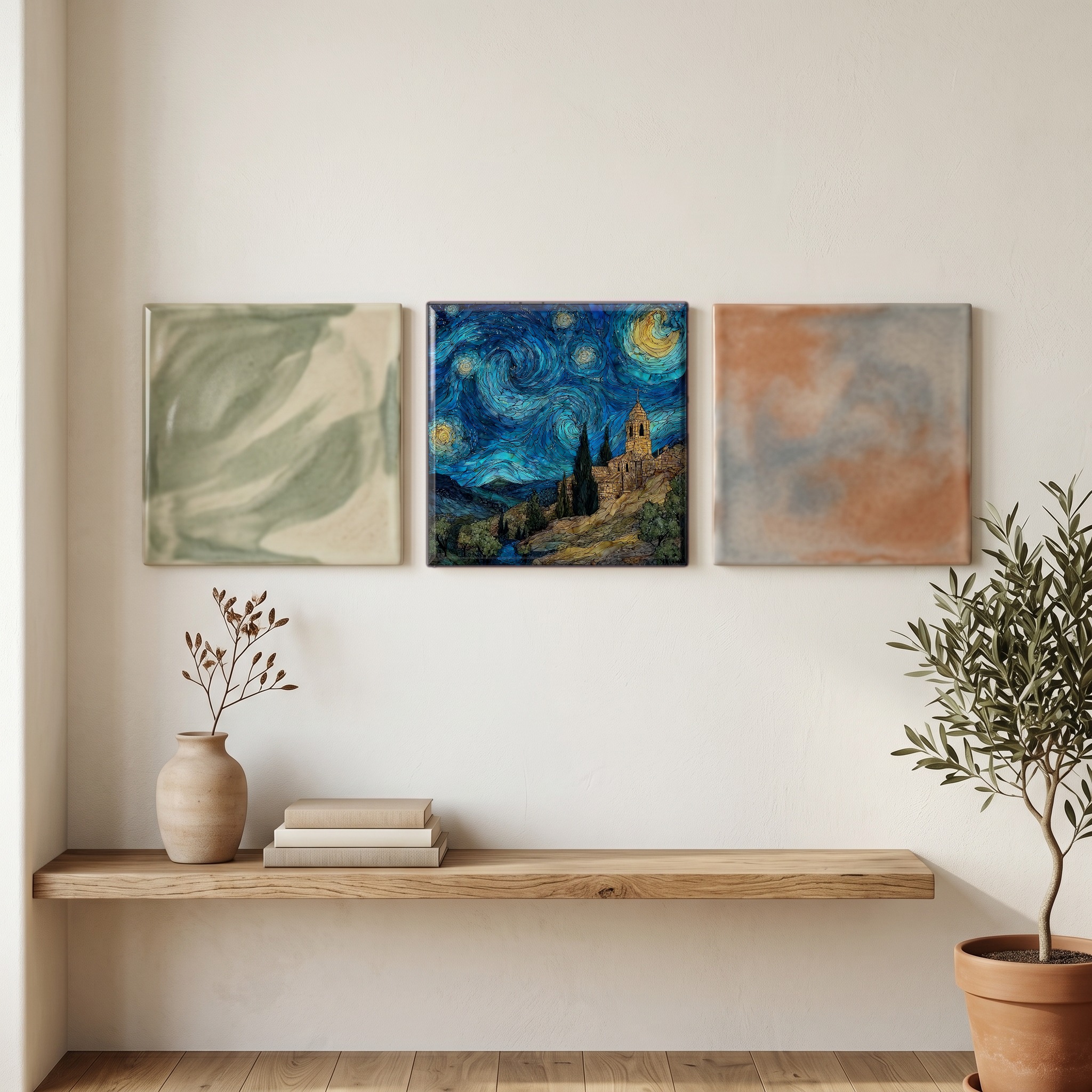
or build a grouping
or build a grouping

Three or five different vistas, hung together — a chapter of places you've been, or want to go.

about Saint-Remy-de-Provence

The place, in three passes.

A little of what's known, in case you fall down the rabbit hole — or want to go see it yourself.
the place

Saint-Rémy-de-Provence is a small town in the Alpilles, a low limestone range in the Bouches-du-Rhône department of southern France, about 20 kilometres south of Avignon and 25 kilometres northeast of Arles. The town's population sits around 10,000, swelling each summer with visitors drawn to the Wednesday market, the surrounding olive groves and almond orchards, and two adjacent sites south of the centre: the Roman ruins of Glanum and the former monastery of Saint-Paul-de-Mausole, where Vincent van Gogh admitted himself in May 1889 and painted some 150 works in a single year. Nostradamus was born in the town in 1503. The mistral, the cold north wind that defines Provence, comes down the Rhône valley and through the Alpilles in winter and early spring.

the light

The light at Saint-Rémy is the same light that brought a procession of painters to Provence in the late 19th century. Van Gogh, in the last year of his life, made some of his most reproduced works from a single bedroom at Saint-Paul-de-Mausole: The Starry Night in June 1889, Irises in May 1889, Wheat Field with Cypresses in June 1889, the series of Olive Trees, and Wheat Field with a Reaper. He wrote to his brother Theo that the southern sun did something to colour he had not seen in the north, turning ochres into gold and shadows into violet. The clarity comes from the mistral, which scrubs the haze from the sky and leaves the air dry enough that distant ridges read sharp at noon.

the stone

A kilometre south of the town centre, two Roman monuments stand on what was the road from Glanum to Arles: the Mausoleum of the Julii, around 30 BCE, and the Arch of Glanum, around 20 BCE, together known as Les Antiques. Behind them lies Glanum itself, a Gallo-Greek then Roman settlement founded in the 6th century BCE around a sacred spring and abandoned in 260 CE after Alemannic raids. The site was buried under alluvium for nearly seventeen centuries and rediscovered in 1921; excavation continues. The Mausoleum is the best-preserved Roman funerary monument in France and one of the most complete in Europe. The limestone used at Glanum was quarried from the Alpilles themselves; the same stone walls many of the town's older houses.

where
France · Saint-Rémy-de-Provence, Bouches-du-Rhône, Provence-Alpes-Côte d'Azur
elevation
59 m · 194 ft
position
43.7897° N · 4.8328° E
the neighborhood

What's nearby.

A handful of named places within an hour's walk or short drive. Some we've already painted; some we will.
1 km S
Saint-Paul-de-Mausole
monastery and former asylum
2 km S
Glanum
Roman archaeological site
2 km S
Les Antiques
Roman monuments
9 km S
Les Baux-de-Provence
clifftop village
20 km N
Avignon
papal city
25 km SW
Arles
Roman city
N
Saint-Remy-de-Provence
Saint-Paul-de-Mausole
Glanum
Les Antiques
Les Baux-de-Provence
Avignon
Arles
common questions

What people ask.

A few questions we get about Saint-Remy-de-Provence — and about bringing the piece home.
about the place

Saint-Rémy-de-Provence is a small town in the Alpilles, in the Bouches-du-Rhône department of southern France. It sits about 20 kilometres south of Avignon and 25 kilometres northeast of Arles. The population is around 10,000.

Van Gogh voluntarily admitted himself to the Saint-Paul-de-Mausole asylum in May 1889, a year after his breakdown in Arles. He stayed twelve months and painted around 150 canvases there, including The Starry Night, Irises, and Wheat Field with Cypresses.

Glanum was a Gallo-Greek and later Roman town founded in the 6th century BCE around a sacred spring at the foot of the Alpilles. It was abandoned in 260 CE after Alemannic raids and lay buried until excavation began in 1921. The site is open to the public today.

April through June and September into October offer the warmest light and the smallest crowds. July and August are hot and busy; the lavender bloom in the wider Provence region runs late June to mid-August. The mistral wind is most frequent in winter and early spring.

Yes. Michel de Nostredame, who wrote under the name Nostradamus, was born in Saint-Rémy on 14 December 1503. His birthplace is in the old town, on the rue Hoche, and bears a small commemorative plaque.

The Wednesday morning market in the town centre has run since the Middle Ages and is one of the larger weekly Provençal markets. It fills the squares around the Collégiale Saint-Martin with produce, olives, soap, cheese, linen, and pottery, and runs roughly from 8am to 1pm.

The mistral is a strong, cold, dry north wind that funnels down the Rhône valley and through the Alpilles, most often in winter and spring. It can blow for days at a time, gusting past 90 km/h. It is the reason Provençal skies often read so sharply clear and blue.

about the piece in your home

It has been a meaningful gift for both. Saint-Rémy carries weight for anyone who has walked the Alpilles, sat in the Wednesday market, or stood in front of The Starry Night. A Keepsake or Small with a handwritten note from the studio carries well; the Medium and Large hold their own on a wall.

The palette is warm ochre, deep violet, olive green, and cypress black with stained-glass blues. It reads well in Mediterranean-modern, French country, and warm jewel-tone maximalist rooms. The Glossy finish suits a framed wall hang; Dura Satin and Matte work in less formal settings.

Yes. Provençal and broader Mediterranean palettes have been steady in interiors for several seasons. The artwork's olive-grove greens and stained-glass blues fit current warm-neutral and earth-tone directions without leaning into pastel.

A single Large reads well above a console or a narrow sofa. Above a standard three-seat sofa, a 4-tile Mural fills the wall properly; for a wide great-room wall, a 9-tile Mural is the right answer. The Triptych works for staircases and longer hallways.

Yes. The Dura Satin and Matte finishes are scratch-resistant and made for vertical installation in showers, behind range tops, and on backsplashes. The Glossy is intended for framed wall display, not wet zones.

A microfibre cloth and water is enough for routine cleaning. The colour is slowly infused into the ceramic surface under high heat and pressure and rests beneath a thin glossy or satin finish, so it does not scratch or fade with ordinary use.

Yes. Every piece in the WenderVista atlas is original to our studio in Knoxville, Tennessee. We do not license, resell, or composite third-party images. Each tile is hand-finished in-house.

if this one stayed with you

A few you might also love.

Hand-picked by the eye that found Sorapis. Same air, same kind of quiet.