Wender·Vista
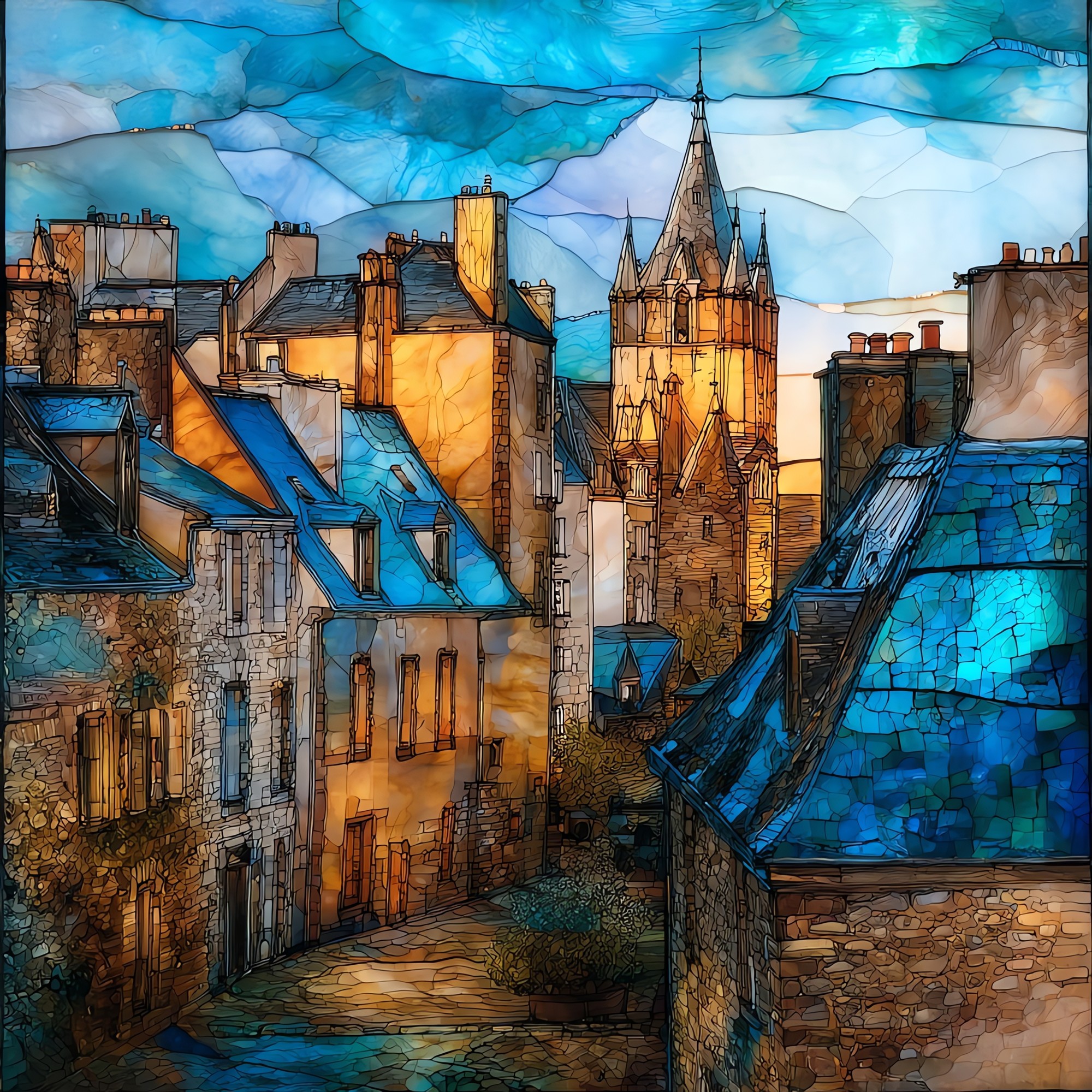
Saint-Malo Intra-Muros
shown on ceramic, 12-inch tileFrance
on Brittany's Channel coast, at the mouth of the Rance

Saint-Malo Intra-Muros

the wall the tide comes for, twice a day.

Where it lives

Not only on a wall.

A small tile on the nightstand catching the morning. A larger one above the fire. Yours, wherever you spend the slow hours.
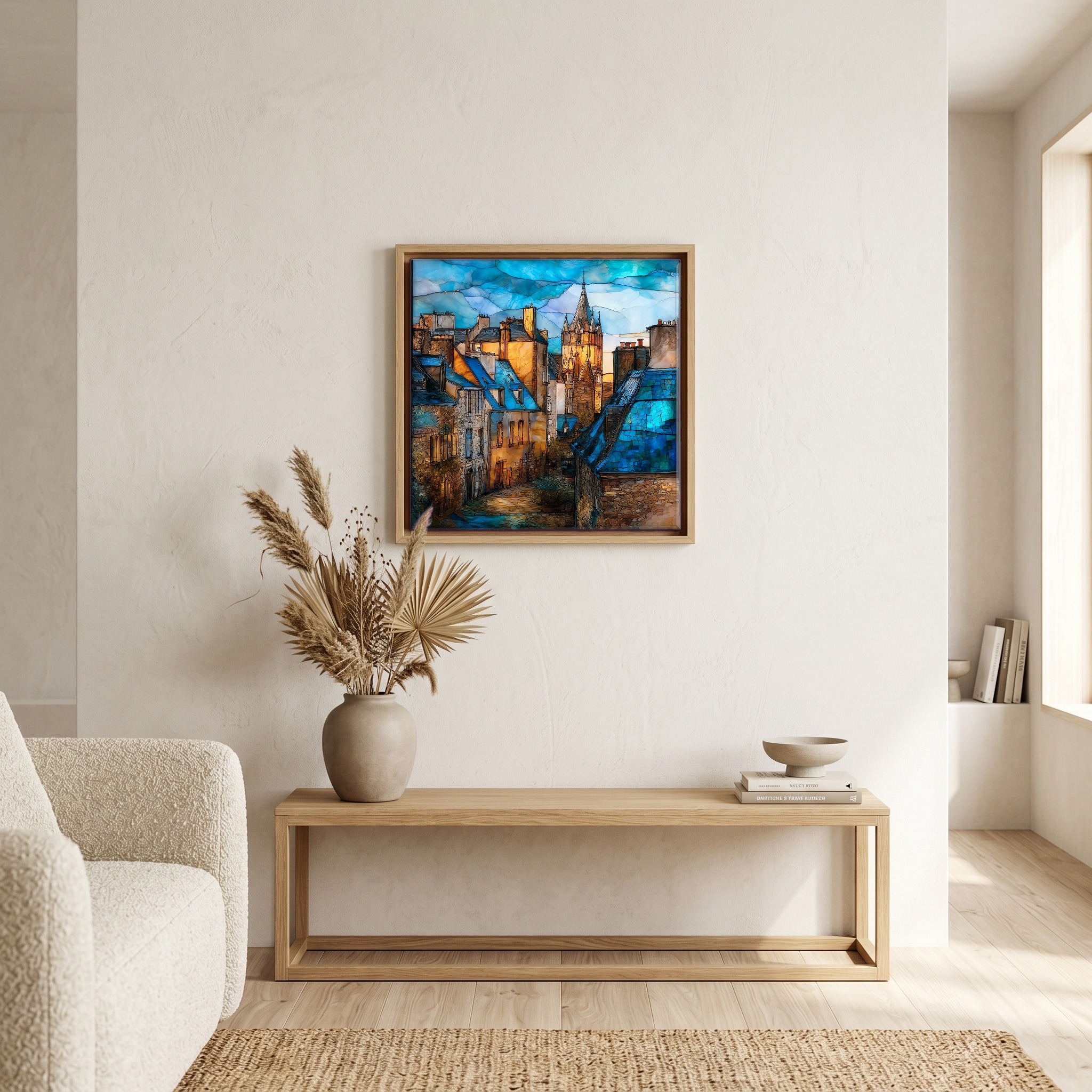
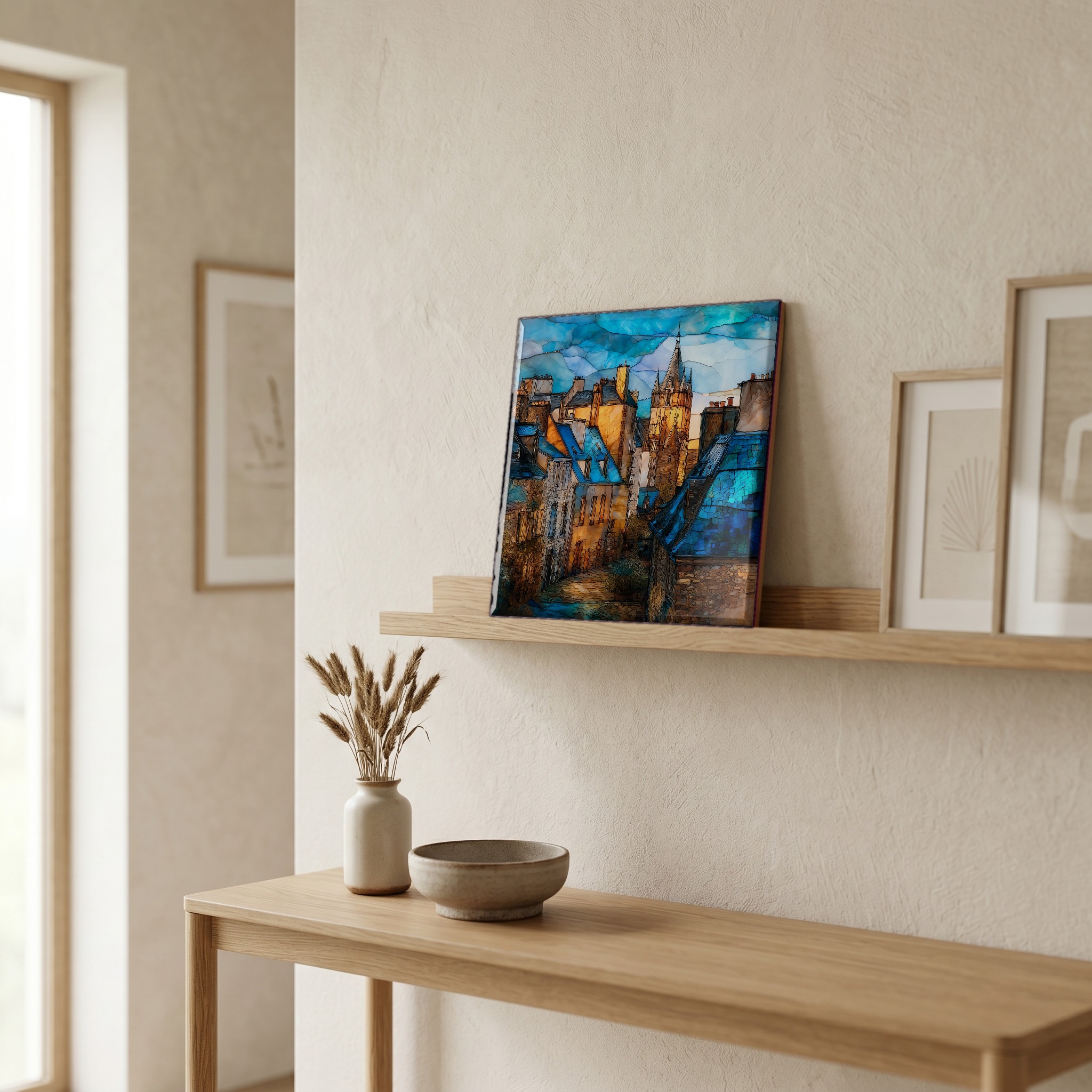
Above the bench, in a warm oak surround.
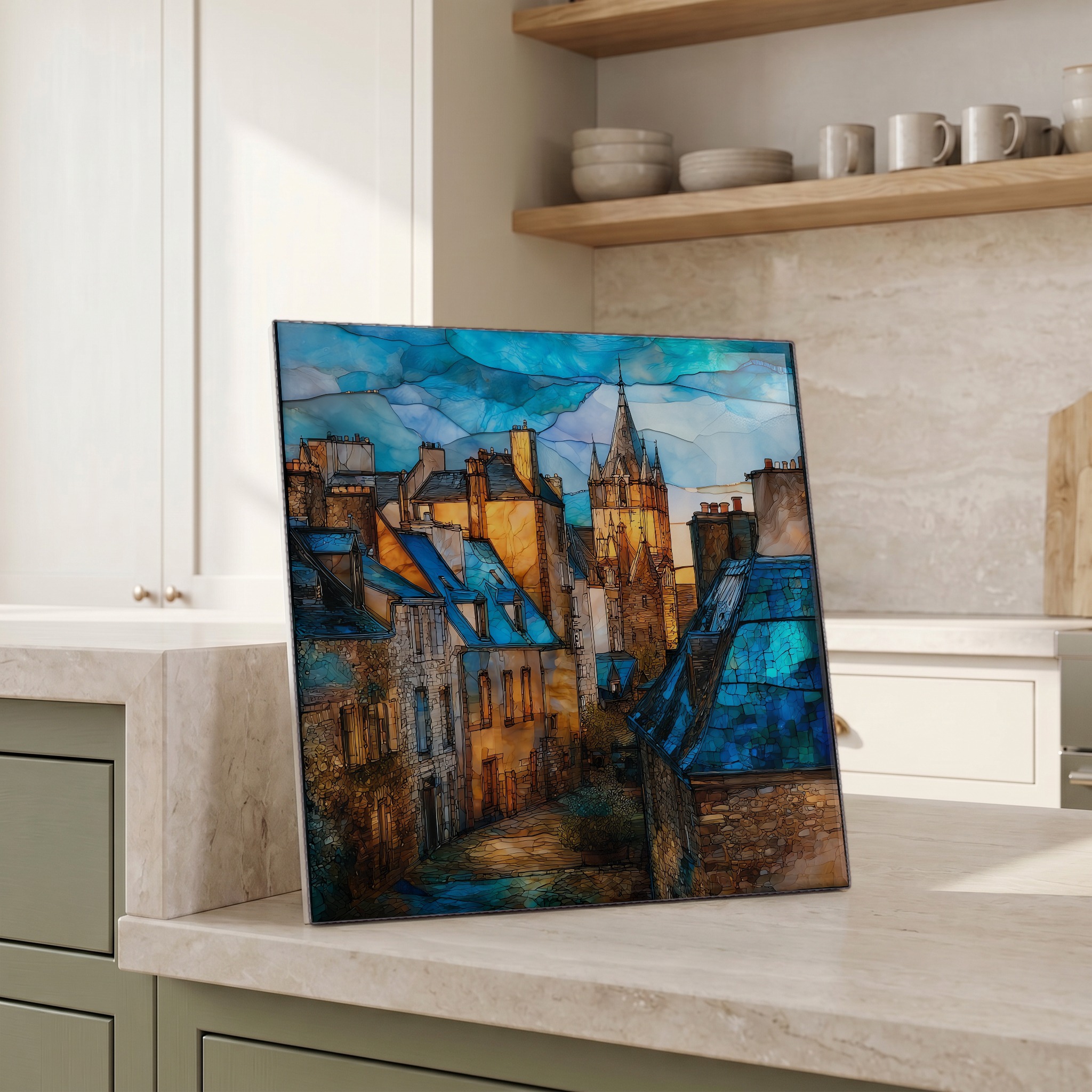
Beside the kettle, propped on the counter.
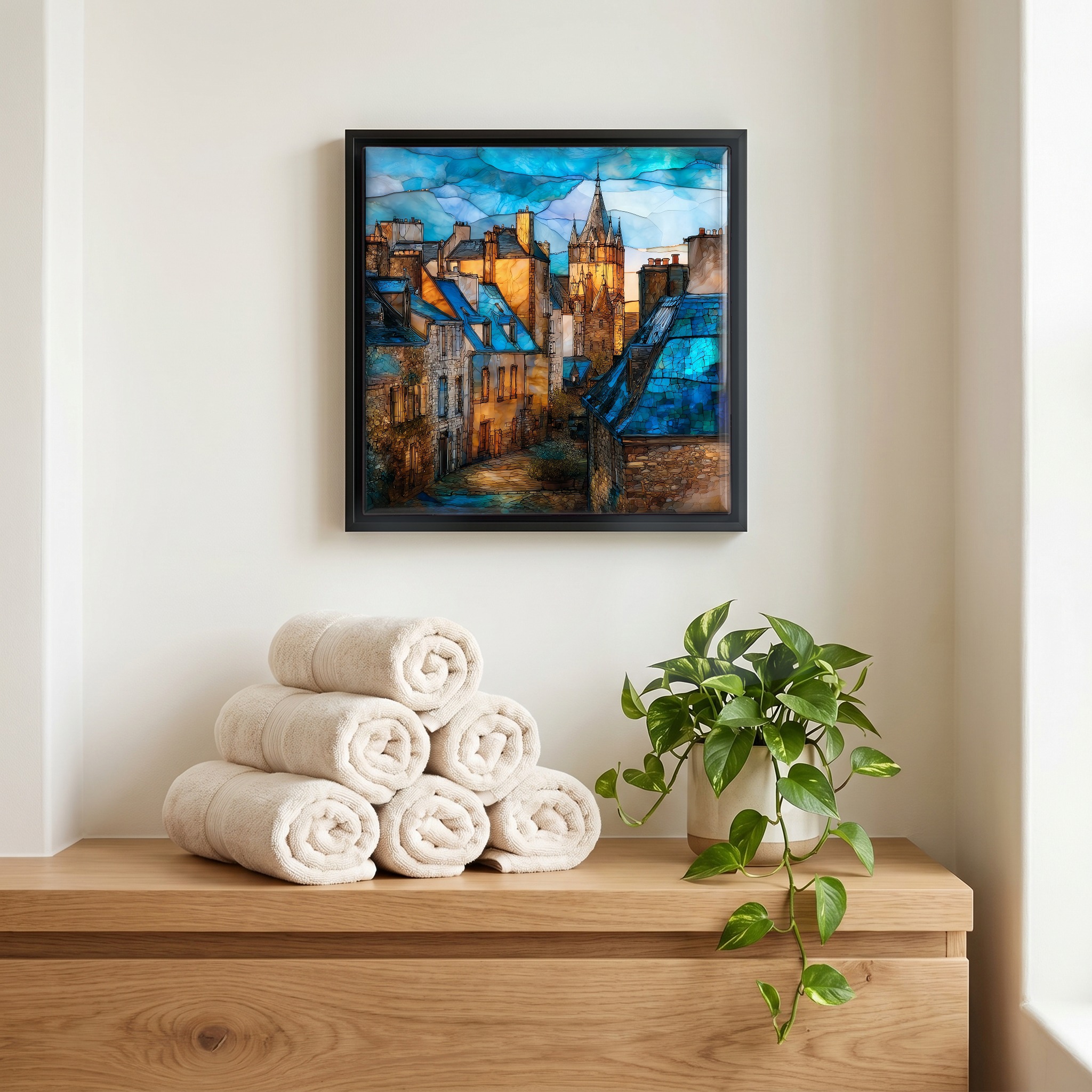
Above the linens, in a slim black surround.
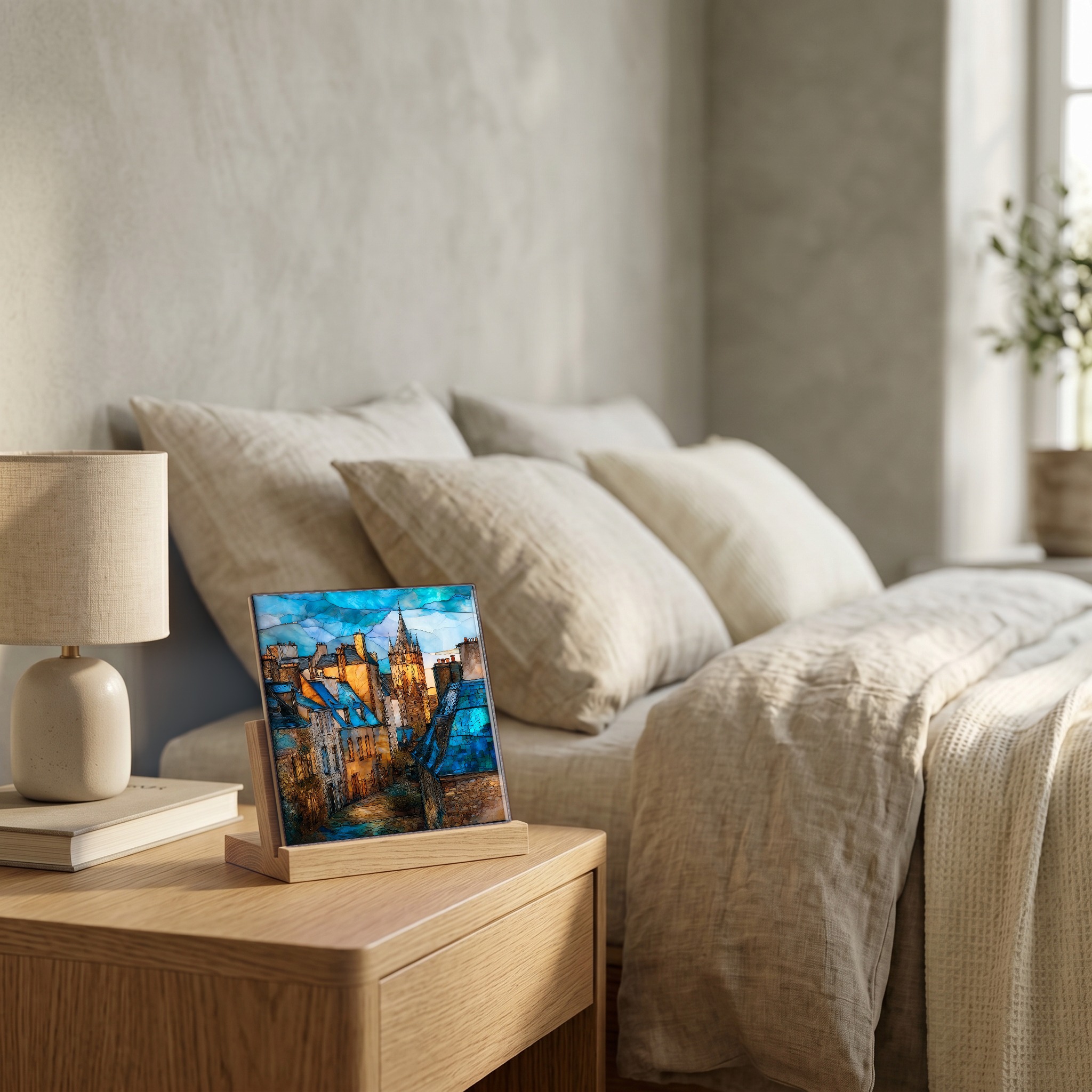
On the nightstand, on a light oak stand.
On a picture ledge, where the light comes in.
a note from the studio

A walled port on Brittany's granite coast, set on a headland where the Rance opens to the Channel. The ramparts were Vauban's; the houses behind them were rebuilt after 1944 from the same grey stone, cut to the proportions of the streets they replaced. Some of the largest tides in Europe come and go twice a day at the foot of the walls. People walk the circuit. At low water a sand causeway uncovers to Grand Be, where Chateaubriand is buried facing the open sea. Six hours later the path is gone. Nobody hurries here.
from the studio
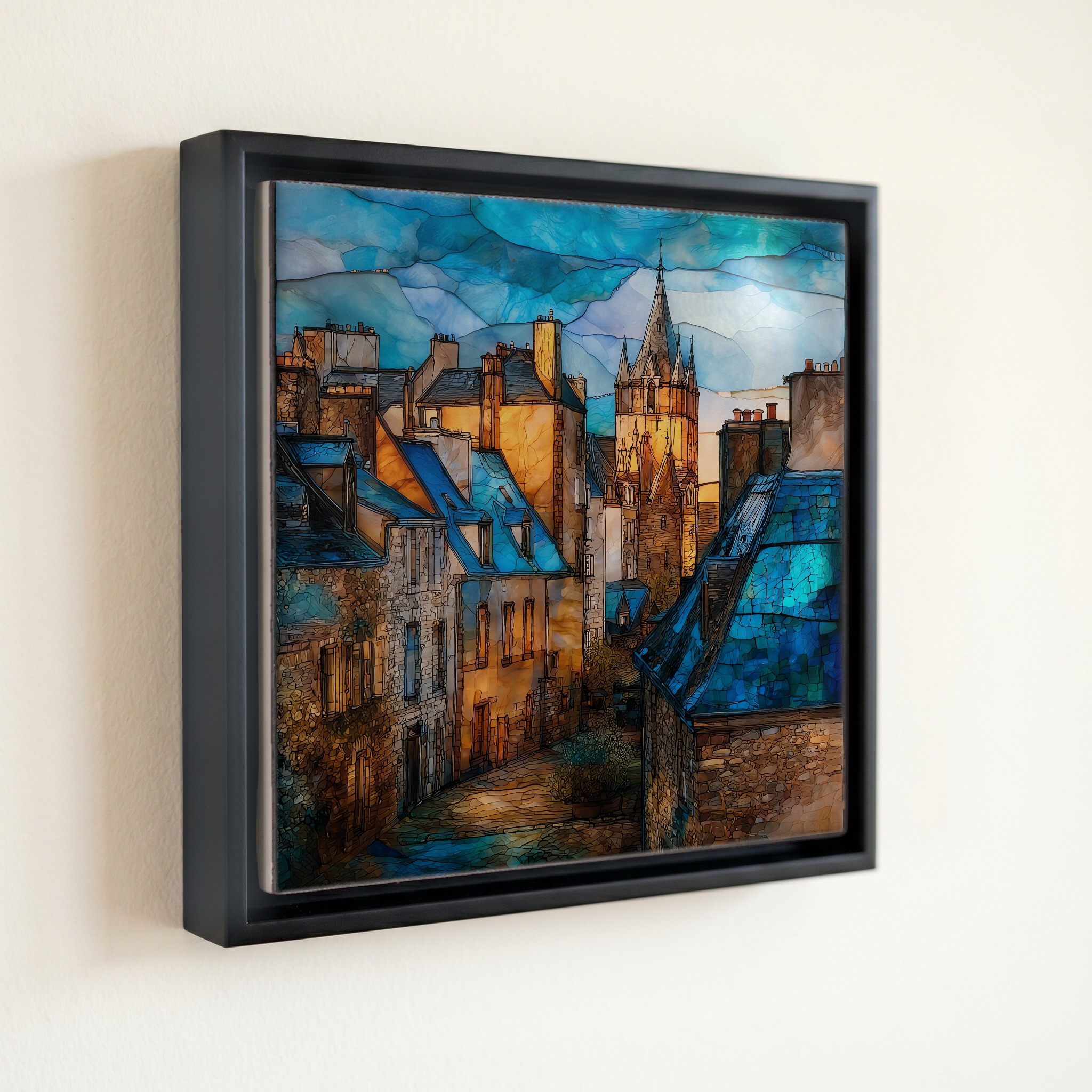
shown in a slim black floating frame · 6 × 6 in
— bring it home

Saint-Malo Intra-Muros, on ceramic.

Each tile is finished by hand in our Knoxville studio. Artwork is slowly infused into the ceramic surface under high heat and pressure, and rests beneath a thin glossy finish. The colour lives in the surface, not on top of it.

What kind of piece?
One tile — square or rectangle.
How big?
the popular one — counter, shelf, nightstand
6 × 6 in · 15 cm · 1.6 lb
Surface finish
A clear glossy finish — the artwork reads as if under resin. Ideal for show-pieces and framed wall art.
How it sits
A hidden cleat — sits ¼″ proud of the wall.
$58
Hand-finished and shipped from our studio at the foot of the Smokies. On your wall in about ten days.
size
6 × 6 in
15 cm
weighs
1.6 lb
solid in the hand
surface
ceramic, hand-finished
art rests beneath a thin glossy finish
from
Knoxville, TN
our family studio, at the foot of the Smokies
— start a Coaster Set

Pick any four 4-inch tiles — National Parks you've been to, a Smokies set, the four seasons of one place. $ for a set of , cork-backed, ready to live on the table.

comes gift-ready
comes gift-ready

Each tile ships in a kraft box, tied with cream ribbon, with a handwritten note from the studio if you'd like to add one.
or build a grouping
or build a grouping

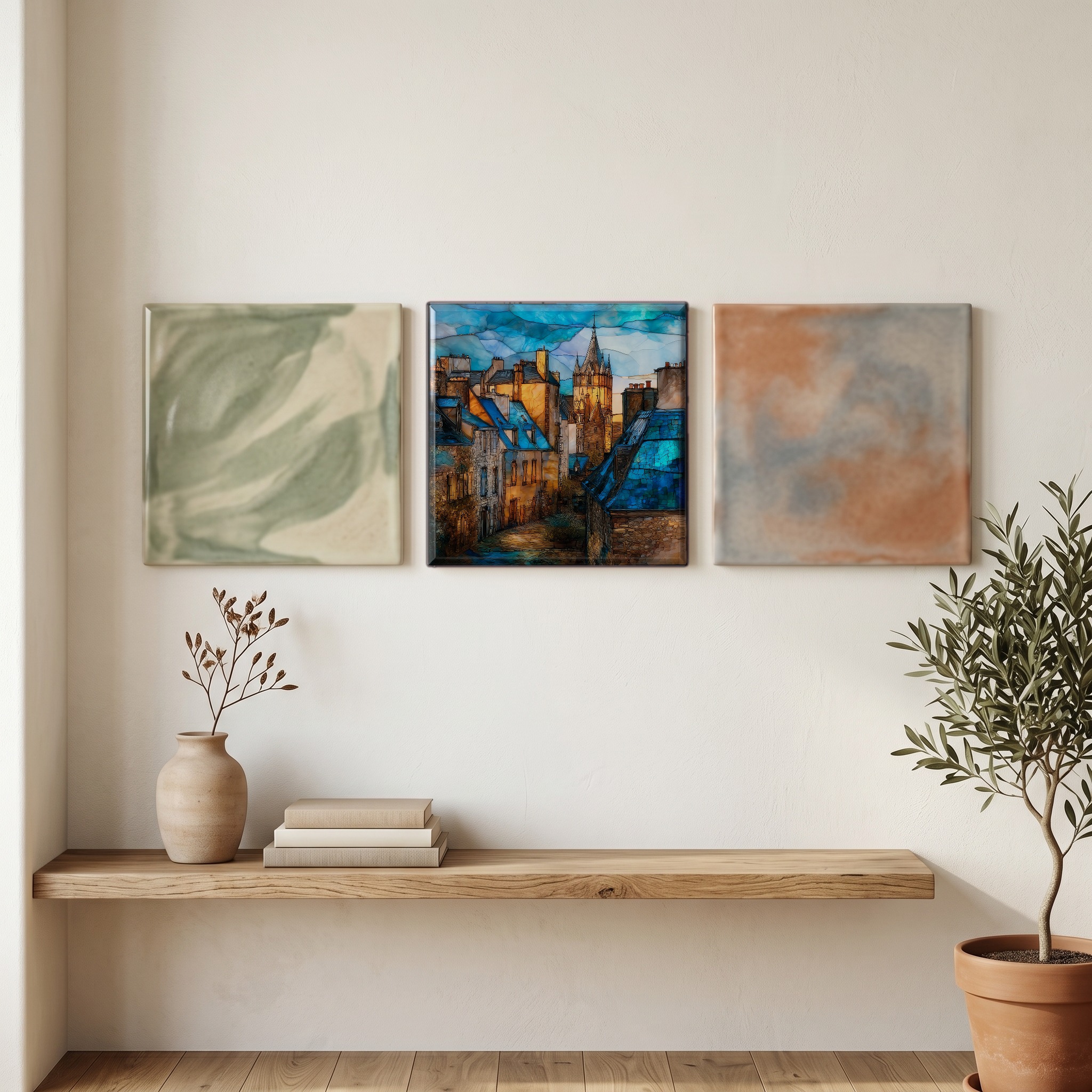
Three or five different vistas, hung together — a chapter of places you've been, or want to go.

about Saint-Malo Intra-Muros

The place, in three passes.

A little of what's known, in case you fall down the rabbit hole — or want to go see it yourself.
the place

Saint-Malo Intra-Muros is the walled old town of Saint-Malo, a port on the Cote d'Emeraude in Ille-et-Vilaine, Brittany, where the Rance estuary opens to the English Channel. The site is a granite headland that was effectively an island until the isthmus to the mainland, the Sillon, was permanently raised in the early eighteenth century. Saint-Malo was the home port of the French corsairs, including Robert Surcouf and Rene Duguay-Trouin, and the birthplace of the navigator Jacques Cartier, whose first voyage west sailed from here in 1534. The cathedral of Saint-Vincent, founded in the twelfth century, anchors the street grid. The commune today has about 46,000 residents.

the stone

The town reads as granite: walls, churches, houses, all in the local grey stone. The ramparts were extended and rebuilt under Sebastien Le Prestre de Vauban after 1689, the period that gave the fortifications their present line and the height that lets the sentry walk look down on the Channel. In August 1944, during the liberation, fighting and shellfire destroyed roughly eighty percent of the houses inside the walls. The town was rebuilt across the following two decades under the architect Louis Arretche, dressed back in granite cut to the proportions of the eighteenth-century streets it replaced. The seam between old wall and new house is, in places, hard to find.

the water

The Bay of Saint-Malo carries some of the largest tidal ranges in Europe; spring tides commonly reach about twelve metres, with extremes near fourteen. Twice a day the receding tide exposes a sand causeway to the rocky islet of Grand Be, where the writer Francois-Rene de Chateaubriand asked to be buried in 1848, facing the open sea. A neighbouring islet, Petit Be, holds a Vauban-era fort; both are walkable only at low water and cut off for hours either side. At the foot of the ramparts the Plage de Bon Secours has a stone-walled tidal pool that fills and empties on the same cycle. The current along the walls is real; the posted tide table is the local clock.

where
France · Saint-Malo, Ille-et-Vilaine
position
48.6495° N · 2.0259° W
the neighborhood

What's nearby.

A handful of named places within an hour's walk or short drive. Some we've already painted; some we will.
52 km E
Mont-Saint-Michel
abbey island
3 km W
Dinard
seaside town
14 km E
Cancale
oyster harbour
32 km W
Cap Frehel
sea cliffs
30 km S
Dinan
medieval town
N
Saint-Malo Intra-Muros
Mont-Saint-Michel
Dinard
Cancale
Cap Frehel
Dinan
common questions

What people ask.

A few questions we get about Saint-Malo Intra-Muros — and about bringing the piece home.
about the place

Saint-Malo is a port on the northern coast of Brittany, in France's Ille-et-Vilaine department, where the Rance estuary meets the English Channel. Intra-Muros is the walled old town set on a granite headland at the mouth of the river, reached from the modern town through a small set of gates.

The phrase is Latin for 'within the walls' and is the everyday name for the walled old town of Saint-Malo. It distinguishes the historic core from the surrounding modern districts of Saint-Servan, Parame, and Rocabey that grew up outside the ramparts.

During the Battle of Saint-Malo in August 1944, artillery and fires destroyed roughly eighty percent of the houses inside the walls. The town was rebuilt across the following two decades under the architect Louis Arretche, using granite cut to the proportions of the eighteenth-century streets it replaced.

The walls have older medieval foundations, but the line and height in place today were laid under Sebastien Le Prestre de Vauban, beginning in 1689. The work fortified Saint-Malo as a base for the French corsairs and gave the rampart walk its present view of the Channel and the offshore islets.

The Bay of Saint-Malo carries some of the largest tides in Europe. Spring-tide range commonly reaches about twelve metres; extreme tides approach fourteen. Local schedules govern access to the lower steps of the ramparts, the beaches, and the tidal islets offshore.

The writer Francois-Rene de Chateaubriand asked to be buried on Grand Be, the tidal islet just off the ramparts, facing the open sea. He was interred there in 1848. The grave is reached on foot only at low tide and is cut off from the mainland for hours either side.

Yes. The full circuit of the walls is open to the public and is the principal way visitors see the town. The walk passes the cathedral square, the corsair houses, and the gates onto the beaches; the views give onto Grand Be, Petit Be, and Fort National across the water.

about the piece in your home

It carries that way. The piece reads as Saint-Malo to anyone who knows the place: the granite walls, the tide line at their foot, the seam between the rebuilt town and the old fortification. A Small or Medium with a handwritten note from the studio is the usual choice.

The palette is grey granite, deep Channel blue, and warm interior light, so it sits well in Coastal-modern, Modern Maritime, and warm-Minimalist rooms. It also works in a more traditional French or Anglo-Atlantic interior, where the rampart geometry reads as architectural rather than decorative.

It maps to the European Coastal-modern direction that has been pulling away from bright Mediterranean palettes toward darker Atlantic and Channel tones: Brittany, Cornwall, the Hebrides. The walled-town subject also fits the architectural-art turn in modern interiors.

Above a standard sofa, the Large reads at a single-image scale; for a fuller wall, a 4-tile Mural carries the architecture and a 9-tile Mural lets the rampart line run wide across the room. Above a console table, the Medium is the usual fit.

Yes, in the Dura Satin or Matte finish, both of which are scratch-resistant and suited to vertical installation in wet or steam-prone rooms. The Glossy finish is for framed wall pieces in living rooms, bedrooms, and studies, away from continuous moisture.

Microfibre cloth and water. Nothing else is needed. The colour is slowly infused into the ceramic surface under high heat and pressure and rests beneath a thin protective finish, so the surface stays itself with ordinary care.

Yes. Every WenderVista piece is original to the studio. The visual language is Reid Wender's: the stained-glass colour fields, the alcohol-ink water and sky, the oil-painted texture, all hand-finished in-house. There is no licensing and no third-party imagery.

if this one stayed with you

A few you might also love.

Hand-picked by the eye that found Sorapis. Same air, same kind of quiet.