Wender·Vista
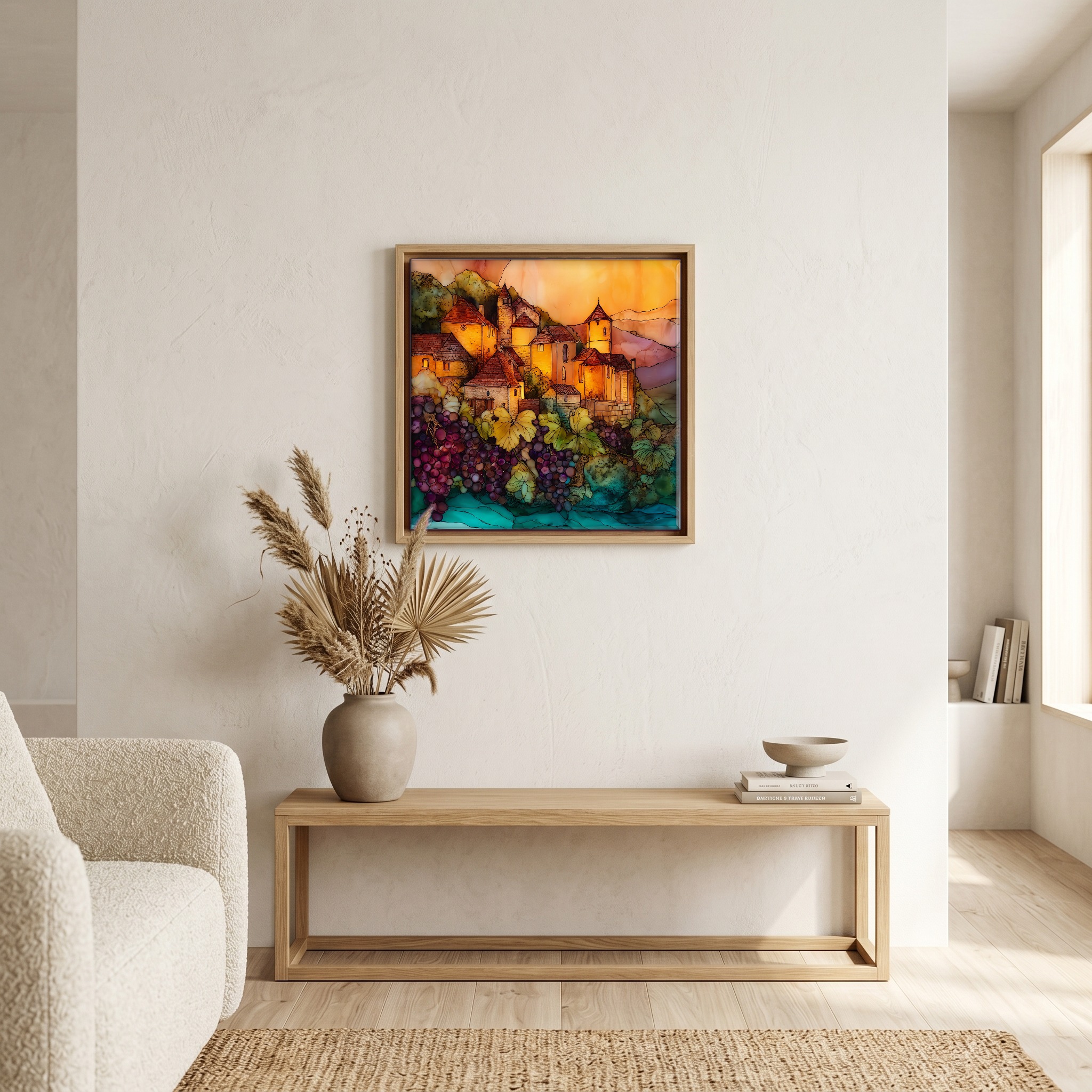
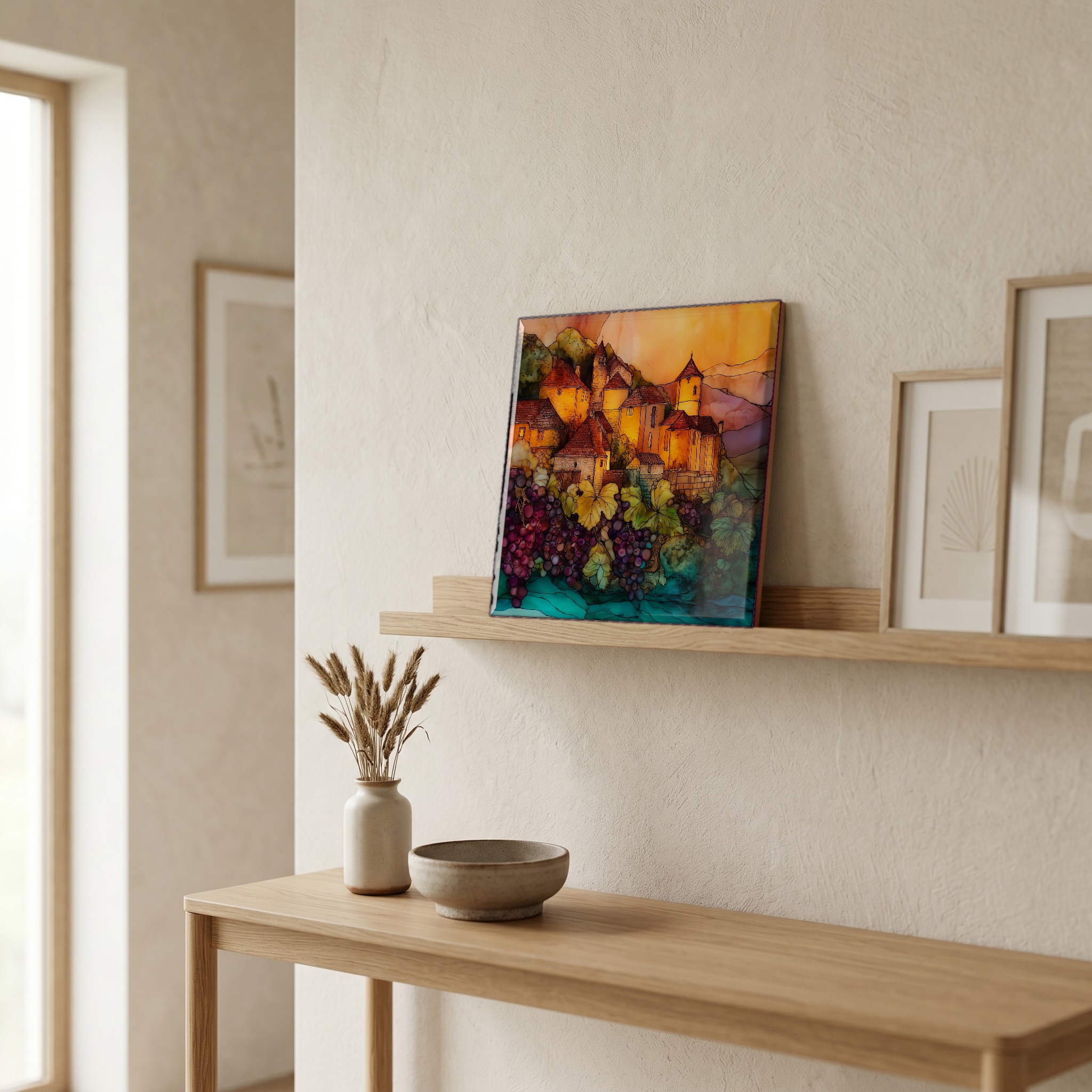
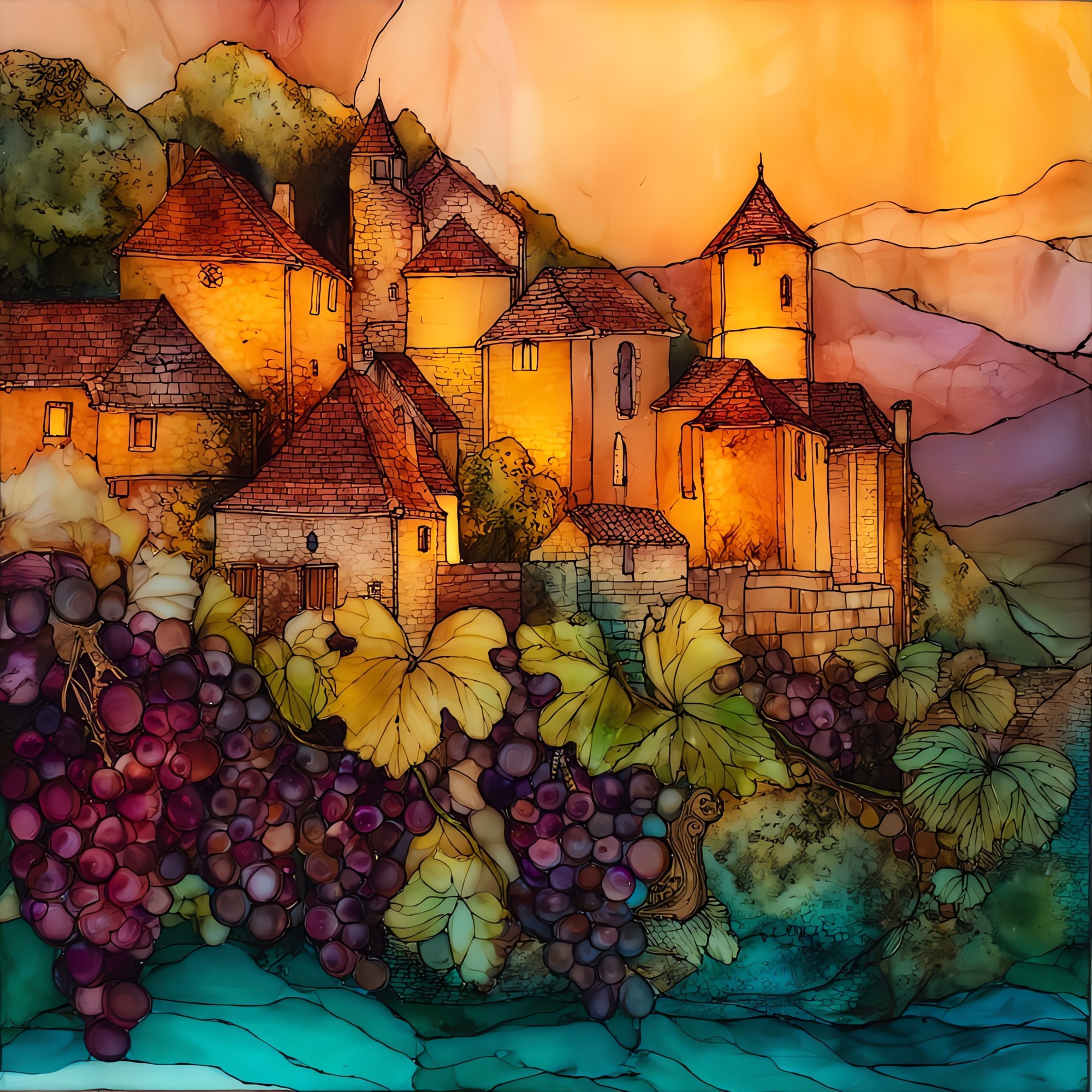
Saint-Emilion Vineyard
shown on ceramic, 12-inch tileFrance
on the right bank of the Dordogne, east of Bordeaux

Saint-Emilion Vineyard

the colour the vines turn the week before harvest.

Where it lives

Not only on a wall.

A small tile on the nightstand catching the morning. A larger one above the fire. Yours, wherever you spend the slow hours.
Above the bench, in a warm oak surround.
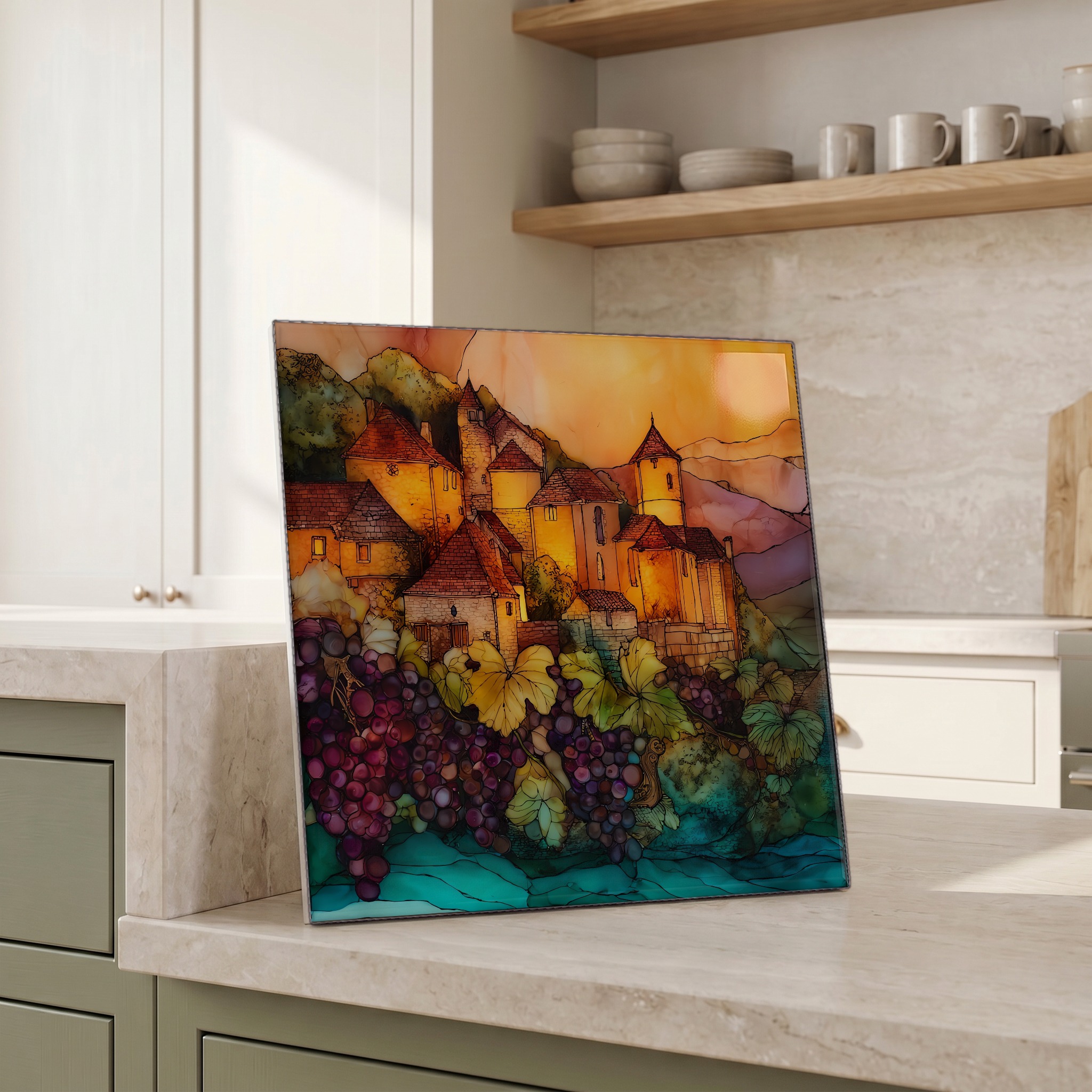
Beside the kettle, propped on the counter.
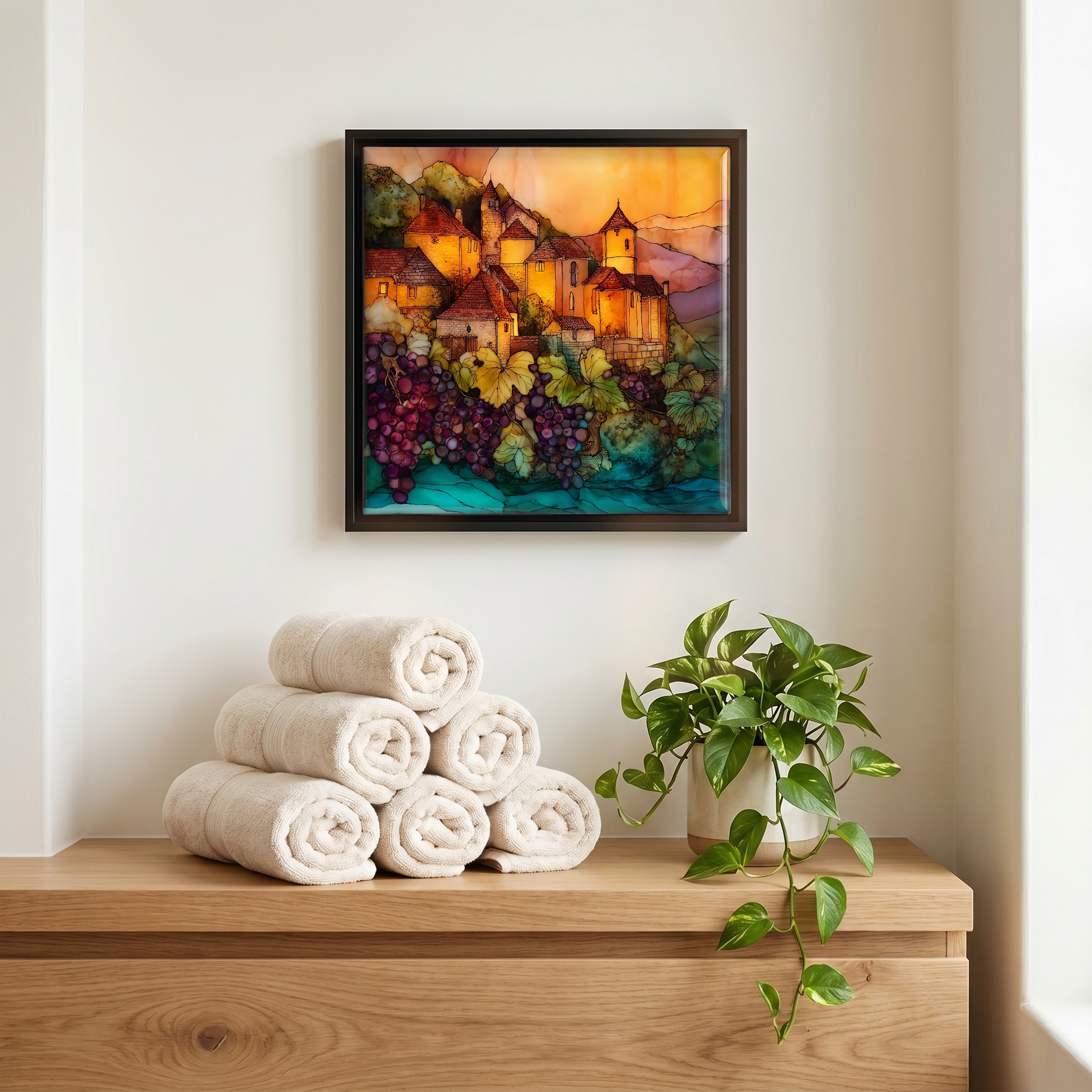
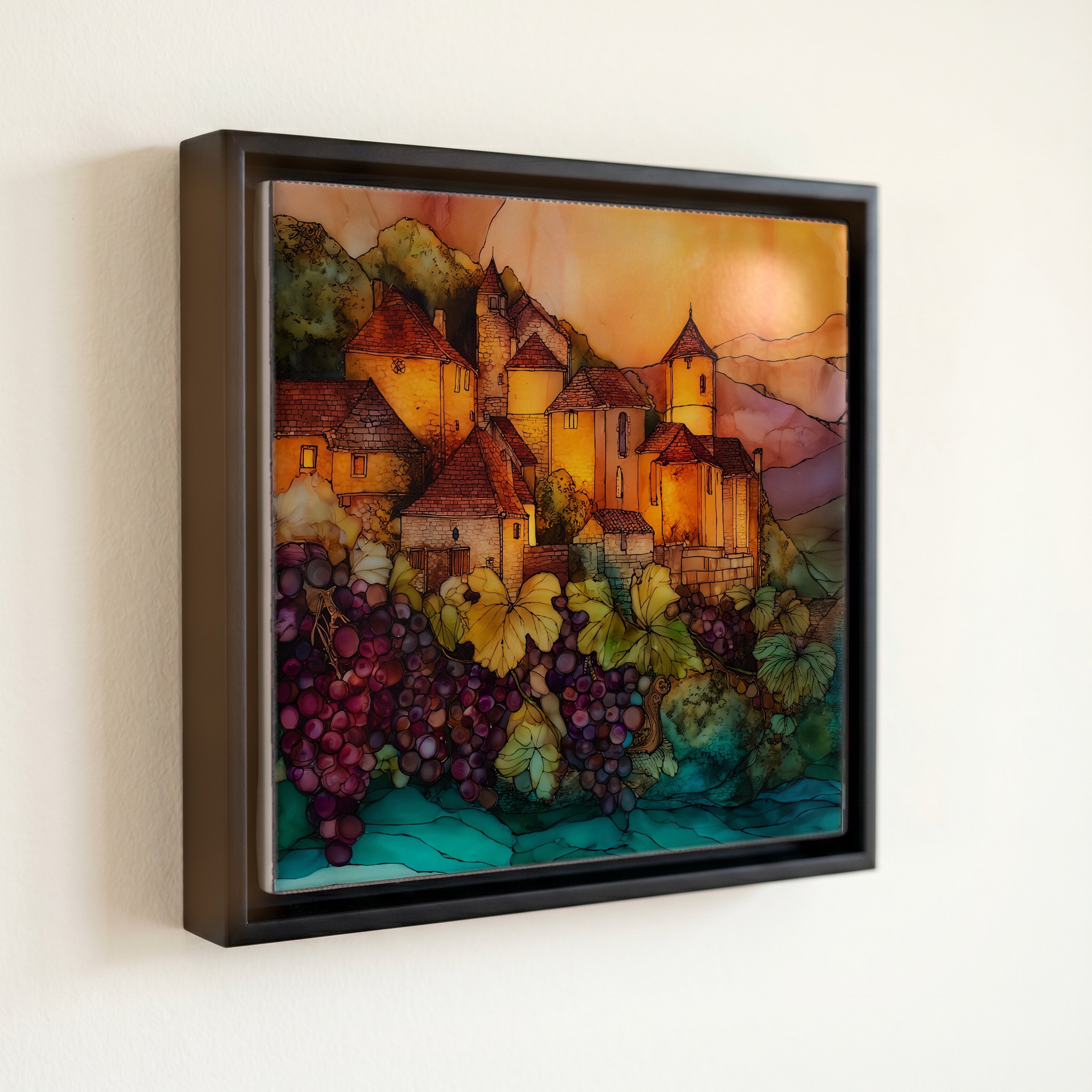
Above the linens, in a slim black surround.
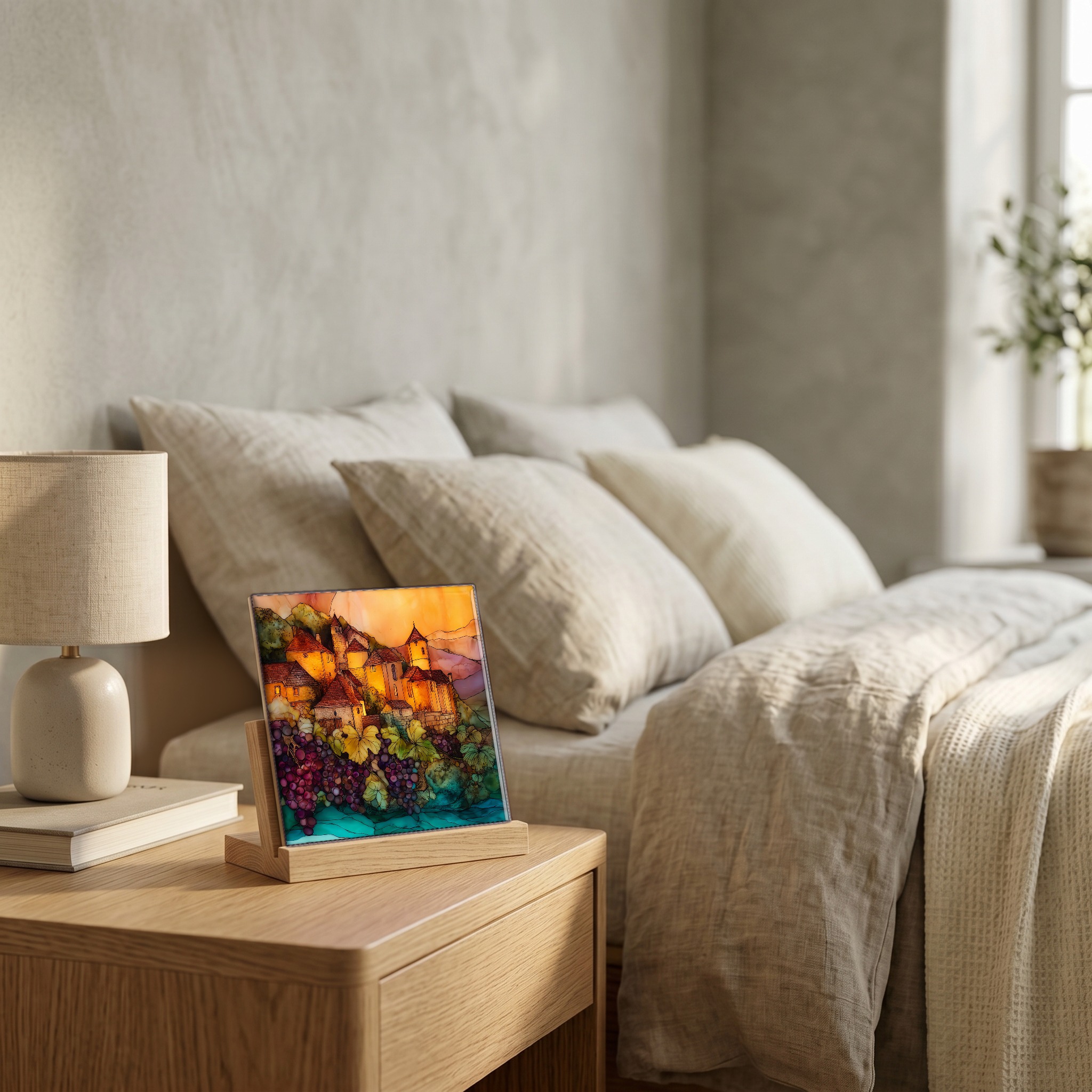
On the nightstand, on a light oak stand.
On a picture ledge, where the light comes in.
a note from the studio

A walled village on a limestone hill east of Bordeaux, with the vineyards that gave the wine its name running off in every direction. The cellars run beneath the streets — kilometres of quarry galleries cut out of the rock since the twelfth century, now used for ageing barrels. In September the rows turn copper and the trucks come in. Above the village, the bell tower of a church cut whole out of a single block of stone. The same Merlot, the same limestone, the same long pull of the harvest.
from the studio
shown in a slim black floating frame · 6 × 6 in
— bring it home

Saint-Emilion Vineyard, on ceramic.

Each tile is finished by hand in our Knoxville studio. Artwork is slowly infused into the ceramic surface under high heat and pressure, and rests beneath a thin glossy finish. The colour lives in the surface, not on top of it.

What kind of piece?
One tile — square or rectangle.
How big?
the popular one — counter, shelf, nightstand
6 × 6 in · 15 cm · 1.6 lb
Surface finish
A clear glossy finish — the artwork reads as if under resin. Ideal for show-pieces and framed wall art.
How it sits
A hidden cleat — sits ¼″ proud of the wall.
$58
Hand-finished and shipped from our studio at the foot of the Smokies. On your wall in about ten days.
size
6 × 6 in
15 cm
weighs
1.6 lb
solid in the hand
surface
ceramic, hand-finished
art rests beneath a thin glossy finish
from
Knoxville, TN
our family studio, at the foot of the Smokies
— start a Coaster Set

Pick any four 4-inch tiles — National Parks you've been to, a Smokies set, the four seasons of one place. $ for a set of , cork-backed, ready to live on the table.
comes gift-ready
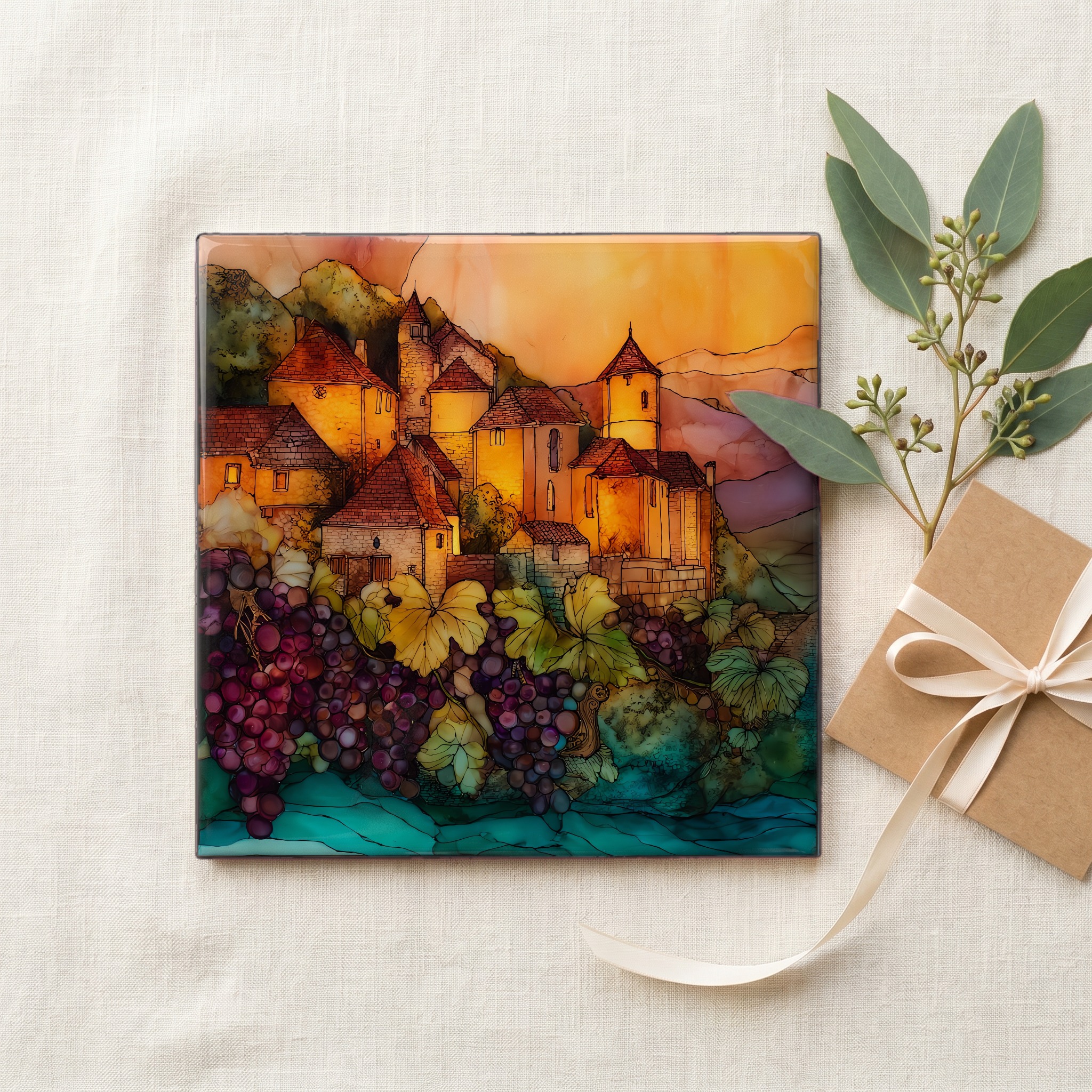
comes gift-ready

Each tile ships in a kraft box, tied with cream ribbon, with a handwritten note from the studio if you'd like to add one.
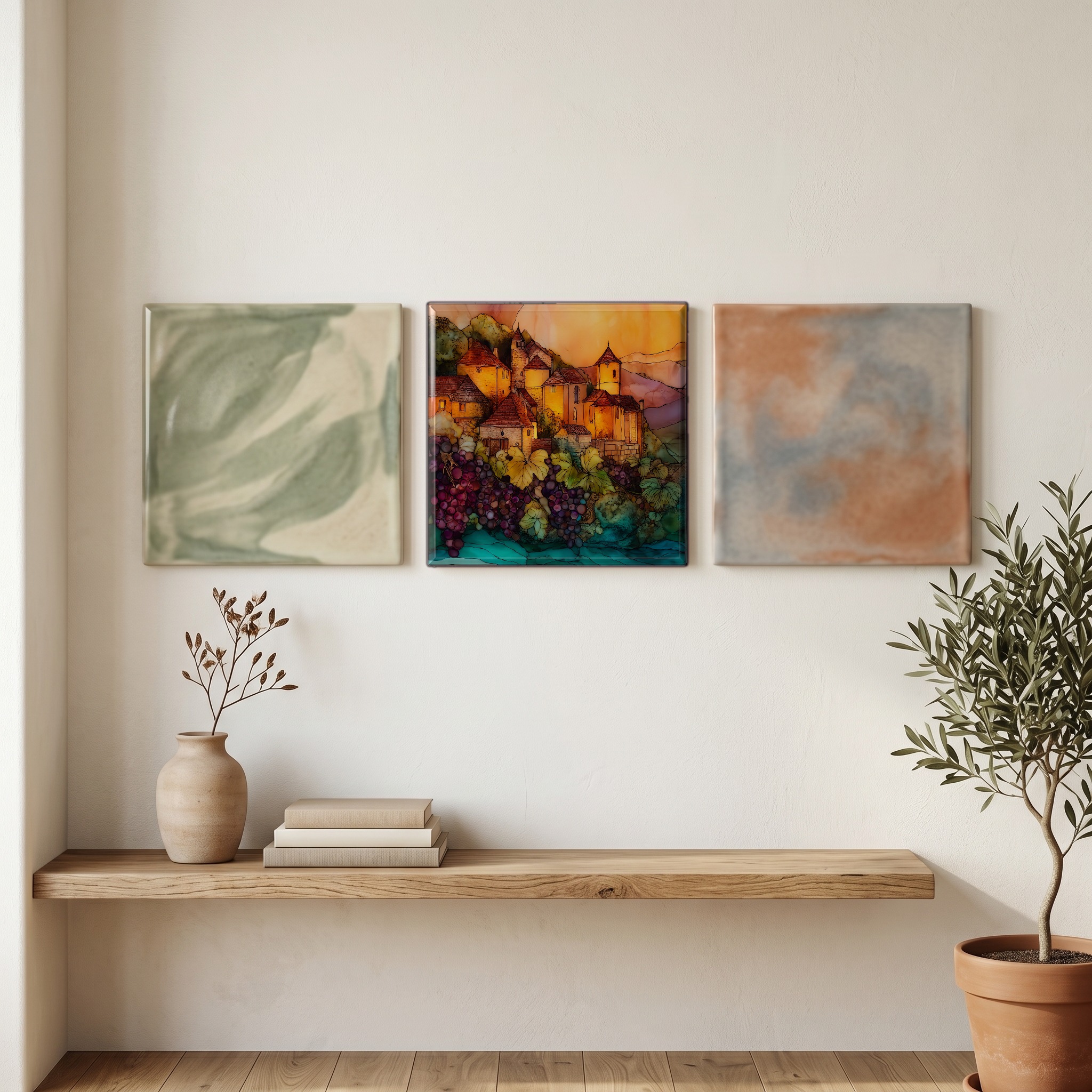
or build a grouping
or build a grouping

Three or five different vistas, hung together — a chapter of places you've been, or want to go.

about Saint-Emilion Vineyard

The place, in three passes.

A little of what's known, in case you fall down the rabbit hole — or want to go see it yourself.
the place

Saint-Émilion sits on a limestone plateau in the Gironde department of southwestern France, about 40 kilometres east of Bordeaux on the right bank of the Dordogne. The medieval village takes its name from a Breton monk who arrived in the eighth century and lived as a hermit in a cave cut into the cliff. The Jurisdiction of Saint-Émilion — 7,847 hectares across eight communes — became the first vineyard landscape inscribed on the UNESCO World Heritage List in 1999. The appellation produces predominantly Merlot, with Cabernet Franc and small amounts of Cabernet Sauvignon, on soils ranging from the limestone plateau to the sand and gravel of the lower slopes.

the stone

The whole village rests on a single block of asteriated limestone, into which monks of the eleventh and twelfth centuries cut the Église Monolithe — at thirty-eight metres long and twenty metres wide, the largest underground church in Europe. Beneath the streets run kilometres of quarry galleries, the carrières, from which the same stone was extracted for building. The galleries now hold barrels: their stable cool temperature and high humidity suit the ageing of wine. The vines on the plateau above reach the same limestone shelf, and the mineral structure shows in the glass, the chalky lift that wine writers attribute to the terroir of the Saint-Émilion plateau.

the season

The wine year in Saint-Émilion is marked twice in public by the Jurade, a confraternity first chartered in 1199 and refounded in 1948. In June the Jurade proclaims the Fête de Printemps, a benediction of the new vintage from the King's Tower. In September it announces the Ban des Vendanges from the same tower, signalling the start of harvest across the appellation. The vendange typically runs from late September into early October, with Merlot picked first and Cabernet Franc last. Spring brings flowering in May; winter is pruning weather. The vineyards are at their fullest green in late June and turn copper just before the trucks come in.

where
France · Saint-Émilion, Gironde
position
44.8939° N · 0.1556° W
the neighborhood

What's nearby.

A handful of named places within an hour's walk or short drive. Some we've already painted; some we will.
5 km NW
Pomerol
wine appellation
8 km W
Libourne
town
3 km S
Dordogne River
river
14 km ESE
Castillon-la-Bataille
battlefield town
40 km W
Bordeaux
city
N
Saint-Emilion Vineyard
Pomerol
Libourne
Dordogne River
Castillon-la-Bataille
Bordeaux
common questions

What people ask.

A few questions we get about Saint-Emilion Vineyard — and about bringing the piece home.
about the place

Saint-Émilion is a medieval village in the Gironde department of southwestern France, about 40 kilometres east of Bordeaux on the right bank of the Dordogne River. The surrounding vineyards cover roughly 7,800 hectares across eight communes.

In 1999 UNESCO inscribed the Jurisdiction of Saint-Émilion as the first vineyard landscape on the World Heritage List, recognising the continuous wine-growing tradition since Roman times, the medieval village above the vineyards, and the monolithic underground architecture cut from local limestone.

The Église Monolithe is the largest underground church in Europe, carved out of a single block of limestone between the eleventh and twelfth centuries. It is thirty-eight metres long and twenty metres wide. The bell tower above the village marks its position from outside.

The appellation produces Bordeaux red wine, primarily from Merlot with Cabernet Franc and smaller amounts of Cabernet Sauvignon. The classification ranks the top estates as Premier Grand Cru Classé A and B, then Grand Cru Classé, and is revised approximately every ten years.

The vendange usually runs from late September into early October, depending on the vintage. The Jurade, a wine confraternity dating to 1199, formally proclaims the Ban des Vendanges from the King's Tower to signal the start of harvest across the appellation.

The village takes its name from a Breton monk named Émilion who arrived in the eighth century and lived as a hermit in a cave in the limestone cliff. The town grew around the hermitage, with most of its surviving stone dating from the twelfth and thirteenth centuries.

The cellars, called carrières, are quarry galleries cut over centuries to extract building stone. Their stable cool temperature and high humidity now serve the châteaux for ageing wine in barrel and bottle. Some galleries are open to the public on guided tours.

about the piece in your home

It carries well as a gift for anyone with a connection to Saint-Émilion or to Bordeaux more broadly — a sommelier, a long-time client of a particular château, a friend who keeps a cellar. A Keepsake or Small with a handwritten note from the studio is the usual choice.

The painted limestone tones and the deep wine reds suit French Country, Old World, and warm Maximalist rooms. The jewel-tone reds also read well against linen-white walls in a Modern Provençal or Wine Country interior, where a single Medium or Large becomes the focal point.

A single Large reads well above a console; for a sofa the Mural format (four tiles) is the usual scale, and the nine-tile Mural is the right size for a long dining-room wall. The Triptych works for narrower verticals like a stairwell or a hallway end.

Yes, in either Dura Satin or Matte finish. The Dura Satin handles steam, splashes, and the occasional wipe-down. A four-tile Mural makes a strong backsplash behind a wine bar or a tasting bench, and the colour deepens in warm lamplight.

A soft microfibre cloth and water are enough for the Glossy finish. For Dura Satin or Matte in a kitchen or wine room, add a drop of mild dish soap if needed. Avoid abrasive pads and ammonia-based cleaners; the colour lives in the surface and is durable but not industrial.

Yes. Every piece comes out of our Knoxville studio. Reid paints in a distinctive stained-glass and alcohol-ink visual language that belongs to the studio alone, and the painting is then slowly infused into the ceramic surface under high heat and pressure, beneath a thin glossy finish. The work is not licensed to anyone.

It suits wine bars, tasting rooms, and private cellars. The four-tile Mural scales for a feature wall; a single Large works behind a tasting bar; the Coaster Set lives directly on the bar top. All three finishes are food-safe, and Dura Satin holds up best to a working room.

if this one stayed with you

A few you might also love.

Hand-picked by the eye that found Sorapis. Same air, same kind of quiet.