Wender·Vista
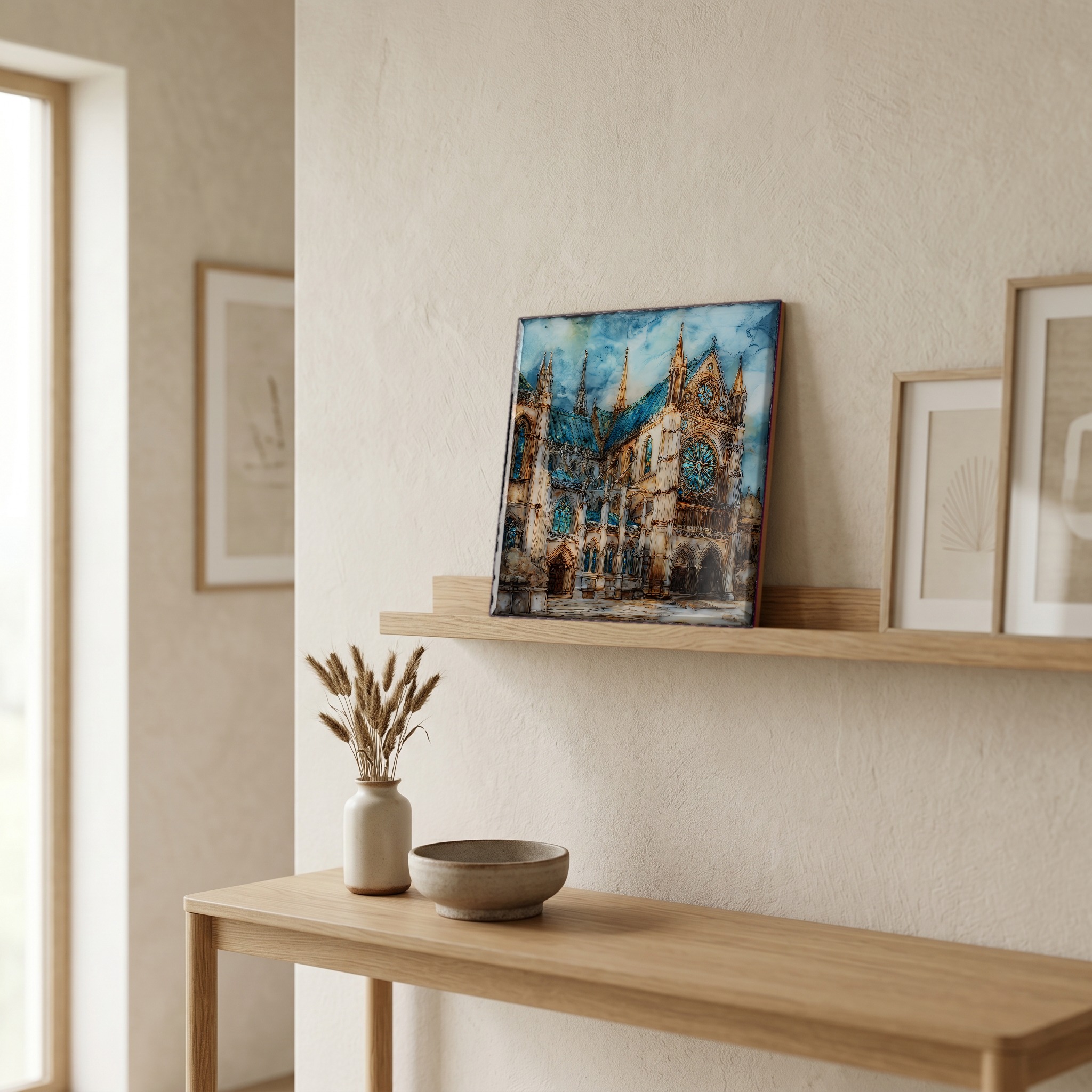
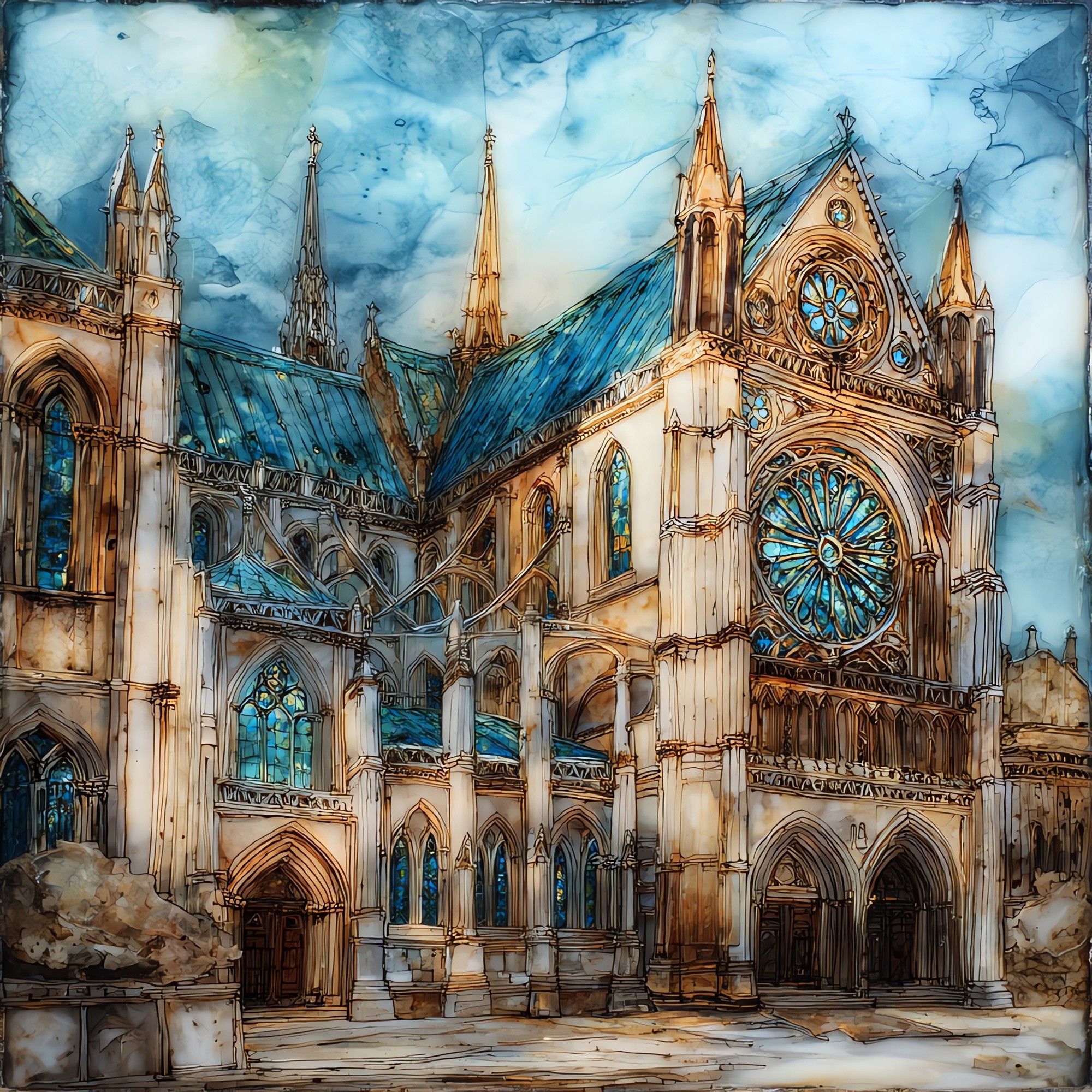
Saint-Denis Basilica
shown on ceramic, 12-inch tileFrance
in the inner suburbs just north of Paris

Saint-Denis Basilica

where the kings of France sleep in coloured light.

Where it lives

Not only on a wall.

A small tile on the nightstand catching the morning. A larger one above the fire. Yours, wherever you spend the slow hours.
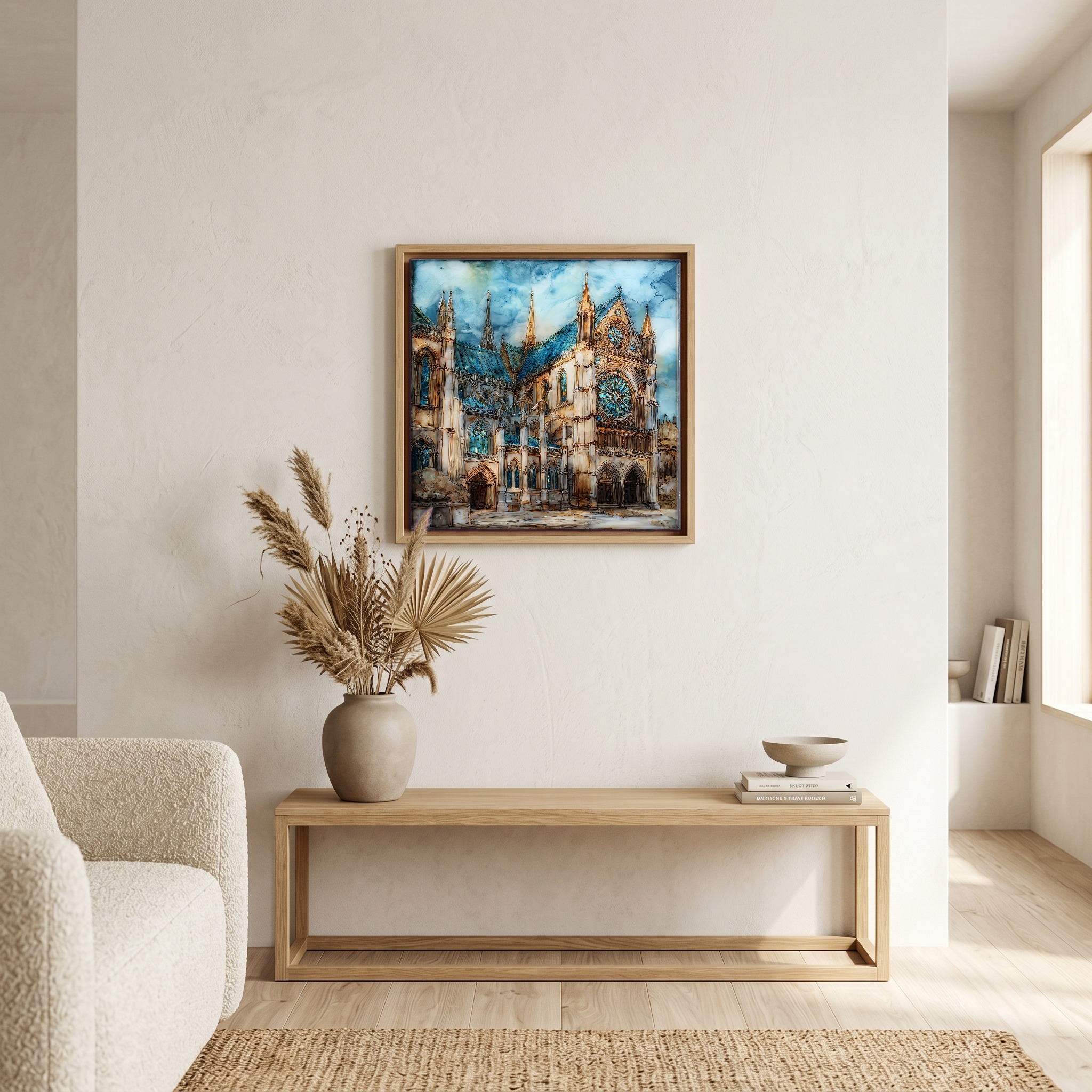
Above the bench, in a warm oak surround.
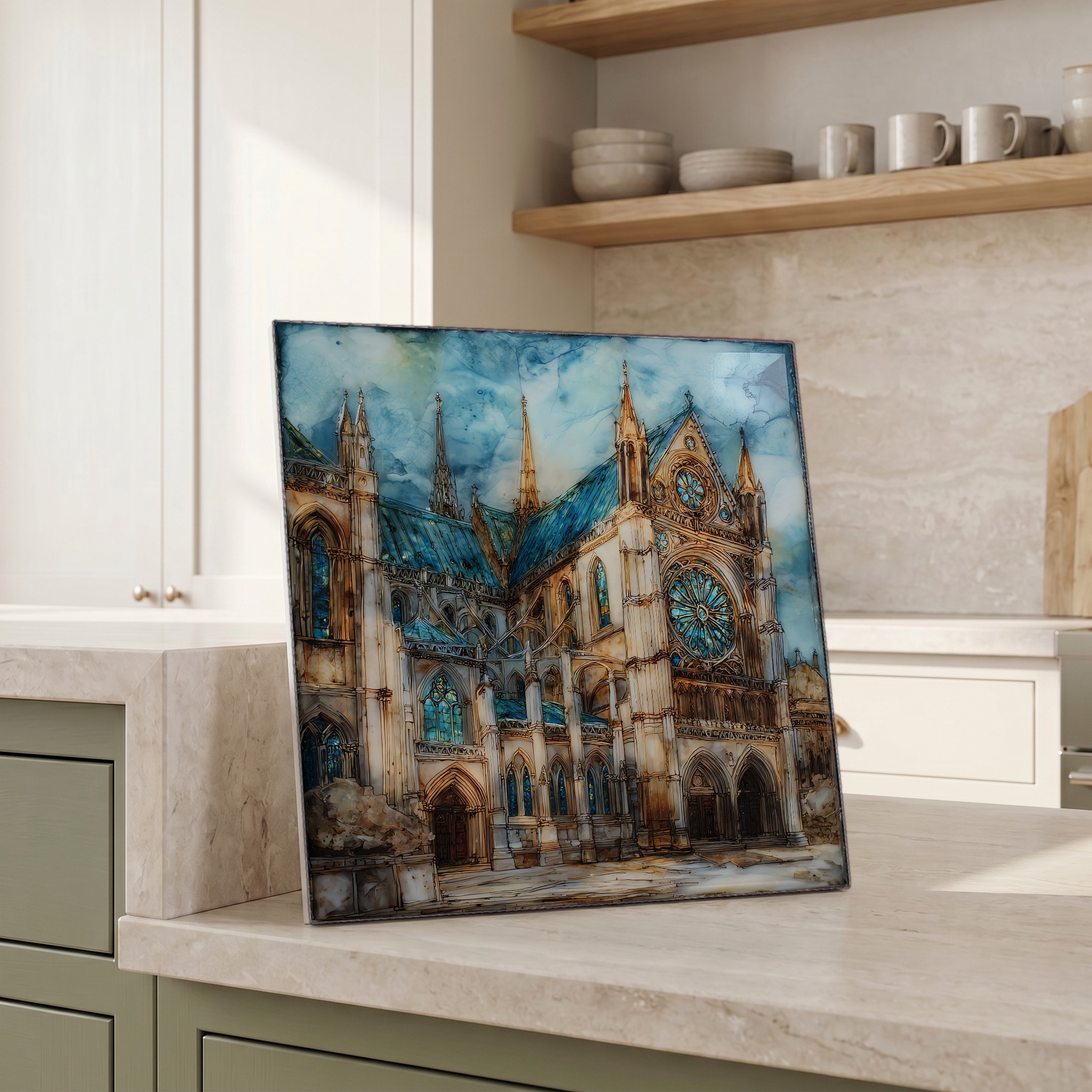
Beside the kettle, propped on the counter.
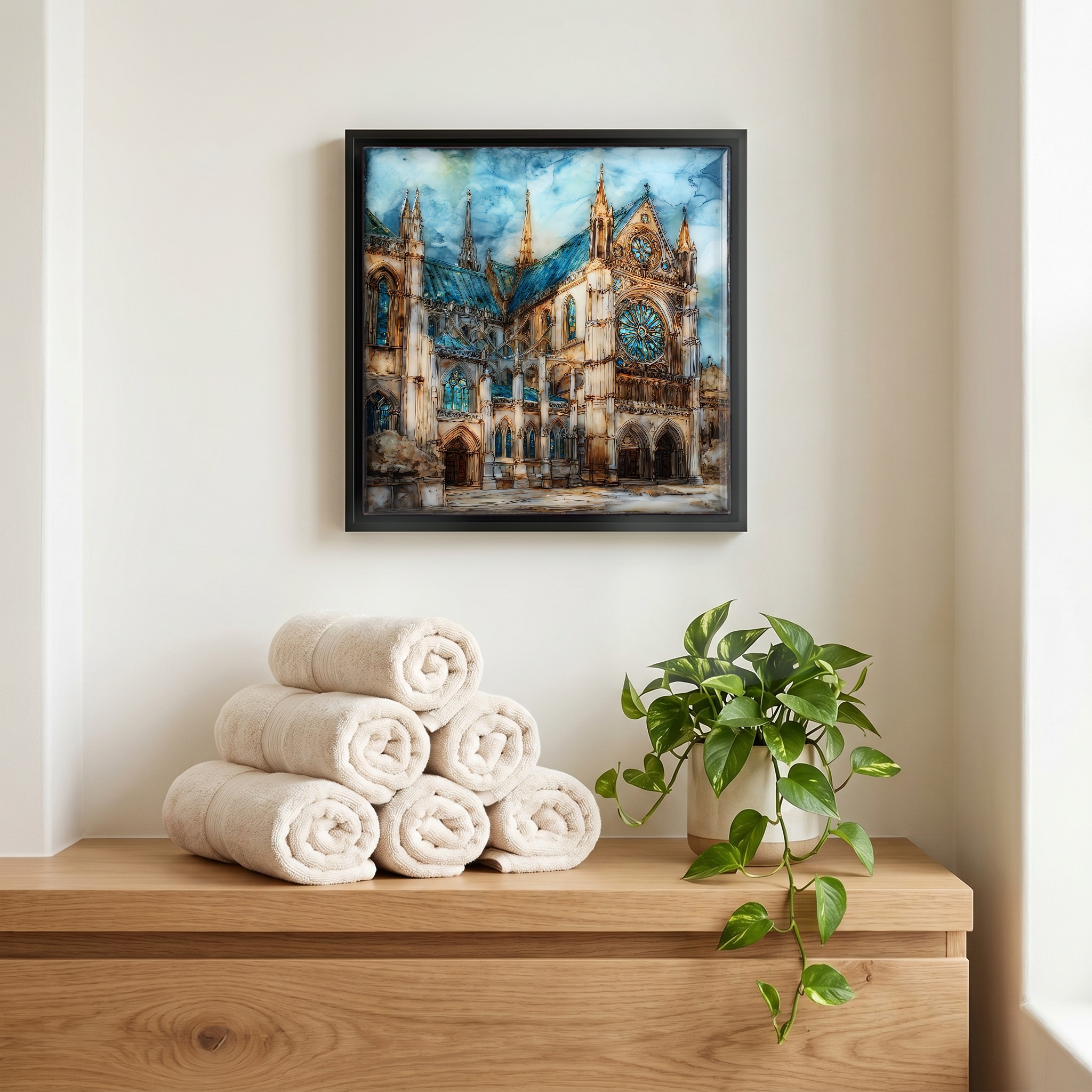
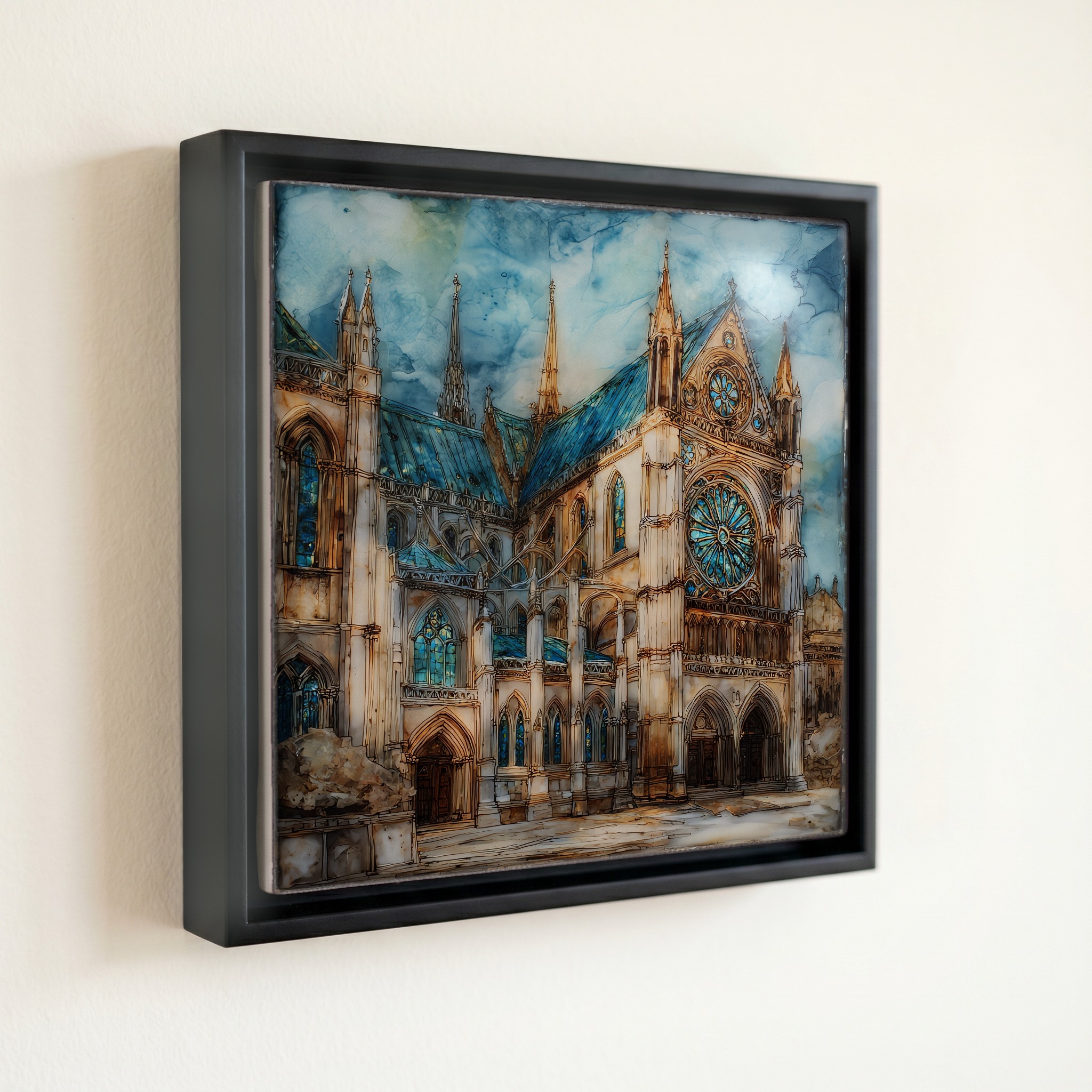
Above the linens, in a slim black surround.
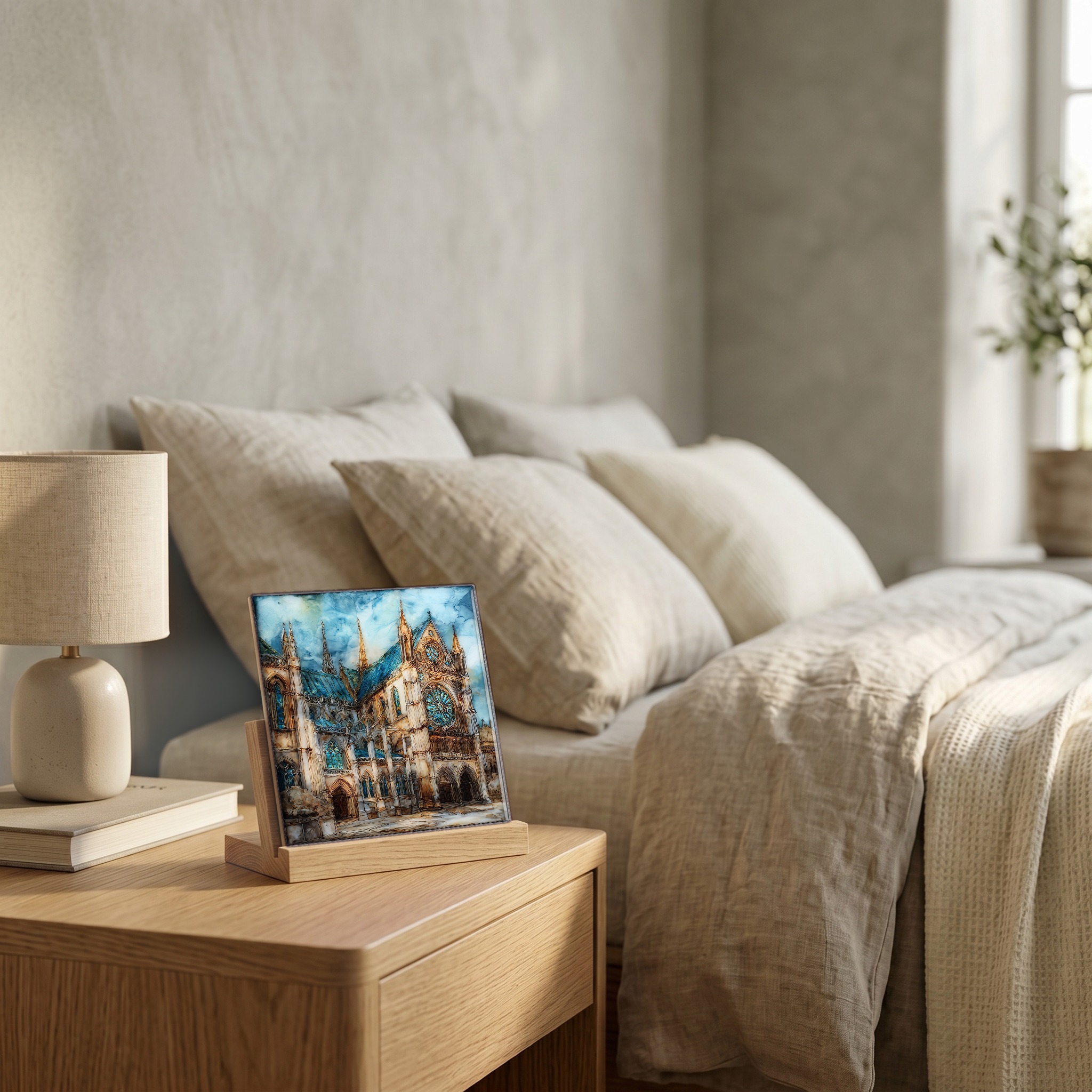
On the nightstand, on a light oak stand.
On a picture ledge, where the light comes in.
a note from the studio

The church where Gothic begins, and the place the kings of France went home to. Abbot Suger rebuilt the choir here in the 1140s, asked the walls to step back, and let the colour in. Forty-three kings and thirty-two queens lie carved in stone below the new light: Dagobert, the Capetians, Louis XIV, Marie Antoinette, returned to the crypt after the Revolution stripped the abbey of its tombs. Visitors walk the ambulatory quietly. The colour does most of the talking.
from the studio
shown in a slim black floating frame · 6 × 6 in
— bring it home

Saint-Denis Basilica, on ceramic.

Each tile is finished by hand in our Knoxville studio. Artwork is slowly infused into the ceramic surface under high heat and pressure, and rests beneath a thin glossy finish. The colour lives in the surface, not on top of it.

What kind of piece?
One tile — square or rectangle.
How big?
the popular one — counter, shelf, nightstand
6 × 6 in · 15 cm · 1.6 lb
Surface finish
A clear glossy finish — the artwork reads as if under resin. Ideal for show-pieces and framed wall art.
How it sits
A hidden cleat — sits ¼″ proud of the wall.
$58
Hand-finished and shipped from our studio at the foot of the Smokies. On your wall in about ten days.
size
6 × 6 in
15 cm
weighs
1.6 lb
solid in the hand
surface
ceramic, hand-finished
art rests beneath a thin glossy finish
from
Knoxville, TN
our family studio, at the foot of the Smokies
— start a Coaster Set

Pick any four 4-inch tiles — National Parks you've been to, a Smokies set, the four seasons of one place. $ for a set of , cork-backed, ready to live on the table.
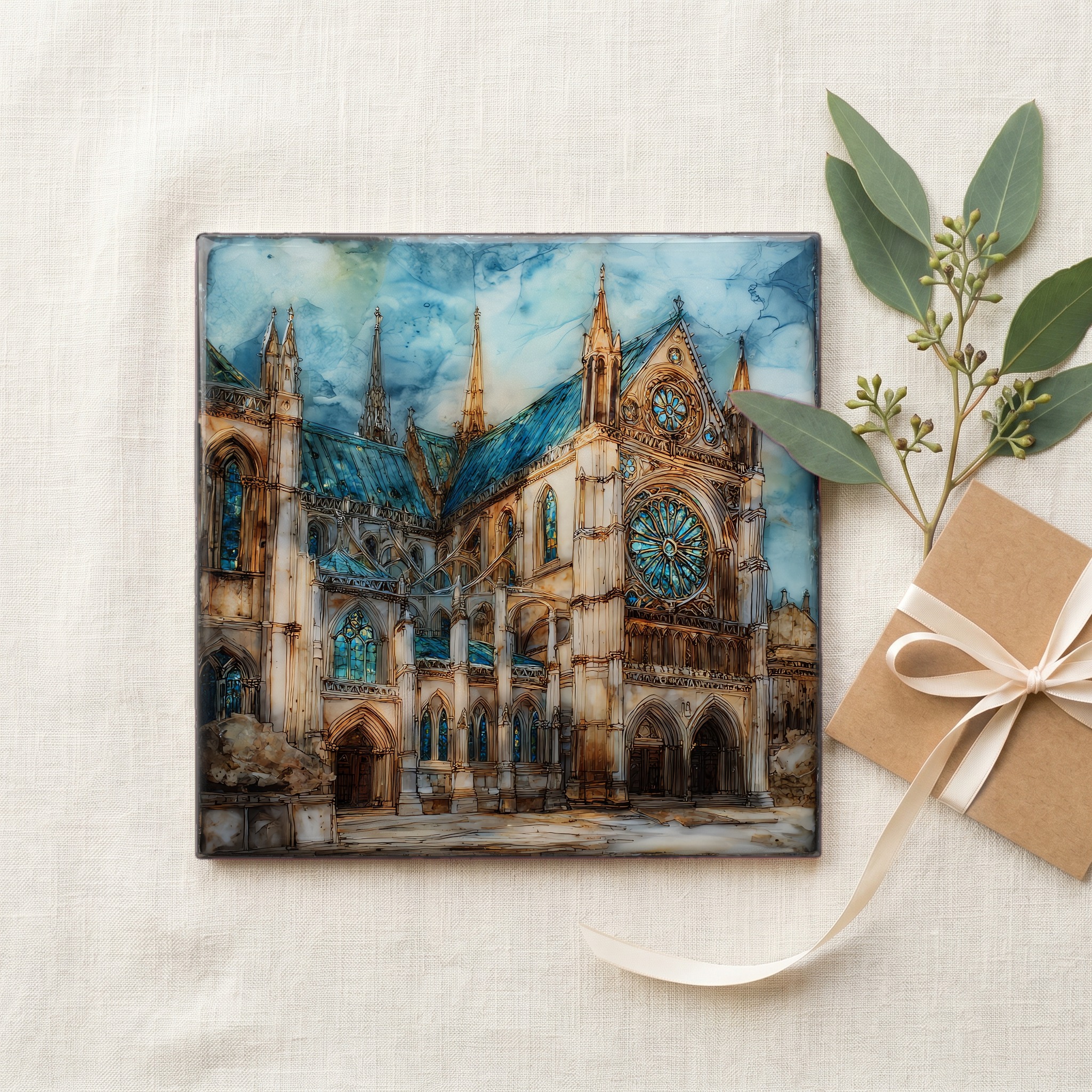
comes gift-ready
comes gift-ready

Each tile ships in a kraft box, tied with cream ribbon, with a handwritten note from the studio if you'd like to add one.
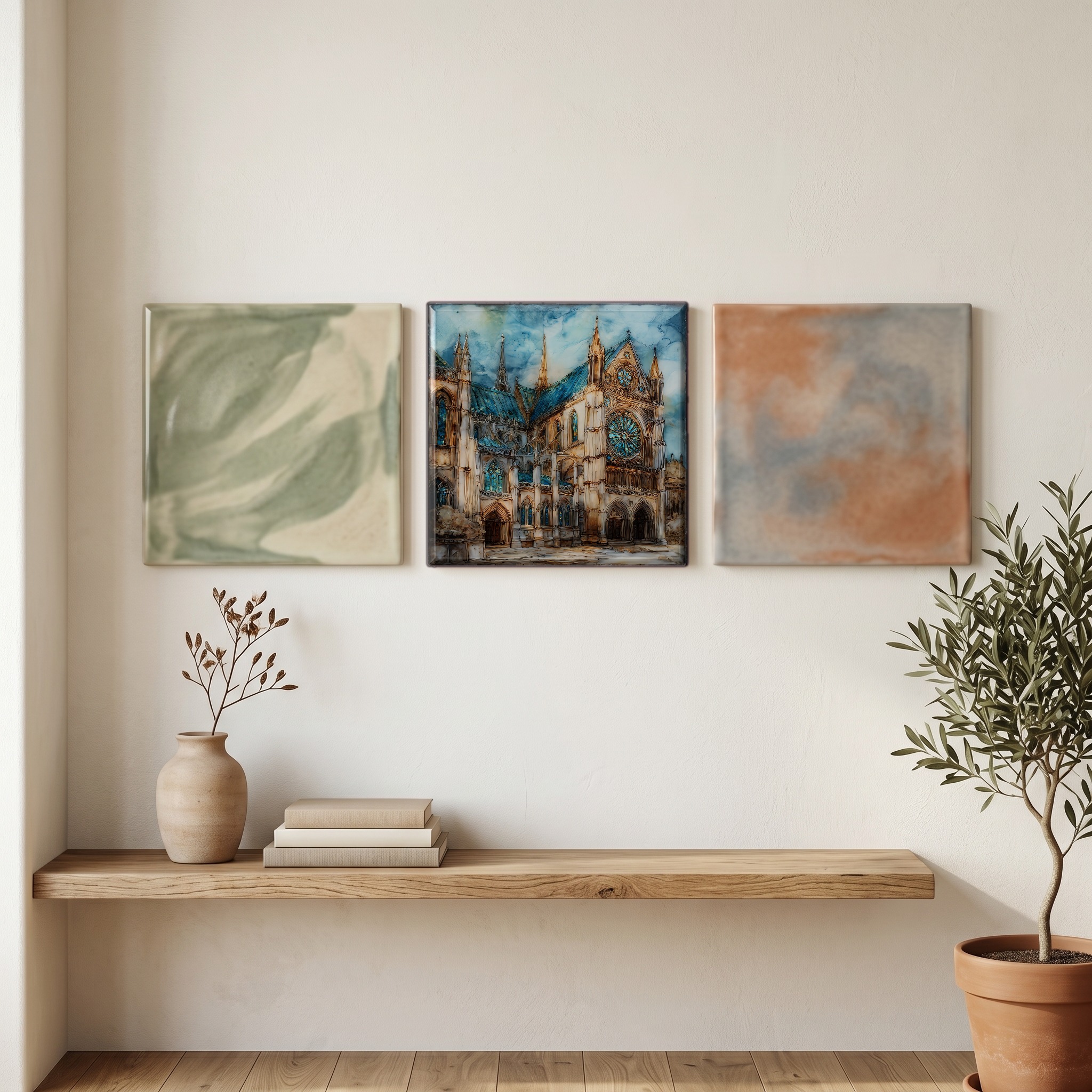
or build a grouping
or build a grouping

Three or five different vistas, hung together — a chapter of places you've been, or want to go.

about Saint-Denis Basilica

The place, in three passes.

A little of what's known, in case you fall down the rabbit hole — or want to go see it yourself.
the place

Saint-Denis sits at the edge of Paris, nine kilometres north of Notre-Dame, in the department of Seine-Saint-Denis. The basilica is reached from central Paris in about twenty minutes on Métro Line 13, alighting at the Basilique de Saint-Denis station. The church stands on the spot where, by tradition, the third-century missionary Denis was buried after his martyrdom on Montmartre; a Benedictine abbey was founded over the grave in the seventh century by Dagobert I, who chose to be buried there himself. The town grew around the abbey, and the abbey grew into the cathedral of the new Diocese of Saint-Denis, established in 1966. Centre des monuments nationaux now stewards the royal necropolis.

the stone

Saint-Denis is where Gothic architecture begins. Between 1135 and 1144, Abbot Suger rebuilt the west façade and the choir using pointed arches, ribbed vaults, and a new ambulatory geometry that let the wall step back behind walls of stained glass. The choir was consecrated on 11 June 1144 in the presence of King Louis VII. The thirteenth-century nave, completed under Saint Louis, lifted the principle further: tall lancet windows and a triforium of glass replace much of the masonry. Above the west portal sits the earliest rose window in any French church. The building names a thousand years of European architecture after itself.

the visit

The basilica's nave remains a working Catholic church and is open to visitors free of charge; the royal necropolis behind the altar requires a ticket, currently around ten euros. Visiting hours run from ten in the morning to roughly five in winter and six fifteen in summer, with last entry thirty minutes before closing and Sunday mornings reserved for mass. Visitors meet seventy carved royal effigies, the Renaissance tombs of Louis XII and Anne of Brittany, Henri II and Catherine de' Medici, and the crypt where the bones of the kings were reburied in 1817 after the Revolution. Centre des monuments nationaux runs the site; tickets can be booked online.

where
France · Saint-Denis, Seine-Saint-Denis
elevation
33 m · 108 ft
position
48.9362° N · 2.3596° E
the neighborhood

What's nearby.

A handful of named places within an hour's walk or short drive. Some we've already painted; some we will.
6 km S
Sacré-Cœur Basilica
basilica
9 km S
Notre-Dame de Paris
cathedral
9 km S
Sainte-Chapelle
royal chapel
6 km S
Montmartre
hill district
N
Saint-Denis Basilica
Sacré-Cœur Basilica
Notre-Dame de Paris
Sainte-Chapelle
Montmartre
common questions

What people ask.

A few questions we get about Saint-Denis Basilica — and about bringing the piece home.
about the place

Saint-Denis is the birthplace of Gothic architecture and the burial place of nearly every French king from Dagobert I in the seventh century to Louis XVIII in the nineteenth. Abbot Suger's reconstruction of the choir between 1135 and 1144 introduced the pointed arch, the ribbed vault, and walls of stained glass to monumental design.

Forty-three French kings, thirty-two queens, and sixty-three princes and princesses are buried in the basilica, alongside ten servants of the crown. Dagobert I was the first; the Bourbon kings Louis XIV, Louis XV, and Louis XVI rest in the crypt, with Marie Antoinette returned to her husband's side in 1815.

Abbot Suger rebuilt the west façade between 1135 and 1140, then the choir between 1140 and 1144. The new choir was consecrated on 11 June 1144 in the presence of King Louis VII and is generally treated as the first fully Gothic building in Europe.

In August 1793 revolutionaries opened the royal tombs and threw the remains into two mass pits in the abbey grounds. Most of the marble effigies survived. After the Restoration, the remains were exhumed and reburied in the crypt in 1817; the kings now rest there in a common ossuary.

Métro Line 13 runs from central Paris to the Basilique de Saint-Denis station; the journey takes about twenty minutes and the basilica is a three-minute walk from the exit. RER D from Gare du Nord also stops at Saint-Denis. Drivers can park at the town hall lot next door.

It is both. The church has held the rank of minor basilica since the medieval period and became a cathedral in 1966 when the Diocese of Saint-Denis was created. The official name is the Basilique-Cathédrale de Saint-Denis.

The crypt below the choir holds the foundations of the seventh-century abbey founded by Dagobert I, with archaeological layers going back to the early Christian burial of Saint Denis. The western towers and façade are Suger's work from the 1130s; the upper nave is thirteenth-century.

about the piece in your home

It carries well for that recipient. Saint-Denis Basilica is the burial place of the French kings and the spot where Gothic architecture begins, which means it speaks to both the country and the European story. A Keepsake or Small with a handwritten note from the studio reads as considered rather than touristic.

The stained-glass palette of deep cobalt, garnet, and antique gold lands in three rooms most often: Old World traditional, with mahogany and oil portraiture; Maximalist Eclectic, layered with velvet and patterned rugs; and Dark Academia studies, beside oxblood leather and brass. The cooler tones also sit well in Northern European minimalism.

Saint-Denis is one of the strongest single sources for the cathedral-light palette that grounds both styles. Trend reports through 2024 and 2025 track Dark Academia and the Old World revival as the longest-running interior categories on Pinterest and Houzz. The piece reads as found in a private library rather than purchased new.

For a standard eighty-inch sofa or a sixty-inch console, the single Large tile, at twenty by twenty-eight inches, holds the wall on its own. For a more architectural read, a four-tile Mural reaches roughly forty inches wide and references the rose window's symmetry; for the wall in full, the nine-tile Mural.

Yes. Order the piece in the Dura Satin or Matte finish for any installation that meets steam, splash, or direct water. The colour lives in the surface and does not fade under repeated cleaning or sunlight. The Glossy finish is reserved for dry-wall display.

A microfibre cloth with plain water is enough for the framed Glossy pieces. Dura Satin and Matte installations can be wiped with mild dish soap; avoid any abrasive pad or ammonia-based cleaner. The colour is slowly infused into the ceramic surface under high heat and pressure, so it does not lift.

Yes. Reid Wender curates and finalises every WenderVista piece in the family studio in Knoxville, Tennessee. The basilica's image is held in our own visual language of stained glass, alcohol ink, and oil and is not licensed from any third party.

if this one stayed with you

A few you might also love.

Hand-picked by the eye that found Sorapis. Same air, same kind of quiet.