Wender·Vista
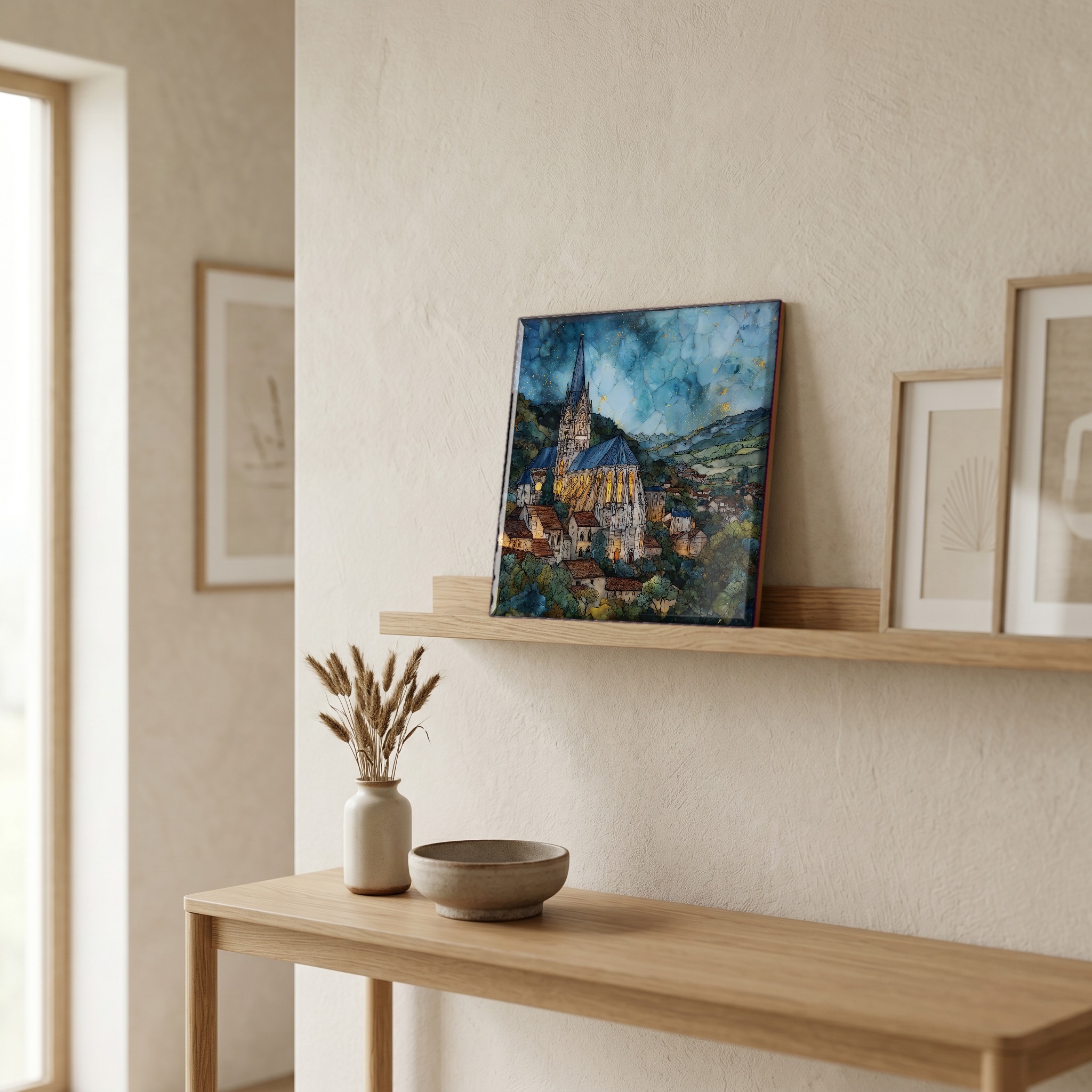
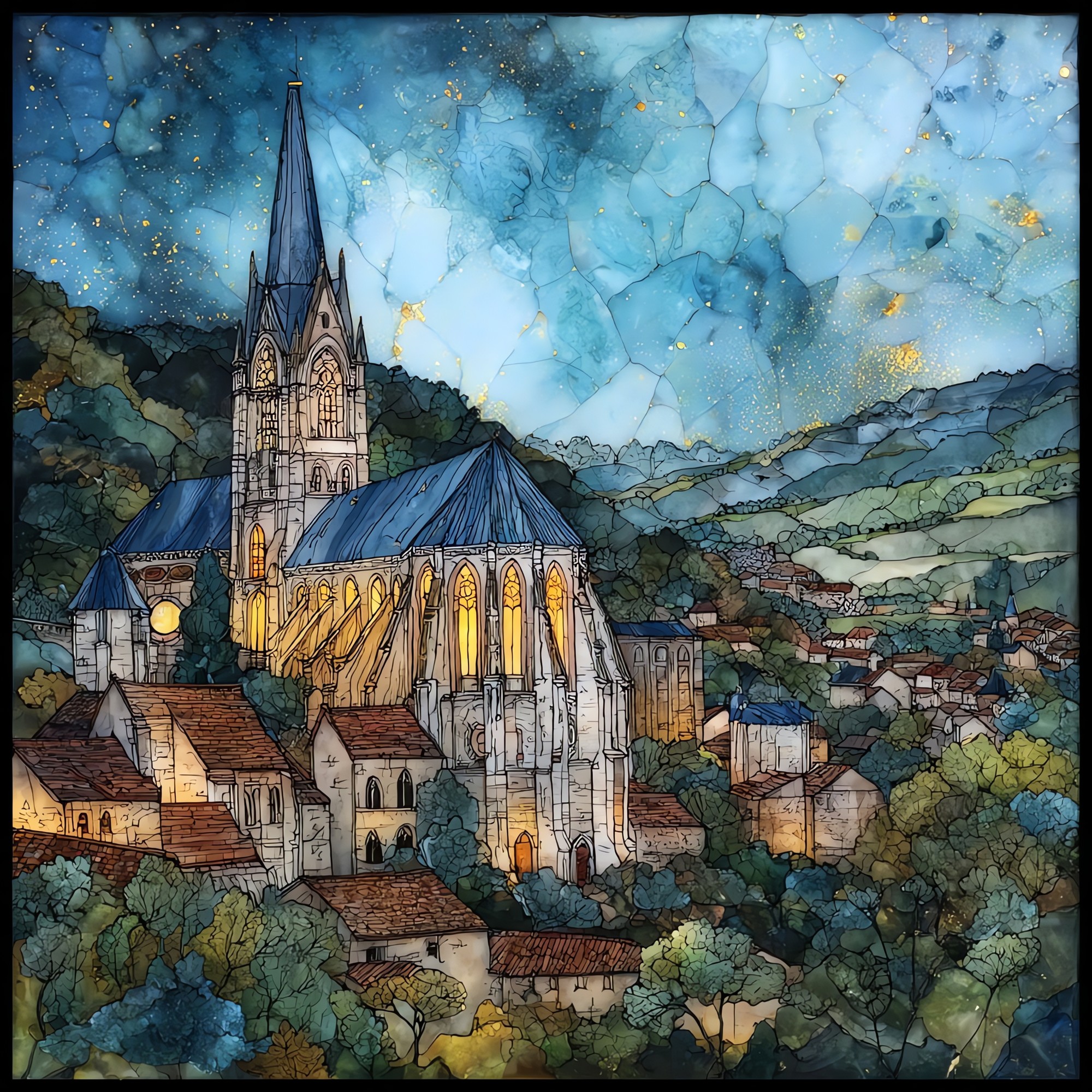
Saint-Bertrand-de-Comminges Cathedral
shown on ceramic, 12-inch tileFrance
above a village in the foothills of the Pyrenees

Saint-Bertrand-de-Comminges Cathedral

the hill that holds five centuries of light.

Where it lives

Not only on a wall.

A small tile on the nightstand catching the morning. A larger one above the fire. Yours, wherever you spend the slow hours.
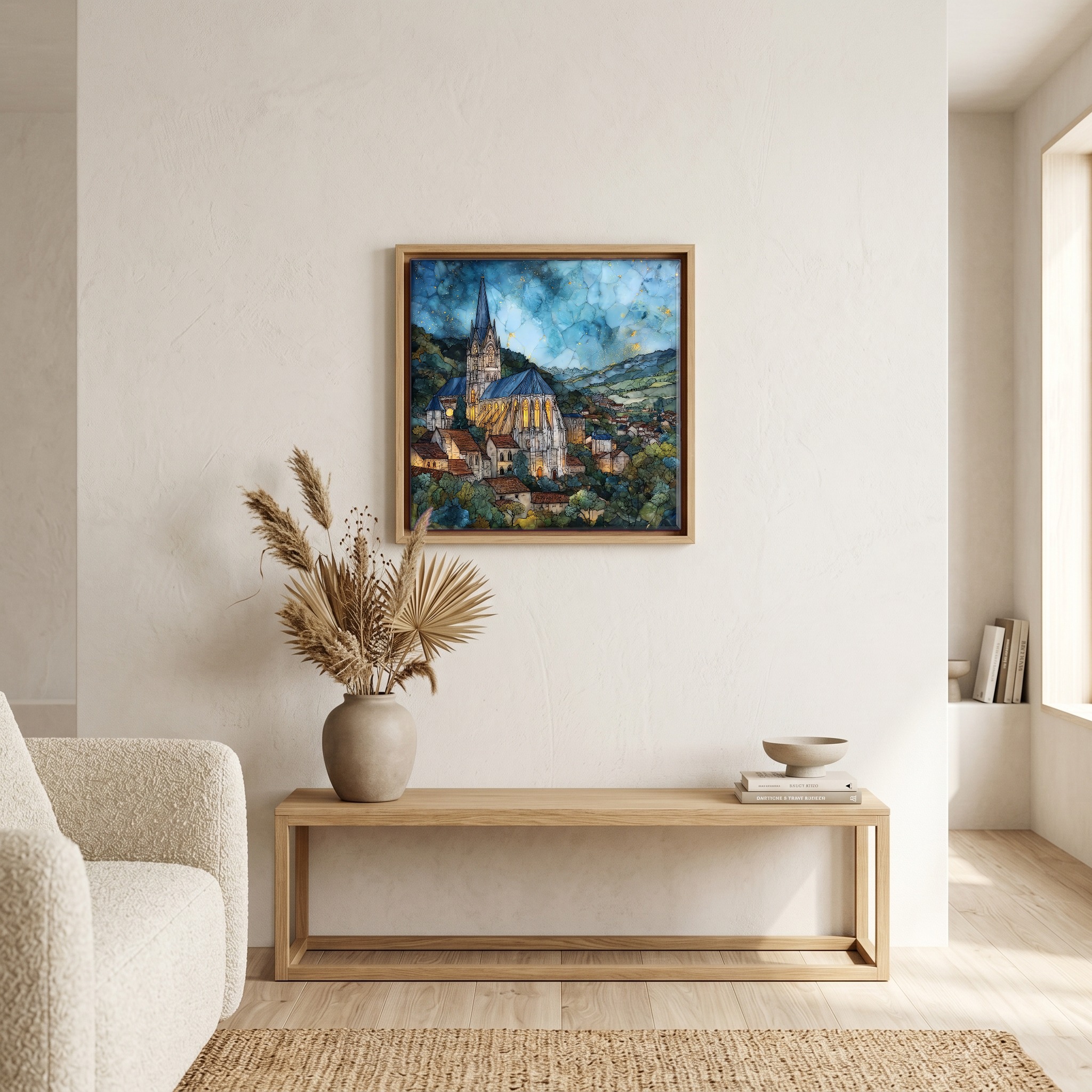
Above the bench, in a warm oak surround.
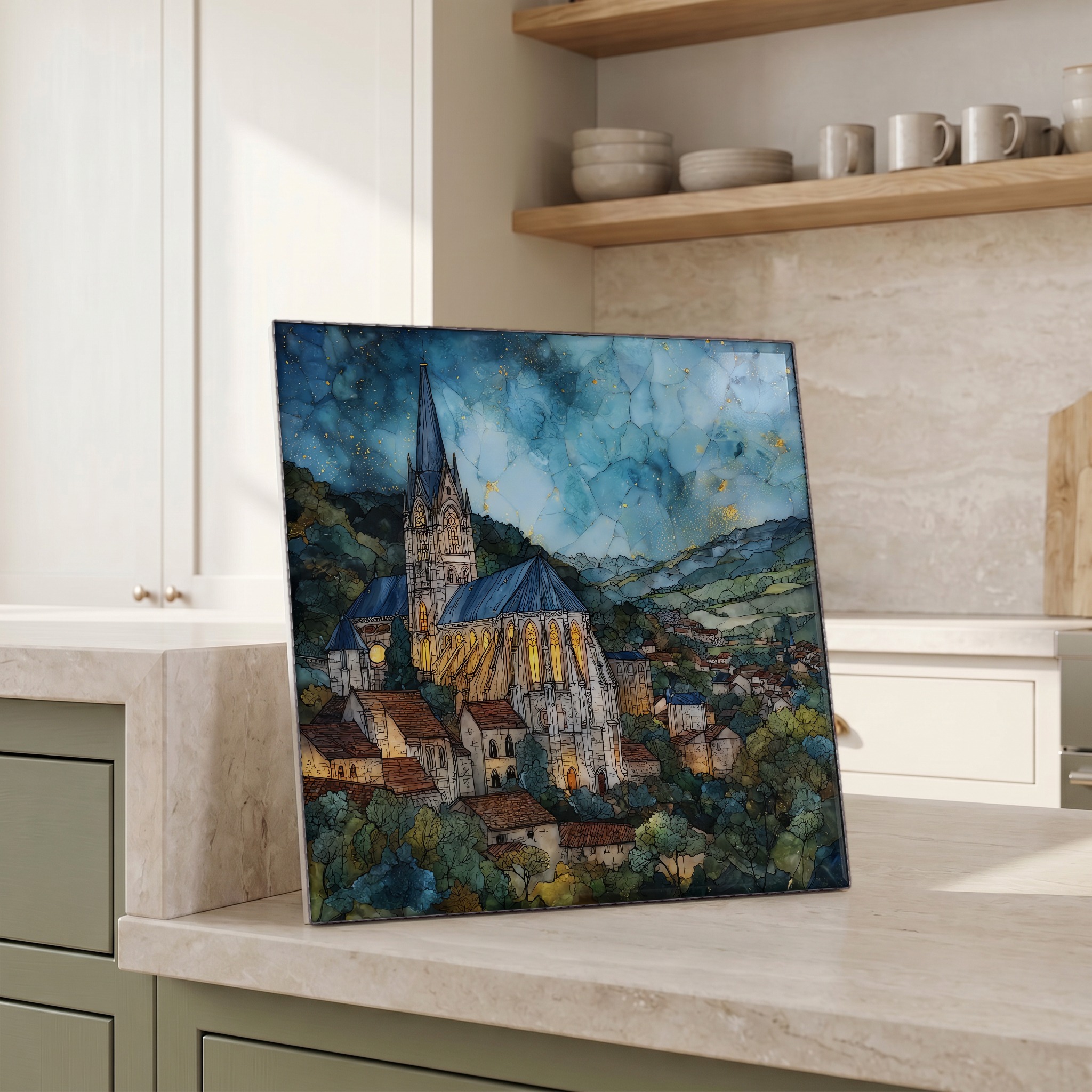
Beside the kettle, propped on the counter.
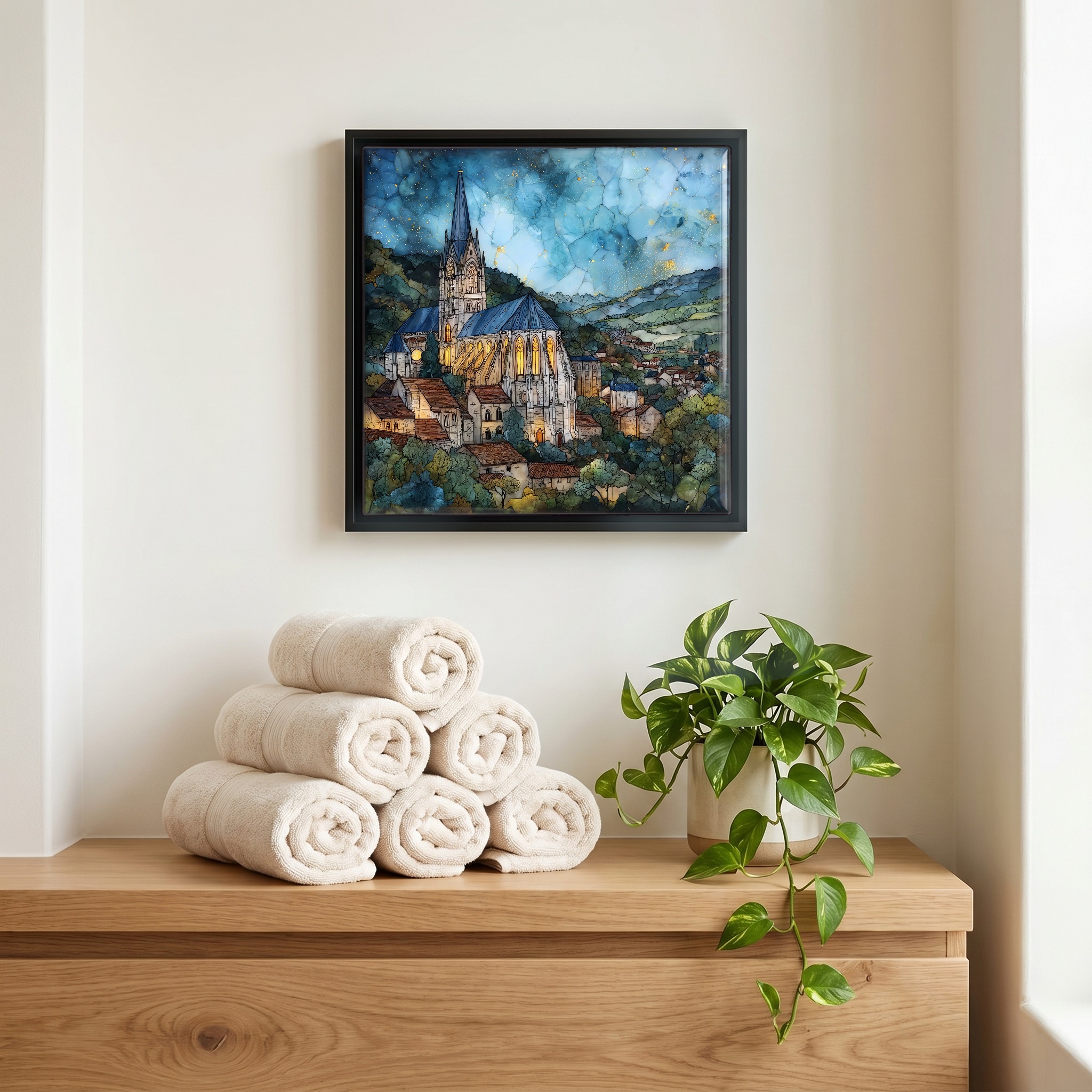
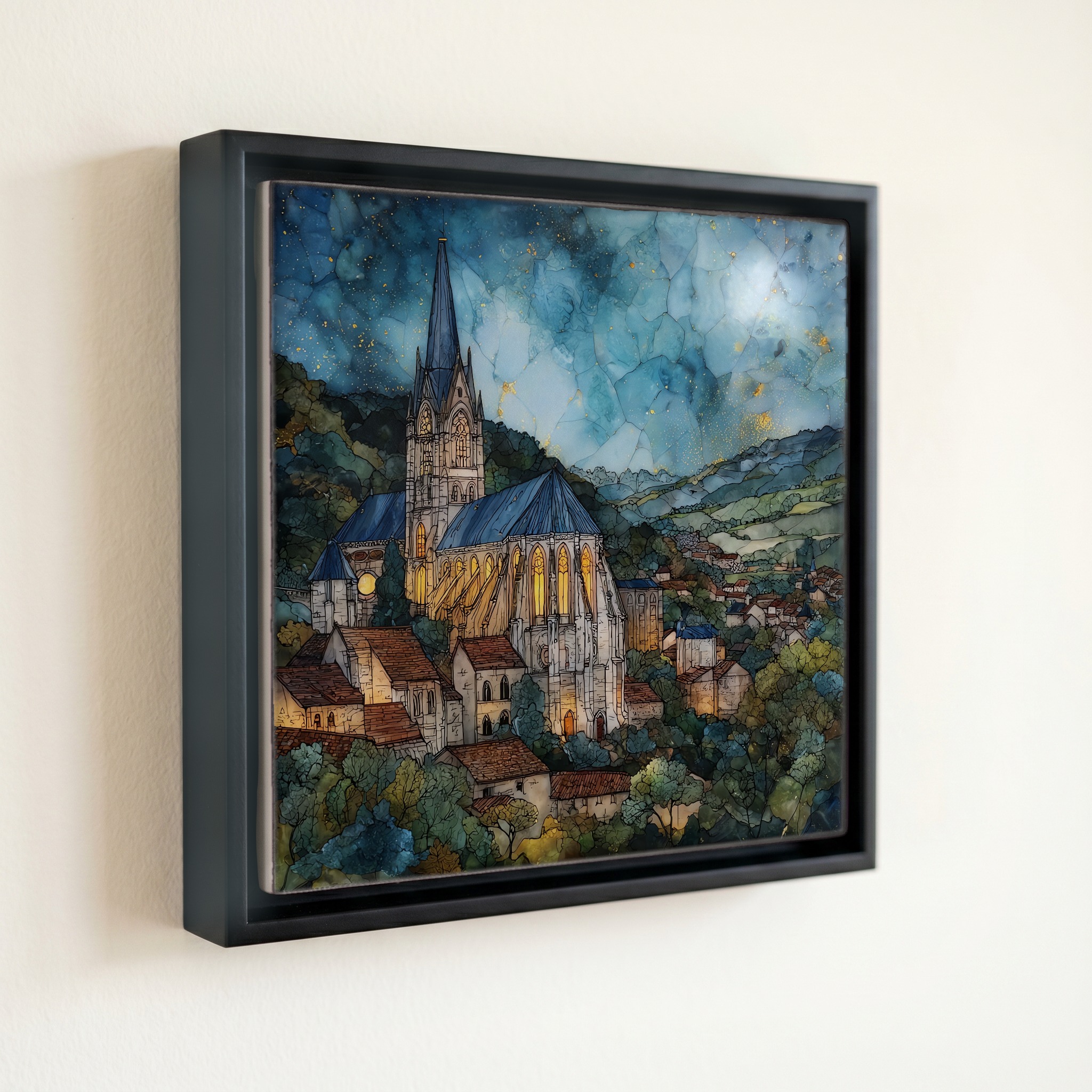
Above the linens, in a slim black surround.
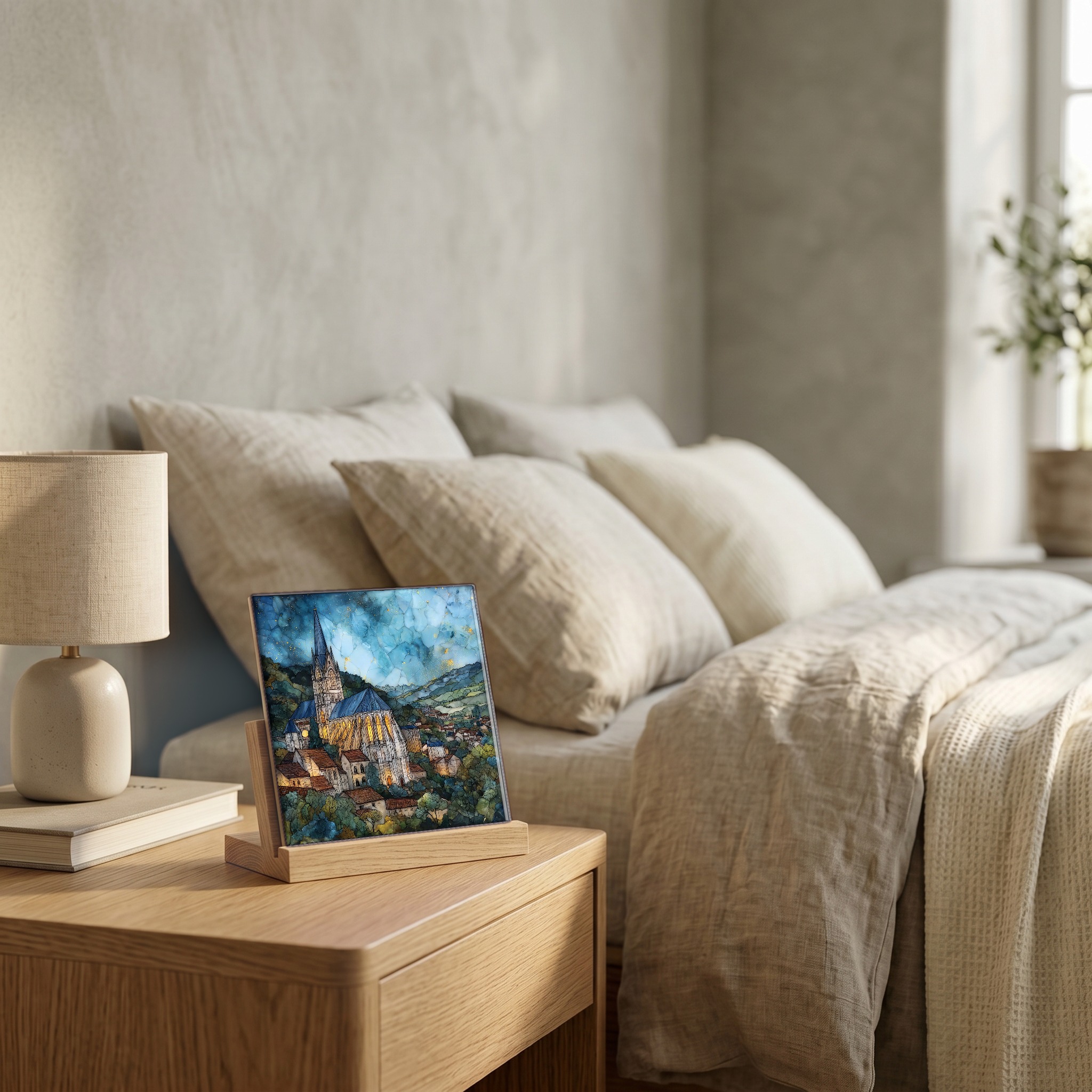
On the nightstand, on a light oak stand.
On a picture ledge, where the light comes in.
a note from the studio

A hilltop village in the French Pyrenees, two hundred and forty-three people and a cathedral that would belong to a city ten times its size. Bishop Bertrand started building in 1083 on the ruins of a Roman colony of thirty thousand. Romanesque cloister, Gothic nave, a Renaissance organ inaugurated in 1535 and still played at summer concerts. Sixty-six oak choir stalls carved by Toulouse sculptors over a twenty-eight-year stretch beginning in 1523. Pilgrims on the way to Santiago de Compostela have been stopping here for nine hundred years. The cloister opens onto the Garonne valley and the road south to Spain.
from the studio
shown in a slim black floating frame · 6 × 6 in
— bring it home

Saint-Bertrand-de-Comminges Cathedral, on ceramic.

Each tile is finished by hand in our Knoxville studio. Artwork is slowly infused into the ceramic surface under high heat and pressure, and rests beneath a thin glossy finish. The colour lives in the surface, not on top of it.

What kind of piece?
One tile — square or rectangle.
How big?
the popular one — counter, shelf, nightstand
6 × 6 in · 15 cm · 1.6 lb
Surface finish
A clear glossy finish — the artwork reads as if under resin. Ideal for show-pieces and framed wall art.
How it sits
A hidden cleat — sits ¼″ proud of the wall.
$58
Hand-finished and shipped from our studio at the foot of the Smokies. On your wall in about ten days.
size
6 × 6 in
15 cm
weighs
1.6 lb
solid in the hand
surface
ceramic, hand-finished
art rests beneath a thin glossy finish
from
Knoxville, TN
our family studio, at the foot of the Smokies
— start a Coaster Set

Pick any four 4-inch tiles — National Parks you've been to, a Smokies set, the four seasons of one place. $ for a set of , cork-backed, ready to live on the table.
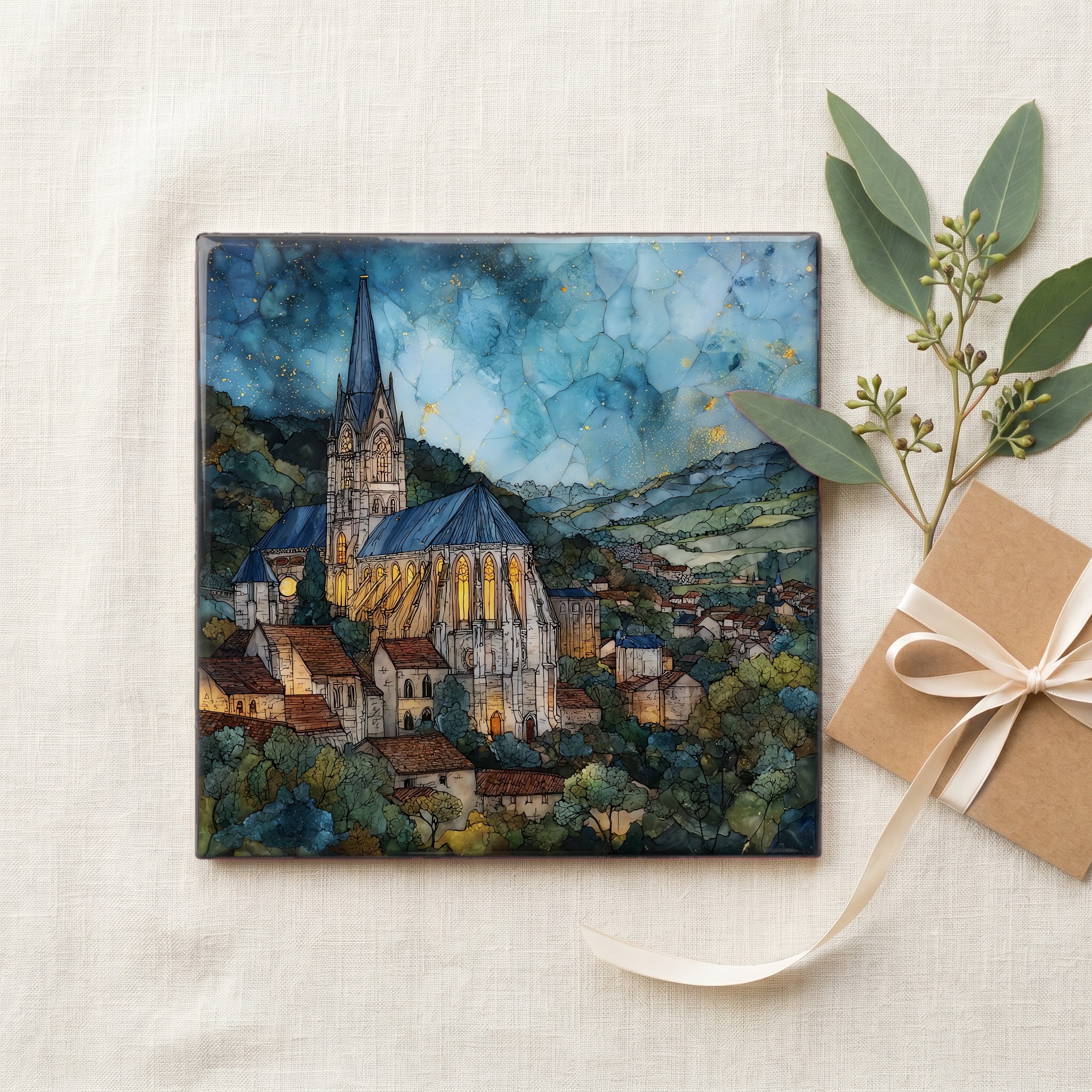
comes gift-ready
comes gift-ready

Each tile ships in a kraft box, tied with cream ribbon, with a handwritten note from the studio if you'd like to add one.
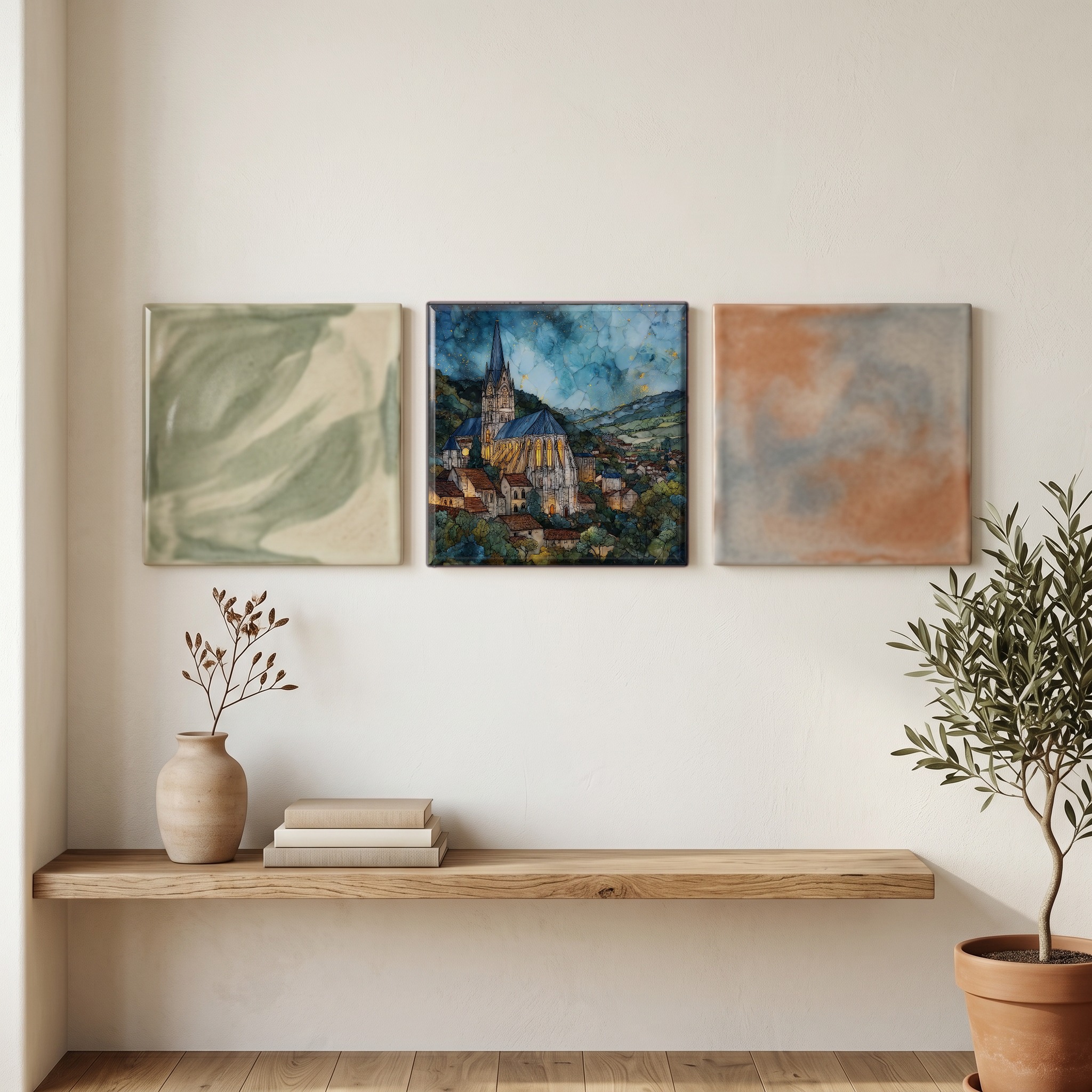
or build a grouping
or build a grouping

Three or five different vistas, hung together — a chapter of places you've been, or want to go.

about Saint-Bertrand-de-Comminges Cathedral

The place, in three passes.

A little of what's known, in case you fall down the rabbit hole — or want to go see it yourself.
the place

Saint-Bertrand-de-Comminges sits on a hill in the Haute-Garonne department of southwestern France, in the Occitanie region, where the Pyrenees foothills meet the Garonne valley. The village has two hundred and forty-three residents and is a member of Les Plus Beaux Villages de France. The site was first the Roman colony of Lugdunum Convenarum, which reached roughly thirty thousand inhabitants before its decline. Toulouse is one hundred and ten kilometres to the north; the Spanish border crosses the Pyrenees about forty kilometres to the south. The cathedral occupies the highest ground in the village, visible from the valley road below.

the stone

Three building campaigns are stacked into one church. Bishop Bertrand de l'Isle-Jourdain, later canonised as Saint Bertrand, began the Romanesque cathedral in 1083; the cloister and lower nave survive from that work. In the fourteenth century Bertrand de Goth, who would become Pope Clement V, commissioned the Meridional Gothic extension that gives the church its present height. The Renaissance is held inside: a wood-carved screen of sixty-six oak choir stalls commissioned in 1523 by Bishop Jean de Mauléon, often attributed to the school of the Toulouse sculptor Nicolas Bachelier, and an organ inaugurated in 1535, set high on stone columns and known locally as the Third Wonder of Gascony.

the visit

The cathedral is open to visitors throughout the year, with a paid admission for the choir stalls and treasury and reduced hours during winter. The village is reached from the A64 motorway between Toulouse and Tarbes, with the Montréjeau exit followed by about fifteen kilometres on the D26 south. The cathedral has been a UNESCO World Heritage Site since 1998 as part of the Routes of Santiago de Compostela in France, listed together with the eleventh-century Basilica of Saint-Just at neighbouring Valcabrère. The Renaissance organ is still played, including during the Festival du Comminges, held each July and August since 1975.

where
France · Haute-Garonne, Occitanie
position
43.0267° N · 0.5711° E
the neighborhood

What's nearby.

A handful of named places within an hour's walk or short drive. Some we've already painted; some we will.
2 km E
Basilica of Saint-Just, Valcabrère
Romanesque basilica
1 km S
Lugdunum Convenarum
Roman archaeological site
15 km NE
Montréjeau
Pyrenean market town
N
Saint-Bertrand-de-Comminges Cathedral
Basilica of Saint-Just, Valcabrère
Lugdunum Convenarum
Montréjeau
common questions

What people ask.

A few questions we get about Saint-Bertrand-de-Comminges Cathedral — and about bringing the piece home.
about the place

The cathedral stands on a hill in the village of Saint-Bertrand-de-Comminges in the Haute-Garonne department of southwestern France, in the Occitanie region. It is roughly one hundred and ten kilometres south of Toulouse, in the Pyrenees foothills above the Garonne valley.

The village was the seat of the Diocese of Comminges from medieval times until the diocese was dissolved during the post-Revolutionary reorganisation of the French church. The building keeps the cathedral title for historical reasons and is now a parish church within the Archdiocese of Toulouse.

Bishop Bertrand de l'Isle-Jourdain began the Romanesque structure in 1083 on the remains of the Roman colony of Lugdunum Convenarum. The Gothic extension was commissioned in the fourteenth century by Bertrand de Goth, who later became Pope Clement V. The Renaissance interior was added in the sixteenth century.

The sixty-six carved oak choir stalls were commissioned in 1523 by Bishop Jean de Mauléon and completed by 1551. The carvers, often attributed to the school of the Toulouse sculptor Nicolas Bachelier, depicted figures from the Old and New Testaments alongside sibyls, prophets, and scenes of human virtue and vice.

The cathedral's Renaissance organ was inaugurated in 1535 and keeps its original case, set high on stone columns above the nave. It carries roughly three thousand pipes and is known locally as the Third Wonder of Gascony. It is still played during the Festival du Comminges each summer.

The cathedral was inscribed in 1998 as part of the Routes of Santiago de Compostela in France. Saint-Bertrand-de-Comminges was a recognised stage on the pilgrim route from Toulouse toward the Spanish border, and the listing covers the cathedral together with the nearby Basilica of Saint-Just at Valcabrère.

The hill village sits on top of the Roman colony of Lugdunum Convenarum, which had reached roughly thirty thousand inhabitants by the second century. The remains of a Roman theatre, forum, and thermal baths are visible at the foot of the hill, with a small archaeological museum on site.

about the piece in your home

Yes. Saint-Bertrand-de-Comminges is one of the listed stages on the via Tolosana route from Arles toward Spain, and pilgrims still pass through. The Medium or Large carries the cathedral on its hill at a scale that reads from across a room.

The piece's deep stone, leaded blue, and warm amber tones sit naturally in Old-World Maximalist, traditional European, and library or study interiors. It also works in a Transitional room as a single jewelled accent against neutral walls.

Both style families lean into heritage materials and historical reference, which is exactly the register of this piece. A Pyrenean cathedral on a ceramic tile reads as the kind of singular object both trends are built around. The Medium suits a study; the Large anchors a stairwell landing.

Above a standard three-seat sofa, the Large at twenty-four inches reads from across a room. For a wider wall, a four-tile Mural at thirty-two inches keeps proportion. A console table sits well under a single Medium at eighteen inches.

Yes. Order the Dura Satin or Matte finish for any room with steam, splash, or repeated cleaning. The colour is slowly infused into the ceramic surface under high heat and pressure, so it sits beneath the finish and does not lift or fade with water exposure.

A soft microfibre cloth with plain water lifts dust and most marks. For kitchen or bathroom installations in the Dura Satin or Matte finish, mild dish soap on the cloth handles cooking residue or soap film. No abrasive pads, no bleach.

Yes. Every WenderVista piece is painted in the studio and not licensed from another artist or stock library. The Saint-Bertrand-de-Comminges piece is part of our Europe series and is carried only by Wender Studios.

if this one stayed with you

A few you might also love.

Hand-picked by the eye that found Sorapis. Same air, same kind of quiet.