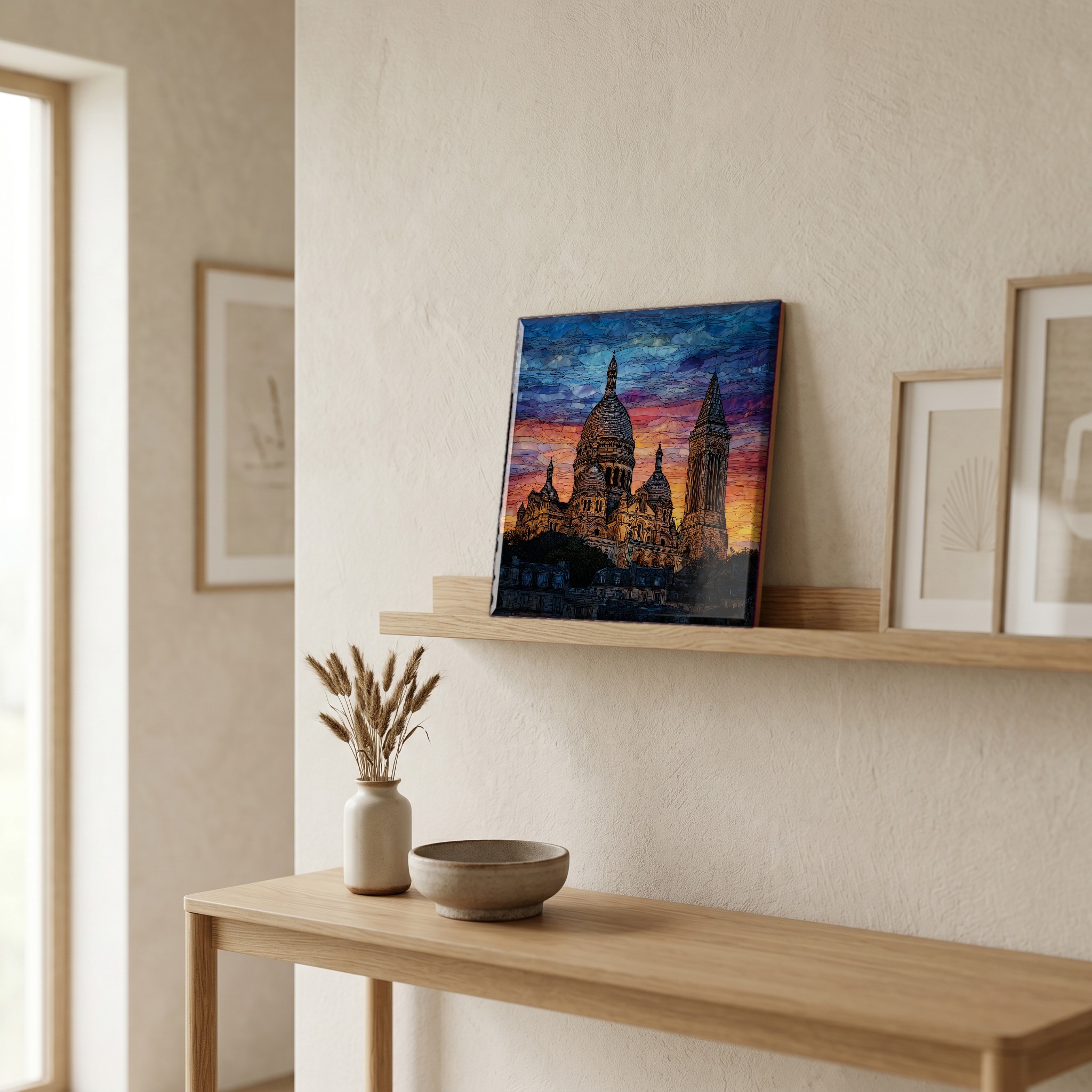
Wender·Vista
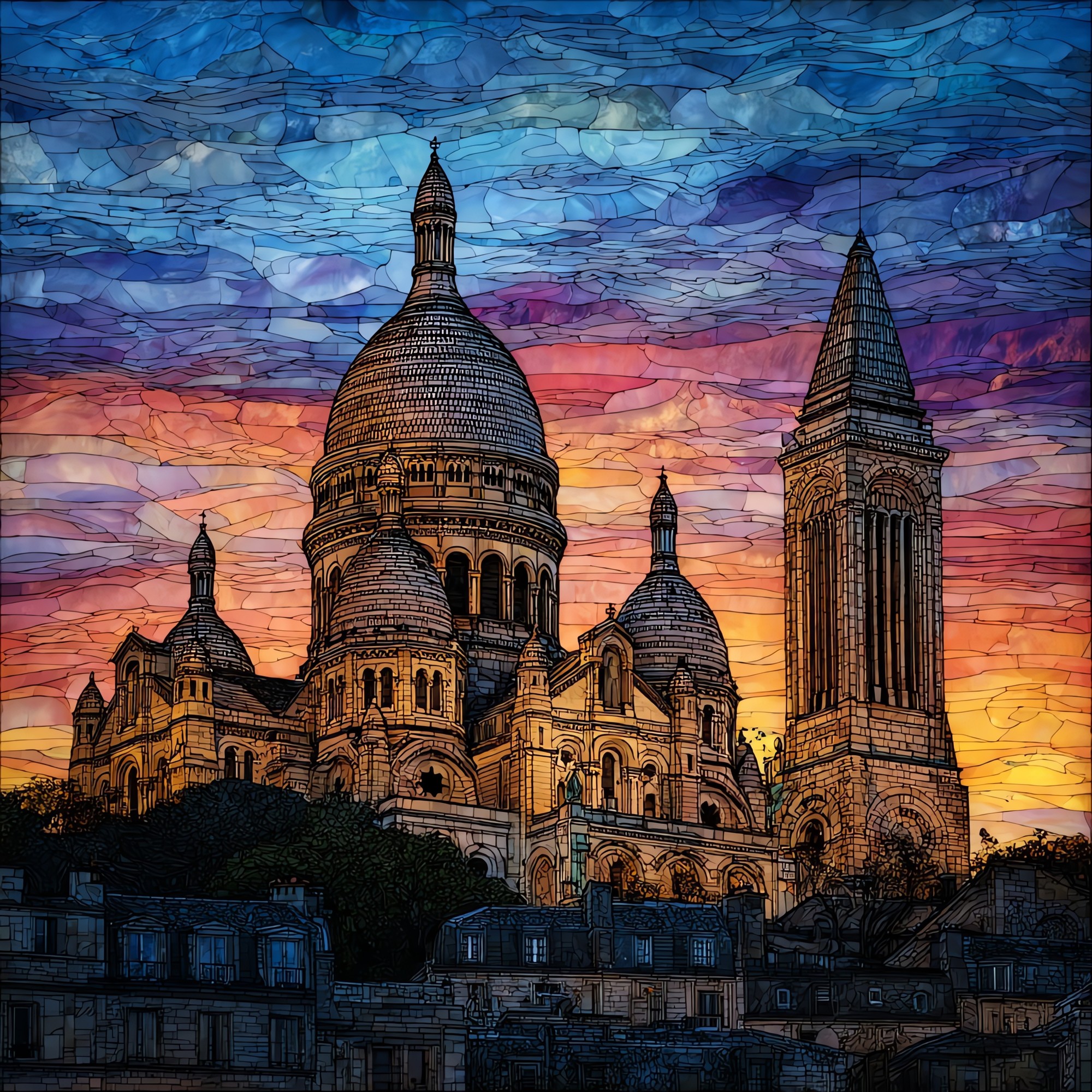
Sacre-Coeur Basilica
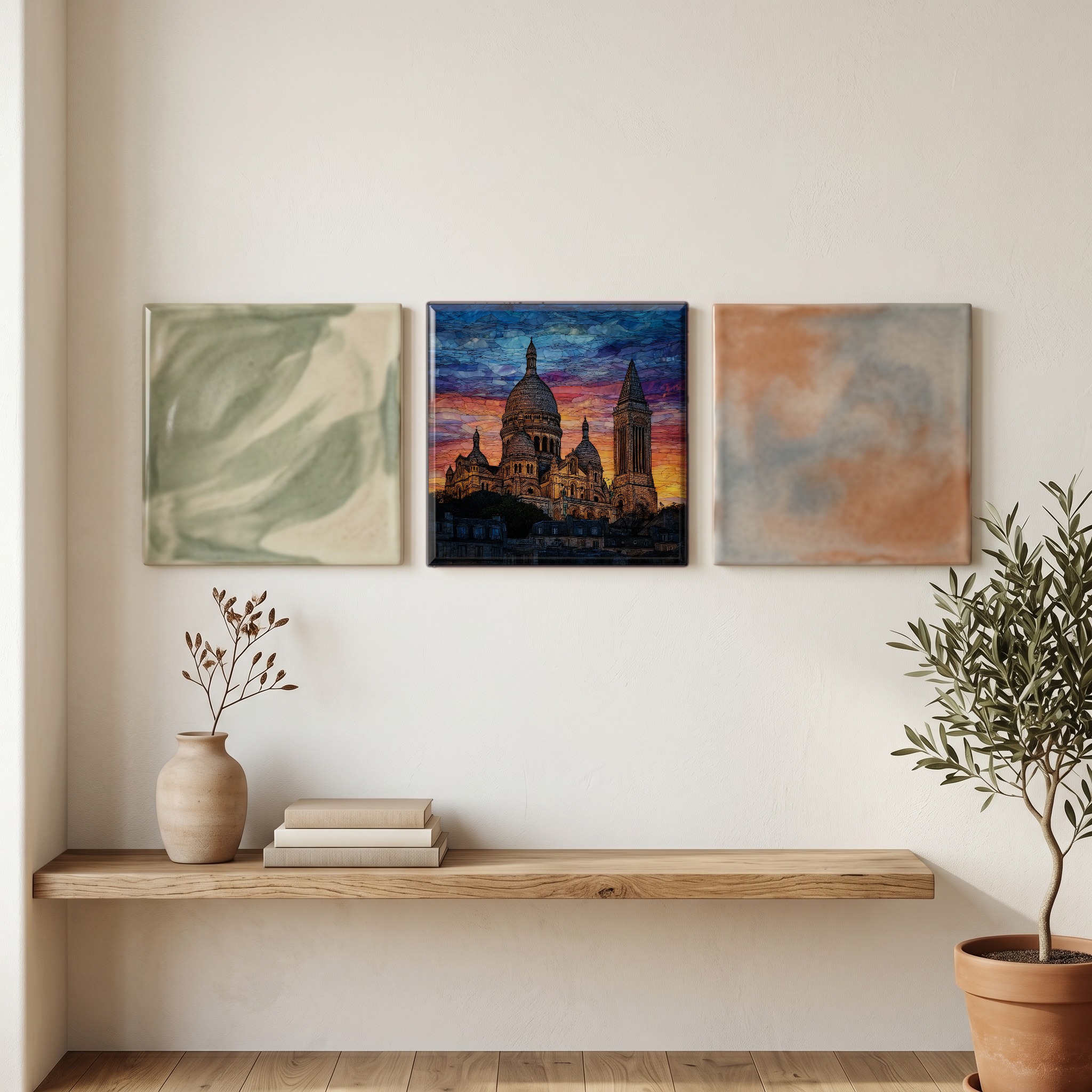
shown on ceramic, 12-inch tileFrance
on Montmartre, the highest point in Paris

Sacre-Coeur Basilica

the white the rain keeps whitening.

Where it lives

Not only on a wall.

A small tile on the nightstand catching the morning. A larger one above the fire. Yours, wherever you spend the slow hours.
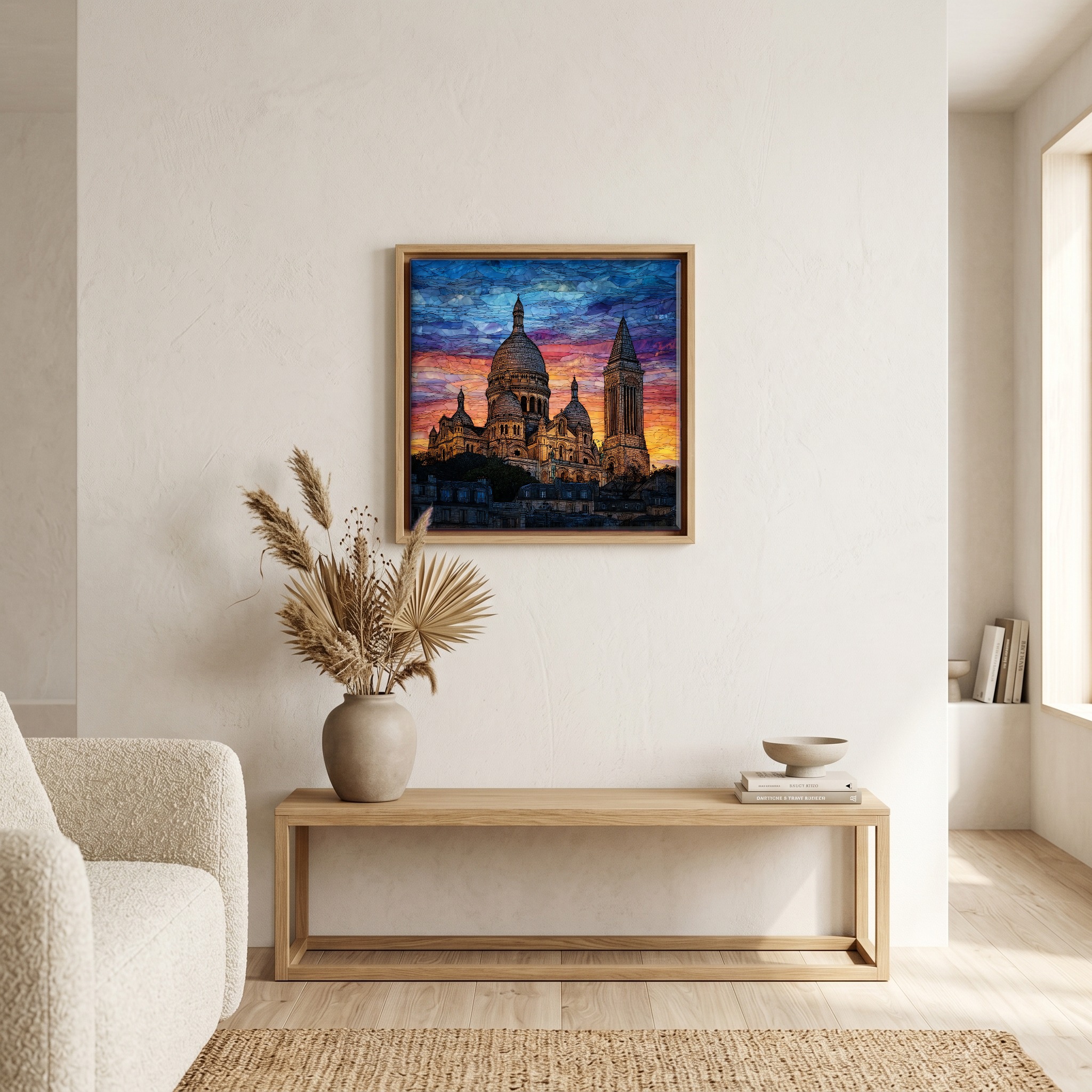
Above the bench, in a warm oak surround.
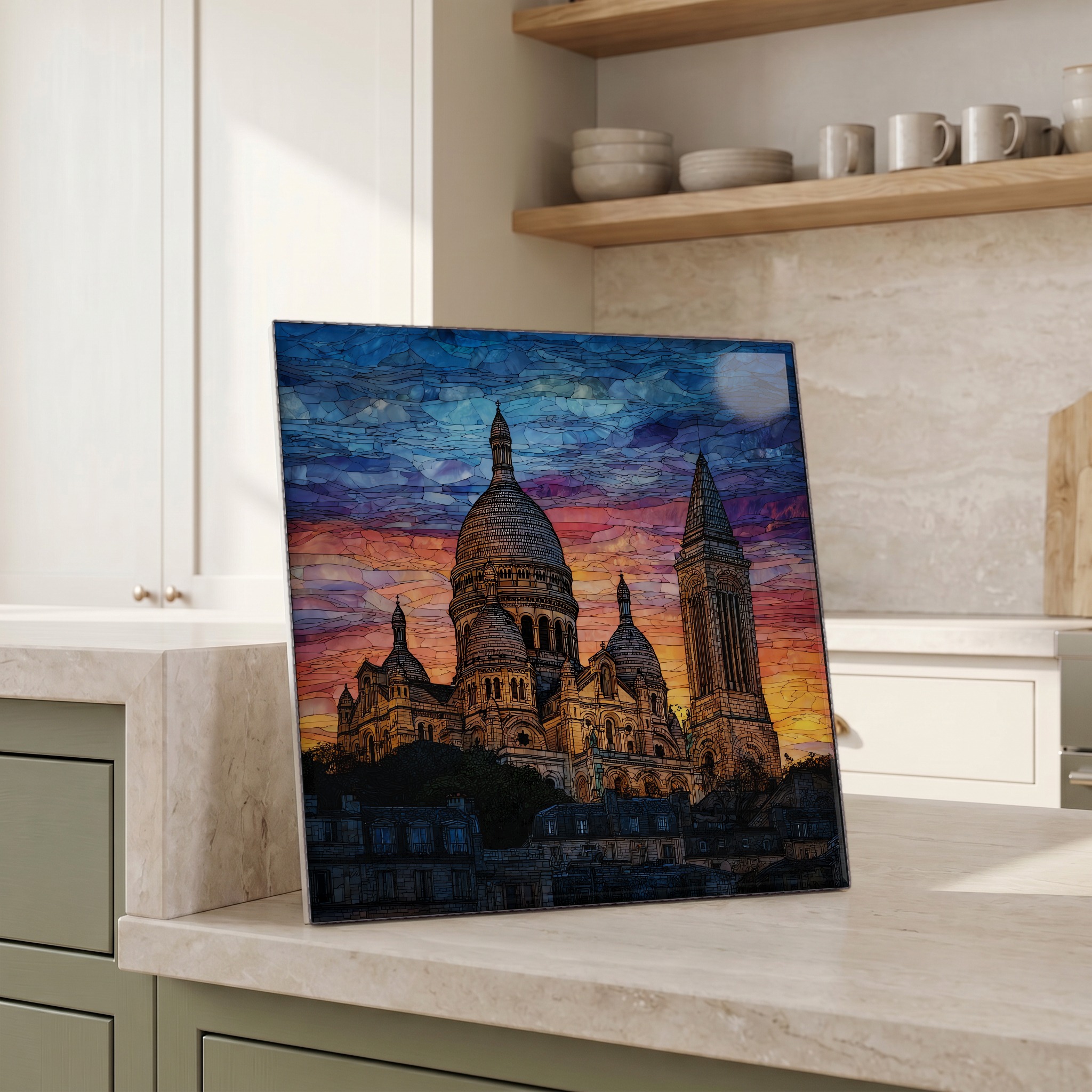
Beside the kettle, propped on the counter.
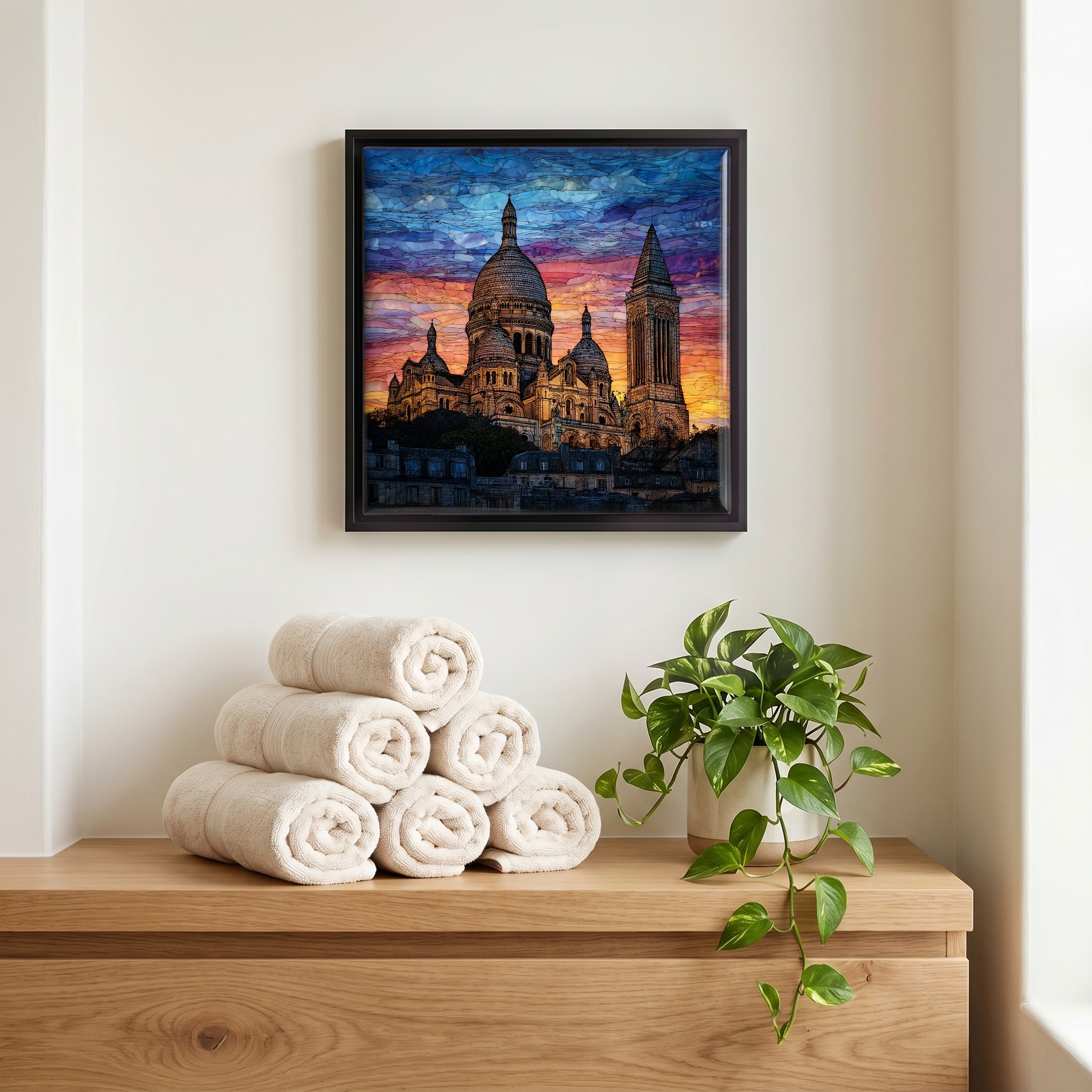
Above the linens, in a slim black surround.
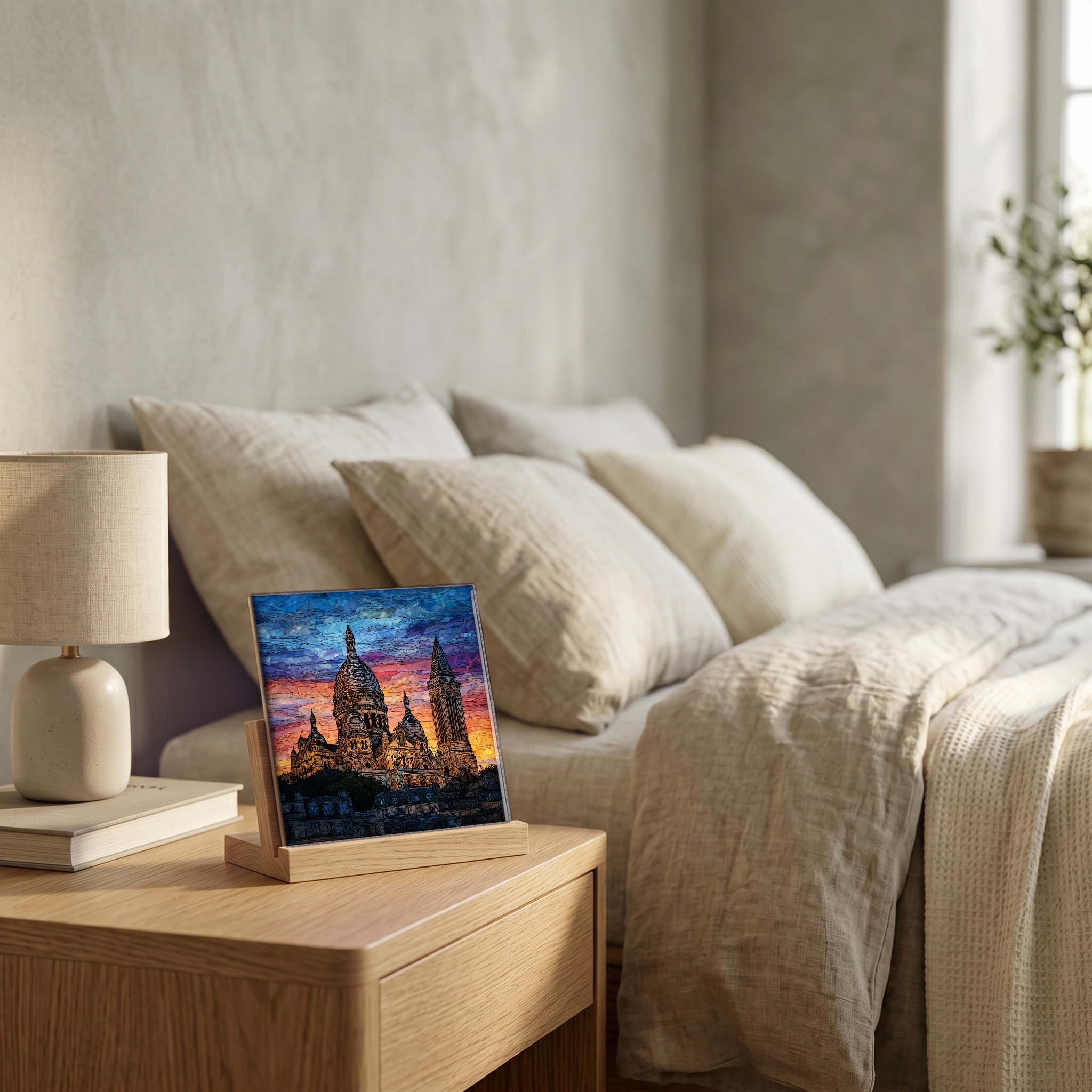
On the nightstand, on a light oak stand.
On a picture ledge, where the light comes in.
a note from the studio

The white basilica that holds the top of Montmartre. The travertine it's built from secretes calcin when it rains, so the stone whitens with every storm rather than dulling. From the steps of the parvis the whole city opens out: the Seine, the Tour Eiffel, the slate-blue roofs reaching to the périphérique. Inside, a prayer has been held continuously since 1885. People sit in the choir at three in the morning. No one notices the hour.
from the studio
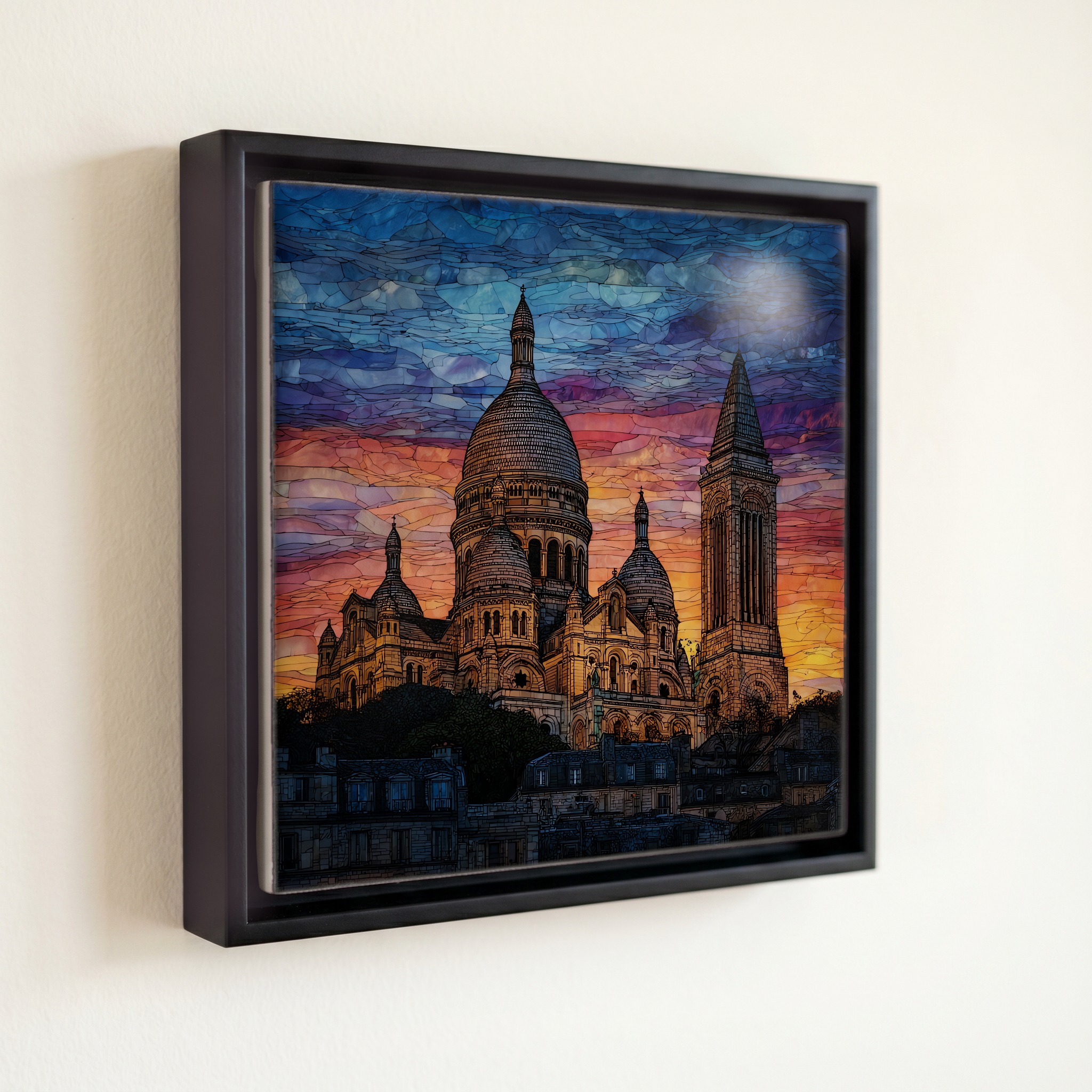
shown in a slim black floating frame · 6 × 6 in
— bring it home

Sacre-Coeur Basilica, on ceramic.

Each tile is finished by hand in our Knoxville studio. Artwork is slowly infused into the ceramic surface under high heat and pressure, and rests beneath a thin glossy finish. The colour lives in the surface, not on top of it.

What kind of piece?
One tile — square or rectangle.
How big?
the popular one — counter, shelf, nightstand
6 × 6 in · 15 cm · 1.6 lb
Surface finish
A clear glossy finish — the artwork reads as if under resin. Ideal for show-pieces and framed wall art.
How it sits
A hidden cleat — sits ¼″ proud of the wall.
$58
Hand-finished and shipped from our studio at the foot of the Smokies. On your wall in about ten days.
size
6 × 6 in
15 cm
weighs
1.6 lb
solid in the hand
surface
ceramic, hand-finished
art rests beneath a thin glossy finish
from
Knoxville, TN
our family studio, at the foot of the Smokies
— start a Coaster Set

Pick any four 4-inch tiles — National Parks you've been to, a Smokies set, the four seasons of one place. $ for a set of , cork-backed, ready to live on the table.
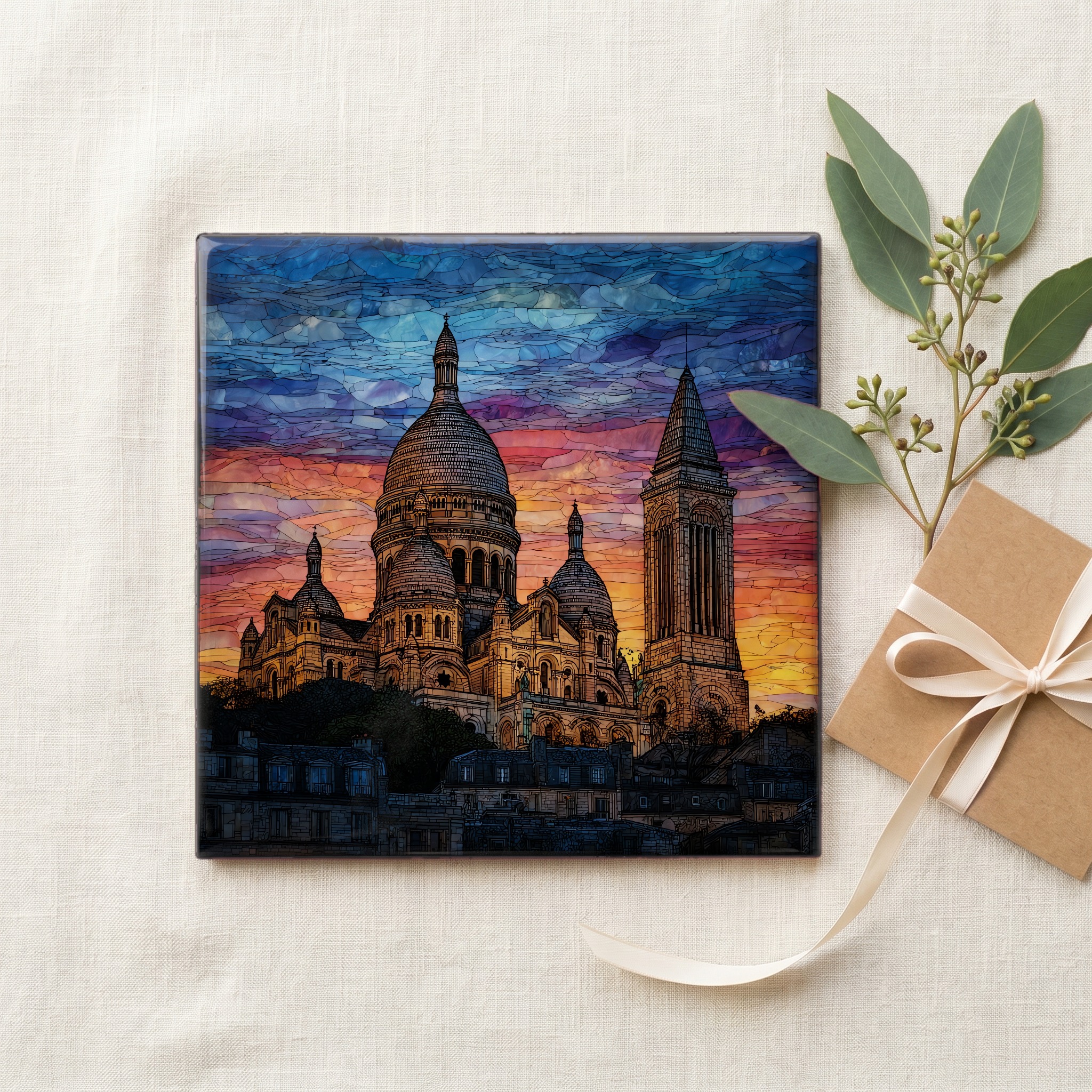
comes gift-ready
comes gift-ready

Each tile ships in a kraft box, tied with cream ribbon, with a handwritten note from the studio if you'd like to add one.
or build a grouping
or build a grouping

Three or five different vistas, hung together — a chapter of places you've been, or want to go.

about Sacre-Coeur Basilica

The place, in three passes.

A little of what's known, in case you fall down the rabbit hole — or want to go see it yourself.
the place

Sacré-Cœur sits at the summit of Montmartre, the 130-metre hill in the 18th arrondissement that is the highest natural point in Paris. The basilica was designed by Paul Abadie in a Romano-Byzantine revival style after a national competition in 1874, and built between 1875 and 1914. Pilgrims still climb the long staircase from Place Saint-Pierre, or take the funicular that has run since 1900. The dome of the Panthéon, the Tour Eiffel, and the spire of Notre-Dame are all visible from the parvis on a clear day. The basilica's own dome rises 83 metres above the church, with a panorama reaching across the Île-de-France basin.

the stone

The basilica's distinctive whiteness comes from travertine stone quarried at Château-Landon, roughly 100 kilometres south of Paris in the Seine-et-Marne. The stone contains calcite that reacts with rainwater to secrete a fine white residue called calcin, so the façade self-cleans with every storm rather than darkening with soot. Most Parisian monuments (the Louvre, Notre-Dame, the Panthéon) have grown grey over a century of urban air. Sacré-Cœur is the exception. Architect Paul Abadie chose the material specifically, and his successors held to it through nearly forty years of construction.

— informed by Wikipedia
the visit

Entry to Sacré-Cœur is free, every day from 6 in the morning to 10:30 at night. A perpetual adoration of the Blessed Sacrament has been kept since 1885, day and night, in unbroken relay. Climbing the dome costs around eight euros and runs about 300 stone steps; the view reaches to the chalk hills of the Marne valley. The clearest air is the hour before sunrise, before the city's traffic warms the basin. Tour groups arrive after eleven, and the parvis fills through the afternoon. The last hour before closing returns the quiet.

where
France · Paris, Île-de-France
elevation
130 m · 427 ft
position
48.8867° N · 2.3431° E
the neighborhood

What's nearby.

A handful of named places within an hour's walk or short drive. Some we've already painted; some we will.
at the lake
Place du Tertre
artists' square
1 km SW
Moulin Rouge
cabaret
3 km SW
Arc de Triomphe
monument
3 km S
Louvre
museum
4 km S
Notre-Dame de Paris
cathedral
4 km SW
Eiffel Tower
tower
N
Sacre-Coeur Basilica
Place du Tertre
Moulin Rouge
Arc de Triomphe
Louvre
Notre-Dame de Paris
Eiffel Tower
common questions

What people ask.

A few questions we get about Sacre-Coeur Basilica — and about bringing the piece home.
about the place

Sacré-Cœur sits at the top of Montmartre hill, in the 18th arrondissement of Paris. The hill reaches 130 metres, the highest natural point in the city. A funicular runs from Place Saint-Pierre, and a long staircase climbs beside it.

The basilica is built from travertine stone quarried at Château-Landon, about 100 kilometres south of Paris. When it rains, the stone secretes a calcite residue called calcin that washes the façade clean. Most Parisian monuments darken with time. Sacré-Cœur whitens with every storm.

Construction began in 1875, after a national vow taken in the aftermath of the Franco-Prussian War and the Paris Commune of 1871. The basilica was finished in 1914 but consecration was delayed by the First World War until 1919. Paul Abadie designed it.

Romano-Byzantine revival, an unusual choice for late-nineteenth-century Paris. The white dome, the round arches, and the central plan draw from Byzantine and Romanesque sources rather than Gothic ones. The interior holds a 480-square-metre mosaic of Christ in Glory above the apse.

Entry to the basilica is free, every day from 6 in the morning to 10:30 at night. Climbing the dome costs around eight euros and runs about 300 stone steps. The crypt has a small separate admission. Photography is allowed in the nave but not during Mass.

The hour before sunrise gives the clearest air and the quietest steps. Mass at eleven on Sundays is the longest service. Tour groups arrive after eleven on most days, and the parvis fills through the afternoon. The last hour before closing returns the quiet.

The central dome rises 83 metres above the parvis, with the cross above it at 94 metres. Counting the 130-metre hill of Montmartre, the cross stands roughly 213 metres above sea level, one of the higher points in the Paris skyline.

about the piece in your home

The Sacré-Cœur tile carries well to anyone with a Paris connection. The white dome above Montmartre is one of the most recognised views in the city, and the basilica holds a personal place for people who lived or studied in the 18th arrondissement. A Small with a handwritten note from the studio travels well.

The luminous jewel-tone palette pairs with Maximalist Parisian apartment, Jewel-tone Eclectic, and warm Bohemian interiors. The deep blues and whites also hold against a Modern French aesthetic. The colours read brighter in north-facing rooms where the artwork stays cool against neutral walls.

Yes. The European-apartment look that has held since 2024 leans on antique chinoiserie, jewel tones, and figurative wall art. The Sacré-Cœur tile reads as a small inherited object rather than a poster. It suits a Parisian gallery wall, a console-top still life, or a cabinet shelf.

A single Large at 16 by 16 inches reads well above a console or a narrow sideboard. Above a full-size sofa, the 4-tile Mural at 32 inches square holds the space. The 9-tile Mural at 48 inches square suits a stairwell or a long entry wall.

Yes, in the Dura Satin or Matte finish. Both are scratch-resistant and tolerate humidity, so they work as a backsplash, a powder-room feature wall, or a shower niche. The Glossy finish is best kept to dry walls and framed installations.

A microfibre cloth and warm water is the whole routine. The colour is slowly infused into the ceramic surface under high heat and pressure, so the pigment cannot be scrubbed off. Avoid abrasive cleaners and acid-based products. A dry cloth handles dust between cleanings.

Yes. Every WenderVista piece is original to Reid Wender's studio in Knoxville, Tennessee. The work is hand-finished in-house, and the visual language is not licensed from any external artist or stock catalog. Each tile is made to order.

if this one stayed with you

A few you might also love.

Hand-picked by the eye that found Sorapis. Same air, same kind of quiet.