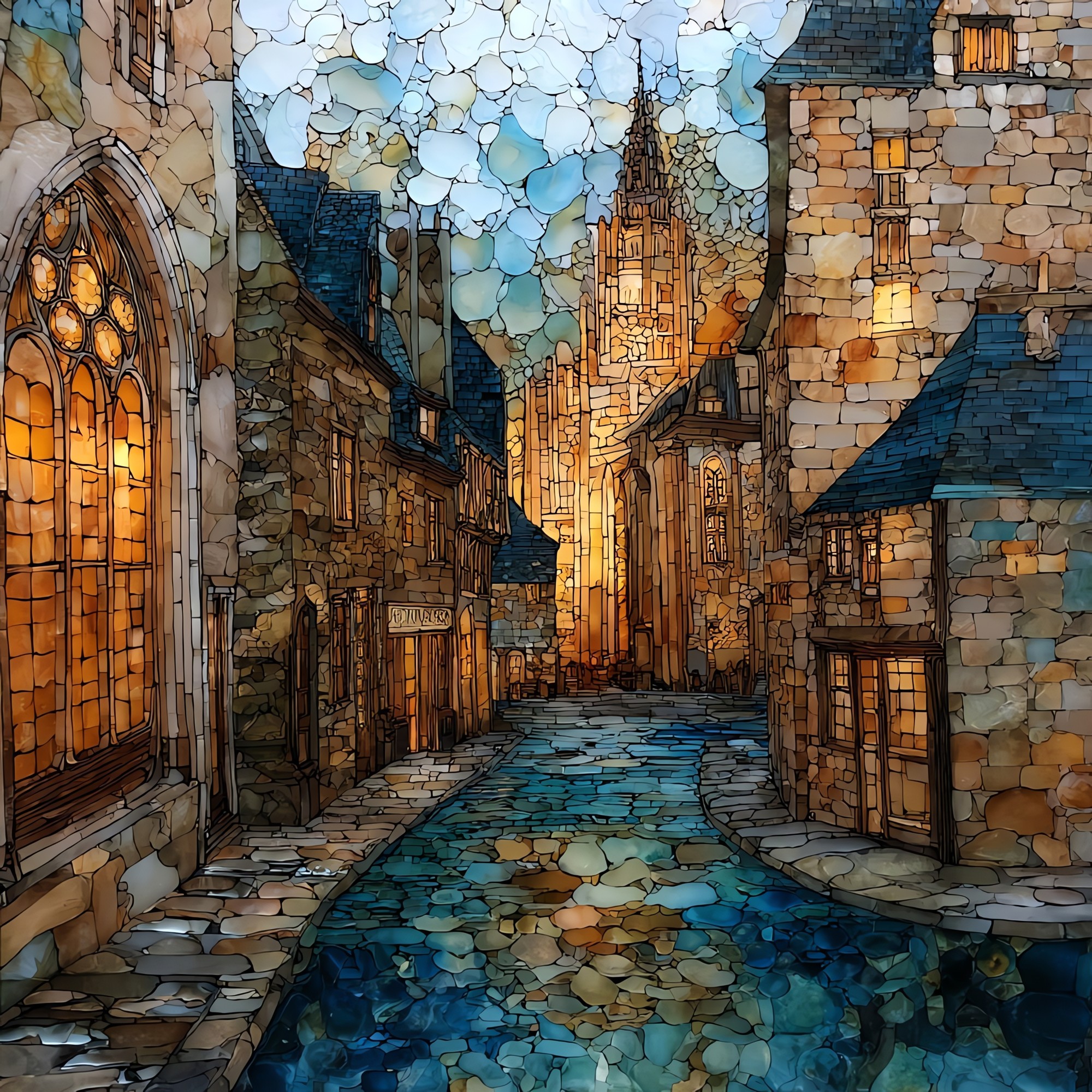
Rue du Jerzual
— — a lane the centuries have leaned into.
Not only on a wall.
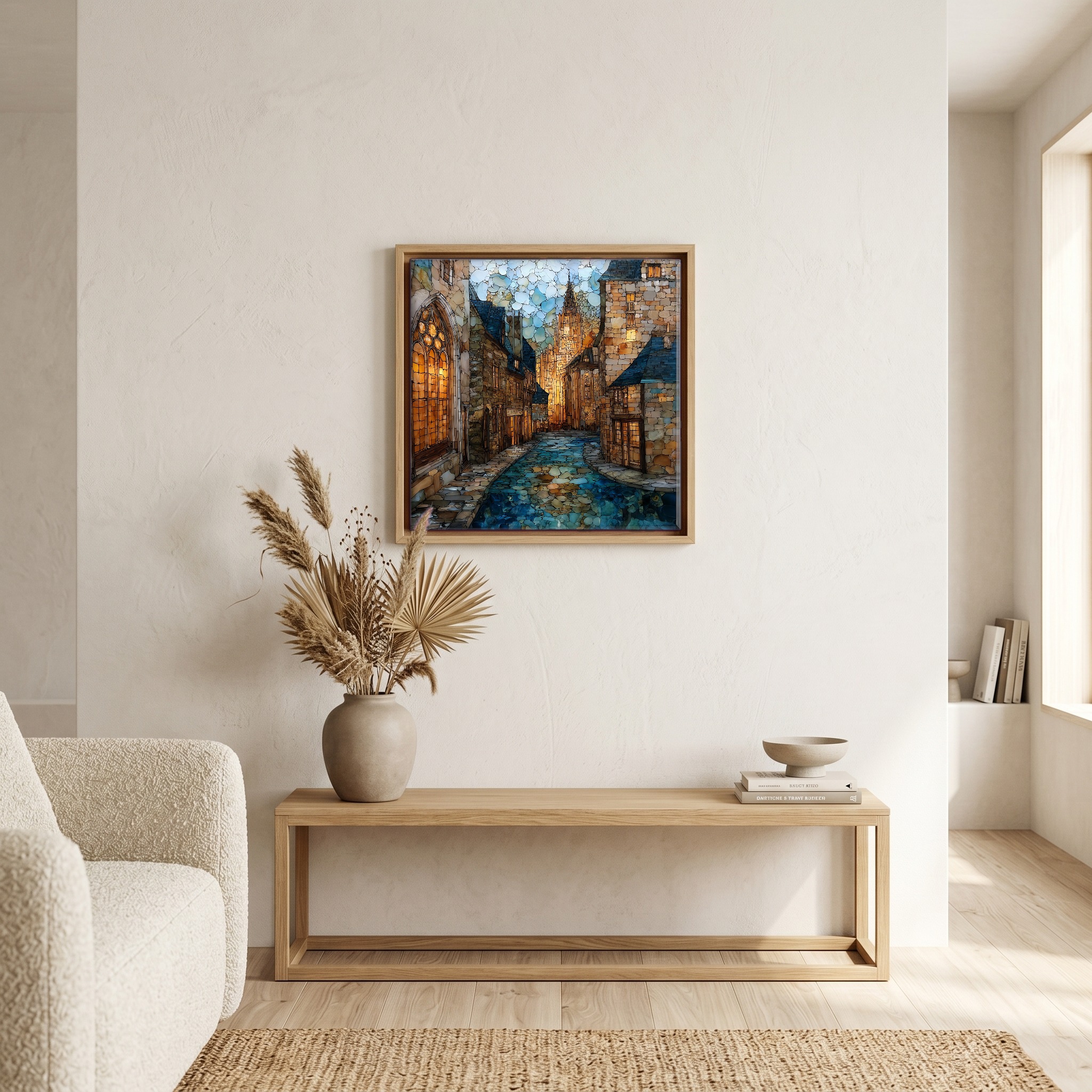
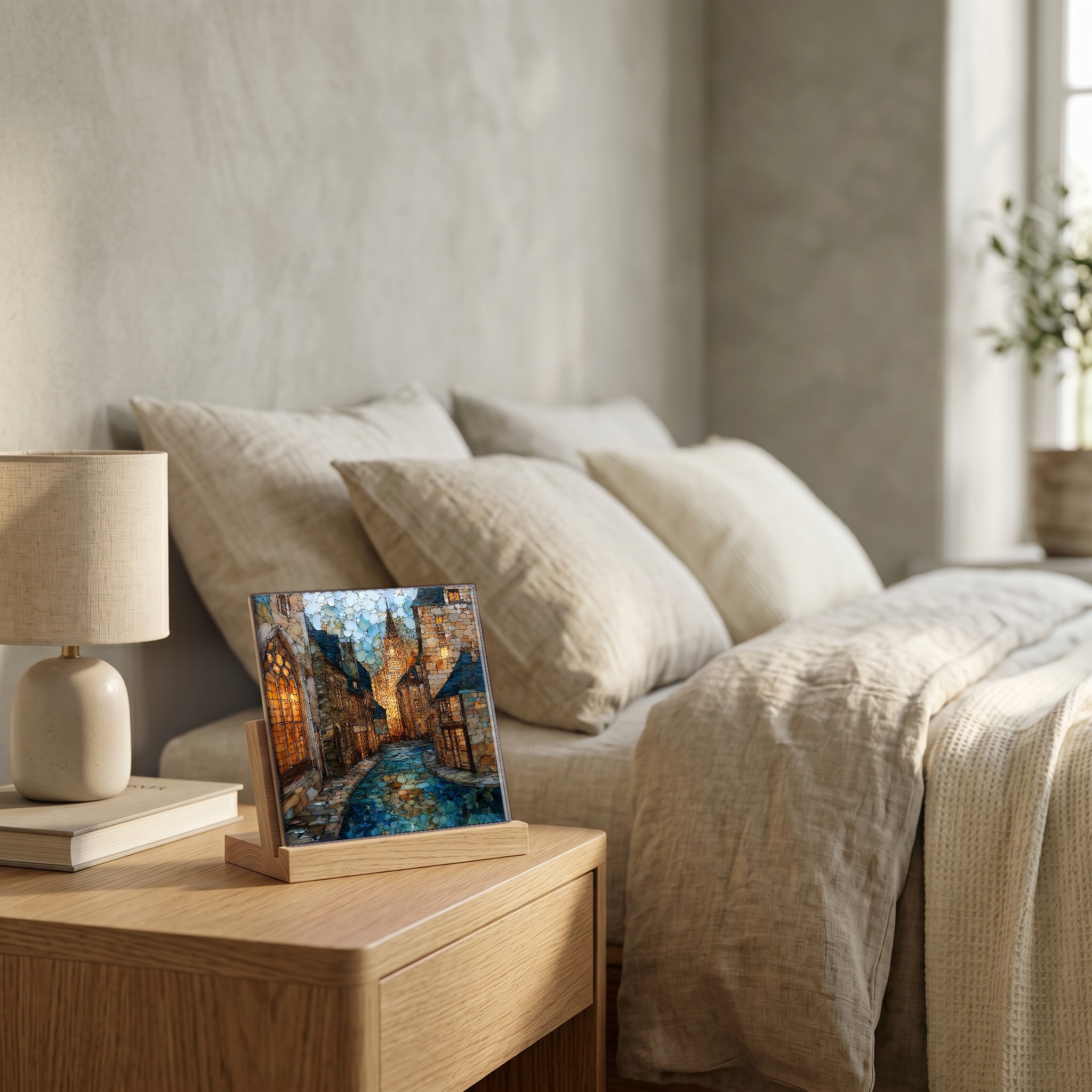
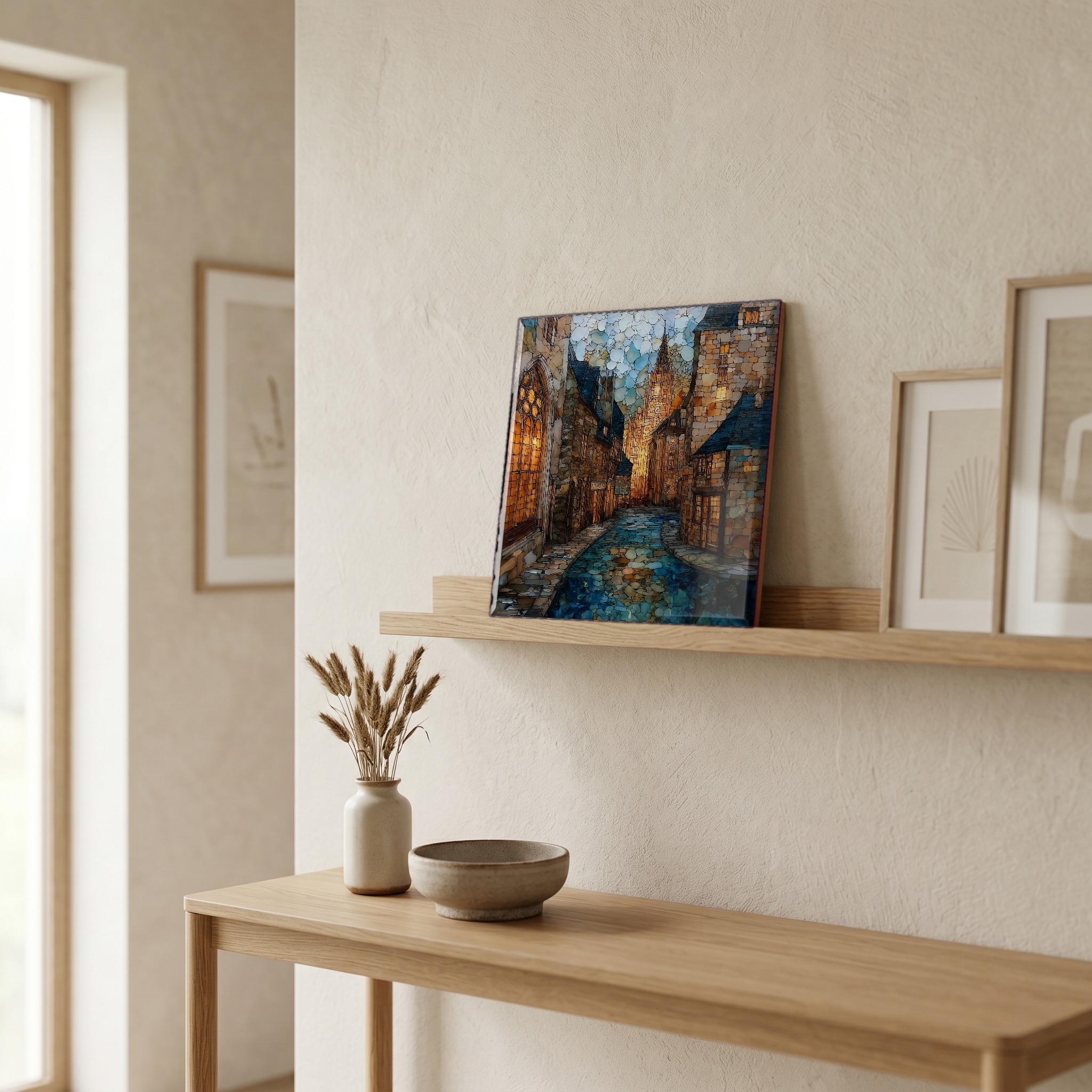
“The street that drops from the old town of Dinan down to the Port on the Rance, with half-timbered houses leaning over a cobbled grade so steep walkers brace their knees. Artisans work in the ground-floor windows: a weaver here, a glassblower there, a bookbinder near the foot. The descent is slow because the stones are slick and worn, and slow because no one really wants to hurry past these doorways. At the foot, the river and the old stone bridge. The climb back is a different feeling.
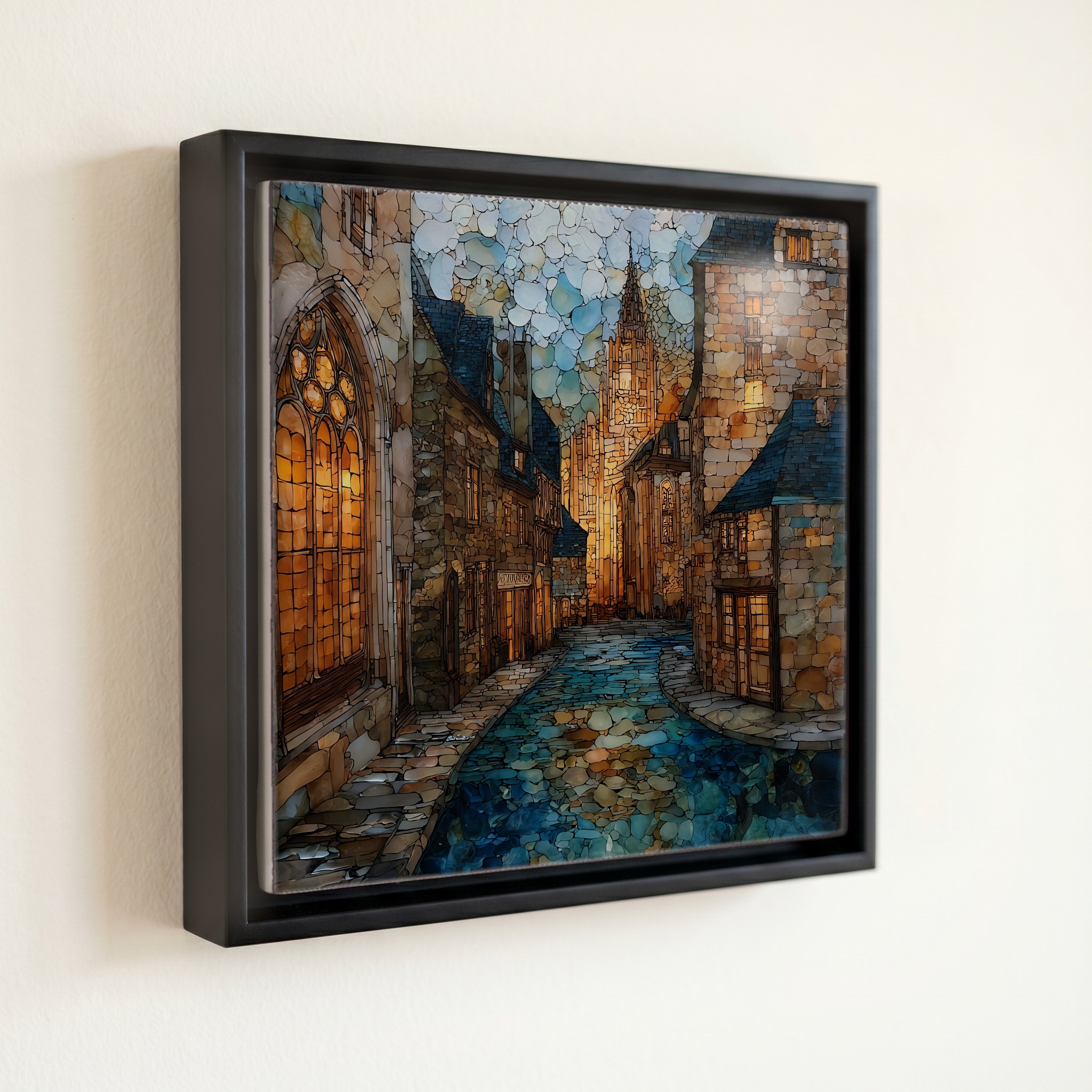
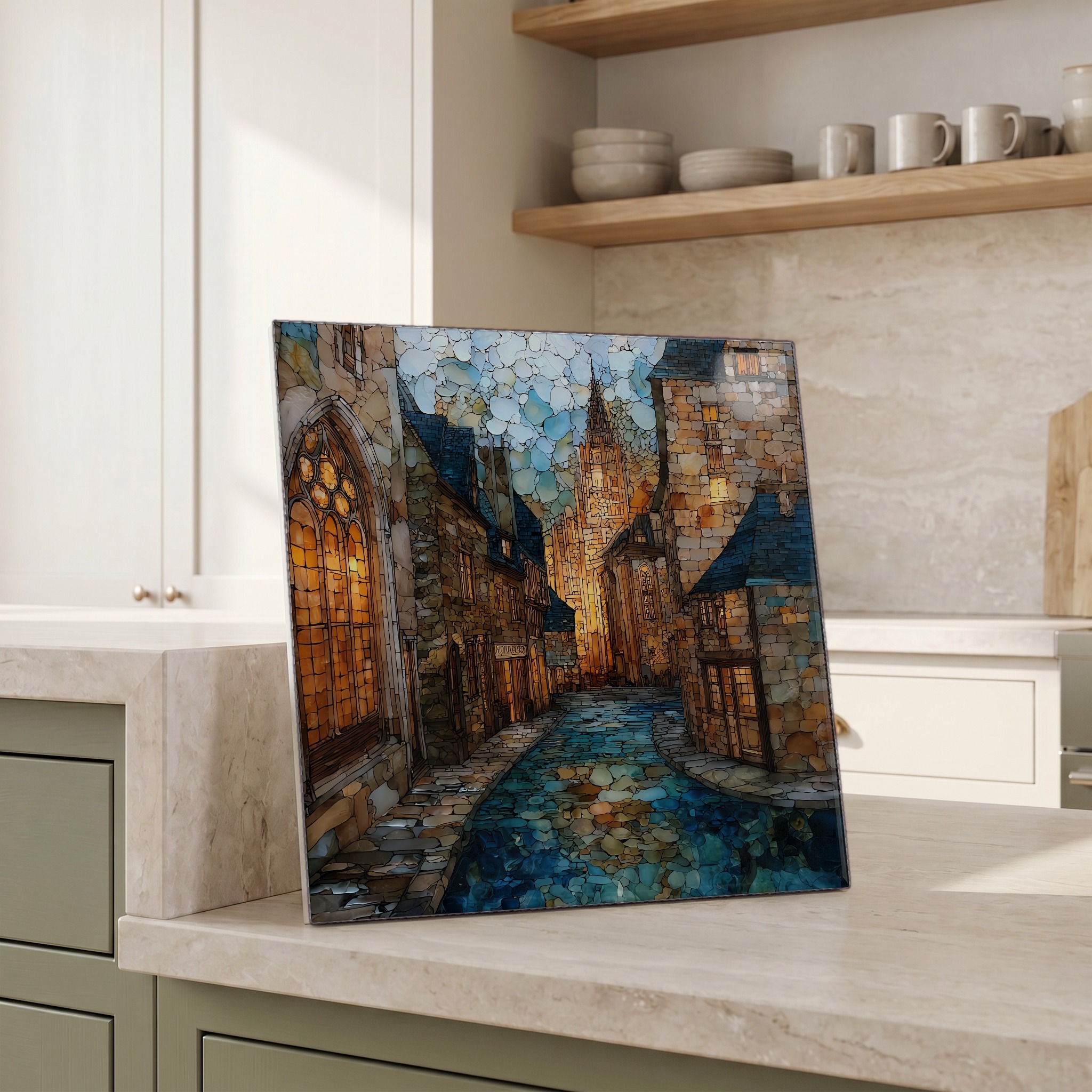
Rue du Jerzual, on ceramic.
Each tile is finished by hand in our Knoxville studio. Artwork is slowly infused into the ceramic surface under high heat and pressure, and rests beneath a thin glossy finish. The colour lives in the surface, not on top of it.
Pick any four 4-inch tiles — National Parks you've been to, a Smokies set, the four seasons of one place. $ for a set of , cork-backed, ready to live on the table.
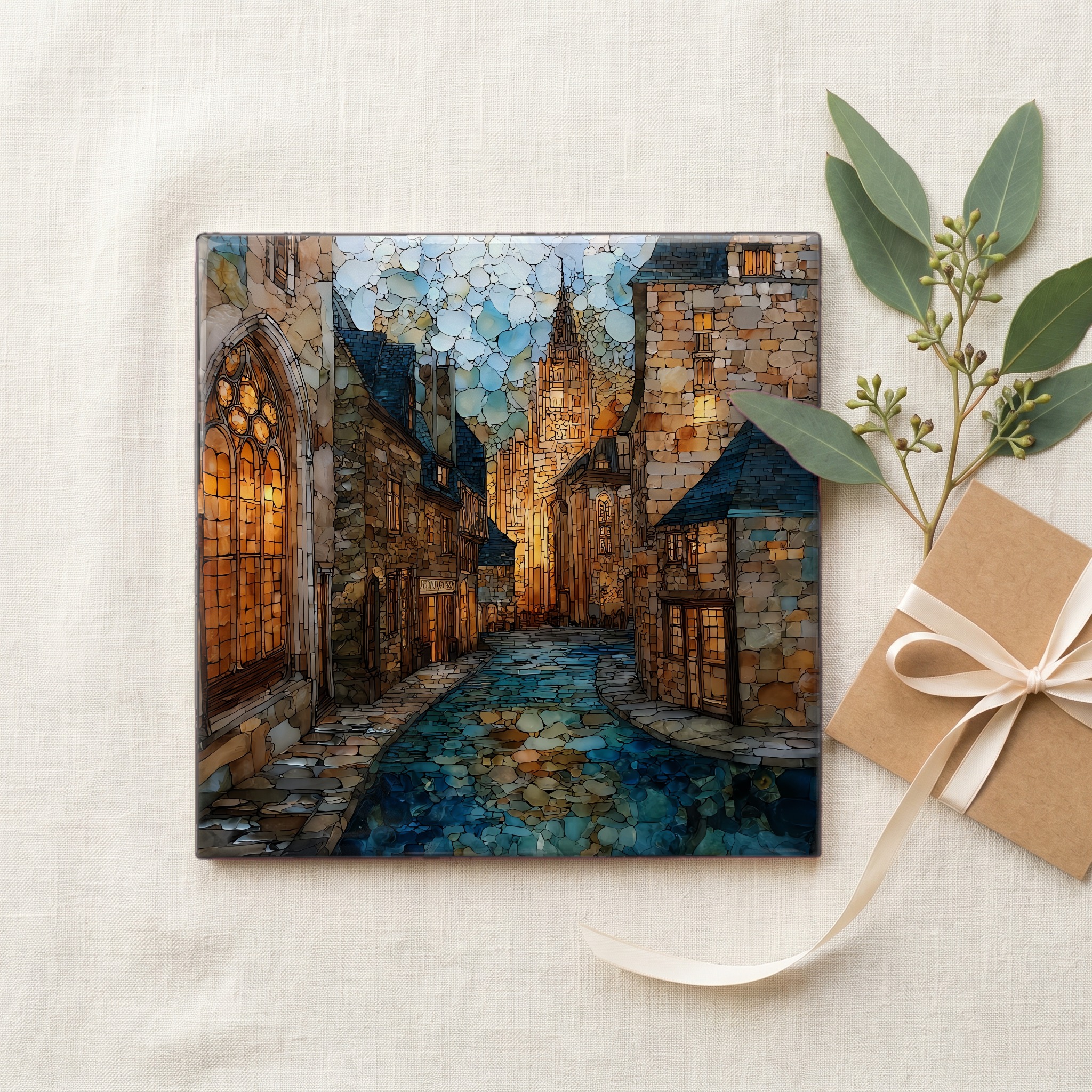
Each tile ships in a kraft box, tied with cream ribbon, with a handwritten note from the studio if you'd like to add one.
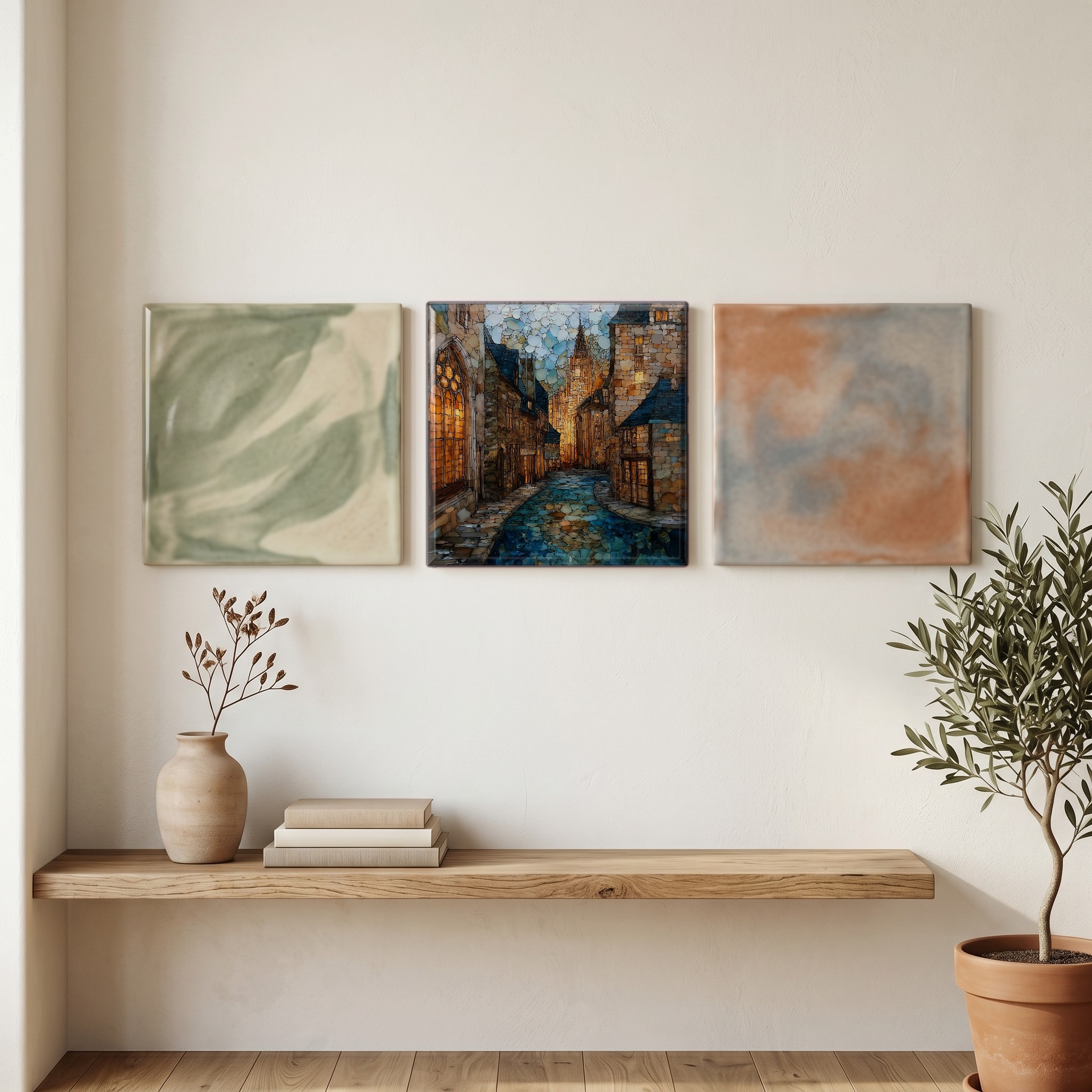
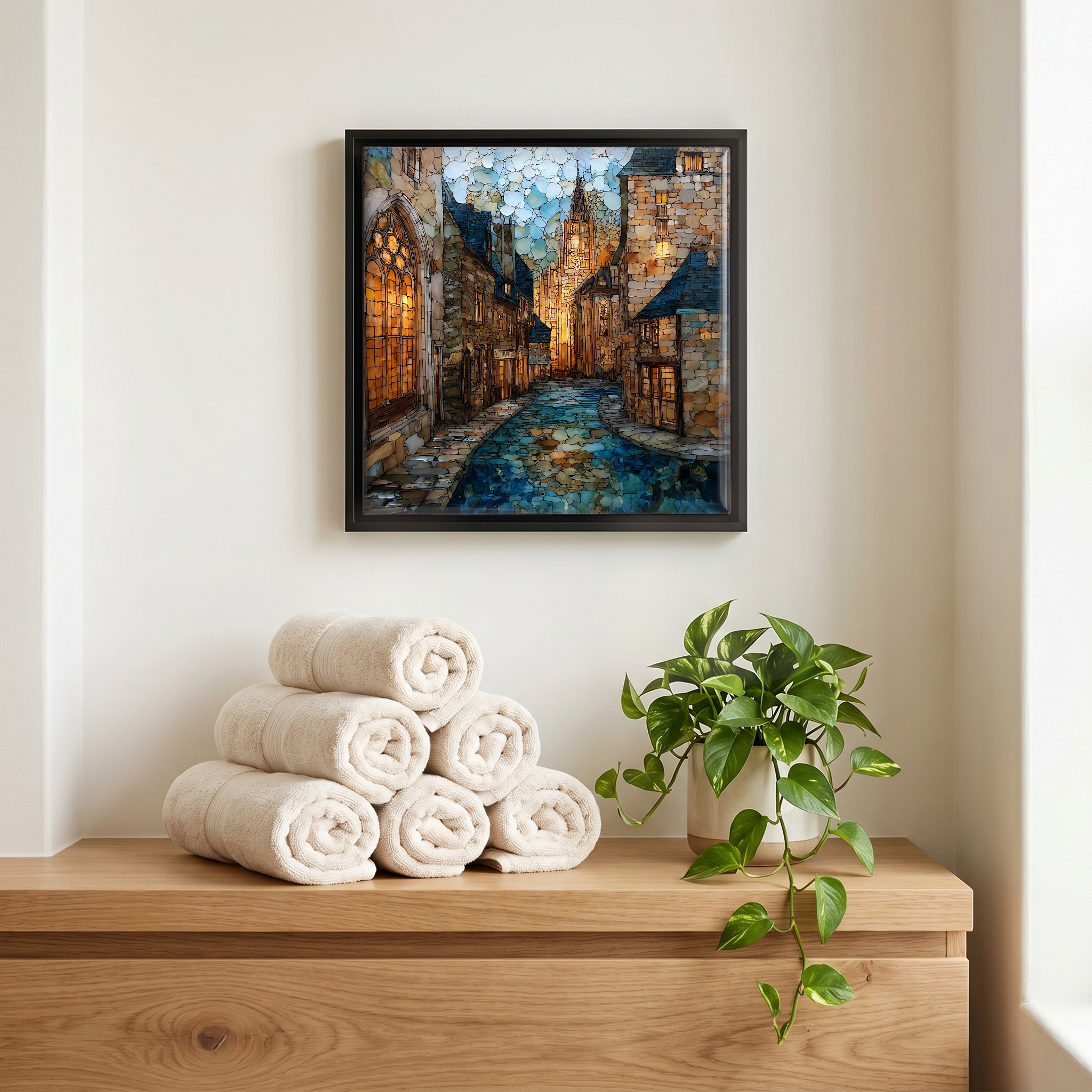
Three or five different vistas, hung together — a chapter of places you've been, or want to go.
The place, in three passes.
Rue du Jerzual runs from the Porte du Jerzual, a medieval gate in Dinan's ramparts, down a steep grade to the small Port on the Rance river. With its continuation Rue du Petit-Fort, it forms the historic commercial route that connected the walled town to the river port, and onward by the tidal Rance to Saint-Malo and the English Channel. The route was a working artery from the medieval period through the eighteenth century ([Dinan tourism office](https://www.dinan-capfrehel-tourisme.com/)). Dinan sits in the Côtes-d'Armor department of Brittany, about 30 kilometres south of Saint-Malo and 55 kilometres north-east of Rennes ([Wikipedia](https://en.wikipedia.org/wiki/Dinan)). The street is pedestrian. The cobbles are original.
The houses lining the descent are colombages, half-timbered structures built between the fifteenth and seventeenth centuries, with overhanging upper storeys, exposed oak frames, and slate roofs in the Breton vernacular. Many are listed under France's Monuments Historiques register ([French Ministry of Culture](https://www.pop.culture.gouv.fr/)). The cobbles underfoot are local granite, set close and polished smooth by six centuries of foot traffic, hand-cart wheels, and weather. After rain the surface goes slick and the descent is harder than the climb. The Porte du Jerzual at the top is one of four surviving medieval gates in Dinan's circuit of ramparts. The whole streetscape sits inside the city's protected secteur sauvegardé.
The street is pedestrian and steep enough that some shopkeepers warn visitors to wear soft-soled shoes. Most of the artisan workshops along the descent open by mid-morning and close in late afternoon, with longer hours from Easter through the end of September ([Dinan tourism office](https://www.dinan-capfrehel-tourisme.com/)). The makers vary by year; recent residents have included weavers, glassblowers, leatherworkers, bookbinders, ceramicists, and a small chocolaterie near the bottom. The working-craft character is the constant. At the foot, the small Port de Dinan sits on the Rance river beside the medieval Pont de Dinan. The walk down takes about ten minutes. The walk back up takes longer.