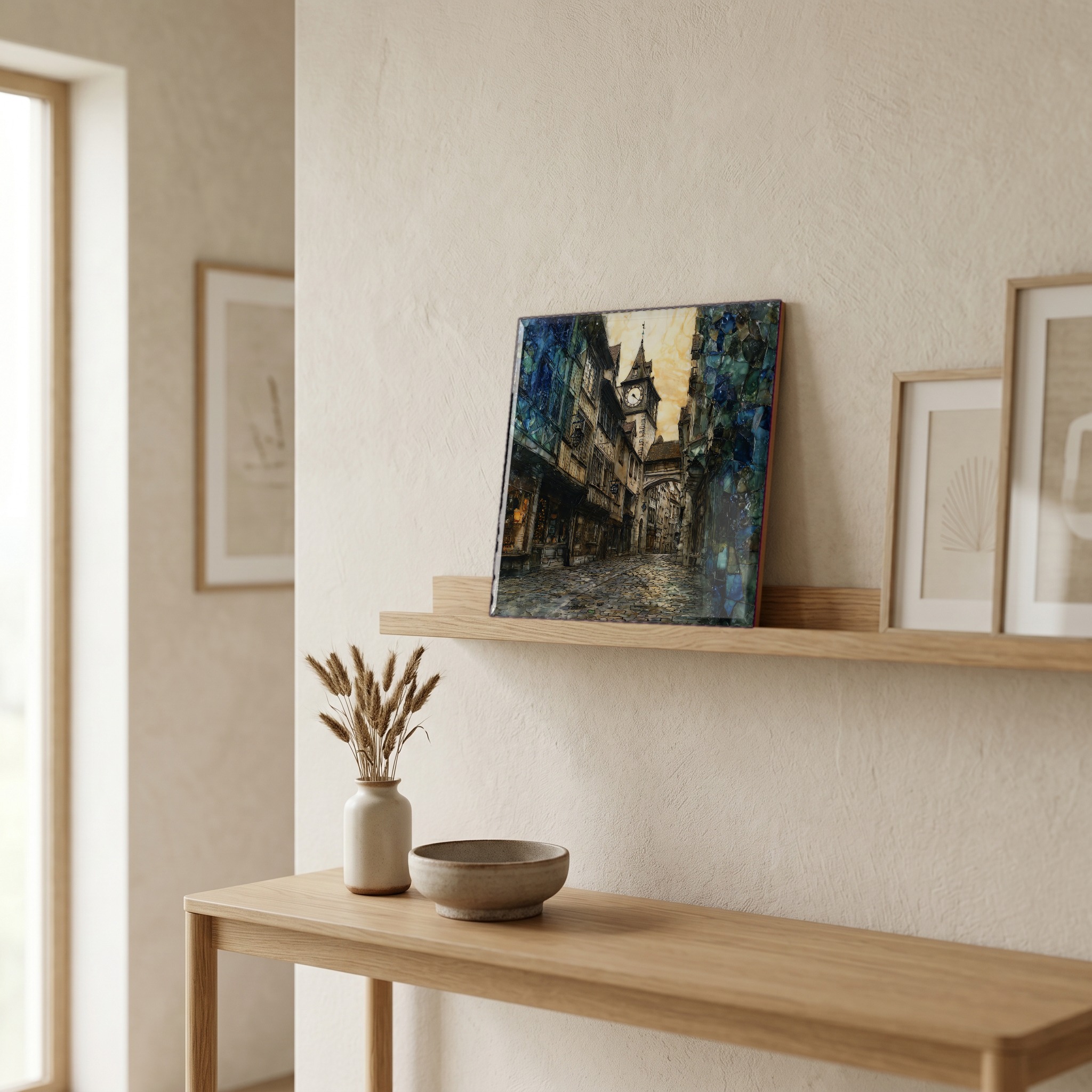
Wender·Vista
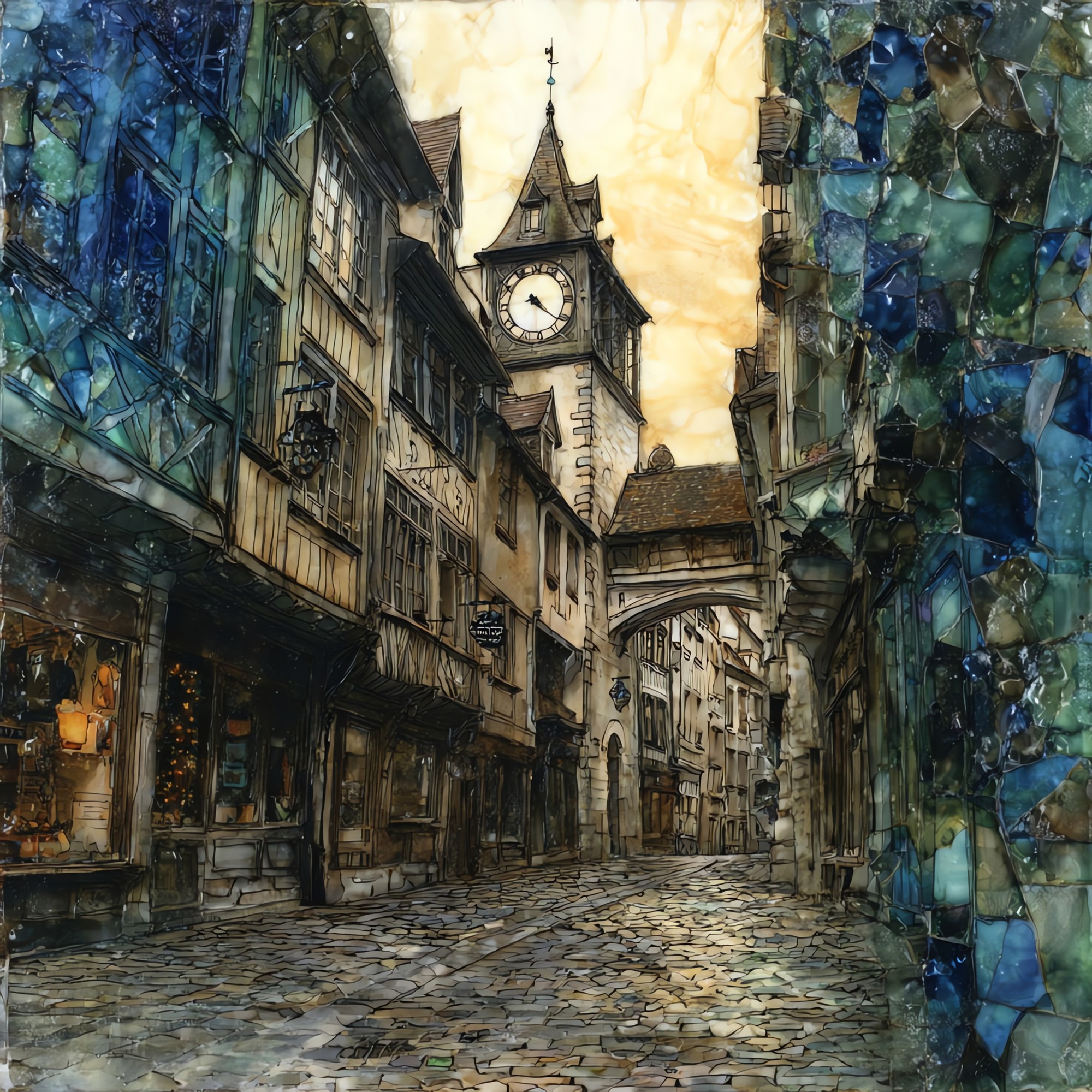
Rue du Gros-Horloge Rouen
shown on ceramic, 12-inch tileFrance
in old Rouen, between the cathedral and the old market square

Rue du Gros-Horloge Rouen

— a clock with one hand, gold above the street.

Where it lives

Not only on a wall.

A small tile on the nightstand catching the morning. A larger one above the fire. Yours, wherever you spend the slow hours.
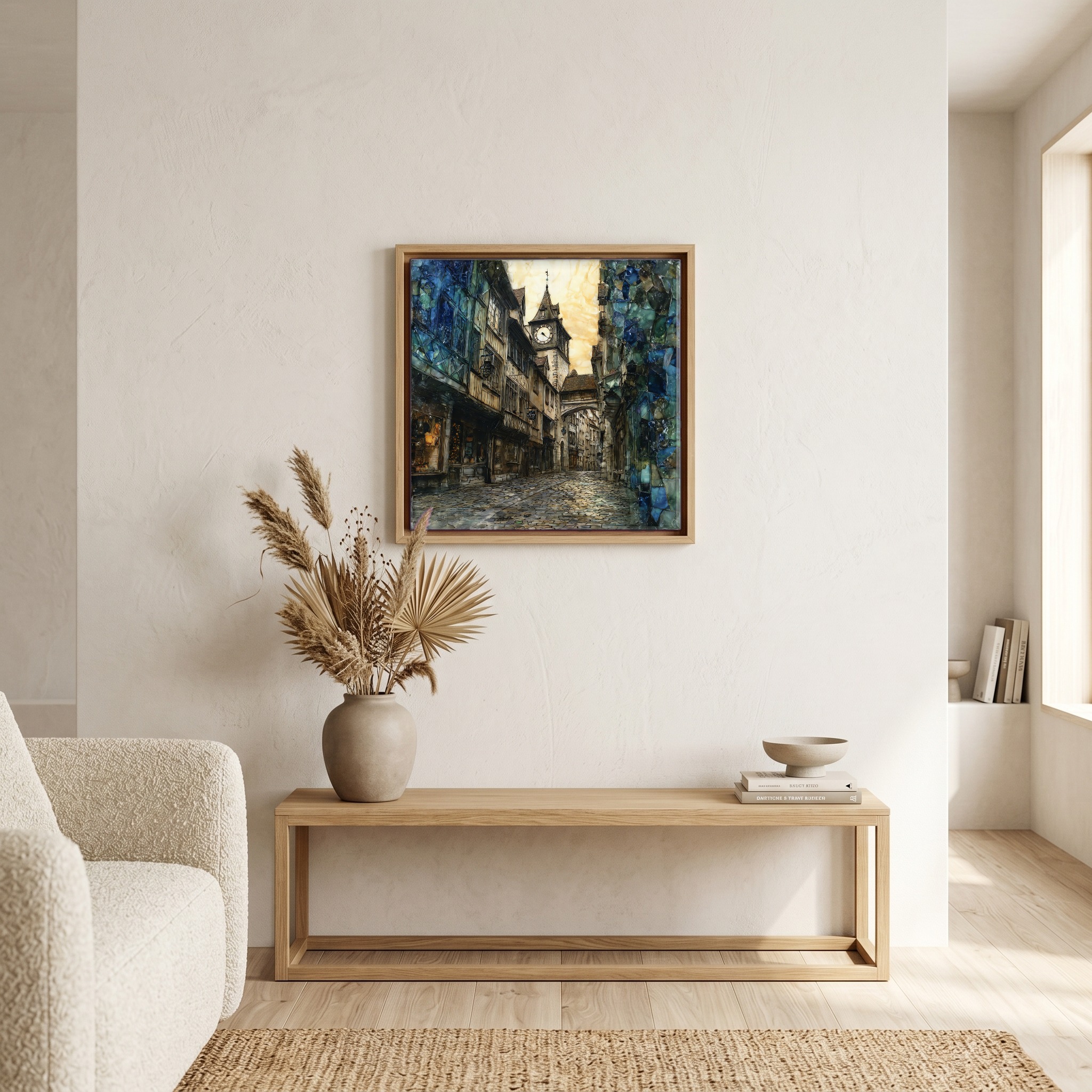
Above the bench, in a warm oak surround.
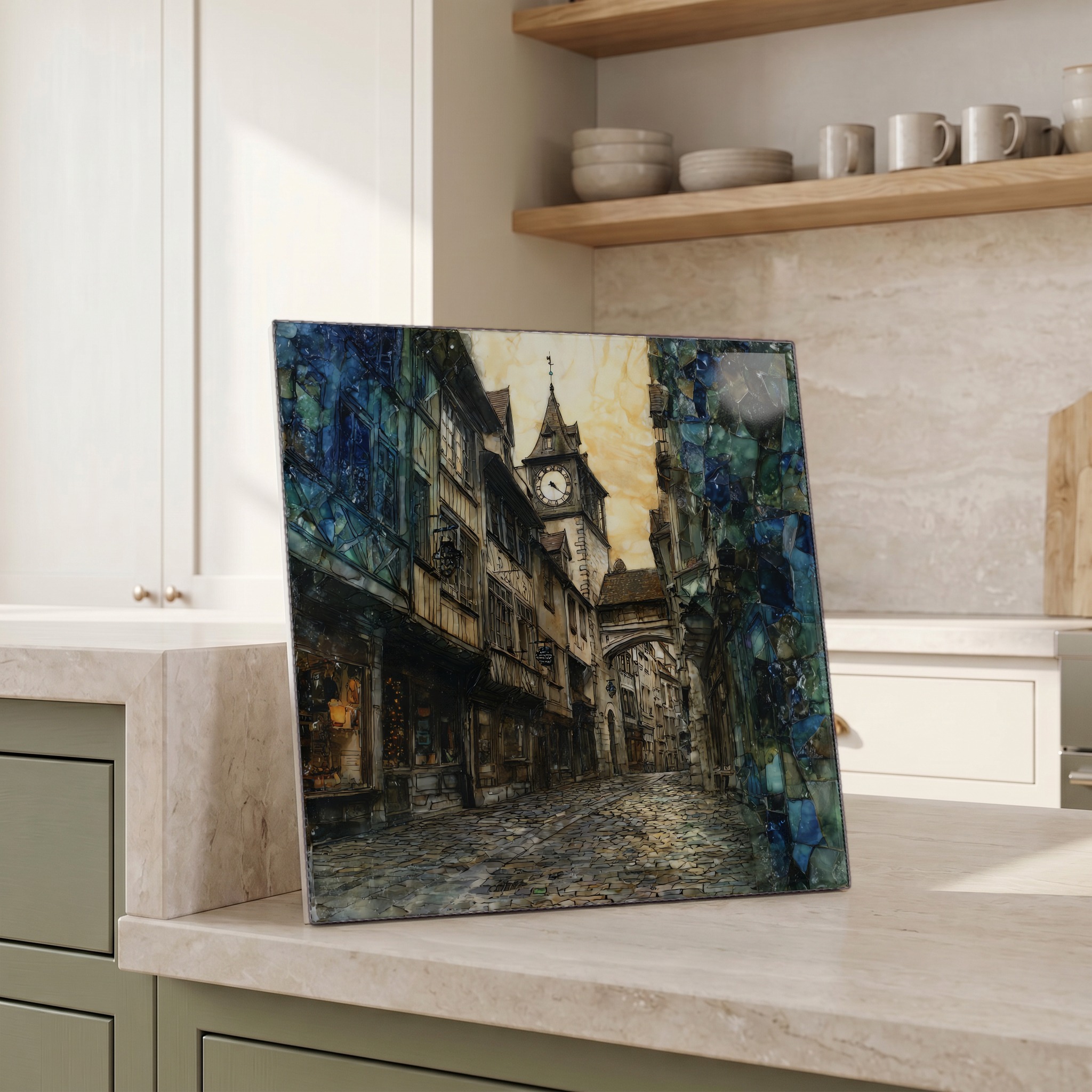
Beside the kettle, propped on the counter.
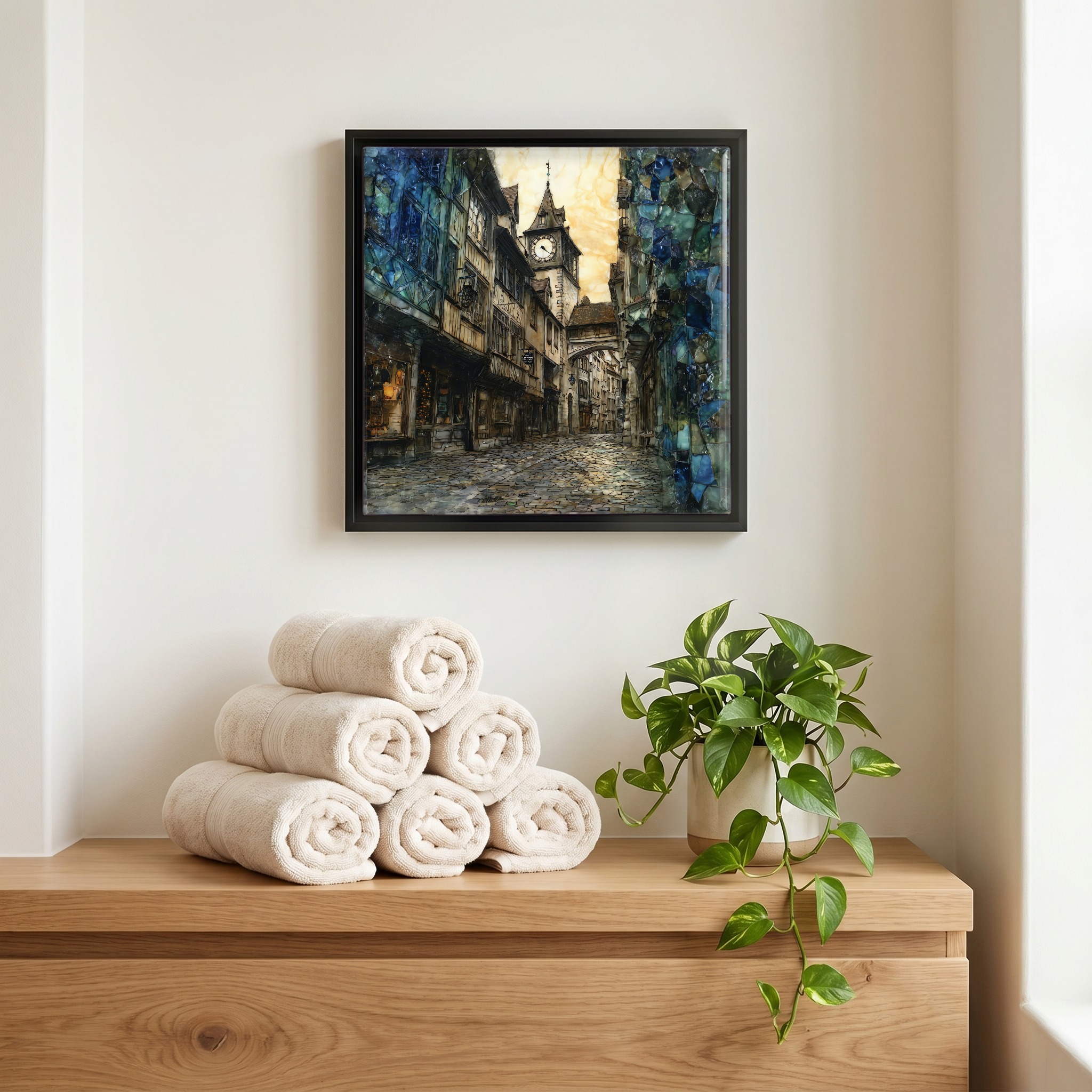
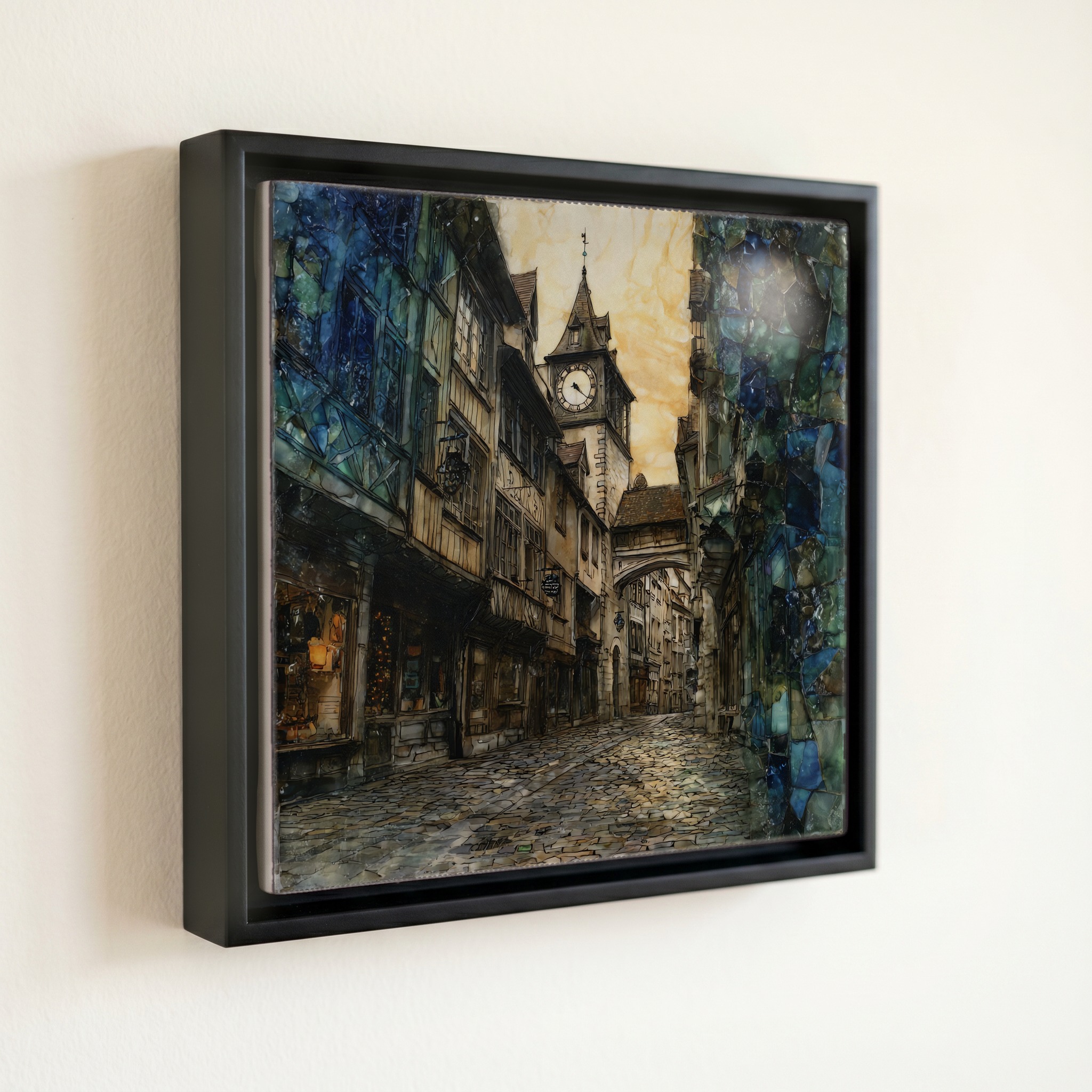
Above the linens, in a slim black surround.
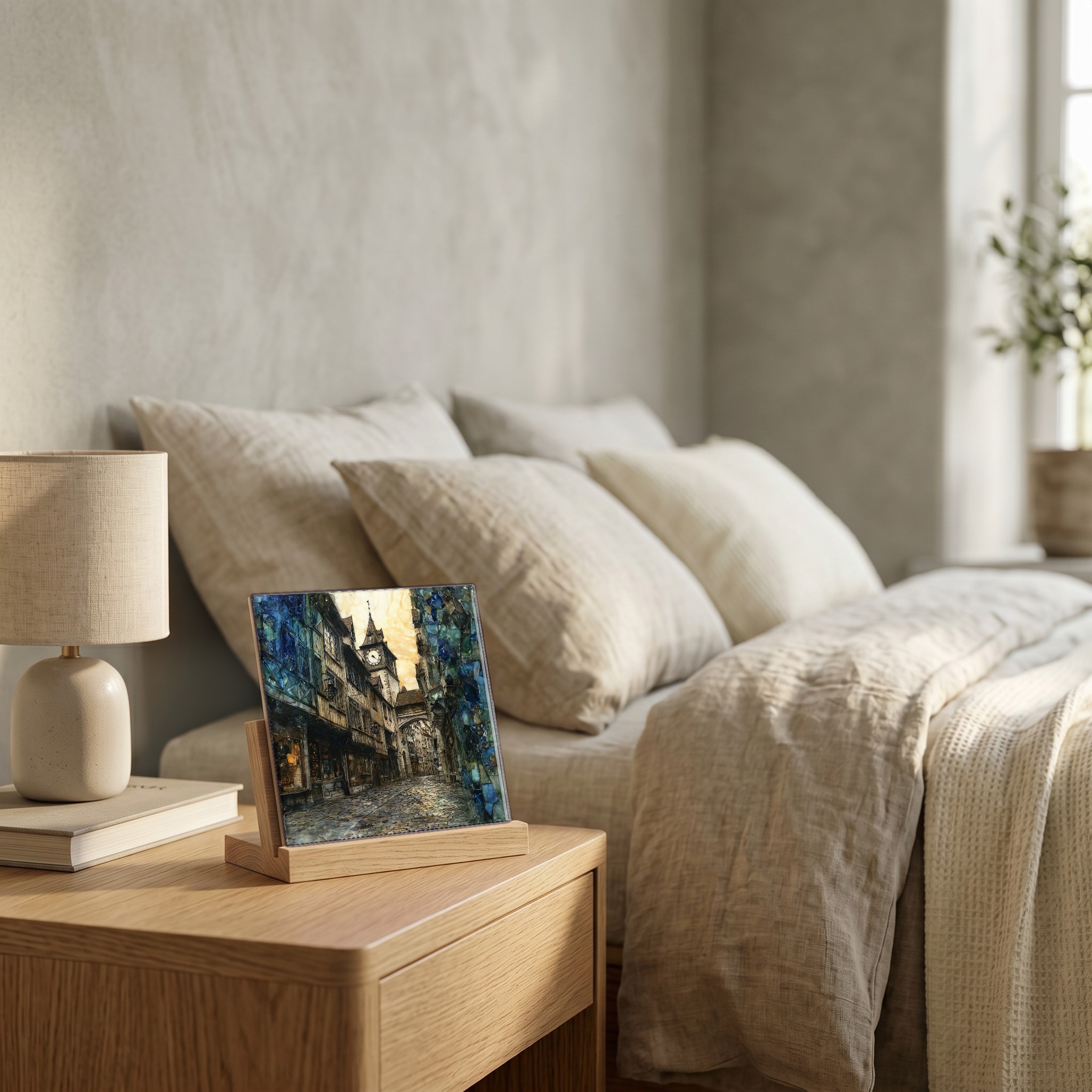
On the nightstand, on a light oak stand.
On a picture ledge, where the light comes in.
a note from the studio

A gilded clock with a single hand keeps the hour above this lane in old Rouen. The Gros-Horloge has straddled the street on its Renaissance arch since 1527, though the works behind the dial were running more than a century before that. The street runs from the cathedral square to the old market, the Place du Vieux-Marché, where Joan of Arc was burned in 1431, a short walk away. Half-timbered houses lean over the arch in colombage rows. The street has been pedestrian since the early seventies, one of the first in France. Shoppers pass under the clock without looking up. The clock does not mind.
from the studio
shown in a slim black floating frame · 6 × 6 in
— bring it home

Rue du Gros-Horloge Rouen, on ceramic.

Each tile is finished by hand in our Knoxville studio. Artwork is slowly infused into the ceramic surface under high heat and pressure, and rests beneath a thin glossy finish. The colour lives in the surface, not on top of it.

What kind of piece?
One tile — square or rectangle.
How big?
the popular one — counter, shelf, nightstand
6 × 6 in · 15 cm · 1.6 lb
Surface finish
A clear glossy finish — the artwork reads as if under resin. Ideal for show-pieces and framed wall art.
How it sits
A hidden cleat — sits ¼″ proud of the wall.
$58
Hand-finished and shipped from our studio at the foot of the Smokies. On your wall in about ten days.
size
6 × 6 in
15 cm
weighs
1.6 lb
solid in the hand
surface
ceramic, hand-finished
art rests beneath a thin glossy finish
from
Knoxville, TN
our family studio, at the foot of the Smokies
— start a Coaster Set

Pick any four 4-inch tiles — National Parks you've been to, a Smokies set, the four seasons of one place. $ for a set of , cork-backed, ready to live on the table.
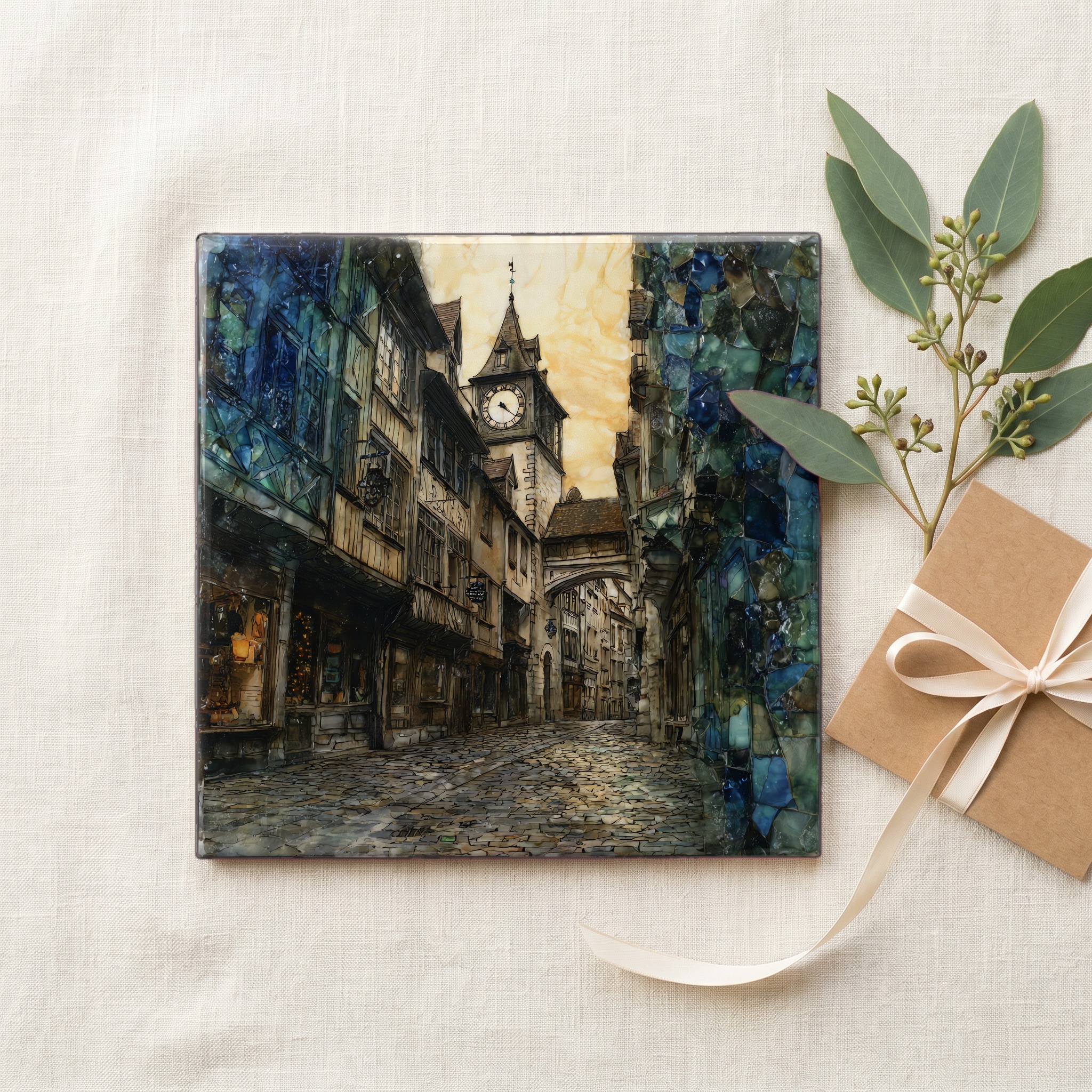
comes gift-ready
comes gift-ready

Each tile ships in a kraft box, tied with cream ribbon, with a handwritten note from the studio if you'd like to add one.
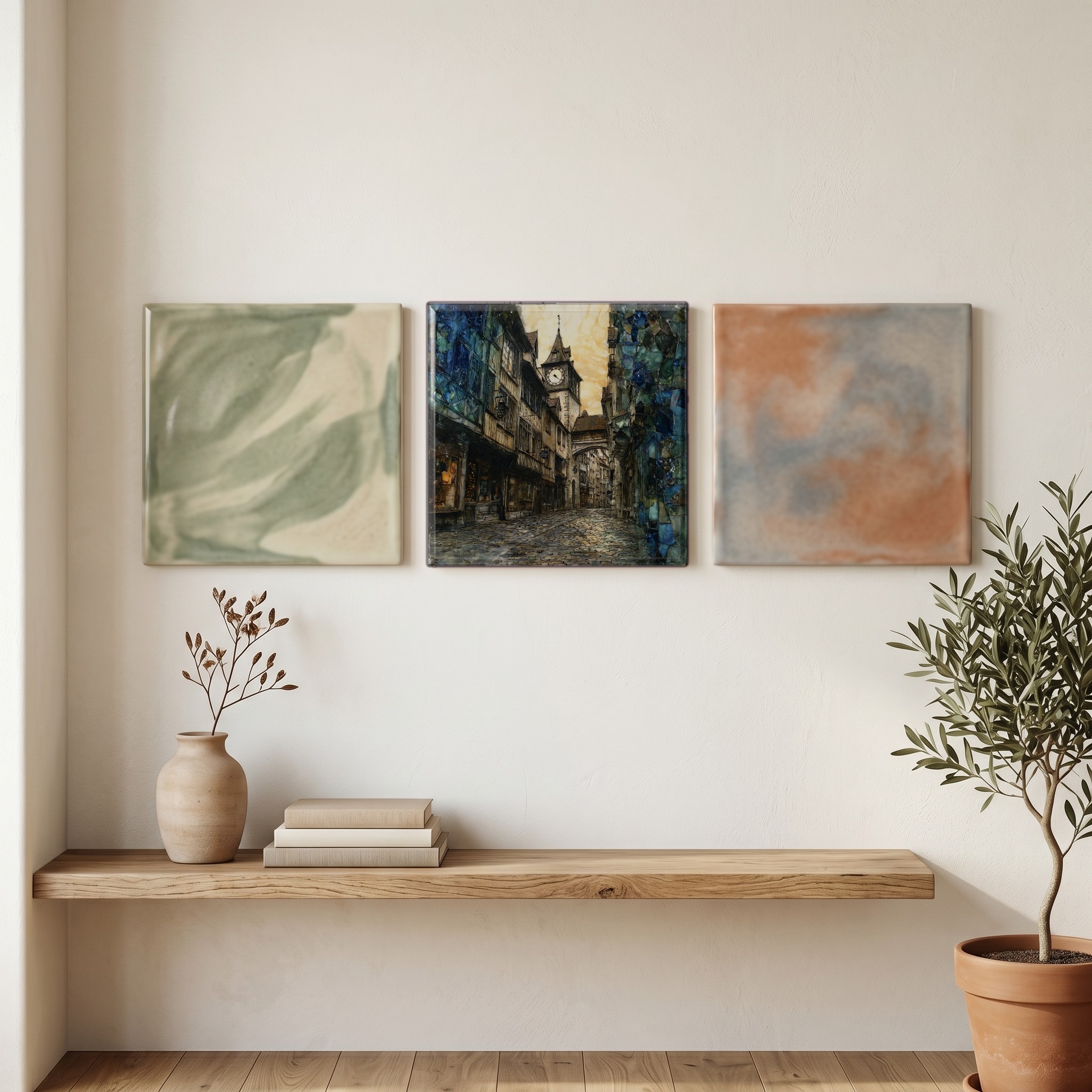
or build a grouping
or build a grouping

Three or five different vistas, hung together — a chapter of places you've been, or want to go.

about Rue du Gros-Horloge Rouen

The place, in three passes.

A little of what's known, in case you fall down the rabbit hole — or want to go see it yourself.
the place

Rue du Gros-Horloge runs through Rouen's medieval old town, between the Cathédrale Notre-Dame and the Place du Vieux-Marché, in Normandy. Rouen is the historic capital of the region, on the Seine about 135 km northwest of Paris. The street takes its name from the gilded clock, the Gros-Horloge, that has spanned its width since 1527, set into a Renaissance arch by the architect Jacques Lesueur. The street was pedestrianised in 1971, among the earliest in France, and is the main commercial spine of the old quarter. The cathedral at the eastern end is the building Claude Monet painted in series, around thirty times, between 1892 and 1894.

the stone

The arch carrying the clock is the 1527 work of Jacques Lesueur, in the early French Renaissance style: a low semicircular vault decorated with classical reliefs, beside the older belfry tower and above the street. The clock face measures around 2.5 metres across and is gilded, with a single hand showing the hour. The street it crosses is lined with colombage houses, timber-framed Norman buildings of the 15th to 18th centuries, many leaning slightly into the lane above the paving. The belfry beside the clock was built in 1389 and is older than the arch by more than a century.

— informed by Wikipedia: Gros-Horloge
the visit

The clock and the belfry can be visited together: ticket-holders climb the medieval belfry stair to the clock's mechanism, then continue to a panoramic terrace over the rooftops of old Rouen. The works inside are the original 14th-century movement, one of the oldest functioning clock mechanisms in Europe, restored between 1997 and 2006. The street below is closed to vehicles and busy with shoppers most afternoons. The early morning is the quiet hour, before the shops open. The cathedral square is a five-minute walk one way; the Place du Vieux-Marché, with its modern church marking the site of Joan of Arc's execution in 1431, is five minutes the other.

where
France · Rouen, Normandy
position
49.4434° N · 1.0917° E
the neighborhood

What's nearby.

A handful of named places within an hour's walk or short drive. Some we've already painted; some we will.
0.3 km E
Cathédrale Notre-Dame de Rouen
Gothic cathedral
0.3 km W
Place du Vieux-Marché
historic square
0.6 km E
Église Saint-Maclou
Flamboyant Gothic church
0.7 km E
Aître Saint-Maclou
medieval plague cemetery
0.7 km NE
Église Saint-Ouen
Gothic abbey church
N
Rue du Gros-Horloge Rouen
Cathédrale Notre-Dame de Rouen
Place du Vieux-Marché
Église Saint-Maclou
Aître Saint-Maclou
Église Saint-Ouen
common questions

What people ask.

A few questions we get about Rue du Gros-Horloge Rouen — and about bringing the piece home.
about the place

The Gros-Horloge stands on a Renaissance arch over the street of the same name in Rouen, Normandy, in northern France. Rouen is about 135 km northwest of Paris, on the Seine. The arch sits between the Cathédrale Notre-Dame and the Place du Vieux-Marché, in the medieval old town.

The clock movement dates from 1389, making it one of the oldest functioning clock mechanisms in Europe. The gilded dial and the Renaissance arch carrying it across the street were added in 1527, designed by the architect Jacques Lesueur. The adjacent belfry tower was also built in 1389.

Single-hand clocks were standard in 14th-century Europe; the minute hand was a later invention. The Gros-Horloge's single hand points to the hour on a dial of 24 spokes, and the time is read to the nearest quarter hour. A separate dial below tracks the day of the week.

Yes. A combined ticket gives access to the belfry, the clock mechanism room, and a panoramic terrace over the rooftops of old Rouen. The interior was restored between 1997 and 2006 and includes interpretive displays on the 14th-century works. Check the Rouen Tourisme office for current hours and prices.

Yes. Rue du Gros-Horloge has been closed to vehicle traffic since 1971, among the first French streets to be pedestrianised. It is now the main shopping spine of the old town, lined with half-timbered houses and ground-floor boutiques between the cathedral square and the Place du Vieux-Marché.

Within a five-minute walk: the Cathédrale Notre-Dame, painted in series by Claude Monet between 1892 and 1894; the Place du Vieux-Marché, where Joan of Arc was burned in 1431, now marked by a modern church; and the Flamboyant Gothic Église Saint-Maclou.

Rouen was the medieval capital of Normandy and the site of Joan of Arc's trial and execution in 1431. It was a major inland port on the Seine and the seat of Norman ducal power, with one of the most complete medieval old towns in northern France. It is now the prefecture of Seine-Maritime.

about the piece in your home

It's been a meaningful gift for many of our customers with French connections. The Gros-Horloge is one of Rouen's most recognised landmarks, and the colombage architecture of the surrounding street reads as instantly Norman. A Small or Medium with a handwritten note from the studio carries well in the post.

The deep blues and burnished golds of the dial, set against the cool stone and timber of the street, suit French Country, European Eclectic, and Old-World Maximalist interiors. It also reads well as a single jewel-tone accent in an otherwise restrained Modern or Minimalist room.

Old-World European aesthetics, sometimes labelled Quiet Maximalism or French Heritage, have been ascendant in interior design since 2024, with a particular emphasis on age, patina, and the handmade. A Norman streetscape with a gilded medieval clock sits squarely inside that current.

A single Large reads well above a console table or a smaller sofa. A 4-tile Mural is the usual recommendation above a standard three-seat sofa. A 9-tile Mural fills a full feature wall and lets the gilded clock face render at near-life size.

Yes. Choose the Dura Satin or Matte finish for any room with steam, splash, or scrubbing: powder rooms, kitchen backsplashes, shower walls. The colour lives inside the ceramic surface and will not lift or fade. The Glossy finish is best kept to dry display walls.

A microfibre cloth and water is enough for most cleaning. For kitchen or bathroom installations in Dura Satin or Matte, a mild non-abrasive cleaner is fine. Avoid bleach, abrasive pads, and acidic descalers. The colour is slowly infused into the ceramic surface under high heat and pressure and is permanent.

Yes. Every WenderVista piece is composed and hand-finished in our Knoxville studio, curated by Reid Wender. The Rue du Gros-Horloge artwork is exclusive to this catalogue and is not licensed from a third-party image library.

if this one stayed with you

A few you might also love.

Hand-picked by the eye that found Sorapis. Same air, same kind of quiet.