Wender·Vista
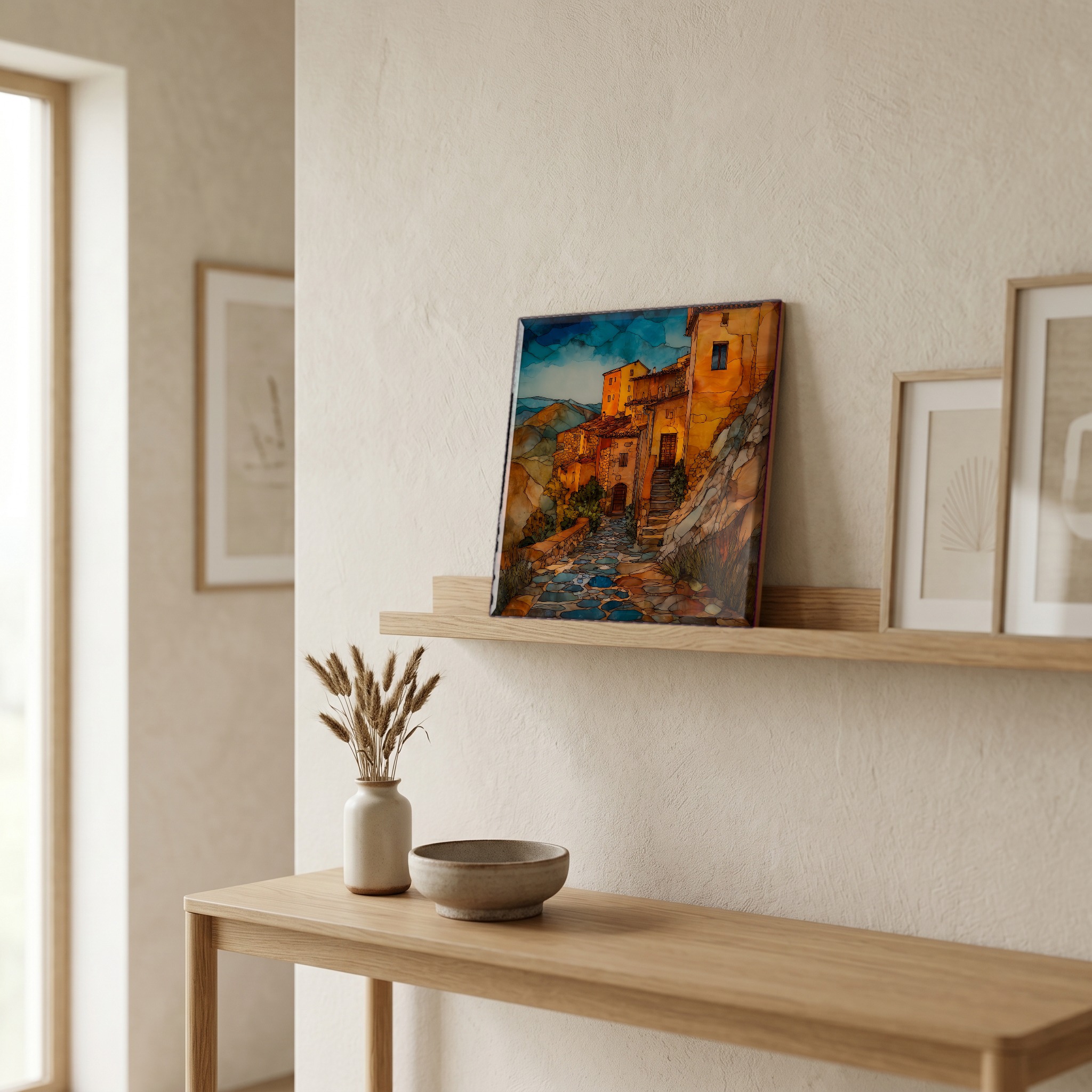
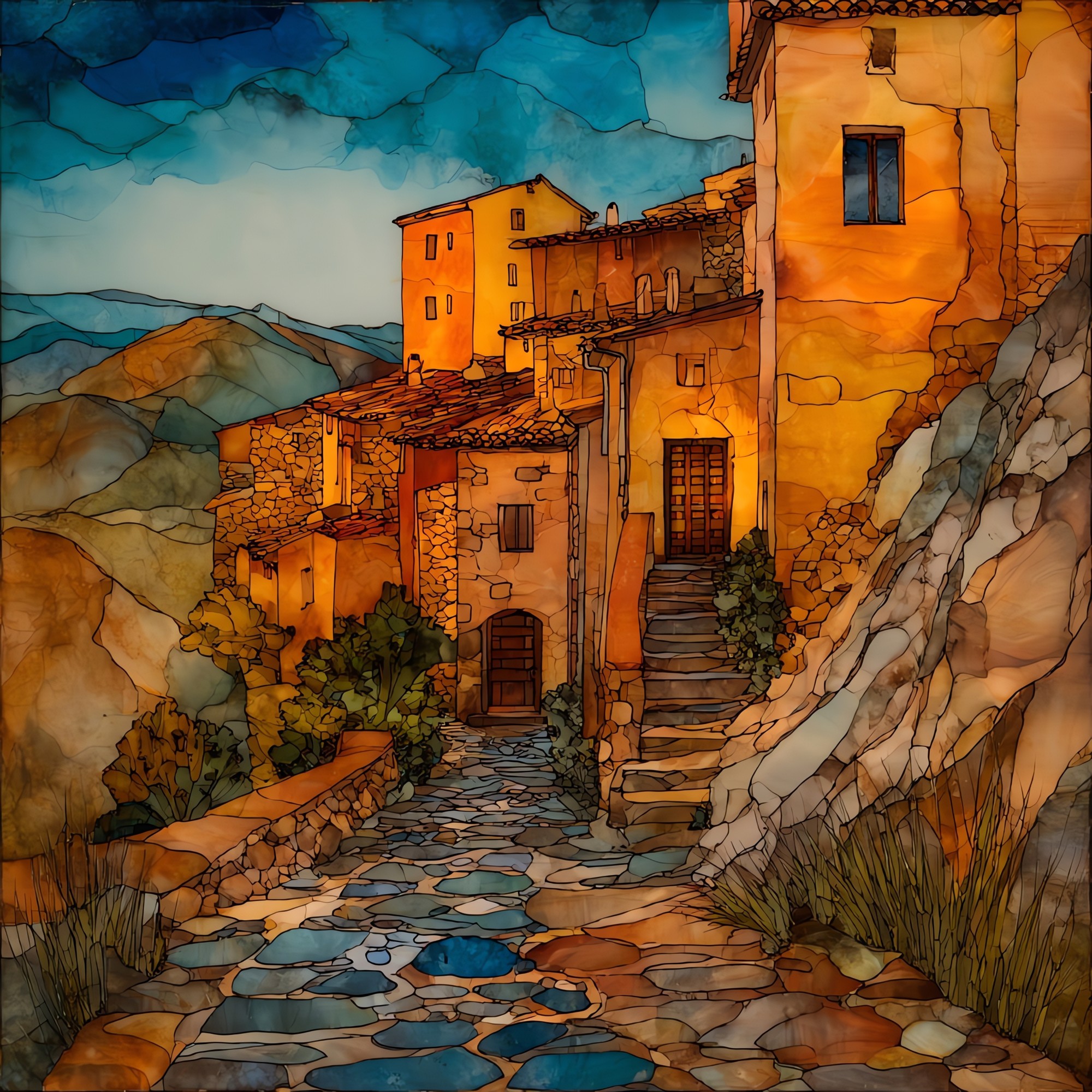
Roussillon Ochre Village
shown on ceramic, 12-inch tileFrance
on a ridge in the Luberon, east of Avignon

Roussillon Ochre Village

— the sunset already in the cliff.

Where it lives

Not only on a wall.

A small tile on the nightstand catching the morning. A larger one above the fire. Yours, wherever you spend the slow hours.
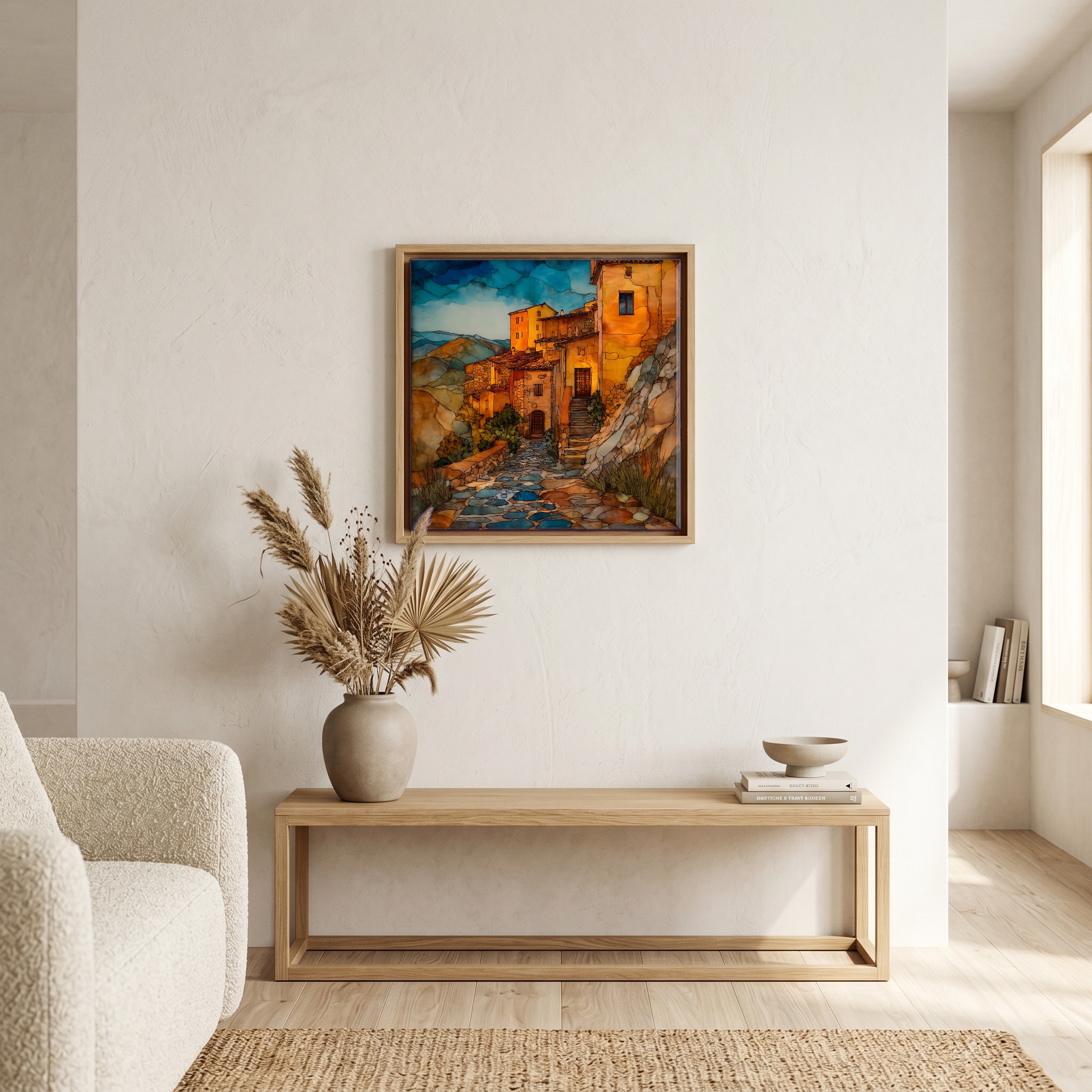
Above the bench, in a warm oak surround.
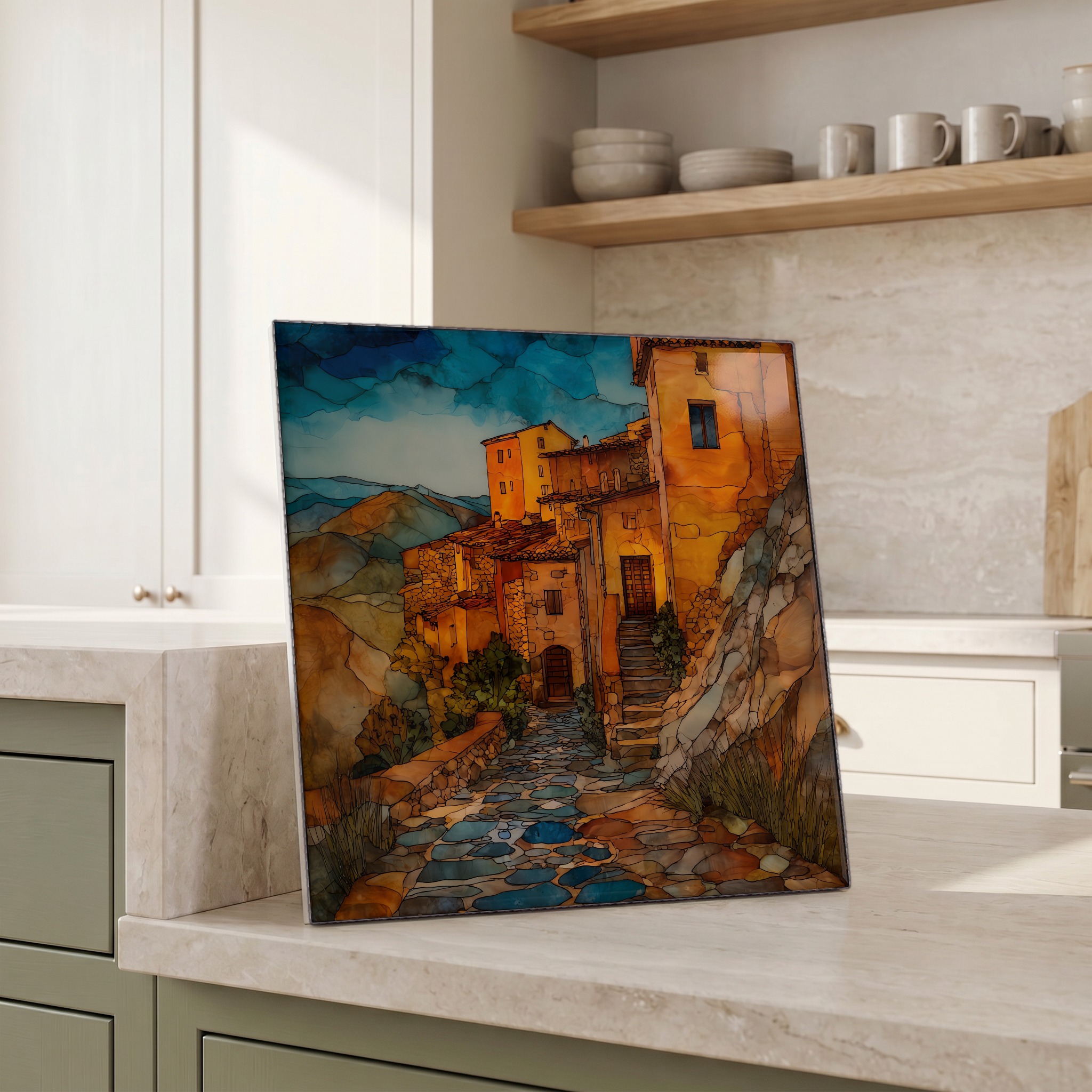
Beside the kettle, propped on the counter.
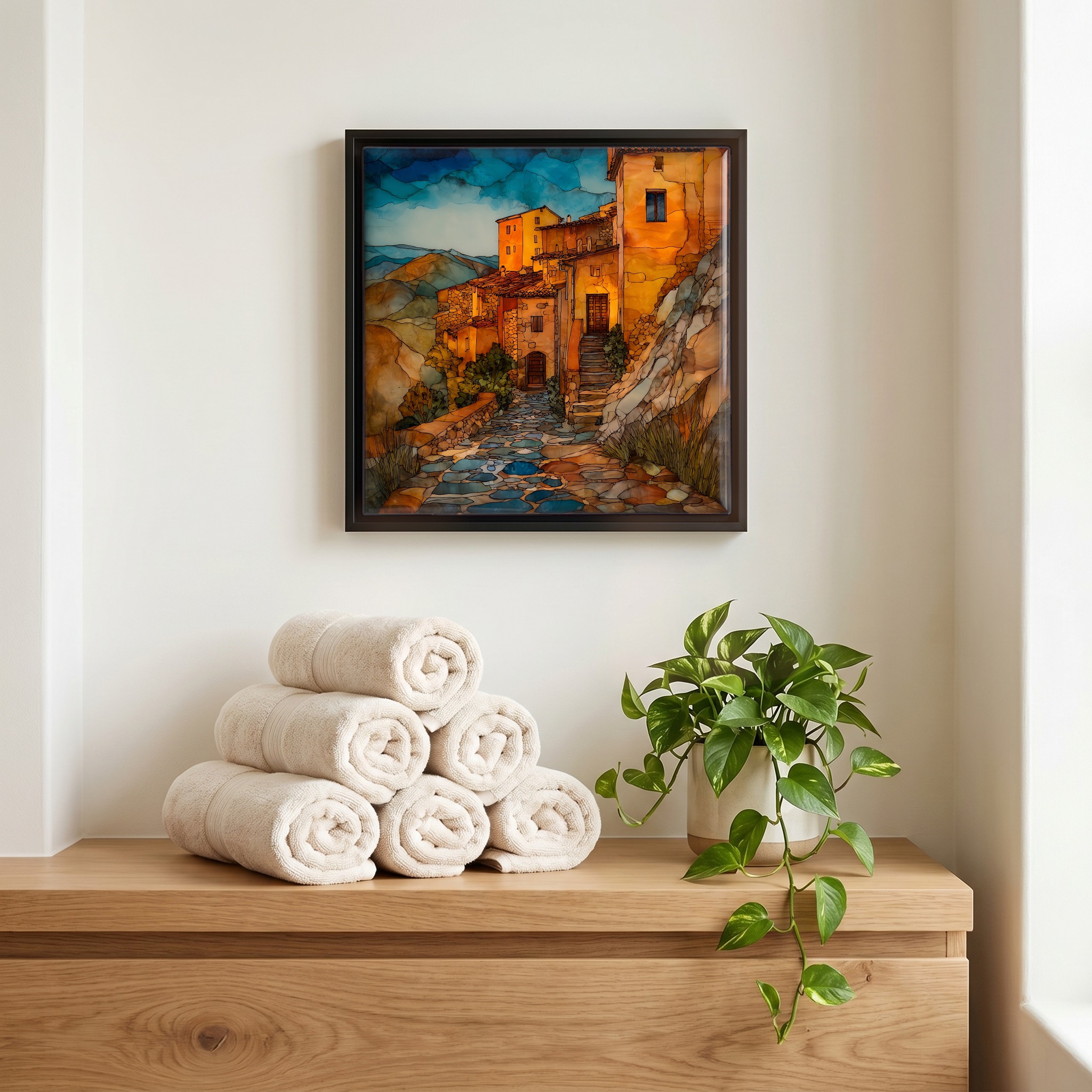
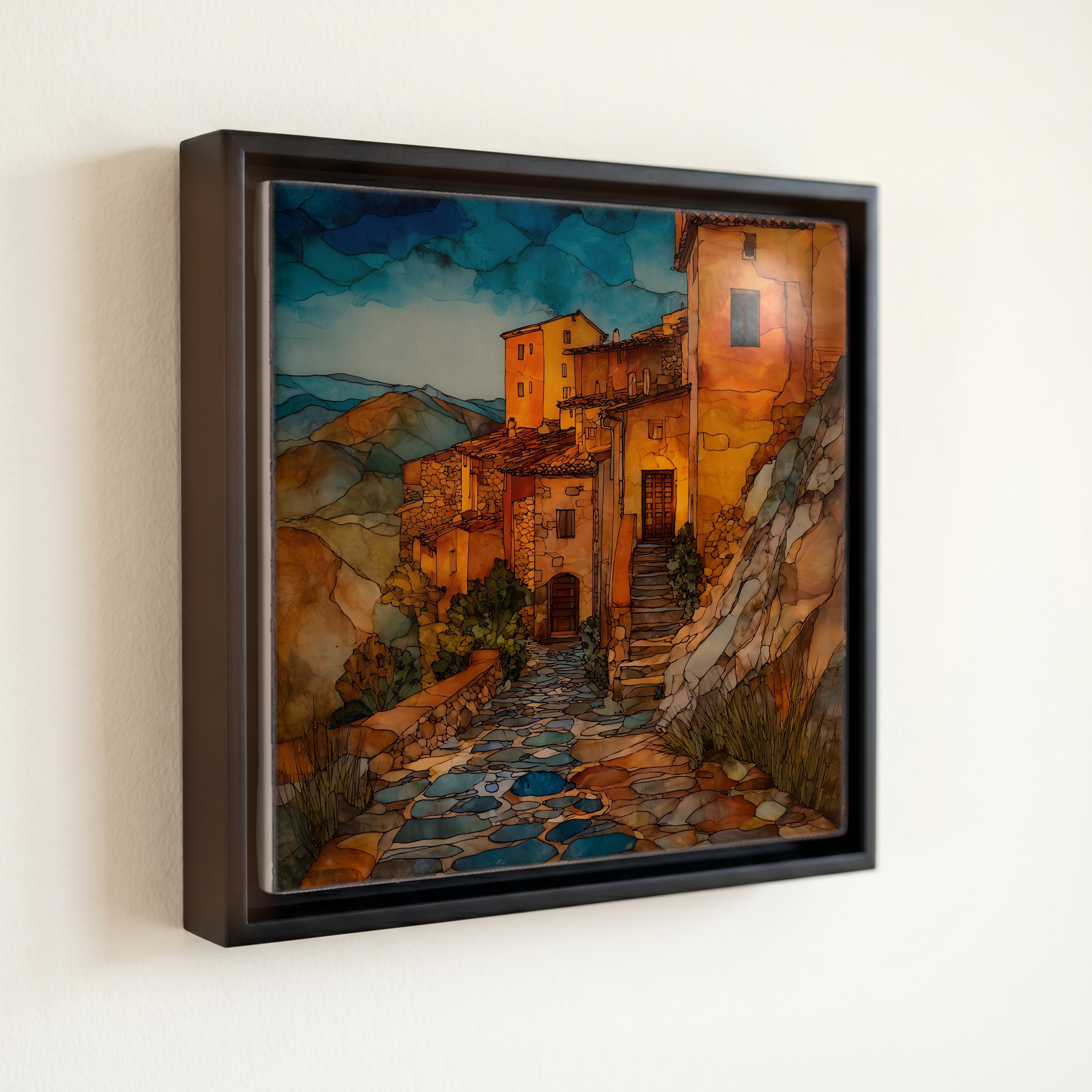
Above the linens, in a slim black surround.
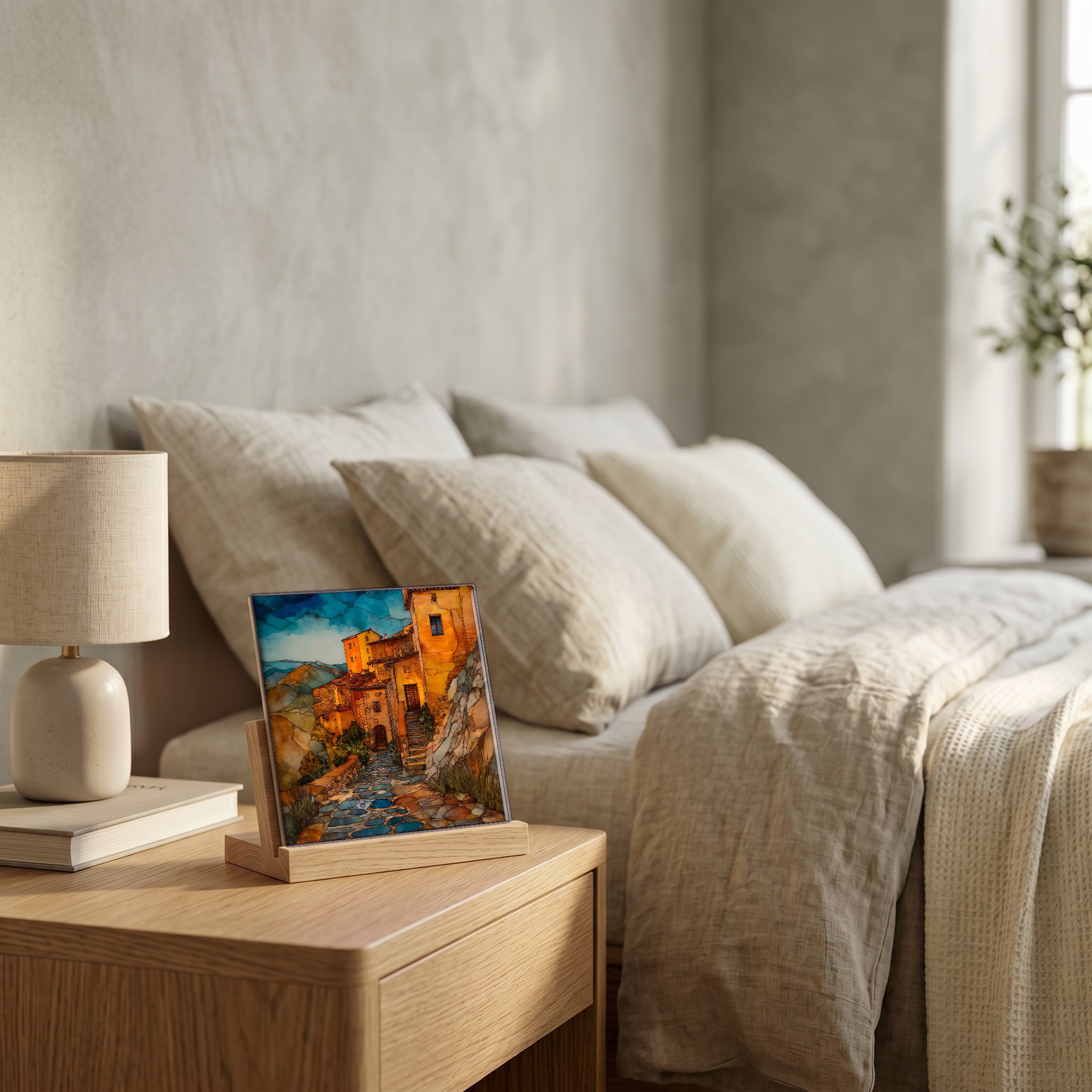
On the nightstand, on a light oak stand.
On a picture ledge, where the light comes in.
a note from the studio

A village built on its own pigment. Roussillon sits above former ochre quarries in the Vaucluse, the red and yellow of the cliffs walked up into the walls of the houses themselves. The Sentier des Ocres is a short loop through the abandoned quarry, pines on top, fire underneath. Most of the ochre work ended a century ago. The colour did not. People come for one of two reasons: to walk the trail at the hour the cliffs go orange, or to sit in a café in the square and watch the same colour change on the buildings around them.
from the studio
shown in a slim black floating frame · 6 × 6 in
— bring it home

Roussillon Ochre Village, on ceramic.

Each tile is finished by hand in our Knoxville studio. Artwork is slowly infused into the ceramic surface under high heat and pressure, and rests beneath a thin glossy finish. The colour lives in the surface, not on top of it.

What kind of piece?
One tile — square or rectangle.
How big?
the popular one — counter, shelf, nightstand
6 × 6 in · 15 cm · 1.6 lb
Surface finish
A clear glossy finish — the artwork reads as if under resin. Ideal for show-pieces and framed wall art.
How it sits
A hidden cleat — sits ¼″ proud of the wall.
$58
Hand-finished and shipped from our studio at the foot of the Smokies. On your wall in about ten days.
size
6 × 6 in
15 cm
weighs
1.6 lb
solid in the hand
surface
ceramic, hand-finished
art rests beneath a thin glossy finish
from
Knoxville, TN
our family studio, at the foot of the Smokies
— start a Coaster Set

Pick any four 4-inch tiles — National Parks you've been to, a Smokies set, the four seasons of one place. $ for a set of , cork-backed, ready to live on the table.
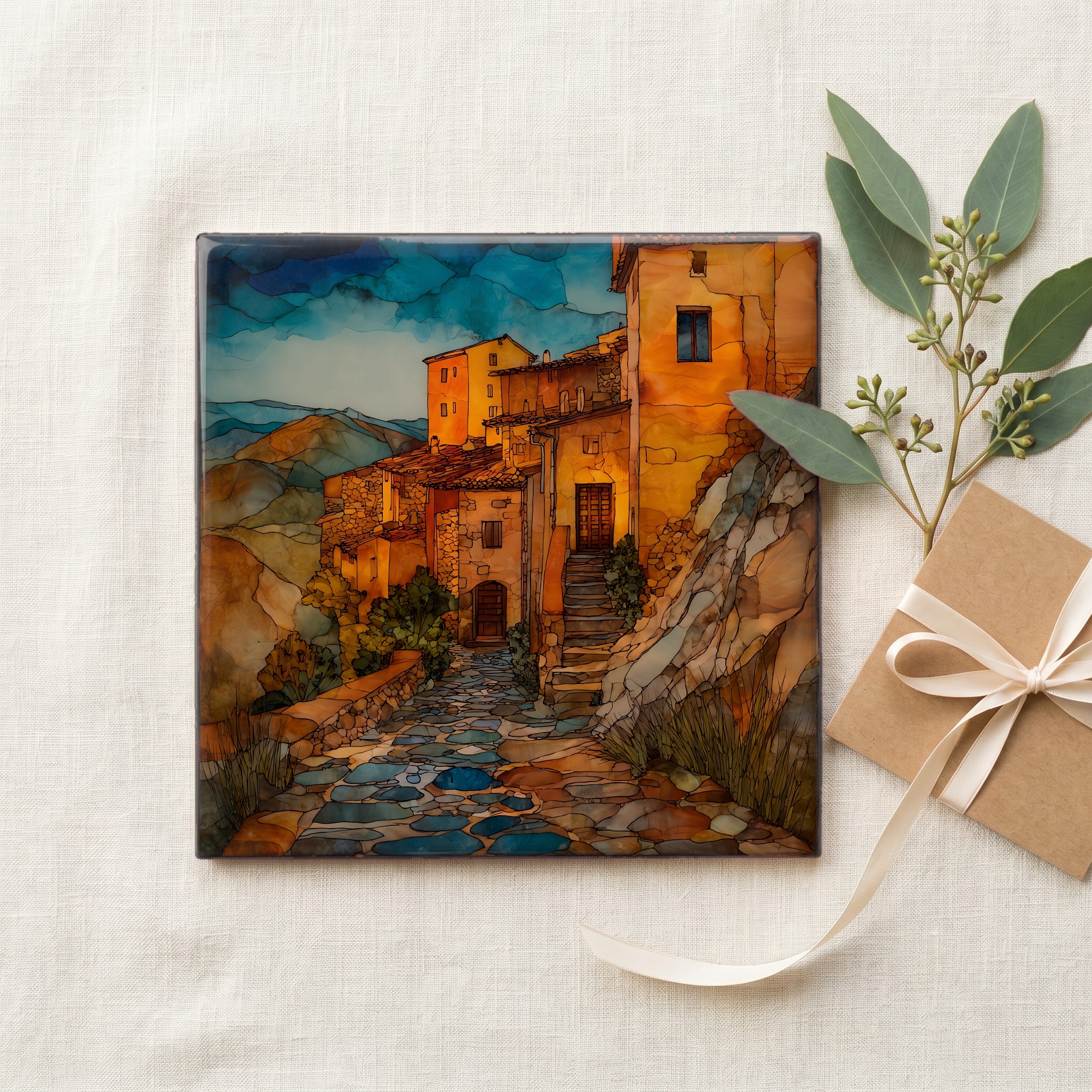
comes gift-ready
comes gift-ready

Each tile ships in a kraft box, tied with cream ribbon, with a handwritten note from the studio if you'd like to add one.
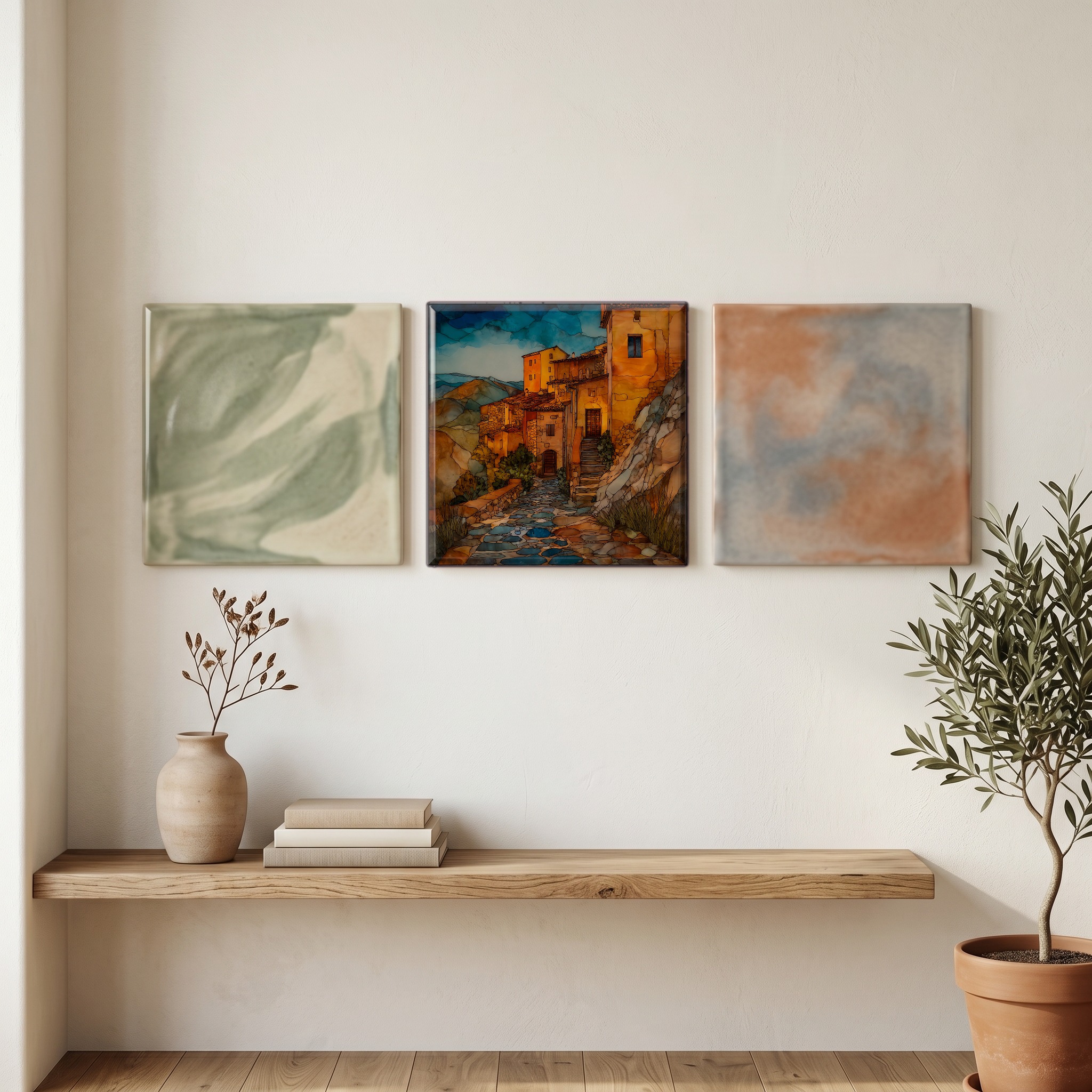
or build a grouping
or build a grouping

Three or five different vistas, hung together — a chapter of places you've been, or want to go.

about Roussillon Ochre Village

The place, in three passes.

A little of what's known, in case you fall down the rabbit hole — or want to go see it yourself.
the place

Roussillon is a commune of about 1,300 people in the Vaucluse department of Provence-Alpes-Côte d'Azur, set on a ridge between Apt and Gordes within the Luberon Regional Natural Park. The village sits on what was once one of Europe's most productive ochre deposits, a band of iron-rich clay running roughly thirty kilometres east to west across the Pays d'Apt. Roussillon is a formally classified member of Les Plus Beaux Villages de France, the national association founded in 1982. Avignon lies about fifty kilometres to the west; Aix-en-Provence is roughly seventy kilometres south. The Luberon massif, designated a regional natural park in 1977, frames the southern horizon.

the colour

The colour of Roussillon is iron oxide. The cliffs and the village walls take their reds, oranges, and yellows from clay rich in hematite and goethite, with at least seventeen distinct shades documented along the Sentier des Ocres. The pigment was mined commercially from the late eighteenth century until the deposit was effectively retired around 1930, after synthetic dyes priced the natural product out of the textile market. The trade survived as a heritage practice through the former Mathieu factory just outside the village, now operated as the Conservatoire des Ocres et de la Couleur, where the old washing basins and settling tanks have been preserved. The buildings of Roussillon were rendered with the same pigment, which is why the houses and the cliffs read as one continuous body of colour.

the visit

The Sentier des Ocres is the working visit. Two waymarked loops run through the former quarry just below the village, the short circuit at about thirty-five minutes and the long circuit at roughly an hour, with a small entry fee that supports trail maintenance. The path is closed when wet to protect the soft sandstone and to keep visitors from carrying the pigment home on their shoes. Spring and autumn are the cleaner windows. Summer brings strong sun and the village can press at the edges in July and August, with parking at the entrance filling by mid-morning. The light that flatters the ochre most reliably is the last hour before sunset, when the cliffs go from pale apricot to deep brick.

where
France · Vaucluse, Provence-Alpes-Côte d'Azur
within
Luberon Regional Natural Park
position
43.9028° N · 5.2933° E
the neighborhood

What's nearby.

A handful of named places within an hour's walk or short drive. Some we've already painted; some we will.
10 km W
Gordes
hilltop village
5 km NW
Joucas
perched village
11 km E
Apt
market town
16 km W
Sénanque Abbey
Cistercian abbey
13 km S
Bonnieux
perched village
14 km SW
Lacoste
perched village
16 km SW
Ménerbes
ridge village
N
Roussillon Ochre Village
Gordes
Joucas
Apt
Sénanque Abbey
Bonnieux
Lacoste
Ménerbes
common questions

What people ask.

A few questions we get about Roussillon Ochre Village — and about bringing the piece home.
about the place

Roussillon is a hilltop village in the Vaucluse department of Provence-Alpes-Côte d'Azur, in southeastern France. It sits within the Luberon Regional Natural Park, about fifty kilometres east of Avignon, and is a formally classified member of Les Plus Beaux Villages de France.

The cliffs beneath and around the village are clay rich in iron oxide, primarily hematite and goethite. The same pigment was used to render the village houses, so the cliffs and the buildings share a single colour family. At least seventeen distinct ochre shades have been documented locally.

The Sentier des Ocres is a waymarked walking trail through the former ochre quarry just below Roussillon village. It runs as two loops, a short circuit of about thirty-five minutes and a long circuit of about an hour, with a small entry fee that supports maintenance.

Commercial ochre mining ran from the late eighteenth century until roughly 1930, when synthetic pigments displaced the natural product. The former Mathieu factory just outside the village now operates as the Conservatoire des Ocres et de la Couleur, preserving the old washing basins, settling tanks, and the heritage craft.

Spring and autumn are the most comfortable windows. Summer brings strong sun and heavy traffic, with village parking often full by mid-morning in July and August. The last hour before sunset is when the cliffs and the buildings read most vividly.

The most common approach is by car from Avignon, about fifty kilometres west, or from Aix-en-Provence, about seventy kilometres south. Public transport is limited; the nearest TGV stations are at Avignon and Aix-en-Provence, with regional bus connections through Apt.

Yes. Roussillon is a formally classified member of Les Plus Beaux Villages de France, the national association founded in 1982 to identify and protect villages of exceptional heritage. Membership requires meeting strict criteria on population size, listed monuments, and architectural quality.

about the piece in your home

It carries well as a gift for people with ties to the Luberon, to the Pays d'Apt, or to a summer spent walking the Sentier des Ocres. The colour reads as warmly to someone who knows the village as to someone meeting it for the first time. A Small or Medium travels easily.

The piece sits well with Mediterranean-modern interiors, with warm earth-tone palettes, and with terracotta-leaning Boho rooms. The reds and apricots also anchor a cooler grey or oat-linen room, where the tile becomes the source of warmth in the composition.

Yes. The shift from cool grey to warm earth tones across recent seasons (terracotta, ochre, burnt sienna, raw clay) sits at the centre of this artwork. It pairs naturally with woven jute, raw oak, unbleached linen, and oiled brass.

Above a standard two-metre sofa, a single Large reads as a focused window onto the cliffs. For a wider wall, a 4-tile Mural opens the village into a panorama. The 9-tile Mural is for a feature wall: a Provençal-leaning dining room, a long stairwell, or a hallway anchor.

Yes, with the Dura Satin or Matte finish. Both are scratch-resistant and engineered for vertical installation on a backsplash or a shower wall. The colour is slowly infused into the ceramic surface under high heat and pressure on every finish; Glossy is reserved for framed wall art rather than wet rooms.

Microfibre and water. No abrasives, no ammonia-based cleaners, no scouring pads. For a kitchen installation, a damp microfibre cloth at the end of the day is all the tile needs; the colour lives in the surface and does not fade with cleaning.

Yes. Every WenderVista piece is original artwork chosen by Reid Wender for the WenderVista atlas. The Roussillon tile is painted in our stained-glass and alcohol-ink visual language and hand-finished in Knoxville, Tennessee. We do not license stock imagery.

if this one stayed with you

A few you might also love.

Hand-picked by the eye that found Sorapis. Same air, same kind of quiet.