Wender·Vista
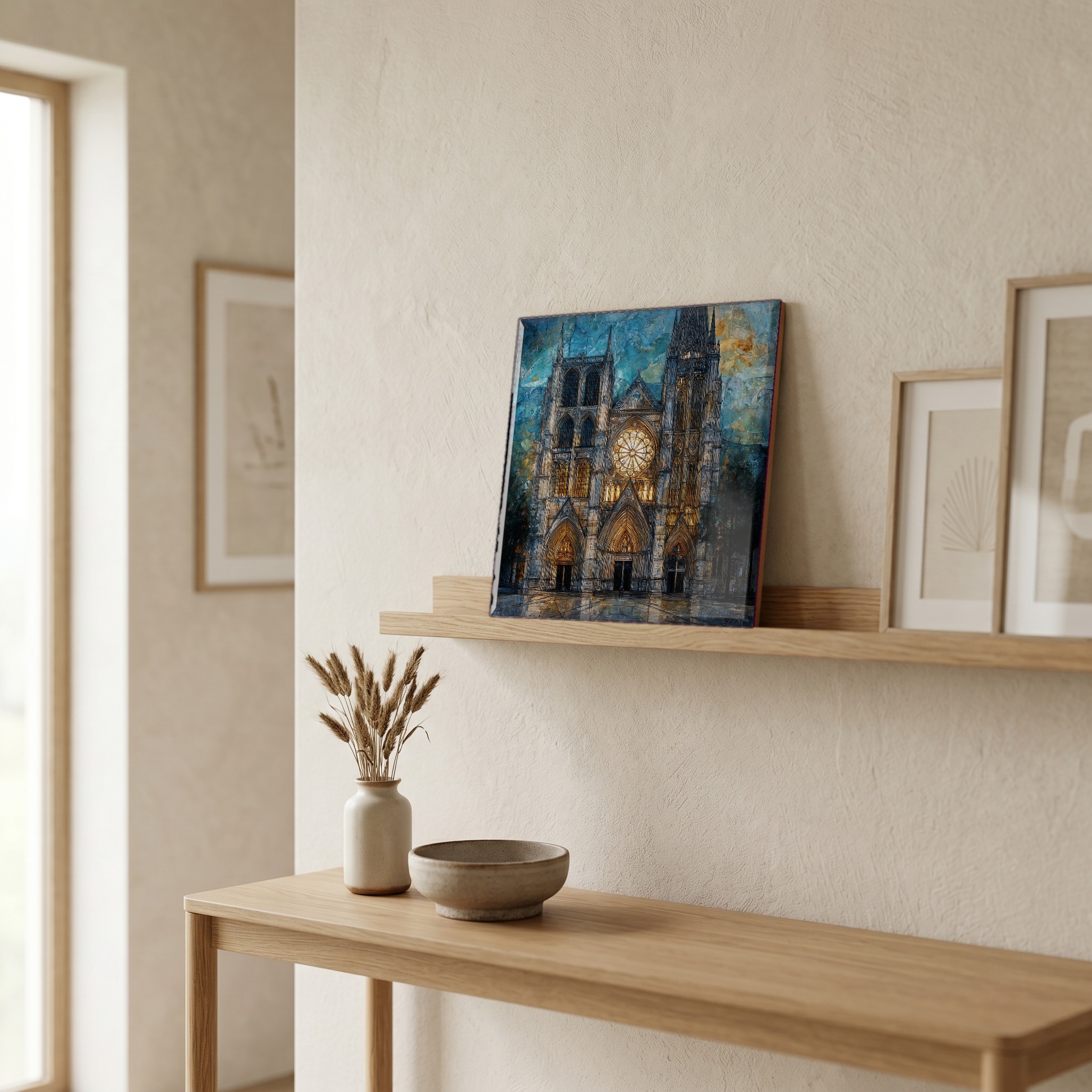
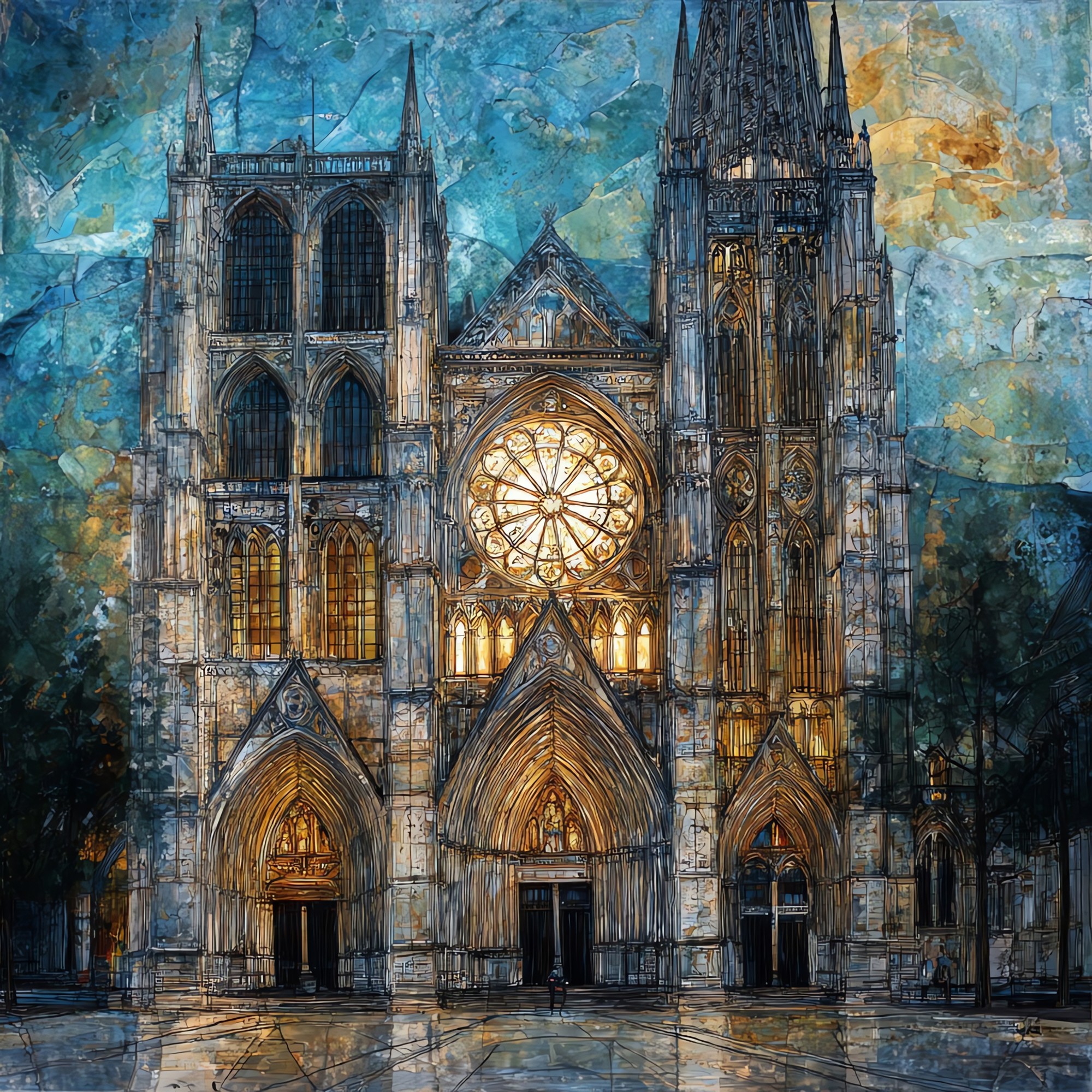
Rouen Cathedral West Facade
shown on ceramic, 12-inch tileFrance
in Rouen, on the right bank of the Seine

Rouen Cathedral West Facade

— the face the light keeps repainting.

Where it lives

Not only on a wall.

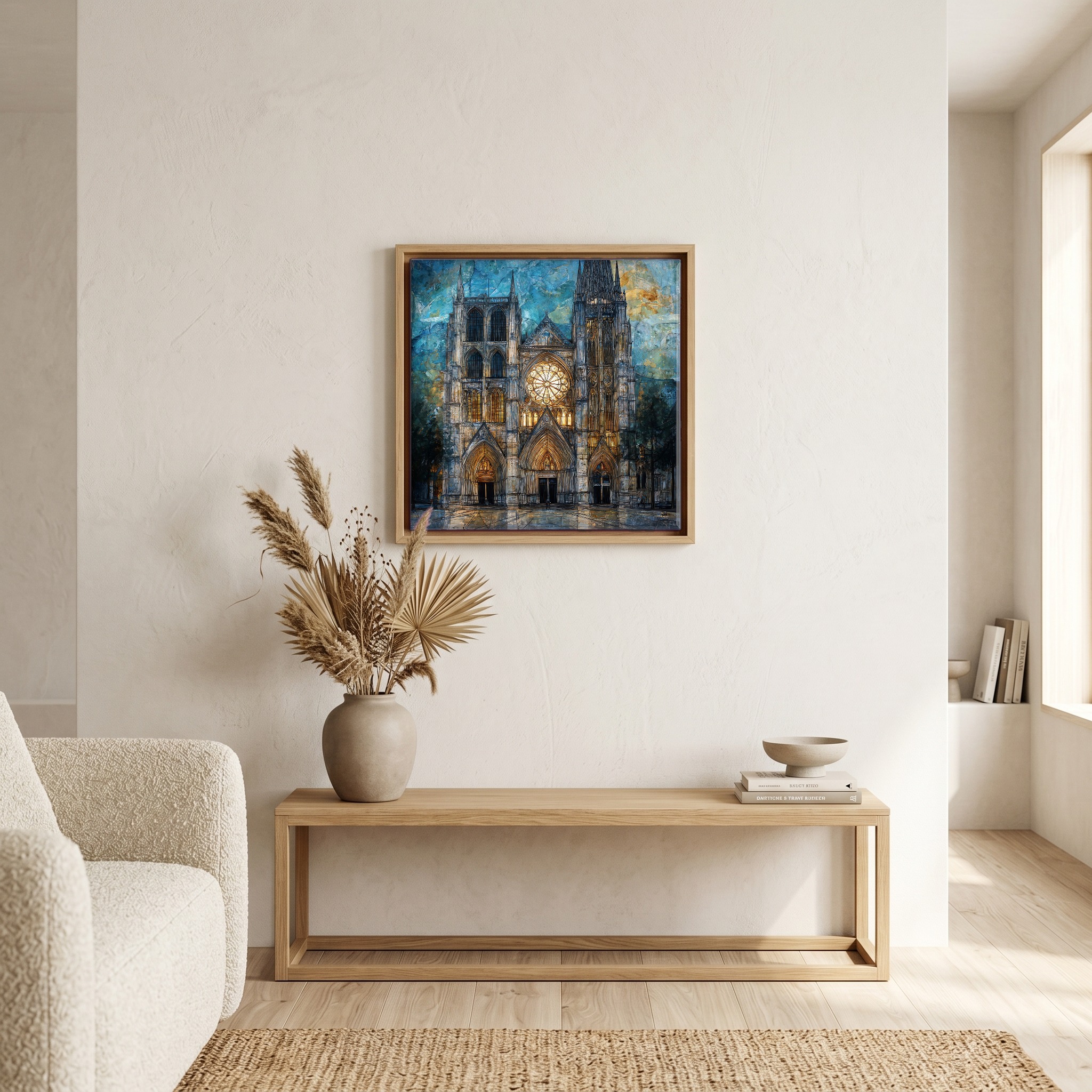
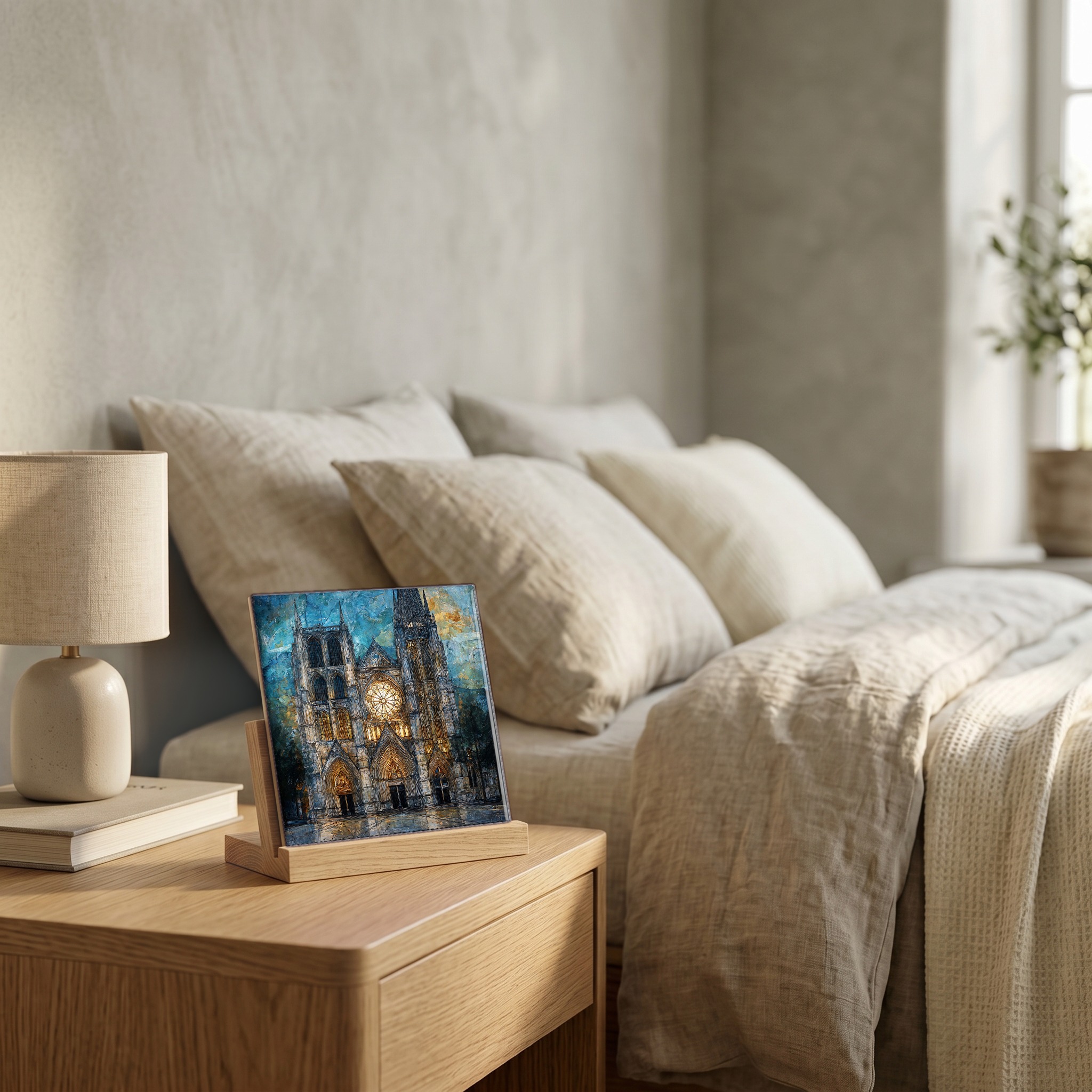
A small tile on the nightstand catching the morning. A larger one above the fire. Yours, wherever you spend the slow hours.
Above the bench, in a warm oak surround.
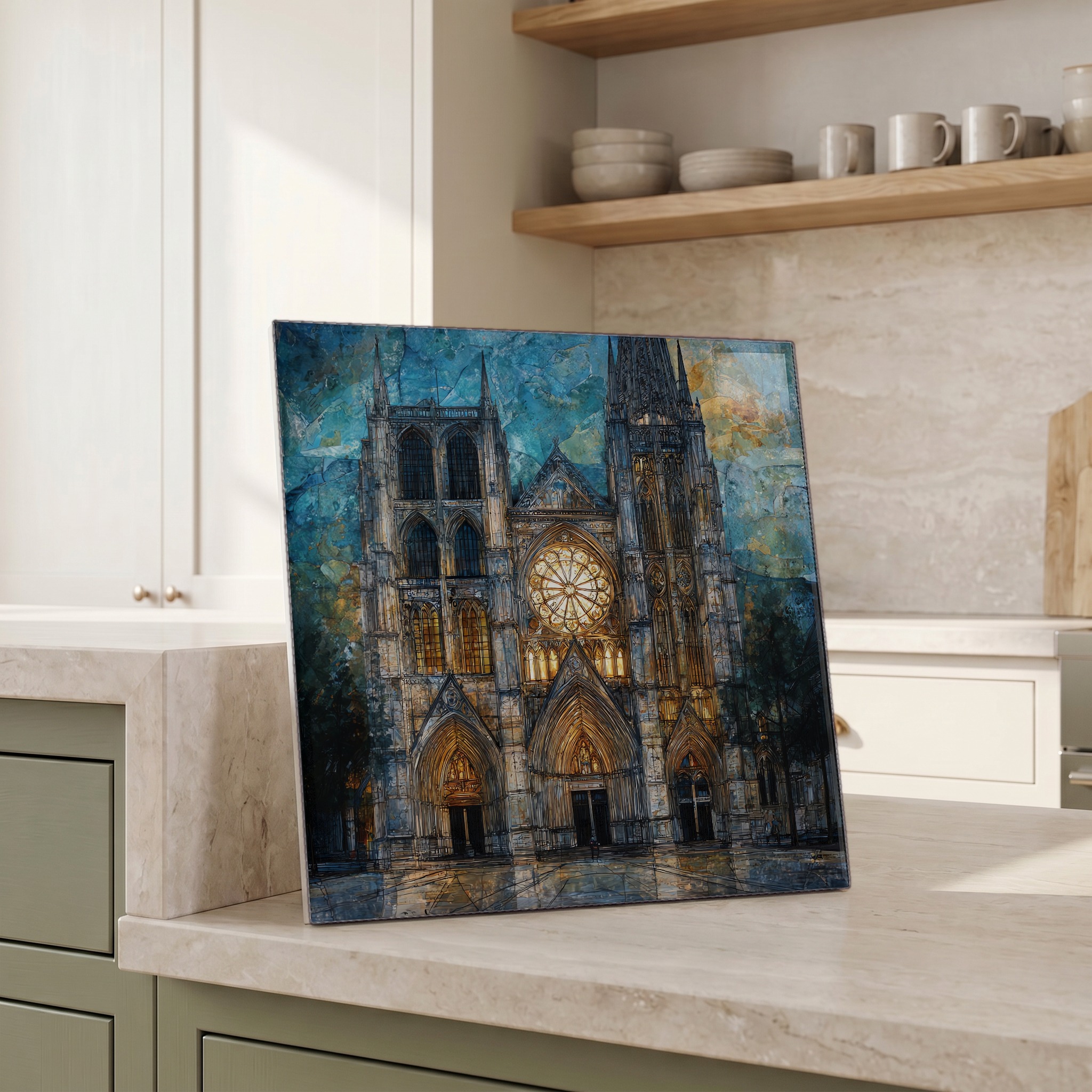
Beside the kettle, propped on the counter.
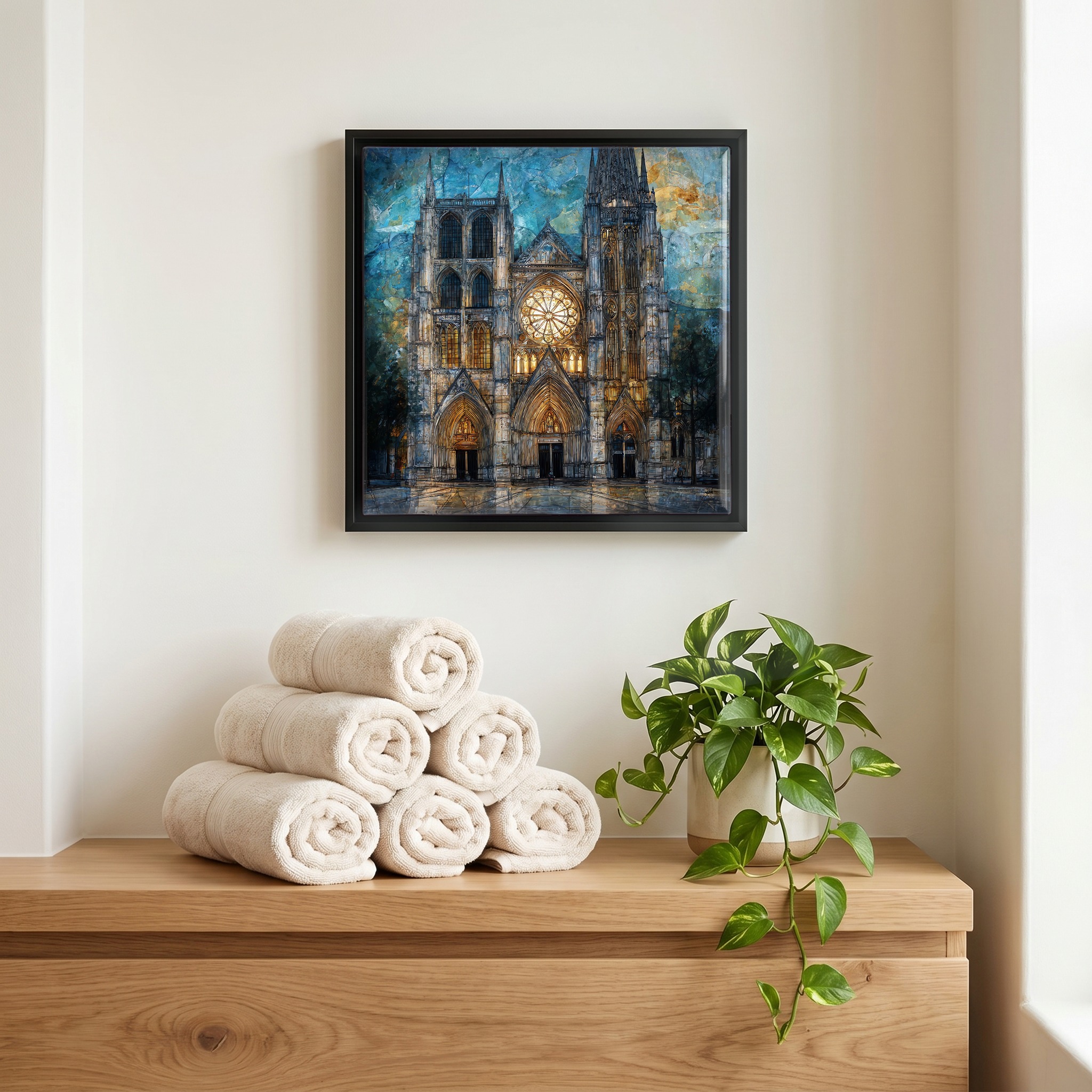
Above the linens, in a slim black surround.
On the nightstand, on a light oak stand.
On a picture ledge, where the light comes in.
a note from the studio

The west front of Notre-Dame de Rouen. Three Gothic portals beneath two mismatched towers, the older Tour Saint-Romain on the north side, the late-Gothic Tour de Beurre on the south, paid for by indulgences sold to townspeople who wanted to keep butter in their Lenten kitchens. Monet rented rooms across the Place de la Cathédrale in the 1890s and painted the facade more than thirty times, watching the same stone turn pearl, then gold, then mauve as the morning moved. The square out front is still the place to sit with it. The light keeps doing what it did for him.
from the studio
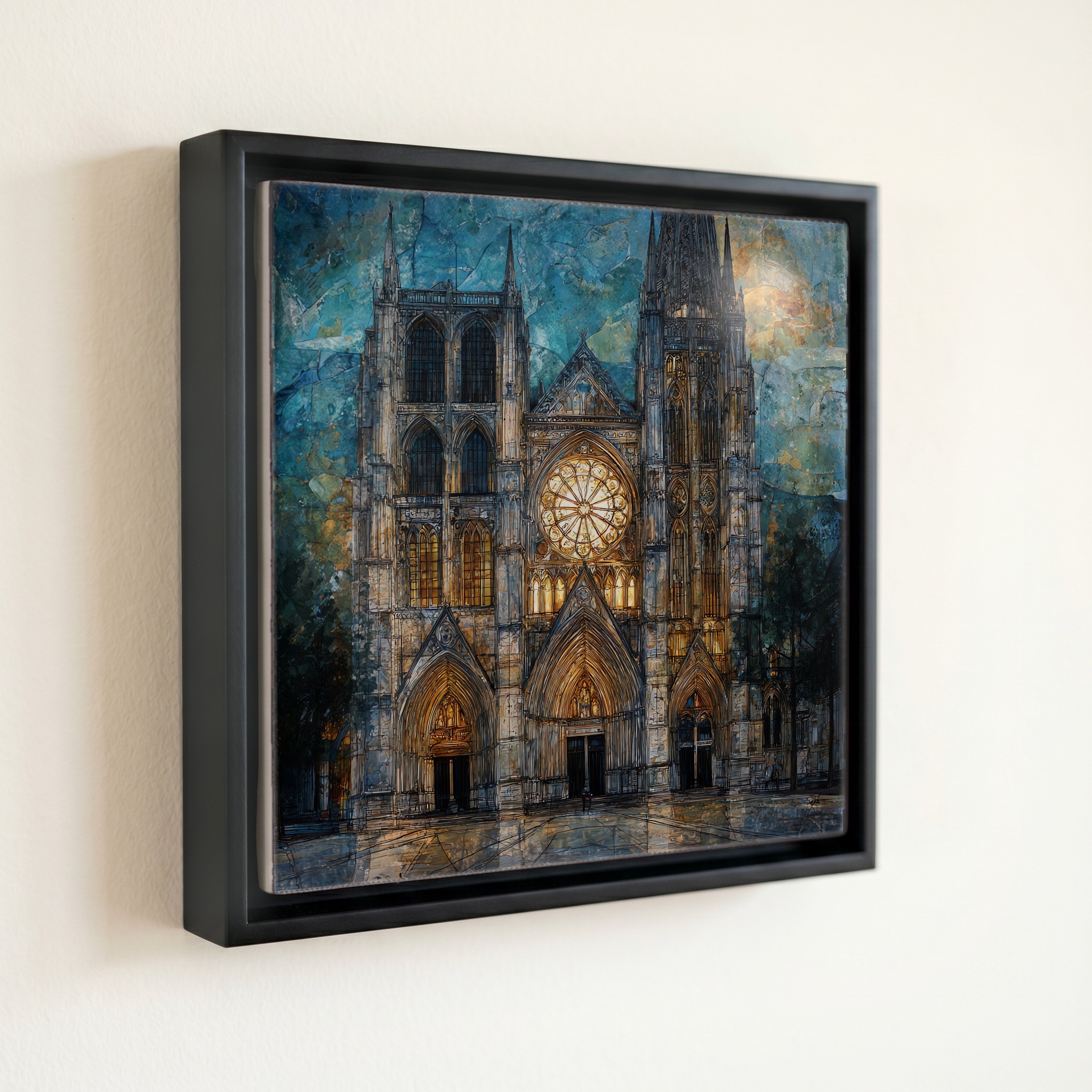
shown in a slim black floating frame · 6 × 6 in
— bring it home

Rouen Cathedral West Facade, on ceramic.

Each tile is finished by hand in our Knoxville studio. Artwork is slowly infused into the ceramic surface under high heat and pressure, and rests beneath a thin glossy finish. The colour lives in the surface, not on top of it.

What kind of piece?
One tile — square or rectangle.
How big?
the popular one — counter, shelf, nightstand
6 × 6 in · 15 cm · 1.6 lb
Surface finish
A clear glossy finish — the artwork reads as if under resin. Ideal for show-pieces and framed wall art.
How it sits
A hidden cleat — sits ¼″ proud of the wall.
$58
Hand-finished and shipped from our studio at the foot of the Smokies. On your wall in about ten days.
size
6 × 6 in
15 cm
weighs
1.6 lb
solid in the hand
surface
ceramic, hand-finished
art rests beneath a thin glossy finish
from
Knoxville, TN
our family studio, at the foot of the Smokies
— start a Coaster Set

Pick any four 4-inch tiles — National Parks you've been to, a Smokies set, the four seasons of one place. $ for a set of , cork-backed, ready to live on the table.
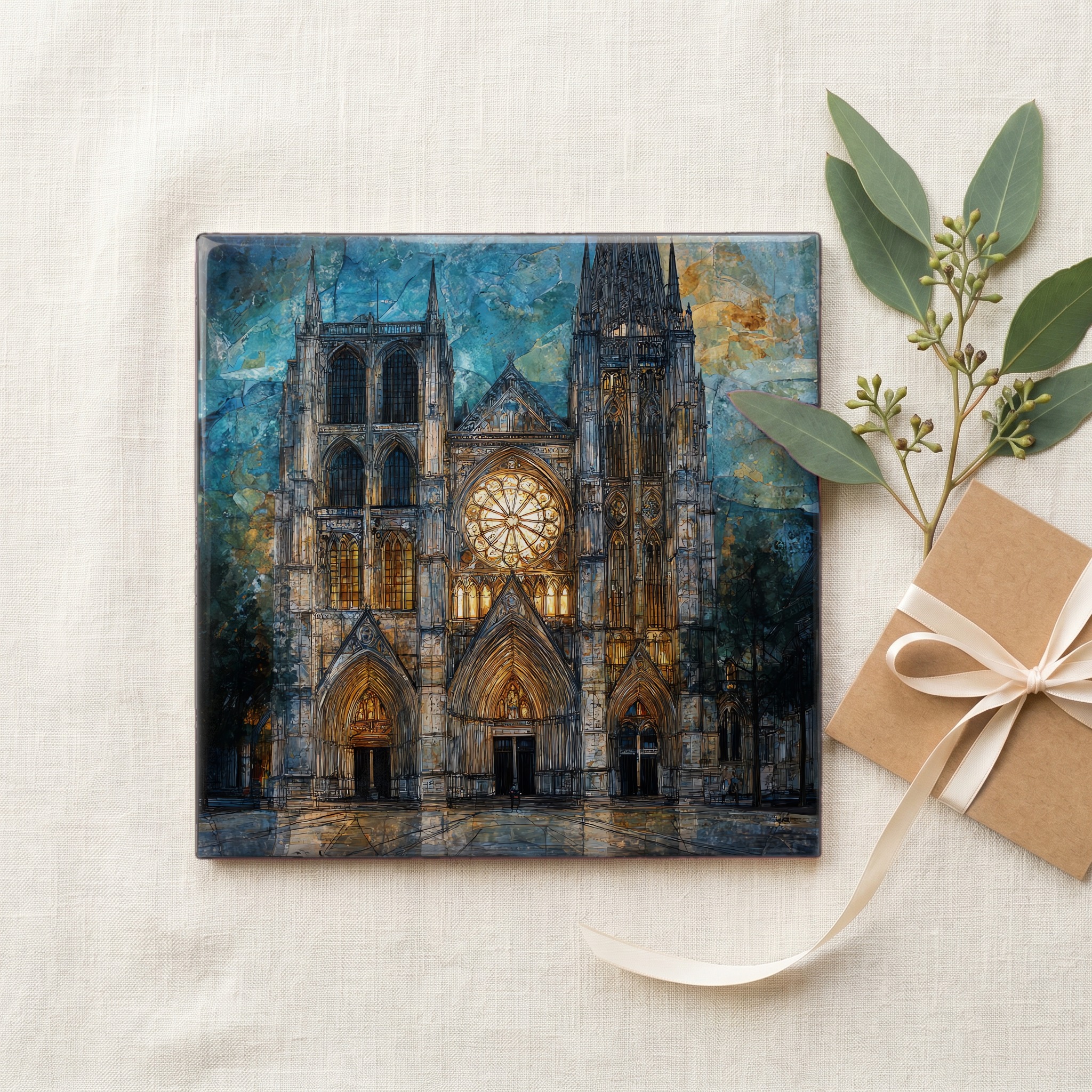
comes gift-ready
comes gift-ready

Each tile ships in a kraft box, tied with cream ribbon, with a handwritten note from the studio if you'd like to add one.
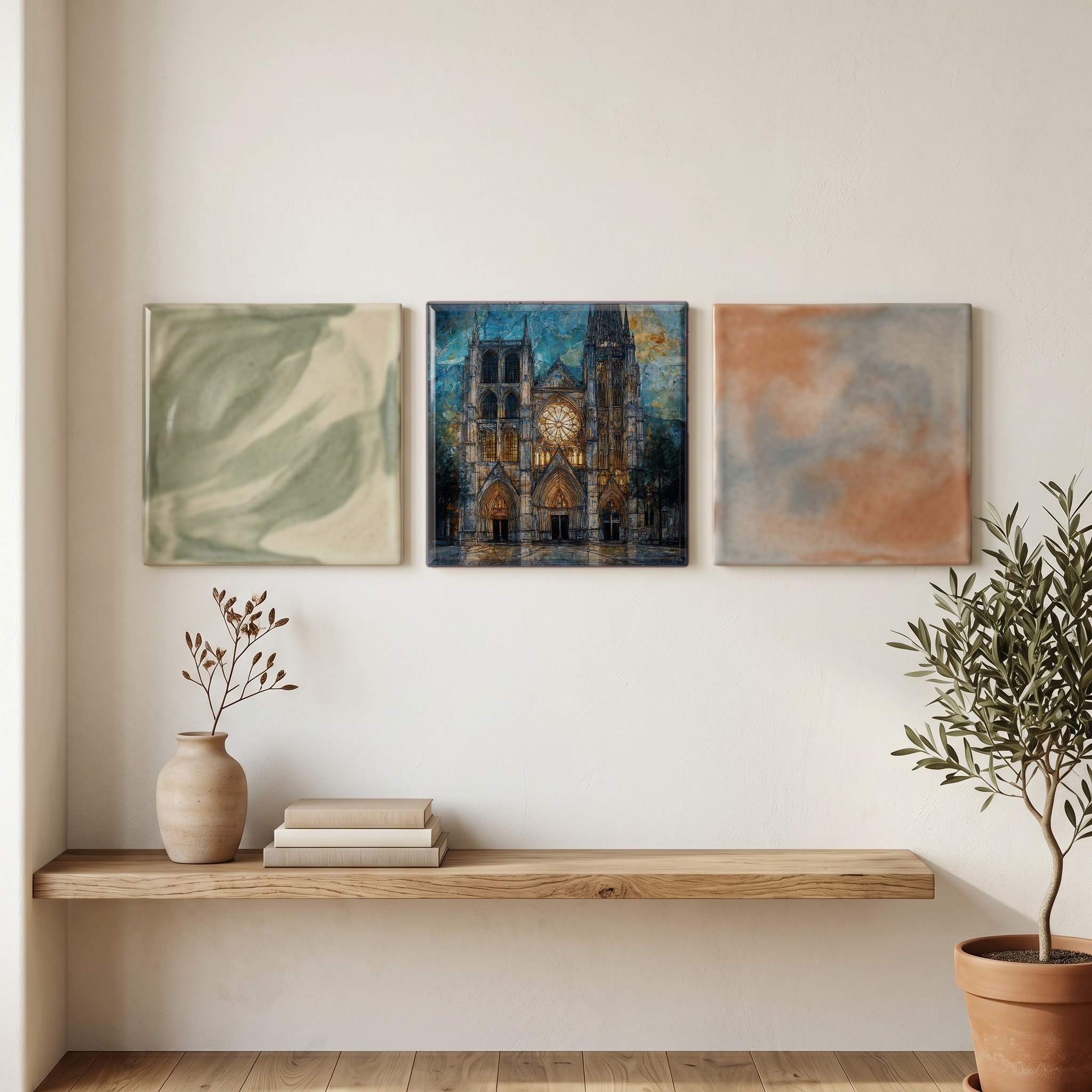
or build a grouping
or build a grouping

Three or five different vistas, hung together — a chapter of places you've been, or want to go.

about Rouen Cathedral West Facade

The place, in three passes.

A little of what's known, in case you fall down the rabbit hole — or want to go see it yourself.
the place

Notre-Dame de Rouen rises on the right bank of the Seine in Rouen, the historic capital of Normandy, about 135 km north-west of Paris and roughly 90 minutes from Gare Saint-Lazare by direct train. Construction of the present Gothic cathedral began around 1145 on the site of earlier churches, and the building was substantially complete by the mid-13th century. The west facade frames the Place de la Cathédrale; its three portals open to the nave, with the asymmetric Tour Saint-Romain (late 12th century) on the north and the Flamboyant-Gothic Tour de Beurre (completed 1506) on the south. The cast-iron central spire, finished in 1876, reaches 151 m and briefly made Rouen Cathedral the tallest building in the world.

the light

The west facade is one of the most painted faces in Impressionist art. Between 1892 and 1894 Claude Monet rented rooms across the Place de la Cathédrale and produced more than thirty canvases of this single elevation, working through different hours and weathers to record how the carved limestone shifted from dawn pearl to noon gold to late-afternoon mauve. Twenty of the canvases were shown at the Galerie Durand-Ruel in Paris in May 1895; the series sits today in collections from the Musée d'Orsay to the National Gallery in Washington and the Musée des Beaux-Arts de Rouen a few blocks north. The facade still does for visitors what it did for Monet: the low morning sun catches it from the east-south-east and pulls colour out of the stone.

the stone

The facade was carved from local limestone over the course of three centuries. The Tour Saint-Romain on the north dates to the late 12th century in early Gothic style. The Tour de Beurre on the south, taller and more ornate, was completed in 1506 in the Flamboyant Gothic manner and got its name from the indulgences sold to wealthy Rouennais who paid for the right to consume butter during Lent. Allied bombing in April 1944 struck the cathedral and gutted parts of the nave; the west facade survived but with significant damage, and the restoration of its masonry continued into the 21st century. The carved limestone still browns and pales with the weather, which is part of why Monet chose it.

where
France · Rouen, Seine-Maritime
position
49.4404° N · 1.0950° E
the neighborhood

What's nearby.

A handful of named places within an hour's walk or short drive. Some we've already painted; some we will.
0.4 km E
Église Saint-Maclou
Flamboyant Gothic church
0.5 km NE
Église Saint-Ouen
Gothic abbey church
0.2 km W
Gros-Horloge
Renaissance astronomical clock
0.5 km W
Place du Vieux-Marché
historic square, site of Joan of Arc's execution
0.6 km N
Musée des Beaux-Arts de Rouen
fine arts museum holding a Monet cathedral canvas
N
Rouen Cathedral West Facade
Église Saint-Maclou
Église Saint-Ouen
Gros-Horloge
Place du Vieux-Marché
Musée des Beaux-Arts de Rouen
common questions

What people ask.

A few questions we get about Rouen Cathedral West Facade — and about bringing the piece home.
about the place

Notre-Dame de Rouen stands on the right bank of the Seine in the historic centre of Rouen, the capital of Normandy, France. Rouen is about 135 km north-west of Paris and reachable in roughly 90 minutes by direct train from Gare Saint-Lazare.

Claude Monet rented rooms across the Place de la Cathédrale between 1892 and 1894 and produced more than thirty canvases of the west facade, working at different hours and in different weather to record how the carved limestone shifted in colour from dawn to dusk. Twenty were shown at Galerie Durand-Ruel in May 1895.

The Tour de Beurre on the south side was funded in part by indulgences sold to townspeople who paid the church for permission to consume butter during Lent. It was completed in 1506 in the Flamboyant Gothic style and rises higher than its older northern counterpart, the Tour Saint-Romain.

Yes. Allied bombing in April 1944 struck the cathedral and gutted parts of the nave; the west facade survived but with significant damage to its sculpture and masonry. Restoration of the building's stonework continued into the 21st century and is still under way in places.

The central cast-iron spire reaches 151 m, which made Rouen Cathedral the tallest building in the world from its completion in 1876 until Cologne Cathedral overtook it in 1880. It remains the tallest church spire in France today.

Richard the Lionheart's heart was interred in the cathedral after his death in 1199; the rest of his body lies at Fontevraud Abbey in the Loire. Rollo, the Viking founder of Normandy, and several other Dukes of Normandy also have their tombs in the choir and ambulatory.

Early morning, when the rising sun catches the limestone at a low angle from the east-south-east and pulls colour from the stone the way Monet recorded it. Late afternoon also works in summer when the light wraps around the Tour de Beurre. The Place de la Cathédrale is open at all hours.

about the piece in your home

It has been a meaningful gift for customers from Rouen and the wider Normandy region. The west facade is one of the most recognised images in French Gothic art and a place locals walk past every day. A Small or Medium with a handwritten note from the studio carries well.

The deep stained-glass colour and Gothic stone read well with European Traditional, Dark Academia, and library-and-study interiors. It also holds against dark walls and inside Jewel-tone Maximalist rooms, where the alcohol-ink colour reads luminous rather than heavy.

Cathedral and stained-glass imagery has been in steady demand inside the Dark Academia and European Traditional revival of the past few years. The piece also reads as quietly seasonal during Advent and Lent, which makes it a thoughtful gift for a church-going household.

Above a sofa, the single Large tile is the most common choice, or a 4-tile Mural if you want presence without dominating the wall. Above a console table, a Medium or a 4-tile Mural reads in scale with the furniture below it.

Yes, on the Dura Satin or Matte finish. The colour is slowly infused into the ceramic surface under high heat and pressure, so the surface does not fade with steam, humidity, or daily wiping. The Glossy finish is for dry display walls only.

A microfibre cloth and water. The surface is non-porous and does not need polish or sealant. For the Dura Satin and Matte finishes in a kitchen or bathroom, a mild soap is fine for splashes; no abrasive pads or solvent-based cleaners.

Yes. Every WenderVista piece is painted in our stained-glass and alcohol-ink language by Reid Wender, the curator, and slowly infused into the ceramic surface in-house in Knoxville, Tennessee. We do not license, resell, or print public-domain images.

if this one stayed with you

A few you might also love.

Hand-picked by the eye that found Sorapis. Same air, same kind of quiet.