Wender·Vista
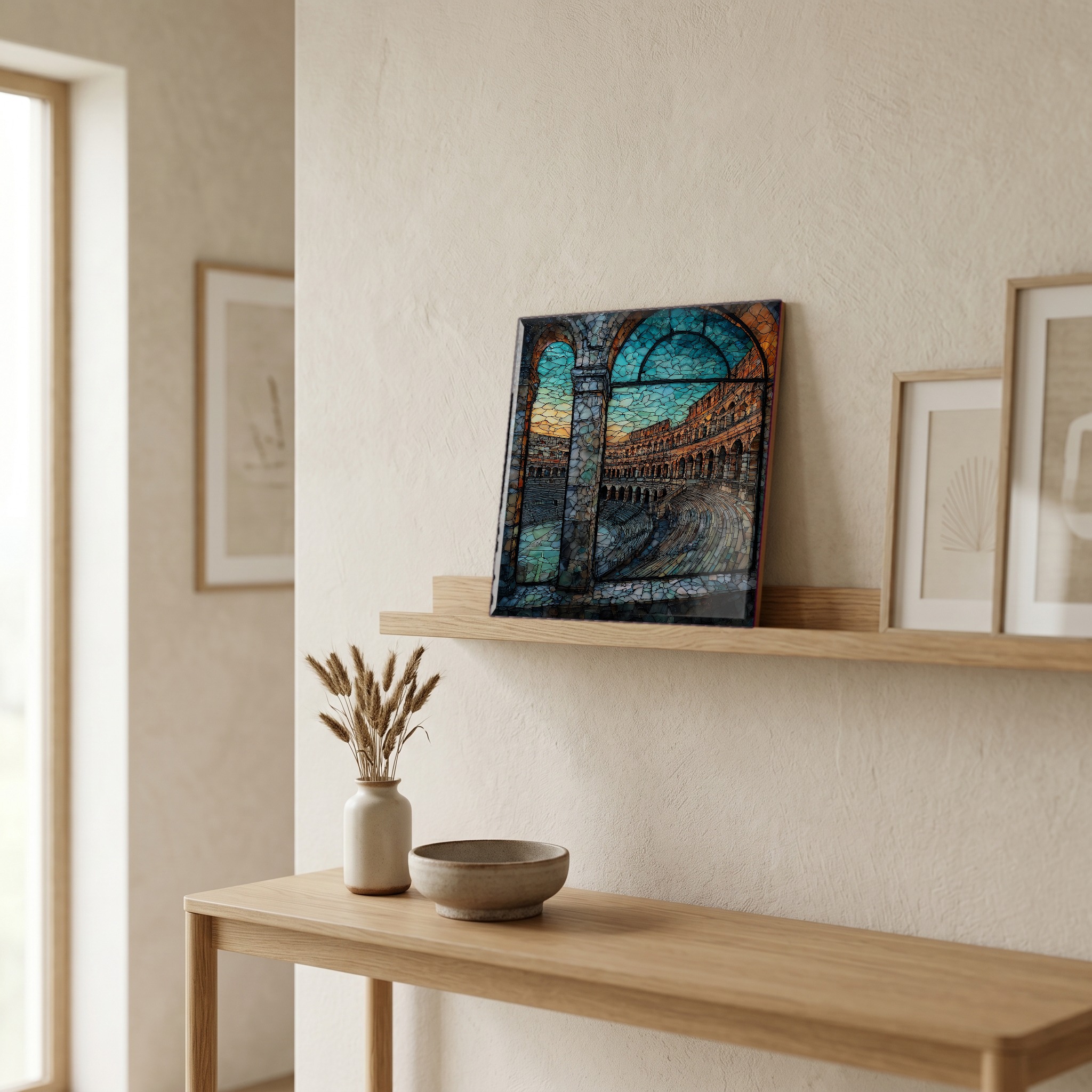
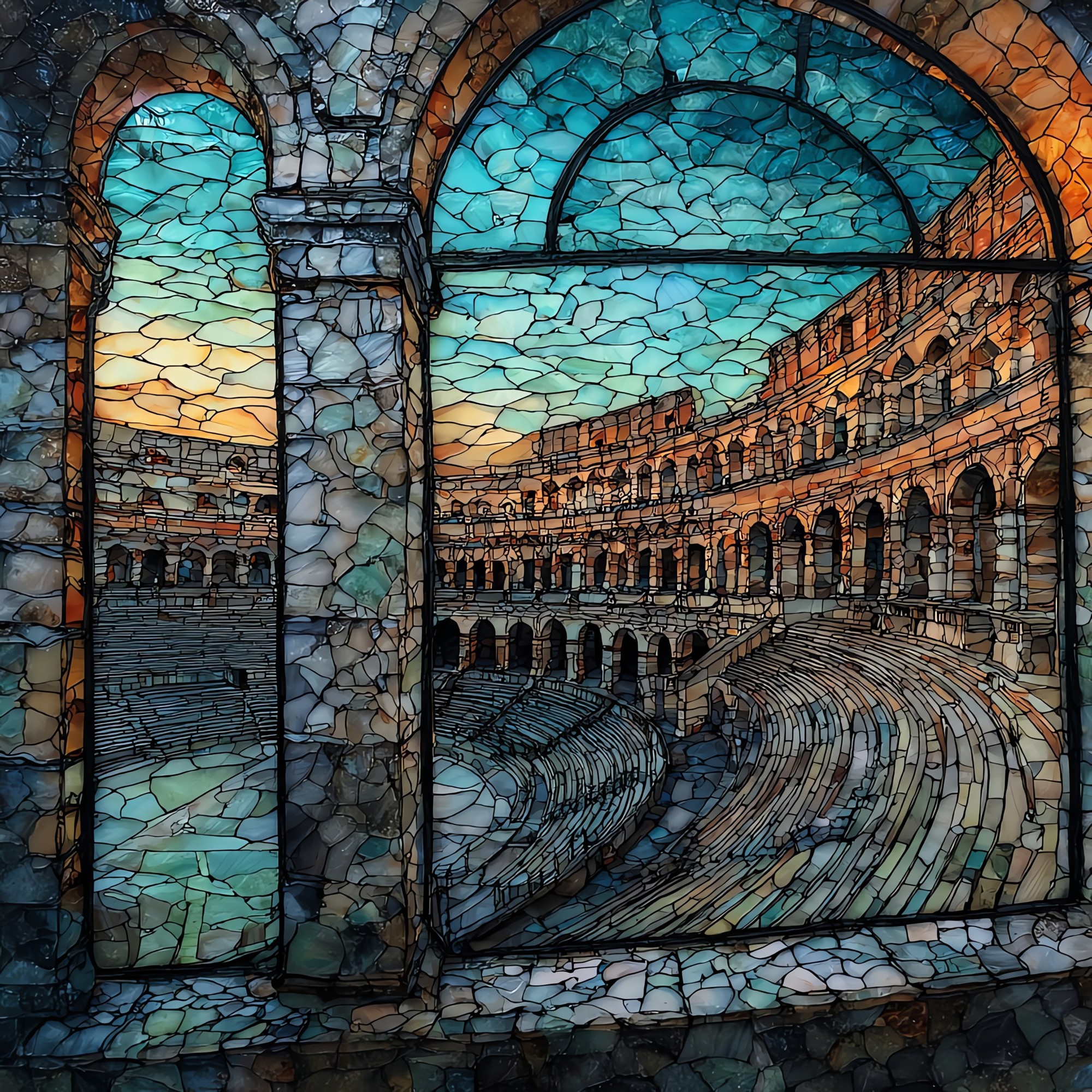
Roman Arena of Nimes
shown on ceramic, 12-inch tileFrance
in southern France, half an hour west of Avignon

Roman Arena of Nimes

— a ring the centuries still keep warm.

Where it lives

Not only on a wall.

A small tile on the nightstand catching the morning. A larger one above the fire. Yours, wherever you spend the slow hours.
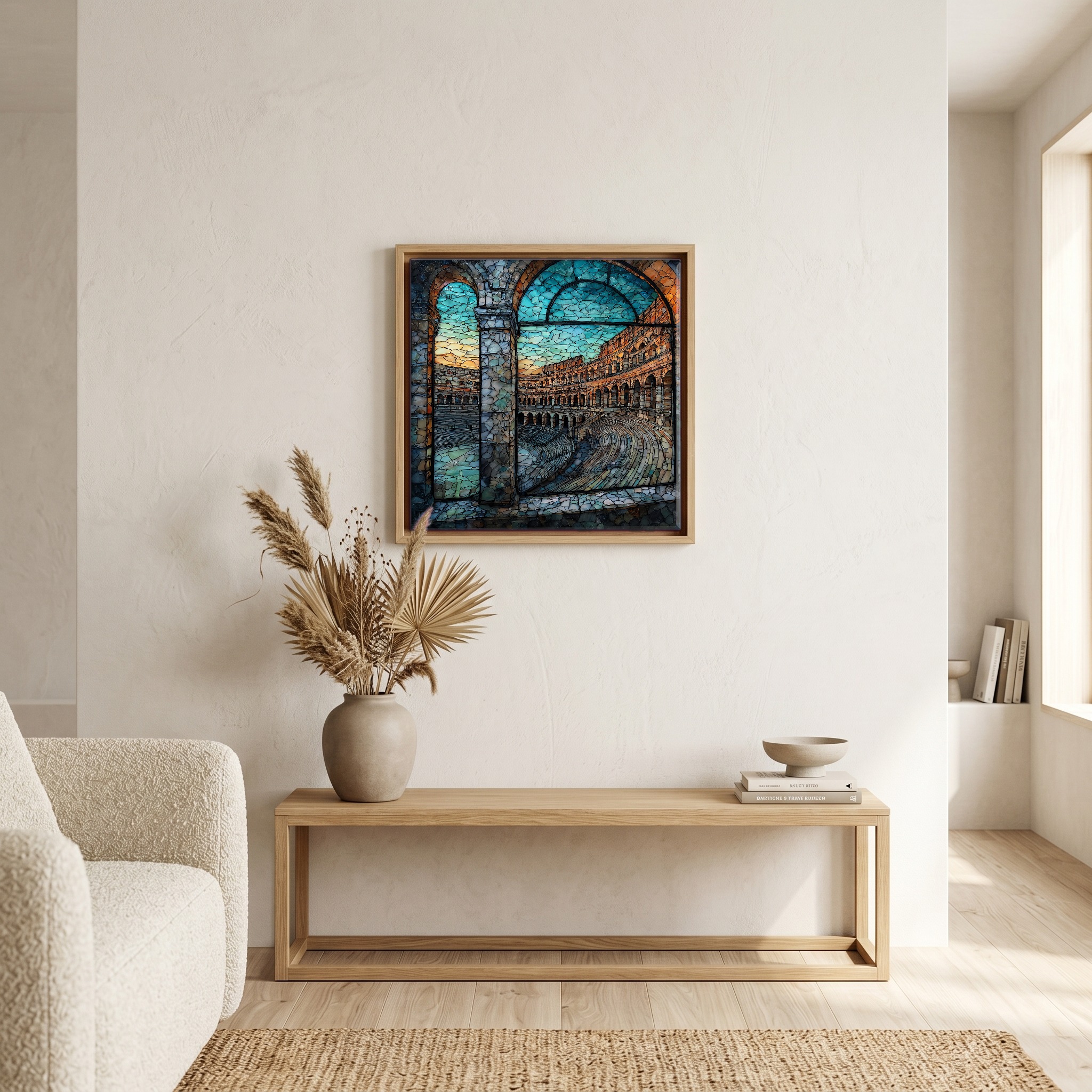
Above the bench, in a warm oak surround.
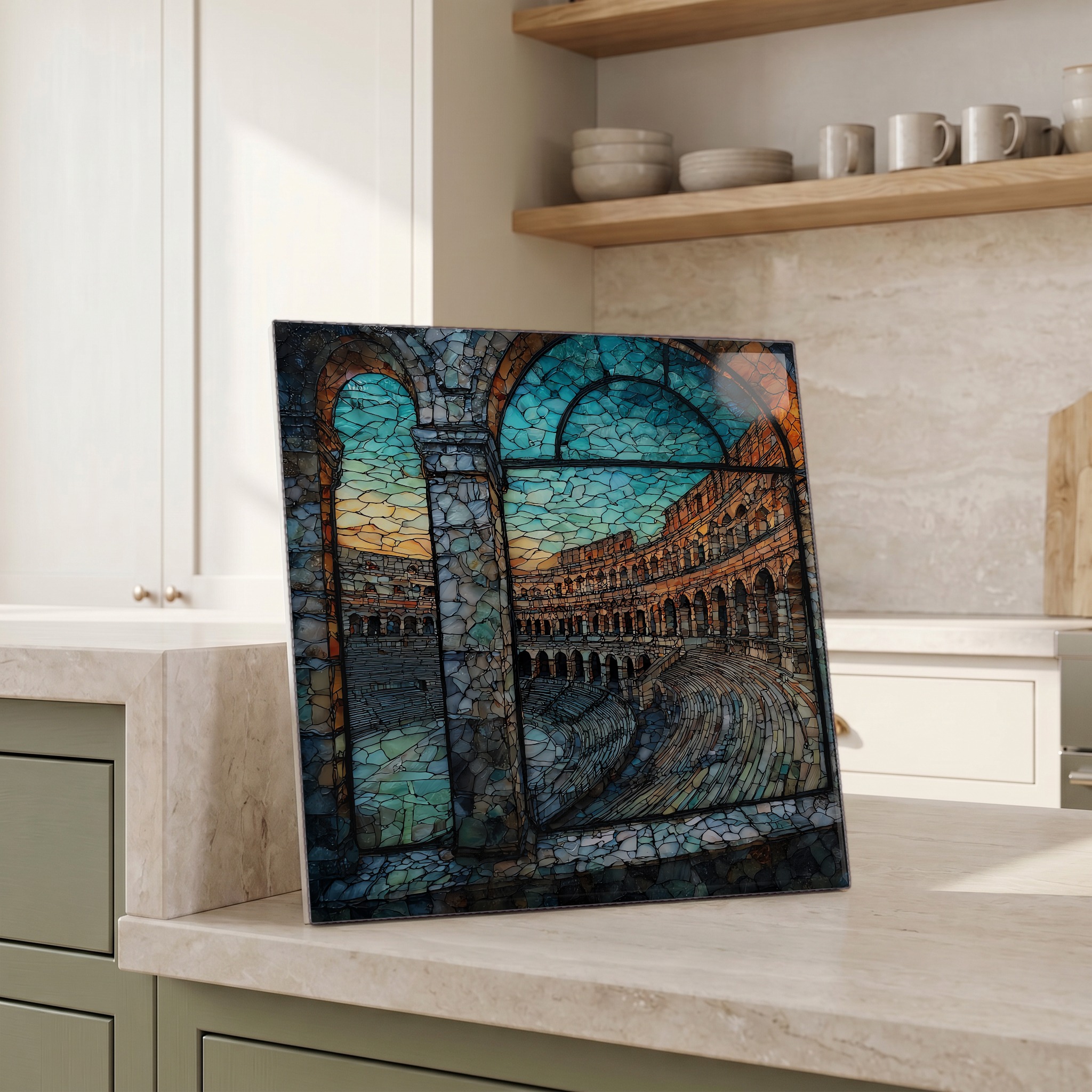
Beside the kettle, propped on the counter.
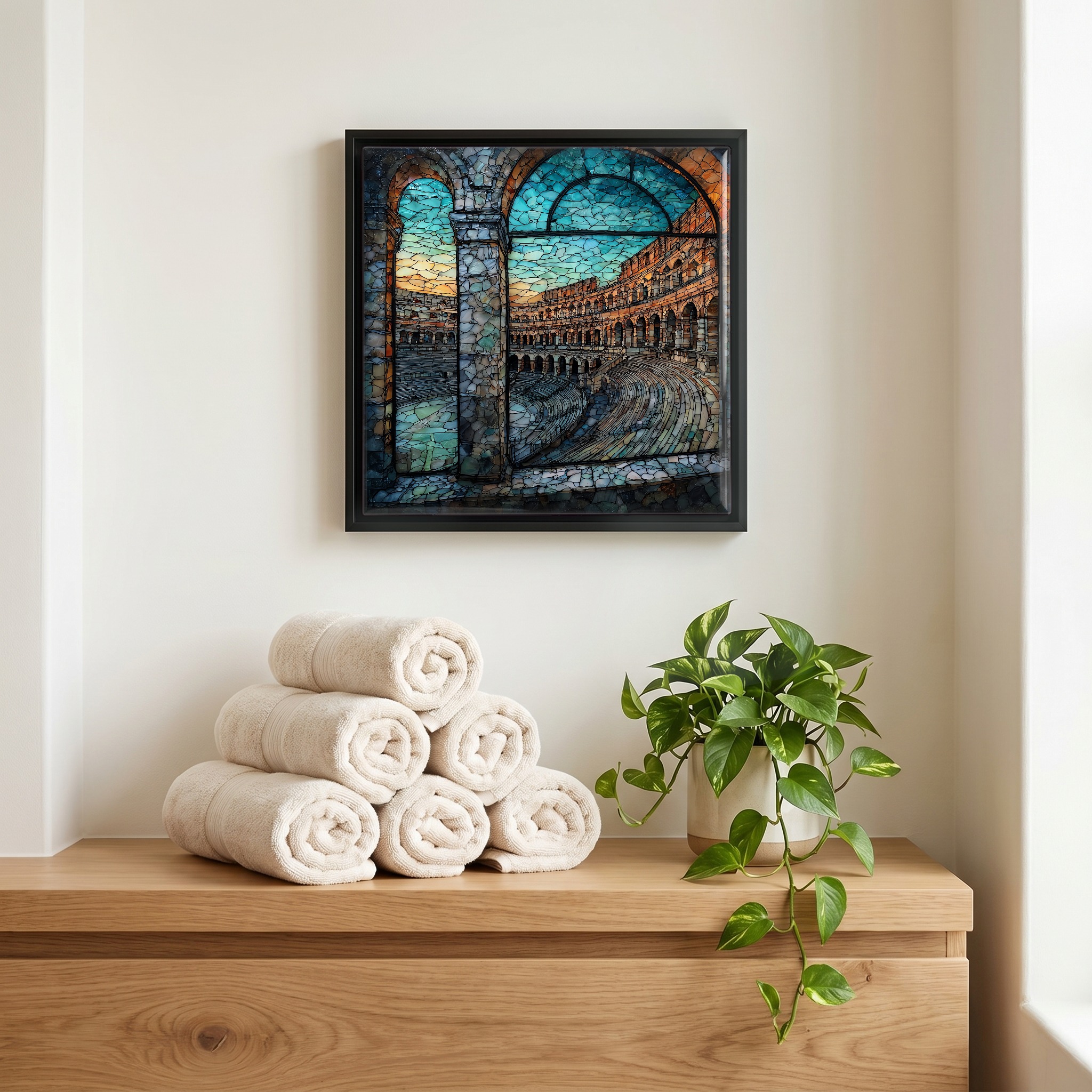
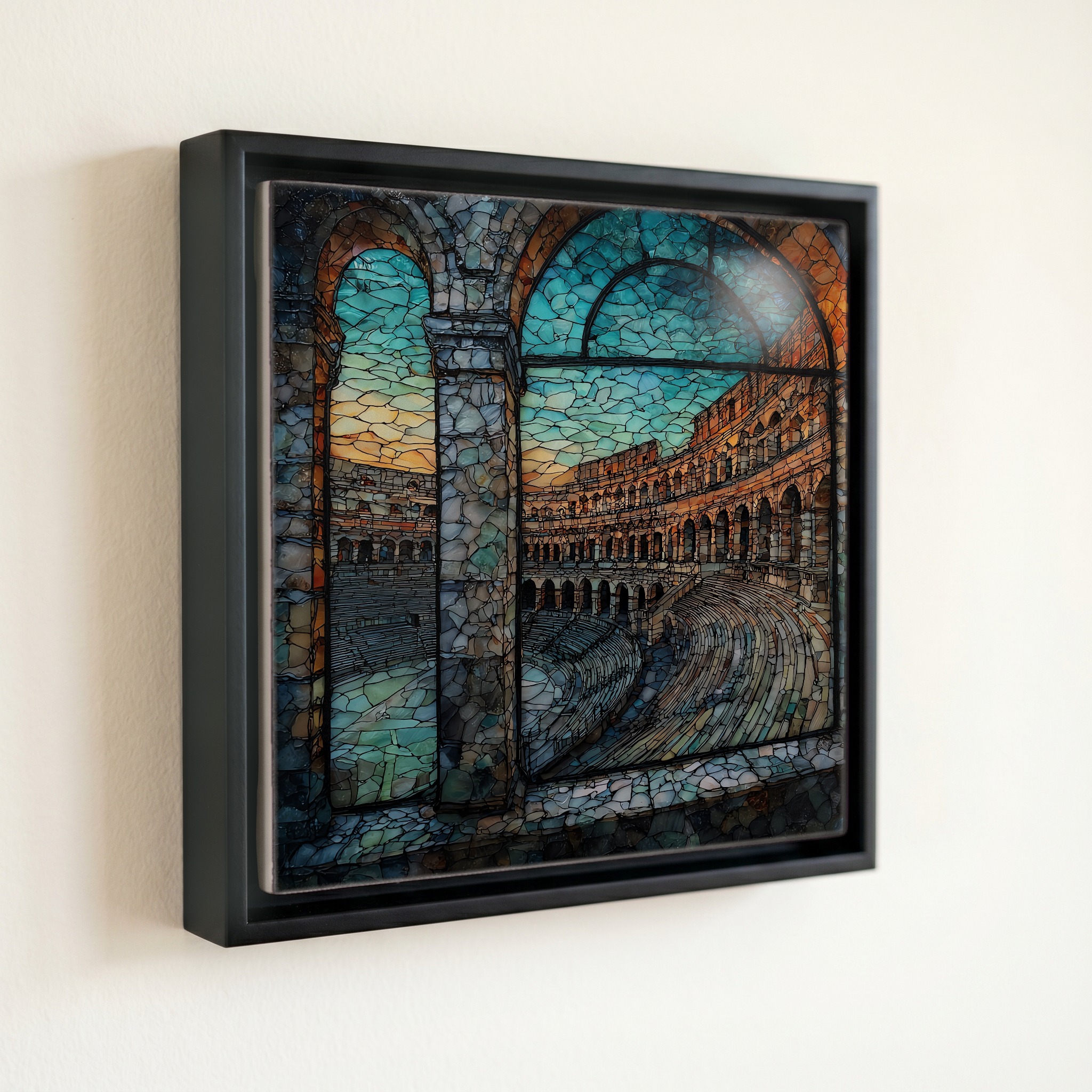
Above the linens, in a slim black surround.
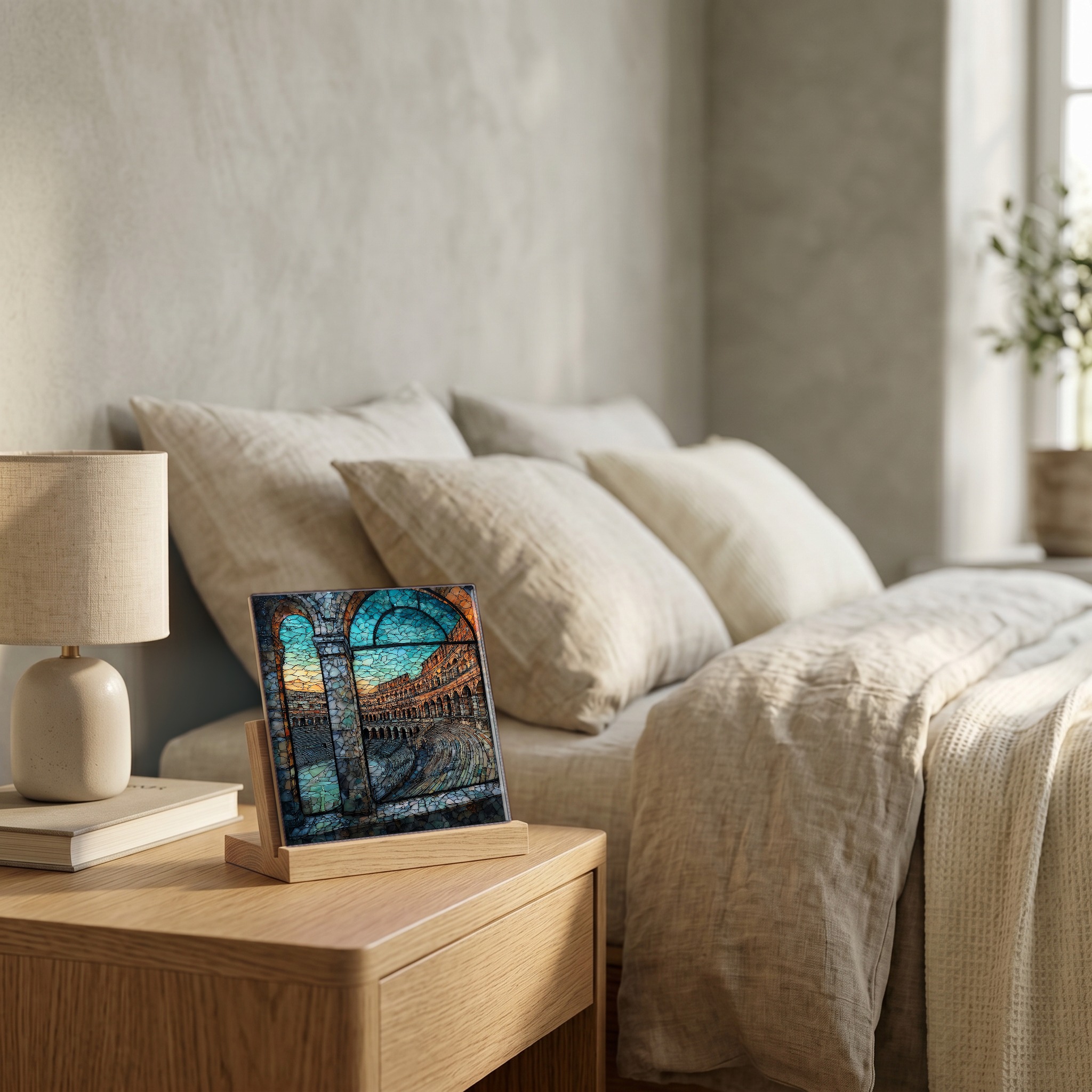
On the nightstand, on a light oak stand.
On a picture ledge, where the light comes in.
a note from the studio

A Roman amphitheatre in the south of France, two storeys of arches still standing after nearly two thousand years. Built late in the first century AD, the arena once seated twenty-four thousand for gladiator combats and animal hunts. The honey-coloured limestone holds the afternoon light the way southern stone does. Warmer at four, deeper at six. In the centuries between Rome and now, the city built houses inside the arches; in the centuries since, it has hosted bullfights, summer concerts, and the same Roman sun. Nîmes calls itself the French Rome, and the arena is the reason.
from the studio
shown in a slim black floating frame · 6 × 6 in
— bring it home

Roman Arena of Nimes, on ceramic.

Each tile is finished by hand in our Knoxville studio. Artwork is slowly infused into the ceramic surface under high heat and pressure, and rests beneath a thin glossy finish. The colour lives in the surface, not on top of it.

What kind of piece?
One tile — square or rectangle.
How big?
the popular one — counter, shelf, nightstand
6 × 6 in · 15 cm · 1.6 lb
Surface finish
A clear glossy finish — the artwork reads as if under resin. Ideal for show-pieces and framed wall art.
How it sits
A hidden cleat — sits ¼″ proud of the wall.
$58
Hand-finished and shipped from our studio at the foot of the Smokies. On your wall in about ten days.
size
6 × 6 in
15 cm
weighs
1.6 lb
solid in the hand
surface
ceramic, hand-finished
art rests beneath a thin glossy finish
from
Knoxville, TN
our family studio, at the foot of the Smokies
— start a Coaster Set

Pick any four 4-inch tiles — National Parks you've been to, a Smokies set, the four seasons of one place. $ for a set of , cork-backed, ready to live on the table.
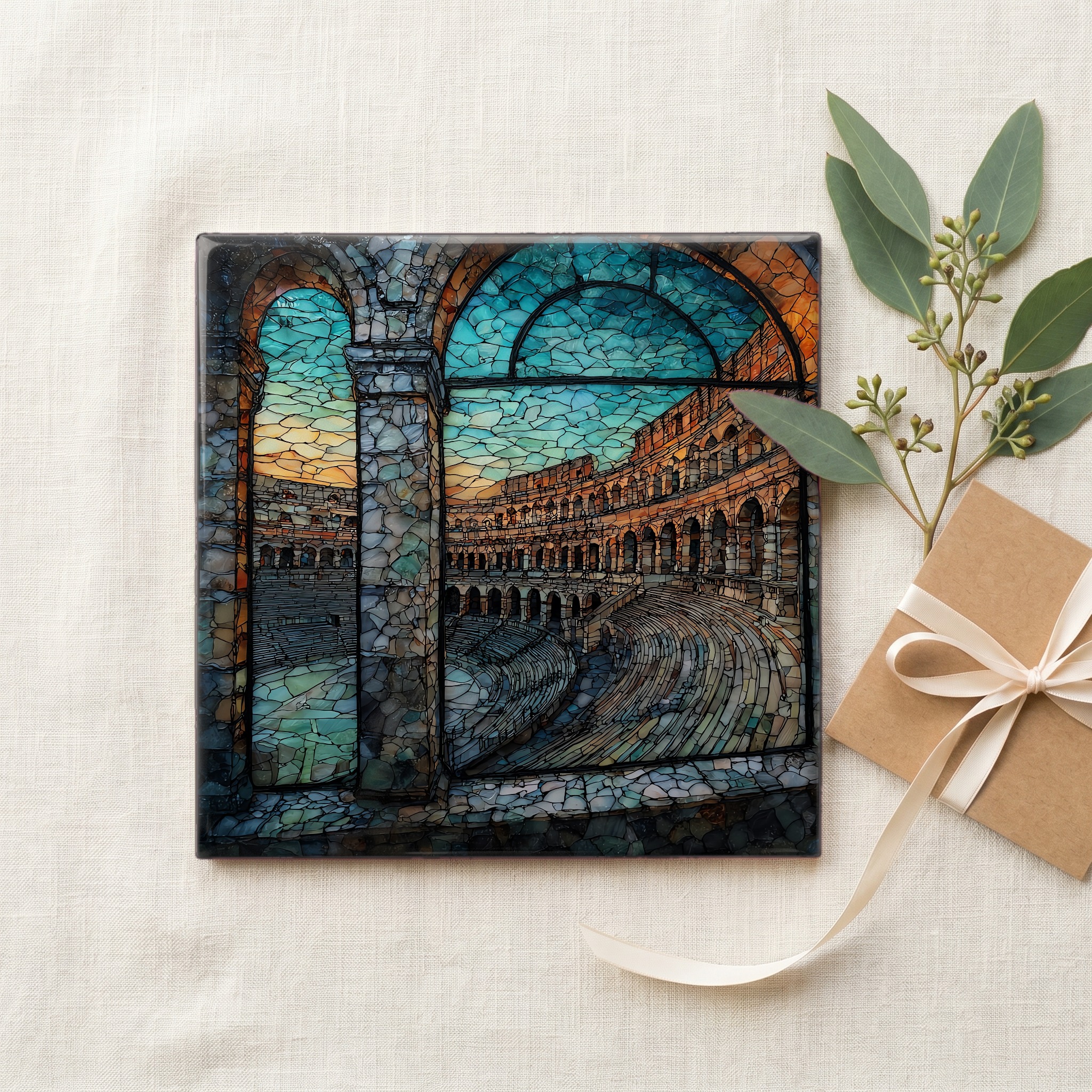
comes gift-ready
comes gift-ready

Each tile ships in a kraft box, tied with cream ribbon, with a handwritten note from the studio if you'd like to add one.
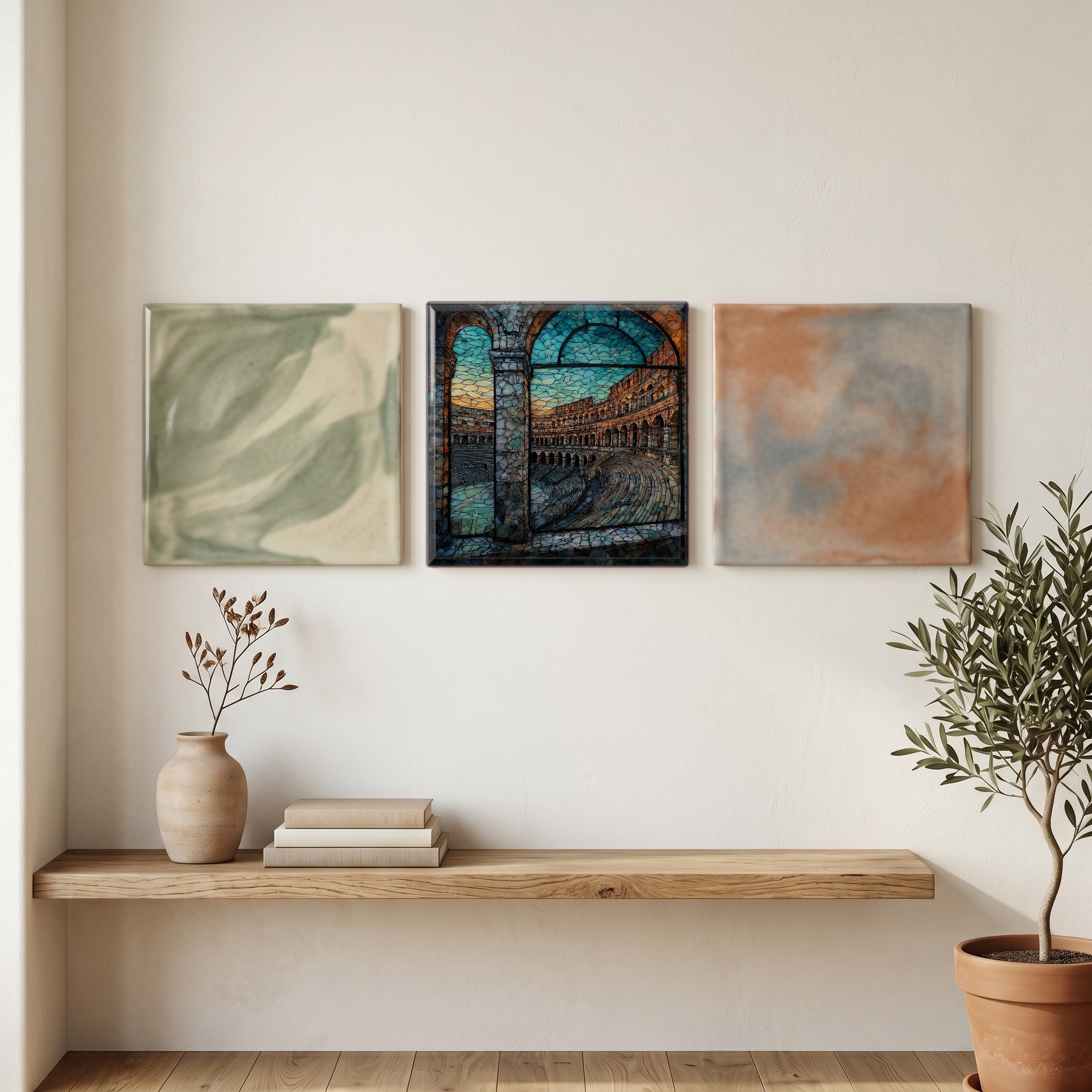
or build a grouping
or build a grouping

Three or five different vistas, hung together — a chapter of places you've been, or want to go.

about Roman Arena of Nimes

The place, in three passes.

A little of what's known, in case you fall down the rabbit hole — or want to go see it yourself.
the place

The Arena of Nîmes sits at the centre of the old town of Nîmes, in the Gard department of Occitanie in southern France, about half an hour west of Avignon and forty minutes from the Mediterranean. Built late in the first century AD, the elliptical structure measures 133 metres long by 101 metres wide and rises two storeys of sixty arches each to a height of twenty-one metres. It is widely regarded as the best-preserved Roman amphitheatre in the world. The city itself was the Roman colony of Nemausus, founded under Augustus on the Via Domitia, the trans-Alpine road that linked Italy to Hispania. Within a short walk are the Maison Carrée and the Jardins de la Fontaine; the Pont du Gard aqueduct lies twenty-five kilometres to the northeast.

the stone

The arena is built of soft, pale limestone quarried locally in the hills above Nîmes, the same stone that yielded the Maison Carrée and most of the Roman city. Two storeys of sixty arches, separated by a cornice, rise to twenty-one metres; an inner network of vaulted galleries and staircases, the vomitoria, once allowed twenty-four thousand spectators to enter and clear the seats within minutes. In the fifth century the amphitheatre was fortified into a citadel by the Visigoths; by the eighteenth century several hundred residents lived in houses and two chapels built inside the arches. The houses were cleared from 1809 under Napoleon, and the arena was returned to civic use.

the year

The arena's calendar is built around the Feria de Nîmes, two annual festivals that fill the city with bullfights, music, and close to a million visitors. The Feria de Pentecôte in late May or early June is the larger; the Feria des Vendanges, held over a long weekend in September around the grape harvest, closes the season. Between them, the arena hosts the Festival de Nîmes, an open-air concert programme that has brought Sting, Lenny Kravitz, and other touring artists to the Roman tiers, along with a Great Roman Games reenactment that fills the floor with gladiators and chariots for one weekend in May.

where
France · Nîmes, Gard, Occitanie
elevation
39 m · 128 ft
position
43.8347° N · 4.3596° E
the neighborhood

What's nearby.

A handful of named places within an hour's walk or short drive. Some we've already painted; some we will.
0.5 km W
Maison Carrée
Roman temple
1 km N
Tour Magne
Roman tower
1 km NW
Jardins de la Fontaine
Roman gardens
25 km NE
Pont du Gard
Roman aqueduct
45 km NE
Avignon
medieval papal city
N
Roman Arena of Nimes
Maison Carrée
Tour Magne
Jardins de la Fontaine
Pont du Gard
Avignon
common questions

What people ask.

A few questions we get about Roman Arena of Nimes — and about bringing the piece home.
about the place

The arena stands at the centre of the old town of Nîmes, in the Gard department of Occitanie in southern France, about half an hour west of Avignon and forty minutes from the Mediterranean coast. Trains from Paris reach it in around three hours.

The amphitheatre dates to the late first century AD, when Nîmes was the Roman colony of Nemausus on the Via Domitia, the road linking Italy to Hispania. It is widely regarded as the best-preserved Roman amphitheatre still standing.

The elliptical structure measures 133 metres long and 101 metres wide, with two storeys of sixty arches rising to a height of twenty-one metres. It once seated twenty-four thousand spectators for gladiator combats and animal hunts.

Yes. Bullfights fill the arena during the Feria de Pentecôte each spring and the Feria des Vendanges each September. The Festival de Nîmes brings open-air concerts each summer, and a Great Roman Games reenactment is staged on one weekend in May.

The Arena of Nîmes is smaller than the Colosseum, which measures 188 metres long against 133 metres at Nîmes, but more complete. Most of the original outer wall, both storeys of arches, and the internal galleries survive intact, which the Colosseum lost over time.

Nîmes lies in southern France's bull-country, and bullfighting has been part of the city's identity since the nineteenth century, when the cleared arena was returned to civic use. The Feria draws hundreds of thousands of visitors over a long weekend each year.

The arena is open daily, with the floor and tiered seats accessible by ticket; an audio guide is included. A combined ticket covers the arena, the Maison Carrée and the Tour Magne, the three surviving Roman monuments in the city.

about the piece in your home

It often is. The arena is the emblem of Nîmes and a fixed image for people from the Gard or the wider Languedoc region. A Coaster or Small with a handwritten note from the studio travels well; a Medium reads as a real keepsake.

The honey-limestone palette and the stained-glass colour treatment make it sit well in Mediterranean-modern and warm-minimalist rooms, where the warm light grounds without overwhelming. It also reads strongly in jewel-tone maximalist interiors that want a Roman anchor. The piece pairs with terracotta, ochre, deep-green, and oxblood.

It is. Mediterranean-modern continues to grow as a North-American interior trend, leaning on warm limestone, terracotta and arched stonework. The Arena of Nîmes is one of the founding sources of that visual vocabulary, Roman and southern, and the tile carries that weight without falling into pastiche.

For a console or a reading nook, a single Large reads well on its own. For a sofa or a bed, a 4-tile Mural carries the proportions; for a dining room or a long entry wall, a 9-tile Mural reads as a single architectural statement.

Yes. The Dura Satin and Matte finishes are scratch-resistant and made for kitchens, bathrooms, and shower walls; the glossy finish stays in the dry rooms. The colour lives in the surface, so the image does not fade with steam or splash.

A soft microfibre cloth and clean water are enough. The colour is slowly infused into the ceramic surface under high heat and pressure, so it sits beneath a thin, durable finish and does not lift or wear with regular wiping. Avoid abrasive cleaners.

Yes. Every WenderVista piece is original to the studio, curated and finished in Knoxville, Tennessee. There is no licensing and no third party. Reid Wender chooses each place that enters the WenderVista atlas, and the same eye runs the studio's other rooms.

if this one stayed with you

A few you might also love.

Hand-picked by the eye that found Sorapis. Same air, same kind of quiet.