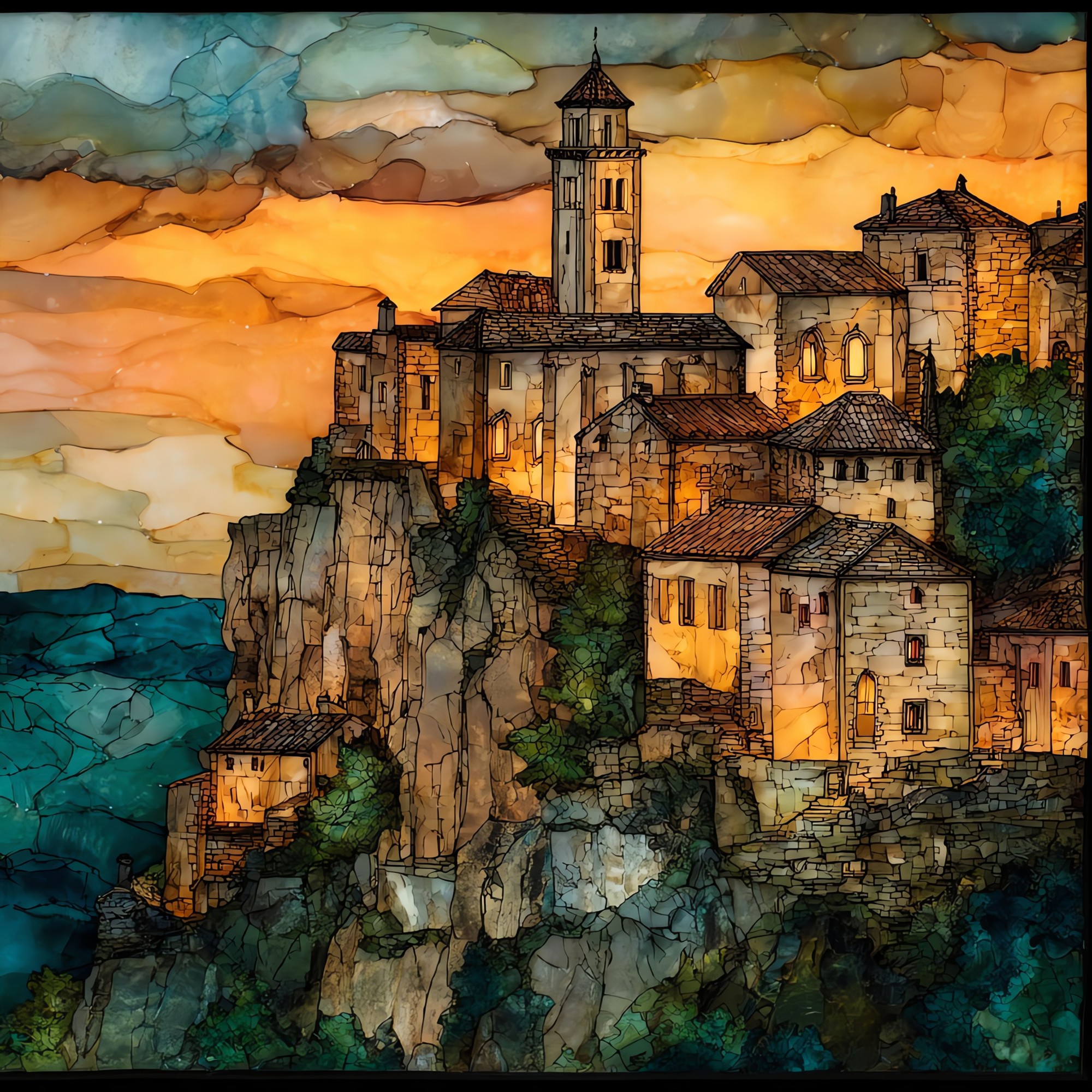
Rocamadour Cliff Sanctuary
— a village that climbed into the rock and stayed.
Not only on a wall.
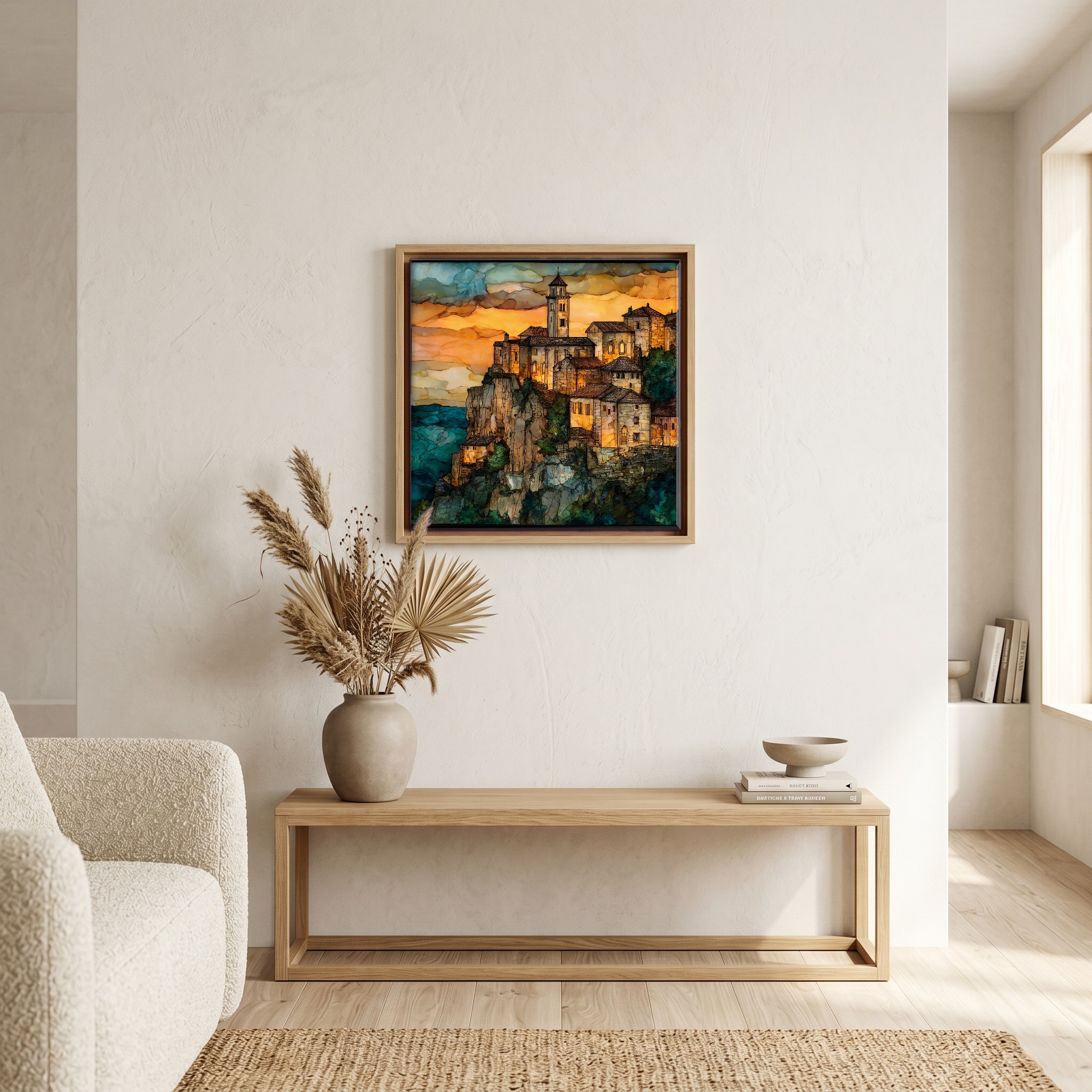
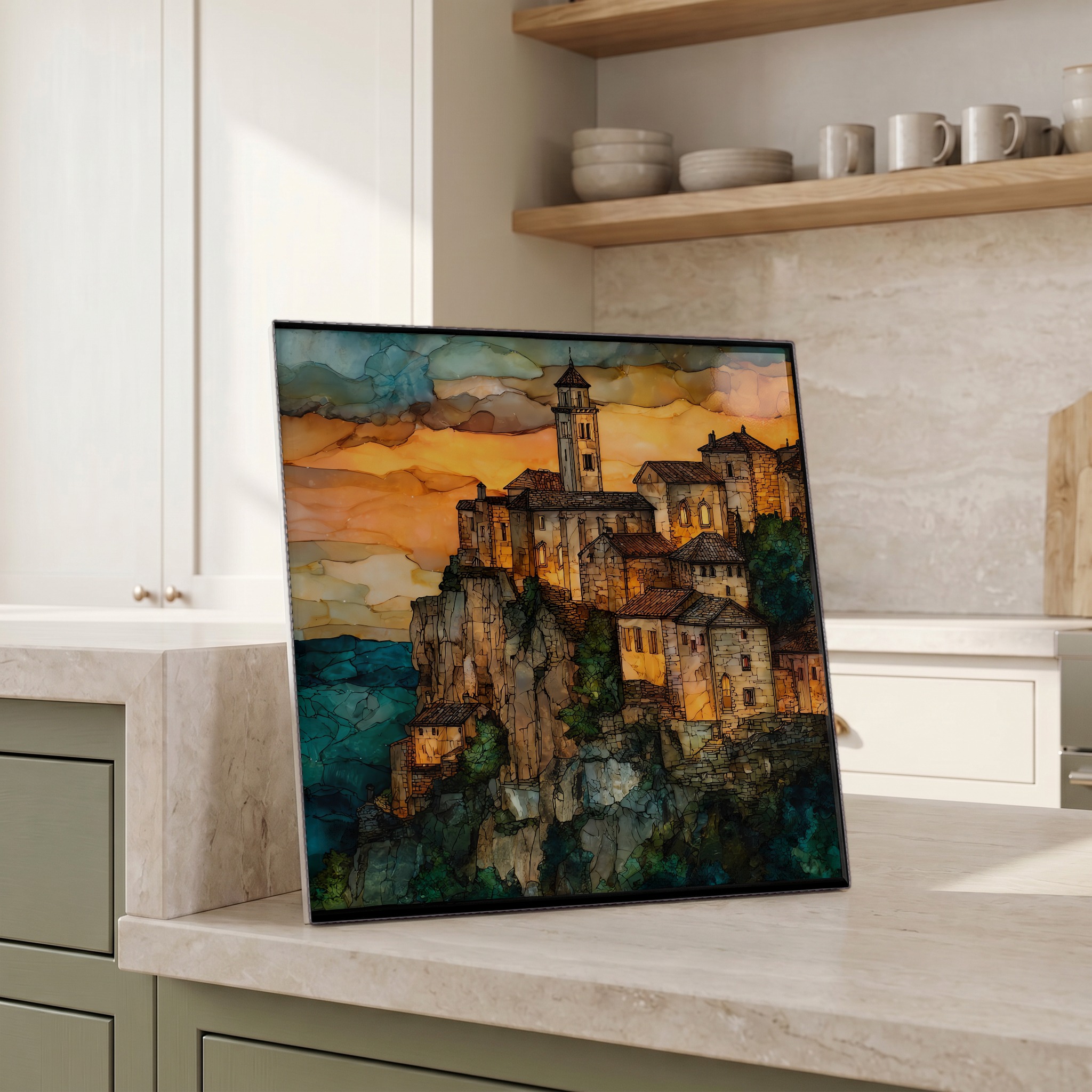
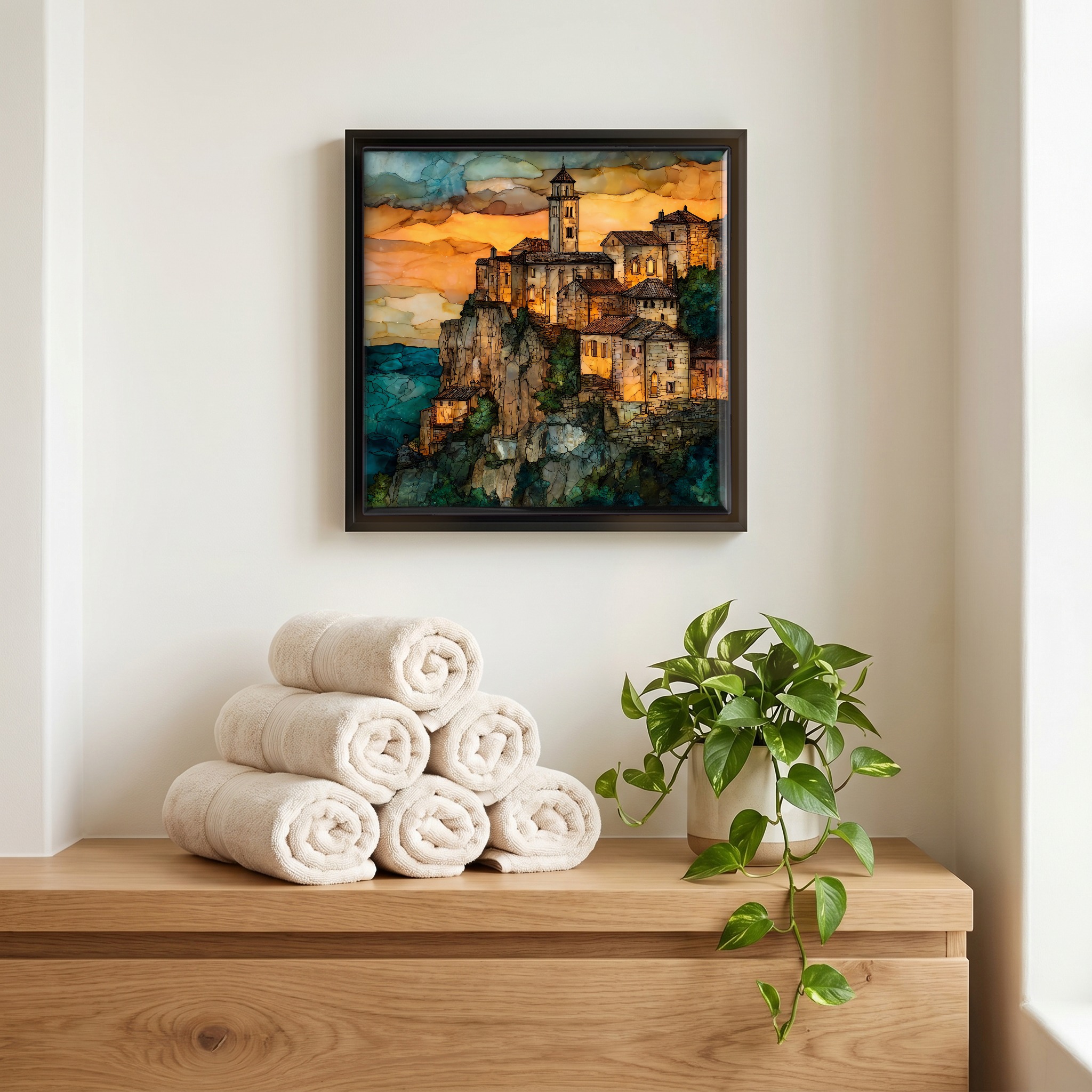
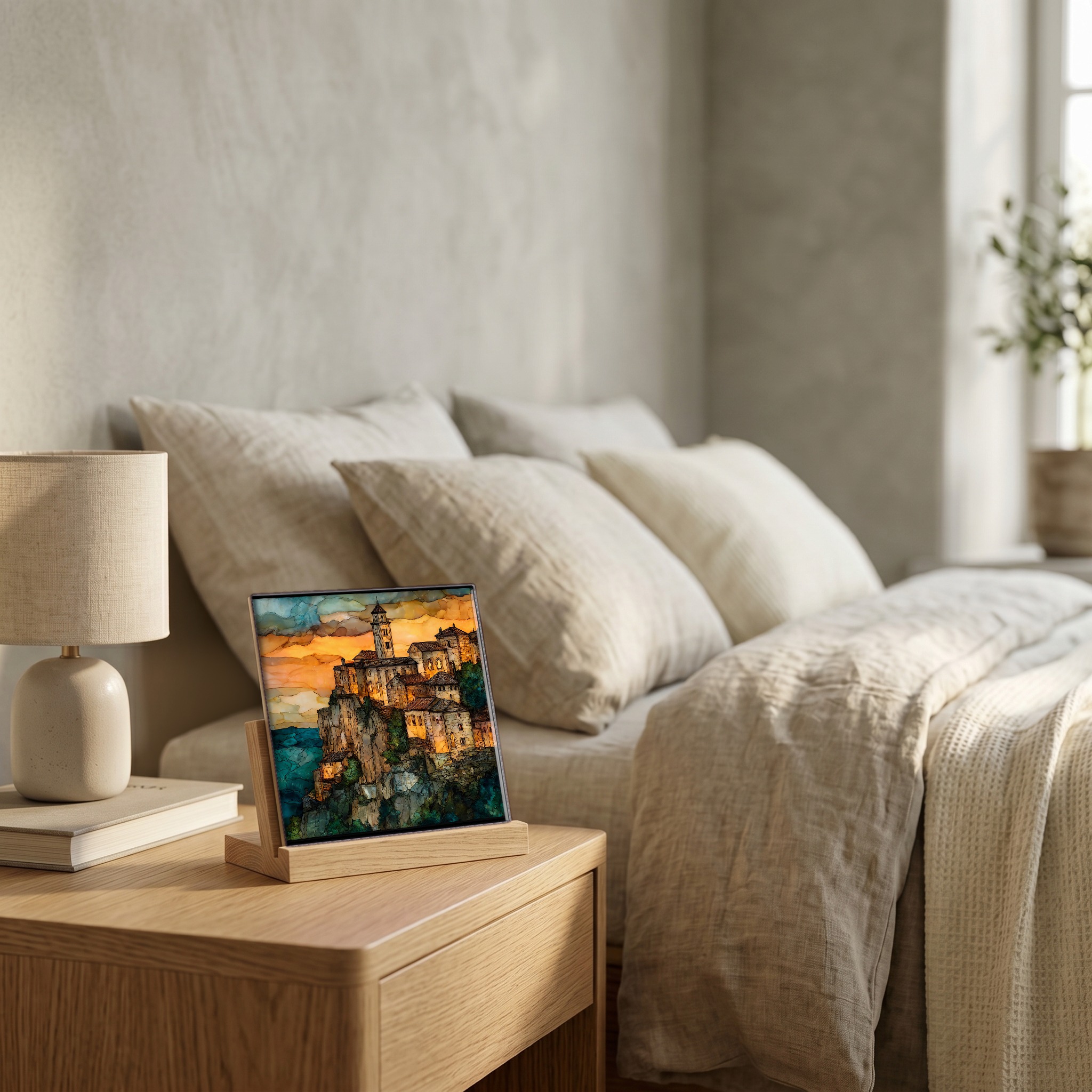
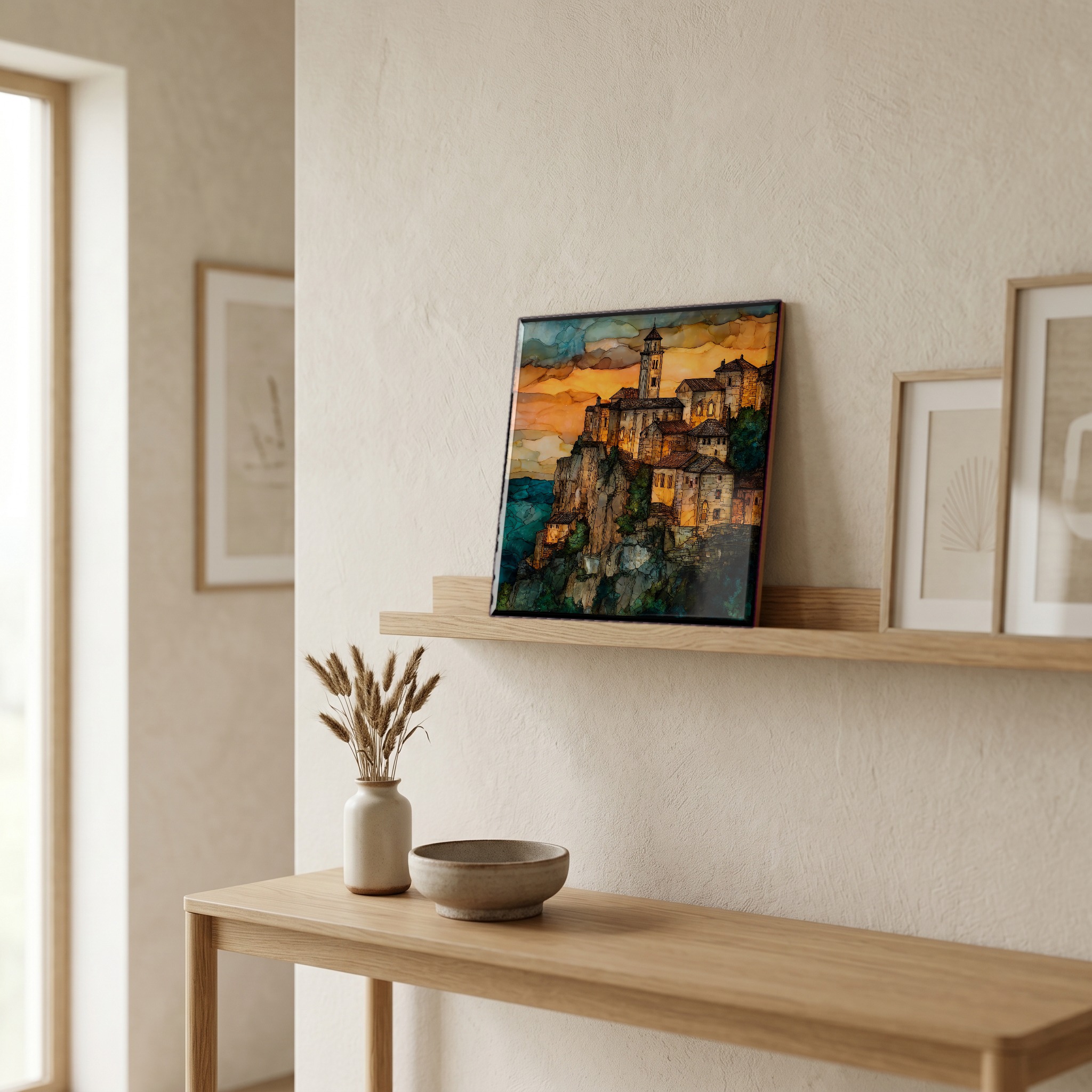
“The village climbs a limestone cliff above the Alzou canyon, in the Quercy. Seven sanctuaries stacked onto a single ledge cut from the rock: the Basilique Saint-Sauveur, the Chapelle Notre-Dame, the Crypt of Saint Amadour. The Grand Escalier of 216 steps connects the houses below to the chapels above. Inside the chapel, a small walnut Black Virgin has held her place since the twelfth century, blackened by smoke and time. The classic view is from L'Hospitalet across the canyon, where the whole town reads as one carved thing. Best a little before the noon coaches arrive.
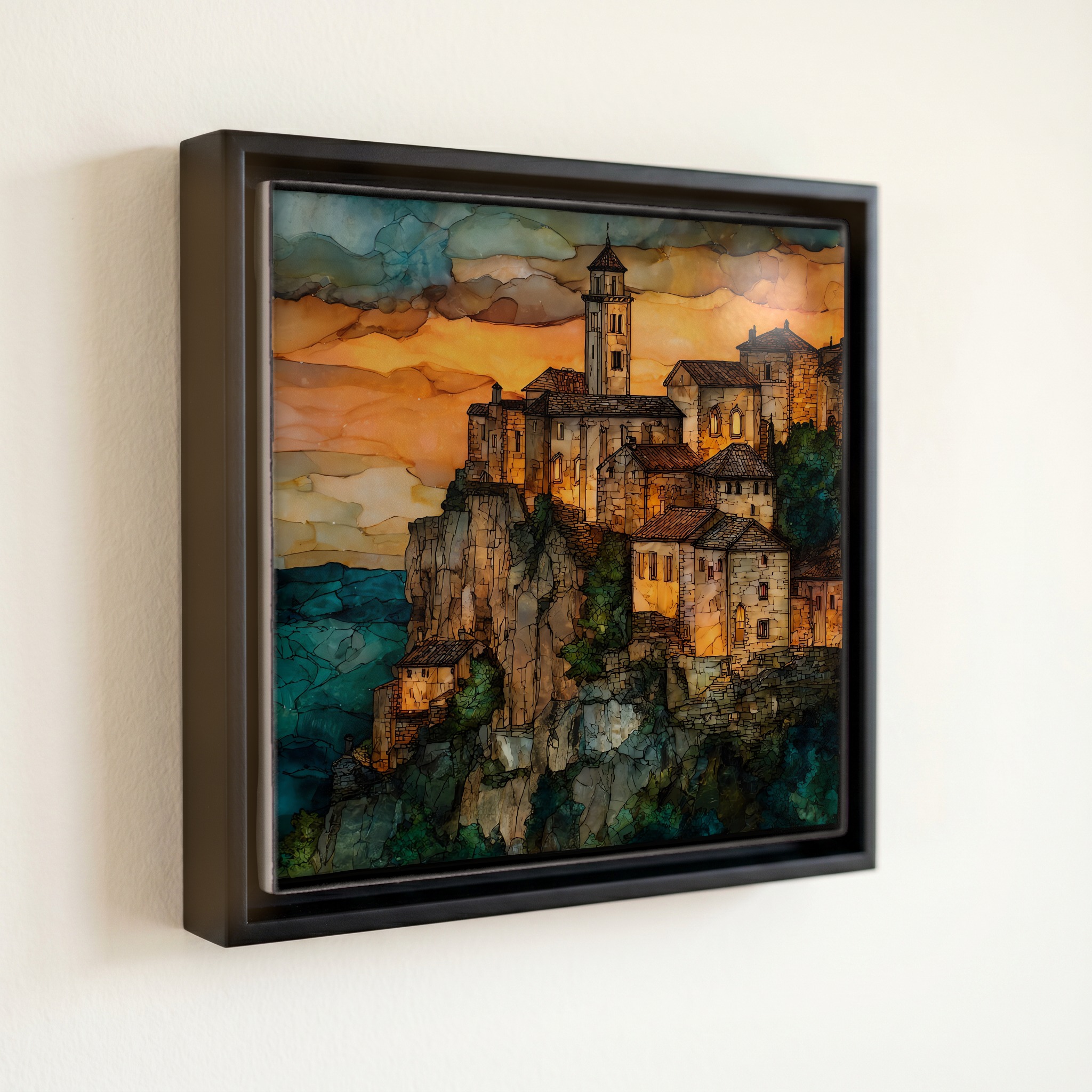
Rocamadour Cliff Sanctuary, on ceramic.
Each tile is finished by hand in our Knoxville studio. Artwork is slowly infused into the ceramic surface under high heat and pressure, and rests beneath a thin glossy finish. The colour lives in the surface, not on top of it.
Pick any four 4-inch tiles — National Parks you've been to, a Smokies set, the four seasons of one place. $ for a set of , cork-backed, ready to live on the table.
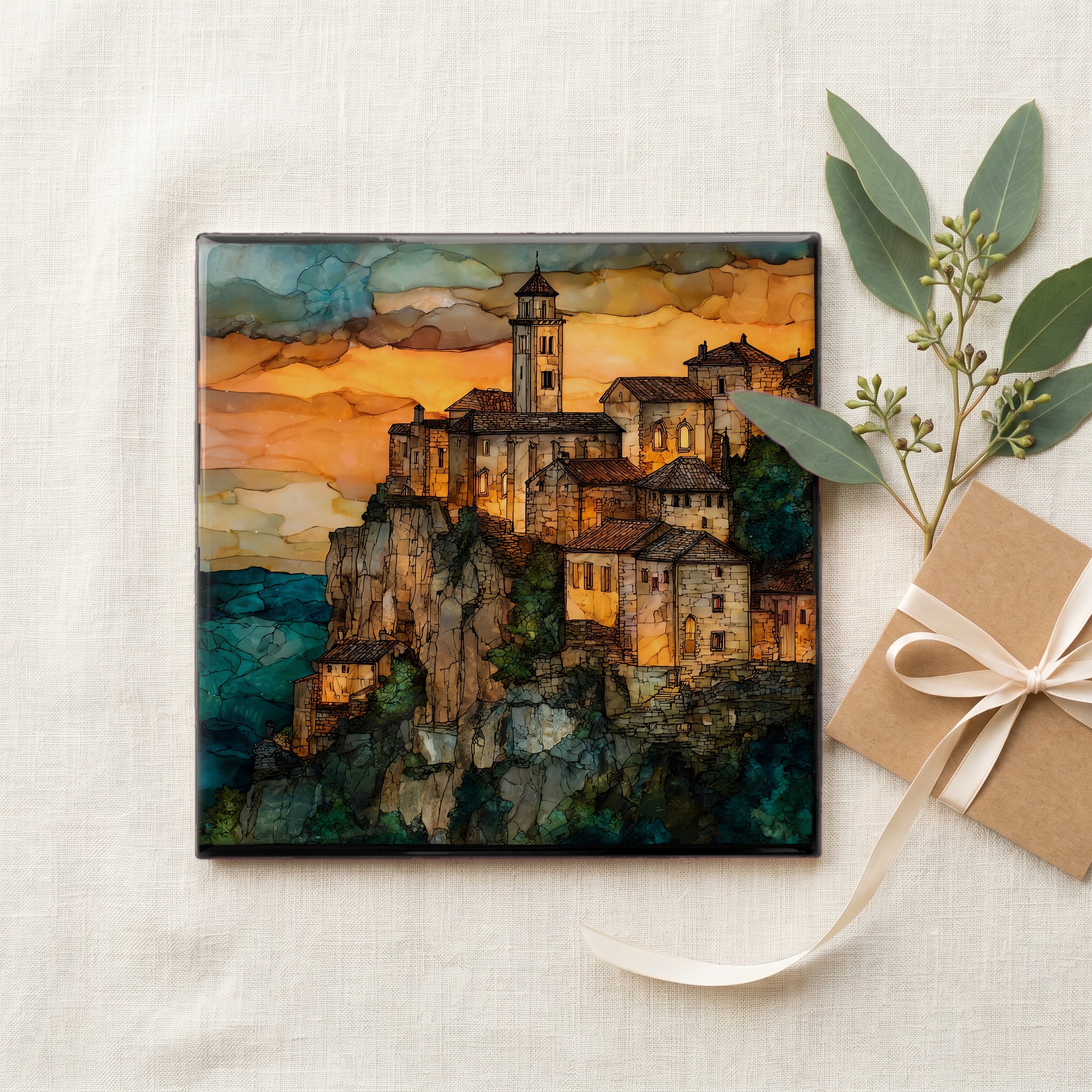
Each tile ships in a kraft box, tied with cream ribbon, with a handwritten note from the studio if you'd like to add one.
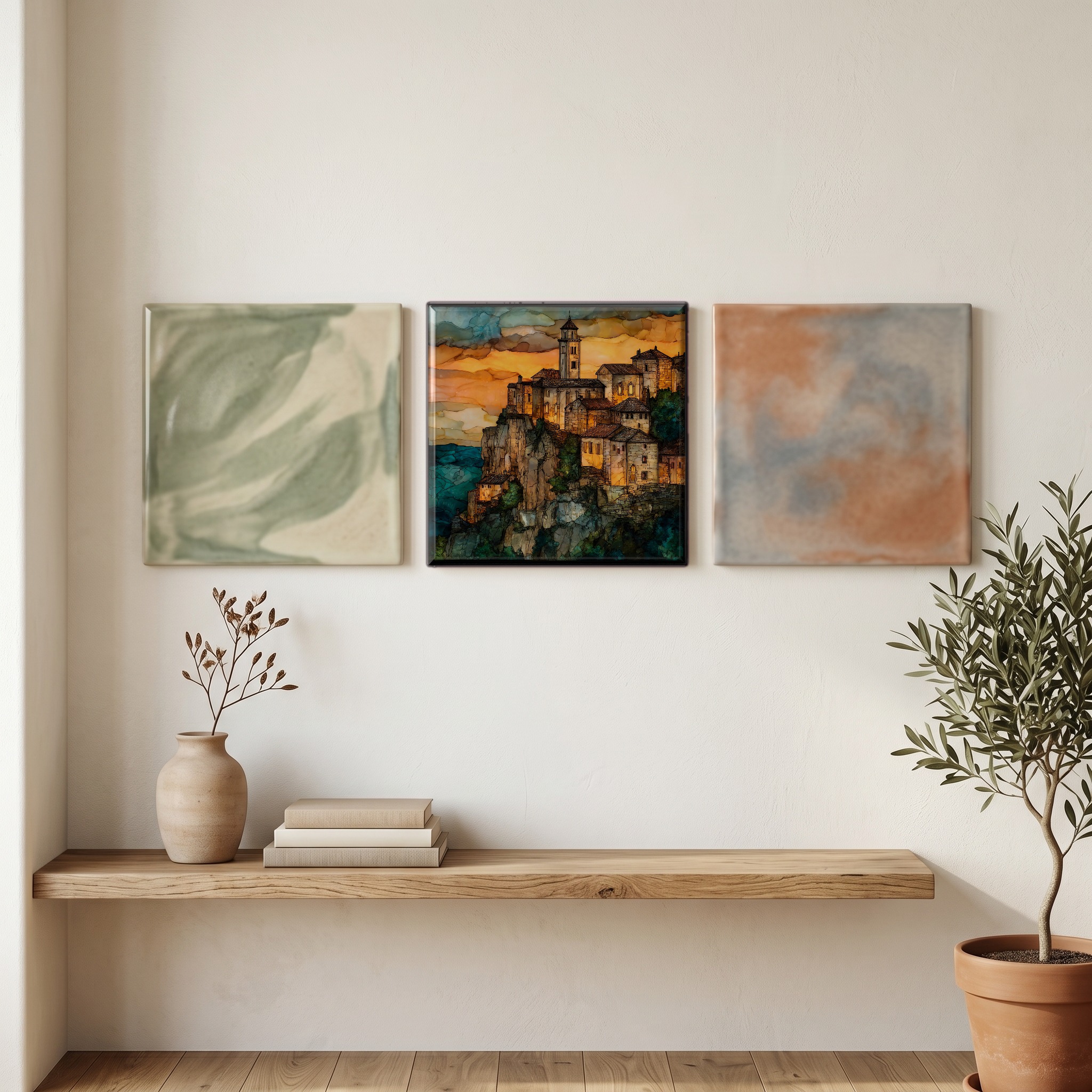
Three or five different vistas, hung together — a chapter of places you've been, or want to go.
The place, in three passes.
The village clings to a limestone cliff above the Alzou canyon in the Lot, in southwestern France, about sixty kilometres north of Cahors. The site rises in three vertical levels: the houses along the river, the Cité Religieuse halfway up the rock face, and a ruined château on the plateau above, with roughly 120 metres between the canyon floor and the castle. It sits inside the Parc Naturel Régional des Causses du Quercy and draws more than a million pilgrims and travellers each year, many on the medieval road to Santiago de Compostela. The surrounding karst plateau has been a UNESCO Global Geopark since 2017.
The Cité Religieuse holds seven sanctuaries stacked onto a single ledge cut from the cliff face: the Basilique Saint-Sauveur, the Chapelle Notre-Dame, the Crypt of Saint Amadour, and four smaller chapels, all reached by the Grand Escalier, a stairway of 216 stone steps. The Chapelle Notre-Dame shelters the Vierge Noire, a small walnut statue of the Virgin and Child dated to the twelfth century, blackened by candle smoke and the slow oxidation of the wood. The Basilica is one of the historic monuments listed by UNESCO in 1998 as part of the Routes of Santiago de Compostela in France.
The classic view is from L'Hospitalet, the small village on the plateau opposite, where the whole vertical town reads as a single carved thing. The Cité Religieuse is open daily and free to enter. The Grand Escalier is climbed on foot, traditionally in fifteen stations matching the medieval pilgrim's ascent, and a small number of pilgrims still climb the 216 steps on their knees, particularly around the September 8 feast of the Nativity of the Virgin. The site is busiest in July and August; early morning in May or October rewards the climb.