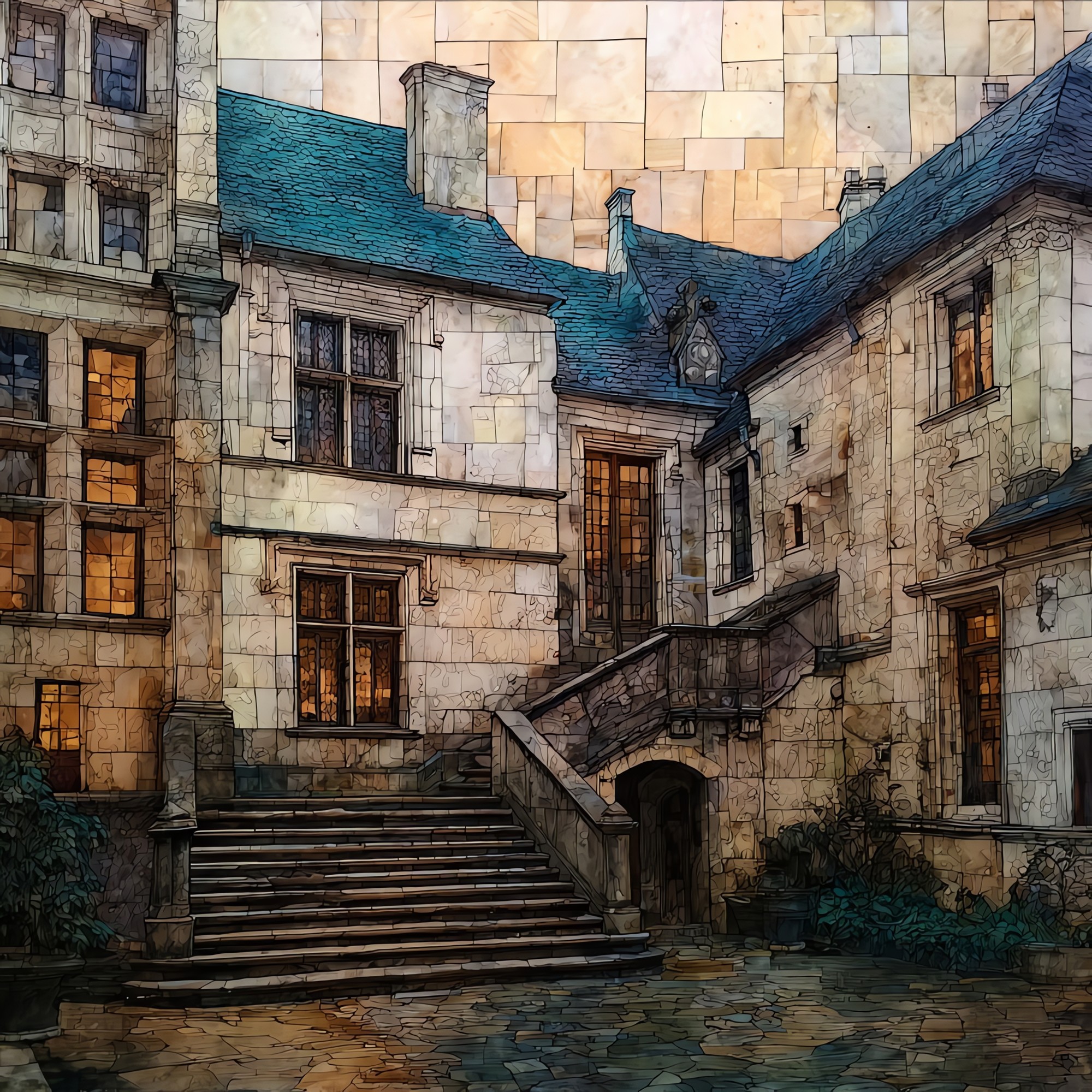
Blois Renaissance Staircase
— — a spiral the king signed in salamanders.
Not only on a wall.
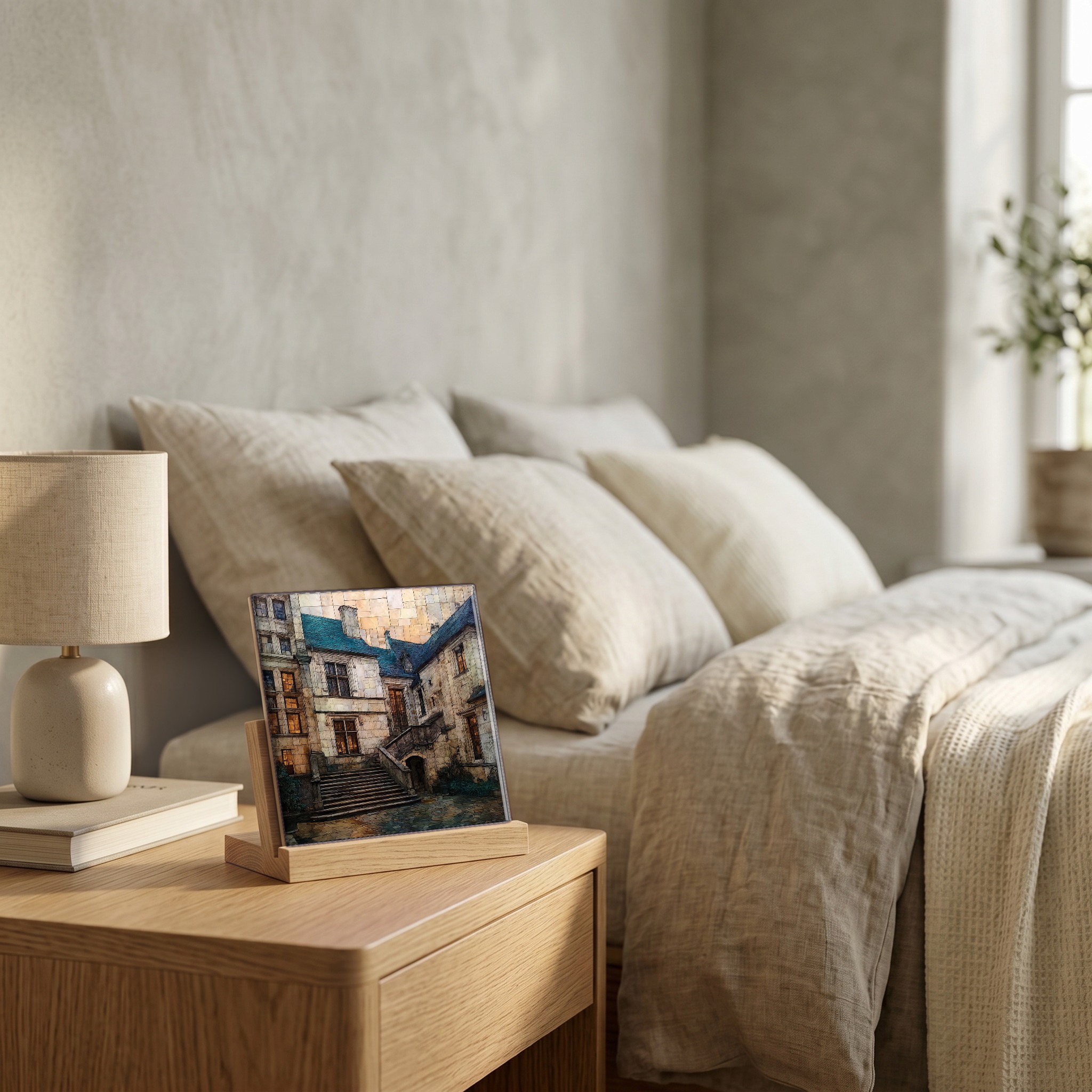
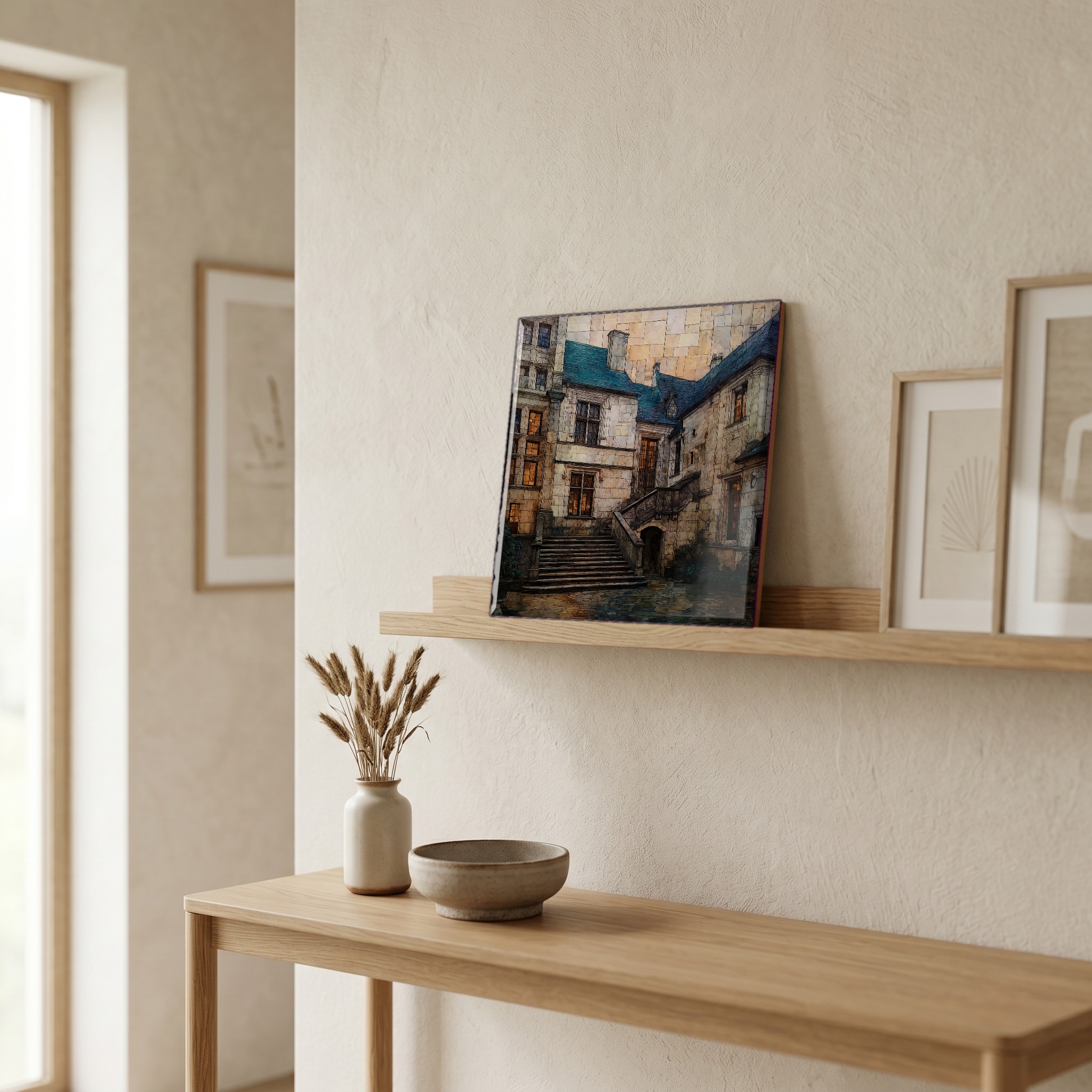
“The François I wing rises on the courtyard side of the château at Blois, and its staircase opens to anyone standing below. An octagonal turret in dressed stone, half-cage, half-tower, the spiral visible through arched loggias as it climbs. The salamander, Francis's emblem, is carved into the risers and balustrades again and again. The court was meant to watch the king ascend; the staircase was the performance. Five centuries later it still does what it was designed to do, pulls the eye up, slowly, around its own stone hinge.
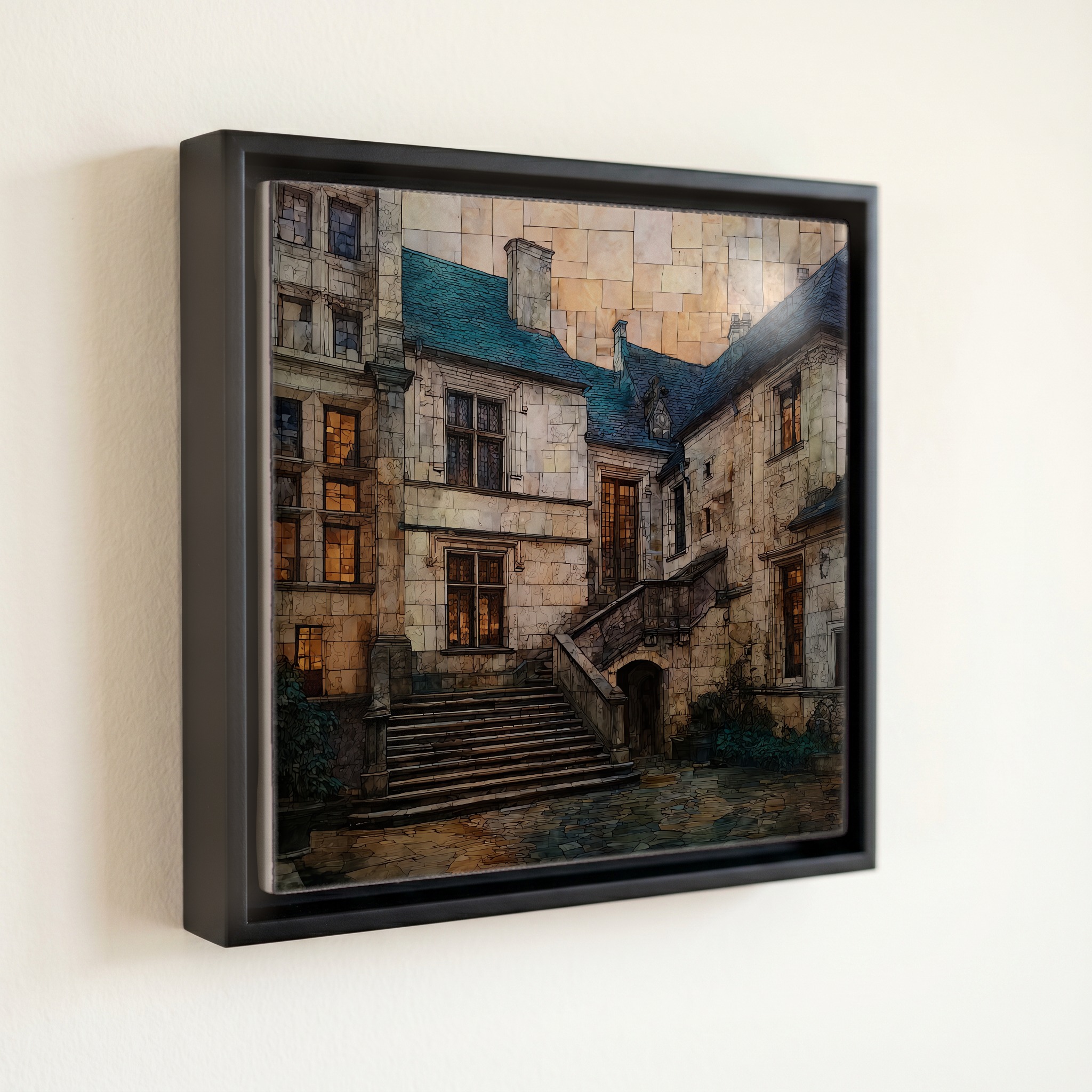
Blois Renaissance Staircase, on ceramic.
Each tile is finished by hand in our Knoxville studio. Artwork is slowly infused into the ceramic surface under high heat and pressure, and rests beneath a thin glossy finish. The colour lives in the surface, not on top of it.
Pick any four 4-inch tiles — National Parks you've been to, a Smokies set, the four seasons of one place. $ for a set of , cork-backed, ready to live on the table.
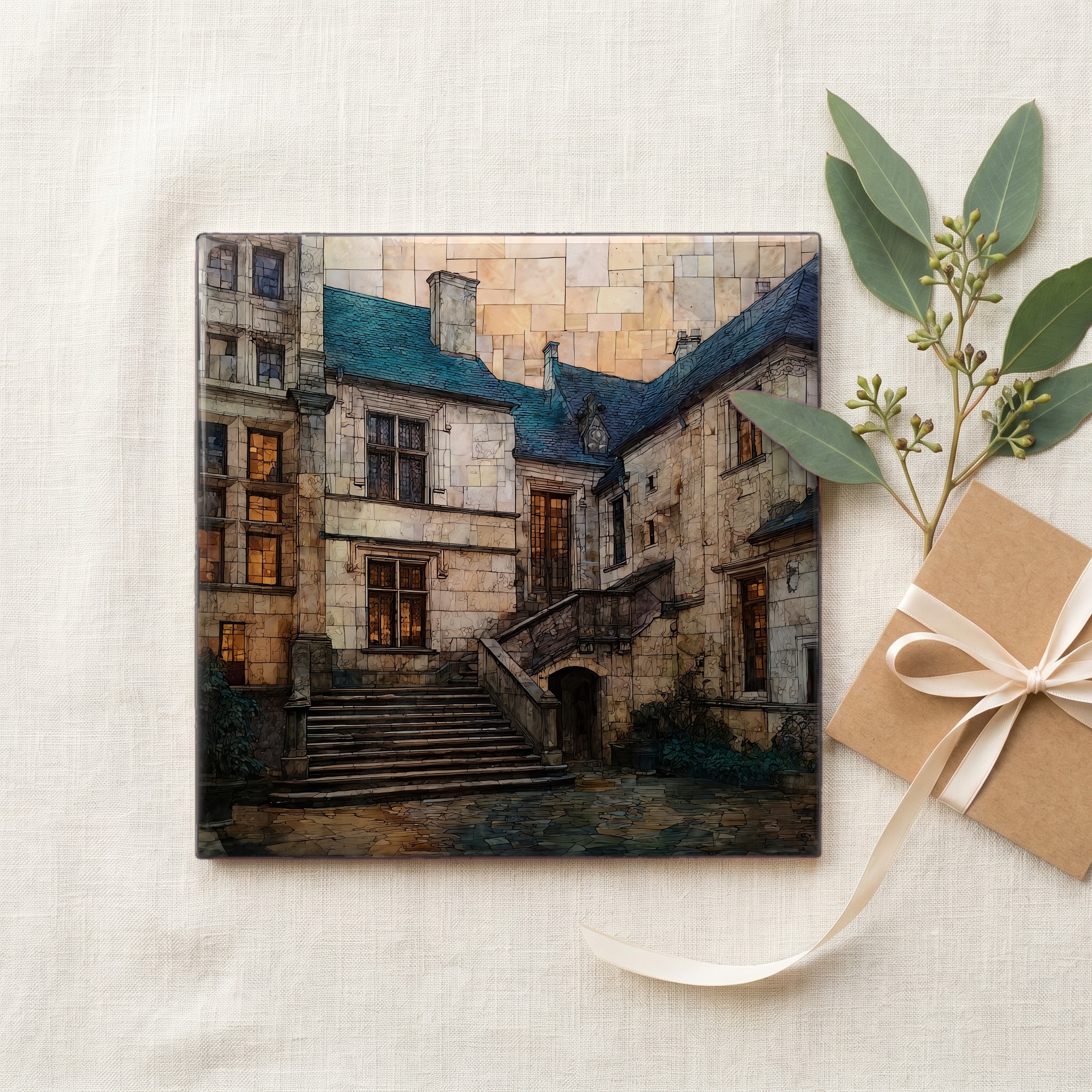
Each tile ships in a kraft box, tied with cream ribbon, with a handwritten note from the studio if you'd like to add one.
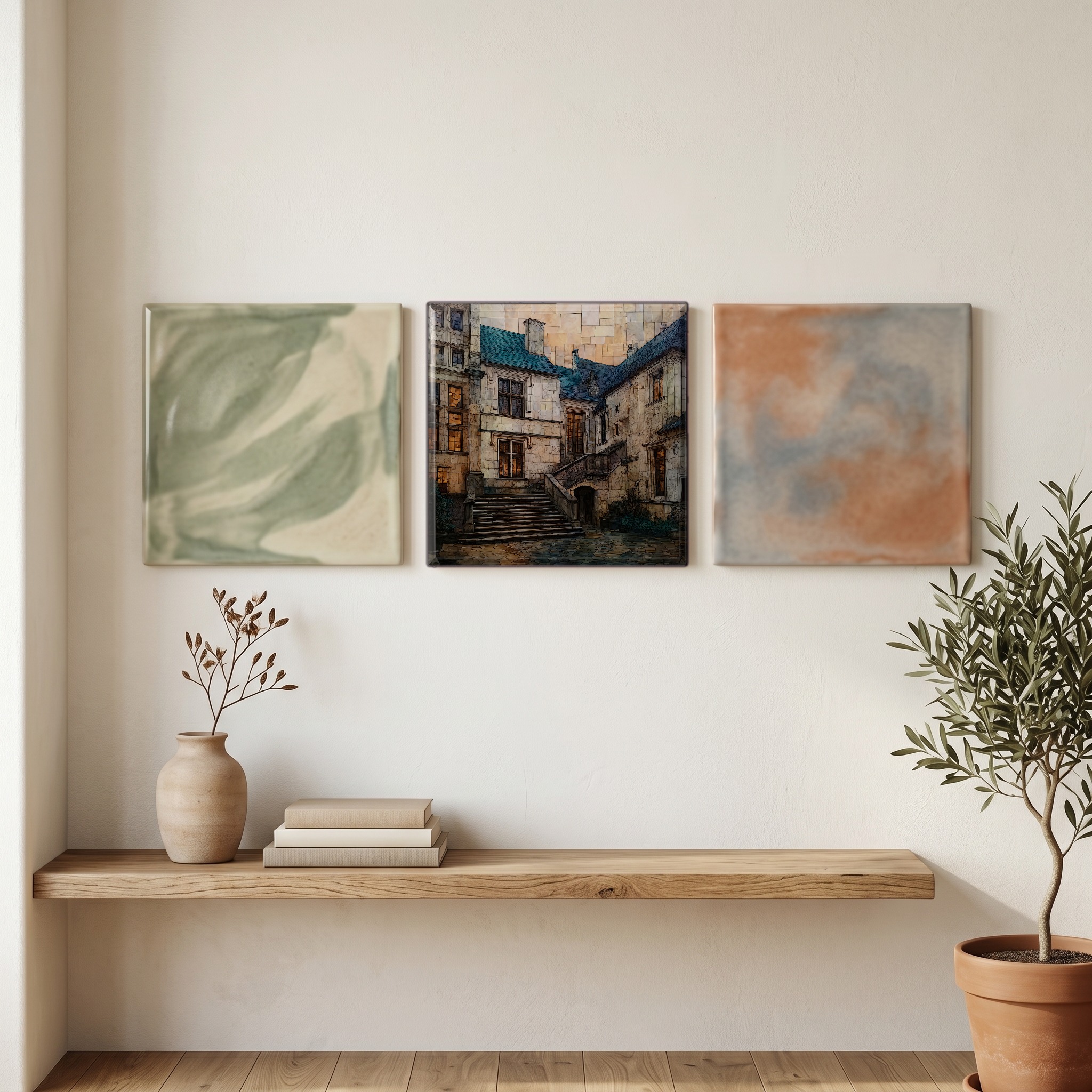
Three or five different vistas, hung together — a chapter of places you've been, or want to go.
The place, in three passes.
The Château royal de Blois sits above the Loire in the town of Blois, roughly halfway between Orléans and Tours in the Centre-Val de Loire region of France. Four wings from four centuries ring a single courtyard: a medieval hall, a flamboyant-Gothic Louis XII range completed in 1503, the early-Renaissance François I wing of 1515-1518, and François Mansart's classical Gaston d'Orléans wing begun in 1635. The François I wing carries the open staircase, an octagonal turret projecting into the courtyard with the spiral visible through arched loggias as it climbs. The Loire Valley, including Blois, was inscribed on the UNESCO World Heritage list in 2000.
The staircase is carved from local tuffeau, the soft white limestone of the Loire Valley that hardens on exposure to air. Its surfaces are densely worked: balustrades, risers, and capitals carry the salamander emblem and crowned F of King Francis I, who began the wing in 1515, alongside fleurs-de-lis and the porcupine of his predecessor Louis XII. The form is still late-Gothic at heart, a vis or spiral stair set in a polygonal turret, but the ornament is already Italian, the bays framed by pilasters and entablatures from a vocabulary just arriving from Lombardy. The design has long been attributed in part to Domenico da Cortona, the Florentine architect who worked at the French court.
The Château royal de Blois is open to the public throughout the year and is operated by the city of Blois. Inside the François I wing, visitors move through the royal apartments and the cabinet of Catherine de Medici, then out onto the staircase landings that look back into the courtyard. A major restoration by the architect Félix Duban began in 1845 and recovered much of the polychromy and sculpted ornament. Summer evenings carry a sound-and-light projection that uses all four wings as its backdrop, the staircase among them. Blois sits on the Paris-Tours rail line; the château is a short walk from the station and from the embankment of the Loire below.