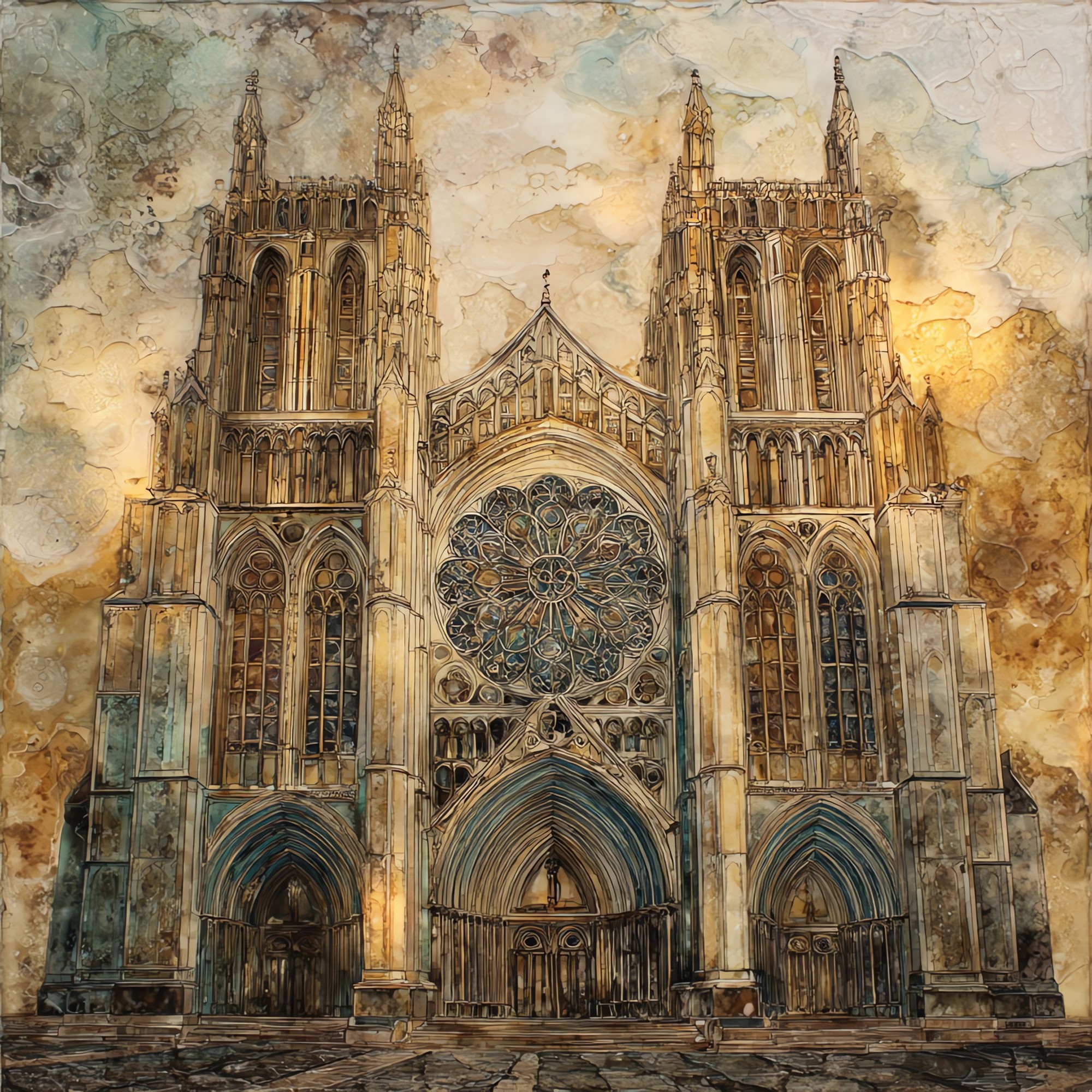
Reims Cathedral Coronation Facade
— a wall of saints, in the late light.
Not only on a wall.

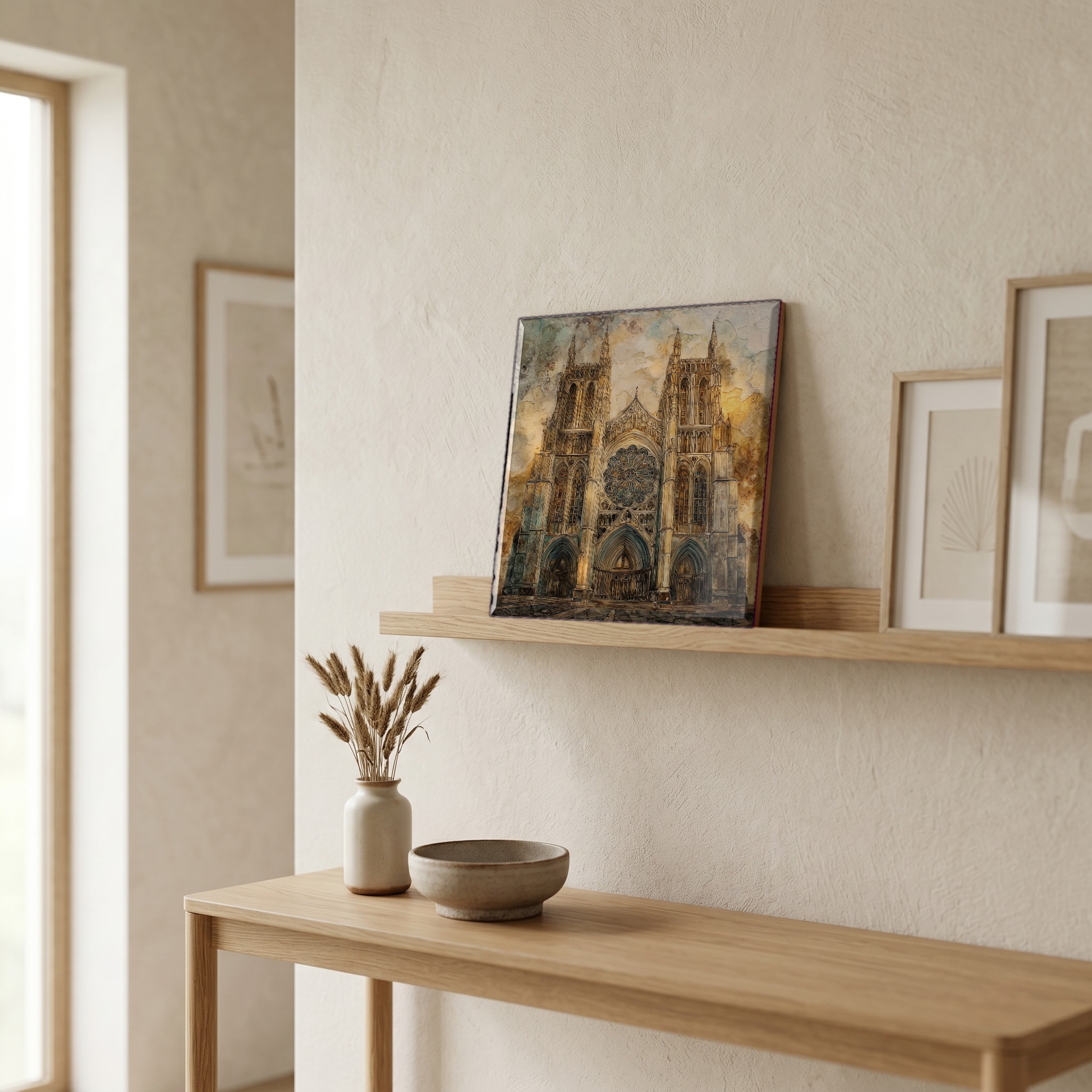
“The west facade of Notre-Dame de Reims, where thirty-three kings of France were crowned. The cathedral the country built when it wanted to baptise its own beginnings. Joan of Arc brought Charles VII here in 1429. Clovis was baptised on this same ground in the late fifth century, by Bishop Remigius. The Smiling Angel on the left portal lost her head to a German shell in 1914; the head was found in the rubble and put back. She is still smiling. The facade faces west and catches the late light. It has been catching the late light for eight hundred years.
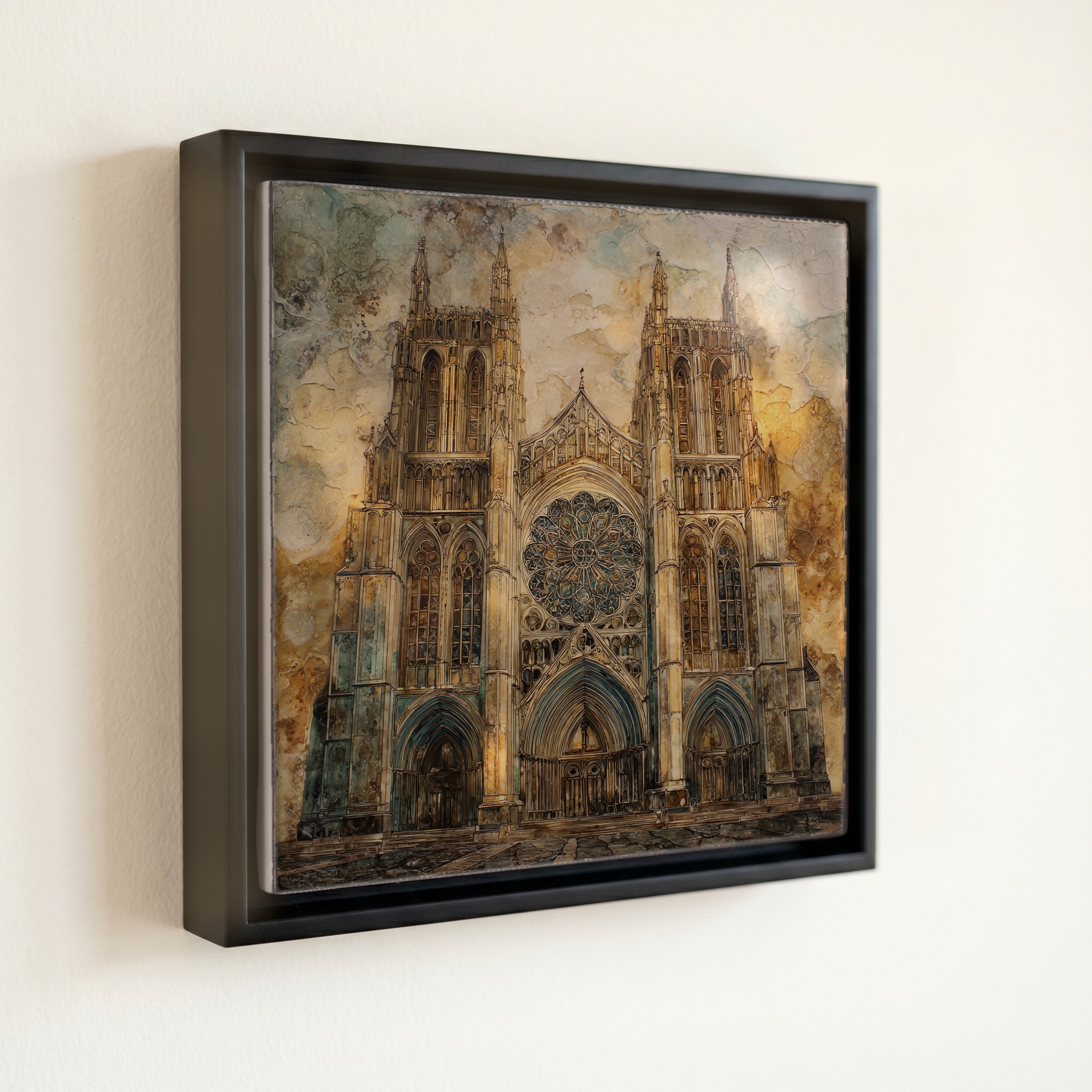
Reims Cathedral Coronation Facade, on ceramic.
Each tile is finished by hand in our Knoxville studio. Artwork is slowly infused into the ceramic surface under high heat and pressure, and rests beneath a thin glossy finish. The colour lives in the surface, not on top of it.
Pick any four 4-inch tiles — National Parks you've been to, a Smokies set, the four seasons of one place. $ for a set of , cork-backed, ready to live on the table.
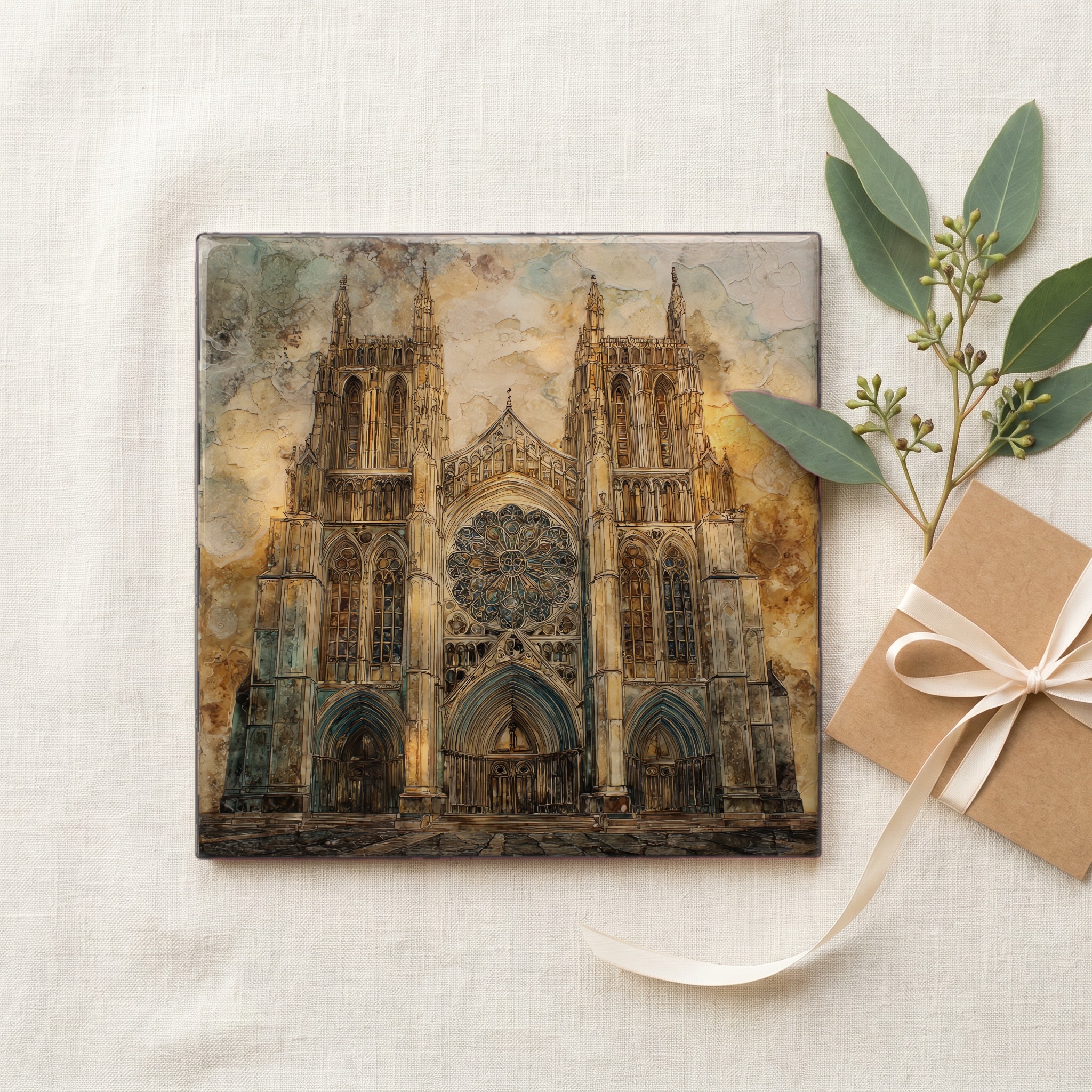
Each tile ships in a kraft box, tied with cream ribbon, with a handwritten note from the studio if you'd like to add one.
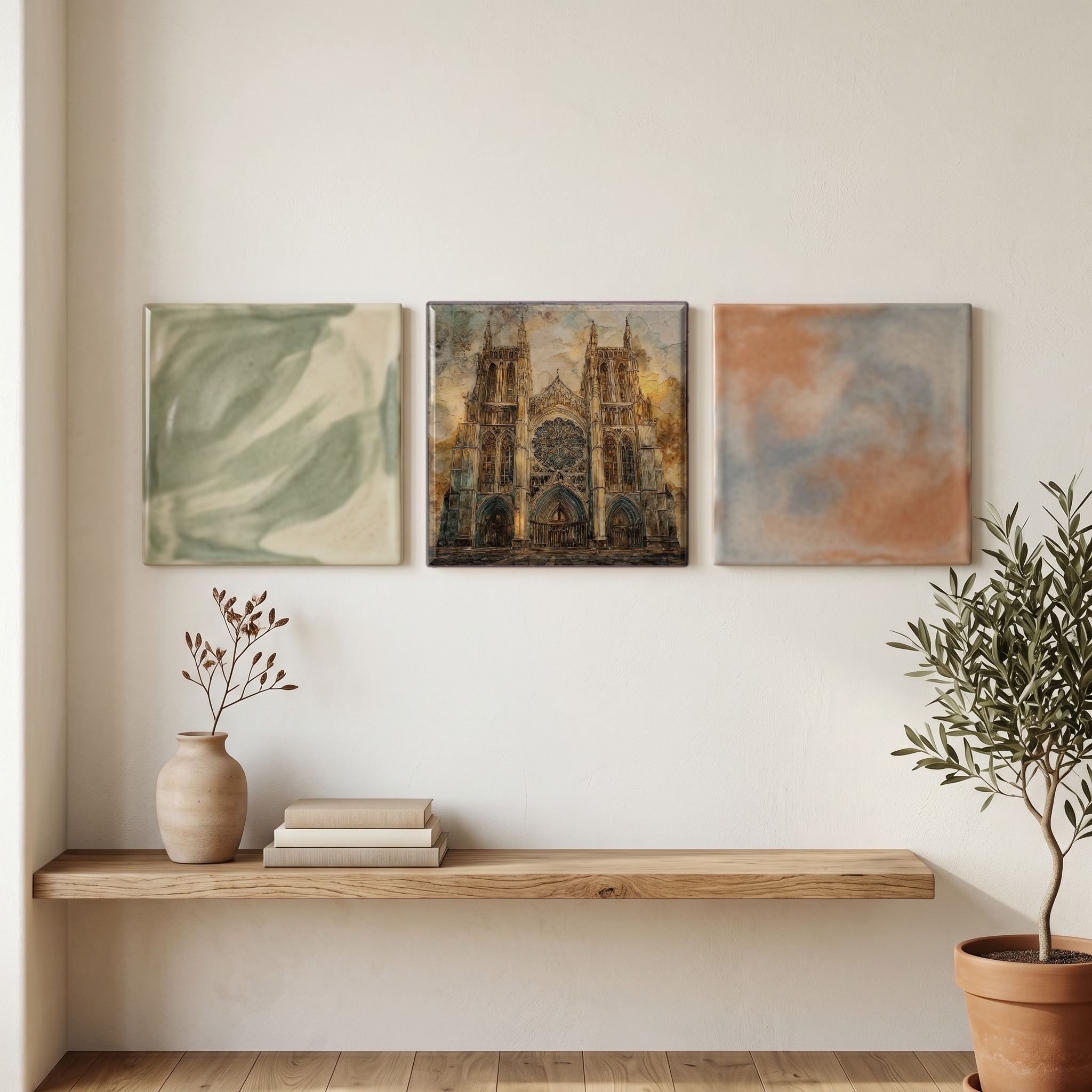
Three or five different vistas, hung together — a chapter of places you've been, or want to go.
The place, in three passes.
Notre-Dame de Reims stands at the centre of the city of Reims, the historic capital of Champagne, about 130 kilometres east-northeast of Paris in the Grand Est region. The cathedral occupies the site of a much earlier basilica where Clovis I, king of the Franks, was baptised by Bishop Remigius around the year 498. The present Gothic building was begun in 1211, after a fire destroyed the previous Romanesque cathedral, and was largely complete by 1275; the twin west towers were finished by 1481. Together with the adjoining Palace of Tau and the Basilica of Saint-Remi, Reims Cathedral has been a UNESCO World Heritage Site since 1991.
The west facade is one of the most elaborate sculptural programs in High Gothic architecture, organised around three deep portals, a great rose window, and the Gallery of Kings, a row of fifty-six monumental statues of French kings set across the upper front of the building. Architectural historians count more than 2,300 figures over the cathedral as a whole. The left portal carries the Smiling Angel, l'Ange au Sourire, which has become a symbol of the city. The facade and its statuary were heavily damaged by German artillery fire in September 1914; restoration funded in part by John D. Rockefeller Jr. through the 1920s and 1930s reset many of the broken figures and put the Smiling Angel's head back where it belongs.
The cathedral is open to visitors free of charge most days, typically from 7:30 in the morning to 7:30 in the evening, with hours adjusted around services and the changing light of the seasons. The Palace of Tau, the former archbishop's residence next door, holds many of the original statues taken down from the facade for preservation, and is run as a national monument with a separate admission. A summer evening sound-and-light show projected onto the west facade, Régalia, runs from late June through early September, tracing eight hundred years of the building's history on the stone itself. The TGV from Paris Est reaches Reims in about forty-five minutes.