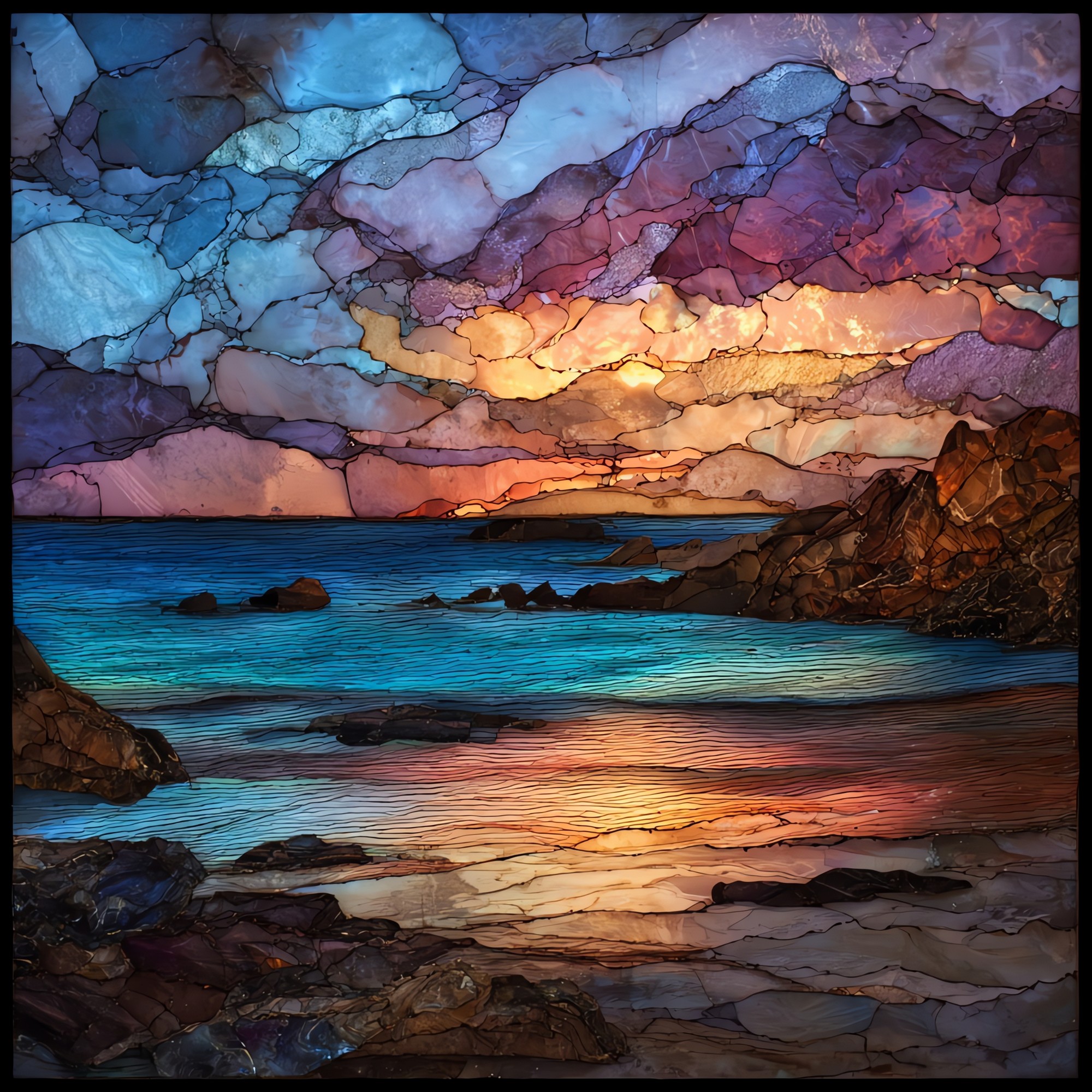
Quiberon Cote Sauvage
— the cliffs the Atlantic is still working.
Not only on a wall.
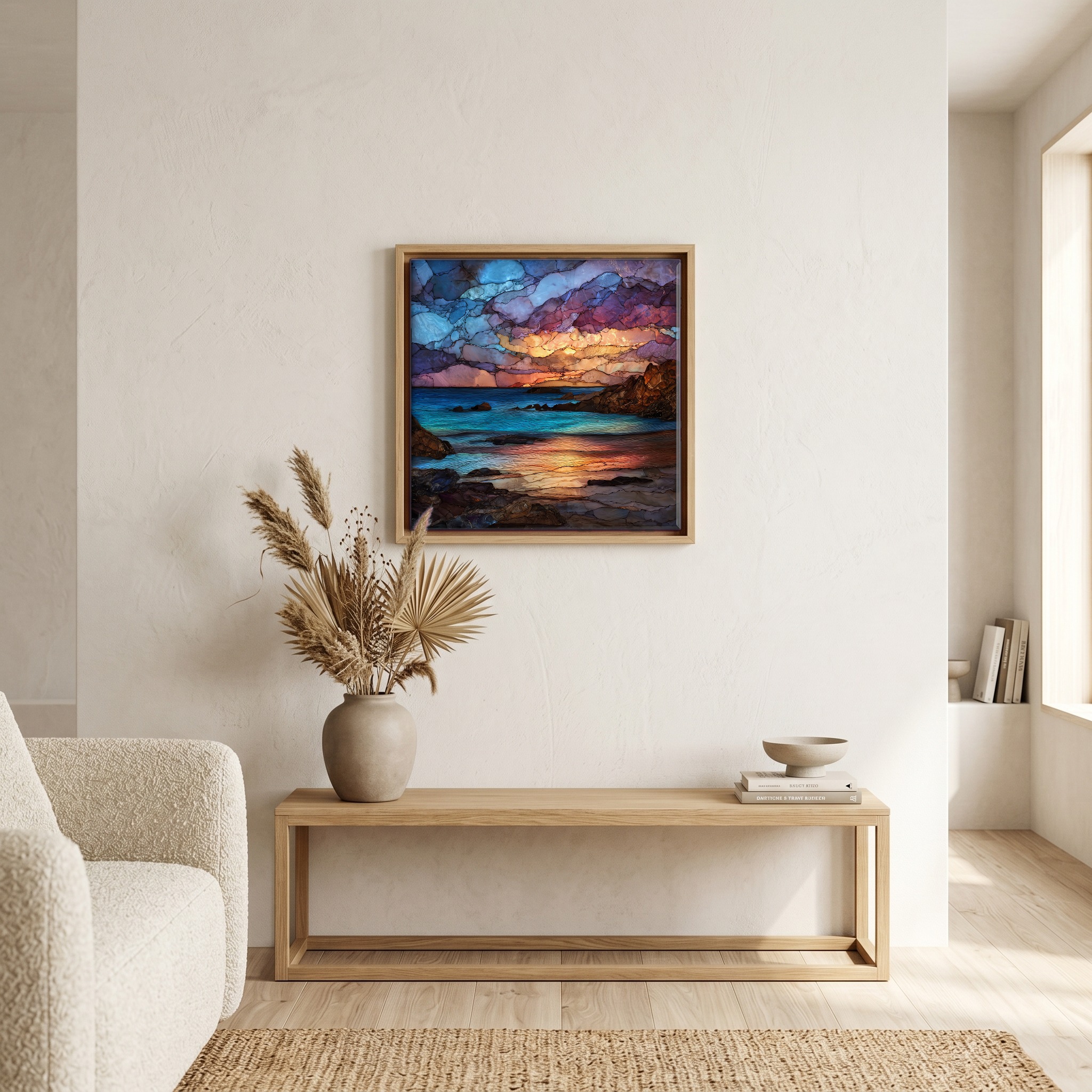
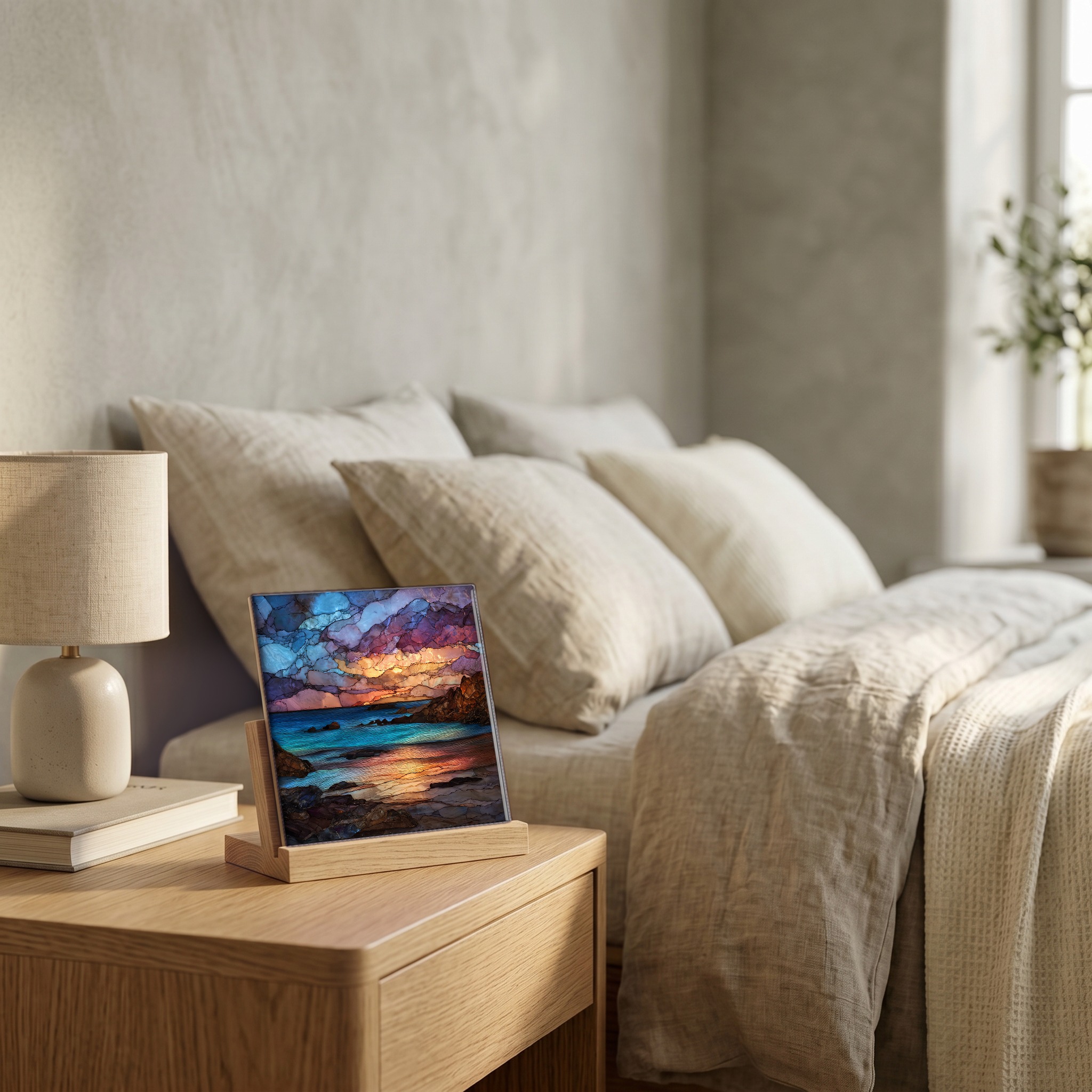
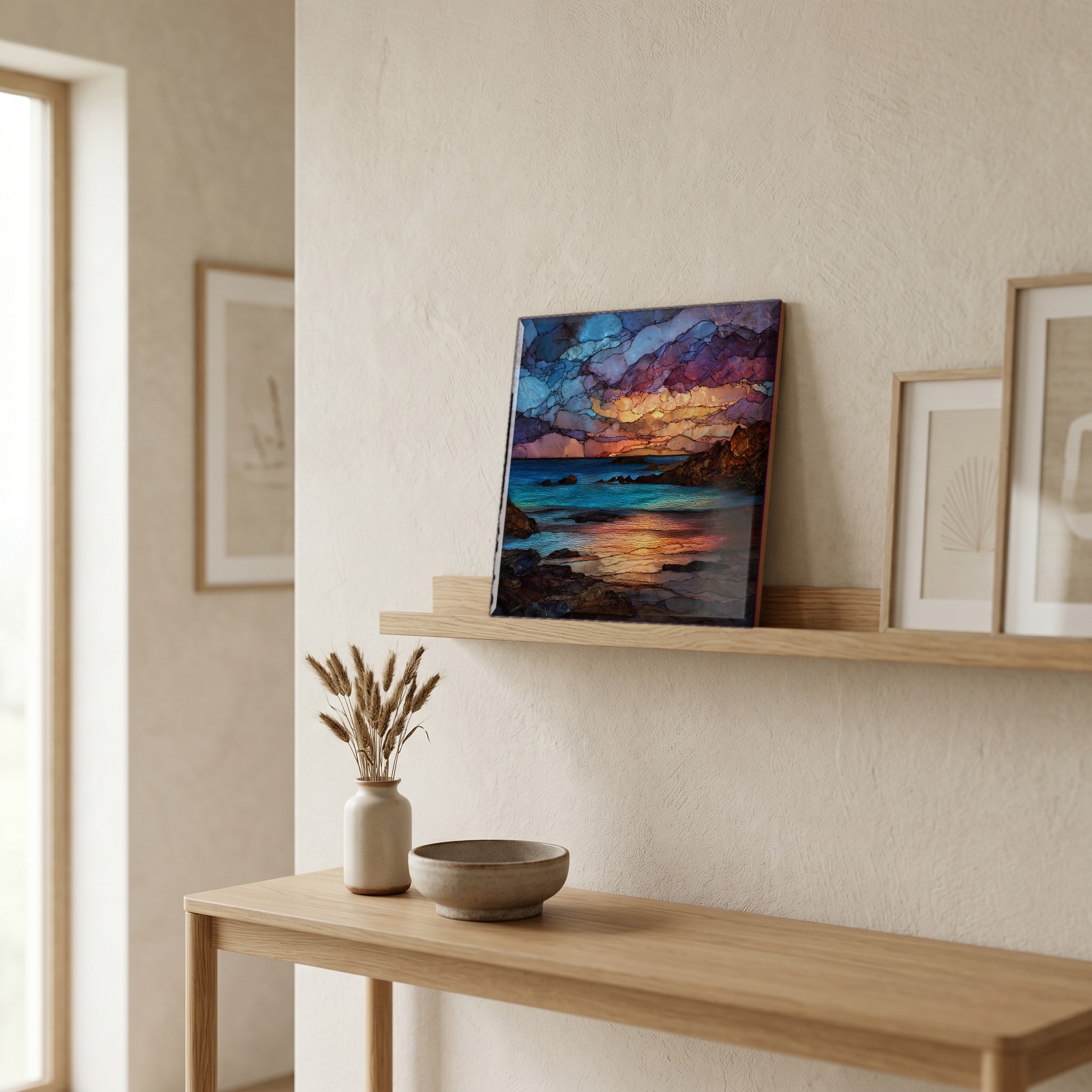
“The west-facing flank of a fourteen-kilometre peninsula that runs south into the Atlantic from the Morbihan coast. The east side of Quiberon is sheltered, with family beaches and white sand. The Côte Sauvage is the other face: granite cliffs worked for millennia by the open Atlantic swell. The coastal path runs the length of it, above the rocks. Swimming is forbidden along the coast below; the cliffs hold memorial crosses to those the sea has taken. In the late afternoon the granite turns ochre, the water greens, and Belle-Île sits low on the horizon.
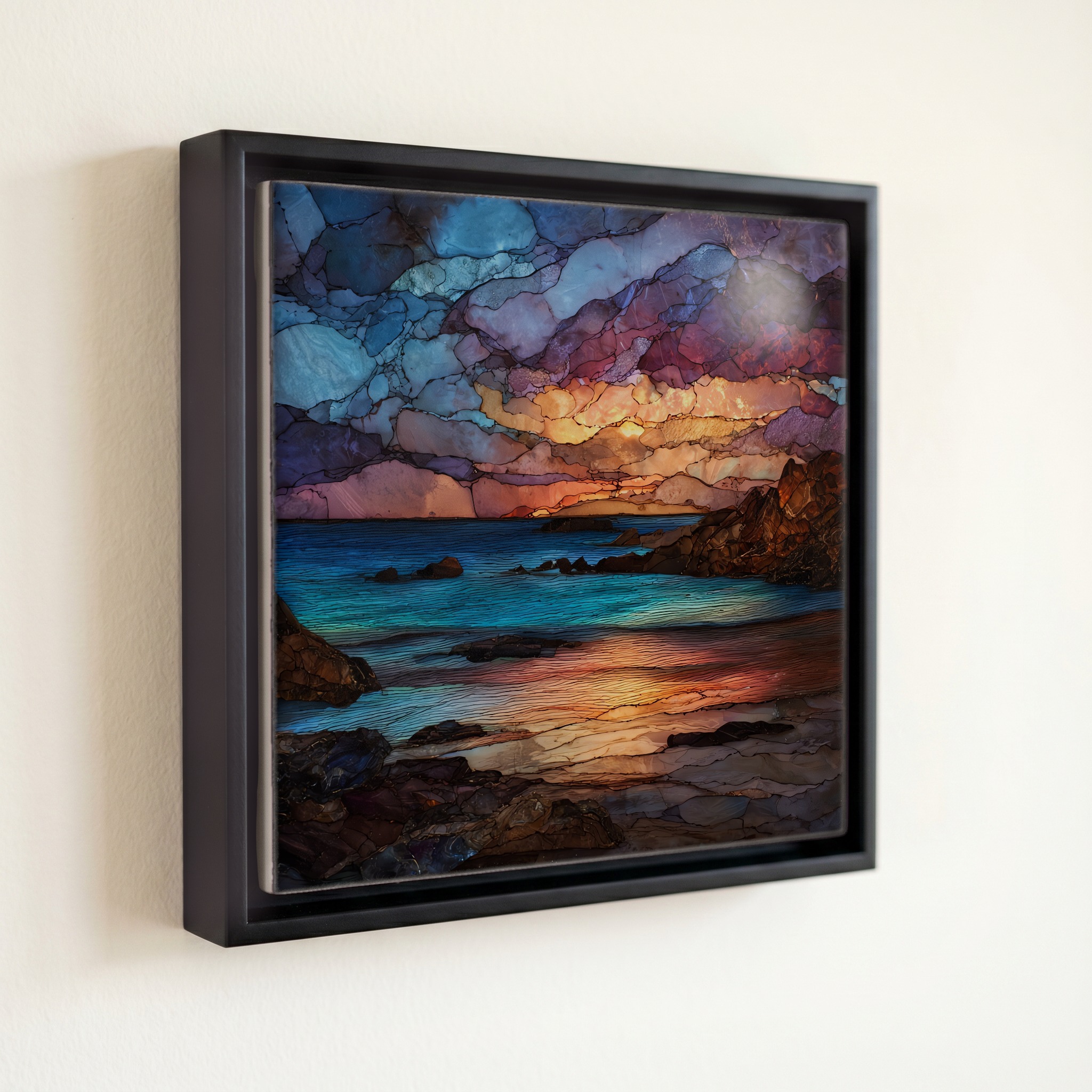
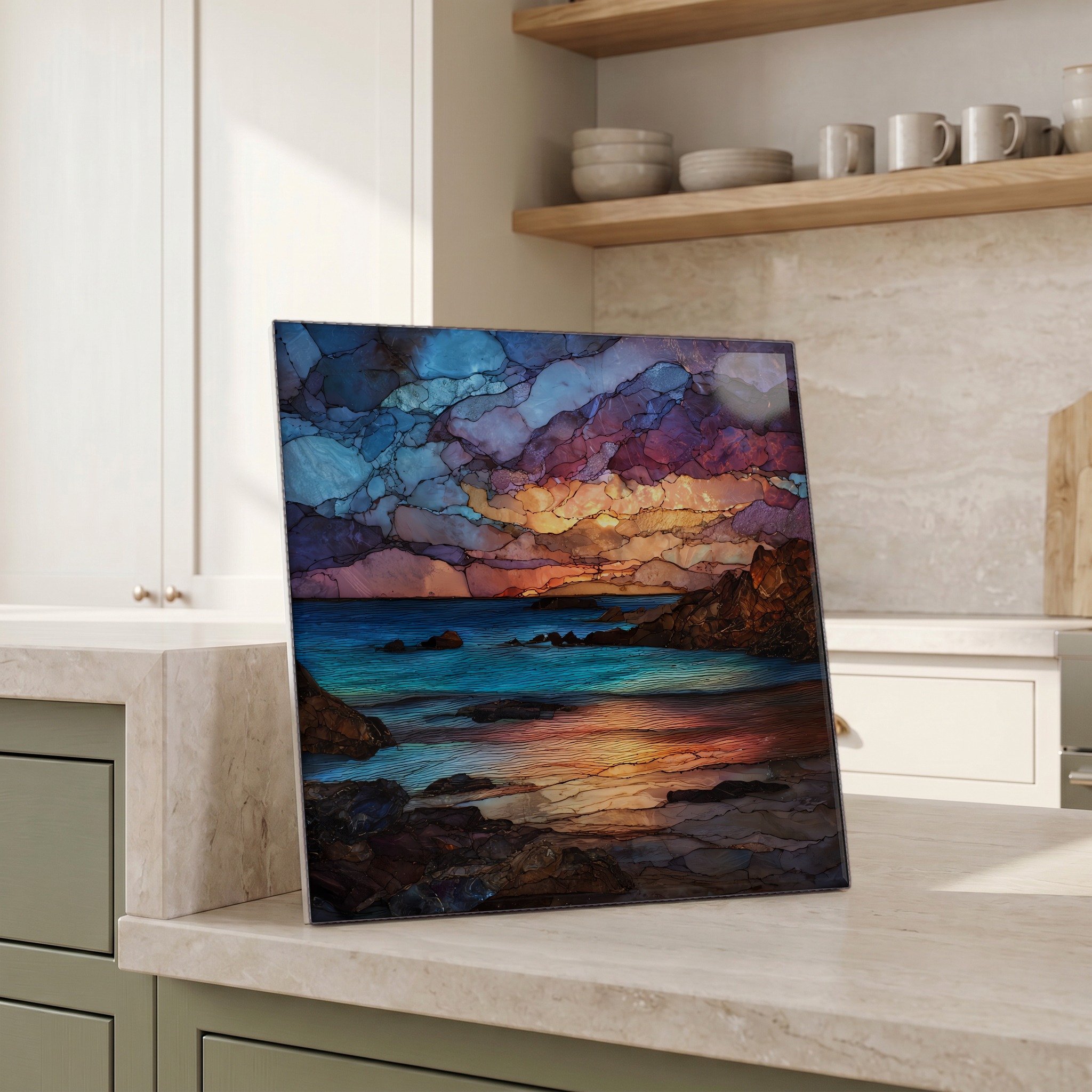
Quiberon Cote Sauvage, on ceramic.
Each tile is finished by hand in our Knoxville studio. Artwork is slowly infused into the ceramic surface under high heat and pressure, and rests beneath a thin glossy finish. The colour lives in the surface, not on top of it.
Pick any four 4-inch tiles — National Parks you've been to, a Smokies set, the four seasons of one place. $ for a set of , cork-backed, ready to live on the table.
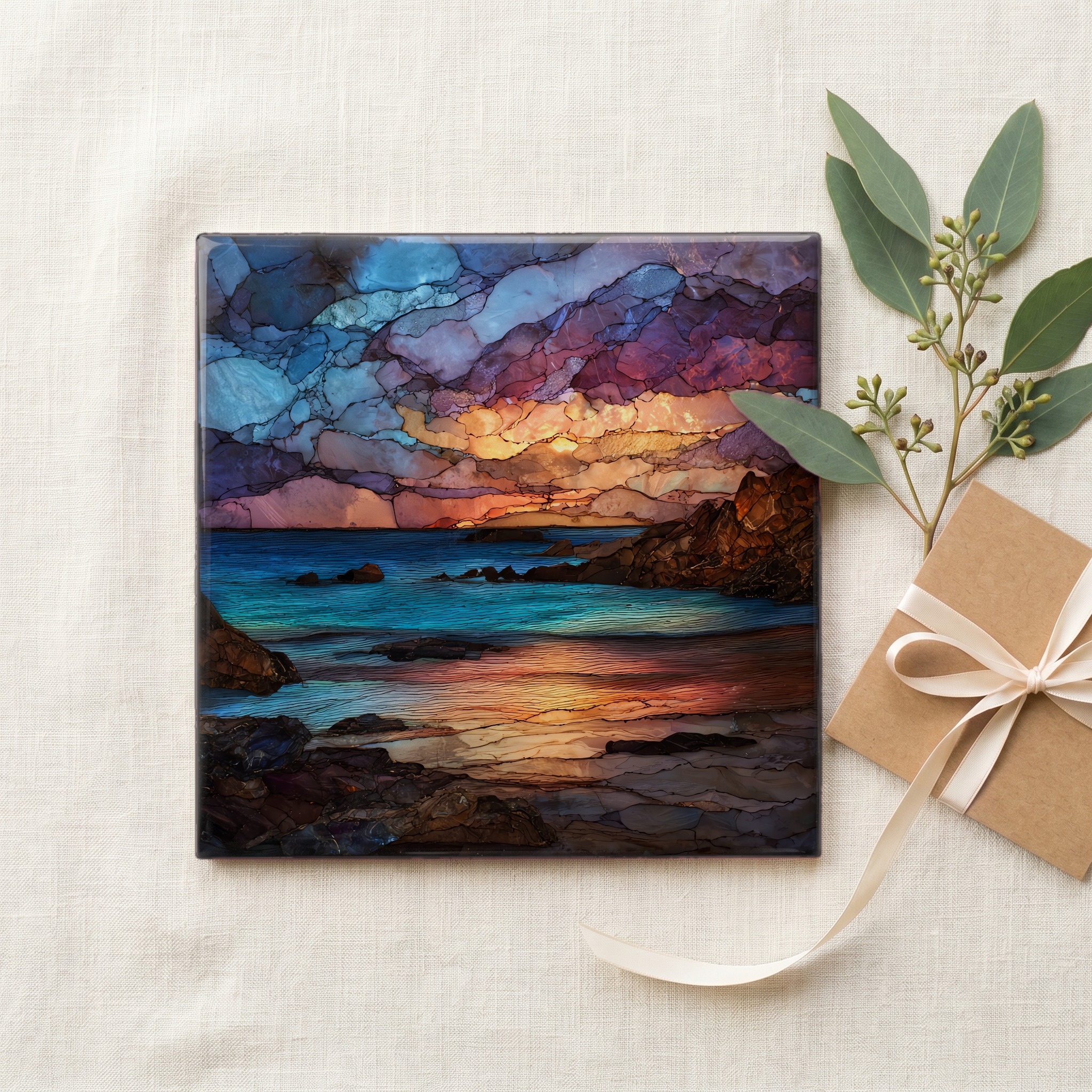
Each tile ships in a kraft box, tied with cream ribbon, with a handwritten note from the studio if you'd like to add one.
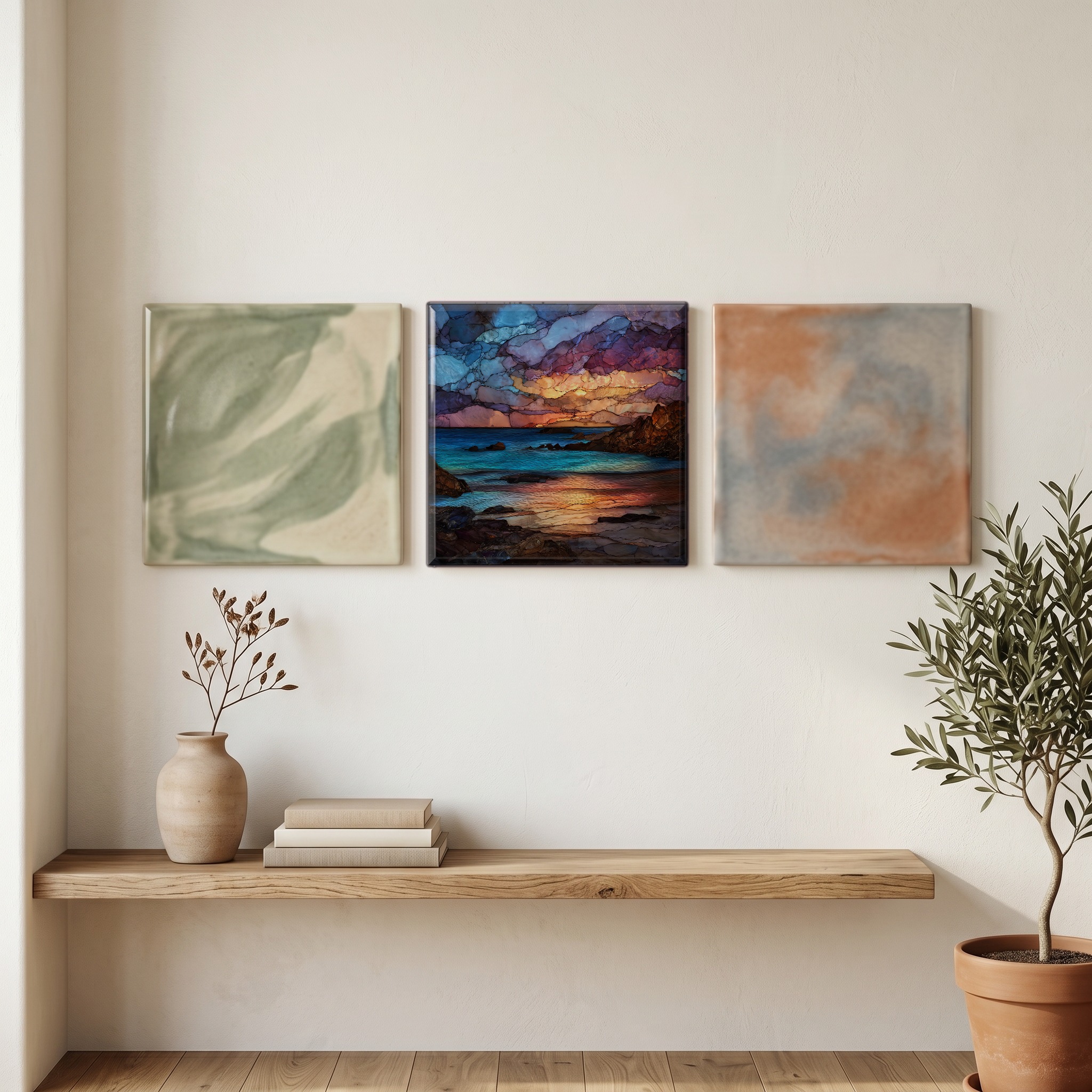
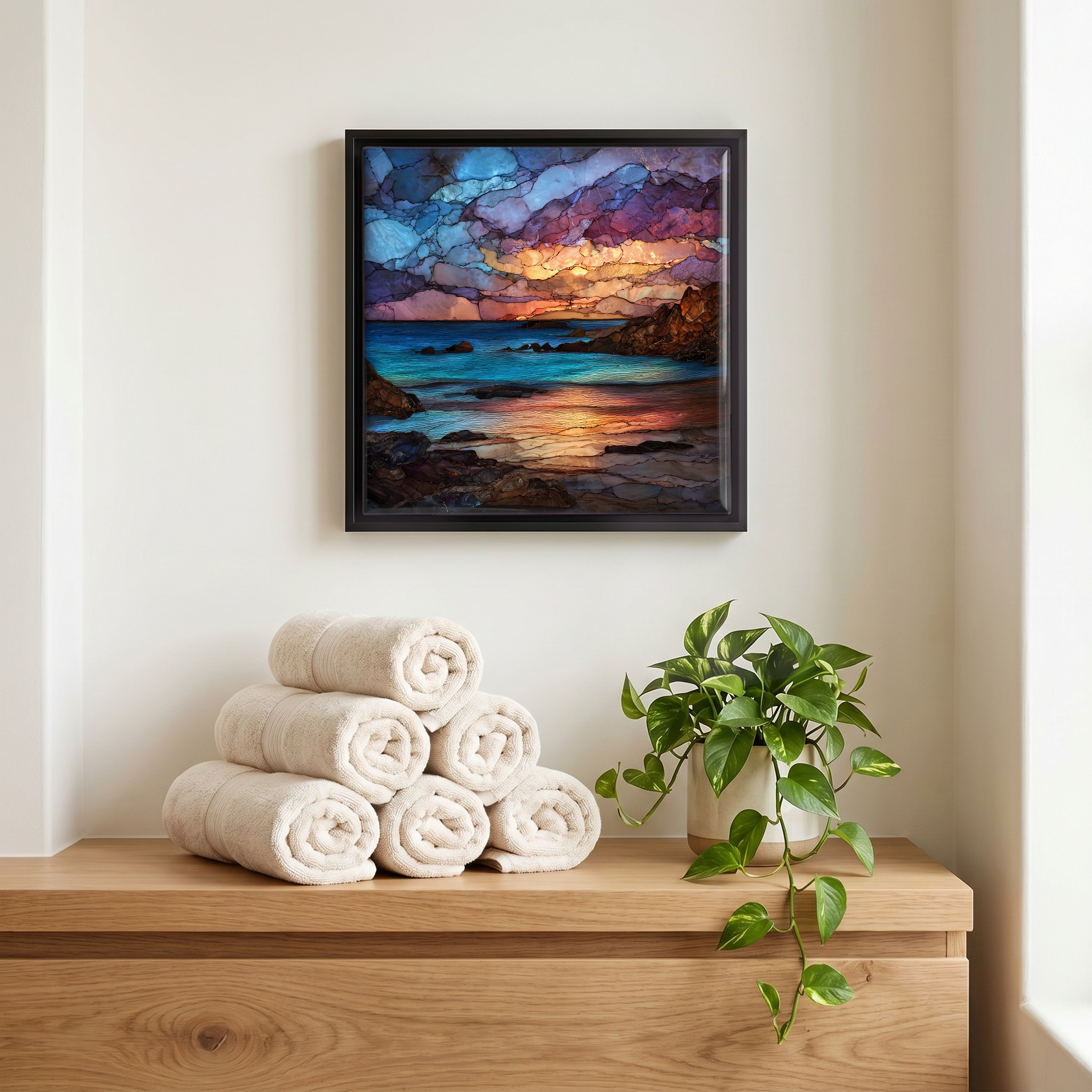
Three or five different vistas, hung together — a chapter of places you've been, or want to go.
The place, in three passes.
The Côte Sauvage is the western coast of the Quiberon peninsula, in the Morbihan department of Brittany. The peninsula extends roughly fourteen kilometres south from the Penthièvre isthmus into the Atlantic; the wild coast runs about eight kilometres along its open western flank. Access is by the D768 from Auray, then the D186A along the cliffline. The GR34 (the sentier des douaniers, the old customs officers' coastal path) traces the entire stretch on foot. The town of Quiberon sits at the southern tip and is the embarkation point for ferries to Belle-Île-en-Mer, about fifteen kilometres farther south.
The granite of the Côte Sauvage belongs to the Armorican Massif, the deeply eroded mountain root that underlies most of Brittany and Normandy. It crystallised during the Variscan orogeny roughly three hundred million years ago, then was lifted and stripped by long erosion until the sea reached it. The Atlantic has been working it since the last glacial retreat, hollowing arches and sea-stacks and small coves where the rock fractured first. Port Bara, on the middle stretch, holds the best-known of these: a natural granite arch the swell has worn straight through. Heather and gorse hold in the cracks; in winter the surface goes bone-grey under the salt.
The water below the cliffs is the open Atlantic at full strength. Swimming is forbidden along most of the Côte Sauvage; the rocks hold weathered crosses to those the undertow has taken over the years. The mechanism is plain: ocean swell meeting an abrupt cliffline produces backwash and rip currents the human body cannot fight. The fishermen of Quiberon, historically a sardine port whose cannery La Belle-Iloise has operated in town since 1932, work the sheltered eastern side of the peninsula and the waters around Belle-Île. The wild coast they leave to the gulls and the wind.